In short
Wexler’s legal-tech approach to resolving complex disputes using AI document ingestion and fact extraction, scaling post-seed, and how the founder thinks about pivots, fundraising, hiring, and future bets (e.g., investigations, dispute prevention, agentic/“headless” consumption).
Guest backgrounds
Kush Madlani is co-founder and CTO of Wexler. He previously worked as an investment banker and derivatives trader for four years, then did applied research and experimented with founding a pre-AI crypto chess platform (“Block Chess”). He joined Entrepreneur First (EF) and met co-founder Greg there; Greg is described as doing ~60 customer interviews during EF.
Key claims
Wexler differentiates by doing “human-like” upfront extraction across hundreds of thousands/millions of pages before answering; it has customers, revenue early in EF, and raised a “large seed” from Seedcamp, Legal Tech Fund, and Pear. Fundraising succeeded due to real traction after pivots and changing VC attitudes toward OpenAPI-based products.
Notable examples
“Suits”-style document review analogy; early revenue from a content repurposing tool (blog post → tweets/LinkedIn/email drafts); expansion into barristers and plans to grow in the US; KPI of pages processed ramping toward billions/month.
Written by AI. May contain mistakes. Listen to the episode to check what was said.
Chapters
Tap a time to open that second in VOUnderstanding Wexler's Mission
0:45 to 2:16
Kush discusses Wexler's goal of resolving complex disputes using AI.
“Got a lot of really happy, big customers.”
The Journey of Pivoting to Legal Tech
2:16 to 3:45
Kush shares the evolution of Wexler from marketing tech to legal tech.
Finding the Right Co-Founder
3:45 to 5:35
Kush explains how he chose his co-founder Greg based on shared values.
“So obviously as CTO as well, you said how the product is evolved over time in pivots because of what's happening with AI.”
Innovating in Legal Tech
5:35 to 6:47
Discussion on how Wexler is leveraging AI to change legal processes.
“In a regular AI product, you know, there's this expectation, you upload docs, you kind of get your answer straight away, you're kind of, there's almost this impatient time.”
Market Differentiation and Sales Strategy
6:47 to 8:14
Kush outlines how Wexler differentiates itself in a competitive market.
“technology that we've built back to the users and back to our customers and their day-to-day.”
Navigating the Legal Landscape
8:14 to 8:56
Kush describes the challenges and surprises of entering the legal industry.
Lessons from a Background in Finance
8:56 to 10:29
Kush reflects on how his finance background influences his role as a founder.
“I was a derivatives trader for four years, which seemingly seems like really, really, really unrelated.”
Family Influence on Entrepreneurship
10:29 to 11:43
Kush talks about the entrepreneurial spirit instilled by his family's background.
“And with your own background growing up, was that the fact that both of you have gone on to build your own companies?”
The Path to Joining Entrepreneur First
11:43 to 13:30
Kush shares his motivation behind joining EF and launching his startup.
Building the Right Team
13:30 to 14:00
Kush emphasizes the importance of hiring passionate individuals for startup success.
Show all 20 chapters
The Importance of Caring in Early-Stage Startups
14:00 to 16:36
Learn why finding passionate team members is crucial for startup success.
Fundraising Journey Post-Seed Round
17:26 to 18:58
Discover the challenges and strategies involved in raising capital after initial funding.
“And now to try and get further investors after your pivots, after those kind of ideas too.”
CTO's Role in Fundraising and Technology Clarity
19:01 to 22:09
Understand the CTO's involvement in fundraising and the need for clear tech communication.
“As a CTO, your role is slightly different in the fundraising process, right?”
Vision for Future Product Development
22:11 to 24:09
Explore the vision for evolving legal tech and the innovative features in development.
“And I think that's likely going to be part of the future where that technology we've built over time can get exposed.”
Building a Company for Impact and Justice
24:11 to 27:00
Learn about the goals of improving the legal landscape and societal impact through technology.
Looking Ahead: The Future of Wexler and UK Tech
27:01 to 28:00
Insights on aspirations for Wexler's growth and the UK's position in the global tech landscape.
“What would you love to say in the next couple of years you're able to do?”
The UK's Tech Potential
28:00 to 30:10
Explore the UK's capabilities in the tech scene and future prospects.
“And I want Wexler and perhaps myself to be a part of that.”
Spotlight on Free Agents
30:10 to 31:28
Highlighting influential figures in the UK tech scene and their contributions.
“So first one is, who are free agents in Britain you think are doing amazing work?”
Engaging with Wexler
31:28 to 32:20
Learn how to connect with Wexler and opportunities for collaboration.
“Next bit about it as well, how do people get in touch with you or how do people learn more about what you're building in Wexler?”
Final Thoughts on Entrepreneurship
32:20 to 32:38
Key advice for aspiring entrepreneurs about persistence and mindset.
Transcript
Automatic transcript. May contain errors.0:00I'm Kush, I'm the co-founder and CTO of Wexler. So what Wexler does is we help resolve complex disputes. We work with big law magic and silver circle law firms in the UK, in the US, Barristers Chambers. And we do that by ingesting hundreds of thousands of pages about a dispute. And we understand them through AI and then we let our users kind of query them and perform tasks on those documents based on like all of our extracted intelligence. from that data set.
0:31Amardeep Parmar:And how's it going so far? How long have you been going for? Business has been going really well where we went through Entrepreneur First at the end of 2022 where I met Greg and we had as every startup does a couple pivots along the way we actually started out in marketing tech and where my co-founders kind of origin was from we then pivoted into legal because his dad was a famous high court judge and came to us with this kind of really profound problem statement about how you resolve a dispute and you know two people two companies are suing each other the more important thing actually is establishing the facts about what happened and then you apply the law to those facts so we set about kind of solving that with llms we were kind of you know started the business just as a gpt3 api was coming out so it was all the rage and kind of that was where my background came from and yeah things have been going really well we We raised a large seed round last year from Seedcamp, from the Legal Tech Fund, from Pear, who are in SF.
1:32Got a lot of really happy, big customers. Accounts have been growing. We've entered the new market of barristers. We're now looking to expand and grow in the States. Got a team of 15. Yeah, loving it.
1:44Amardeep Parmar:So you made a co-founder through EF, right? How did you know he was the right one? Yeah, it's a really good question. um so greg was actually the first partner i started trying out uh working with in ef um and he had this just relentless hustle so by the time we turned up to the program he had already done i think 60 customer interview calls with every single marketer in his network when people were just getting started on that week he really had this like sharp relentless like focus on and and kind of drive and actually in my previous job like you know I was joining as a CTO and I was kind of asking mentors about what I should look for in a co-founder and he said like look as a builder you need to find someone who will absolutely push you to make you like uncomfortable about what you can build because you know as a as a builder and an engineer your kind of bias is perhaps a little bit towards more like being more like safe and and kind of measured but yeah you want someone who can sell and you want someone who can push you and greg was that and then you know from day one we we hit it off we were extremely extremely kind of productive we were one of two teams to get kind of early funding from ef we were the first team in our cohort to get revenue and then the rest is history how do you get revenue whilst on the cohort yeah really really funny question which is it was it was a it was a product at the start which seems um seems trivial now with what ai can do but back then it kind of did wow people it was a content repurposing tool that kind of you fed in maybe a blog post and it would spit out um uh maybe like a few tweets it would spit out a linkedin post it would spit out maybe um some kind of like content emails all in your persona and it was literally purely on that repurposing and we'd kind of like hustle to i think our you know i think our first check and receipt and invoice was for like$150?
3:41Yeah. There you go. You've got to start somewhere. But yeah, that's how we do it.
3:45Amardeep Parmar:So obviously as CTO as well, you said how the product is evolved over time in pivots because of what's happening with AI. Yeah. How are you keeping on top of that? How are you making sure that you're on that edge? Yeah, it's a really, really good question. Things are moving just exceptionally fast and it's hard not to get overwhelmed with change. I think there's a few different things. and the first is fortunately like the forefront kind of exists in engineering and that's where kind of things have been most quickly adopted so in our day-to-day as a team we're adopting it kind of and and always like within kind of hours or days using that frontier capability having a culture and a team around you who can always kind of picture and pitch about like what is now possible with this next generation what what wasn't possible kind of three months ago six months ago that we can now do in this domain of like helping resolve disputes and always I guess then just like you know teaching yourself and making sure your organization is kind of agile enough to be able to adopt these new things but yeah there's no one short answer.
4:52Amardeep Parmar:Obviously now right when you're in the sales process and like there's so much noise in AI right yeah and when they're backing you and somebody's taking you as a provider yeah what is it that you're pitching and how you differentiate yourself to make sure that you're the right one for them? Yeah, it's a really good question. And I think some of this is like traditional enterprise SaaS sales where you're always listening to your customers' problems. It's one of these kind of like maxims of sales that you should always listen more than you speak in a sales talk. So that's one kind of like aspect of it.
5:28um the other is just having a really really clear idea of like yourself what your identity and product vision is that exists outside of the competitor space and what your beliefs are about why you do you what your solution and how you've approached things better and for us that um comes down to um we have this very unique approach in the market of um up front putting in time and tokens and money to understand these documents by extracting facts. In a regular AI product, you know, there's this expectation, you upload docs, you kind of get your answer straight away, you're kind of, there's almost this impatient time.
6:05And we've kind of, from how we started, Wexler kind of decided kind of uniquely to say, all right, how would a human kind of approach this task? And, you know, if you think back to kind of like opening episode of Suits, you've got micross in a room with all these files and boxes a human has to read everything through and then that information assimilates in their mind into these kind of events and facts that have happened so umma flew to paris on the 9th of july it says so in these three documents this is important because of xyz and so that's what we've kind of built our system around it's doing that process of kind of um extraction over millions of pages in a performant way that's cost effective and and it's a really unique value proposition and then it's like kind of tying that kind of
6:50Amardeep Parmar:technology that we've built back to the users and back to our customers and their day-to-day. And that, again, is not an AI-specific thing. It's part of any B2B slash motion where you've got to market and sell your unique value problem. So obviously, as somebody not from a legal background, when you mentioned suits, that's how I imagine everything works, but I'm guessing it's not properly like that. As somebody who was an outsider to the industry beforehand, and it's now coming into it. Where are you kind of seeing how things are working and like why is it running that way and then you've been able to now improve it and really change the process?
7:27I think what's interesting is like the diverse kind of set of ways that different law firms work and particularly lawyers from like a kind of senior partner who's very, very, very tech averse to kind of a 25-year-old associate who kind of tinkers with an API key in their weekend. and I think in general I've been kind of like I'm always kind of like constantly surprised that the bubble of kind of technology and software that I've lived in and you always have to kind of challenge yourself to kind of think and sit as a user ultimately like the raw answer to that is just time spent with users we were really lucky that through kind of my co-founder we got to spend a lot of time with really senior kind of like people in law to kind of watch and observe how they do things and now we're like really lucky now to have really talented kind of ex-litigators in our team who can really think and observe like like users however what's really kind of like satisfying about the job too is that like what we're doing is new in the sense of like it's not an incremental improvement on kind of the existing way of doing things the existing way of doing things is sitting in a room and reading every page through so that actually allows us to like decide and kind of innovate and think about how like this thing should be done with this technology and i think that's going to continue to be a really important part of the business is kind of innovating and thinking about how these processes could and should look now with this magical
8:54Amardeep Parmar:technology at our hands and with your own background too right so obviously all of the work you did beforehand before going into efs yeah how do you think some of those experiences have like helped you now as a founder and like what you're doing today so actually funnily enough i started out after university as an investment banker. I was a derivatives trader for four years, which seemingly seems like really, really, really unrelated. But I think, you know, like in life, you kind of layer on different skill sets. You never know where you're going to end, when you're going to end up. Actually coming from like working at a really big organization, you can observe and kind of empathize with some of the frictions that exist with implementing new technology, getting things done.
9:31It also kind of, I think in a really good way, like polishes you up a bit about how to kind of like handle kind of like proper corporate sensitive situations and I like working with law firms that's really relevant I think also coming from trading as like now a founder there's a couple things I think reflecting upon have like it's taught me and I think the first is being able to make a lot of decisions quickly under pressure something we talked about actually just like you know about an hour ago and I think the second is in trading you are kind of taking in a lot of information like kind of equity reports prices of competitors customer flows all of these things and you have to turn that into kind of a decision point but then kind of like if it goes wrong you have to be fine with it and move on and get up the next day and go on and i think that process of taking in a lot of information and being kind of like robust enough to kind of handle something that goes wrong and keeping on going was something that trading taught me which i'm really grateful for the experience also with your brother as well right yeah So Vivek's been on the podcast as well.
10:36Yeah.
10:37Amardeep Parmar:And with your own background growing up, was that the fact that both of you have gone on to build your own companies? Yeah. Was there something in the water there growing up? Or where did that kind of instinct come from to build a company? So actually, funnily enough, we have a middle brother who I want to get on the phone, Ravi. All three of us started out in finance and banking. All three of us work at a.ai company. Ravi's like a VP of sales at Altana. tinkers a lot and probably will start a company one day but actually it was our dad who's who's massively inspired us he was a chemical engineer and was building a software business on the side that over kind of like you know 20 30 years he built up kind of bit by bit actually exited to a really big petrochemical software business two years ago in his 70s which is just absolutely incredible and so that's definitely formed a big part of that but being the youngest of three is also like um i say it's like my cheat code in life yeah you get to see things done first and like you get to learn from the mistakes uh and successes of of people come behind you so like you know my brothers have been the biggest inspiration to me in life and so like you know when when vivek decided to go down on behalf i think you could have predicted that one day i would i would have done that and obviously joining ef right you came before you had an idea yeah so when people join ef it's more that they want to build something right what was that moment in your life where you're like okay now is the right time where i want to go and do this it was a very direct experience actually where i was working out my previous job as like a applied researcher and i thought i'd dabble my waters and dabble in the kind of waters of building so and with a friend at the time we started a crypto business actually um and we learned a lot from it didn't work it was called block chess so um we were i think it was in covid we were playing a lot of chess my friend played on like leechess there's two main platforms in chess chess.com and leechess he had an elo rating in um in leechess i had one on chess.com and we were like oh we can't pull over our elo scores we're both a little bit familiar with kind of like uh blockchains we were like oh cool let's make an on-chain kind of chess platform where you own your rating um and you know we like built it we it's all pre-ai we're writing code by hand we built it we went to like a few solana conferences around the world and stuff and tried to try to get something off it but it taught me like probably one of the biggest lessons of founding is that like we were solving a problem that no one wanted solving um and it was kind of applying a technology to a problem that wasn't actually a problem and no one cared about kind of porting over your elo but um yeah it's taught me so much and it kind of gave me a taste of that that kind of like that journey and kind of um freedom and kind of like um joy you get from like building something and putting it into the world that um yeah it gave me the confidence that i made the leap to ef and obviously now your team said is 15 people right yeah and in that i guess there's a lot of people on the technical side and the engineering side yeah how are you picking those people and how you attract the best talent you can everyone says that before you start a company your team is the most important thing where it really is the most important thing and i think from actually like probably like other podcasts and information i think you know you're starting a company today you get actually you know 10 20 years of like a wealth of information like stuff like content you're putting out that can help you and then i think one of the one of the posts i think it was from alex wang who and now works at meta scale ai founder he was like the most important thing is finding people who care at an early stage business and you there's so much risk there's so much volatility and you are very clearly not there for like a nine to six contracted hours and finding people who care is actually one of the most important things and um it's one of them where you can kind of kind of like ask people about moments in the past where they've cared but ultimately like when they sit down with you and sit side by side by you in the trenches like that's what you see and so i think that's one of the most important traits we look for with the people who are hiring obviously when they're caring it's like what makes them care about this problem like how you what kind of profile is that yeah i think something i've learned is that like there's not one uniform kind of reason people get out of bed in the morning and it's like really important to understand what that person's motivation is so and in my like career before expanding the business I had like a manager at the bank I was working in I had a manager at the start I was working in one was great what was great and one was not so great and in banking the culture was kind of like um you are there for life you know your your life is in service to the business and any thought about anything else is kind of like blasphemy and I went to the startup and in my first meeting like my boss said where do you want to be in five years time and I said truthfully I want to I want to be the CTO I want to I want to co-found my own business and he said how do we get you there and it really shaped my kind of view of I guess like management and working with people where the very best outcome is that you know if you align where where and how they want to be with where you want to be then you get this kind of really flourishing kind of like relationship together and and so for some people it is the raw technical kind of deeply technical interesting problems about entering a domain they haven't known nothing about and solving it we've got i've got people working with us with that for some people it is the kind of getting those moments of user feedback and real impact where you get an associate who said i would have been up all weekend and doing all night is to solve this thing but you've done it for us in 10 minutes um and for some people it's maybe more aligned to kind of like myself which is just like seeing the organization as a whole get through and they will do whatever it means in a day be it kind of a bit of like raw QA of the app or going to see a customer or absolutely anything just to like rise its high so yeah there's no there's no one reason why people care but as long as you understand that I think you can yeah you have a good chance of kind of success.
16:38Amardeep Parmar:Hello, hello. I hope you're enjoying the show so far. I'm Amarit Parma, co-founder of BayHQ and the host of this show. For those of you who don't know, BayHQ is the community for high growth Asian heritage founders and investors in the UK. Over 7 ,500 people have attended our events, 200 people have been for our impact programs, and obviously there's been over 250 episodes of this podcast if you want to join us and take part in the program when it comes to the events go to vahihq.com forward slash join we also just released our first ever book called startups for outsiders which you can get amazon now and the link is in the bio hope to see you soon at event hope you enjoy the rest of the episode and you also mentioned about c camp right and backing you yeah how's that process of okay you start the business up you're backed by ef obviously and then And now to try and get further investors after your pivots, after those kind of ideas too.
17:35Amardeep Parmar:How did that process work for you guys? So first of all, like Greg does 99 % of the fundraising. I'm very fortunate that I can kind of observe him from the outside and he's done an incredible job of that. We went on a really long journey of fundraising where for the first two or three times we tried to kind of go out to funds. We really struggled. I think in 2023, just as we were coming out of EF, it was a real kind of like low moment for startups, low confidence. I think rates started to go up. The macro picture wasn't so good. And that was a really tough moment. The year after, we wanted to raise a bit more capital.
18:09And then VCs were saying no to any wrapper. That was the kind of mode. If you built on top of the OpenAPI, you were not an investable business. And obviously, things have changed since then. We realized there's value built on top of this infrastructure layer. And then last year we made it work. We made it work because we had real, genuinely good value and traction. We had customers and a product that just clicked and it worked. And we really felt that kind of pivot and momentum last year. Ultimately, what made it work was, of course, having a really thorough and clear vision and journey about yourselves.
18:46But I think nothing can be at that point just evidence of customers speaking about what you've built and that proof point of you've made something people want.
19:00Amardeep Parmar:I think the two things too, because obviously when you probably listen to the podcast, I find learning things too. Yeah. As a CTO, your role is slightly different in the fundraising process, right? And I think, say CTOs listening, who know that they need to fundraise, but they also and know, okay, the CEO is going to lead it or somebody else in the team is going to lead it. Yeah. How much do you get involved in? When do you get involved? And how do you kind of think about that if like other CTOs are listening? So there's a couple of points and this is relevant for us. You know, we're looking to raise our Series A later in the year.
19:26The first is in like helping your co-founder kind of prep for kind of, I guess, initial sets of questions about kind of like about the technology you've built, about the kind of like boundaries of it. And I guess about where you want to go. I kind of play a big role in our product roadmap and vision and you have to like kind of before the fundraise have a really kind of clear vision and answer for that the second is then like if things go well you get a term sheet you're in this kind of technical due diligence process or maybe just before a term sheet and for that yeah you want to kind of invest time into putting really clear thorough kind of materials and understanding of kind of what you've built what you hope to build what the limitations are even the simple things about what kind of technologies you use and why and the choices you've made I think sometimes when you're building a product you kind of don't sometimes think too hard about the decisions you've made about what software why are we doing this this way and but you should be able to kind of like with clarity kind of understand that and I think as a founder is you don't always have to have the answers but you should be able to like at least present your view clearly and if you don't know the answer you know who to kind of go to to get that answer i
20:42Amardeep Parmar:guess on that product side right it's about the limitations when you raise and things like that yeah is it kind of some of those limitations where because ai is constantly changing yeah some of these things that weren't limitations aren't the limitations of the future yeah and like i said where do you hope the product gets to someday like where do you hope someday as you keep building and you keep growing the team out you have more engineers building what would you love to be like yeah we can achieve this really interesting and really topical we've been thinking a lot about this today we are the best platform and product out there to resolve a complex hard dispute versus a more perhaps generalist solution for any dispute in the world where there is a bet the company dispute like you know you need to use Wexler actually in the future like you know there is a whole world of other types of kind of contagious material and where our approach of establishing the facts and then letting people use them would be really valuable and there's so many different avenues.
21:31I think this is why we're excited in this next phase of growth of the business to kind of, you know, start making some of these other bets, one of which might be, you know, perhaps in insurance, one of the perhaps might be in investigations for kind of in-house corporates actually, whilst our product today, you know, helps resolve a dispute, there's a way that, you know, we can build a product to prevent disputes, you know, imagine you're a big corporate and, you know, there's information that can be flagged that actually relates to a dispute that has happened recently we we can help you prevent kind of contagious work happening and then the really funky part of the future that we're trying to like figure out is um a lot of people today are talking about headless software where actually instead of humans consuming your software it's agents themselves and there's some thought we're trying to figure out about what that means for us um and um we can certainly picture a feature where kind of the fact kind of ontology we've built um is consumed by an agent or another piece of software.
22:31And I think that's likely going to be part of the future where that technology we've built over time can get exposed. And perhaps a success metric, one of the key KPIs we track is number of pages process for our product, which has been ramping up into the millions in a few years time. If that's in the billions, I think we've done well.
22:52Amardeep Parmar:It's interesting too, like you said, about the Hitler side of things, right? Because, as you said, it's probably not... Well, it could be this year, but who knows, in terms of that timing. Yeah. But when you're building a product from one hand, okay, we're building it for humans, we're using it right now. But then there's also many agents who are going to be doing it. And like, it's one element of building the company, but it's also you've got to kind of pay attention to what's happening, the wider trends and how to keep going in the right direction. Yeah. And I think just from a consumer's perspective, right, is that when it's agents talking to agents, it's kind of a hard mental model to work your way around, right?
23:25Amardeep Parmar:massively and yeah i guess as you build that internally is it like how do you kind of i guess like prioritize which bits you're going to build first because okay you're building for these customers using it right now but then it's the future thing and yeah how do you go about that because that must be tough it's really really tricky thing and i guess that's what like you know a big job of a founder is is how do you allocate your capital be it kind of like raw capital or human capital. So today, the first and foremost thing is serving best our users. And if you do right by your users, you're going to do well for future users too.
24:00We're lucky that we have the clarity in law today that there is still a human at the end of the day giving advice. There is still a human at the end of the day in court arguing for justice. And so we don't have the kind of like pressure of perhaps other verticals where actually today there is an agent consuming and like providing legal advice that's not that's not happening however like you know like you said there's things that are around the corner and I think like what will be kind of a feature of this next phase of growth as we move on to our series a and build build a bigger team out we will then have the resource to start making these bets and but in the first and foremost they're customer-led so like you know we're starting to work with some in-house teams who have shown interest in perhaps some of these other kind of like um product um ideas and verticals that we need going to and so they are informed by customers and informed wherever and i don't think we would allocate capital to something where there wasn't kind of like a site to revenue at that time you know with all of the variants in the world with how fast kind of things are moving with like you know anthropic you know hitting hundreds of billions of revenue like i think the important thing as a founder is to like kind of listen listen to like your users your customers and stay stay agile one of the one of the things greg and i love that was one of ef's kind of like um values is strong beliefs weekly held and so like you you you can have conviction in something but if you learn and there is evidence against it like be humble to like drop it don't be too strong about it and i think we've stuck by that and we'll continue to do that so you said as well when you
25:35Amardeep Parmar:had that startup job where you said okay in five years time you'll be the cto right yeah and obviously now you're a cto fast growing company yeah what do you enjoy the most about it like what is it that you're really enjoying so to me it's the like company building side of things um it's bringing people together who are doing the best work of their lives um and then it's like those moments where you get that real raw feedback that what you've built is like delivering incredible value the world and making people's lives better and ultimately it was interesting like I actually when I when I joined EF I actually got into the kind of commercial half of the cohort as a more technical CEO I thought you know like I hadn't been an engineer for kind of like too long I was like you know comfortable talking to people versus like some other kind of developer personalities but after talking to some other mentors and people actually like a CEO's job in like actually forever is selling.
26:30You need to be really happy to like sell, sell to featuring like employees, sell to customers, you need to be happy with those and actually, no, what I enjoyed building was the product building and so yeah, there's the kind of like delivering value and getting feedback but then actually the second joy of it that's come is like seeing people do the best work of their lives and building that compounding kind of like journey of the business.
26:53Amardeep Parmar:This is episode 320-ish something and we've seen people in like two years time. It's like 200 episodes later, it's like something 500. We'll get you back on again. What would you love to say in the next couple of years you're able to do? Give us a little think. And then there's a couple of things. So the first is like Waxler related. We want to be having global impact across industries, processing kind of like billions of pages of documents a month and being able to kind of ultimately contributed to kind of like justice becoming more readily available. And I think it's very clear that law firms are going to look very different in five years time and we want to be a big part of that as well as kind of some of these other verticals that we've mentioned.
27:31I think maybe like outside of like Wexler and perhaps Wexler can be related to this I think tech and AI can play a big part in like improving the kind of like vibes of the UK at the moment. I think vibes are pretty low and confidence pretty low about like confidence in what Britain can achieve and our relative kind of value in the world and you know for young people And I think like there were really real green shoots of kind of amazing kind of work that people are doing, be it Matt Clifford, be it Kanishka. And I want Wexler and perhaps myself to be a part of that. And if our kind of compounding and growth continues, I know we'll be a big part in the UK kind of like tech scene and hopefully the UK more broadly.
28:10And I want kind of like the UK to be in a better position in two years time.
28:14Amardeep Parmar:I think the UK is very, very good at probably world leading and putting ourselves down. We're actually doing pretty well. We are. We are. We are. Massively. I did it for my experience. We've got the third or fourth most unicorns in the world. Incredible. No one in that population, four of the top ten universities. We've got so much going for us. Absolutely. In the tech space especially. And I said a big part of that now is how do you get these benefits going across society and training up the next generation. All these kind of things, right? Yeah. But it is sometimes interesting when you see so much negativity.
28:43Amardeep Parmar:It's like, imagine what it's like for people in the rest of the world, considering how lucky we are in some of the techs being here in terms of the resources available, the support available as well, right? Yeah, and I think actually just to like continue to point it a little bit, I think a lot of it comes from like the framing of a lot of things maybe come from politics as like zero sum. Someone's gain is my loss and it's a bit of a tech bro thing to say this and that's come from SF a lot but like tech can be very positive sum and I think it's like helpful to frame a lot of kind of things in life is actually positive some that you know one company's growth is not another one's loss and the pie can grow and having that attitude to life is just really like waking up optimistic is like a good thing you see a revolute right so revolute obviously having the people who worked there now building their own things and like as people different tech companies do well it's like some of your employees like five years time maybe they their own companies are changing the world in a positive way.
29:44So it is that thing, it's like, compared to SF,
29:47Amardeep Parmar:we're like 50 years behind because we started a lot later. We've got a less mature system. But as there's faculty at the exit, there's all these exits, you had primary bid, like early in the week of this episode, right? So it's starting to make those movements. And we can't just compare ourselves to people who, like we weren't competing 30 years ago. But in a short amount of time, we're doing pretty well. There you go. So we're going to go to wrap up questions now. Yeah. So first one is, who are free agents in Britain you think are doing amazing work? And you want to shout them out? Absolutely.
30:15So first is my friend Salil Patel. So Salil was a medic turned kind of computer scientist who did incredible research on detecting neurological diseases early via movement. And he's now building an incredible startup in stealth who was invested in by a shared investor last year and he's an incredible humble amazing guy and i think you should definitely have a chat with salil um the second is um amal rajan of the bbc and i love his podcast i love his like uh interviewing style i love the questions he asked i love his kind of personality i've also heard he's going to be in celebrity straighters next season so excited for that uh but i'd love like you know i'd love to see a chat with um with amal and the third is syvesh from balderson capital who and we We were part of one of Balderson's incubator programs a few years ago.
31:10Incredible, thoughtful, smart, engaged investor in the UK scene and doing exceptionally well.
31:19Amardeep Parmar:Awesome. I told you as well, Sivesh spoke at our very, very first ever over the event for BHQ, which is over three years ago. Next bit about it as well, how do people get in touch with you or how do people learn more about what you're building in Wexler? Yeah, come to our site, Wexler.ai, reach out to me on LinkedIn, come by our office. We love having visitors and always happy to chat, always happy to chat about what you're building and obviously the plug that we're hiring a lot as well. So, I'd say as well, food and assisting, how can they help you? Is it a hiring in particular? I think there's something that SF does really well is that density of people having conversations and helping each other and I think like you know there can be so much more of that in um in in in the UK and in London with with such incredible talent talented people around so you know just reach out have a chat let's go for coffee and it doesn't have to be immediately helpful but I'd love to I'd love to meet and chat thanks so much for coming on today any final words I guess for anyone wanting to start a business I think the like the number one thing you just need to like be able to do is be relentless and get up each day and just keep going and keep trying and you know it's not about what you know it's not about kind of like how smart you are but it's that kind of like one trait i think if like you know you've got it you can go do it
From the publisher
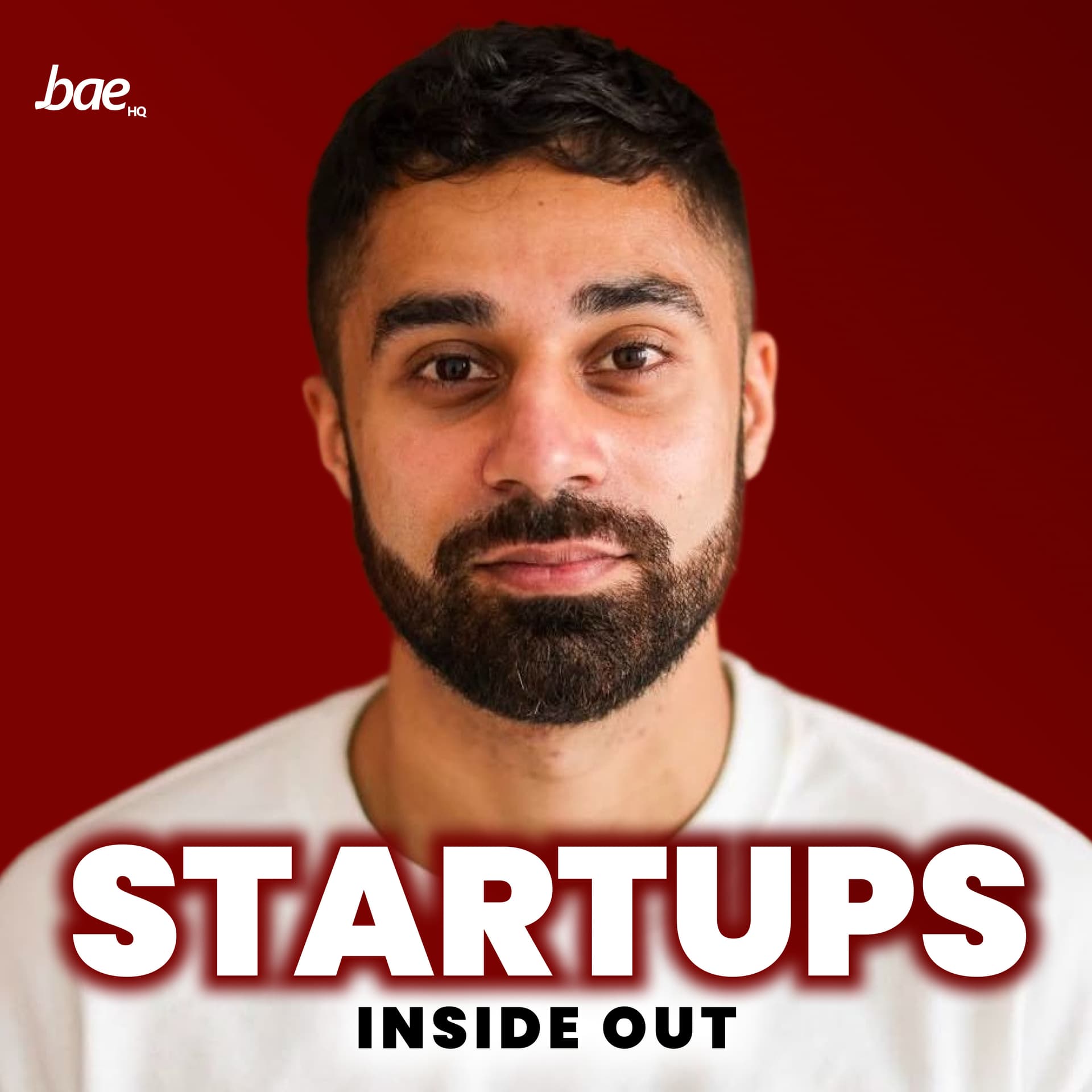
Amardeep Parmar from Bae HQ welcomes Kush Madlani, Cofounder and CTO of Wexler.
Amardeep Parmar: https://www.linkedin.com/in/amardeepsparmar
Kush Madlani: https://www.linkedin.com/in/kush-madlani-08141580/
Wexler: https://www.wexler.ai/
👉🏽 Buy Startups For Outsiders: https://www.startupsforoutsiders.com
👉🏽 Learn through our IncuBaetor: https://www.thebaehq.com/incubaetor
👉🏽 Join Bae HQ: https://www.thebaehq.com/join