In short
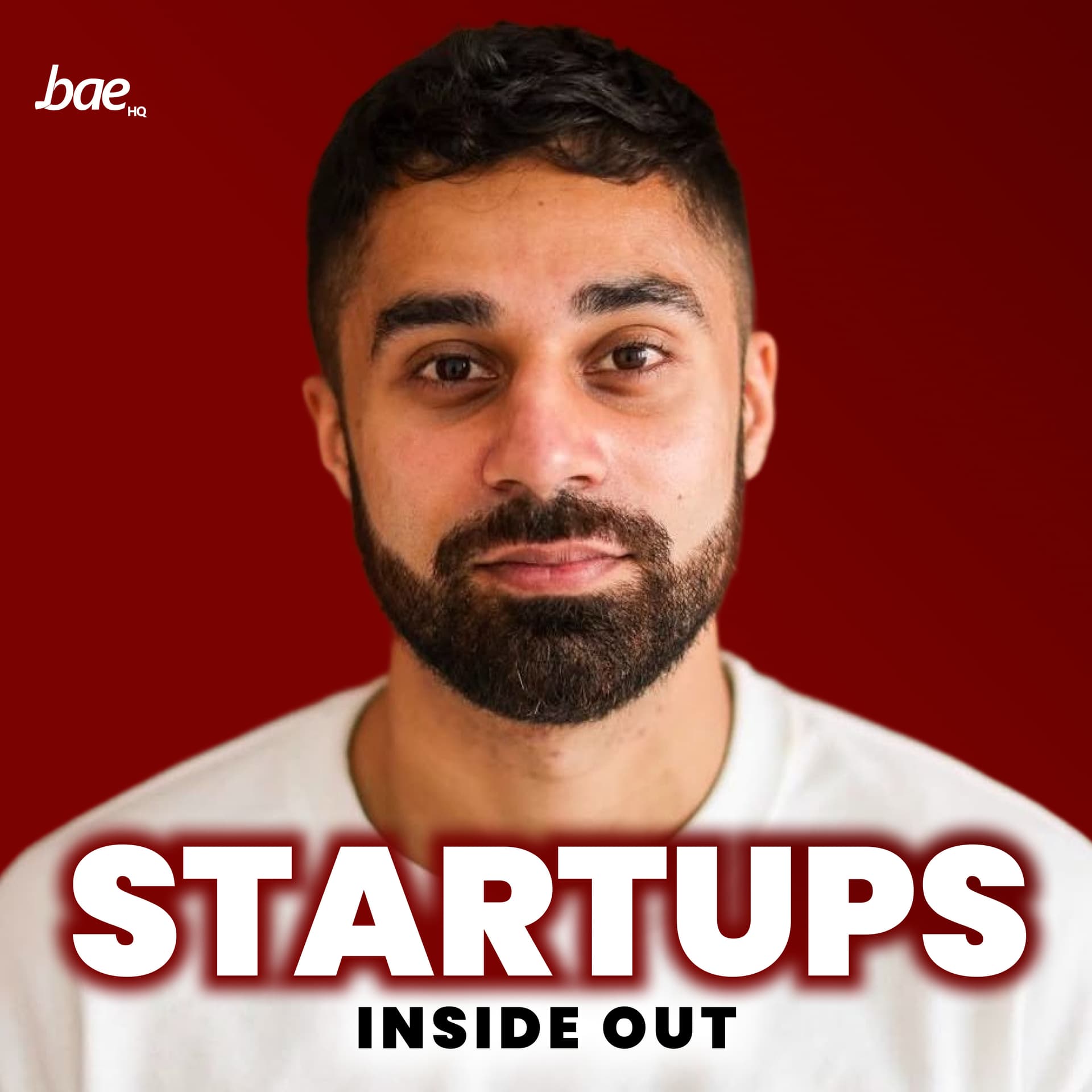
Zehan Wang, founder of Paddington Robotics (formerly Patent and Robotics), discusses building robots for retail/supermarkets and why they’re focusing on deployment and human-centric safety rather than humanoid hype.
Guest backgrounds
Zehan Wang is a robotics founder with a prior deep-tech exit: Magic Pony (super-resolution and video compression using early deep learning), acquired by Twitter after raising seed and exiting with reported figures of 100M+ (per TechCrunch). He previously led applied research at Twitter (Cortex), bridging academia to product deep learning, and has co-founded Paddington with Johannes (early Magic Pony engineer; later InstaDeep) and others including a hardware-focused co-founder.
Key claims
Humanoids are “premature” for 10–20 years; form factor should follow use cases (“right tool for right job”). VCs often lack robotics conviction; robotics needs data and real-world deployment to uncover failure modes.
Notable examples
scooters ending in canals (humanoid risk); Waymo door-left-open rider failure; Twitter video ads revenue dependence; health & safety/insurance constraints for in-store robot trials.
Written by AI. May contain mistakes. Listen to the episode to check what was said.
Chapters
Tap a time to open that second in VOExploring Robotics Opportunities
0:45 to 2:45
Zehan discusses the vast opportunities in robotics beyond just software.
“butler in your house in the future someday, like how does solving it in a supermarket allow you to do that?”
The Future of Robot Design
2:45 to 4:40
Zehan shares insights on the evolution of robot form factors.
“And it's also about, well, I guess one is like, where can you get the money from to actually build it from?”
Funding Challenges in Robotics
4:40 to 6:30
The conversation shifts to the difficulties of raising funds in robotics.
“I'm not meant to say but if you look up online you can find the numbers I was like am I allowed to say that I've seen what I've seen on TechCrunch.”
Zehan's Success with Magic Pony
6:30 to 9:45
Zehan recounts his experience with Magic Pony and its acquisition by Twitter.
“I think in the UK, yeah, that's pretty, you know, very, very rare to see anything like that.”
Comparing Fundraising Experiences
9:45 to 11:43
Zehan contrasts his fundraising experiences from Magic Pony to his current venture.
“And then also someone who had a previous robotics company but didn't manage to make it a success, partly because they were too early.”
Building the Right Team
11:43 to 14:00
Zehan discusses team dynamics and hiring practices in his new company.
“is getting that feedback, I guess, from the community that I'm not just a crazy person.”
Team Building and Delegation in Startups
14:00 to 15:40
Learn how to build a strong team and delegate effectively in a startup environment.
“and you can't just, it's obviously hard to find.”
Shifting Sales Strategies: From Magic Pony to Paddington
16:12 to 18:00
Explore how selling to different customer profiles requires adapting strategies.
“Outsiders, which you can get on Amazon now and the link is in the bio.”
Challenges of Implementing Robots in Retail
18:00 to 20:03
Understand the complexities of deploying robots in customer-facing environments.
“that can work around people and work in human-centric environments.”
The Reality of Robotics vs. Software
20:03 to 22:39
Learn the differences between developing hardware and software in a startup.
“That's one thing we thought initially, like, maybe we could just rock up to a store with a robot.”
Show all 19 chapters
Long-Term Vision for Robotics
22:39 to 24:20
Discuss the timeline and societal impact of widespread robotic adoption.
“With robotics, we are still very much in the early stages.”
Bridging Human and Robotic Workflows
24:20 to 26:47
Examine the need for collaboration between humans and robots in the workplace.
“sort of more complex challenges over time.”
Zehan's Journey from Academia to Twitter
26:47 to 28:06
Hear about Zehan Wang's transition from academia to the tech industry and his experience at Twitter.
“They want to have that shopping experience, which you don't get.”
Transitioning from PhD to Twitter
28:06 to 29:17
Learn about the challenges and experiences of moving from academia to a tech giant.
“science and I was like I just wanted to buy myself some more time yeah and then I mean it worked out who was very lenient towards me in terms of what I spent my time on and what I worked on.”
Building the AI Team at Twitter
29:18 to 31:08
Discover the journey of establishing an AI team and its impact on Twitter's products.
“So we did a lot of work with the video play itself, and that paid back our acquisition price for Twitter.”
Life After Twitter: The Sabbatical
31:09 to 32:26
Explore the period of reflection and exploration following a significant career at Twitter.
“So, yeah, that was quite a journey itself.”
Angel Investing Journey
32:27 to 33:48
Find out what motivated the speaker to become an angel investor and the lessons learned.
“And then, yeah, not all of them obviously panned out.”
The Vision for Paddington Robotics
33:49 to 35:26
Understand the future goals and innovative vision for Paddington Robotics in retail and beyond.
“Hopefully, those have been doing sort of other actions that's helpful to the shoppers and to, you know, people coming in from the stores as well as helpful to the staff.”
Community Shoutouts and Collaborations
35:27 to 36:46
Hear about key individuals who have supported the speaker's journey and vision.
“In a couple of years time, there'll be one in between us.”
Transcript
Automatic transcript. May contain errors.0:00I'm Zehan Wang. I am one of the founders of Patent and Robotics and we're currently working on solving robots for retail and supermarkets with the grand goals of actually solving robots in general human-centric environments. And like how's it been going so far? It's been a very interesting journey so far. First of all, figuring out what we actually wanted to do in robotics. It's quite a vast space. And when you think about the opportunities for robots in the physical world, and the physical world in general, there's way more businesses and opportunities in this world than just a pure software world.
0:36And so part of that was figuring out where we would even start, what is the scope of what a robot should be doing, and how does that allow us to really scale up and generalize to, you know, say you want a robot butler in your house in the future someday, like how does solving it in a supermarket allow you to do that? And I think part of this is figuring out like, you know, the bits and pieces, how we want to tackle this more systematically. And ultimately for myself, like, I don't really believe humanoids today are the answer that we're looking for in, you know, 20 years time, that we're a little bit premature, like we're not going to get there.
1:10And by the time we get there 10, 20 years time, the form factor of these humanoids, or even if they are humanoid, will be completely different. Tell us a bit more about that. What do you mean the form factor? So I guess a lot of people think robot, they think like movie robots, right? Yes.
1:25Amardeep Parmar:But then you're saying that they should be in different shapes. So tell us more. Yeah. So I think a large part of form factor needs to be really driven by the use cases that you have in mind. And it's almost sort of very lazy thinking to say, OK, we're humans and we do a lot of things. So we should build robots that look like us because they could do a lot of things. But then when you really think about it, humans aren't actually very good at doing many things physically. We're worse than many animals in terms of strength, in terms of dexterity, and in terms of agility. And if we build robots like us, they're also going to be somewhat average in terms of what they can do.
2:02And the saying is, you really want to have the right tool for the right job. and that's the same whether it's a human doing it or whether it's a robot doing it and so i think in the future as we you know part part of the journey that we're on is actually figuring out what are even the right use cases where does it commercially make sense and just going okay we're going to build a humanoid because it looks cool you obviously get you know a bit of a hype you get sort of that novelty factor but then if it actually doesn't perform commercially you're just going to be stuck with a lot of you know humanoids it's sort of like you know when we had loads of scooters and they all just ended up in canals.
2:39That might be what might happen to all these humanoids eventually.
2:42Amardeep Parmar:You said about what's the best use case to start off with, right? And it's also about, well, I guess one is like, where can you get the money from to actually build it from? And how do you go about thinking about that? Like, okay, because one of the classes in the robotics, obviously, it needs a lot of funding up front. And how do you think about what way to approach that? Did you go, let's try and raise as much money as we can? Or do you think like, let's try and get early contracts? Or how did that work for you? Initially, we're thinking, well, let's just try and raise a lot of money. But then the thing we realized is VCs have no idea what's going on in robotics.
3:12And in some ways, they're just very confused. So at least when we were initially starting, there weren't that many VCs who had high conviction about what direction robotics should go in. They're kind of all just, let's wait and see. Show me some traction. Or do something else that's cool. It's not enough to just have an idea. and part of it is also driven by the fact there's been a large influx of new robotics companies in the last few years. So for VCs, it's very difficult to understand what's going to be a winner, what's not, what's just people dabbling, because now it's easier than ever to start dabbling with hardware and robotics.
3:55But yeah, I sympathize with them.
3:58Amardeep Parmar:It is difficult to choose the right winners in the space. Obviously your background means that people might think you're more likely to win another. And can you tell us a bit about Magic Pony and what happened there and why that kind of sets you up as well? Yeah so 10 years ago in fact I exited my company Magic Pony which worked on super resolution and video compression. We were one of the first teams to really be building methods using deep learning for doing you know this type of image and video processing what we're doing we were doing back then would now be called generative AI but we didn't even have that term for it back then we basically you know when less than a year between raising our seed round to get acquired by Twitter and we exit the company for actually I'm technically I'm not meant to say but if you look up online you can find the numbers I was like am I allowed to say that I've seen what I've seen on TechCrunch.
4:51Amardeep Parmar:Yeah. So I've seen over 100 million on TechCrunch. Yeah. So, yes. So obviously having that kind of an exit, right? There's not a huge number of entrepreneurs in the UK with those kind of exit numbers. And with VCs and obviously have the classic thing of where so much, well, as you know, many VCs don't actually return any money to their whole piece at the end of the day, right? They might have money, which they got on paper, but they didn't actually get an exit. And you're one of the few people in a way who've got that kind of experience. And when it goes to those discussions with VCs, and we talked earlier how you just saying you're going to build something obviously will attract a lot of attention.
5:32Amardeep Parmar:And how has fundraising been this time compared to those first times you did it? Yeah, I mean, I think when we were fundraising for Magic Paint, this was like 2015. There There definitely were fewer VCs in the UK and Europe. And we certainly would have found it difficult to attract attention of American VCs as well. And then even in terms of angel investors, there were far fewer back then too. So there was a very limited selection. And we really limited how much we were asking for. But eventually, we built that number up. So when we first got term sheet, it was like 300K. We're like, yes. And then we got another$500 ,000.
6:13We're like, OK, doing better. Then we got some million. Like, oh, OK, we now might actually be able to do something with that money. Particularly if you're hiring, well, back then hiring good software engineers, scientists, et cetera, definitely was cheaper, but still not cheap. And now it's like even more, way more expensive to hire good people. And I think one of the things that's definitely different this time around is, yeah, way more investors out there but then there's also a lot more investors who are new at the game they're still figuring it out um the more seasoned ones maybe a bit more wary of making you know uh taking leaps but a lot of them are restricted by the rules that they set with their lps as well so yeah so it varies across the board um but you don't see as many like you do in the us who are just like oh yeah we'll just throw 20 million and you know it's a safe and there's like nothing behind it at all.
7:08I think in the UK, yeah, that's pretty, you know, very, very rare to see anything like that.
7:13Amardeep Parmar:And with that magic pony too, you were almost the golden like poster person for the entrepreneurs first program as well. The kind of proving their model out, right? Like obviously it's been very different this time in terms of having a co-founder compared to the first time around. How are those two experiences and like, what can you take from your first option to help your second time around? As a first time founder going through entrepreneur first, but you know, It made total sense for me. I had zero idea what we're doing. And in fact, neither did my co-founder at the time as well. So pretty much everybody at that time just figuring out, even for EF at that time, they were still figuring out.
7:46It was like a startup running other startups and trying to teach startups how to be successful before they were successful. So it was definitely an interesting time point. But there was a lot of thoughtfulness and thinking behind things to try and what to do. We were, I guess, one of the first deep tech companies to go through EF, which doesn't actually fit well with the EF program at all. You have 12 weeks to come up with an idea and decide whether you're going to go through to demo day or not, whereas most deep tech companies take far longer to really get the ideas to a point of maturity that makes sense to then go for more further investment or whatever else you might want to do.
8:27So, yeah, we were kind of the exception to the rule for EF back then, but then we managed to make it work. It's definitely very different times now. EF still have this 12-week program, but they're now looking to bring... They want some of that deep tech caliber talent, but without necessarily like, oh, you're going to start a whole new research project from the beginning when we joined EF, but rather to continue those experiences and look at how you can apply it more immediately. Right.
8:55Amardeep Parmar:And then co-founder for this new company, how do you guys meet? There's a few of us who are co-founders. So initially I just asked Johannes, who was one of our first engineers at Magic Penny, whether he wants to join me for another adventure. He was with us from the very early days of Magic Penny through Twitter. He stayed on Twitter for actually longer than I did, I think six years. And then he went to InstaDeep after Twitter. And then after that, we were like, okay, let's do something. We actually decided over a beer that we should get into robotics. And then the thing we realized, well, neither of us have a hardware background.
9:34We should probably find someone with hardware expertise to come join us. Oh, that's Jenny as well. And then I reached out to actually someone else who had just been through the EF program but didn't find the right team. And then also someone who had a previous robotics company but didn't manage to make it a success, partly because they were too early. And also because they struggled to raise funding for what they were doing back then. So now there's like four of us who are active co-founders and then we've now hired a team and there's like about 15 of us.
10:09Amardeep Parmar:And how are you enjoying it this time around with the new co-founder dynamic and coming back into the game again? Yeah, it's definitely different. Like it's not a sort of equal splitting co-founder. like it was with Magic Penny between Rob and I. But that's also partly because I'm putting more of my own capital behind what we're doing to get us started. I'm in sort of a privileged position where I can do that, whereas before that was obviously not an option. I'm able to really sort of think about this in a different way than how I would have done at Magic Penny. Like, I don't have to accept the first VC offer I get.
10:46I can actually say, you know what, I could just start funding this myself. I don't have to wait till, you know, what we did with Manchapini was like we spent, you know, three months on the road Pitching to VCs and eventually nothing was being done the whole time we're pitching All right, no work was being done. We had to go with these demos that we just you know, some MATLAB demos that we had But you know, Eventually it worked, but that was like say, you know, its own set of stressful problems. Whereas now I'm just like, well Let's not wait. Let's just start building and I can just fund us to get us going and we'll figure out as we go along.
11:22But then we can move much faster and don't have this weight between fundraising and actually making progress.
11:27Amardeep Parmar:When you are in that position that you are in now as well, what makes you want to go and raise VC again as opposed to other ways you can do it? Part of it is scale and ambition. It is where I want to go is going to be beyond what I can really fund myself. And I think the other side is getting that feedback, I guess, from the community that I'm not just a crazy person. And that's actually, we are going to be doing something that people can believe in, that people are willing to back. And so it's always good to have external help. I guess one of the things you learn as a founder is like most success stories aren't just the founder plugging away.
12:11They always have a network behind them that are able to leverage that helps them along in that journey, even a tiny little bit. But there was always that, and investors do play their part in that network.
12:21Amardeep Parmar:And I guess when you're thinking about hiring the team that you hired too now, this time around, what did you look for this time because of the mistakes you made maybe last time? You know, when it comes to hiring people, we're always looking for the best in terms of what we're hiring. And, yeah, there's always a chance, you know, you have a limited window in order to assess somebody, whether the right fit. Sometimes it's not the fault of the individual, just, you know, the stage of the company that you're at or what it is you're trying to do. and even you know it doesn't matter how enthusiastic they are sometimes that just doesn't quite work right and part of that doesn't really play out until you spend you know sufficient time with them and see that we you try to do as much as you can you know during the interview process and and obviously we try to maintain very high bar on in terms of that hiring standard but yeah it's uh it's there's never 100 % foolproof what like do you think you index on more than maybe other people do when you're hiring it's hard to know what other people do to What really matters to you, Agnes?
13:18But more generally, I would say for us, because we really focus on developing technology, but not just let's take something off the shelf and make sure that works, but also how do we carry this forward? How do we innovate on top of that? So that deep tech expertise, if you will, that experience with technology is a key part. But on the flip side, we need people who can actually get shit done. We don't need theoretical academics who are like, oh yes, this is the best method, but I don't know how to implement it. We actually need people who can get their hands dirty and not be afraid to do so. So there's a bit of a balance.
13:59Sometimes at times you feel like you're looking for a unicorn, and you can't just, it's obviously hard to find. So you kind of have to build a team around strengths of who is already on the team, what you might be lacking. and in terms of that team building, you want to really cover for each other's weaknesses. And that's really how I really think about hiring. It's not just an individual isolated in themselves, but how do they fit into the wider team? Are they a complement to the team? Do they bring something new to the team? Or are they a slightly different version of John who may not add that much, right?
14:38Amardeep Parmar:And with your own role now as well as you're hiring out, what's the stuff that you're focusing on like on your day-to-day like where's your attention going it's yeah as as always an early stage company it's all over the place you know where right now like we're looking at new offices i'm preparing for fundraising we're still got ongoing customer discussions we have a pipeline of you know customers as well so part of it is you know finding a balance but we're so you know a small team now that not everything is just on me so and part of it is to figure out delegation, how each one of us can sort of take on a little bit and then really, how do we come together as a team?
15:19So there's still a lot in terms of team leadership and making sure everyone is able to come together, people feel empowered, people feel like they are getting the right risk reward for what they're doing as well. Part of that is just making sure we're making progress at the end of the day and it's going in the right direction.
15:39Amardeep Parmar:Hello, hello. I hope you've enjoyed the show so far. I'm Amadeek Parma, co-founder of BayHQ and the host of this show. For those of you who don't know, BayHQ is the community for high growth Asian heritage founders and investors in the UK. Over 7 ,500 people have attended our events, 200 people have been for our impact programs, and obviously there's been over 250 episodes of this podcast. If you want to join us and take part in the program and come to the events, go to www.bahiehq.com forward slash join. We also just released our first ever book called Startups for Outsiders, which you can get on Amazon now and the link is in the bio.
16:20Amardeep Parmar:Hope to see you soon at our event. Hope you enjoy the rest of the episode. Also with that as well, so with their selling side, right? So you said it was a different selling process to Magic Pony for you now and you have to learn new skills. So how does that look? In terms of the customer profiles working with, it's very different to the type we're dealing with MagiPony. So during MagiPony, we actually initially tried to work with telcos because we thought they felt the pain point in terms of increase in video footage online. I think even back in 2014, 2015, I think 80 % of all internet traffic in North America was actually Netflix data.
17:03Now, with not just Netflix, YouTube, social media, etc., way more internet traffic is video or rich media data. But then we also realized that telcos felt the pain, but there was actually very little they could do about it. They just had to put up and provide the infrastructure. But then it was at the application layer where they could actually do some tweaks to performance, look at how to stream that content and so on, and then look to provide quality advantages versus the competitors. So we had to do a little bit of pivot with management in terms of who our customers really were, what is the long-term product goal for us.
17:45Whereas now with Paddington, we decided very early on we wanted to target retail. And one of the reasons for that is we're looking at retail, the shop themselves, not the backroom or the warehousing, but really looking at how do we solve this problem of having robots that can work around people and work in human-centric environments. So that kind of sets the customer profile that we have to go after. So part of that is making that balance, making sure we understand how to deal with these customers. customers and a lot of this is enterprise sales which requires more relationship building and sort of you know finding the right partners to sort of build out these relationships with.
18:24Amardeep Parmar:Because I imagine that when you go to like you can't just pop into your local Tesco and be like hey like can we put a robot in here right? Yeah. And like you have to work for the different layers and I guess your experience like existing experience and the VCs and things you know has that helped at all has been kind of cold getting into this space? Yeah it was actually pretty cold. We made a first contact because I just found some person on LinkedIn and I just reached out. And then initially we just had to do cold outreach via LinkedIn and try to look up the right profiles of who we wanted to hit.
18:55And then as with cold outreach, you might eventually get someone who takes the bait and then you're like, okay, let's have a chat. Let's sort of figure out how it goes forward and so on. So that's sort of how we got started. Yeah, you definitely can't just take a robot to a store and just say, hey, can we do some trials in your store? Yeah, I'm not sure they'll allow you to do that. But who knows? Maybe some store managers are like, yeah, yeah, go free or whatever. I feel like there's kind of some viral TikTok series here. Yeah.
19:23Amardeep Parmar:Take the robot into the store and see what happens. And then, yeah, I'm sure there's something like from a health and safety perspective like that shouldn't be allowed. I mean, one thing we're learning now as we go through, you know, these trials in store, there's a whole bunch of things that are ticking off from the health and safety, the property, the fire, the insurance. So because you're taking, it's a robot, but it has a battery, which could catch fire. It has motors. You have to think about, is it likely to be a risk for other customers? What about property damage, et cetera? So yeah, it's a bit more complicated, I would say.
20:04That's one thing we thought initially, like, maybe we could just rock up to a store with a robot. And then we realized, oh, no, yeah, we should probably do things by the book.
20:13Amardeep Parmar:You said as well how hardware is often considered a lot more difficult than software, right? Yeah. And I guess you obviously knew that before you went to do Paddington. How is it the reality compared to what you expected been there? I guess in some ways I thought I needed more of a challenge this time. So I thought, let's go try to do something with hardware. So, yeah, it definitely has been more challenging in a way. And part of it is also getting used to sort of how hardware development is done, but also dealing with, you know, when things go wrong, it's not just, oh, you fix a line of code and that'll be done.
20:45There's more to sort of from a debugging standpoint of like, oh, actually one of the cables came loose or something like this, right? Or like we actually damaged, you know, one of the components during transport or something like this. Yeah, there's a number of things now you have to be on the lookout for that you previously, as someone who worked more in software, or even just in the data and the modeling side of things, you didn't necessarily care about as much. But in other ways, this is kind of good because we're now experiencing what the real world is actually like. This is embodied AI in action.
21:19you know and these are all the sort of pain points that robots will eventually have to solve in order to become you know widespread in wider society and looking at the wider society angle right with
Read the full transcript
21:30Amardeep Parmar:the ai side so everyone's very much focused on llms and things like that right now and as you said there is more demand of people are looking at robotics more but would you say it's kind of still under leveraged in some ways that people aren't really understanding how much that's going change society and how much these robots are going to affect our daily lives? I think there's a lot of fear-mongering around both AI and robotics. Where we are with LLMs, we're kind of in that end game, at least with this current technology arc, but LLMs are not conscious AI. They still require a level of human input and you still have to know how to get the most out of your chatbot or your agent.
22:20And there is still a leap ahead when that comes to the AI side of things to make them super intelligent or to, in some ways, what I would have thought was AGI, general intelligence, but now a lot of people say, oh, chatbots are general intelligence. So it feels like the goalposts have maybe shifted at times. With robotics, we are still very much in the early stages. I think a lot of people have overestimated how quickly you're going to see practical impact from robotics in wide society, particularly with humanoids. I think it's going to take much, much longer. In fact, most people within the robotics industry, particularly researchers, understand there's a lot to be sold on this front, and it's not going to happen in the next five years.
23:02We've got to solve issues on the hardware side, the software side, the model side. We don't even have enough data to train the models. whereas with LLMs we can just keep throwing more data and compute at it and performance gets better. With robotics models and physical AI, we don't actually have that much data to throw out in the first place. So that data capture piece is also a problem in itself. And then you have to think about the sort of second-order effects from deployment that people haven't yet experienced. So one thing that people have discovered, say, with Waymo cars is some riders will leave the Waymos and leave the door open.
23:41And then the Waymo can't drive off because it hasn't got a means to close the door. So they'll have to call an Uber driver to come and close the door. So these sort of effects, you only find out once you have a deployment. And that's also one of the reasons that we're focusing on trying to solve deployment first and then solving sort of more complex technology problems later on. So we're not starting with a humanoid or the most complex piece of robotics, but let's start with something relatively easy, still has a lot of challenges in itself, but really look at how do we make it safe around people, make it reliable, really solve that deployment piece.
24:16And then that becomes its own sort of flywheel that allows us to systematically tackle sort of more complex challenges over time.
24:22Amardeep Parmar:It's interesting too, the contrast with MagicBony, where you had such a quick trajectory there, where say you're saying this can be like five, ten years before this is really taking place. and like how does that kind of the way you're gonna obviously approach is very different even towards the vcs you're not gonna be like okay we can scale this quickly we're gonna get this much arr and when you're kind of selling that story how does that how do your storytelling change because now you know that it's going to be a longer journey yeah well the thing is like with magic pony we never actually made any money but with phantom we've already made money so we're doing better so on the arr front you know we're actually things are happening faster compared to magic pony in some ways even though so that grand goal of general purpose robotic is going to take you know multiple decades there are still problems we can solve along the way that are valuable and part of that that's the one we're trying to unlock i think the the thing that what i'm trying to convince a lot of vcs um who if you're driven purely by the humanoid hype you think oh human is coming tomorrow like why do i invest in other robots now right part of it is like in terms of societal adoption and in terms of like the use cases, it's not a zero to one of like, okay, everything's done manually by people and then tomorrow everything's fully automated.
25:35There are a whole bunch of things to solve around that and you still need humans in the workplace while we're going through this transition period. And part of that is one, there's data that's required to learn how humans do the tasks and how do robots replicate it. But the other aspect is what happens when robots fail? You need humans on the ground who can deal with the failure cases. and that currently is more often than sort of the success cases
25:58Amardeep Parmar:in many of these deployments. So that's going to take time to sort of move through, but there are ways, and that's sort of where we're starting of thinking about this, where we can make something still valuable and useful today, which still has a human component as well as a robot component. We're not looking to replace the people directly and not sort of in a fully autonomous way, but rather how do we sort of empower the people on the ground to be more productive and automation is one of the key tools to do that. And that's why we really see robots. They're really a tool to help people do more.
26:31So in the future, if we want to see small shops being able to compete with Amazon, they are going to have to employ robots in their shops, right? And we can't just have everything being like massive Amazon fulfillment warehouses and our whole world being that. People want to go to physical stores. They want to have that shopping experience, which you don't get. Unless you go there physically like the Amazon shopping experience is one thing But you know, that's not all people crave for right?
26:58Amardeep Parmar:We haven't really talked about the gap in between the two companies yet, right? So you obviously have Twitter for a few years there as well and what was that experience like? Going from because it was your PhD then straight into EF and then straight into doing this company that grew really quickly you were able to set it and then into Twitter Which I guess was your first kind of corporate experience or you did a few things before that, right? Yeah, yeah, so I mean I did a couple of internships during my undergrad so I did as I always like all summer internships one at Qualcomm in Cambridge and then one at Deutsche Bank that was an industrial placement so that's part of you know our course you have industrial placements I worked for Detica for six months as on a grad scheme before doing the PhD so I got a bit of you know my taste of corporate life and you know what it was like to climb the ladder and so on and then part of the reason to do the PhD was that I didn't actually like you know the path through any of those experiences I had in corporate world and I wanted more time to figure out what I actually wanted to do which is the reason they say you shouldn't do a PhD which is like you need to be very dedicated to advancing science and I was like I just wanted to buy myself some more time yeah and then I mean it worked out who was very lenient towards me in terms of what I spent my time on and what I worked on.
28:28And part of what made it possible was I wasn't attached to any particular project. I could sort of pick and choose the sort of work I wanted to do. And then I also discover for myself that I didn't want to be an academic in the long run.
28:44Amardeep Parmar:And so when you were at Twitter, then how was that experience after having... Yeah, I mean, Twitter was a roller coaster ride in itself. I mean, when we first joined Twitter, it was not in the best of shape. So they just went through two rounds of layoffs, which we didn't realize when we signed the acquisition deal. And then when we arrived, like all of our headcount got taken away. So, you know, part of the pitch to us to join Twitter was this live video initiative, but also to start growing out the AI team in London. but obviously when we arrived and with no headcount we were not going to be doing much growing and we also struggled to get on the roadmap for some of these teams in the first six months so a lot of us was in the beginning was sort of re-establishing ourselves internally and I know you know you have to feel for the people who have been there and they're like you know my team just laid off but why do we pay so much for you guys right so we had to sort of prove ourselves to the rest of the company that we can provide value to the company.
29:49So we did a lot of work with the video play itself, and that paid back our acquisition price for Twitter. Video ads is the main form of revenue. I guess it still probably is today. But particularly back then, that was like 90 % of revenue came from video ads. So if your videos didn't play, then you obviously couldn't claim any ad payment from that. So we did a lot of work fixing that. We actually did a lot of work where we were almost like internal consultants working with different product teams and helping them in understanding, here's where we are with deep learning, here's how we might apply it to the different problems.
30:26At that particular time, 2016, deep learning was still relatively new within the industry. Most machine learning teams were using more classic methods like logistic regression, XGBoost. Making a switch over to deep learning was seen as quite risky, quite unproven, depending on the use case, like for things like content classification stuff that was starting to show its worth. But for other things like recommender systems, there was a wide gap between what academia was doing with recommender system and they didn't believe in deep learning and then they said what industry were doing. And part of what we did at Twitter was actually act as this bridge between the sort of academic recommender system world and then actually here's what we're doing in Twitter with sort of our products And, you know, getting other, you know, recommended system-driven companies to be, you know, part of that conversation as well.
31:15So, yeah, that was quite a journey itself. And eventually, you know, helped form this applied research group at Twitter. That was part of Twitter Cortex. I became the head of applied research. And that group grew to close to 50 people by the time I left. And we had teams in San Francisco, New York, Boston, as well as London.
31:35Amardeep Parmar:And then you left and took a bit of a break, right? Is this a bit of a sabbatical? Yes. And how was that period of your life? Yeah, I basically needed some time to decompress from Twitter as I think pretty much everybody who leaves Twitter needs, basically needs that little bit of time. I left a few months before Elon Musk took over. I didn't know that was happening. But after five years at Twitter, I felt like I'd done my time there. And then I, you know, dabbled with a few different ideas. I could say I tried early retirement and actually I probably wanted a bit more purpose. person in my life and everyone else keeps telling me you're too young to retire so I was like okay I should really think about what I want to do next um we started you know playing around with different startup ideas and then eventually started thinking about robots and you also invested in that time as well right and when looking at angel investing and investing in funds what attracted you to that what were you looking for in those companies I think um that was also part of like an exploratory journey for myself to just you know see it from the other side what it's like to be an angel investor part of it is also you know wanting to back you know cool founders and people doing you know cool ideas and things that i really liked as well um like i wouldn't say i was really looking for returns from my angel investments uh and you know maybe that's because i was being naive like now maybe i'm thinking a bit more about that but particularly in the beginning, I was like, oh, that's a great idea.
33:07Let's throw some money at that. And then, yeah, not all of them obviously panned out. But now, yeah, there's been some learnings on that journey as well. Part of this is to still be connected with the ecosystem. Part of it is to see where I can help out, where I can provide some learnings for first-time founders as well, or guidance or whatever. And I think part of it is just like, wanted to stay in touch and sort of seen how how things are changing in the startup world as well
33:39Amardeep Parmar:and like with where you are today right so you've had so much success already but then you said you wanted to still have purpose and you'll be able to do that through padding to robotics and other things you're doing one thing we're doing so we're now like fringe episodes in so 200 episodes after somebody's been on we say like you can come back on again and like what's happening that time what would you love to say like in a couple years time you've been able to do whether it's padding to robotics or just other things you'll work on too? Well, hopefully in a couple of years' time, I'll come on and I'll be able to, you know, say how much about, you know, the success that Paddington has been and be able to point to robots which are operating in stores and, you know, hopefully would have seen some of them in shops.
34:19Hopefully, those have been doing sort of other actions that's helpful to the shoppers and to, you know, people coming in from the stores as well as helpful to the staff. and sort of you know the vision for where we're going with this is that you know our robots become this platform that enables you know this bridge between the physical world and the digital world so whether you're ordering online or buying in store like that enables both of these to happen within sort of you know one world you know being able to take action physically whilst being able to capture data about what's happening and using that in sort of the digital world whether it comes to you know understanding the type of products doing the inventory tracking you know what other sort of analytics you might want to do with sort of you know the data in store and then hopefully also finding use cases outside of retail so for us we've always seen retailers like a really great you know starting or rather proving ground for us to show that robots can work in sort of this human-centric environment it's sort of quasi-industrial but it's a first step outside of outside of the industrial world into sort of wider society with people and then hopefully we'll
35:25Amardeep Parmar:see more of our robots, whether it's working in the home or in the office or somewhere else. We'll have to see. Maybe we'll have one here. In a couple of years time, there'll be one in between us. Maybe we can switch on the cameras for us or something like that. We could have one for a podcast. Maybe. So we're going to go to wrap up questions now. So the first one is, who are free Asians in Britain? You think you're doing amazing work and do you want to shout them out? First of all, shout out to Yi, who gave a shout out to me, but not just to reciprocate, but I actually think she's an amazing founder.
35:56She's been on quite the journey with Eunice. She's got plenty of experience under her belt from this and before with a previous startup as well. And she's also been a very helpful, you know, both, you know, a friend and advisor and someone great to go climbing with as well. I'd also give a shout out to Saranga, who is a partner at Boulderton, who backed us back when we were doing Magic Pony. I think we were his first ticket when he just joined Bolderton as well. And we showed him we could be successful. Third one would be to Don Juan, who is one of our more recent investors, who has been very helpful in making connections and giving us the boost that we need at times when things are sounding hard with investors.
36:50Amardeep Parmar:So obviously, we met the first two. They're amazing. haven't met Don yet but it sounds really cool too and if people want to find out more about you, more about Panitim Robotics, where should they go to? Not our website because it's currently just a splash screen. That will change, we are making a website, it isn't happening. Part of the challenge has been that we have been doing a lot of our testing of our robots in the store but the stores do not want people to know that they're testing robots in their stores so we can't show the stores where we are we're driving our robots so we've had to sort of figure out other ways to sort of capture some footage to show um but yeah you can find me on on twitter uh at zihan wang and find me on linkedin obviously um yeah i'm not much for social media otherwise and if there's anybody listening today who might be able to help out you help out paddington robotics what could they do be a believer in robotics be a backer of british industry because i think this is you know what one thing that we believe in and hopefully you know whether they become an investor later on or someone we work with and yeah we look forward to sort of that happening
From the publisher
Amardeep Parmar from Bae HQ welcomes Zehan Wang, Cofounder at Paddington Robotics
Amardeep Parmar:
Zehan Wang:
👉🏽 Buy Startups For Outsiders:
👉🏽 Learn through our IncuBaetor:
👉🏽 Join Bae HQ: