
- Podcasts
- Startups Magazine: The Cereal Entrepreneur
- Hustle Awards 2026 Special: Paul Finch, Winner of outstanding startup support Award
 Startups Magazine: The Cereal Entrepreneur
23 Oct 2026 · 30m
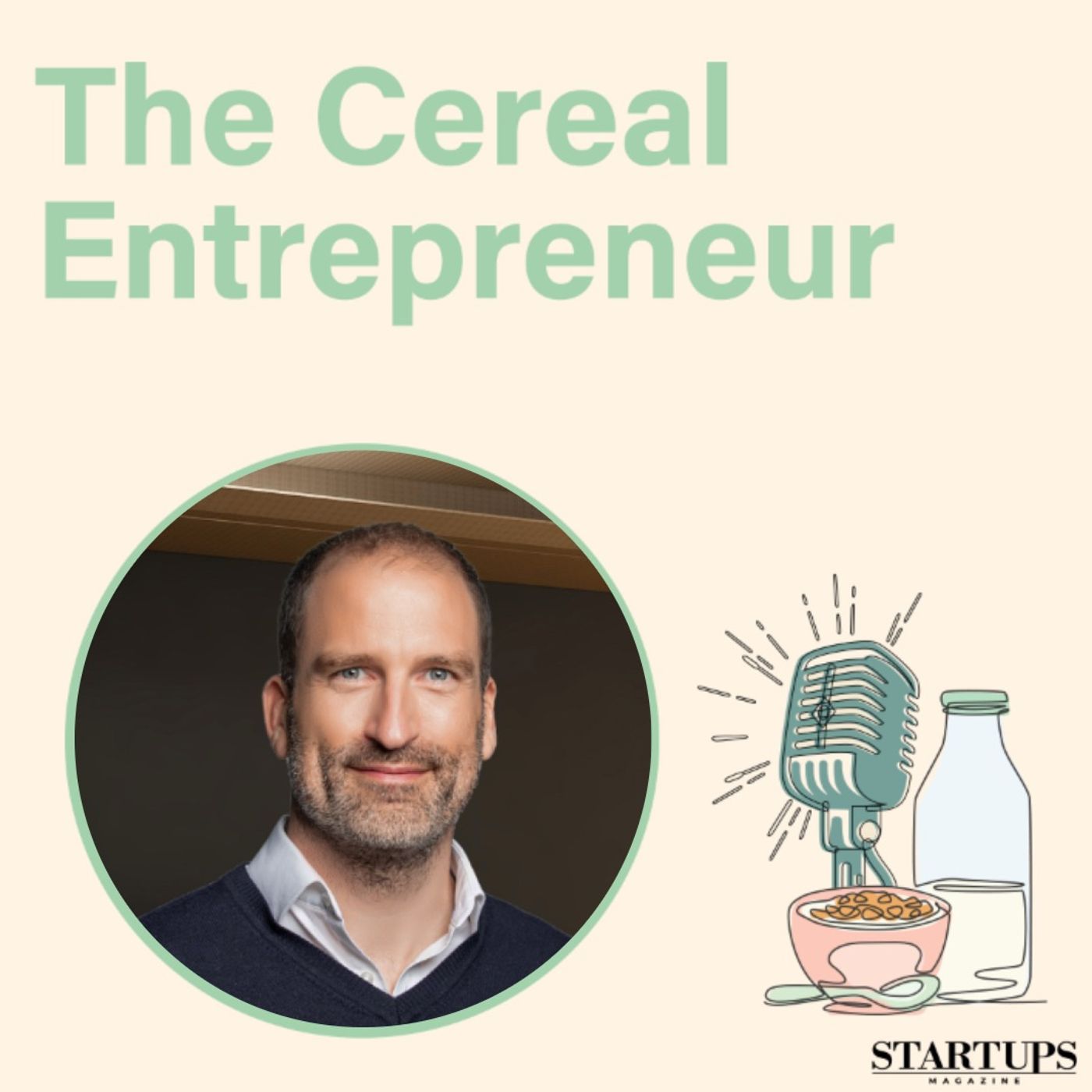
Hustle Awards 2026 Special: Paul Finch, Winner of outstanding startup support Award

 Add vo to ChatGPT or Claude to ask about everything you hear
vo listened to this episode to put together the overview and transcript, so there may be the odd mistake.
In short
Anna Wood interviews Paul Finch (co-founder/director of Growth Studio) about Breakout Beauty winning the “Outstanding Startup Support Award” at the Hustle Awards 2026. They discuss how Growth Studio supports beauty founders transitioning from early-stage brands to retail-ready, investable businesses, and how the 12-week Breakout Beauty program is structured and measured.
Guest background
Paul Finch is co-founder/director of Growth Studio, known for a startup accelerator plus corporate innovation work. He previously worked in tech and marketing; Growth Studio has worked with 3,000+ startups, helping raise hundreds of millions. Paul is now deeply involved in beauty, wellness, and fragrance.
Key claims
Beauty investors/buyers often don’t understand beauty founders, creating capital gaps. Retail is harder and more cash-flow intensive than tech. Breakout Beauty is KPI-driven, selective, and uses experienced beauty entrepreneurs as mentors. Good startup support must be implementable within founders’ time/money constraints.
Notable examples
Mentors include Trinny Wood, founders of Veve, Made by Mitchell, Elemis, and The Beauty Crop. Retail KPI: Boots commitment to list brands in 50 stores; prior cohort over-delivered (two brands each reached 70+ stores).
Transcript
0:01Welcome back to The Serial Entrepreneur. I'm your host, Anna Wood. On today's episode, I spoke to Paul Finch, co-founder and director of Growth Studio. We discussed what it was like to go from working with tech founders to beauty founders, working with corporates to accelerate innovation, and Breakout Beauty's winning the Outstanding Startup Support Award at the Hustle Awards 2026. Let's dig in. Paul, welcome to the podcast today. How are you doing?
0:32Paul Finch: I'm good, thanks. Thank you for coming on today. So, to begin every episode, we start with our signature icebreaker question, which is, what is your favourite breakfast cereal and why? Well, up until a few years ago, it used to be four or five Weetabix every morning, and then I discovered overnight oats. I do overnight oats, and then I put frozen red grapes, frozen pomegranate and a bit of oat milk and cinnamon. Oh that does sound really good. And about a litre of coffee. Of course the coffee is mandatory at this point. So would you be able to introduce yourself and tell me a bit about your background?
1:08Paul Finch: Yeah I'm Paul I'm one of the co-founders of Growth Studio and Growth Studio do two things. We're best known I guess for being a startup accelerator but a large portion of our work is also in corporate innovation so we work with large companies that are trying to scale be more competitive solve big problems and the way that they do that is often partnering with innovators with smaller companies with new technologies with new brands and we help them both understand each other and and and work together so my original background was was in marketing and my co-founder and i ryan just found that we were a bit too impatient for traditional marketing we didn't feel you know things moved at the pace we wanted to which is why we were attracted to the startup world started working with startups about 10 years ago we've worked with over 3 000 startups now we've helped them raise hundreds of millions we've helped them work with with corporates around the world and at the moment i'm very engaged in the world of beauty and wellness and fragrance and consumer but my background previous to that was more in tech yeah fantastic so to talk more about the beauty fragrance skincare bit so you have breakout beauty uk so what is it and what are you trying to achieve there so breakout beauty originally came about from some insight that we had discovered when researching founders and consumer and in the uk we found that there is incredible talent in the beauty world we've got significant entrepreneurs it's a huge market it's the eighth biggest industry in the UK.
2:40Paul Finch: But yet there are so many barriers in place and anyone could set up a beauty brand tomorrow. There's been a democratization of being able to start a community on TikTok shop or sell on Amazon or build a website with no code. All of this stuff is a lot easier than it used to be. But actually trying to scale a business from a lifestyle business to an ongoing concern to be a 20, 50, 100 billion pound business is really tough. The reasons is that getting into retail is really hard people don't really understand how retail works it's incredibly expensive and there are very few playbooks on how to grow and i think um back to my marketing days the traditional marketing funnel is completely broken there are now so many channels and all of those channels do different things and you've got to pay in order to stand out and so breakout beauty was basically crafted and created to try and help founders become that 50 100 million pound business by making it easier to get into retail, easier to scale their business, help them navigate raising investment, and really helping industry understand the talent at the earlier end of the funnel and catalyze investment support and help into some brilliant vendors.
3:53Fantastic. So how specifically does Breakout Beauty support startups? So what services and programs do you offer there?
4:00Paul Finch: Yeah, so Breakout Beauty, we're in our second program now. now. It's halfway through as of today. And it's a 12-week program. And we, first of all, really selectively chose the entrepreneurs that we felt had something really special about their brand, their products, but ultimately the founders themselves. And what we do is we take them through the fundamentals of how do you build solid foundations for your business? So how do you make sure you're economically viable, that you've got a sustainable market you can grow into, that you have the right people suppliers relationships secondly we then look at investment so if you need to raise capital is that better to raise debt is it better to go for equity and how do you start that process how do you know when to raise money how do you do it responsibly with the right people third one is then around raising their profile so everything from pr to using tiktok shop to um you know understanding the different channels and what they need and how to have a stronger proposition for each of them and then also um about how to get into retail so we take them through the the fundamentals of retail what retailers look for what they expect how your margins and your economics have to change and your operations have to change to get into retail and that's spread over 12 weeks so it's a lot of classroom learning one-to-one mentorship and what we realized early on is that we can teach people the best practice that we know but actually if you bring in founders and entrepreneurs that have been there and done that their experiences are quite different and their experiences resonate a lot better with founders so we basically wrote a list down of the best entrepreneurs in beauty that we could think of and approached every single one of them and just went would you help donate some time and give your insight feedback and experiences and pretty much every one of them said yes so we've had everyone from trinny whittle to the founders of veve to made by mitchell to elemeth to the beauty crop so yeah glow for it so fantastic entrepreneurs and they've been teaching the founders as well so it's been an incredible experience yeah there's some fantastic entrepreneurs you've got on board to help out as well yes so how do you measure the success of the program you obviously you're now on your second batch of your second cohort how do you measure whether an accelerator program has actually helped and how so what is that through revenue investment distribution yeah we've got a number of parameters of use so i think first of all there's some great accelerators out there but i'd say a lot of them are quite generalist i think my perspective we all start with the kpis so for the founders we always try and establish what the two or three goals are for their business.
6:43Paul Finch: Like what does success look like when they get to the end of 12 weeks? When will they open their bottle of champagne? And often that's around, am I in a much better investable position? Am I in a much stronger position to raise investment? Am I in a much stronger position to get into retail? Have I got into retail? Have I raised investment? And have I grown my revenue? So these are the types of metrics that we like to establish first of all. The second one is that we look at the KPIs for the program. So for the breakout out beauty it's about making sure that we can catalyze invest into entrepreneurs at the early stages we make it easier for any entrepreneur to get on because we bought the ecosystem placer together and we've helped people understand how difficult it is to be a founder in and then the third one is that some of the partners that we've brought on so boots is our key partner for and the the beauty program they've committed to listing at least one of the brands into or one of the brands into 50 stores and so the jeopardy is quite real we've got to get these founders that haven't been in retail before ready to pitch to boots and one of them is going to have a national rollout in 50 stores and you know that's considerable pressure for those brands to be under so last year in the first beauty program boots committed to launching two brands into 10 stores a piece.
8:03Paul Finch: One of them went into over 70 stores and the other one went into over 70 stores. So we over delivered on that, but that's one of the stronger KPIs. And then finally, we have some softer KPIs. So is the founder more confident in what they're doing? Have they got stronger networking and community skills? Have they got more articulate presentations of what they do and how they do it. So what do you think differentiates Breakout Beauty from other accelerator programs out there currently? There's a number of things. I think first of all is the focus for this one. So we've built a program and the partners and the ecosystem and the syllabus specifically around the challenges that high potential growth founders have and also making sure they're getting into the right rooms with the right people in the beauty world and beauty industry.
8:56Paul Finch: I think the second thing I talked about is that we're very KPI driven. So we don't want to just provide support to make sure we move the dial and move the needle on the brands that are on the program. I think the third one is that we take a really almost clinical view into how we recruit and select the founders that get onto the program. So we take a very inclusive approach to finding the best founders. So I think we find founders that other people maybe don't look at or leave behind. or aren't on other people's radar. We have quite a detailed application process, which gives us a really strong view of the business.
9:34Paul Finch: Founders, their strong points, their weak points, blind spots. And then when we interview the founders for selection, we'll shortlist them into about 20. We really look at the founders' capabilities and potential, what the market is. Is the business investable now, or could it be investable in a few months' time? Have they got a retailable proposition? So as part of our selection panels, we bring in experts that can holistically review the founders from a number of different perspectives. And then we use tech AI to try and remove all of the bias as well from some of the selection as well, because there is inherent bias and subjectivity in a lot of the selection criteria.
10:12Paul Finch: And then finally, when we've got the strongest candidates, we spend a lot of time looking at the personalities of the founders to make sure we've got a really diverse set of attitudes, opinions, life experiences, backgrounds, personality, so that we really focus on what that cohort could look like. So it's a little bit like Love Island or Big Brother or, you know, XFactor. For us, the cohort is so, so important because if you get a cohort that gels, they outperform every single KPI every single time than if you just go for what feels on face value like the best brands. And then the final thing is that we've got constant feedback.
10:46Paul Finch: So we're always asking people what works, what didn't work, how could we improve, what else could we be delivering upon. we put a lot of emphasis on networking and introductions and founders or in mental health as well and we have fun with it like we acknowledge that it's hardcore and lonely being a founder it's really tough you know a lot of the life choices that come with life founders aren't fun there's a lot of fetishization over it being great and hustle culture but the reality is a lot of times it's shit you've got no money and no time and you can't do the things that your friends do and so were cognizant of that as well so we kind of really get a good community going sorry that was a really long answer no it was a good answer though so you said you come from a tech background you're used to working with tech companies what are the differences now working with beauty companies that you've noticed i mean first of all you can probably look at me and realize that i'm bit of a tourist into the beauty world so i think there's lots i think i think the attitudes are quite different i think in the tech world so in in the tech world like we spent years working all over the world with deep tech with smart fintech smart buildings educate any form anything with the tech software or hardware we we worked in the sector and so i was relatively new to beauty two years ago we had an interesting challenge we jumped on it and i just found myself in this world of missed opportunities really and i think there's a number of things there's a lot of bias against the beauty industry and beauty founders investors don't get it a lot of investors look like me and sound like me and are the same age in me and when someone's presenting a great innovation in peptides or skincare or hair care like blokes just don't get it so they don't invest in it and as a consequence of that there's very little capital going into consumer and as i said earlier it's the eighth biggest industry in the uk that's a massive opportunity i think the second thing is there's a lot of you know with with the buyers i think it's a lot harder to scale people can get to a certain stage with dc before you know they have to get into retail or they have to change their business or they have to try and do a series a and the money's generally not there retail is something that people have to do it's a lot more capital intensive the payment terms are awful so compared to tech where you're buying people and you know data and very little hardware i think in the beauty world you've got to invest a lot of money before you see any of that money paid back in terms of buying stock manufacturing you know you pay your suppliers you might not be paid to the retailer until six months nine months later so the cash flow mechanics are very different and i think with tech there's just a culture of you have a good idea you go and raise money it's a lot easier to raise money and you know great whereas i think there's a lot more hesitance in raising money in the beauty world i think a lot of the founders we see investment hasn't really been on their radar they feel too insecure to go and get it the relationship with debt is quite different to a lot of the founders that we know so it's it's a very different world i we saw a massive gap between founders and established businesses and very little very fragmented support and that's what we want to try and bring together whereas I think in a tech world the ecosystem is really strong it's very easy to get hold of people those are some of the fundamentals that we've seen.
14:12Great so you're now on your second cohort is there anything that you learned from the first cohort that changed how you approached the 2026 program?
14:23Paul Finch: 100 % I mean the first cohort for us was a bit of a learning curve it was it was a pilot you know we had no idea programs like this don't exist and didn't exist so it was a bit of a risk from our perspective and the second cohorts we made this cohort longer because we realized in the first cohort there's so much support and help that the founders need and you need a longer program to be able to do that i think the second one is the beauty world is very predicated on building relationships with retailers, with investors, and having a longer program helped the founders be able to do that. I think we were able to go into a lot more depth on a lot more topics than last year.
15:07Paul Finch: So last year, we had sessions and sprints on investment, but actually this year, we're able to go much deeper into the beauty of unit economics and cash flow forecasting and all the stuff that founders need so the depth of what we could do is much better and I think also last year we made a lot of noise last year with the program and we had a lot of interest from people wanting to join the program as in suppliers or experts or mentors and so we're able to fit those in a lot so the things that we wanted to do last year that we couldn't we're able to do this year. Great so working with so many startups across the years what is one mistake that you often see early stage founders make and how do you think they can go about avoiding it oh gosh so many i think not having a click not having a clear why so i think the founders that do really well really understand why they're in the game in the first place more so than their product or their brand but like what what is it that's driving you as a founder to do this and i've i've definitely seen different types of archetypes and personalities to how people come into the startup world but The people that know what drives them and what success looks like do really, really well.
16:21Paul Finch: I think the second one is having clear goals and clear directions. So where do I want to take this brand? What are the success metrics and how do I measure it? If you've got that clear destination and some numbers behind it and clear targets, I think oftentimes you establish them. I think keeping focused. So many founders try to do too much. They fall in love with their product. They don't fall in love with their customers enough. and so that disconnect of always trying to you know in tech have new bits of their product or or new features with beauty you know start new product development before they've really established their hero products and i get it as a founder you're insanely curious you want to do more and bigger and better but actually staying really focused on the one thing that can establish you as a company first and then when you've got that start to broaden out is is is one thing that we feel people try to do too much too soon too early yeah so i wanted to take it back because we're here specifically because breakout beauty won the outstanding startup support award at the hustle awards this year so congratulations on that so thank you how does that make you feel and what does that mean for you guys i mean i think for us we've got a fantastic team that have given their blood sweat tears to always make breakout beauty bigger better more helpful more supportive and i think for us it was a real i was really proud of the team that they they created something so special that they're being endorsed by such a great award i think for us we always try and champion founders the way that we operate is up until the start of the program we make sure we get everything in place we make sure the partners are happy but the minute the program starts it's all about helping the founders and and that's our why that's why we're so driven so it helped us it was a great endorsement you know it's very humbling to be chosen a fantastic competition out there really proud of the team and really motivated to to do so much more so we were super chuffed and unfortunately on the night i was stuck i was i came up from from somerset to go to the award and i was stuck on a train about 45 minutes out of london the entire time so I missed the entire awards ceremony and all the fun but I was um yeah I nearly got there but really really pleased yeah I know the next day I checked my emails and I saw that you'd emailed and you were like I'm so sorry I was stuck and then I think it was something like 20 minutes later I got another email from you going oh my god we won what yeah and it was it just It gave me a bit of a laugh because I'm like, it was just that day.
19:01It was so hot in London. So many of the trains were cancelled. Some of our people who work at Star Tops magazine had to leave early because loads of the last trains had been cancelled. So it was just one of those days.
19:17Paul Finch: It was gross. And with about the people in the carriage outside Reading, it's no fun way to spend an interview. No, it is not. Nothing worse than being stuck on a train. So having won the Outstanding Startup Support Award, what does good startup support look like in practice for you? I think for us, really understanding the challenges that the founders have, first of all. And I think oftentimes people are very generous with their feedback, with their support, with what they feel is helpful. But actually, if you're a founder, particularly in your earlier days when you might be one to five people, the reality is the founders have no time.
20:00Paul Finch: They've got no money. They're trying to do a thousand things. As I said, their motivation for coming to that startup is manifold. old so you might have a product person that's never done hr or a deep tech guy that's never done marketing or a you know an entrepreneur that doesn't really know product so they've got loads of blind spots and they're expected to do it all and so i think first of all we try and understand the founder first of all like where are they where are they trying to get to what are they great at where are the things that they they're not getting time to and what are their blind spots and do they know those blind spots and i think if you understand that first of all then the support you can give is in the context of their lives, their predicament, their situation.
20:44Paul Finch: And I think for us, it's about making sure that the advice we give is inspirational and great and strategic, but fundamentally it has to be implementable to the founder. It's pointless me telling you a TikTok shop strategy or an investment raising strategy if you don't have the skills, time, resource to be able to do it. So work within the context of what the founder can fundamentally do or achieve is the first one. I think the second thing is just being cognizant to all the pressures they have. The third one, just all of us who have come from the corporate world, we've all got great connections.
21:20Paul Finch: We've all got people that can help and support them. And I think generosity of connections and just going, speak to this person, they may or may not be able to help, I think just really helps. I think a lot of founders that we work with don't come with those connections or networks or they've grown up not in the room that other people can get into. And so just allowing them to get into those rooms is really helpful. And then a lot of founders don't know what they don't know. And I think when you're in a myopic view of building a product or a service or a thing, it's very easy to get caught in that.
21:55Paul Finch: So oftentimes we meet great founders and they'll talk about how great the solution is, but not tell you what the product is or who the customers are. So just helping them to cover those blind spots, I guess, and speaking more customer focused or more human can be really helpful. So looking at both the growth studio journey as well as the journey of Breakout Beauty so far, what would you say have been some of the biggest challenges and how have you managed to overcome them? From a growth studio perspective, I think, first of all, very few people wake up in the morning with budget wanting an accelerator program.
22:31Paul Finch: and so i think we've chosen a particularly challenging business model and i think once people get with some of the programs they see the value straight away and they always come back for more i think that's one i think second one is we're in a really tough climate at the moment economically and i see post brexit which gutted a lot of the opportunity for the uk startup world has made things 10 times more challenging than it was because there's no money a lot of talent's gone home we can't export to europe as much as we're able to and so that environment has also made it really tough i think for founders ai is both an opportunity and a challenge i think in the founders that we work with will see we are nowhere near ai native enough compared to other markets and that's really really scary i think we're way behind the curve on on that sense i think some of the biggest challenges we see from the corporate world corporates don't work as fast as we'd want them to.
23:29Paul Finch: I think sometimes they don't take as bigger risks as we'd want them to. And processes sometimes impede really easy ways to help them grow and be more corporate competitive. So an innovation perspective, that's one big challenge. I think from working with startups perspective, there's just not enough of us and not enough time. I think the UK has got incredible talent. I think we're in one of the hardest environments that certainly I've ever seen. Brexit was catastrophic. for the UK startup world. I think AI has been really interesting. I think we are way behind the curve in terms of being AI native compared to other markets.
24:09Paul Finch: And that's really scary. I think a lot of the startups we work with say that they're AI first and they're using chat GPT for copy or structured thinking. But I worry that we're way behind where we need to be. I think, I mean, luckily we've always been quite a small team. And so whenever we've had challenges, we've always been able to work around them fairly quickly and fairly easily so yeah no no catastrophic challenges yet touch wood yeah well that is always a positive and on the flip side of that question what would you say have been some of the biggest highlights of the journey gosh there have been so many highlights along the journey i think for me get to work with brilliant people so my my business partner is my best friend and has been for 10 years and you know we've we've managed to somehow carve a company where we can travel around the world and work with some really interesting stuff that's been brilliant from day one i'm really motivated by solving problems and and helping people do the best they can be i know that sounds a little bit cheesy but oftentimes when you be a founder that has all the potential that they can't see and you help them sort of redirect their path of their journey and they go on to become very successful i get huge amounts of pleasure on on doing that from a corporate innovation perspective and some of the way some of the big companies we've helped work with startups a lot better and a lot more effectively um and the massive impact it's had to their bottom line that's always been really really exciting for me to to see we don't always get the credit for it but you know when you're walking down the street and you see something that you've created or pitched an idea for or come that that's great and then i think you know breakout beauty and breakout wellness has been fantastic it was a an idea that came about kind of fully formed in the shower pitched to someone who instantly saw the value of it at boots who completely got what we're about and what the vision was and signed up for it within about three minutes of a phone call and so the highlights also been being able to work with people who have the bravery and the risk appetite and can see what we see and in amongst the fog of yeah a bit of a challenging environment yeah amazing so as a founder yourself but also someone who has worked with plenty of founders what is one piece of advice that you would give other founders no matter what sector they're in stay focused what's their focus like aim for understand what product market fit means for you and what the indicators of product market fit focus on the one thing that you can do brilliantly until you've got a product that your customers love and until you have that stop all the distraction of trying to do too much or too many different products like focus on the things that you know you can sell and and start that i think that's my biggest one and then for the other ones like stay sane you know a lot of us are working in companies where we're not saving the world we're curing gander you know it's not the end of the world if something inconvenient happens.
27:12Paul Finch: So don't be too harsh on yourself. Great. So to round off this episode, what does the future hold for Breakout Beauty? Do you have any big plans in the pipeline that you can discuss? Yeah, we've got lots of plans we can't discuss right now. I think for us, we are midway through the Breakout Beauty program. I think we've got possibly the strongest cohort we've ever had of all of our 100 programs that we've run. So right now, I'm really focused on making sure that we've got brands that we can make mainstream and giving them as much support of next few weeks as possible. We have our breakout wellness program kicking off in three weeks time, so September the 22nd.
27:54Paul Finch: We've just selected the cohort, I think, that we want to interview. And again, they look really strong. So we're really focused on that and i think i can see from the industry perspective that the industry has a lot of lot to go sorry i'll rephrase that i think looking at the industry and the sector and the ecosystem that we work in i think there's a much easier environment that needs to be created for great founders and founder-led brands to work with retailers and one thing i really want to be focused on next year is not only supporting founders, but actually helping retailers understand how they can get a competitive edge from working with new brands first and how they can put in better processes, better propositions to find, select and soft land those brands.
28:46Paul Finch: So I think for us, it's about taking on a lot of retailers as well and partnering with them and go, look, you can probably do things a lot better. Let's help you do that. Great. One final thing to round off this episode. Is there anything that you wanted to add or plug i should have thought of that before this we've got applications for our wellness program um i think if you're a startup particularly in consumer at the moment so if you work in the world of fragrance or wellness or beauty or anything go to growth studio.com for our newsletter because we have loads of initiatives all the time i'm always looking for great brands that we can introduce to retailers to investors that we can you know invite to our our next initiatives and if you're a big retailer i want to know how to work with with smaller brands and do some of the fantastic work that say boots is doing with boots ignite then drop us a drop us a note we can help you out well thank you so much paul it's been great speaking with you and learning more about breakout beauty and once again congratulations on winning the Outstanding Startup Support Award.
29:53Thank you.
29:53Paul Finch: We'll try and do it again next year, see if we can get to it. That would be amazing. We'll hopefully speak soon. Thanks so much. Thank you for everything, Ella. Thank you. If you like this episode, be sure to subscribe to the podcast and check out Startup Magazine's socials to stay up to date on the latest startups news.
From the publisher
In this special episode of The Cereal Entrepreneur's Hustle Awards 2026, Paul Finch, Co-Founder of Breakout Beauty, and the winner of the Outstanding Startup Support Award, sat down to talk about the work he is doing at Breakout Beauty, and the recognition behind the award.
More from Startups Magazine: The Cereal Entrepreneur
All episodes
We use cookies.They keep vo running smoothly and help us improve it. Privacy policy
Scan the code with your iPhone camera
Listen in the app.
- Play everything vo finds for you
- vo remembers everything you hear
Go to the App StoreFree on iPhone