In short
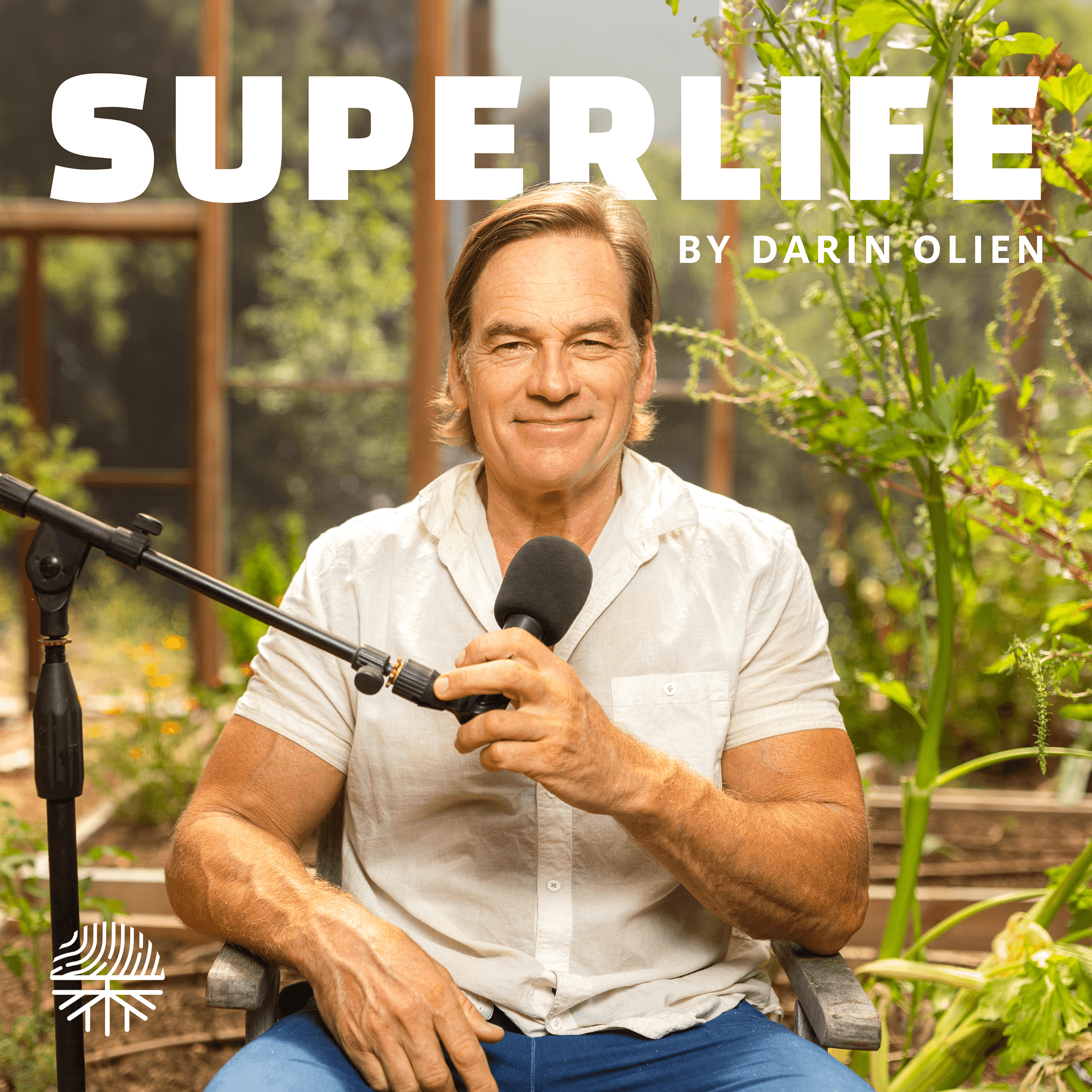
Podcast Summary: SuperLife with Darin Olien - Episode with Gustavo Herman Moro
Podcast Overview
- Title: SuperLife with Darin Olien
- Description: A podcast focused on motivating listeners to achieve a healthier lifestyle through conversations about nutrition, mental health, and sustainable living. It also addresses daily habits that may be harmful to individuals and the planet, termed as "Fatal Conveniences™".
Episode Title
- Gustavo Herman Moro: Inside the Largest Sunken Treasure Discovery in History
Episode Description Darin Olien interviews Gustavo Herman Moro, a part-time explorer and landscaper who has recently made significant discoveries relating to historic sunken treasures off the South American coast. The discussion covers Moro's journey through underwater archaeology, including ethical dilemmas, legal battles, and the personal costs associated with treasure hunting.
Key Discussions
Introduction
- 00:00 - Welcome to SuperLife: Darin introduces the podcast and the guest, setting the stage for an engaging conversation.
- 00:02:10 - Meet Gustavo Herman Moro: Introduction to Moro and his background, including his discovery of the La Capitana galleon.
The Journey to Discovery
- 00:03:05 - Beyond Gold: Moro emphasizes that treasure hunting is about more than monetary gain.
- 00:03:17 - The Dive That Changed Everything: Moro reflects on the pivotal diving experience that shifted his career trajectory.
Legal and Ethical Challenges
- 00:03:25 - Legal Battles: Discussion of the legal challenges faced with governments regarding treasure recovery.
- 00:11:35 - Early Failures: Moro shares insights on initial setbacks and the press's role in public perception.
The Reality of Treasure Hunting
- 00:07:43 - Reality of Treasure Recovery: Insights into the complex and often disappointing nature of treasure hunting.
- 00:23:11 - Archaeologists vs. Treasure Hunters: The ongoing conflict between commercial treasure hunters and academic archaeologists.
Innovative Solutions
- 00:25:19 - Solving the Problem with Blockchain: Moro discusses the potential of blockchain technology to revolutionize treasure recovery and museum curation.
Personal Experiences and Reflections
- 00:38:11 - A Personal Story: Moro shares a poignant moment involving his wife’s concerns about the dangers associated with treasure hunting.
- 00:55:14 - New Dreams: Discussing the vision of creating museums to showcase findings rather than commercial markets.
Future Aspirations
- 01:01:23 - The Team That Made It Possible: Acknowledgment of the collaborative effort necessary for his projects.
- 01:06:57 - Where the Story Goes Next: Closing thoughts on future endeavors, including further expeditions and potential discoveries.
Key Takeaways
- "Treasure isn't the gold — it's the journey, the team, the obsession, the heartbreak, the near-losses, and the impossible dream you refuse to quit on.": This quote encapsulates the essence of Moro's experiences.
- The importance of teamwork and community in treasure hunting is stressed as essential for navigating the challenges encountered.
Sponsors
- TheraSage: Promoting natural healing products.
- Bite Toothpaste: Offering sustainable oral care solutions.
- Caldera Lab: Clean skincare products.
Conclusion Darin Olien and Gustavo Herman Moro's conversation reveals a deeply personal and adventurous side to treasure hunting, highlighting the complexities of ethics, passion, and discovery. The episode leaves listeners inspired by the possibility of adventure while urging a thoughtful approach towards history and archaeology.
Connect with the Host
- Website: [Darin Olien](https://darinolien.com)
- Instagram: [@darinolien](https://instagram.com/darinolien)
Connect with the Guest
- Discover Herman's Treasure: [Coin Archives](https://www.coinarchives.com/w/lotviewer.php?LotID=8042192&AucID=9537&Lot=235&Val=142ff98b6437fb0d75cdfa89b546043f)
- Read About Herman's Discover: [Washington City Paper](https://washingtoncitypaper.com/article/276113/sunken-pay-dirt/)
---
This detailed summary captures the essence of the podcast episode, highlighting significant moments and insights that potential listeners may find valuable.
Written by AI. May contain mistakes. Listen to the episode to check what was said.
Transcript
Automatic transcript. May contain errors.0:03Darin Olien:Welcome to Super Life with me, Darin Olien, a podcast where we explore, discover, and share solutions that promote a healthier life and a better world. Together, we'll ignite possibilities, inspire change, and build sovereignty, creating a roadmap towards a super life for you and for all. Get ready to start living your super life.
0:32Darin Olien:Before we start this podcast today, I want to tell you about my sponsor, Therisage. You know, there's a reason Therisage has become one of the most trusted names in natural healing. Because it's not just a brand, it's a family. Robbie and Melody, who I've known for a very long time, built Therisage from the ground up, driven by love for their family and a belief that nature already gave us everything we need to heal. We just have to activate it. For 25 years, they've led the world in infrared, red light, natural frequency technologies, not by chasing trends, but by standing in truth. Every Therisage product is built with integrity, backed by science, and made with one purpose.
1:24Darin Olien:to help you reconnect with your body's natural intelligence. This is real wellness. Honest, grounded, family-made. This is Therisage. It's safe, low EMF, and no weird flicker of lights. It's in many sizes, small size as well as big size. And when I lay on this thing, my full body is fantastic. You can go to Therisage.com and get 15 % off your order. Just type in Darren, D-A-R-I-N, and magically you get 15 % off. I'm super stoked for Therisage. I love their company. I love what they're doing. And you will too. If you've ever dreamed of uncovering buried treasure, If the stories of lost galleons and sunken Spanish silver ever stirred something wild in your imagination, then you're going to want to buckle up for this one.
2:27Darin Olien:My guest today is Gustavo Germán Moro, a full-time landscaper and part-time adventurer who defied the odds to uncover one of the largest, most historic sunken treasures ever discovered off the coast of South America. Hermann is the man behind the modern rediscovery of La Capitana, a Spanish galleon that sank in 1654 on its maiden voyage, carrying more than 10 million ounces of silver, priceless artifacts, and centuries of intrigue. But this isn't just a story about gold and glory. It's a story about obsession, perseverance, and the cost of chasing a dream against impossible odds. In this conversation, Herman walks me through the painstaking research, the dive that changed everything, and the high-stakes legal battle with the Ecuadorian government, and the threats that came once he actually won.
3:32Darin Olien:We talk about what it's like to hold centuries-old treasures in your hands, how it feels to be up against a system determined to take it from you, and why for Herman, it was never really about the money. It was about finishing what he started. It was about a promise to himself. This one feels like a movie, but it's all real. Let's dive in. Here's my conversation with Herman Moro. morrow hermit thank you for meeting me here and uh thank you joining the super life podcast um you know this is a this is a fascinating coming together of us i have some mutual friends of ours helping out in various ways and they're talking to me about there's a treasure hunter that we're dealing with and i'm kind of like what like the random kind of uh thing and then i just kept hearing about you and they're like hey there's an opportunity to have a conversation
4:38Gustavo Herman Moro:with a real life treasure hunter so it used to be when we were kids that treasure hunter had like this you know adventurous connotation these days is politically incorrect uh war because the academic community and the underwater archaeology world doesn't quite like you know the approach to looking for shipwrecks and salvaging sunken treasure in a way commercial company will do so they will use that word that description treasure hunter almost it'd be something bad but I think we are all you know deep inside from we were kids you know a little bit of a treasure hunter ourselves the spirit
5:16Darin Olien:lives on the spirit of just us discovering as people I think how did How did you kind of fall into this career?
5:26Gustavo Herman Moro:Well, I'm a relationship from Argentina. I arrived to the United States in 1987, and Ronald Reagan was still president, I can't believe, and how much time was. And my father had a diplomatic commission in Washington, D.C. We live in McLean, Virginia, and I was 22 years old and didn't speak any English. And someone told me, why don't you start mowing lawns, you know, all those big yards, big houses. And so I started a small landscaping business, and that was my first business in the U.S. And I did that for a while and very, very successfully. And the good or the bad, I'm not sure about the landscaping business, is that during the wintertime, you have three months of no work, basically.
6:11Gustavo Herman Moro:So my wife and I, we were young. We certified ourselves in scuba diving and start doing a little bit of Caribbean vacation during the wintertime. And we subscribed, I still remember, to this magazine. This is the time in which, you know, you pay for a subscription and the magazine would arrive to your house maybe once a week or once a month. This was the Skin Divers magazine. And I still remember December 1992, the front page of the magazine said that the 10 richest shipwrecks still not found in the Americans. That was the title. And I was amazed that I didn't even know that you could make a profession out of looking for historical shipwrecks.
6:54Gustavo Herman Moro:And that was the beginning. We became experts in doing archival research in Spain and figured out how to locate historically these historical shipwrecks and decided from that one list to pick up one, we choose a specific galleon lost in 1654 off the coast of Ecuador. And made that our target and ended up applying for a permit with the Ecuadorian government. We were a little bit young and naive, but we put it through and in 1996 ended up discovering this one galleon. And that one was the El Capitano? Yeah, La Capitana. That was the nickname of the galleon. The real name of the galleon was the Jesus Maria de la Limpia Concepcion.
7:43Gustavo Herman Moro:That was its full name. But because it was the flagship of the South Sea Armada, it was nicknamed La Capitana. And a very big, very important vessel. And we were able to recover a few thousand coins coins and a few silver bars and a few handful of gold jewelry. It was a great project. But we never really ended up, you know, bringing it up as much treasure as we thought we were going to find. And that part was a little bit disappointing because we spent a lot of money in the project and by the time we paid all the investors and the lawyers and we really didn't make much of a profit. Nevertheless, from that date on, we were hooked into the shipwreck, you know, world.
8:31Darin Olien:I mean, there's so many questions, and I guess the first question is, you know, it's that idea that before I get into all of the logistical things that must go into getting the approval to go look for it, but when you first find something, what is that? Let's use this one, La Capitana. La Capitana, yeah.
9:08Gustavo Herman Moro:What was that feeling like? That's a very interesting moment because you go from complete acceleration for the discovery itself and almost immediately you start worrying about all the problems you now have and you go from this dream-like situation come true into a nightmare, which is, okay, how do I handle that and all the problems that that entitle. So it's a very pivotal moment. And like I tell all my partners now that we have new projects, is that the rich part, the really nice part about this project is so much in the journey, it's in the searching. The moment we succeed, you know, the problems began.
9:51Gustavo Herman Moro:someone said that treasure is trouble and most shipwreck projects around the world that I know of ended up with one kind of problem or another it's hard to make this a true adventure all the way through and I like to tell my team to enjoy the search because they don't quite believe me, they all think they all want to wait until we find the treasures to be happy but really happiness is probably more in the getting there than how to deal with it afterwards.
10:22Darin Olien:Yeah, because it's the whole, it's the quintessential sexy thing and you're discovering something and then you're discovering a lottery, right? You're finding, but there's a lot of...
10:38Gustavo Herman Moro:Yeah, and gold changes people. It does. It really does. And I know I've heard it before, but once you experience it and you see it in person and all those friendships and partnership, everything is okay until maybe that moment. But it's like greed connected to it. Well, yeah, it's human nature, I guess.
10:59Darin Olien:So how do you, I mean, I would imagine your team is a trusted team that you've had to kind of work through a lot of stuff with.
11:11Gustavo Herman Moro:Yeah. Well, at the beginning, you do what you can. And we put that first project in Ecuador when I was very young. I was still managing my landscaping business in Washington, D.C., and I just was able to raise a little bit of money from friends and neighbors and whoever I could convince about this crazy, crazy idea.
11:29Darin Olien:You have to sell a hell of an idea. Yes.
11:33Gustavo Herman Moro:Yes, yes. Especially just starting out. But our historical research was impeccable. We really spent a lot of time, and we were pretty much sure of exactly where this shipwreck was. and some other companies have gone through looking for it in the past. No one had succeeded, but we did some really, really good historical research and we felt very confident about our chances. And I guess we were able to translate that to the people involved.
12:05Darin Olien:What are the biggest kind of aspects of feeling confident you found it? Like having not gone down there yet, what are some of the things that you're looking for to validate? And at the same time, you're having to find all of this stuff, find all this information, keep it kind of quiet in a certain sense, right? Because these things are, you know, you're talking about 1600s, 1700s. Like these are old. These are somewhat known in a certain sense. Some of the big ones maybe.
12:42Gustavo Herman Moro:This particular project in Ecuador, we immediately ran into trouble because even though we were pretty confident, we had found something that was worth millions of dollars. And the local press picked up on the most exaggerated valuations for the shipwreck. And they published figures like$4 billion shipwreck found off the cost of Ecuador. I mean,$4 billion. So as you can imagine, everybody went a little bit crazy because people actually believe what they read. And when a reporter came to me and said, well, how much is this discovery worth? I would say, well, we don't know exactly. I was being very cautious.
13:27Gustavo Herman Moro:And it's probably worth a few million dollars. It's hard to say. But they didn't want to print that. They went to someone else. It doesn't matter who. And someone else said, oh, no, that's a$4 billion discovery. And that's what made the titles of the newspaper. So try to imagine dealing with that. And they could pay the foreign date of Ecuador at the time. That brought all kinds of problems, big problems. And I don't want to get into the details of that, but that was some nasty times. And my wife almost divorced me at the time. I mean, that's how bad, you know, it got in Ecuador, trying to get the project through after the discovery.
14:02Darin Olien:So generally speaking, without getting into those details that you don't want to get into from that, but generally speaking, you have this information, you discover some information. How do you then go about what waters they're in, what ship, who owned the ship? How do you start navigating all of that?
14:24Gustavo Herman Moro:Well, in our first project, the Capitana in Ecuador was pretty straightforward because this was clearly in Ecuadorian waters. And we had actually worked out an agreement with the Ecuadorian government. We had a permit. And so that was very straightforward. But that is not always the case. You know, we are now involved in a new project that has a multi-jurisdictional and affair attached to it. You know, this one reef and that is fought over by different countries. The current one. Currently, yeah. We just came back from an expedition and we made, you know, some really incredible discovery. And we're trying to sort it out to see how to manage legally the next step because it could get complicated for this new project that we are developing right now.
15:19Darin Olien:And where is that? Can you give a hint as to where that is sitting?
15:24Gustavo Herman Moro:It's in the Western Caribbean Sea, and I prefer not to get into the details of that because we are, like I said, working out the details. And there is a chance we might make a claim in U.S. federal court. And at that point, the location will become public news, and then we will deal with that. But it's a complicated situation and we're not exactly sure how it all will work out.
15:52Darin Olien:So you have your team and then you have governments, you have international waters. So, you know, revealing what you can. Who from the government is helping you or can they help you or what does that look like?
16:10Gustavo Herman Moro:Well, in general terms, most countries will have a jurisdiction over, you know, their coastal waters. That is defined in the United States as three miles, okay, from shore. Most other countries go up to 12 miles. So each country—
16:27Darin Olien:So the U.S. is only three miles outside? Yes.
16:30Gustavo Herman Moro:Other than that, you are like in international waters. And so most countries will have their own set of laws. and most countries in the world will forbidden the recovery from any shipwreck site because they consider that an archaeological excavation place that has to be protected and they are right. I mean, this is something that has to be protected. So there are very specific laws about what you can and you cannot do and how to do it and the biggest problem with that is that most countries in the world will not allow you to sell the artifacts that you find or you recover from a shipwreck site.
17:13Gustavo Herman Moro:And if you cannot sell them, then there is no commercial incentive to go out and look for them. And the looking is very expensive. I mean, marine surveys is a very expensive endeavor. So, I mean, why would you risk, you know, capital and your investors' money if you cannot make a return on that investment? So that's why most shipwrecks projects never really take off the ground because this political situation makes it not viable, economically speaking. And that's a problem at IPT because all these shipwrecks, you know, there are millions of them all over the world. And these projects don't get to be, you know, developed.
17:58Gustavo Herman Moro:and by no one because, again, there is no commercial advantage to it.
18:02Darin Olien:Yeah, I mean, and I was digging into some of the research, literally millions of shipwrecks, right, that have not been discovered. So obviously the human history, there's a lot of...
18:15Gustavo Herman Moro:Yeah, and they don't have to have treasure in order to make them interesting. And also another fact is that most shipwrecks, maybe more even than 90%, occur in shallow waters. These vessels were lost, you know, maybe because of a storm or faulty navigation and some weather conditions. But usually this happens, you know, when a ship struck the bottom. Very rarely a vessel sank in the middle of the ocean. Maybe 10 % or less of the time that happens. So most shipwrecks are in coastal waters, which means they are findable and you can have access to that with scuba gear. And during the last, you know, thousands of years, we have been having all these shipwrecks lost all around.
19:08Gustavo Herman Moro:And now we have the technology to actually go out and find them. And that has been happening for the last, you know, 60, 70 years. And many shipwrecks have been found. but the fact remains that without the economic incentive to figure out how to do this correctly and how you could conduct an archaeological excavation from the site and these are just too expensive to do on academic purposes and most countries do not have the means or the funds to go ahead and pay for this kind of project themselves so the shipwrecks lay down on the ocean floor and no one looks for them, no one finds them. It's like a sad situation from that regard.
19:52Darin Olien:Yeah, so it's an interesting thing because, you know, they're archaeological, they're historical, they're valuable. You know, UNESCO gets involved. You know, they want to protect all this stuff, but at the same time, from that scientific perspective, There's no money. There's not enough time. There's not enough people. There's not enough money. So you're kind of in this gray zone of like, well, how people like you want to go find them, but you've got to raise independent money to do it. But you need a little return. You need something or else nothing happens. Correct. So someone like you are pushing forward to find things that are very interesting, right?
20:45Darin Olien:But at the same time, you're not incentivized. So it's a weird... How do you exist at this point? By 2050, there will be more plastic in the ocean than fish. Over 500 toothpaste tubes have been thrown away since I've started this ad. You don't think of these small little things, but they add up a lot over time, and we can do something about it. That ends up to be over a billion plastic toothpaste tubes a year alone that ultimately end up in our environment and in our waterways and ultimately ends up in the ocean. Do you want to add to this or do you want to do something different? Plus, maybe that exposure to that plastic, getting the plasticizers and the endocrine disruptors and then putting that toothpaste in your mouth also is not a good idea.
21:41Darin Olien:There's some great solutions. You can DIY stuff. I've got many of these in my fatal conveniences, but the easy ones that I use every day and I'm about to travel a lot more and the traveling makes them really easy, I go to bite. I bite down on a little tablet, which is not interacting with any plastics because it's in a glass bottle. And it's refillable and reusable and sustainable. And there's no unwanted toxic fluorides, flow agents, and solvents in my mouth. So my favorite is this Bite Toothpaste. 100 % home, compostable pouches, subscription models. You don't even have to think about it again.
22:27Darin Olien:You're helping you by putting clean products in your mouth, and you're helping the environment because Bite Toothpaste is one of the best companies I've seen looking at all aspects of their supply chain and their refillable, reusable, sustainable, regenerative practices. So Bite is offering you, all my listeners, 20 % off your first order. Go to trybite.com, T-R-Y-B-I-T-E forward slash Darren20, or just use the promo code Darren20, D-A-R-I-N, and you can get 20 % off your first order with a great new toothpaste without using the tube.
Read the full transcript
23:07Gustavo Herman Moro:And you can believe how polarized this issue has become to the point if you are an underwater archaeologist and you just happen to decide to take a job with a so-called treasure hunting company and you'll be ostracized from your profession. Your peers will, you know, shoot you down. It will be the kiss of death. And it doesn't seem to be a problem on the surface that doesn't seem to be too hard to solve. I mean, how come that archaeologists and commercial salvage cannot work together? There has to be common ground. But in my experience, you know, in this field for the last more than 30 years, and I came to believe that that is indeed, you know, something very, very difficult to do.
23:52Gustavo Herman Moro:One of the major points of disagreement is what to do with the artifacts that you find. because archaeologists say, and they are right when they say it, that for a collection of artifacts to be significant, you have to, one, keep it together. If you spread it all over the world and pay 100 investors, then the collection basically disappears. And you have to make it accessible so historians can look at it and can study it. and therefore it's hard to comply with that because if you cannot sell the artifacts that you find, how you make a return for your investors. Now, we have been working with a new technological approach to see if we can solve that problem and I'm not an expert in blockchain technologies And I know that most blockchain applications are usually a scam.
24:59Gustavo Herman Moro:But this one solution that we are bringing forward, this idea of creating a token that can connect the coins of the past with the coins of the future. Interesting. in which people could, you know, buy this entertainment token as a way of helping to create the expeditions and to protect the treasure founds, means that now maybe companies like ours can develop shipwreck projects and we can devote, you know, all the artifacts that we found to a museum. And someone that invests in our token or someone that purchased our token with the idea of helping to protect history and that can, you know, enjoy the fact that they have been able to do so and stuff maybe keeping that coin, you know, in his house, inside, you know, the shelf and the kitchen.
25:53Gustavo Herman Moro:It's now in a museum where others can look at it and appreciate it. And so we have very high hopes. We think that if we can bring to all these countries in the world this new idea, then we'll be able to develop shipwreck projects. And underwater archaeology, commercial companies like mine, we can benefit from the tokenization process. And then we can put everything we find in a museum so other people can enjoy it. And this becomes a win-win-win situation because we can go from no one can do anything and these shipwreck sites stay unknown on the ocean floor to a situation in which we all get to work.
26:40Gustavo Herman Moro:Companies like mine can deploy our capital and our know-how, our technology, find the shipwrecks. And their water agencies get to work. All these materials that are found can be put in a museum. Museums can be built. Exhibits can be created. the public can enjoy the exhibits and the most important thing there is nothing cooler than a maritime museum so if you can build a maritime museum in a little community or city anywhere in the world it will attract tourism it will be a good way to create economic growth for that community so I'm really hoping that this particular blockchain application will solve a real problem and I'm proud to be part of that effort And it's not going to make every underwater archaeology happy, but at least it will be a good start to try to find common ground.
27:30Darin Olien:Yeah, step forward. So just to walk that through, like the value that someone would be buying the blockchain. So they would be buying a token to support. So they're investing into a token. And so the value, how is the value then, if it's sold to the museum, is it forever connected? than to...
27:54Gustavo Herman Moro:No, we cannot technically connect the two right now because the SEC, the Security and Exchange Commission laws are very restrictive in that regard. And it will be probably illegal, you know, to do that or to say so. And at least for now. And so we are creating a token that is described or defined as an entertainment token. So you as a holder of the token, okay, you can have, you know, maybe special rights to our expeditions. You can enjoy life, what we're doing, and you can have like a virtual representation of a certain artifact. We are thinking maybe for the most important artifacts, we can create NFTs that then you can own.
28:46Gustavo Herman Moro:So instead of owing that particular artifacts, again, in the bookcase, in your living room in your house, that artifact is not in a museum. And you have the virtual representation of the artifact. And you can be proud that that's the right way of owning such a historical relic. And because we, you know, it's the politically correct way of doing it. And that can make you proud. And there will be value in that. and it's the right probably way as we move into a future in which things will become more and more restrictive as you know.
29:21Darin Olien:And it would seem to me it would give an access to people getting almost a VIP into the discovery, into the entertainment value of videos and like you're there and you're supporting this and you get to experience this deeper than you would and then having this representation of something that wasn't known and that was just discovered, then you get a little bit of that potential hit that we all love, right?
29:55Gustavo Herman Moro:That's like my dream, to be able to take all these people onto these expeditions. And we just came, like I told you, from the ocean less than a month ago, and we were conducting this marine survey on a rather small catamaran. and we had only room for seven. And I had so many of my own partners and people involved with the project. We wanted to bring a film crew and we couldn't because there was just no physical space to do so. So we were down to a bare minimum crew. And some of my partners wanted to shoot live what we were doing, okay? So we can share it with the world. We're pretty confident we're going to find these shipwrecks and we did.
30:42Gustavo Herman Moro:But at the time it was, you know, impossible for security reasons to do so. But the idea was implanted in my head that how cool it will be in the future to be able to stream live, okay, during certain platforms to everybody that is a token holder. So we can have literally thousands of people supporting these expeditions, this recovery, as we move from the search phase into the recovery phase and to be there, you know, virtually and maybe through live streaming. And there are so many ways with all these platforms. And I'm not a social media guy, but I can see, you know, the value of it. And, yeah.
31:25Darin Olien:Yeah, it's like the good pirates, right? You're finding things that we all want to find and sharing it with the world. And at the same time, like I was just in Austria. We were filming some other stuff there, and I was in the museum. And it is incredible. It's jaw-dropping when you see things from 1300s and 1500s, and it's pure gold. And there is something that we all—there's a humility to it when we get to see history rather than just talk about it. and then new discoveries I think is such a bridge to I think humanity in a sense right?
32:12Gustavo Herman Moro:Yeah and wouldn't it be cool if you know those items have like a sort of a sponsor or virtual owner of them like I said through a token or an NFT and the owner can be proud that the item is in a museum and that it was through his contribution that we were able to find it and recover it and exhibit. So I see a lot of merit to our blockchain idea. Maybe there is one blockchain solution for every problem, and I would be very proud if we can pull this through. We are launching our token pretty soon. We'll see how that goes.
32:50Darin Olien:I think it's just a creative, like blockchain doesn't have limits. It's just a matter of creatively how do you let it express itself the best way you can and have that value. I have to ask, like, as a kid, like, as a wanting to discover and finding things in the backyard and everything else, like, for you at this point, if you can review, what's, you know, 30 years in this, what's that, what's one of those or a few of those moments that you were holding something in your hand? that stuck out the most to you?
33:28Gustavo Herman Moro:And, well, in this very recent trip, okay, and we were technically on a marine survey program. We were not, you know, we didn't have any equipment to do any kind of excavation. You're just surveying. We were just surveying. And the technologies that we use basically for finding shipwrecks in shallow waters, they're mostly, you know, the application of magnetometers and sensors. These are very extremely sensible electronics that detect the anomalies in the magnetic earth field. and iron has a natural property of creating that anomaly. So everything that has iron and that can be detected from far away with these tools.
34:28Gustavo Herman Moro:And shipwrecks have a lot of irons. And so we were on this mission. We had very specific information and historical information where the first of many shipwrecks should be and we were conducting the magnetometer survey over there. And indeed, we saw a clear, clear magnetic signal and showing that most likely there was a historical old shipwreck there because as we looked down, we were in very shallow water. It was all sand and reefy, rocky outcrops. So we couldn't see a shipwreck per se. The shipwreck, whatever was there, was buried. But as we were intending to make a claim, and in order to make a claim when you find an abandoned shipwreck or abandoned property, the magnetic signal, okay, is not enough.
35:18Gustavo Herman Moro:We needed to find, you know, a cultural artifact, okay, to go with it. And so we spent a lot of time, you know, diving there to see if we could find that one artifact without being able really to excavate on the side because we, like I said, we didn't have the tools. And on the last day we were there, We find our artifact and we were very, very happy because now we will be able to put that artifact on the table, you know, along with all the magnetometer data to show that indeed we have found a historical shipwreck and leave a claim on it. So we can start thinking about phase two because we want to go back and legally with the right permits and the right jurisdiction, whichever that one may end up being, okay?
36:05Gustavo Herman Moro:And start an excavation process which will open up this one shipwreck and two more that we found in the vicinity of it and see what's there. We have very high hopes, but I guess that will be part of a new adventure.
36:19Darin Olien:Can you say what the artifact was?
36:22Gustavo Herman Moro:Yes, I guess I can. And it was a coral-encrusted brick of sorts. And I know that, you know, a brick doesn't belong to the ocean. And it probably doesn't belong to a shipwreck either. But when you know a little bit about historical shipwrecks, you know that the galley of the ship was all laid down in brick because as you cook, you needed the surface that was for your oven and so on that was a fireproof. And so usually if you find bricks, that means that you are, you know, looking at the galley of an old shipwreck. And the brick was clearly a brick. For the moment, we thought a silver bar because it's also like the same shape.
37:07Gustavo Herman Moro:Wow. But no. And then you can tell how old it is. Well, you can. And there is something called thermoluminescence, which is a test you can do on the brick. And eventually we will probably have that test at a local, you know, university. But that is a plus minus like 60, 70 years. So it's not going to really tell us, you know, and exactly, you know, how old this shipwreck is. And I think that right now we are probably, what we need to do is lay the claim to our fine so we can be legally secure. And there will be enough time, you know, to open it up. We obviously had a very specific target in mind when we were looking for the shipwrecks.
37:49Gustavo Herman Moro:But until we complete the excavation of it, we are going to know if we found exactly what we're looking for.
37:55Darin Olien:Yeah, so you don't know until you know.
37:57Gustavo Herman Moro:Exactly. And that makes life more interesting, doesn't it? Otherwise, like I said, the problems will begin pretty soon.
38:04Darin Olien:I mean, you've got to love this. If you're, you know, 30 years and dealing with all the bureaucratic side of it, what keeps you going?
38:13Gustavo Herman Moro:Well, and after our first and incredibly successful and stressful experience in Ecuador, like I said, my wife almost divorced me. I said, you do another shipwreck project. And I'm done. And she meant it. And because this is not easy. All right. And so for 20 years, you know, I kept at it, but, you know, kind of quiet without my wife knowing and doing a little bit of research and a little bit of consultant here and there. And I participated in I help other people with their projects in other parts of the world. but on my 50th birthday she asked me what I wanted for my birthday and I said that what I really wanted I had this one target that I really wanted to go out and start working seriously and she basically was okay with it and so we decided to develop a brand new project all over again and that's this new reason This is new, yeah.
39:21Gustavo Herman Moro:Wow. It has taken 10 years from there to now. I'm 60. And to get to a point in which we can now say most likely that we have found our target. Wow. Yeah.
39:34Darin Olien:And do you have any estimates as to how big? I mean, people will blow it up, but you have some indicators.
39:44Gustavo Herman Moro:But this I'm confident to say that if we...
39:48Darin Olien:I get asked a lot lately what I've changed because my skin just looks healthier and more vibrant. My secret has been actually quite simple. Four-step addition to the regimen from my sponsor, great sponsor Caldera Lab. For years, I've neglected my skin. But now the routine only takes a couple of minutes. morning and night. Honestly, that's the best. What I've seen in my skin is kind of remarkable. My complexion looks more even and the fine lines around my eyes suddenly are better and visibly reduced. It's wild. A clinical study on the great serum shows that 92 % agreed their skin looked up to five years younger in just six weeks.
40:50Darin Olien:That's the kind of performance that needs to be in my health stack for sure. What sets Caldera Lab apart is their commitment to clean performance. This isn't just another fatal convenience skincare. It's non-toxic, it's plant-based, and clinically proven. They've even engineered incredible plant-based exosome technology that helps active ingredients absorb 20 times better. You're getting maximum performance without compromising your values. The ingredient that personally impressed me the most is the microalgae derived from anthocyanin in the grape. It's a powerful ingredient that helps balance your skin microbiome because with peptide growth factors in the hydra layer, your skin looks visibly firmer and has improved elasticity.
41:55Darin Olien:How great is that? If you want to see these kinds of results, my personal recommendation is to try the Regiment now. This is a perfect time because it's their biggest sale of the year, Black Friday. You get 20 % off site-wide, plus the more you spend, the more free products they throw your way. It's an easy win for your skin and a perfect time to grab some awesome Christmas gifts. I know everyone we've given it to has loved it. So head over to calderalab.com forward slash Darren and use the code Darren, D-A-R-I-N.
42:40Gustavo Herman Moro:If we can confirm our find, we're probably talking about the biggest treasure in the world. Really? So the discovery will have that kind of connotation.
42:53Darin Olien:You feel confident that this could be one of the biggest discoveries in the world?
42:57Gustavo Herman Moro:Yeah, very confident because it's more than one shipwreck and the air is very... Oh, it's multiple ships? Yeah, yeah.
43:06Darin Olien:So it's this whole area. Yeah. Is it like reefs?
43:09Gustavo Herman Moro:Yeah, reefs. Very shallow in the middle of the Caribbean Sea, an extremely dangerous place. So, and I know there are shipwrecks there because they have to be. And, but I'm confident that we hit our target. But only time will tell.
43:26Darin Olien:Wow. And so what phase, what phase are you in now?
43:29Gustavo Herman Moro:Well, we just completed phase one, you know. We completed a magnetometer survey, and we recover cultural artifacts from three different sites. And we're going to be laying a claim pretty soon, hopefully under U.S. court, even though, like I said, we are trying to figure it out what's the right jurisdiction here. Once we have done that, we will put an expedition back with a bigger ship, and we'll start focusing on the excavation of these sites. and so this will be now years in the making. It will take a lot of time to... Wow.
44:04Darin Olien:So if you get all of the jurisdiction and you get to go back with a bigger ship, how long do you expect the excavation to happen?
44:15Gustavo Herman Moro:Well, I mean, to archaeologically excavate a shipwreck, it's a little bit slow process. It's complicated. It's expensive. And in this case, it's a little bit dangerous because we're in the middle of nowhere. And so we are far away from every land. So we're going to have to figure out how to do this academically as correctly as possible. But I would like to get in and get out as soon as possible because once we open these sites, there could be piracy. Other people will know we are there. And whatever we've done, we are not able to remove. We will probably get looted eventually. and so how to construct an underwater archaeological excavation that is academically correct, at least enough so we can do a good job and from an academic perspective how to design for that and make it happen quickly and like I said in and out, maybe in a month, that would be the right approach and we'll probably do one project at the time because, like I said, there are multiple shipwrecks.
45:30Gustavo Herman Moro:And as long as the shipwrecks are buried and no one knows where they are, the reef is pretty big. This is not like, oh, I know.
45:36Darin Olien:So this is a reef out in the middle of nowhere. It's just shallow. Exactly. They had no idea.
45:41Gustavo Herman Moro:That's exactly what happened. Wow. So maybe do one project at a time and do not uncover anything until we are in a position to complete the project because, like I said, Everything that we don't take, it will probably get looted.
45:55Darin Olien:So at this point, like until you get the green light, you don't want to show up there. No. You want to leave it and show up only when you're capable of doing it. And I never thought, clearly security is an issue.
46:10Gustavo Herman Moro:Yeah. Next time we go, like I said, it will be public news. The moment we make the admiralty claim on these abandoned shipwrecks, and we will have to make public and everybody will know what we're saying and where we are identifying these fines. So from that point on, when we return, we will have to have some sort of security protection because it could be dangerous.
46:39Darin Olien:Yeah, you're going to have to get a bunch of maybe U.S. Navy SEALs. Maybe, maybe, yeah. I'm sure there would be some eager guys that would be like, let me help out.
46:54Gustavo Herman Moro:Yeah, I mean, if we are going with a big boat, that would make us feel secure enough. Yeah, yeah. But we'll see how that goes. I promise to let you know when that happens and keep you posted. Yeah, yeah. You'll be the first one. Right now you'll be the first one. I mean, this is the first Publix news we are sharing on this matter's subject with you.
47:16Darin Olien:Incredible.
47:16Gustavo Herman Moro:Good for you.
47:18Darin Olien:Yeah, thank you. I mean, it's, you know, there's a moment in my life where I was in my early 20s, and I just moved, graduated college in Minnesota, moved to Colorado, and I started working at a gym just to do something. And this guy came in who looked different than anyone else, big, older guy, leather skin. And he came in. And over time, he would show up. So he was here for a period of time, and I got to know him. And I finally asked him, like, who are you? What do you do? He goes, wasn't a ship, but he was a gem hunter. A lot of that in Colorado. Yes. Really? Well, yeah. Well, he wasn't, yeah, so he, but he had a ship, and he would, so we got to know each other.
48:15Darin Olien:Really cool guy. And there was a moment, and I kicked myself to this day, because there was a moment. He said, and I was 21, you know, and he goes, hey, I'm going to leave in a week. If you want to come, just work on the ship, and we go. And he got some information in Brazil, and blah, blah, blah, he's going to jump. And I kicked myself. Maybe I know of him. It's a small community. I can see his face. I do not remember his name. And this was now, this was a long time ago. So this was 94, 95, right? And he was already in his 60s at that time, but just this big mammoth of a guy. Interesting, yeah.
49:01Darin Olien:Maybe he'll pop up one day. But it's that thing where it's he was still doing it, right? He was like charged by it. He was excited. And it was such an adventure. But, you know, again, like for you now in this process, and I'm stoked that you're trying to figure out a different way to kind of get through some of the bureaucratic. And listen, I think all of those things are kind of validated, right? Because you can understand from a country point of view, they want to lay claim from whose ship it was, they want to lay claim to wherever the damn ship is, but also the archaeology, the history. You can understand that.
49:48Darin Olien:And so to try to tokenize it or to use blockchain makes a lot of sense.
49:54Gustavo Herman Moro:I think it does. I think that's the future of it. and I hope that it solves once and for all this problem between treasure hunters and underwater archaeologists.
50:04Darin Olien:Yeah.
50:05Gustavo Herman Moro:Yeah.
50:05Darin Olien:Why do you think, I mean, it happens like that. There's scientists who believe their thing and there's academics who are maybe not in the field but they have their particular point of view. You have a university, you have all of these things. But why do you think that isn't married up more? Why do you think like archaeology, my adventurous spirit would be like you would want a great archaeologist with you to venture on these things and marry up these two different kind of points of view and also capability? Yeah.
50:51Gustavo Herman Moro:Like, why do you think this? I wish there would be one sitting right next to me so they can defend their point of view because I've heard their, you know, their explanations. And they do have a valid point of view about preserving history and so on and so forth. The problem is that if you do not apply, you know, technology and funding to this project, nothing gets done. Right. Okay. So how come that we have not been able to bridge, you know, the difference between these two communities? it blasts me but that's the reality of it I'm not going to speak on their behalf I only hope that maybe if we can prove to them that we at least are not going to be selling these artifacts and they will all go to a museum keep the collection together that they will see the value of that and maybe that will be the common ground that we are seeking for and maybe blockchain will get us there we'll see I have high hopes for it
51:48Darin Olien:yeah you don't want to be Johnny Depp You don't want to be the pirate of the Caribbean. You want to work together, right?
51:53Gustavo Herman Moro:Well, let me tell you a little story. You used the word pirate twice, and it's an interesting word. And last year, 2024, after working at this particular project for almost nine years, I have decided that I couldn't make it happen. And there was an impossibility. It was too hard. And I was ready to give up. So I wrote a book, okay, and I named my book Aspiring Pirate, okay? And thinking, okay, I'm going to take everything that I know, I'm going to let it all out so other people will know exactly where the shipwrecks are. I'm going to let all the historical information. Let someone else, you know, go out there and figure out how to do this project because I just, you know, couldn't put it together.
52:45and so I finished the book
52:48Gustavo Herman Moro:and in the book it's like a fictionalized story of what I would have liked to do, okay? If I would have been maybe younger, braver or had, you know, enough money and so I finished the book and my wife, who is very anti-treasure hunting like I said, you know, she read the book and she said, wow, you know what? this is, are you sure you want to publish the book? Because this is a great story. Maybe we should give this a try. And so we decided that the fiction of the book, you know, is like an interesting twist of fate because it's like the reality of our life, you know, led me to write this book and to fictionalize it.
53:35Gustavo Herman Moro:And now the fiction of it is changing the reality of my life now. And so how all that works, you know, in such a strange way, it's kind of very interesting to me. That book's not out there. It's not out there yet because I'm giving everything up in the book. I think at some point I would like to publish it if I can. I know that publishing the book is a pain in the neck. But maybe one day I'll figure it out because there is a lot of me in the book. And it's a pretty nice story. It's an adventure story.
54:05Darin Olien:Well, so part of it's fiction, but then you're saying part of it's...
54:10Gustavo Herman Moro:Well, and now that we actually went there, and we went, we wouldn't, I mean, we didn't go there as pirates, but it was a little covert operation. Because like I said, this risk, if, you know, it doesn't have a clear jurisdiction, different countries fight over there. And there was an element of risk on us being there. But many of the things that I wrote in the book start happening, you know. So there was this mirroring between fiction and real life. And I found that fascinating. And so that's a little aspect. And, of course, you know, and I have to be real careful now with the word pirate because that's not who we are.
54:52Gustavo Herman Moro:That's not who we want to be. And it always has a negative connotation. It's that double, you know. I'm on the Johnny Depp side, you know. It would sell a book maybe. Exactly. Exactly. But no, I would like to be closer to, associated closer with an ocean explorer or an underwater archaeologist than a pirate guy.
55:14Darin Olien:Yeah. Have you talked with some of the big organizations and the Cousteau family? Have you talked to any of those?
55:22Gustavo Herman Moro:Not yet. This is, like I said, has been a close guarded secret pretty much probably until now. and we will work out the legalities of it so we can lay our claim. When that's done, we will feel more secure legally. And then we can probably start a process to see how we can build up a team so we can go there and do all the work that needs to be done. I mean, we're talking about, you know, 10 years worth of archaeological excavation at this one site with all these shipwrecks and it will take a long time and we will sort it out, what to do with exhibits and the museums.
56:00Darin Olien:So then, so if you're trying to do this blockchain and figure out some sort of way to kind of keep this going, but if you don't get that and you have to, you legally maybe get a claim to it, how do you then?
56:18Gustavo Herman Moro:No, if we can legally get a claim on it, then we'll be able to raise money and just make, put together, you know, a classic project. Let me describe it that way. I'm not sure how much of a museum, you know, we'll be able to build. And I'm not sure we'll be able to keep all the collection together. Because otherwise, unless we can sell this story to Hollywood or figure out how to raise money through a documentary series, maybe there are other ways, okay? And I'm all open to new ideas. but at the end if I'm going to be raising money to the project I have to you know I have to figure it out how to make a return to my investors and and and that that that will all have to be figured out it's a little bit early because until we do not have a clear political jurisdictional solution I don't know either I don't even want to be raising money at this point because I wouldn't know how to structure the project right and so we have to sort that out first and then you know one step at a time i'd love to do a docuseries on that that'd
57:25Darin Olien:be fun that'd be fun yeah so keep yeah keep me up to date on that sure sure where you're at because obviously once you feel more secure then we get that opens up other doors and things like that
57:38Gustavo Herman Moro:and every year will be a new expedition and we will go and start excavating maybe one of the excavations will be something awesome maybe it will be nothing there and we'll have to keep on going, you know how. And then you deal with the ups and downs of the human side of it.
57:52Darin Olien:Exactly.
57:53Gustavo Herman Moro:And that's part of life. That's the journey. That's what makes it interesting and nice. Yeah. Like I said, the moment you find something is the moment, you know, everything. The night, like I said, the dream ends and the nightmare begins. That's what I, you know, repeat to my partners and team members and all the time. And talking about team members, I would like to to mention the team that found this if that's okay with you i mean of course otherwise they're gonna hit they're gonna be hearing your podcast and say man you forgot about us but um it's not you don't do it alone that's for sure we had you know with this little team that we put together on on our second expedition we went we went there actually twice okay and in 2025 and uh on our on our first trip, a very good friend of mine and partner died on the trip.
58:44Gustavo Herman Moro:Okay. And his name was Neil Hox. He had a heart attack. We presume he came after a dive and he died. And that was absolutely terrible and horrible. And we had to immediately stop all the work and return back with, you know, the body of my friend. And that was really hard. And I thought that was going to be the end of it, to tell you the truth. I couldn't see myself then and getting back to the project after such a tragic loss. And but a month later in Boulder, Colorado, we had the service for my partner and all his family was there. So my wife and I, we attended the funeral service and the family was so nice to us.
59:36Gustavo Herman Moro:You know, the mother of this guy was still alive. He has two kids. And I get to meet, you know, his children and his brothers. And they were so nice to me. And they conveyed to me that they knew how happy, you know, Neil was. And before he died, because he kept on posting all these incredible pictures. And you could see the guy was so full of life. and they all wanted you know his mission, his purpose in life to be completed. He didn't want me to quit. So that gave me a lot of strength to put another project together. So we did. And this time we hook up with Brad and Christine. They were the proud owners of a new catamaran they had just bought in Belize.
1:00:31Gustavo Herman Moro:and so they have to take ownership of the cat and they didn't have much sailing experience so we work out a deal, I say listen I'll give you some shares of my project you put your boat, we go to this place we spend between two and three weeks sailing we teach you to sail and help you to put this boat in the good shape and they said yes and it was thanks to them that we were able to make the trip. And my kudos to them. I mean, they had a lot of courage. They didn't know me, and they have an adventure of a lifetime. And Brad and Christine. And also, I have to mention Gary Fritz. He's the yacht broker that actually found these people and put the deal together for us.
1:01:23Gustavo Herman Moro:And Gary is a 70-year-old professional sailor. And he looks like a goat in the boat up and down the sails, you know, running all around. He looks like 20 years old. He was so happy. And he actually was on our two expeditions and a real asset for us. And I'm grateful to Gary. And my friend Tom, his first name is Washington, actually. He's from Uruguay. Last name Altez. He was our captain and professional treasure hunter and diver. And I know Tom forever, greatest guy, you know, best captain in the world. And he was the one that found that one object, that one brick on the last day. So he was diving.
1:02:12Gustavo Herman Moro:Yeah, he was diving. He was looking. And we needed something. And there was a storm. And I was in the water with him. And lightning was coming, you know, left and right. and I'm telling Tom, maybe we should get out of the water. And he said, no, no, no, there is still more light. It was our last day. And literally on the last hour of the last day, you know, and he found this object. And so that was great. That's a movie right there. And Tom is a great guy. And then I have our two geophysists, okay? And one guy better than the other. Dr. Ryan North, you know, he's an expert in magnetometer. and he came on our expedition, brought all his equipment and he wrote out, he wrote a proposal for me on how to do this and it was so fucking expensive.
1:03:08Gustavo Herman Moro:And I said, man, I cannot pay. No, no, no, don't worry about it. I will take shares of your project. Just go to my air ticket and I'll be there with you. And so Ryan was great and then our own genius, Dr. Jack Foley, our MIT, you know, remote sensing expert. He was on our first expedition, and he's the guy that put it all together technologically. And we all make a great team. And last but not least, okay, I almost forget about Caleb. Yeah, Caleb Wilburn, who actually is the person that made this connection with you possible because he's the friend of your friend, Hunter. And Caleb invested in our project.
1:03:53Gustavo Herman Moro:And he was a friend of Neil. And I actually met Caleb at Neil's funeral. Oh, wow. And he became interested in what we were doing. And he said, I'll help you out to put together the new crypto project and the tokenization of the shipwrecks. He loved that idea. And he's the one that set it up. and then he flew to the Cayman Islands. We launched from the Cayman Islands after we took delivery of the boat in Belize and he came to film because he wanted to capture for a future documentary what was going to be the first day of this expedition and the launching of our token. And so he was there. We were all having a great time and on the day we departure and we're having a party and I told Caleb, I said, Caleb, you have to come with us.
1:04:54Gustavo Herman Moro:There was no room in the boat. We were six. I said, hey, we're six. We're six, you know, we can be seven. And so he decided to come along and he knew how to fly a drone and he took care of all the filming. And this guy is great. He's a professional surfer and I'm going to be meeting with him later on today as we are driving to Palm Springs for the launching of the crypto tokens. So I think I remember everybody.
1:05:22Darin Olien:Well, certainly the best person of reading your fiction story is your wife, right? Your wife having to not want you to do this to then you pouring your heart into the story and then her seeing the side of this that she didn't see before.
1:05:42Gustavo Herman Moro:Yeah, she's coming around, and she's happy we're here, but weary of what could come next because we both know how hard this can be once we run into real treasure and greed and real problems. Like I said, we've been there before, so I promise her that it will be better than the first time around. So I have to now keep that promise.
1:06:10Darin Olien:Well, we hope and pray for you, and I hope this works out. I'm so excited. This was so fun to kind of learn about what you're doing, and I'm a fan. Thank you. And I can't wait to see what happens, and please keep me in touch as to what the next phases are.
1:06:31Gustavo Herman Moro:Absolutely. Thank you. Thank you for the invitation. It's the first time I do a podcast in my life. Really? It's the first one? Yeah.
1:06:38Darin Olien:Well, you're treasure hunter. Why would you do a podcast?
1:06:43Gustavo Herman Moro:You got other things to do. Well, I appreciate the invitation. I really do. And be happy to keep you posted, okay? Yeah, man. Whatever happened next.
1:06:54Darin Olien:Who knows? Thank you, brother. No, thank you. That was great.
From the publisher
This one legitimately feels like a cinematic universe unfolding in real time. In this episode, Darin sits down with Gustavo Herman Moro — full-time landscaper, part-time explorer, and the modern discoverer of one of the most historic sunken treasures ever found off the coast of South America.
From uncovering the legendary La Capitana galleon to battling governments, navigating the ethical minefields of underwater archeology, and now pursuing what might be the largest treasure recovery in human history, Gustavo takes us into a world few have ever seen up close. This episode is adventure, danger, obsession, heartbreak, and purpose — all rolled into one.
What You'll Learn:
00:00:00 – Welcome to SuperLife
00:00:32 – Sponsor: TheraSage
00:02:10 – Setting the stage
00:02:27 – Meet Gustavo Herman Moro
00:03:05 – Beyond gold: the real story
00:03:17 – The dive that changed everything
00:03:25 – The legal battle & threats
00:03:43 – Why the money wasn't the point
00:05:02 – Becoming a treasure hunter
00:06:37 – The moment that lit the fuse
00:06:56 – Choosing La Capitana
00:07:43 – The reality of treasure recovery
00:09:01 – What discovery actually feels like
00:10:11 – "Treasure is trouble"
00:11:35 – Raising money & early failure
00:12:55 – When the press explodes the story
00:15:19 – The new Caribbean project
00:17:25 – Why shipwrecks rarely get explored
00:23:11 – Archaeologists vs treasure hunters
00:25:19 – Solving the problem with blockchain
00:30:07 – The dream: livestreaming expeditions
00:34:04 – Using magnetometers to find wrecks
00:35:30 – The artifact that confirmed everything
00:38:11 – The moment his wife said "never again"
00:39:12 – A promise on his 50th birthday
00:42:47 – "This may be the biggest treasure in the world."
00:45:06 – Why excavation is racing against pirates
00:47:19 – Security, danger & Navy SEAL jokes
00:48:52 – A personal story about a gem hunter
00:52:14 – The book: Aspiring Pirate
00:55:14 – A new dream: museums, not markets
01:00:08 – The death that almost ended the project
01:01:23 – The team that made it possible
01:06:57 – Where the story goes next
Thank You to Our Sponsors:
-
Therasage: Go to www.therasage.com and use code DARIN at checkout for 15% off
-
Bite Toothpaste: Go to trybite.com/DARIN20 or use code DARIN20 for 20% off your first order.
-
Caldera Lab: Experience the clinically proven benefits of Caldera Lab's clean skincare regimen and enjoy 20% off your order by visiting calderalab.com/darin and using code DARIN at checkout.
Join the SuperLife Patreon:
This is where Darin now shares the deeper work:
- weekly voice notes
- ingredient trackers
- wellness challenges
- extended conversations
- community accountability
- sovereignty practices
Join now for only $7.49/month at https://patreon.com/darinolien
Connect with Darin Olien:
-
Website: darinolien.com
-
Instagram: @darinolien
-
Book: Fatal Conveniences
-
Platform & Products: superlife.com
Connect with Gustavo Herman Moro:
-
Discover Herman's Treasure: coinarchives.com
-
Read About Herman's Discover: washingtoncitypaper.com
Key Takeaway:
"Treasure isn't the gold — it's the journey, the team, the obsession, the heartbreak, the near-losses, and the impossible dream you refuse to quit on."