In short
```markdown
SuperLife Podcast Notes
Halloween Special - Facing the Ghosts Within
Podcast Overview
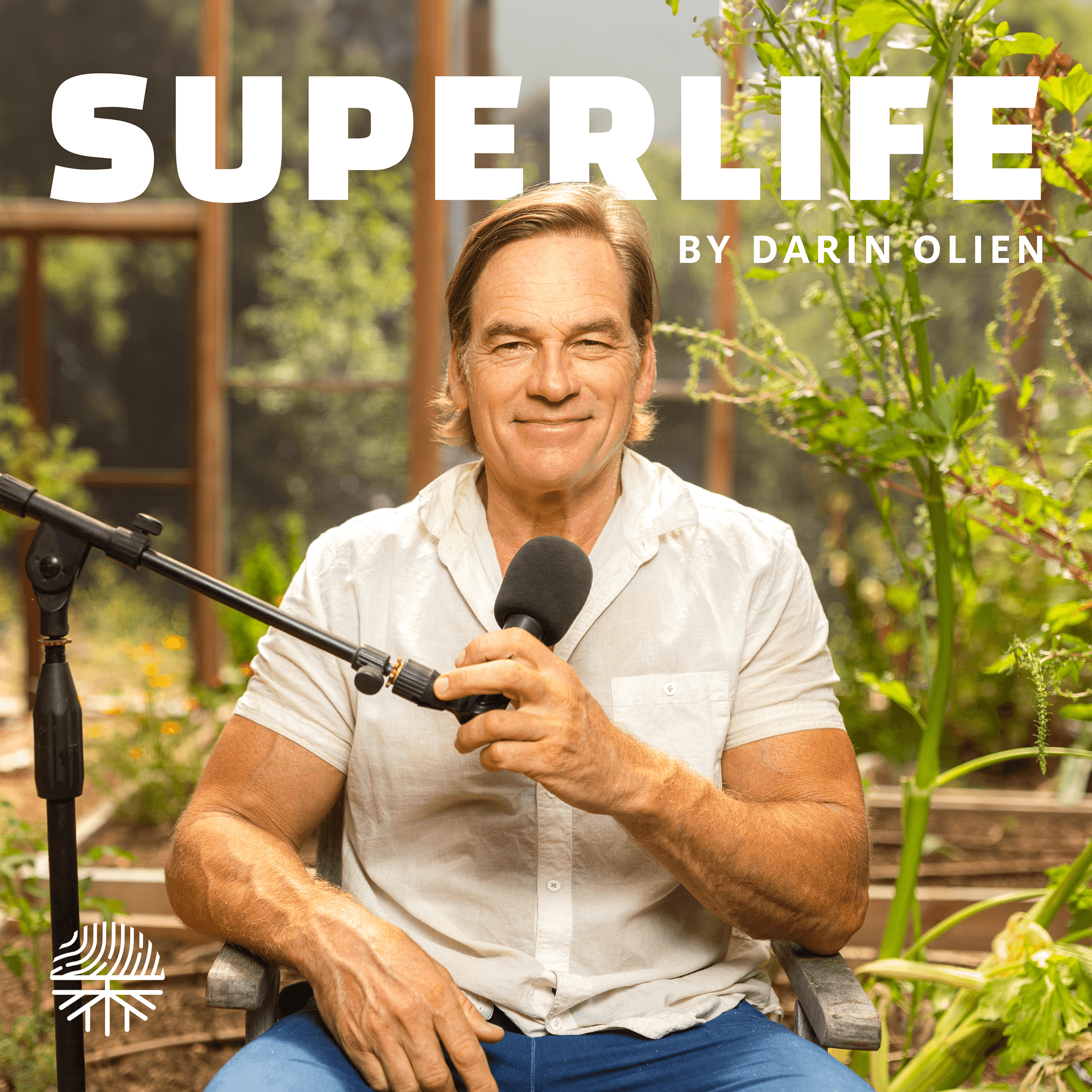
- Title: SuperLife with Darin Olien
- Host: Darin Olien, the "Superfood Hunter"
- Focus: Conversations with extraordinary individuals on topics such as nutrition, mental health, and sustainable living. Highlights the idea of Fatal Conveniences™, which explores harmful everyday practices.
Episode Details
- Title: Halloween Special: Facing the Ghosts Within – Transforming Trauma into Healing
- Theme: This Halloween episode shifts focus from traditional spooky themes to the real ghosts—traumas and memories that linger within us.
- Format: A blend of insights from various guest experts featured in previous episodes, discussing trauma, healing, and personal growth.
Key Takeaways Understanding Trauma
- Definition: Trauma is not limited to significant events; it can arise from any overwhelming experience.
- Storage in the Body: Trauma is stored biologically within muscle tissue, fascia, and the nervous system, affecting both mental and physical health.
- Effects: Can manifest as chronic pain, anxiety, depression, and relationship struggles.
Healing Journey
- Facing Trauma: Emphasizes that confronting trauma is essential for true healing, leading to freedom and personal empowerment.
- Integration Principle: True healing requires a holistic approach that encompasses mind, body, and biology.
Practical Techniques for Healing
- Breathwork: Simple breath techniques can help regulate the nervous system and promote relaxation.
- Somatic Release: Physical practices aimed at releasing stored trauma from the body.
- Visualization: Techniques to rewire the brain and create mental pathways for healing and resilience.
Guest Highlights
- Lori Woodley: Discusses the importance of breaking free from autopilot mental patterns through conscious choices.
- Technique: "Crossing Backwards" to disrupt automatic reactions and promote mindfulness.
- Kyle Nicolaides: Shares his experience with depression as a catalyst for spiritual awakening.
- Reframing Depression: Encourages viewing depression as a guide rather than an enemy.
- Dr. Aimee Apigian: Explains the biological basis of trauma and the necessity of inner safety for healing.
- Three Layers of Trauma Repair: Mind, body, and biology must work together for effective healing.
- Jules Schroeder: Advocates breath as a foundational practice to create calm and prepare the body for healing.
- Perfect Breath Technique: Four seconds in through the nose, six seconds out.
- Maya Raichoora: Discusses visualization as a critical tool for mental fitness and emotional regulation.
- Five Visualization Techniques: Outcome, process, creative, negative, and explorative visualization to manage emotions and pain.
- Dr. Max Butterfield: Highlights emotional regulation in relationships, underlining the impact of contempt.
- Gottman Principles: Importance of emotional intelligence in maintaining healthy relationships.
- Dr. Jess Stavale: Focuses on the fascial system as the emotional body, emphasizing the need for gentle techniques to release trauma.
- Dani Fontaine: Explains the endocannabinoid system (ECS) as central to maintaining balance in the body.
- ECS Role: Acts as a master regulator of homeostasis, influencing emotional and physical health.
- Josh Macin: Discusses detoxification and the importance of clearing internal toxicity for emotional and physical health.
- Parasite Awareness: Most individuals have parasites, which can impact overall well-being.
Conclusion
- Final Thoughts: Healing is a journey that requires active engagement, self-awareness, and the use of practical tools.
- Quote: "Acknowledging the ghosts within isn't a horror story — it's a homecoming. Trauma isn't here to punish you; it's here to teach you. When you meet it with breath, awareness, and compassion, you stop running from the dark and begin to walk in your light."
Sponsors
- EnergyBits: Concentrated whole-food nutrition.
- Our Place: Non-toxic cookware.
Connect with Darin Olien
- Website: [darinolien.com](https://darinolien.com)
- Instagram: [@darinolien](https://instagram.com/darinolien)
- Patreon: Join for deeper conversations and community engagement.
```
Written by AI. May contain mistakes. Listen to the episode to check what was said.
Transcript
Automatic transcript. May contain errors.0:03Darin Olien:Welcome to Super Life with me, Darin Olien, a podcast where we explore, discover, and share solutions that promote a healthier life and a better world. Together, we'll ignite possibilities, inspire change, and build sovereignty, creating a roadmap towards a super life for you and for all. Get ready to start living your super life.
0:32Darin Olien:Did you know no other food has the concentration nutrition of algae, spirulina? Energy Bits has it all tested, protected, and delivered in food to you.
0:47Jules Schroeder:Each tablet has the same nutrition as an entire plate of vegetables,
0:53Darin Olien:as well as 60 % protein, high chlorophyll, and more than 40 vitamins, minerals, and micronutrients. I consume this all the time, every day, for years. And all this and more in just one calorie per tablet, and no caffeine, chemicals, sugar, carbs, or toxins. Just 100 % food nutrition.
1:22Jules Schroeder:the way it should be.
1:24Darin Olien:Protect your body, brain, health, and longevity and save money doing it by visiting energybits.com and use my code Darren, D-A-R-I-N, at checkout to get 20 % off your entire order. Remember, 10 tablets cost you just a dollar a day and you and your health are absolutely worth it. Welcome back everyone. Happy Halloween season. It's the time of year when we playfully embrace the spooky, the mysterious, and maybe even face a few imaginary ghosts and goblins lurking in the shadows. But tonight, we're talking about a different kind of ghosts. The real ones that can linger within us. The ones that echo in our bodies, our minds, and our relationships.
2:19Darin Olien:I'm talking about trauma. That's right. Trauma. It exists as a part of our life. Now, the word can feel heavy, maybe even a little scary itself, fitting into this season, which is why we're talking about it. But as we've explored deeply on this podcast over the last year, understanding trauma in all its forms is absolutely essential to reclaiming our health, our vitality, and truly living a super life, freeing us from this trauma. We've learned from incredible guests that trauma isn't just about the major catastrophic events we often think of. It's an experience, big or small, that overwhelms our ability to respond in any given moment.
3:13Darin Olien:And critically, these experiences don't just disappear. They get stored physically, lodged in our biology, our nervous system, our fascia, our endocannabinoid system, right down on the cellular level. These stored imprints, these ghosts of the past, overwhelm, can keep us stuck. They can manifest as chronic pain or illness like fibromyalgia, anxiety, depression, addiction, relationship struggles, creative blocks, or just that nagging feeling of being disconnected or unwell. Even when we think we're doing all the right things. So, this special episode, this Halloween episode, we're not running from the shadows anymore.
4:14Darin Olien:We're stepping into them with intention, armed with light and wisdom. We're revisiting some of the most powerful moments from our conversations with guests who have bravely shared their own journeys through the darkness and offer truly actionable tools, as they are now experts, to help us face our inner phantoms. And as our guest Jeff Turner so beautifully put, transmute that pain into purpose. Get ready to hear profound insights on how our bodies literally hold the score with systems like fascia and the endocannabinoid system acting as critical interfaces for how we process and store these intense experiences.
5:09Darin Olien:Why fragmented approaches often fail and the absolute necessity of integrating mind, body, and biology for deep, lasting healing. We need to address the thoughts, the physical sensations, and the cellular impact all together. Also, tangible, actionable techniques you can begin exploring today. We're talking specific breathwork practices to regulate your nervous system, powerful visualization methods to rewire your brain, somatic exercises to release stored energy, mindset shifts on radical accountability and self-compassion, gentle ways to work with your fascia, and even protocols for deep cellular cleansing.
6:06Darin Olien:The incredible alchemy of creative expression. How music, poetry, and art can become potent medicine for processing and releasing what holds us captive. And woven through it all, the foundational power of self-awareness, conscious choice, community, and building that eternal resilience muscle. Facing our traumas, acknowledging the ghosts within doesn't have to be a horror story. It can be the beginning of our most heroic journey. The journey back to ourselves, back to the wholeness, back to our innate power. It's about learning the language of our bodies, what they speak, reclaiming our sovereignty and stepping fully into the light of our own healing potential.
7:04Darin Olien:So to begin, get ready to learn a deceptively simple yet powerful technique from my guest Lori Woodley that cuts straight to the heart of how we get stuck in unhelpful patterns. She'll show us how much our lives run on autopilot, those ingrained reactions that often are born from past experiences or trauma. The most powerful thing we'll learn is a tangible way to interrupt the autopilot, what she calls crossing backwards. It's about making a conscious choice even when uncomfortable. To step out of the familiar reaction and open the door to a different response. Reclaiming our power to choose how we navigate challenges and relationships.
7:59Darin Olien:The simple shift to the key to unlocking real change. So take a deep breath, perhaps a four-second inhale and a six to eight-second exhale. Get curious and let's explore how to turn this haunting into healing together. So let's dive in.
8:24Dr. Max Butterfield:We're always on autopilot. Autopilot just takes over. It's how we either snooze or don't snooze the alarm in the morning. it's how we make a dinner like we just aren't really thinking yeah it's just routine right but nothing changes in autopilot right so now i want you to cross your arms backwards behind me no no put your arm cross your arms backwards put the other one on top okay
8:52Darin Olien:okay yeah now what did that take i it took me a second to like whoa wait a minute because because the autopilot was easy because i always had a way i would do it but then doing the other one i I had to, there was a neurological little shift.
9:08Dr. Max Butterfield:And what did you have to do to make it happen?
9:10Darin Olien:I had to think about it.
9:11Dr. Max Butterfield:Yeah.
9:12Darin Olien:I had to step in and be conscious.
9:14Dr. Max Butterfield:Yeah. And you could feel that in your body.
9:17Darin Olien:Yeah.
9:17Dr. Max Butterfield:Yeah. So that's what we call two steps forward. In order to create something new, we have to first cross backwards. And it's uncomfortable, not impossible, not really even hard. right um some have to think about it yeah but it didn't take that much time to have to think about it right right like it's not such a huge thing that everything else in life has to drop so you could do that right but in order to be off autopilot you have to cross backwards and if you just play that way like as soon as you lean into the bad mood that you're used to the the you know, misery mining conversation that you're stepping into.
10:07Dr. Max Butterfield:Like if you just like, no cross backwards, what do I want instead?
10:10Dani Fontaine:Right.
10:11Dr. Max Butterfield:So for me, that is like, I can be in a training of a hundred, I just did a train of 135 people and you just open that way. And the invitation is, is today we're going to cross backwards and we're going to go two steps further. And we ask people, look, can we count on you stepping into two steps further than you want to go or that you believe you can go because they're different. Many of us stop short of the next thing. Like a teacher might stop short of asking a student a deep question because they don't think they can handle the response, not because they don't care. Or a parent might not believe that their very movement-oriented kid could sit still to read a book, so they never really require or ask them to.
11:02Darin Olien:Right. So they've already decided based on what they're getting.
11:07Dr. Max Butterfield:Right. So if we cross backwards and we believe in ourselves for two steps, not a whole lifetime change because I believe that once we take those two steps, one step might be enough to step right back. But you go two steps forward into it and you have enough of a beat to be like, oh, this isn't as bad as I thought. this isn't as scary as I thought it might be oh that reaction from the person on the other side of me they're actually leaned into me rather than ran away from me so I feel like there that whole silly it's pretty simple cross backwards thing is an opportunity for us to open the crack and then we step into having a lot of fun like in trainings or some of the ideas in the book like everything doesn't have to be hard and heavy.
12:00Dr. Max Butterfield:It can be kind of fun to start to think about what we need rather than complaining. Like, oh, nobody's ever asked me. I don't know when I was a kid if anyone really ever asked me.
12:11Dani Fontaine:And I had good parents.
12:13Dr. Max Butterfield:But I don't know they ever asked me, what do you need? I didn't know how to answer that question until Shailene asked me as an adult, right? Like, sometimes our kids are our greatest lessons, right? And so, you know, like my kids asked, you know, do you love yourself? Like, you know, I look at the way that I was raised, the way I became who I am today, and I just hope we can just help people get there sooner. It's been a beautiful life, and it took me a long time to get to this moment.
12:50Darin Olien:Laurie showed us the power of consciously crossing backwards to break free from autopilot. Now, Kyle takes us deeper, revealing how he reframed his debilitating depression, not as the core problem, but as a sacred catalyst guiding him towards healing and reconnection.
13:12Jules Schroeder:Why thank God for depression?
13:16Darin Olien:what happened for you to be able to even come to an understanding to write a book like this
13:24Dr. Aimee Apigian:yeah it's a beautiful question so i call it my dead decade i was depressed from it was more than a decade i was depressed from age 16 to 28 whoa yeah like a majority of my life wow and when i was 18 or 19 I hit one of the worst depressive episodes I felt like I was 95 I felt like I had nothing to live for and if you would have asked me at that time I would have said depression was the worst thing that ever happened to me sure so I got like backstory I got signed to a record label when I was 20 six months later we make our first record with you know dream producer three months later we have a like top five rock hit we're touring the world all my dreams are coming true and my self-worth is at all time low.
14:12Dr. Aimee Apigian:I'm having panic attacks. I'm depressed. I thought all the material fame and success would fix me. And it didn't. It just, you know, now I was depressed with money. Now I was depressed with a little bit of fame. Now I was depressed with the responsibilities of band manager team. So I limped through two or three records with the band and the depression and panic attacks blew it apart. so and i got blamed for it my mental health got blamed for it oh he almost got there oh he self-sabotaged like man i was in the middle of a mental health crisis you know bam broke up i was suicidal daily moved back in with my parents i had so much shame around my identity my worth that i was embarrassed to tell people i was a musician so i went from literally playing to 20 000 people being like confident rock star playing on conan playing with smashing pumpkins doing all this like worldwide stuff, you know, living, living the dream to being back in my parents' house, feeling so much shame, got so depressed.
15:10Dr. Aimee Apigian:Some days I couldn't sing. My voice stopped working. So if you would have asked me then, I would have said it's the worst thing that ever happened to me. Destroyed my life. I thought my career was over. I thought my life was over. My depression was a symptom. My depression wasn't even the problem, which was mind blowing because I'd spent my entire life being like, I'm depressed. This is the problem. It's actually not the problem. The problem was I had been disconnected from the mother. And when I say that, it's synonymous with God, with spirit, universal intelligence, whatever you want to call it.
15:39Dr. Aimee Apigian:I had lost my connection with the divine. I forgot that I was divine. I forgot that every single person on the planet was divine. And I forgot where I came from, who I was, and what I was made out of. So I had that realization. And the next day I was walking. And I talk about this in the first chapter of the book. I'm in this huge ranch in Petaluma and and I start thinking like, what got me here? Like what led me to this like reconnection with God? What what what led me to this spiritual awakening of sorts? And I'm like, oh, depression. I was like, depression was the prerequisite suffering I needed to experience to come back to God, to come back to meditation, to come back to spirituality.
16:18Dr. Aimee Apigian:And that blew my mind, because then in that moment, everything I knew about depression was wrong. Because I'm like how I asked myself, how could it be a bad thing if it led me to this bliss or this awakening or this knowing so that was the main one of the main messages of the book is i just want to inspire people to cultivate and create a little bit of space to question like what if this isn't a bad thing because you don't know where it's leading you and just in that space you can start to get curious because i know from my own experience when i thought depression was a terrorist I hated it. I hated myself.
16:55Dr. Aimee Apigian:I was angry at it. Like I couldn't listen to any of his wisdom. But then when I started shifting to like, oh, maybe it's a friend or maybe there's some wisdom in it, then it completely shifts your relationship with it. And, you know, it's kind of the same idea as like parts work and, you know, people it's like, you know, if I, if I'm angry at my, my inner child all the time, it's going to keep us locked in a sort of like, you know, gridlock of how can I listen to what he needs? How can I tend to him if I just spend all my time hating him.
17:21Darin Olien:Cal's journey teaches us that even profound suffering like depression can be a guidepost pointing us towards disconnection. Building on this, Dr. Amy Avagain explains that trauma isn't just mental. It's stored biologically requiring an integrated mind-body biology approach that begins with building safety within the body itself. So trauma, would you say if it were to be somewhere, is it, I'm going to say this for a reason, is it always in the body? You can't escape it. Trauma is always residing in the body.
Read the full transcript
18:10Lori Woodley:Trauma gets stored in the body. Yeah.
18:13Darin Olien:So whether it started there or it's here in your head.
18:18Lori Woodley:trauma is an inner experience of the body that's what trauma is trauma is not what happens to us
18:25Darin Olien:outside of us so you have to use the body have to to release the trauma have to you have to
18:34Lori Woodley:integrate it have to integrate it trauma creates more pain right so i see it as three different levels that need repair. Mind level, body level, and biology level. Each of those is giving signals to our nervous system of either safety or danger. So if you focused on the mind level, but you've neglected the body level and the biology level, those two levels are still sending danger signals to your nervous system. All three levels need to have this reset to safety in order for you to truly have moved on and resolve the past.
19:14Darin Olien:You have to work together.
19:16Lori Woodley:Have to work together.
19:17Darin Olien:Is there anyone doing this kind of work?
19:21Lori Woodley:Not that I know of.
19:23Darin Olien:See, that's just blows my mind.
19:25Lori Woodley:Isn't this crazy? We're in 2025.
19:28Darin Olien:I know blows my mind.
19:30Lori Woodley:Honestly, I wrote my book because so many people look to others as they're the ones to fix me. They're the ones to heal me. Whereas the way that I'm seeing it, there is so much that each person can do and needs to do for themselves. So truly healing begins with me, my relationship with myself, my ability to regulate myself, my ability to create my inner safety, not wait for you to do that for me. Right. It's my responsibility to make myself feel loved and worthy. It's not for you to make me feel loved, for you to make me feel worthy. That's my job.
20:12Darin Olien:Yeah, but then you have, it's so seductive because then you have all of the relationships.
20:18Lori Woodley:Right. Talk about trauma.
20:21Darin Olien:I mean, how is it even possible that we have any sort of successful relationship, whether it be, romantic or loving or marriage or whatever it is.
20:35Lori Woodley:Any healthy relationship. Yeah.
20:36Darin Olien:It's just a projection of like, fill this up for me. I mean, how do we even, how have we even gotten here? It's like, it's amazing. But you're just, you're just bouncing off of each other.
20:54Yeah.
20:55Lori Woodley:So in order to be in a long-term relationship, You either need to find someone who their trauma plays well with your trauma.
21:03Darin Olien:Yeah, because you're getting trauma.
21:05Lori Woodley:You're going to share trauma. You're going to share trauma. Or the other option is you're both taking responsibility for your own healing journey.
21:15Darin Olien:Dr. Amy highlighted the necessity of an integrative approach starting with a bodily safety. Jules now grounds us in actionable foundations, emphasizing how simple, consistent practices like mastering the breath are critical and crucial first steps to clean up our internal environment and prepare the body for deeper healing. From a foundational standpoint, what do you believe works well with all the people you've worked with and creating that starting point of a foundation?
21:52Maya Raichoora:So I believe it's, you know, I always look at the low-hanging fruit, which is the breath is number one. And then it takes about seven and a half hours to reprogram your body to breathe properly. So you don't have to, ideally it's called the perfect breath, four seconds in, six seconds out through the nose. It comes down to six breaths per minute. And it's really scientifically proven that it takes you out of fight or flight and gets you into the parasympathetic nervous system within less than a minute.
22:18Darin Olien:So when you say seven hours, practicing it. Yeah, exactly.
22:21Maya Raichoora:So what I say to everyone is like in the beginning, we need to give the body a feedback. So you want to lay down. So ideally you do this in the morning and in the evening before you, when you open your eyes and before you close the eyes, you take a book, place it on your stomach. And then you just like make sure this book is rising when you inhale through the nose. And then it goes down when you exhale. And when you do this for 15 minutes in the morning, you do it for 15 minutes in the evening. there's really no time because most people lay in bed and scrolling for 20 minutes do the same thing in the evening so just put the phone away and focus on your breath there's abscess like you know you can play music whatever you or just count in your head because the counting itself will calm down the mind and when you do this for 15 days you have seven and a half hours and then all of a sudden your breathing pattern is reprogrammed and you can you then will breathe differently throughout the day so how i what i look at is really always i mean you know everyone is looking on the outside like what's the next best supplement what's the next workout routine what's the next training i can do and everyone's stress cup is already over floating so where i'm coming from is like okay if my stress cup it's over floating i would rather take something out first before i can take something in so this simple breathing practice will make a huge difference because you set your day and your evening your sleep up for calmness.
23:47Maya Raichoora:And you know, if you add some affirmations afterwards, like journaling and so forth, there's habit stacking in the end of the day, but I always say start with the breath because it's the most important thing right now. So for everyone who's listening, if you've never done anything and you want to get your feet wet, just start with this simple practice as I just described because it will make a big difference.
24:07Darin Olien:One of the biggest questions I get constantly is Darren, where can I find the best non-toxic cookware? Listen, I don't mess around with things that go ultimately in my body. And that includes what I cook with. That's why I swear by Our Place. Because from day one, they've been committed to making clean, healthy, non-toxic cookware and kitchenware. No sketchy coatings, no forever chemicals, just pure conscious design that are beautiful as well as highly functional. I've been using their titanium always pan for months now. It's the only pan I cook with and here's why. Pure titanium, non-toxic, PFAS free.
25:01Darin Olien:Extremely durable, metal utensils, high heat, dishwasher safe. This thing can handle it all. All in one performance. The best stainless steel cast iron nonstick in a single pan. And here's the real kicker. Most nonstick pans, they're still loaded with PFAS. These forever chemicals that break down in your body and stay in your body. And they accumulate over time. We just don't need that. They disrupt the gut microbiome, testosterone, dysregulation, metabolic issues, hormone imbalances, immune dysfunction, and chronic inflammation they contribute to. Think about it. Every time you cook, you could be introducing toxins into your body.
25:49Darin Olien:And the simple act of switching to safe cookware eliminates that. This is why it's the easiest, most powerful change you can make, certainly in your kitchen, for long-term health and the elimination of toxic exposure. Our place just launched their full Titanium Pro collection, and you can get 10 % off with my code. I've been using it for months, and I cook my tofu, I saute things, and it's fantastic. So ditch all the toxins and cook with confidence with the Titanium Always Pan Pro. So you can upgrade now, go to Our Place today, go to fromourplace.com forward slash Darren or just use the code D-A-R-I-N-D-A-R-R-E-N and you get 10 % off the site-wide.
26:40Darin Olien:And with a 100-day risk-free trial, free shipping and returns, you can experience this game-changing cookware with zero risk.
26:51Jules Schroeder:Come on, who wouldn't want to do that?
26:54Darin Olien:Jules emphasized starting with foundational practices like breath work to create inner safety. Maya Jawara expands on cultivating our inner world, showing us that visualization is far more than daydreaming. It's a trainable mental fitness skill. we can actively use to build new neural pathways and reshape our reality. What's these five techniques and why do you believe that they are different or more powerful or more effective?
27:30Dani Fontaine:Yeah. So these aren't my techniques, firstly. I, through my research, realized that visualization has been out there for centuries, right? Stoicism, Walt Disney, Einstein, but then also, you know, the latest sports psychology as well. So really what the book does and what I do in my work is bring together the five techniques that really give you a great toolbox for your mental fitness. So one, we have outcome visualization, which is where you are seeing the result in advance. Like for your goals, let's say an athlete sees themselves with a trophy. They show themselves, OK, I can do this. I can be a winner.
28:07Dani Fontaine:Then we have process visualization. this is where you use mental imagery to make a skill a technique a task better faster more effective huge in sports because you could mentally rehearse let's say a golf swing like 20 30 times in the mind and get it really effortless and perfect so that when you're there it's muscle memory because remember the brain doesn't know the difference between what's real and what's imagined i use this for public speaking i use it for sports but you can also use it for just processing your day as well.
28:38Darin Olien:So when you go so just illuminating that technique a little bit. So but let's say you have a meeting, let's say so it's close your eyes five minutes, just go in there, feel the energy of it all see the yeah, the experience, the emotion, the connection that you want to have happen.
28:58Dani Fontaine:Yeah, take today, right? I have never met you in my life. I'm literally in a new country. And it's like, I could have walked in here quite nervous and just being like, Oh, hey, like, you know, we don't really chat. It's nerve wracking, of course. But in the car, I took just a few moments to close my eyes and think, right, Maya, how are you going to walk in? What's the energy you want to bring? Just to start priming my brain and body to be like, yeah, it's going to be unfamiliar. You don't even know what the room looks like all these things. But because I did that there, when I'm here, it's like, Oh, I remember my brain's been here before so it can just be in a bit more flow or you know less nervous and that goes if I'm you know talking in front of thousands of people I will do that visualization maybe five six seven times so that when I'm on stage my brain and body think we've done this seven times so it's muscle memory um there's a comfort to that because you're stepping into
29:53Darin Olien:something that's actually not new then.
29:55Dani Fontaine:Exactly. Exactly that. And that's why athletes really rely on it because when you are trying to perform the best you can, you don't want to be thinking. You want to be able to trust. You want to trust your training. And that's why process visualization is incredible. It's so, so good for that. Then we have creative. So interesting when you talk about pain. Creative visualization is great for managing emotions, pain, disease, injury. So I used creative visualization for when, when my colon was in pain, I always used to describe it like, I used to say like, it's like razor blades, just like, you know, cutting me and like fish, like biting me.
30:38Dani Fontaine:So then exactly. So I then closed my eyes and I used to literally visualize that scenario. I used to visualize these piranhas like biting me and, you know, be painful. But then what would I do in the visualization I would shoot all the fish yeah yeah yeah so I literally exactly no I know but think about it the brain doesn't know the difference right between what's real and imagined so I started to influence my pain it's not that it just went away right but with time I realized oh wait a second I have control over this so if I said if I was just saying my you just try and like stop the pain or try and think about something else no no no hold on no exactly that and then eventually i was able to work with my cells work with my body even like a really simple example if you just close your eyes for me now and just imagine that you are at home in your kitchen so just see the furniture the colors and now go to the fridge open the fridge and there's half a lemon on the shelf and you just hold it in your hand a bit cold tough skin you can see that it's yellow bright and just start smelling it it's fragrant juicy and I take the lemon and drop by drop I want you to squeeze it into your mouth and it lands on your tongue and it's like so sour but it just like the ripples in your mouth like the cheeks go a bit weird and tingly, your saliva starts to really increase.
32:15Dani Fontaine:Now keep squeezing that lemon, taste the juice of it. It's so tangy, so citrusy. Maybe a pip comes in, it's a bit bitter. Good, really taste it. Okay, and open the eyes. Right. Were you able to, you know, right?
32:30Darin Olien:Things start happening.
32:32Dani Fontaine:Okay, but you're not actually eating a lemon. So you can see that, you know, just in 20 seconds, your brain and body both react. So creative visualization is a brilliant way to really connect the mind and body. Now I don't use it for pain, but I'll use it for like managing emotions and things like that. Then we have negative visualization, which is where you see worst case scenarios. Either you see yourself overcoming it, but some people are also really motivated by the fear of that worst case scenario. So depending on how your brain is wired, I would guide you through a particular one michael phelps very famously you know saw a lot of things going wrong in his race and his coach would be like to him now in your visualization what do you do so then when it happens and it did in beijing his goggles filled up with water and not only did he win the race he got the world record and in the interview they were like what and he was like i have been in that situation so many times in my mind so i didn't even flinch i knew i had to swim 75 of that race completely blind i knew that whereas most people they'd be like should i take them off like you know they'd panic a bit he didn't do that because he knew he's been in that negative scenario before so that's fascinating there um in stoicism they used negative visualization to basically it's quite it's quite intense but you imagine you lose everything you lose it all family money friends everything and you realize like what life would be like and then when you open your eyes the amount of appreciation it gives you life-changing um and then we have explorative visualization it's the most undocumented and unknown uh it's what the likes of Walt Disney, Einstein, Nikola Tesla used.
34:30Dani Fontaine:Disney called it imagineering. So engineering your imagination, where you tap into a part of your creativity that can help you problem solve or create new ideas in a very different way. So a good example is Einstein, if he was making a decision, he would just make a decision. He would visualize like he'd be on a train and there are two tracks in front of him one track goes down this way the other is this way but he would make that decision then if i went down this track what would happen and then by doing that when he wakes up he's like okay this is another decision i'm gonna make so like a two
35:05Darin Olien:decisions and they are represented in the train track and then he could play that out yeah and
35:11Dani Fontaine:that's called like metaphorical visualization so but these are all found in their like diaries and And they're, you know, they're quotes that are years and years back. So when I was doing my research, that's when I realized, I was like, wow, they're basically doing the same thing. Different words and different application. And so now when you look at those five techniques, you can use them for so many different things. Decision making, sharpness, techniques, public speaking, sports performance, goal setting, habits, all of it. And that's why I love the technique. It's super versatile. Wow.
35:45Darin Olien:Meyer revealed how we can actively train our brains using visualization. Dr. Max Butterfield shifts this internal focus to relationships, teaching us that the key isn't endless external searching, but cultivating self-awareness and self-regulation to navigate conflict and build genuine connection.
36:10Josh Macin:There's a lot of research showing that the way that people deal with their conflict is make or break for their relationship.
36:19Darin Olien:So when the shit goes sideways, how are you relating? Exactly. Yeah.
36:23Josh Macin:And there's some research by this guy named John Gottman. He's like the godfather of relationship research. And his big thing is contempt. You don't want to see contempt in a relationship. It's really not a good sign. I don't like to phrase things as a negative because that doesn't really help people. It's like, don't be contemptuous. Okay, what does that mean? So the question is, how do you, you're going to argue. How do you argue well? And in some ways it depends, you know, person to person. And so doing something like couples therapy for people can be really helpful just to learn, like to practice, to role play.
36:58Josh Macin:Like, okay, if he says this, what are you going to say? And how are you going to change this frame that you've been using that's not working? And so a lot of times you have to, there is no one size fits all advice. You have to look at somebody's relationship and say, what's not going right here? And how can we tweak it? And so I think we were better self regulators in the past than we are now. We don't have that level of accountability. It's like, you know, if you're a salesperson, you trick somebody into buying something, they don't like it. It's a bad product. There's no accountability for that.
37:32Josh Macin:And you'll probably never see them. Never see them again.
37:34Darin Olien:Yeah.
37:35Josh Macin:Back in the day, not even that long ago in human history, a couple hundred years, you lose your reputation in your community. And so I think part of it is we've lost our self-regulation skills. And you also see it emotionally. You know, you see these videos of like some guy getting the wrong burrito at Taco Bell. And so he smashes the, you know, the fish tank or whatever. And that's based on a real video that I saw. You know, I mean, that's not, it sounds like a made up example, but that happens. people from an early age need to be taught how to regulate their emotions, how to calm down. And so when you see somebody doing that as an adult, that means that they don't have that skill.
38:16Darin Olien:That's literally stuck in time. Their five-year-old is showing that.
38:20Josh Macin:Exactly. Exactly. I don't want to date that person. And so that plays in.
38:27Darin Olien:But you also don't find that out. You don't know. because they're not showing that. They're not reposting that one. No. No, that doesn't go on the Tinder profile.
38:38Josh Macin:It's not in the Bumble profile. Smashed a fish tank at Taco Bell. Yeah. But you'll find that out eventually. Jesus Christ. But then there's somebody else right around the corner. They probably have the same issues. Right. So it's a complicated situation, but I think it starts within rather than without.
38:58Darin Olien:Yeah.
38:58Josh Macin:In other words, we need to get our act together.
39:01Darin Olien:Max highlighted the importance of internal self-regulation for healthy relationships. Dr. Jess Stavalli brings us directly into the body's physical structure, revealing the vast fascial network as our emotional body where trauma is truly stored, emphasizing the need for gentle self-empowered techniques to release these deep holdings.
39:29Jules Schroeder:The fascial system.
39:31Darin Olien:Yes. And it's it's it's weirdly being talked about more.
39:37Kyle Nicolaides:I agree that it's definitely coming into the spotlight. I think it's finally getting the light that it deserves. Yeah. For so long it was just disregarded. Yeah. When you think about that how do you have 40 to 52 pounds of something in your body and you just decide we're just going to push this aside and it doesn't matter and then how do you take the system that literally interconnects and interweaves with every other system and has a play with it and previously say we don't need this like let me get to the good stuff is how it used to go but i really believe that the fascia system is like the quantum interface right is that's our electrical bioelectrical drive we are emotional and energetic beings.
40:18Kyle Nicolaides:And to the point of what you just said, this is why as humans, we've become so overloaded now. We're not living in a time that we used to. So we're overloaded by the constant stimulation, the go, go, go, the EMF, like the, the wifi, right? Just, and we don't have accessibility like we used to, to quality foods and water and simple air, like the things that the human being and human body needs because you and I both know like it's a self-healing organism but it has to be given the right environment but that is where I think what you're speaking of like it's just that constant overstimulation and like I think the fascia is the highway for all of that and that's why I teach the fascia truly is the emotional body and I believe that is going to come forth more, more and more.
41:08Darin Olien:So when you're seeing someone, how do you then start that journey between they're physically in pain? How do we then bring in this subtle support from the fascial system? How does that work?
41:25Kyle Nicolaides:So I'm very transparent. I'm a very direct person. So the minute somebody comes to me with pain, I'm like, talk to me. Like, what kind of trauma is behind you? Well, I don't know if it'd be trauma. And I said, I know it doesn't matter clinically what some professional is going to call it trauma. What are you holding? What happened in your childhood? What beliefs do you have? Like, and are there absolutely a hundred percent physical things that happen to the body that are going to affect the system? Yeah. So I want to be clear, I'm not discrediting that. But then when you look at even injuries, there is a play that comes through with the mental and emotional after that play into the recovery, right?
42:03Kyle Nicolaides:And I think that you, I think if we move to an integrative type of wellness, and I understand everybody can't know everything, but it's knowing when to say, we're going to work here physically, but you need to talk to somebody about this. This is why this is not letting go, right? And making sure, I think we're giving recommendations as providers to put the right team together. So no one's going to expect the physical therapist to be able to do psychotherapy while they're working on the body. But it is being able to say, this isn't letting go. I believe there's an emotional component. We need somebody else on the team to help with this.
42:43Darin Olien:Okay, everybody, are you ready to upgrade your operating system. I know I am. I'm always game to do that. Not just physically, but mentally, emotionally, and spiritually. That's what we're doing over at Super Life Patreon. This isn't just behind the scenes membership. It's a global experiment in conscious living that I am connected to, committed with, in every cell of my body. Each week, you'll get exclusive access to deeper podcast conversations, extended interviews, voice notes from the road of me personally, personal reflections, behind-the-scenes footage, community wellness challenges, and even surprise drop-ins that I no longer do on social media because I don't really dig it anymore.
43:36Darin Olien:We're talking decentralized healing, reclaiming sovereignty, ancient wisdom meets future tech, and a tribe of people with you walking the path. If you love this podcast, the Patreon is where we go deeper, get more real, and reclaim our power together. Join us at patreon.com forward slash Darren Olin. That's patreon, p-a-t-r-e-o-n.com forward slash Darren Olin, d-a-r-i-n-o-l-i-e-n. Join the movement, support the mission, let's rise together. Dr. Jess unveiled the fascia as our physical, emotional body. Danny Fontaine introduces another critical internal system, the endocannabinoid system, the ECS, explaining it's our master homeostasis regulator, translating all sensory and energetic input into biological responses to maintain balance.
44:45Dr. Jess Stavale:So the endocannabinoid system is our homeostasic system. Okay, so like we have all these systems in the body that manage and do certain things. This system is the homeostasic one. It's the one that balances all the other systems. This is actually how it's working in nature. This is actually how it's working in real time when we eat something, when we interact with someone. Our CB1 receptors are receiving this information in the plasmic makeup of everything. And then it breaks it down in such an intelligent way for based on the human and based on their dynamics, it's keeping them in as best balance as possible to keep them alive.
45:26Dr. Jess Stavale:And when the system gets worn, the body gets worn, and then they go. And that's just how it goes because the system, the energetic force, cannot keep up. When the physical body depletes, it's because the energy has depleted. It's not vice versa.
45:43Darin Olien:As the last kind of.
45:45Dr. Jess Stavale:As the last boom. It's the last thing that even feels anything. All of our receptors are sensing. We're sensing the geometric shape imprints, the waveforms, everything that's coming to us. And then the body hits it and puts it into this dense process of feeling, of force, of like this, oh, okay. I'm here. Like, I feel. I love. I know. You know, all of the I ams. It's what you are, you know, versus when we aren't in this physical form, we're just there. We are sensory, you know, basically projectors at that point versus receivers. Right here, we're receivers. You know, we're receiving all inputs.
46:30Dr. Jess Stavale:That's what's so cool.
46:32Darin Olien:Yeah.
46:32Dr. Jess Stavale:We are the receptor. We are the receiver. and then we can take it take that signal inside of us and if we have the willpower and we have to have all of the right stuff inside of us we put it back out and that's how we come back into a balanced state otherwise people don't know how to put out information it's either too chaotic or too not you know or they're too this or too that versus this balanced state of what homeostasis actually is which is really balance i mean like tell me another system that that is the homeostasis system, please, like doctors. I mean, I'm pretty interested because I've been doing this for 17 years and I don't understand how more people don't understand that we will never get into balance till we tend to this system.
47:16Dr. Jess Stavale:And this is our, that's why sound and light and breath and all these things are helping people because it's our input. That's why this stuff works so well. It's the input of what we are densely made of. The more that we can attune it, the more people can take and be their own healers. When we give this stuff out to people, when we put our sound outside of ourselves, when we're like, oh, we go to a concert and all this stuff, we don't understand that the frequencies and also the bubbles of everybody around us actually heavily affect our field. I mean, our field just goes into this state of like, oh my God, you know, like I can't believe I'm doing this right now.
47:54Dr. Jess Stavale:And it has to intake all this extra heavy, heavy, extra sensory input. That's why people are overstimulated is because they're doing things to their field, to themselves that they don't really know that they're doing or how it's doing. But when we realize what, what this system is, we can actually attune it. We can attune it. It's our main signaling, modulating communication system. You know, I feel like it's like the missing link to us, to our evolution, to us being able to actually come together because it's our communication to each other. Once we're good with ourselves, we're actually good with others.
48:30Darin Olien:Yeah.
48:30Dr. Jess Stavale:Imagine that. Imagine that.
48:32Darin Olien:Danny explained the vital role of the endocannabinoid system in maintaining our internal balance. Josh Mancine now explores what happens when the balance is severely disrupted by internal toxicity sharing how targeted detoxification protocols are often necessary to clear parasites heavy metals and chemicals to reclaim our physical and emotional health number one everyone listening has parasites yeah everyone without a doubt yeah it's almost like if they've overrun your systems you're going to have problems. Yes. And our body also keeps many things at bay to the point where people are like, come on, I don't know.
49:22Darin Olien:It's just who I am. This is what I feel, all this stuff.
49:25Jules Schroeder:It's neurological.
49:27Darin Olien:It's biochemical. So create that context a little bit of the proliferation or the lack of understanding of how this interaction happens and or blows up and gets out of it.
49:45Jules Schroeder:So basically, when you're connected to God, to love, to health, vitality, nature, you have an alkaline environment in most of the body. Their systems are functioning in a particular way. When you start introducing trauma, you start introducing heavy metals and shitty foods and processed foods and bad water and chemicals and all of the stuff that we're subjected to that's in your book, right? Then essentially your terrain changes. You become a magnet for low vibrational frequencies, low vibrational energies, as above, so below. So whatever you're attracting spiritually, you're also attracting on a microbiome level as well.
50:28Jules Schroeder:So again, that trash example.
50:31Darin Olien:Yes.
50:31Jules Schroeder:If you're eating trash. You become that. Yeah. You become that. And you invite those things. And you invite a level of darkness and death and decomposition energy that will change you. It changes your thoughts. It changes how you view the world. It changes how you feel on a day-to-day basis. And you become more like death, like walking death. You can actually see death in a lot of people before they die. Smell it. You can smell it. You can feel it. Their skin, their eyes, things change in their presence, right? And so basically, for me personally, I was going through this illness. I had no idea what a parasite was, or I would think like, okay, that happens to like children in Africa, but that doesn't happen in America.
51:10Jules Schroeder:And I was very acidic without even knowing it. That's because I had mercury poisoning and I had chemical poisoning and I had Lyme disease and I had just so much darkness, even though I was just putting nothing but light in my system for years, trying to get out of this hell. Eating the perfect thing. Perfect foods. I was raw vegan for a while. I was just breathwork meditation, like chanting mantras, praying every single day, all day, right? Spiritual boot camp. There were times when I was living in the Amazon where every single moment of my waking day, I would just say, I love you. So I wouldn't try, like thoughts didn't matter to me.
51:45Jules Schroeder:I would go into thoughts, but I just said, okay, nothing matters except for the fact of me loving myself. And that's all I did all day for like eight, 10 hours, walking barefoot in the jungle. That's how much pain I was. Picking up other parasites.
51:58Darin Olien:Yeah, exactly. Damn it.
52:00Jules Schroeder:wrong path wrong country so the long and short of it like i i basically well i probably want to hear the full story but basically i the first worm that i ever shot out was in 2000 ever shot out so unprofessional yeah is it was in 2016 okay and i released my first worm it looked like an earth worm. And it changed everything I thought about my illness in one moment. In one moment, I said, whatever that is inside of me, that is how I feel. That's what my brain feels like. I feel like a worm inside of myself. My thoughts feel wormy. I feel disgusting with myself. I feel sick, tormented. Whatever that thing was, that is part of my disease, if not all of my disease.
52:53Jules Schroeder:In the moment, I thought it was all of it, right? It's not, but it's significant. And since that moment, you know, there was like, I did a year parasite cleanse after that. I released hundreds of worms, hundreds. Earthworm looking things, rope worms, round worms, tape worms. I've had tape worms this long, you know, and I've had to go back every year and do, and continually do a parasite cleanse. It's just something you have to do as a human being every year, once a year minimum, right? And depending on your state, depending on your state, even healthy people, I think would do one a year. But if you're not healthy, you should do multiple, multiple.
53:28Jules Schroeder:Yeah. Because essentially what happens is, you know, you keep eating and you keep you're not actually people are overeating. Okay, people are consuming too much way too much food. They're also stressed. They're also not chewing their food thoroughly. They're also toxic with all these other things. They also don't really know how to love themselves or connect to the divine. So you end up just creating cesspools in the intestines, in the liver, toxic store, you know, stored up toxins, and then the parasites start thriving again. And there's now with where I'm at in my journey, I know exactly when the scale tips.
54:05Jules Schroeder:I know exactly, because I just did a three month overseas trip, right? But I bring ivermectin with me and I know how to, you know, I can eat almost anything and be fine. Keep it up. But I know when the scale tips, you get an itchy anus, you start getting famished. That feeling of waking up in the morning, like you need food or you skip a meal and you feel like you're like desperate for food. A lot of people have that and they think that's hunger. That's not hunger. That's parasites. Okay. There's real hunger when you're like genuinely hungry and that has a depth to it. And then there's this parasite chemical hunger, which feels like you're going to die if you don't eat.
54:42Jules Schroeder:It feels like you can't think unless you eat. So basically, you know, it never ends. You always want to keep bad bugs in check and terrain modification, that's called, where you're just supporting the terrain with all the good things. The bad things die away or get gently kicked out, as you said. But, you know, everyone has to understand that, number one, you'll never get rid of all of them. But number two, most people are already tipped in that scale. They're overrun. They're overrun. It's affecting their thoughts. It's affecting who they think they are and how their mind operates. And that's what parasites are masters of.
55:20Jules Schroeder:Look at parasites in nature. They do unbelievable things to creatures. You see the cordyceps mushroom even. That's the wildest. They're brilliant. I mean, they're masters at manipulation, masters at hijacking.
55:36Darin Olien:Wow, what a journey through the shadows. right? We've revisited some incredibly powerful conversations today, shining a light and how trauma in all its forms truly lives within us, stored in our biology, our fascia, and our nervous system. We've heard that recognizing these inner ghosts isn't about getting lost in the darkness, but about understanding the integrated nature of the healing. It requires tending to our mind, our body, and our biology all at the same time. We've learned that suffering, even profound depression, can be a catalyst, a lighthouse guiding us back to what is real, the connection and purpose to ourselves.
56:28Darin Olien:The most empowering thread through all of this, you have the agency. Whether it's starting with the simple, profound act of consciously breathing like Jules taught us, or gently crossing backwards out of the autopilot like Lori showed us, through visualizations to activate and train our brain like Maya revealed, taking radical responsibility for our internal state as Max emphasized, treating our fascia with care as Dr. Jess guided us in, understanding your body's master balancing act via the endocannabinoid system with Danny, or committing to clearing physical toxicity like Josh detailed. The tools are available.
57:20Darin Olien:Healing isn't about a magic wand. It's about you taking the action, about being consistent, compassionate, and that action is powerful. It's about meeting ourselves where we are, building safety within, and taking those small courageous steps towards release and integration. So, as you step back into the world, remember that facing these inner phantoms, these stored traumas, is perhaps the bravest and the most rewarding work you can ever do. It's not spooky. It's sacred. It's powerful. It's the path to reclaiming your energy, your vitality, your joy, and it's the path back to your super life. Thanks for tuning in.
58:11Darin Olien:Be well, be brave, and keep shining your light.
From the publisher
This Halloween, Darin turns the spotlight from ghosts and goblins to the real ones that haunt us — the memories, wounds, and traumas stored deep within our bodies and minds.
In this cinematic special, he revisits some of the most powerful guests from past SuperLife episodes — Lori Woodley, Kyle Nicolaides, Dr. Aimee Apigian, Jules Schroeder, Maya Raichoora, Dr. Max Butterfield, Dr. Jess Stavale, Dani Fontaine, and Josh Macin — weaving together a spellbinding journey through emotional alchemy, mind-body science, and spiritual restoration.
From the fascia to the endocannabinoid system, from visualization to detoxification, Darin explores how healing trauma is not about running from darkness but transmuting it into light. This episode is a hauntingly beautiful reminder that acknowledging our pain can become the path to our deepest purpose.
What You'll Learn in This Episode
[00:00] Welcome to SuperLife — igniting possibilities for a better, sovereign world
[00:00:32] Sponsor: EnergyBits — the most concentrated whole-food nutrition on Earth
[00:01:51] Happy Halloween — Darin introduces the real "ghosts" we carry within us
[00:02:11] What trauma really is and why it's stored in the body, not just the mind
[00:03:29] The science behind stored trauma — how fascia, endocannabinoids, and cells hold the score
[00:04:14] Why facing trauma is the path to freedom — transmuting pain into purpose
[00:04:50] Revisiting powerful past guests with new insight and wisdom
[00:05:09] The integration principle — why real healing must unite mind, body, and biology
[00:05:36] Practical techniques you can use today: breathwork, somatic release, visualization
[00:05:58] How art and creativity can release stored trauma and regulate emotions
[00:06:35] Facing our ghosts: turning pain into our most heroic journey
[00:07:04] Guest highlight – Lori Woodley: "Crossing Backwards" and breaking free from autopilot
[00:08:24] The exercise that reveals how easily we live on autopilot — and how to disrupt it
[00:09:30] Two steps forward: how small, conscious actions shift your entire life
[00:11:29] Learning to ask for what you truly need — the root of emotional intelligence
[00:12:51] Guest highlight – Kyle Nicolaides: Finding purpose through depression
[00:13:12] Depression as initiation — the "dead decade" that led to divine reconnection
[00:16:01] Realizing depression isn't the enemy — it's a sacred messenger
[00:17:05] The power of reframing suffering as wisdom waiting to be revealed
[00:17:30] Guest highlight – Dr. Aimee Apigian: Trauma, biology, and building inner safety
[00:18:10] The three layers of trauma repair: mind, body, and biology
[00:19:30] Taking responsibility for your healing — no one can regulate you but you
[00:20:21] Trauma bonds and projections — how unhealed pain shapes relationships
[00:21:15] Guest highlight – Jules Schroeder: Start with the breath
[00:21:44] The "Perfect Breath" — 4 seconds in, 6 seconds out through the nose
[00:22:27] How 7.5 hours of mindful breathing can reprogram your nervous system
[00:23:36] Removing stress before adding more — foundational calm before growth
[00:24:07] Sponsor: Our Place Cookware — eliminating toxins from your kitchen
[00:27:00] Guest highlight – Maya Raichoora: Visualization as a rewiring tool for trauma
[00:27:54] Five visualization techniques: outcome, process, creative, negative, explorative
[00:29:18] The neuroscience of imagery — how your body reacts to imagined experience
[00:31:38] Lemon exercise — proving your mind and body are one
[00:33:13] Using visualization for emotional resilience, performance, and healing
[00:34:33] Explorative visualization — channeling creativity like Einstein or Disney
[00:35:41] Guest highlight – Dr. Max Butterfield: Emotional regulation and relationships
[00:36:10] The Gottman principles — why contempt destroys relationships
[00:37:15] Why emotional regulation matters more than compatibility
[00:38:02] The modern self-regulation crisis — how disconnection fuels chaos
[00:39:01] Guest highlight – Dr. Jess Stavale: Fascia — the body's emotional network
[00:39:55] How fascia stores trauma and connects all bodily systems
[00:40:45] The fascia as a quantum interface between body and emotion
[00:41:33] How to integrate physical and emotional therapy for release
[00:43:12] Patreon segment — building sovereignty and community through conscious living
[00:44:21] Guest highlight – Dani Fontaine: The endocannabinoid system explained
[00:44:45] The ECS as the body's "master balance system" — how it keeps all others aligned
[00:45:31] Understanding energy, vibration, and homeostasis
[00:46:43] Why overstimulation blocks healing and how to recalibrate
[00:47:25] Sound, light, and frequency as inputs for cellular communication
[00:48:16] Guest highlight – Josh Macin: Parasites, detox, and terrain theory
[00:49:00] The biological link between toxicity, trauma, and emotion
[00:50:12] How acidity and chemicals create disease and disconnect
[00:52:17] Parasites and the metaphysical mirror — cleansing darkness from within
[00:54:27] Annual detox protocols — why cleansing is essential for clarity
[00:55:36] Closing reflections — integrating body, mind, and spirit for full release
[00:57:20] Darin's final message: healing is sacred, not spooky — the path back to your SuperLife
Thank You to Our Sponsors:
-
Our Place: Toxic-free, durable cookware that supports healthy cooking. Use code DARIN for 10% off at fromourplace.com.
-
EnergyBits: Get 20% off your entire order by going to https://energybits.com/ and using code DARIN at checkout.
SuperLife Patreon
Join the SuperLife Patreon: deeper conversations, extended interviews, wellness challenges, and community connection.
https://patreon.com/darinolien/
Connect with Darin Olien:
-
Website: darinolien.com
-
Instagram: @darinolien
-
Book: Fatal Conveniences
-
Platform & Products: superlife.com
Key Takeaway
"Acknowledging the ghosts within isn't a horror story — it's a homecoming. Trauma isn't here to punish you, it's here to teach you. When you meet it with breath, awareness, and compassion, you stop running from the dark and begin to walk in your light."