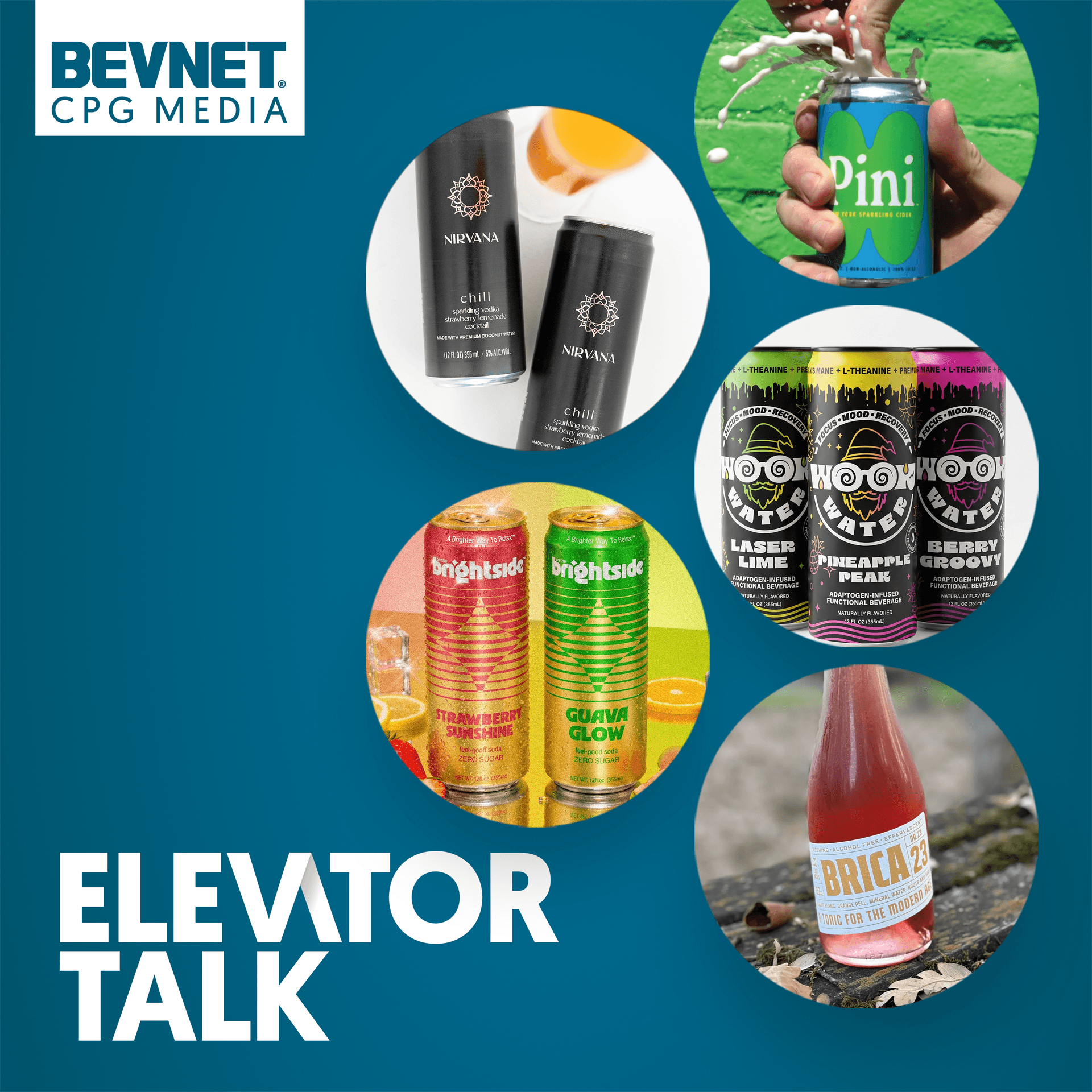
In short
Ken Sadowski (“Beverage Whisperer”) maps what’s next in beverages—why coconut water keeps growing, how founders should balance flavor vs function, and which emerging functional trends (caffeine-free energy, hydration, matcha, protein, colostrum) could scale.
Guest backgrounds
Ken Sadowski is a senior advisor at Verlinvest, a board director at Vitacoco and Icelandic Glacial, and an early-stage investor in emerging beverage brands. He’s known for long-term category investing and shelf/velocity thinking.
Key claims
- Coconut water’s growth is driven by sustained execution (“push” on shelves and “pull” via marketing) and consumer preference for simple “one-ingredient” hydration; category perception was hurt when Coke influenced retailers after owning Zico.
- Consumers choose by benefit/occasion first, then sugar/diet; functional drinks must still taste good.
- Celebrity/athlete-backed brands can boost discovery but don’t guarantee repeat; authenticity matters.
- Colostrum may be the next functional beverage unlock if dosing/benefits are proven and education lands.
Notable examples
Vitacoco; caffeine-free “quiet energy” brand RITE (ketones, paroxanthine, sucralose/Ace-K); prebiotic soda YASS; RTD cocktails (Suburban Life espresso martini); hydration brand Leisure Hydration; matcha brands Grind and Onyx; protein drink Fizzin Protein; ginger sparkling Gimber.
Written by AI. May contain mistakes. Listen to the episode to check what was said.
Chapters
Tap a time to open that second in VOExploring Beverage Opportunities
0:45 to 3:40
Ken Sadowsky discusses emerging opportunities in the beverage industry.
“Ken explains why coconut water still has plenty of runway, what founders can learn from playing the long game, and why he believes that colostrum could represent the next big functional beverage opportunity.”
The Rise of Coconut Water
3:40 to 6:00
Ken explains the resurgence of coconut water and its market dynamics.
“But I've been seeing this too over the last six months or so.”
Sugar's Impact on Consumer Choices
6:00 to 8:00
Discussion on how sugar affects consumer preferences in beverages.
“And so a lot of people watching the category said, yeah, the category stopped to take a breath and even declined a little bit.”
Influence of Big Brands on Categories
8:00 to 9:50
The impact of major beverage companies on market categories and trends.
“And those checks went for both paying for real estate and then also paying for frequency and depth of promotions.”
Introducing RITE: A New Kind of Energy Drink
9:50 to 12:00
Ken introduces RITE, a new caffeine-free energy drink, and its unique approach.
“Someone called me the whisperer and this is quiet.”
Packaging and Marketing Strategies
12:00 to 14:03
Discussion on how packaging influences consumer behavior and marketing.
“that's what our listeners want me to do.”
Consumer Trends in Beverage Shopping
14:03 to 15:40
Explore how consumers are increasingly shopping by benefits rather than categories in beverages.
“That was kind of a trap here because there's another article I'm going to reference on BevNet here that says, the title of which is, Consumers are shopping beverages by benefit, not category, says new FMI report.”
RTD Cocktails: Parch and Suburban Life
15:40 to 17:44
Discussion about the growing interest in ready-to-drink cocktails, highlighting brands like Parch and Suburban Life.
“I'm pretty sure you're not invested in this brand.”
Exploring New Beverage Brands
17:44 to 20:48
An in-depth look at various beverage brands including YASS prebiotic soda, their marketing strategies, and flavor profiles.
“It's described as the most refreshing daytime bourbon cocktail.”
Flavor vs. Function in Beverages
20:48 to 24:48
A conversation on the importance of balancing flavor and functional benefits in beverage products.
“That's a European thing where they don't over sugar.”
Show all 22 chapters
Investing in Leisure Hydration
26:03 to 28:00
Discussion on Leisure Hydration's market presence and the hydration benefits of their products.
“Choose from BevNet's seven free newsletters covering beverage, food, beer, spirits, careers, education, and more.”
Hydration and the Beverage Market
28:00 to 30:14
Exploring the relationship between diuretics and hydration drinks.
“As an investor, what was most compelling for you?”
The Rise of Matcha and European Brands
30:14 to 32:29
Discussion on the growing popularity of matcha and emerging European brands.
“People are getting energized with matcha quite a bit these days.”
Investing in Soda Brands: Stiller's Root Beer
32:29 to 36:14
Reviewing Stiller's root beer and the challenges in the soda market.
“to get home with just my existing suitcase.”
Gimber: A New Ginger Beverage
36:14 to 38:28
Evaluating a new ginger beverage and its market potential.
“You've either got to be really confident or really crazy, maybe a little bit of both to get into the soda category.”
Velocity in Beverage Sales and Colostrum
38:28 to 42:00
Discussion on sales velocity in beverages and the potential of colostrum.
“It is made with ginger, lemon, and herbs.”
The Potential of Colostrum
42:00 to 45:03
Explore the emerging market for colostrum and its potential benefits.
“How do we go from 99 cent iced tea to colostrum?”
Reviewing New Protein Drinks
46:14 to 55:04
A deep dive into various new protein beverages and their market appeal.
“We haven't, we barely talked about protein.”
The Changing Landscape of Nutrition
56:48 to 59:06
Colleen shares insights on evolving consumer preferences in nutrition.
“And as we all know, Bay State Milling is one of the leading companies in our space, particularly as it relates to nutritious ingredients.”
Integrating Fiber into Food Products
59:06 to 1:01:54
Discussion on how Bay State Milling incorporates fiber into various products.
“So the protein plus fiber equation is becoming way more important.”
Addressing Consumer Concerns with Clean Labels
1:01:54 to 1:04:57
Colleen explains the impact of ultra-processed foods on product labeling.
“I've seen reports that say American consumers are increasingly looking to GLP-1 drugs for their own health and that as many as 25 percent of American consumers will be using GLP-1 drugs in just a matter of years.”
Connecting with Bay State Milling
1:04:57 to 1:06:08
Colleen provides information on how to reach out to BSM for collaboration.
“clean label products, we think it's a huge opportunity for new brands.”
Transcript
Automatic transcript. May contain errors.0:10Hello friends, I'm Ray Latif and you're tuned into Taste Radio, the number one podcast for anyone building a business in food or beverage. What makes a brand worth betting on? Ken Sadowski, affectionately known as the Beverage Whisperer, returns to Taste Radio with a sharp look at where the biggest opportunities and potential pitfalls are emerging across the beverage category. A senior advisor at Verlinvest, board director at Vitacoco and Icelandic Glacial, an early-stage investor in several emerging beverage brands, Ken explains why coconut water still has plenty of runway, what founders can learn from playing the long game, and why he believes that colostrum could represent the next big functional beverage opportunity.
1:01Ken also shares his perspective on the rise of caffeine-free energy, hydration, matcha, protein, and functional beverages. He also offers candid takes on celebrity-backed brands, flavor versus function, packaging, category positioning, and the question he always asks when evaluating any new beverage.
1:26Hey folks, it's Ray with Taste Radio. Right now, I am supremely honored to welcome back to the studio, Ken Sadowski, also known as the Beverage Whisperer. Ken, it's great to see you. Great to see you, and it's an honor to be here. So the feeling is mutual. I thank you so much for saying that. How you doing? Feeling good about the Sox? What a turnaround. I am feeling so unbelievable about the Red Sox. And just a quick anecdote about Boston Sports Radio last Saturday, where one of the announcers quickly said that, I know the calendar says August 1st, but the Red Sox were 21-4 in July. So this is now July 32nd.
2:06Tomorrow is July 33rd. Like we are having never-ending July because we don't want it to end. I always wonder when they talk about a team winning something out of something. So the Sox have won 30 out of 35. Why'd they pick 35 as the number of games, you know, as the aggregate number of games that they would choose from? I don't know other than to prove the hyperbolic point of the team is on a roll. Okay, fair enough. This has become an annual tradition, having you come to the Taste Radio studio here at BevNet headquarters in Newton, Massachusetts. You're a local guy, so it's not too much of a drive for you.
2:40But I know how busy you are, so I really appreciate you taking the time. And I really appreciate you loading up our table with at least 20 to 25 beverage brands, literally from all over the world. We've got brands from the U.S., obviously. We've got brands from England. We've got brands from Japan, Korea, I think, yeah? Poland from when I went to Gulf Food in January. Yeah, there's some eclectic countries represented here compared to my normal travels. Yeah. I don't see a coconut water brand on the table. Maybe there's some coconut water in one of these brands, and we're going to sip on some of these and crack these open very soon.
3:13But I got to ask you about a recent article on BevNet that our dear colleague Brad Avery wrote. And the title is, How Coconut Water Quietly Became One of the Fastest-Growing Categories in Beverage. Ken was one of the original backers and believers in coconut water, and more specifically, in Vitacoco, which is the category leader, the dominant brand in the space. Okay, fingers crossed. It's also a publicly traded company. So I know you can't say too, too much. You're on the board. But I've been seeing this too over the last six months or so. Not only have I seen more people drink coconut water, but I've seen a lot of entrepreneurs get into this space.
3:53And frankly, I thought coconut water had hit its ceiling, had hit its peak. And Vitacoco was the brand. You know, you had Harmless Harvest as well. And maybe some other also ran Zico, obviously. But what's going on here? And how does it fit into the overall trends that we're seeing in beverage? Sure. Well, there's several factors. It's not just one thing that became the key unlock, but it's been a fascinating ride. I was talking to another beverage industry vet on my drive-in, Kevin Klock, from Sparkling Ice Talking Rain. Now Orange Toucan. Orange Toucan. Yeah. And we were talking about how things that are built properly are not overnight successes.
4:38And so Vitacoco, my first investment was in 2006. And it's just been a great ride. And education is always a component of making a brand bigger. And the simple push-pull of the beverage industry has really been a part of what has made this a success. The push is the team at Vitacoco has executed well and put it on the right store shelves at the right price, in the right proximity to peers. There's a lot of P's there. But then the marketing team has been unbelievable at pulling it off the shelf. And a lot of people just, you know, whether they're raising money and they want to get the money to get on the shelf and they think they've achieved their goal.
5:22No. The achievement is when you get people so interested in it that they're pulling it off the shelf. That has been a long trip and just a continuous rise in revenue. And I guess the hiccup was in people's perception, you know, I love Coca-Cola, but I'm going to throw them under the bus here. Because when they owned Zico, they would go in and talk to the world's largest retailers and say, not that Zico was not selling and that they couldn't manage a small brand. And they were throwing the category under the bus and the retailers listened to them. So coconut water space contracted. And so a lot of people watching the category said, yeah, the category stopped to take a breath and even declined a little bit.
6:07But it was only in the scannable channels. Vitacoco's revenue has never declined. We've been fighting the good fight since day one. And hydration is one of the categories, one of the many categories that I see in silos. and you have one silo of science, let's call it Gatorade and that ilk. And then there's the natural side of that, which is one ingredient, coconut water. And I just think the youngest consumers are coming into the category looking at, hey, why wouldn't I have a one ingredient in this vessel versus having what a scientist made? A couple of things to unpack there. There is a significant amount of sugar in coconut water.
6:50Essentially, it's coconut juice. I mean, there is just sugar, naturally occurring sugar in juice. How does that play into modern consumers' mindset when they're buying beverages? Well, certainly sugar continues to be vilified. And that's why you see sort of the ambient juice aisle in a supermarket in decline and just looking at their scanned data. That is a category that's down. I think people give coconut water a pass because it is just naturally occurring sugar. And also the fact that it's significantly less than orange juice and a lot of the other full fruit juices. The other thing you mentioned is that Coke had influenced the big retail chains as to the future of the category, their perspective on the future of the category.
7:41Do categories go where strategics go? In the oldest days, and you can tell by my hair color, It's not that I'm using shampoo 16 times a day. But in the oldest days, Coke and Pepsi fought for their retail space in the aisle and for secondary tertiary placement in the store by writing checks. And those checks went for both paying for real estate and then also paying for frequency and depth of promotions. And so that's how the supermarket category managers used to get their grades. If you want an A on your report card, you brought in a lot of money. Some of that money came from velocity of having the right skew mix, and some of it came from the big multinationals just coming in and writing checks for their real estate.
8:30But for example, kombucha as a category. If Coke or Pepsi or Kirk Dr. Pepper were to say, you know what, we don't really believe in this category. We wouldn't invest in this. We would advise you to invest in space for another category. Is that something that would concern or that should be of concern to potential entrepreneurs in the space or current ones? I would say short term, yes. I mean, at the end of the day, the truth comes out and category managers change. It's not even that category manager A is not a category manager next year. They may have been shifted to a different category, have a different lens, different perspective.
9:06At the end of the day, I think the right thing happens for the consumers. but short term, there are examples of like what happened to coconut water. Yeah. I ask this because founders typically take their cues from early stage brands, from cutting edge trends. Sometimes though they see what the big brands are doing and say, hey, they're onto something. They know something. We should follow their lead. And, you know, in the case of energy drinks, I don't even know where people take their cues from these days because it's such a crowded and extraordinarily competitive category that is owned by, what, five brands at this point?
9:44Actually closer to two or three. I mean, if you take Celsius into account, which really came out of nowhere, it's Red Bull, Monster, and Celsius that are really the top three brands in the space, which is why I was kind of interested and a little surprised when you came in and you said that you're working with a new brand called RITE, R-I-T-E, which comes in solid color 12-ounce slim cans and is a brand described as quiet, quote, quiet energy. Didn't expect this out of you, Ken. No stain, no offense. I'm just like, energy, really? Okay. I'm always up for a challenge. Someone called me the whisperer and this is quiet.
10:22So that's pretty analogous. But no, this is a caffeine-free energy with ketones and paroxanthine. So this is a caffeine-free energy drink and we just feel like the founders, Brad and BJ feel like this is a way of approaching caffeine that is way more approachable. And I thought that was a great thing to have happen. This is their watermelon lime variety. Beautiful packaging, by the way. Very clean, minimalist. Thank you. I would advise that they update the can to reflect what you said, that it's caffeine free energy, because that will appeal to a lot of people. Because there are a lot of people who are turning on caffeine, who never consumed caffeine to begin with.
11:14And quiet energy, I guess I get that there's a differentiating factor there, but I don't know exactly what that differentiation is. Sure. You're right in identifying that, pun intended. We have education to do, and we have evolution to do. And one of the evolutions will be in the communication. And that is in the earliest stage on the can. So I do think like this run of product was so small that it's really just going out to the potential investors and some influencers. Like it's not really going to hit retailers yet, even though the first round of product will look like that substantively on the shelf.
11:54we know that the product will evolve, the packaging will evolve. I'm going to needle you, Ken, just because, you know, that's what our listeners want me to do. This contains sucralose and Ace-K, both of which are artificial sweeteners. Yes. I thought we were past that. We call them non-nutritive sweeteners. But look, we were looking for the right flavor, and it is not the easiest thing to do to mask ketones and some of the bitter taste notes from paroxanthine as well. but we actually are right now in the lab doing a monk fruit flavor that would be Whole Foods compliant. Okay. So we have friends at Whole Foods and I shop at Whole Foods and we want to make something that is Whole Foods compliant as well.
12:40But this is going to get launched in probably something like Wisconsin. Okay. And we just wanted to have the flavor profile approachable in the middle America profile. Again, beautiful packaging. I've talked to designers and investors and founders, successful ones who have said that your best form of marketing, your most obvious form of marketing is your front of pack. It is your billboard. It's what people are going to see. It's probably their first interaction with your brand is going to be the front of pack here. When you're shopping and something stands out to you, what is it about the package?
13:18You know, I think it varies by product category and the set of the peers, if you will. And it's one of the things I don't want to get back into the Ps, but at least you're sitting far enough away that even if I articulate my Ps too much, you're not going to... I've had to duck a couple times, by the way. Well, then I'm really not whispering. But yeah, I mean, it does. It has to do with what does that product set look like? Who are the peers? And the peers are, you know, So things that are in usually like packaging, but you still want it to stand out. And so what are you doing on the label? And then there is the price point.
13:55Supermarkets and smaller format stores all want to have their products that are like organized properly. That was kind of a trap here because there's another article I'm going to reference on BevNet here that says, the title of which is, Consumers are shopping beverages by benefit, not category, says new FMI report. You're seeing this as well? Yeah, I mean, it's sort of occasion-based. But I think that the occasion does blend in with that. You know, those two things can be simpatico or analogous, and they'll be with each other. But yes, it is a new way of looking at it. It's a different lens. But at the end of the day, I think the shelf space, I mean, you're not going to see, you You know, progressions of water with then enhanced water and then going on to the next thing, which might be sparkling water.
14:47All of those things are still a flow of a store. And I just think there's no way of getting around that. But smaller format stores where it's cold single and discovery happens, I think you'll see more of the occasion-based stuff. So for a brand like Wright, do you want to see this in energy or do you want to see this in some sort of other functional set? Again, because there's a ketogenic benefit that isn't necessarily related to energy drinks or most energy drinks, that is. My assumption going in is that, yes, it should be with energy, but I also don't think that I have all the answers ever. So if I'm proven wrong, that's what part of my sort of axiom in the space or one of my axioms in the space is let the consumer tell us what's going on and make sure that we've got enough eyes and ears to inspect what we expect.
15:40Well, let's pull this one. I'm pretty sure you're not invested in this brand. You are invested in a non-alcoholic cocktail brand called Parch. Yes. Fantastic brand. This is a cocktail brand. And I know the last time we sat down, we did talk quite a bit about RTD cocktails and the potential for them. But it seems like there's still a lot of enthusiasm, but a lot of confusion, a lot of questions about the potential for non-alk and alk RTD cocktails. This brand is called Suburban. S-U-B-O-U-R-B-O-N. Suburban Life, I think, is the actual name of the brand, right? Correct. Yeah. And it's a RTD cocktail brand.
16:17And this is their espresso martini variety. Why wouldn't we try that? You know, early into the conversation or early-ish into the conversation, why not indeed? Comes in this slim silver can, 12 ounce. Also pretty good packaging. Although I wouldn't necessarily know immediately that it was a canned cocktail. You want the same cup? No, I just didn't know how long our arms were collectively. We're actually, yeah, we've messed with the studio. So now it's a little bit more difficult for Ken and I to pass beverages. Well, I'll talk to our team about this. It's a microphone obstacle course for me because I'm not that coordinated.
16:56Is this a British brand? No, this is the one that was sent to me with no note on it. And then later, Albie Manzo from formerly of Real Housewives of New Jersey sent me a thing saying, I'm sorry, I had a sickness. I went to the hospital with a honsilectomy and couldn't talk for a while and just got way behind on work. So this was sitting in my place in the winter. And I just sat there for several months because I was like, okay, great. Someone sent me something. Do they want me poisoned? Yeah, you got to be careful about that, Ken. I mean, you're a very likable guy, but I'm sure you have your, what do they call them these days?
17:35Your ops? I was going to say, you might just call it an enema. I mean, an enemy, given what I did earlier in the week. This is pretty good. It's described as the most refreshing daytime bourbon cocktail. A bourbon cocktail brand won our cocktail showdown competition a couple of years ago. That brand is called Pony Boy Cocktails. Fantastic brand based out of Kentucky. They make just some delicious products. But this is very easy to drink. You know, a lot of espresso martinis are pretty thick. And this just feels like you could pound two, three of these and do it very easily. So it's espresso martini-ish, I think, more than it is an espresso martini per se.
18:175 % alcohol. Also, you know, pretty tame. Yes. And I remember last summer we spoke about moth. Yep. And moth is doing well. They just did another raise. You're invested in moth as well? I'm invested in moth. A British brand of canned cocktails. Yes, really good. And then, you know, my friend Jason Cohen has Spikedade, which is an alcoholic Gatorade. And it is delicious. Also sweetened with sucralose. Not that I took my cues from that, but Jason's brand is doing really nicely. And so is Superlight, the competitive brand. But Spikedade came out first and the flavors are spot on. And I just think he's doing really well.
18:57I know they had a, I think they had a million cases done so far this year, which is pretty amazing. Okay, let's go on to another category that's really not doing anything. Nobody's really investing in this space. This is a brand of prebiotic soda. I mean, who's investing in this brand? Pepsi,$2 billion worth of money? It's not that much. Now, obviously, once again, in jest, this is a brand called YASS, Y-A-S-S. It is a British brand of, as I mentioned, prebiotic soda. This is their red and blue berries variety. Slim can again, lots of slim cans today. And I didn't try any of these. A lot of times I, like the last morning I'm in the particular city that I'm traveling to, in this case, London, I'll be like, oh my goodness, these won't fit in my suitcase.
19:45I am not taking these home. I'm going to drink every one of them now. And then I get stuck with an overweight charge from British Airways or whomever. And actually, the other thing that's hysterical is I was just on a Sunday morning pub run in London, and I always look for Old Speckled Hen. And I found a pub that had Old Speckled Hen, and I had my first one and just, you know, enjoying my first drink of the day on a Sunday when everyone else is doing their proper Sunday roasts. And I get a tap on the shoulder, and who is it but Chris Hall? So speaking of Poppy, it was just so funny. I mean, we didn't know that we were in London and then we wound up at the same pub.
20:31He was not there for Old Speckled Hen, but we might have had a few pints after that. Yeah. Chris Hall, the CEO of Poppy when it was acquired by PepsiCo. This is fantastic. This is brand yass. I do like this. Yeah. Liquid's good. It's almost like a cross between a sparkling water and a soda. it definitely feels much lighter in terms of sugar content than you would expect from a soda. Yep. I was going to say that. That's a European thing where they don't over sugar. It might be a French brand because everything is in French with the exception. Oh, sugar. Did I buy that in Paris? I did go, I'm sorry.
21:05I did go from London to Paris. Okay. So maybe this is a French brand, but it's really, it's great. It definitely feels like it's appealing to the Gen Z consumer. Yas is a term that, while younger folks use. It almost looks like a bit like poppy, you know, except just in a slim can. And then it calls out in French that there's 60 % less sugar than leading sodas. I think this is related to some of the brands that you brought, including Right, which you've talked about the two ingredients that are in your mind trending or will be trending within the beverage category. Flavor versus function. I'm sure we've talked about this before, But how should founders consider the two and how should they align both when they're building brands?
21:51The thing that I always use as a decision-making hierarchy for consumers is, is a consumer picking this up because it's refreshment or are they picking it up because it's functional? And I think that's literally the first thing they decide. And then the second thing in that hierarchy is, does this have sugar or is it a diet drink, non-nutritive sweetener, you know, five calories or less kind of thing. I do believe that those are the original sets of criteria, but to jump back in to answer your question, I think of Red Bull when it first launched in the U.S. and people were like, I don't know what this flavor is, but it's not good, but the product definitely works.
22:34So, you know, the functionality works for the energy drink category, there are other categories where things do not get a pass if they don't taste good. Like people just will not go back and drink them again if it's not a good tasting product. So at the end of the day, the product has to taste good. If it's a refreshment product and it's trying to beat its peers, it has to taste great. But if it's got a functional component, then it has to taste good. So does that make sense? It does. As a consumer, I'm always going to reach for flavor first. I don't really care how much functional benefit something has in it.
23:14If it doesn't taste good, I'm not going to drink it. I'm wondering if an entrepreneur says, well, I have something that's so compelling in terms of its functional benefit that people are going to buy it because of the functional benefit. Even if it tastes good, I'm wondering how much they should lean into the function. in their marketing versus the flavor in that positioning. Well, that gets into something that I discuss fairly regularly with entrepreneurs. And that is, if it's function first, then what is your price point? Like, will someone really pay up for this? And then, you know, I even think about just the conversation I had with Kevin Clock, where Moringa has been a tough flavor to get to taste right.
23:58And that's his key ingredient in his new brand. Orange toucan. Yep. And so it's an anti-inflammatory and it helps with people's ability to move around freely. And that's a great functional benefit. But if it doesn't taste good, then people will not give it a pass. It doesn't have to taste great. You don't want to think you're having nerds, but it has to be something that you'll go back to. For this brand, Yoss, all the communication about it being having probiotics, having a fiber benefit, having a gut health benefit, I almost wish they would just drop a lot of that and say, this is a great tasting, better for you soda.
24:38Not exactly in the way I described it, but that would lead me to believe, perhaps, as a consumer, that it is better tasting than it would be otherwise. Because I'm thinking, oh, fiber, prebiotics, it's just not going to taste like what I'm used to tasting. So sometimes I think that's where consumers are. And it happens a lot where you see something that says zero sugar or you see something that says this has added protein or added fiber. And you automatically think it's just not going to taste as good as it should in the consumer's mind. Or the price point connotes something where, hey, this better have something extra in it because I'm paying up.
25:18Right.
25:19Ken Sadowsky:Hey, listeners. Lots of hot new jobs in the August 7th roundup at CPGjobs.com, including from Berkeley Yeast, Spiked Aid, and Owls Brew. Also, Rev Copac, Good to Grow, and Stanford University. Great companies, strong moves, so jump in and apply. And if you're hiring, reach CPG experience candidates already tracking the category. from sales leaders to supply chain pros who've moved real palettes. Because they're self-selected, spend less time screening wrong-fit applicants and more time talking to the right ones. Post your job at cpgjobs.com today. Use code TASTERADIO26 and save on a job listing.
26:02Ken Sadowsky:Your inbox should reflect the parts of CPG that matter to you. Choose from BevNet's seven free newsletters covering beverage, food, beer, spirits, careers, education, and more. Sign up and select your favorites at cpgmedia.com slash newsletter. Leisure Hydration. Brand that's been on the market for at least five or six years now, maybe even longer than that, right? I don't think it's been out longer than four years, but I could be wrong. Okay. Because these folks, I'm pretty sure, joined us for a New Beverage Showdown. Were you part of a panel evaluating this brand? No. No, but you are an investor in Leisure Hydration now.
26:43They've been doing some great things, a lot of traction for the brand that used to be known as Leisure Project. Now they're known as Leisure Hydration, which obviously connotes a very specific function and a very easy one for consumers to understand. At the bottom of the can, it's described as an electrolyte refresher. Now, if you are a Chase Sapphire card holder, you've probably seen this brand in the lounges, which was a big coup for Leisure Hydration, because what else is in there? Spindrift, a couple of Coca-Cola products, and I think that's it in terms of canned beverages. Why Leisure Hydration?
Read the full transcript
27:14What made you believe in this brand? Well, I do like the brothers. They're scrappy. They're hustlers. One of them was a UCLA football player. Well, the hydration benefit is interesting. And going back to what we just talked about, this is something where if I'm thinking, am I drinking this for flavor? Am I drinking this for function? This is a function first product for me. hydration, if I need some water, but I want something other than water, I would turn to a product like this. If I wanted a sports drink, but didn't want all the sugar and artificial colors in a sports drink, I would turn to this.
27:49I have always wondered, and I think the folks from Leisure Hydration have talked about this, but what is the reason why people pick up a can of Leisure Hydration? What's the most compelling attribute of this brand? As an investor, what was most compelling for you? That they're not taking themselves too seriously in the sort of comparison of the Gatorades and, you know, be like Mike, drink Gatorade. You're going to go out and, you know, dunk a basketball. And these guys are doing stuff for the rest of us, if you will. And the other thing that I think doesn't get enough airplay, if you will, is with America's fixation on coffee culture, whether it's, you know, matcha or actual coffee and then energy drinks, they're all diuretics.
28:39All these caffeinated drinks are diuretics. And there's a symbiotic relationship between coffee culture and hydration. And it's really why I'm enamored with Vitacoco and to a certain extent, you know, these other things that are just hydration, electrolytes, but not taking themselves too seriously. And it's look at the sticks that are out there, you know, like liquid IV and that kind of stuff. There's so many things that are options for rehydration. And I just think no one has successfully talked about the relationship between all the diuretics that consumers are drinking and therefore the need for these rehydration beverages.
29:22Yeah, and to your point, the tagline, at least at the top of the can, is hydrate, chill, repeat. So they're not necessarily being very determinative about how you drink this. They're just saying it's in a very fun and relaxed way, hydrate, chill, repeat. But they're not saying you have to drink this after working out or you have to drink this before you're working out. It's very much a enjoy what you're drinking kind of beverage, which I like a lot. I mean, 50 % of Americans are walking around dehydrated and it's the cause of a lot of headaches. Like instead of taking Bayer or Bufferin, just drink water or drink an electrolyte beverage and get yourself into proper hydration mode.
30:05That was your opportunity to say, just drink leisure hydration. Or Vitacoco or Icelandic glacial water or new water or any of the other things. I'm sort of focused on keeping people hydrated. Fair enough. People are getting energized with matcha quite a bit these days. Matcha is becoming much more of a household name. You seem to see a lot of kids drinking matcha nowadays, which seems like it's a boon for the category. Any Starbucks store or any other proper coffee shop is selling matcha in RTD form. There's at least a dozen brands that I can think of that are in this space. This one I have not seen before.
30:43This is a European brand. It's called Eat Y-X. Eat Y-X? I don't even know. That's the Polish brand for sure. And they had a fascinating booth at Gulf Foods. And one of the things that I liked was they're the same people that make the Gatorade-esque beverage called Oshii, O-S-H-E-E. And I had a feeling it was a Polish outfit because their spokesperson for the hydration Gatorade competitor was Iga Schwiantek. And she's just a great tennis player, but I don't know if anyone that's not a tennis follower would be able to pick her out of a lineup, but she happens to be great and she happens to be Polish.
31:29And so that was my first clue. This looks like a lot of matcha drinks that you would see kids sipping on, kids or adults really, sipping on. It's a strawberry matcha latte flavor. Strong viscosity. It's pretty thick. There is a little, just a hint of grittiness in this, which I think people are fine with if it's not overly gritty. And I think more than anything, you can taste the matcha. You can taste the strawberry. You can definitely tell that this is a coffee drink. I think they did a really good job with it. My question is, would this branding work in the United States, and I have to say probably not.
32:11Agreed, but I don't think that was their goal. I think Kenny just went by the booth and was sort of enamored with the breadth of their offerings, and then started speaking to their U.S. agent, and he just said, here, let me load you up with this stuff. So again, you know, having gone to Dubai, that one I did manage to get home with just my existing suitcase. I didn't have to buy another suitcase, thankfully. Yeah, and it's a plastic bottle. I can't even tell. I want to say it's probably 10 ounces, perhaps, maybe 11. I was going to say it's probably a European-compliant 330 ml or something, right, which would make it 11.2.
32:51Okay, yes, it's 300 ml. Ah, good, yep. It comes in an almost full wrap label, and this actually somehow looks like a brand that would be promoted by a sports figure, a tennis player perhaps. Earlier you had mentioned a real husband's housewives person who is behind one of the brands that we... Suburban. Behind Suburban. Someone asked me about celebrities and getting people to promote their brand through a well-known famous figure, whether they're in sports, entertainment, music, what have you. What's your stance on that? It's definitely a component of potential success. I think the other thing that it is, is not original anymore.
33:44And I'm hoping that when consumers see this on TikTok shop or Instagram or wherever they see it, that they don't smell that it's a contrived paid sponsorship because that's, you know, just, okay, so someone paid them to do that this week. What are they doing next week? It's better when that athlete, musician, celebrity, entertainer invests in the brand and really gets behind it. But even then it's like, are there zealots, are there followers going to buy just because they see their idol or this week's idol pushing something on them that, you know, it will definitely get discovery. I don't know if it adds anything to conversion to purchase and then repeat.
34:37Maybe you should just put your name on the can, like a Ben Stiller. How'd you like that transition? I knew you were going somewhere. Ben Stiller has a new soda brand. You've probably heard of it. It's called Stiller's. S-T-I-L-L-E-R apostrophe S. They have four varieties. This variety is their root beer. You've never tried this product, have you? I've never tried it. And what I know about the carbonated soft drink industry is that root beer is the toughest flavor to produce. So that's why I bought it. I have had this product and it's delicious, in my opinion, if I remember, unless they changed the flavor, which, you know, early stage brands tend to mess with their flavors every so often.
35:15So let's give this a whirl. First of all, it looks like a root beer, which goes a long way. It doesn't look like a carbonated water root beer. I think people know what I'm talking about. The tagline is the world's refreshingest soda. It's got 30 calories per 12 ounce can. It's the classic wide can. Seven grams of total sugar, which is great for a soda. It's also described as a natural soda and that there's no fake stuff. What are your thoughts? The level of brightness or flavor forward that I would expect when I see 30 calories and not a non-nutritive sweetener on the panel, it is a really good tasting product.
35:57Even better that you poured it into the cup, the smell, the olfactory sensation is definitely there. And that's an important part of root beer because if it were any more caloric, I would be asking for vanilla ice cream right now. You've either got to be really confident or really crazy, maybe a little bit of both to get into the soda category. Is that something you would ever invest in? I don't think so because at my stage of life, I think I'm just, what makes me tick is getting involved with innovation, but I'm not saying it's uninvestable. And the other thing that I see most often is, hey, we're entering a new category.
36:42That category is growing. All we need is 1 % of that category and we will have a big brand. But the other thing I see is we want to get into traditional category, in this case, CSD, and we want to disrupt it. And by disrupting it, we will do X, Y, and Z. There's no right or wrong. Things like this are investable. And I just like conjure up the really smart insight of Rohan Ozo with the modern soda set that he convinced Walmart they should do. And that really is what was, I think, the key inflection point for Poppy. So modern soda, if Stiller's, for example, can get into that set, that's going to be a benefit for them.
37:28And then the other thing that I've seen is Pepsi is not still having success with poppy growing. It's not going to go away, but it may leave opportunities for that same amount of shelf space to have some new entrants. For the velocities in beverage, for great beverage brands, it's ridiculous. I mean, you're talking about literally billions of products sold every year. And that is always something that comes up when I'm looking at or evaluating new brands. I'm like, could this sell a billion cans? And I think that kind of answers the question for a lot of early stage entrepreneurs for angels, because angels want to see that huge windfall sale at some point.
38:10And I'm not picking on this brand whatsoever. It just is a brand that just happens to be in my hand. This is a brand called Gimber, G-I-M-G-E-R. Could be Gimber or Gimber. Yeah. I don't even know. It's a sparkling beverage brand that comes in this 10 ounce slim can. And I like the fact that some of the verbiage is upside down. Yeah. So the side of the can says, upside down, it says flip to get your natural kick. It is made with ginger, lemon, and herbs. It doesn't necessarily describe a functional benefit. I think ginger is the benefit perhaps, but let me pour you some. Thank you. This looks like you found this in Paris as well.
38:45I'm not going to guess anymore, but if there's French on it or if there's a price sticker on it and it's in euros, not pounds, then I'm going with yes. It tastes like a ginger ale, a little flatter than most ginger ales that you might be drinking. But it's great. The ginger flavor is excellent. You can tell it's natural. Not a lot of sugar, which is great, too, or at least that I can taste. Right. And I would say balanced out with a lemon. Some of the ginger is bitter or ginger flavor, and then I'm getting lemon on the back end. The ingredients in order are sparkling water, ginger juice, lemon juice, and then cane sugar.
39:22There's a few ingredients after that. But I appreciate the fact that the second ingredient is ginger juice as opposed to cane sugar, which I think in most ginger ales, it's high fructose corn syrup or sugar. This is an excellent beverage. I think in its current form, I wouldn't bet on it as a billion dollar or selling a billion cans. But I think this is as modern consumers look to beverages like this. This has got a shot. This is delicious. I like the logo. Yeah. It feels Tesla-ish. Can I say that? You just did. Yeah. Yeah. It's vertical, which Mike Schneider, our CMO, would complain about. But what does he know, right?
40:02I mean, just look at his football team preferences. Oh, boy. He's probably listening to this and he's going to come flying through that door. Sure. That wouldn't be the first time. But I just wanted to jump back to one thing that you, when you talked about velocity, just one really funny, quick anecdote. I remember when Mike Rapoli and Darius from Vitamin Water bought Pirate's Booty from Rob and some of his team, like at the first trade show I went to, I was like, hey, how are you guys? They're like, man, this product tastes great. But they were like going like this, like the velocity of snack is just not like beverage.
40:38Like I just, you know, we're not for long on this thing because it's just, we're yawning. So it was interesting. And of course, Rapoli and Darius turned it into a successful sale, which I would never doubt. But it was just funny because, you know, the velocity of beverage, but just hearing that from those guys made me think like, okay, Kenny, stick to your knitting. They know something about velocity, at least Micropoli does in particular, I mean, he is the most successful beverage entrepreneur in the United States ever. I mean, body and water, body armor. He's still got a lot of things going on right now.
41:13And I'm not even talking about his 200 horses that he owns in the... Yeah, yeah. No, I'm not taking anything away from Mike. He's unbelievable. He's a force of nature. But I think, you know, don't lose sight of like what Ferralito and Voltaggio did. Those guys are wildly successful with Arizona. Yeah. Yeah. So there are some big brands out there that just aren't, you know, the guys aren't into the publicity. You're absolutely right. I mean, and Don Voltaggio is a billionaire in his own right. His two sons, I think are pretty much running the brand now, Spencer and Wesley, but I'm sure he has a, still has a heavy hand in what goes on.
41:48And certainly in making sure that that 99 cent price point will be there as long as it can. I mean, the 99 cent Arizona, the$1.50 dog and soda special at Costco. These are things that when they change, you'll know the world has changed. Yes. Tectonic shifts. Yeah. Colostrum. Yeah. How do we go from 99 cent iced tea to colostrum? Well, we're talking about very different price points, but I was really impressed. I took a quick trip in March. Can I set the scene for a second? because I didn't even do that. I'm holding in my hand a jar of colostrum from a brand called Ancient Nutrition. You brought this.
42:29Yes. There's something about this that's interesting to you. Yeah, well, I bought it. And I was a tiny, tiny investor in that brand. So that's why I chose that brand. I mean, if someone can unlock the colostrum key, I think there's a big category there. And I think it is incumbent upon somebody like Fairlife or somebody like that. Like it's a dairy derivative product. There's something there. I don't know if it's shelf stable if you put it in a solution of water. I don't know if like another one of the brands that I'm associated with or companies that I'm associated with is Nulixir, the nano encapsulation company out of Austin.
43:11but it's like if someone can make this an effective dose of colostrum in a beverage, that might be the next unlock, one of the next unlocks. This is, for me, someone who follows the beverage industry every day, follows the food industry every day, I'm still confused about the benefits of colostrum. I know I've heard the word a number of times, but if I'm having a hard time understanding what colostrum is all about, how hard do you think it is going to be for the average consumer? Not even the average consumer, just the natural foods consumer. Education is definitely a part of innovation and it has to start somewhere.
43:47And I just think of, you know, the tip of the spear or the core consumer. And then if it's enough benefits to the core consumer, it gets to the more consumer. And that's where things get to be big brands. And I get what you're saying with Fairlife, of course. Fairlife has a lot of distribution. They have a lot of awareness. a brand like that could go a long way in educating consumers about colostrum. I think, how do you really care about the ingredient as much as you might know about the ingredient? I think that's another part of it as well. Yeah, well, I mean, to me, it's a play with natural longevity.
44:25So it's not taking peptides that you're injecting into your side. This is something that comes from the dairy industry. And, you know, it's to be determined, but it could be a miraculous ingredient. Okay. Well, the great Kenny Sadowski, the beverage whisperer himself, just said he's following colostrum. So listeners, maybe you should follow colostrum, or at least pay attention to what's going on. Taste Radio meetups are continuing in Chicago, San Diego, San Francisco, and London. Come hang out with the food, beverage, and beer community for live podcast recordings,
44:58Ken Sadowsky:CPG networking, and sample sharing. Want to attend or partner with us? Head to Tasteradio.com slash meetups. Vibrant Ingredients is the natural ingredient partner powering food and beverage innovation, delivering flavor, function, and protection through a science-backed portfolio. Vibrant delivers purpose-driven solutions that help brands create extraordinary experiences. Discover what's possible with Vibrant today. Visit VibrantIngredients.com The Angel Group was among the first believers in brands like Poppy, Bacchans, Goodles, and Siete. The next generation of great consumer brands is being built right now.
45:43Ken Sadowsky:Learn about investing alongside other industry professionals at wearetheangelgroup.com.
46:13I got to reach for another brand. This is, how about this? We haven't, we barely talked about protein. We're kind of, we're making our way to protein. And here we have Fizzin, Fizzin Protein. It is a sparkling fruit juice drink that's made with added protein, specifically collagen protein. It comes in a 12-ounce, I feel like I'm repeating myself here, a thousand times, 12-ounce slim can. This is a painted can. It's red with yellow highlights. Strawberry lemonade is the variety. This, I thought, honestly, was a European brand, but it's not. No, that one I remember buying at Target in Westboro, Mass.
46:51You saw this at Target? Yeah. Wow, I would not have expected that. Because it doesn't look like a big brand. And I know, you know, Target doesn't only sell big brands. But this looks like a brand new brand. I've never seen this before. I had never seen it before either. it's incumbent upon me to do store checks and it's so easy when I live here in Massachusetts for the part of the year that I live here to do store checks because I live in Central Mass and within five miles I can go to a Target, a Walmart, a Wegmans, a Roach Brothers, a Stop and shop. I mean, it's just a Whole Foods. It's pretty Target-rich environment for someone like me.
47:38No pun intended. And especially when I see something that is, I'm assuming female-focused because Target gets more female purchasers than Walmart. Those are the kinds of things that I like to just see what the Target category managers are up to. Yes. Entrepreneurs listening, spend a lot of time in grocery stores. You'll get a sense of what's moving, what's not. You put your products on the shelves next to other products, you'll see what is truly differentiated about your package design, perhaps your messaging. But yeah, spend time with the consumer, spend time with people who are walking around and get a sense of what is appealing to them.
48:17This is appealing to me only in that I feel like if I wanted a lemonade and could get some extra protein, fair enough. Would I be buying this specifically for the protein? No. Is it delicious? It's very good. It's made with real fruit juice and not flavor, as the brand points out. It's got stevia, which you can definitely taste. I can see why Target bought it because I can see them slowly expanding their protein beverage set. Remember they had protein pop, I think, before anyone else? Protein is definitely prescient. And anyone that walked the aisles of Expo West knows how to spell protein backwards, forwards, sideways.
49:01It's definitely a category worth watching. And Americans are notorious for just wanting the magic pill. Like there are ways of getting protein from your diet. And there are ways of getting protein from value added occasions. And in this case, it's a beverage. We've got at least another dozen unopened cans or bottles here. I don't know if we can get to all of them. But if you had to pick one or two, Ken, which ones would you pick? Ooh, I don't know why I get to pick. It's your show. I really like the grind matcha ready to drink. Okay. So maybe that one. And then I guess I haven't tried whatever this Asian.
49:41Oh, the Red Bull looking product, but in a Don Pon. Yeah, this is definitely a Chinese. This is definitely from Gulf Foods in Dubai. And then the other one that Onyx, I was just curious about that. Oh, yeah. I know you said one or two, and I just chose three. But if we have time for three, those would be my three. Let's get into this Grind. Grind is an iced matcha product. This is their oatmeal matcha latte variety. It comes in a 250-milliliter can. Color scheme is interesting. It's pretty minimalist. You've got this light green color at the top, and then the rest of the can is silver. Because their color for all of their coffee is pink.
50:18Ah, okay. They have shops. They have retail stores in London. I smuggle some of these back too, but it's not smuggling. But they have the Nespresso capsules in sustainable formulas, like, you know, no plastic, no aluminum. It's a really good execution. And you can get one or two of their SKUs, like House Blend Nespresso, on Amazon. But when you go to London, they have 12 different varieties. So I was in there to buy some of the different varieties to take home. And then I saw that they had a ready to drink matcha. So I bought that. This is delicious. Yeah. It's described on the can as creamy, smooth and ceremonial grade.
51:00Smooth is the thing I think the adjective I would use to describe this. It is eminently drinkable. Very, very easy to drink, which not a lot of matchas are, ice matchas are. It just feels like this flows into your body in a way that I have not experienced before with this category. And I can also, like if someone were to give that to me without telling me that the product wasn't American, I would guess that it's not American because it's not that level of sweetness that one would expect of an American matcha. Yeah. I'm going to wait on the energy drink and I'm going to go to the Onyx. Okay. As I mentioned to you, I think Onyx coffee is a maker of whole roasted bean coffee.
51:42And this is the first time I'm seeing an RTD product. It comes in a… 12-ounce slim can. 12-ounce black slim can, yes. This is a salted mocha variety. Monarch Espresso, dark chocolate, sea salt, and oat milk. American product. Again, I'm always having to check the nutrition facts label to make sure. Yeah, that one I remember buying in Walmart because I've never seen it before. I have not seen it since. And I really thought it was maybe a Walmart private label. The smell on this, the aroma on this is amazing. As soon as I cracked open the can, I was like, wow, that's coffee. Yeah, really good. But like a significantly higher bricks count than the matcha that we just drank.
52:23Yeah. Not sickly sweet, but definitely like this strikes me as being American. Ready for America. Very much so. Very much that sweetness level that Americans are used to, but with a coffee flavor that is definitely premium. And I'm surprised at the viscosity again, sort of the thickness of it. And again, not like it's sludge and not going to come out of the can or the vessel that it's in, but I'm surprised at the overall texture. All right. On to the Don Pond. This is a 12-ounce. No, I'm just kidding. This is a 16.9 fluid-ounce bottle. 500 ml, as it were. 500 ml, half a liter, because everyone needs a half liter of energy drinks.
53:08260 calories, 60 grams of sugar. That's what I'm talking about, America. There we go. Just to open that slowly, I would think that might be electric. Okay, it's in this wide body. Yeah, that's an interesting vessel. It looks like a little missile. Is it non-carb? It's non-carb. Wow. And it looks like apple juice. Which is really kind of Red Bull-ish in color, but people don't pour Red Bull out into a glass. Not often. It smells like penicillin. It actually is in the Red Bull taste family to me. Maybe I messed up by calling it or saying it looked like apple juice because I'm tasting apple juice now.
53:43Is there apple in here? I'm getting some apple in there, but it could be the power of suggestion. I don't think there's an actual, real, natural ingredient in here. No, I don't see anything that's this. There's a lot of FDNCs, a lot of non-nutritive sweeteners, as you would describe them, Ken. Yeah, but if it's 260 calories, there's sugar in there too. Yeah, there's high fructose corn syrup. Well, no, there's sugar. Okay. I don't know who would pound this, maybe truckers. I'm not sure who would be drinking this. To our point earlier, our discussion earlier about refreshment versus function. Yeah, more than an ounce of this, and I think I would explode.
54:26Yeah. That's why there's all kinds of different beverages and all kinds of palates. For sure. Ken, every time we have an opportunity to sit down and chat is just fantastic because, Because like you said before we hopped in the mics, we don't necessarily need an agenda. We can just chat it up and talk shop and enjoy ourselves while tasting 20, 25 different beverages. And I'm just really thrilled that our audience gets this opportunity at least once a year to almost sit down with you. They get to hear your voice and hear your perspective on the industry and how it's evolving and your perspective as an investor and as an observer as well.
55:03And I think it's very, very helpful to folks who are building brands in this space. So thank you so much again for joining us. And folks who are listening, stay tuned for a special social segment with Ken. We're going to be talking about how he ranks brand attributes or the attributes of a particular brand, such as founder, packaging, category, and otherwise. So that should be fun. We're going to do that right now. Perfect. Thank you, as always. Thank you so much, Ken.
55:34That brings us to the end of this episode of Taste Radio. Thank you so much for listening. Taste Radio is a production of BevNet.com Incorporated. Our audio engineer for Taste Radio is Joe Cratchy. Our technical director is Joshua Pratt. And our video editor is Ryan Galang. Our social marketing manager is Amanda Smirlinski. And our designer is Amanda Huang. Just a reminder, if you like what you hear on Taste Radio, please share the podcast with friends and colleagues. and of course we would love it if you could review us on the apple podcast app or your listening platform of choice check us out on instagram our handle is bevnet taste radio as always for questions comments ideas for future podcasts please send us an email to ask at taste radio.com on behalf of the entire taste radio team thank you for listening and we'll talk to you next time
56:37Hey, folks, it's Ray with Taste Radio. Right now, I'm honored to be sitting down with Colleen Zammar of Bay State Milling. Colleen, it's great to see you. Thanks, Ray. Great to see you, too. Thanks for having me. Thanks so much for joining me in this incredible time for Food & Beverage. Things are changing so much. And as we all know, Bay State Milling is one of the leading companies in our space, particularly as it relates to nutritious ingredients. And I'd love to hear from you in terms of nutrition and how that landscape is changing, particularly in the context of consumer brands. Oh, it is exciting times.
57:12Nutrition is changing a lot. You wouldn't think that that's possible given that it's been around for a long time, but consumers just really tuned in to what they're putting in their mouths and what they're putting into their bodies. And so they're seeking information, they're reading labels, and they're really looking for the most nutrition for their buck. That's certainly true in the case of a macro that we're all familiar with, which is protein. It seems like everything is protein this, protein that these days. But a lot of people are talking about fiber as well. Why do you think fiber is the next part of that conversation?
57:45Yeah, fiber is a macro that hasn't gotten a lot of attention over the years. But as people are starting to learn more about gut health and the impact of their gut on the rest of their body, and then what impacts gut health, which is fiber and how it feeds the microbiome, they're really starting to connect all those dots and say, yes, okay, I need protein for strength and muscle building, but for the rest of my body to function well, I need to feed it well. And that's what fiber does. How much does the fiber part of the equation influence buying decisions today? And how does it change how consumers make buying decisions, say, a year from now?
58:22I think it's starting to impact buying decisions today. It's part of the whole picture, whereas in the past it might have been a single nutrient that they were tuned into. They're starting to look at different types of fiber because different types of fiber do different things. And now when you think about nutrient density, that's sort of the term that we're using quite a bit these days. It's been around for a long time, but nutrient density now is not just about one nutrient. So when you think about all of the nutrients that you can get in a food, they start to add up. And so that value that you get from nutrition, or as Rabobank likes to call it, nutrition efficiency, it all comes together in a bigger picture.
59:02So now we're starting to see this layering or stacking of macronutrients. So the protein plus fiber equation is becoming way more important. And I think that's what we will see as the next year or more play out. So if people are willing to pay more for better food, for food that has more nutritional value, will they be willing to sacrifice on flavor? I think the answer is no. and fiber has always meant, in the past at least, taking a bit of a taste hit. How does BSM help brands avoid the quote-unquote flavor problem? Yes, I agree with you that consumers will not sacrifice on taste. It is the number one thing.
59:44That's one of the reasons why we eat food to begin with. So as Bay State Milling, when we focus on fiber, we're really focused on one particular delivery vehicle and that is HealthSense high-fiber wheat flour. And so the fiber is built into the flour. It comes directly from the wheat seed. And any of the food that you make with HealthSense flour tastes exactly like it would if it were made from traditional flour. So if you think about white bread, you think about white pasta, that's the flavor that we all love and that nice, smooth texture. With the fiber built into the flour, there's no taste hit whatsoever.
1:00:20That's great to hear. But people want to know that the proof is in the pudding. Who's actually using HealthSense? Oh, it's used in quite a bit of products. You'll find it in pasta, tortillas, other baked goods. We've got some bread customers. So it's being used in a lot of the foods that you may be eating today and wouldn't know it except for looking at that fiber claim on the front or the back of the pack. I think a lot of folks listening right now are wondering, well, would it work for my brand? How does BSM help incorporate HealthSense into new products? How do you help founders figure out a way that it not only makes sense from an ingredient standpoint, but it makes sense from a brand standpoint and a marketability standpoint?
1:01:05and at the end of the day, gives consumers an extra reason or perhaps a primary reason to buy their products? That's a great question. We work really closely with our customers to make sure that all of those things fit together, using the right amount of the ingredient to deliver on a claim that's meaningful for consumers, but delivers on a fantastic tasting product. And obviously different brands have different messaging and different essence. So we want to make sure that the benefits that we're talking about resonate well with that brand and with their consumers. It requires that close relationship where we work together from the very beginning to talk about what it is that they want to deliver to their consumer.
1:01:44And then we can work with them on the formulation. We can work to find them a manufacturer. We can work with that manufacturer to make sure that it's flawlessly produced. And even we can help them with packaging claims if that's what they're looking for. I've seen reports that say American consumers are increasingly looking to GLP-1 drugs for their own health and that as many as 25 percent of American consumers will be using GLP-1 drugs in just a matter of years. That's a very large and significant number. How does GLP-1 drugs and the consumers that are using them fit into the overall strategy for BSM and its clients?
1:02:30We can't deny the size and the impact of the GLP-1 market. I think we all know many, many friends and family who are using them. And it does impact them in different ways. They choose different foods. They really want to make every calorie count because they're really not that hungry. So they're trying to eat well. They're trying to get as much nutrition as they can. And again, this nutrient density concept. And protein is one of the macros that they're trying to get more of because they want to maintain that muscle mass. But in tandem with protein, you need fiber. You need it for digestive health.
1:03:02You need it to help with the satiety that the drug also brings. And you need it to help offset some of the sometimes downsides of too much protein or not enough food. So as this consumer base grows and foods are catered specifically to them, we're going to see a lot more protein, a lot more fiber, and in general, again, this nutrient density where they get as much nutrition as they can for that morsel of food that they're going to eat. There's one other part of the equation for food and beverage brands these days that they just can't escape, founders, that is, and that's concerns about over-processed, ultra-processed foods.
1:03:41And consumers just want to seemingly eat better for you, but how do ultra-processed foods and the scrutiny around them impact your work with founders and their brands? Ultra processed foods are certainly a big trend and also a big opportunity, particularly for founders and new brands that are starting out. Consumers are tuned into this. They may not know the term ultra processed foods, but they know that they want clean label. They know that they want as few ingredients as possible. And so for us with HealthSense high fiber flour, the only thing that it would say on the label is flour or high fiber flour.
1:04:22So our strategy is actually to try to remove some of those additives that are being tagged as highly processed. If you think about consumers are using some of these apps to determine how processed a food is, that really is looking for additives. It's looking for long labels. And here we're delivering the fiber with something as innocuous as just flour or wheat flour or high fiber wheat flour, depending on how they choose to put it on their label. So we see this as actually an opportunity. And for smaller brands that can move fast and really get to the table fastest with these clean label products, we think it's a huge opportunity for new brands.
1:05:01Well, if I were a founder looking to incorporate more fiber into my products, I think my first call would have to be to BSM. And, you know, the expertise that you've just talked about here, Colleen, is pretty remarkable. And I imagine that it's quite easy to talk to you and your team about how to incorporate HealthSense into a product or products. I guess the last question, and perhaps the most important one, which is how do you get in touch with you and the team at BSM? What's the best way to do so? Oh, we would love it for people to call us and talk about it. you can go on our website, aestatemilling.com and submit a form, or you can contact me directly.
1:05:43I am at cxammer at bsm.com, or you can call our main number, which is also on our website. Any way that you call or write to us, you will get to the HealthSense team and we'll be there to help. Outstanding. Well, Colleen, thank you so much for taking the time to speak with me today. I think our audience is going to be really thrilled with our conversation. Let's definitely stay in touch. Absolutely. Thanks for the opportunity.
From the publisher
What makes a brand worth betting on?
Ken Sadowsky, affectionately known as "The Beverage Whisperer," returns to Taste Radio with a sharp look at where the biggest opportunities — and potential pitfalls — are emerging across the beverage category.
A senior advisor at Verlinvest, board director at Vita Coco and Icelandic Glacial, and early-stage investor in several emerging beverage brands, Ken explains why coconut water still has plenty of runway, what founders can learn from playing the long game, and why he believes colostrum could represent the next big functional beverage opportunity.
Ken also shares his perspective on the rise of caffeine-free energy, hydration, matcha, protein and functional beverages. He also offers candid takes on celebrity-backed brands, flavor versus function, packaging, category positioning and the question he asks when evaluating any new beverage.
Show notes:
0:20: Ken Sadowsky, Sr. Advisor, Verlinvest – Ken kicks things off by praising his beloved Red Sox before sharing his perspective on why coconut water has quietly become one of beverage's fastest-growing categories. He explains how strategic decisions by major beverage companies can temporarily shape retailer perceptions of an entire category, and why occasion- and benefit-based shopping may increasingly blur traditional category lines, particularly in smaller-format stores. Ken also discusses several emerging brands in his investment portfolio, including Rite, a caffeine-free energy drink powered by ketones and paraxanthine, and Leisure Hydration, which he sees as a function-first product with a more relaxed approach to hydration. He and Ray also evaluate products from Stillers, Yass, Gimber, Fizzin Protein and Grind. At the heart of Ken's philosophy is a simple question: Why will a consumer buy the product again? While functional benefits can drive trial, he argues that taste remains critical to repeat purchase in most categories. For founders, he emphasizes the importance of spending time in stores, studying the competitive set and allowing consumers to determine where a product belongs rather than relying too heavily on conventional category definitions. Ken also weighs in on celebrity-backed brands, arguing that celebrity involvement can drive discovery but is far more powerful when the celebrity genuinely invests in and believes in the business. He reflects on the extraordinary velocity of beverages compared with other CPG categories and explains why he often asks if a brand has the potential to sell a billion cans.
Brands in this episode: Vita Coco, Harmless Harvest, Zico, Gatorade, Red Bull, Monster Energy, Celsius, Rite Energy, Parch, Subourbon Life, Ponyboy Slings, MOTH Cocktails, Spikedade, Super Lyte, Yass, Orange Toucan, Leisure Hydration, Spindrift, Coca-Cola, Neau Water, Eatyx, Oshee, Stiller's, Gimber, Vitaminwater, Pirate's Booty, AriZona Beverages, Ancient Nutrition, Fair Life, Fizzen Protein, Protein Pop, Grind, Onyx Coffee, Donpon Energy