In short
Taste Radio Episode Summary: Chomps, Coffee & Cocktails - CPG's Winners Are Culturally Relevant
Episode Overview In this episode of Taste Radio, the hosts discuss pivotal moments from the Chicago meetup, spotlighting trends in the beverage industry and innovative strategies employed by emerging brands. The discussions also delve into Nutrabolt's substantial investment in Bloom Nutrition and the burgeoning ready-to-drink (RTD) coffee segment.
Key Highlights
- Introduction (0:25):
- Recap of the Chicago meetup and upcoming events in San Diego and San Francisco.
- Discussion on Nutrabolt's $200 million investment in Bloom Nutrition.
- Exploration of the evolving RTD coffee market and its saturation challenges.
Interviews from the Chicago Meetup
- Rashid Ali, Co-founder and CEO of Chomps (27:53)
- Overview: Rashid shares the journey of Chomps from a $6,500 investment to a thriving brand valued at over $200 million.
- Key Points:
- Importance of e-commerce and focusing on customer-first strategies.
- The significance of choosing the right retail partners (e.g., Trader Joe’s).
- Emphasis on brand awareness over distribution—it's crucial for long-term sustainability.
- Engaging female consumers in a traditionally male-dominated snack space.
- Adams Berzins, Ingredion
- Overview: Discussion on the future of sugar reduction in food and beverage products.
- Key Points:
- Need for brands to adapt to consumer preferences for lower sugar alternatives without compromising taste.
- Evolving technologies and sweeteners available to enhance product appeal.
- Molly Santuli, Springdale Ventures
- Overview: Molly emphasizes the investment philosophy of funding culturally resonant brands.
- Key Points:
- The importance of community-driven marketing and consumer feedback.
- Focus on brands with repeat purchase rates as indicators of success.
- The significance of niche markets becoming mainstream.
- Brian Rosen, InvestBev
- Overview: Insight into InvestBev's strategy for investing in beverage companies.
- Key Points:
- Focus on brands with existing operational businesses for investment.
- Importance of providing support in finance, marketing, and distributor relationships.
- Jordan Tepper, Host Cocktails
- Overview: The evolution of Host Cocktails from a liqueur brand to a premium cocktail brand.
- Key Points:
- The importance of consumer feedback in product evolution and pricing strategy.
- Building a brand centered around quality and customer experience.
- Michael Flemons, SoRSE
- Overview: Michael explains the complexities of the cannabis beverage market.
- Key Points:
- Emphasis on safety, education, and building trust with consumers.
- The challenges of navigating a rapidly evolving regulatory landscape.
Key Takeaways
- Investment Strategies: Successful brands are focusing on community engagement and consumer feedback to drive growth and investment opportunities.
- Cultural Relevance: Brands that resonate culturally and build strong communities are more likely to achieve sustainable growth.
- Market Trends: The RTD coffee category is exploding, but brands face challenges in differentiation within a crowded market.
- Evolving Consumer Preferences: There is a significant shift towards healthier options, emphasizing protein and low sugar without compromising taste.
Upcoming Events
- San Diego: September 16, 5-7 PM
- San Francisco: September 18, 5-7 PM
- London: October 2
Conclusion This episode of Taste Radio presents valuable insights into the food and beverage industry, highlighting how cultural relevance and community engagement play critical roles in brand success. The discussions from the Chicago meetup provide a roadmap for emerging brands looking to navigate an increasingly complex market landscape.
Written by AI. May contain mistakes. Listen to the episode to check what was said.
Transcript
Automatic transcript. May contain errors.0:10Hello, dear friends, and thanks for tuning in to Taste Radio, the number one podcast for anyone on building a business in food or beverage. I'm Ray Lateef, the editor and producer of Taste Radio. And with my co-host for this episode, John Craven, Jackie Brugliera, and Mike Schneider. In this episode, we revisit six interviews from Taste Radio's Chicago meetup, including conversations with CHOMP's co-founder and CEO, Rashid Ali, Springdale Ventures senior associate, Molly Santuli, and host cocktails founder and ceo jordan tepper it's the cf people who's who's is there video of this episode because i'm pretty sure you were just slathered in italian beef at that point no no no i i was eating my italian beef after the interview and what's that god what's the little jar of uh the pickley things gardenia thank you yeah yeah i don't know how you pronounce it anyway but you were telling me how to pronounce things before the show, before you did your tap dance before the show.
1:14Because Mike has... I mispronounced Dubai. Right. Mike has something he's going to talk about later on the show. I have it too. He can't, he can't scoop me. All right. It's awesome. It's a Dubai chocolate flavor of this brand that we've talked about on the show before. But anyway, he pronounced it Dubai as opposed to Dubai. As in, do you want some? Right. So accent on the second syllable, not the first. Yeah. Do you buy it? You guys also missed Ray did a tap dance before it's like a one a two a one two three well it was like welcome to your friends it was like the laverne and shirley if nobody's gonna know what i'm talking about chamele yes awesome pepper corporee there you go okay now we just really aged ourselves radio yes over my head we're gonna do it okay so taste radio chicago meetup you're gonna hear all the interviews some really fantastic stuff i was reviewing the content and it was just gem after gem after gem from these founders and leaders.
2:07And I am so excited for folks to listen to it. So stay tuned. Do not miss a second of our talk with Rashid, Molly, and Jordan. It's just really amazing stuff. All right. From Chicago to San Diego and San Francisco, Taste Radio meetups happening next week, September 16th at the WCB BevNet HQ in the West Coast or on the West Coast. San Diego. Just say San Diego. BevNet, San Diego. There you go. Right next to the Costco. Right next to the Costco and the Harley Davidson. In case you feel so inclined to do some shopping. Yeah. Yes. Stop by, grab some samples. Yes. Get yourself a Harley. September 16th.
2:44That's a Tuesday. We're going to be having a lot of fun and talking to a lot of amazing folks. 5 to 7 p.m. Two days later, San Francisco at the American Industrial Center in the Dogpatch neighborhood. September 18th. That's also from 5 to 7 p.m. If you haven't registered for either event yet and you are in either city or traveling to either city, what have you been doing with your time in life at this point? Who knows? All you have to do is go to Tasteradio.com slash meetups or Tasteradio.com more specifically slash San Diego slash San Francisco. You know what I'm talking about. And register. As Jackie has pointed out, it takes 90 seconds, two minutes at most.
3:25Okay. We should do it and I'll time you. I think it's going to take like five seconds. Yes. How much time do you mindlessly scroll on Instagram and you don't realize by the time you're done or realize, hey, I got to stop doing this, it's half an hour. Okay, two minutes is not going to take a lot of time. You need help, man. I don't do that. I'm just saying I've read about this. I mean, other people, it's hours. So I would say 30 minutes is pretty good. That's pretty good, yeah. With some TikTok in between. The bottom line here is that you're going to have an amazing time. All we ask you to do is register.
3:53So if you're coming to San Diego, you're coming to San Francisco, you're already in those cities, just come out to our events and it'll be worth it. Because otherwise, you're going to be like, oh, I should have gone. Well, otherwise, you have to go to London on October 2nd for our taste of the radio meetup over there as punishment. As punishment. I was going to say because I think ticket prices are pretty good. I keep getting these alerts saying that Boston is to London. Tickets for flights. Yeah. The meetup is free. The meetup is free, yes. You made it sound like there's good deals on tickets.
4:22Let's just go over to StubHub and look up Taste Radio Meetups. The deals are good on us. It's free. Yes. I should note, all of our Taste Radio Meetups are free to CPG professionals. Anyone in food and beverage, we'd love to see you. If you're just some random person who happens to listen to the podcast and you're in, I don't know, the mining industry or you're in natural gas, it's probably not the right place for you. But I also have questions of why they are listening to Taste Radio and maybe they're just trying to get into the industry. Who knows? It could be like someone who I knew in second grade who was like, oh, what happened to Ray?
4:54Now I know, and I'm kind of addicted to the show. You could be a high school teacher. Yeah. Yeah, that's never going to happen. Sorry. I'm just spitballing here. I don't know. Could be the case. Wasting tape. Everyone does love. Everyone loves Ray Latif. I'm not going to say that. Founders. I don't know if that's true. Decision makers. Babies love Ray Latif. You know what? And I love everyone. It's getting weird. Yeah, it is getting weird. But anyway, big news of the day. Nutribolt, which is a Texas-based company best known for its brand of energy drinks. That's C4. They also make pre-workout supplements.
5:27They had taken a stake in a brand called Bloom Nutrition. Bloom Nutrition is a maker of, get this, nutrition-based products, wellness products. They were best known for their powders. They had greens, recovery powders, et cetera, hydration powders. And last year, they launched a beverage division, a ready-to-drink beverage division. And in January of 2024, Nutribolt took a 20 % stake and led a$90 million investment round in the company. So today, Nutribolt verified its total investments into Bloom Nutrition as over$200 million, bringing its stake to over 50%. So congratulations to Nutribolt and to Bloom Nutrition.
6:13Some pretty amazing stuff that we're seeing in this rapidly growing energy, wellness, soda space. And I should note that Bloom Pop is also a growing part of the Bloom portfolio. It, as you might guess, is a brand of better for you sodas. Yeah, pretty wild. I guess just proving or furthering the idea that you kind of can't really go slow in CSDs or energy. Yeah, I mean, you know, Nutribolts, its C4 brand has been on a tear pretty much since its inception. I feel like that team has really done, and I'm talking about the Energy Drink brand specifically, or the Energy Drink line specifically. As we talked about about a month ago, that category is so difficult.
7:02It's so crowded. It's led by a handful of players. And to break into that space and have a success takes a ton of timing, execution, money, let's be honest. and the folks at Nutribolt have done an amazing job with C4. And they've used and leveraged the distribution muscle, the relationships they've had, the co-packing relationships they have to help build the Bloom brand, in particular its CSDs and energy drinks. So really cool stuff. And it actually reminds me a lot of what we saw with Alane New and Celsius. Now that was a direct acquisition where Celsius bought Alani New, but it really opened up doors, more doors, I think, for Alani New in that Celsius obviously has that relationship with PepsiCo.
7:55They are on their own a fast-growing brand that everyone wants to be aligned with. So it feels like these emerging brands, or at least I guess I wouldn't call Bloom an emerging brand anymore, nor would I call Alani New one, but fast-growing smaller brands are hitching their wagons to what I would describe as mini strategics in a Celsius and a Nutribolt. Well, there's more than one way to grow a business, Ray, and this is a great way to grow your business, especially if your acquisition has access to a space that you want to go into or you've had on your roadmap. This is a great way to accelerate that.
8:27Yeah, and I think a lot of folks think about our business that a food and beverage CPG is, you got to sell to a strategic, a big strategic, a big food company, big beverage company. And this seems like an interesting path for some brands where, again, you are getting investment or outright acquired by a larger company, not a strategic. I describe it again as a mini strategic, but, you know, there's another path besides selling directly to Pepsi, Coke, KDP. And it's a pretty cool thing to see. Yeah. It's a great way to acquire new intellectual property. And also, one thing that we don't usually talk about is just the people that are involved in an acquisition, too.
9:11They bring a different culture to the table. And, of course, there are obstacles to integrating two company cultures together or systems to integrating company cultures together. But at the end of the day, it can be a net positive. There's other ways to do this as well, too. I mean, there are, of course, mergers of companies that are the same size or even acquisition hires, too, where you have a business that had promise, but you never got the investment that you were looking for. And you go to another business who has more capital than you, more resources that you just admire and want to become a part of.
9:46Yeah. So, you know, you have your team sort of absorbed into this other company. And there's just a lot of different ways to build businesses. Yeah. I mean, we saw this 10 years ago with Pete's. Pete's Coffee. at the time had been a fast growing brand of coffee cafes. And then they had a wholesale business as well where they were selling coffee. At the time, I don't think they were selling ready to drink coffees. But in 2015, Pete's acquired both Stumptown Coffee and Intelligentsia. Again, Pete's being what I would describe at the time as sort of a mini strategic. And then, of course, Pete's itself sold to JDE, which itself now has been acquired by KDP, which happened earlier this year.
10:34So interesting stuff. And just a note to brands that there are pathways beyond what has traditionally been the way to get acquired or get investment from bigger companies. Right. And it isn't always obvious what happened in a transaction either. If a company was acquired and it was the outcome that the founders of the acquired company wanted, you'll usually hear the price. If you don't, then sometimes it was an advantage to the larger company and the other company was struggling. And then if it's a merger, you'll hear it was a merger. Well, one company I would love to see in more places is Toast, T-O-S-T.
11:15Toast is a maker of adult non-alcoholic beverages. They make sparkling white tea. How would you describe them? Sparkling white tea libations? Yeah. It's kind of a wine alternative. Yeah, adult beverages, wine alternative. Right, I think it's like a sparkling wine alternative. They are really delicious. They have 750 milliliter bottles. They also have, I believe, 8.4 ounce slim cans as well. And they were launched or they were founded in 2017. At the time, I think adult non-alcoholic beverages weren't really. Not really on anyone's radar yet. They're certainly on everyone's radar now. And I recently saw Toast, a big display of Toast at my local Trader Joe's, and I was so happy to see it.
11:58In fact, Trader Joe's, the one I went to recently, had a big display of all kinds of non-alcoholic beverages, adult non-alcoholic beverages. And so Toast recently added a million dollars in bridge-round funding as the brand grows its DSD network and targets on-premise retail with its new canned format. This is according to Lucas Southerd, who covered the story for BevNet. Jackie, a lot of toast in the West Coast, a lot of toast in San Diego. I think I've seen it here and there. But I've definitely seen, yeah, non-alc grow in all of the stores in San Diego. It's cool to see how far we've come. I mean, I remember the only option you had was like Martinelli's for like sparkling Martinelli's for your like non-alc option if you're going to do like a toast or drink with other people.
12:42So yeah, it's super exciting to see just all of these companies and brands growing and the footprint growing in retail shows that they're investing in the space too by allotting that space. And consumers are obviously buying it if they need to provide more product for them. Yeah, as I mentioned, I just wanna see this brand in more places because I think it could appeal to a lot of different people. The flavor of the products are so good such that you don't necessarily feel like you're compromising. It's definitely not wine. It's definitely not an alcoholic beverage, but it fits that bill. It fits the need, I think, in some cases, in some settings where if you don't have wine, if you don't have, I don't know, I guess, beer or a cocktail, you know, this could fill in and fill in quite nicely.
13:32Feels a little special. Yeah. And the name even, Toast, it's like for a celebration. It's for, you know, social environments. Yes. I think it works. We had it at our Nosh Live happy hour and everybody was really enjoying it. Yeah. Okay. So I was really happy to see this as well. I was on LinkedIn. What do they call it? Doomscrolling? I was doomscrolling on LinkedIn. And I came across a post from the founder of Laurel's Coffee. Laurel's Coffee is a maker of lattes made with A2 milk. A2, Mike, is what? A2 milk is a type of cow's milk that contains only the A2 protein. Most cow's milk contains both A1 and A2 protein, and some people believe that A2 milk is easier to digest.
14:19That was AI Mike filling in for Schneider Mike. Well done. Thank you very much. Thank you, Siri. AI Mike. Yes, so Laurel's offers two 8-ounce SKUs, a classic latte, and a dirty chai latte. They really focus on a rich and creamy flavor and promote the product's gut-friendly, thanks to the A2 milk. Laurel's Coffee, now national at Whole Foods. Great to see. I also got a note from an old friend, Matt Bachman, who is the founder of a brand called Wandering Bear. Wandering Bear has long been in this coffee space. They offer large format or multi-serve formats of cold brew coffee. And they recently introduced a new line of high-protein cold brew lattes that contain 11 grams of protein.
15:07They're 100 calories and they're low in sugar. This new latte line, also national in Whole Foods. Awesome. You know, if you look up nice in the dictionary that Matt's pictures is there. I will look at that after recording. Yeah, it's true. You know, this in addition to a lot of other brands that we've seen land on Whole Foods shelves, Chamberlain Coffee, Nguyen Coffee Supply. Am I pronouncing that right, Mike? Close enough. Nguyen, okay. I think they'd be okay with it. Yes. You know, certainly Rise. we've seen with their coffees. Starbucks even has a presence. But I just feel like that coffee shelf is really expanding, particularly in natural.
15:45And that had been shrinking. And I think it's expanding once again. That's kind of the cycle that it seems to go in. Expand, contract. But why does it contract? I mean, that's the million dollar question, I guess. It's more than a million dollars. It's easy to make coffee and it's a ritual where people enjoy. I mean, I don't know. We had the cold brew craze and the nitro craze. and then there was the plant-based. Now it's protein. I think there's two ways that coffee brands are going with trying to appeal to consumers. And I have four brands here. I don't think any of these are in Whole Foods.
16:18If they are, they might be one-off. Throne Sport Coffee, which is a maker of lattes that are high in caffeine and protein. This one is their Mocha Java Latte. This has 150 milligrams of natural caffeine and 10 grams of protein. Happy, which is a maker of cold brew coffees. This is their salted caramel variety. It notes that it has brown sugar and brilliance. Does not note on the front of the can the amount of caffeine or sugar on there. RIP Cold Brew, original black. Who apparently stands for Reap Infinite Potential. Okay. RIP, baby. That seems like one step below global domination as a tagline.
16:57I would expect they would put the caffeine count on the front of the can, but it's not there. But it definitely looks like an energy drink more than it does a coffee drink. I would expect that they don't pronounce their brand dead before it gets started. That's a pretty cool looking can, though. I like the dead emoji on the front, too. I'm dead. Yeah. It's a full sleeve wrap as opposed to a painted can. Probably needs a bit of work on that front. And then Beekeeper Coffee, which makes lattes made with honey. This is their horchata variety. It says cinnamon is sweet, victory is sweeter. Ray, what are the two types of coffee?
17:31You said that the RTD coffee is trying to do two things. There are two types. I could categorize it for if you'd like. Well, yeah. I mean, I think you can, as I described these products, you can see where some brands are going and then other brands. Classic coffee drinks and then coffee plus. Well, I think coffee plus, but more specifically coffee that is more positioned for energy than it is for refreshment or enjoyment. But there's also other stuff in like ThroneSport, for instance, 10 grams. And yeah, they're positioning for energy and for the benefit versus, oh, I love coffee. Okay. So I'm going to put it to you guys.
18:05If you are an emerging brand or if you operate an emerging brand in the coffee space, the ready to drink coffee space, or you're thinking about getting into the space, what is the play that you would take? What is the play that you would recommend this entrepreneur take? Would you recommend they go the high caffeine route and sort of hitch their wagons? I'm going to use that term again, second time on the show. hitch their wagons on what we're seeing with energy or is it better to really focus on the indulgence aspect of well here's here's the problem with coffee okay that's not an answer i was just looking for an answer no i'll give you an answer i don't think there is everything is black and white john a path for that no i mean coffee has a challenge it's like one of those things that is a ritual product there's almost infinite customization i mean i know you like a pumpkin cold foam on your skinny latte every morning.
18:58Unless it has a thousand calories, I won't drink it. But no, I mean, there's so many different variables. And again, I think it's not a place where someone's like, man, you know, let me just try something new. So it's tough. And I think a lot of these brands probably are less about converting customers than trying to find maybe the biggest niche with the most potential for growth. and that is and has proven extremely difficult in RTD coffee. If you were starting a coffee company today, would you focus on caffeine count or would you focus on indulgence? I mean, both have major caveats. And again, I don't envy anyone trying to figure that out.
19:41Okay. Noncommittal. I am noncommittal. I mean, yeah, there's a case for each. Like Craven was saying, there's so many variables. I would go the indulgence route just because personally, I'm not drinking energy drinks. I don't like getting cracked out. I like lower to no caffeine. So you can drink maybe multiple too throughout the day where if you're just drinking one and then you're done, like there's not the opportunity to drink multiple drinks. That's one of the problems with coffee right there. Jackie just nailed it. Of course. And cafe culture is like real. Like people like their fancy, tasty lattes.
20:18So if you're going to spend a lot of money on like a canned coffee or a canned latte, like you want it to taste good. And there's one more problem to that too, which is that people either love their infinite customizations, their cafe culture, or they just love the ritual of making coffee. And they know that if they make coffee at home, the way they like to make coffee, they can make a coffee. I also think it's a category that a lot of times isn't really looking for like new innovative ideas. And I think that's another thing that, you know, certainly for every CPG brand, they're trying to come up with something new and innovative that hasn't been done before.
20:57But, you know, I think the RTD coffee category is largely assembling kind of components that have been done before and hoping that their combination combined with their brand and, you know, their execution is better than whatever has come before it. And, you know, I think that's something if you look at, I don't know, like throwing sport coffee, like obviously it's a very different angle. It's got, you know, Patrick Mahomes attached to it. Protein. Protein. But, you know, protein again, I mean, it's not like they're the first coffee to put protein in it either. Right. But they are a coffee that's positioning itself more as an energy drink just by the label.
21:34You can see that. Right. And I do think that protein in RTD coffee, like that has legs to it, I think. it's for sports bros and sports bros like coffee everybody likes coffee that's that's another part of that that's another difficult piece just in general i think if you are someone who consumes coffee with dairy or dairy alternative in it a product marketing that has protein is i think a welcome sort of addition agreed otherwise like if you ask someone why they're drinking the product it's probably just for like well it's coffee and it has caffeine and i like the taste right yeah I think that added benefit is key for that market.
22:14You didn't ask me, but I'm going to give you my answer. I'm just kidding, Ray. I'm just kidding. I was going to get on your case about it, but yeah, what's your answer? I would make the best possible coffee that I can make at the lowest possible cost. And I would look at my future in doing that. And right now, I wouldn't start a coffee brand because the coffee market is ridiculously bad. Just acquiring the ingredients is going to be really hard. But that said, if you're making me start a coffee, I would do what I just said. And then I would get a red hot chili pepper or Trent Reznor or someone like that to build.
22:46Trent Reznor, great idea. You should. Yeah, he'd be great for coffee. But seriously, this is a really hard thing to do without a lot of money to try a lot of things. And that's who's going to win in coffee right now. I don't think an upstart brand that has a great idea or like the new invention of coffee. We've seen so many times. And I think there are so many good ideas that are coming out. But at the end of the day, it's really hard to overcome the education hurdle when people just love coffee the way it is. Yeah. I think at the end of the day, and by the way, John, if you caught that, revealed that he's a low-key Nine Inch Nails fan.
23:23Me too. Back in the day. Don't say back in the day. Don't know the last time I listened to that. Okay. You were at the concert last week. Me? Anyway. Yesterday. I'll make that up. Well, I mean, for me, I think everything comes down to taste. If it doesn't taste good, I don't want it. So I do think that there is some real traction and some real benefit to having a slightly higher caffeine count than your traditional ready to drink coffee. I think people do want to be energized, but they don't want to be, as Jackie points out, cracked out. And they do want to enjoy what they're drinking. Most of the time, energy drinks, I'm speaking for me personally, don't taste great.
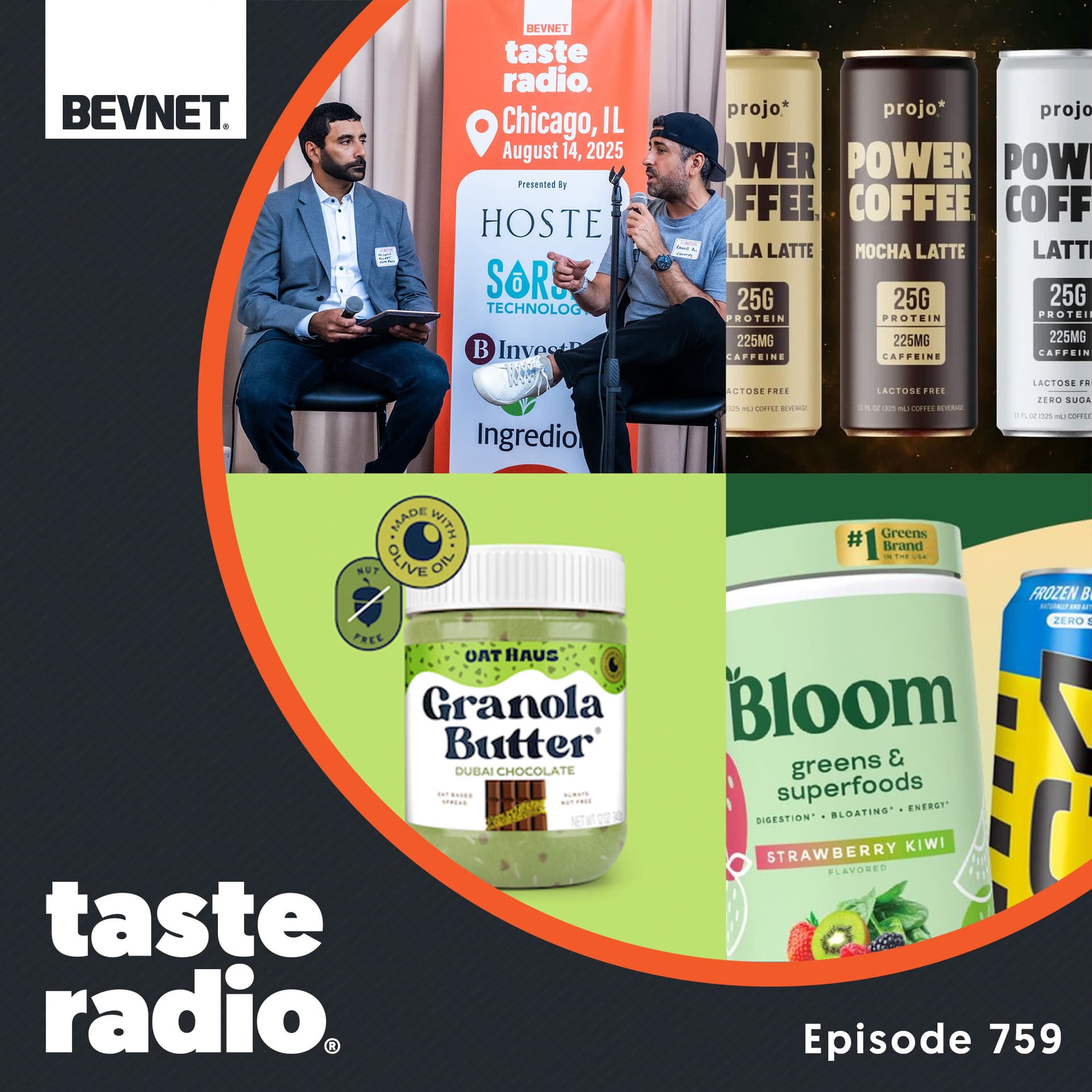
24:01So I do think that taste great, a little bit of extra benefit in the form of caffeine goes a long way. Extra benefit in the form of protein also goes a long way. So the founder of a brand called Projo, P-R-O-J-O, leaked to me, or didn't leak to me, that's the wrong word, but revealed to me, revealed to me that they are launching a ready to drink coffee as well. 11 ounce cans, and they're describing it as power coffee. It's a line of lattes that have 25 grams of protein and 225 milligrams of caffeine. There's a vanilla latte, there's a mocha latte, and there's a regular latte. They're all lactose-free.
24:38And I think that this is a product that, again, is for a specific set of consumers. People who are on the go, don't have a lot of time, but want to consume a good amount of protein, want to have that caffeine boost, maybe for it's it's for post recovery or pre recovery or maybe after a game or before a game. But it looks great. And I can't wait to try this. I know he's sending some product to the office, but just as a sneak peek so you guys can see there's the picture for John. Can we see this back at the Winter Fancy Food Show? He may have slyly revealed it. That's a lot of what's happening. Yeah, but it's happening.
25:12We're going to get some samples later this week. So thank you so much to Pro Joe and the team out there and really excited to try that. So, well, I'm glad we had this discussion. Yeah, that was helpful for everyone. It was very helpful. Well, I was trying to get some key answers here. Sorry, I got to poke fun. That's fine. All right. So who wants to talk about your Dubai chocolate variety first? So Ray's a major Dubai chocolate hater. I'm not. I'm really not. Dubai. But anyway, this jar here is the new Oathouse Dubai Chocolate Granola Butter. See right here. It's very tasty. Would you like to have a scotch?
25:52You can just use a finger. I'm going to hold off at the moment. Anyway. I appreciate your offer, though. Thank you. Yeah, this has no pistachio in it. Right. Nut-free. But it's, I don't know. This is pretty freaking good. Look, I ate half the jar. Wait a minute. Look at this. I can't be trusted around Oathouse. So I used to be like a subscriber to Oathouse, but I was eating so much Oathouse that I had to slow down. Your doctor told you to stop? Yeah, basically. I mean. Okay. I cut out a lot of things, unfortunately. Oathouse was one that I slowed down a little bit on, but only because I can't control myself around it.
26:24This is going to be a hard sell for a lot of folks, unless you know Oathouse is a nut-free brand, because everything about it screams pistachio. I think this would be more confusing if it were something that, let's say they were a peanut butter company, and Dubai Chocolate didn't have, I don't know, didn't have nuts, or I guess going from pistachios to peanuts. Like if it was jiff you have allergens i guess my point is that there isn't a risk of someone seeing this sure it's known as pistachios and eating it and being like holy crap but you know does it taste like dubai chocolate without the pistachios it does it's textually different so it still delivers even though it doesn't include all of the ingredients here's what i'd say it tastes amazing and again jackie i ate half the jar yeah it's impressive Jackie, what do you got there?
Read the full transcript
27:17I have something that I think Mike has for sure, which is Nara's new Ube Vanilla Oat Milk Latte. Nara, N-A-R-R-A, a maker of tea-based lattes. Yeah, it's decaf. It's made with real ube. It also has jasmine tea extract in it. It's really tasty. It's, yeah, it tastes like a ube milk latte, but it's dairy-free, which is even better. And I love the packaging. The purple packaging really pops. This is my favorite Nara since the strawberry matcha. It tastes really good. Strawberry matcha is so good too. Quick break. If this episode has you thinking about what's next in food and beverage, explore BevNet and Nosh Insider, our subscription platform with deeper insights from the BevNet team.
28:01Visit tasteradio.com slash insider to learn more. All right. It's time to get to the interviews from our outstanding Chicago meetup. Kicking things off with Chomps co-founder and CEO Rashid Ali, who reveals how a$6 ,500 investment grew into a meat snack empire through smart e-commerce and a customer-first mindset. He's followed by Ingredions Adams-Burzins, who explores the future of sugar reduction, and Molly Santuli of Springdale Ventures, who talks about the investment firm's emphasis on funding culturally resonant, community-driven brands. Brian Rosen of InvestBev detailed his$500 million funds strategic approach to scaling beverage companies.
28:49And host cocktails Jordan Tepper shared how his premium cocktail brand pivoted during the pandemic. We wrap with sources Michael Flemings, who explains how brands can navigate the complex cannabis beverage space with a commitment to safety and education.
29:09All right, folks. Thank you all so much for coming out. My name is Ray Lateef. I'm the editor and producer and host of Taste Radio. This event would not be possible without the incredible support from our partners, first and foremost, Host Cocktails, and this amazing event space. Jordan Tepper and team, thank you so much.
29:34I assume people are holding hot dogs and steak sandwiches in their hands because that clap was just not enough for Jordan and his team. One more time for Host Cocktails and Jordan Sepper.
29:47Also very, very grateful to three amazing partners that's Source, Ingredion, and Investbed. We're going to be hearing from folks from each of those companies in the interviews. Also, cheers and thanks the fantastic folks from Funkytown. There's Rich Bloomfield back there. Right on, Funkytown. Thank you so much. Terlato Kitchen, Spiteful Brewing, Beguile Brewing, and Three-Tier Beverages who have supplied us with a lot of the libations here tonight. Our first podcast interview guest of the event is someone you probably know because you've probably been eating his products for a long time. This gentleman is Rashid Ali.
30:24He's the co-founder and CEO of Chomps. Come on up. Good to see you. How are you? Doing all right. How's your Chicago summer going? Been traveling a lot, but it's going well. So you and I sat down a couple of years ago at Expo West, and we were joined by your co-founder, Pete Maldonado. We had a pretty amazing conversation. And if I'm recalling the title, it was how two founders took a$6 ,500 investment and turned it into a brand that is now valued at over$200 million. And that was two years ago. So Choms has grown by leaps and bounds since. But let's talk about that backstirve for a second. You guys had a minimal investment when you launched it.
31:06How much was it that you each put into the company? Yeah, we both put in$3 ,250, so$6 ,500 total. Okay. Yeah. So for folks out there who are listening, they're like, well, I need a lot of money to start a company. I mean, typically you do. But Rashid and Pete have proved that you can start a company and scale an amazing brand by doing it intelligently, thoughtfully, and with a very, very minimal investment. But what does it mean to build a brand intelligently and thoughtfully? What are the key decisions that you've made over the years in how you've used money wisely and thought about scaling intelligently?
31:42The first decision early on is we launched the company in 2012. So we always say we're a 13-year overnight success. The first four years, we did only e-commerce. And so when you do e-commerce, you can play certain cash flow games that allow yourself to not require a ton of cash. You think about like a snowball. Little by little, your orders are getting bigger, your sales are getting bigger. But with e-commerce, you get paid up front, right? And then you have terms with your suppliers. And so you can kind of play the game. The e-commerce landscape now is a little bit different. I think your website, chomps.com, is a lot harder to get traffic to versus an Amazon.
32:17So it's not as attractive. But I would say like the first step was focusing on what channel we want to go after. The next is being very thoughtful and deliberate as you enter retail. we got I would say lucky I would love to say that was very strategic and plan but our first retailer was Trader Joe's and Trader Joe's came to us 2016 we were able to convince them that the chomps brand and in 2016 we didn't really have a brand at that point but we convinced them that they needed our brand and not private label and so again overnight I say we got one of the best retailers there are and they're also one of the rare retailers where there's no distribution.
32:55There's no trade. So it was very fortunate to get them as a retailer. But then one of the decisions Pete and I made was, yes, we got Trader Joe's. We had hundreds of thousand new eyes on the brand, but we made a decision to say like, we're going to be the best Trader Joe's partner possible for two years. And we didn't try to get into any other retail distribution. We really just focused on that relationship and grew e-commerce. And partly it was because we We're putting so much pressure on our infrastructure to grow. I mean, we did 400 ,000 in 2015, and in 2016, we did 4 million. So we 10x the business.
33:29And so we have to think about all the growth pressures that the business experience behind the scenes. And so we really need to make sure we work through the kinks. And then from there, you have to think about we have this notion saying that brand awareness has to be ahead of distribution, right? If your customer doesn't have a sense on what you're doing, you're going to have to over-invest in trade and marketing to convince them to buy the product. So we went to natural first because the natural consumer understood the value of grass-fed. They understood the value of zero sugar. Then we went into conventional.
33:58Then it was mass. Then eventually club. I mean, even to this day, jerky is predominantly a convenience or C-store channel product. And we're in a handful of doors. Right. We're still trying to figure out, like, what does the C-store strategy look like? So I think go to market has to be very deliberate. And it's tough to say no, especially early stages. But there's a lot of value to go in at the right time. I love that. Brand awareness has to be ahead of distribution. I think a lot of folks think, oh, if I'm just in this store, people are going to be aware of me. And that's not the case. Yeah, no, I mean, it's sometimes I think like door accounts that they're kind of like vanity metrics.
34:33It's somewhat easy to get on a shelf. What's very difficult and what you need to focus on is your repeat rate. Right. People talk about velocities, but repeat is the most important metric because that's going to determine your long term success in a retailer. One of the things I think that's most brilliant about Chomps is that you gave people permission to eat beef sticks. I mean, back in the day, I mean, if you ate a beef stick, you're like, you know, who are you eating a beef stick? And Chomps came out and there's a clear point of reference. I know what a beef stick is, but this is better for me.
35:03What are the key connection points that you made when you were building brand awareness about your sticks that gave people permission to eat Better For You meat sticks? First, I would say not only did we give people permission, we actually gave women permission. 70 % of our consumers are female. So you think about it's a category that was predominantly really targeting men. If you think about the two legacy brands, Brandy Macho Man Savage and the Sasquatch, and you look at the colors and everything, It wasn't speaking to the female consumer. Me and Pete didn't set out to create a brand that served 70 % female, but it just sort of happened.
35:40And then we made sure through the brand and the packaging and the colors that it kind of welcomed them, but didn't necessarily alienate anyone else. So I think what we realized is every consumer, especially what we call the active achiever, they want simple ingredients. They want to make sure it's high quality. They want to make sure that it checks the boxes. Like right now, right, there's a big boom in protein. So you want to make sure that it's a good high quality source of protein and it's tasty and convenient. And so we really stay disciplined and focused on those attributes and we really haven't changed it.
36:12I think the convenience aspect is one of these trends that we're seeing. Your protein for sure as well, but convenience, eating healthy and making it convenient to do so is so critical. It just makes sense that, you know, you don't necessarily need to have a full meal or if you let's say you skip a meal and you have a chomps. meat stick, you say, okay, this will be my protein source for this time. But I still wonder how you're getting that message out to more people, because it's not like you're static. It's not like you've hit your ceiling. Every single year, you're growing and growing in a really, really huge way.
36:46So how are you getting that message out to more people? Is it just, you know, trends among consumer trends out there where there's their understanding that there is this product out there for them if they want protein, convenient and healthy protein? So, I mean, our strategy to marketing has, even in early days, is always around finding certain, I don't use the word niche, I say trending like diet tribes or communities, and then identifying within that community who has influence. So it's like what it's called now influencer strategy, but we were doing it before it was that. Our first entry point was within the CrossFit community.
37:21And we realized that, you know, CrossFitters have to focus so much on health and fitness to accomplish what they're doing in those workouts. And then what happens is, is your friend in your friend group that the CrossFitter, you typically look at them and say like, what are they eating? Like, how do they get like that? And so like, you find those sort of folks, and they become spokespers and brand ambassadors for your product, unpaid brand ambassadors. So the way we continue to grow is identify where our product would work within that community and lean into those. But it has to be, from our perspective, it's important that it's an organic relationship.
37:51It's one where these folks already have weaved chomps into their lifestyle and happily promote it. I mean, I think community is something that's not talked about enough. Finding a community of folks where there is a hungry audience, no pun intended, for a product like yours. Your organization has grown by leaps and bounds, I've mentioned. You know, you think about whether it's harder to build a company at the outset or harder to manage this complex organization that you have today. hey, what is it like as a CEO operating a company that is on its way to a billion dollars in sales and beyond that?
38:29Is it harder to do that now versus, say, bootstrapping the company for as long as you did? I would say it's no easier. I think at the end of the day, it's a different type of challenge. It takes a different type of mindset and a different team. Like right now, I would say that myself and Pete are far less important and critical to the business as we were 10 years ago. And I have an insanely strong leadership team that we've built over the years that allow us to, because now what we think about is like my team in place now, can they operate and support the three-year plan, right? As we exceed a billion in sales and we two to three X that.
39:06And so we have to start thinking ahead, but I would say it's just as hard, right? It's different sort of challenges. There's a lot more complexity in the business. I mean, four years ago, we had one manufacturing facility. We now have seven, right? And we had, say, 5 ,000 doors. Now we have 30 ,000 doors. So it's like we had two channels. Now we have. And so, like, it's just the complexity grows, but also our team's grown. I think three years ago, I think we had about 50 folks on the team. Now we're up to 155. And just thinking about at that scale, how do you maintain the culture, right? You know, we had an all-hands retreat a couple months ago in Colorado Springs.
39:44And, like, there's a lot of people I didn't know. And it's tough, right? Before, you knew everybody. you have a personal relationship, but it's just part of the growing pains. The businesses continue to evolve and your mindset has to change too. We've got about a minute left. I imagine some of the founders here in the audience probably didn't sleep last night. And founders just don't have, sometimes they just have sleepless nights and you're just worried about one thing or the other. And for someone who I know this has happened to, how do you get past the worry? How do you get past the incessant, is this going to work?
40:18Am I going to make it? Right. I mean, you have to have faith that the product is going to resonate with your consumer, right? And it's that faith that gets you through everything. I mean, there's, I think for the last two years, Chomps has been living in allocation, meaning we could only fill 60 to 70 % of orders. So effectively, none of our customers are happy, right? And we have to continue to let them know that it's coming, it's coming, it's coming. And so, like, that's not a fun place to be in. But now like now that we're on the other side of it, you have to change the mindset. And even then it introduces new problems, too, because you have to figure out, OK, like how do we continue to scale?
40:48How do we continue to grow? But you also have to kind of be somewhat of a masochist and enjoy because it does. The pain doesn't go away like it doesn't get any easier. You kind of have to enjoy it. Like for me, like Pete and I, we love the stress. Like I think I would get lazy and procrastinate if I didn't have the pressure. Like I enjoy it. And some of the best work is when people challenge us and say we can't do it. Like we both have kind of a chip on our shoulder and it's kind of helped us get to where we are. That's the first time I've ever heard that. You know, we like the stress. We're a bit masochistic in that regard.
41:16Yes. You have to like it a little bit. Well, it's worked. Yeah. It's worked. And Rashid, I am so thankful for you taking the time to join us today and share this wisdom with our audience. Congratulations on everything you've built to this point. And let's do this again soon. Thanks for having me. Thank you so much. All right. Rashid Ali.
41:36Thanks again, my friend. All right. Let's bring up a very special guest. That man is Adams Berzins from Ingredion. Adams, come on up to the stage.
41:51How are you? I'm doing well. I'm doing well. Yeah. Now, when I saw you at the bar, I was like, Adams, I don't know your exact title. And you gave it to me, and then I was like, I'm not going to remember this. So maybe you can just share it with our audience. Tell us a little bit about what you do and what Ingredion is all about. Sure. So what I do is global sugar reduction. So I lead our application and research formulation group as it relates to reducing sugar across food formulations and for customers. I mean, first, we're really happy to be here and support BevNet and be a part of all this.
42:23And so appreciate that opportunity. We're a producer of ingredients, but really our expertise is food formulators that help brands get the taste and expectation for their products. right? So high protein is obviously very important. Low sugar is obviously very important. Anything that you can do to pick a food that makes you feel better about the choices that you make, that's where our team can help with that sort of thing. I'm very fortunate to lead a team of folks that help customers reduce sugar and still make those products taste like you expect, right? We've evolved over the years from the nothing tastes as good as skinny feels nonsense to, you know, people choosing better tasting things, being more aware of what they're eating, and maybe choosing a little bit of sugar, but not as much sugar as you used to be.
43:15So it's a great time to be in that space. And so it's a fun world to try to get people what they expect within their Well, I do want to talk about how you're doing that because I love sugar. I think a lot of people here love sugar. We try not to eat as much. But then when that happens, we've had bad examples of products that have low sugar or sugar alternatives. They don't taste good. So how do you help founders create products that are lower in sugar, but don't compromise on taste? Yeah, I mean, Rashid made some really good points about understanding who your consumer is and what their taste expectation is.
43:49We executed a global study across five different countries to really understand people's sweet taste preferences and where they fit. And very much, like you said, people love sweet. There's a biological imperative to love sweet things. It usually means it's coming with fiber and something good for you. But there's this expansion to people like diet products. We're generationally into people consuming things that are zero calorie. And so different consumer bases have different preferences. And so understanding who your target is and what their expectations are, you know, you have the silver can and the red can in the big CSD world.
44:30The silver can folks don't want it to taste like the red can. And that's a perfectly fine group of people. And you want to target a sweetness that gets there. Now, if you want to get to that sort of ideal sugar curve, There's all sorts of tools and better technologies to get there. And that's, you know, I did a wonderful job to poison the market 10 years ago when the old technology of Stevia was there. And now people are cringing and looking at me and they're like, I tried Stevia 10 years ago and it's terrible. Someone just tried to throw a rock at you, actually. Yeah, I don't doubt it. I don't doubt it.
45:05Right. And so but what's happened since then is there were 11 tools out of Stevia 10, 15 years ago. So there's over 100 now and the molecules are amazing and they're so much better. But like we're recovering from doing so much of a disservice that, oh, this is perfect. You can take all of your aspartame out and all that kind of stuff. But you build in the monk fruit and now we have sweet proteins coming around and that are really great tools with really high potency that get you to that ideal curve. But it's about dialing in those tools to find that taste that people want, because it is about great taste.
45:41Do you feel good about what you're eating from a healthy perspective? And then is it sustainable? Right. Is it good for me and the planet? There's so much in terms of what can be done in terms of those tools to give you something that you can feel good about, but also that tastes great. And I think we're finally there where that has come together. Adams, you are a brilliant man you're also the snazziest dresser here at the events and I highly recommend anyone here at the event, at the meetup introduce yourself to Adams because he has a lot of knowledge and a lot of different ways he can help you, thank you so much for helping us, I really appreciate it, thanks so much thank you, great stuff okay once more folks in the back, I think this is going to be a conversation that you're going to want to hear, who wants to raise money for their brand or company, raise your hand Okay, I got cheers and raises of hands.
46:34I guess some people don't need money. You know, I mean, maybe it's fine. Maybe you're fully capitalized at this point. Maybe Rasheed, you're fine at this point. But our next guest will tell you how to raise money. And if you're lucky, she might even invest in your brand. That person, oh, too much pressure. Molly Santuli, a senior associate with Springdale Ventures. Come on up. And before Molly grabs the microphone, that was another just kind of... Let's have a big round of applause for Molly Sanzuli. There we go. Thank you. Thank you so much for joining us today. It's good to see you. You too.
47:07Where do you live in Chicago? Are you right in the city? In Lakeview. So yes, in the city. Very cool. Very cool. So for those who are unfamiliar, tell us a bit about Springdale Ventures, your investment focus, philosophy, and maybe potentially some of the brands that you're invested in. Yeah, of course. Hi, everyone. Thanks for coming. I'm Molly. As Ray introduced me, I'm an investor with Springdale Ventures. We invest in the next generation of consumer brands across food, beverage, alcohol, beauty, personal care, supplements, pet, anything branded products at the earliest stages. So where we're focusing is usually brands doing one to 15 million in revenue.
47:45So Seed Series A rounds is where we're typically investing. A few brands you might recognize in our portfolio are Goodles, Mac and Cheese, Meatbox, for those of you in the beverage world who are here. and in terms of what makes us different, what sets us apart, we exclusively focus on branded consumer products here at Springdale and in terms of our team makeup, I think that's another thing that sets us apart. Our team is made up of all former entrepreneurs and operators so Genevieve and Dan are both entrepreneurs who built and sold their own businesses in the consumer space. I've only ever worked in the consumer world and I think what that leads to besides just Obviously, a lot of founder empathy is that we really do try to be founder first in our approach.
48:28So fast responses to founders that we talk to, trying to be as transparent as possible after pitch calls. We really do try to give feedback and be as helpful as we can to help support the entire consumer ecosystem. And then the last thing that I'll say in terms of what differentiates us is our approach to investing and really thinking about high margin, high velocity brands that hopefully return capital to our limited partners on our end as investors. Amazing stuff. Now, one of the things that really made me excited about speaking to you and having you here today was a post that you put on LinkedIn or penned on LinkedIn, and it was about why niche, niche is the new mass market and that we live in a micro community era.
49:14Can you explain what you mean by those two terms? Yeah, of course. I mean, I think Rashid said it pretty well about Chomps, really focusing. We love brands that are focusing on solving a particular problem. And this doesn't mean that we want to invest in brands that are only for a very small group of people. But I think what we're thinking about at the earliest stages is how are brands building community amongst a super fan base. So whether that's a brand, I mean, there's a brand online that we're not investors in, Good Girl Snacks. And they've built this entire community around people who are obsessed with their pickles.
49:46And I don't think that's the end-all be-all for that brand, but we love to see brands that are focused on a community building repeat rate across that community. Who are the people that are the most influential in that community? And then how can you scale that across different communities and eventually into mass retail or whatever that might be? And so a great example in our own portfolio is our investment in Artera, which is a pet supplement brand. John, the founder, not only is an Amazon expert with his own Amazon agency that he built for a consumer brand specifically, but he's a biohacker himself and was obsessed with his dog's health.
50:22His dog was getting old. He wanted to create a product to help his dog live longer. Now he's launched a brand with a chewable dog supplement. And with that brand, what he's doing is really focusing on his community, the biohacker community to start. But obviously the goal is not to only stay with one community. It's to build that repeat rate over time and then expand from there. Once at a Befnav Live conference, we had on stage a man named Rohan Oza. Rohan Oza is a pretty famous investor at Kabu Ventures. He was the CMO of Vitamin Water when it blew up. He's an investor. He was an investor in Buy and most recently an investor in Poppy.
50:57So he knows a thing or two. And when he was on stage, he mentioned one thing that has always stuck with me, which is that everything is niche until it's not. But how do you know when something might get bigger or that has the potential to go from niche to mass. And you've said that Springdale doesn't look for mass appeal. You look for cultural signal strength. But I assume even within that, you still want something to be a big brand when all is said and done. Obviously, for brands to sell and for us to make money as investors, things have to get big and get to a certain scale. I think what it comes back to is community.
51:33And also, we think a ton about the exit environment. So we're kind of doing two things at the same time. We're thinking about how big could this get? How big is the category? Obviously, if you're building in a brand new category, we have to use our imagination a little bit. But for pet supplements, for example, there are pet supplements. We can think about how big the pet category is. So there's a reason for us to believe as investors that someday this could be a big brand that has a really big outcome. So I think that's one thing is just making sure, is there something that investors can wrap their head around from a size of exit perspective.
52:06And then on the other end, on this cultural resonance, are you building something that consumers are proud to be a part of? And I think we saw this with Goodall's, which we invested in pre-revenue, where not only had the founder had tremendous experience in the consumer space, but she did a ton of testing in a huge category, mac and cheese, but really tested the product and the brand with consumers before launching and had people that we're super fans of this better for you mac and cheese permissible indulgence. And what's really cool now that I've gotten to see since we invested and the brand has grown.
52:39But if you go on TikTok now and look up Goodles, the original consumer was, you know, families, the usual suspects for mac and cheese. And now like most adults I talk to are eating Goodles by themselves, like people without kids. People are really proud to be eating Goodles. I have a sticker on my phone case and people come up to me in public to be like, do you work for that brand? Like, I love their mac and cheese. I eat a whole box at once. And that kind of community and fan love and repeat rate to Rashid's point are what we're looking for even at the earliest stages. Cultural signal strength.
53:13Yes. You've said no to folks. You've said yes to folks. What makes you say yes? What makes you say no? What makes you say not right now? Yeah, we have a lot of not right now in our world. I think the best part of my job is I get to talk to a lot of founders at the earliest stages, which I always say, like, I'm an optimist. And every founder I talk to, I get off the phone, and I'm like, oh, my gosh, that was an amazing call. And then I think about it. And I'm like, that's probably a little early for us, because we're looking for some of those signals like repeat rate and the earliest signs of traction.
53:43And so in terms of not right now and no, the main things we're focused on and why we have the million dollar threshold for our investments is we're looking for some signs of that repeat rate, fan love. Can you prove as a founder that you can operate the business? So I think that's kind of where that million dollars comes in is we want to see the velocity data, even if it's from one retailer or from repeat data from e-com. And then on the what gets us super excited, I mean, we invest early. It's all about the team and the founder. I think some of the things that get us super excited about a founder are why are they uniquely positioned to win in this category?
54:21and founders that can tell the story as to why they're going to win, why they're the one to do this, whether that's experience in consumer, whether it's experience building a team, a personal problem that they had, whatever that story is, how well can they communicate it? And then, unfortunately, knowing your numbers super well is a pretty big part of what we're focused on. Why is that unfortunate? I mean, it's not everyone's favorite part of building a business, but we do spend a lot of time talking about margins, margins by channel, contribution margin, repeat rate, and how well do you know your forecast?
54:52And so if you're not the expert as a founder, we want to make sure you have someone on your team that does, or you know how to hire the right people. And then the last thing that gets us really excited is huge categories with big outcomes. We're always anchoring on past exits. Do you understand how big this category could be, where you could build it, what channels you could go into? But that being said, we love meeting people early, hearing their ideas, and then seeing how we can support them on their journey. So you're good with anyone coming up to you, giving you a call, emailing you, and you'll talk to most folks.
55:20I do talk to a lot of people. And my goal is to be better about just having fewer calls. But in Chicago, I love meeting with people in person. There you go. And we do have a form on our website that anyone can fill out. And we do try to be as helpful as possible. And if we're not a fit at this time, we usually try to refer people to people in our network that might be. So if there's only one takeaway from this conversation, it's that Molly will write the check in the room,$20 million. Yeah, just, just, you walk in that room, you give her a good story. If it tastes good, just come over. 20 million in your hand.
55:54Obviously, I'm kidding, but Molly, you're just spitting facts, knowledge, just amazing stuff. Thank you so much for taking the time. Thank you. And create a relationship. Just know Molly. I know you're not, you're trying not to talk to everybody these days. We love building relationships early and being a part of the consumer ecosystem and making sure that all founders have help along the way, even at the earliest stages. Outstanding. Molly, thank you so much again. Really appreciate the time. Thank you.
56:23That was great. Thank you so much. All right. We've got one investor walking off the stage. We're going to bring another investor coming up on the stage. That man is Brian Rosen. He's the founder of a company called InvestBev. You probably know a few of these folks know it, Brian. Come on up.
56:40How are you? Hello. I'm well. I'm well. I'm excited to be here. Jordan, thanks for opening up your home. Yes, indeed. Once again, Jordan, thank you so much. Jordan and the entire host team, awesome stuff.
56:53So InvestBev, it sounds pretty intuitive. You invest in beverage companies, but what kind of beverage companies do you invest in? So we in our portfolio manage roughly about 61 different brands through the equity side. Our firm itself is about$500 million. We're based here in Chicago, LaSalle on the River. And we invest in cannabis beverage, energy, hard kombucha, of course, all the elk brands. So we're very active in the space. And what we are is a blind pool fund. So if a brand comes to us and says, hey, what about me? We don't have to go then raise, which is a lot of what happens out there.
57:32We have a pool of capital. We're on our fifth fund. We've been raising and deploying for 10 years. And some of our brands are very well-known. A Reserve Bar, Speakeasy, June Shine Kombucha, canned cannabis beverage, Lucky Energy Drink, Siempre Tequila, Nomadica Wine, and a host of others. So that's what we do. I mean, it's pretty amazing what you do. And not everyone operates a$500 million fund, but you got to be pretty careful with your investments. And, you know, I'd love to hear from you, your investment strategy at different stages of a brand's development. So, you know, on the one hand, it might be really attractive to invest in a brand that's already doing$100 million in sales.
58:13But what about the brand that's doing a million in sales? Like Molly was talking about, you know, what makes that brand so special that you're motivated to invest in them? Yeah, well, these are super challenging times. It's hard to get sales. It's hard to get capital. It's hard to run your business. So the first thing we look at really is, is your business, are you funding to grow or are you funding to operate your business? You have to fundamentally have an operating business because getting capital in the open markets is not easy. And you'll give away two kids and a house for equity. So you really want to have a good operating business.
58:46We don't do any seed. We don't do startup. up. We do roughly in that$1 to$3 million trailing 12-month range. We invest that way. And then our team shepherds you through growth. We give you support in finance, marketing, HR, connections, distributor relationships. So we like to be really an encompassing firm that gets involved, gets dirty. And we've had good success. We've had some dogs. There's plenty of dogs. But we've had some good wins. And in the beverage industry, the reason I'm guessing while a lot of us are in the beverage industry is because the multiple on your capital is, you know, 17, 18 X.
59:25So if you have a hit, you have a mega hit. And if you have a failure, you can cover it with the hit. I want to talk to you for like another hour or so, but I know we have a limited amount of time and I want more people to be able to talk to you after these interviews are over. So Brian, thank you so much for all your support for this event. I really, really appreciate it. And for folks who don't know Brian, it seems like this is a pretty tight community of folks, but you should definitely introduce yourself to him and his team because who knows? They might invest in your brand. Thank you so much, Brian.
59:52This is the abridged version of Brian. This is the abridged version, yes. Truth be told, we will be doing a much longer interview with Brian down the line, but we do have a limited amount of time. And I do want to get to our interview with the man of the hour. That's Jordan Tepper, who is the founder and CEO, once again, of Host Cocktails. Thanks again, Jordan. Come on up.
1:00:12I won't get everyone off their seats and clapping harder because we've already clapped a lot for Jordan. But when we end, I want a louder clap. How about that? Jordan, this is such an incredible space. You built an amazing brand in Host Cocktails. I should be more subjective, but it is one of my favorite brands out there. And how you built this and how you thought about creating a brand like Host. If you can share with our audience a bit about the origin story. You know, what made you want to do this? We actually didn't start with host cocktails like many entrepreneurs. It's been a winding journey.
1:00:45We actually started with Apolog, our line of all-natural liqueurs. And we were primarily selling those to bars and restaurants that were looking to, you know, elevate their cocktail programs. And unfortunately, in 2020, there was a global pandemic and all the bars and restaurants closed. And so we had to pivot and evolve. And for us, we were starting to see what was happening in the ready to drink and ready to serve cocktail market. And we started exploring, creating products in the space. And honestly, it felt very challenging. There was a lot of competition coming to the market. Everybody was competing on price.
1:01:26And so I turned to my co-founder, my business partner, Robbie. He's somewhere here. Robbie, raise your hand. If you like the cocktails, thank Robbie if he's here. And gave the challenge and said, how about you throw that out the window? Robbie, just source the best possible ingredients you can and make the best possible cocktail in the market. And then we'll price it appropriately. And I think there's a market for quality in this ready-to-serve cocktail segment. and that became the Gold Fashion, which then became Host Cocktails. Yeah, I remember when the Gold Fashion came out and I'd never seen anything like it because it was a 750-milliliter bottle of Old Fashion and it was ultra premium.
1:02:08I think each bottle was$150 and I'm like, wow, where did this come from? I mean, I love this concept, but how many people are going to buy it? How do you think about pricing strategy, your target consumer, your packaging? You know, not every brand can be a host cocktails, but if you do it right, I mean, it seems like the sky's the limit, at least for, you know, the community that's going to be interested in a brand like yours. Yeah, I mean, we knew when we priced a product at$150 a bottle, it wasn't going to be a mass market product that came out in Kroger in a week. We knew we were kind of setting the high watermark in that regard.
1:02:46But at the same time, we knew people were willing to pay for quality. If you look at high-end wineries and high-end spirit brands, you have bottles that are selling for hundreds, if not thousands of dollars. And so here was an opportunity to create an incredible cocktail at$15 a cocktail that's using amazing whiskeys, saffron bitters. And sure enough, people were interested in it. There is a segment of the market that is looking to treat themselves and drink something that's exceptional. And so we've actually found that the price point hasn't been a limit for us. I think that's important to point out, which is that sometimes the price point is spot on as long as you know who you're selling to.
1:03:25But you still need consumer feedback. How do you validate a concept? How do you incorporate that consumer feedback into your brand strategy? Yeah, it's funny because like in my prior life, I did a lot of pricing strategy. I did a lot of consumer feedback work. And when we launched the Gold Fashioned, it was largely on gut, both the price point and that there was a market for it. but after we launched it, we did a ton of consumer research. We reached out to as many of the consumers that bought the product, especially the ones that were rebuying the product, and tried to learn from them is how did they find out about it?
1:03:57How are they enjoying it? Who told them about it? What did they like most about it? And we got a ton of feedback, and that did inform how we evolved the brand and how we added products to the market. For one, we include these little atomizer zests in the cocktail, which gives them the ability to have a nice little garnish. At the time, when we first lost the Gold Fashion, it really wasn't a focus point for us. We had a fancy little pour spout that we thought was really cool. But we learned from the consumers that they loved the zest. Nobody talked about the pour spout. So we invested behind the zest, and that's been a core part of it.
1:04:34So it was really after that initial launch, talking to as many consumers as we could, informed a lot of insights going forward. If you haven't seen the zest, well, you haven't ordered a cocktail yet. And I encourage everyone here to try a host cocktail because, I mean, I've said it a number of times, they are incredible. And this space is incredible. You know, when you were thinking about creating a space for host cocktails, I wonder, it's not something that every brand can do. But what does it do for hosts in terms of, you know, building that intimacy with the consumer, with loyalty, and just growing awareness across, I guess, all sectors for a product like yours or for products like yours?
1:05:12Yeah, I mean, ever since we started the company eight years ago, a dream of Robbie and me was always to have a space. You know, we view ourselves as a cocktail company and as being a cocktail company, being able to host and entertain and have hospitality in our DNA has always been something that we've aspired to. And so by being able to have a space like this where we can bring people to, have cocktails, have that experience. It really, it makes a big difference. It's a great thing to be able to go to a retailer and do a tasting or do an event, but it's a whole nother thing when people can actually come and visit the place where the product is made and see the transparency and the quality around the ingredients we're doing.
1:05:55And we're really trying to build those long-term consumers, not someone who just tries something once, buys it, and then moves on to the next thing. Someone where there's real consumer loyalty behind it. Can you build one in Boston? because I'm from Boston. I can't come out here every so often. I mean, the great thing about Spirits is in a lot of states, the only place you can sell directly to consumers is at your own production facility. So if we want to sell direct in Boston, we might have to build one there. Where's Molly? Margins. Good margins. Good margins. Jordan, I got to ask one more question, and that's about the same question that I asked Rashid, which is when you are facing a moment of doubt, and you're still relatively early stage, actually quite early stage, How do you address it?
1:06:38How do you face it? How do you get yourself out of this mindset of, I can't do it, to I have to do it? Yeah, that's a good one. I mean, not going to lie, every day, you know, doubt hovers around, and it is about taking a deep breath and saying, okay, how can I focus on solving our challenges? And if you take one step forward and solve challenges each and every day, you make progress. That's really all you can do. If it doesn't work out, it doesn't work out. All you can do is act with integrity and do your best and put one foot in front of the other. I love it. Someone once told me, you know, my goal is to get 1 % better every day.
1:07:16I assume you'd only have 100%. Is that the way it works though? So you only have 100 days to do it? I'm just kidding. But I think your point is so valid, which is take it one day at a time, knock down the challenges you have in front of you, and just keep moving forward. Jordan, you know, when we reached out, I sent you an email. I said, hey, you know, we're thinking about having a meetup in Chicago. Would we be able to host at your place? I didn't get a reply for seven days. I'm like, Dan, this guy hates me. He doesn't want to do it. And then you're like, oh, I'm so sorry, Mr. Email. We would love to have it here.
1:07:47And I'm so, so thankful. And our team is as well for you hosting us here at your event space. Thank you so much once again. And congratulations on an amazing story. Thank you so much. Appreciate it. All right. That was a better applause. Thank you very much. All right. Our last speaker for the event is Michael Flemons. He's from a company called Source. Michael, come on up. Oh, my gosh. Round, huge round of applause for Michael. Let's see it.
1:08:18For folks... I'm bashful. No, I think you did the right thing. All right. Michael, you and I are going to chat for a couple minutes about your amazing company, which is Source. What is Source? What do you guys do? Essentially, it's emulsified cannabinoids, THC, CBD, all the miners, all the other fun stuff that comes along with it. So the cannabis beverage market is expanding pretty rapidly and pretty broadly at this point. It seems like it's really primed for even more growth. How does Source help with the innovation side of things? And I think one of the things I'm most concerned about whenever I come across cannabis beverages is, is this safe?
1:08:54Is this effective? How do I trust it? And how do you help brands help their consumers to trust what they sell? Sure, it's a great question. First of all, the market, the velocity of the market is amazing. Basically, wow. It's the steepest curve I've seen on any hockey stick. With that comes complexities beyond complexities, because we're not talking about adding sugar or caffeine or fiber or protein, these normal type of things that are fairly stable. The THC molecule driving a brand in THC is sort of like riding a horse backwards while the horse is wearing roller skates and its tail is on fire.
1:09:35That paints a picture for the craziness. So I should start a cannabis brand is what you're saying? It's a very interesting and fun journey for a lot of folks, including us who get to come along. I think the best way we help our brands and our customers is the company sort of based on these pillars of relationships. There's an education piece. A lot of people don't know the market. They don't know the ins and outs of cannabis. They don't know the regulations of what I can and can't do. Sometimes they need formulation assistance. Sometimes they need testing assistance. Or how do I get this going?
1:10:10So Source as a company, you know, we can be transactional for some of our sophisticated customers that have been in the space for a while. And it's touch points. but for the new brands entering this space, it becomes a community project. So we're interfacing on multiple verticals of their company, their quality, the regulatory. Sometimes it's a guy in his basement, so we talk to him in multiple voices. But it's a very interesting experience to go through, and it can be really trepidatious and scary for a lot of folks because there are so many unknowns. Like, what's going to happen? What are the regs going to change?
1:10:46Like, am I going to kill somebody? and unfortunately there are some folks in the space that don't take such a conservative approach to making sure that you do things correctly. They're more interested in a sale. So it needs to be more than just transactional. It needs to be this relationship, this partnering with how do I not screw up? How do I not kill somebody? How do I make it still be effective? Like how do I make it stable? All of these things are relatively, it's a rather unique section even for the food and beverage folks today, this is more like supplement and pharmaceutical than anything you've touched.
1:11:25It's just the wild, wild west. And then unfortunately, with the velocity the market has right now, you see a lot of people come into the space that are just like, hey, I'm going to do this thing and I'm going to make some money before it goes out. You know, they're not in it for the long haul. They don't really know what they're doing. They haven't been in the food space before. Most cannabis guys that are in the dispensary, they don't know anything about food and beverage regulations, which should scare you if you go to the dispensary. But now we're talking about, you know, in the retail stores and you don't want to walk in, you want to be able to walk into Binnie's down the street and feel comfortable pulling a can off the shelf and giving you a whirl at home.
1:12:04And so that's what we effort to do the most of is to educate and to work with people and create the best, safest products we can. I love everything that you just said because there are some people who would operate in a business like yours and try to use this platform to sell. And you're not selling. You're saying, hey, let's talk. Let's build a relationship. Let's build a relationship on trust. And I love that. That is the best relationship to have. So, Michael, you're the best. Thank you so much. Definitely talk to Michael if you're even interested and have a sniff at the cannabis category because it is blowing up right now.
1:12:37Michael, thank you so much. Really appreciate it. All right, I'm going to shut up now so everyone can get back to eating and drinking. Thank you all so much for coming. If you're coming to San Diego, San Francisco, or London, we will happily have you there. But until then, thank you so much once again, and we'll see you soon.
1:13:01That brings us to the end of this episode of Taste Radio. Thank you so much for listening. Taste Radio is a production of BevNet.com, Inc. Incorporated. Our audio engineer for Taste Radio is Joe Cratchy. Our technical director is Joshua Pratt, and our video editor is Ryan Galang. Our social marketing manager is Amanda Smirlinski, and our designer is Amanda Huang. Just a reminder, if you like what you hear on Taste Radio, please share the podcast with friends and colleagues. And of course, we would love it if you could review us on the Apple Podcasts app or your listening platform of choice. check us out on instagram our handle is bevnet taste radio as always for questions comments ideas for future podcasts please send us an email to ask at taste radio.com on behalf of the entire taste radio team thank you for listening and we'll talk to you next time
From the publisher
Tips from trailblazing brands, strategies to captivate venture capitalists, the explosive growth of the RTD coffee category and much more. This packed episode features highlights from Taste Radio's Chicago meetup and an in-depth look at Nutrabolt's $200 million investment in Bloom Nutrition. The hosts also dive into the next wave of coffee innovation and examine whether energy or indulgence is driving consumer demand.
Show notes:
0:25: DO Buy? Ninety Seconds. 'Bolt & Bloom. A Tost. Coffee Talk. No Pistachio? – The hosts revisit Taste Radio's Chicago meetup and preview upcoming events in San Diego and San Francisco, reminding listeners how easy it is to register. The conversation turns to Nutrabolt's increased investment in Bloom Nutrition and how smaller, fast-growing brands are leveraging relationships with "mini-strategics" rather than selling to giants like PepsiCo or Coca-Cola. They also spotlight non-alcoholic sparkling wine alternative Tost and its recent funding round, before discussing the evolving RTD coffee market and the challenges of standing out in a highly customizable and saturated category. John and Mike highlight Oat Haus' "Dubai Chocolate" granola butter and Jacqui praises Narra's ube vanilla oat milk latte.
27:53: Interviews from Taste Radio's Chicago Meetup – We kick things off with Chomps co-founder and CEO Rashid Ali, who reveals how a $6,500 investment grew into a meat snack empire through smart e-commerce and a customer-first mindset. He's followed by Ingredion's Adams Berzins, who explores the future of sugar reduction and Mollye Santilli of Springdale Ventures, who talks about the investment firm's emphasis on funding culturally resonant, community-driven brands. Brian Rosen of InvestBev detailed his $500M fund's strategic approach to scaling beverage companies, and Hoste Cocktails' Jordan Tepper shared how his premium cocktail brand pivoted during the pandemic. We wrap with SoRSE's Michael Flemings, who explains how brands can navigate the complex cannabis beverage space with a commitment to safety and education.
Brands in this episode: Chomps, Hoste Cocktails, C4, Bloom Nutrition, Alani Nu, Celsius, Peet's Coffee, Stumptown Coffee, Intelligentsia, Tost, Laurel's Coffee, Wandering Bear, Chamberlain Coffee, Nguyen Coffee Supply, Rise Brewing Co., Starbucks, Throne Sport Coffee, Happy Coffee, RIP Cold Brew, Beekeeper Coffee, Projo, OatHaus, Narra, Funkytown Brewing, Goodles, Vitaminwater, Bai, Poppi, Begyle Brewing, Spiteful Brewing, Lucky Energy, Apologue, JuneShine, Siempre Tequila, Cann, Nomadica