In short
Taste Radio Episode Summary: Elevator Talk - All Día, Grisly's Cosmic, Sipli, Olia, Birdie
Podcast Overview Taste Radio is a podcast by BevNET that features interviews with food and beverage industry leaders and rising stars. The podcast highlights emerging trends, innovations, and news relevant to businesses in this fast-evolving sector.
Episode Details Episode Title: Elevator Talk: All Día, Grisly's Cosmic, Sipli, Olia, Birdie Co-Host: Andrew Guard, Founder of Right Coast Brands Release Date: [Insert Date Here]
---
Key Themes and Discussions
Introduction
- Ray Latif, the regular host, introduces the segment focused on early-stage and disruptive beverage brands: All Día, Grisly's Cosmic, Sipli, Olia, and Birdie.
- Andrew Guard, co-host, shares insights from his extensive experience in beverage manufacturing.
Challenges for Early-Stage Entrepreneurs
- Capital Understanding: Entrepreneurs need to grasp the financial requirements to launch and sustain a beverage brand.
- Consumer Engagement: It’s essential to identify and engage core consumers who can advocate for the brand.
- Operational Complexity: Success requires understanding operational realities beyond just launching a product.
Brand Spotlights
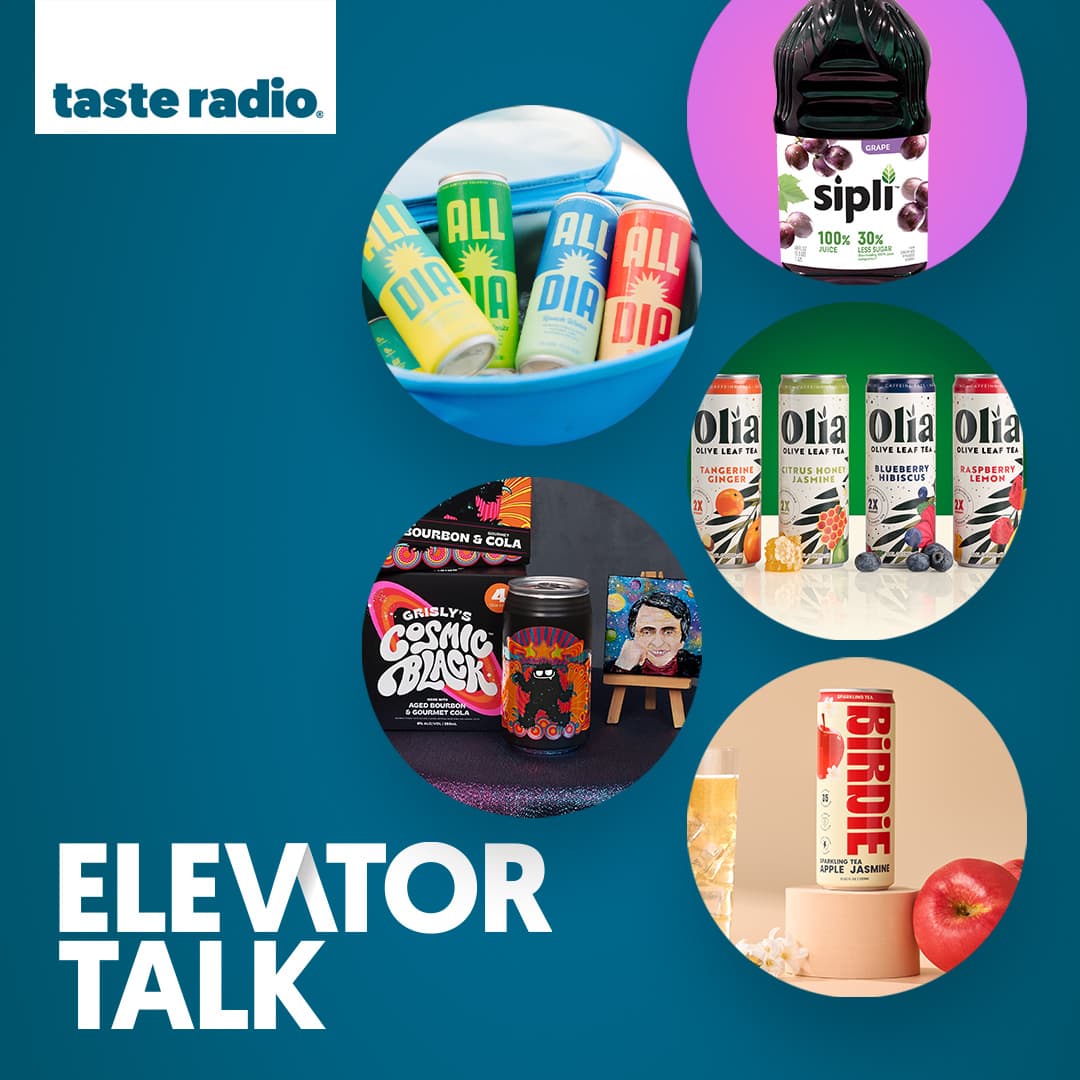
- All Día
- Founders: Sasha and Ailey Petrovic
- Product: Premium tequila-based canned cocktails with 2.5% ABV, low calories (50-60).
- Positioning: Targets wellness-conscious drinkers and emphasizes moderation.
- Branding Strategy: Focused on visually appealing packaging and authentic messaging.
- Grisly's Cosmic
- Founder: Eric Truhart
- Product: Zero sugar, real bourbon craft cola; focuses on accessibility and uniqueness in an underrepresented segment.
- Market Strategy: Competing against established brands like Jack and Coke but emphasizing craft quality and branding.
- Marketing Angle: Plans to leverage the unique branding to drive consumer interest and loyalty.
- Sipli
- Founder: Akshay Jagdali
- Product: Juice with reduced sugar (30%) using innovative technology to remove sugar while retaining flavor.
- Market Opportunity: Targets the growing demand for healthier juice options; plans for a tiered sugar reduction strategy in the future.
- Pricing Strategy: Premium pricing to reflect the product's unique benefits while remaining competitive.
- Olia
- Founder: Chris Cook
- Product: Olive leaf tea, marketed as a wellness drink with high antioxidant levels.
- Consumer Education: Aims to educate consumers about the health benefits while ensuring great taste.
- Pricing: Positioned at an approachable price point ($2.99), emphasizing health benefits without losing flavor.
- Birdie
- Founder: Gene Kim
- Product: Sparkling tea that combines the refreshment of soda with the health benefits of tea.
- Brand Identity: Focuses on balance, clarity, and low sugar content, appealing to health-conscious consumers.
- Market Approach: Engaging through demonstrations and samplings in fitness studios and social events to reach a diverse audience.
---
Key Takeaways
- Innovation in Beverage Categories: There is significant opportunity for brands to innovate within established categories (e.g., low ABV cocktails, healthier juices, sparkling teas).
- Importance of Branding: Effective branding and packaging are crucial in crowded markets to attract consumer interest.
- Consumer Trends: Growing demand for functional, health-oriented beverages reflects shifting consumer preferences towards lower sugar and high-quality ingredients.
- Operational Insights: Founders emphasize the importance of understanding the operational challenges and consumer engagement strategies as key to success.
---
Final Thoughts The podcast episode provides valuable insights into the evolving beverage industry and addresses the challenges and opportunities faced by early-stage entrepreneurs. By highlighting innovative brands and their unique approaches, the episode showcases the vibrant and competitive nature of the food and beverage sector. Each founder's passion and commitment to their products reflect a broader trend towards healthier, more engaging beverage options in the market.
Written by AI. May contain mistakes. Listen to the episode to check what was said.
Transcript
Automatic transcript. May contain errors.0:05Hey folks, I'm Ray Lateef, the editor and producer of BevNet's Taste Radio podcast and you're tuning into the latest episode of Elevator Talk, a series that profiles early stage and disruptive brands from across the food and beverage industry. Today's episode will focus on five beverage brands whose entrepreneurs will have an opportunity to hear feedback and advice from our co-host for this episode. That is the man sitting to my left, Andrew Gard, who is the founder and CEO of Right Coast Brands. Andrew, great to see you. Great to be back. Thanks for having me. Yeah, the man sitting to my left and also my dear friend.
0:37We met when you worked at BevNet way back in the day. Yes. I remember your resume just sitting on the conference table thinking, no chance for this guy. And here I am 14 years later. Isn't that crazy? Hanging in there. I am hanging in there. You've done a lot with your life since, which is great. You've been busy. Yeah, you've been busy. The founder of Right Coast Brands. What do you guys do? We are an early stage beverage manufacturing partner. So we work with a lot of early stage. I say early stage, but we do work with some larger national brands as well to help them you know with procurement full-scale manufacturing kind of everything we need to help them bring products to market keep products you know going build innovation you know all kind of fun things like back of the back of the room for the beverage company i mean it's great when you have a co-packer that knows the business inside and out like you do sure your opera your background began in operations and you've since kind of become a jack of all trades in this business?
1:31Yeah. I mean, I learned on the job, you know, doing the various operational roles for a handful of different beverage companies and kind of every type of category. Um, I have technically now made every type of ready to drink product and every type of ready to drink package, um, worked with large multinational, small bestoke manufacturing partners all over the country, literally all over the world. Um, then a couple of years ago, I wanted to kind of bring everything in-house and really own that whole experience, you know, from, you know, the brand owner's lens. And that's kind of like what we like to bring to the table.
2:05Yeah. And you do beer too. We do. Yeah. So we acquired a brewery a year ago, literally a year ago this month. Um, so we've, we've started our own beer brand. We have a tap room. We have a lot of contract, you know, brewing partners. It's a whole nother segment of what we're, what we're doing and offering kind of bring the same kind a brand ideology process to the contract craft brew world. Because you weren't busy enough. No. You might as well just add a brewery. Distillery's on tap, too, I'm assuming. Yes. Well, we are. Yes. Yes. Are you serious? Yes. Oh, my gosh. Okay. I was kidding. All right.
2:42Well, exciting stuff. It's always exciting when I get to meet early stage entrepreneurs because they are the next generation folks that are bringing innovation, excitement, and newness to our industry. And that's what Elevator Talk is all about. You see these folks all day, all night, all the time as well. What kind of questions are they coming to the table with? What is their most difficult hurdle to overcome when they're getting into this business? And I'm talking about today, because the hurdles were slightly different a few years ago. I know they're typically universal, sold. But in 2025, what is the biggest challenge for early stage entrepreneurs?
3:22Biggest challenge, I think, is just understanding, you know, the capital required to really bring your products to market, not just create something and have inventory and see how it sells, but like really think about engaging with who your core consumers are. How do you go about finding them and speaking to them and having them become advocates for your brand. That next level of what it takes to launch a brand, not just create a product and put it in market. Like, what is that next step? And how are you being methodical with that? Because a lot of effort and time comes into that component of it, not just getting to the finish line of, you know, creating inventory.
4:04That's really kind of getting to the starting line. A lot of our conversations are like reframing the process, not to like, oh, we have a formula, we have packaging, we think it's the next best thing, we're going to launch it on Amazon and our own e-commerce channels. That's great, and that's all essential parts of it, but really, when do you become a beverage business? And then what is it like to be an operator in a beverage business? And we spend a lot of time setting people up for success that way and having those types of conversations. What's the plan? Exactly. Yeah. It's strange. It's almost like, you know, business plan should have always been part of the process, but a lot of times it's not.
4:42Yeah, I think a lot of the idea of a business plan in the traditional sense is like, I'm going to open a laundromat. I want to have 50 machines. It's 50 cents a thing. I'm open for eight hours. Like you can build a pretty black and white business plan with hard caps there. beverages is it's forever going to be the wild west of how you want to build a business for your business there's so many ways you can approach it and it's only gotten more prolific and that's what's exciting about it and that's also what's you know interesting for me you know year over year continuing to do this and being an entrepreneur being in the space is that i mean i've done a lot i technically know a lot but everything's still new and that's what's exciting and that's what's really cool about being in the space even with you guys at BevNet too I mean you guys are on the front lines of interacting with what's next what's happening I mean the premise of this whole show is based around that and that's what makes it so great yeah one of the things I really love about the beverage industry and meeting early stage founders is that we can help hopefully prepare them for success I mean there's a lot of failure in this industry I don't to use that word but i'm going to just call it what it is there's a lot of failure in this industry but helping brands prepare for success and helping them realize that success is potentially possible just as you do yeah andrew i think is really exciting right yeah and it's it's defining success you know is is the type of product you're creating position the right way you know and how How do you correct that or how do you plan for that in a way so it can be successful?
6:23What type of category are you competing in? Where do you want to go and spend your marketing dollars that are going to get the best bang for buck? I think there's a lot of ways to define success day one and then day 10 ,000. Look different, right? And it's an evolution all the way through. And it's finding, you know, more successes than failures along the way to make sure that you can kind of continue to stay afloat and learn and, you know, become a much better navigator, you know, through, you know, what is always like uncharted territory, it seems like. Yeah, it's exhilarating and also really scary, I think.
7:03Just the idea. I mean, I'm not an entrepreneur who knows if I ever will be, but I imagine the process can feel really lonely at times. And I think that's where it's good to have people like you who can help guide and shows like this that can help make you feel like you're not alone. There is some real solidarity in having five, six entrepreneurs together talking about a lot of the same problems and a lot of the same opportunities as well. And the whole industry is collaborative, I would say, even if you're peer-to-peer, potentially conflicting brands or business owners. Everyone talks. Everyone gets along.
7:41I mean, there's a lot of solidarity there. So even in the times of feeling kind of like you're on a raft in the ocean, you're kind of really not. Yeah. Yeah. Good point. Right. Well, I'm really excited to meet all these entrepreneurs. You ready to meet our first? Yeah. All right. Those folks are Sasha and Ailey Petrovic, who are the founders of AllDia. Sasha, Ailey, great to see you. Thanks for having us today. Thanks so much for joining us. AllDia. I'm pronouncing that correctly, yes? You're pronouncing it perfect. And I assume it means all day? Yeah. And you've already said it, I think, twice so far on the podcast because I keep track, which is a lot of harsh teeth.
8:20Okay. Well, tell us all about the brand. My name is Sasha. I'm the founder of Dose of Aldia. We're a premium tequila-based canned cocktail, really crafted for that wellness-conscious drinker who are looking for that all-day enjoyment without compromise. We're at 2.5 % ABV and 50 to 60 calories. So we stand out in what we would call a very crowded category. Our flavors are very foundational. We've got lime, lemon grapefruit and cucumber they all kind of have a path back towards our texas roots we feel we can stand out really well and again like i said a crowded space because uh we're authentic and transparent to a level that we've seen most brands unwilling to go um and you know i can talk a little bit more about what that means um and i also feel that we're really true to our mission which is allowing people to kind of enjoy their cocktails all day long and i kind of tease to say we are the brand that keeps you vertical and not horizontal throughout the day and to be able to kind of enjoy the day so and we're also very focused on the wellness side which i think a lot of the data is showing that consumers are moving a little bit away from you know alcohol consumption and we think we can kind of help bridge that back with our brand aldea there's a lot to unpack here uh the two percent abv is actually something that somehow i didn't know about and i want to get into that but i want to talk about the branding first and foremost, you have spectacular branding.
9:47Where'd that come from? I mean, how did you consider the package design? Yeah, I'm going to punt that to Ailey. She's the mastermind behind that. Well, we work with a local Austin firm and I have loved fonts my whole life. So they sent us different canned options with a bunch of different fonts. And I'm like, I hate them all. I'm going to find the font we want. So I'm like hunting online for the font. And I sent them the font. I'm like, okay, run with this. This is sort of the vision. And we had, I mean, probably 30 variations of colors. We asked everyone we knew, like, does this make sense for lime?
10:20What do you think about this for, you know, the grapefruit? And so I have a Pantone book. And I feel like I was constantly flipping through a Pantone book, like pairing two colors for each of the cans. So for sure, for font and color, there was a lot of back and forth. We love the design team we have here in Austin. They're really talented. And so I was very picky, but I think it came off with an end product that we're really happy with. Can I ask a potentially uncomfortable question? Did it cost a lot? It did. We wanted to make sure that the brand was very popped because it is crowded. And so the last thing we wanted to do was have a canned design and a brand that kind of blended in.
11:07So to Ailey's credit, she worked really hard with our brand team and unfortunately did cost more money than we hoped to spend. But the outcome, we were very happy with. Hey, quality costs. Well, yeah, I mean, you have to think of your package and what's going to be consumer facing as your number one salesperson. So you think of it relative cost to who's going to be out there, you know, selling your products. They work 24-7, seven days a week on the shelf. So it's worth the effort and the time and dollars put into having, you know, very clean cut, you know, brand centric packaging. But as we all know, you pick up the can once.
11:46This is beautiful. Crack it open. You try it. That's really what's going to sell it. Correct. It's going to create a repeat purchase. And as we all know, repeat rate is so important in our industry. You want someone to buy 100 cans, not just one can over the lifetime of their consumption. Yeah, 100. Certainly a lot more than that. But I've seen a ton of canned cocktails come to market. We've seen a lot more tequila based cocktails come to market than I ever thought we would. I don't ever recall seeing one that was 2.5 % ABV. This seems like a huge opportunity, right, Andrew? It is, it is. And it's something that's bubbling up for sure.
12:24In a lot of ways, I think if you were to rewind the clock a couple of years, the concept of having a low ABV drink would be seen as why, you know, consumer behaviors clearly changed. I also think the idea taken from like the cannabis space to have like micro dosing things, the idea of micro dosing and doing that in like succession is starting to bleed over into the alcohol space. And it's kind of a it's a it's an indicator of that more so than like it just has a little bit of alcohol in it. You know, it's more about the moderation and the repeat consumption. I guess the big question is about the marketing, right?
13:04Because the branding is beautiful. Tequila cocktails seem to be a category that a lot of people are paying attention to. But how in your face, Sasha, you talked a little about wellness. I think you have to be a little careful in the alcohol category about using that word or using any kind of health claims. But how much do you rely, Sasha and Ailey, on the notion that people are looking for a lower ABV type of cocktail? How much do you talk about that? How much do you talk about the calorie count versus saying this is a delicious product? I think we lean into the liquid to start because that matters.
13:41And we've, I would say, overinvested in it. So our money goes into the liquid, not commercials. So we hope that kind of pays dividends. Then we lean into the calorie component. And then we lean into the ABV. So it kind of like has that walk where everyone speaks calories without a doubt. I think ABV, you'll probably find kind of a mixed audience on people understanding what it is. And if you ask them, hey, how much ABV do you have in the cocktail that you drink? Most people probably have an idea. There's a fair number that don't. Calories speak really well. So for us, that was kind of the second component outside the quality of the liquid.
14:19And from a marketing perspective, it kind of fits everybody. Like, you know, we've spoken to people who want to be able to, you know, go to the lake all day, go to the park, go to the beach, the pool. And there's all day consumption across everything. And the best part about the brand is when we're talking about it, it's how many times people say all day back to us, which is like, you know, I think part of the brand kind of culture. They're like, yeah, I do do things all day. Like I spend all day at the park. I spend all day at a lot of these events. And I have to be able to stay on point. I want to have a good time and enjoy it.
14:51and I can't go too far with it. So this does feel like a nice blend that people who have families and kids who want to have a couple of cocktails and enjoy people are going to go tailgating in the college environment. We've passed cans out to a number of legally aged sororities and fraternities at the University of Texas. And these are college kids, right? And you would say, oh, they're the last people who'd want to drink it. They're loving it, right? They're doing tailgates starting at seven, eight in the morning and it lets them kind of be in the game, be social and allow them to kind of participate where nobody's looking to wake up hungover.
15:26No one's looking to not like remember what they did. And I think our brand kind of allows for people to really cruise at that 30 ,000 feet, uh, in a way, you know, call it micro dosing and to enjoy the time, you know, enjoy the day. Do you think there's more opportunity, Andrew, for a product like this, where it's a low ABV, uh, I guess this we'd call it mid calorie. I mean, mid calorie. it's sub 100 calories so i think in terms of um hard the hard seltzer category i call it more so than canned cocktails if you're sub 100 calories you're in a good space in terms of marketability standpoint um in terms of general idea of low abv i think there's plenty of room to play there and it's it's open for somebody to grab and and own i think the the balance right is lower abv kind of the expectation of you consume more of them over a period of time.
16:17So low calories kind of have to fit into that. Otherwise you kind of just get tapped out on the sugar or just kind of the heaviness of it. I think with right, you know, right understanding, right balance of flavor, there's plenty of opportunity for sure. One thing we've seen a lot of in the past couple of years is non-alcohol cocktails. And some have, I guess, depends on your definition of success. Some have done better than others um i almost feel like there's more opportunity here than there is in non-alc non-alc feels like it's a very um not how cocktails it is feels like a very it skews too much towards like sober lifestyle you know in a certain way it's it almost creates a artificial barrier of i can have this i can't have this kind of scenario where this takes that away all dia where are you guys sold um what's the price point what what's the package size we're We're about to launch in the next three to four weeks.
17:13So we're going to start with some on-prem launching at one of the big watering holes in Austin, which is called Little Woodrow. So we're excited about that. And then we're going to start making kind of our ways into the big chain stores within Texas. So I think the Specs, the Total Wines, and the Twin Liquors will be kind of where we start. So our launch is coming up in the next three to four weeks. Price point is kind of where you see a lot of the other spirit-based RTDs, 4-pack,$1 ,199. And then we go to an 8-pack variety at$20.99. And then we'll kind of hold it there for now. We're looking at a 12-pack as well.
17:50That will probably be around$28.99. So I think it's designed to play in the space that people are already comfortable and used to. I think the reason why distributors like it, as well as retailers, is you can move volume. right? This is one of those drinks where you can drink an eight pack, right? Where there's a lot of brands out there, you know, two to three cans in, you're done, right? For the day. And I think consumers want to be able to be in the game all day and distributors and retailers, as well as brands like us, we want to move volume. So it kind of feels like it's ticking all the boxes for the supply chain, you know, all the way through on the consumption side.
18:27And hopefully that that will resonate in kind of sales. And we're starting in Texas. So it'll be a central Texas launch. We're going to dig our heels in really deep in Texas. That's where Ailey and I are from. She's got a very strong kind of social network within Texas that we think can give us, you know, I would say a leg up versus if, you know, other brands who are starting without that type of advantage. We're out of time, but Sasha, do you guys have experience in the beverage industry? No, no. We got in here on accident. We have no business doing this. We didn't want to do this. Yeah, this literally like hit us in the nose and we were trying to find a reason not to do it.
19:05Well, it sounds like you guys are caught up to speed pretty quickly. You're doing a lot of the right stuff that you're supposed to be doing early on and thinking the way a beverage entrepreneur should be thinking. So well done on that front. I can't believe we're out of time. I always say this, we need more time, but I'm thanking you so much for this time that we had together. Really appreciate it. excited to see where the brand goes from here. I don't know if you had an opportunity to send us samples, but when you do, please do. I'd like to drink eight on this Saturday, actually, myself. I think that would be fun.
19:34So yeah, all day. All day. Exactly. In all seriousness, thank you so much again. And please stay in touch. Let us know if we can help in any way. Thank you. Let's keep it going with Eric Truhart, who's one of the co-founders of Grizzly's Cosmic. Eric, Hey, great to see you. It's been ages. You look exactly the same. I really appreciate you saying that you look exactly the same. Since we first saw you on stage at our cocktail showdown, I believe it was 2021 in Los Angeles. You're one of, I think it was 10 or 12 participants in that showdown. And I was really impressed with your product, your brand, your approach to the industry, because it was different.
20:17A lot of the brands that participated had similar pitches, a similar approach to the canned cocktail or ready-to-drink cocktail space. But Grizzly's Cosmic was just like, okay, this is cool because it's different. Tell us all about what you do. First of all, my co-founder, Samantha Franklin, sends her best. She couldn't be here today, but she said, please tell Ray I said hi. But we are, yeah, Grizzly's Cosmic, to answer your question. Grizzlies Cosmic is the first line of zero sugar, real bourbon, craft level hard cola that we approach the hard cola as a cola line and a craft line. And most importantly, our mascot is a psychedelic space yeti, because why would you not?
21:05and what we when Samantha and I got into this business what we did is we looked around and we saw that the whiskey and coal is completely underrepresented in the RTD landscape you know if you eat today if you search for vodka based RTDs on you know a total wine there's over 100 if you look for margarita based there's over like 80 85 if you search for whiskey and cola there is about four, maybe five, maybe. And it is a category that we think is wide open. And there is, you know, the success of Jack and Coke canned product proves that the demand is there, but nobody has really engaged in that landscape, especially not with a colorful and fun and, you know, we think really, you know, art forward, engaging brand that really sparks loyalty.
21:57And I hate to use the word loyalty because, you know, but it is people love it and we have a good time with it. And we can approach this from an entirely different place in terms of marketing, not mechanics, but just, you know, the aesthetics of it because we've got this brand. And I'll say we are 6 % ABV, a little bit more than a beer. We have one carb because of zero sugar. The zero sugar has turned out to be a very, very popular aspect. And yeah, we are, you know, cola is one of the number one drinks in this country. And like I said, Jack and Coke is that first cocktail a lot of people cut their teeth on in college.
22:32And if you've had the Jack and Coke in a can, then I don't need to finish that sentence because you know what it tastes like. And, you know, we worked really hard on making our formula and people say it is delicious. We think we are a craft level taking that to the next level. and at BevNet, Ray, one of the BevNet executives, whose name I now forget, he was about this high. He had hair and like a face. I don't know. You know who I'm talking about. Sure. Hair and a face. Yeah. Yeah, that guy. He said to us, have you considered marketing the cola just on its own? And, you know, our first thought was, that sounds good.
23:10Our second thought was, well, we really don't want to go up against Coca-Cola. And, you know, there are liquor stores, which means we know where to market things. But yeah, that is where we are right now. We're in every total wine. Actually, we're cleared for every total wine in California. We're on the shelves at a number of them. And the ones where we have our pilot marketing programs, we were actually beating Jack and Coke, which is great. and now we are just we are fundraising and we're looking to get that we feel like everything is in place the product the retail the marketing and then we just need the money to start meeting that demand through a marketing program and doing production runs so i've tasted this product and if it's still the same taste as it was four years ago it's a great tasting product and you know jack and coke is not something i typically drink but i really enjoy the taste of your bourbon and cola blend i think and i'm going to ask andrew the same question one of the most difficult parts of comparing your brand to another or comparing your products to another is that you have to mention that other brand and how good it is not it's a difficult conversation to sometimes have so andrew if you were operating uh grizzlies cosmic i mean what would you what would be your 10 second pitch, maybe potentially without using Jack and Coke as that example?
24:34I would say it's the best tasting bourbon based cocktail on the market. And then it leaves you the flexibility to play with cola, not play with cola, have it spawn into different skews because the soda aspect might be something people love and are gravitated towards, or it's what's turning them away. Because even though it is zero sugar, some people like, I don't know how I like quote-unquote diet sodas or zero sugar colas or sodas. So I don't know if that's for me or I don't know what that's going to be like. I think being the best bourbon-based canned cocktail is a great way to start. And it's in a larger format can.
25:10It's a 6 % ABV thing. That's what I would do. That would be the 10-word thing, I would say. Eric, how much do you lean on the no-added-sugar aspect versus taste versus the quality of the bourbon? And I guess what is the part of the brand that you lead with? You know, we lead largely with craft level. We lead with the fact that we are great tasting. Zero sugar is actually has turned out to be a feature. We do alienate some people with the zero sugar, but we've found a lot of people really respond well to that. And I think there are enough zero sugar products out there that, and people are now more familiar with them, that we haven't had a lot of pushback on the zero sugar.
25:53So we tried, but we try to lead with that sort of craft level hard cola with real age whiskey. Bringing up that, you know, best tasting bourbon cocktail on the market is actually a great angle, too. And we'll have to consider how to work that in because I think that's great. But, you know, we work on that sort of it's fun, it's engaging, it's, you know, it's what to grab if you don't, you know, if you're going to playing a game, you're going to be going to the pool, having a party, that sort of thing. Does that answer your question at all? Because I feel like I've rambled. No, no, it definitely answers my question.
26:27And I think you've identified your community, you've identified your audience and who this is for. How much of this do you think you're going to be selling off-premise versus on is also a question I would have for you. For people who have tried to sell RTDs on-premise, it's a little bit of a challenge because a lot of times you get pushback from the bar because they say, well, we can just pour these two ingredients that are in your can into a glass and, you know, it costs us five cents and we charge$8 for it. For us, we have found, and, you know, we've done mostly off-premise. We've been mostly focusing on sales in places like Total Wine.
27:08For on-premise, the hook has been the hard cola aspect and we approach places who also sell hard seltzer, which can be bars with a lot of musical acts where the goal is to get things over the counter as fast as possible. People understand in their heads hard seltzer and they see White Claw and they see High Noon up there. The words hard cola resonate in that area in their brain. And so it's easy to understand in that context. But we really do see it's that off-premises are our focus. Andrew, with a product like this where the branding is so bold and very much, I think, designed for a fun time, for a fun community, for a fun audience, I think there might be a question among some folks is, is this a product for me?
28:00What's your advice when it comes to sort of walking that line between being fun and also being something that you can kind of leisurely sip on? You know what I mean? In terms of like the brand, like powerfulness, right? Cause it's a, so bright colors, you know, there's a mascot that is, you know, I'd say really, really in your face and strong and unique. Right. I think letting that characterization come to life through like your social media channels and the way you go and try to engage with people like at events and all of these things. Like, how do you make that like your brand and the visual nature of your brand physically come to life or be as personified as possible?
28:44And it might be too in your face on surface, you know, like surface level. But the reality is maybe put that character in something that is much more mundane or something that's very universally known. Right. Like, like, why can't like the character be in a total wine? shopping for his own things and discovers himself, you know, like make what seems unapproachable or like, I don't know what this is, feel approachable or relatable, and then have that be something that people can then resonate with. And then they can recognize that like on shelf or at a venue or wherever it may be. And then they are gravitating towards it because there's a level of familiarity or comfort there that is like the, the out of the norm in the norm scenario, I think is a fun way to be able to play on that.
Read the full transcript
29:32Yeah, I'm glad you brought that up because I was thinking about it almost in terms of, well, what retailer should I be in? And you brought up Total Wine. I'm almost thinking this is a shoe-in for Trader Joe's, right? I mean, it has that kind of quirky appeal in the same way that retailer does as well. How much product are you going to move in a Total Wine versus a Trader Joe's? I think that's a big question right there. And certainly their purchasing strategy is very different as well. But finding the place where you can actually personify. Yeah, I think anywhere you could, that you have the freedom to merchandise well there's a great opportunity to tell the brand story and have that jump out at you you know so Trader Joe's is I would say a very unique set of ways that they especially bring alcoholic beverages to people um and that you kind of play by their rules in terms of like the handwritten cards and how you can kind of do things but um I mean find like a really great you know regional chain or independent liquor store and you kind of have the gamut to do whatever you want as long as it makes sense and it speaks to their core consumers.
30:36Yeah, that's a really good point. How the hell are we out of time? Eric, I feel like we just started talking. I blame myself. I don't blame you one bit. I blame our producers who only give us 10 minutes. Well, can I plug something very quickly? I would love for you to plug something really quickly. We're starting our fundraising campaign. You can find us on loupt.co. That's except for look for us in California Total Wines. Well, I'll say this. I've always been a big fan of yours and Samantha's, and I think that this is a brand that is needed. I think a hard cola is different. I think your approach to the spirits category is different, and I'd love to taste you of Grizzly's comic, Cosmic, excuse me, I got to get that right.
31:23You don't have to. There's no reason on earth, you know, after you had a few, you might just get it wrong all the time. I'm sure I'm not the only person to say it that way. But in any case, please stay in touch. Let us know how we can help in any way, because I really think you guys got something. Thank you, Ray. And we're big fans of you, too. Thank you. So great to see you again. Let's keep things going. With Akshay Jagdali, who is the co-founder of a brand called Siply. Akshay, it's great to see you again. Yep. Great to see you. Thanks for having me. Yeah. You and I had a chance to catch up at BevNet Live in New York City.
31:58earlier this year and I got to try some of your product in, I think it was pre-production form. This is the actual form right now. This is live and in person. You were very kind to send us some samples ahead of time. So while you're talking about this brand and the origins of the brand, Andrew and I are going to crack this open and have a sip. Wonderful. Thank you. So yeah, So simply, we're juice done right. We've spent the last five years developing a technology that allows us to take the sugar, natural sugars, out of juice while still maintaining the taste and nutritional profile. So as you guys probably know, juice is a massive category,$12 billion category.
32:4465 % of all consumers drink juice regularly. but juice consumption on a per capita basis has been coming down for two decades, down about 35 % because there's just too much sugar in juice. The rest of the beverage category overall, 55 % of it is low or no sugar, but in the juice category, it's only 5%. So people haven't cracked the code. What have they been doing? They've been diluting the juice with water and that just doesn't work. So we don't do that. We do what's similar to water purification. It's our secret sauce, but the best way to put it is a process that's similar to water purification is what we do just to target the sugars and take them out.
33:34So what we're doing with that technology, we think it's a platform technology. The first line that we're starting with is a 30 % reduced sugar shelf stable juice line. And we'll have three core flavors to start off. We'll have an apple juice, we'll have a cranberry blend, and we'll have a grape juice. Those are the three largest SKUs in the$12 billion category. So that's us. I mean, we intend to create a better for you functional category within juice, like we've seen happen in soda, like we've seen happen in milk. So we say we're the fair life of juice, you know, because our technology is similar and we're bringing better for you functionality.
34:22So down the road, you know, you should see us do a 50 % reduced sugar line, 80 % reduced sugar line, we'll add fiber, you know, do all kinds of stuff that you've seen happen in other liquids and other categories, but for some reason hasn't happened in juice. So that's us, you know, both me and my co-founder Federico Tripodi have been in the industry for a long time. We've combined raised about$500 million, done IPOs and so on and so forth. So we left all of that and started from scratch. We start our fundraising, our seed round today. will be in market in the first quarter of next year. We're working with several retailers to figure out who will choose to do our test market run in one queue.
35:14But we're getting tremendous interest because our hypothesis going in was there hasn't been much innovation in the category. Well, we're seeing that in our conversations with retailers. I mean, they see this as a real innovation and they're thirsty for it, pun intended. Yeah, I'll tell you something. I stopped drinking apple juice because of all the sugar. I used to be in love with apple juice and I really, I avoid it because the sugar count is just too high. So I really appreciate a product that just has less sugar. Andrew, for someone who has been in the juice business, has sold apple juice, how do you evaluate a brand like this?
35:55um one of the the beauties of juice and unadulterated juice let's call it is you don't really have to do a lot of explaining you know you walk into meet with a retailer a potential customer at a demo you put your drink on the table and you say it's delicious apple juice you know that there's no and it's this and this and trust me on this kind of thing like it it It does a great job of selling itself because it's such an understood beverage, and that goes for all juice. There hasn't been innovation in it because of its simplicity, right? I think there's been ways to kind of use juice as a platform to deliver sweetness and other drinks and all this stuff.
36:39But juice in its truest form, it's been center grocery store kind of in the same probably like multi-serve centric packaging for 20 years. most likely, if not longer. So I get it that there's probably a real appetite to find some innovation in that space, in that retail kind of configuration. You know, it's a big business to jump right into and you're going up and competing against with some really serious, you know, like ingrained players in the traditional juice space. So there's challenges to being a newcomer there and trying to go toe to toe, right? What's interesting is, you know, this is a 30 % less juice product, less sugar, sorry.
37:27But there's also optionality for a 50 or an 80. I think, you know, is that like a step change over time? Or is that going to be like a choose your, you know, sugar reduction threshold? And then how does that play in terms of like taste profile and nuance around the process or like the secret sauce as it goes away from just apple juice and into kind of blended juices and things that are a little bit more dynamic in flavor. That's a great question that I would expect investors are going to ask, which is what is that plan? I mean, I think most people would say, hey, I want 80 % less sugar as long as it still tastes as good as it does.
38:08And by the way, tastes great. You guys did a really, really good job with this product because it tastes like a full sugar apple juice. It tastes even better than that, I would say, in some ways. But how would you address that, Akshay? I mean, is 80 % the goal or is it just going to be a tiered model for the brand? I come from a food background, food industry background. I was Southside analyst for a number of years and my co-founder is from a seed tech or ag tech background. but when we started I was most excited about something that's five grams or less so the 80 percent reduced sugar prototype when we tried it against honest kids you know we're getting 90 percent of people who are choosing ours so I was most excited about that we brought on so we don't have juice experience so we brought on Ken Romanzi who's our lead director he used to run Ocean Spray and he brought on his number one guy, Eric Fritz as well.
39:08So we have great advisors who know everything about juice. So they asked us to concept test. So we concept tested eight different concepts and this one got a 90 % top two box score. Interestingly, the five grams or less was 89%. But I think that appeals to a different demographic, right? So we're first right now just going after the juice drinker. I think the five gram or less is probably drinking flavored waters and carbonated beverages and things like that. And so we'll go after that down the road. It's a little bit more of a technical challenge. And from a marketing standpoint, the 100 % juice label is number one for a juice drinker in basically saying, does it taste good?
40:00So the 30 % reduced sugar product that we have, we feel confident we can label it that way. And so we're starting off with that. It's a big market in itself. But over time, we'll definitely, I envision having a 20-foot set within the juice category, which is just better for you. and you'll have 30%, 50 % like skim milk, 1%, 2 % skim. That's 60 % of the milk category. I don't see why everyone's not just drinking lower sugar juices because they taste amazing. I mean, it just tastes great. I think that assumes that the price is going to be similar to what is currently on the shelf. I mean, if you're talking about milk, whether it's skim, 1%, 2 % or whole, it's all pretty much the same price.
40:49What's the price point going to be like for this versus a Juicy Juice, an Ocean Spray, what have you? Very close. So we think we've done the math. We think we can compete at scale at 7 cents an ounce, which is where Ocean Spray is. But we're not starting there. We're going to start at$4.99 in a 48 ounce as opposed to a 64 ounce for the rest of the category. And so it's a premium price point. It's about a 10 % premium to the competitive set in that pack size. but over time, I mean, once we scale up, we have the ability to be even more competitive if we wanted to. It's our belief that we're bringing something to the table that doesn't exist for which we should demand a premium.
41:34And so we intend to sell at a premium for until we can, we can't. So that's, but it's still an affordable space, right? I mean, like there's apple juices that are 20 and 25 cents an ounce today. so we're mainstream slightly premium you know that's kind of how i position it andrew we're out of time if we're talking about channel strategy is this something that you think they should consider mainstream right from the get-go or is it a whole food sprouts natural channel type of play coming in at it you know mainstream slightly you know premium plus pricing I would do some blocking and tackling with accounts that the buyers are more price agnostic there.
42:23You still can be in 10 ,000 accounts in doing that, right? But really understand how do you deliver this brand, not just the value proposition to people so it becomes part of their household. and then once you kind of establish that dialogue on package and you know how you talk to consumers in grocery then you take that to like you know the middle of the country and other areas where you're kind of going to be much more competing on price going to be in flyers going to be on deals going to be you know having to do a lot of like the beverage industry stuff um i'd i'd cut my teeth on my premium price point and figuring out the kind of brand messaging and how we make this a household item and then bring it totally mainstream.
43:06Yeah. Well, I want to see this everywhere because this is exactly what the industry needs is a better for you juice. And what does a better for you juice mean? It doesn't mean adding probiotics, in my opinion. It means reducing sugar, reducing calorie count while maintaining the flavor that everyone expects and wants. So actually, I think you're doing something awesome. Thank you so much for taking the time to be with us on Elevator Talk today. Please keep us in the loop when you do go to market and where you're going to market and let us know if we can help in any way. Absolutely. Thanks so much for your time.
43:37All right. Another really interesting brand from a really great founder. His name is Chris Cook. He's the founder of Olia. Chris, it's great to see you again. Hey, guys. Good to meet you. Good to see you. Yeah. So this is a brand that's gone through a bit of a journey. Olia, tell us all about what you do. Yeah. So we did the New Beverage Showdown in 2020. I was in my truck, no AC during the first parts of COVID with a brand called Special Leaf. And I come from a food and beverage background, worked my way up to the executive chef level after working in hotels, kitchens. And I actually had the opportunity to work at an olive orchard in South Texas in 2013, 2014.
44:23and they were making this tea with the leaves of the olive tree and just serving it in the glass in the little cafe that we had there and I was I saw this and I was just completely blown away tasted it immediately went home and learned everything that I could about it come to find out it has you know a three to four thousand year old history numerous health benefits associated with it. So, you know, for the better part of seven years, I've been working on getting to the point of where it is right now. 2013, 2014, I didn't know how to do what I'm doing now. So it took me about four years to say, start saying no to a lot of things.
45:07And, you know, living differently and having a different budget and lifestyle to, to make sure that we're putting everything back into this to make sure that it can survive. So yeah, that's it. It has been a journey and, um, we've never looked better than, than we do now. We've, um, changed the name, uh, the packaging and everything, the formulation included to really, really resonate, you know, with our fans and our community more so than we did before. For folks like Andrew and I who love innovation and love trying new products and seeing different ideas, I think this is a product that would be like fantastic.
45:46You know, let's try this, hopefully drink it more than once. Again, a hundred times. Is that lifetime consumption? No, minimum. I'm just kidding. It's minimum consumption. That's a good point. Olive leaf tea doesn't seem like truly the most intuitive thing for a mainstream consumer, really any consumer. But, you know, what's been the reaction from using that term olive leaf tea? Is it something you have to really explain, Chris, or is that something that people kind of get and just say, OK, I get it. It's a type of leaf that you're using for tea. Sometimes both, Ray. You know, we started doing farmer's markets so we could really, really gauge, you know, customers' feedback.
46:25They would give us real time critiques, talk to us about different flavors they'd like to see. But I think the fact that we are a tea or we're a Tissane, right? It resonates with people already because it's the second most consumed beverage behind bottled water. So you have that going for you in the very beginning. And, you know, education is always going to be a part of what we're doing. We don't shy away from that. So I think that we have a leg up on some brands and some categories, being that we have been considered a tea for thousands of years. So really what we're trying to do is provide a daily wellness level of our olive leaf single source extract coming from Spain to speak to those health benefits.
47:11But really, it's to provide not just the health benefits and talk about those, but, you know, you want to have great flavor. I'm a chef. No. And that was always the most important thing is, you know, the taste and the the efficiency of getting it to to the table. and we've worked very, very hard to make sure that we're doing everything that we can to make sure that the flavor profiles in whatever, how many SKUs that we have is very, very impressionable and impactful. So we've taken our time with it and yeah, it's education all day and we will always do that and continue to do that. But flavor and function is really at the heart of what we're doing.
47:58I've asked this question a number of times to different founders today, which is, how would you recommend leading this brand? What would be the message you would recommend in terms of communication and consumer education when it comes to olea? Again, it's described as an olive leaf tea. It's described as the antioxidant tea. Chris just described it as a to Sane, what do you think is going to resonate most with consumers? It's delicious and refreshing. In the package format and where consumers are looking to buy canned or bottled iced teas, refreshment and satisfaction and flavor are the number one and number two.
48:40I think everything else in terms of functionality is all nice to have, but if it's sweetened appropriately, if the flavors work well together and not compete against what you're typically enjoying an iced tea with, which is usually with food, it's usually a highly paired item, that's what you lead a hundred times out of a hundred on is the quality of refreshment and what you're expecting from a taste, flavor, impact standpoint. Of course, you have to get to taste. You have to get the liquid to lips cliche that we've heard a thousand times and then some in this industry. So from what I'm hearing is demo strategy is really important.
49:27Yeah. Well, I think there's some competing elements on the package here. Having to introduce the concept of an olive leaf steeped product. I know it's an extract, but the idea is that it's a brewed olive leaf tea. I would say the average consumer is going to be questioning of that flavor profile because there isn't like a pinpoint. so having to deliver that education while also communicate that this is refreshing and delicious and it's priced appropriately sweetened appropriately whatever all the other components of you know packaged rtd iced teas is a lot there's a lot to have to kind of convey there there's a lot of subtlety in in linking the brand to olive leaf extract being kind of the differentiator and maybe it can be a secondary discovery thing for consumers and allow them to approach the product rather holistically you know as a typical iced tea consumer and then understand the component structure and the benefits that come along with that and then fully digest the differentiation that way would you move olive leaf tea to the back of the can and really focus on refreshment like you talked about in flavor i would yeah yeah i mean is that something is that of consideration, Chris?
50:51I know you just went through a rebrand, but when you're doing this kind of testing, consumer testing and hearing feedback from folks in the industry, is that something you would consider is sort of taking that, I guess, product description and moving it to a different part of the can or moving it to a different part of your messaging? It's an idea, but we're not running away from that, Ray. We've been in central market for 14 months, um, as of eight months ago or nine months ago, as we're going through this rebrand, you know, we've run out of inventory, but, you know, during those 14 months, you know, we were demoing and promoing and talking and educating.
51:29And, uh, the numbers will show that, you know, we've had success quarter over quarter and have seen, um, people's response. And, uh, you know, we, we want to be a part of that movement and we're pioneering the narrative, you know, make America healthy again and better for you and natural function and lower amounts of sugar added to products. So I understand where you're coming from. And we've gotten that feedback from the very beginning, even changing our name and moving things around. Actually, the new beverage showdown that we did in 2020, we were told from the panel that we should not run away from what we have in package and clearly define what this is front and center.
52:13So we've been doing this long and steady and hard. And, you know, we want to be that voice and we don't want to run away or hide the fact that this is coming from a certain hero ingredient of ours. You know, we really want to have that front and center and continue to be educators on how this can be something that people can consume, you know, on a daily that maybe they start to think about other foods that they're eating that aren't great for them, that they've always been told that they should eat or a beverage that they grew up drinking that they were always told that this is okay. You know, maybe with something like this, you know, in education, they start to think like, maybe I don't have to do what I always did, or maybe I don't have to take those pharmaceuticals that I have in the past.
52:58If I can look at this and, you know, it gives me the same kind of relief to some of the ailments that I have. Our antioxidant level is just off the charts. This is a single source extract that has an auric value of 16 ,105. So it beats out all those other natural high antioxidant ingredients in nature, including green tea, including chocolate, including acai and pomegranate and those kinds of things. So yeah, I don't, if you were to say, hey, let's move Olive Leaf to somewhere else on package, you're kind of losing a main component of the narrative. And that's not what we're trying to do right now.
53:44I mean, I think it also offers you an opportunity to charge a premium price point for what you're doing as well, because it is differentiated. What is the price point for Ken? So we started in central market at$3.99. And through scalability, we've gotten it down to a$2.99. So for the amount of function that we deliver, that's a very, very approachable price point. We've always wanted to help people. That's our mission is to help people through the clinically documented data that's derived from this extract. And a super appeasable and approachable price point is always something that we've tried to get to.
54:25And I think that$2.99 is right there. yeah well i'm on your instagram page and i'm looking at the this is the old packaging for special leaf and certainly i love i love the new name and i think what you've got in front of pack is really beautiful and so chris i think you're definitely on the right track and i'm so happy to see that you're you're still at it it's it's a tough tough business and a lot of the brands that you competed with five years ago are not on the market anymore and you still are so you're doing something right and i'm excited to see where the brand goes from here thank you so much for being on Elevator Talk with us.
54:58And please stay in touch. And when you have an opportunity, send us samples because I'm sure folks in the office would love to have a can in their hand. Definitely. Can I plug our fundraiser info real fast? Yes, absolutely. So we've just embarked a couple of weeks ago on a WeFunder campaign. So wefunder.com backslash Olea is our link there. And then we're also raising additional funds through a seed round that's headed by our board share as well. So we're raising some money to, you know, to put towards our growth and make sure we're sustainable. Working with a great broker in North Carolina Alliance to make sure that we're doing things the right way.
55:36But once we get product, it'll be around the end of this year. We'll get back into building Texas more so and then kind of go into the different sides of the United States and filling in the gaps. I appreciate y 'all's time and good to see y 'all again and hopefully get to see y 'all in person sometime soon. Yeah, perhaps at BevNet Live LA in 2025, which happens in about, I want to say, oh my gosh, like two months. Too soon. Yeah, too soon. But it's going to be exciting. BevNetLive.com if you're interested and anyone listening interested. It is going to be a party for sure. All right, Chris, thanks so much again for being with us.
56:13Thanks, guys. Thank you. Quick break. If this episode has you thinking about what's next in food and beverage, explore BevNet and Nosh Insider, our subscription platform with deeper insights from the BevNet team. Visit tasteradio.com slash insider to learn more.
56:30All right, wrapping up the show, we have Gene Kim, who is the founder and CEO of Birdie Sparkling Tea. Gene, it's great to see you again. Hey, Ray, it's good to see you again. Yes, Gene and I met up at our Taste Radio San Diego meetup, which was pulsating. I want to say we had well over 100 people, probably closer to 120, 125 people at the event. And I was so excited to meet Gene and team because Bertie, talk about great branding. This is one that stands out. Tell us all about what you do. Just as you said, we debuted just about three weeks ago in the greater Los Angeles area. But I would say we debuted more during the BevNet Taste Radio meetup.
57:13And thanks to BevNet, we got a lot of good traction after that. And I just wanted to talk briefly about how we got to Birdie Sparkling Tea. So my co-founders and I started Birdie Sparkling Tea because we wanted to create a drink that gives you more clarity of the tea and refreshment of the soda without too much sugar, caffeine, and fake ingredients. And also growing up equally around two cultures, one that celebrated tea as a ritual and another that really celebrates refreshment like sparkling water and lots of beers. We aim to bridge both worlds, like blending the Eastern balance and the Western energy.
57:56And to get into the product itself, Birdie is a sparkling tea brewed for balance and clarity. It's 35 calories, lightly caffeinated from the tea, six milligrams of caffeine. And it's designed to refresh your body without overstimulation. And we launched with two flavors. I'm sure you're seeing it on your screen right now, Ray. We have the apple jasmine and the peach oolong sparkling teas. And we have a great manufacturer in Southeast Asia who source its fruits and ingredients from local farms, which had some of the tastiest and the sweetest fruits I've ever had. And me and my three other co-founders.
58:42We're starting out in Los Angeles. We are really trying to grow organically, conducting a lot of demos and samplings in fitness studios, such as Orange Theory at 45 Equinox, golf clubs, and restaurant franchises, and also lots of college campus social events, as not a lot of students are consuming as much alcohol as before. But ultimately, we want to really refresh the way we connect just, you know, one drink at a time. And our product also has vitamin B, electrolytes, and two grams of sugar. So we try to make it as clean, crisp as possible. Again, another brand, another product line with fantastic package design.
59:35You just want to pick it up. It's something you see and you're like, hey, I got to know what this is. It's really, really striking. And it can go very broad. Yes. Apply it to a lot of things. Yeah, absolutely. We had this conversation on Taste Radio, my colleagues and I, a couple weeks back. Actually, we had it multiple times. And that's about sparkling tea itself, which is, I don't know. It seems like something that's tough. It's been done, but never really. There's no, I think. No one's owned it. No one's owned it. Right. Why is that? And do you think Bertie has an opportunity to do so? So it's a, in my personal, you know, interactions with sparkling tea, you know, some of the carbonic acid of the CO2 doesn't jive well with kind of the earthier nature of a lot of teas.
1:00:23So they kind of automatically conflict with one another. A million factors can then go into leaning into that, you know, helping that. It seems like with Birdie's products, there's a lot of functionality that's both, you know, naturally derived and then also you know fortified as well too so i think playing more in the angle of seltzer soft drinks as opposed to a sparkling tea um takes me my taste buds to a different place in a way that i think is much more approachable and less defined by the tea that happens to be sparkling versus like the tea is direct like driving flavor in a sparkling beverage that makes sense it's funny you say that because gene i think when we spoke you heaped praise on a brand that we all know called spindrift um and if correct me if i'm wrong and it feels like spindrift doesn't necessarily have to describe what it is because it's pretty intuitive it's sparkling water in real fruit juice is was that the conversation we had or am i making this up you're spot on right there um our co-founders and i are obsessed with sparkling water we've been drinking it for as long as I can remember.
1:01:36And also, we drank a lot of tea as we were growing up. And we wanted to be a big player in a new category because there is a functional beverage wave, which began, I believe, not too long ago. And I see it as similar to how kombucha started at the same point about in the 2010s. And I believe we can make a big impact in the beverage space. You mentioned some of the added benefits, Andrew, the vitamin B boost, the L-theanine, the electrolytes. How much of that is going to move the needle for most consumers? If it's an option between choice A and choice B, it's certainly kind of looking at value for your dollar, leaning probably towards products that are much more fortified or have something more to offer.
1:02:26um in terms of like brand allegiance i think it's you know they're just nice boxes to check you know whereas someone gravitates towards the visual nature of the product then then becomes loyal customers through you know carefully delivering a great quality taste experience over and over again um the functionality i think i'm imagining in kind of the context of this drink is not medicinal in any sense or in any real way. That's a supplement. So it's a nice to have, certainly more so than if there was a true sparkling tea that had nothing of the sort. I think it certainly is a differentiator. One of the other things that's really interesting about this brand is that it doesn't necessarily need to say one thing or the other.
1:03:17I think, again, the branding is so interesting that you just want to pick it up. And then the word birdie feels fun. Where'd the name come from, Gene? Yeah, so I grew up playing a lot of golf. And regardless of your skill level, even if you're an amateur, pro golfer, or just starting out, a birdie on a golf course is probably the best feeling you'll have during that day. And I wanted to replicate that onto your everyday experience. And in a customer, you know, day spectrum, I wanted to make sure we don't have too much caffeine content so that you can enjoy this beverage even after 4 p.m. Like myself, I can't afford to drink coffee after 2 p.m.
1:04:04I'm very caffeine intolerant and I can't even touch energy drinks. so um i just wanted to make it accessible um on the golf course whether after your hot yoga or even after a long day of work um birdie will be there for you andrew gene touched on the fact that people are drinking less alcohol and this could be a good alternative you know versatility can sometimes be a gift and a curse right um is there a way to is there a way to sort of walk that line of saying we can be drunk on this occasion or we can be consumed at this at this part of your day I mean or should they just focus on you know what you've been saying over and over and over which is refreshment and delicious taste it's a very challenging tight rope to walk you know wanting to dabble and kind of day life and night life let's call it because you're not really all in on one.
1:05:03I think for a product like this, why I wouldn't really think about bringing up as an alcohol alternative. There's so much space. The category is driven by RTD iced teas and soft drinks. There's no obligation for bigger players in those categories to say, oh, we also can be consumed when you're consuming alcohol or in lieu of, right? In some ways, it's assumed or expected. It certainly can be a valuable channel to be available on premise as an alternative to something for someone who's looking for something new and unique. But I don't think it has to be positioned that way because you're kind of doing a disservice to the quality of the beverage as it stands on its own merit in its true home category.
1:05:59Gene, Innovation Pipeline, I know it's early to say, but you have an apple flavor, you have a peach flavor. I assume you have some other stuff in the works. Absolutely. We have two other flavors that are actually ready to go. I did not want to overcrowd our SKUs from the get-go. And as you know, we launched three weeks ago just now. And we have a lemon tea and shine muscat green tea also ready to go as well. Very cool. Very cool. Well, I mean, you're off to a great start. Getting the branding right, that's really, really difficult. Getting the positioning right is an evolution. It takes time. And you will have a different iteration and a different way that you communicate and market your brand as you learn more about how consumers drink it.
1:06:47But I think you're off to a fantastic start. And I'm so excited to see where you guys go from here. Please let us know if we can help in any way. We would love to do so. And consider, I think probably someone mentioned this to you already, participating in our New Beverage Showdown, or at least applying for our New Beverage Showdown, which is happening in LA in December in about two months. Andrew has judged one of our New Beverage Showdowns. And it's fun. It's awesome. Yeah. Really good way to bring exposure and awareness to what you're doing to a large audience that is full of investors, retailers, distributors, and everyone else who works in the beverage industry.
1:07:24So yeah, I would apply. Yeah, right. I mean, the great news is we will be there. We've signed up for the BevNet Live happening in Marina Del Rey December and also the Beverage Showdown. And super excited to see you guys there again. Well, there you go. I didn't even know you were applied yet, but that's such great news. For anyone listening, if you're like birdie in any kind of way, you should also apply as well. Gene, thanks so much again for taking the time and we'll see you in December. Thank you, Ray. Can I also plug our fundraising really quickly? Yes, absolutely. So, you know, after our BevNet Taste Radio meetup in San Diego, thanks to you guys, we've actually gotten a lot of inbounds from, you know, potential investors and distributors in the West and East Coast.
1:08:08And we are really looking to, you know, partner up with some strategic investors or distributors who could also help us scale in a great fashion. And for the limited consumers we've had since launch, I guess our biggest wins have been that we've gotten extremely positive feedbacks on how unique our product is, but also on how great it tastes compared to its uniqueness. So just wanted to bring that up there. And thank you, BevNet team. Well, thank you again. And I'm glad you're getting a lot of inbound interest in the brand that just shows that people should be coming to our meetups, which we're going to continue in 2026.
1:08:45But thanks again, Gene. Thank you, Ray. Thank you, Andrew. Indeed. Thank you, Andrew. Just a wealth of information, good advice, straightforward advice. I mean, honestly, it's hard to come by sometimes in this industry. There's a lot of people who say they can help, but maybe don't have the kind of experience that they probably should when they're making those kinds of suggestions when it comes to your brand. And so I really appreciate you taking the time to be with us and just offering real world, thoughtful feedback to entrepreneurs who are going to benefit from it. Yeah, I mean, I think you mentioned it just briefly a second ago.
1:09:23All of this is an evolution. You're constantly learning about your business and your brand and your products, who your consumers are, your consumers change, your brand changes, you change as a person, and what you want to devote your time and energy in and what you want to be able to kind of go a million miles deep on and bring to the world and share what you're spending your energy and what you're creating. It's a process always. There isn't one way to get it right. If you think that you've nailed it and gotten it right and you don't have to do anything, you're definitely off base. Just in my own learnings too, it's always an evolution of what you want to do and how you want to continue to bring your products to market.
1:10:04Yeah. Well, I think this is your fourth time on the show. That's a good question. I don't know. I'm going to go with four. Okay. Which means we have to have a five. Yeah, of course. Yeah. We got to have you back. We'll have you back soon. But if anyone wants to get in touch with you and your team, what's the best way to do so? You could just reach out to me via email or all of our contact infos on our website, which is just rightcoast.co. I'm there all day, every day for the most part. So always happy to help. Always happy to lend my two cents on things. partner or point in the right direction, whatever we can do to be a good resource.
1:10:40Outstanding. Well, thank you so much again for being with us on the show. And thanks so much for all the entrepreneurs who joined us and for everyone watching or listening at home. Really appreciate it. And of course, thank you so much to our amazing team at BevNet, Nosh, and Taste Radio, the best in the business. Signing off for everyone, I'm Ray Lateef, and we'll talk to you next time.
1:11:04you
From the publisher
The latest episode of Taste Radio's Elevator Talk spotlights innovative leaders from All Día, Grisly's Cosmic, Sipli, Olia and Birdie.
In this installment, founders and CEOs introduce their brands and share recent company updates and milestones. This week's special co-host is Andrew Guard, the founder of Right Coast Brands. He offers insightful questions, thoughtful feedback, and strategic perspective alongside regular host Ray Latif, editor and producer of the Taste Radio podcast.
Early-stage food and beverage entrepreneurs are encouraged to apply for future episodes of Elevator Talk. Participation is free, interviews are conducted remotely, and it's a unique opportunity to pitch your product, share news, and receive expert feedback from industry leaders.