In short
```markdown
Podcast Summary
Taste Radio - Elevator Talk Episode
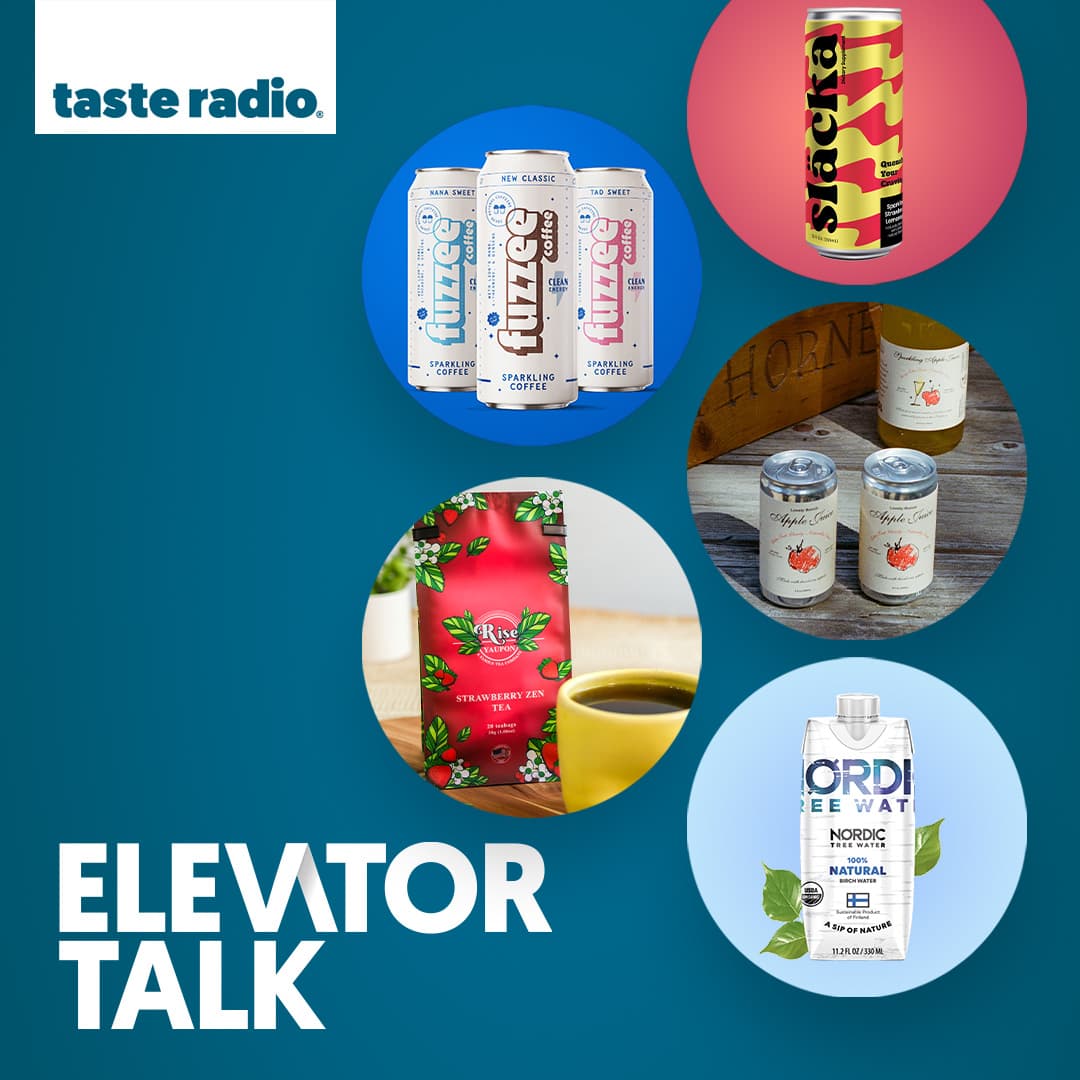
Episode Overview Title: Elevator Talk: FUZZEE, Rise Yaupon, Släcka, Lovely Bunch, Nordic Tree Water Description: This episode features innovative leaders from five beverage brands: FUZZEE, Rise Yaupon, Släcka, Lovely Bunch, and Nordic Tree Water. Founders and CEOs introduce their brands and share recent company updates and milestones. The special co-host, Dr. Sebastian Dreher from DöhlerGroup, provides feedback and strategic insights.
Key Themes & Discussions
Introduction and Co-Host Welcome
- Ray Latif (Host) introduces the episode, explaining the purpose of Elevator Talk: to spotlight early-stage and disruptive brands in the food and beverage industry.
- Dr. Sebastian Dreher (Co-Host), a venture manager at DöhlerGroup, discusses his experience in the industry and the importance of understanding differentiation in consumer packaged goods (CPG).
Segment 1
FUZZEE
- Founder: J. M. Guthrie
- Concept: Sparkling coffee beverages infused with functional ingredients like Lion's Mane and Ginseng.
- Feedback: Post-launch learnings from the New Beverage Showdown highlighted the need for consumer education and a clear product message.
- Upcoming Products: Launching a new flavor called "Nana Sweet" that emphasizes a sweeter profile.
Segment 2
Rise Yaupon
- Founder: Shelley Steele
- Concept: Tea made from Yaupon Holly, North America's only native caffeinated plant.
- Unique Selling Points:
- Nutritional benefits similar to traditional teas.
- Low astringency allows for easy preparation.
- Committed to social impact by employing second-chance workers.
- Challenges: Overcoming awareness deficits regarding Yaupon as a tea category.
Segment 3
Släcka
- Founder: David Allred
- Concept: A ready-to-drink beverage designed as a healthy snack replacement, focused on satiation and hydration without sugar.
- Functional Ingredients: Includes amino acids and electrolytes, creating a unique offering in the beverage market.
- Consumer Education: Emphasizes the importance of informing consumers about the health benefits and functional ingredients.
Segment 4
Lovely Bunch
- Founders: Lenny Harer and Macklin Kasanoff
- Concept: Premium heirloom apple juice and innovative apple-based beverages.
- Market Positioning: Aims to reinvigorate the apple juice category with high-quality products that appeal to a modern consumer base.
- Sales Channels: Primarily in food service, with growth into grocery stores.
Segment 5
Nordic Tree Water
- Founder: Claudia Kainoia
- Concept: Birch water tapped from birch trees, rich in nutrients and marketed as a natural hydration alternative.
- Unique Selling Points:
- 100% birch sap, organic and sustainably sourced.
- Appeals to health-conscious consumers looking for alternatives to coconut water.
- Challenges: Overcoming initial consumer hesitance towards birch water and positioning against established competitors.
Takeaways
- Consumer Education: A recurring theme is the need for effective consumer education to establish new product categories and differentiate brands in a crowded market.
- Health Focus: All brands emphasize health benefits, targeting consumers looking for functional beverages.
- Innovation in Tradition: Each brand is finding ways to innovate within traditional beverage categories, from coffee to tea to apple juice.
- Engagement with Community: A commitment to social responsibility and community engagement is evident, particularly in Rise Yaupon's hiring practices.
Conclusion The episode showcases the challenges and opportunities faced by modern beverage entrepreneurs and highlights the importance of differentiation, consumer education, and community engagement in building successful food and beverage brands.
Contact & Additional Resources For inquiries or to apply for future Elevator Talk episodes, listeners are encouraged to reach out via the provided email: ask@tasteradio.com. ```
Written by AI. May contain mistakes. Listen to the episode to check what was said.
Transcript
Automatic transcript. May contain errors.0:05Hey folks, I'm Ray Lateef, the editor and producer of Taste Radio and you're tuning into the latest episode of Taste Radio's Elevator Talk, the series that profiles early stage and disruptive brands from across the food and beverage industry. Today's episode will focus on five beverage brands whose entrepreneurs will have an opportunity to hear feedback and advice from our co-host for this episode. That's Dr. Sebastian Dreher, who's a venture manager in North America for Dollar Group. Sebastian, it's great to see you again. It is always great to see you, Ray. Thank you so much for having me. As always, you are a, I believe, five-time host, might be six-time host of Elevator Talk, co-host that is.
0:47And every single time you're on, I'm just so honored because you are someone who has a ton of experience in this industry. You've invested in early stage brands, you know it inside and out, and you're someone who can bring so much value to this show. And I just bring so much value and information and enthusiasm to our show. So just in a nutshell, I love you. And thank you for being with us. I love you too, buddy. For folks who may have missed episodes where you have been featured in the past, tell us a bit about your work and with your work with Dola Group specifically. Fantastic. Yes. And by the way, five is my lucky number.
1:29So let's go with my fifth appearance. I like that. So I've been working with the Dollar Group for now 10 years in the U.S. It's actually my 10th anniversary. We are a natural ingredient company. So we provide all kinds of natural ingredient, ingredient systems and integrated solutions. And what that means, everything that you need to do beverage from flavors to colors to juices to extracts to coffee, you name it. we are able to work with and provide it. And we think about the industry really holistically. So every kind of beverage and all of the beverage we talk about today, we have some sort of function and we can help.
2:09And that's really the core business. And that kind of knowledge and that viewpoint we have on the industry helps us to hopefully make great investment decisions. Because at the end of the day, in this space, you need to really understand the product and what makes it different and how a supply chain looks like when the companies are at scale. And that's in a nutshell is what I do. We invest in early stage companies. We have done over 20 investments in the last 10 years. That goes from pre-revenue to early revenue to Series A. That's the latest we did. And an average check size of us is going everywhere from$100 ,000 to$1 million.
2:48I mean, I think that's the perfect check size for a brand that's, say, zero to two years in, at least for most brands in this space. You mentioned different, and differentiation is so important in CPG. How do you define differentiation? How do you define innovation? That's an excellent question. I always like to talk about new categories. And a category involves a lot of different things. So first of all, it goes into a packaging format, Right. Often there is a different packaging format that consumers associate with a new product, whether that is a shot, whether that is a can, whether that is glass, you name it.
3:31There are so many different ways to look at it. Then there is a new functional needs state. At the end of the day, the consumer looks to have a problem solved for them, whether that is hydration. It could be fiber. It could be protein, could be energy, you name it. So we are ideally looking for a new a new need state or something that is a little bit different. to new ingredients and new nutritional values, right? And you take all of the things that I said together, and then you're getting what I call a new category. I think there has to be a point of reference though, right? When you do have a new category or a new concept, education is really important, but education is expensive.
4:12And having that point of reference to something that a consumer is familiar with is, I think, unfortunately, something that's sometimes missing from a business strategy or not necessarily considered when that concept was brought to market. How important is it to you that people have that reference to something they already know? It's very important. And at the end of the day, you know it. We still, in our industry, we are selling the products mostly in retail stores, even though all the online concepts are out there. But when you go into a retail store, the first reference is where is the product placed in the store, right?
4:49So that gives you already a frame of reference. And then many consumers, when they walk up and they pick up the can or the bottle or whatever the format is, they already have an expectation of what is going to be in there. And if that expectation of what's going to be in the packaging and how it's supposed to taste like, and if that expectation is not met, then we have a big disconnect. And that usually means that a company is going to struggle. And the biggest successes out there, they were able to establish that connection that you meant to do that consumer education. So it is always a slippery slope.
5:26You want to have something new, but you don't want to be too new that people do not understand what they're about to drink. And that is, I think, the art for every startup out there to balance the two elements. I love the way you put that. Art. And you and I sat down for a podcast interview. I want to say it was about six years ago. And I believe we titled it The Art and Science of Early Stage Investing with Sebastian Dreher. It's a brilliant conversation. I'm very biased, obviously, because it's my show and you're the guest. But if you have an opportunity to listen to it, folks, please do. It's a good one.
5:59All right. I think it's time to get to our first guest for this episode of Elevator Talk. Sebastian, are you ready? Let's do it. Let's do it indeed. That person is J.M. Guthrie. He's the founder of Fuzzy. J.M., it's so great to see you. What's up? How we doing? Doing great. J.M. and I met at BevNet Live in New York this past year. He was on stage for our New Beverage Showdown. I thought you did amazing. Love this concept. Tell us all about Fuzzy. Yeah, no, thanks. Appreciate it, Ray. Nice to meet you, Sebastian. Yeah, we've been busy, busy since the BevNet Live event. J.M., founder of Fuzzy. It's a brand that we built as an homage to my Nana Ann, not David's Fuzzy Wuzzy, who called Carbonated Drinks fuzzy beverages.
6:45We made our first drinks in April, two different sparkling coffees with Lion's Mane, Ginseng, and L-Theanine, really focused on the boost with none of the crash. And we, as you mentioned, debuted at the New Beverage Showdown. And man, did we get some constructive feedback, both on the drink and the brand. And, you know, I think you guys talking about this going into our interview understood the education. So being a new format of coffee, we know we have to educate the consumer on what we are and what job we're being hired for, you know, for our drink. And it's clear from our customers and the data that we've collected that fuzzy is not a coffee ritual replacement.
7:26It's for the other moments throughout the day and the night where you need a boost. And so really, Fuzzy is a natural energy substitute powered by what can easily be considered the OG source of energy, coffee. And people love coffee and want clean energy. All you have to do is look at the KDP investment in Pete's or the new Pepsi platform with Celsius. This is a space that is obviously very active and one that we sit right in the middle of. And even Jackie last week on your guys' podcast, Ray, talked about how can you differentiate in a crowded energy category? It's the caffeine source, and that's obviously exactly where we are.
8:07So we've been making lots of progress. We've built an advisory board of legends from the space, truly humbling, more to come on that. Partnered with a founder of a cool West Coast manufacturer who literally wrote the book on cold coffee extraction to do a reformulation. He loves carbonating coffee. He loves the vision of Fuzzy. He believes in this. And we've toned down the brand. So we're focusing on less busy packaging and really highlighting Fuzzy as the brand and even the new flavor, Nana Sweet, that we're launching very shortly, which is vanilla, much sweeter, and even, you know, think cream soda in flavor profile.
8:45So giving the stage to Nana Ann to be the star of our show. So just in closing, pumped to push a tastier product, clearer message in Q4 and going into 26, focusing on natural, better for you and wellness outlets with a leading DSD that we've already signed up with here in the mid-Atlantic with drugstores and mass markets, grocery, and even military in our sites shortly thereafter. So super excited. We continue to believe. And we've been saying let's fuzz and go because that's how we feel about it. Love it. Love it. Well, J.M., if you like the podcast episode that we did, the one that we did that focused a bit on the energy drink category, I think you'll really like the one where we talk about the coffee category.
9:31Stay tuned for that one. You know, Sebastian, we've seen a ton of coffee concepts come to market. And I've said this on the podcast recently. I feel like there's a bit of a resurgence for this category. I think we had seen a bit of a lull the last couple of years where retailers were taking brands off shelf. I feel like they're adding brands to their shelves a bit more than even I expected. What do you think of Fuzzy overall on this concept of sparkling coffee and a more functional approach to coffee? So first of all, I love the Ted Lasso theme that's going on there. So in the video, so really, really great.
10:09And I love that show. Second of all, yeah, I think it's really interesting, right? Coffee, of course, is such a massive category. And we saw moves lately with Chobani acquiring La Cologne. Clearly, one of the moves going on there. My question would be, I think the really tricky part is the sugar content of those products, right? I was just on a road trip last week, and I stopped in to get a cold brew coffee into the gas station. Cannot find any cold brew coffee that's zero sugar. And that tells me, okay, there seems to be a need for some certain level of sugar content. And the hope is that the carbonation actually might be able to provide you with some texture, some feeling, where you don't need as much of sugar to blend that in.
10:58So my first question for the company is like, hey, how do you think about content in those products? And what do you think is the sweet spot all pun intended? Yeah, great question. Well, we knew that getting the not sweet version right was going to be harder than the sweet version. So, Sebastian, we focused very, very closely on a zero added sugar, which we've called new classic to this point. We're actually going to rebrand. And so more to come on that. But our first SKUs were with sugar and sugar volume in sort of main site. So the new Classic has zero added sugar. The Tad Sweet is only 45 calories, eight grams of sugar.
11:43It's organic agave and single origin coconut water as the sweetener. And then the only reason we went with this third SKU for Nana Sweet is that we have lots of customers that want the convenience store version, the high sugar content tastes really delicious. And it does, it tastes like a cream soda. So we're excited to sort of round out our first three product offerings with a really sweet version, zero added sugar, and then one that we call Tad Sweet that kind of fits right in the middle. That's great. So yeah, and time will tell which one is going to be a bestseller, right? And that's obviously really important as a young company, figuring out, okay, how consumers are reacting to it and it might be that different channels also allow you to have different products out there call back to what i earlier said about hey consumer expectation that picking up a can how are people reacting about the carbonation in it because if you go to the coffee aisle consumers are preset to think hey this is going to be a still product as 99 of products are there what's the feedback um do people sometimes overlook it what's the feedback when you sample it on shows.
12:55Just walk me through it because that could be a source of confusion. People picking it up and don't see it coming. What's the feedback? What's the reaction? How do you look at that? Yeah, great question. We've been talking a lot about this too. It's actually really fitting specific to the reformulation that we're in the midst of as well. So I agree. Confusion is a word that confusing is actually a word that we would agree has been consistent since we made the drinks in April. And it was compounded by the fact that we actually used phosphoric acid as our acidifier in our original formula as well, which as you know, has a very sour, bitter taste to it already.
13:38So when you add it to coffee, it actually expounded the bitterness or the sour taste. And so a lot of the feedback in our first drinks was that the first taste was too profoundly sour or bitter with coffee being the second or even third profile of the drink, which was compounding the confusion. So for us, if we're going to educate the consumer and we're going to push this carbonated coffee category or sparkling coffee, it has to taste like coffee. So this new version, we've had much less confusion because people know it's going to be sparkling. People know it's going to be coffee. And the flavor and the aroma of the can when you open it is coffee first, which has made a big difference and has us super excited about this next round of formulas.
14:28That's great. And then lastly, my last question is, and you mentioned that your Nana, if I might call it that, added sparkling water to the coffee. What is the main reason for that? Is it so it tastes less bitter? Is it supposed to be more refreshing? What do you think is the real benefit of actually carbonating cold coffee? Yeah, so Nana and called anything sparkling fuzzy. So it was actually the core memory that I had was a Christmas Eve where she was walking around the table with a Tupperware pitcher of faucet water and a two liter of probably Canada dry club soda and saying, y 'all want faucet water or fuzzy water.
15:11And so fuzzy being a great word for carbonation, and since there's really not a great, I think, name or synonymous with bubbles, I thought fuzzy was a great name. I'm the one that's been pouring fuzzy water in coffee for years. It started with just the fact that I enjoy fuzzy or sparkling water better than flat. And so as I'm also a huge proponent or love good coffee, especially espresso, instead of adding flat water, I added fuzzy water. And so kind of a sparkling Americano. And I've drank it for now 10, 11 years. So when we started down the path with this brand, I was so excited to do it in a can because it doesn't really exist.
15:55I would buy it. And I think the benefit is people just enjoy carbonation or the fuzzy feeling of the liquid in their mouth. And we have an opportunity to take what is truly the OG of energy. And it's obviously also the second largest commodity traded in coffee and give it a little bit of a boost with some bubbles. And I think if I might add that, I think that's going to be a key for you because you don't want to be just novelty. like hey can we do something nobody ever did before but the question is if you talk to consumers and testers like what is it that they actually like about it is that the the feeling they're getting the texture they're getting or is it maybe as i said is it the less acidity is it the refreshing nation of it right but the question is always so if someone is asking why would i add that right i think it's important to have a good answer saying hey this is what it what it does to you and why you should try this out and the clearer you have that i think the better for your brand and for adoption of the product.
16:56Yeah, that's a great point. Thank you. Yeah, I totally agree. JM, I don't know. We went through that pretty quickly. We need more time. I'm talking directly to my producers here. We need more time with the founders. This isn't enough time. In all seriousness, JM, thank you so much for taking the time to be with us. I really love what you're doing with Fuzzy. I think the concept of sparkling coffee is one that's pretty well known in Europe, and I really hope it catches on here as well. And I think you leading the charge with your brand is a great foundation for its development. So if there's anything we can do to help along the journey, please let us know.
17:31We're here for you. Yeah, absolutely. Thanks, as always, for the support. It means a lot. We appreciate you. Grateful for it. Thank you. Thank you. Take care. Thanks, Sebastian. Nice to meet you. Thank you. Nice to meet you, too. All right. On to our next guest for this episode of Elevator Talk. We have Shelley Steele, who is the president of Rise Yaupon. Shelly, it's great to see you. Yeah, great. Thank you for having me. Yeah, thanks so much for being with us. I was introduced to Rise at the Summer Fancy Food Show in New York in June, and I'm glad I was because I love what you're doing. Tell us all about Rise Yopon.
18:06Thank you so much. Yeah, we make tea from North America's only naturally caffeinated plant. It's called Yopon Holly. It's actually the oldest tea in the world. It was consumed originally here in Florida over 8 ,000 years ago by the indigenous tribes that resided here. It fell in the dustbin of history, and so we're trying to revive it and bring it back. Yopon teas have very similar health benefits to your traditional green and black teas that originate from the Camellia sinensis plant. But yopon is markedly different because it lacks tannin. So you're not going to get that bitter aftertaste, that astringency on your tongue.
18:51It means that you can't over steep your tea. So it becomes very easy to have a really great cup of tea. There's no spoilage or having it go bad on you down the road. We are a vertically integrated company. So we do everything from wild harvest, our leaves locally here in Florida. We leverage second chance employees to do that for us. And then we in our production facility kind of take it through the process to end up with tea and tea bags and natural fiber tea bags for our packaging. Rise, the name Rise is actually intentional because we want to use tea as a way of elevating people in our community that have been historically overlooked.
19:35So our production facility, we hire, again, we hire second chance. We hire seniors that are looking for community. We have people that are differently abled, both mentally and physically. We just hired our first deaf employee. So we're really proud of being able to kind of bring the community along with us of making really great tasting native to Florida tea. Outstanding. And kudos and commendations to you, Shelley, for, you know, building a team that is representative of the United States. I mean, I think, you know, there's a lot of diversity in this country, and it's beautiful to see it incorporated into a CPG company.
20:18So, well done. So, I was introduced to Yaupon, I want to say about 10 years ago, and I love the idea of it being a native plant, an indigenous plant in the United States. And I honestly, to be honest with you, I expected it was going to be bigger than it is now. But I do think that there is a lot of potential for this space. I just don't know what the right message is. Sebastian, just in general terms, what do you think about this space? And what do you think about Rise as being a key cornerstone for its development? I love everything you mentioned about the background and the story behind it.
21:01It's always great to tell a story and obviously the social mission that you have. one of the challenges we have right now on this video call is I cannot taste anything. And so my big question to you is, at the end of the day, people want a tasty product. How does it taste like? How would you use other tea varieties to describe how does this tea taste like? Yeah. So our Pure Yopan blend is our America's Classic, and it tastes very similar to a traditional green tea. So it has a light kind of smooth finish to it. So you're not going to get that bitter aftertaste to it. But we kind of anchor people towards a green tea.
21:42That yopan is going to be the base for everything that we do. So our America's Classic is a pure yopan. And then from there, we're building flavor profiles by adding additional ingredients and making blends. So we have more of a spicy one with our healthy kick. We do a cinnamon, ginger, rosehip, rose petal, and hibiscus. We have more fruity with a strawberry and lemongrass in our strawberry zen. And then we have more of a minty flavor in our chocolate mint up. So we do a peppermint, spearmint, and chocolate flavoring with that. So we kind of have something for each different palate, if you will, from a taste perspective.
22:22But all of them are going to be a little bit lighter than what people are expecting because there's an expectation of bitterness with tea typically. And with this, you're just going to always have that clean finish and that smooth, you know, no aftertaste to the tea. So it's very easy to prepare and easy to make right. And I think that is a great anchor, right, first of all, and also gives you an idea who to go after and how to tell the story. First of all, hey, do you like green tea? and then by the way we have a we have a native variety that's native to the u.s by the way no charis on it right that's and that's another that's another opportunity right here as well but it's less bitter and i think that will give you a already an entrance of people trying it and then at the end of the day obviously they have to like it and see if that converts them But again, those anchors are so important.
23:20And I like that you have a very easy one. So you can qualify it and then you have an insight. Hey, there's an advantage. It's less bitter. Try it. Absolutely. Yeah. And the other part about this, Sebastian, is that I think there's a lot of interest in better for you versions of familiar categories. We talked about this at the outset of the episode. I just wonder, again, if the education of this brand and the product itself, if you see that as being a pretty significant hurdle for its development, or do you see this as just people are going to recognize it as a tea and not have to worry about the fact that it's Yalpan or where it actually comes from?
24:11I think the... Oh, I'm sorry. But let's start with you. Yeah, Shelley. Yeah, the awareness deficit of Yopon as a category is our biggest obstacle. We do a lot of education about where other teas come from, where other caffeine comes from, right? Because there's really no native plant other than Yopon holly that's caffeinated in North America. So everything else has been imported or synthetically made here. And so that becomes part of our story. But at the end of the day, it's, you know, the taste is really what differentiates Yopon from other things. So when we have the opportunity to do sampling and get it in front of people, it's like, hey, this is tea, right?
24:56It tastes like tea. It just tastes better than the other teas that I've had. And we get a lot of commentary about, wow, are you sure this is not sweetened? Because people are expecting that bitter aftertaste. We're saying, hey, no, you don't need to sweeten to overcome. You need to just sweeten to taste, which a lot of our customers really appreciate. Sebastian, you want to follow up on that? I think from an investor perspective, what the, uh, it might be a harder sell to say, um, you know, this is going to be a brand and a product that most consumers are going to understand from the get-go. Um, it, does that give you any pause?
25:39I, I, I'm projecting, I love this brand. I really do love this category, but I don't, Just to get inside the mind of an investor, how do you weigh the pros and cons here? Yeah, 100%. So I think, first of all, the good thing here is, let's start with a good thing. You have a really clear audience to go after. As I said, you're not going to convert a coffee drinker to your pointe. You're going to go after tea drinkers. And the good thing is that tea drinkers are very passionate. And they usually have their procedures, they have their routines, how they like to consume tea, not to think about tea.
26:21But it is a great opportunity to give some education out there, provide education using social media. And I would think that tea drinkers are very easy to target on the traditional means. So I think that is a positive, just basically thinking about the audience you go after. I think it's going to be tough to get in a retail store without any sampling to get that trial that you need. But at the end of the day, it's really simple for this brand. If you want to be successful, you really need to have those trials convert or going into the store, doing the sampling, and you just have to convert people.
27:04So it's a very simple metric. And if the product does everything that Shadi says, that's to prove us in the pudding. And so it's going to be, you just have to be out there and you have to show also to not just to investors, but also to retail stores. Hey, the moment we go out there, the moment we put liquid to lips, this is working. And we see people converting and see people buying and not just buying for novelty, but also replacing the green tea that they usually have in their morning routine. So I think that's a very clear playbook. And if it works, that has to be proven out in real life. I think you're absolutely right and appreciate the feedback.
27:50Shelley, we're almost out of time. What retailers are you in right now? Just talk about your retail and distribution footprint. Yeah. So our biggest retailer right now is the Fresh Market. And then we're in a lot of independent, both boutique and coffee shop stores. Outstanding. I really think that the Fresh Market is one of my favorite retailers out there. And I think it's a perfect place for you guys. And hopefully we get to see you in more and more retailers, including, say, a Whole Foods or a Sprouts down the line. If we can help make those connections to those buyers, please let us know. We'll do what we can.
28:26We do and are happy to make those connections whenever possible. Really appreciate that. Thank you for having me. Thank you so much for being with us, Shelley, and I look forward to speaking again soon. Let's keep it going here on Elevator Talk with David Allred, who is the founder and CEO of Slaka. Now, before I go any further, I think there are three different pronunciations for your brand. The one I pronounced, the one that you're about to pronounce, and maybe the one that Sebastian has. But how do you pronounce the name of your brand, David? I go straight at it, just Slaka. Slaka. The umlaut is optional.
Read the full transcript
29:04Okay. But I think before we hopped in the mics, you said Schlaka could also be? That's how I've... I was doing a very poor imitation of a Swede. I'm going to let Sebastian, who, because it's the Swedish word for quench is how we came to the word, if anybody's interested. So it was a word that I want, the number one, we wanted to get a single word that would be through the trademark and patent office. And so that was in Slack, meaning quench, which we'll get into quench cravings, crush cravings is what it's about. So, and it's interesting and we can have a conversation around it. So that's kind of where the word came from.
29:43But I will yield the floor to Sebastian, who I think has the ultimate pronunciation. Yeah, and this is the call to all the Swedes listening to this podcast. Who does it the best, right? So with my Swedish that I know, I would say it is pronounced slecka. And slecka, the most used term is slecka lösen, which means to turn off the light as well. Quench, turn off, end kind of thing. But yeah, that's the general thing. I have a friend whose husband's Swedish and I had a Slaka t-shirt on and he immediately caught on to that very quickly. Well, I'm glad we're talking about this. This is important context because it really does, the word represent what your brand is in a nutshell.
30:30I came across Slaka. I'm just gonna, I'm just gonna use, I'm gonna go with my hard American Slaka. the pronunciation of the term. But I met you guys at the Fancy Food Show as well. And I think it was your branding that really struck my interest from the get-go. And then I learned more about it. I'm like, we got to have these guys on Elevator Talk. So tell us all about the brand, the origins of the brand and what you do. I have a history in beverage. I'm one of the founders of a company called dryfarmwines.com. And we've been doing that for 10 years. and we import naturally made sugar-free organic wines as a direct consumer wine club.
31:12So what we learned, I learned in the past 10 years, and we've talked about it, your other guests have talked about it earlier on the show, sugar. No, people are very concerned about sugar and sugar in their product, sugar in their salad dressings. You know, Mark Sisson launched, you know, Primal Kitchen around that whole premise. And so starting Dry Farm Wines, being sugar-free wine was a big, big driving point for people who are living in a healthy lifestyle, whether they're doing a paleo diet, a keto diet, buying organic produce, wild-caught salmon, et cetera. They wanted a wine product that was consistent with it.
31:51So being in the health and wellness space, because we've always marketed the wine in that area, we've never marketed the wine to wine people. I became very aware of, you know, mindless eating, snacking eating. Obviously, with COVID and people locked in, they were eating, people eating more and not necessarily better. And so we're inundated with highly palatable, low nutrient, high calorie snacks, Cheetos, Doritos, bagel bites, et cetera, et cetera. and so wanted to come up with a product that was a ready to drink so you can pop it open and say I'm at three o 'clock in the afternoon or 10 a.m. or 10 11 a.m.
32:32in the morning that between meal lull and say I want something that's going to satisfy a craving but with five calories no sugar all natural amino acids like 5-HTP and L-carnitine L-theanine etc electrolytes for hydration. And then we actually threw in perizanthine for clean energy, which is a caffeine metabolite. So it's technically caffeine free, but it's a nice clean energy burst for people who want to take control and not have to be at the mercy of a highly savory, but low nutrient food item. So again, the reason we went with ready to drink to start is I feel people have about a three second decision window at four o 'clock in the afternoon when they go to the pantry, they go to the break room and they say, am I going to grab some chips or am I going to grab a slacker that I can drink, feel satiated, feel good about myself.
33:33And part of it is you'll actually eat a little bit less at dinnertime or lunchtime because of the amino acids and the, and the, and the products that are in there. So it's really, um, about for me, I think it's about control. I think it's about making the good choices. I don't, you know, you know, Doritos are my personal kryptonite, you know, and they're scientists trying to get you to eat a whole 10 ounce bag, not too salty, not too sweet, not too savory, not too, you know, the crisp, you know, all that stuff is in there. And we're saying, hey, here's a chance for you to take control over what you put in your body and feel good about it.
34:11I don't know that anybody feels great about dumping out a bag of Cheetos. So that's kind of the ethos for me is empowerment. I have a bracelet that says empower and give people additional choices and education. One of your previous guests said her biggest issue is educating people in the certain tea plant that's here that until I heard about it, I didn't know about it either. So as Sebastian was saying, it's a new category. It's It's not energy drink. It really has energy. It's not meal replacement. It's more like snack replacement. It's hydrating, but it's not a hydration beverage in that soul aspect.
34:51I think the main point for us is to say, here's the thing to get you away from bad choices and give you feel good about the choices that you do make. Of course, a lot of question on my mind right now. and obviously a really big audacious goal that you're having here right now. We all, I think, we all, yeah, no, that's great. We all like the mission, and I think you speak to a lot of important things. And, I mean, you know, mentioning, not talking about addiction, but clearly, I mean, we under Zempic age right now, so a lot of people clearly are aware of that right now. Now, you have a lot of functional ingredients in there.
35:35Let's talk a little bit about the functionality and the proof you're having that this is actually doing what you want it to do. So, do you have one ingredient that you would highlight that you're the first one to use or that you think is going to do the majority of the heavy lifting here? And what kind of proof do you have that that is actually doing what you want it to do? Well, if I can pull on my previous experience at Dry Farm 1s, I would get the same question. They would say, is it the sugar? Is it the dry farming? Is it the low alcohol? And I would say it's all of the above. And so the amino acid 5-HTP probably comes in at the strongest if you're going to list it in rank order for satiation and mood control and getting that, I don't want to say GLP-1 exactly, but in that same vein of what that is trying to get for satiety and fullness.
36:28But you actually add in the L-theanine, the carnitine, the 12 ounces of fuzzy to give to the previous guy. It's a sparkling water, so there's also a satiation from the carbonation and the sodium and the potassium. So probably the amino acids followed by the paroxanthine energy and then followed up with the electrolytes all in a carbonated package, I think is what's going to really get people. And the experience we've had and the feedback we've gotten from people is, you know, I'm not having the sugar cravings. We had a lady who had some and she went to dinner, didn't eat all of her food, was going to get a to-go box, forgot the to-go box and said, you know, I don't really want it.
37:15And it's kind of changed the way she thinks about food. So it is, there is a big, as you said, the Ozempic and GLP-1 conversation is huge, huge, huge. And to the extent that we could be, you know, a part of that conversation, I think it could be monumental. Yeah. And did you consider adding fiber as well? We haven't gone the fiber route. You know, at some point you have to stop and figure out what will dissolve in the can. um because i know protein's a big thing right now um of course but um the short answer is no we didn't do we didn't do fiber but i think uh based on uh what our feedback has been so far i don't think we need fiber to to to add any satiation or fullness yeah and and just from a per reference i'm a big believer in amino acids um but mainly for i would say the mood portion of things right So there's studies coming out right now that you need certain amino acids just for your brain to function and to balance your mood.
38:225HTP is a little bit of a tricky one. It's very powerful, almost too powerful. So you need some disclaimer on the can for that. Pregnant women cannot have that. So as you have the conversation down the line, that's going to be, I know many brands that started with 5HTP. and that as they got to more mainstream, that they had to decide to make a little bit of a change. But again, for you right now, this is one of the important learnings that you need to do is like, what are the ingredients? Is A, gives the function and B, is resonating with people, right? I know that magnesium is another one out there that many companies are waking up to right now.
39:05L-theanine is a very powerful one that the science has proven behind it. I mean, talking about BTE, but that's one of the most active compounds in there. So I think, yeah, this is going to be one where you, it's always a mix of like, hey, what is something that people actually understand and you can call out on the front of the label, right? You cannot put all of them there. There's only limited amount of time, amount of real estate, so to speak. But the question is, what kind of mix of functionals is the one that gives you the biggest audience while doing what you wanted to do. And that's, I think, given you have so many in there and so many people will never have heard of most of them, it's going to be an interesting one how you're going to balance that one out.
39:53No, we're excited about it. And again, people, they're responding very, very well to it. And I feel honored that I'm able to honor the premise. It's like, hey, we're going to help you with craving control, with making better decisions. And people are reporting back that they are doing that. And they're having that same response. So I'm very proud of fulfilling that promise to the customer. Yeah, I imagine that's the best feeling for an entrepreneur is actually giving somebody what they want, as opposed to just trying to sell them something. And it feels like Slack is doing just that. David, thank you so much for being with us on Elevator Talk.
40:35Excited, really excited to see how the brand develops from here. If there's anything we can do or if there's any new retail authorizations, distribution that you have, please let us know. We want to talk about it. We want to write about it. Yeah, right now we're direct to consumer as well as some stores in Manhattan. But we're working with Kehi and Unify and some other stores to get, hopefully by the end of the year, wider retail. So it's small retail right now, but mainly DTC online. Well, I can't wait to hear more about what happens in the rest of the year and then in 2026 as well. So yes, definitely please stay in touch.
41:09Thank you. Thank you, David. All right. Let's keep it going on Elevator Talk with Lenny Harer and Macklin Kasanoff, who are the co-founders of Lovely Bunch. Lenny, Macklin, it's so great to see you guys again. What's up, Ray? Nice to see you. Lovely Bunch. I have a feeling that Sebastian is familiar with his brand because my first interaction with it was at a little store called Erewhon. And I came across Lovely Bunch and I'm like, it's a small can of apple juice. How good could it be? And I was like, what? This is so good. It's incredible. Okay, that's my pitch for Lovely Bunch. Let's hear yours.
41:50I'm Macklin, co-founder with Lenny of Lovely Bunch. I think a little background on myself is actually really good context for how this came about. So I'm a chef. I spent my whole career working in fine dining, two and three star restaurants. And when the pandemic hit, I was really looking for, what do I do? I wanted to work with agriculture at scale. I wanted to work with the quality of farmers we were able to work with in the types of restaurants I was cooking at. I actually, since then, own a restaurant and a wine bar in Los Angeles. So David, I appreciate your interest in wine also. So I just wanted to shout that out.
42:34But as I was going through that process, I had been spending some time in Denmark and just trying the quality of apple juice that's available in Europe and felt that there was nothing like that in the US. And it's such an iconic fruit for the US. It's such an iconic supply chain within the US. But the fact that the best quality fruit wasn't going into juice, I thought was just a shame. So we worked on creating a shelf-stable, ultra-high quality heirloom apple juice. Part of that process was realizing that, you know, pasteurization and shelf stability was created for a reason historically, at least in the culinary side of things.
43:17And we think of preservation as a way to bottle up the season for sharing with a guest or sharing with your family when it's not the middle of October and you're not standing in an apple orchard. and in doing that we are kind of introducing a specialty premium version of something to a category that's frankly somewhat commoditized but really leaning into the nostalgia of American agriculture and the legacy of apple breeding in the U.S. a lot of our varieties were bred in the U.S. in the 1800s or late 1700s and have a lot of historical importance to the way, frankly, U.S. agriculture developed from the early days.
44:09We've also been working on a new line of products which we've launched recently, which we call our Fizzes. Shout out to Fuzzy also because sparkling beverages are great. The fizzes are basically apple juice blended with another substrate. So we have a hibiscus apple fizz that's sweetened with apple juice and hibiscus tea. It's absolutely delicious, a little less sugar, a little more tart. We've done a yuzu, which we partnered with our friends at Yuzu Co. to do. And we're working on developing some more flavors in that sort of line. I'd love Lenny to dive in a little bit into some of our, you know, positioning in the market as well.
44:58He does more of the operations side of things. I'm more on the flavor and sort of product development and brand side of things. He's also German, Sebastian, so maybe you guys can connect there. Lenny here. Yeah. Born in Germany, grew up in LA, but, you know, Grew up drinking applesauft and applesauce. Sebastian, I'm sure you've had some experience with those two drinks. But yeah, originally worked in investment banking within Food & Bev M &A, and then me and Mac and where we're friends, and then decided to partner up with Lovely Bunch. But yeah, what I think a great thing about our product at the end of the day is when you talk to consumers that are above the age of 20, a lot of them will tell me, I haven't drank or purchased an apple juice since I was a child.
45:44And really just speaks, you know, we're bringing a consumer back to a forgotten category for them. So we're really incremental growth. We're driving, you know, more sales. We're not cannibalizing, no left hand, right hand. And I think that just speaks to our product and our positioning and branding. We're currently mostly in food service channel, probably 80 % of our revenue there. We are, you know, our first foray into grocery was Air One. Now a fresh market. Right now we're probably in almost 300 grocery doors. A thousand doors in total and, you know, quasi national in over 40 states. Some of those states, one or two doors, but we're, you know, growing and trying to continue doing what we're doing.
46:27Before we get to Sebastian, I know he has a lot to say. Price point. What's the price point per can? What's the size of your cans? Eight ounce can,$2.99 in grocery. Okay. I paid more at Air One, but that's Air One. So anyway. They can get pricey. I'm sure they can price it up. But hey, it was worth every penny. Sebastian, there's a lot to dive into. So please go ahead. I'm really craving apple juice right now. Oh, my God. You got me going there. So yeah, first of all, I'm from a region in Germany, which is called Frankfurt or Hesse. And this is the region where it is known in all of Germany for apple juice and apple cider.
47:10So I grew up in that region. I, you know, I did apple juice myself as a kid. And also for our company, Dollar, we are a big, big, big apple processor. So Apple is a big part of our history. And yes, so I'm really, really excited to talk about it. And yeah, I know that especially the cloudy apple juice back in Germany, I've never tasted anything like that over here. And I applaud you for bringing back, hopefully, the love for good apple juice. clearly the price point and thank you for asking that ray is going to be an interesting one right how this is an artisan play it's a high quality play how even let's start with that where in the store that's not aero on would you place that product like like how do you go but if you go would go to a retailer i know that you said you're mainly in food service if you would have to go let's say to a kroger or two galsons albertsons staying local in la what where would you have that product placed?
48:11It's a really interesting question because, frankly, there is a bit of a price cliff in the juice aisle. We tend to do higher velocity if we're in the cold grab-and-go shelf because there's a little bit more consumer price tolerance there. And the other beverages we're next to, even though we're a bit smaller on the per-fluid ounce side, we're not so far off from some of those other beverages. I think where we probably need to innovate in order to compete a little more is on format size. So introducing a larger format, we'll be able to sit in that center aisle and compete a little better against some of those legacy players like the Martinelli's and the Santa Cruz's of the world.
48:54And that's merely a packaging to volume ratio, which is a big cost hindrance to us right now. Yeah. And I think the single, I have to admit that that is an innovation for me, single serve apple juice because usually you would think of apple juice and the big packaging but it makes sense to me to go especially next to soda and say hey listen this is gonna satisfy your sweet tooth um your blood sugar for sure is gonna spike but that's that is almost like a dessert kind of situation right there and um to your point lennie apple schorle which is essentially apple juice diluted with sparkling water um that there is a company called gerolsteiner that tried to actually establish that in the US.
49:37They had it at trade shows. They had it also at Whole Foods for a long time and also at Gelson's. I know they're on shelves. I don't think it ended up there. But how do you want to educate the consumer? Let me ask you this. When you go to food service, how do you get the managers to put it on the menu and how are you going to advertise that? On the food service side, let me just hop in here for one second, which is just that we, I was really lucky to have some great chefs that championed us early on. So we're sold at the cafe at Blue Hill at Stone Barns because Dan Barber was a fan. Daniel Hum orders the product to his house from 11 Madison Park.
50:20So I was able to kind of lean on these people that I knew through the industry and use them as a little bit of a platform to start convincing bars and coffee shops to take it on. But I think Lenny can dive in a bit more on how that actually functions for our business. Yeah, I mean, I think food service is big for us. Like just for example, the coffee channel, we are in a bunch of coffee stores, we're doing in some of these stores, 40 units per store per week. For an apple juice, we think that's pretty good. And it just complements the menu really well. At the end of the day, coffee shops, a lot of kids are coming through.
50:58Adults need to buy their kid a drink. They don't always want to buy them a healthy, quasi-milkshake, let's call it, at the end of the day, with the frappuccinos of the world. So we think that adds a lot for the retailers or the operators. And that's an interesting argument here, right? And because, yeah, if I think about single-serve apple juice, I only know it as a kid's drink and in those Tetra pouches. So, So, yeah, that could be an interesting angle for you to, as many sodas do, right? Hey, something healthy for the kids and then the parents try it as well. Interesting avenue right there. But for sure, the question is, how are you going to get the word out?
51:38Because you want to convert people that are not looking for apple juice per se, right? And I think that would be my understanding that you would like to go, okay, we have all of the healthy soda pops coming out there right now. and why you're not using that trend right now to go back, right? So, you know what? Why don't we start really at the beginning and give you a really healthy and great-tasting soda alternative, right, which is Apple juice. Yeah. I mean, I think there's a lot of those right now, that space. There's a lot of new brands popping up in the healthy space. And we just thought, you know, there's this big white space on the left side of that, juice is apple juices that there's really no new entrance in.
52:20There's no innovation happening from a sourcing standpoint and branding standpoint. So it's maybe a less sexy category, let's call it, but a lot less crowded category. And it's been a lot easier to get shelf space for that reason, I think. We're not saying you just got in three new healthy sodas. This is a new apple juice to add to your offering. I will, right after this call, I will go to Erewhon and I will pick one up. And I will really be looking forward to tasting the product. I am certain that Sebastian is going to text me as soon as he has that first sip and be like, okay, this is a real deal.
52:57Because that was my reaction. And I shared a can with someone who I know in LA as well. And they're like, oh, okay, thanks for getting this from me. And then literally I got a text two seconds after they tasted it. And it really is such a differentiated product. It is apple juice, unlike you've had it before. So Lenny Macklin, thank you so much for taking the time to be with us today. I'm really excited for your brand. please let us know if you make any adjustments to the branding, if you add any new retailers, when you add those new products and release them. We want to write about it. We want to know about it.
53:34So just keep us in the loop. Thank you, Ray. And thank you for having us. Sebastian, it was a pleasure to meet you. So look forward to seeing stuff. Quick break. If this episode has you thinking about what's next in food and beverage, explore BevNet and Nosh Insider, our subscription platform with deeper insights from the BevNet team. Visit tasteradio.com slash insider to learn more.
53:58On to our final guest for this episode of Elevator Talk, we have Claudia Kainoia, who is the co-founder of Nordic Tree Water. Claudia, it's great to see you. Hi, everyone. It's great to see you. I love that you're totally on brand with your T-shirt, Nordic tree water. Well done. Every day. And, you know, the celestial water, it just my go-to all the time. It seems pretty intuitive what you do, but please tell us all about Nordic tree water. All right. I don't know if you guys know about this, but birch water is this sweet liquid. It's very crisp, very delicious. It comes from the birch tree. We actually tap the water in the springtime.
54:44It's only allowing, only the birch tree only gives us three weeks in the springtime to take it out. And when we take it out, we tested it out and it's about 200 bionutrients in it. So it has all the trace minerals. It has electrolytes. It has magnesium, manganese. I mean, it's amazing. It's a vitamin water without having to touch it. It's natural. It's a vitamin water without having to do anything to it. I love that. You know, I've encountered birch tree water in the past, and I think there's a wide variety of tree waters that we've seen come to market. But what makes yours specifically different from other birch tree waters that we've seen out there?
55:31So ours is 100 % birch sap. The majority of our, some of our competition is with filter. It doesn't necessarily be 100%. We are certified organic. We are also regenerated organic certified. So that's a big one for us because we do not harm any of our trees. And all our forest is pristine. It's from the soil of Finland. So we actually source it from there. My husband, and that's where my last name comes from, Kayanoia, is from Finland. So actually we have encountered Birchwater from before. It's just that happens that after COVID, our kids, you know, when they get sick, they wouldn't drink any water.
56:24They will drink other, you know, they will probably drink the sweet drinks that I don't like and I don't like to mention, but I'm very healthy. So I like them to be, you know, to drink organic and healthy and they loved birch water. So I thought from there, that moment, I'm like, if the kids like it, if they can keep hydrating when they cannot sip anything else because they don't like Pedialite, then we're on to something. So we've had a Swedish-named beverage brand. Now we have a Finnish concept in so many ways. So this is a really Scandi type of episode, which is cool. um sebastian as i mentioned to claudia you know i think we've seen a number of tree waters come to market i think um you know some brands have had better success than others but you know at its core what do you think about the proposition of nordic tree water i i thought the same thing that you mentioned i know and i recalling the conversations i had with the company sentiment back in the past and um i think claudia what you mentioned is the hydration piece i think is the one that seems to be the most promising for me.
57:38And we talked all episode from the get-go about what do consumers associate with it? What do they understand? What's their need state? And hydration has proven to be a very powerful category. And now the question is, I think the closest that I could compare with the product would be coconut water. And we had those conversations in the past. and now the question is how can you how would you explain to people that drink coconut water why should they switch to birch and let's start with a taste perspective because i think at the end of the day many people when they hear birch they are not like oh let's drink it but it's not the not the first thing that comes to mind coconut has a much easier transition there because coconut people associate with being delicious so how would you describe the taste and how would you compare How would you argue to get someone converted from coconut water to birch water?
58:35So the easiest way is we are low in calories. But the most, I think, essential and the most powerful answer is we actually have a lot of nutrition in our beverage. I mean, we tested 200 micrometons. So, you know, there is a lot of there is prebiotics help for your gut. There is manganese for your bones, for your skin, nails, and hair, silica. So, you know, we have so much more. But the immediate answer, and it actually helps us because how do we explain a new, it's not a water because that water really doesn't have to be certified. It's a drink that we relate it with water because it actually looks like water.
59:21and coconut water helps us because obviously it's like what everybody likes, but guess what? Coconut water just hydrates you and it's really, really high in sugar and no of them are actually certified organic either. So we are certified organic, but we are very low, low in sugar. So that makes us a quick conversion to our, and we have seen very good followers and conversion from that coconut water to our birch water. And this is, I'm going to play devil's advocate here because I totally get it. And I never remember that. That's a great argument. For me, there's sometimes, I think taste is going to be king for you that you have to nail that one and to make a strong argument.
1:00:11My favorite example is if you take that argument, soy milk would be winning everything out there, right? But for whatever reason, people like oat better than soy. If you look at the nutritional, soy will win any day, right? But there's a bad perception of it. People don't think soy sounds delicious. So I think it is really going to be key for you. How would you describe the taste? How can you make sure to win that taste argument? And I think it has to be taste first, nutrition second, for you to really take off, right? So how do you think about that? So the taste, I mean, I told you, my kids are very very picky and kids are very picky about tasting especially if it's not very sweet starting by that but the taste is a think about a um a very good water with a little uh sugar because it has a sweet no sugar it has natural xylitol great for your gum also gum health um that xylitol allows the water to be very, like a little sweet in it, and it's crispy.
1:01:19So it's very refreshing. When you come to taste, it wins. Absolutely wins compared to coconut water. Now, we have our natural version, and we actually had some feedback from our customers saying, well, you know, some of them had drink it, and they wanted more taste to it. So we created the extra strong, which makes it, which is a limited edition, this one, and it has more taste to it. And so, you know, we have for both the one that, you know, wants to the natural one and lower is three grams of sugar is really low in sugar. Or the one that wants more taste that gets a little bit more sugar, but it also has more nutrients in it.
1:02:04So it depends on the palate. But to answer your question, it's very refreshing, very crispy. It's delicious. There's no variation, very strong, and the natural one is just a little water with a sweet into it. So Ray and Claudia, I think if Claudia is very persuasive, if she would be in the store, I think she would sell all of the Nordic Tree water. I'm passionate about it because, you know, I'm an athlete and I, you know, I used to get cramps all the time and I taste a lot of water. I really do. I taste a lot of things. I'm passionate about it because it does has taken away those cramps. It gives me vitality, energy.
1:02:51So, I mean, why not? Right. Like why not tell about it? You really drink every day and it really makes a difference in my exercise, in my tennis, in my gym. um you know i like to share with everybody yeah and and so and at the end of the day i think what you need is that viral moment or this education moment or even rebranding birch right because my my where my fear would be or why i think you have to overcome is again people hear tree water it's it's not going to be the first one if so there is some there's some immediate response that you have to overcome. And maybe there is putting a spin on it, right?
1:03:32Maybe you have some TikTok people or maybe you call it, I don't know, Naughty Coconut. I don't know, right, what it is. But the challenge, like the question is, how can you get this education that you clearly know and that you feel and how to spin it into something that people gravitate towards and picking up on the shelf when you're not there in the store right next to it and convincing people one by one, right? And I think that has always been the challenge of new ingredients and new raw materials that are trying to get into a category that is as competitive as coconut water or as hydration.
1:04:10And keep in mind, I mean, coconut water, that was a hurdle in the beginning as well, right? When Vita Cocoa and Zicoa started. But that's going to be the key here. that solving that consumer education, that consumer perception. And they've got to be really creative here because the product seems to be speaking for itself, but that's going to be key. Yeah, I think you're absolutely right, Sebastian. I think giving people a reason to want to pick it up outside of curiosity is really important. I think, Cloudy, you nailed it, that this is a product that delivers on everything that an athlete might want or an active consumer might want.
1:04:50And making that clear from the package and in your branding and in your marketing is really, really important. But at the outset, I think what you've developed is really great. And I'm excited to see where it goes from here. Thank you so much for being with us on Elevator Talk. If there's anything going on with the brand that's new, exciting, again, retail distribution. There's a lot coming out. I'll tell you later. Please, please stay in touch. Let us know. I'm excited about it. We want to talk about it. We want to write about it. So please stay in touch. Thank you. Thank you, guys. And thank you for the advice.
1:05:25It's yes, absolutely. You're right. We have taken on on that from the beginning. And that's how we're able to kind of survive and go up and thrive by solving that problem, educating. And yeah. One day at a time. Yeah. Thanks again, Claudia. Thank you, guys. Sebastian, you know, it's the highlight of my week when I get to talk to early stage founders, because I feel like they just bring so much passion, enthusiasm and newness to a category in an industry that is sometimes pretty stayed and not any of those things. And so I think, you know, having folks like you who can offer that kind of feedback and advice and direction to folks is so critical.
1:06:14I can't thank you enough for being with us on Elevator Talk. I know I'm kind of coming full circle here, but for people who want to continue that conversation, for folks who are listening or watching that want to get in touch with you, what's the best way to do so? It's always a pleasure to do this, Ray, and this was an excellent group of startups to talk to. And, you know, I wish everyone the biggest success, if we invest or not. Well, the easiest is to come to San Diego next week on September 16th to the Befnet meetup. For those who cannot make it there, reach out on LinkedIn or send me an email.
1:06:50I'm sure you can provide my email address in the show notes. So, yeah, that's the easiest way to reach out to me. Outstanding. And you can also see Sebastian at BevNet Live Los Angeles, which is happening in December. For more details, just go to BevNet.com. Sebastian, thank you so, so much. I know five is your lucky number, but we got to have you back for six. So we'll just keep it at five. It's like people who turn 30. I'm not older than 30. I'm always 30. I like that. Well done. In all seriousness, you're the man. Thank you so much again. Thanks so much to all the entrepreneurs who joined us today, to everyone watching or listening and to our amazing team at BevNet Nosh and Taste Radio, the best in the business.
1:07:36Signing off for everyone. I'm Ray Latif and we'll talk to you next time.
From the publisher
The latest episode of Taste Radio's Elevator Talk spotlights innovative leaders from FUZZEE, Rise Yaupon, Släcka, Lovely Bunch and Nordic Tree Water.
In this installment, founders and CEOs introduce their brands and share recent company updates and milestones. This week's special co-host is Dr. Sebastian Dreher, the Venture Manager - North America for DöhlerGroup. He offers insightful questions, thoughtful feedback, and strategic perspective alongside regular host Ray Latif, editor and producer of the Taste Radio podcast.
Early-stage food and beverage entrepreneurs are encouraged to apply for future episodes of Elevator Talk. Participation is free, interviews are conducted remotely, and it's a unique opportunity to pitch your product, share news, and receive expert feedback from industry leaders.