In short
Taste Radio Episode Notes: Elevator Talk - Green & Sunny, The Cumin Club, Shooka Sauce
Episode Overview Podcast Title: Taste Radio Episode Title: Elevator Talk: Green & Sunny, The Cumin Club, Shooka Sauce Hosts: Ray Latif, Caroline Grace Release Date: Not specified in the transcript
Episode Description This episode of Taste Radio's "Elevator Talk" highlights innovative leaders across the food and beverage industry, focusing on the brands Green & Sunny, The Cumin Club, and Shooka Sauce. Founders share their experiences and receive feedback from co-host Caroline Grace, founder of Product & Prosper.
---
Key Takeaways
Introduction
- Ray Latif introduces the episode and co-host Caroline Grace, praising her expertise and contribution to helping early-stage brands.
- Caroline shares her background in retail strategy and her agency, Product and Prosper, which helps brands scale.
Industry Trends
- There’s a return to direct-to-consumer (DTC) sales and an increase in conversations around user-generated content (UGC) and TikTok as marketing avenues.
- Concerns around tariffs and their impact on margins continue to be a topic among entrepreneurs.
---
Featured Brands & Discussions
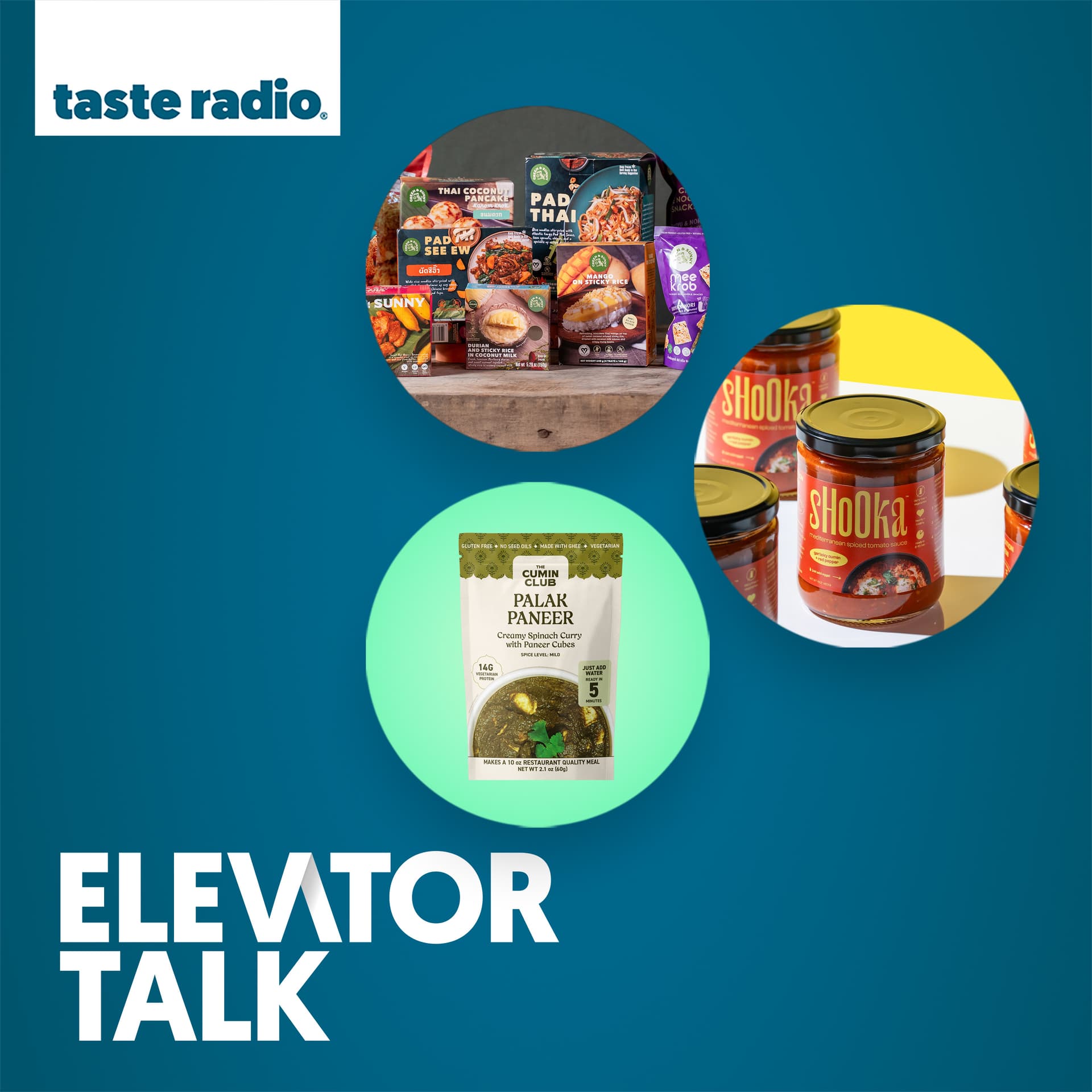
- Green & Sunny
- Founder: Warwarin Sanpulsap
- Location: Thailand
- Product Focus: Authentic Thai frozen meals and snacks.
- Key Points:
- Green & Sunny aims to bring lesser-known Thai dishes to global consumers, using local ingredients.
- Warwarin discusses the challenges of educating U.S. consumers about Thai cuisine and their marketing strategies, including in-store tasting sessions.
- Future plans include expanding their SKU count with iconic Thai dishes and appetizers.
- Market Strategy: Currently in Costco and looking to broaden retail presence beyond.
- The Cumin Club
- Founder: Ragot Bala
- Product Focus: Freeze-dried Indian meals, making them shelf-stable and easy to prepare.
- Key Points:
- The Cumin Club positions itself as a modern brand for Indian food, targeting both the diaspora and broader audiences.
- Ragot discusses their shift from DTC to omnichannel, including retail placements in Sprouts and Walmart.
- They aim to leverage their DTC success to enhance retail presence and velocity.
- Market Strategy: Focus on expanding retail partnerships while maintaining strong DTC sales.
- Shooka Sauce
- Founder: Natasha Brau
- Product Focus: Mediterranean spiced tomato sauce inspired by shakshuka.
- Key Points:
- Natasha emphasizes the versatility of Shooka Sauce as a base for various dishes beyond its intended use.
- She highlights the need for consumer education regarding shakshuka and its cultural significance.
- Plans for product expansion include experimenting with new flavors while maintaining a focus on high-quality ingredients.
- Market Strategy: Currently sold in specialty stores like Monsieur Marcel and aims to expand retail footprint sustainably.
---
Conclusion
- Ray and Caroline discuss the crucial role that innovation and community play in the success of emerging brands.
- They emphasize the importance of storytelling and consumer education in connecting with broader audiences.
Call to Action
- Entrepreneurs are encouraged to apply for future episodes of Elevator Talk to pitch their products and receive feedback.
---
Additional Notes
- Caroline Grace shares her insights on the challenges and strategies for early-stage brands in the evolving food and beverage landscape.
- The podcast serves as a platform for entrepreneurs to connect, learn, and grow in a supportive community.
---
Contact Information: For sponsorship opportunities or feedback, listeners can email ask@tasteradio.com.
Written by AI. May contain mistakes. Listen to the episode to check what was said.
Chapters
Tap a time to open that second in VOReflections on the Winter Fancy Fair
1:27 to 2:43
Discussion about the recent Winter Fancy Fair and its impact.
“this industry is such that early stage brands can learn a lot from your work with brands that you have helped scale.”
Caroline Grace's Expertise
2:43 to 4:46
Caroline shares her experience in scaling early stage brands.
“And, you know, it happens all the time where we have someone on elevator talk and the next thing you know, they're national at a major retailer or raise a ton of money.”
Current Challenges for Entrepreneurs
4:46 to 6:17
Exploration of challenges faced by entrepreneurs in 2026.
“And how do I help more entrepreneurs become entrepreneurs within this industry?”
The Evolution of Retail Strategies
6:17 to 7:20
Discussion on the cyclical nature of retail and D2C strategies.
“And I think retail is incredibly important, especially for early stage brands, both from a discovery standpoint, but also for a market validation standpoint as well.”
Introducing Green and Sunny
7:20 to 7:45
Introduction of Warwarin Sanpulsap from Green and Sunny.
“and traditional retail is still out there and it'll always be out there.”
Green and Sunny's Mission and Products
7:45 to 12:39
Warwarin discusses Green and Sunny's offerings and goals.
“She is Warwarin Sanpulsap, who is the Chief Commercial Officer of Green and Sunny.”
Cultural Insights in Product Expansion
12:39 to 14:01
Warwarin shares insights on expanding Thai cuisine in the U.S.
“What is the plan over 2026 to expand the SKU count within the U.S.”
Market Expansion Strategies: U.S. vs Global
14:01 to 16:39
Learn about the differences in market strategies for U.S. and global expansions.
“I hear about a lot of brands looking to expand from the U.S.”
Education and Marketing for Thai Products
16:40 to 18:31
Explore the importance of educating U.S. consumers on Thai food products.
“is how much people want to help each other.”
Building Authenticity and Taste in Ethnic Brands
18:32 to 19:39
Discuss the significance of authenticity in the growing ethnic food market.
“And some of them are a little bit more on the health or functional focus side of things as opposed to the taste side of things.”
Show all 23 chapters
The Cumin Club's Unique Approach to Indian Cuisine
19:58 to 21:14
Discover The Cumin Club's innovative freeze-dried Indian food products.
“So The Cumin Club is a brand that I have really been interested in for a while.”
Direct-to-Consumer and Retail Strategies
21:15 to 25:00
Analyze the Cumin Club's transition from D2C to omnichannel retailing.
“We started the Cumin Club four years ago.”
Navigating Retail Challenges and Future Plans
25:01 to 28:00
Understand the challenges and strategic plans for expanding into Sprouts and Walmart.
“And now we are moving into an omni-channel approach to target the larger population.”
Strategizing Growth for The Cumin Club
28:00 to 29:59
Learn about the growth strategy and future plans of The Cumin Club.
“So we saw this opportunity come our way and we wanted to take it, test it.”
Crafting the Perfect Messaging Strategy
30:00 to 33:19
Discover how to effectively communicate D2C successes to retail partners.
“and the data we have to date from Sprouts is still early.”
Introducing Shuka Sauce and Its Unique Offering
33:20 to 36:19
Explore the concept and product offering of Shuka Sauce and its background.
“and kind of, in my opinion, increasing that first before expanding further into retail.”
Pricing Strategy and Market Positioning
36:20 to 39:09
Understand the pricing strategy and market positioning of Shuka Sauce.
“If anybody doesn't know what shakshuka is.”
Cultural Significance and Future Expansion Plans
39:10 to 42:00
Learn about the cultural significance of shakshuka and the expansion plans for Shuka Sauce.
“And they are selling it for a little bit higher because it's a specialty store and it's tending to do really well there.”
Exploring Shuka Sauce and Food Service Expansion
42:00 to 43:54
Learn about the potential of Shuka sauce in food service and its expansion strategy.
“celebrate mixing and melding cultural flavors.”
Goals for 2026 and Retail Strategy
43:54 to 45:52
Discuss the goals for Shuka Sauce's retail footprint and sustainable growth.
“United Airlines was serving it for like four years on their menu before people kind of even really started getting interested.”
Versatility of Shuka Sauce
45:52 to 47:39
Understand the various culinary applications and versatility of Shuka sauce.
“The one question that I have about shakshuka in general is that it is, I think Caroline mentioned this word, kind of a niche opportunity.”
Opportunities and Market Focus
47:39 to 49:24
Examine strategies for product messaging and market opportunities for Shuka Sauce.
“For fall, I made pumpkin spiced ravioli with the sauce with pumpkin puree and cream.”
Entrepreneurship and Innovation in Food
49:24 to 54:06
Explore the role of entrepreneurship in food innovation and market evolution.
“And so I think that's really where the gap is.”
Transcript
Automatic transcript. May contain errors.0:00Level up your CPG business with NonBase Education, the new insider exclusive learning portal from Nonbase by BevNet. Access on-demand expert-led courses designed for founders and operators in food, beverage, beer, and beyond. Learn retail economics, margin strategies, fundraising, and more from industry leaders anytime, anywhere. Visit nonbase.com slash education and start learning today.
0:34Hey folks, I'm Ray Lateef, the editor and producer of BevNet's Taste Radio podcast, and you're tuning into the latest episode of Elevator Talk, the series that profiles early stage and disruptive brands from across the food and beverage industry. Today's episode will focus on three food brands whose entrepreneurs will have an opportunity to hear feedback and advice from our co-host for this episode. That's Caroline Grace, the founder of Product and Prosper. Caroline, it's so great to see you again. Likewise, Ray. I'm so excited to join you. I think this is my third one. Isn't that crazy? We are so honored for you to be joining us for Elevator Talk.
1:13Your first two episodes or the first two episodes that you joined us as a co-host were so amazing. And I'm like, can we just have Caroline just do this all the time? Because she's so good. Always well-prepared. the research you do on the brands ahead of time is so great. And, you know, your experience in this industry is such that early stage brands can learn a lot from your work with brands that you have helped scale. So I really appreciate you joining us. And it was so great meeting you a couple of days ago. Actually, was it yesterday or no, it was two days ago? I don't know. I can't remember.
1:47We were both in San Diego for the Winter Fancy Fair, which I thought was a great show and And a really good opportunity to meet a lot of founders and new brands that I was not familiar with. I assume you had a pretty similar experience. I totally agree. I think it was a very approachable show. The pace was, I know a lot of brands, the feedback that I heard was that the brands thought it was a little bit slow. But I thought it was a really, you could have longer conversations with buyers and other brands. And I liked it a lot. I thought it went well. But back-to-back-to-back podcast for you, lots of talking, lots of pitching, lots of good things.
2:22It's been a busy, busy week. It has, but I love elevator talk. This is probably one of my favorite things to do at BevNet. Meeting founders when they are brand new or maybe less than a year in gives me an opportunity to help people as much as we can as they're thinking about scaling their businesses. And, you know, it happens all the time where we have someone on elevator talk and the next thing you know, they're national at a major retailer or raise a ton of money. And I'm not saying it all happened because they were on the show, maybe a little bit. But, you know, being a little bit of being a small part of that journey where, you know, someone starting out and then they are able to build their company such that they are now the ones that everyone's talking about as opposed to, you know, one of the thousand new brands that launch every year.
3:12So that's the goal. Yeah, absolutely. You know, for for folks who aren't familiar with you or what you do and your support of early stage brands, just tell us a bit about your experience and history in the industry. Yeah, absolutely. I am the founder and CEO of an agency called Product and Prosper. I essentially own an ecosystem, a portfolio of brands, and a portfolio of agencies. What I really specialize in is building brands for omni-channel scaling. My background is in retail sales and retail strategy. And I typically talk about kind of three different or four different things. First is growth strategy, right?
3:48How do you grow a brand in this day and age? Second is independent retail. I'm a big, big fan of independent retail, especially through a platform called Fair. If you guys are not familiar with that, basically like wholesale, Amazon for wholesale. And then I also am a big, big proponent of feedback and iterative testing throughout building a brand. And then the third thing that I really love to talk about is building a personal brand in connection with a product-based business. And I think that is so powerful in this day and age. And I think we just saw it so much at the Fancy Food Fair. You know, the people that we connect with the businesses, especially the emerging products.
4:29I don't know if you saw anybody that you were really, you know, inspired by. But I remember seeing a bunch of people that I know from LinkedIn and Instagram and even TikTok. I love being able to put a face to a lot of the brands that are out there. So a little bit about me, a little bit about my background. And I'm doing lots of fun, interesting things, but I overarchingly just really focus on how do we scale emerging brands to be sustainable? And how do I help more entrepreneurs become entrepreneurs within this industry? Yeah, it's not just elevator talk where you can be as visible as you are.
5:02You have a great newsletter as well that a lot of people subscribe to. And in that newsletter, you share insights about what's happening on the ground and in the trenches for early stage brands. So just for some context and perspective, whether it was at the Winter Fancy Fair or just in general terms, what are you hearing from entrepreneurs about what is most challenging right now here in January of 2026? Certainly, last year, a lot of folks were talking about tariffs. I'm sure they're still talking about it this year. But from your perspective, are there one or two things that folks need most help with and how are you helping them address those challenges?
5:41That's a really good question, right? We're very shortly into 2020, so I don't know if I have a fully formed answer quite yet. But I've actually been seeing a lot more return to D2C. I think that I'm starting to see a lot of TikTok shop conversation happening. And a lot of, there's a lot of conversation, especially in early brands around UGC and content. I mean, we've been watching AI created content for a very long time. How is that going to interact with things like TikTok shop, like UGC, that sort of thing? So actually, over the last few years, I've been watching kind of this return to retail conversation that's been happening.
6:22Every brand wants to get into retail. And I think retail is incredibly important, especially for early stage brands, both from a discovery standpoint, but also for a market validation standpoint as well. Plus, it exponentially kind of grows your business across multiple different channels if you can sustain within retail. But now moving into 2026, I think because maybe a reaction to the tariffs and the impact of tariffs on margin, there's actually been a lot more conversation recently in my circles with my brands and clients that I see around D2C and D2C level strategies, even paid ads, and a move back to kind of e-commerce level iterations of growth.
7:03Isn't that interesting? It feels pretty cyclical in that in 2020 and 2021, everyone was talking about D2C and e-commerce, and here we are in 2026. And for different reasons, people are looking at those opportunities as real ways to scale and grow your business. Certainly, brick and mortar and traditional retail is still out there and it'll always be out there. But for early stage brands, testing and learning online seems like a pretty good strategy at this point. And I know we're going to be talking about it with our entrepreneurs in this episode. We have three really amazing brands and founders behind them.
7:40Are you ready to meet the first? Of course I am. I'm so excited. Outstanding. Let's get to that person. She is Warwarin Sanpulsap, who is the Chief Commercial Officer of Green and Sunny. Warwarin, thanks so much for joining us. Thank you for having me, Ray. Thank you. Coming in all the way from Thailand, is that correct? Yes, that's correct. I'm based in Thailand. Okay, so it's 1 o 'clock here in Boston. What time is it there? It's 1 o 'clock in the morning. Well, I hope you're a night owl because otherwise you're going to have to get some extra sleep whenever you hang up on this call. Green and Sunny, I love the name.
8:27And I think what you're doing is pretty amazing from a product standpoint. Tell us all about what you do. My name is Wara Warin and I'm the chief commercial officer of Buono, Thailand. I've been working with the company for 15 years, growing alongside the business and helping shape how Thai food reach global consumers. Buono is actually based in Thailand and we have over 20 years of experience in food manufacturing. Since 2004, we have been stocking American grocery aisles through private label Thai food products. But now we are stepping out from behind the curtain with our own brand, Green and Sunny, a more adventurous range of frozen ready-to-eat meals and snacks inspired by Thailand.
9:12And our mission is simple. we want to bring authentic Thai food to global tables using our local ingredients sourced by farmers who are in Thailand and using the traditional Thai recipe and craft it to taste just like fresh and cooked Thai food. And we also want to introduce a lesser known Thai dishes, the food that Thai people actually eat at home to the US market and the world. I love everything that you're doing, and I'm a huge fan of Thai food. What's really interesting is that some of the products I'm looking at on your website aren't necessarily products that I've seen before in Thai restaurants.
9:53They seem a bit more authentic to what Thai food truly is. A Thai coconut pancake? What is that? It's basically a dessert that we usually have on the street. Nobody will cook it at home. It's this particular oven to use that. And the ingredient, the main ingredient is coconut and some rice flour. Yes. And we kind of like cook it in a very special stovetop. Very cool. How many products do you sell at this point? Actually, we have market worldwide. U.S. is one of the biggest markets. So in the U.S., we have Pad Thai. Under Green and Sunny brand, we have Pad Thai and we have the snack called Micron.
10:39which is basically a Thai-style crispy rice cracker snack in sweet and sour sauce. Very cool. Caroline, you know, this is a great time to be an American consumer because I feel like the global flavors, the ethnic cuisine that we're seeing come to market and in a really convenient form is just, it's happening everywhere. It's fantastic. Absolutely agree. I am so curious. You said that previously you were guys for a co-manufacturer, right, for brands in the U.S., is that correct, or you did private label for them? I'm curious about as you move into your own brand and expanding your own brand globally, what's been the easiest part about it and what have been the hardest parts about expanding globally with your own brand?
11:33Of course, the hard part is about how to build the brand of Venice to American consumers and worldwide consumers, actually. Because like I mentioned before, we create the lesser known Thai dishes. So that's where we need to focus on educate the consumer of the product that they are less familiar. We currently use a simple storytelling to explain where the dish comes from and how Thai people enjoy it. And we also do kind of like sampling and tasting in store as well. So there's a lot of marketing activities in place that we have to implement when we're launching product under our brands. But on the other hand, on private labels, it's more words about the formulation, the pricing, and how to make it work to the retailer.
12:30And you said that there's only a limited number of SKUs within the U.S. market right now, right? Is there any sort of plan of action? Because I want to find these in my own grocery store, my local grocery store. What is the plan over 2026 to expand the SKU count within the U.S. market? So looking ahead into 2026, we focus in expanding both SKU count and product categories to better represent our range. On the ready-to-eat meal, we plan to introduce more iconic Thai dishes, for example, patsi eel. I don't know whether you're familiar with the patsi eel or the item like cow soy, which I believe that would allow the consumer to experience well-loved Thai dish in a convenient way.
13:18And we're looking to expand more range to frozen appetizer as well. Ray has mentioned kandong kok, which is a dessert, but for Thai people, we have a lot of appetizer. For example, the corn fritter we're serving together with tamarind sauce. And we also plan to introduce like sweet potato balls. Yes, that is very, very beloved by the local Thai people. Oh, my goodness. I'm hungry. Ray, how does this happen every time we do this? I know my mouth is watering and I feel like we need to take a break just to go get some green and sunny. I know, right? It's curious because I think, you know, I hear about a lot of brands looking to expand from the U.S.
14:07into global markets or vice versa, from a senior market outside of the U.S. into the U.S. market. How do you, what are some of the differences between U.S. retail and the U.S. market versus some of the other markets that you're currently in globally? globally? I think each market is very unique in terms of consumer preference. For example, US market, for me, is an early adopter of any kind of, you know, Thai products, which when we go to the European market or Australian market, is usually about three to five years behind the US. So US is kind of like our pirate run for testing the water, testing the market.
14:52We pretty much confident in bringing the most adventurous range to the U.S. first because we believe that the customers are more open and very adaptive to the new concept and new ideas. Interesting. And I'm curious within the U.S. market, just generally about your strategy, how much time and even spend are you focusing on D2C versus retail expansion? And are you focusing by region? How are you breaking down your strategy for U.S. market expansion? So right now, actually, we are available in Costco, which has been a great platform for us to introduce screen incentive to a wide audience. But looking ahead, we plan to expand beyond Costco and into regional supermarket chains.
15:46So I believe this will take around 6 to 12 months time in order to expand our distribution and our channel beyond Costco. So it sounds like it's primarily retail focused right now within Costco? Correct. I got it. Are you on any other channels within the U.S. market? At the moment, no. Okay, interesting. I'm curious, what are the general goals for 2026? The general goal for 2026 is to expand both SKU count and product categories for us. And yes, well, we are lucky to have a strong innovation pipeline behind us. So we have lots of ideas that we already developed and we are ready to just launch it in a very short time.
16:38Got it. I think, and Ray might agree with me, I think one of the greatest things about the CPG industry is how much people want to help each other. I think it's quite unique to this industry. What are you looking for help with that maybe Ray or I can connect you with or support you with? Basically, like I mentioned, it's about the education that we, I think it's a challenge for us at the moment because, for example, the item that I mentioned about the cornflitter, most of the audience, they maybe don't understand. So I think the area that you can advise or help us with is how to educate the U.S.
17:19consumer to open or to adapt with the new concept of Thai products. Yeah, I mean, I think demos are one of the first places to start, especially within Costco. But I think this is where our DDC omnichannel strategy and an omnichannel marketing strategy really comes into play. I mean, ads are always one of the best ways to educate a consumer. You have to show a consumer about four times for them to understand a product. I think through micro-influencers, through TikTok and Instagram, that's a very nice way to educate. And I think also coming on shows like this, there's not just the D2C level consumer.
17:56There's also the industry consumer, which I like to talk a lot about. And those are really truly the first movers within CPG who, if you can get the industry to understand and to get excited about what you're building, I think it very easily translates to the D2C side as well, or the consumer side as well. Yes, that's a very good advice. Thank you. 100 % would agree. And I think sticking with the authentic angle and sticking with, you know, taste as your primary reason why people are buying and trying your products is, is the way to go. You know, there's a lot of new ethnic food brands that are launching in the United States of late.
18:37And some of them are a little bit more on the health or functional focus side of things as opposed to the taste side of things. And I think what Green and Sunny represents just in the conversation that we've had so far is really about authentic taste and quality. So from my perspective, that's what really is driving me and driving my interest for this brand. And I can't wait to see it in Costco stores near me. Where in the U.S. are your Costco stores located? Midwest, Northeast, and Bay Area. Okay. So Northeast is coming soon, I think. Okay. Yes. Great. Well, thank you so much for taking the time to sit down with this war-war.
19:19And I feel like this has been a long time coming. We've been in touch with Adrienne, who I know you work with on a PR level for some time. And so I'm really, really glad that we had this opportunity to sit down. Please, please stay in touch. Let us know if we can help in any way. Yes. Thank you very much, Ray and Caroline. Thank you. I will do. I will stay in touch. Thank you very much. Thank you. Let's move on to our next guest for this episode of Elevator Talk. His name is Ragot Bala. He's the founder of The Cumin Club. Ragot, it's great to see you. Likewise, Ray. Thank you for the opportunity.
19:57And nice to meet you, Caroline. Likewise. So The Cumin Club is a brand that I have really been interested in for a while. the business itself is pretty remarkable in that you do a couple different things, actually probably more than a couple of different things in how you get these products out to consumers. Tell us all about what you do and your route to market. Thank you, Ray. We are the Cumin Club. I'm one of the co-founders and CEO. We are a better for you Indian food brand. We make Indian curries, lentils, rice dishes, simmer sauces. And what differentiates us is the packaging is freeze-dried.
20:41So we cook it, freeze-dry it, which is the best way to preserve any food, just like fruits, vegetables, miso soups, and smoothies. We are bringing a superior food preservation technology to something near and dear to us, which is Indian food. So once it's packaged, it's shelf stable and it's super light. Just add water and cook for five minutes. Restaurant quality Indian food at home. And we hope that everyone has a cumin club in their pantry. And the day when you don't know what to cook or what to eat, you know, you can just whip up a pack, add water, cook for five minutes, add your own ingredients, make it your own as well.
21:27We started the Cumin Club four years ago. We have been focusing primarily on direct-to-consumer. And about a year ago, we started an omni-channel approach, Amazon, some retail stores. And we are quite lucky to be in Sprouts nationwide as of two months ago. And Caroline, I'm looking forward to talking to you about all the omni-channel questions and confusions and strategies that would help us grow from here. You're also in Walmart too, aren't you? We are in 270 Walmart stores as part of a test. Okay. So Caroline, I think I just need to take a backseat on this one and let you go at it. I'm actually quite familiar with the Kuming Club.
22:16I remember, I think you guys were looking into retail strategy about two years ago, and I chatted with you guys very, very briefly. And so it's wonderful to hear that Sprouts has taken you on nationwide. I would assume that's through the innovation set. And then you went into the main shelves. We pitched for both the lines, and we got placed in the main line. Got it. Got it. Congratulations. That's amazing. And Walmart. Very different target markets. Very different channels, right? One conventional with Walmart. and one much more natural premium. And I'm also seeing on your website, as a direct-to-consumer first brand, you have quite an alternative business model for a direct-to-consumer brand because you're focusing on meal kits and meal delivery services as kind of your primary offering on DTC.
23:05What was the thoughts around that, the strategy? How has that worked? And just to start on the DTC side, are most of your consumers subscription-based now or are most of them still first order consumers? Yeah, sorry, to start with your question about the offering. In retail, direct to consumer, it's actually the exact same products. So it is, we call it a meal kit mainly because we also offer cumin rice and, you know, the condiments that go with the meal. So you can make a complete meal out of our website. And of course, in retail, we always have to start with a few SKUs and try to build our way to having a bigger shelf presence.
23:49So when we started during Pandemic, it made a lot of sense to offer a subscription and focus on subscriptions. Everyone's working from home. Everyone's looking for a quick meal solution. We also started with the Indian diaspora. When we started the brand, we had a very clear hypothesis. We want to build a global brand for Indian food. And this is my favorite exercise, Ray and Caroline. I'll give you five seconds. Can you think of one Indian food brand that comes to mind? There is usually not. And we think there can be a global brand for Indian food. And we wanted to start with the diaspora and get their seal of approval.
24:40We did that over the last three, four years. We have slowly started seeing more and more non-Indian customers coming to the cumin club and enjoying the cumin club. It also gives us confidence to go into retail where we are targeting the larger population. So, Caroline, long story short, it made sense to start with subscription and online business because we focused on diaspora. And now we are moving into an omni-channel approach to target the larger population. Got it, got it, got it. I think it's super smart. And I mean, I was going to say the Cooming Club when you asked me. We guys are right here, of course.
25:24I'm curious as you were looking to expand into Sprouts and Walmart and bigger retail chains how long did you spend building in independent retail and alternative retail? Did you start in places like Indian grocery stores and did you get through those distributors? What was the strategy as you were building up into Sprouts and Walmart? Absolutely we started with fair.com and a couple of local Chicago retailers where we can go meet them and have a longer conversation with. That helped us iterate on the packaging. You know, coming from a direct-to-consumer business where we have 30 seconds of ads to tell the story, to talk about why we are different.
26:09And then when you go into retail, it's just packaging. We do not get to make a second impression. We don't get to storytell. So packaging we knew was very important going into retail and the smaller and boutique retailers helped us a lot. The one thing I really love is how we can call them and they would take the time to talk to us. Some of them have tried the product themselves before putting on the shelf. So a lot of good feedback came out of it. And we are a big proponent of fair.com as well. So yeah, we started with Boutique and three to four months later, we started pitching to more retailers and then we signed up with Kehi to distribute.
26:58I love that trajectory. I mean, that's kind of the playbook, right? That's the playbook that I like to talk through and talk about. Now, what was the most surprising thing about launching into Sprouts and into Walmart coming from boutique independent retailers? Yes. We always wanted to be in Sprouts, Whole Foods, Wegmans, and the natural ecosystem where we think we get to build some traction, prove the value, et cetera. but at the same time Walmart is seeing in their data that South Asian is one of the fastest growing subcategories and they had put together a search for South Asian brands about 40 of us got a chance to go to Bentonville and pitch to all Walmart buyers and long story from my past life, I was a consultant for Walmart working at Bentonville, Arkansas.
28:01So we saw this opportunity come our way and we wanted to take it, test it. And with 270 stores, it's about figuring out what differences exist. It's about understanding what mass market retail or larger retailers can look like a few years down the line. So we look at it as an experiment. I love that. And oh my goodness, you've been on both sides of the aisle here, basically. What is the plan for 2026? Is it expanding velocity through the current store or is it focusing on new account acquisition and new bigger retail acquisition? Absolutely. Starting with direct-to-consumer, that's still a big part of the business, and it's growing up about 50 % year over year.
28:51So a lot of focus and energy go into it. And Caroline, you mentioned TikTok Shop. That's another channel we are adding on. So at this point, we are on retail. We are in D2C, Amazon.com, Walmart.com. So it's a lot of channel management. And while we do that, we are also looking to increase velocity at Sprouts by doing more demos and also looking to add about a thousand more stores in the natural space and using the same distribution we already have. Kahi has opened up about 10 DCs for us, and we want to be able to pick up more stores in those DCs. Wow, there's so much on the plan. What are you looking for help with that either Ray and I can help with or connect to you with someone in our network who can't?
Read the full transcript
29:45Absolutely. One thing we are being a D2C first business, we're always looking to refine our storytelling to show how direct to consumer. We have sold three million packs online and we want that to count when we talk to retailers. and the data we have to date from Sprouts is still early. We've been on the shelf for just two months. So crafting that story using the D2C success to go to more retailers is something we are always looking for more inputs on. And I would love to reach out to you offline. I mean, I think as part of that message and as part of that communication strategy, you have to figure out why people are most interested in buying your products.
30:33And I think you probably have enough data to an anecdotal data to know why people are excited about the Cumin Club. From my perspective, I mean, I love when I can open my pantry, not know what I'm going to have for dinner and say, OK, great. I have white rice and I can just make some, you know, quality, authentic Indian food and have the whole meal done under 10 minutes. How much does convenience play into that messaging strategy? I was scrolling through your Instagram page and there's one post that about you can have dinner ready in five minutes or five ish minutes. But for the most part, most of your posts are about the food itself and how high quality is and how delicious it is.
31:11So where does convenience fit into that message? Yeah, absolutely. So convenience is we think of it as the gatekeeper. If we have the most authentic food, but it takes two hours to make it, it's going to be a problem. So, Ray, in a lot of our ads, we talk about convenience and, you know, just being able to sit in the pantry. We like to call it ramen, but Indian, you know, it's dry, it's in the pantry. And the best part, you can add more ingredients and make it your own, right? So we talk a lot about convenience in our ads. But I think for our Instagram followers or customers, the taste is ultimately the reason why they're coming back.
31:58And something that we are extremely proud of because freeze-drying technology does wonders when it comes to preserving the quality of spices. It's not sitting in a liquid pouch and degrading over time. It's just going to give you a punch right in the first spoon. And it's a very well-rounded spice profile. Yeah, I think the other question that I had was, and this is actually more for Caroline, it feels like the human club has really reached this inflection point right now where there's a lot of opportunity and you're attacking that opportunity or at least going after that opportunity in natural retail and in mass retail, obviously D to C.
32:39But, you know, Caroline, I'm, you know, having seen brands at this stage of their journey, I wonder about whether you have any insight on pressing the gas. I know Rogot talked about being in another thousand stores versus sort of pulling back on the reins. And I guess knowing how fast and how quickly you should be moving at this point in their journey. Yeah, right. It's a really good question. I think when I hear brands launching into bigger retailers like Sprouts, like Walmart, typically my first reaction is to build velocity within those accounts first before expanding to other chain retailers.
33:22But when we're thinking about overall growth strategy when it comes to omnichannel and especially within retail, you always want to think, too, around rounding out your entire, like it's a balloon, basically, that we're building and we're blowing up to expand the market reach and the market presence of the Kumin Club within the U.S. market. I'm curious if actually focusing more on an alternative retail chain like for retailer or wholesale distribution network, excuse me, like universities, especially combined with your TikTok shop push might be a really interesting strategy for 2026 while focusing on building velocity within Sprouts and within Walmart primarily.
34:04and kind of, in my opinion, increasing that first before expanding further into retail. Absolutely. Find unique channels where we can have a more straightforward path, right? Yeah. And I think stand out in store. I think, Caroline, that's a really good point because, you know, you think about a Walmart and you think about its sprouts and you think about just how many brands and products there are in those stores and how easy it is to maybe get lost. And, you know, when I visit a smaller retailer with a curated selection, it feels like, okay, they brought this in for a specific reason. They vetted this product.
34:41It's a product that speaks to me because, you know, they know who I am as a customer of that store. So I love that. I think we could talk for another two hours, three hours or so. But I've really appreciated this time with you. Thank you so much for joining us on Elevator Talk. definitely want to stay in touch and know that you have big fans here at BevNet. Anytime we get a sample of your product or someone sees your product in stores, they're just like, oh, Cuban Club, we love this. We love this. We love what this brand is doing. Thank you so much, Ray. Thank you, Caroline. Wow, two for two. Let's go three for three with our final guest for this episode of Elevator Talk, Natasha Brau, who is the founder of Shuka Sauce.
35:24Natasha, it's great to see you. Hi, Ray. It's great to see you again so soon. and nice to see you for the first time, Caroline. Happy to be here. Three times, I think, in about a month's period because we saw you at Nosh Live where you participated in the Nosh Pitch Slam and it was fantastic. And you blew me away and you blew everyone else away. Your presence on stage, the way you talked about sugar sauce, the opportunity, the product itself was just so incredible. And then I got to see you at the Fancy Food Show as well and was tasting some of your product and in particular your spicy variety.
35:57I can't speak. My mouth is, my tongue is on the floor right now. It was really, really impressive. So Shuka sauce, please give us the short version of what you're all about. And then we'll go to Caroline and talk all about what she thinks about the brand. Yeah, definitely. So Shuka is a Mediterranean spiced tomato sauce based on a dish called Shakshuka. If anybody doesn't know what shakshuka is. It's a Mediterranean brunch dish that has poached eggs right in a bell pepper, chunky tomato sauce with garlic, onion, and spices. It's usually served in a pan with cheese and herbs on top and crusty bread so everybody can scrape the pan clean and get all those flavors.
36:41And I started the company about a year and a half ago while I was in grad school in upstate New York. I just recently moved home and brought the business with me. So I'm excited for people to be able to make shakshuka in eight to 10 minutes. Shuka is just the sauce. You add the eggs or you can do what I like to call mix it up and shuka your way by adding sausage in the pan first, other things like beans, potatoes, lots of different cheese, herbs, and your favorite bread. But not just, you know, getting to share this with people and have them make shakshuka if they've never been able to make it before.
37:17But also, this is a really fantastic product that's seed oil free, preservative free, and an elevated tomato and bell pepper flavor that can be a really good replacement for basic tomato sauce. Okay, two things. One, did you have any prior experience in public speaking or present? I mean, you're just such a natural at it. Thank you so much. Yeah, I mean, I used to be a performer. So I started I was a dancer when I was younger. and in like the creative arts. So that was number one, stage presence. And then number two, in school, I did a lot of presenting because I did design. So I was always presenting design work, communicating ideas in a visual way.
37:58And then also pitching. I did a lot of business pitches in college. So yeah, I love to just communicate challenging ideas in a really clear, concise, and memorable way. And that's why I love doing, I love like starting my brand in CPG. Okay. So listeners and viewers, please understand that presenting is a very valuable skill. Second, where are you sold right now? What's your price point for sugar sauce? Yeah. So because I just moved back to Los Angeles, got started here with a new co-manufacturer. My first amazing store in Los Angeles is Monsieur Marcel at the farmer's market, The Grove in Los Angeles.
38:37they're a fantastic grocer that like you were talking about before curates their products and vets them make sure that they're really confident in what they're selling so it's been amazing working with them um in specialty stores off of fair which is our major like wholesale specialty chain um like channel we're 14.99 srp and so there's four servings in a jar if you're making it for yourself, you can get about three meals out of it, three to four meals. And then if you're having people over, you can get about six to eight eggs in a pan with one jar. And they are selling it for a little bit higher because it's a specialty store and it's tending to do really well there.
39:21I think when people are really looking for an experience and something that's elevated and new, it can tend to do well. And also, I think a through line that we've been talking about today is cultural convenience and discovery. So stores that focus on that, we see a lot of success there as well. So Caroline, when I saw you at the Winter Fancy Fair, I was like, oh, yeah, there's this brand, there's this brand, you got to go check out Sugar Sauce, especially because Natasha is going on the show on Wednesday. And I hope you did. I hope you got a chance to try the product. Because Because again, of the two SKUs, both are great.
39:58But the spice you want in particular, I just started thinking about it in a completely different way. And the versatility of what you could do with this sauce as well. So I'm going to shut up and find out whether or not you actually tried the product. Of course I did. It was actually yesterday. I was looking for any sort of like lunch sort of snack. And I went over to your booth and I met your lovely colleague who was running the booth. and the product is absolutely delicious. I don't know why I didn't really connect it at the time. I guess maybe too many fluorescent lights, but I didn't connect it with the Chantuga dish.
40:34I am so curious because this is quite a niche dish. It's a specialty product. What is your expansion strategy? How do you imagine expanding the skew count? Are you going to go laterally? Are you going to go horizontally? How are you going to build this as you get into more retailers? to kind of expand the entire brand? Absolutely. So somebody who grew up kind of in branding first before going into CPG, I've put a lot of thought into that. And that's a question I would get at a really early stage when starting to. So I think expanding horizontally first before going vertically is what my plan is.
41:15Because Shaksuka, you know, the reason why I saw that there was an opportunity to not only share shakshuka with people, but also share the conversation about why this dish is so amazing. It exists in almost every country around the bottom of the Mediterranean Sea, and it's different everywhere you go based on who's making it, where they grew up, what cultural differences they have in them, how their parents grew up. It can be different everywhere you go, and it means all mixed up in Arabic. So for me, shakshuka itself is a symbol for cultural cooking creativity. What we're trying to do is engage in the conversation that we can celebrate that, and we don't have to shy away from being so specific when making this dish, and we can celebrate mixing and melding cultural flavors.
42:05So our product line expansion will reflect that, And some of our flavors will be really experimental and reflect celebrating different cultural flavors. So, yes, spicy is our second SKU. We're just almost launching it. We debuted it at Fancy Fair. And those next flavors will be a little bit more experimental, like I said, before we start doing some different format products. Ooh, that's so exciting. I actually didn't know that about Stachuga. I just didn't know. do you see food service as a key path to expansion? Because it seems like whenever I experience Shag Fuga, it's really in a brunch restaurant.
42:48You know, it's usually when I'm going out on Sunday, you know, with friends. Do you see food service, especially in LA, would be wonderful as an expansion opportunity? I do. I think in the same way that customers have seen this dish before, and maybe it's been a little daunting for them to make because they know how long it takes to make good tomato sauce and get all the ingredients. I think restaurants also see that this is a really popular, you know, new experience that customers want to have at a restaurant. Restaurants are already doing it. And it can be a very, very helpful thing in restaurants if they already have the sauce, because just like customers can make it in eight to 10 minutes, It can streamline restaurants process making the dish as well.
43:35And I got a lot of inquiries about food service at Fancy Fair. And it is something that I've been thinking about. So, you know, it would be amazing to have shuka kind of be a name in food service as your go-to shakshuka sauce to get started. And we've seen shakshuka on various brunch menus. We even saw it on airlines. United Airlines was serving it for like four years on their menu before people kind of even really started getting interested. So I definitely think it's in the pipeline. I love that. What's the what are the goals for 2026? For 2026, it's definitely expanding our retail footprint on the West Coast and up the West Coast and expanding in business, too.
44:20So I want to make sure that as I'm getting into retail, I'm doing it sustainably in a way where I can grow with those partners and be successful doing so. So that's my major goal, kind of growing the team a little bit and getting some more things done. I love it. And then final question I've asked everybody, what are you looking for help with that either Ray and I can connect you with or support with? Yeah, just that. I mean, I think a lot of these CPG founders are either solo or really small, and there's a lot to do. And we see that our idea is catching on. It has a lot of interest, and we want to make sure that we can do it in a way where we continue to stay successful and also capitalize on the momentum that we have going.
45:07So I think help in just that, like making sure that my retail accounts are really strong. I'm growing sustainably, making sure operations fit that, which I just got a new command. So we've got a lot to make sure it can hold up. And I'm really excited. Clearly, I'm a big fan. I should be more objective about how I talked about brands. But I think shuka is a really interesting opportunity for consumers to experience shakshuka in a really convenient way and sort of a modern way, too. I mean, there are other brands out there that make a shakshuka sauce. I think the way you're approaching this food is a really approachable and modern way.
45:52The one question that I have about shakshuka in general is that it is, I think Caroline mentioned this word, kind of a niche opportunity. And when I see your jar, I almost think versatility is the, you know, the BHAG, right, for this brand. You know, how can I use this product in different ways? Can I use it as a, you know, as a tomato sauce for pasta? Can I use it as a dip? I think I mentioned to you at the Winter Fancy Fair, I was like, I would eat this as a salsa. I know that's sort of taking your eye off the ball because, you know, this is a pretty straightforward thing. Just use it, just add eggs.
46:31It says it right on the front of your pack. But, I mean, are you thinking about the potential for shuka to be something more than just, you know, a base, a foundation for the shakshuka dish? Absolutely. And that's why when I created the brand, and I'm not sure if I noticed, but because I went to design school, I decided to take on the challenge of doing all of our branding myself with a lot of input and with a lot of research. Um, but that's why I, I did name it Mediterranean spice tomato sauce as our descriptor instead of shakshuka sauce, because I felt that saying shakshuka sauce, um, if you don't know what it is that it immediately deters you from discovering if those people aren't looking for that.
47:17So, um, it is inspired by shakshuka meant to use for shakshuka, but also meant to be your new household tomato sauce that exposes you to new cultural flavors. And for me, I don't want people to just make shakshuka, but I want them to use this as their sauce. So we love putting it on other things. I make shakshuka pizza with it. For fall, I made pumpkin spiced ravioli with the sauce with pumpkin puree and cream. My dad's Italian. He just puts it on his pasta sauce. He can't help it. and we even dip things in it. So I've dipped like chicken tenders, mozzarella sticks. I collabed with a great vegan brand, Sunday Supper, and we dipped their mozzarella sticks in it at one of the events and it was so good.
48:03So a lot of people say they wanna dip chips in it and I think that's fantastic because it is a healthy, really fresh tasting sauce that I would love people to experience shakshuka, but once you have it, once you taste it, you get an extra jar just to keep it in the pantry when you want to put it on anything that you're like looking to add tomato to and i want to go back to caroline for a sec because i think this is where user-generated content uh ugc could really help the brand identify uh its messaging strategy and why people are are buying it how they're using it but again you know i think there's some risk there right and in that people who want check shuka are going to know this is the brand I want to go to.
48:47But Caroline, I mean, it's, it's a, I think it's a tricky question, right? Is in which direction do you go? Do you stay, you know, straight and narrow for the primary use case here, or do you incorporate other uses into that messaging strategy? I think it depends on, I mean, I think like Natasha said, if you are, it sounds like you are a solopreneur or you have a small team around you, it's, there's nothing but opportunity here. and it's about which opportunities do you really focus on. When we are developing a new SKU, inventory is a massive expense and R &D is always a massive expense. So for where you are right now, I would probably recommend actually doubling down on the familiar use case and then expanding that through, for example, if you build out a subscription network, then you could start talking about how alternative uses of how to put the product on pizza, for example or ravioli or that sort of thing um but yeah i i mean natasha i'm really impressed by you i think like ray said your pitch skills are like unbelievable oh my goodness you should be hosting this what the heck um and i i just think that there's there's nothing but opportunity especially within the ddc space even with just one or two skews right now that are focused on on shakshuka and really owning that market and read, re like, and putting that back into a daily consumers kitchen is really going to be, I think the key primarily.
50:17Absolutely. And I think what, what we talked about for a second was that like there are brands out there, but what I want to do different is really show why shakshuka matters so much and how it can add to your kitchen and why we should be eating it. And so I think that's really where the gap is. And that, that's my, my primary goal. Thank you so much. And I think just to just to run this out, you know, your price point is a little bit higher than I think some people would expect for, you know, this type of product. But in a day and age where I think people are a little bit more cautious about spending money and going out to eat, especially for brunch, I mean, brunch can be, you know, you got two, three people and it's well over$100.
50:58I think if you have this high quality shakshuka sauce at home, and you can make it for three or four people for essentially$20, the jar and some eggs, I think it's definitely a more reasonable opportunity and a more reasonable price for that brunch. I'm so glad that we had this opportunity to speak, Natasha, and a little bit more of an extended opportunity on Elevator Talk. Thank you so much for taking the time. I definitely want to stay in touch. And are we going to see you at Expo West? Are you going to be at that show as well? I think so. in one way or another, I'll definitely be there. Yeah, I always recommend for early stage brands, you know, the booth is quite expensive.
51:38So walking the show floor is not a bad thing. And just meeting up, just making sure that you are setting up meetings ahead of time and talking to people you want to ahead of time. So I think, you know, please reach out to Caroline, myself, or anyone else at BevNet. If you're looking to speak with someone at that show, we can help set up that meeting for you. I definitely will. Thank you. And Caroline, I'll definitely reach out. Would love to talk to you more as well. Yeah. No, likewise impressed with what you're building and tasted great. Thank you. I want to launch today. Yeah. Yeah. I wish I got to give you a jar.
52:09I'm glad you got to taste it and thank you so much, Ray. It's always so great to see you. You as well, Natasha. Thank you. This is precisely why I love this show. And I mentioned why I love this show so much because you are introduced to really innovative ideas and concepts and brands and then get to talk to the founders behind them. And it's kind of humbling, honestly, for me, because I'm not an entrepreneur. And I get to highlight what brands are doing and talk to them and offer some feedback and advice just based on my own experience in this industry. But they are really changing the face of food and beverage one brand at a time.
52:46And you just think about how categories evolve. I was talking to some folks yesterday at the Fancy Fair about just the evolution of refrigerated snacks and how five or six years ago you wouldn't have seen a ton of those brands that are now in those spaces in different retailers and different channels as well. And it's entrepreneurs that are driving that change. Absolutely. I mean, I think entrepreneurship is all about innovation and hyper-specific niche ways and how to bring that into the mass market. And, Ray, I really admire you. You are such a champion for this stage of business, which is such a critical stage when you're bringing this innovation to, especially into retail and into the bigger network.
53:30So again, thank you. I'm really, really honored to be here yet again. I'm excited for the next one. Maybe we'll have to do 2027's inaugural starting episode. I'm going to be bugging you well before 2027, Caroline, to come back on this show. So I really, really appreciate all the insights and experience that you bring to this show and offer to our founders and entrepreneurs. It's extremely valuable and certainly not just for the three folks that joined us today, but everyone listening and watching as well. I definitely want folks to get to know you and stay in touch with you. What's the best way to do so?
54:05Yeah, feel free to connect with me on LinkedIn, Caroline Grace, or visit productandprosper.com. Are you on Instagram too? No, I am not, but I'm getting many questions about that. So maybe we'll have to expand in 2026. We'll see. I think you should, because I just got a DM, or I was not, I didn't get a DM. I got tagged in a photo that Natasha put up on the Shuka Sauce Instagram page. And she tagged my Instagram handle, which is BevTrade with a Y. But I didn't see yours on there. So I'm like, you got to get on the IG there, Caroline. I know, I know. Maybe it's on the mission this year. That's one thing I need help with.
54:45For any brands listening, give me your social media experts. There you go. There you go. Well, once again, thank you so much for joining us today, Caroline. Look forward to seeing you again soon. Thank you to all the entrepreneurs who joined us today. Thank you to everyone listening and watching. And thank you to our incredible team at BevNet, Nosh, and Taste Radio, the best in the business. Signing off for everyone, I'm Ray Lateef, and we'll talk to you next time.