In short
Taste Radio: Episode Summary - Elevator Talk: Oh So Easy, BamJam, Mimi Cheng's, BUNKY
Podcast Overview Taste Radio is a podcast that delves into the world of food and beverage entrepreneurship. It features interviews with industry leaders and rising stars, discussing innovation, emerging trends, and relevant news. This episode showcases four innovative brands and their founders, who share insights and receive feedback from experienced co-host Rick Field, founder of Pickles and Soup.
Episode Highlights
Guest Introductions
- Ava Lechaucow - Oh So Easy
- Founder and CEO of Oh So Easy, a globally inspired baking mix brand in the U.S.
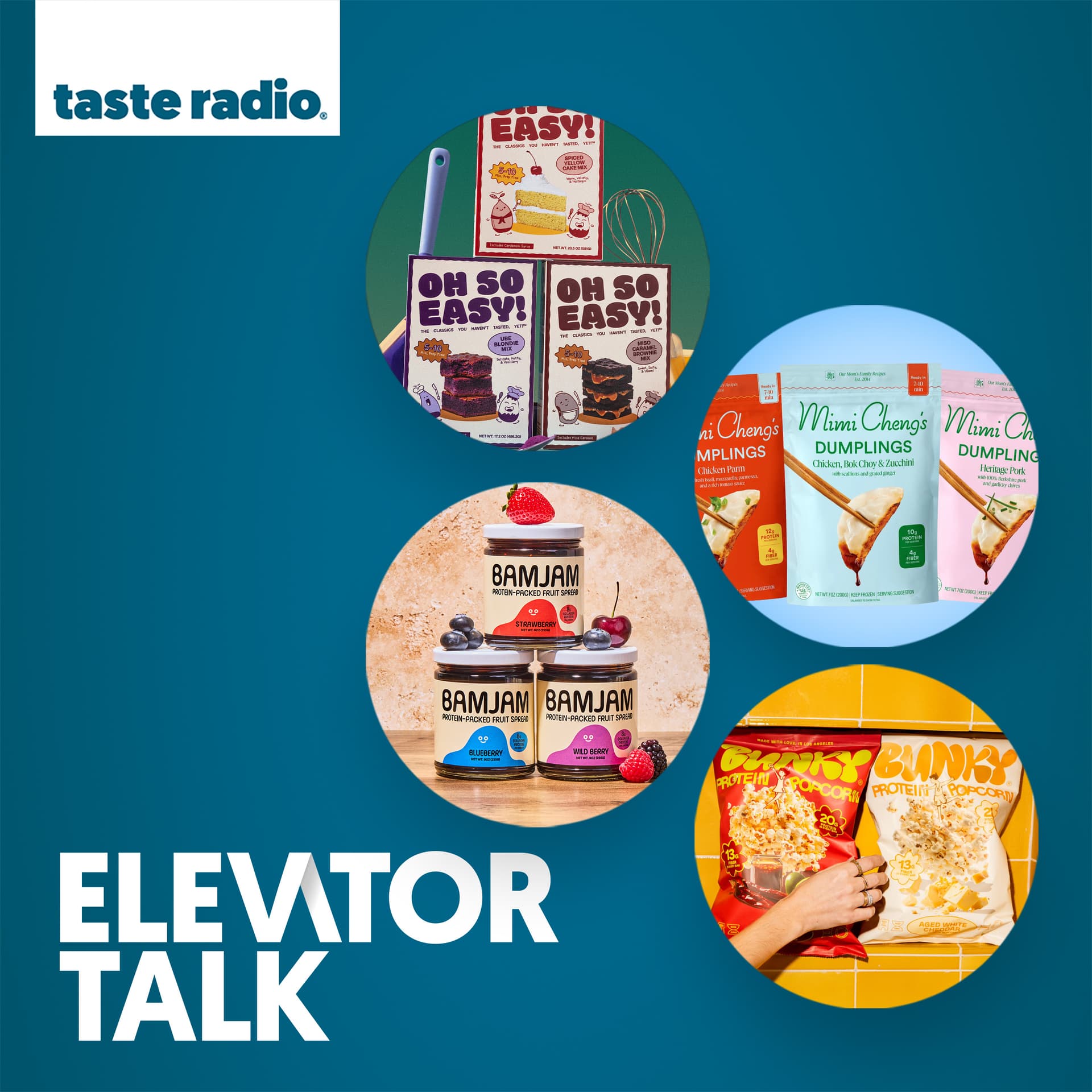
- Products include unique mixes like Ube Blondies and Miso Caramel Brownies.
- Currently sold online with plans for retail expansion.
- Christian Gadge - BamJam
- CEO and founder of BamJam, a fruit spread with zero added sugar and added collagen protein.
- Focuses on healthy alternatives to traditional jams, currently sold in specialty cafes and online.
- Marion Chang - Mimi Cheng's
- Co-founder of Mimi Cheng's, known for their organic dumplings.
- Transitioned from restaurant to consumer packaged goods (CPG), expanding distribution to Whole Foods.
- Davis Freeman - Bunky
- Founder of Bunky, a protein-infused popcorn brand that emphasizes taste and quality.
- Actively working on expanding flavors and retail presence.
Key Discussions
Common Themes Across Brands
- Differentiation: Each entrepreneur emphasized the importance of standing out in a crowded market.
- Ava discussed her focus on global flavors and easy-to-make products.
- Christian highlighted the need for taste without compromising nutritional integrity.
- Marion stressed the family recipe's heritage to create authentic products.
- Davis shared his aim to maintain quality while infusing protein into popcorn.
Industry Insights
- Market Trends: Rick Field shared valuable insights on operational challenges and emphasized differentiation as essential for success.
- Consumer Behavior: Discussion on the importance of targeting specific demographics while remaining appealing to a broader audience.
- Retail Strategy: Importance of building relationships with retail buyers and managing growth sustainably.
Feedback and Recommendations
- Rick Field provided tailored advice to each entrepreneur, focusing on areas like branding, pricing strategy, and consumer engagement.
- Ava was encouraged to clarify her brand message and target audience.
- Christian was advised to enhance the presence of the founder on their website to build trust.
- Marion received praise for leveraging her restaurant's reputation while expanding into retail.
- Davis was reminded about the power of concise branding and maintaining quality for repeat purchases.
Key Takeaways
- Importance of Authenticity: Connecting the brand's story to personal experiences can resonate with consumers.
- Operational Awareness: Understanding supply chain and pricing strategies is crucial as brands grow.
- Consumer Engagement: Engaging with consumers for feedback can guide product development and marketing strategies.
- Collaborative Growth: The entrepreneurs were encouraged to see competitors as part of a broader ecosystem that can elevate the category.
Conclusion This episode of Taste Radio's Elevator Talk provided rich insights for food and beverage entrepreneurs, highlighting the importance of differentiation, consumer engagement, and operational strategy. The interactions between the hosts and guests underscored the collaborative spirit of the industry, aiming for shared success and sustainable growth.
For entrepreneurs looking to pitch their products, the episode serves as a reminder of the value of feedback from seasoned industry leaders.
Contact Information For more insights and to connect with the featured entrepreneurs, visit:
- [Oh So Easy](https://ohsoeasy.co)
- [BamJam](https://bamjam.com)
- [Mimi Cheng's](https://mimichengs.com)
- [Bunky](https://bunky.com)
Share Your Thoughts Listeners are encouraged to engage with Taste Radio by sharing feedback or inquiring about sponsorship opportunities through email at ask@tasteradio.com.
Written by AI. May contain mistakes. Listen to the episode to check what was said.
Chapters
Tap a time to open that second in VOIntroducing Rick Field
0:45 to 2:00
Rick Field discusses his background and transition to mentoring entrepreneurs.
“I launched that brand in 2004 and wrapped it up in 2024.”
Challenges for New Entrepreneurs
2:00 to 3:50
Rick shares insights on the hurdles new entrepreneurs face in the CPG market.
“You know, are you just another pasta sauce or are you a pasta sauce that's doing something that no other pasta sauce is doing?”
The Importance of Differentiation
3:50 to 6:20
Rick emphasizes the need for market differentiation and operational strategies.
“It's a moment where, you know, you fully and completely commit to whatever this idea is.”
Growth Strategies for Brands
6:20 to 8:00
Rick discusses strategies for brand growth and approaching retail buyers.
“And it's easy to get overeager and excited when you have a big opportunity, but you have to be able to manage your own growth.”
Understanding Business Fundamentals
8:00 to 11:10
Rick outlines key business areas and the importance of a balanced approach.
“You know, whether you're making pickles or baked beans or automobile tires or, you know, deodorant, a lot of the same business issues that you encounter in the early phase of starting a business are similar.”
Introduction to Oh So Easy
11:10 to 12:40
Ava Lechaucow presents her baking mix brand, Oh So Easy, and its unique offerings.
“So, you know, we take dessert formats that are already very familiar within the American palette and just add a little bit of global twists to them.”
Exploring Global Flavors
12:40 to 14:00
Ava describes how Oh So Easy combines global flavors with classic desserts.
“So classics that you haven't tasted yet definitely addresses that.”
Exploring Unique Ingredients and Values
14:00 to 16:42
Discover the importance of unique ingredients and core values in the food industry.
“That is exactly what I want to capture people's attention with.”
Identifying Target Consumers for Oh So Easy
16:42 to 19:04
Learn about the target demographic for the Oh So Easy brand and its pricing strategy.
“What I found compelling was the degree to which you were laying things out in a way that was very matter of fact.”
Advice on Cost Management and Brand Integrity
19:04 to 20:08
Understand the importance of maintaining brand integrity while managing costs.
“But Rick, I want to ask you and get your thoughts on this.”
Show all 26 chapters
Community Support and Networking Opportunities
20:08 to 21:07
Explore the role of community support in the food industry and networking opportunities.
“challenge for you is going to be maintaining the integrity that you're manifesting across the entire brand and coming at a price point that's going to allow you to scale.”
The Innovation Behind BamJam's Fruit Spreads
21:30 to 24:46
Discover how BamJam reinvented traditional jams to appeal to modern consumers.
“I have a pickle-themed coffee mug in my apartment that I drink out of very frequently.”
Navigating Trends and Longevity in Food Products
24:46 to 28:00
Learn how to assess food trends and the longevity of ingredients like protein.
“The first word on my list of questions for Christian was the word protein.”
Exploring B2B Opportunities for Jam Products
28:00 to 30:50
Learn about the potential business partnerships for jam products.
“Does that feel like a red herring to you, like out of your scope, out of your wheelhouse, or does that feel like something you'd like to get to?”
Feedback on Product Presentation and Pricing
30:50 to 32:34
Discuss the importance of brand transparency and pricing strategies.
“Yeah, there is a picture of Christian on the website.”
Introducing Mimi Chang's and Its Journey
32:34 to 36:14
Discover the story behind Mimi Chang's and their unique product offerings.
“Let's keep it going with Marion Chang, who is the co-founder of Mimi Chang's.”
The Art of Dumpling Differentiation
36:14 to 42:00
Explore the unique flavors and cultural significance of dumplings.
“from this cultural tradition from those of mainland China or say gyoza from Japan.”
Elevating Dumplings: A Family Connection
42:00 to 44:49
Explore the significance of family ties in building a brand and the importance of innovative flavors in comfort food.
“Anchoring your business in this strong family connection, which you're already doing.”
The Journey of Bunky: Protein Popcorn
45:35 to 47:56
Discover the story behind Bunky and how Davis created a protein-rich popcorn for health-conscious consumers.
“And I vividly remember going to Tompkins Square Bagels and taking a picture with your pickles while he's standing by it.”
Positioning in Retail: Protein Popcorn Insights
47:57 to 49:56
Gain insights into the importance of branding and the retail landscape for protein-based snacks.
“taste the protein, which is clearly what you want out of a product like yours.”
Future of Bunky: Expanding Product Lines
49:57 to 56:00
Discuss the strategic plans for expanding Bunky's product offerings and its potential market impact.
“And I'll tell you, there's something embedded within it.”
Choosing Bunky: The Flavor Factor
56:00 to 57:15
Discover the reasons behind choosing Bunky popcorn over competitors.
“Historically, because I'm looking forward to trying Bunky, there's a brand that's available in gas stations that I've bought hundreds of times.”
Bunky's Brand Story and Market Position
57:15 to 58:22
Learn about the unique background of the Bunky brand and its market dynamics.
“When I came home from the hospital and my little carrier when I was born, he just goes, you look like a little bunkie boy.”
The Impact of Competitors on Bunky's Growth
58:22 to 58:50
Explore how other brands like Cloud have influenced Bunky's visibility and competition.
“And I think that there's certain parts that make it a little frustrating just because certain flavor profiles across the cloud brand isn't as superior as our product.”
Elevating Entrepreneurs in the Industry
58:50 to 1:01:54
Understand the crucial role founders play in the food industry and how they can succeed.
“And there's going to be some exciting flavors that consumers want that cloud necessarily won't be able to do themselves.”
Connecting with Rick: Pickles and Soup
1:01:54 to 1:02:37
Get insights into how to connect with Rick and his ongoing projects.
“And, you know, we're clear on where they were and are clear on where they're going.”
Transcript
Automatic transcript. May contain errors.0:05Hey, folks, I'm Ray Lateef, the editor and producer of BevNet's Taste Radio podcast, and you're tuning in the latest episode of Elevator talk, the series that profiles the latest. stage and disruptive brands from across the food and beverage industry. Today's episode will focus on four food brands whose entrepreneurs will have an opportunity to hear feedback and advice from our co-host for this episode. That's Rick Field, the founder of Pickles and Soup. Rick, it's great to see you again. It's great to see you, Ray. Thank you very much for having me. I should say the founder of Pickles and Soup and of course, Rick's Picks, which you're probably best known for an incredible brand that you launched.
0:44How many years ago? I launched that brand in 2004 and wrapped it up in 2024. And when you say wrapped it up, what does that mean? Well, that means that I decided that I wanted to move on from the business that bears my name, that I had given to it what I had. And I wanted to do what I'm doing now at Pickles and Soup, which is sharing two decades worth of experience and insight with other people. And it's bringing me incredible daily joy. Well, I'm thrilled that you're doing just that because Elevator Talk is a platform where we highlight emerging brands in the industry and offer feedback and advice to entrepreneurs who are just getting started for the most part.
1:32When you were just getting started in 2004, I imagine some of the challenges with creating a CPG brand were a little different than they are today. But in your opinion, and having worked with early stage founders and new entrepreneurs, what do you see as some of the biggest hurdles, the biggest challenges that they're facing today? Well, I think that you really need to have some market differentiation, first and foremost. I think showing up as just another fill in the blank is, you know, the first thing that would concern me if I was, you know, talking to a brand for the first time. You know, are you just another pasta sauce or are you a pasta sauce that's doing something that no other pasta sauce is doing?
2:18Creating differentiation with your brand, which can take a lot of forms. It can be, you know, the raw material. It can be the form factor. It can be how it's used. It can be the price point. There are a lot of different ways that you can differentiate. But I think that's where it starts. There really is no point. Business is too hard to just show up and do something that a million people are already doing. Differentiation is key. But that's just one part. You think about operations, sales and marketing, social media or promotion just in general. In terms of what you experienced as an entrepreneur, And we should probably be very clear about what your products were and the kind of brand that you operated.
3:02But, you know, what were some of the biggest pain points for you as an entrepreneur? And how did you address them in the two decades that you were writing Rick's Picks? Well, so first of all, you know, I think there's a lot of benefit in working quietly on your idea until you feel like you're ready. As an example, I made pickles, which was my business for seven years, just for fun, while I was working in film and television, and very happily doing so. Before, I had this magic moment where I turned 40, lost my TV job, broke up with my girlfriend, and won a pickle contest at the same time, pretty much.
3:41So I had a lot of life change in that one moment. And I decided to go for it. There's a moment that is different for every brand. that I define as the cliff. It's a moment where, you know, you fully and completely commit to whatever this idea is. And I think it's important to recognize that you need to do this kind of work wholeheartedly. If you're doing it part-time, you have a hobby and there's nothing wrong with that. But, you know, there are way too many fish in the ocean for anyone to kind of half-step it. So that would be one. You know, I think understanding your own process and that can come through just time and practice and then being able to apply it to a commercial scale in a way that makes sense to understand what you need to know in order to apply it to a commercial scale and to anticipate that.
4:38For me, it was replicating recipes in some cases up to 26 times before I considered them to be ready for commercialization. And when it comes to retail, you know, there's a lot of different ways to go to market these days. Certainly, direct-to-consumer is an opportunity that wasn't necessarily as available, you know, 10, 15 years ago. But going to market and meeting retail buyers and making that pitch, especially early on, can be a huge defining point, huge turning point for any brand. What's been your experience with retail buyers and getting them on the same page as you, getting them to buy into your vision?
5:18Well, I think you need to have a compact message. I think you have to remember you have one chance to make a first impression. And I speak from having made some – I had the great good fortune, I guess you could say. I had a farmer's market stand in New York City at Union Square Green Market, which was basically the same thing as having a free pulpit every week to preach my pickle message. Um, and, um, so I got a lot of early attention from media, including a big article in the times dining section, which led to a call from Whole Foods the next day, which led to, uh, a placement, um, in one store, uh, which became a region, which became multiple regions, which became global planogram.
5:57Um, I, I adopted a strategy of arithmetic growth within that first region, as opposed to geometric, the buyer said, you know, at this point, our artisan pickles were kind of a new thing. And I was at the forefront of it. And I could go into the whole region and take 30 stores. And I said, no, let me build some data in your system in one store first and work my way out slowly. Because it's a lot easier to advance than to retreat if you go too quickly. And it's easy to get overeager and excited when you have a big opportunity, but you have to be able to manage your own growth. For sure. And I think you have to be able to be ready for that opportunity.
6:35and that's something where only you are going to know that. I have a litmus test that I like to put my clients through at the beginning. Strategy, finance, operations, and marketing. Where are you on each of those four key quadrants? When you start thinking about them, they're linear, right? You need your strategy. Then once you have it, you can look for money. Once you have the money, you can make stuff. Once you make stuff, you can sell and market it. But once you get to that fourth phase, it becomes a continuous loop of engagement. Um, and each of those four pieces has to kind of feed off of and assist the other three.
7:11So I like to understand when I'm starting to work with somebody, how they feel about each of those four areas at where they are right now in time and space. And if they have a weakness, that's where we're going to dig in. If they have a strength, okay, maybe we don't need to focus there so much, but it's not the same for everybody. You can have a brilliant idea, but haven't raised any money. You can have tons of money and be scratching your head what to do with it. You can have a co-packer lined up. You cannot have a co-packer lined up. You may think that hiring a teenager to do your social marketing, social media marketing, is going to be the best way to connect with young people.
7:51And that may or may not be true. So each case is individual. But one of the things I will say is that there are a lot of commonalities. You know, whether you're making pickles or baked beans or automobile tires or, you know, deodorant, a lot of the same business issues that you encounter in the early phase of starting a business are similar. So from my standpoint, you know, it's easy, relatively easy to apply my learnings from the pickle universe to other verticals. And I actually, you know, I hope that my business will grow to include clients outside of Food and Bev. But right now, I'm definitely staying in my lane.
8:33Good news, Rick, because we have an entrepreneur who's making automobile tires, one who's making a deodorant, one who's making baked beans. So I think we can address all four categories in this episode. Obviously, I'm kidding. No, but we have some outstanding entrepreneurs who are making some really fantastic brands and products. Let's meet our first, shall we? Let's do it. All right. That person is Ava Lechaucow, who is the founder and CEO of a brand called Oh So Easy. Ava, it's great to see you again. Hi, nice to see you again, Ray. Nice to meet you, Rick. How's it going, Ava? Ava, we met you at Nosh Live Winter or LA 2025 in Marina del Rey, where you pitched as part of our Nosh Pitch Slam.
9:20I thought it was fantastic to see you up on stage. You travel across the country to do so. So thank you so much for that. You, like Rick, are a fellow New Yorker. And you're making, dare I say, some oh-so-delicious products. Tell us all about what you do. Yeah, thank you so much. It was so fun being in L.A. and getting to pitch amongst other amazing brands. So I'm Ava. I'm the founder and CEO of Oh So Easy. We're the first ever globally inspired baking mix brand in the U.S. And we're bringing everyone the classics that they haven't tasted yet. When you talk about classics, what do you mean? Because I think, yeah, these are products that need to be described because my mouth is already watering looking at your website.
10:02Oh, thanks so much. Yeah. So we are taking essentially the American dessert classics that you know and love, such as brownies, blondies, cakes, cupcakes, and adding a global spin to them. Um, so the, you know, the brand isn't, uh, tied to a specific like ethnicity or culture. It's very much inspired by my own third culture and immigrant background. And so we work with chefs, uh, from various cultures across the country to develop products that, um, you know, reflect their backgrounds and their cultures that are actually already popping up in bakeries across the country. Um, so for instance, our bestseller right now is our Ube Blondie mix.
10:44So think of like a classic brown sugar blondie, but we complement it with the Filipino ingredient of purple yam or ube, which is slowly but surely becoming ubiquitous around the country. We also have a miso caramel brownie mix, which is our Japanese-American take on a classic sweet and salty brownie treat. And then we also zhuzhed up the classic but boring yellow cake with some Middle Eastern spices with our spiced yellow cake. So, you know, we take dessert formats that are already very familiar within the American palette and just add a little bit of global twists to them. Outstanding. Before we get to Rick, where are you sold and what's your price point per box?
11:24Yeah, so we just launched our company in November. So we're very we just started. So we're right now sold directly on our website at oh so easy dot co and on TikTok shop. And then we're slowly but surely working towards, you know, smaller retail stores and then hopefully a couple of regionals by the end of the year. And our price point is right now around$14 a mix. Rick, I don't know about you, but I have a sweet tooth and I love trying new products. And, you know, just the thought of a miso caramel brownie makes me want to just get up and leave and go buy some Oso Easy and become a baker, or at least an amateur baker in my home.
12:01Obviously not going to do that. But, you know, do you have a sweet tooth? And, you know, what do you think about this concept of a globally inspired bake mix? Well, first of all, the answer is yes. And that's capital Y-E-S on the sweet tooth of I look forward to trying your product. Yeah, I was captivated. Well, first of all, let me just say one thing. I believe that one of the most important things for a founder to get straight at the beginning is what their log line is. Log line is a one sentence description that describes something. If you're in an elevator with an influential person, you need to be able to capture the essence of your brand in a really compact number of words.
12:41So classics that you haven't tasted yet definitely addresses that. So I appreciate that. And what I like about that phrase at the top is it makes me want to know more because it doesn't fully and completely answer all the questions. But it does lead to my next question. See, I feel like you have two promises here. You have one, which is these things are easy to make. Okay. And that's reflected in the name of the brand. But in my opinion, equally important is classically reimagined with a global twist. And that's actually two promises because it's classics reimagined. Right. So when you think about the hierarchy of priority in terms of how you're because when you go into a retail buyer meeting, you know, you're going to want to make sure that you're leading off with whatever your most important.
13:29unique selling proposition is. So is it the easy to make or is it the classics reimagined? Which is at the top of that hierarchy? Yeah, I think for us, it's the easiness to make is the top. It's in our name. It's oh so easy. I want people to think when they see our brand, it's really synonymous to a traditional baking mix, a traditional baking mix, a la Duncan Hines or Betty Crocker. You literally just put the dry mix in a bowl. You add some water, eggs and oil. easy. That's it. You pop it in the oven. That is exactly what I want to capture people's attention with. And then we also have really beautiful product photography on our packaging that, you know, when you first look at it, you may think, oh, that seems maybe a little bit intimidating, but then the name Oh So Easy really stands out.
14:18It really promises easiness to make. Well, you answered the question in the way that I hoped you would, because I think that, And, you know, there are certain words which are evergreen in the food lexicon, convenient in these busy times is at the very top of the mass head. So you've got that covered. And classics reimagined implies discovery, right? So people need to get to know that. So I think you've got that hierarchy situated purple. This is actually very appropriate because the next point I was going to make is Ube. or ube, you have something really rare on your hands here. You have a word and an ingredient that has not been beaten to death.
15:02Ray, how many times have we gone to Expo West and seen 3 ,000 brands with the same, you know, sriracha this or you name it that. And I think having something where, you know, you can really lay claim to being one of the first people to be an evangelist for this ingredient is really great. And, you know, I knew what purple yams were. I've eaten them. I've used them. But I'm thinking about them as a staple of Filipino cuisine and popular for its sweet, earthy, vanilla, nutty flavor. That's awesome. I got that from the Internet. I didn't think of that myself. So I also think that, you know, you've got some other things in there which are, you know, off the beaten path, you know, precisely in the way that I said at the top about let's carve out some unique territory, mastic.
15:55And then what's hilarious to me is not only is it a fragrant pine like resin, aromatic and medicinal, which is what you're using it for, but it's also a thick sticky adhesive used in construction for sealing HVAC ducts, which I find hilarious because funny thing in pickles, what do you do to make your pickles crisp? You add calcium chloride, which is a natural mineral, which still allows you to go to Whole Foods. Calcium chloride makes your pickles crisp. It also melts the snow on your sidewalks. So these ingredients that have dual purpose are always something that I pay close attention to. The last thing I would say, and I really want to commend you this in this particular time that we're living in, is I like the way you laid out your values and your social mission.
16:38And I think that needs to be really a key part of your narrative. What I found compelling was the degree to which you were laying things out in a way that was very matter of fact. Like this is the way things should be. And when we see all the crazy things that are terrible that are going on right now, I think all the time, you know, why can't we have some common sense and some humanity here and, you know, treat others like we want to be treated? And I really felt like your values on your website were reflecting that. So I would keep that, you know, up high in the pitch deck, you know, towards the top and make sure everybody knows that's where you're coming from.
17:17Yeah, thank you so much. It's in our DNA. I am an immigrant. I'm a third culture kid. I've lived around the world. It is just who we are. I can't hide it because it's me. So yeah, thank you for recognizing that. Absolutely, Ava. I mean, I love what you're doing. I mean, I loved it when I saw it in December. In fact, I think I met you guys in New York last April, right? You came to our Taste Radio meetup? Yeah, I think so. Yeah, so this is the third time we're having an opportunity to sit down and chat. But, you know, when I ask entrepreneurs all the time about their brands, who is this for? Oh, so easy feels like it could be for a lot of different people.
17:53Although the branding feels like it skews a little bit younger. The price point feels like it might skew a little bit older. The flavors feel like they might skew a little bit younger. But, you know, I can see this being for a lot of folks. But when you're at an early stage, you really want to be a little bit more narrow in terms of your target consumer. So that's a long winded way of saying, who are you trying to target with Oh So Easy? I made it for people like me, for young professionals who hopefully have a little bit of money, who've saved a little bit of money, who like to eat out, who are very adventurous eaters, who just like to discover new types of food.
18:29So it's really, I would say, like older Gen Zs to older millennials who, you know, can spend$14 of their own money for a baking mix that's normally like$3 to$4 who are just really interested in trying new foods. So and again, we're working very hard. I understand$14 a mix is extremely expensive. It's not where I want to land price wise whenever we get into retail. And we're working very hard behind the scenes to lower that cost for our consumers. So, yeah, but for now, it's really, you know, just shoppers who are very interested in discovering new flavors. We're out of time. But Rick, I want to ask you and get your thoughts on this.
19:07When it comes to cutting costs, ingredients, packaging, what have you, what's the first one you should think of? And again, we're out of time. So 30 seconds, if you could. OK, you know, I would say that you need you need to look at your entire supply chain and think about. Whatever is making your product what it is, you probably are going to need that. But the order of magnitude with which you are ordering ingredients, as an example, I went from having gallons of vinegar to buying vinegar in 250-gallon totes. And that created a cash flow issue, but more efficiency on a unit cost. So there's a long, long string of things that you're going to need to think about in that regard.
19:54but you know i think getting your price point down is important but also being selective about who your audience is valuable to you don't want to be a general contractor right you want to be a somebody needs a plumber or an electrician they should call you right you don't want a general contractor you know not so much right so um but i think i'd say it feels to me like the number one challenge for you is going to be maintaining the integrity that you're manifesting across the entire brand and coming at a price point that's going to allow you to scale. Core is great, but you need to get to more in order to attract investment dollars.
20:26Core to more is a key metric to think about where you are to where you could be. Awesome. Thank you so much. Yeah, indeed, Rick. Thank you so much. I thought that was fantastic advice. And Ava, it's just so wonderful seeing you again. I think what you're doing is fantastic. Yeah, thank you. And please let us know if we can help in any way. I always talk about BevNet, CPG Media, or our organization as being more than just media. We're really there to benefit and help the community as much as we can. We want to write about the success stories. We want everyone to have their best chance of winning.
21:00And if we can help be a small part of that in any way, please let us know how, and we'll do what we can. Thank you so much. Thank you. Ahead of major trade shows, food and beverage professionals across the industry are turning to BevNet and Nosh to stay informed. If you have a brand update, share it with us at submit.bevnet.com forward slash news. All right, great start to the show. Let's keep it going with our next guest, Christian Gadge, who is the founder of BamJam. Christian, great to see you. Great to meet you, Ray. Great. Thank you for having me. And great to meet you as well, Rick. Thank you for your time.
21:41I have to say, big fan of pickles. I have a pickle-themed coffee mug in my apartment that I drink out of very frequently. That's awesome. And thank you for connecting with me this morning on LinkedIn. I appreciated that. Of course. Thank you. Shows good initiative. Thank you. It certainly does. It also shows good initiative and no knock on other founders because we get products all the time. And we've had, I think we've had all these products in our office at one point, but we happen to have some Bam Jam in our office right now. And I'm holding two jars. One is the strawberry variety. One's the wild berry variety.
22:16And the other one on my table is the blueberry variety. And this is a really cool product. And I think Rick's going to like it because it is differentiated. Tell us all about Bam Jam, Christian. Yes. So I am the CEO and founder of Bam Jam. We took a pantry staple and reinvented it for modern families. So instead of traditional sugar-filled jams that you see every time you go into the jam aisle currently, we decided to rely on the sweetness found in real fruit. So we made a fruit spread that is only simple natural ingredients, zero grams of added sugar, and an added benefit of collagen protein.
22:51We launched just three weeks ago, and we did so in three flavors like Ray just stated, strawberry, blueberry, and wild berry. According to my notes, you are working on this project for two years behind the scenes, which also I think is music to Rick's ears. Why did it take you, why were you so patient with the launch of this brand? Yeah, so I definitely wanted to get it right. I think when you're making such a differentiated product, a lot of people, especially with protein and a lot of things now, people are scared of what I like to say, the over proteinification of products where it doesn't really make sense.
23:26and I knew that if we cut corners and maybe put a bit of sugar in the jam and we could have got away with taste there, it wouldn't really have landed with consumers the way it should have as a healthy product. And I wanted to get everything right from the taste, the texture, to the whole product experience so that a consumer that decides to make the swap from a traditional jam doesn't feel like they're really sacrificing on many things. And I started off experimenting in my kitchen because I used to want to be a chef and I thought this would be easy to develop something that could actually scale just in my home kitchen.
24:00I was wrong and I decided to work with some award-winning food scientists and get this right over the course of two years. I love that it's very clear. Bam Jam protein-packed fruit spread. I mean, everyone's gonna know immediately what this is. The price point, I would assume it's a little bit higher than you might see for just everyday jams. What is the price point per jar? Yes, on shelf, it is$13.99 a jar. Okay. Okay. Rick, yeah, I think Christian hit the nail on the head about the over-proteinification. Is that a term? I think you should trademark that if that's the term of the industry. I mean, I literally just talked to a tortilla chip entrepreneur today, and one of his retailers asked him to create a protein tortilla chip.
24:42Okay. But I think it's a good point that Christian made is, you know, some protein makes sense in some products and makes sense not so much in other products. What do you think of protein in jam? The first word on my list of questions for Christian was the word protein. So good, Ray. Good on you. Last year at Expo West, protein was the number one fad trend, whatever you want to call it. Protein in some really crazy applications as well as ones that make sense. Ubiquitous at that show. Number two was all things Korean, and that was very prominent as well. But protein was number one. So here's my question to you, Christian.
25:29All right. When food ideas come into some form of recognition or popularity, okay, they start out as a fad, okay, early adoption. Then maybe they become a trend. Trends are good. You can monetize trends. You have to make sure if the trend is starting to go down that you're prepared for that with your business. And then, you know, the holy grail would be evergreen, something that has got lasting permanence in, you know, the minds of the consumers and, you know, can be counted on to be important three, five, 10 years from now. So protein, as you're using it, where do you see it on this spectrum of longevity?
26:15I feel like that's where we differentiate a bit from a lot of other protein products is because we're not marketing as max out your macronutrients for the gym bros. We're definitely going after more of an everyday swap for easy nourishment. You know, it's if you think about the format that jam comes in, it's not limiting the consumer to, you know, one specific thing that they have to have every single day. It's they could use it in a yogurt bowl. They could use in a sandwich. They could bake with it. You know, it's all about make the swap from a traditional jam and all of a sudden everything it touches has the ability to become healthier and more nourishing for everyone in the household.
26:50So it's really focusing on that. And we really do beyond protein have a lot of benefits. You know, it's the no added sugar. We also have one to two grams of fiber per serving, which is another up and coming trend right now. And it's just all about a well-rounded, easy nourishment swap. I did have one idea. I'm glad you kind of jumped into some of those use occasions, because I think if you make it easy for consumers to understand how they can use something, document that on your Instagram and call them recipes. Even if you're just putting jam in some yogurt, that's a recipe. It's two ingredients, right?
Read the full transcript
27:24But I had one idea for you, and this kind of goes back to what we were talking about earlier about Cordo More. you know you're starting out with your set set of ideas about the business and you want to expand you want to ripple out and have it become bigger what about what about entertaining and I'm talking about charcuterie like when you think about a high-end charcuterie plate there's going to be you know some fine cheeses there's going to be some salumi there's often a jam there why not why not have Bam Jam there and expand into the entertaining arena as well? Does that feel like a red herring to you, like out of your scope, out of your wheelhouse, or does that feel like something you'd like to get to?
28:10Absolutely. It feels like something I would definitely love to explore. I think the nice thing about Jam is it actually goes in so many places that there is immense B2B opportunities. I'm already talking to some bagel shops that were like, hey, what if we did a cream cheese with your jam or like, you know, certain events, like there's a cheese shop here. I'm based in Madison, Wisconsin. They would love to carry the product and you know, it's, you know, jam goes with cheese and there's delis. So there's a lot of B2B opportunities and charcuterie boards are a great fit for it. If it's the, you know, the right type of event that the charcuterie board's going to.
28:41Um, and I'd love to explore that. Well, I have a charcuterie client, uh, for pickles and soup. So you send me some jam. I'll make a pretty picture on Instagram and you can use it and see what happens. And maybe we're right, maybe we're wrong. I do have a couple of comments about your website, if I might. In the about section, it calls out for our founder, but it doesn't name you. And there's no picture. You're a handsome guy. Come on, you're a founder. Let's get, this is key. We gotta know that it's you. So, you know, let's just do a very little facelift on that part of the site and people are going to connect because it's all about connection, really.
29:25This is the main thing. If you're an anonymous, whatever, why would I care enough to spend$13.99 for eight ounces of jam? The other thing is that there's a lot of charts and a lot of tables on websites having to do with attributes or reviews. Oftentimes you'll see a chart that says, our company has all 10 of these important attributes and the competition has none immediately i don't believe them because it's never black and white that way and the same thing with reviews you have 18 five-star reviews and maybe you do but i think you should get somebody to write a three-star review because if there was one on there that wasn't a five-star review that punctured a hole in that invincibility i would trust you more right i would trust you more so just think think about that that little detail um because building trust you know making connection is the first stage and building trust is the second one with your consumer base and i think it's going to be at 13.99 even if you do some hard work on your cost of goods and you know get it down into where i'd like to see it at this pack size which is 9.99 i'm not saying that's going to happen um based on how you're how you're set up but um uh for quarter more i think 9.99 is going to be a tipping point, potentially, potentially.
30:44But either way, you know, you know, just just something to consider, you know, as you go forward. Thank you. Yeah, there is a picture of Christian on the website. It's just that he's 13 years old or 12 years old as a baseball player. Yes. Yes. Yeah. How old are you in that photo? I was about 12 or 13. So there you go. There you go. My, Yes. My age prognocation is spot on there. Christian, before we wrap up here, I got to ask about your experience at Pop-Up Grocer, where you're selling your products. Pop-Up Grocer is a small retail store in New York City. They still only have that one store, right, in Greenwich Village?
31:27Yeah. How's your performance been there? It's been great. We're one of the top brands in the pantry section out of 40. I actually sampled there the other week where that was, you know, I think that was a really groundbreaking experience to be able to sample because a lot of people, when they first hear protein pack fruit spread, they're like, why would I want to try that? I'm imagining a grainy texture. I'm imagining something that doesn't taste good. So actually getting a lot of feedback live that day was really helpful. And I think could potentially guide a lot of messaging that we use moving forward for, you know, marketing and whatnot.
31:58Yeah, definitely going to get out there in front of the consumer, hear what their thoughts are. And I think that's where that three-star review might come into play, where you don't necessarily think you need that on your website, but maybe there's something you can enhance on your packaging, in your flavors, perhaps the next flavor you introduce that you hear right from consumers. And guess what? As soon as you get on Amazon, you're going to hear all kinds of stuff and see all kinds of reviews coming in as well. So, Christian, I'm so thrilled that we had this opportunity to sit down and talk to you today.
32:25Please stay in touch. If there's anything we can do, any way we can help you along your journey, please let us know. Thank you so much. It means the world. Have a great day, both of you. Good stuff. Let's keep it going with Marion Chang, who is the co-founder of Mimi Chang's. Marion, it's great to see you. Yeah, great to see you, Ray. Last time I saw you was at Winter Fancy Food. Yes, indeed. That's actually where I last saw Rick and our next guest for Elevator Talk as well. And I was thrilled to be able to put a face to the name and the brand because your team sent me some samples a few weeks back and I just absolutely was blown away by what you're making and just how delicious your products are.
33:06Tell us all about Mimi Chang's. Thank you so much. And hi, Rick. It's nice to meet you as well. I'm savvy to meet at Fancy Food, but I know we will. And I just sent you a LinkedIn request. Awesome. And I'm coming to the restaurant at my first stop. Well, we'll talk. We'll talk. Sounds good. Sounds good. So Mimi Chang's, yeah, you got your products behind you. Clearly you make frozen products, but these aren't just your everyday frozen products. They are, as I mentioned, very delicious frozen products. Thank you so much. So Mimi Chang's started from craving my mom's organic dumplings and she moved to the West Coast.
33:43So my sister and I decided to learn how to make it for ourselves. And it's been over 11 years of building Mimi Chang's. And Rick alluded to the fact that you have a restaurant? We do. We've had a restaurant in the East Village of Manhattan, 2nd Avenue between 11th and 12th Streets. My sister Hannah and I, who's my business partner, we decided to sign a 10-year lease without professional culinary experience because we believed in our mom's dumplings and family recipes so much. And when did you launch the company? I think it's relatively new, yeah? or the CPG brand? For CPG, it's been about a year-ish.
34:25So we launched in one Whole Foods location in New York City about a year and a half ago and just went nationwide. That's the recent news, just went nationwide in October for Whole Foods. Well, congratulations. That's very cool. And something that is both, I'm sure, very exciting and also quite terrifying. What was it about your brand that Whole Foods really loved? you said you were in one region and then you went national? Yes, exactly. Yeah, we started in the Northeast region. And because we've had a restaurant over there, that really helped with people knowing the brand. And of course, there's so many people that don't know about the brand yet.
35:03But it was about quality, about having an elevated chef-driven taste at the restaurant. It's been about just building nourishing recipes, chef collaborations, and focusing on quality and intention. And so building that parallel to CPG has been really, really incredible. And the reception has been amazing. So I'm excited that you all get to try it. Yes. Well, I have tried it. I hope Rick gets to try some soon. It sounds like you know a bit about Amy Chang's, Rick, already. You know, when it comes to dumplings, it feels like there's a pretty wide variety of quality. I know these are amazing, but, you know, Frozen can be kind of tough because you still got to open that door and, you know, wade through all the different products and brands that are out there.
35:55Just based on what you're hearing from, Marion, and what you've seen on their website, you know, what are your thoughts on Mimi Chang's? Well, first thing I'm curious about, so you guys are coming from a Taiwanese tradition. and my curiosity starts with understanding specifically what separates dumplings from this cultural tradition from those of mainland China or say gyoza from Japan. Well, they all have an overlap. I always say there's a dumpling for each kind of person, each kind of tradition and culture. So, you know, ravioli to empanadas, like there's a dumpling in every culture. It's just a matter of what you decide you put in there and then also what kind of wrapper, how you cook it.
36:41But there is a lot of overlap, but every, I would say almost every Chinese family has their own take or spin on, on dumpling recipes. So this is our family's recipes where we use King Arthur's artisanal flour for the dumpling wrapper. We use the, the, it's clean label. We use the best meat that we can find and that we can scale as well. awesome yeah i'm a huge fan of everything that king arthur does both specifically with flour and as their brand my family home in vermont is right near their flagship store and i was actually there three days ago so i hear you on the king arthur's um and then also if we're talking about the dumplings we've got to talk about the sauce now i know we're not under an nda here but um you talk about secret sauce so i want to know what makes it secret or more generally like what are you trying to achieve with the sauce that, again, going back to the original premise that we talked about with differentiation, there's a lot of groupthink in dumpling sauce.
37:42How are you standing out? Well, we just have our Mimi's Secret Sauce at the restaurants currently. However, we've gotten a lot of people asking us if we will sell in retail. But it actually started because our mom, Mimi, it was her way of getting my sister and I home during college, bringing coolers of her frozen dumplings and bottles of her secret sauce to us in college, to our first New York City jobs to make sure we had something healthy and nourishing to eat and would not tell us a secret recipe. So it was about a week to two weeks before we were opening up our East Village restaurant that we're like, mom, this isn't funny anymore.
38:21We can't keep it here. We have to figure out the actual measurements, actual items in it. and we're opening a restaurant. So we figured it out together, but my dad doesn't even know the recipe. It's still a secret, but we just find it as complimentary for dumplings. It's actually a great marinade as well. And you were also just touching about the different dumpling flavors. And so the recipe that we grew up on is the mini chicken and zucchini one. The retail one also has bok choy in it. And as you can see, we do a take on a traditional Chinese dumpling with pork and Berkshire pork and chives. And then the chicken parm one you haven't asked about yet, but I know we'll get there.
39:04But there's a lot of interesting background around that as well. That's awesome. So a couple of other things. Congrats on the global with Whole Foods. That's amazing. I will say one sentence because we could spend the whole episode talking about Whole Foods. Whole Foods is a mile marker. It's not the finish line. Always remember that. And additionally, I was really happy to see the part of your website that was given over to food service applications or restaurant applications or things of that nature. because I think that for a brand that's making a strong push in retail, which you're now doing, the food service channel is essential.
39:50In my own experience, I had hundreds of retail accounts all across the country, and I tended them carefully. But there were a lot of challenges, a lot of chargebacks, buyer change, new items come in, items get discontinued, blah, blah, blah, all that stuff. So food service has, if you get it right, a lot more solidity to it. I had two main food service clients, Shake Shack and Sweetgreen. And by the time I was done with Rick's Picks, they counted for a third of my P &L. And I'll tell you that I would send an invoice to UNFI for retail. Let's say it was for$10 ,000. I might get a bill back for$3 ,000 off that$10 ,000 I was asking for.
40:33and with food service 99 times out of 100 you invoice uh 10 000 you get 10 000 back in 30 days and that's enormously important and even if it's not branded because that's a major pushback from investors right it's not branded we have to build a brand we have to build a brand well we have to build a healthy p &l we have to build and so you know i'm very pleased to see that you're giving consideration at this juncture to food service and then the last point i'll make is um that you We talked about the cliff earlier. Well, I'll tell you what, signing a 10-year lease at 2nd Avenue and 12th Street, that is the cliff.
41:08So good on you for jumping off it. Thank you so much. That's completely true about all that insight. And that's how we want to build Mimi Chang's as well, to sustain it, to grow it. And there's so much opportunity with having food service as an option as well and as a parallel channel. Yeah. Ray, do we have time for one more point that I'd like to make? You have all the time in the world as long as it can fit into 60 seconds. Okay, good. I love the fact that it starts with mom. I learned how to make pickles with my mom. And there is no more potent cross-cultural connector than family. If you're from the American South, if you're from Ukraine, if you're from Japan, family tradition and a lot of it involving food is always going to be important to you.
41:57Everybody can relate to it wherever they are, culturally, socioeconomically. Anchoring your business in this strong family connection, which you're already doing. I'm just telling you, good job for doing what you're already doing. I think you should continue to reinforce that because it's the very definition of an evergreen attribute to business. Thank you so much. Yeah, we love treating it as a comfort food and also as a utility because they only take a couple of minutes to make. You keep it in your freezer, so it's super easy for any kind of meal or snack for the entire family and also just continuing to elevate premium Asian flavors.
42:37So many people order Chinese Asian takeout, but the freezer aisle doesn't quite reflect that yet. So we would love to continue building that. marion uh i have a ton of questions for you but we were pretty much out of time so i'll ask you two quick ones you uh mentioned the chicken parm variety which seems pretty out there for a dumpling how did that come about it came about because at the restaurant we do monthly specials a lot of times chef collaborations uh in january we just did one with cactus deli we've done it with chefs like dan berber daniel hume um john and vinnie's turkey and the wolf so we love using dumplings to create something craveable and relatable with comfort food.
43:18And so the chicken parm came about from being one of the top sellers at the restaurant. And in terms of price point, what is the price per bag at retail? It's from$9.99 to$10.49,$10.99, depending where you are. How many dumplings? What's the count in that bag? It's two servings. It's about 10 dumplings. I mean, if you know Mimi Chang's in New York City, it seems like people will be willing to pay a premium for these products. Is that your target consumer, people who are sort of in the know about that premium tier for dumplings and maybe even your restaurant? Yes. And also at the end of the day, something that just speaks to people who want dumplings and comfort food and want to try something a little bit different.
44:05It should come down to taste at the end of the day for people who don't know the restaurant, who do know the restaurant. All right. In my notes here, I have that you were in luxury fashion or were you on the trading floor? Which one of it? I was in luxury fashion before. Okay. You miss it? I like being adjacent to it. Instead of selling clothes, I'm selling dumplings now. Luxury dumplings. Yes. Well, hopefully not too luxury. Exactly. Exactly. Well, Marion, I feel like we could sit down and chat for another half hour. Perhaps we can do that later this year or down the line. And in the meantime, thank you so much for joining us on Elevator Talk today.
44:41I think what you've built is really amazing. And as I mentioned at the top of our conversation, just absolutely delicious products. So thank you so much for joining us today. Thank you both so much. Do you want more repeat buyers on Amazon? Well, this free resource in collaboration with Straight Up Growth will help your brand turn first-time buyers into long-term subscribers. Download Winning the Repeat Purchase Game on Amazon now at Tasteradio.com slash SUG. That's Tasteradio.com slash S-U-G to start building retention-driven growth for your brand on Amazon.
45:19Outstanding stuff. All right, our final guest for this episode of Elevator Talk is Davis Freeman, who's the founder of Bunky. Davis, great to see you again. Hey, Ray. How's it going? Great to see you. And Rick, great to meet you. I'm a huge fan of your pickles, actually. One of my best friends is named Rick. And I vividly remember going to Tompkins Square Bagels and taking a picture with your pickles while he's standing by it. So it's great to put a face to the name. Well, awesome. And I'm sure Chris at Tompkins Bagels appreciated the picture being taken in his store. Totally. Yeah, Davis, I had a great opportunity to meet you at the Winter Fancy Fair in San Diego last month.
46:05And I was really impressed with what you're doing with Bunky. You know, it definitely seems like it's timely innovation that you're doing right here. Tell us all about the brand. Tell us all about your products. Yeah, so I created a popcorn with protein. Bunky is a protein popcorn that's seed oil free, non-GMO, gluten free and made with natural ingredients. I came up with this product initially about two years ago. While training for a marathon, I found myself eating a lot more popcorn. I always loved popcorn as a kid growing up. It was my ADD focus snack. And fast forward about 24 years later, I started eating a lot more of it and then kind of saw the white space on the shelves that I went to my local Whole Foods and saw that there was no popcorn on the market that had the benefits that I wanted and the added extra protein that I felt was necessary during my training and later found out that popcorn was a great snack for marathon runners just because it had the light airiness to it and had the right carb count to fuel your day.
47:19So I saw there was nothing on the market and also went to Expo West and saw the proteinification last year and saw that there was no protein popcorn and spent years and years diligently working to make sure that the flavor was there and that it was just a better tasting popcorn at the end of the day and that you couldn't taste any of the protein within the actual product and continuing to innovate on some exciting flavor stories that we have coming up later this year. I tasted your popcorn at the Winter Fancy Fair, and I thought it was amazing because you couldn't taste the protein, which is clearly what you want out of a product like yours.
48:07According to my notes, you just launched larger bag sizes. Were you in individual bags to start? So we were in a two ounce bag size. We like to consider like a pregnant size between the one ounce single serving and a four and a half ounce bag size that you see on a traditional supermarket. We did that for about three to four months and we sold out completely and super satisfied with how that went. Now it's time to launch these bigger bag sizes that we launched on the 15th of January and sales are going well so far. And now our focus is really trying to get into some awesome supermarkets across the West Coast and the East Coast.
48:48All right. Before we get to Rick, price point per size and where are you sold at this point? Yeah, so we're looking at a$6.99 price point. Right now, we're just in specialty cafes, pantries across the U.S., specifically some notables such as Pop Grocer, Happier Grocery in New York City, really awesome incubation centers that do great for us. And we're now in 45 specialty cafes in retail locations across the country. All right, Rick, you know, this is the second brand that we've seen today where protein has been infused into a legacy category. I really do like the idea of protein and popcorn, and I guess others do, too.
49:37Certain celebrities are big on protein popcorn, but we'll hold off on that for now. You know, what are your initial thoughts about Bunky? The first thing I noticed, and we talked about this with Oh So Easy as well, logline to me, Davis, is always a very critical definer. You have to be clear about who you are and what you're doing. Feel good fuel with no tradeoffs. That's about as good as it gets. And I'll tell you, there's something embedded within it. First of all, it's only six words, which I love. And second of all, it starts with the affirmation. You would be shocked if you went around Expo West and did a census of the number of brands that say, we're not this, we're not that, we're not.
50:20And I'm like, you know what, dude, I don't care what you ain't. I want to know what you is. Right. So by starting with the feel good fuel point, you're acknowledging the fact that, you know, there is something comforting and fun and nostalgic about popcorn. And new tradeoffs, I think, is really sharp, too. Because without kind of getting into a wordy explanation of why the protein is there and it's good, but it doesn't affect the flavor profile negatively, I think you've really come up with a very concise way of explaining yourself to retailers. And, you know, I am curious, you know, the same question we asked earlier about protein as it relates to being a fad, a trend or something that's evergreen.
51:09I'm interested to hear what you have to say about that. And then I want to ask a follow-up question about your SKU mix. Yeah, absolutely. So, I mean, I think protein is here to stay. It's going to continue to be a major factor for many consumers. With the rise in GLP-1s, a lot of retail buyers are looking for protein-based products. The thing is, with our product, it's a functional, better-for-you product. We're not in the sense of making it a huge amount of protein per serving here. We're just adding the benefits of protein and natural fiber that we see in popcorn and bringing awareness to that category.
52:01So I think that protein is here to say it's going to continue to be a leader in the space. It's just a matter of making sure that the product tastes great at the end of the day. People are going to taste it initially, and if they taste it and they don't like it, they're never going to come back to it. So I was so, so adamant on releasing the product at the right time for it to taste great and making sure that there was an opportunity to release it when I thought it was going to taste what consumers wanted it to be. I think the most important thing in what you just said is you alluded to like buying it again.
52:43Sales are great, but repeat sales are really great. and anybody can get into a door, not anybody, but you know, you can get into a door, but can you stay there once you're in that retailer? So, you know, good on you for focusing on that. As far as, so my next, I have really two more questions. The first is about SKUs. I'm a huge believer in the number three. One is an idea, two is a concept, three is a campaign. I was in, I worked at VH1 directing commercials before I was a pickle guy. And most of the campaigns we did there had three ads. If you have three SKUs, you have a brand block in retail.
53:22The human brain cannot handle more than three ideas at any one moment. There's so many evidences of why three is a powerful number. And so you have two SKUs. So I'm curious to know what your plans are for a third SKU. And please don't do what I did, which is like I launched with nine SKUs, which was like, that was terrible. should have launched with three. And I'll let you answer that. And then I have a question for you about the website as well. Yeah, so I mean, the reason why we launched with two SKUs is really to just give proof of concept that the product is wanted. The third SKU is definitely an importance in getting it to market as soon as possible as retail buyers want a third SKU to really make the shelf, make it look great on the shelf.
54:16So we're working hard to launch a third and fourth SKU to really open up the shelf architecture for us. So that's in progress as we speak. It's just a little confidential right now. We're working on some really exciting flavors in the pipeline. Good. Lips are sealed until it's revealed. Oh, that's a good one, Ray. Lips are sealed until it's revealed. Okay. The splash page of your website is literally a splash page. There are a bunch of very attractive people in bathing suits eating popcorn. How do you perform outside of Gen Z iPhoneers, and is that even important? Retail is the next push for us, really, and really trying to get our popcorn into major retail is very important.
55:12Popcorn, you know, it does our product as well, direct to consumer. But at the end of the day, it's also a impulse purchase. It's a purchase where you go to a supermarket and you grab a bag of popcorn that you're heading out of the supermarket, heading to a friend's party or whatever it may be. But ideally, we're a Gen Z focused brand that's creating innovative flavors. And we're really trying to push that audience. But at the end of the day, we still want to focus on the older audiences that we dearly love because they're making the buying decisions as well. You're talking about me now, aren't you?
55:53You're talking about me. Okay, well, I'll address that with my final question. So I spent a lot of time driving from Brooklyn to Vermont, and popcorn gets me from A to B often. Historically, because I'm looking forward to trying Bunky, there's a brand that's available in gas stations that I've bought hundreds of times. And then there's another brand that I've bought that has nutritional yeast, because we're not supposed to mention other brands, right? There's a brand that I use that I often buy that has nutritional yeast as a flavor profile. So my question to you is, why should I choose Bunkies for my rides from Brooklyn to Vermont?
56:34It tastes a lot better. We perfected popcorn and we added functional benefits to it. That's beautifully simple. That is the answer, right? Because it tastes better. Why else would you want, I mean, do you want something that's going to be lower in quality in terms of taste? I would never want that. And I think most consumers don't want that. So I thought that was a brilliant answer, Davis. Also, I thought, Rick, you were going to mention about the website, the Bunky website, the About Us page again, because, you know, there's no current picture of Davis on there. There's a picture of him when he's about three years old in a stroller.
57:08So it also explains the name of the brand. Your brother used to call you Bunky. Exactly right. When I came home from the hospital and my little carrier when I was born, he just goes, you look like a little bunkie boy. And it's stuck ever since. And I wanted to name it something close to home and something that was meaningful. And it's been like that ever since. And it just felt like the right name. I mean, it's a great brand name. It's easy. It's five characters. And it fits easily on a package for sure. I got to ask. We're out of time. But I got to ask, you know, the brand that hasn't been mentioned.
57:44and I'll just mention it, it's Cloud. You know, Cloud came onto the scene. It's a protein popcorn brand launched by Khloe Kardashian. They're already in Starbucks. I mean, it has definitely captured the attention of a lot of people. Has the launch of that brand helped elevate Bunky's status, or has it kind of been to the detriment of what you're doing? I'd say a little bit of both. It's definitely bring awareness to the category, and it's given us the opportunity to keep pushing in the space. and continuing to show buyers across the nation how great our product is. And I think that there's certain parts that make it a little frustrating just because certain flavor profiles across the cloud brand isn't as superior as our product.
58:38But I think it's the same way with how Poppy and Olipop is. There's always room for another person, another brand in general. And we're going to keep going and we're going to keep growing. And there's going to be some exciting flavors that consumers want that cloud necessarily won't be able to do themselves. I think that's an excellent answer. Just real quick, if it's good for one, it can be good for the category. I experienced that firsthand. You've probably heard of McClure's Pickles. We had, you know, a lot of that Rick's Picks and McClure's, you know, all the boats were rising. So I think your approach is good.
59:19Plus, it's, you know, if you are competitive with them, you know, you're going to, of course, keep a competitor at arm's length, but it's good to be collegial at the same time. So, Rick, you're saying there were some street fights with the McClure brothers back in the day? No, we had each other's back. What do you think I learned about the 250-gallon tote of vinegar? They are actually based in Detroit, and you're in New York. So, yeah. Well, yes. But, yes, they definitely had a presence in New York. All right, we're getting off topic here. Davis, thank you so much for taking the time to be with us today.
59:51Really excited for Bunky. I think you're definitely on the right track. And I'm very excited to see where this all goes from here. If we can help in any way, please let us know. Just definitely stay in touch. Thank you both. And Rick would love to send you some product just for you to try. We'll connect after the interview. Thank you so much. Please. Rick, as promised, you know, I told you when we saw each other at the Winter Fancy Fair, we're going to have a really great episode with really amazing brands and incredible founders. And I think we delivered, or at least I think I delivered on that.
1:00:25You always deliver. I mean, I didn't get a chance to mention this, But I'll tell the whole internet that the best interview that was ever done with me when I was running the pickle company was the one that you did. I think it was about six, seven years ago. It's probably in the Taste Radio archive still somewhere. But I remember finishing it and thinking to myself, that's how I want to be represented. Thank you very much. I sincerely appreciate you saying that, Rick. And it is definitely still available to listen to on Taste Radio. So just look up Rick's Picks or Rick Field in our search bar and you can listen.
1:01:01And, you know, I think that it's really about the founder. And I think I, in BevNet in general, BevNet CPG Media, we really try to elevate the founder as much as we, you know, can in all of our content. And I think the founders today really represent the future of our food industry, you know, whether it's, you know, premium dumplings or, you know, a protein-enhanced jelly or a protein-enhanced popcorn, globally-inspired baking mixes. These are all things that people want. And it's just a matter of making sure that the entrepreneurs are getting the right advice, putting themselves in position where they can actually get more of their products into more people's hands at a price point that's reasonable.
1:01:45And I hope that we're doing a little bit here on Elevator Talk. And I know you're doing a lot with pickles and soup, Rick, to get people in that position. I think if I was going to sum up what we just experienced, all four brands and all four founders really had their feet firmly planted in the ground. And, you know, we're clear on where they were and are clear on where they're going. So those are essential attributes. And it's nice to see them, you know, across the whole spectrum of the show. Absolutely. Now, I know folks are going to want to get in touch with you after hearing you on Elevator Talk.
1:02:23Rick, what's the best way to connect with you at Pickles and Soup? Well, you can, we just, in the process of redoing the website, so it is live, Pickles and, not ampersand, PicklesandSoup.com. You're welcome to email me, Rick, at PicklesandSoup.com. And yeah, I welcome, you know, any and all inquiries. and, you know, this, like I said, there's something, this is sort of the third phase for me. I had television, pickles, and now I'm sharing wisdom and it's really, really fun. And I appreciate your having me on the show. Well, I would love to have you back. Can we get you back as a co-host? Absolutely.
1:03:11All right. Well, I'm going to be knocking on your door, calling your phone, begging you on email to come back soon. But in the meantime, once again, Rick, thank you so much for joining us today. Why don't you come to New York and we'll go to Mimi Chang's for some dumplings? Oh, my goodness. I've already booked my plane ticket or train ticket or probably both. We'll make that happen for sure. OK, thanks again, Rick. And thanks to all of our entrepreneurs who joined us today. Thanks to all the folks watching or listening Elevator Talk. and thanks to our amazing team at BevNet, Nosh and Taste Radio, the best in the business.
1:03:44Signing off for everyone, I'm Ray Lateef and we'll talk to you next time.