In short
Taste Radio Episode Summary: Elevator Talk - Pantry Gems, Berski, Benni Pops, KiuKiu, Superlova
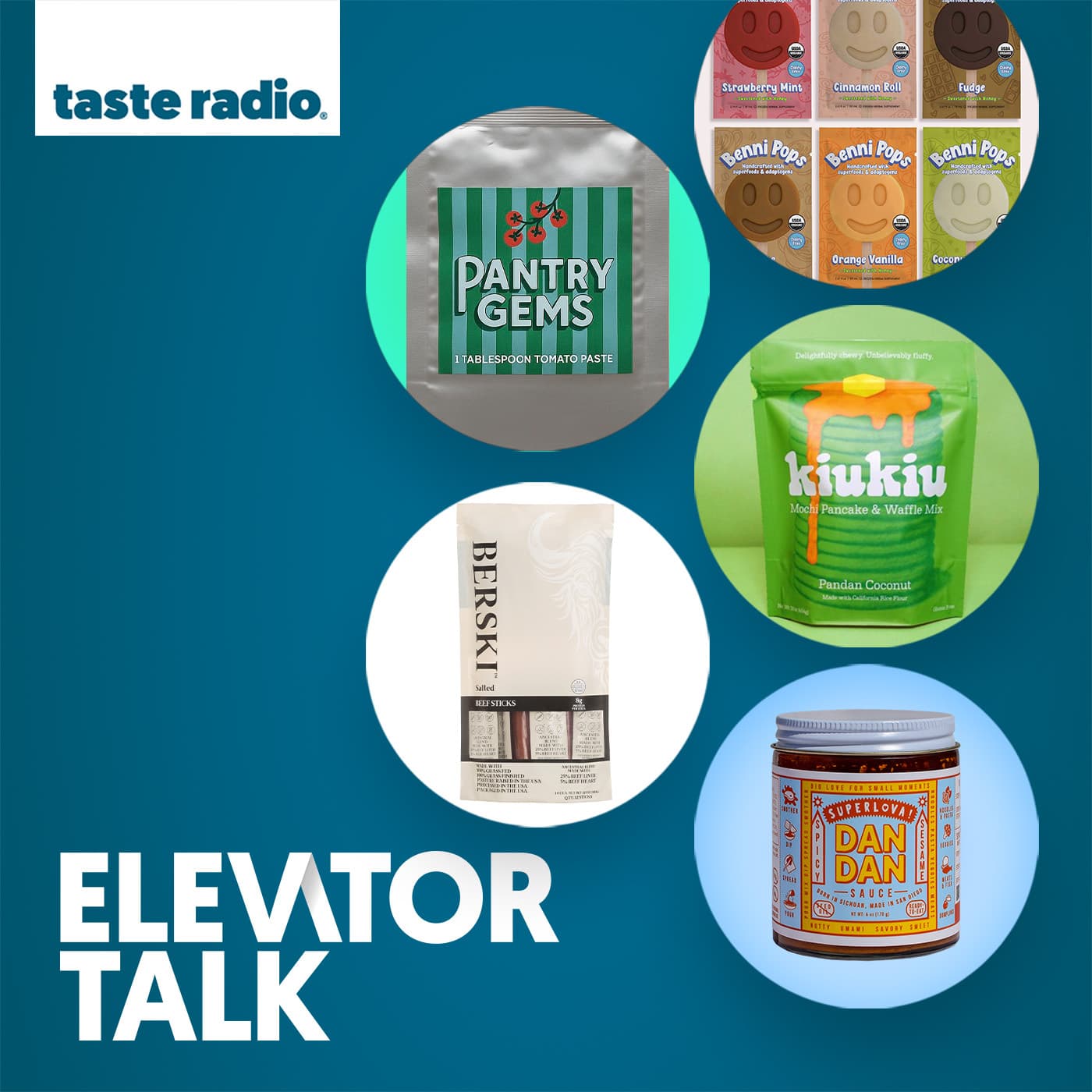
Episode Overview In this episode of *Taste Radio*, host Ray Latif, alongside special co-host Mia Medina, founder and CEO of Gather Brands, features innovative entrepreneurs from five food and beverage brands: Pantry Gems, Berski, Benni Pops, KiuKiu, and Superlova. The episode provides insights into each brand's journey, challenges, and milestones, alongside expert feedback from the hosts.
---
Key Segments and Discussions
- Introduction of Mia Medina
- Background: Mia Medina is the founder of Gather Brands, a sales consulting agency focused on early-stage food and beverage brands.
- Insight: Emphasized the importance of finding the right partners and advice in the tough food and beverage landscape.
- Brand Highlights
Pantry Gems
- Founder: Gina Moore
- Product: Single-serve packets of pantry staples, starting with tomato paste.
- Challenges:
- Overcoming the low retail price of traditional tomato products.
- Finding the right packaging solutions that maintain product quality.
- Insights:
- Mia emphasized the importance of pricing strategies and market fit.
- Discussion on potential retail partnerships and packaging considerations.
Berski
- Founder: Ricard Blomberg
- Product: Ancestral Blend Beef Sticks featuring high-quality, grass-fed beef with organ meats.
- Market Positioning: Targets health-conscious consumers looking for nutritious snack options.
- Challenges:
- Getting past the initial consumer perception of organ meats.
- Pricing strategy to remain competitive while maintaining product integrity.
- Feedback:
- Mia highlighted the importance of understanding market competitors.
- Suggestions for targeting various retail sectors like fitness stores or health-focused outlets.
Benni Pops
- Founders: Paul and Katie
- Product: Dairy-free popsicles enhanced with functional extracts for health benefits.
- Target Audience: Health-conscious consumers and families.
- Challenges:
- Establishing a competitive price point for single-serving pops.
- Communication of health benefits without overwhelming consumers with information.
- Insights:
- Mia suggested focusing on clear, engaging packaging and trial strategies to boost initial sales.
KiuKiu
- Founder: John Liu
- Product: Chewy rice-based pancake and waffle mixes.
- Market Entry: Launched in specialty retailers and now entering conventional grocery stores like Safeway.
- Insights:
- Discussion on effective trial strategies and demo opportunities.
- The need for understanding consumer preferences regarding packaging formats.
Superlova
- Founder: Helen Lee
- Product: Small-batch Chinese-inspired sauces aimed at convenience without compromising quality.
- Challenges:
- Differentiating in a crowded market of sauces.
- Packaging choices that reflect the product's versatility.
- Feedback:
- Importance of clear branding and educational packaging.
- Suggestions for trialing different formats to gauge consumer preferences.
---
Conclusion
- The episode underscores the entrepreneurial spirit in the food and beverage industry, emphasizing innovation and adaptation.
- Each founder's journey reflects the common challenges of pricing, packaging, and market positioning.
- Mia Medina's insights provide a strategic framework for emerging brands to navigate their growth in a competitive landscape.
Takeaways
- Pricing Strategy: Essential for market acceptance, especially when introducing novel products.
- Consumer Education: Critical for products with unique attributes to ensure wide acceptance and trial.
- Packaging: Should clearly communicate product benefits and stand out on shelves.
- Retail Relationships: Cultivating strong partnerships with retailers can significantly enhance market presence.
For aspiring entrepreneurs in the food and beverage space, this episode presents valuable lessons and actionable insights on how to build and scale innovative brands.
Written by AI. May contain mistakes. Listen to the episode to check what was said.
Transcript
Automatic transcript. May contain errors.0:05Hey folks, I'm Ray Lateef, the editor and producer of BevNet's Taste Radio podcast and you're tuning into the latest episode of Elevator Talk, the series that profiles early stage and disruptive brands from across the food and beverage industry. Today's episode will focus on five food brands whose entrepreneurs will have an opportunity to hear feedback and advice from our co-host for this episode. That's Mia Medina, the founder and CEO of Gather Brands. Mia, it's great to see you again. So good to see you too. And thank you so much for your kind words. Yes. Well, welcome back to the show. I believe this is your third or fourth time as a co-host of Elevator Talk.
0:49I can't thank you enough for your contributions to our show and to the industry as a whole. You have supported the growth and development of so many early-stage companies. This is a tough business. Finding the right partner who can offer you good advice, good insights, good feedback is so critical. For folks who may have missed those episodes in which you join us as a co-host, please tell us a bit about yourself and Gather Brands. Yeah, sure. First, I just want to say thank you again for having me and your kind words. It's always really nice to be here. And also thank you so much to the NOSH community and what you do for emerging and these really innovative brands.
1:32And I think you guys are really just a pillar in helping them as well. So this relationship is always a really fun one. I love the brands that we get to. It's hard. I just love them all. But so I wanted to thank you for that. For those of you that don't know, I am the founder of Gather Brands. And we are a, you know, for all intents and purposes, a brokerage agency, although I really refer to it more as a sales consulting agency. We focus on all stages of brands. However, we really specialize with some of the early stage brands kind of starting out really getting into retail. And so it's been really our focus within sort of even hyper focus is in the natural specialty channel.
2:12So that's our, you know, from a channel perspective, we really dig deep into those retailers and we have national coverage. So everything from Gelson's and SoCal to Wegmans on the East Coast and then everything in between. So just a little bit about what we do. Between Gelson's and Wegmans, you named two of my favorite retailers. So I hope by the end of this episode, some folks get some insights into how to get into those two amazing retail stores. I think, you know, this is, as I mentioned, a very tough business. And as always, you know, we're in the midst of challenging headwinds coming from every single direction.
2:56But if you were able to identify one issue that's really tripping up early stage entrepreneurs, what would it be? My usual answer to that is trying to go too far too fast. You know, you can't be in every single retailer. You've got to pick the ones that are going to be really good partners for you and really focus on them and growing your business within them. So whether it's a region or a retailer within that region, just really, you know, diving in deep because then you can build your story for your velocities, your retails. You know, really learn a lot and take those learnings to then go to other retailers and regions and expand out from there.
3:32Excellent advice. And I think there's probably a lot more to come in this episode. We've got five amazing brands and the entrepreneurs behind them. Mia, are you ready to meet the first? I'm so excited. All right. That person is Gina Moore. She's the founder of Pantry Gems. Gina, it's great to see you again. Hi, it's great to see you too, Ray. And nice to meet you, Mia. Hi, Gina. Thank you so much for dropping off the samples. It was such a lovely surprise. Oh, I know. I just did my first pilot run and I was like, you're local. So I'm just going to drop it off at your door. So perfect. I appreciate that.
4:09But okay. So a little bit about my brand. It's called Pantry Gems. Perfectly portioned pantry staples. And I was inspired by tomato paste because I'm Italian. I cook a lot. I have three kids. and I was constantly wasting cans of tomato paste after using one or two tablespoons for a recipe. Some people will like freeze them and all that, but I just don't have time for that. I was like, this is a dollar. I'll just throw it away and buy it again next time. And this is such a waste. And I was really surprised to see that this didn't exist already. Now that I've been working on it, I can see why it's a lot of work and it seems so simple, but it's really not.
4:47and I did just do my first pilot run with a co-packer and it did go really well which that's one of the samples that I gave you looks like this. I have no CPG background I actually have like an art background and I do photography currently which is great because that will help me in the future and yeah the next step for me is working on packaging design and the box design. And I'm so excited to talk to you because the retail part of this is overwhelming. And I have Seaside Market here locally in Cardiff. So I'm excited about that. But yeah, so I'm just happy to be here. Before we get to Mia, and I know you have a lot of advice.
5:28You know, I always just come in. I know. I'm happy because you know what? I am thrilled that we're talking about Pantry Gems. When I first met Gina, and this is going to be a through line for everyone in this episode, Everyone who's joining us today also joined us at a Taste Radio meetup at some point during 2025. Gina introduced herself to me at our San Diego meetup, and I was thrilled. She gave me this little packet. I'm like, what is this? She goes, oh, it's an individual packet of tomato paste. I almost fell on the floor because I'm like, what a genius idea. How come nobody's ever done this before?
6:01It's amazing. Then we were in a recent episode of Taste Radio. I shared it with my co-host. You're like, this is amazing. How has no one ever done this before? And despite this being such a great idea, Gina, I think you're 100 % right. This is such a novel concept that it begs the question, well, how do I scale it? How do I get to a point where I can actually go from concept to shelf? And that's why I'm thrilled that Mia can offer some advice here. So Mia, you have the product. I'm sure you're excited about this as well. You know, what are the first steps in terms of getting to market and getting in touch with retail buyers and introducing them to this brand?
6:38Yeah, I do. First, I have to tell you, this is so timely because one of my like, and again, you're in San Diego. So like this is like our cold weather, right? We're sitting at like 80 degrees right now. But anyway, it gets colder at night. But one of the things that when it starts getting cold and football season comes that I am constantly doing is very short rib. So I just did my first batch last week and it's the exact same thing that you talked about. I buy the six ounce can. It only requires three ounces. So then I have to put it in a bag, which I make a big mess out of and I freeze it. I used to just throw the can away like you, but now obviously, you know, with inflation and things like that, I just, I can't throw anything away anymore.
7:15so um and then the other option is the tube one right because you kind of do that but the problem is that's like four ounces so you use basically the whole thing but there's always at least some left and anyway i was so excited to see your product i had a couple of questions around it because the one thing that i concerns me is going to be the packaging and this is just me like my brain, you know, I just, this is where I go with it. Because obviously, you know, it is a very, it's a commodity item. So the retail price on it is fairly low when you look at when you, you know, buy the can. So that could be an obstacle.
7:53So I was curious what you were, you said that they were going to come in packs of six. So what is that retail going to be? That was one of my first questions. That is a very good question. And I totally feel you on this because like it used to be a can of tomato paste was like 69 cents. But now these days it is, I see it like$1.39, but that's still very low for what you get. That's not for the organic ones. Exactly. Yeah, not even for the organic. And my product will be organic, but it's still such a low cost and you get six ounces. There's 10 tablespoons in a can. And the packaging is so expensive.
8:31I think that's why this hasn't been done before. It's essentially a packaging company almost. And for the COGS, since I'm still in the messy middle and figuring everything out, it is still hard to know. But we've made very educated guesses. And it seems like I'll have to start selling this at$9.99 for$6, which is definitely higher than I want to. But I guess you just have to start somewhere. And eventually when I have bigger MOQs, the price will go down. So that's kind of where I'm at right now. Is that what you're selling listed at Seaside Market for right now? I'm still pre-launch. What a great store, I will say, too.
9:12I think we have another, we've got a couple of San Diegans over on this call, I think. But what an awesome store to start with. They're just an amazing retailer. Very small, but love to start with niche products. And they're very supportive. So that's a great one. Exactly. I'm really excited. And it's my local market. Like I don't do my full grocery shopping there, but I go there a lot with my kids like after school to get snacks and all, you know, that kind of thing. I will say I did explore other packaging and this seems to be the best delivery method and the lowest cost, but it's still very expensive.
9:48So that's kind of where I'm at. I would love your advice on that, though. Yeah, I mean, I think that's going to be your biggest hurdle on it, honestly. But I will say don't price it, you know, for what you think you're going to get it to. I always tell brands that because, you know, they'll say, well, I think we can get to a certain amount, you know, once we scale and once we have this. But the problem is that people don't consider is, yes, you will be able to, but you'll have to order that much more packaging and that much more product ingredients. And then your cash flow gets crunched because you have, you know, you've already priced it for, you know, lower than it should be or lower than it is sustainable.
10:21So I think that is going to be that's going to be your biggest challenge. I do think it's a genius, genius product. One question, you said it will be organic or it's organic, you know, if there's a way, because so few of them are organic, and I never really, I would never push to not be organic because it's so important. However, with a commodity item like this, have you checked out, like, maybe potentially launching with a non-organic? That is something I've thought about, and it's actually, like, such a small price difference between the two. and I almost feel like if I'm organic, I can justify a tiny bit higher price.
10:58Yep. And just like the markets I want to get into, it just feels like it would be in the natural space or the shoppy shops that we have. There's so many good rooms. Definitely the natural specialty is going to be a really good sort of starting zone for you. So yeah, I really loved, I loved the concept. I can't wait to see what the case pack will look like. and then um you know how have you have you come up with your master case yet not yet where those are our next steps we had to do our pilot run um to figure out the exact size of the sachet and then I mailed out my samples to my packaging company and they're going to figure out the box size and then we're kind of like taking it from there so awesome one thing I will say on that and Ray sometimes asks me you know parting words so don't ask me because I'm giving them to you now right?
11:48But this really applies to all brands. But when you're doing your master case pack size, remember that a lot of retailers want free fills. So if you have a 12 case pack in your case pack, that's what you're going to have to give a retailer when you launch into their stores. A lot of them want one case per store per SKU. If you can launch with a six case pack, six unit case pack, that's way better for your overall when launching into retailers. So just something to consider. Thank you. No, for sure. I appreciate that. Gina, if I were an investor, I would ask, do you have any kind of patent or trademark?
12:24I mean, trademark, it seems like you might have that with Pantry Gems, but do you have any patent on the packaging itself? I don't. And I've looked into it and it doesn't seem like there's a way to patent it yet, but I'm in talks with other lawyers. So we'll see. The other question I would have is about co-packers. your price point is relatively high. I mean, given what tomato paste costs in the supermarket, you might buy a jar it's going to cost you, you know, buck the two bucks. So six for$10 seems a little bit high right now. What's been your search? What's your search been like for co-packers?
13:04Again, this is a relatively novel concept, but I think that if you could find one that could help you reduce costs pretty dramatically um that would be to your benefit going forward yeah i actually love talking about this because i found my co-packer in such a unique way um first of all in general finding a co-packer is so hard there's no like exact like database you just have to do a bunch of searches and i ended up posting in a slack channel and my co-packer found me um tony from Naki Noco, shout out, because he's amazing. He's in Chicago. And he is essentially like a middleman type co-packer where he'll do smaller MOQs.
13:46And he was helping me figure out my prototype. I did talk to a couple of bigger ones, but the MOQs are 100 ,000. So I'm just not there yet. Like that feels too big. I'm trying to ease into this. So I'm doing my first run, however many runs that is with Tony. And we're kind of just taking it from there. But you're right, the price will go down with a bigger co-pecker. Again, I think this is such a brilliant concept. And I think you've got just a ton of runway with it, as long as the price point is in line with what people expect for a product like this, tomato paste, that is. But it also seems like you've got other products in the pipeline as well.
14:31We're out of time. I can't believe this. They don't give us enough time here but one one day at a time so let's let's let's let's kill it with tomato paste and then we'll talk about everything else uh as it comes up but gina thank you so much for coming out to our san diego event thank you so much for introducing uh yourself to me and and i really love what you're doing and i would love to stay in touch so please do so let us know if we can help in any way as you continue along your journey thank you so much right this was so awesome for me to be on here thanks for having me All right. Great start to the show.
15:05Let's keep it going with our next guest. That's Ricard Blomberg, who is the founder and CEO of Burski. Ricard, great to see you. Yeah, great to see you, Ray. I think we met last time when you were at an event in Austin with my dear friend Bella from Better Sour. Yes. Yeah, she introduced us. Our kids used to go to the same school, in the same class, actually. So it was nice. yeah bella hughes uh just a spectacular person one of the co-founders of a better for you candy brand called better sour it is just remarkable stuff uh bersky is a brand that my colleague mike schneider can't stop talking about he loves what you're doing tell us all about the brand yeah thanks and and fresh to meet you also mia uh fresh to meet you um yeah so thank you so much for sending samples ahead of time i really appreciate it it's great yeah glad you glad Glad you got them.
16:02Glad you got them. Yeah, so let me tell you about Burski. So we make Ancestral Blend Beef Sticks. I can tell you the reason why we started it. So I have a co-founder as well, Alex Rychinski, who's a holistic health practitioner. My background is actually that I've been, for the past 16, 70 years, been in charge of the growth and establishment of my family business, Eleiko, where we sell fitness equipment to colleges and universities, professional world championship games in weightlifting and powerlifting, a lot of home gyms and all that. So we have a very high-end fitness equipment brand. So I've been working with a lot of college and professional team strength coaches and athletes all across the U.S.
16:53and I had this idea about developing a really good protein bar that was going to be you know the best protein bar on the market was my was my was my idea and I started talking here with my friend in so I live in Austin Texas right now for the past five years thought I was in Chicago but moved down here five years ago so and I met a great guy holistic health practitioner Alex and we started talking about can we somehow develop a really really good protein bar and as we looked at it we looked at all the what's what's what's out on the market traditionally and there's a lot of really kind of garbage stuff in in a lot of these protein bars we said how can we make it as natural as possible in a very convenient way that is full of nutrients and minerals and That's kind of the beginning of Burski.
17:46We said, let's just make a natural beef stick. Let's put some organ meats in there as well because they're highly nutritious. A lot of minerals and good stuff in liver and heart. Also, we wanted to make it really tasty as well. We wanted to find some really good, high-quality beef to start with. We found a fantastic supplier up in the Pacific Northwest who provides us grass-fed, grass-finished, pasture-raised beef that are grown on regenerative farms. Never been on a feedlot, just the best beef out there. And then we found a lovely co-packer. That is always a tricky one. We obviously had to go through a couple of different searches for that.
18:28We finally found a really, really good one who was able to make a beef stick that doesn't have any additives whatsoever. So there's no citric acid. There's no other preservatives or anything. It's just celery powder, celery salt in there as a natural nitrate. So it's an incredibly natural product. So I think you feel that when you taste it. And we also made sure to develop one that was very natural in flavor, which is the salted flavor. You kind of taste a little bit of the liver flavor, but it's very, very pure. And then we have a salt and pepper, which is a little bit more spicy on the spicier side.
19:07And I think that that's my personal favorite. My daughter's favorite is the salted one because it's less spicy. Yeah, so that's kind of been the growth of Burski. And now we're established in the great CPG hub of Austin, Texas. And we started going into a lot of local little small retail stores here. Uh, so we're about, we're probably in around 15 stores right now in the Austin area. No major change or anything like that. We do have one national account right now, which is, um, uh, Sun Life Organics, uh, which is a very high end premium smoothie, uh, store. Um, so they, uh, have, uh, our products in all their stores, uh, nationwide right now.
19:57So that's the first one. So, um, yeah, that's, that's where we're standing right now. Very cool stuff. Mia, did you get to try the products? The salt and pepper one was, I preferred that one. I think the liver is going to be super polarizing, right? Because there's just a hint of it. If you like it, I'm totally fine with it. But I think if you like liver, then it's going to be like people are going to rush towards this. But if you don't like it, then I think it could be off-putting. That was just my two cents there. But I really like that you have the salt and pepper one because I think that that sort of masks it to your point.
20:34The consistency was also really nice. It wasn't, you know, it was very like not dry at all. And your packaging is gorgeous. And I really love, you know, the contrast of, you know, the ingredients, the salt being the lighter one and the pepper being black. And I think you've done a great job. I think the two SKUs is awesome. Are you going to be selling them individually as well? Yes, we are. a lot of stores do that uh so we have them obviously in the package of a one ounce uh 12 pack and 1.9 ounce almost like a two two on stick we sell them in eight packs um so i would say not from our side we wouldn't sell them individually but if a store wants to sell i guess maybe a package that they could merchandise where it would be you know what i mean something like that not the bag yes correct that is actually something that we are working on right now okay the price is a little bit higher which you're going to hear me say that all the time with any of these brands unfortunately it's kind of just a but again we you know in the natural specialty industry they can withstand that more than i think in conventional right so that's and that's where these types of products are going to resonate first and most um so that's one of it But you can really do a lot with an individual, you know, a case pack that a retailer can put out and sell individually for that trial, you know, for that person to just do a trial purchase on that versus the multi-pack.
21:59Yeah. And price point is actually something that we looked quite a lot at. And we actually have, I'm not sure entirely when you saw our last pricing, but we literally in the last week, we were able to lower the price. We're keeping the same consistency on the product. but lower the price with almost 25%, making it very competitive. It's still going to be a little bit on the premium side because there is a limited amount of liver. It is a very, let's say, trendy product right now. There's a lot of demand for liver. So there's still going to be a little bit on the higher premium side, and that's where we want to be as well.
22:38So we're not going to be competing with the lowest brands, but I feel like we're in a pretty good spot now price-wise, though. Do you know any other brands? obviously this to your point is a competitive category do you know any other brands that are putting liver in or heart in their products i'm not aware of any so i was curious if that's your unique you're absolutely right it is a i mean the beef stick market is obviously an incredibly competitive market uh that's that's our experience and the jerky market in general is competitive so we want to stay in this like highly nutritious um very good quality meat being very transparent on where we get the meat from and the fact that it is grass-fed pasture-raised as well.
23:18So it's not just grass-fed on a feedlot. So we want to make sure that we stay in that high premium price one. There are a couple of other ones we've seen it, but no one who's kind of taken it to a bigger scale, so to say. But we can see that there are some that are starting to use like an ancestral blend in their sticks right now. So that kind of tells us that we're kind of onto something really good. that people are going towards. That's your big differentiator. And when people ask why more expensive or why, that's great that you can back that up. Yeah, correct. And we are also going to, we'll be on Amazon hopefully by the end of this week as well or next week is our plan also.
24:04So that's been a process as well, getting into making the purchasing process a little bit easier. Yeah, well, that's big and that'll be big for Bursky for sure. Mia, I wonder about sort of the non-traditional retail opportunities for Bursky. You know, you think about the sort of health and wellness consumers that are really focused on clean ingredient beef sticks. I think about those fitness oriented folks that are at a GNC or a vitamin shop. You know, are those opportunities, do you think, for a brand like this? Absolutely. I think those are, absolutely. It's obviously we don't work with those types of retailers, but I think this gives you that category.
24:44I think, again, in thinking of some of these alternative categories outside of, you know, the gym and that there's this is a great one for like travel and food service. And, you know, there's you have a ton of different opportunities to go with this outside of just traditional retail. Yeah, Ricard, we're almost out of time. I also think that sort of the influencer strategy that you have is going to be really important. Getting the message out there, getting the word out there. I'm on your Instagram page right now, and I see that you've worked with a few folks. What's been your strategy? How do you identify folks that can help you amplify and optimize what you're doing on social media?
25:24Yeah, you know, you're absolutely right. That has been kind of the key from the moment. That has been one of those, okay, we've got to get the brand going. We've got to make sure that people use it and that we have influencers that are using it. and it's been a very kind of organic growth. I mean, people have been requesting it and everybody who's tried it loves it. So it's an easy thing to have an influencer. They try it and they're going to love it and they're going to kind of get a little bit... It's almost like we have had people that almost get addicted to it because their body's been craving these minerals and nutrients that are in the product.
25:59So they start feeling how good they feel when they eat it. But definitely the influencer side and having like ambassadors and kind of creating a tribe of Burski people that promote our product, that is very important. And will continue to be an important part of our strategy moving forward as well. Absolutely. Finding your tribe is something I hear a lot from successful entrepreneurs, folks who have identified a group of people that can help really get the word out about what they're doing and do it in a very authentic way. Ricard, I think you're off to a great start. Thank you so much for joining us here on Elevator Talk.
26:37Please let us know if we can help in any way. Just stay in touch. And also, if you happen to be considering a trip to Los Angeles in early December, I would highly recommend considering our NOSH Live LA event that's happening on December 4th and 5th. It's a real great hub for leaders in the food and beverage industry, retailers, investors, consultants, distributors. Everyone's going to be there. So that message is not just for you. It's for everyone who's joining us today and everyone listening or watching at home. So once again, thank you so much for being on the show. Thanks so much, Ray. Thank you so much, Mia.
27:16Thank you. Thank you. Great to meet you. All right. On to our next guest for this episode of Elevator Talk. We have Paul Lazazera and Katie Sarna, the co-founders of Benny Pops. Paul, Katie, great to see you again. Good to see you again, too. Hi, Mia. Thanks so much for your insights. We're really stoked. I'm Katie. I'm Paul. And we're the co-founders of Benny Pop. And we just launched in May of this year. And we handcraft just sweet enough dairy-free pops that deliver nostalgic joy without the junk. They're an indulgent grab-and-go treat that satisfies your sweet tooth with a bonus boost from functional extracts like lion's mane, chaga, cordyceps, and reishi to help you focus, stay energized, and boost your immunity.
Read the full transcript
28:01I met Katie at our San Francisco meetup, and I was doing a bunch of live podcast interviews at the event, and it got really, really hot in that room. And as soon as I was done with the interviews, Katie came up to me and she's like, hey, you look really hot. And I go, oh, thank you very much. I thought I was dressed well. And she goes, no, you're sweating like a pig, Ray. You mean, Ray, you were playing overtime and I was more than water. Yes. But she offered me one of these incredible Benny Pops to soothe my throat, which I had been talking for a while and to cool me off. And I was just so happy that she did because it was exactly what I needed.
28:48And these pops have a beautiful smiley face on them. And you bite into them or you get into them and they taste so good. And then you realize, oh, it's handcrafted with superfruits and adaptogens. Totally right place, right time. And I also think that this is a product that, I don't know, I just love what you're doing. And I know you were able to send some samples to me as well. well, Mia, I hope you had the same experience that I did. Maybe you weren't sweating like a pig like I was in San Francisco, but. Thank God. Although, Ray, I've seen you really in action, so I know. You should just carry a cooler around with you.
29:24Seriously. But no, thank you so much. I realize how expensive it is to ship frozen samples. So I really, as you know, starting out like that, I know that's a big expense, so I really appreciate it. And I was very careful to make sure they got right into the freezer. And then we tried them and I have a 10 year old. And so, you know, I'll always want to get his take. I did. You know, it's funny because I was like, oh, it's like a kid's thing or, you know, because of the packaging. But realized very quickly, it's totally, you know, it's all use. I really it's playful. It's the flavors were amazing.
29:59So, you know, right there, I think you guys have done a really good job with that. I think it's so cute that it is a smiley face. I don't know what that costs from the mold and all of that stuff. And if that's, so I think it's, it's definitely, and I haven't seen anything like it. I haven't seen anything else in the frozen category. You see all these drinks with all of the adaptogens and things like that. So I'm excited to hear a little bit more about, you know, how you kind of came up with it and who your target consumer is where that's concerned. Yeah, so it all started, we were growing gourmet mushrooms on our small mushroom farm about three years ago.
30:39And we were really just trying to like experiment and pack mushrooms into every aspect of our diet. And then I made a mushroom mousse with lion's mane, which was really good. But unfortunately, the storage of them, they ended up going bad pretty quickly. And that's when Katie was like, what if we froze them into popsicles? And it was like pretty immediate that we realized we'd created something really delicious and worthy of like sharing with the world. So it was a pretty exciting moment. That's awesome. Yeah. And I would say like our target, I mean, I can see where you like instantly thought kids, but also like we're trying to add joy in everyone's life, regardless of age, whether you're eight years old or 80, like we just, I think it's just like everybody needs a little bit of happiness in their life.
31:22So that's what we were trying to achieve with a smiley face, but I can see like how, but yeah, kids definitely gravitate towards it. And then I think our target market. I would love to say anyone that wants to eat a popsicle, but like realistically, it's people that are seeking a treat that's like, like scratches that sweet tooth itch, but isn't like a sugar bomb because like for me, like, yeah, that's what I'm hoping for. And then what's the SRP on these? Yeah. So great question. So to go back to that day in San Francisco. So I handed it to him and Ray asked me that. And I was like, oh, well, we retail for like$5.99 to$7.99.
31:56He goes, oh, no one's going to do more than$4.99 for this. And I was like, oh. And I was like, it was so true because that's not the first time I heard it, but I loved that. It was like all this feedback and I was like, oh shoot. All right. So that's one of the things that we're going to tackle this winter is actually reducing the pop size by about 33%. And that will get us to about the$4.99 or lower SRP. And that's per unit? Yes. so then from a retail perspective you'll go I'm just trying to think where you live right because you're used to seeing popsicles in a multi-pack where does this live thankfully I mean I have done a lot of research there are a lot of other brands especially paletas that are sold single and we have had like good sales velocity as a single because I think um it is a grab and go treat so it's like sometimes when you get those multi-packs you're like oh shoot what am I going to do with the rest of these three so it's like we are more of a like a convenience cooling treat yeah I mean I think that that will be that would be great because obviously if you have four of those and you're looking at like a$20 multi-pack for sure that would be really tough but um yeah I mean I think that's probably going to be your biggest hurdle is to drive trial but I think that the concept is there and then the only other question I had or suggestion is maybe putting I love the packaging and I think you've done great, but maybe putting some of the, um, some of the actual ingredients and adaptogens on the front somewhere, you know, to, to kind of call it because it does say handcrafted with superfoods and adaptogens.
33:31Um, but it, it's not, you don't go right to it. And I think that's such a, such a major selling point because to me, I'm like, oh, wow, this is not just a popsicle. You know, you've got your outshines and those sort of healthier kind of trying to be healthier they have tons of sugar too but um but I think that that's such a differentiation for you to be able to do it without cluttering it and again I'm no design expert you're probably way better versed at that than I am but yeah I appreciate that because I think that's really where our one of our biggest challenges right now is finding that balance between this like taste is first and flavor like this tastes good but then I think sometimes people get a little scared or nervous about the mushrooms where they're like oh is it overpowering.
34:12So that's where we're struggling. We're going to redo our packaging this winter as well of like popsicle tasty first, then secondary functional mushrooms. And sometimes people get freaked out when we put the mushrooms on the front. Awesome. No, they were amazing. And I really appreciate you sending samples. Oh, thank you so much. Yeah. So two things. One, I hope I didn't come across as crazy when I was talking about the price of the wines. I tried to be like, I think$4 is an appropriate price point for a single serving of this, I think, especially given all that's inside of it. I think now that I'm looking at the package a little bit more closely, your statement of identity at the very bottom is frozen herbal supplement.
34:57I know you mentioned you're going through a packaging revamp, but how much of this is marketed to people who are looking for a functional benefit as much as they are? looking for, you know, an indulgent, delicious treat. And I think sort of walking that line and finding that balance is going to be the key to your future. Yeah, absolutely. Yeah, I agree. I think that's like something that's why we were really stoked to get on here and also get me as insights because that's, we have to make these critical decisions for next year, this winter. And we're really, it's kind of been honestly all over the place where people have suggested, like, get the mushrooms up in the front.
35:39That's what people are looking for. And other people are like, Like, nope, bury it on the back. Just make it really clear cut. This is the flavor you're getting. And then people turn it over and then they're like, oh, these are the benefits. So, yeah. I think that the consumers, especially, you know, your consumers are much more sort of educated now. Again, like I said, I focus in natural specialty. So in conventional, probably much less so. And exactly what you're saying. But in natural specialty, I think people are now, they're aware, like, mushrooms aren't going to make them trip out and hallucinate.
36:09you know it's definitely i think that they are more aware in this specific channel so i i get it you have a you have a fine line that you have to walk where you want to appeal to um the greater mass but at the same time those that want that those types of products in their body you know you could really be grabbing earlier so it is a tough one it's a tough one it might come down to the kind of where you guys want to launch and start that's also really good feedback too because we did a lot of events where it was just kind of like mainstream, like art and wine festivals, where most people who go there just want if they're seeking a sweet treat, they're going to go get like conventional ice cream, or pastries or cookies or something like that.
36:48So we got feedback from that where people were kind of like, you know, I'm not here to be healthy. But I think they were like, Oh, God, am I going to trip out on this? Yeah. Yeah. So maybe that just wasn't the best or really like the specific to the kind of the audience we're actually seeking. So I appreciate that feedback. Yeah. Mia, just in the limited amount of time we have left, you know, let's say that Katie and Paul are walking into Sprouts or a Whole Foods and they get in touch with a retail buyer and they say, OK, you know, would love a moment of your time or they get that meeting. What's the what's the what's the pitch look like?
37:28I mean, if you if If you could dial it down to, you know, a 10, 15 second pitch, how would you advise them as to really get that person's attention and get them excited about what they're doing? Yeah, I think knowing your category incredibly well, obviously knowing, you know, anything to do with any competitors out there, why you're different. And then knowing where you live on shelf. That's always a really good one. And, you know, again, I'm just blanking right now. I've seen Sprouts set a thousand times. I just don't in my brain see individual popsicles anywhere. So I'm like, how are they going to want to multi-pack?
38:01So really doing your research on what they're currently carrying helps a ton. And then if you do have any accounts that you're in or selling into, small is fine. Knowing the numbers that you're doing there, your velocities where, you know, we've got repeat customers, we've got this, anything, you know, coming from online as well. And then sharing your feedback from the events that you're sampling at, you know, what are you hearing people say? That's really important. We just pitched an ice cream to Sprouts, you know, and that they were doing a lot of these events and had some great feedback and consumer, you know, they want to know that too.
38:33So I think just really knowing that category. Yeah, that's excellent advice. I sat down with the founder of a brand called Harkin Sweets. Her name is Katie Lefkowitz and it's a brand of better for you candy bars and so on. And she actually got a yes when she walked in and got her meeting with a Walmart buyer. And so she got a yes in the room. And it's because, and she mentioned this in our interview, she knew that category inside and out. She knew all the distributors for that point of sale, that cash register area where a lot of the candy bars are sold. She knew the competitive set. And because she was armed with all this information and she had a great product and brand, And the buyer was like, how could I not say yes?
39:22And so I think that's such excellent advice is not just know who your consumer is, but know the set and know the set in the retailer that you're trying to pitch to. So great stuff. Well, I could talk about Benny Pops for another two, three hours, and I think I would really enjoy those two, three hours, but we're out of time. Paul, Katie, thank you so much. Thanks so much for coming out to our San Francisco event. We're planning to be back in that amazing city in 2026. But in the meantime, if there's anything we can do to help along your journey, any introductions we can make to retailers or folks like Mia, please let us know and we'll do what we can.
39:59Thank you so much. I appreciate you both. Yeah, thank you both. All right. I absolutely love this show. Isn't it great, Mia? Isn't it fantastic? I love it, Tony. I'll just do your host every time. I love it so much. It's so fun. It's so great. I mean, these people are changing the industry. literally you know one brand one product at a time and it's just fantastic all right on to our next guest for this episode of elevator talk we have john liu who is the founder of qq john great to see you great to see you ray um and lovely to meet you mia um so i'm john i'm the founder of qq and we make bouncy chewy rice-based pantry staples um so we're starting with our mochi pancake and waffle mixes in ube.
40:47So this is our packaging in ube, pandan, coconut and black sesame. So they're all made with California grown rice flour, then actually gluten free. So a little bit about the inspiration. I grew up in Taiwan, and a lot of my family were rice farmers. So in Asia, there's obviously a lot of chewy bouncy foods, think mochi, rice cakes, boba. And actually, as a fun fact, QQ is a phrase that's commonly used in Asia that describes that texture. So kind of like how Italians say al dente. So I actually want QQ to also become part of the cultural vocabulary in the US. But when I moved to the US, I couldn't really find many rice based chewy foods beyond, you know, obviously there's mochi ice creams in the freezer aisle.
41:33And I've always loved baking and cooking with rice flour. So, you know, pancakes, cookies, waffles, even pasta, like anything I could sub rice fat into, I would. So that's really what inspired QQ. And a little bit about our progress so far. So I launched just about two months ago, and we're mainly sold DTC online. But I've also, you know, gotten us into around 65 now specialty retailers, really to prove out that install velocity. And actually, this week, we just launched into Northern California Safeways and also seven Andronico's markets in the Bay Area. So that's obviously, you know, Albertsons Group's natural, I guess, chain in the Bay.
42:16And Mia, I love what you said too about growing methodically and sustainably. So, you know, I'm currently bootstrapping Kiki from my own savings. I was in tech before this. So I'm especially excited to just get your thoughts on that as well. Yeah, absolutely. I mean, I have to say it's funny and looking at all of the, I'm, I love your packaging. Like the packaging is just so fun. Shameless, you know, shameless plug here or, you know, not plug, whatever. But I'm like, these are one of the samples I didn't get. And I was really sad about that. Mia, Mia, they're on the way. I promise. I put them in the mail on Monday so you can get them to.
42:55But I just think it is like, and again, Ray talks about, you know, all of the brands that we get to talk to and all of this. And it's like when you see such innovation like this in a category like this, you know, kind of a stale category, right? Like to see something like this, I've never have never seen anything like this before. It just is so exciting. And I think those are the kinds of really exciting brands that retailers like. You know, you hear when I was talking earlier about Gelson's, right? Gelson's is one of the retailers that they're always like, we want to be first to market. We want this.
43:27So taking brands like that and a lot of basically most of the brands that we talk to on here, being able to take those to our retailers that are looking for first to market opportunities is so fun. So that being said, your product looks amazing. I love mochi. I love all of that. So I can only imagine the pancakes taste great. I will then ask my standard question. What is the SRP? How do you compare? Obviously, there's nothing else like it, so comparing it is difficult. But talking about knowing the category, how do you compare it in the category as well? Yeah, so currently in DTC and then also some of the specialty retailers, it hovers around$13 per unit.
44:10And that makes about 16 pancakes, so a good family-sized serving. And then in conventional, it's around$10.99 to$11.99, just depending on the outlet. And then in terms of how that compares to, you know, standard pancake mixes, it's probably, you know, a couple dollars, three dollars more, which I think makes sense given obviously the... And obviously we're comparing to premium pancake mixes, not your, you know, Bisquick or whatever we're talking, you know, it's definitely... Exactly, like probably, you know, one of the paleo birch benders or something like that, yeah. And then it's interesting that, are you based in Northern California?
44:50yeah we're based in San Francisco oh okay awesome um because I was gonna ask it's interesting that you chose to launch with Safeway um being conventional I think Andronica does make a ton of sense there so I'm curious have you hit shelves in Safeway yet yeah so we're going to be hitting the shelves this week um and I think that that's definitely a great point you know obviously I think when I first started out, given the more premium positioning of QQ, I felt like obviously a Whole Foods or, you know, another natural chain would probably be the obvious choice. I mean, that's definitely still potentially in the cards, hopefully next year.
45:30Whole Foods is a long game, I will tell you that. So the fact that you've just launched and you've already got a major retail partner like Albertsons is amazing. And regardless of the channel, I still will, you know, advise, like lean into that partnership and relationship where you can really, you'll be able to sort of ascertain your velocities and things like that. A lot of people go from natural specialty into conventional and you kind of have to cut those numbers because you won't sell as much. So you'll, you can use those numbers and think you'll probably sell a little bit more because your core consumer is shopping in natural specialty, you know?
46:03So that's great. Are you going through Kehi to get to Albertsons? No, we're actually using pod distributors right now. John also came to our San Francisco meetup and the entire room just smelled amazing. And everyone was like, where is that coming from? And it was pretty obvious because you were cooking up pancakes in the corner and everyone's just like, oh my gosh. And I saw everyone eating them. Ironically, I didn't get to taste them. But no, don't. Yeah, don't don't worry. It was a busy night and I was very talkative and not unable to eat things. But it just feels like trial is going to be so important because not everyone's going to know about what mochi pancakes and waffles taste like.
46:48And if you can get into a store and just have people smelling it and so on and so forth, it goes a long way. So what is your demo strategy? What is your trial strategy? you? Yeah, so definitely agree with you. I think, you know, with this product, I think it's a good balance of sort of putting a textural and cultural twist on an American breakfast classic. So at least with pancakes, people are familiar with, you know, the format. But definitely, I think with the flavors and the texture, it really does, you know, invite trial to really move that velocity off the shelf. So that really is going to be the forefront of our strategy for, you know, the Safeways and Andronico's.
47:26So far, I've also done, you know, a ton of samplings, just did one last week at Pop-Up Grocer in New York, and really saw, you know, that just lift. We sold out in the store. And we were number one in the category for, you know, sort of this quarter so far. So I've really seen the trialing and the sampling payoff. I think people just don't really know what to expect until they try it and hopefully they love it. Yeah. And I know you're bootstrapped, John, but there are companies out there that do demos and handle demo strategy for companies. I don't know how effective they are. I don't know what advice Mia would offer in hiring those types of companies.
48:10I think it's absolutely one of the things that when we approach a retailer, they to know, especially again, because we work with a lot of, you know, newer innovative brands, they want to know that you're going to come in and there's so much consumer education that is needed, you know, here when launching a new brand like this. So they want to know that you're going to do demos. They want to know that you're going to support that because if they're going to cut space on the shelf to put you in, you know, they want to know how they're going to move product. I would, that's a great, I'm so glad you brought that up, right?
48:38Because I do think that one of the things that you can do because demos are so expensive, as I'm sure you know, and you will find very quickly, you just can't do them all yourself. But sharing those demos and finding certain agencies that will allow you to split that demo with somebody, you know, yours would pair very nicely with a juice company or, you know, there's something like that. So that's always something to consider. And maybe talk to some of those demo companies out there about doing that to keep your costs down, but really get that education out there. But yes, Ray, I highly recommend building that into your budget.
49:13As I said, retailers will want to see what you're going to do to support that. Yeah, that's a really good point. I think with pancakes too, there are so many different condiments that you can add. We've definitely, I've roped in some friends like in New York, I'm quite good friends with the sour milk founders, the yogurt brand that's really taking Instagram by storm. And yeah, that was a great, you know, topping that even putting some sour milk on the pancakes also really helped move that velocity. So I think that that's a great idea. Amazing. And then even like an ingredient company, you know, if you have a butter, I think it said you have to add, you add butter is one of the things that you add to.
49:53So you're finding a butter company that people don't want to taste butter, but if you're cooking it with the butter and you can demo it, you know, things like that. So it doesn't even have to be like an addition to, but anyway, really great. Yeah, that's a great idea. I didn't think about the ingredients that you mix in, but I feel like also definitely going to sit down and think about that now. Good for that, no pun intended. From an Instagram standpoint, I'm on your page right now. And the stuff that really pops out to me is the stuff which features the finished pancake or finished waffle there's one post uh where someone's just squeezing three pancakes together and the caption is get inside of me and i and i'm like i want that right now um have you found that's that's the really effective way of getting people interested are those the most liked or um most engaged posts yeah definitely i mean i will say when i quit my job to start qq i did not think that i'd be spending so much time just filming myself squeezing pancakes on camera I really do just maybe twice a day, just whenever I'm eating them, whenever I make them, I will rip open a batch and just do this for some B-roll.
51:02So, yeah, very, it's not expected, but that's definitely been the type of post that really resonates with, you know, social media users. I think just showing that texture even, even if they can't, you know, taste it through the screen has been really effective. So yeah, I'm definitely going to over-index on those until people can see. Get in there and figure out how to do some ASMR pancake making. Oh my gosh, I've tried. Yeah, I need to get one of the small mics and just sort of like, you know, squeeze it, pour syrup on it, slosh it around. Yeah. I'm starving. I am so hungry right now. Amazing.
51:38Well, I'll need to send you some too, Ray. I'm sad you didn't get to try the Minessa. No, it's my fault. It's my fault. But hopefully when you're, I should be in New York at some point in the next few weeks and I'll have to swing by Pop-Up Grocer. I want to get into this place where we're buying more product than just getting samples because it's really important to support early stage entrepreneurs. But John, it's been so great having you on the show. Thank you so much. Please stay in touch as you continue to grow and get into new retailers. We want to know about it. We want to talk about it on Nosh and beyond.
52:10So just please keep us in the loop and excited to see what's next. Awesome. Yeah. Thank you so much, Ray. Thank you, Mia. Have a great day. Quick break. If this episode has you thinking about what's next in food and beverage, explore BevNet and Nosh Insider, our subscription platform with deeper insights from the BevNet team. Visit tasteradio.com slash insider to learn more.
52:34All right. On to our final guest for this episode of Elevator Talk. we have Helen Lee, who's the co-founder of Superlova. Helen, it's great to see you. Hi. Hi, Ray. It's nice to meet you and you as well, Mia. My name is Helen and I am the co-founder of Superlova. We're a small batch Chinese inspired sauce brand from San Diego. So our core belief is that convenience shouldn't mean sacrifice, especially when it comes to taste, quality and definitely not health. So we make sauces that are ready to eat for home cooks and adventurous foodies who love real food, but don't always have the time to spend on lengthy prep.
53:25So with Superlova, you can just take whatever that's in your fridge and make it incredible in a matter of seconds just by drizzling, tossing, or dolloping. So we currently have two flavors. We have our Dandan sauce and our Mei Mei sauce. Our Dandan sauce is this one right here. It's spicy, it's tingly, it's nutty. And just think Sichuan Chili Crisp meets sesame butter. And you can use it not only on noodles, pasta, but you can also use it on... burgers, meats, fish, veggies. You can use it as a spread, as a dip, paired with cheese. The possibilities are endless. And then the other product we have is the meime sauce.
54:15And the meime sauce, on the other hand, is not spicy. It's kids-friendly. It's nutty, creamy, and umami. And it's an instant glow up for any roasted veggies. And I would say it's the cheat code to get you and your family to eat more vegetables. Our sauces are made with olive oil and whole grain stone ground sesame paste that give the products this nutty flavor without any nuts in it. And we source our key ingredients from China to keep the flavors true to their roots. the products are free of any inflammatory oils preservatives msg because we believe in making products that we would feel good about feeding our own kids unfortunately i didn't get to meet you at our san diego meetup but my colleague jackie brugliera did and she i don't think she's been able to put a jar down she's just in love with what you guys are doing and um in particular with the Dandan sauce we talked about in a recent episode.
55:21And I just love that it's a product or that you have products that can just instantly turn basic noodles into a really delicious meal. I love that. I love that. And in fact, I was just having some noodles the other day. I'm like, these are really bland. I wish I had some soup over here. Not asking for samples. Dumbness is not. I'm happy to say it's dumb. No, no, it's fine. It's fine. Like I said, I will go to your website and buy one. But Mia, you know, it seems like we've seen an explosion of jarred sauces that can enhance a meal or basically create a meal. I think the big question is, how do you stand out in this exploding space, right?
56:05Yeah, I totally agree. First of all, thank you so much, Helen, for sending samples. apparently I need to be attending these San Diego meetups because there's all this like I'm missing out on so much so let me know about that Ray we'll be we'll be back soon amazing I'll definitely be there um so anyway thank you so much I did get my samples and I actually was like when I opened them I was so hungry I just did dug in with a spoon because I was like I just want to get the full effect you know I would I was obviously I was very you know moderate with it but it there the flavor profiles are amazing and I can see why Jackie is not able to put them down I did use the don don on salmon and I will tell you that it was amazing so that that was great um I think that what's interesting and when you say like how do you stand out and how you know I think your packaging is so fun and I think you know there is I think there's there was like there's like it's almost like a misconception like oh is it too busy or is it but like everything that you have on here is useful information kind of makes you want to read through it which you know is it's that's what's done very well and differently than a lot of things that are just super loud and how i have it right here but super loud and have you know but i really love you know the information noodles pasta veggie meat and fish dumplings it has um all of the things on the side it's got your no seed oil you're nuts you're you know I think it's just so it's done so well and I think that is one of the things and they're very differentiated which is super nice too because I think a lot of times brands can come in with these you know a little bit busier packaging and then you can't tell the difference between the two so you've differentiated the colors enough and so really really a huge fan so great job there I'm super impressed again I'm not a designer but I'm just giving you my two cents And so, you know, I think that's where we also then have to go to on shelf, right?
58:05Like this is the type of thing that I will stand, I think will stand out on shelf. Where do we compare with our retails? How do we compare? What is that looking like? You know, I actually spoke with another CPG veteran who asked me the same questions. Like if we were to go into bigger retails, which we're not in currently, we're in smaller specialty stores and pop, um, grocers, um, we're in quite a few of them across the country through fair. Um, and we sell, um, DTC and we're on a, um, major, um, like, uh, e-commerce, um, grocer, as well called Milk Street. And but when it comes to like a major retail, the question is where would our products go?
58:59Because the categorization is a little bit difficult because it's not, it does so many things. It's so much more than just a chili crisp. So to put it next to a chili crisp, it would kind of downplay what it can do. but because it can be used as a dip as well um you can put it on so many different things um so that has kind of been my question um as well like how do we position ourselves once we um reach out to retailers um to try to get into one and also um there's been some questions asked about the packaging itself, not in the design, but in the format jar, because it also brings the question like how it's used, right?
59:52But the challenging part is that we use sesame paste, and it's like a very different product from tahini. It's an Asian sesame paste. It uses the whole grain of the sesame. It's delicious, but there's an issue with the texture because it settles after a while and it needs to be stirred up. So that's why it's in jars and not in a squeeze bottle because in a squeeze bottle, you can't really stir it. So, but this is the kind of product that you almost want to put in a squeeze bottle because you want to just, you know, squeeze it on your, like on bread or it's also easier for people to use. That's a comment that I've heard before from some people in the industry.
1:00:36So I would love to get your take on that. I think as far as where it lives, again, that's one of the things that, you know, you can get that information by, you know, we had talked about Seaside Market, you're in San Diego. So, you know, I could see that being a really good testing ground, right? There's also a lot of opportunity to say, okay, we're next to the chili. And then you get another retailer, a small retailer, you know, and you're, let's say you're next to, you're an ethnic. So you're an ethnic in one, you're next to the chili crisp in another. There's also cross promotion. I can see this being in like meat and seafood, just getting, you know, put up on the counters and things like that.
1:01:10So I think getting some of those smaller accounts, it sounds like you're in a few and, and, and trying to get, you know, a good idea of where you're so that when you do go to larger accounts, you say, well, we, you know, we don't sell as well, shockingly in the chili crisp, that we really like to be here. And, and that way you're kind of telling them where to go. So that will always, I think, you know, they kind of want you to do that homework first, right? So that would be a really good way to kind of get some testing ground, which is these one-off retailers. And then, like I said, the pricing will also, you know, how do we compare?
1:01:43If we're higher, then what do we have to show that we're worth being, you know, a higher price and what differentiates us there? I think the jar makes sense. One of the things I hate about jars, and it's just unfortunate, is that it gets on the top because I'll shake it, you know, and it gets on the top. And then when you open it and then it drips down the side, it's just there's nothing you can do about it. It's just a thing. You could, I mean, I see the idea like we have a dressing, you know, a salad dressing that we work with and they have a bottle with a wider mouth, you know, something like that.
1:02:17if you're looking to be more of a marinade or something like that. But you do have so many uses and purposes that I think it's really kind of seeing where you sell best on shelf with a couple of test markets. Okay, that's a great idea to test that out first and then determine kind of which way the packaging should go based on that. Okay, that's great. Obviously, Ray, I know you're familiar with this as well. So any feedback? I mean, in terms of the package type, I think it's almost something when you're doing demos, if you do have a squeeze bottle versus the jar and just ask customers or, you know, people who are trying the product, you know, which would you prefer?
1:02:56Just getting as much information as you can and getting a wide sample of, you know, feedback from folks. But at the end of the day, it really is going to depend on the retailer. The retail buyer is going to tell you, you know, yes, we'll carry this as a jar. Yes, we'll carry this as a squeeze bottle. So I think you well, I mean, I would assume that, you know, they're going to have some serious input on that. I mean, maybe maybe they wouldn't carry you as a squeeze bottle. Maybe they're like, we will only carry you as a squeeze bottle. So I think being able to talk to those folks and get meetings is really important.
1:03:30But, you know, Mia gives great advice in that, you know, start with the small folks, start with the seaside where you can actually probably, you know, bend their ear for more than like a minute or even just get a meeting in the first place. and see where it lives in their store, see where it might fit on their shelves, and then build off of that information, build off of that traction that you might have in those retailers to get into a larger one. But for me personally, I think the jar format is just so ubiquitous. I think that's probably the right place to be right now. Although I do agree, if I'm cooking or if I'm squeezing this onto a sandwich, which a bottle could make a ton of sense too.
1:04:13So it's a tough question. Yeah. It's also which format would get the customers to use it up faster. Yeah, which is why I think when you're doing a trial, maybe have both on hand just to see which, and just ask the customer, what do you think would be easier? What do you think would fit best into your home? And they'll give you some good feedback. Usually people are pretty honest. At least that's what they, entrepreneurs have told me that people at trials and at demos are often brutally honest about how they feel about a product or brand. So continue to do those. And I think you'll find out pretty quickly where the customer is leaning.
1:04:53Okay, great. Yes. Well, I mean, again, we don't have enough time, but Helen, thank you so much for joining us on today's episode of Elevator Talk. Let's continue this conversation offline. And if there's anything we can do to help along your journey, if you have more questions, just reach out anytime. We'll do our best to answer them or connect you with folks who can. Thank you so much. It's great meeting you. Thanks, Helen. Oh, man, I want to cry because we've had such a good show. And I feel like the future of the food industry is in such good hands with so many amazing entrepreneurs who are doing really cool things, whether it be in terms of a particular category or packaging or ingredients, or just making sure that if there is a particular set that is ripe for innovation, that that innovation is actually happening right now with these small and emerging brands.
1:05:50So very, very exciting stuff. Mia, thank you so much for joining us again on Elevator Talk. We have to have you back soon. This is our last food focused episode of the year, but I'm definitely gonna be hitting you up in 2026, maybe more than once. Thank you so much. And to the entire team, you guys, everybody at NOSH is amazing. And to all of these amazing brands, to your point, I could go on for days. So thanks for having me. Yeah, well, you know, for folks who want to stay in touch with you, Mia, what's the best way to get in touch with you and the team? Very easily. Just shoot me an email. My email is just mia at gatherbrands.com.
1:06:29Perfect. Well, Mia, thank you once again for joining us on Elevator Talk. Thank you to all the amazing founders who joined us on the show today. For everyone watching or listening, we really appreciate it. And to our incredible team at BevNet, Nosh, and Taste Radio, the best in the business. Signing off for everyone, I'm Ray Lateef, and we'll talk to you next time.
1:06:53Thank you.
From the publisher
The latest episode of Taste Radio's Elevator Talk spotlights innovative leaders from Pantry Gems, Berski, Benni Pops, KiuKiu and Superlova.
In this installment, founders and CEOs introduce their brands and share recent company updates and milestones. This week's special co-host is Mia Medina, the founder and CEO of Gather Brands. She offers insightful questions, thoughtful feedback, and strategic perspective alongside regular host Ray Latif, editor and producer of the Taste Radio podcast.
Early-stage food and beverage entrepreneurs are encouraged to apply for future episodes of Elevator Talk. Participation is free, interviews are conducted remotely, and it's a unique opportunity to pitch your product, share news, and receive expert feedback from industry leaders.