In short
Taste Radio Episode Summary: Elevator Talk - Whole Moon, Solstice, Raya Fruit Water, Hawaiian Soda Co., Elixir Shots
Episode Overview In this episode of Taste Radio, hosts Ray Latif and Allison Ball engage with innovative leaders from five beverage brands: Whole Moon, Solstice, Raya Fruit Water, Hawaiian Soda Co., and Elixir Shots. They discuss updates and milestones for each brand, offering insightful feedback and strategic perspectives.
Key Highlights
- Allison Ball: Founder & CEO of Food Biz Wiz, co-hosts and shares valuable advice for early-stage beverage entrepreneurs.
- Ray Latif: Regular host and producer of the podcast, facilitates discussions and interviews with brand founders.
Brand Summaries
Whole Moon
- Founder: Susan Knight
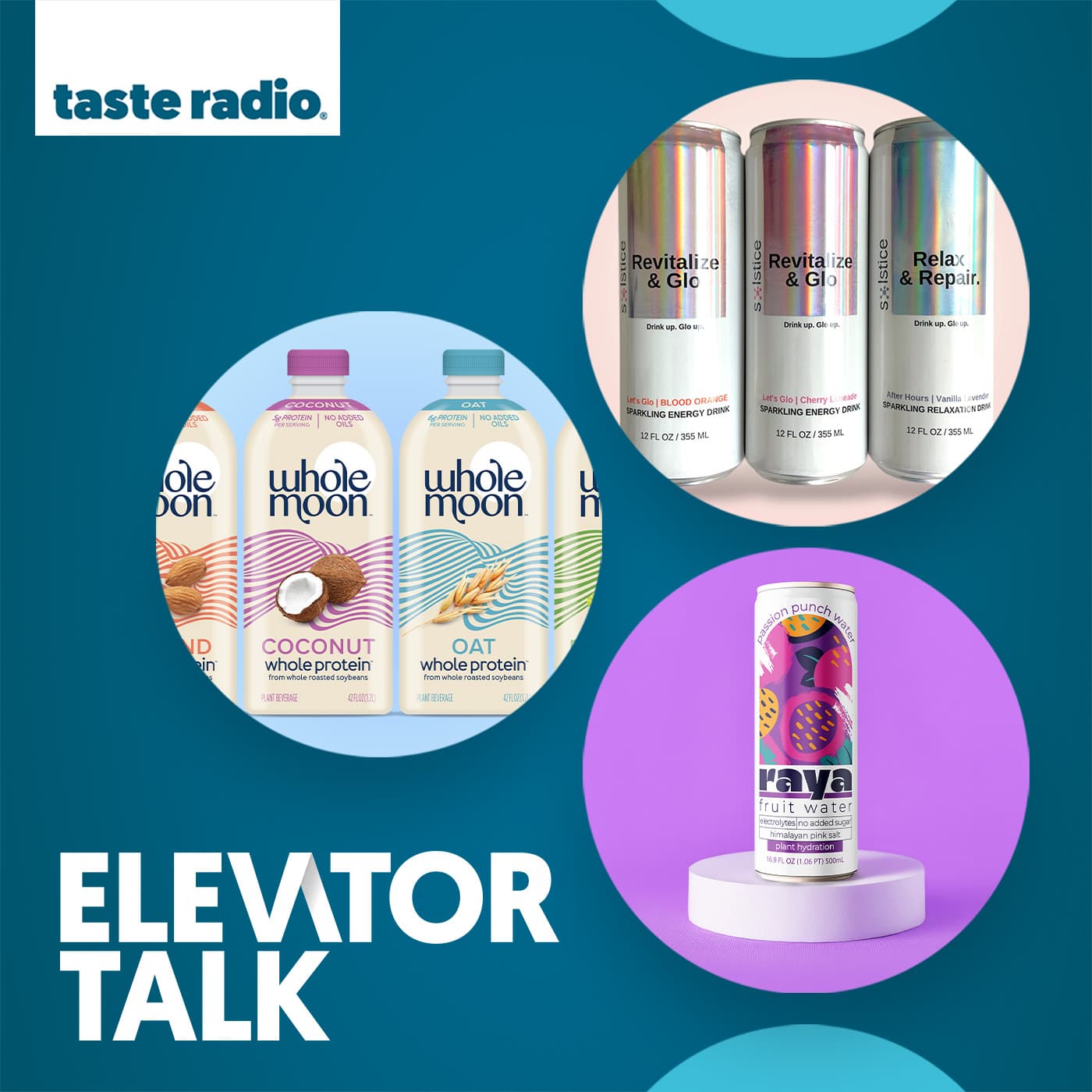
- Product Overview: Whole Moon offers a unique soy milk alternative, leveraging FGT technology to create whole soy beverages that maintain nutritional integrity without wasting ingredients.
- Market Strategy: Focus on whole ingredients (e.g., whole soybeans, coconut meat) to create a richer texture and flavor. Positioned to differentiate in the growing plant-based beverage market.
- Retail Presence: Gaining traction in stores like Central Market, Sprouts, and Target, with plans to expand further.
Solstice
- Founder: Brett Ozanich
- Product Overview: A skincare drink formulated with niacinamide and polypodium, aimed at providing a functional beverage that supports skin health.
- Market Strategy: Focus on direct-to-consumer sales while exploring retail opportunities, emphasizing the importance of educating consumers about the benefits of their ingredients.
- Retail Presence: Currently in development, utilizing social media and collaborations to build brand awareness.
Raya Fruit Water
- Founder: Spencer Bednarik
- Product Overview: Offers a variety of fruit waters, leveraging the popularity of coconut water while expanding flavor profiles to include passion fruit, pineapple lychee, and tangerine yuzu.
- Market Strategy: Focus on creating a refreshing, hydrating product that connects with both consumers who prefer fruit-based beverages and those seeking alternative hydration options.
- Launch Plans: Recently launched and working on building distribution, including pitching to key retailers.
Hawaiian Soda Co.
- Founder: Gina Ho
- Product Overview: Real fruit soda made from natural ingredients, aiming to provide a lower-sugar alternative while celebrating Hawaiian flavors.
- Market Strategy: Targeting both local and mainland markets, emphasizing the brand's authenticity and unique flavor offerings.
- Retail Presence: Established in Costco and expanding to other retailers through carefully curated partnerships.
Elixir Shots
- Founders: James Saif and Dr. Lena Delbrook
- Product Overview: Functional shots focused on turmeric and other superfoods, designed to offer quick health benefits and support for various health concerns.
- Market Strategy: Highlighting the use of fresh, high-quality ingredients and emphasizing the product's effectiveness in addressing inflammation and immune support.
- Retail Presence: Recently performed well in Costco roadshows, with plans for rebranding and expansion.
Key Takeaways
- Consumer Education: All brands emphasize the need to educate consumers about their unique selling points and health benefits.
- Retail Strategy: Effective positioning on shelves and the importance of tasting events to drive consumer interest were highlighted across multiple brands.
- Brand Identity: A clear brand identity and storytelling, particularly for companies like Hawaiian Soda Co., resonate strongly with consumers, enhancing market presence.
Conclusion This episode of Taste Radio provided a rich exploration of innovative beverage brands, their strategies, and insights into the fast-evolving food and beverage industry. Entrepreneurs and listeners can learn from the experiences and advice shared by the founders, as well as from Allison Ball's expert feedback.
For more information and future episodes, visit [Taste Radio](https://tasteradio.com).
Written by AI. May contain mistakes. Listen to the episode to check what was said.
Transcript
Automatic transcript. May contain errors.0:05Hey folks, I'm Ray Lateef, the editor and producer of BevNet's Taste Radio podcast and you're tuning in the latest episode of Elevator talk. the series that profiles early stage and disruptive brands from across the food and beverage industry. Today's episode will focus on five beverage brands whose entrepreneurs will have an opportunity to hear feedback and advice from our co-host for this episode. That's Allison Ball, the founder and CEO of Food Biz Whiz. Allison, it's so great to see you. Thank you for having me. Happy to be here. Happy to be back. This is your latest appearance as a co-host on Elevator Talk.
0:44And you were so brilliant in the first that we had to have you back. So thanks again. I love Food Biz Whiz. I love what you do. You've been in this industry for many a year. You have retail buying experience. You have consulting experience. You do a lot in this industry. For folks who aren't familiar with you, just give us a bit about your background. Yeah, so my background comes from the world of specialty buying. I was a grocery buyer for a long time at BuyRate Market here in San Francisco, where I still am. And I left BuyRite 11 years ago to start Food Biz Whiz with this idea that brands didn't know, you know, 11 years ago, did not have access to the brains of the wholesale buyer.
1:24What was the buyer thinking? Why do they make decisions? How do you get your product on shelves? And most importantly, how do you sell through once you're there? So I started Food Biz Whiz over a decade ago and primarily work with brands inside of our Retail Ready program. It's an online program that helps brands understand all of the behind the scenes of retail sales. Outstanding. And one of the things I really admire about you is that you're willing to share a lot of information up front and support folks on social media as you do. foodbizwiz, F-O-O-D-B-I-Z-W-I-Z is the Instagram handle. And I was looking at it today and I saw a really poignant post that I think is important for everyone who is participating today and watching or listening to this episode at T-H-E-R, which is three things I wish I could have said to brands when I was a grocery buyer.
2:22Could you share those three things with us, Allie? Oh, shoot. You're really testing me on how much I remember what I posted a couple of days ago. I have a feeling you know what those things are without being so specific as to the actual copy. I'll say like high level one. Yeah. I'm like, I'm going off script here because I don't remember what I posted there. But three things I wish I could. What is it? This is probably what I said in my post. We can see how accurate I am. One, stop using taste to sell your product to the wholesale buyer. Right. Wonderful to talk about taste or functionality or, you know, all those beautiful benefits when you're talking direct to consumer.
2:55But when you're talking to me as a wholesale buyer, I actually don't care so much about taste. I care more about what you're bringing to my category and how you're going to help me meet my goals. So stop using taste to sell your product. I'm like, did we talk about that on our post? I don't know. Number two. It's a really good point, actually, because I think taste is so subjective that your buyer might say, I don't like the taste of this, but I know it's going to sell well in our stores. Totally. Totally. You know, and I think we'll hear this from, from some of the participants today that, you know, we're just so trained to lead with taste, right?
3:30By the time you are selling your product, you better be proud of the taste of your product, right? So of course we lead with taste, but as a wholesale buyer, that's not what convinces me. Like you said, right? Taste is so subjective. The second thing that I'm hoping was in that post that should be in that post is please keep following up with me. As a buyer, I am so busy. I'm pulled in a million different directions. I'm managing staff. I'm running category reviews. I'm looking at inventory. I'm going to trade shows. I'm, you know, all of these things. And bringing in new products for our shelves is only one small portion of my job.
4:09And inevitably, I drop the ball sometimes, right? Or I'm not ready to bring in your product when you pitch to me. And so the like inevitable or the like inevitably, like I want to bring it in at some point and I need the follow up, you know, the eighth email, the ninth email, the 10th phone call in order to, you know, hit me at the right time, right time, right place. So keep following up with me. I want the follow up. I want to say one thing. It's hard to imagine Allison Ball dropping the ball. You know, thank you. This doesn't sound right. I pride myself in being maybe the most organized person you've ever met.
4:48And things just get busy. You know, like I was talking with a buyer from a former buyer from Thrive Market at Expo earlier this week, or excuse me, earlier this year. And he was saying that he would get on average 400 emails a day. Oh, my gosh. Yeah. And I'm just like, okay, yeah, when that buyer has 400 emails a day, thousands of emails a week, you know, yours is going to get missed, even if the buyer really loves your product and wants to bring you in, right? So, yeah, keep following up with me. When we hold this idea that sales is service, it makes the follow-up, you know, a little easier to do, right?
5:31Do the buyer a favor, follow-up. And then that third one, I'm like, shoot, what did I say for the third one? What I want to say is give me a reason to bring in your product. Give me a time sensitive offer. Tell me about the seasonality of your product. Give me, I don't know, free shipping now through September 1st on any opening order over 400 bucks. I don't care what it is, but give me some reason to prioritize bringing in your product line. So that would also, you know, to make the yes easy, right? Give me a sell sheet and a price list every single time you're emailing me. You know, tell me how easy it is, you know, right in that first sales email.
6:13What distribution are you using? You know, what is my landed cost, right? Make it so easy for me to say yes. I love it. I mean, I think that is the thing that a lot of early stage founders don't necessarily realize is that the buyer can take your product, but they can take any product they want. It's really up to them. And your job is to help them increase sales for their business. I mean, that is their number one goal is to sell more products, sell more of everything. So how is your brand going to help them achieve that? And so I think everything that you talked about, Ali, is one way to convince them that your brand should belong on their shelves.
6:57Totally. Thank you. I like that quiz on my social media post. You know what? Thanks for doing it. I hope I think what are you up to? You're you're only 16 followers away from 10 ,000. I hope by the end of this episode you actually hit the 10K mark. Thank you. We used to be at 10K and did a big cleanup a couple of months ago. And I have to say, those vanity metrics, I was like, oh shoot, now we're below 10K. So yeah, help me hit my goal. Get me back up there, please. Yeah. Well, one other thing I want to mention is you're doing a really cool program called Wholesale Week, if you want to talk about that.
7:30Yeah, sure. I'll just briefly mention this. We are running Wholesale Week. I think it's the 10th time that we're running it. It's my favorite week of the year. It's where we take five days of free lessons, 10 minutes a day on how to increase sales in wholesale accounts. So we do it online. My goal this year is to have a thousand founders join us. And this time around, we are raising money for Project Potluck. It's one of my favorite nonprofits in this food industry. They provide free mentorship and resources for people of color in CPG. And so for every registrant that we have, we're donating a dollar to Project Potluck.
8:04So free to come and join us inside of Wholesale Week. It starts on September 8th. And like I said, we'll cover that donation for Project Potluck. If you want to join us, it's at foodbizwhiz.com slash wholesale week and free registration starts on August 25th. Outstanding. Really, really cool stuff. And I do want to mention 10 days after wholesale week starts is September 18th. September 18th is really special because Taste Radio is going to be holding a networking and live podcast meetup in San Francisco, in Ali's hometown, in the Dogpatch neighborhood. So if you'd like to join us, if you happen to be in San Francisco or you live in the area, please do join us.
8:46Head to Tasteradio.com slash San Francisco. We also have live events coming up in San Diego and London. Just use the city name after the URL, Tasteradio.com to find out more and register because we'd love to see you there. All right. Now, let us get to our first entrepreneur for this episode. I can't wait. Allie, are you ready? I am so ready. All right. Outstanding. That person is Susan Knight. She is the co-founder and CEO of Whole Moon. Susan, it's great to see you. Hi, thanks so much, Ray and Allison. It's great to be here. Love to have the chat. Yeah, we are excited about, oh, I am very excited.
9:26I'm sure Allie is as well, but Whole Moon, because you have a beautiful, beautiful looking product and I think a very timely brand. Tell us all about what you do. Yeah. So, you know, we actually launched the product about a year ago, April, about a year ago in the U.S., but it actually all started in South Korea in the 1970s. My co-founder's father, Lung Sing Ki, who was an entrepreneur in South Korea, found out how they were making soy milk. And I'm sure you guys in the beverage industry, at least you already know that plant beverages are typically made by taking the ingredient, mashing it up, extracting the liquid and throwing the rest away.
10:02And he got bothered by the wastefulness of throwing the thing away. And he knew that there was a lot of great nutrients being thrown out in that process. So he sat on a mission and four years later patented something called FGT technology and launched the first ever whole soy milk in South Korea. And actually, you can still buy that product. You'd actually buy it on Amazon if you're so inclined. And, you know, fast forward 50 years and his son, who's also an entrepreneur, comes to Expo West. and he sees all this craziness around plant beverages. And he's like, hmm, you know, I think I might have something here, you know, but he was smart enough to know that he couldn't just take his Korean product and plop it in the U.S.
10:40and, you know, hope for the best. So he got a group of us together. I have a sales and marketing background. We brought in a great R &D person and a person who actually specialized in soybeans. And we said, you know, how do we leverage the best of what his father started and bring it into the U.S. market? And lo and behold, in April of this year, we launched Whole Moon in the U.S. it's really you know there's two things that really differentiate our product from everybody else you know we really wanted to lean into that whole ingredient his father did it with whole soybeans and we took it a step further all of our key ingredients are whole going to tell you finding whole coconut meat not an easy thing to do so we're not extracting we're not using extractions or oils we're using whole oats we're using whole ingredients and then we're using our trademarked whole protein which is I think I'm thinking Ray is what you're referring to about being a timely product, you know, and which is made from whole roasted soybeans and blend the two together.
11:33And the beauty of roasting our soybeans is it kind of changes the taste of soy. So a lot of Americans I know have been in the industry a long time don't really like the taste of soy. But through our research, we found that when you roast it for just the right amount of time, you'll actually eliminate the like poxer's mayonnaise, which is what gives it that beanie taste. But you're still left all the nutrient and a great taste and flavor. I'm not going to say taste to you, though. Oh, great taste of flavor. You got it. And then the whole ingredient actually changes the whole texture. A lot of these products have been struggling with being thin and watery.
12:04When you don't throw out that fiber and you use a whole roasted soybean, you actually get natural oil, right? We know that also oil and fat is something you need to make that product taste great. And leaving that fiber in there, you know, actually gives you a nice full body texture. So we kind of accomplished both things that way. And then, you know, our trademarked whole soy protein, which we're super proud of. We're using the whole ingredient. It's on the rise. Soy is growing. It's back. And we're leading the way. Very, very cool stuff. And I'm glad to hear that soy is back. I will fully admit that I wasn't necessarily a soy milk enthusiast, I will say that.
12:40And I like the fact that you say you use soy beans as opposed to soy milk or some sort of other soy ingredient. Before we get to Allie, just quickly, Susan, where is Whole Moon sold? Yeah, so we actually, our first hit was at Central Markets about a year ago, where we sat there for, which was a struggle. I'm not going to go into the logistics of being in 10 stores, 10 great stores. But then we got picked up by Fred Meyer and QFC, ShopRite, Hagen for Albertsons. And then our big one this year was Sprouts took us on nationally, including an exclusive with our coconut. And we got into the Target incubator program.
13:17So we're super stoked about that. We just kind of got in there. We're working that. And we're actually even talking to Costco. right now. So pinch me. I know it's kind of crazy. So we're in about 1 ,200 stores as of today. Outstanding. Really, really good stuff. Allie, I think one of the reasons why plant-based milks have had such a hard time among a lot of mainstream consumers is because of the protein. Remember seeing the protein? Where's the protein? And Whole Moon seems to address that. What are your thoughts on the brand? Yeah. Well, the brand is beautiful. Website is beautiful. I loved clicking around there.
13:50The copy on your website is so well done. I just had a lot of fun clicking around your website, which I can't often say with a, you know, alternative, I can't really say with a, you know, any, any milk brand, but Susan, I was really curious about the whole protein aspect and tell me more about whether or not consumers actually care about it, right? The trademarked whole protein. And it's a two-part question. So are consumers actually caring? And this is just my suspicion, but folks who really care about protein, is five, six grams of protein enough for them to care about? Yeah. So great. All great questions.
14:35So what we're finding, so there's a couple of things going on, right? So we jumped into this protein thing before it became like this big hit wave, right? That, that, you know, protein is coming back and people are, and are the way we're doing it, right? So unlike a lot of the people who are adding like a soy protein isolate or what I like to call texturized soy protein, like, you know, the soy doodle that they push and pull and do all this crazy stuff to, and like turn it into a chicken nugget, right? We don't think that, that consumers want that kind of thing anymore, that, that, but they do want the wholesome protein, right?
15:07And we really believe that it is, and it's a challenge. I'm not going to lie. It's a challenge to, cause there's an education aspect to this too, right? Um, we're doing some of that PR work right now around all proteins are not the same, right? And we think that because protein is so hot right now and people, so many people are talking about it, eventually consumers are going to figure it out, particularly in today's information age, right? There's a little TMI out there, right? They're all going to figure out that, Hey, wait a minute, And that one gram of almond protein that's in my almond beverage isn't as close as to the seven grams of protein I'm getting from soy protein.
15:40And you can see that it's complete protein. It's got all the amino acids. It's got a PD-CAS of one. I'm not sure if you're familiar with that, but how easily absorbed is it into the body? How good is it for you? Soybeans sit up there with eggs and meat as being a number one. there are no other plant proteins out there that are in that frame. So we believe that as protein becomes more important, all of a sudden now you're going to start seeing people understanding how the different proteins function. And we're going to be right in the sweet spot for that. Yeah, I think so too. But how are you doing that education on shelf when you've got that three-second scan of the fridge?
16:22Yeah, you know, honestly, we're doing it a lot through our social media and a lot through our PR. are. We actually just launched a campaign just about this. We actually just got a hit on men's health. We were pretty excited about that. We got a shout out on men's health for our soy protein and it's going to take time. So that's, that's the long part of it. Right. So in the meantime, making sure that we're, we taste great. Sorry to say that, but you know, we're really pushing at retail, you know, that's a great, I don't need to tell you, you know, Alison or Ray getting that kind of pull in your first year.
16:53Pretty, pretty darn good. Yeah. It's awesome. 1200 stores, you said. It's great. Yeah. Good for you guys. And like, to your point, the next challenging part, so I'm sort of pulling the brakes back with team and saying now everybody, all everybody put your, pull your poker chips in. We got to make it work at the shelf where we are. And you can really do that now, you know, with, you know, marketing being the way it is now and zip code focused, geo, geo marketing and, you know, sending the stores and social media posts. And you can really do that in a way that's really, you know, so we're in about 3%, we'll probably be in about 5 % of retail by the end of the year, which is still like, wow, but it's still like 5%.
17:29So how do you do that? How do you market that? How do you get your message out? But you can do it. These days, it's a brave new world. I don't need to tell you guys that. And, you know, we're finding that it's working for us and doing retail marketing campaigns, you know, tying in really tight with those retailers who've given us a shot out of the gate has been really, really important. using their message platforms, just pounding it out as much as we can. Can I keep asking questions, Ray? Allie, you can ask. I don't even need to speak anymore for the rest of the episode, actually. It's your show.
18:01Please go ahead. Yeah, take it from here. Susan, tell me about the pricing. I'm so curious about where you sit on the shelf and how it's landing with consumers. Yeah, so we're at$5.99, which puts us right around where Oatly is, honestly. So we kind of looked at Oatly. We looked at the more premium brands in the category. We took a little margin. You know, we're not at the margin I want to be yet, because I felt like it was really important to get in under that six dollar mark to be a product that could be purchased by a broader audience. You know, I know that over time is we get nothing, nothing like volume to help your margin.
18:37Right. As we get bigger, you know, and our logistics get less expensive and we can buy more cheaply and we can push our pressure, our co-packer a little bit more. We're like right now, we're still like, thank you so much for working with us, Faith. You know, but once we can get a little bigger, we can start making, you know, some more demand and hopefully get our margin up to where it's at. So that's kind of where we landed at the$5.99. Yeah. Yeah, that makes sense. You know, I would have guessed right around$5.99. $5.99 seems like an excellent price and a really accessible price for a lot of folks who are looking for better for you plant-based milks.
19:08Out of the four milks that you market, Susan, which is the most popular at this point? so stashios are most popular um but coconut which was an exclusive it sprouts for for for a few months is now where where it's on the shelf it's really coming up quickly you know we're the only coconut milk with protein out there um bar none and we're the only one that froths because you need protein to froth and we're the only ones with it so so that one's coming up really close on a second very cool stuff well i am so excited to see whole moon in more stores and more stores here in the Northeast. I hope so.
19:43My dear colleague, Melissa Traverse, turned me on to Whole Moon. I'm like, we've got to get Susan on the podcast talking about this brand because it is pretty remarkable. Susan, thank you so much. I do sit in your backyard, Ray. I'm out here in Massachusetts with you. Well, come and stop by the office anytime. We're in Newton. We're right around the corner. Just bring handfuls of Whole Moon and we'll have the red cart rolled out for you. Why don't I bring it in cups? I don't know about people. Okay, fair enough. So Susan, thank you so much for taking the time. So excited that you joined us for this episode.
20:14And please stay in touch or just stop by anytime. Sure. Sounds great. Thank you so much for having me. All right. Great start to the show. Let's keep it going with our next guest. That's Brett Ozanich, who is with Solstice. And his job title, at least on my notes, is Moo. Is that correct, Brett? I do not know what a Moo is, Brett. I don't know why it says that. I was assuming it says as a chief operating officer and they got an M instead of a C. I don't know. But what is your title? So I'm the co-founder of Solstice and I guess CEO, but we don't have that corporate structure yet. So I'll take all the titles.
20:54OK, well, maybe you can invent a title using the acronym Moo and then I will not sound like such a jackass on my own show. All right. Solstice, please tell us all about what you do. um following susan i think it's really i think uh i was kind of excited to go second but not not so much anymore so what solstice is is a skincare drink and it's the first of its kind you can think of it as your skincare regimen in a can it's a functional beverage meant to make your day efficient and convenient we formulated it around two central ingredients one is niacinamide or nicotinamide. It's high dose vitamin B3.
21:34And it is scientifically proven to reduce fine lines and wrinkles, minimize hyperpigmentation and repair sun damage on a cellular level, reducing the incidence of non-melanoma skin cancers. The second is a supplement called polypodium. It's a natural fern-based supplement that protects you from the sun. You can think of that as your SPF's BFF. We combine that in two separate options. One is a morning drink with green tea caffeine or a nighttime relaxation adaptogenic option with GABA, which is gamma amino butyric acid, an inhibitory neurotransmitter to calm you down at the end of the day. Solstice began as a concept about 18 months ago.
22:19I'm a dermatologist and skin cancer surgeon. It's been well-known in dermatology that the trust of sunscreens has kind of diminished over time. A New York Times article showed that 14 % of young adults believe that wearing sunscreen every day is more harmful than direct sun exposure every day. And other studies have shown that within our academy that over half of Gen Z respondents were sunburned in the previous year. 30 % of them claimed that their skin was so painful it was tough to wear clothing, and 10 % actually stated that they were blistered or burned so badly that they needed medical care.
23:04So I thought, as somebody who's passionate about preventative medicine and obviously about skin care and skin health, how can we make these supplements more widely available? And in dermatology, historically, they're available through a capsule-based supplement. Another skin cancer surgeon in LA has made sun powder through his company, Soul Sciences, but nothing was readily available on the beverage market. And as an avid energy drink consumer myself, I did some market analysis and about 60 % of those Gen Z respondents also drink energy drink and adaptogenic drinks. So I put those concepts together and that it's accompanied also with now the viral skincare industry, the Sephora's, the Altas, all the influencers that weigh heavily on young people's minds.
23:58And if we can get this beverage into their hands, I think they'll benefit greatly long term from the effects of the polypodium. And like I said, it's an approachable, efficient, convenient way of consuming those supplements. Well, Brett, that was a great introduction to Solstice. I wrote down literally 1 ,014 questions, but I'm not going to ask them yet. I want to get to Allie because I'm sure she has her own questions. Allie, take it away. Yeah. My first question is how often do I need to drink this to see the benefits? Right. So polypodium, you start to obtain the benefits 30 minutes after drinking it.
24:36So that is at your convenience as many times a day as you want. Niacinamide, when studied is 500 milligrams twice a day, and thus a morning drink with caffeine and a nighttime adaptogenic drink so that we don't have to over consume the caffeine. Great. Okay. So in the ideal world, folks are consuming two of your drinks a day, a morning and an evening to really like see the benefits. And then of course, like, you know, just like with adaptogens or supplements that cumulative effect over time, right? We're really looking at it as a daily consumption here, correct? It is a daily consumption, but for intermittent use, you would also obtain that benefit through the polypodium component in the drink.
25:22The long-term consumption and compliance with any type of supplement or any type of skincare product is obviously going to yield much more significant and long-term benefits from those products. Sure. And, you know, I'm thinking about it from the sales perspective too. I'm like, yeah, let's get these people turned on where they're drinking two cans a day, like, and subscribing, right? So that you really like see that, you know, the long-term commitment from your consumers. Okay. So you talked about the key piece being you got to get your product in the hands of this younger generation who actually cares about these things and who, you know, basically who you developed it for.
Read the full transcript
26:08You mentioned Sephora, Ulta, things like that. So I'm curious about what is that channel strategy and where are you targeting first? Honestly, we're a direct consumer right now, all through our Shopify platform and on fair. We are, we have a social media curator that's trying to build our brand. We're doing co-sponsored functions here in El Paso, Texas with health and wellness brands to get our product into the hands of younger influencers in hopes that the Gen Z population will start to utilize it more heavily. Yeah. One thing I did see on your website when I was poking around, I couldn't find your social profiles from your website directly.
26:58I I had to go and look on Instagram and look on TikTok and stuff. So as a brand who's really leading with direct-to-consumer, I would just make sure that all of those pieces are connected so it makes it really easy for that consumer to find you online, purchase you, all of that. We are very green. I am a physician. I'm new to the beverage industry. And yeah, any type of feedback that you could offer would be greatly appreciated. I think Ali has given some great advice and some great insights into what it takes to be successful, you know, on a retail level. I think, you know, this just, this brand just screams direct to consumer.
27:35And I think making that transition from direct to consumer into retail isn't as easy as I think some people might think it might be. So Allie, I mean, what insights, what information, what traction, you know, could Brett share about Solstice Online that is going to convince a retail buyer that it's going to work in their stores? Yeah, it's really hard. I'm seeing more and more buyers or it's really hit or miss how much the buyer cares about your online sales, right? Because we know that it doesn't translate, doesn't directly translate to retail sales. So Brett, I would say the most important thing is getting super clear on your target audience.
28:14You know, you can do that. You can deep dive into that when you're direct to consumer. But then from there, where do they want to purchase your product in store, right? Are they shopping at Whole Foods? Are they looking for you at Ulta? Are you doing mini fridges at Sephora? Are you selling an Air One, right? Like where, where is using that, that robust data that you have about your consumer and then being so clear where they are shopping in person and presenting that case to the wholesale buyer. Otherwise, I feel like the direct-to-consumer sales data doesn't actually matter, right? Unless that wholesale buyer can see the connection, it's lost on them, right?
28:57So that's the first thing, just being really, really clear on your target audience and where they want to purchase your product in store. And then also, you know, I love wholesale, but it's not for everyone. You might even find that you never go into retail. You never develop a wholesale strategy there and your margin is better direct to consumer and you just stay there happily. So, Brett, I would say the other advice I have is you don't have to go into retail. Right. So just just be really clear about what works for your brand and your own financial, your own cash flow. And know that don't be pressured to go into retail just because everybody tells you to.
29:38I think that's, again, really great advice, Sally. There's a brand out there called Dose and spelled D-O-S-E and they're hyper functional and really focused on specific functional benefits like they say dose for your liver or dose for cholesterol. And they're all over Instagram. As far as I know, they're not in any kind of retail, but it seems like they're doing a lot of really good business direct to consumer and via subscription. So I think Ellie's spot on with that. I guess the last question that I would have about Solstice is, you know, who's helping you sell it, right? You know, Instagram is a great tool, marketing tool, but do you have evangelists?
30:18Do you have influencers? Do you have people who can help, you know, amplify that message about what you're doing? We are working with influencers to amplify that message. We are in talks with a few smaller distributors that have large grocer distribution within the state of Texas. We have some C-store connections through the Midwest that we're trying to distribute through solstice in smaller quantities throughout the Midwest and convenience stores, where you have a transient population coming through and grabbing drinks that are obtaining a lot of chronic sun damage through their window glass, through those major transportation routes.
31:00And going back to you, Ali, we kind of developed this product for everybody. It doesn't matter if you're 18 or if you're 65, you will obtain benefit from this drink. And with the consumption of caffeinated beverages and coffee drinks within the United States, I truly feel like it has a role and can not replace sunscreen, but work as an adjuvant to provide better quality skin, less actinic burden, and a more significant reduction of non-mellanum skin cancers long-term. and so we really hope it can take off and do that. I do too. I'm rooting for everyone. I love, the best part of my job is when you see a brand for the first time, meet the founder within the first year that they're in business and then next thing you know, they are a giant success.
32:02So Brett, I'm rooting for you and please let us know how we can help in any way. Just reach out anytime. You can send us a note to askatasteradio.com or just send a note on LinkedIn. I'm sure Allie would be happy to hear from you as well. But good luck with everything going forward. And please, please stay in touch. Thank you guys so much. I appreciate your time. Great stuff. Let's keep it going with Spencer Bednarik, who is the founder of Raya Fruitwater. Spencer, it's great to see you. Hey, Ray, Ali. Thank you so much for having me. It's a pleasure to be here. It's a pleasure to have you. And I love any brand that has my name in it.
32:38So Raya Fruitwater, you got thumbs up for me, my friend. And Spencer, tell us all about what you do. Awesome. So yeah, our genesis, our big starting point was in 2017, we launched an Australian coconut water in the United States. We were 24 years old. We had no idea what we were doing. We did all self-distribution. We took a U-Haul up from Seattle and drove up to Bellingham. And then we had cars lined up. We threw the cars in the cases and we went out and we sold our product. I ended up sending a random email to a distributor. I didn't even know what a distributor was and they're called Dickerson Distributing.
33:19They were cool enough to take us on. They knew that we didn't really understand the system but they knew we had a lot of hustle and so they worked with us. We did that for a couple of years and we built our distribution from Seattle all the way down to Northern California. At that point, we were thinking about creating our own brand and we really thought that the coconut water, what we found running our own, I mean, we ran probably a thousand demos and I think any founder should be doing that because you get so much feedback. Even if you have a billion dollar brand, just getting that direct feedback, especially in different areas of the United States is crucial.
33:53Like a comic, just because your material is good in one place doesn't mean it's necessarily going to be good in the other. So we did that. And what we found is that not everybody likes coconuts. If you go to Southeast Asia, people grow up with coconuts. They love coconuts. And so we really wanted to expand the category. And so we founded Mellow Water Melon Water in 2020. And very similarly, everybody was chomping at the bit to get it, which was great. We'd been talking to the distributors for a long time about this. And we eventually grew that over about a two and a half year period to national distribution, very weekly in some areas.
34:28But we still had, you know, three accounts in Mississippi, two in Texas, you know, so technical national. And then we ran into some trouble during COVID and specifically with the imports of our product. And so we ended up selling that brand. And so we really looked at that brand. We took a little bit of time off and we wanted to know how we could improve upon that. And a big aspect of that is we felt that Mela was one dimensional. It is juice, but you're just offering people watermelon. It is a demographic that's still larger than coconut water, but it doesn't mean that that category has finished, doesn't mean we can't expand upon that category.
35:08And so that's what we want to do with Ray of Fruit Water. We wanted to expand into every category. And so we decided to launch with the coconut water to create that bridge for the consumer. And there is a large demographic out there that's just looking for a delicious coconut water. But we decided to expand into different flavors that we thought provided the best taste. And so we have passion fruit punch, pineapple lychee, and tangerine yuzu. And we think our product tastes fantastic. We're not trying to reinvent the wheel. We're just trying to expand the category out to a demographic of consumer that we previously weren't reaching, weren't touching.
35:46We launched two days ago, so we're brand new. We've been flying around. It's been a big mess. But that's how it is with all new products. and so we've decided we've launched with eight eight dsds now i think two of them have actually picked up the product the other six are waiting on it um we've i did two months of of pre-gaming uh my business partner west flew to new york to pitch to whole foods on the 20th i'll be going to colorado to pitch to sprouts um you know fingers crossed on those we we mostly run the dsd network We appreciate the intimate connection that the DSDs can bring to the market with the merchandising, floor stacks.
36:27And especially for a self-funded brand, you know, we don't have deep pockets. So it's important for us to really build those emotional connections with our retailers, with the store managers. And also, I think you can get into some trouble if you expand too quickly where your brand is not fully critiqued. I already see problems with our label. I already see problems with the formula. You know, if you unfortunately you have to at some point pull the trigger and go into mass production and it's going to taste a little bit different. We're still very happy with it, but there's things to improve upon as we move forward in the industry.
37:02So we plan to start with those initial DSDs. And then we're in talks right now with distributors in Denver, as well as Chicago. And we hope to we hope to expand. We've gotten 50 sample requests over the last two months. So we just got those out the door. That was first day's agenda. And so we've started the talks with other distributors around the country and select markets that we think we could be successful. You now have 51 and 52 sample requests because you got one from BevNet for sure. And I'm sure Ali is going to hit you up for some samples as well. Yes, I have a lot to get to. And I'm sure Ali wants to ask some questions.
37:39Just in terms of the nutritional value, Spencer, if you could just quickly tell us about calorie, sugar count. Definitely. Yeah. And we're not going to be the best in this category. We do have 20 grams of sugar on average across our four SKUs, but it's juice. That's what happens when you put real fruit juice in your products. We have no added sugar. We have potassium. We do add Himalayan salt, pink salt for anyone who's a big runner out there. It turns out you do need salt. And so we put some of that in here, which is a point of difference from Mela. We really are pivoting into the hydration, taste good hydration aspect.
38:11And not everybody out there wants a sugar-free beverage. We're trying to apply to the largest demographic possible. And we saw a lot of success with that with Mela, where, I mean, we spent countless nights, you know, freaking out about the sugar in our beverage. But it's just not what every consumer wants. There you go. All right. I would agree with that. I mean, like, you're spot on. And I think Ali agrees. But Ali, I mean, it seems like Rhea, you know, the focus, so much focus and so much of just knowing who they are and what they want to be and what that consumer wants. But, you know, what are your initial thoughts?
38:45Is this a product you would reach for in the grocery store? Sure. I mean, why not? You know, I'll try any product, right? So I think that's a little bit of an unfair question. But Spencer, I really appreciate the, it makes so much sense now why Rhea seems so professional right out of the gate. You know, your website is beautiful. You're, I'm actually very curious about what you want to change about the label. you know, everything right away. I was like, Oh, this brand seems quite established. So for you to come in here and say how young you are really, um, it makes sense now given your, your history in, in the beverage industry.
39:22Also, I love Mela. So, um, yeah, good job there as well. So a couple of questions for you first, I want to know about the choice to call it fruit water when you just said it's juice. Like what? Tell me about that, that conscious. Yeah, that's a great question. So I think I think two things. One, what is what is coconut water? Is it is it water? It's it's definitely not. But it's just a term that we use. And so what we try to do with Rhea, we are about 40 % water on any of our beverages. And so we're trying to lower the thickness of juice down to more of a water, something that's very similar and has a similar taste profile to coconut water in a sense of its viscosity, its thickness on the tongue.
40:08You know, if you go and you drink 100 % mango juice, you're not going to go run a marathon. You're not it's I'm not going to say it's gross, but it's too thick. You know, it's too thick for that type of thing. So we brought it down to a point, a bricks level that we felt that that it it really just hits the tongue and you feel hydration immediately. Yeah. And that I mean, that's what I was attracted to. Right. Like I'm not a juice drinker, but the idea of a fruit water, I was like, oh, yeah. you know, I imagine this is lighter. This is, you're right. It doesn't have that same viscosity. Really appealing to me.
40:43Okay. Next question. Spencer, what do you want to change about your labels? I'm so curious. Well, so what we did is we brought in like 20 cases and we were, cause everybody requests different amounts of samples. So we're breaking down boxes. We're putting it in FedEx boxes and doing this whole thing. It was really confusing looking from a top-down perspective, which one was which. I had a nightmarish time trying to figure it out, and I'm sure we shipped the wrong samples to some people. I have a can right here. If you look at the top, we don't have a ribbon. So unless you're looking directly at the product, it's not inherent which skew.
41:21If you know the product like I do inherently, intimately, then it's okay. But I think for consumers, when you're merchandising, distributors are just throwing that on a shelf. that your panel is not always going to be set up perfectly. And so we just need to keep that in mind and really make sure that the consumer understands we communicate that we are different flavors. Otherwise, they may just assume all four flavors are coconut-based and go, eh. Yeah, yeah, that was my immediate thought as well, looking on the website. I originally thought that they were all coconut-based. And, you know, I just think about it from that grocery stockers perspective or, you know, your distributor.
41:58They also are moving really quickly. And if they can't tell, if they can't differentiate between the four SKUs fast, you're bound to have, you know, misrotation or like, you know, misalignment in your stocking. So, okay. Yeah, that makes sense. Makes sense. Which SKU do you think is going to be the best seller? Pineapple lychee, I think is fantastic. I thought that out of the gate. With Mellow, we made a ginger flavor, which we thought was going to take off. Or I thought it was the best. And it was the worst. So we'll see. I think it did include a different demographic that we wouldn't have originally.
42:33You know, it wasn't too much cannibalization of sales with that skew. But I think the pineapple lychee is fantastic. And just the two days I've been running routes out here trying to get accounts, I've gotten a lot of positive feedback from it. Spencer, we're just about out of time. But if you can, in 30 seconds, tell us the price point per can. And also, I'm curious about the package format, can versus bottle. honestly frankly i'm just in love with what a can does uh on the shelf i love the branding i love that when you add skews you're you're building a billboard and i fundamentally believe that you know at the end of the day you do want to get sell through but if you want to expand into this market especially self-funded your product needs to be able to stand on its own on the shelf and sell itself and so if that's what your your primary marketing drive is you know we do demos we do do marketing, you know, but 99 % of the time, that's your marketing.
43:30That's your billboard. I think the cans do a fantastic job. That's why we go with 500 milliliter as opposed to 330 milliliter. We want those big cans in there. We want it to be beautiful. We don't have to look premium. I'm not sure if I answered your question. No, you absolutely answered my question. The only other question was about price point. Price point. So right now we're at 349. We try to keep price consistency across the board we we uh yeah yep 349 outstanding well i really enjoyed learning about raya i i feel like there's so much more about the brand that i got in this conversation than i thought i was going to get so uh it's really amazing launch as ali pointed out everything looks really pro spencer and it's easy to see why thanks so much for joining us on the show.
44:17I definitely hope to keep this conversation going, whether it's just on a phone call or if you're going to be at BevNet Live in LA in December. I remember being introduced to Mela back at our event. I think it was, I want to say three years ago or maybe four years ago and fantastic stuff. So I'm expecting just as much excitement and enthusiasm for Rhea. Awesome. Thank you guys. Allie, thank you for your questions and Ray, it's a pleasure to be here. All right, let's get to our next guest for this episode of Elevator Talk. We have Gina Ho, who is the co-founder of Hawaiian Soda Company. Gina, it's great to see you.
44:52Aloha, everybody. I'm a little fangirling right now. I remember when we first got started in our CPG journey, I was just mass watching everything that Ali had put out there. Ali, I have to say you, you really helped us better understand the perspective of how to really reach our retail buyers. And Ray, Taste Radio is like the podcast to be on. So I am so, so honored to be here with both of you, titans of CPG. Well, Gina, we're actually going to give you 35 minutes to speak inside of the regular 10 because you're kind of awesome. I wish we could. Thank you so much for the kind words. I'm sure Ellie is just as thankful as well.
45:39I, you know, I think what you're doing right now with Hawaii Soda Company is really, really interesting and so differentiated. And thank you so much for joining so early in the morning for you. What time is it there? A little before eight. Okay, so it's not terrible. Not crazy. No. Okay, okay, okay. It's still relatively early. Please tell our audience all about what you do. Yeah, absolutely. So Hawaiian Soda Company is real fruit soda made from real ingredients. We, you know, being here in Hawaii, there is an amazing, vast history from the sugar cane plantations, tropical fruit. And, you know, one of the things that we felt was missing in the Bev world is just drinks that marry that beautiful juxtaposition of better for you, but also indulgent tasting.
46:34And so my husband and I, we worked to develop a soda that was true to our roots, right? We took real fruit juice. We use 40 to 50 % fruit juice. There's no added sugar in our product. all natural ingredients. And we really just wanted to capture the beauty of our island home. So we started Pedia in this product 2020 during the pandemic. And we spent a good two and a half years trying to develop something that really spoke to home. We wanted to make something that was better for our community. I think a lot of the local beverages that call Hawaii home, there's so much added sugar, right? Like again, there's this huge history of small bottling plants, why Louis soda works, loves.
47:18There's a huge history of soda here in the islands, but we kept asking ourselves, why is there so much sugar in everything? You know, we drink our local drinks and we call it juice, but it's like 2 % fruit juice. And so we said, you know what, let's do something better for our community. And when we first started, we had really set out to create just a regional brand here for home. And what we found when we launched was visitors from all over the world would go home. They'd send us messages and go, Hey, I discovered you when we visited Hawaii for our honeymoon, for our wedding, for our vacation.
47:51And now I'm home and I'm missing that sip of paradise. So how, how do I find you guys? And, you know, a light bulb went off and we said, okay, well, you know what, what, what is it going to take to really take this from a regional brand to something that could potentially have the likes to go nationwide. Does the consumer really, does our brand really resonate with everybody that's out there? And I think one of the beautiful challenges that we've had is trying to think about how do you take that regional brand and apply it to consumers across the country? Because as Spencer mentioned, just because something works at home doesn't mean it always translates everywhere else.
48:28So fast forward to 2025, we've launched to the mainland. We're in about 1500 doors now, mostly centered in Hawaii and the West Coast. We're dipping our toes into Texas, the Midwest. And, you know, I think that as we grow, we're trying to really be intentional about the partnerships that we create. I think that there's so much opportunity out there. We get a lot of retailers asking to carry our products, but we want to make sure that every step that we take is carefully calculated, right? Like, is this partnership what's right for us today? Is it what's right for our retail partner? You know, back at home, you can find us everywhere in almost every single channel.
49:07You can find us in, you know, natural, conventional, convenience, hospitality, food service. We're everywhere here. But on the mainland, you know, it's baby steps, right? We're trying to figure out where does that, how does what we do at home translate to the rest of the mainland? So I am super, super interested to hear your feedback, Ali and Ray and super glad to be here. Yeah. Well, thanks so much again for being here, Gina. And one channel you didn't mention is the club channel, which you are in as well. And you broke into some club channel stores here on the, in the mainland, so to speak. Talk a bit about that.
49:43Yeah, absolutely. So we just launched into Costco. So we're in all seven Costco's here at home in Hawaii. We're also in a select number of Costco's in NorCal and SoCal. They're doing fabulously. We are super, super excited to break into this channel. It was definitely a long road coming. And I think a lot of Ali's wisdom has made those conversations successful. So I'm eternally grateful. Well, Ali, the next five minutes are yours. I have one question. I'm curious if it's going to be the same question you ask or one of the questions you ask, but please take it away. I'm like, Ray, what's your question?
50:18You go first. I'm really curious. It's about a word on the can. So I'll just give that hint. Oh, no, I don't have that question. Okay. Well, please go ahead with yours. And then I'll ask the question if you don't ask it at the end. Yeah. Gina, I have the same question that you have, Gina. How are we going to make it work on the mainland? So what are you finding right now? Like you were saying baby steps and really having that filter of whether or not a retailer is a great partner for you. So what are you finding is working here? Yeah, I think for our brand, because it says wine and soda, it just grabs you, right?
51:01Our cans are beautiful. We were very intentional about our packaging. but what I think is really resonating for our buyers and also our end consumers on the mainland is just the authenticity of the product and then also the flavors right so hog passion orange guava is just it's a flavor that when you think about Hawaii you're going to have a pog if you come here having that variety of flavors is really oh how do I put this I think that's what's capturing people, right? It's the flavors. But also, I think the other part of it is when you think about Hawaii as a brand itself, why do you travel to Hawaii, right?
51:41It's about escaping your daily life and being transported to paradise. And I think one of the things that really, really resonates for people drinking our brand every single day is it's exactly that. It's an escape to paradise, right? It is a better for you soda because it's lower in sugar. It's all natural. It's made from real, real food ingredients. And yet it's a full flavor experience, right? You don't feel like you're compromising. And so when you take a sip of Hawaiian soda, it feels like I'm being transported to a beach. And that's like that beautiful memory that I think really captures people.
52:15And the other beautiful thing is it's a great non-alc option, but it's also a really mean mixer. And so I find that we have a lot of resignation. A lot of restaurants, hospitality, they use us as a mixer as well. And so we do, you know, with certain retailers, they'll kind of cross merchandise us in the alcohol section. And I think that really does well as well. Yeah. And I, building off the brand that Hawaii has already established is, makes so much sense, right? They have such a history and you're right, that, that escapism that we think, or that I think about when I think about a trip to Hawaii, can really, yeah, you can really build off of that.
52:54And Ray, I understand where you were going, I think now. And yeah, my immediate question was, let's talk about the word soda, right? And you know, my assumption here is that you probably get some pushback from those retailers about the word soda and this idea that craft soda is a diminishing, potentially a diminishing category here. So what feedback are you getting from buyers and what does that conversation look like assuming that the word soda is important to your brand. Yeah. So we actually had a humongous, like long drawn out meeting about this several times. One of the biggest pushbacks we get from buyers is, well, you have so much fruit juice.
53:40Why are you not a sparkling juice? Like, why don't you sit next to Izzy? How are you different than these other sparkling juice brands like San Pellegrino and Izzy and all that? And I think fundamentally, when we created this brand, our thought was, you know what? Hawaii has such a history and heritage of soda made from real fruit juice. And this is my husband's childhood, right? Like he would go have prime rib with his father on Sundays in Kaneohe, and the bartenders would make him soda from real fruit juice and sparkling water. And to him, that's what soda is. And so then you really have to ask that question about why is soda such a dirty word in our country?
54:20And does it really need to stay that way? I don't think so. I think that soda is a very approachable word that it's okay for us to create a new definition for it in this day and age, where I think people are looking for wholesome foods, wholesome beverages, and looking for quality of ingredients, right? And so, yes, we have definitely struggled with that. I think some buyers look at it, even our Costco buyers, right? They're like, oh, whoa, there's a lot of fruit juice. Let me move you to the other department because it's past that threshold. But I think it's important to note that when I think about sparkling juice as a category, I feel like it's kind of stuck, right?
54:58But when I think about the soda category, I mean, Walmart rolled out this whole modern soda category. And I think we fit squarely into that. It is better for you. Our cans range from 50 up to 90 calories, depending on the skew. And there's no added sugar, all natural. And it really hits like a soda. I think one of the most important things that I, important feedbacks that I got from one of our buyers was he said, this is the first better for you soda that actually tastes like a soda. And I think that's really where it hits home for our consumers. That's an important point of differentiation because there's a lot of consumers who don't love the taste of, quote unquote, better for you sodas out there.
55:42And so if your product actually tastes like the, quote unquote, real thing, I think you've got a huge advantage over other brands that are trying to sell the same thing. And I think having a button that says 70 calories for can pretty much right underneath where it says soda also helps people understand what they're getting into. Do you know, I can't believe we ran out of time. I started to give you 35 minutes. So you just got to come back on the show at some point. Absolutely. I'd be happy to. Thank you once again for joining us on Elevator Talk. Please stay in touch. I don't know how often you come out all the way to Boston, but we'll be in L.A., like I said, for BevNet Live.
56:16So that might be an easier trip to see you IRL. That would be amazing. Thank you so much, both of you. Quick break. If this episode has you thinking about what's next in food and beverage, explore BevNet and Nosh Insider, our subscription platform with deeper insights from the BevNet team. Visit tasteradio.com slash insider to learn more.
56:38All right. On to our final guests for this episode of Elevator Talk. We have James Saif and Dr. Lena Delbrook, the co-founders of Elixir Shots. James, Lena, great to see you. Hi, thank you for having us. So excited to be with you. Yes, very excited to have you. We had Elixir shots in our cooler in the office, I want to say a few weeks ago. And I'm not ashamed to say, I think I grabbed 90 % of them and hoarded them and put them, took them home with me because I love functional shots. And I really, really love what you guys are doing with Elixir. Please tell our audience all about what you do. Thank you so much.
57:14Yeah. So I'm Dr. Lena Delbrecht. I'm a primary care board certified physician. I worked in Kaiser for a few years and there was a lot of patients that wanted like lifestyle, natural medicine type of alternatives instead of prescription drugs. And I totally agree with that. I have a passion for preventative medicine. And so I wanted to recommend turmeric, but there's a lot of problems with powders, pills, extracts as far as tolerance, safety and purity. So cold press juice is really the way to go when it comes to turmeric, the closest to nature. But everything on the market is mostly watered down or it's not enough turmeric.
57:53And so that's when we decided that, you know, we should create our own. And so we started juicing back in 2020. Just my husband, his family has a family farm in Kauai, organic regenerative farm that grows red Hawaiian turmeric, which is a premium strain, extra high in curcuminoids, the most, you know, active ingredient. And so we got a great response from our first, our family and friends. It's just been super effective for them with things for like inflammation, fatty liver, cholesterol, blood pressure, you know, all the usual things that afflict our standard American diet induced issues. So we created our first shot, which was the immunity shot.
58:39And that has, I like to say more roots, less fruits. So it's not a watered down fruit shot, right? It's got enough turmeric and ginger in there to really make a difference. And it's only got two grams of sugar naturally. And that's the way all of our shots go. Every SKU, we got six SKUs right now, like matcha, cacao. They are all based around a superfood that people can really benefit from. And so we use super premium clean ingredients and keep it, you know, not watered down. and they're fresh pressed every 30 days. So it's, like I said, the closest to nature that you can get, really easily absorbed, really well tolerated.
59:21And we use premium ingredients, the premium strains. So that's a little bit about how we got started. And I'll let my husband here, James, tell you about recent updates. Yeah, yeah. Thank you, Ray. It's an honor and privilege to be here. As you know, I listen to your show every day on the way to the gym. Anytime I'm in my car, I'm always listening to your podcast. So thank you for having us here. Yeah, as far as recent updates go, we just finished our third roadshow in Costco in Orange County. We did two in Hawaii last month, and they said that we've done record-breaking numbers. So really excited about the success and exceeding the sales expectations.
1:00:02Buyers are very happy, and we've learned a lot from the customers at the roadshows. We've heard, you know, the grams of sugar is something that's very important. we just we're in the middle of closing out our convertible note we bootstrapped the company ourselves for five years so we're excited to get some more capital to help us feel the growth and we are currently working on a rebrand of the packaging as well as the website so i would say major updates are growing with costco convertible note website and packaging great stuff great stuff And as I mentioned, I love these shots and I'm an avid and constant consumer of juice shots and functional shots.
1:00:44What's the price point, James, per shot? Yeah, so price point is$3.99 per shot. Okay, so in line with what we're seeing in the market. it. Ali, you know, I feel like, you know, shots are definitely having a moment in that it's a really easily accessible way to get nutrition without having to drink, you know, 12 or 16 ounces of liquid. You know, do you see it that way as well? I mean, do you see grocery stores expanding their shelf space for functional shots? Totally. And what I'm seeing too is I think that we had such a boost in the past few years of refrigerated functional things, you know, even starting with perfect bar way back when, right.
1:01:27That, that retailers are now understanding that that refrigerator space can capture that audience who is looking for functionality. And it doesn't have to be like you said, to your point, right. A full size beverage, right. I mean, I just said a couple folks ago, I don't really drink juice, but I'll certainly drink a little, a little shot, right? I'm actually curious if you're finding with your consumers that they're consuming them daily, or is it more of a boost when they're feeling, you know, under the weather that they need a little extra? Yeah, well, we're finding that a lot of people, they want to take these superfoods for the chronic issues that they have, like inflammation, you know, cholesterol, blood sugar, all that stuff.
1:02:09So daily is what works best for them. And, you know, we got people at Costco coming back 20 minutes later, you know, like I can already feel a difference in my knees and my feet. Like I feel less inflammation. I can move better because it's just so easily absorbed and it makes such a difference in their, you know, immediate experience that, um, they want to take it daily. So they're, yeah, most people are taking it daily. Yeah. And I'm thinking, I'm just thinking about that retail shelf and the small little shots on it. And just imagine this constant challenge in getting people to discover your product on shelf, right?
1:02:51When you're only a couple inches tall. So what are you doing around product discovery and targeting those new consumers in retail? Yeah, great question. And that's actually one of the reasons for the rebranding. We're very, very fortunate to have amazing partners, co-partners, HPP, an advisor we brought on board who has a lot of experience in retail. He actually has his own brand in every single Walmart nationwide. So we're very fortunate to have him as a partner to help us and guide us on what we need to do to really stand out on the shelf. We're looking at like a new blend color that helps us stand out.
1:03:27So, yeah, just we're really excited for this new rebranding. Lena, she's a doctor and she's amazing. You know, we've done everything in house. She did all the packaging herself, which. Not a designer, but you know. Wow. Yeah. Good job on round one. Yeah. Which customers love, you know, like, why are you changing your packaging? We love it. But we're kind of just trying to take advice from people that have been in this industry for a long time. And we really want to stand out on shelf. And we're finding that when a lot of people, they try it, they can taste the freshness and the potency and then they can feel the impact.
1:04:06So trying it and doing the taste testing. And now we're at Costco, we're doing the taste testing there and it's really, you know, helping to boost our sales. And we have the number one reorder rate on Shopify for shots. and it's yeah because people once they try it always the second third day they come back to buy like seven ten case packs you know because they don't know if we're going to be restocked there yet and so they they come back once they try it so i think that you know placing it in the right place paying a little bit more for that end cap and then doing the taste testing that's where our angle right now with costco yeah as many demos as possible exactly so oh yeah and And those, you said you're coming off three roadshows too.
1:04:48So we're there from open to close, you know, Lena will get off for a couple hours to hang out with the kids. You know, we have a couple of little ones, but yeah, we're there from open to close. We're so passionate. It feels so good to be there and, you know, hear that feedback from these consumers and just provide a great product that helps people, you know, feel better in their immune system. Well, and the feedback from the buyers too, from the wholesale buyers that you're exceeding sales expectations. And, you know, those buyers really notice when you show up and do demos and do the roadshows and all of that.
1:05:24So just having that physical presence is so important as you're building your brand. Yeah, absolutely. It's an honor to be in there. So we're, you know, we don't take it for granted for a second. We show them that we'll work really hard and we'll do everything we can to continue to exceed their expectations. And, you know, we've heard feedback from buyers and the CDS managers saying they've never seen numbers this big before in Hawaii. They said, do you guys realize how much you sold today? You did$9 ,000 today in a road trip. We've never seen that. And we just keep hearing that. And we came here to the mainland and we're hearing the same feedback.
1:05:59So it's nice to know that it's not just a Hawaii thing, but it, you know, it is working. And, and yeah, we're, we're very happy. So. Well, I think Ali alluded to this or just said this, you know, people are considering new and natural ways to enhance their immunity, their general health all the time. And there's just a growing number of people that are reaching for juice shots and functional shots as a way to do so. I think in the JuShot set, one of the things that is a little strange is trying to figure out which brand is right for whom. Do you choose by the package type? I mean, you go to Whole Foods and there's four different shot brands and you differentiate.
1:06:40I'm differentiating them by their package type. How do you try to stand out with that label? What are you trying to really amplify on that new pack that's going to help you stand out among those other brands? Yeah, well, I think one of the things is that we're more roots, less fruits, like I said, you know, so it's very low in sugar. We don't water it down with a bunch of fruit juice. And also with people's self-function, they sell like immunity and all that, you know, but we're actually getting a lot of people who are switching over from powders, pills and extracts. And those, they're just label it as turmeric ginger, you know, that's the primary thing.
1:07:17And like I said, this is the closest to nature you'll get with turmeric and ginger fresh pressed. So that we're finding that, you know, highlighting that hierarchy before, because it's good for so many things that that may be the next kind of angle to go for. So really focusing on ingredient as much as you do function. Yes, exactly. I can't believe we're out of time. This is crazy. Thank you so much, first of all, for your patience and being the last guest of the show. But you know what they say, you know, you save the best for last. But in general, I'm not knocking on anybody else because we had an incredible show.
1:07:53You know, I just feel like Elixir Shots has a great runway. I mean, as do all the brands that appeared today. But, you know, it's great to see what you're doing. I can tell you're looking to, you know, constantly iterate and get better one day at a time, which is really cool to see. Thanks so much. Yeah. James, Lena, thank you once again. Please stay in touch and let us know how we can help in any way. Yeah. Thank you so much. And Allison and Ray, all the feedback and looking forward to connecting more. So appreciate it. Absolutely. Absolutely. Allie, as advertised, just a phenomenal episode of Elevator Talk.
1:08:32A lot of different brands out there, very differentiated in what we're seeing for this next generation of beverage companies. I can't thank you enough for offering all the feedback and advice and insights as to how they can scale from here. Thank you so much. As I mentioned, you know, I would highly recommend folks get in touch with you and your team. Certainly Instagram is one way to do so. But what's another? Yeah, our website, foodbizwiz.com. That's very easy. You know, the tricky part is knowing that we don't have an H in Wiz. Just, you know, B-I-Z-W-I-Z. And, Ray, so we've got a really great download that's connected to a lot of what we talked about.
1:09:10It is our 100 buyer knows checklist. And it's 100 reasons why a buyer is going to say no to your product line and how to turn it into a yes. So you can either find that just for free on foodbizwhiz.com or if you DM me the word rebuttal, our Basil the bot will auto DM it back to you. So rebuttal. I only have one more question for you. Can we get you on like every week from now on? I would love that. But Ray, I can't wait to see you in person in San Francisco in September. It's going to be a whole lot of fun. Yes, it will be. And thank you so much again for mentioning that. Tasteradio.com slash San Francisco, our meetup in the city on September 18th.
1:09:52It's a can't miss event, as well as San Diego on September 16th and London on October 2nd. IRL is the best way to connect with folks. And so, Ali, even though I haven't met with you in person yet, it's going to be a thrill to see you next month. Same. Thank you so much for having me. Thank you so much for joining us. And thanks so much to all the entrepreneurs who participated today. Thanks to everyone watching or listening. And thanks to our amazing team at BevNetNosh and Taste Radio, the best in the business. Signing off for everyone, I'm Ray Lateef, and we'll talk to you next time.
From the publisher
The latest episode of Taste Radio's Elevator Talk spotlights innovative leaders from Whole Moon, Solstice, Raya Fruit Water, Hawaiian Soda Co. and Elixir Shots
In this installment, founders and CEOs introduce their brands and share recent company updates and milestones. This week's special co-host is Allison Ball, the founder & CEO of Food Biz Wiz. She offers insightful questions, thoughtful feedback, and strategic perspective alongside regular host Ray Latif, editor and producer of the Taste Radio podcast.
Early-stage food and beverage entrepreneurs are encouraged to apply for future episodes of Elevator Talk. Participation is free, interviews are conducted remotely, and it's a unique opportunity to pitch your product, share news, and receive expert feedback from industry leaders.