In short
CPG “next wave” brands and how founders differentiate with clean ingredients, flavor-forward positioning, and new retail pathways.
Guest backgrounds
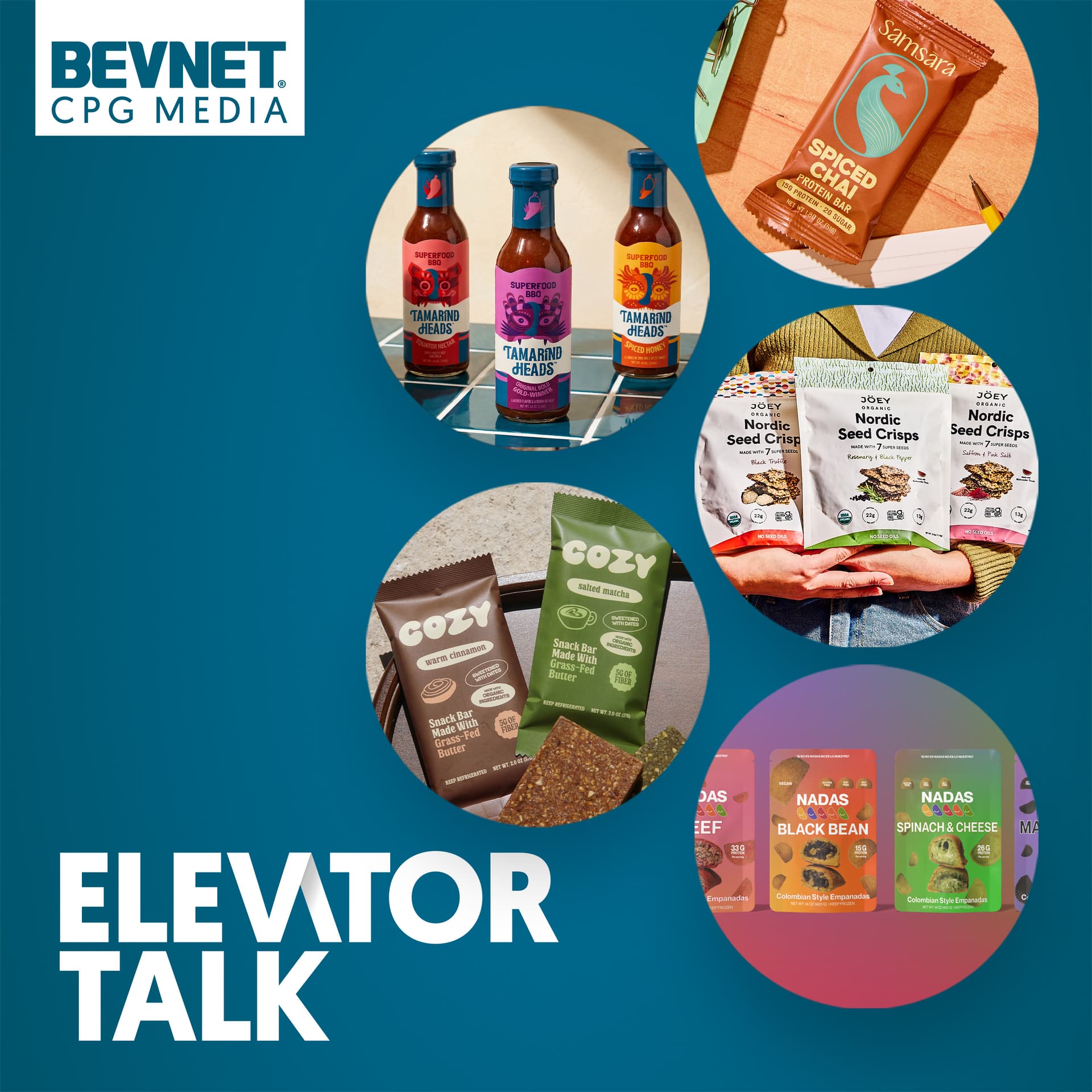
Ken Koyunju (co-founder, Chapter Foods; 6 years in CPG sourcing/manufacturing; confectionery focus; natural colors). Brittany Lim & Sashi Kumar (co-founders, Tamarind Heads; built a tamarind-based BBQ sauce brand). Russell & Julia Menes (co-founders, Cozy Foods; Cozy Butter Bar born during Russell’s stage 4 cancer; grass-fed butter refrigerated snack bars). Srivanti Balaji (founder, Samsara Nutrition; postpartum start; Indian-inspired protein bars). Joseph Chen (founder/CEO, Joy Nordic Seed Crisps; certified organic, gluten-free seed crackers; Canadian brand expanding in the U.S.). Carlos Santos (founder, Nada’s Empanadas; frozen, restaurant-quality corn-based Colombian empanadas).
Key claims
Flavor drives repeat purchase; clean label and whole-food sweeteners (dates, apple/date syrups) are rising; retailers are opening faster via innovation programs; ambient storage and natural preservation matter; founder-led marketing and shelf differentiation work.
Notable examples
Tamarind Heads won Specialty Food Association Sophie Gold Award; Cozy Butter Bar uses 8 ingredients, refrigerated “preservative,” wins Shelfy (non-UPF); Samsara bars: 15g protein/7g fiber, no added sugar, flavors like golden mango/spiced chai/masala peanut; Joy Nordic: 22g protein/13g fiber, no seed oil, top flavor saffron & pink salt; Nada’s fills frozen “white space” with corn-based Colombian-style empanadas.
Written by AI. May contain mistakes. Listen to the episode to check what was said.
Chapters
Tap a time to open that second in VOThe Challenge of Retaining Beverage Consumers
0:00 to 0:23
Learn how flavor plays a crucial role in consumer retention for beverages.
“Getting consumers to trial a beverage is easy, but how do you keep them around?”
Ken Koyunju: Co-Founder of Chapter Foods
1:02 to 2:10
Ken shares his background in the CPG industry and what Chapter Foods does.
“It's going fantastic, even better now that I'm seeing your face, because the last time I saw you was in June for the Summer Fancy Foochoo show in New York City.”
Emerging Trends in Confectionery
2:10 to 3:36
Ken discusses trends in confectionery, including natural sweeteners and flavors.
“So we have manufacturing partners in Turkey and Europe for big scale candy productions, as well as smaller players, manufacturing partners in US for domestic and smaller ones.”
The Whole Foods Movement and Retailer Opportunities
3:36 to 5:30
Explore how the Whole Foods movement is changing retail opportunities for brands.
“Yeah, we saw a lot of zero sugar candy trend that we've seen in the last few years.”
Tamarind Heads: A Unique Barbecue Sauce
6:20 to 8:16
Brittany and Sashi introduce Tamarind Heads and its unique ingredients.
“All right, let's start with our first founders.”
Awards and Retail Success of Tamarind Heads
8:16 to 11:01
Discussing the awards Tamarind Heads has won and their retail expansion.
“So Tamarin Heads BBQ is an entirely Tamarin-based barbecue sauce line with just five other clean ingredients.”
Understanding the Ingredient and Its Preservation
11:01 to 13:00
Exploring how tamarind acts as a natural preservative in the BBQ sauce.
“You know, I was just having a conversation with someone about ketchup, and they couldn't believe that the second ingredient in ketchup was corn syrup or sugar.”
Packaging and Consumer Engagement
13:00 to 14:00
How Tamarind Heads' packaging reflects its playful and global essence.
“So because of the way that we process and manufactured here on site in the US.”
Tamarind's Cultural Significance
14:00 to 15:40
Explore the fun and cultural tales surrounding tamarind and its use in barbecue sauce.
“So tamarind, like I said, grows in five global cultures, global cuisines.”
Choosing Barbecue Over Other Sauces
15:40 to 17:00
Discover the reasoning behind selecting tamarind-based barbecue sauce over other options.
“I want to get back to Cam for a sec, because I'm sure he has a couple more comments.”
Show all 33 chapters
Rebranding and Consumer Feedback
17:00 to 19:40
Learn about the rebranding process and how consumer feedback shaped the new product.
“The hierarchy in terms of the label design is just spot on.”
Introduction to Cozy Foods
19:40 to 22:40
Meet the founders of Cozy Foods and hear their personal story behind the brand.
“Your inbox should reflect the parts of CPG that matter to you.”
The Unique Features of Cozy Butter Bar
22:40 to 24:40
Understand the unique qualities and ingredients of the Cozy Butter Bar.
“So I know it seems like you were close, but congratulations on beating it and getting to where you are now with Cozy.”
The Flavor Profile and Market Positioning
24:40 to 27:00
Discuss the flavor profile of Cozy's products and their positioning in the market.
“And so this word really just reels people in on shelf too.”
Sourcing and Supply Chain Challenges
27:00 to 28:00
Examine sourcing challenges related to ingredients and their impact on production.
“We actually use Celtic sea salt that gives it that nice saltiness to it.”
Supply Chain Challenges and Scaling Up
28:00 to 31:06
Learn about supply chain issues affecting the food industry and how brands are adapting.
“And when we are out there on the field doing farmers markets and pop ups, and when we do mention that it is naturally sweetened with dates, it's just automatic.”
Introducing Samsara Nutrition
31:06 to 32:49
Discover the story behind Samsara Nutrition and their unique protein bar offerings.
“From one bar brand that I'm in love with to another bar brand that I'm in love with, Our founder, our next founder is Srivanti Balaji, who is the founder of Samsara Nutrition.”
Flavor Innovation in Protein Bars
32:49 to 35:49
Understand the importance of flavor and positioning in the protein bar market.
“Well, you didn't have to go much further than masala peanut, golden mango, and spiced chai.”
Packaging Design and Retail Strategy
35:49 to 37:03
Explore the impact of packaging design on retail presence and consumer appeal.
“A lot of protein bars, it's sort of horizontal.”
The Role of Founder-Led Marketing
37:03 to 40:02
Learn how founder-led marketing can create brand traction and community engagement.
“You know, for me, it's very much the flavors.”
Support and Community in Scaling Brands
40:02 to 41:56
Understand the value of community support for emerging food brands.
“And so I'm really self-conscious of the fact that it can't just be my face on social media.”
Introduction to Joy Nordic Seed Crisps
41:56 to 43:36
Meet Joy Nordic Seed Crisps and learn about their unique product offerings.
“He's the founder and CEO of Joy Nordic Seed Crisps.”
Exploring Consumer Feedback and Fiber Benefits
43:36 to 45:02
Discussion on the product's fiber content and consumer confusion over ingredients.
“I mean, again, for me, this is a product or a line of products that I was just surprised to see anything like this because it is very new to me.”
Expansion Plans in the U.S. Market
45:02 to 47:19
An overview of Joy Nordic's strategy for entering the U.S. market.
“I know the difference, but does this like any confusion in the consumers?”
Product Placement and Consumer Preferences
47:19 to 50:23
Insights into how the product is merchandised and consumer flavor preferences.
“And where in-store, where in-store do you see the brand being merchandised?”
Conclusion of Joy Nordic Interview
50:23 to 51:12
Final thoughts on the future of Joy Nordic in the U.S. market.
“I'm so excited for the future of Joey in the United States.”
Distinct Features of Colombian Empanadas
51:50 to 55:13
Carlos shares what sets his Colombian-style empanadas apart from others.
“I already left the cat out of the bag with empanadas, so it's pretty clear what you do.”
Production Challenges and Growth in Manufacturing
55:13 to 56:04
Discussion on scaling production and the challenges faced in commercializing empanadas.
The Empanada Journey: Growth During the Pandemic
56:04 to 57:24
Learn how the empanada business scaled from hundreds to hundreds of thousands during the pandemic.
“Now let's just figure it out together, right?”
Navigating CPG Market Dynamics
57:24 to 58:46
Discover the challenges and strategies of entering the consumer packaged goods market.
“Our strategy obviously changes to focus on our three core demographics, our house makers, our second generation immigrants, and then obviously people with dietary restrictions.”
Clean Label Products: Meeting Consumer Demands
58:46 to 59:54
Understand the importance of clean labeling and consumer trust in product quality.
“even though every consumer doesn't fully understand that we do.”
Packaging and Differentiation in Frozen Foods
59:54 to 1:01:14
Explore how packaging can communicate product quality and differentiate from competitors.
“But you feel like that is something that belongs in front of pack?”
Elevator Talk: Insights from Founders
1:01:14 to 1:02:14
Hear insights from founders about product appeal and the importance of taste.
“I think obviously, you know, we're, we're small batching some of these, some of our packaging right now.”
Transcript
Automatic transcript. May contain errors.0:00Getting consumers to trial a beverage is easy, but how do you keep them around? Flavor makes it happen. At Virginia Dare, we build flavor systems from the ground up with clean label, natural options, all while making the harshest functional ingredients taste delicious. And we specialize in sweet flavors like a rainbow sherbet prebiotic soda or a matcha latte flavored protein shake. Learn more at virginiadare.com.
0:32Hey, folks, I'm Ray Lateef, the editor and producer of BevNet's Taste Radio podcast, and you're tuning into the latest episode of Elevator Talk, the series that profiles early stage and disruptive brands from across the food and beverage industry. Today's episode will focus on five food brands whose entrepreneurs will have an opportunity to hear feedback and advice from our co-host for this episode. That's Ken Koyunju, who is the co-founder of Chapter Foods. Ken, it's so great to see you. Hi, Ray. How's it going? It's going fantastic, even better now that I'm seeing your face, because the last time I saw you was in June for the Summer Fancy Foochoo show in New York City.
1:13And what a fantastic event that was. I'm so glad we had an opportunity to walk the show floor a bit together and see so many amazing brands and products, some of which will be featured on today's show. Yeah, I think it's a struggle moment for me, because I've been the number fan of this show, as you know. And finally, being here as a co-host is really like one of the best days of my life, if you ask me. Oh, jeez. Well, thank you so much for saying that, and thanks so much for being a big supporter of what we do. And for the food and beverage community as a whole, tell us a bit about your background and work with Chapter Foods.
1:51Yeah, totally. I've been in the CPJ business for the last six years. I had my own source business in Turkey and then I left the business in the third year. And now what we did chapter food is that in the last two years is that we are a manufacturing and sourcing company working as an agent. So we are mostly focused on confectionery category. So we have manufacturing partners in Turkey and Europe for big scale candy productions, as well as smaller players, manufacturing partners in US for domestic and smaller ones. and we have two different categories when we work with it so we have finished product which is like candies like gummies clean label candies uh toffees anything you can ask for uh we help tpg brands and retailers and candy retailers to source candies on the ingredient side our biggest category is natural colors because of the change of regulations and retailer pressure and consumer pressure this way we have some big scale manufacturers all vertically integrated for natural colors as well smaller players to help us to help startup brands too.
2:56Since we launched, we have like 100 plus brands for sourcing or manufacturing projects. And one of the latest product launches we ever made is actually the PepperTox pistachio chucked wafers. Well, that certainly seems on trend, especially with all the excitement and enthusiasm around pistachios over the last couple of years. And I wonder, from your perspective, having worked with, developed, and formulated so many new products for brands, what other ingredients, what other trends are really on the horizon for food and beverage companies? I think one would be on the sweeter side. Yeah, we saw a lot of zero sugar candy trend that we've seen in the last few years.
3:45but recently we have a lot of startup brands actually source like date syrups apple puree apple syrup for even for gummies and we have a really exciting product coming up for example it's all like a clear date juice based product you wouldn't tell it date because it doesn't have any other flavor to dates but state base so i think also like it aligns with our brand friends today that, for example, we're going to see much and much more like whole food sweeteners, like dates, maple, and apple. Ken, not only are you helping brands formulate new products, you're also a great observer of this industry.
4:31You're very active on LinkedIn and Instagram. certainly when it comes to new and innovative brands coming to market, what really gets you excited most about what you're seeing in food and beverage? What new concepts are really resonating with you? So I think the whole Whole Foods movement is exciting for me. And on the general side, I think it's really great to see like there's like Target Sprouts to coming up with really great programs for this, especially for your products, to finally have a chance to get to meet end consumer really fast. So actually, that will change the whole grocery industry, if you ask me, because now you don't even need to wait for like a few years for your product to get on a really big retailer and see your results if that's what consumer wants.
5:29Before that, in the last few years, the gameplay was all about getting into social, get a little bit traction. But as long as you are now fit into these big trends, retailers will give you a hand. And you might have a chance to be a really big brand in just in a few years. Yeah, I think that's a good point. You know, the opportunity for small brands to get into large retailers was pretty limited many years ago. So nowadays, there are many programs, including the Sprouts Innovation set. You know, Target has opened up the doors to smaller brands, even Walmart to a certain extent. And I think you're 100 % right that because every day Americans are asking for better for you products, these retailers are having to deliver.
6:13So great news for brands. And I think great news for our founders who are joining us for this episode of Elevator Talk. I am thrilled, thrilled for this group and to meet this group. Ken, are you ready to meet this group? Obviously. Fantastic. All right, let's start with our first founders. They are Brittany Lim and Sashi Kumar, the co-founders of Tamarind Heads. Brittany, Sashi, it's great to see you. Likewise, Ray. Ken, great to meet you. So excited to be here and be a part of this show. Thank you. Brittany, how are you? I'm doing great. We're so excited to be here. Great to see you, Ken. Great to see you, Ray.
6:50Thank you so much. Tamarind Heads. You know, originally when I heard this brand name, I could have sworn it was a candy company, but that's not what you do. So Tamarind Head's not a candy company. It is a barbecue sauce that is made exclusively out of the equator's secret superfood, which is tamarind. I've got my little tamarind pod here, and I realized we're on a podcast, but if you want to look it up, it is a fruit that grows along the equator, high in antioxidants, anti-inflammatory and magnesium. And it's also a global staple that's eaten by 3 billion people every single day in five global regions around the world.
7:26And so that makes it a really versatile flavor. So it's used in everything from aguas frescas to you've probably had it in pad thai or wortester sauce. So can you might have even had it in candy. We put it it's a true like culinary chameleon. So it flavor-wise goes a bit tart, tangy, complex, sweet and savory. And so our question was, how do you take this global ingredient that belongs everywhere from Mexico to the Caribbean to West Africa to South Asia, but has not been unlocked here in the United States because most tamarind is sold as a paste or a concentrate? And so we just put it in the most all-American format you can think of, which was barbecue.
8:12And so that's what we've done. And the traction has been amazing. I'll let my partner in crime and partner in life, Sasha, you talk a little bit about that. That's exactly right. So Tamarin Heads BBQ is an entirely Tamarin-based barbecue sauce line with just five other clean ingredients. So it's better for you, and it wins on flavor. Because the year that we launched, in the summer of 2024, we took home the Specialty Food Association's Sophie Gold Award as the best barbecue sauce on the market. The Oscars of the food world on a blind taste test. And which allowed us to get into our first retailer out of the market, which was Central Market down in Texas.
8:47So we went right into barbecue country and proved ourselves and did really well there, which got us on the radar of the fresh market. And so we're now in about 200 doors up and down the East Coast and a bunch more stores in the upper New York area. And this year, the momentum just continues. At the 2026 Summer Fancy Food Show, just a couple of months ago that Ken and Ray, you guys were at, we took home the editor's choice and best in show from The Kitchen magazine. So there's a lot of momentum behind us. And Brittany is going to tell us a little bit more about our most important thing to come.
9:20Yeah. So I think one of the most exciting things that happened recently was Southern Living Magazine got a hold of our sauce somehow and named us their 2026 barbecue sauce of summer, which for us having a brand that has a global ingredient, getting the nod from a publication that's so, I would say, like traditional American, I think speaks to how we see tamarind heads, which is that it is the new American pantry staple because of the fact that it doesn't belong to one culture. It belongs to many. And, you know, what's more American than that? And oftentimes I hear people talking about global cultures coming to America, global cuisines coming to America.
10:04but I counter that by saying, I don't think anybody is, I mean, there's people who are coming here, certainly, but I prefer to think about it as global flavors are growing up in America because I'm American. You know, I grew up here. The flavors I know like tamarind come from abroad, but are shaped by the other flavors that I've grown up with from my neighbors. Right. And so in that way, I think Tamarind Heads is the next pantry stable because it captures that shift. For people like me and Sashi who grew up with it, it is this familiar flavor that we're excited to see in a new format. And then for people who are less familiar with tamarind, it is a really familiar format with a new flavor that they're really excited to see.
10:49And that's tamarind heads, I think, in a nutshell. And yeah, we're excited to get out there. That's tamarind heads in a pod, and I love it. And you guys did a great job. Thank you so much for that introduction. Just quick question. You know, I was just having a conversation with someone about ketchup, and they couldn't believe that the second ingredient in ketchup was corn syrup or sugar. And I'm curious about the sugar count, calorie count for your products. Yeah, look, we're Tamron, entirely Tamron-based. That's our first ingredient in the whole lineup. And we spent over five years trying to figure out how do we make this product in the best, cleanest way possible.
11:30And that's what you have is an ingredient in a bottle that's made entirely of tamarind, no corn syrup, no tomatoes, no vinegar, and just five other clean ingredients you can read. We actually, in some of the trade shows we go to, we actually blow up our ingredient list, right? Because people don't believe that all that's in it. And to answer your question directly, it's 30 calories for a serving and about five grams of organic brown sugar. Amazing. That is fantastic. And Ken, I feel like that's kind of your sweet spot, no pun intended, and what you were talking about earlier with whole food ingredients at a sugar and calorie count that modern Americans are looking for.
12:08I have a question on the supply chain side. So you said you spent like four years on the R &D, actually. And this is like whole 100 % tamarind-based product, which you swapped tomatoes and vinegar. is just using tamarind enough for to have like enough pH so it can be stored in ambient storage for two years? Actually, Ken, that's a great question. Absolutely. One of the amazing superfood properties of tamarind is that it's a natural preservative, which if you use the product and the ingredient the right way and you manufacture it the right way, you get to harness all of it, including all of the superfood anti-inflammatory properties as well.
12:55But it is a natural preservative. We actually are not just an acidified food. We are a natural acid food. So because of the way that we process and manufactured here on site in the US. I wonder about your packaging. I think your packaging is great in that you are really embracing tamarind as a word, even though there are probably many people who are not familiar with the ingredient. but what is really resonating most with your retail buyers and your consumers? Is it tamarind? Is it barbecue sauce? Is it something else on your packaging that gives them confidence that it's going to be a great tasting product, that it is going to fit well into their pantries or shelves?
13:37Yeah, that's a great question and a timely one because we just went through a whole rebrand and that was very much informed by our consumers. I think to take your first part, how did we decide to lean into the imagery that we have right now. You'll see that there's our little, we call them our little monsters, our little spirits on the bottle. And we really leaned into the sort of global fun cultural aspect of tamarind. So tamarind, like I said, grows in five global cultures, global cuisines. And one interesting fact we found about it was everywhere tamarind grows around the world, there's usually a folktale associated with the tamarind tree.
14:15One of them being like mischievous spirits live in the tamarind tree. And if you walk under it, it'll jump on your shoulder. And so we decided to embrace that kind of playful aspect of it and put it on our sauce because barbecue at the end of the day, it's fun. And so I think that's the first thing we heard from our customers was we want the packaging to look like the fun that is inside the bottle and the imagination. There is something imaginative about using tamarind instead of tomato for a barbecue sauce too. And so our new packaging is also very imaginative. And then finally, we wanted to signal that, you know, just like what's inside the bottle, which is all real ingredients, no preservatives, you know, everything is very craft.
14:57We didn't want to go with just AI or a kind of common designer for our packaging. So the front of the label was done by a Colombian graphic design company. And the sides were done by an Indian illustrator. So both pulling from people and cultures who are actually from those Tamarind regions. And so our audiences have really embraced that. They helped to inform it. We heard from them. We want it brighter because like the flavor is so bold. It needs to be bolder. And so that's what we did. And that after our next fancy food, we'll have some exciting announcements coming this year about two new big banner retailers who would like to take us, in part based on the fact that they really liked our packaging.
15:38Of course, the flavor inside. Amazing, amazing. I want to get back to Cam for a sec, because I'm sure he has a couple more comments. Yeah, I have a follow-up question. Yeah, go ahead. Yeah. So, like, by the way, we have tamarind sherbet drink in Turkey. We've been drinking for so many years now. So based on that, actually, I was going to ask, like, how do you actually communicate this is like a barbecue sauce or maybe how do you how did you decide we should turn this into a barbecue sauce because when i because i'm coming from hot sauce uh business before um seeing more like a hot sauce category type of packaging that i've never seen before in barbecue sauce so that's what i want to ask that how did you ended up making this a barbecue sauce instead of like a hot sauce or any other sauce?
16:26I think first the barbecue cost use case is so strong. Tamarind caramelizes instead of burns on the grill, tomato-based sauces burn. So great for barbecue, great for high heat and the viscosity of it lends itself to barbecue. But I think also many competition winning barbecue sauces use a little bit of tamarind in it as their little drop of gold to win. And so there's a history of it there. And finally, it's a clear use case to start with for a lot of people. You get in that bottle and they know immediately what to do with a barbecue sauce versus the hot sauce can be, there's a lot of different use cases, but we wanted to give somebody a clear use case since tamarind might be a little bit more foreign as an ingredient.
17:00Yeah, that's correct. Thank you. Well, I gotta say, cause we have, I think we have the old packaging or I'm looking at your website and it has the old packaging, but on your Instagram account, it has the new packaging and my goodness, it is a fantastic rebrand. You guys did a really good job. The logo looks fantastic. The hierarchy in terms of the label design is just spot on. And it feels like consumers want to discover it as much as they want to buy it. You know, there's like a really cool discovery ability, if that's a word, of your brand. And people want to know more about what Tamarind is.
17:40So really great job. I can't believe we're out of time. I mean, our feeling we went into is like, we want people to feel like they're Indiana Jones a little bit, like something cool. Yeah, yeah, no, it is really, It has that exotic but very familiar kind of aspect to it. I love that you can see the ingredients. You see that it's actually whole foods, as Ken was pointing out, inside the bottle. It's not a paste. It's a sauce. It's a barbecue sauce. So, yeah. Yeah, like I said, I can't believe we're out of time. Sashi, Brittany, thank you so much for being with us on Elevator Talk today. Obviously, you're off to a great start.
18:18It seems like there's a really good runway for success for this brand. Please stay in touch. Let us know if we can help in any way. If there's any news, I know there is news coming out about what you're doing. Reach out. Let us know. We want to promote it. We want to talk about it on Nosh and Taste Radio. That'd be amazing. Thank you so much for having us. Thank you, Ray. Thank you, Kim. Bye. Hey, listeners. As of September 3rd, hot new jobs are hitting cpgjobs.com, including from Dione Life USA, Spike Dade, and Club 13 Herbals. Black Hog Brewing, Guardian Distributors of SoCal, and Creature Comforts Brewing bring more standout opportunities.
18:59Explore them and apply today. Got a role to fill? Reach category insiders already tracking CPG, with less wrong-fit screening and more conversations with relevant candidates. Your listing runs across BevNet, BrewBound, and Nosh. Post the job on cpgjobs.com today. Use code TASTERADIO26 and save money on a job listing. More than 70 % of new CPG products fail, often over margins founders never fully understood. Outsourced accounting can close that gap for good. Visit belaysolutions.com slash BevNet for a free small business accounting guide from Belay. Your inbox should reflect the parts of CPG that matter to you.
19:45Choose from BevNet's seven free newsletters covering beverage, food, beer, spirits, careers, education, and more. Sign up and select your favorites at cpgmedia.com slash newsletter. All right, great start to the show. I know we're going to keep things going in that direction with our next guests, Russell and Julia, the co-founders of Cozy. Russell and Julia Menes, that is. How are you guys? Hi, guys. Doing great. Thank you so much. We're so excited to be on today's Elevator Talk. Yes, thank you so much for being on the show. Wow. Cozy is a brand that I've wanted to talk about for a long time. We did talk about that in a recent episode of Taste Radio.
20:26You guys make some phenomenal products. And it comes from a very personal place. Tell us all about Cozy. Yeah. Yeah, so we are the founders of Cozy Foods. Cozy Foods is an ultra clean snack brand. Today, we sell the Cozy Butter Bar, which is a refrigerated snack bar made with eight ingredients only. And we are the only bar on the market made with grass-fed butter. And our product was actually born from the hardest season of our lives. Three years ago, I was actually battling stage four cancer. And during that time, we decided to switch our diets completely to whole foods only. and Julia started making everything from scratch in the kitchen, including the bars that we sell today.
21:12And long story short, once I hit remission, we knew we had to share with the community and that's how the brand was born. And today we are in over 60 doors growing really fast and just really excited to, you know, continue sharing that sense of real food comfort these bars gave us during that time. Yeah. And in recent news, we just won the Startup CPG Shelfy Award for the non-UPF category, which is such an honor because our products are minimally processed. So we only use eight ingredients. We have no preservatives or additives. We actually use the refrigerator as our preservative. And we have two amazing flavors.
21:51We have warm cinnamon and salted matcha. And they're just honestly the best clean everyday snack that is super, super yummy. Like literally once you taste this, you'll just get it and you're automatically hooked. I can attest that is correct. I tried these bars. They're not the consistency that you might expect for a bar. Most bars and even great and really delicious bars have a, I would guess a chewier consistency. Yours almost have a meltability that you just don't expect. And I'm assuming it all comes from the grass-fed butter. Yes. Yeah. The grass-fed butter really gives it that like creamy cookie dough-like texture.
22:32Yeah. And Russell, thank you so much for sharing your story. Congratulations on beating stage four cancer. As far as I know, that's not something that often happens. So I know it seems like you were close, but congratulations on beating it and getting to where you are now with Cozy. Ken, I wish, I don't know, have you had a chance to try these by any chance uh not really but i missed that at the show i'm so sorry for that russle and julia but the next time i'm in the u.s in in like next week the next month i'll try that um yeah by the way i really liked the name cosy i don't know how did you end up like trademarking it because it's a really great name really could also on that but i have a question on your name actually because like you're selling on the refrigerated section but your name is cozy so it's a cold chain product that gives warmth a little bit and your name's also like so just like warm cinnamon and like salted matcha how do you did you have any like feedback on this this is like a little bit cognitive dissonance i think the feedback has been actually really great with the flavors what we're really trying to, you know, reel you in on is the way these bars make you feel.
23:53So we're really selling that emotion and trying to offer, you know, consumers that real food comfort, so to speak. And I feel like Cozy and the flavor names really embody that. And it was pretty, pretty awesome because we rebranded to Cozy literally two months ago now. almost two months and we started off as rj naturals at first russell and julia just to you know see if these bars are actually something that people would buy and love and you know after a year of testing out the market and proving that cozy just made sense yeah cozy is just like the name that really embodies everything that our products make you feel you feel really warm and cozy when you eat the bars because they just taste so amazing it's very comforting it's very safe And so this word really just reels people in on shelf too.
24:48And like with our logo being very bold and very eye-catching from far away as well, it almost creates like that sense of curiosity where the customer is like, oh, what is this? What is this cozy bar in the fridge? Let me pick it up and see what it is. And once they read the label, they see the clean ingredients and they're just like, okay, I'm down to try it. yeah uh just to quickly follow up on can's question do you do you have a trademark for cozy uh it looks like you do on your on your website yeah yeah yeah it's actually in the process right now yes outstanding your packaging is great too um just a couple quick questions on that front you described the cozy as a snack bar um even though uh you know you could go a number of different ways with the description.
25:31Why a snack bar? Yeah, we wanted to, you know, stray away. We're not a protein bar. We want to make that very clear. We're not a protein bar, although we do have four grams of protein. We do have five grams of fiber as well. That's another big call out on our front packaging. But our bar is really meant for everyday use. You can eat it in the morning with your coffee. You can eat it in the midday for a midday pick-me-up little snack, also a guilt-free dessert. And so the snack bar really just embodies all of the use cases that you can just eat this as a snack in between meals or literally any time of the day.
26:02And it really differentiates ourselves on shelf because everyone is a protein bar or a fiber bar or whatever they may be pushing. But our bar really is an everyday snack bar. And one of the things I love most about Cozy was that you had this great duality of flavor. You have this sweet and you have a little bit of salty. I assume part of that is intentional. Maybe part of it's from the grass-fed butter. I don't know if you're using salted or unsalted butter, but it's a really just fantastic flavor. How often do you feel like you're seeing more sort of dual flavor concepts coming to market where you have salty, sweet?
26:45I know swicy is a big thing nowadays. Yeah. I mean, we didn't intentionally make it sweet and salty at the same time. It was just the bars that Julia created during the time I was going through treatment. We actually use Celtic sea salt that gives it that nice saltiness to it. And the reason we use Celtic sea salt is because we really believe in the minerals that it gives you and all these extra benefits than traditional processed salt. So, yeah, that's where that saltiness comes from, that salty kick. And being sweetened with dates, I imagine, is something that's very exciting for Canada here.
27:29I think, you know, as you talked about at the top of the show, people are looking for alternatives to processed sugar, and dates is certainly one way to go. Do you feel like that, you know, pointing that out on the front of PAC is going to resonate with consumers, modern consumers today? Yeah, I definitely believe so. I mean, I feel like in a world filled with processed sugar and just, you know, natural flavors, I feel like with a call out like sweetened with dates, it tells you that this product is potentially naturally sweetened and has no, you know, additives or preservatives possibly. Yeah.
28:10And when we are out there on the field doing farmers markets and pop ups, and when we do mention that it is naturally sweetened with dates, it's just automatic. The customers are just like, oh, wow, okay, I am like in because they are looking for, you know, products that have no refined sugars and that are clean and naturally sweetened. And so that call it was really important for us too. I'm not a sourcing expert. Luckily, we have one on the show. I was coming on to that, actually. Yeah, I was going to say, I mean, you must have some questions about certainly the availability of things like grass-fed butter.
Read the full transcript
28:45Yeah. Right now, I'm seeing a lot of price hikes when it comes to whey protein, now collagen, now a little bit butter. Actually, we had a really big supply chain crisis with organic milk last year. That's why, for example, some of our customers switched into A2 milk because it was easier and cheaper to find it. And as you scale up to a coal manufacturer right now, how do you think it's going to affect you? Do you have any long-term connections with the suppliers? And also, can you also tell us a little bit about how to work with a coal manufacturer when it comes to really clean ingredients? Because it's also a slab bar.
29:22Yeah, so we're really grateful to have really great suppliers. Our grass-fed butter actually comes from New Zealand. So we have a really great relationship with our butter source and our comb manufacturer that we are actually transitioning to. Their practices and their quality requirements are very intensive, where we really adore and love about that. And yeah, they only make natural products like ours. So working with them and teaming up with them was an automatic, you know, yes for us. And it's been a long process. You know, onboarding with a co-manufacturer can take like up to a year or more.
30:08We've been like seven months at it and we're like almost there. So we're really excited for the next chapter. Outstanding. Russell, Julia, I am thrilled for you guys because it's not every day that you come across a brand like yours and products like yours. And I think they're going to be a big hit with consumers. The more you get the brand out there, the more you get into people's hands, they're going to become believers of what you're doing. And certainly everything that you've gone through and gotten to at this point is really remarkable. Congratulations on everything that you've built. And please let us know if we can help in any way.
30:49Introductions to folks in the industry, in whatever capacity you need, we want to help in any way we can. Definitely. Thank you guys so much, Ray and Ken. Really appreciate you guys having us today. Thank you so much. Thanks so much for being with us on Elevator Talk. Thank you so much. All right. From one bar brand that I'm in love with to another bar brand that I'm in love with, Our founder, our next founder is Srivanti Balaji, who is the founder of Samsara Nutrition. Hey, Ray and Cam. Thanks so much for having me. I'm super excited to be here. Tell us all about what makes Samsara different.
31:24Thank you so much. So Samsara Nutrition is an Indian-inspired protein bar brand. And what we're looking to do is shake up the protein bar aisle with some really different flavors that haven't been seen before on shelf. I started this brand when I was postpartum with my twins and I had so many protein bars just for nourishment. But what I found was one, they weren't actually nourishing me too. I didn't like the texture of most of them. And third, which is the most important thing. All of them kind of had the same flavor profile, peanut butter, chocolate chip, cookie dough, and none of it felt like a bar or flavors rather that I really wanted to eat.
32:00And so I used to bake in a past life. And so I just took out a mixing bowl and started making protein bars myself. And the things that are in my cabinet might look a little different than what's in a traditional pantry. So we have Indian spices and mango. And all of those flavors are what inspired our first three flavors to market. Golden mango, spiced chai, and masala peanut. Each of our bars have 15 grams of protein, 7 grams of fiber, no added sugar with all-natural sweeteners. And we've seen some really great traction since we launched in April. We are mostly D2C, but also have a growing independent retail presence.
32:34This is mostly concentrated in the Bay Area where I'm based. And generally, we are here to show that joyful eating and nutritional eating can go hand in hand. You don't have to sacrifice joy for eating well. Outstanding. My goodness. Well, you didn't have to go much further than masala peanut, golden mango, and spiced chai. Just those flavor names will take you a long way. And I should note, being from the Bay Area or being based in the Bay Area, coming up soon is our Taste Radio San Francisco meetup, which is happening on September 17th. If you are based in the area or visiting, definitely check us out.
33:14Head to tasteradio.com slash meetups to RSVP. Ken, I got to start with you because I've been taking up so much time on this show, and I'm sure you have a lot of questions about Samsara. I really like the packaging. I think it stands out in the protein aisle, protein bar aisle. But I have a question on the positioning. Like you say the bars are inspired South Asian flavors. I really like the flavors, by the way. But the mission is about like metabolic health in a population that's like underserved, as you stated. Like when you write an ad or like communicate your product, which one comes first?
33:50Yeah. So right now I would say that our flavors are what come first. I think that's what gets people to try the bar more than being about metabolic health or having more protein in your diet. I think every bar that's a protein bar tends to lead with protein first. And I think our positioning is that that leaves us with a lot of room to lead with flavor in the category. I think the reason why people eat any food, protein bars or not, is for the taste. People come back for the taste and the flavor. And what we're trying to show is that protein bars are not the exception to that. And that's what should bring you to eating something consistently.
34:27So that's really why we lead with taste. I think that in the positioning, I definitely talk a lot about metabolic health and underserved population with, in terms of flavor needs in the nutrition aisle. Those things are certainly important, but none of it matters if you don't like the taste of the bar. That's true. So Avanti, where do you see Samsara fitting in best? What retail channel? Is there a particular retail chain that you think this brand can really have an impact? It's a great question. So our initial customer base, I thought was going to be mostly South Asian. And I've been pleasantly surprised by how well our bars have been doing in independent retail stores with a mostly white population, to be perfectly honest.
35:13And I think it really speaks to the fact that one, people want bars with lower amounts of sugar with them. I think that people who are sugar sensitive are really quite drawn to these bars. And then the second thing is that I think everyone wants different flavors. And so while I initially thought this was going to be more of a specialty retail product, which is where it currently sits, I do think there is strong mass market potential for it, especially considering that the protein bar aisle has felt kind of stale in terms of flavor innovation. So to answer your question, I think we could do really well in like a Sprouts, maybe one day like a Target, but I would say more in the Sprouts type of retailer.
36:00Yeah. Just quick follow up on that. Your packaging is vertical themed. A lot of protein bars, it's sort of horizontal. You see it on a shelf, it's in a box and you're looking at it in the logo from a horizontal perspective. Why was vertical your choice in terms of how the brand looks? Yeah, I think vertical for us was just due to the shape of the bar. It's a relatively smaller bar. And so what that means is that if I were to do the packaging horizontally, it was just hard for us to communicate what we wanted to communicate about the packaging horizontally. With that said, I think even though the packaging itself is vertical, there is room for the outer packaging case to still be horizontal on shelf.
36:44Right now, our independent retailers are loving that we're vertically faced because it's easier to place those on their shelf. But I don't think that's sustainable for us long term. And so I am considering it in the back of my head of what it would mean to keep the vertical packaging versus switching to something horizontal. Ken, what stands out to you about Samsara? You know, for me, it's very much the flavors. But, you know, I know you're someone who enjoys working out and I'm sure has consumed a lot of protein bars. Do you think about the protein count as much as you do the flavors? I think the best approach in this product, if you ask me, is the balance of the product because it has 7 grams of fiber and then 10 plus grams of protein.
37:35which actually if you ask me a little bit like a white space and it was because we see a lot of protein maxing last year and now it's going to be much more balanced but there's also supply chain side for that I think you're in a good point because I've seen a lot of price hike as we just mentioned before and I see a lot of protein bar brands that are leading the categories in all over the world, like in Turkey, in Europe, in US markets, they started to mix other sorts of proteins in their products. And do you have any plans on that? For example, if you are using milk protein crunch for the texture, and then you also have white protein, milk, do you have plans to switch into a little bit plant protein as well?
38:27I'm so glad you asked. It's actually one of the number one questions we get about our brand is, will there be a vegan option? And the reason why we didn't go vegan from the beginning is purely taste-based. Whenever I had pea protein, I couldn't stand the earthiness of it. And I think a lot of people don't like it. And ultimately, again, it comes back to taste. If people are not going to enjoy the taste, they're not going to come back to consume the product. And so we started off with whey protein. But with that said, I think there's actually some really interesting innovation in the plant protein space.
38:58And so I have my eyes on a couple of other plant-based protein sources that could be great. And again, like you said, whey protein prices are going up, up, up. And I think for me, this is also a way to mitigate that and have a backup option or hopefully not a backup option, but an option that tastes just as good as what we have today. Gervonta, I see a lot of you on your Instagram account, which is great. I feel like people want to associate the brand with the founder. They want to know about their backstory. They want to know about how they're building the company. Just in terms of your social, what's resonating most?
39:34What's really getting the message across about your brand and what you're doing that's different? Yeah, I think founder-led marketing is what got me to this point. I started founder-led marketing before we launched the brand. So I was on the socials maybe six to nine months before launching. And I think that really helped us establish early traction organically without paid media. I think, however, for the brand to grow beyond what I want it to be, I think it has to be more than just me doing the marketing. And so I'm really self-conscious of the fact that it can't just be my face on social media.
40:07That is totally a valid strategy for the first three to six months. And then hopefully beyond this year, just bringing in other people who want to talk about the bar, more social media presence that extends beyond that. I think that will be super great. One thing I've noticed that has resonated is a lot of South Asian cultural references and just showing that we're not just making flavors that are South Asian inspired, but that we're really part of the culture and have our pulse on the culture that way. And so that's resonated, but of course, want to make sure that we have marketing that appeals to everyone, not just South Asians.
40:43So again, very much an open-ended question for me, but something I'm thinking about. Yeah, I haven't watched the video that is titled, Can Saffron Feel Special in a Protein Bar? But that really stood out to me because I'm like, that's a good one. Thank you so much. I so appreciate you saying that. And that is the perfect lead in for our special flavor that will be coming out very soon. Okay, well, we almost let the cat out of the bag, but not entirely. You define differentiation, right? I mean, there are so many new protein bars coming to market, but yours is truly different. And I commend you on that.
41:19And I think there's a great runway for you and for the brand. And I'm just really excited. But please, if you need anything, if you need any help with building your company, I always point this out on Elevator Talk. You know, part of our job is the journalistic side of what we do and talking about news and trends and innovation. The other part of it is community building, and we're here to support founders as they continue to scale. So if there's anything we can do to help, just let us know. Thank you so, so much to both of you for having me on the show. I really appreciate it. Thank you, and hope to see you in San Francisco in a couple weeks.
41:55Absolutely. Thank you. All right, great stuff. On to our next guest. That person is Joseph Chen. He's the founder and CEO of Joy Nordic Seed Crisps. Joey, it's great to see you again. Yeah, nice to see you. And thanks for having me. And nice to meet you, Ken. Yeah. I met you at the Summer Fancy Food Show, didn't I? Yeah, exactly. Yeah. Tell us all about what you do. For sure. Yeah. So Joy Nordic Seed Crisps is a certified organic, certified gluten-free sea cracker. So we're made with seven super seeds, including watermelon seeds, which is naturally high in 14 iron potassium. So each bag of the Joey Cracker contains 22 grams of protein and 13 grams of fiber and no seed oil.
42:38And what differentiates us is we feature the economy inspired premium seasoning. So our classic signature flavors are saffron and pink salt, rosemary, black pepper, and black truffle. And this year we just launched our gastronomy inspired flavors. there was no way to marry peri peri sula and blue salt Ken I'm trying to remember where I saw Joey Organic seed crisps I think it was in the upper level of the fancy food show did you get a chance to try them I think no we were together actually when we visited their booth so it was on the yeah it was on the downflow oh okay well I know I know I tried them and I'm glad that you I think it was startup CPG aisle Oh, okay.
43:23That's what it was. Yes. Well, clearly this is a brand that I remembered because I reached out to Joseph about joining us on the show. Clearly, it's a brand that you remembered as well, Ken. What's your experience with this? I mean, again, for me, this is a product or a line of products that I was just surprised to see anything like this because it is very new to me. It feels very innovative. So actually, because I also know the Turkish market, we have a little bit similar products, but not in this flavor profile. So actually, this is a really innovative product, if you ask me. Really could also that.
44:00And I think it's a really good product for a next generation fiber trend, because this is what the flora bar betting on is like different kind of fibers in a single product that will serve your gut health really good way. So it's like a rainbow diet. And I think this product also fits into that trend. And my question is that, Joseph, do you communicate on this, having different fiber sources in just one product that's also giving you protein? We don't really overly communicate in terms of the fiber benefit, which we should because Because all the fiber that's in the cracker is all naturally occurring from the seeds.
44:44Yeah, so it's definitely something that we're looking to communicate more because we've been focusing so much on the porting side, the porting benefits. But there's also the fiber component where we need to talk about it a bit more in our communication. On the packaging side, I see it's a seed crisp, but you also have no seed oil. I know the difference, but does this like any confusion in the consumers? Do you have any feedback on that? It's interesting that we have not received like from a consumer perspective, but we have one distributor who mentioned to us, like he was a bit confused, like, oh, you guys have seats, but then there's like no COO.
45:28So we have to sort of like just educate him a bit more about that. but so far like you know like we have we purposely like really intentionally like many producing this product without any seed oil because we know that in terms of like and also actually like we also receive feedback from some retailers in terms of what they're looking for what's important to them there's one retail that we work with we actually do private for them and then like they actually work with us to really like fine-tune our recipe and that's we decide to make sure that when we're producing this product, it's sea oil free.
46:05You're a Canadian brand and you are making your way into the United States. According to my notes, you'll be expanding nationally in the U.S. in October. Can you tell us more about that? Yes. Yeah. So we have started. So last year, we started entering the U.S. through a retailer we've been working with for their private label business. And then this year is actually our very first year in January. So we should not shoot the different like distributors and also retailers here in the U.S. Our primary focus right now is really like expanding in the Southern California or the whole California and also in the New York area.
46:45So in New York, we're at like Pop-Up Grocery, Happy Grocery, and then like Union Market. market and then like in California we just started we just landed with the mother's market we land market here like in the bay area we just got the note about the the launch with sprouts for the forage program like in November so just gradually like just in terms of like start working with yeah with the speeders and also a retailer in terms of the retail expansion here in the U.S. And where in-store, where in-store do you see the brand being merchandised? Is it with other snacks? Is it with crackers? Is it with nuts, seeds?
47:31Yeah, so it's interesting you bring that up. I would say like 90 % of the time, retailers, they merchandise us in the cracker section. So we do have like some retailers put us into like, there's a lot of functional snacking area. So that will include a lot more like, you know, like seaweed or like a trail mix. It's a lot of sort of a mixed bag of different type of salty snacks. We also have like retail actually merchandise as in sort of the seeds and nuts area. That's very, very rare. I would say, yeah, 90 % is in the cracker section. Yeah, I would assume so. So it feels like it is kind of a cracker brand or the use case feels like it would be that of a cracker.
48:22But then, you know, I don't see why you wouldn't just snack on it almost as an alternative to a potato chip. Ken, what would be your advice in terms of sort of positioning and talking to American retailers about how consumers see this product and see the brand? so i think the flavors are the hit in here but i would love to ask first like which flavors actually really sell uh on for the consumer because like you have almost 10 6k right now like safran pink salt rosemary black pepper black truffle nori and tamari peripera and sumac and budu salt and it can read as like asian flavors at the same time a little bit middle eastern flavors So which one resonates more with the US consumer?
49:11Oh, yeah. So our number one seller is the Saffron and Pin Salt. So that's also the most basic and also more approachable in terms of flavor profiles standpoint. With some retailers, Black Trouble is actually the number one seller. Yeah, so for one more like the upscale type of retailer, Yeah, so that's the number one. We're seeing a lot of interest in the U.S. The peri-peri flavor and also the suma and brusol. So these two are also two other flavors that are also getting really great traction. But our number two seller is the rosemary black pepper. So I still feel like consumers are gravitating towards a bit more, like a more approachable type of flavor profile.
50:05Yeah, so saffron and pink salt and then like the rosemary and black pepper are the two top ones. You can't go wrong with either. They're both fantastic. And then somehow the black truffle, I mean, that's just the cherry on top. Joey, thank you so much for taking the time to be with us on Elevator Talk today. I'm so excited for the future of Joey in the United States. It seems like you already had a great start in Canada. The U.S. market, obviously, a little different. But when you have a product like yours, success should follow pretty quickly. Thank you so much. Thanks so much for having me. Yeah, thank you.
50:46And please, please stay in touch. For sure. Thank you. Vibrant Ingredients is the natural ingredient partner powering food and beverage innovation, delivering flavor, function, and protection through a science-backed portfolio. Vibrant delivers purpose-driven solutions that help brands create extraordinary experiences. Discover what's possible with Vibrant today. Visit VibrantIngredients.com. The Angel Group was among the first believers in brands like Poppy, Batchans, Goodles, and Siete. The next generation of great consumer brands is being built right now. Learn about investing alongside other industry professionals at wearetheangelgroup.com.
51:34On to our final guest for this episode of Elevator Talk. We have Carlos Santos, who is the founder of Nada's Empanadas. Carlos, it's great to see you again. Hey, Ray. How are you, my friend? Good to see you. Absolutely. You and I met at the Summer Fancy Food Show, and I just love what you're doing. Thank you. I already left the cat out of the bag with empanadas, so it's pretty clear what you do. But what makes Nadas different? Yeah, man. Well, number one, I think the really cool thing is that obviously we're filling a white space in the frozen section, being that the frozen section has been, for the majority, as long as I've been alive, kind of boring, right?
52:16People go to the frozen section of the secondary option, tertiary option. well, hey, we have a restaurant quality empanada that's corn-based Colombian style that immediately addresses, hey, an over-processed, underwhelming, and wheat-focused section of the supermarket. I'm not going to say, listen, that we're going to be the frozen section of Siete because God knows it will sell for that much, but we like to believe that players like them, like my dozen cousins, like Tia Lupita, have taken the same premise of better for you ethnic, mostly Hispanic foods, working across all demographics. And that's what we're doing, man.
52:48But we started from my mom's restaurant that was open for 20 years, a little bit outside of New York City, New York Times, right? And we took that exact same product, and we're just trying to bring it from our home, our hearts, straight to people's freezers. And they are delicious. They're also differentiated because, according to my notes here, they're Colombian-style empanadas. What makes a Colombian-style empanada? Yeah, man, I'm not trying to start a South American war here. But I think what is interesting is a lot of people know empanadas to be either the Argentine, the Chilean, kind of that south, southern empanadas made with wheat, right?
53:28So they make them, they bake them, they're wheat focused. But as we've seen in America, hey, 18 % of the population right now is either gluten-free, they're celiac, or they're gluten insensitive. And so we're trying to bring our empanadas that are corn-based into the market to kind of rival what's been known to be an empanada and what I have known to be an empanada my entire life. The other part of this, and I want to get to Ken, but you call out the protein count on each of your products. That is not necessarily something I've seen with empanadas. I think usually you're eating them for pleasure, for just nourishment.
54:10Why do you feel like you needed to call it the protein? Yeah, man. I mean, I think protein is having a moment, obviously. And I think that's something people like to know, right? They like to understand the macros and micros of how they're eating. And so for us, it's kind of showcasing that. Listen, we have all the bells and whistles of every trend, but we're still an inherently cultural product, right? It's something that Colombians have been eating their whole lives. What we make is just an elevated version of what I've been eating my entire life, even from the colors, right, that we have. That's to call the attention for families.
54:42It's to force kids to eat cheese and spinach, even though the spinach may be tricked onto them because they say it's Hulk cheese. But all that we're doing is that, hey, we're taking a product that Colombians have grown up with our entire lives and we're displaying it in a new manner for consumers. And so that's all that we're trying to do. Obviously, hey, if you're going to have three empanadas and feel like you have your protein filling right there, amazing. but for us it's more about showcasing that these traditional products and cuisines can fit into for everybody's diet and category can is there a turkish version of an empanada i don't know i like i don't want to start anything start anything up with carlos but uh anyway yeah is it yeah we have a version with cracked cracked wheat and we have the same felix almost like we mostly use beef but I think the way Carlos like approached the feelings is much more diverse and creative you ask me and on that actually I wanted to ask something about the production because you now working with a core manufacturer at the same time and you stated that you needed to teach a machine to have to do the same thing how was that process like commercializing process because I think that must have been the hardest part.
55:58Yeah, I mean, I think we went from doing when we started the empanada kind of journey from my mom's restaurant I went from doing like a couple hundred a week to then during pandemic starting to do thousands to now doing tens of thousands hundreds of thousands and what's been cool in that trajectory is that we've always been able to figure out that next step and so with the co-man it was like, hey, we've been doing this this way. Here's these recipes. Now let's just figure it out together, right? Even though we've had to incorporate more machines and obviously it's less manual labor than it used to be, there's a certain standard, mostly when you're using the ingredients that we use, that we know because we made the product so many times, we know what the output should look like regardless of whether it's with machines or whether we're needing the dough.
56:46So I think just figuring out things like humidity and water and at that scale was the biggest thing, right? doing a couple runs, paying for those runs until it got to the standard that we needed it to be. But I think that once you made it, by the time that we got into CPG, we had sold close to 700 ,000 empanadas in different venues from obviously our own storefronts and stadiums and pop-ups and in the rain, the snow and the sun. So we already knew the quality that we needed to get to. It was more just about figuring out and tinkering with the process.
57:23carlos uh not as recently launched into the northeast region of whole foods congratulations on that what's been that what's that experience been like for you yeah man it's been really cool i think um you know obviously we've only been in the cpg market we launched in january we launched ourselves in january so uh we've been learning you know while we while we fly the plane we're building it and so it's been cool to to figure out obviously what velocities look like um i think one of the big things is, okay, now that we're building a brand, what does our marketing work like, right? Our strategy obviously changes to focus on our three core demographics, our house makers, our second generation immigrants, and then obviously people with dietary restrictions.
58:06So figuring out how we can fully grasp everybody and funnel them into all their stores has been really fun. And just hearing the feedback, right? We have customers that have known us for 20 years since my mom had a restaurant that has been eating these products and can attest that the quality is the same when they make it at home. And I think that's the most rewarding part. What's the price point per package? So we're$9.99. We had to get under 10 because that's what our distributors told us. So we were able to reformulate size and get down under the$10 mark. And so we're$9.99. We're actually cheaper than all our competitors in Whole Foods by ounceage, which is fun to say, even though every consumer doesn't fully understand that we do.
58:50And you're clean label throughout, correct? I mean, even though you have this rainbow array of empanadas, there's like this really bright red that's, that's wrapping your beef and potato empanada. Everything is clean label, correct? Yeah, everything is clean label. So yeah, it's one of the things that we hear most from parents, right? They want something that's easy. They want something that they can trust and they want something that their kids are going to like. Right. And I think that we hit all three categories. is we're easy to make you pop in the oven or the air fryer. We're fully clean labeled.
59:20So like you said, we don't really have, parents don't really have to worry about that kind of stuff. All the colors are naturally derived from vegetables. And then, what was the third thing I said? Cheese. But yeah, and yeah, we're really easy to enjoy. So yeah, I think like it's really cool. It's been really awesome to launch a product that's clean labeled and that people are enjoying. Yeah, on that front, Ken, And how much would you highlight the fact that these products are clean label on the website, on the NADA's website? It does highlight that the products are clean label, no BS. But you feel like that is something that belongs in front of pack?
59:57I think it would be really great to highlight that because you're coming from restaurant world. Actually, your packaging also really in line with your prior restaurant. And people know that you came from that background. and you know how to cook, you know how to nourish people. And they were really,
1:00:20trying to find the word, I'm so sorry. They're really aligned with your position actually. So I would love to see something like that because when you, even though it's frozen, when you take the ingredient list, most of the frozen products right now, you'll see a lot of preservatives, even though it's frozen. So this, I think you're a differentiator in this category. Yeah, I would 100 % agree. I mean, your packaging on its own, it's sort of minimalist and it looks beautiful. Even the logo that you use for NADA just feels very straightforward. I almost wonder if in your next iteration, if you decide to iterate on your packaging, noting that you are clean label, no BS, as you point out on your website, feels like it's something that would resonate with consumers, especially in the frozen food aisle when you do see, as Ken pointed out, a lot of preservatives.
1:01:11So, yeah, that's a really good call out. I think obviously, you know, we're, we're small batching some of these, some of our packaging right now. So once, once we get into the larger runs, we'll, I think this is an awesome, awesome point and call out for sure. Yeah, well, one thing that I didn't call out earlier is how delicious your products are. Everyone got to try some at the Fancy Food Show and just the delicious and wonderful aromas that were coming from your booth. I feel like we're drawing so many people in and a good way to get people to try your products. Yes, sir. Yeah. Thank you so much for what you do.
1:01:49And thanks so much for being with us on Elevator Talk today. Excited to see where the brand goes from here. And we want to know where the brand goes from here. Please stay in touch. Let us know about any new retail distribution, what have you. Thank you guys so much. Appreciate y 'all. Thank you. Thank you, Carlo. Well, as advertised can, a great group of founders and a great group of brands. And as I noted, I think before we hopped on the mics, I am going to be, I am very, very hungry. and I can't wait to eat lunch because everything that we saw today just makes your mouth water. And that's really where it starts, right?
1:02:27If you have great taste, you have a great foundation for growth and the story can help tell itself from there. If you don't start with great flavor, great taste, great ingredients, it's kind of harder to build a business. But I really thought that this was a great group, as I mentioned, and I thought you were a great co-host today. Thanks so much for taking the time. For folks who want to get in touch with you and the team at Chapter Foods, what's the best way to do so? I think the best way is LinkedIn. You can find me on LinkedIn really easily and you can reach out to me at ken at chapterfoods.com.
1:03:04Anything related to ingredients or candies, let me know. Or just perspective on the food and beverage industry of which you have a great one. Yes. Thank you. Thank you again. And thanks so much to all our entrepreneurs who joined us today. Thanks to everyone watching or listening. And thanks to our amazing team at BevNet, Nosh, and Taste Radio, the best in the business. Signing off for everyone, I'm Ray Lateef, and we'll talk to you next time.
From the publisher
In the latest episode of Taste Radio's Elevator Talk, leaders from five emerging CPG brands -- Tamarind Heads, Cozy, Samsara, Jöey Nordic Seed Crisps and Nadas Empanadas -- introduce their businesses, share what's changed since launch and offer a look at where they're headed next.
Joining regular host Ray Latif, editor and producer of Taste Radio, is Can Koyuncu, the co-founder and CMO of Chapter Foods, who brings sharp questions, candid feedback and an investor's perspective to each pitch.
Want to put your brand in front of experienced CPG operators and investors? Applications are open for future episodes of Elevator Talk. Participation is free, interviews are conducted remotely, and founders get the chance to pitch their products, share company news and get unfiltered feedback from industry leaders.