In short
Taste Radio Episode Summary: Hemp Bevs Take A Hit. Trip Keeps Calm & Raises $40M
Podcast Title: Taste Radio Episode Title: Hemp Bevs Take A Hit. Trip Keeps Calm & Raises $40M Episode Description: This episode discusses recent developments in the hemp beverage industry, including a government provision banning intoxicating hemp products, and features an interview with Olivia Ferdi, co-founder of the relaxation beverage brand Trip, which recently raised $40 million in funding.
---
Key Highlights
Introduction
- Hosts Ray Lateef, John Craven, Jackie Brugliera, and Mike Schneider discuss the evolving beverage industry.
- Highlight the upcoming Nosh Live L.A. 2025 event that will showcase emerging brands and connect retailers with investors.
Government Provision on Hemp Products
- Current Situation: New government spending deal includes a provision banning the sale of intoxicating hemp products, alarming the cannabis CPG community.
- Industry Reactions: Hosts express frustration over the stigma surrounding cannabis and the potential implications for THC-infused beverages.
- Discussion Points:
- The ongoing battle for cannabis acceptance in mainstream markets.
- Concerns over how this provision might affect future innovations in the industry.
Funding and Growth of Trip
- Olivia Ferdi's Interview: Co-founder of Trip discusses the brand's rapid growth and recent $40 million funding at a valuation of $300 million.
- Trip is expected to hit $100 million in annual revenue by the end of the year.
- Products are now available in over 10,000 doors nationwide, including major retailers like Target and Whole Foods.
- Brand Positioning: Trip aims to create moments of calm in everyday chaos, emphasizing the importance of emotional connection with consumers.
- Challenges in Capital Access: Olivia shares insights on the difficulties female-led brands face in securing funding.
Other Brands and Innovations Discussed
- Lucky Energy:
- Recently raised $25 million to grow its energy drink brand, targeting independent distributor networks.
- Doughlicious:
- Kathryn Bricken reflects on the evolution of her cookie dough brand, focusing on healthier options and the importance of team culture.
- Something & Nothing:
- Ollie Dixon shares insights on his premium soda brand, emphasizing design intuition and market positioning.
Product Reviews and Trends
- Emerging Products Highlighted:
- Guinness-Flavored Jerky: A unique product combining flavors of steak and Guinness.
- Cactus Tortilla Chips: A healthy snack option praised for its fiber content.
- THC-Infused Beverages: Review of various THC drinks including energizing and relaxing options.
Concluding Thoughts
- The episode wraps up with discussions on industry trends and the importance of understanding market dynamics.
- The hosts encourage listeners to reach out for further discussions and insights on navigating the industry.
---
Key Takeaways
- The hemp beverage industry faces significant regulatory challenges, emphasizing the need for advocacy and education.
- Brands like Trip are successfully navigating the market by creating emotional connections with consumers.
- Female-led brands continue to fight for recognition and funding in a heavily male-dominated industry.
- Innovation and differentiation remain crucial for success in the competitive beverage landscape.
---
Brands Mentioned
- Trip
- Lucky Energy
- C4
- Ghost
- Celsius
- Alani Nu
- Sanzo
- Guinness
- Nopalli
- Rhythm THC Beverages
- Kush
- Mez
- Olyra
- Cob
- Doughlicious
- Something & Nothing
---
Contact Information For feedback or sponsorship inquiries, reach out at [ask@tasteradio.com](mailto:ask@tasteradio.com).
If you enjoyed the episode, please share it with colleagues and leave a review on your preferred podcast platform.
---
*This summary encapsulates the discussions and insights shared in the specified episode of the Taste Radio podcast, providing a comprehensive overview for listeners and business enthusiasts in the food and beverage sector.*
Written by AI. May contain mistakes. Listen to the episode to check what was said.
Transcript
Automatic transcript. May contain errors.0:10Hello, dear friends, and thanks for tuning in to Taste Radio, the number one podcast for anyone building a business in food or beverage. I'm Ray Lateef, the editor and producer of Taste Radio, and with my co-hosts, John Craven, Jackie Brugliera, and Mike Schneider. In this episode, we revisit interviews with three visionary founders recorded at Taste Radio's London meetup held last month, including one with Olivia Ferdi, co-founder of Trip, the fast-growing relaxation and beverage brand, which recently announced a$40 million funding round at a valuation of$300 million. They're going to do great things with that money.
0:53Yeah. Yeah. Amazing stuff. According to a press release announcing the raise, Trip is on track to hit$100 million in annual revenue this year and is on pace to reach$200 million in 2026. I knew them when they were an upstart CBD brand in UK. Yeah. Their beverages are already available at Target, Sprouts, Whole Foods, HGP, Wegmans, and many more stores. 10 ,000 doors nationwide, 50 ,000 globally. Amazing stuff. A lot more about Tripp's positioning and growth strategy in our interview with Olivia. Stay tuned for that. What are we now? Three weeks away? Yeah. Less than three weeks away. 26 days from Bebnet Live.
1:36From Nosh Live. That's about less than. Well, yeah, it is. Because this is a Tuesday that we're recording. Oh, you're talking about the timeline. Don't put us in the future. I hate when we talk about the timeline. Anyway, we're less than three weeks away from Nosh Live, LA 2025. I'm very excited for this event. It's shaping up to be our, I would say, our best event ever for Nosh. We've got investors. We've got retailers. We've got amazing founders. We've got everyone that you want to meet and network with in the industry and everyone that I would say has a real vested interest in emerging brands and working with emerging brands is going to be at this event.
2:20So if you're not already registered, I don't know what to tell you. I do know what to tell you. Yeah, register. That's what you tell them, right? Tell them to register. Yeah. So, you know, I mean, everyone's raising money, right? Everyone's trying to figure out how they're going to fund scale their businesses. Always be raising. Always be raising. We've got a fantastic panel at Nosh Live titled, What's on the Mind of Food Investors? It features four leading investors in the emerging beverage and food space, including... In a Stone Circle death match? No, including the folks from Springdale Ventures, Sensatera Capital, Relentless Consumer Partners, and Prelude Growth Partners.
3:06You want to meet these folks in person, IRL, you got to come to Nosh Live. Did you see the mic drop? We had everything we said except for the mic drop. Just end the show. Just keep going. That's a great panel. All right. That's the good news. That's the good news. The, I don't know, confusing news is consistently around cannabis CPG, right? Okay, so let's just put this information out there and then we can talk. So a week ago, BevNet published a story about a co-bank report, which projected that cannabis beverages are poised to overtake consumption and sales of alcoholic beverages. Now, for folks in the know and in the industry, I don't think this came as too much of a surprise, at least this report.
3:56You know, cannabis beverages have been on a roll and a lot of people are shifting away from alcohol into cannabis, at least in their beverage consumption habits. Six days later, the U.S. Senate struck a deal to reopen the government. If you didn't know, the government had been shut down for 41 days, affected air traffic. Then you haven't been flying. Yeah, haven't been flying. Just not a lot of good things happening when the government's closed. But the U.S. Senate did strike that deal. Baked into that agreement, there's a pun here, but baked into that agreement was a provision to ban sales of intoxicating hemp products.
4:32Unsurprisingly, the cannabis CPG community is up in arms. All right, folks listening and folks in the cannabis space are probably just wondering to themselves, why? Why is this happening? Why do we take one step forward and then three steps back? Why is it that we have politicians that can't understand that this is a growth industry and that a lot of people benefit from the use of cannabis? My take is that there is still a pretty big mainstream stigma surrounding cannabis. It's strong. And for me, I just feel like it's going to take at least a decade, if not longer. before we see broad consensus and widespread adoption of cannabis products.
5:22I mean, obviously they're available in a few select cities and regions and states, but clearly those are the exception, not the rule. I have a slightly different take. I think it's sneaky. They're just trying to sneak this in when they think no one's looking. I don't know necessarily if this is about mainstream adoption or looking out for consumers and their health. I think there might be, you know, some competition. There's a lot of lobbyists in DC that are, you know, looking out for the interests of alcohol and pharmaceuticals. And THC is challenging that. Hemp is challenging that. I went to a psychedelic mushroom expo over the weekend, and I saw lots of functional beverages, products there that had Kana, Kava, psychedelic mushrooms.
6:11And obviously, you know, some of these things aren't legal or they're not mainstream yet, but there is an upswell in these natural products that are replacing these, you know, steadfast industries that have been making a lot of money off of consumers. Well, certainly could be the alcohol lobby or I suppose any number of different reasons behind all of this. But I think the other thing to note is we're recording on Tuesday. By the time this comes out on Friday, it's going to be a different story since probably the House will vote on this. And we'll see if this whole thing survives or not and just sort of what the outcome is.
6:53And, you know, it seemed like this industry was heading further towards the mainstream and maybe further towards getting at least regulation of it. So if it ends up where it's a ban, that's extremely unfortunate. Yeah, I mean, everyone's talking about prohibition at this point. Prohibition in the same way that prohibition existed for the alcohol industry 100 years ago. It's kind of a strange time to be talking about something like this. especially again when I think there was so much momentum for cannabis. It certainly happened without any sort of discourse over it. It was just, you know, here, vote.
7:33Yeah, and the other thing is that even though some senators have lobbied against that provision, it still passed with a pretty significant majority of the bill, that is, in its current form. And the White House has indicated that they're not going to fight that provision as well. So, yeah, very challenging times for this category, for this segment of the industry. This is blatant hypocrisy, Ray. I mean, the same people that are telling you that you don't need to get vaccinations are now telling you that you can't put cannabis in your body without being a criminal. I mean, that's essentially what they're trying to do.
8:09Criminalize Delta 9, criminalize Delta 8. Sure, they're not touching the dispensaries yet, but is that next? Who knows? Well, for more edification on a very complicated topic, stay tuned for our coverage on BevNet and BrewBound. This is obviously a fast-evolving story and one that's affecting a lot of folks in the industry. And if you want to talk to us about how you're navigating this space, if you are a founder or operator, please reach out. Reach out to our editorial team. You can even reach out to us at Taste Radio. And yeah, we want to talk to you. And ask at tasteradio.com is the way to do it.
8:49Yeah, we definitely want to talk to you and figure out what your next move is, because I imagine it's a difficult time. It also remains to be seen how the investment community reacts to all the news that's happening in this space. But the investment community seems to be rallying around a brand that we all know. It's called Lucky Energy, formerly known as Lucky F-U-C-K. Exactly. Do you mean fuck Ray? No, you're not supposed to say that. Now we're Apple Podcasts getting on. Just start beeping. Lucky Energy, the brand of energy drinks, upstart brand of energy drinks, has raised another$25 million in a series B round.
9:33The company has raised$63 million to date. It's planning to add even more in 2026. That$25 million came from Payne Schwartz Partners, former leaders from Suja Juice. I feel like there's so much interest in this brand because they are targeting those DSD distributors that have in the past carried very fast growing energy brands like Ghost and C4. And those brands have now moved on to distribution with strategic companies like KDP and beyond. Now, obviously, the energy drink space is a very tough business. $63 million is a lot of money that can help you break into that space. There's that old adage that it takes money to make money.
10:21But I don't know. Have we seen this kind of story before? I mean, like, I know, again, I mentioned Ghost and C4, but this is a lot of money that Lucky has raised to date. And I feel like they're still kind of trying to make their way into retail. And the founder of the company, Richard Laver, said so much. in a story on BevNet.com about this race. He said, from day one, almost everything about this business was engineered. The only thing that was not engineered was I thought that retailers would come on quicker than they did. You know, it goes to show, even if you raise a ton of money, it's not necessarily a guarantee that you're going to be in every retail that you want to be in.
10:58I wonder if the name slowed him down a bit there. It could have. Well, they had to rebrand that a bit, but I think it is one of the, i mean it has been remains one of the hardest beverage categories for an upstart to really establish strong footing in and one that scales and continues to scale because you know we've seen i feel like i don't know it's probably got to be hundreds of brands at this point that have gotten a little bit of traction tried to accelerate and then just are unable to scale so I think what Lucky's doing is definitely intriguing and certainly will show the industry that they're serious about trying.
11:43And I like the thesis of trying to fill a void left behind by brands that have kind of left that independent DSD network. And adding$25 million is certainly a significant way to make a mark, at least regionally. Yeah. I think the question for me is who is Lucky for, right? And I've spoken with Richard about this brand, and I think he sees broad opportunity for Lucky. It feels like you definitely start to see, or at least you have seen in the energy drink category, a lot of really targeted marketing and targeted innovation to, say, gamers, female consumers, just being really focused on a particular segment of consumers via candy flavors.
12:33You know, we've seen that with C4, certainly, and Ghost. I just wonder, who is Lucky targeting specifically? That's a good question. Because like to your point, I see like a lot of energy drinks in gyms and they're looking at athletes. They have other ingredients in it too that add to the value props for why you'd pick this energy drink over another. Yeah, I'm not sure actually. Like I know that it's like a quality energy drink and they're going kind of for mainstream consumers. So maybe they're testing the waters too to see, you know, where they fit in the set. Yeah, you brought up such a good point that I didn't mention was that the inroads that brands have made into that fitness and gym community, Celsius, I mean, Alani knew it's, you know, these are markets that were ripe for innovation and ripe for that category.
13:24But I'm excited for Lucky. I really am. I'm excited to see what they do. I mean, they have a ton of backing. They have a lot of people who believe in them. A lot of it's going to come down to execution and getting into those retail stores where energy drink brands are commonly sold and where the velocities are really, really high. I think they're trying to go for the underdog athlete right now. And their messaging is all very athletic. They've got basketball players and tennis players and stuff. Their main message is you defy all odds. Lucky energy is a story of perseverance, blind faith, and never giving up on yourself.
13:58And that's going to speak to a lot of people. They also market themselves as a simpler energy drink that is better for you. So I think those two things, there's a lot of people that will identify with that. They want the energy. They're drinking stuff that's probably not as good for them before they play. You see it everywhere. Circling back to a brand that we talked about last week, which is called Cobb. Cobb. Cobb, a maker of sorghum-based popcorn, corn-free popcorn. Right, ancient green popcorn. You learned something pretty interesting about this$5 million they raised and announced a week ago.
14:36Yeah, so Jessica Davidoff, who is the founder, was on Instagram yesterday. Let's not do the timeline. she was talking about how how she dm'd novak jokovic's manager because she knows he's a fan of ancient grains and told him about the product and the next thing you know she's flying to europe with samples and he loves the product and now he's the co-founder and their new tagline is snack like novak and the marketing's amazing and i'm so happy for her she just like took a chance on this. I mean, she's a serial entrepreneur and she has a great background in building businesses, but it's still like a shot in the dark.
15:23It is, but you miss 100 % of the shots you don't take. 100 % of the shots you don't take. There you go. All right. And he's perfect for this. And also, did you know that Chrissy Teigen joined the cap table of Sanzo? I did see that. Very exciting news. Yeah, that's really exciting news as well. So cool stuff happening out there in the world. I was just really struck by this feel-good story. It's a good news movement that we're trying to build upon here at Tate Radio. Meanwhile, John Craven is chomping at the bit. He's got what appears to be beef jerky. I do, Ray. And let me ask you, Ray. Yes. Do you like Guinness?
16:07I am a big fan of Guinness. Hey, Diageo, I love Guinness. Do you like steak? Of course I like steak. Do you like chocolate? Occasionally. Well, then this product is for you, Ray. It's a Guinness, I guess it's chocolate-flavored steak cuts. Okay. There's only one garbage mouth. No, no, I got one for you, too. I got a coffee flavor for you. So I do not partake in bag-dried meat, so I brought these for you guys. I'm going to try them both. There's also an original flavor for the unadventurous. but I'm still not adventurous enough for that. But this is a hard one to understand. It's like coated in coffee.
16:48So it's essentially thick cuts of beef jerky that are flavored with Guinness and either chocolate, coffee, or just plain old Guinness. This is awesome. I would think that this is a licensed product. This is not Guinness coming out with beef jerky. You know, I didn't actually check that, but... Sidari Artisan Brands in Cleveland. Yeah, no, I'm sure it's... Definitely not Guinness then. Made it to the St. James Gate Meat Factory or whatever, but I guess what's the hot take on the chocolate variety? Mike is munching on it now. No, it's not chocolate. The chocolate doesn't have enough chocolate, but the coffee's amazing.
17:27Does it taste like Guinness? Mm-hmm. Okay, well, there you go. It tastes exactly like what you think pouring. Well, you've had the Irish Carbomb, right? We pour. It tastes like a Carbomb? Oh, that's the dumb name of a... Yeah. Of a drink that you pour coffee into a Guinness. Travel tip. You definitely, when you go to Dublin, Mike, you order those for the whole bar. Don't do that. That's a bad name. We'll never see you again. Anyway. Okay. Well, I'm going to hold off on this, but I definitely want to try the original. This looks pretty damn good. All right. Well, you guys enjoy yourselves. Okay.
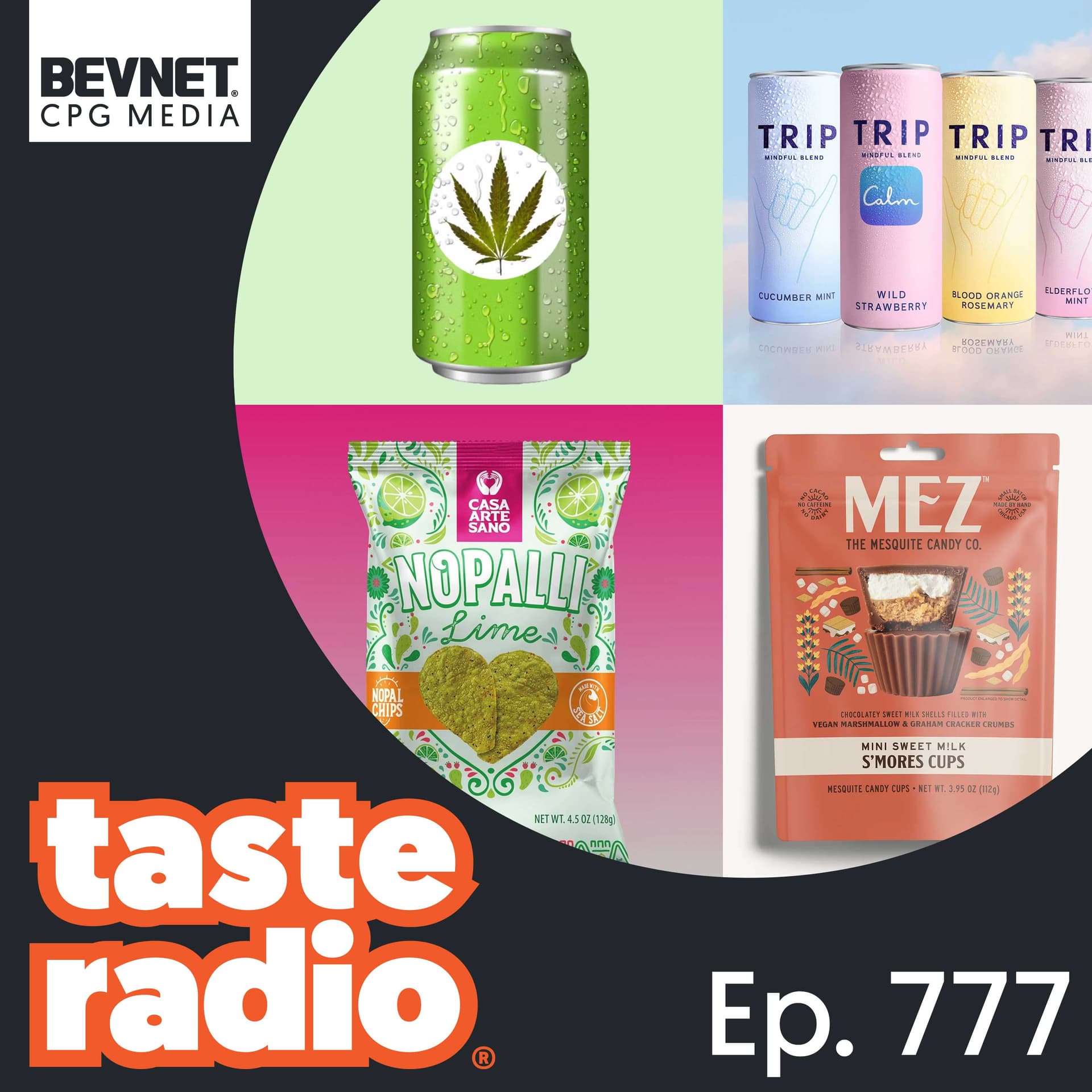
18:01All right. Because Jackie is such a huge fan of steak. I feel like we should transition to her do pro. I have my own type of snack. This is more my speed over here. I have cactus chips. So these are cactus tortilla chips. They're called Nopali. They have jalapeno, lime, and then chile and limon. The name of the brand is N-O-P-A-L-L-I, Nopali. Yep, Nopali from Casa Arte Sano. And it's fun. They have like a little cartoon on the back explaining like some history of Nopali and like cactus. Also on the front of pack, I know we've talked a lot about fiber recently. So these provide 25 % of your daily dietary fiber.
18:45Nice. Where's Melissa when we need it? I know, right? I'm going to have to give her some of these. But yeah, these look really good. So these pair well with some more THC beverages for when you get the munchies. Hold on to those. You might not have any more. No, stop, Ray. Don't say that. This is from Rhythm THC Beverages. It's interesting because they have an energizing one with like the sativa strain. And then they also have a relaxing THC beverage called Kush. Wait, is that a dispensary grade? These are both hemp derived. Yeah, hemp derived THC. Didn't realize that you could get sativa and indica.
19:24K-U-S-H. All right. Yeah. And this one, the Kush is five milligrams of THC, five milligrams of CBD. And then the sativa is just 10 milligrams of THC. Nice. Just. Just 10 milligrams. Yeah. Mike would melt. Maybe. Speaking of Mike, what do you got over there? I've got... You got a lot over here. I've got some candies. This small table next to my left here is just absolutely covered in products. It's been like food and beverage Christmas over here. We've been getting quite a few samples. Thanks to everyone who sent us nominations for the BevNet Best Of's and the Nosh Best Of's and for sending us samples.
20:01One of them that really stood out for me was Mez Candy Co, which is chocolate made with mesquite. Yeah, like the barbecue thing. So here's the just straight cow milk chocolate. Let's say mesquite, like the wood, you mean? Like the mesquite wood, yes. And they've got these nut butter cups that are pretty awesome. Pistachio crunch. Try that one. Jeez, so much stuff. Peanut butter cups and s'mores cups. Mmm. S'mores. S'mores. Not s'mores. S'mores. S'mores is the name of a comedian. S'mores. S'mores. Sure. So what's different about these? No cacao and no dairy. The mesquite. Yeah, and no caffeine.
20:44Oh, very interesting. Okay. They're good. Not bad. They're very chocolatey. Yeah, the s'more one looks really good. I'll have one in there, right? Yeah. Oof, oh my gosh. You open up the package and the aroma is so good. The aroma is big. Oh, it smells so good. I haven't had the s'mores yet, but I bet you they taste like they were roasted. Mez, M-E-Z. M-E-Z. The Mez Candy Company. Beautiful branding, too. Love this. Okay, to folks that are considering a rebrand or at least a package design for their new brand, this is how to do it. You've got the hierarchy is perfect, right? You've got the name of the brand right on top.
21:24Even if you don't know what Mesquite means, it's the Mez, the Mesquite Candy Company. right in the center of the package, as big as it can be, is the product itself. And it's a beautiful product too. If you have a delicious product, make it even more mouthwatering by putting that product on the front of pack. This shows in detail the S'more peanut butter cup and it just instantly makes you want to buy it. Yeah, the chocolate peanut butter. Oh my gosh. That looks great. It's so good. And the stylization around it or the stylizing or whatever around it is really good too. And the way that that just draws your eye in is perfect.
22:01And they're not too enamored of their brand. It's huge, but it's in white. So it's not the first color your eye sees. The first thing you see is definitely the nut butter cup. Right. It's awesome. And the flavor name and variety is at the bottom. And it just has a fun, nostalgic, but also sophisticated feel to it. That I might move up just because it could get cut off on the shelf, but you're going to get drawn in by the picture. What do you think of the pistachio, John? That's really good. it's different but familiar yeah but yeah i don't know i'm a little hesitant about the prominence of the mesquite part because it is one of those things that you know if you're just truly shopping an aisle it's kind of a little hard to process what the like impact of that is or what's meant and is this going to be a good tasting product or something that maybe tastes unique weird whatever you want to call it and i mean this is a phenomenal tasting product it does have a unique flavor to it unless you love barbecue and then you're gonna yeah but it's it's light though i don't know i guess my context for it is i feel like i've tried a million things that are like promising oaky flavor and like that can just go completely overboard try the um it's a little more subtle the s'mores is a lot less subtle try this one well i mean it's a s'mores flavor yeah exactly So you want this mesquite.
23:20I mean, I don't know if I want it yet. I haven't tried it, but. Yeah, you do. It's pretty good. Another brand that does really good job on their packaging. Similarly, Alira, they have their soft baked bites. And, you know, front of pack, you see the product. It looks like a soft baked bite. You see like the filling inside. They have a bunch of different flavors that are very prominent. Apple cinnamon, pumpkin spice. You have dates and honey. So this is a brand we've seen evolve. Have you tried this? Because I think they've reformulated. They've always been good. There's more filling in them and they're better now.
23:58Yeah, they are. They're incredibly good. that they're delicious. They are super soft. The filling's really, really good. I love the different flavors that they have. And I love the evolution of the packaging. They're powered by ancient Greek grains, which is kind of secondary. And it started as like a Greek, you know, breakfast biscuit company. And there's like nods to it with like Greek gods, illustrations. And on the back, it's explaining like the name, but front of back, you know what you're getting and you know what the product is. And it's kind of familiar with like other breakfast or other kind of biscuits that people have experienced, but these look better for you.
24:34Yeah. It's similar hierarchy to Mez, except the flavor is up top, which I think is a little stronger. Yeah. The rebrand is as outstanding. The old one, half the front of the pack had call outs to, it looks like Greek mythology or, or some sort of, I don't know, connections to its history and now it's much more focused on the food. And that's on the back now. The benefits and the flavor. It's really, really good. I spoke with Giannis Osanopoulos, who's the founder of the company. We had a conversation that we published on Taste Radio in June. It's a fantastic look inside a founder that is trying to redefine a category.
25:20Now, people may not call breakfast a category, but I'll call it that. and the name of the episode is the overlooked$4 billion category that O 'Leara is redefining. Giannis has really good vibes too. Every time we see him at trade show, he's just a really nice person to talk to. He's always got good ideas. He's a really great listener too. It's the kind of person you just want to be friends with. Yes, indeed. Quick break. If this episode has you thinking about what's next in food and beverage, explore BevNet and Nosh Insider, our subscription platform with deeper insights from the BevNet team. Visit tasteradio.com slash insider to learn more.
26:00All right, it's time for our featured interviews for this episode. At our Taste Radio London meetup, I sat down with three visionary founders, Olivia Ferti of Trip, Catherine Brickin of Delicious, and Ollie Dixon of Something and Nothing, who each share the inside story of building their standout, fast-growing consumer brands, including the highs, the challenges, and everything in between.
26:29Once again, Liv Ferdy, the co-founder and CEO of Trip. I'm just so amazed and blown away with what you guys have done. Thank you. Just for context, in particular when it comes to the United States, where are you and in what retailers are you selling the products? So we had this conversation, was it a year ago? It was just about a year ago, yeah. I can't believe how much time has flown. Since then, we're launching in Target. Since then, we have expanded to about 5 ,000 doors. So Whole Foods is live as of this week. We're in HEB, Hagen, Wegmans, nationwide. It's pretty exciting in terms of this inflection point for trip.
27:08This year, we'll head out at about$100 million of revenue. And the US, all of those doors have really been since our conversation, I think. Well, you know, our conversation was the lucky rabbit's foot for, I guess, Trip, because$100 million, that just doesn't happen. Yeah. And a majority of that's coming from the United States, I would assume, yes? It will be. It's not quite there on the majority yet, but by next year, it will be tipping in the balance. Yeah. Incredible. You know, when it comes to Target and Sprouts, those are two very specific types of retailers. Sprouts being a natural retailer, Target being a mass retailer.
27:40when you're talking to those buyers in different retail channels, what are those conversations like? Is it a similar approach? Are you trying to communicate a different type of brand for both or for each channel? We want to be a global brand, but you obviously have to be sensitive to kind of local nuances. And I think an important thing about Trip is we stand for creating moments of calm in the everyday chaos, but we've never preached what that chaos looks like. You know, for me, it might be running around after my two kids trying to find something that fits and get here on time. For others, it might be a busy commute, a cancelled train, a difficult meeting or personal situation.
Read the full transcript
28:15I think having sensitivity in how we approach these conversations has always worked, I think, importantly really well. And being sensitive to the fact that everybody's chaos looks a bit different is really key. Those two retailers are incredible retailers. You know, to be able to meet your customer in a nationwide footprint is incredible. and I think just recognizing the sensitivity with which we're talking about this topic a lot of buyers have been incredibly excited they sort of seen the brand particularly on social that's the incredible thing for anyone in the room looking to build a brand and use social and leverage their community flywheel means we've been able to speak to so many of our consumers who'll be shopping there the other thing I think I'd say is recognizing that you can shift towards that consumer I think a lot of people think, oh, it's just a Gen Z brand or whatever.
29:02But when you're thinking about the trends, we talk a lot about Better For You and obviously the incredible work of the kind of gut health and probiotic space. We see calming beverage as the next wave of macro trend. Can you guys in the room think of anyone in your lives who doesn't experience, you know, just a moment of overwhelm in the everyday? And I think that's landed really well on both sides of the pond. It's that personal storytelling element that people can connect with and see the bigger, bigger picture. Yeah, you and I had talked about the difference between what has previously been known as relaxation.
29:36Relaxation beverages, something that's going to give you some sense of patience and calmness. But you really hone in on that word calm. And I think it's a really good idea. I think it's a really good approach because sometimes relaxation might be sleepy or tired. And calm just means grounded and focused. Is that the message you're able to communicate to consumers? Are they understanding that calm? Definitely. I think when it comes to trip, you've got the product and everything about the product from the distance on shelf that you see it. Hopefully you will have seen it around your time in London and in the US.
30:07It's got that very calming pastel packaging, really clean typography. We were obsessed with it. You could read it really quickly in a minute. It kind of goes against traditional marketing best practice. It's not shouting. It doesn't tell you what it does on the can from a visible distance, but it's that recessive pastel kind of calm exhale feeling when you see the product that translates all of that so importantly. I think relaxation is a very powerful word and there's so many moments in the day you're looking to relax and unwind and a lot of people that might be when you shut the laptop, five o 'clock, evening, alcohol alternative.
30:42The beauty of Trip and obviously that hundred million dollar number, it doesn't come from just being an alcohol alternative. I think so many of you in the room might have discovered Trip at your favorite bar or restaurant or being recommended it as an alternative to a glass of wine. But actually, if you walk down the street out here, you'll find it in the Leon fast casual grab and go. You'll find it in a coffee shop. You'll find it in workplaces, hospitals, gyms. Making sure that people have access to something all day, every day, I think compounds this emotional connection we have with our customers and the brand.
31:12And so for us, when we talk about calm, it's not a sleepy state. We often talk about calm in relation to chaos. Chaos is all around. It can be small. It can be big. It's the uncontrollables that are inevitable in everyday life, but recognizing that you can feel your best self, whether that is more present, more confident, better performing in a work meeting or a personal conversation, calmer in a social setting where you might be feeling nerves for whatever reason. For us, it's really the unlock of finding that calm in a chaotic situation, which I think has more breadth personally than just an evening moment, which can be more solitary.
31:47For us, calm is about feeling your best mind and body, but it can be in a group situation, in a social setting. It's much more complex. And that actually, I think, has been very clear in the velocities of our US retailers. People aren't just grabbing it at 5 o 'clock, 7 p.m. for dinner. They're getting it on the way to work. They're having it with their lunch instead of maybe a Diet Coke. And they're having it throughout the day. The US is an incredible market to be in. It's a very challenging market to be in. And I think a A lot of the folks here in the audience would love to hear from you about how you've been able to roll out successfully and where you're planning to go from here.
32:24So if you could just talk about your strategy, your US strategy, and then where you're planning to go in the next six to 12 months. So we have big ambitions. And I was just joking with someone in our team just before coming on that the US ambition, a lot of people might look at it and think you have to be a bit delusional to take on something where the odds are stacked against you. I can't think of any other British brands that have actually cut through on a beverage or soft drink space, crossing the pond and talking to a feeling or an emotion, which it's very personal, but it is universal. And for us, the US strategy is when you come from a place of personal experience, which is how we launch the brand, being passionate about bringing this to, we want to say that a billion people should be able to find calm with Trip.
33:06We truly believe we're changing the world and we're going to change the world. And I know that sounds delusional, but I think a lot of entrepreneurs in the room will agree, you've got to be a little bit delusional as well to take on those kind of odds. For us, it's meeting that end consumer and seeing, particularly in the US, the delight they have with the brand and the product. I think we've spoken before about being completely obsessed with product. And I'm sure a lot of people in the room are obsessed with their product and those small details that really set you apart. And for us, when we are talking to people in those moments of stress or people looking for calm, the US strategy is kind of what we've done here, but scaling up through those different touch points.
33:42A lot of people might assume you can't be a best-selling brand in Target and Whole Foods and Sprouts, but the fact that we're in CVS, Vitamin Shoppe, we're delivering that to each segment of the demographic in a bespoke way and not being too prescriptive about this is for focus and only focus. I think that's quite unusual in the space. And you mentioned some really big retailers. Any new retailers that you're planning to be in in the upcoming months? Well, Whole Foods this week. I feel like that's a big one. That's a very big one, yeah. That's a very big one nationwide. I'm looking at Ryan. H-E-B, Hagen, Wegmans, Specs, Total Wine.
34:24Harris Teeter. Well, you just named five really big brands. Massive ones. And for those in the room that haven't been to these stores in the U.S., we're not talking 200 stores. These are huge places, you know, hundreds, thousands of doors. It's astounding. It's incredible. It really is. I keep using the word incredible because it's really appropriate when talking about trip. You also have undertaken a pretty significant raise. What's pretty amazing about it is, and this has been talked about throughout the industry for I don't know how long, but funding for female-led companies is ridiculous. venture capital only goes to less than 2 % of female-led brands.
35:06Can you share your perspective on how investors perceive your brand, perceive the fact that you're leading the company, and just your experience throughout that whole process? Yeah, it's an interesting landscape. And we have a whole conversation on access to capital. But I think leading by example and showing that you can have a female-founded brand that's come from a personal experience that is also on paper incredibly backable. These kind of numbers are very exciting. And I think what I'm proud of as a female founder of a high value beverage company is understanding that if you can show an example to people of what that can look like, I think unfortunately, access to capital has been restricted for tons of reasons.
35:50But when people hear more stories, so many female founders, I'm sure you guys have heard also, typically designed for a problem they were facing. And a personal experience like ours can start a whole journey of solving the problem, creating the perfect product. And my perspective is there are brilliant female founder brands, many of whom have had greater success than all male teams. But because of that diversity of kind of perspective, what we're seeing is these female founder brands that are solving problems that they may have faced are catering to a huge part of the demographic that are often underlooked, even though you know female headed households are often the ones doing the weekly shop organizing the home choosing what the family drinks and eats the first ones to make recommendations to friends they're very vocal about what they like we've seen that on social and I think being able to kind of evidence the consumer need which sometimes in many categories outside of beverage and particularly whether it's women's health or beauty can be diminished somewhat but by recognizing the strength commercially of that customer base that sometimes has not been designed for.
36:56They've been excluded from certain beverage design or snack design. I think it's a real moment to reflect on how powerful that can be in conversations when you're fundraising. Do you realize that you're probably the CEO of the most valuable beverage company or female-led beverage company in the world at this point, maybe? I think that's probably an accurate statement. Yeah, it's a bit of a crazy one, isn't it? It's kind of mind-blowing. I'm sweating again. With everyone looking at me, it's hard to believe. Yeah. I mean, you'll meet so many of the team tonight who are incredible, and they are the power behind everything that happens here at DRIP.
37:33And I think that kind of stat is something that does take a little while for me to digest personally, especially when it's a family-round business. We started things just around the dining room table with no idea. And I think if I can give anyone any advice, having no idea is part of the fun and 100 % our superpower. We won't take no for an answer because we just don't believe it's not rocket science. Let's give it a go. We'll keep trying. They say no, we'll try again, try again. And you build from there. Well, thank you for not saying no to us when we asked if we could come back here today. When you talk about potential and you talk about ambition and you talk about the desire to build a successful brand, it's really, really difficult, but it can be done.
38:12Trip is a really good example of a brand that had an idea, that had people who are focused, obsessed with the details, obsessed with the details, and made a lot of really good choices when it came to team and rollout and expansion into different countries. So, Liv, thank you so much again for taking the time to be with me, and thanks so much for inviting us here in your house at Trip HQ. Really appreciate it. Thank you. Thank you. All right. You can leave your microphone right down there. And we'll bring up Catherine Bricken, who is the founder and CEO of an incredible brand that I already mentioned called Delicious.
38:49Catherine, round of applause for Catherine Bricken. Thanks. So for people who aren't familiar, what is Delicious? So Delicious is a cookie dough platform, and we're revolutionizing the way that cookie dough is thought of, right? We lived it, ate it out of the bowl when our parents made it, or our grandparents made it. We've made it better for you with the ingredients so we don't use any white sugar, any refined white flours, and made it really snackable. So we've started with our ready-to-bake dough. Now then we became obsessed with an ice cream sandwich and decided to not do a normal ice cream sandwich, wrapped cookie dough around gelato.
39:26And now we also sell our baked cookies on airlines, train lines. So one of your colleagues is on the train tomorrow on LNER train lines. I was like, get a cookie. And just constantly trying to innovate and modernize something that's been around for a long time to make it fun, indulgent, permissible, and just the perfect snack any time of day. It is the perfect snack. I had quite a few of them yesterday when I visited your facility and I was just in heaven. You also just introduced a new line of baked skillet cookies. Yes. Which I think folks have tried some of those in the back as well. When are they rolling out?
40:01Where are they rolling out? So the new skillets are a sharing, right? So spoon, spoon away. And those are launching out globally in Whole Foods. So UK and US this month. These people at Whole Foods seem to be pretty intelligent folks to bring in Trip and Delicious globally. So well done on that front, Whole Foods. And I do want to talk about how you got into the retailer. Just for context, where are you sold right now? So right now we're sold in, well, at the end of this year, we'll be in 6 ,000 doors in the US and also throughout the UK and all the major multiples. And now we've launched in different countries.
40:38So through Costco, we're in Switzerland, Iceland, Sweden, Australia, Lebanon, constantly just growing the brand. Yeah. Although the US is a big focus for you. Yes. I think you told me 65 % of your business now is in the United States, and you're still a UK-based brand. When you're assessing the opportunity to break into the US market, and I've been having these conversations with lots of folks here, when you're thinking about making that leap, what's the spark? What gets you started? So, I mean, it was a natural movement for me, right? Being American, coming abroad. You're American? Yeah. I mean, people always say to me, oh my gosh, you don't have an accent, British accent.
41:18I'm like, yeah, that would be like Madonna, right? So moved here 18 years ago and a friend said to me, can you just make a American style cookie? I was like, yeah, hello, that's so easy. So launched the dough and never thought the dough would grow to be what it is today. So it was just like a natural transition to move into the US. Always a plan, just the timing to be right. And the timing happened when we were lucky the CEO of Whole Foods came to our factory and we took the gelato bites. We showed him how just to snack on them throughout his whole visit, but then get creative with dough hacks, dip it in meringue, torch it.
41:53Because I told Ray, every woman needs a blowtorch. I didn't see any of the blowtorch yesterday. Yeah, we got stuck in the factory. Yeah, I needed to keep my eyebrows for tonight. So that's why. And so we were lucky. He traced the product and he's like, oh my God, why don't we have this in the US? So two weeks later, we were approached by one of his foragers and four months later in four regions and then nationwide. So there was a little bit of luck in getting into Whole Foods and having the CEO come. That doesn't happen to everyone for sure. But cultivating that relationship, making sure that you're building on that relationship is really, really important.
42:28Talk about how you did so with Whole Foods and then also with Target, where there is a really cool new product launching in Target or already out in stores there now. Yeah, so we, again, we were lucky with Whole Foods launched and we gave them exclusivity just because they were so good to us and believed in us as a brand and gave us a full brand blocking. And as you know, in freezers, that's hard, right? You've got to get the customer's attention. We can't do massive end caps and whole foods. I mean, like in the aisle, like you could with an ambient product. So we were lucky to be able to get their attention and grow.
43:03And then Target came to us and Target, we are now nationwide in Target. And we are launching the first ever frozen countdown to Christmas calendar. So it's 12 different flavors. And now Americans have bigger freezers than the Brits. So let's hope everybody can have it. But it will fit in a British freezer too, because it's not that big. Or you just eat all of them all at once and just don't put anything in the freezer. Absolutely. Yeah. Yeah. This summer, I did a test and I ate three a day. So like four days, it was done. Yeah. I like that. So instead of 12 days of Christmas, as you do for. Yeah.
43:38Yeah. I like that. But you got an end cap at Target for this particular product. Again, it doesn't just necessarily happen without having a good relationship with their buyer. Right. What is it about your relationship with Target's buyer that has been so good such that you get an end cap as a space like that? Yeah. I think one thing is she just believes in the product and she knows that what we're going to do is we're going to light up her freezer space that it like it hasn't been done before. So we're bringing innovation. We're bringing a modern concept, amazing flavors. Like Olivia said, they're calm, we're pop.
44:11Like we go with bright colors and we, because again, we're behind a freezer door, which is more difficult. And she knows that we're going to bring joy to her customers. So we're giving them something that they've never seen before and something that she's passionate about. She is a massive fan. She invited me to go to Minnesota and we walked to the aisles and she's like, look at this. How can you fix this? And I'm like, I've got an idea. And I think because we have our own factory, it gives us the capability to innovate and respond to her needs if it works with us. So it's always a marketing-led innovation that we look at and we say, OK, we can do this.
44:50So then we present her with options which excite her. And yeah, it's been just an amazing match. And what's really clear from what you talked about is that it's not just she's going to put your product on shelf because she likes you. She really does like you and respects your brand, for sure. But it's because you're going to bring incremental value to those stores. You're bringing sales to those stores where other brands may not have been able to do so. And you do so through differentiation. Right. Yeah. You mentioned how you're in a manufacturing facility. It's here in the UK. Right. Do you know about this thing?
45:19It's called tariffs, like this thing in the United States. Yeah. It's something new. Not a lot of people like what's going on. Yeah. Sadly. Yeah. Yeah, it kind of forces some companies to have operations in the United States, and you're assessing options right now. Yes. So we've launched the cookie. In the U.S., we've only launched the cookie dough and gelato bites, just to focus. Until this next week, we'll have the skillets in the doors with Whole Foods nationwide. And we always give them exclusivity when they launch our product first. I think it's fair. So we are starting our first manufacturing in the U.S.
45:55Q1. So we'll be able to produce high-speed cookie dough and gelato bites, because I think that's been our biggest challenge, just the logistics and the tariffs. Just doing that alone, we'll be releasing 21 points of margins. And you have a team. You're not doing this remotely. I mean, obviously, you won't be producing remotely, but it's really important to have a team. How do you find these folks that you believe in, especially when you're based here? How do you find a U.S.-based team? Yeah, again, I think like it's a lot of hard work and it's luck. We met, which some of the team here knows, Michael Preezy.
46:30He comes from Popchips, Smartwater. He's fantastic. And he found us. So he's our president. And then we've hired Whitney Spiefogel. And she's our head of PR and activations out of New York. So we have Denver, New York, our new head of marketing out of California. And he again, it's a big Popchip crowd. So let's hope they can like, they like the dough too. Well, they do like the dough. And then we are now hiring for East Coast and West Coast sales. But we've been really lucky. Like we, thank goodness, haven't had to use a recruiter. They've come to us and people reach out to us because they've seen the brand and love it.
47:06And they've tried it and believe in what we're doing. Believe in what we're doing. I love it. Catherine, earlier today we were chatting and you mentioned today was kind of tough. It was a tough day for you. And every founder here goes through tough days. dealing with those tough days and being able to recognize that there is a tomorrow, you know, that's one way to get over it, but it's not easy. How do you deal with adversity? How do you deal with adversity on a personal level? Eat a lot of cookie dough. That's a good answer, actually. I think the factory is the hardest thing. Like growing the brand is so much fun and exciting.
47:39And I love what I do. Like every day is like, oh my gosh, you know, this is fantastic. And I think bringing culture and excitement, some of the teams here, and I hope like they always see me as excited because I do. I honestly love it and I believe in what we do. But having a factory is really difficult. We've been trying to, I mean, this is like why it was a hard day. We've been trying to get a pallet of samples to the U.S. and every day the EHC doesn't come in, which is if you have any dairy or animal byproducts on the pallet, which trip in something and nothing wouldn't have, but we do because it has milk.
48:17So if that doesn't come in, then the whole pallet sits. So we've had a pallet sitting there, which are samples that need to get to some new buyers that are not getting there on time. So it's just, it's just very stressful because there's things you can control and there's things that you can't control. And this is one that I can't control. You know, you just wait, you wait and hope. And you realize why you started the company in the first place, which is to make people happy. Yeah. Yeah. Bringing joy, which is, it's fun because we, you know, I was listening to Olivia and how like they bring joy, like they They bring calm, like we bring joy.
48:50And I was telling Ray yesterday, there's people that will send us pictures of them in the bathtub at night with their gelato bite and being like, what I looked forward to every day. You know, so it's just, I think it's like whatever makes somebody happy and hopefully they'll have a trip with or something and nothing with their delicious. Yeah, watch for this professional segue here. Well, you've made me very happy. Yeah. So Catherine, thank you so much for taking the time to be with me right now. Thanks so much for your support of this event And thanks so much for bringing joy to so many people in the UK, US and beyond.
49:21Appreciate it. Thank you. Definitely try some delicious.
49:28All right. Thank you all so much for paying attention and keeping the conversations down. We have one more speaker or one more guest. That's the man with a beautiful beard. His name is Ollie Dixon. He's the co-founder of Something and Nothing. How are you? Come on up. Round of applause for Ollie. Thank you. So, Ali, you and I had an opportunity to sit down yesterday. So, Liv talked about bringing calm to consumers. Yeah. Catherine talked about bringing joy to consumers. And you bring something and also nothing to consumers as well. That's pretty much. Yeah, pretty much. I think most people are familiar with something and nothing, but what do you do?
50:06We make premium soda. So, no sugar, no sweeteners, all natural ingredients. very focused on, I guess, a premium consumer, an elevated space in terms of the brand and the product. I guess I'm kind of here because we're very U.S. focused. So the U.S. is 65 % of our business and growing, probably be closer to 70 by this time next year. And that was not through design. That's just pure luck. Yeah. To a degree. When you and I chatted yesterday, you talked about how you made this product for you. This is a product that you specifically were looking for. Turns out there's a lot of other people looking for a brand and a product like yours.
50:51When you're thinking about that U.S. market, though, there's just so many brands. And there's a lot of interest in Better For You Soda in particular. You talk about a brand like Poppy or Olipop. I mean, everyone here knows Poppy, nearly$2 billion sale to PepsiCo. So there is real opportunity. But you've got to stand out. You've got to be differentiated. and we talked about the importance of being intuitive, letting the customer know what you are and what you're about almost from the jump. People do not take time to learn about products. You either know it or you don't and do it within two seconds.
51:22Why is your product so intuitive? How did you work on it to make it seem like it was an easy sell for consumers? It's pretty much the design of the can and the weird name, I think. I come from a design and branding background. As Ray said, there wasn't a lot of thought in this. There was a lot of thought in terms of, I want a better for you. I didn't even call it then. I just wanted a grown up soft drink without sugar, kind of made in a artisanal way to a certain degree. I owned a pub and basically got really drunk. And then I was like, I need to probably stop drinking for a bit. And what do you drink in a space like this?
52:03And that was the sort of zenith of it and then I looked at soda soft drinks in this country and was like well everything's full of sugar and everything's sort of you know tastes the same it did decades ago why can't there be something grown up more interesting more inspired by food and travel which I was doing a lot of then I've got two kids I do none of it now but I've got the memories and that sort of beginning point is sort of what followed through so then creating the brand I very much avoid looking at the space that you want to be in so we were creating a soft drink so the last thing you want to do is look at soft drinks so we looked at fashion and beauty and design and that was the kind of starting point and you know I've read a lot of marketing and branding books over the years and tipping point purple cow Malcolm Gladwell all that stuff of like creating something unusual is usually what sticks in people's heads.
52:59So that was the kind of, you know, creating this very minimal looking can, not a big brand name, not saying a great deal apart from the flavor and having a kind of abstract, unusual image with long shadows that kind of portrays this sort of evening travel moment was way more smart than we realized. Because when you suddenly launch in the US and you've got no team and no marketing budget and you're sat on the fridge in Erewhon and there's a hundred other soft drinks and I should say when we launched in Erewhon I'd never heard of it I had no idea in fact I didn't even know we'd launched there and four months later the guy who was like took us in there was like you know you're doing really well in Erewhon you're the best-selling new brand of any product not just drinks I was like oh cool what's what's Erewhon now I know obviously so that can that look of like when you don't have all that budget and all the team that's what people are curious about so they pick it up and you see it every time turn it and they go okay well okay the ingredients look pretty good and the calorie counts okay and then they buy it and they try it and in our case the liquid's really good so then they buy it again and they buy it again they buy it again and then retailers like you and then if retailers like you distributors like you and then the kind of thing begins to gain more momentum.
54:21You make it sound so easy. You know, I mean, it's sort of is. I mean, it's obviously not easy. And I'm not doing justice to the team because everyone works incredibly hard to do that. But if you spend the time at the beginning, getting the product and the brand right, yeah, it sounds like a cliche, but it does essentially sell itself. Well, that's what I wanted to talk about. And that's what I was hoping you would say, which is the intentionality, the research, the work you did before launching led to a lot of the success that you're seeing right now. How long was the brand in planning? And I remember you told me that you had more sleepless nights preparing to build and launch the brand than you do now.
55:00Yeah, I mean, there's been some touch and go moments on the financial side. So there's definitely some sleepless nights. And there's obviously stress as everyone will knows starting a brand but yeah the beginning bit was the bit that I was most stressed about because I wanted to put something in the world that you know meant something to me and I knew would connect with people and you know Tripp talked earlier about the emotive connection with consumers that's the bit for me of like brands that use creativity to connect with a consumer are usually the brands that really resonate with you and you and you know it isn't a commodity it becomes part of your lifestyle and you feel good about drinking it and you want to tell your friends and blah blah blah and that like word of mouth is a thousand percent what our marketing is yeah do you have people on the ground in the US yeah we now have three but only two sales people one person's just sort of holding it all together but yeah I mean obviously the plan is to hire more but our head head office we don't actually have an office but it's I was going to say London but it's the UK but we've got someone in Australia, a couple of people in the Midlands, three people in London, three people in the US, someone in somewhere else.
56:16I can't remember. It's a bit of a mix. There's a lot of virtual conversation. Yeah. I mean, it's also working there because in addition to Erewhon, you're in Whole Foods and you're in nearly 300 Whole Foods locations. Yeah. I've seen some more. Yeah. You're doing really well. And I was actually kind of surprised to hear your revenue number. I'm going to share that. If you want to share that, you're welcome to. Yeah, well, like five and a half million dollars. Yeah, I mean, that's great. And I think, you know, projection wise, you just seem to be on a roll. I mean, if you're growing at, I think, 60 to 70 % year over year, you can just, you know.
56:47Yeah, that's the other thing is, it's like, that's a blended number. So the US is actually growing faster. And particularly on e-commerce, weirdly, is doing really well for us. And I say weirdly, because that again, like everything kind of feeds itself. So we created this thing called the neighborhood strategy. So I think unusually for us, our sort of retail side is slightly larger now, particularly with Whole Foods. But the sort of on trade, you know, cafes, bodegas, restaurants, those sort of neighborhoods where our consumer is working, hanging out. Like that's a really strong part of our business.
57:25And that is actually then what drives the e-commerce. so the filling of the top of the funnel is really people trying it in a boutique hotel or you know in their favorite cafe where they get their salad and then they're like actually quite like some of these at home and next to my giant freezer full of delicious I've got a giant fridge and now want it full of sodas. Well done I think that's a good idea. Just before we wrap you know ambition is just built into an entrepreneur's DNA and when you start to see some success when you start to see some traction, you think about the potential of your brand.
58:01How do you balance ambition, potential, and growth strategy? Well, that is the magic equation. You got 15 seconds. I think ambition from a brand perspective was always built in. I always built what I believe was a global potential brand. People in LA tend to think it's from LA. People from New York think it's from New York. But I just want to touch on that for a sec. This is really important. you built this brand from the get-go as having global potential, as having huge potential. And I think that's a really, really important point. Know that you can and potentially could be a global brand. And so believe that and build toward that just from the beginning is really an important consideration, I think.
58:44I mean, I guess that's my background, but that was the bit I was excited about and put a lot of thought into and knew that if you got that right, it then works really hard for you. and then in terms of growth and that ambition like I you know the US came about it wasn't on our we didn't even have a business plan but it wasn't on our plan it sort of came into our laps to a certain degree there was a no risk thing someone bought a container and as I said sold very well sold very well in Erwan and then we're like oh okay those folk drink a lot of soda over there and some reason our brands really resonating and yeah that was chance to a certain degree I really remember having the phone call on the way to my local coffee shop my partner and I business partner I was saying I mean do we do this do we do the US like kind of seems crazy and I was like well come on let's just do it and see what happens and of course that was that moment was a big sliding doors moment because of course now the US is a massive part of the company or the business and then weirdly Holland and then somewhere down there's the UK don't know what's wrong with this lot, but they're not that inside.
59:51Well, I hope more people drink something or nothing after this conversation. It is a really amazing brand. And the liquid that you make, to use an industry term, is top notch. It really is. Top notch is the industry term. No, liquid is the industry term. Top notch is just my way of describing your... Speaking in English. I love it. Oli, thank you so much for taking the time. Thanks, mate.
1:00:19That brings us to the end of this episode of Taste Radio. Thank you so much for listening. Taste Radio is a production of BevNet.com Incorporated. Our audio engineer for Taste Radio is Joe Cratchy. Our technical director is Joshua Pratt. And our video editor is Ryan Galang. Our social marketing manager is Amanda Smirlinski. And our designer is Amanda Huang. Just a reminder, if you like what you hear on Taste Radio, please share the podcast with friends and colleagues. and of course we would love it if you could review us on the apple podcast app or your listening platform of choice check us out on instagram our handle is bevnet taste radio as always for questions comments ideas for future podcasts please send us an email to ask at taste radio.com on behalf of the entire taste radio team thank you for listening and we'll talk to you next time
1:01:15Thank you.
From the publisher
A battle may be over, but has the war just begun? Baked into the deal to reopen the U.S. government is a surprising provision: a ban on intoxicating hemp products. What does this mean for the future of THC-infused beverages? The hosts weigh in. We also sit down with Trip co-founder Olivia Ferdi, whose fast-growing relaxation beverage brand recently announced a $40 million funding round at a valuation of $300 million.
Show notes:
0:25: What A Trip. Retailers, Investors & More. Stigmas & Bans. A Lucky Bet. Beer Jerky. More Mez. -- Ray highlights Trip's explosive growth toward $100 million in revenue this year and previews the upcoming Nosh Live L.A. 2025 event emphasizing its lineup of investors, founders, and retailers shaping the future of food. The hosts then dive into the government spending deal that includes a ban on intoxicating hemp products, expressing their alarm and frustration with the measure. Ray talks about Lucky Energy's $25 million and whether the funding can help the brand make a significant impact in an ultra-competitive category. Mike revisits COB's $5 million raise and the DM that got a tennis icon on board. John introduces Guinness-flavored jerky, Jacqui breaks out cactus-based tortilla chips and THC-infused drinks, Mike shares mesquite-flavored chocolate and peanut butter cups and everyone praises Olyra's brand revamp.
25:47: Interviews from Taste Radio's London Meetup – Olivia Ferdi discusses Trip's rapid U.S. expansion and the brand's mission to bring "calm" amid daily chaos. She also discusses Trip's effort to create an emotional connection with consumers and addresses the challenges of access to capital and the commercial potential of female-led brands. Kathryn Bricken talks about Doughlicious' evolution from nostalgic cookie dough to healthier, globally sold snacks and emphasizes the importance of team culture, creativity, and joy in her brand, while navigating operational challenges like logistics, tariffs, and the challenges of self-manufacturing. Olly Dixon explains how Something in Nothing grew from a personal passion to a premium soda brand, focusing on intentional design, authenticity, and U.S. market growth. He also explains how envisioning global potential from the outset shaped strategic decisions and allowed unexpected opportunities to flourish.
Brands in this episode: Trip, Lucky Energy, C4, Ghost, Celsius, Alani Nu, Sanzo, Guinness, Nopalli, Rhythm THC Beverages, Kush, Mez, Olyra, Cob, Doughlicious, Something & Nothing