In short
Taste Radio Episode Summary: Innovation, Localization & Logistics – A Blueprint For Global Brands
Podcast Overview Podcast Title: Taste Radio Description: A top podcast for entrepreneurs in food and beverage featuring interviews with industry leaders, discussions on emerging trends, and weekly news insights from BevNET and NOSH teams.
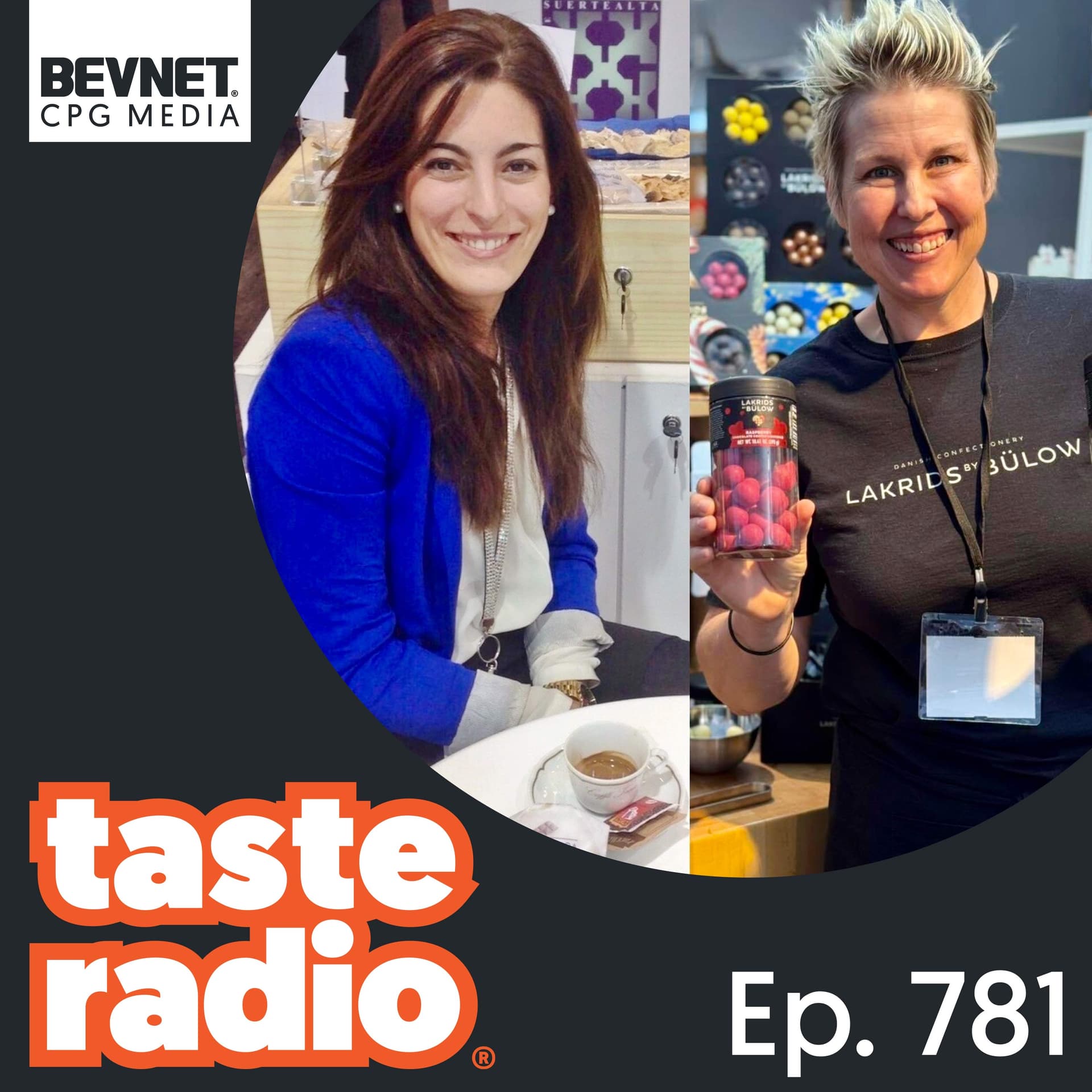
Episode Details Episode Title: Innovation, Localization & Logistics – A Blueprint For Global Brands Guests:
- Lucía Conejo-Mir from Ines Rosales
- Jennifer Donnellan from Lakrids by Bülow
Episode Description This crossover episode discusses the challenges and strategies involved in bringing international food brands to the U.S. market. Lucía and Jennifer share their experiences, highlighting the importance of adapting packaging, pricing, and marketing strategies to fit American consumer preferences and regulatory demands.
---
Key Themes and Discussions
- Challenges of Entering the U.S. Market
- Cultural Adaptation:
- Brands must rethink marketing and packaging to resonate with American consumers.
- Differences in consumer habits and rituals between countries must be navigated.
- Operational Hurdles:
- Compliance with strict U.S. packaging regulations.
- Understanding the fragmented U.S. market necessitates regional strategies.
- Brand Evolution Stories
- Ines Rosales:
- Founded in 1910 in Spain, originally selling tortas at a train station.
- The brand's evolution involved preserving the original recipe while adapting to modern market needs.
- Targeted the cheese pairing market in the U.S. to fit cultural consumption habits.
- Lakrids by Bülow:
- Founded in 2007 in Denmark, focusing on high-quality licorice.
- Experienced unexpected growth in the U.S. DTC market, prompting packaging and flavor adaptations.
- Emphasizes sustainability and craftsmanship in product offerings.
- Marketing and Consumer Engagement Strategies
- Sampling and Demos:
- Both brands prioritize product sampling as a key method for consumer education.
- Engaging consumers through experiences helps convert first-time buyers into loyal customers.
- Digital Marketing:
- Brands increasingly rely on social media and digital platforms to reach younger consumers.
- Both guests acknowledged the importance of adapting messaging and marketing strategies to align with consumer preferences.
- Distribution and Retail Strategies
- Merchandising Tactics:
- Successful placement in stores is crucial. Ines Rosales focuses on cheese counters, while Lakrids seeks premium sections near wine and charcuterie.
- Building relationships with retailers is vital for both brands to ensure appropriate product placement.
- Pricing Considerations
- Premium Positioning:
- Both brands cater to premium segments, recognizing that American consumers are willing to pay more for high-quality products.
- Pricing strategies must consider the added costs of doing business in the U.S., including tariffs and distribution costs.
- Logistical Challenges
- Shipping and Quality Control:
- Maintaining product integrity during shipping proves challenging, especially in temperature-sensitive conditions.
- Both brands shared insights on logistics, emphasizing the importance of careful packaging and reliable distribution partners.
---
Key Takeaways
- Adaptation is Critical: Brands must adapt their products and marketing to fit the U.S. market while remaining true to their heritage.
- Relationships Matter: Building and maintaining relationships with retail partners and consumers is essential for long-term success.
- Focus on Education: Educating consumers about product uniqueness through sampling and storytelling can drive initial purchases.
- Operational Excellence: Understanding the complexities of the U.S. market is vital for avoiding operational pitfalls and maintaining competitiveness.
---
Closing Remarks The episode concluded with a call to action encouraging international brands considering entry into the U.S. market to prepare thoroughly and remain adaptable. Both Lucía and Jennifer offered their insights and experiences, emphasizing the complexity but also the potential rewards of successfully navigating the U.S. food and beverage landscape.
For further inquiries or insights from the episode, listeners are encouraged to reach out to the hosts or guests through designated channels.
Written by AI. May contain mistakes. Listen to the episode to check what was said.
Transcript
Automatic transcript. May contain errors.0:10Hello, dear friends, I'm Ray Latif and you're tuned into Taste Radio, the leading podcast for entrepreneurs, makers, and innovators in the food and beverage industry. Bringing a hit international food brand to the U.S. sounds glamorous, but behind every success story is a maze of challenges most consumers never see. In this special crossover episode of Taste Radio and Nombase, Lucia Conejo-Mir of Ines Rosales and Jennifer Donilon of Lacrids by Bulo, reveal the real work behind breaking into the American market. From reinventing packaging and pricing, to navigating cultural habits, supply chain surprises, and the art of getting consumers to try something new, their stories are rich with hard-won insights and candid surprises.
1:11Hello and welcome to a special crossover podcast episode of Taste Radio and Nombase. I am Melissa Travers, Director of Community here at BevNet, joined by my co-host Ray Latif, host and producer of Taste Radio. What does it really take to bring a beloved international food brand to the United States? It's one thing to have an incredible product. It's another to navigate new regulations, consumer habits, pricing pressures, and cultural translation while keeping your brand's identity and heritage intact. Our guests have lived that experience in very different ways. We have Lucia Conejo-Mir, who joins us from Ines Rosales, the century-old Spanish bakery behind the classic torta de aceita that's now found its place on American cheese boards and in stores across the country.
2:02And we also have Jennifer Donilon who joins us from Lacrids by Bulo, the Danish confectionery brand redefining licorice and making a push into the United States market. Both brands are proving that expanding into the United States isn't about copying what worked at home. It's about rethinking everything from messaging to merchandising while staying true to what makes the product special. So Lacrids was one of my favorite discoveries at the Summer Fancy Food Show, which is also where I met Lucia from Ines Rosales. After the show, Ray, you and I couldn't stop talking about these two brands and these two folks.
2:39And we were so excited about the conversation that we decided that we had to share it. Yeah. I mean, two brands with really incredible products, period. The food is just amazing. And I think the backstories are also quite remarkable. In particular, as you mentioned, Melissa, when you're thinking about bringing a brand to the States, There's a lot to consider. And I think there's a lot to consider and a lot to learn from talking with people who are actually on the ground in the trenches, making it all happen. So really happy that Lucia and Jen are with us today. Well, let's get right into it. Jennifer, let's please start with you and the Lacrid story.
3:18So this brand was founded in Denmark back in 2007. That's right. Our founder, Johan Bulo, founded Lacrids by Bulo. Lacrisse, actually, in Danish. And you might hear it. It's Danish for licorice. And he, barely 20 years old, embarked on a mission to make the world's best tasting licorice and to do so with premium ingredients, with natural ingredients and with a lot of Danish craftsmanship behind that. So he spent about a year in his mother's kitchen and maybe another year in also test kitchens to perfect this. And when he launched Unborn Home, which is an island just outside of Copenhagen back in 2007, he ensured that the whole island could smell the licorice cooking and that he would sell out, in this case, in a matter of just hours.
4:09And the rest is really history now. Everything is today still made in Denmark. Now it's made in Copenhagen and still using high quality ingredients in addition to staying true to Scandinavian ethics around sustainability. So 100 % recycled and recyclable packaging, keeping it minimalist, keeping it sustainable and rooting it in flavor and quality. It sounds to me like the brand's mission is to make the world love licorice. And I can't think of a better way to do that than the way that you and the Lacrids team does it. the versions that I've had are pieces of black licorice enrobed in some kind of chocolate.
4:47Is that true for all of the products? About 95 % of our SKUs are licorice and black licorice enrobed in about 30 layers of Belgian chocolate. We do have pure licorice SKUs as well. And we do have a red licorice flavor as well. It's an homage to, of course, the American red licorice, but we stay true to the proverbial and actual roots by including licorice roots in that product. It's really fascinating because in the U.S., we do see two of our bestsellers being not only the chocolate licorice, but the pure licorice, and not only the black licorice, but the salty black licorice. Huge, huge fan. It's an absolutely fantastic product.
5:31Lucia, your brand's history, Ines Rosales goes way back, more than a century, in fact, with a single woman baking tortas in Seville and selling them at the train station. Is that right? Yeah, yeah. It's actually a pretty impressive story for 150 years ago. So 1910, south of Spain. I think female entrepreneurship wasn't really a thing, but she wasn't needed. She needed to provide for her family. and she took whatever she needed to do best. And that was this family recipe of the olive oil tortas. So she took this olive oil torta recipe and she started making the dough at home and baking it in the public oven and then taking it to the train station as well, which for reference is now a 10 minute drive, but back in the day was like an hour walk at least.
6:25And so the product started traveling. It had unique and delicious features to it that allowed it to preserve itself for a few days where other pastries wouldn't last more than a few hours. And today we still honor her recipe. Her original recipe is intact. We still use prime quality ingredients and there's no compromise in that. Because when you use only a handful of ingredients, either they're all really, really good or the product quality and taste is going to suffer. And that is a non-negotiable for us. So yeah, 150 years later, we're here and we're in more than 30 countries now. Well, it is an absolutely gorgeous product like we were talking about earlier.
7:08And it's really amazing that this is such a legacy for you and for the family. Can you tell us how that legacy evolved into an international brand? So a little bit of context and history. And Ezra Salas died in 1934. By the time she died, 1934, that is. By the time she died, she had already a proper bakery with people helping her out. And the business had grown. It kind of ran down the family or passed down the family for a number of years until eventually in the 80s, the current family that owns the company purchased it. And it was this family, the Moreno family, that was very intrigued by international markets and saw the potential of the product, not just being sold domestically, but also internationally.
7:59And that's when we first started dabbling abroad. And the U.S. was actually one of the first markets that we sold towards us then internationally. We've been in the U.S. for over 20 years. It was quite a feat, so to speak. but it's our first international market now. And how did you choose your initial path? Did you use an importer, a distributor, e-com? What was your route into the United States? Our first importer was traveling in Spain. They were traveling in Spain, visiting a friend, went to a supermarket store, found the tortas, tried them, fell in love with them. Next thing you know, a couple of days later, they were knocking on the factory store and saying, hey, we have an importing company in the U.S.
8:46and we want to bring this product to the U.S. We just sell it to us. And that's kind of how it all started. They were extremely smart and professional. It was Mount Vicas, the at the time importer and now still legacy brand. They created a very interesting go-to-market strategy that is completely different from our go-to-market strategy in Spain, which is part of the reason why we're still here and we're still thriving in the U.S. Could you tell us a little bit about that route to market strategy? Yes. So if you go to Spain and if you go to the south of Spain and you see people eat tortas, this is how I grew up eating them with my grandma.
9:28As you'll see coffee for breakfast and you'll see tortas or you'll see an afternoon snack, which is what we call merienda. And people will have either tea or like mixed chocolate and tortas, right? those two rituals don't really exist in the u.s culture breakfast is more of like a brush thing you take your coffee usually to the office snacking looks different it's not like a sweet snack in the middle of the afternoon it's kind of different so we didn't really have like a moment of consumption that was ideal for the u.s but this importers they realized very fast that the product paired extremely well with cheese.
10:10And that was their bread and batter anyways. So they started pairing the tortas with cheese and selling it as specialty cheese counters. And that shaped the inception of our go-to-market strategy. And it's kind of like shaped a little bit of our strategy over the years too. It is a match made in heaven for sure. Jennifer, I would love to hear the same information about lacrids. First of all, what sign confirmed that the United States was a market worth pursuing? I would say that the United States isn't necessarily the first place that I would think as, you know, a country of black licorice fans.
10:52So what confirmed that the United States was worth pursuing and how did an early importer or consumer interest shape that decision? Yeah. As you said earlier in the show, we have some commonalities together with Dina Sorsales, And we also have some points of diversion. And I guess the first point of diversion is that the U.S. was not and is not our first international market. In fact, today, our largest market is Germany. So outside of Denmark and then outside of Scandinavia, we see a focus on Northern Europe and UK. And the U.S. has come, like Ines Rosales, through some opportunistic paths, right?
11:33So I hear stories from current customers claiming that they were actually the first to bring lacrits to the market in their suitcases and sell in their small specialty shops. And we did use an importer at the very beginning, just about a decade ago, and then moved through various routes. Also interesting routes that entrepreneurs and, again, opportunistic business we tend to do. So using PR firms to distribute and then ultimately finding our own way by establishing a company in the U.S. and finding a good 3PL partner. And the beginning, again, is not more than a decade ago, started selling to specialty stores and then focused on DTC.
12:20All right. So on own e-com and on Amazon. And that business was and continues to be run out of a fantastic digital team in Copenhagen. And about three years ago, started experiencing really significant growth. So triple digit growth without any feet on the ground and what we would consider, you know, quite organic, quite limited paid advertising. That was the sign. That's the kind of the answer to your original question. And the sign was, what's going on with Americans in the U.S. organically buying black licorice, organically buying pieces of black licorice enrobed in chocolate, which doesn't exist in the market?
13:02So we really have sped up in the last two to three years to really test and learn and understand what are consumers seeking, what do consumers want, and how do we educate around this very polarizing product of black licorice? How do you educate and how do you amplify that beautiful backstory about lacrids? And then from the Ines Rosales standpoint, I mean, what an incredible history behind that brand as well. And, you know, when I think about the American market, it takes a lot to cut through the clutter. And sometimes, you know, brands do things that aren't necessarily in line with their heritage and the authentic story behind their founding.
13:43But I think in the case of both brands, Lacrids and Ines Rosales, that would be just completely antithetical to what you do. So how do you adapt that brand story while maintaining the heritage, culture and authenticity that you're both known for? Let's start with Lucia. So in our case, what I find fascinating, not just about the brand, but about the traits of the product itself is that they're a little bit timeless in many ways. And I'll explain what I mean by that. The store is so appealing and so detailed that the way we communicate it to the American consumers is in a way that it's going to resonate with them.
14:30and thankfully we have plenty to choose from from where did our packaging come from why do we use wax paper why does it read telefono 30 which means cell phone number 30 on our wax paper there's so much to choose from that we just have to understand a little bit better and we've worked over the years to understand a little bit better how americans consumers think and we tell them the story that is going to resonate with them the most, which is literally the core of our story. And then for the product itself is really interesting. I always say this, we've been making the same original torta for 115 years.
15:09And without altering anything, we've been able to certify it kosher, non-GMO, all these things, because the trades of the product were already there. The product was amazing already there as an inception. Now we're just choosing and peaking what is really resonating with consumers that is going to draw them to our products. And Jen, I would hope and dream of one day that Lackridge would have a manufacturing facility here in Boston so that I could smell the licorice just wafting throughout the city. But I know that's probably not going to happen anytime soon. My mouth is literally watering. It still has been when you told that story.
15:48But again, just to follow up on what Lucie was talking about, there are a lot of elements of the brand that I think are in line with trends in the U.S. How do those fit into the brand story? Do they fit into the brand story? Absolutely. And as you say, U.S. consumers are today incredibly curious. They are looking and caring about what is behind the product, not just the product itself. So having an authentic story that you can genuinely connect with and communicate to consumers is extraordinarily lucky and important. And as you say, how do you do that? How do you communicate to a U.S. consumer without some of the messaging potentially falling flat?
16:30Because the way perhaps we speak to a European consumer will be different than to a U.S. consumer. I can't claim that we are perfect today, but we are testing and learning all of the time. We are still in a major top of the funnel brand awareness and education mode, just explaining not only why you should buy it, but what it's going to taste like, a virtual tasting, essentially. So our marketing team works very hard to understand how to communicate that to consumers. but certainly the case for us is maintaining that brand DNA, but understanding that it's not only messaging that's going to, let's say traditional marketing messaging is going to change, but it's also pack format and pack size and label on the pack and how that might need to evolve and change in the market.
17:25We have not yet changed our label to match the U.S. consumer and what they need to see when they look for three seconds at a jar on the shelf. But it's also distribution, and it's also price points. And there are many, many things that we can't just copy paste from the European model into the US. Jen, you read my mind. I really wanted to hear from both you and Lucia how your packaging may have had to change as you brought the products into the US market. Certainly the product itself, it sounds like it's the product that folks fell in love with in Denmark and in Spain, but to bring that product over to the United States, so often the format, the pack size, the labeling does have to change to fit the U.S.
18:11retail requirements and also consumer expectations. What are some of those labeling and packaging changes that you're considering as you're growing Lacrids business in the United States? Certainly some of the things that we're considering are based on feedback, right? And feedback from exactly the constituents you're talking about, whether they be retailers, retail buyers, consumers, when we're out there sampling. And some of that feedback is, how do I know what this product is just by looking at this product? And when you look at our label, as I said earlier, lacrisse means licorice, but there's very few Americans that would be able to know that.
18:52let alone pronounce it. But that's part of the fun of it. We appreciate a good mispronunciation of lacrids. But it's also font size, right? What size font do you have where you actually indicate what the licorice is? Do we need photos showing the inside of the product? Do we need to reduce the product size? Sometimes we get feedback on just the actual size of the individual pieces. You know, constant consistent feedback is the proverbial and actual gift. So we take that back And we are starting to evaluate and understand where we can make changes for the market. Lucia, you referenced the packaging that Ines Rosales has, and it really is so distinctive.
19:34Each one of those tortas is wrapped in this beautiful waxed paper. Can you tell us a little bit about how your format and packaging has had to change in the United States over the years? Oh, I think I could be here for like an hour or two just talking about that. because we've gone through a few iterations of packaging. And I think with every iteration, we've learned new things. And obviously we're still learning, but I think we're at a point at which we understand a little bit more the marketing and our consumers. But starting from the inside out, the wax paper is unaltered. We print it in-house.
20:10We've been doing it the same way for a hundred years. It's part of the ritual of eating a torta, cracking it open and sharing it with somebody. but it's also a means of protecting the product. And originally in its inception was just butcher paper, which is what Inez Rosales had available to her when she wanted to take a tortas in a ricker basket to the train station. And then the actual selling units, the products that you see on the shelves, this is really interesting because when people look at our packaging here and our packaging in other markets, they're seeing a lot of differences. We use bold collars here.
20:50We try to keep it as clean as we possibly can. The things we communicate in the packaging, apart from obviously the nutritional panel, which has to be by regulation adapted to the market, that's a given, I guess. We communicate very specifically and very intently for the U.S. consumer. We know the background of our product is really important to consumers, so that has a place in our packaging. but the most important is what is a torta so you get a somehow bridge the gap between the shelf and the consumer and part of it is showing what is inside the product which we can't do for quality issues so we have to put it in the packaging and then we have very limited amount of time to communicate the things are important to our consumers and we want to tell them that product's 100 % natural.
21:42We want to tell them that the product's non-GMO certified, even though that's a non-issue in Europe. Again, GMOs are not allowed in Europe. So this is not a problem that we have to deal with in the European market. Bold collars typically don't resonate the same way in Europe than they do in the US. And we could talk about collar parts there as much as you want, But for example, there is an understanding that black is premium in Europe and that doesn't necessarily resonate here. So things like that, things that I've seen European brands do here, things that we've learned not to do here and things that we've learned about our consumers that we want to communicate.
22:27Okay. It's interesting that you point out that black is premium or suggests premium in Europe because I have a jar or two of the lacqueries licorice that's coated in chocolate. This one is the sour strawberry variety, and it's chocolate coated in red licorice. Now, I think the US consumer, at least the average US consumer, if you said sour, you would think a different color than the color that's enrobing this licorice right here. This is green, which is kind of interesting. Everyone who listens to the podcast on a regular basis knows that I have an issue with the flavor blue raspberry, which is just drives me absolutely insane.
23:07But in this country, people might associate sour with blue more than they do green. So it's interesting that we're talking about this and the choices you may have to make down the line for how you're going to introduce new products to the US. But, you know, shifting gears a little bit to merchandising, I talk to entrepreneurs all the time about how to get your products into the parts of the store that you think will help them sell best. And a lot of times, I think most of the time, it's really not up to the brand owner. It's really up to the merchandiser in that retailer. How do you work with retail stores to get your product into the places where you think consumers will, A, see the product, and B, help them understand that this is where it makes sense for that consumer to not only buy that product, but to buy other products as well?
24:05So whether it's in the confectionary aisle, whether it's in the bakery aisle, a deli, what have you. Jen, let's start with you. You know, how have you talked to merchandisers about where best to sell lacquered products? We are not trying to compete in, certainly not in mass retail, but very much in specialized stores and very surgically into grocery and the natural channel. So that's kind of step one before we even think about where should we be in store. And then it really varies, of course, by retailer themselves. So, for example, I've had discussions with buyers at Whole Foods, for example, where we would certainly be recommended to be in the deli section near the wine and cheese, where there are other premium or super premium confections and or chocolates and or accompaniments to charcuterie boards, which is kind of a space that we play in.
25:08And we would not fit in the confections aisle there. And then there are other retailers, for example, let's take Central Market in Texas, who will place us both in aisle and in a seasonal display. And certainly to kind of generate demand and generate awareness among the customers, we'll always come in and demo and understand where customers are finding us in store as well. So really kind of getting as close as we can with every retailer having a separate conversation. That also plays into when you're having conversation with buyers. Buyers have very limited time, as we all know, and don't want to teach the brand, but really can respect when a brand comes in with the data that show where the brand should be placed in the store.
25:54And that's what we're trying to do, again, in a very test and learn environment right now. Yeah. And Lucia, I typically see Ines Rezele's products near the cheese section of a store, near the deli section of a store. But I feel like there's just so many places where the brand could live. What have you learned about how the brand best performs and how you share that information with retail buyers and merchandisers? That's a very intentional choice. And you already know part of the reason why, right? If we go back to why we first entered the market and how did we first decide to approach our strategy, that tells you that we wanted to commercialize the product as an accoutrement or an accompaniment for cheese because we felt that best fit with the American consumer, which doesn't by any means mean that it's the only serving suggestion or the only way that you have to eat a torta, right?
26:54But that was our best bet, which over time we proved to be a true hypothesis. And after that, we've made a very, very purposeful effort to stay in that department. And the reason why is because at the end of the day, our product is a great product. But as a brand and as a company, we want to be good partners to our buyers and our supply chain partners. And part of that is making sure we give them a strategy that is going to help them thrive with the product. So in that sense, we're a small family owned company. We don't have unlimited funds. So we have to be very smart about everything that we do and very efficient.
27:48So by selling the products right next to the cheese, we're already doing a small part of educating the customer. Because when you merchandise a product, and this is proven to work times and times again, not just with our product, but with everything. Cross-merchandising is the ultimate and oldest strategy of all time. So merchandising is key. Dammling is key. Communicating the packaging. We make a super big effort to make sure that people see how we suggest they pair products with, to make it easy for them, to make it exciting for consumers. Quick break. If this episode has you thinking about what's next in food and beverage, explore BevNet and Nosh Insider, our subscription platform with deeper insights from the BevNet team.
28:34Visit tasteradio.com slash insider to learn more. So American consumers have, you know, maybe three seconds when they're facing a shelf, when they decide what it is that they're going to put in their basket. Jen, I heard you reference this when you were talking about how you might be changing lacrids packaging. Lucia, you were talking about this with the merchandising. I would love to hear from both of you what it has taken and what it might take to teach Americans how to enjoy your product. Is it sampling and demos? Is it content and social media partnerships? Lucia, let's hear from you first.
29:15What things has Ines Rosales done to get that product into consumers' hands? Because I'm sure that once they try it, they'll buy it over and over again. But what is it that you have done to get people to buy it that first time? Yeah, that's a beautiful thing of a product. It still excites me to go and do demos because the faces and people that have never tried the product before are usually really exciting to see. Because for me, it's kind of full circle. I'm like a small-town girl that came into America to sell this product. So to see people excited about this thing that I grew up eating is really exciting.
29:53Anyway, so it's really funny because now it's when I realize I'm starting to get old. I've been doing this for this brand for the last 10 years. and I think when we started there was a lot of sampling that was one of the biggest means of educating that we had but in the last few years things have changed so much and especially in the last two three years with an entire new generation that's now entered the market and is purchasing specialty products and feels about specialty products in a very different way the previous generations, you have to adapt. You can no longer just do sampling, but you have to talk to them in the means that they are listening.
Read the full transcript
30:37And part of that social media. And it's really funny because when I see people that work for us that are from different generations, like they're purchasing on TikTok, they're doing these things, they're listening to what they see on social media. So in a way, you have to adapt, but you have to be really mindful about how you use your funds because we're not Nabisco. Certainly not. And I'm certainly very happy about that. Jen, you have a unique challenge. On the one hand, Americans, like we've talked about, aren't necessarily the first and foremost, most, you know, powerful black licorice consumer.
31:17But on the other hand, once they taste it, I mean, I am sure that they're going to fall in love with it. So what are some of the things that you're doing and that you plan to do in the United States to get consumers to try the product? Yeah, you stole my line. That's exactly it. Once someone tries it, they almost always convert, right? They fall in love. They have a novel experience. You see the aha moment like Lucia. I love demoing and seeing that the change in someone's face. It's really wild and it's not something I've experienced often in CPG and with products. What works best? Sampling, without a question.
31:56Demos, without a question. We think about demos first. And by the way, not only for the U.S. market, sampling is the cornerstone of our success also in Europe. Because despite the fact that the Likwish equator, they say, is Munich and everyone above north of the licorice equator loves licorice. Despite that fact, chocolate-covered licorice was also a new phenomenon in those places. So that is a place where we are taking a page from the playbook and definitely need to make investment. The other element or other channel that we are not yet in in the US, which we are in in Europe, is our own retail stores.
32:36And there's some very serious consideration and business planning occurring right now as to whether and or when we would open a retail store or stores in the U.S., which, of course, in certain markets definitely can provide an everyday tool for demo and awareness. We invest, as I said earlier, heavily into direct consumer marketing. If you all haven't received ads by now, you will certainly be after this call. You know, we have that presence and that storytelling through digital, but also through PR. So we do work with PR firms, like Lucia said, are a firm. Everything we do matters, right? So every decision we make, every dollar we spend here is carefully considered because we don't have the backing of a large multi.
33:29We're multinational, but we're not a super CPG, right? we're just so careful in where we place those dollars because as we see so many times you know brands can come in with a lot of backing and then leave the market in a year or two years or five years because they they didn't grow profitably so we really put emphasis there and know that growing in this market is a test of patience as well yeah and let me let me add to that i think it's in the hope that we have international brands listening to this that want to come into the u.s can be done. We're here. We did it. We continue to fight for it.
34:06But I think one thing that they need to be really aware of and prepare for is doing business in the U.S. is costly. See, Jennifer, you said the same thing. Sampling is paramount for you guys. We both see the benefits to it. Sampling is expensive and it racks up. So at the end of the day, that is one of the biggest difference is between doing business in other countries. The U.S. is expensive. There's a lot of pieces in the supply chain that need to fit. The cost of the structure is more expensive than other countries. The cost of the supply chain, promotion, marketing, everything. The market structure, which is kind of the underlying elephant in the room, is that if If you don't have operational excellence or an operational plan before entering the market, there's pretty big surprises pretty quickly that the U.S.
35:04is not just one market. It's, you know, maybe 50 small ones, maybe 10 regional ones. And they all have different dynamics and different distributor partners and different broker managers and different retail game. It's a wonderful beast because the reason we're here as well is because for us, it's the largest confectionery market in the world. and it's usually the largest market in the world for a lot of categories. Yeah, it's capitalism in a country, is the U.S. I mean, people come here to sell things and things get sold for sure. But price is certainly a consideration for consumers, especially nowadays.
35:40For premium brands like yours, how do you consider a price point? How do you think about entering the U.S. with a specific price point? What have you learned about how much the U.S. consumer is willing to spend on your products? Jen, let's stay with you. Yeah. So again, as a DTC brand, we have data that the bigger non-DTC brand, CBG brands dream of, right? Because we see a consumer reaction almost immediately, whether it be marketing or brand marketing and messaging or the P of pricing. So we can get a read pretty quickly if there's going to be negative sentiment that we don't want to absorb. We all painfully know the world as we Knowit is not always the world as we know it.
36:23So we've faced, like all brands, both domestic and international, we face impact because of tariffs. And we were already in a position, for example, where our margins could not absorb tariffs. So we had no choice but to take pricing because of tariffs. Now, what I will say is that, and I think we're seeing this as well as the economy this year anyway advances as it does, is that premium position products are not necessarily suffering as much as mass products because there's a divide in the ability of certain socioeconomic classes to spend, right? So we're not seeing yet a large discernible impact from the pricing, for example, that we took this year.
37:09Having said that, we've just entered, we're entering our season. So 50 % of all of our sales happen now in Q4. so we can talk in January and see what the real impact is now. Yeah. And Lucia, when I think of your brand, I think of a, you know, as an American, of a cracker type of product that is an elevated experience and the one that I'm a little bit willing, I'm willing to pay a bit more for it. Am I the typical consumer? Am I the typical person that you're selling to, especially when it comes to price point? Well, I appreciate you saying that. Thank you, Ray. Right. So that's good because it means that in a way we're doing our job.
37:48Right. So the first thing, the first consideration that's important for us is, OK, who are we going to sit on the shelf with? There's some beautiful brands and some wonderful brands that sit in the cracker space. That is kind of our first benchmark. Right. And then we have to factor in the fact that our products are handmade. clean there's so many attributes to them that are not comparable to other products in the market so that has to in a way count for something and like jennifer said the research that i've been reading recently shows and our numbers prove too that the super premium market is ready to pay more for a product that's perceived as value or as high quality and has something to offer to the consumer.
38:45If the consumer is able to perceive that, then you've done a good job. Now, the problem with that is that before, 20 years ago, there used to be only certain items in the super premium environment. Now specialty has become a lot more mainstream in a way. So you have to come in guns blazing, ready to show your consumers why they need to purchase your product and not another really great product that's also sitting on the shelf. And that really is a challenge. Showing up every day, making sure that we're communicating properly so that there's that rightful perception that a product is worth the money that you're paying for it.
39:24When I think of Inés Rosales tortas and Lacrid's licorice, certainly I think of delicious products, but I also think of them both as being somewhat delicate products. Inés Rosales tortas are very thin, which makes them super tasty and a great accompaniment to cheese. I don't think I've ever gotten one that's been broken. And then with the licorice, there's this incredibly thin candy shell on the outside, and then you have the chocolate enrobing the licorice, which is certainly challenging to ship during the summer months. I'm really interested to hear what some of the biggest operational challenges have been shipping into the United States.
40:08Lucia, I would love to hear from you first. What have been some of the toughest logistics that you found with Ines Rosales, whether it's importing, shipping, maintaining quality? I think for us, I don't want to say easy because it's not, but our production team makes it look easy, right? So I haven't really encountered major hiccups logistics-wise with a product, but that is because the work that's been done at the production level to make sure that the product is preserved perfectly is insane. So anything from packaging and how the product is packaged and wraps, but also how the product is produced.
40:49A view comes to our factory, which doors wide open for anybody that ever wants to visit it. We love to have people over and it's insane. It's hypnotic to watch the tortas being made by hand, one by one. So the machinery that handles the product after is perfectly designed to make sure that the tortillas don't break or don't suffer at any point. So that's part one of the process, then packaging, making sure that the product's packaged and logistically put in cases that are going to preserve our product. I'm really glad you mentioned that you've never experienced breakage. That's awesome. That's a great testament to a product.
41:26And that is the experience. But I've had buyers come up to me at shows. And I hope the buyer that this actually happened with is listening to this because he'll get a crack out of it. But essentially, I've had buyers come up to me and be like, hey, I don't know if I really trust this fraud not to break on the shelf. And I remember this happened in the course of like two different shows. I was like, look, here, take it, throw it on the floor, just let it go and tell me what happens after. We did that on two separate shows because I don't think he trusted me at the beginning, but he decided that the test was accurate, the product didn't suffer, and the product's still on the shelf of this retailer.
42:08That's amazing. Jen, I'd love to hear from you. I don't know if you're throwing containers of BlackRib. I love that visual. It reminds me of this infomercial, like, throw it against that, right? So I wish we could do that. Unfortunately, I think if we threw a jar against the floor, it might not have the same fate as the tortas. But, you know, just to mirror Lucia, our production and operations team in Copenhagen does a fantastic job, obviously, to ensure product quality. And in the same mesmerizing fashion, watching the licorice come off the line, being coated and then dropping into the jar. It's a good ASMR.
42:49are. But so they do a great job. We have had, you know, this is, again, the beginning of shipping across the Atlantic. You know, we've learned, make sure that your partners put the air pillows between pallets on the containers. Make sure that you're working with partners that are not putting a forklift through the jars on the butt, right? So we've had these kind of normal things or abnormal things that happen that you learn to double check and triple check as you go. You know, going over to the U.S. on a container during the summer, it's temperature controlled. When it doesn't need to be temperature controlled, obviously we don't do that because it's exponentially more expensive to do so.
43:35Our real challenge comes in distribution within the U.S. And again, both from a DTC perspective or a smaller package dropship perspective and less so from a pallet transport perspective. I've had customers call me saying their entire shipment has melted, but that's because one of our partners, you know, left it over a weekend on a dock somewhere. Or, you know, we'll send direct to consumer and UPS will throw it on the port. So those are the bigger challenges and the same challenges that any company in the U.S. would face on that front. Well, that is just a reminder that once you get the products over from abroad, you still have to deal with all of the challenges that U.S.
44:18brands have to face while they're shipping inside the country. So huge kudos to both of you for dealing with those and dealing with them so well. In closing, I would love to hear from both of you what some early assumptions that you may have had about selling inside the United States, you know, whether they were right or whether they were wrong. And some advice you might have for other folks abroad who are thinking about bringing their products to the United States. Lucia, I know that you made a point and you put out an APB out there to make sure that folks who are thinking about bringing their products from abroad to the United States, you want them to know that it's a worthwhile mission.
45:01Please tell us, do you have any early assumptions that weren't right or were right? And what's your advice to folks who are thinking about making that leap? We've learned so much over the years and there's been obviously trial and error sometimes, but It's been such an interesting and wild road that I would like to say, if anybody's ever interested, please reach out to me. I'm happy if I can to help. But the U.S. market is extremely complex, extremely diverse, very expensive to work with, very different from other markets, especially, I mean, I have the reference of Europe to the U.S., right? So anything from packaging, serving size, case size, everything.
45:48Just you have to put your feet on the ground. You have to come into the market. You have to understand what other people are doing and learn from it and implement. And this might not be 100 % relatable to every market, but I've seen people do this across the world for many years. They think the U.S. market for premium products is price driven. And they try to give their customers the absolute best price. And as much as that is appreciated, it leaves them with no room to play. And this country and this market is a market that requires pay to play. So you got to make sure you understand what is going to be the cost of doing business in the U.S.
46:37and build that into your margin. Because otherwise you're going to be left in a non-competitive position versus other brands. And Lucia, that was a very generous offer for folks to reach out to you. What is the best way for people to reach you? Yeah, probably LinkedIn, just send me a DM and see if I can help. Jennifer, same question for you. You've been in the US market for a little bit. Are there any early assumptions that you had that maybe were right or wrong? And what's your advice to folks who are maybe a few steps behind you in thinking about bringing their products to the United States?
47:14Yeah, I would underscore a lot, again, a lot of what Lucy is saying and what has been said earlier, which is do not underestimate the complexity of the market. I think a lot of times we, especially when we're multinational, we don't like to hear that something is different, but the U.S. complexity is certainly unlike in Europe and you know you're rebuilding from the ground up here right you're building awareness you're building a distribution model you're building trust with consumers and with your partners be it distribution partners retail partners and that takes time like Lucia said there are so many layers in between the price on the shelf and the price that you're selling in for That can't be underscored enough.
48:04The complexity of the pricing models, because it's not just one price list, right? You have channels, you have regions, you have whether or not you're self-distributed, if you're lucky enough to go direct or through distributor. And that is extraordinarily complex to build and to follow. And follow being the key, because when you have opportunities, sometimes it's difficult. Relationships matter. That is part of the DNA and the makeup of every human. no matter where you are in the world. What I think is surprising is that we would think the U.S. is built on process and relationships don't matter as much, but I actually think it's the opposite.
48:45Relationships matter so much in the U.S., and that is with your buyers, obviously with your consumers, with your partners, with the press, and it's going to be a long game, as I said earlier, because the first time you meet a potential partner, who are you? What's the brand? They see you again. Oh, nice to see you. The third time, there just needs to be this wash, rinse, repeat of relationship management that really can't be ignored. A hundred percent. And it takes feet on the ground, really. A hundred percent, Jennifer. And I will say I've had so many brands that are all over the years telling me, oh, I went to Summer Fancy Food, but nothing came out of it.
49:26It's like, yeah, because you showed up to one. People started taking you seriously when they see you time and time again. And they're like, oh, this guy's here to stay or this woman's here to stay. This company's here to stay. Yeah. Well, you both have given us such great perspective, not only on what it takes to bring a brand from outside the United States in, but also on the U.S. market in and of itself. So thank you both so much for joining this special collaboration episode between Taste Radio and Nombase. It's been such a pleasure to have you both. Lucia Conejo-Mir of Ines Rosales and Jennifer Donilon of Lacrids by Bulo.
50:05Thank you so much for joining us in conversation today. It's been such a pleasure. And for everybody listening out there, thank you for joining and we'll see you next time.
50:17That brings us to the end of this episode of Taste Radio. Thank you so much for listening. Taste Radio is a production of BevNet.com Incorporated. our audio engineer for taste radio is joe cratchy our technical director is joshua pratt and our video editor is ryan galang our social marketing manager is amanda smerlinski and our designer is amanda huang just a reminder if you like what you hear on taste radio please share the podcast with friends and colleagues and of course we would love it if you could review us on the apple podcast app or your listening platform of choice check us out on instagram our handle is bevnet taste radio as always for questions comments ideas for future podcasts please send us an email to ask at taste radio.com on behalf of the entire taste radio team thank you for listening and we'll talk to you next time
From the publisher
Bringing a hit international food brand to the U.S. sounds glamorous, but behind every success story is a maze of challenges most consumers never see.
In this special crossover episode of Taste Radio and the Nombase Podcast, Lucía Conejo-Mir of Ines Rosales and Jennifer Donnellan of Lakrids by Bülow reveal the real work behind breaking into the American market.
From reinventing packaging and pricing to navigating cultural habits, supply-chain surprises, and the art of getting consumers to try something new, their stories are rich with hard-won insights and candid surprises.
Show notes:
0:25: Lucía Conejo-Mir, Ines Rosales & Jennifer Donnellan, Lakrids by Bülow – Lucía highlights the origins of Ines Rosales – founded in Spain in 1910 – and how the brand adjusted its approach to marketing, packaging and merchandising for the U.S. market. Jennifer outlines a similar but more modern journey for Lakrids by Bülow, founded in 2007 to elevate Scandinavian licorice. Despite Germany being the company's primary market, unexpected U.S. DTC growth revealed strong demand, but the brand needed to rethink its labels and flavor cues for American consumers. Both Lucia and Jennifer discuss major operational hurdles for selling in the U.S., including strict packaging rules, and a fragmented U.S. market that requires regional strategies and a thoughtful pricing architecture. They concur that patience, persistence, and relationships matter as does adapting without losing authenticity, and treating the U.S. as a complex but rewarding long-term opportunity.
Brands in this episode: Ines Rosales, Lakrids by Bülow