In short
Taste Radio Episode Summary: 'Shameless' CPG: Why William H. Macy Is All In On Woody Creek
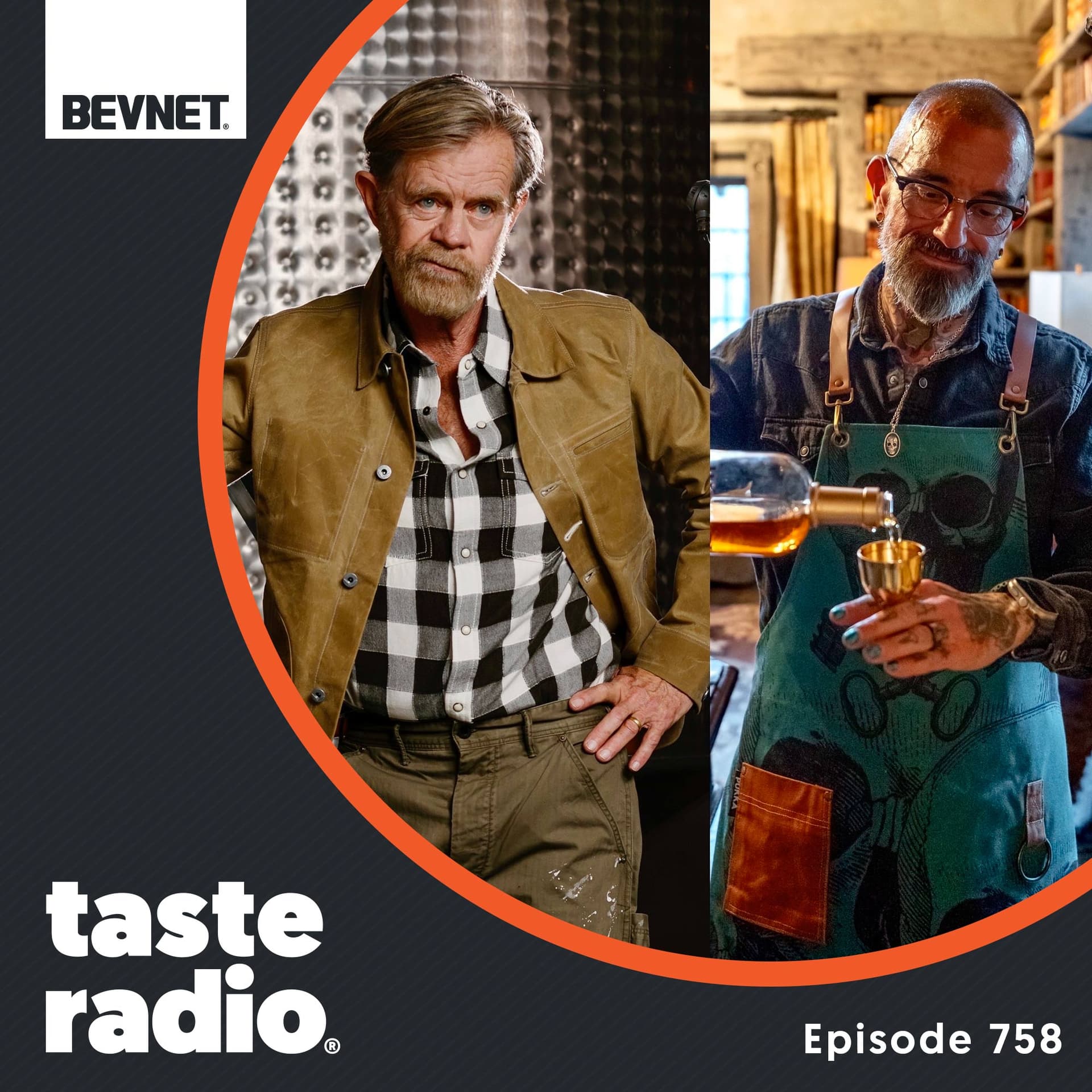
Episode Overview In this episode of *Taste Radio*, hosts Ray Lateef interviews Oscar-nominated actor William H. Macy and award-winning bartender Sean Kenyon. The conversation centers on Macy's partnership with Woody Creek Distillers, a craft distillery in Colorado, and how it embodies authenticity, local sourcing, and quality spirits. They discuss the brand's evolution, its dedication to craftsmanship, and the unique culture that surrounds it.
Key Themes and Concepts
- Authenticity in Celebrity Partnerships
- Macy's Genuine Involvement: Unlike traditional celebrity endorsements, Macy is a genuine partner at Woody Creek. He lives nearby and actively participates in the brand's development.
- Contrast with Other Celebrity Brands: Sean Kenyon highlights Woody Creek's authenticity compared to other celebrity-backed spirits, emphasizing their integrity and commitment to quality.
- Crafting a Local Brand
- Local Sourcing: Woody Creek Distillers focuses on using locally sourced ingredients and crafting their products in Colorado, which enhances their brand authenticity.
- Commitment to Quality: Both Macy and Kenyon stress that Woody Creek creates world-class spirits while keeping prices accessible, contrasting with many craft distillers who often price high due to production costs.
- Storytelling and Community Engagement
- Educational Approach: Both Macy and Kenyon emphasize the importance of storytelling and education in connecting with consumers and bartenders.
- Community Involvement: The distillery fosters a community spirit, with events that often include Macy's surprise ukulele performances, which help build relationships with customers and distributors.
- The Business of Craft Spirits
- Quality vs. Price: There’s a discussion about the perceived correlation between price and quality in spirits. Kenyon mentions that often, lower-priced craft spirits can outperform expensive ones.
- Accessibility: Woody Creek aims to provide premium spirits at prices that encourage trial among consumers, countering the trend where craft spirits are often priced above $50.
- Personal Insights from the Guests
- Macy's Journey: Macy reflects on his initial attraction to the distillery and his personal journey through music and distillery tours.
- Kenyon's Expertise: Kenyon shares his extensive experience in the spirits industry, underscoring the significance of authenticity and knowledge in building brand trust.
Key Takeaways
- Woody Creek Distillers is characterized by its authentic practices, commitment to quality, and local sourcing, making it stand out in a crowded market of celebrity spirits.
- Storytelling and education are essential tools for engaging both trade and consumer audiences, helping to create a loyal customer base.
- Affordability paired with premium quality is critical for reaching a broad audience, facilitating greater access to quality spirits.
Conclusion The episode highlights the importance of authenticity in the beverage industry, particularly for brands led by celebrities. William H. Macy's partnership with Woody Creek Distillers serves as an example of how genuine involvement can lead to successful brand storytelling and community engagement. Sean Kenyon's insights provide a professional perspective on the challenges and opportunities faced in the craft spirits market.
Listeners are encouraged to explore Woody Creek Distillers, reflecting the podcast's emphasis on personal connection and quality in the food and beverage industry.
---
For questions, comments, and ideas for future podcasts, reach out via email at ask@tasteradio.com. If you enjoyed this episode, please share it with colleagues!
Written by AI. May contain mistakes. Listen to the episode to check what was said.
Transcript
Automatic transcript. May contain errors.0:10Hey folks, I'm Ray Lateef and you're tuned into Taste Radio, the leading podcast for entrepreneurs, makers, and innovators, and innovators, in the food and beverage industry, the food and beverage. one. Living just down the road from the founders in Woody Creek, Colorado, Bill became a true partner in the craft distillery, not just his face. Now he's helping build a spirits brand rooted in authenticity, local sourcing, and uncompromising quality, all while writing songs about it and leading surprise ukulele performances at distributor events. In this episode, Bill and and award-winning bartender and spirits educator Sean Kenyon discuss how Woody Creek has grown from a small-town distillery into a nationally respected brand.
1:04They break down what separates it from typical, quote, celebrity spirits, including full control of production, Colorado-grown ingredients, and a commitment to making world-class vodka, whiskey, and gin at accessible prices.
1:22hey folks it's ray with taste radio right now i am supremely honored to be sitting down with william h macy and sean kenyon of woody creek distillers bill it's great to see you good to be here yeah sean how are you i'm doing great i am so happy that we had this opportunity to sit down with both of you and for folks who are like hey ray why didn't you call william william and why call him Bill? Do you know him like that? I don't know you like that, but it seems like everyone calls you Bill. Yeah, that's my name. There was a great actor named Bill Macy. And so I've always been pretty careful about introducing myself as William H.
1:59Macy, but all my pals call me Bill or worse. And you can call me Bill. Okay. Well, I would have only known you as Bill from a very famous movie that you starred in many years ago, Boogie Nights. That was when you were little, Bill. But that's a whole nother. We're not talking about that today. We're talking about whiskey and whatnot. And I got to ask, Bill, before we get started, this is this kind of blew my mind. I was on your Instagram page earlier and I saw you with the legendary musician John Oates. And I'm wondering if a Macy and Oates album is coming out anytime soon? No. In short, no. When I joined the distillery about six years ago, the pandemic hit.
2:46So there was nothing I could do for half a year, three quarters of a year. So I wrote a song. I play ukulele and I wrote a song about the Woody Creek Tavern here in Woody Creek of Hunter Thompson fame. And Felicity, my wife, shot it on an iPhone, and we had it edited and put it out there, and people liked it a lot. So that started me off with writing songs about alcohol and Woody Creek Distillers and this valley, the Roaring Fork Valley. And when we go to visit our distributors in the various states, we throw a party for them. And oftentimes I will sing a couple of songs, which just catches them flat footed.
3:30They're surprised. They're embarrassed for me. They're everything. It's so much fun. It's fun. And they're funny songs. So I looked out one time and there sat John Oates in the front row. And I thought, that's what was missing from this gig. I wasn't nervous enough, but he couldn't have been nicer afterwards. And he asked me to open for him. And that's what you saw online. I did five songs at two of his concerts. It's the thrill of a lifetime. Bucket list stuff. Well, you sounded great. I didn't see you with the ukulele, but maybe I have to look a little bit deeper. But let's back up for a sec, because I'm sure folks in our audience are thinking, hey, right.
4:06What do you got Bill and Sean on? And in particular, Bill on the podcast for? And, you know, is this another celebrity distillery, another celebrity whiskey out there? Because like we've seen a thousand of them. But that's not at all what this is about. And I think, Bill, your relationship with Woody Creek is truly an authentic one. And I know you've told this story a thousand times, but if you could share a bit with our audience about how you came to be the spokes dude and a partner with Woody Creek. I'm in Woody Creek right now. I'm looking out my window, and were it not for the trees, I could see Mark Kleckner's house, one of the founders of Woody Creek Distillery.
4:44And beyond his house are the other two owners of it, Mary and Pat Scanlon. And I think I was the only celebrity within walking distance. So they came down and asked if I would—it was Mark. He said, Bill, I don't know if you know this, we have a distillery in Basalt. And I said, I'm going to stop you right there. I'm in. And since then, I've spent a lot of time at the distillery, the aforementioned ukulele and those songs. I was performing there and people would come in and I do the regular spokesperson stuff. But I've also done barrel tastings and put out, as I said, those signatures. And I do the distillery tour.
5:28A lot of them are auctioned off to do a distillery tour with a movie star. And I've learned a lot about the distilling business. I've always been fascinated by it. That and the whole business, the whole hospitality business, I find absolutely fascinating. And I jumped at this because when Pat and Mary and Mark started this distillery, they had three foundations to make the spirits that they want to drink, to make them as fine as they can be made without exception, without excuse, and to make them affordable for everyone. And they've stuck with that. So selling Woody Creek distillery products is easy because it sounds cheeky, but they are the finest spirits in America.
6:18I'm not saying there aren't others. I am saying there are none better. It just comes down to taste. No shortcuts are taken. You walk into a liquor store, a lot of those bottles up there, they're just labels, man. It's all creative writing on the label, and much of it is sourced alcohol. You don't know where it comes from. And we make the finest product that can possibly be made. I invite everyone, if you find yourself in the Roaring Fork Valley, near Basalt, near Aspen, come see this distillery. It is jaw-dropping. There are these Christian Carl stills, kind of the finest stills made in the world.
6:59And they are magnificent. They're two and a half stories tall. It's a beautiful operation and stunning to watch. And I've spent a lot of time down there watching them. We did a million and a half pounds of potatoes last year. Wow. A lot of potatoes. Yeah. I'm saying, yeah. Yeah, it's not just whiskey. You're making vodka, hence the potatoes as well. The original product was vodka. There you go. There you go. It would have been a little awkward if Mark came over and said, hey, Bill, we've got this distillery. And then his next line was, after you said, hey, I'm in, he's like, actually, we want to buy your property.
7:35That would have been a little awkward. The conversation might have had a different turn at that point. Sean, you're in Denver right now. You're not in Woody Creek, but you're up there quite a bit. Talk about your relationship with the distillery. I've been in this industry my whole life. My mother, my father, my grandfather are all bartenders and bar owners, and I've never wanted to do anything else. And like I told you earlier, I went to Northeastern University for an engineering degree with scholarships, et cetera. And I remained a bartender throughout the whole thing. And I decided to leave because bartending is where I was really happy and surrounded by engineers where I wasn't.
8:12And after a number of years, I started to learn about the bottles behind me because all I cared about was the hospitality edge, just take care of people in front of me. And the bottles behind me were an insignificant part of it for so long until like food television kind of brought the consumer into a place where they cared about what was on their plate, what was in their glass, et cetera, et cetera. And I realized that I needed to know more about the stories of what's going on behind me. So I jumped heavily into it. Now I'm a global spirits educator. I've been all over the world teaching about spirits and specializing in American whiskey.
8:44And Denver had a cocktail week, a national cocktail week and I was working at a table at the bar and somebody, now I know it was Mary Scanlon, one of the owners of the distillery, just dropped a bottle of Woody Creek vodka on the corner of my table and then walked away, said, we want you to try this and just left. And I was working. So I kept working. I put it in my backpack and took it down to the bar. And it wasn't for like a week later where I opened the bottle and tried it. And I've not been floored by a sip of spirit and especially vodka. I mean, if you know how a lot of cocktail bartenders feel about vodka, I've not been floored by a sip of spirit like I was up until that point.
9:28But first of all, I had to look at the bottle and make sure this is vodka, right? I mean, it was obviously potato to me and, and having been a taster for years, like depending on the particular vodka, you can differentiate potato from grain, from, from grape, you know, or whatever source material to making the vodka out of. And I was blown away. Made a couple cocktails with it, but really just loved it on a rock with a lemon twist, just a simple preparation. And then I went forward to look into the distillery and saw, like Bill said, that these were people that cut no corners, that, you know, had the resources to make everything right from the beginning.
10:03You know, they grew their own potatoes for the vodka. Everything for the gin that could be was sourced in Colorado. You know, they were laying whiskey barrels down at the time, but they didn't have a whiskey released yet. And I decided that I wanted to work with this brand. You know, I'd never attached my wagon to any brand before. I remained a free agent a lot of the time that I was in, that I was working in bars, you know, brand ambassadors, et cetera, et cetera, never really did it. But I love this brand and their story so much that I wanted to be a part of it because it was authentic. You know, it wasn't somebody going around the country masquerading as a distiller that had never distilled anything before.
10:40You know, it was a real product from real people making, you know, growing their own source materials and sourcing locally and being transparent about it all, which at that time and period, there was a lot of fake stories behind a lot of spirits. And I was like, I really want to be involved with them because they are as authentic as they can be. And like Bill said, some of the finest spirit I ever tasted in bottle. You both bring so much gravitas and experience to Woody Creek and in different ways. And I know both of your roles and you've both alluded to this. Education is such an important part of getting people aware of and excited about and inspired by these products.
11:20What has been your most effective way of getting people excited about Woody Creek? You know, I'll start even with the storytelling aspect is that it's not a story. It's not a contrived marketing creation of who the people are and, you know, who the farmers are and having some stand-ins for farmers, etc. It's people who are making it from the beginning with the right approach. That kind of authenticity means a lot to bartenders when, you know, people have tried to fool them for years with their stories, you know, etc., especially with some of these really major brands. And then the spirits have to hold up to that story.
11:56I mean, you can have a beautiful, authentic story and then throw them some spirits that, you know, nobody knows what they're doing and they're not fantastic. But we have the unique position of having both those things intact, the story and the spirits. Hearing both of you talk about the distillery and its products is very convincing for me. I'm in the trade, though. I am a consumer, but I feel like for someone in the trade, it's a little bit of an easier sell. But has that kind of story been just as effective to a consumer-facing audience? Do you feel like you're reaching consumers as effectively, Bill, as you would folks in the trade?
12:34I hope so. one of the things I've got going for me is that I, you know, I did this TV series for over a decade where I played a notorious drunk. I'm talking about Shameless and Frank. I thought you were talking about Curious George, but no, Shameless, that's the one, right. Yeah. It was, it's just interesting that, you know, I think they come to see Frank Gallagher pitching alcohol. But one of the things we've done a lot, and it's really effective, I've done it with our salespeople. We go into a bar and we bring four or five of our products and we say, could we taste your favorite rye, your favorite gin, your favorite vodka, your favorite bourbon?
13:20And they pour little glasses and then we pour our little glasses and we taste theirs. And we say, and they taste ours. And we go all the way down the line and then we say, thanks for your time. And they order. They order because ours taste better. That's an effective sell. I mean, liquid to lips, I'm sure you both have heard and probably said that phrase a million times, because that's what you say in the beverage industry, is so critically important. I think in this day and age, everyone talks about premium. People are willing to pay for a premium experience, a premium product, a premium story.
13:59But I loved when you talked about affordability, Bill. And I think that's an important component in building a successful brand as well, which is, you know, people are unfortunately tight with their cash for one reason or another these days. There's a lot of folks who want a premium experience, but just can't pay for it. And Sean, you know, as someone who sells cocktails for a living and someone who I think, you know, will try to advocate for brands that you feel strongly about. How do you factor affordability? How do you talk to consumers about premium and affordability and them being aligned in the same brand and the same products?
14:35Right. You know, first of all, the word craft is a, you know, basically means small distillery. I mean, when you get down to it, you know, it's, it's a, made it a much smaller scale than the big guys. Craft is not necessarily really good. You know, you're more likely in a lot of ways to find quality spirits from some of these bigger brands. And, you know, some of the most iconic brands in the world are iconic because they're fantastic from the beginning. You know, craft distillers have a bigger challenge. You know, they have to make a great product and they have to jump in the same pool as those big boys.
15:06So if you come to market with a product that is equal to or better to than those, you still have to gain visibility. One of the biggest drawbacks for most craft distillers is that because it costs them so much to make, they're in a position where they have to charge a lot for their product. Our vision from the beginning was making an affordable product with quality ingredients, but a lot of these craft distillers have to charge$60,$70 a bottle. And you look, and Colorado is full of craft distillers. I mean, there's craft distillers kind of, it followed the beer industry. We're working with a lot of the same base materials and And, you know, from going from brewing to distilling isn't a huge leap.
15:46You go into any liquor store here in Denver and you'll see a row of Colorado distilleries and very few of those bottles are under$50. And to the everyday consumer, to get their hands on something that they've never had before, a$50 plus bottle is a special occasion bottle to them. You know, we're swinging with the big boys in that same in that same category of the, you know, the 20s and 30s of the bottle. So we're sitting right there with them at the same or better quality in most aspects. So the you know, not just getting it to their lips, but getting it in their hands and getting it on their shelves is the first step.
16:25I think we have to fight this. Sean, maybe you mentioned this. You can go in there and we have a tendency. I know I do. Do you want the$50 bottle of bourbon or do you want to splurge and get the$80 bottle? When the reality is the$50 bottle is dollars to donuts as good or better. The pricing and this stuff, it's not reliable. Just because you're spending more doesn't mean that you're getting better. And the second thing that I find really interesting is that especially guys, they had a shot of some bourbon or rye or vodka in college. And by the time they're out of college and in their mid-20s, it takes dynamite to get them to try a different bourbon.
17:17It's by rote. They walk in and say, give me a blah, blah. That's what they always say. So we're up against that a little bit, but that's what I'm underpaid for. I think it's a common story, and we have talked about this, Bill, that some of the best whiskeys in the world aren't the most expensive whiskeys in the world. And I think the mistake or the necessity by a lot of craft distillers is they're pricing themselves in that premium range because it makes sense bottle to bottle with a small amount on profitability and trying to make that at a$70,$80 bottle. But I could think of five$25 bottles right now.
17:58That would be way better than five different$80 bottles,$70 bottles at that point, especially in American whiskey. American whiskey is something that for years, it's made, you know, obviously made in America. You know, it's made locally. The base ingredients are not expensive ingredients. You know, it's always been an industry brand or, you know, an everyday man's drink. It's not a cognac. It's not a high-end single malt scotch. It's a working man's drink in that way, you know, a working person's drink. And for that reason, you know, you want to keep that affordable. If you want it to be accessible to many people, you want it to be accessible.
18:34And to some people, you know, a$25,$30 bottle is still an expensive bottle, but you want there to be a value in that$25. And I've always believed with American whiskey that, you know, the higher you get, just the only difference is the price. You know, I have a whiskey in my well at my bars that I won't mention that's$14 a bottle. And it can stand up to a lot of the ones that are in the 20s. Both of you have been in this business for some time now. Sean, you've been in the business for a little bit longer than Bill. But when it comes to Woody Creek, I wonder, what's one thing about the business itself that's really surprised you that hasn't been something that you expected?
19:10Let's start with Bill. Well, I think I knew this. I got fascinated in college with Scotch whiskeys, and I read a couple of books about how they make it. So going in, I knew that the process is simple, really. It hasn't changed for a couple of thousand years. It's so old, we don't even know who invented it. But to go in and see our distillery and this simple process, writ large with science, truthfully, but it's the same thing they were doing 2 ,000 years ago. And then sticking it in the barrels and letting Mother Nature take the rest of the process over, I find it so romantic. And I guess the second thing that's just astounded me about this business is the hospitality business, meeting people like Sean.
20:05I didn't know that this existed. It's smaller than I thought it was. And Sean and I took a great motorcycle trip all through Europe together with somebody else from the distillery and these guys from Fortaleza Tequila. And I was gobsmacked, even on the continent. You know, you'd mention a bar and they'd go, oh, yeah, I know that bar. Blah, blah owns it. No, someone would say he sold it two years ago and yada, yada bought it. Seriously, I didn't know where blah, blah, blah. Oh, I know that bar. These guys know everything about almost every bar on the planet. And Sean knows everything about every bar on the planet.
20:46I need some of that headspace back. It's astounding. All right, Sean, something that's really surprised you about the business of distilling Woody Creek in particular. Yeah, I mean, I'm going to go to what surprised me about Woody Creek as a company. You know, when I learned about them, you know, I looked at the website. I had stuff from the website and that, you know, information about the spirits and the like. But then I went and met the people. And the fact that, you know, they were so passionate about what they're doing, you know, and they were so dogmatic about the quality and the process.
21:19and not cutting corners that that was, I mean, to me was incredibly inspiring. And the fact that they took care of everyone around them, you know, as a small group, you know, it's not, it's not a major corporation, you're not walking into a, you know, into a into a corporate office in Chicago with three floors and a marketing team. And, and that I mean, everybody's multitasking, for the most part, in this small little family of this national, this brand that's recognized nationally, you know, it's still a very small group, that's very tight knit, they had their own little community up there and and the ability to share that community with other people i mean what distillery has you know someone like bill just playing ukulele songs on a wednesday night out of nowhere you know the people and their dog is just hanging out drinking whiskey that's amazing right it's a it's a great little community they've created up there in basalt and the fact that we get to share that with the rest of the country is is really really cool well put well the fact that we get to share this story with our audience is pretty damn cool too uh thank you both so much for an incredible conversation.
22:17I really appreciate your time. I know how busy both of you are. So I know this is going to be a great hit with our listeners. And I'm really excited for the future of Woody Creek. I can't wait to get out there. I got to get out there sometime soon. Please, we would love to have you out. Thank you. And I hope one of those days I'll get to see Sean and have a drink with him at the bar. And we'll both be watching Bill on the stage with the ukulele. I like it. All right, Bill, thank you so much. Sean, thank you so much. Until next time. Great. Thank you. Thank you, gentlemen. Thank you. That brings us to the end of this episode of Taste Radio.
22:53Thank you so much for listening. Taste Radio is a production of BevNet.com Incorporated. Our audio engineer for Taste Radio is Joe Cratchy. Our technical director is Joshua Pratt. And our video editor is Ryan Galang. Our social marketing manager is Amanda Smirlinski. And our designer is Amanda Huang. Just a reminder, if you like what you hear on Taste Radio, please share the podcast with friends and colleagues and of course we would love it if you could review us on the apple podcast app or your listening platform of choice check us out on instagram our handle is bevnet taste radio as always for questions comments ideas for future podcasts please send us an email to ask at taste radio.com on behalf of the entire taste radio team thank you for listening and we'll talk to you next time
23:45Thank you.
From the publisher
When Oscar-nominated actor William H. Macy joined Woody Creek Distillers, it wasn't a Hollywood deal – it was a neighborhood one.
Living just down the road from the founders in Woody Creek, Colorado, Bill – known for starring roles in the hit TV series "Shameless" and iconic films "Fargo" and "Boogie Nights" – became a true partner in the craft distillery, not just its face. Now, he's helping build a spirits brand rooted in authenticity, local sourcing, and uncompromising quality – all while writing songs about it and leading surprise ukulele performances at distributor events.
In this episode, Bill and award-winning bartender and spirits educator Sean Kenyon discuss how Woody Creek evolved from a small-town operation into a nationally respected brand, all while staying true to its roots: crafting world-class spirits at accessible prices.
Show notes:
0:25: Interview: Willam H. Macy & Sean Kenyon, Woody Creek Distillers – Ray opens the conversation by asking Bill about his collaboration with musician John Oates, before the actor shifts to recounting how his involvement with Woody Creek Distillers first began. He reflects on the early days of the partnership, including writing and performing ukulele songs inspired by the distillery during the pandemic and how it became a unique way to build stronger relationships with distributors and customers. Sean shares how he was initially drawn to Woody Creek vodka by its commitment to local sourcing and its accessible pricing. He contrasts the company sharply with other celebrity-backed spirit brands, praising Woody Creek for its authenticity and integrity. Both Bill and Sean emphasize the importance of education and storytelling in their work and discuss how Woody Creek sets itself apart via a welcoming, unpretentious approach. They also highlight some of the most surprising and rewarding aspects of their relationship with the brand and praise its emphasis on connection, community and craftsmanship.
Brands in this episode: Woody Creek Distillers