In short
Podcast Summary: Taste Radio - 'Shrooms, Magic & Otherwise, Are On The Rise. Plus, What's BarTrending?
Episode Overview In this episode of Taste Radio, the hosts explore the burgeoning trend of mushrooms in the food and beverage industry. They discuss the potential for both psychedelic ("magic") and functional mushrooms, the rise of cannabis beverages, and the current state of on-premise drinking culture. The episode features an interview with Amy Racine, beverage director for JF Restaurants, who shares insights on evolving drinking habits and trends in the beverage sector.
---
Key Topics Discussed
- The Rise of Mushrooms
- Magic Mushrooms Convention: Jackie Brucleira shares her experience at a convention dedicated to magic mushrooms, discussing its legitimacy and the growing interest in both functional and psychedelic mushrooms.
- Education at the Event: Attendees were educated on different strains of mushrooms and their effects, mirroring the educational journey of cannabis products in the past decade.
- Cannabis Beverages
- Future Predictions: A discussion is initiated regarding a prediction that cannabis beverages could become a primary method of weed consumption within the next 5-10 years.
- On-Tap Cannabis Drinks: The hosts envision a future where cannabis drinks are served alongside beer in bars.
- Trust and Regulation: Emphasis on the importance of trust in cannabis products, highlighting the need for regulation to assure consumers of product safety and quality.
- Trends in Beverage Consumption
- Current Beverage Trends: The podcast discusses the increasing demand for no and low-alcohol drinks, comparing it to the rise of vegetarian food options in restaurants.
- Consumer Education: The pandemic has led consumers to become more knowledgeable about wines and spirits, influencing their choices when dining out.
---
Interview with Amy Racine
- Role as Beverage Director: Amy oversees beverage selections at multiple high-end restaurant locations and discusses how trends influence her approach.
- Consumer Awareness: She notes that consumers are now more discerning and knowledgeable about the beverages they choose, pushing establishments to offer a wider variety of high-quality options.
- Cocktail Crafting Process: Amy outlines her strategy in developing cocktail menus, emphasizing a matrix of spirits based on seasonal trends and flavor profiles, as well as the importance of presentation.
Key Insights from Amy
- Seasonality in Menus: She explains that cocktail menus change seasonally, with an emphasis on local ingredients for some locations.
- Growing Demand for NA Cocktails: Amy draws parallels between the evolution of non-alcoholic drinks and the vegetarian movement, noting that consumers expect thoughtful and sophisticated options.
---
Featured Brands in This Episode
- Mushroom and Cannabis Brands: Calexo, Magic Cactus, Wynk, Cann, Poppi, and more discussed in relation to the emerging trends.
- Functional Beverage Brands: Good Dirt and S'noods are highlighted for their innovative products leveraging functional ingredients.
---
Conclusion
The episode of Taste Radio delves deep into the innovative landscape of the food and beverage industry, particularly focusing on the integration of mushrooms and cannabis as significant trends. The conversation with Amy Racine emphasizes the industry's shift towards more educated consumers who expect quality and variety in their beverage choices.
---
Call to Action If you enjoyed this episode, share it with a colleague, and feel free to send your thoughts to ask@tasteradio.com.
Written by AI. May contain mistakes. Listen to the episode to check what was said.
Transcript
Automatic transcript. May contain errors.0:10Hello and thanks for tuning in to taste radio the number one podcast for anyone building a business in food and beverage. I'm Ray Lateef, the editor and producer of Taste Radio, and it was my co-host for this episode, Jackie Brucleira and Mike Schneider. In this episode, we're going to be chatting about Jackie's not-so-secret Magic Mushrooms Conference, overused in annoying terms on LinkedIn and Instagram, and whether cannabis beverages will start to dominate in the future. We also feature an interview with Amy Racine, the beverage director for John Frazier Restaurants, who discusses the evolution of on-premise drinking culture.
0:49Interestingly enough, John Craven is in San Diego, but not in the San Diego office. I assume he's surfing. Is that what he does? Probably, yeah. I don't know. It's rainy, so I don't know what he's doing over there. Oh, my gosh. I would take a rainy surf day in San Diego any day. You know, I think it was raining the last time he was there in February. And he sent us into Austin. He did. In midweek. He took off. I guess you can do that when you have like a ton of points on JetBlue. But anyway, yeah. Feels kind of lonely in the office without John to my right. But I'm happy that you're here, Mike.
1:20Thanks, Ray. You're pretty happy these days with the way Arsenal's playing. Yeah, for sure. I mean, Iron Route and then take out Burnley. What'd you say? The Iron Route, 6-0. You're talking about West Ham? Oh, for crying out loud. This is what happens when Craven isn't here. I know. He's not here to like crack the whip. Start talking about football. Yeah, exactly. He usually has like a broomstick under the table that he jabs Mike or me with. He's got a button. Haven't you seen the button in his hand? That sends electric shocks. He can like send us into the fire. I'm very badly burned. I could get out.
1:57You just shot me. Anyway, Jackie, I mentioned that you went to a Magic Mushrooms conference. Shroom con. Yes. This sounds very illegal, yet I saw your posts on Instagram. Looked like there were a lot of people there. And yet no one, not a single person, as far as I can tell, was arrested. Yeah, not that I knew of. I found it on Eventbrite. So something that was promoted. Whoa, whoa, whoa, whoa, whoa, whoa. This was publicly promoted on Eventbrite? Right. You are a victim of many, many, many, many, many, many years of government propaganda thinking that mushrooms are evil. Did I even imply that mushrooms are evil?
2:42I mean, Jackie went to an illegal event. Therefore, she must be a criminal. Well, I know that magic mushrooms are still considered a prohibited drug, essentially. Can we skip this part and just ask Jackie what this is like? I'm fascinated. Okay, go ahead. Come on. Yes. Yes. So I found out on Eventbrite, and obviously I saw mushrooms, and I was like, I got to go to this, a mushroom expo. They did kind of hide the name, didn't they? What was it like? It was very vague, I will say, in the description. And I went and it was a legit expo. There were booths. There were companies exhibiting. There were packaged products.
3:25There were both just functional mushroom products as well as, you know, the good stuff. Dysfunctional mushroom products? I definitely pictured it being like old school bar camp where you just showed up at a bar and someone did like this, some grassroots talk or everybody had, you know, guerrilla sampling and just pulling stuff out of bags. But Jackie's like, this was legit. It was very professional. There were two stages for education. So I learned a lot about, you know, how to cultivate mushrooms, the different strains of mushrooms. It's kind of like when THC was starting to build momentum and you're starting to learn more about, you know, micro dosing versus macro dosing and the different strains and cannabinoids.
4:07That's the same thing that's happening right now with psychedelic mushrooms is that you can learn that like this mushroom is going to have this effect on you or this one's going to have another effect. And then you can also micro dose and not have psychoactive results. And it's just good for your brain and mental health. So it's a lot of things that, you know, people are learning about. And it was interesting because each booth I stopped by, people had their own like educational materials because there are a lot of newbies in the room. And there's a lot that I had to learn as far as, you know, dosage or the effects of it.
4:40And also, where are you getting it from? They made you wear a big noob sticker, right? Every booth I went to, I was like, I am a beginner. Please let me know what I need to know. So could you actually sample at the event? Were there booze? Were there brands? It was like the mini Expo West of Magic Mushrooms. There were samples, but they were all micro. And they were all different. There were gummies. There were chocolates. There was a beverage. And some of them had really great packaging. Some of them, you know, were just entering the scene. But yeah, very interesting. And then you could obviously buy some of the other products there.
5:15Now, I'm not a narc, but where exactly in San Diego was the sales? It was in Barrio Logan, which is actually where all the cool new things are happening in San Diego. Okay. What was the name of this conference for people who want to follow it on Instagram? Entheogen Expo. And entheogen means like anything that like has psychoactive properties. Okay. Something to look into. I imagine your garden variety police officer doesn't know what that means. I didn't know what it meant. Were there restrictions on whether people could consume the mushrooms at the event? or, you know, do they have to eat them after they left?
5:52There was no restrictions. Yeah, you could eat whatever you wanted there, consume whatever you wanted. I could definitely tell people were consuming based on some conversations. So I thought this was, you know, mushrooms that were not psychoactive. And then I see Jackie's story. Like she's telling the story and you see the packages and you see all that stuff. And then she's like, there's a picture of Jackie with this big smile on her face. And it just says, hi, I'm life. and there's a mushroom emoji. Okay. We'll have to dive a bit deeper into this. And I don't necessarily want to hear about your experience post-events with your mushroom dabbling.
6:29I can apply for the new Shroom Showdown. You know, it may come to that. It may come to that. Probably. 10 years ago, could you have ever imagined an event like this? No, not 10 years ago. But now I could imagine someone with, you know, just the way that THC beverages apply for the New Beverage Showdown, you'll have psychoactive mushroom enhanced products that apply for the pitch slam. This is true, but I think... Or the New Beverage Showdown. THC as an ingredient and cannabis as a product have been deprioritized, I believe, by the federal government in favor of going after people who are, you know, dealing much harder drugs and not to call marijuana a drug, but you know, you know what I'm talking about.
7:17I get what you're talking about, right? I mean, especially having grown up when you did and... No, we didn't grow up in the same decade. We didn't grow up in the same place, but we grew up about the same time. So yes, I'm older, a little bit. But the propaganda from the government around, you know, marijuana and mushrooms is that it is, those are a gateway drug to the harder drugs. And I mean, I just, I've learned otherwise. Yeah. I mean, there were also a lot of people that I met that they stopped drinking. They had like alcohol problems with the use of mushrooms. So similar to like THC, it's just like a healthier alternative for some people and it's natural.
7:59You know, you brought up an interesting point, Mike, because I think my biggest fear with ever trying marijuana or THC beverages, and I still, as far as I know, have not, definitely not the marijuana, THC beverages, I may have, I don't know, accidentally sampled something, but was that it could be a stepping stone to something harder. And I just wanted to not even dabble in that space. But I think when you are a bit older and a bit more mature, you can probably be a bit more thoughtful about how you consume these things. Well, our industry is also helping us be a lot more thoughtful about it too.
8:39You've got products like Kalexo, you've got Magic Cactus and Wink and Drippy and those that, and Can, of course, that all are just the smallest amount. And if I don't melt from that and I just get like a little bit chill from that, then I think, I think it's okay to say that those are relatively safe in terms of just the amount of buzz that you're going to get, because I'm ridiculously sensitive to cannabis. And I think like there's now regulation, you know, around THC products, whereas before there wasn't. So you weren't, you didn't know if you ate this cookie, how high you would get versus like this cookie.
9:16Like you didn't know that if the dosage was equal. So I think like the more, you know, anyone. So the more like regulations that go into it, I think it just makes consumers feel safer that they know exactly what they're consuming. And especially with lower dosages, like you can control your high, just similar to like drinking, you know, two glasses of wine versus like the whole bottle. You kind of know what you're getting into. And so many people have the story. And a lot of times the story is about a fucking gummy. It's like the way that you break down a gummy and the way that it injects the THC into your system or the cannabinoid that it creates is stronger and less predictable than having it through a beverage.
9:59We talked about this in an episode a few months back or at least a few weeks back. And I think the key attribute to the future of cannabis beverages and just cannabis in general is trust, right? You want to trust that what you're consuming is what is described on the can, is what is described by the brand, and is to a certain extent regulated. And I think this is a good segue to a tweet that John responded to, even though he's not here, I want to talk about this, that John responded to last week. This person, Noah Sanborn, posted this on X. I think cannabis-infused beverages are likely to be the most common weed consumption method in the next five to ten years.
10:43That's a bold statement, especially given the amount of cannabis that's smoked in this country. But John responded with, I second this theory. I would think there has to be a ton, I mean a ton of cannabis beverages consumed. That would have to be, you know, a hundred plus billion dollar industry, right? I mean, it seems a little aspirational at the moment to just say that in that time period, because Jackie was talking about this before the show. She thinks we're going to see it on tap. Yeah. And that's the key. I envision a bar in the future as having like beer on tap, cannabis beverage on tap and like a mushroom beverage.
11:21Yeah. Mushrooms for sure. You know, like I just see that as like the future. It's just the perfect vehicle to hit the masses. And also the onset too is similar to alcohol where you feel it a lot faster and you digest it a lot faster than say like an edible or like a gummy or something like that. And I think it's just more relatable and an easier switch for people that already drink alcohol. And so many people drink alcohol. But that's the key. How does it actually get behind the bar? And that is really a government decision. at the local, state, and federal level. And at the federal level in particular, I mean, the DEA could come and shut down every cannabis business, whether they be a farming operation or a brand, in a second, be like, this is over.
12:09So until there is concrete legislation out there that says cannabis is actually a legal ingredient and it can be legally consumed in this country and mushrooms as well, I'm just, I'm pretty bearish on this idea that cannabis beverages could be this big. They haven't renamed it to the Bureau of Alcohol, Tobacco, Cannabis, Mushrooms, and Firearms yet. I mean, there's multiple government agencies that are tackling this issue. I know. But anyway, yeah, who knows? You know, if John were here, I think he could probably... I'm just glad you went to this, Jackie, and that didn't get shut down and that you got to experience it.
12:46I'm just excited to, I'm excited about the future of mushrooms too. and I can't wait to try. Okay, here, I'm going to challenge folks who are listening. If you really truly believe that you'll be drinking a lot more mushrooms or that the availability of mushroom beverages and cannabis-infused beverages will be, I don't know, tenfold in the next five years, let us know. Send us an email to ask at tasteradio.com. I certainly hope that the amount of beverages containing cognizant is 10 to 20 to 50-fold in the next five years. Cognizant is the presenting sponsor for this episode of Taste Radio. Cognizant is a clinically tested nootropic ingredient that delivers a patented form of citicoline to supply your brain and those of your consumers with the energy it needs to stay sharp.
13:36Learn more at cognizant.com, the C-O-G-N-I-Z-I-N.com. Mike, did you have your dose of Cognizant this morning? No, I guess you didn't. Yeah. You're struggling today. A bit. A little bit. A little bit. You got a can of poppy to your left, though. I've got some poppy. So this is a new poppy wild berry that they sent us in a tall boy can. Yeah, 16 ounces. A little extra poppy for me. Tall boys usually represent a foray into sea stores. Everybody looks like tall boy in convenience stores. It seems like that's going to be the next move for poppy. Perhaps. Perhaps. I mean, I could see it poppies popping.
14:19You know, it's super popular after the Super Bowl ad. You know, the reason people do Super Bowl ads, Ray, is that they work. We talked about this last week. So let's see where it goes. Yeah. A lot of people listened to that episode. We got some good comments on LinkedIn about our discussion of Poppy's potential, so to speak. Did you get a lot of let's go? Oh, boy. Yeah, I mean, that's something that we need to fix on LinkedIn and Instagram and Twitter is these common, overused, frankly, annoying terms and phrases that we just are overwhelmed with. I just, I tune out so quickly when I see someone be like, LFG on a post or, you know, crushing it.
15:05And, you know, crushing it, people are saying that less than they had in the past, but LFG is still out there. Please, for the love of God, stop using that term. Figure something. I mean, there's got to be a new term. It's 2024. You got to stop using LFG. I think Tom Brady has actually stopped using that. And he was the guy who was the most often using that phrase or term. How about it's lit? It's lit? I don't hear that very often. You don't hear that very often? No. On LinkedIn or on Instagram? More so Instagram. I haven't really seen anyone say it's lit on LinkedIn. LinkedIn, it's like the 30 and 40 year olds who are way too old to be saying it's lit or saying LFG.
15:44Mike, you just, you're really frustrated with just, I don't know. These are pretty common words. Honestly, literally everything. Honestly. No, those are the three of them I'm most frustrated with. Yeah, those are definitely millennial terms. And I am a millennial. So whenever I say that's perfect, Mike's like, no, no, no. It's not actually perfect. Don't use that word unless it's actually perfect. I have the burden of being a marketer. So we have to use words that we mean. We have to mean what we say and say what we mean. We can't just like say, oh, that's perfect because, oh, shit, it's not. And someone thinks it is, we're in trouble.
16:20So when someone says honestly, if they're actually being honest. They're lying to you before. That's it. You don't need to say honestly. Think of how much time you waste typing those words, first of all. So literally everyone who says honestly is lying. That's what you're telling me right now. They're selling you something usually. When you go into the mode where you're honestly, you're either trying to end an argument or you're selling something or you think you're right and the other person isn't because you came in with the honestly. Mike is being very calm about this, but he was smashing the table before he got on the mic.
16:51He almost broke the table in half. I feel strongly about this. Yeah. The way he's like wringing his hands right now, if you're watching the video. He's triggered. Yeah, exactly. He wants to start biting his nails. I get fired up about this. Yeah. But language is important. The words you use are important. It is important. And I appreciate the fact that people get really excited about a win or supporting other founders. But we got to find some new phrases, folks. I don't know what those phrases are. I don't know what those terms are. But... Ray Latif! Yeah, that's just hashtag Ray Latif. Just start doing that.
17:27Don't do that. Just hashtag Ray Lateef. Start using BevNet acronyms like DNS.
17:35DNS is an interesting term, by the way. Yeah. So my dad had opened a chain of gourmet food stores. I think I've talked about this in the podcast. And anyway, my family owned a chain of gourmet food stores in the past. And we used to go to the fancy food show a lot. And he would always be as kind as possible, even though he was a pretty blunt guy when he was talking about something that he didn't like. So if he was on the show floor and he tasted something that he didn't like, and they'd be like, oh, sir, what do you think of this product? He'd be like, well, it's better than lousy. But I kind of feel like DNS sounds like that.
18:14And DNS, once again, stands for? Does not suck. Does not suck. But it's actually really good. It's really good. Yeah, like we really like it. Oh, this does. Because you got to think of the tone. It's like, I'm drinking this poppy, all right? Ready? It's like, oh, that does not suck. Yeah. That's the absence of good, right? Does not suck? No, it's the absence of bad. I'm sorry, excuse me, the absence of bad. The opposite of that is it sucks. Yeah, I guess like it is all in the tone. Like if I said, it doesn't suck. Like that's different than that does not suck. That does not suck. That's how I mean it when I say DNS.
18:52Yeah, I always mean it as positive. Because I put a big DNS on a beverage. We need to clip and use that video of Jackie saying that does not suck. Because, you know, people sell tons of products like that, Jackie. I like the way you did that. Very, very good. Yeah. Thank you. Thank you. Yes. I also like the way that we embrace our Taste Radio VIPs. I mean, these are just people who are in the know, who are just a part of a community that that wants to be great in our industry, that wants to be part of a great cohort of founders and operators and other folks in our industry who are just leaders and people who just want to see good.
19:37Clearly the motto is, let's go. Yeah, I literally wanted to say LFG. Don't do that. You yourself as a listener can become a Taste Radio VIP or part of the Taste Radio VIP community by going to tasteradio.com slash VIP. There will be opportunities to be part of the show, part of the podcast, upcoming meetups and events to engage with Taste Radio hosts and tips on how to get your product talked about on the air and perhaps even secret meetups. Honestly, it's lit. Jesus. It's lit. All right. No, seriously. Seriously. We're going to be doing some fun stuff at Expo West. I need to brush my teeth. We're going to be doing some really fun things with the VIP community at Expo West.
20:24You got to be a member, please, if you can, to find out about these fun things that we're doing. Once again, tastradio.com slash VIP to sign up. All right. Bunch of new products. Tons and tons of new products on the table. Actually, there's one new product that... No, one product that isn't new, but I found this at an Asian grocery store. It's called H Mart here in the Boston area. and I had to buy it. I posted this on Instagram and it caused a bit of a stir. So Ritz crackers, R-I-T-Z, everyone knows Ritz crackers. They make different kinds of flavors and varieties of their crackers for different countries.
21:03And in Korea, they make a sandwich cracker that is just known simply as white, W-H-I-T-E. And it looks like an Oreo, but with two Ritz crackers and a white filling. But people were kind of confused about what the filling was. A lot of people said cheese, which I think... I'm pretty sure it's Oreo stuff. But a bright white cheese sounds gross. Well, it's kind of like white cheddar mac and cheese, you know? Yeah, that is a good guess. I don't know. They do taste good. They do taste good. Well, what is it, Ray? It's Oreo stuff. Vanilla frosting, yeah. It's vanilla frosting in between two Ritz crackers.
21:46So you have like sweet and salty going on? Exactly. Sweet and salty kind of thing. All we need is heat. It tastes good. I dipped some in some tea last night. It is a little pricey. It was four bucks for this box. And there's, I don't know, probably... We got any sriracha? Eight crackers or eight sandwich crackers in here? So no sriracha. No more guzzling? No more guzzling. Okay. What is that? Melting forest? What is that? Oh, yeah. Speaking of mushrooms, we got some melting forest mushroom energy. Well, they're mushroom beverages. So this one is, there's a few different flavors. I grabbed two of them.
22:21This one is orange cream, mushroom energy. And then I also have mushroom de-stress, coconut pineapple. So these are mushroom drinks. They have different mushrooms in them. These are adaptogenic mushrooms, to be clear. Adaptogenic mushrooms, right? Not psychoactive mushrooms like we were talking about before. This one has cordyceps, lion's mane, L-theanine, panaxenotoginseng, and green coffee bean for energy. And the mushroom de-stress has organic reishi, lion's mane, L-theanine, rhodiola rosy extract, and magnesium and vitamin B6. Can I make a comment here? I appreciate the fact that these folks or the founders are creating a mushroom energy product.
23:09Yes. But calling it melting forest and having this sort of dreamy vibe and landscape of mushrooms on the front makes it feel like it has a psychoactive component to it. Papadelics too. Yeah. It's the Papadelics effect. The Papadelics effect. And here's the thing. I mean, the last thing I think of, unless energy was on the front of the can, which it is, The last thing I think of when I see this sort of dreamy landscape in mushrooms, frankly, is energy. I just keep hoping that the psychoactive mushrooms are going to land on my desk at some point. I mean, we're closer now, thanks to Jackie going to ShroomCon, but everyone has their business card.
23:51But I saw these, I thought exactly what you thought. And I went, oh my gosh, it's happening. But then you look at the top, you know, there's nothing safe about these cans. They're not legal anyway. Anyway, so yeah, that hasn't happened yet. And I always wonder if the roadmap is to go in that direction when it becomes legal. And this is like the gateway, but people say that's not the case. But even the closure at the top of the can, I mean, it's a pop top, but the top of the can is all black. It is black. So again, I thought it was dangerous. Right. Yeah. I don't know. Yeah. I think the folks at Melting Forrest, good idea.
24:27But I think some tweaks need to be made for the packaging or on the label. I have a functional mushroom beverage that I think you would feel safer drinking, Ray. It's called Good Dirt. Good stuff. Yummy. So it's a line of sodas that are fueled by mushrooms, functional mushrooms. And this is their Chaga Cola. And it's very simple ingredients. It's really just water, date syrup, a probiotic or prebiotic, excuse me, blend and mushrooms. So this one has lion's mane, turkey tail, and reishi, but it calls out chaga on the front. So I guess my only suggestion is, you know, talk about the function a little bit more because still people don't know what chaga does.
25:13Chaga is for like immune support and it's anti-inflammatory. But I think if someone's just looking for like a better for you soda that has a little bit of a functional component and they like mushrooms, this will be a great option for them. I have another suggestion. that hold that can up for a second, would you? Yes. The color of that looks like the red dirt t-shirts that you get in Hawaii. I mean, there really isn't good dirt to eat. So I don't know. I feel like going to all the trouble that you went to to formulate a delicious beverage, put it into a can, create a label, all that, and calling it good dirt.
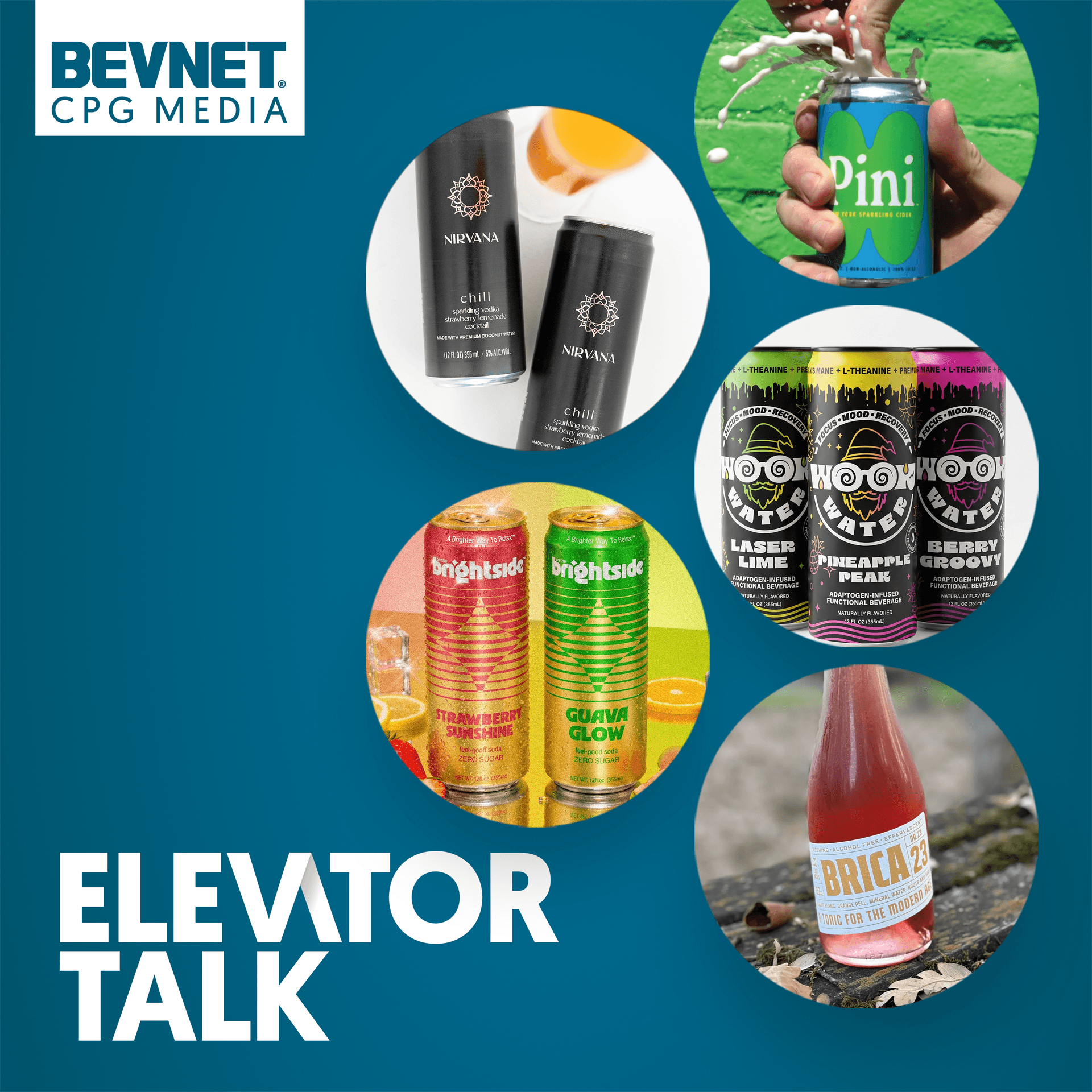
25:50I feel like you've got a hurdle to leap there. Well, what I would do, Mike, if I were in your seat, is I would tune in to the next episode of BevNet and Nosh's Elevator Talk because we feature the founders of Good Dirt on that show. Glenn and Mario Calloway are the co-founders of Good Dirt. Okay. And they talk about the origins of the brand and why they called it, what they did and where they're trying to position it in store. And it's a really good discussion. They also, Good Dirt, just got into Sprouts, all Sprouts nationwide. So very excited for them. That's where I found it. And yes, please tune into that episode, Mike, and please tune into that episode, folks.
Read the full transcript
26:33You can find it on BevNet.com. Now, I have a really interesting product. It's called, or a new line of products called Snoods, brand of products that is. And it is a snacking noodle. Essentially, it's a pasta that you can snack on. It comes in these three ounce pouches. There's three varieties. is a kava tapi carbonara, a rigatoni basil pomodoro, and a spicy miso ramen. Jesus, I can't speak today. Man, I like any company that sends snoods. Yeah. It debuted earlier this month on February 1st. It's described as the first chef-driven, globally-inspired noodle snack. It was conceptualized and founded by Lauren Bodden after winning Netflix's newest cooking competition show, Snack vs.
27:24Chef. So, yeah, apparently Lauren's been obsessed with this idea of making snacks out of pasta. Mike, I figured you might want to try these. I've already tried the spicy miso ramen. That does not suck. I feel like it's an acquired texture. Even not an acquired taste, but it's definitely an acquired texture, if that makes sense. I used to, when I was a kid, actually take like the ramen like packets and just eat them with a little bit of the like spice packet on it. So I think this would be for me. I ate raw pasta. So. Yeah, me too. Okay. So if you like raw pasta, you will absolutely love this, Jackie.
28:02Okay. This is awesome. So I'm biting into the rigatoni basil pomodoro. It tastes like pasta. Mm-hmm. With sauce, but pasta that's uncooked. with sauce. These have maximum crunch. That's true. You will enjoy that one, Mike. That's the rigatoni. So I've had the spicy miso rum and now I'm going to go for the, oh, these are actual rigatoni. Oh my God. This is old school. I'm like a little kid. The rigatoni ones look exactly like rigatoni. They look like uncooked rigatoni. Mike's got the biggest smile on his face. It must be a little bit softer. It's a little softer than what we're used to, like eating it raw, but it's just close.
28:38You know, I like the rigatoni one a little bit more now that I've had a couple. But still, I think the hard part of this is going to be getting people to associate, I don't know, the texture of a crunchy snack with the sort of pasta crunch. I think there's going to be a bit of education here, but what Jackie was talking about, eating ramen, quote, raw, is not that uncommon. Wait, what? It's not that uncommon. Okay. Mike's going to try the last one here. This is the Cavatepe. Okay. Cavatepe. I can't pronounce that. That's pretty good, too. Mike looks like a little kid. This reminds me of Fusili Jerry.
29:25It does look like Fusili Jerry. I also got recently some samples from a brand called Date Better. Thank you, Snoods. Date Better. Thanks for sending Snoods. It markets dark chocolate-covered dates. There are four varieties. There's a peanut butter crunch. There's a cashew lime crisp. There is a hazelnut praline. And there's an almond java crunch. The packaging, as Mike pointed out earlier, is fantastic. Stunning. It comes in these 2.4-ounce boxes. And the color scheme is really striking. It's also the best feeling package I've ever held. It feels like suede. Yeah, these cardboard packages are pretty small.
30:12They're all squares and they come in these really striking colors. Like the cashew lime crisp is in this forest green color. Actually, it does have sort of this psychedelic vibe on the front as well. This is my emotional support packaging. Okay. I'm just going to pet it. You know, the best part, it doesn't poop either. So I don't have to clean up after it. Yeah. It feels like you would see this in a high-end specialty food store. I wonder where they would merchandise it in like a conventional grocery store, even a Whole Foods. I don't know where this would sit on shelf. I think that's probably the question I would have if I were a retail buyer.
30:49Feels like an NCAP special right now. Yeah. Yeah. Or they would do really well in gift shops. Right. That's like the perfect gift. Yeah. Well, Date Better was recently awarded a$10 ,000 business grant and a 12-week mentorship with BraziBytes co-founder and CMO Junia Ruka and her team. The reason they were awarded that grant is because they won BraziBytes Latino Entrepreneur Accelerator Program, which if you use the acronym, it's LEAP, L-E-A-P. Now, I'm going to try these products. Not just yet, because I'm still going to wrap up this episode, but great stuff. They look great. Yeah, looks great.
31:30Speaking of things that look great, these are Nami oat noodles, product of Taiwan. We have listeners everywhere in the world, Ray. Yes, I know. Yeah. And found Nami on Instagram. And I'm just really excited to try these. We've got two SKUs here. I don't think these are available in the U.S. just yet, but I believe they're trying to get in. This one's tingly numbing chili oil. And that one is soy scallion oil. Yeah. 100 % vegan without cholesterol. Never deep fried. Cook in five to six minutes. Oat noodles. Ray. Another sort of observation from a person who is not a retail buyer nor a merchandiser, but it feels like a vertical positioning of this product would be better than its current iteration of a horizontal, given that you could probably fit more of these on shelf vertically.
32:28Yes. Yeah, you could. And the thing is, it's almost square, but not quite. So yeah, I think you're right. But I think what they're trying to do here is to get as much nummy across the top as they can. Plus they've got their little, their noodle guy here too. To me, the thing that stands out most is the oat noodle call out in the lower right-hand corner, which I think differentiates this product from a lot of other... I would say this is the differentiator. The oat noodle. Yeah, so highlight that more. Everything else here I understand. And then I'm like, oh, oat noodle, that's different. And I would make that bigger.
33:03I don't think the call out is big enough. It does kind of pop out, but you'd want to just boom, oat noodle, wouldn't you? And I guess my question is like, what's the benefit of the oat noodle? Is it like a whole grain noodle better for you? Oats are better just in general. I mean, oats are good for you. Oats are the clear greatest ingredient of all time, right, Jackie? I mean, I thought you knew that, no? Now I know. Now you know. Now, in all seriousness, I don't know either. It's not a rice noodle. It's not an egg noodle. It's an oat noodle. It's something different. Yeah. So it might have a different flavor too, probably.
33:32Probably. Probably. Well, we'll have to get to the bottom of this. Yes. Darn. I can't wait. How come nobody talked about my choice of clothing today? I'm not wearing a blue shirt. Yeah, what's up with that? Why are you not wearing your uniform today? You do have like a rotating like lineup of hoodies that you occasionally wear. Just I haven't worn those in the show in a very long time. Yeah, that's what it's usually every two months. We've got it timed. Check that one off. Yeah, okay. In two months, we'll check back.
34:03All right, let's get to our featured interview for this episode. As I mentioned at the top of the show, Amy Racine is the beverage director for JF Restaurants, a New York-based hospitality group helmed by Michelin-starred chef and restaurateur John Frazier. JF Restaurants operates several fine dining destinations in New York, Los Angeles, and Tampa, and recently opened an innovative food hall in downtown Boston. Amy oversees the beverage selection at all JF restaurants' properties, where she leads new cocktail development and curates wine lists as part of an overall focus to present unique and well-paired options for guests.
34:43In the following conversation, I spoke with Amy about how current trends in wine and spirits influence beverage strategy, the impact of consumers becoming more educated and informed about higher quality adult beverages, and why she compares growing demand for no and low-alcohol drinks to that of vegetarian food.
35:05Hey, folks, it's Ray with Taste Radio. Right now, I'm honored to be sitting down with Amy Racine, who is the beverage director for John Frazier Restaurants. Amy, great to see you. Thank you for having me. You are the beverage director for 14 properties across the United States. How does one get a job like yours? Well, people that are beverage directors that I've met have come from so many different walks of life. I'm not sure I know how to answer that question. I can tell you that I got here by going the culinary route into more specifically the wine route into trying to grasp any piece of knowledge I could from everybody around me in the spirit world to try and evolve into that.
35:50So I think it's probably like, you know, any other field, if you want to be great at something and you try and surround yourself with people that just do it so well. And once you kind of start taking stepping stones into what could be next after one position, maybe somebody into wine director, into beverage director, you start seeing doors open and just explore as much as you can. I'm a big fan of wine. I've been drinking wine for a long time. It's harder for me, I think, to evaluate wine trends and how they fit into the overall market for beverage alcohol. But you probably have a better sense of how they do exist within the broad landscape of options and opportunity for consumers at places like yours.
36:39Yes. I mean, we definitely see trends in certain styles and there's components where sometimes you see like styles of wine or types of wine like salturn or something in a cocktail as the sweetener and there's unique moments of crossover like that but what i find interesting right now and it makes me reflect on previous years and trends martinis are obviously having a huge moment everything from espresso to 50 50s just martinis are everywhere that's i would argue one of the most popular styles of cocktail in New York and the other markets that we're operating in at the moment. At the same time, on the wine side of things, Sancerre is like, guests don't even open the menu.
37:25They just order Sancerre. It's kind of the new Pinot Grigio a little bit. So I find a lot of similarities in that style of wine and that cocktail in clean, mineral, all just fresh and bright. So I don't exactly know what the formula is, but it seems that wine and cocktail or just beverage kind of go in trends together and don't operate in silos as far as the trend point of view. It's interesting that even in the wintertime as we are right now and at the start of a new year, that people are looking for more light and refreshing drinks. Why is that? I know that's kind of a big question, but do you have a sense of why people are gravitating in that direction or moving in that direction?
38:08Well, I think, you know, a martini would, it's pretty high proof depending on what style you're getting. So it's, you're cold and you just want a drink and maybe you don't want to feel heavy and something that has like a lot of syrup. So you don't want to go like the old fashioned route or something that's heavy from flavor point of view. So I think starting with martinis or starting with a glass of Sancerre is appealing because it's almost like the appetizer of the meal. You can build up from there, but have just found that many people don't necessarily switch as they go through the meal or as they go through the night.
38:44Sancerre is a bit more of an elevated style than Pinot Grigio. And, you know, martinis have always been considered a sophisticated drink. Are you finding that consumers are thinking about their options in more sophisticated ways? Are they more educated about what they're drinking or is it more they just want a higher quality, a higher class of beverage? That's a great question. I think during the pandemic, everybody became an expert in a good way of beverage. Everybody was at home and using their home bar and learning how to make cocktails and watching videos. And on the internet, you could learn how to make a martini, make a margarita the right way.
39:29Everybody was doing wine clubs or wine subscriptions or watching wine professionals on the internet, doing the take-home kits. So I think everybody who wasn't necessarily an enophile or a cocktail expert before their education during the pandemic was on fast forward compared to what it would have been like without it, of just continuing going to restaurants. There was a lot of focus on the educational piece during that time. So when we returned to restaurants and things started to stabilize the requests for certain great varieties or just the general interest of, I want to try something new. And us asking the question, well, what do you normally drink?
40:12The list of great varieties or regions or cocktails that are mentioned is much greater and much more complicated than it was prior, which is great. and it pushes the professionals to hold on tight and make sure that they're tuned into everything that they should be for cocktail education and in the wine world. It would seem then that there's a bit more, I don't know if pressure is the right word, but onus on producers and brands to educate and get consumers aware of their products. Given that there is such a wide variety And given that a lot of bars are stocking multiple types of spirits in a particular category, all different kinds of wine, how do you talk to brands and wine producers or spirit brands and wine producers about highlighting what they're doing to the consumer so that when they walk into your restaurants, they have a sense of, oh, yes, I want a X and soda or I would love this type of Sancerre.
41:16Are you finding that customers are a bit more educated about specific brands and specific wine producers, or is it still kind of an education and a process for them? It's both. They are very educated on what used to be the kind of, in my mind, the core line of brands in vodka, for example, Grey Goose, Tito's, Belvedere. Guests knew those, but now guests know Grey Goose, Tito's, Belvedere, and then add on four or five more. and now they want to know what else is out there beyond those. And at the same time, from the brand and the producer point of view, those brands are either coming out with new labels or expansions of their line or there's kind of smaller niche producers putting product out there.
42:08So there's interest from the guest point of view, it seems, on both sides of what's the second label of this brand or what's new from this brand or who's somebody small that's producing vodka in the Hudson Valley that I could try in my martini tonight. Well, I have tried your martinis at a recent visit to the Terrace and Outdoor Gardens, which is the restaurant at the Times Square Edition Hotel. And everything was phenomenal. Everything that I consumed was phenomenal. I didn't drink the entire menu, but I tried to. But no, everything was amazing. I think we had to do a really big order the next day.
42:47They're just out of alcohol. But, you know, one of the things that I tried was the Found the Proof, which was made with Suntory, Roku, whiskey, cardamom, grapefruit, and clove. When you are crafting your cocktail menu and individual beverages, what is first and foremost in your mind? Do you think a lot about the spirit first? Do you think about the mixing ingredients? Do you think about specific ingredients like a clove, like a grapefruit? I mean, how do you go about that process? Yes, is the answer to all of that. I guess there isn't really a step one. We more have a matrix of in each outlet we should always have, and it might vary by outlet, but for Times Square, for example, a vodka, a rye, a tequila, sometimes two tequila because it's especially popular in that venue right now.
43:41And then from there we go to flavor profile. We want a light and bright. We want something darker and moodier. We want a spicy cocktail. We want something in the world of a martini. And then we also look at the variation of stemware. Well, we do have a martini program there, but in the other cocktail portion, we don't want them all to be in Collins classes or all in Rock's classes. It's their variation in the production and therefore the presentation. Then there's just moments of creativity and having fun, like Found the Proof, for example, is something that came from a mocktail that we had on the menu called Where's the Proof?
44:20And guests loved it and passed it around. And we're like, I can't believe that this isn't alcoholic. And then we're like, maybe we should make an alcoholic version of this one. So sometimes there's these serendipitous moments of like, just creativity and having fun where we need to be able to figure out how, when a cocktail feels right, how to get it onto the menu as well. How much do brands influence your mindset when it comes to crafting cocktails? Can a brand come into your office or have a meeting with you and say, hey, you know, we think our spirit would be great in your restaurants and bars, but it also be great on your cocktail menu.
45:01And here's the cocktail we think, you know, would sell a lot or do quite well in your locations. Yeah, sometimes. And I think keeping that conversation that you just had available for myself and my team and for the brands is important because everybody sees trends in a different way and it's important to stay on top of that. But that's also an excellent way for my team and I to be introduced to new products or hear about, you know, an amazing distiller that's, you know, breaking boundaries and experimenting with XYZ. So I think the relationship part of it is what's the most important part there.
45:44In terms of brands, I mean, as much as I'd like to say it's not, brands are very important to our guests. If you have a back bar that's full of labels that nobody's ever heard of, you're going to isolate a large part of your guests that are coming in. You want to be able to have some level of comfort of seeing something that's recognizable. And then if you can have a couple of brands next to those, it's like, oh, it's that. And then you can have a conversation. So I think it's very important to maintain those relationships. Amy, can you talk about the seasonality of your menu in terms of the cocktails and your permanent list of cocktails as well, as it relates to the variety of people that walk into your locations?
46:30As a blanket statement, I'll say we change our cocktails quarterly. So at the top of every season. So we're having conversations two weeks, actually, for spring cocktails to come on board. what are those cocktail menus going to look like going through the matrix that I just mentioned, just getting ahead of it because we need to be able to make sure it gets on the menu the right way, that we have everything we need in the house, that the training's done. However, in other locations, like we have North Fork Table and Inn in Long Island, and that's wine country, farm country. There's amazing produce there.
47:04We like to change it much more frequently. and it's this amazing, I find so much romance in the place because the bartender can get on their bike and go to the farmer next door and, you know, clip the corn flour for the garnish that day. And it's amazing. So we want to lean into that as much as we can while making sure that our cocktails are consistent all of the time. Well, I got to tell you, I think I mentioned the Cococino and I hope that's not just a wintertime cocktail. I think it might be, but it is a fabulous cocktails made with Maker's Mark, Coconut Cartel, Faccio Bruto, Apertivo, Peixote Bitters, and Borghetti, D 'Aviro Cafe.
47:45I hope I'm not butchering that, but I think it's pretty close. It's great. And it is, it's a heavier cocktail for sure. It's more of a dessert type of cocktail, but it is phenomenal. And I also see, I mean, looking at your cocktail list right now, you have your dry January NA cocktails. Are NA cocktails though, I mean, it seems like they don't need to be seasonal anymore. It almost seems like the expectation for guests is that you will have three to four NA cocktails on your menu. Yes. And it kind of reminds me of how vegetarians probably used to feel like two decades ago, where, you know, you have your veggie plate and that's it on the menu.
48:22And now there's restaurants that are entirely vegetarian, and there's always expensive vegetarian options on every menu. And that's, I think, the world of mocktails. It used to be, well, we have sodas or, you know, I can mix some juices together, but now it's a much more serious part of the cocktail menu. I mean, there's cocktail bars that are entirely dry. So there's a demand for it. There's people wanting to come in and have a great, what feels like a cocktail, feel like a participant with their friends or their guests at the table. And they also don't want to be, have like a sugar bomb. They want something that's thoughtful and layered and maybe has herbs and teas and has just as much thought put into it as the cocktails do.
49:11So we strive to do that. And we have an amazing bar team that is just as excited and passionate about that. It's just about building flavors. So we're able to keep those options rotating just as much as we do with the cocktails. And it's been successful. People order them. They move. Well, a few years back, there was a small yet exciting brand called Seedlip, which made headway and made inroads into bars by saying, hey, we have a non-alcoholic spirit that tastes amazing and that can be a substitute for gin and vodka in your cocktails. And you can create a one-off and a cocktail for folks that are, you know, for one reason or another, not drinking.
49:54And Seedlip has become a much more established brand. It's part of a large strategic portfolio in Diageo. But I wonder for small brands like a Seedlip at the time that Seedlip started making those inroads, how do you ingratiate yourself? How do you approach beverage directors and bartenders as a small brand trying to break into an established and high volume or, you know, a location like yours or locations like yours? Now, I think just in general, the world of beverages welcomes that fully. At the time, I think it probably took a lot of traction of seeing it on other reputable menus. Like I think EMP did a good amount of mocktails before anybody else did.
50:41Eleven Madison Park. Yep. Yeah. So if you're in the field and you're setting up on what is everybody else around me doing, you see that. And I think Seedlip came in at the right time. And now you see Seedlip quite a bit. But also now we're being approached by many different non-alcoholic brands. And I think the world of them trying to sell is probably very similar to selling any other spirit at the moment, just depending on who do you have behind you and how are you getting backed up. But as far as the reception, we want to taste and see all. And there's huge brands that are making non-alcoholic versions now as well, which I think is also something that feels a little bit more comfortable both to the guest and to the bartender.
51:32Like Martini and Rossi makes a delicious non-alcoholic. I know there's some other major brands. Jafar is doing some non-alcoholic stuff. So it's very interesting right now. That's for sure. Do you prefer when you engage with a distribution rep about a particular brand or is it okay for, say, the brand owner or representative from that brand to come in and introduce their products to you? it depends what exactly is being presented if it's a large portfolio of non-alcoholic products for example my preference is to read from a distance and say this sounds interesting on paper and would probably certainly be more interesting in a conversation or you know these products are interesting to me i've never heard of it to just mentally compartmentalize what makes sense but i I think bartenders and our bar team and even our SOMs, like having the product to taste and available is one of the biggest influencers for them being like, tasted this amazing product.
52:36I really think we should bring it in. So the sampling, I think, is probably what's the most important part. So is it okay for an entrepreneur listening to bring in a bottle of their product to one of your bars and say, Hey, would you mind trying this? Or is that something you would say, don't do that? I don't want to speak for the entire beverage world, but I'm always open to coordinating a time in advance to have something dropped off and to taste it. I don't deny tasting anything. I think that's how I learn. And I think the bar team feels the same way. And in return, I'll always be honest of why it may or may not work for us.
53:18So, yeah, I feel like it's really important to just always stay open, honest and kind as well when trying to figure out what makes the most sense for our bars and creating those relationships and just progressing the beverage world in general. Well, I thank you for being open, honest, and kind over these last 30 minutes, Amy. Thank you so much for taking the time. I really, really appreciate it. Congrats on all the amazing work that you've done for John Frazier Restaurants, and I'm excited to return to one of them soon. Thank you so much.
53:55That brings us to the end of this episode of Taste Radio. Thank you so much for listening. Taste Radio is a production of BevNet.com Incorporated. Our audio engineer for Taste Radio is Joe Cratchy. Our technical director is Joshua Pratt. And our video editor is Ryan Galang. Our social marketing manager is Amanda Smirlinski. And our designer is Amanda Huang. Just a reminder, if you like what you hear on Taste Radio, please share the podcast with friends and colleagues. And of course, we would love it if you could review us on the Apple Podcasts app or your listening platform of choice. check us out on instagram our handle is bevnet taste radio as always for questions comments ideas for future podcasts please send us an email to ask at taste radio.com on behalf of the entire taste radio team thank you for listening and we'll talk to you next time
From the publisher
Mushrooms are having more than a moment. But how far can fungi go? The hosts discuss the potential for "magic" and functional forms of the trendy ingredient. They also riff on a prediction that cannabis drinks could be "the most common weed consumption method in the next 5-10 years," deride overly enthusiastic terms on LinkedIn and Instagram, and share their respective takes on snacking pasta and Ritz "White."
We also feature an interview with Amy Racine, the beverage director for New York-based hospitality group JF Restaurants, about the evolution of on-premise drinking culture. Amy speaks on how current trends in wine and spirits influence beverage strategy, the impact of consumers becoming more educated and informed about higher quality adult beverages and why she compares growing demand for no and low-alcohol drinks to that of vegetarian food.
Show notes:
0:43: Dr. Evil Craven. Jacqui Uses Eventbrite. Mike Is A Propaganda Hunter. Cannabis On Tap? Crunch Time – John was out of town, but his presence – and tweets – were felt. Jacqui gives a rundown of a not-so-secret magic mushrooms convention, Mike gets mad at the government (again!), and the hosts collectively wonder about the potential for mushroom and cannabis drinks poured next to beer. They also share their takes on adaptogen-infused energy drink and soda brands and sampled S'noods, a new "chef-driven, globally-inspired noodle snack."
34:03: Interview: Amy Racine, Beverage Director, JF Restaurants – Amy oversees the beverage selection at all JF Restaurants properties, which are helmed by Michelin-starred chef and restaurateur John Fraser. JF Restaurants operates several fine dining destinations in New York, Los Angeles and Tampa and recently opened an innovative food hall in Downtown Boston. Amy leads new cocktail development and curates wine lists as part of an overall focus to present unique and well-paired options for guests.
Brands in this episode: Calexo, Magic Cactus, Wynk, Cann, Drippy, Poppi, Ritz, Melting Forest, Popadelics, Good Dirt, S'noods, Date Better, Brazi Bites, Nommii, Seedlip