In short
Taste Radio Episode Summary
Podcast Information
- Title: Taste Radio
- Description: The leading podcast for anyone in the food and beverage business, featuring interviews with industry leaders and discussions on emerging trends, innovation, and news.
Episode Details
- Title: Sips & Whispers – Talking Shop With Ken Sadowsky
- Description: An engaging conversation with Ken Sadowsky, a prominent figure in the beverage industry, where he shares insights on current beverage trends and his investment strategies while sampling various drinks.
Key Guests
- Ken Sadowsky: Known as "The Beverage Whisperer," Ken is the executive director of the Northeastern Independent Distributors Association (NIDA) and a senior advisor at Verlinvest, with investments in several notable beverage companies.
Episode Highlights
Introduction to Ken Sadowsky
- Long-standing experience in the beverage industry since 1983.
- Background includes working with family’s distribution company and advising various beverage brands.
- Has a reputation for understanding market trends and consumer preferences.
Beverage Sampling and Discussion
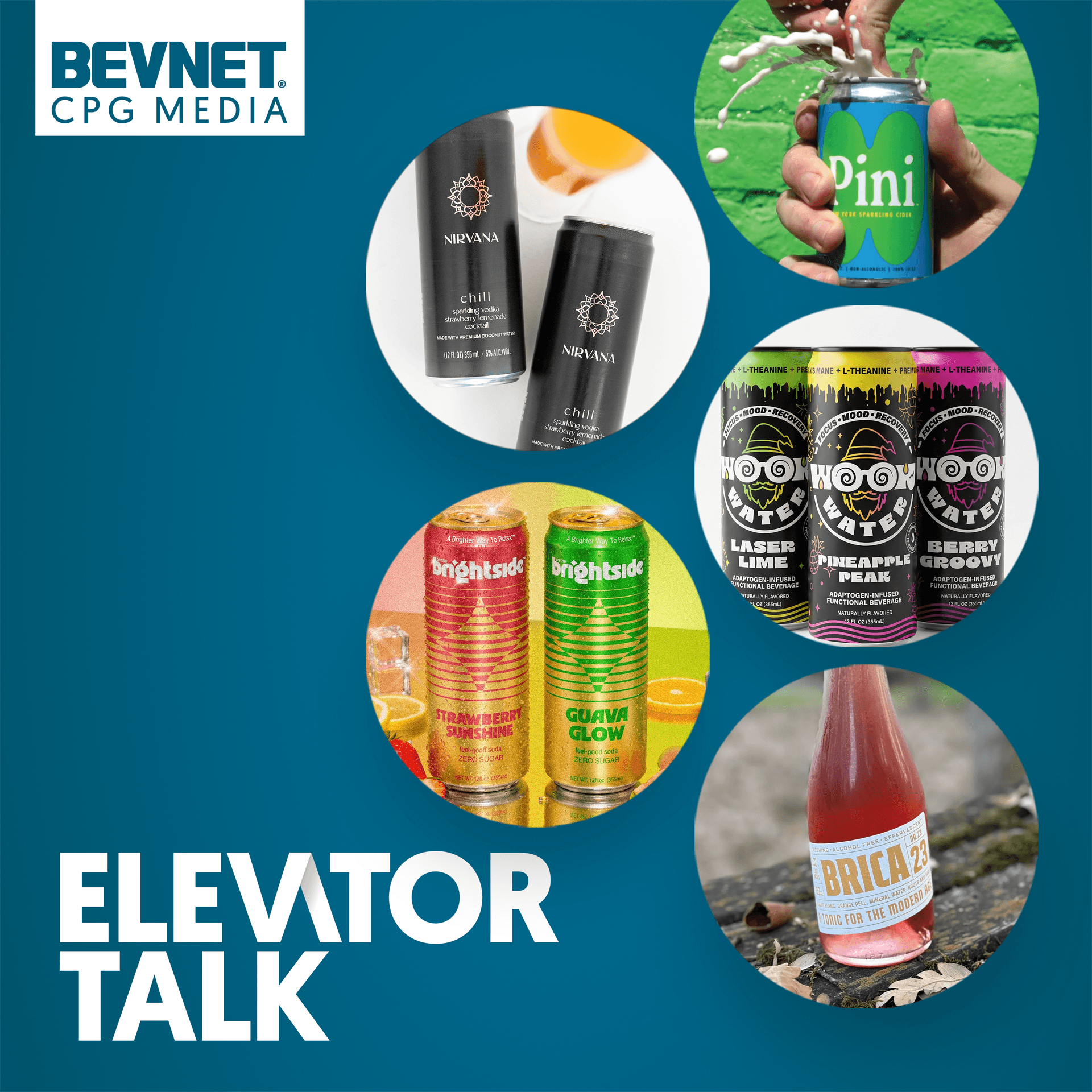
- Ken and host Ray Latif sample a range of drinks, including:
- Better-for-you sodas
- Cannabis libations
- Non-alcoholic cocktails
- Juice shots
Key Themes and Insights
- Trends in the Beverage Industry:
- Discussion on the evolution of cold brew coffee and its current market status.
- Non-alcoholic cocktails are gaining traction but may currently lack depth.
- Better-for-you sodas are emerging with innovative approaches to formulation.
- Consumer Preferences:
- Ken discusses the palatability and acceptance of various sugar alternatives (stevia, erythritol, allulose).
- Importance of package design and marketing strategies for positioning products.
- Investment Perspectives:
- Insights into Ken's investment philosophy and criteria for selecting beverage brands.
- Mention of successful brands like Olipop and their growth trajectory.
- Stresses the significance of strong relationships with distributors for brand success.
Sips of Specific Brands
- Chamberlain Coffee: Explored their formulation changes to meet market demands.
- Olipop: Discussed the brand's expected revenue and market placement.
- Parch and De Soi: Highlighted as innovative non-alcoholic cocktail brands.
Observations on Emerging Categories
- Cannabis Beverages: Potential for growth, with the right regulatory environment and consumer understanding.
- Better-for-you and Functional Beverages: Growing interest from consumers looking for healthier options.
Challenges in the Industry
- The complexity of navigating distributor relationships and market demands.
- The importance of understanding evolving consumer preferences to maintain brand relevance.
Conclusion
- Ken Sadowsky's extensive experience and insights provide valuable guidance on navigating the beverage industry.
- The episode emphasizes the importance of innovation, consumer trends, and the challenges of maintaining distributor relationships in a rapidly changing market.
---
Brands Mentioned
- Mountain Dew
- Chamberlain Coffee
- Olipop
- LifeAid
- Icelandic Glacial
- Recess
- Parch
- Seedlip
- De Soi
- Little Saints
- Milonga (Cannabis beverage)
Final Notes
- The conversation reflects the dynamic nature of the beverage industry, highlighting both established brands and emerging categories. Ken's perspective underscores the importance of adaptability and consumer connection in achieving success.
Written by AI. May contain mistakes. Listen to the episode to check what was said.
Transcript
Automatic transcript. May contain errors.0:10Hello friends, I'm Ray Latif and you're listening to the number one podcast for anyone building a business in food or beverage, Taste Radio. This episode features an interview with the legendary Ken Sadowski, a man who needs no introduction, but we'll give him one anyway. He may be nicknamed the Beverage Whisperer, but when Ken Sadowski speaks, he's heard loud and clear. A longtime industry advisor and investor, Ken is one of the most respected and influential leaders in the beverage business. He cut his teeth working with his family's distribution company based in Auburn, Massachusetts, and is currently the executive director of the Northeastern Independent Distributors Association, known as NIDA, a group of wholesalers that operate in states from Maine to Pennsylvania.
1:05Ken is also a senior advisor with Verlinvest, the Belgium-based investment holding company founded by the owners of Anheuser-Busch InBev, which holds stakes in Oatly, Vitacoco, and Hintwater. He's also personally invested in and an advisor to several beverage companies, including LifeAid, Icelandic Glacial, Recess, and Daila Brands. This episode is the third of a trilogy with Ken, who also joined us for conversations in 2016 and 2019. Surrounded by two dozen or so beverage brands, Ken and I sampled drinks representing fast-growing, bleeding-edge, and established categories, including better-for-you sodas, cannabis libations, non-alcoholic cocktails, and shots of the juice variety.
1:58As we sip our way through the various sized cans and bottles, Ken shares his perspective on trendy concepts, package design, formulation, his investment thesis, and successful go-to-market strategies.
2:16Hey folks, it's Ray with Taste Radio. Right now, I'm supremely honored to be sitting down with the one and only Ken Sadowski. Kenny, how are you? I am fine, thanks. It's really great to be here and always good to be sitting with you, sometimes better at Fenway Park and sometimes not. So happy to be here. Yes, we've been to a couple of games this season. Thank you so much for inviting me. Last game we were at was only a few days ago. Unfortunately, the Sox were not the victors in that contest, but great game nonetheless. It's always fun on a nice day to be in Fenway. Absolutely. Absolutely. Nice day to have you here in our basement at BevNet HQ in Newton, Massachusetts.
2:55And we're surrounded by products that you and I have invested years of our lives in. and that's just beverages in general. But I think we have about, I don't know, 15, 16 different brands, maybe more on the table here. And a few of them are from across the pond, as it were, in the UK. And then a few of them are based here in the United States. And I wanted to taste as we go and talk about some of the products, some of the brands, trends, categories, etc. But before we do all that, now, how many years is it that you've been in this business? Because your family And I know our listeners are probably familiar with your background, but your family started out in distribution, but you personally have been in the beverage business for how long?
3:39Well, I think my first paycheck in the beverage business probably came in 1983 before I graduated from college. I was hanging neon signs as a merchandiser at Atlas Distributing in Auburn, Mass., a town that you're very familiar with. Very familiar with, yeah. So yeah, I mean, it's a long time. By my count, that's 41 years, which is a pretty impressive run that you've had. Or embarrassing to say that I'm still doing this after this many years, but it's all been enjoyable. So yeah, let's go with it's been a good long run. Distribution, investment, advisement. You don't have a formulator though. I mean, you would think though that you have a pretty good palate at this point?
4:24I would say I have a relatively good palate as far as what the American population wants and will accept. And certainly it can be tricky as much as people read about the vilification of sugar, for example, and I'm a proponent of the vilification of sugar. You know, there are times when, you know, I still look at the sales of Mountain Dew and Coca-Cola, and it's hard to argue with the volumes that those guys are doing. But we are more focused at my stage of the industry and what you guys cover really well. What is the tip of the spear and how can this go from sort of the core consumer to the more consumer?
5:07So it's really fun to be at this stage of looking at all these cans and Tetras and bottles in front of us. I wouldn't make a direct comparison to you and the music producer, Rick Rubin, but I would say there are some similarities in that you understand what could be popular, what will be popular, what will sound good, what will taste good to the American consumer. And he has talked about this. I saw a segment with him on 60 Minutes and they asked him, the interviewer asked him, you know, how much do you know about production? How much do you know about mixing music and being on a soundboard? He's like, nothing.
5:44I don't know anything about that. It's kind of like formulation, right? It's like, I don't know how to formulate a beverage, but I can definitely tell you what tastes good, what's going to work, what's probably not going to work. Yeah, I would say that's a good analogy or anecdote about the comparison. Yes, I mean, I did get approached in the last couple of weeks about, you know, who do you know that can formulate these beverages? And I really don't even know that many formulators. I certainly know a few freelance formulators, but I don't have like companies that wanted to go into a private label thing that was in need of a formulation.
6:19Like it wasn't a raw material, for example, like a private label coconut water. You don't need a formulation there. It's just, you know, is there capacity at wherever you're looking to get the product? But this was a, well, one was a coffee and one was a kombucha. And so I really don't know. I mean, I certainly am one or two texts or phone calls away from getting to somebody. Or as they say in Rhode Island, I got a guy. But no, it's certainly not what I do. Is that a phrase specific to Rhode Island? I didn't know that. That was where I first heard it. I know a guy. Who said, did you say that to me at the Red Sox game?
6:58Yeah, I think so. I was just like, why did I hear that recently? It was like, oh yeah, of course, Kenny said that. And you said something earlier about sugar and, you know, the vilification of sugar. and how, you know, most RTDs these days are still formulated with a lot of sugar. I think marketing has a lot to do with that too. And I think just general education about how bad a lot of sugar is for you hasn't still somehow trickled down to a good amount of the American public. But the replacements for sugar, or at least the alternatives to sugar, can be very divisive from stevia to monk fruit to erythritol to allulose.
7:36It's all this interesting mishmash of sweetener systems that have divided a lot of people. Is there one that, you know, you would say has worked better than others? No, I think one of the differences to the sugar substitutes or non-nutritive sweeteners that you referenced or alluded to is like some of them don't stand up to ultra hot temperature pasteurization. So you can't use it in, say, an iced coffee RTD because it's got to be, even if it's HTST, high temperature, short time. There I am, you know, talking like I'm a formulator, but I'm not. But, you know, there are different sweeteners that hold up better to ultra hot temperature pasteurization than there are some that, hey, you know, we can do this because we've got a juice-based product.
8:31We're trying to cull some of the calories out. we're going to put a non-nutritive sweetener in there and we're going to produce it aseptically. So it's not going to have to stand up to the heat. So I do think there's a number of good non-nutritive sweetener alternatives. And then it just gets strange to me, like allulose being banned in Europe and allulose not being allowed in whole foods. Because some of the stuff that I've read says it's the best one of the ilk. And then there's obviously stevia that has evolved over time. The first one was Reb A, and don't ask me to pronounce the whole verbiage there, but, you know, they're now going down the alphabet and like Reb G and Reb M are certainly less bitter with less of that lingering aftertaste.
9:18So, I mean, there's a lot of stuff going on there and I'm fascinated by it. Obviously, you know, having my involvement with Hint, I think it's great if people can have no sugar. But then I think there's also brands that are out there that are just bright enough using regular sugar, but not, you know, copious amounts of regular sugar. And I see you looking at that Chamberlain coffee. And that was, I mean, that's a really interesting example because they went with Whole Foods preferred formulation and did this less sweet thing. They put the same SKUs into Walmart and Walmart agreed to it at the beginning and then velocity wasn't there.
10:02And so proactively, the leadership at Chamberlain went to Walmart and said, look, we're not happy with this. Let us brighten it or add sweetener, in this case, sugar. We think that's a better fit for your customers. And so far that has worked. It is such a strange thing because they have a button above the logo on this can of Chamberlain Coffee's Mocha Latte, which is made with oat milk. And it's a green circle that says, sweeter recipe. When have you ever seen such a thing? This is really interesting. Let's open this up, if you don't mind. No, I haven't tried it yet, actually. Kenny brought this over for us.
10:38You know, the brand I was thinking of, actually, when you talked about sugar and coffee, was a brand new one called Throne Sport Coffee that was founded by a former Vital Water and Body Armor executive, Michael Fideli, and is backed by the NFL superstar, Patrick Mahomes. People may have listened to that interview that we did with them on Taste Radio. But let's taste Chamberlain coffee since it's in front of us right now. Cheers. Cheers. I mean, it's great. It's still not as sweet as I expected it to be. I was expecting a much sweeter coffee, but this is great. I think it's well done. Yeah, it's got 13 grams.
11:18My eyes are going. 13 grams of sugar per 11 ounce can. These are slim cans, which isn't bad. According to the FDA, 13 grams of sugar, including nine grams of added sugar. Nine grams of added sugar is 18 % of your you recommend a daily value or allowance of sugar. Speaking of coffee, you know, cold brew was like the hottest trend. It was like kombucha, cold press juice, cold brew, like in the mid-2010s. That was everything. Those were the hottest categories. Cold brew coffee now seems to have, you know, hit the skids. I think there's a number of ways of measuring that. one of them certainly is what's in the stores.
12:02And they, you know, that, that category again, has sort of segmented or morphed because I remember the original ones were all concentrates, right? Right. And then it went to an RTD format. And yeah, I mean, it certainly could be said that what's going on at sort of MULO, meaning, you know, the, all the multiples is not growing as quickly as it could be or should be. And I do like the category in general. But then I think the other thing that has happened is places like Cafe Nero have gotten better at it. And even Dunkin' Donuts has gotten better at offering cold brew as an option when, you know, what I would say in RTG, right, a ready to go, not really a ready to drink.
12:43But I mean, people are buying it in cafes. That's a good point. In the multi-serve, I see more people buying multi-serve cold brew and just drinking in the morning, saving money, obviously, instead of going to a Starbucks or a Caffe Nero. And time. Yeah, and time. But the RTDs, the single serves, seem to be less popular, at least less distributed than they had been in the past. And it was like every week we'd see two or three new brands come to market. That's not the case anymore. The category where we are seeing two or three brands come out every week is in, can you guess? Is it prebiotic? No, good guess.
13:20Better for you, Soda. I think we're going to go there momentarily. But no, it's non-alcoholic cocktails. Non-alcoholic cocktails. Yes, AF, exactly. And I have a few of them on the desk here. Nice. And, you know, these are brands that have been around for a while, like a De Sois, like a Little Saints. And then there's relatively new ones like a Lappos, L-A-P-O apostrophe S, which makes a zero-proof Negroni, which is fantastic. I would be a fan of that. If done properly, I would be a fan and I might have a flask of gin with me for the next time. Well, let's open this up. And while I open it up, I'm curious.
13:58I mean, this is still the very early stages of a very bleeding edge category. And I think there's just a sort of gold rush land grab for a lot of these brands at this point. But does it have legs? I think the answer is yes. But right now, what I would say is there's more sizzle than steak. They need to find, they, meaning the category, needs to find their footing. I think there are still so many questions unanswered, like where do they go in the store? What stores should they be in? I mean, you guys have done a great job of covering the highs and lows of Boisson. And then different retailers are taking different sort of attitudes, like, you know, we're going to put them in with mixers.
14:42We're going to give them their own section in the beverage aisle. You know, Total Wine has a destination set up for them. I think there's still a lot of discovery that has to happen. And of course, I'm talking about sort of the traditional retail discovery. How are these people getting the message out at the right places? I mean, if you look at craft beer, 30, 40 % of it is done discovery in the on-premise. How does that have a place? and I remember the original presentation that happened at BevNet by one of the Distill Venture guys, Dan Gasper, and he talked about all the findings between the price point having to be the same.
15:24So these categories, irrespective of the cost of the ingredients, they have to be a price point where if people are going out and drinking together and they're going to, you know, split the bill up at the end of the night, the person that was drinking either bottled water or soda is going to feel like he or she got gypped when they have to pay, you know, one quarter of the bill if there were four people drinking. So they wanted Seedlip to be an elevated price point. And the other thing that they did was have it be bitter and complex in its flavor profile so that it didn't take 30 seconds to drink your drink.
16:03It took roughly the same amount of time. So I get the on-premise piece of this, but I think these RTDs in this alcohol-free category are really important for two reasons. One is discovery can happen at home or in an on-premise environment. The other thing is when you look at the 750 ml bottle as a form factor with mostly the mimics, I guess, that has a really limited shelf life. So you can't sell those to an individual at home unless they're coming home and drinking these and then putting it in the refrigerator because the shelf life, alcohol is the preservative in alcohol. And so if it's alcohol free, you've got a short shelf life situation to deal with.
16:45All good points. Let's toast to some Lapos Negroni. I mean, we've talked about this on the podcast. This is a really solid product. I do think, to your point about drinking it really quickly, is a good one. Because I can drink an agrony pretty quickly, but I try not to, for obvious reasons. When it's a non-alcoholic, I think you tend to drink it faster. And that's where the bitter component, I think, it kind of holds you back from just pounding it. But I think the bitterness in this is pretty great. They've done a really good job. It's a linger, and it's at the end. And it's not an old version of Stevia Reb A linger.
17:23it is really just the way a Negroni is supposed to be. So I nailed this. Yeah, it's made with organic cane sugar, gentian root extract, blackcurrant juice, concentrate, clove extract, bitter orange extract, and a bunch of other things as well. Yeah, as far as the Negronis that I've seen on the market, the non-alc Negronis, this one is top of the list. I haven't tried that many of them, but this one is really well executed And if I were a formulator, I would probably know what that flavor is that's that lingering bitter at the end. But I'm not. But you're an investor. And brass tacks, I mean, has anything moved you to be interested to write a check in this space?
18:09Full disclosure, I am a small investor in Parch. And I like the team and I like the liquid. And I just really, I enjoy the product. And the packaging is, they nailed it. But it takes more than just nailing all of the known scientific, if you will, metrics to make a great product. You need to have a little bit of luck to get to success. Did it help that one of the co-founders was a former executive at a big alcohol conglomerate? Sure. That helps with things like what not to do. Yeah. So, yeah, I mean, those were compelling things. But, you know, after doing several phone calls with both of them, it was one that I just said, this is worth putting a chip in.
18:55Although he's never been an entrepreneur before. Neither co-founder has, as far as I know, at least in the beverage industry. And even though you may have all the experience that you got at a big company, being an entrepreneur is a totally different experience, I would think. Does it give you pause, though, when you are talking to an entrepreneur that has zero experience versus some that has at least some experience in the beverage industry? I mean, I think there are so many places that one could pause that you could get into analysis paralysis and never write a check. So at some point you just have to bet on, you know, the project and the project is really led by the people.
19:37And then do you think they have the intestinal fortitude to survive all the hits that they're going to take on the journey? Because it's never just a straight shot rise to the top. Corporate America is good training. So I just think that in this case, I am definitely backing the people and the project. I hear from entrepreneurs all the time, successful ones, that naivete is great. They probably wouldn't have done what they did or bang their heads against the walls as often as they did if they weren't as naive as they had been. But I don't know any investors that have said naivete is a good thing.
20:17No, I think it is a component. What one can glean from big corporate America is good techniques, but one has to be more nimble when they're getting into this world. but the naivete of, you know, hey, let's not look at 17 different ways that this could wind up. Let's just say the way that we are thinking about this is the way it's going to play out. And when it does, it's great. And when it doesn't, if it doesn't, then you just want somebody that's got enough gray matter to either pivot and do something smarter or reach out to people who have done it before and get some insights. But every journey is different.
21:02And it's, you know, I get asked this question a lot, like, you know, when do I do this? And at what point do I do this? And I say, you're asking me like there's a textbook about how to succeed in the beverage business. And what my answer to that is, this is more of an art than a science. And my other answer is, if it were a science, someone smarter than me and before me would have written the book on how to get this done. Yeah. Well, there's been a couple of books written about the beverage industry, but each experience is very different. I think about Mark Rampolla's book and the Honest Tea guys with their book, both excellent reads, but very individual experiences.
21:41Some things you can pull from there and say, yes, these are very basic, fundamental things that you need to do to be successful. But at the end of the day, it is very much an individual journey as you take it. Can I put you on the spot for a second? Certainly. Okay. Our 2023, Bevanet's 2023 brand of the year. Do you know what that was? No. Prime. Oh. The brand that kind of came out of nowhere. That surprised a lot of people, a lot of analysts, a lot of other corporations. I mean, it's a Congo brands founded or at least run brand. It is Logan Paul and KSI, who are the quasi-founders of the brand.
22:18And it has just been a rocket ship until recently, until the last few months. and we published an Instagram reel, I mean, Taste Radio, that is, published an Instagram reel about the rise of Prime. And I think you left a comment on that that said, just wait. What did you see about Prime's potential for these declines that it's experiencing right now that I think other people did not, myself included? I would say it was twofold. One thing that I say is when a brand doesn't know how and why it got to those heights, it's really difficult to maintain those. When you've exuded discipline and, you know, used your findings to build a foundation, it makes it that much more sustainable.
23:09That's one thing. And then the other thing is my background is DSD distribution. And this brand was going through mainly DSD distribution but none of the distributors to whom I spoke had nice things to say about Congo. It was sort of, hey, these guys are, you know, while they're on fire, we are happy to distribute their product. And they were disappointed they couldn't get more product in the summer of 23, I guess. And then when the relationship is not that great, as soon as something starts going poorly, those same distributors are going to be like, I remember how they treated me and how they're still treating me.
23:52And they're not going to go the extra mile to get that extra display and do the things that make brands top of mind for consumers. Now, again, I don't want to be too much of a Jurassic answerer here because there is all kinds of social media and all the other things that digitally can keep a brand afloat and on fire and top of mind. So I guess I'm speaking about this more in the, what I see doing my store checks and traditional distribution. Keep your distributors happy is an important part of this business. And you just outlined very much why. Yes, Prime, huge hit among Gen Z, Gen Alpha consumers.
24:32Somehow the branding, the social and digital visibility of the brand has been huge. But yes, on a fundamental, how do I get this brand into stores? How do I support it on shelf? That's really what keeps brand on its rocket ship. From my past experience, which again, doesn't portend the future, but from my past experience, that is what it has taken to stay successful. And the other thing I would say that, you know, just speaking to some of my friends who had teenage kids, they were saying like, well, you know, they want to be in school with it in the netting part of their backpack. So they have one.
25:13but they don't care what's in it. Like they're refilling it with water if they can't get more. So they liked the liquid, but it wasn't the deal maker or breaker. It was, I just want that bottle. And that's not a great way of, you know, adding to revenue. Yeah. I mean, it was a mind blowing thing that people would be putting empty bottles or selling empty bottles of Prime on Craigslist and people buying them. Obviously they're not doing that now, But yeah, there will be a story, a study about the rise of Prime. And I wish them all the best. I don't want to be like, oh, you know, they deserve what they're getting or whatnot.
25:51But, you know, the rapid rise was something that no one expected, no one really saw coming. And hopefully they can reverse their current trajectory. Yeah, well, and Congo Brands is not a one-trick pony. I mean, the Alani New brand is doing well. I think the key for that brand is, can they move over to a more male consumer because they've been really high indexing female, but it's good liquid. And I think it just, you know, their opportunity is still there, but it's a little bit different than, you know, the isotonic category that Prime plays in. So, you know, I'm not talking at all about the health of Congo, but it is funny because as my sort of Verlinvest hat, last summer I got calls from people not in the U.S.
26:42asking me whether Prime was investable or purchasable. And I just said, I would take a big chill pill and wait a year and see where it is. And I think those people, I mean, they're not sending me thank you notes, but I think they should be. I was going to say, did they send you a check? Maybe they should have because you probably saved them quite a bit of money. Female consumers, it's interesting you brought that up with Alani Nu because that's kind of the secret sauce for Alani Nu is they found a whole new set of consumers that a lot of the big energy brands were ignoring. That's female consumers.
27:19And that's where the brand seems like it's very much targeted or who it's targeted for and who it's appealing to. and I think about some of the brands here on the table and I'm looking at, and there's a handful that I think kind of lean one way or the other, at least in terms of male and female consumers. But it seems like in this day and age, you kind of have to be gender neutral. That's the best approach to package design. I completely agree. I mean, I remember there was an energy drink called Her a while ago. And I just said, why do you want to alienate 50 % of the population? and it was very female focused.
Read the full transcript
27:58And look, maybe it was just ahead of its time. Maybe if it were launched today, it would be a competitor of Alani Nu. I just don't think that something that heavily leaning to the female side or the male side, but in this case, her is the female side. I just don't think it's investable, at least for someone like me. Like why alienate 50 % of your audience right off the bat, or I don't know, what's the number, 49 %? There's 51%. I think it's 51 females, at least in this country, yeah, and 49 male. That being said, I don't see many people buying, many guys buying the Olipop Barbie limited edition product, which I have in my hand here.
28:39I look forward to trying it. But yeah, I think, you know, what it conjures up images to me of if a guy bought one of those, because they really liked the flavor, then it would be like the old SlimFast can days where for every bottle of SlimFast that was sold or can, there was a brown paper bag in the same size commensurate volume. Now, half of our audience doesn't know what we're talking about because SlimFast is such an aged brand or old brand at this point. The category is existing and morphing and actually coming to more the fore with the GLP ones. But yes, before I get too far off the rails, let's come back.
29:19So we're going to hit two birds with one stone here because yeah i want to try this olipop i actually full disclosure i uh drank this when i was doing an interview with the founders of olipop ben goodwin and david lester uh hope everyone had an opportunity to listen to it because it's a great interview great conversation i shouldn't say i shouldn't pat myself on the back like that's ridiculous sure it was a great interview i enjoyed the conversation very much this is a peaches and cream flavor limited edition and let's try it. They did one of these in the past. It was a banana cream minions variety or a banana cream flavor associated with the, what was that?
29:55What's the name of that movie? It's not called Minions. No, it's, well, actually some of the corollaries were, some of the, you know, added ones, but yeah, what was the - I forget. I mean, they were in the first movie just going bee-doo, bee-doo. Yes, exactly. Yes, all right. So Olipop, Peaches and Cream, here we go. Well, I mean, just personally, I must say I'm impressed because I think that's the first time since my elbow surgery that I drank something with my right hand. I've been drinking with my left hand all day. It has nothing to do with the liquid. It's all about the elbow here. But you did drink the whole thing.
30:31Personal pride. You did drink the whole thing. I drank the whole thing of all of these. Okay. But yeah, look, the liquid tastes fine. I'm not crazy about the aftertaste, but the liquid tastes fine. Yeah, it's obvious there is a alternative sweetener in here, that of stevia. And I think stevia is the only alternative sweetener in here. Do they call out whether it's Reb A or Reb M or is it just stevia? It just says stevia with an asterisk after it. And the asterisk stands for extract. But there's a bunch of juice in here. So there's peach juice, there's apricot juice, there's cassava root syrup.
31:07So there's some of that in there. There's apple juice concentrate, lemon juice. So we know, obviously, not all the sweetness is coming from the stevia. But, I mean, talk about a rocket ship. Olipop is expected to do$500 million in revenue this year. They're a profitable company. They're distributed pretty much everywhere. They're in 35 ,000 retail locations. I'll be completely honest, Ken. I did not see this coming. Yeah, there are some categories that I just watch and wish them the best, but I am not going to be involved and didn't get involved in this one. So yeah, I mean, it's surprising to me.
31:51And I think they've done their build in a more sustainable way. And also, in this case, used their lack of shelf stability to their advantage because they got chilled placement wherever they went. Yeah, that's a really good point. But I think in general, the better for you soda category, the better for you sparkling beverage category, aside from the ones that have a functional benefit, is something that's been really interesting to watch. I mean, you know, the children of Olipop and Poppy, I guess you would say, are, you know, products like these. So Evolution Fresh, which is a longtime maker of cold-pressed juice products, recently introduced a new real fruit soda.
32:36I got to tell you, whoever painted their cans did not do a great job. They should get them. Evolution Fresh should get their money back. Good Lord, look at this thing. Well, it also looked like it had a hard time in shipping over here. The can's pretty dinged. Yeah, the can is pretty dinged. And I take it back. These do contain pre and probiotics. They have five grams of sugar. They're made with real squeezed fruit juice. And they're organic. They do contain stevia. Do you want to try these? Sure. Okay, let's try it. This is their tropical mango variety. It's a real throwback here. Orange mango, the Nantucket nectar special.
33:13Yeah. All right. So I have yet to try this. I saw this in my local stop and shop in Brookline. Smells good. Yeah, about two months ago. And I was like, haven't I seen these before? But I guess not. Ah, cheers. Smells really good. I would never describe this as a soda, though. No, I don't think so. It's sort of a, I guess I would call it a sparkling juice. But they have done a better job of mitigating that stevia potential linger. And again, I just wonder, like, when I taste something like this, oh my god no wonder you can't read it it's not hit well it's like they they missed yeah no the whole thing is blurred the whole can is blurred i don't know how they yeah that's uh it's a problem well i mean the night shift was drinking when they hit this one um well it doesn't say just it actually has the exact same verbiage as uh olipop yeah this one contains 18 juice again there's a functional benefit in terms of pro and postbiotics.
34:14You know, we saw recently Nixie, a brand of sparkling waters led by the founder of Late July, Nicole Dawes. A Tulane alum. Oh, really? I didn't know that. Go Tulane, yes. Yeah, yes. And a New England resident as well. And her dad started Cape Cod Potato Chips. Yes, indeed he did. She's legendary. Yes, Nicole's amazing. But there's a lot of people jumping into this pool. It just seems like the holy grail of categories is finally here, perhaps. I mean, there was always this, oh, is kombucha going to replace soda, declining soda sales? For a time, it was the craziest thing, and I was always poo-pooing this.
34:55Oh, you know, drinking vinegars, drinking vinegars are going to be, you know, take a big bite out of it. Come on, man. But now, low-sugar, mid-calorie sodas seem to have gotten a foothold, seem to have gotten a lot of interest from the strategics, feels like it's here to stay. Again, I wouldn't go that far. What I would say is that when the industry was really focused on the kombucha and really focused on several other things that were not sweet, what I said was if the youngest consumers coming into this category are educating their palate into something other than sugar, and it could be sour and it could be bitter.
35:38And I think those are all things that will help the next generation not need GLP-1 drugs if successful. I was optimistic. I can't say my level of optimism is still there. I think it's still Americans go back to they'll talk dry and drink sweet. So those things that you mentioned before, they've had a moment and I don't know if that moment has paused and then we'll take another leg up, or if it will sort of say that, hey, we reached our apex, we've got our zealots or our core consumers, and we never transferred to the more consumer. So it will be interesting to see. But again, I was optimistic about Americans using other parts of their palate to get away from sugar.
36:29One beverage category, emerging beverage category, that I am not a consumer of, so I wouldn't know how much sugar is in it, are cannabis beverages. Cannabis beverages as a category seems to be one that a lot of people are paying attention to. More and more consumers seem to be interested in, especially obviously in states where you can buy it legally and you don't necessarily, in some places don't even need to go to a dispensary to buy it. Minnesota. Yeah. Are you a cannabis consumer? I mean, is that too personal to ask? It's not too personal to ask and without trying to sound like Bill Clinton, I don't think I've had any since it was legalized.
37:06You're an illegal consumer of cannabis. That's right. Okay. Let's talk about college. You know, I have a couple here on the table. Let's pull a few. First, we have Milonga, which is a hemp-infused tea. It's a yuromate-based tea that's made with five milligrams of THC and five milligrams of CBD. Remember when CBD was a thing? Oh, yeah. Well, look, I'm still an advisor to recess, so I don't think that's over. And I still like that founding team and founder. But I did an interview with Ben Whitty a couple of weeks ago, or at least we published it a couple of weeks ago. And he told me that CBD is about 5 % of the business at this point.
37:48Most of it is their magnesium drinks, or it's coming from their magnesium drinks, and there's zero proof that you're holding there. This island spritz variety, holy moly. I've not tried that one yet, actually. Yeah. Let's pop it open. Perfect. After you tell me about this malanga. I guess what I would say is I do... Oh, it's not cold. I'm sorry. Yeah, no. Well, actually, that's the way things are supposed to get tasted because the closer the temperature is to ambient, the more flavor comes out. So when I'm tasting something, like if I'm literally an investor in it, I may drink it cold the first time.
38:25The second time I'm having it ambient. Yeah, I've known you for a long time. I never knew that that's what you do. Interesting. Yeah, the liquid tastes fine. I'm not getting a whole lot of acai or mint. That is the flavor that they're promoting there. But I can tell, I guess, that it's a yerba mate derivative. I don't think I would say, you know, this tastes like a guayaki or a yerba, but I know it's not the raison d 'etre, if you will. So the five milligrams, I have no idea what that does. I'm not drinking the whole thing, so I'm not going to find out. But I mean, the liquid is fine. There's no stevia linger.
39:03There's no, I mean, there's nothing offensive about this. It's definitely drinkable or sessionable or whatever term you want to use. This is the second interview in a row. I did one with Taylor Foxman earlier this week, and we talked about cannabis beverages. And I brought up a tweet that someone who is a beverage observer and advisor posted, I don't know, it was a few months ago. And he had said, beverages will be the most consumed medium or, I don't know, product. Delivery system. Delivery system for cannabis in the future. Beverages will be the way that most people consume cannabis in the future.
39:47and John Craven, our founder and CEO of BevNet, doubled down and said, yes, I agree. Would you agree? I'm too stupid to agree. I see the reason for that statement and I understand sort of the extrapolation because the beverage aisle is the busiest aisle in a supermarket. And I guess I completely understand it. And I also, you know, I get that, like, I'm also an advisor and investor in Nulixr, for example, which is a nano encapsulation. So I do know that the technology exists to keep the efficacy, like really honed in. And I think that's one of the things that is good about this industry is they're taking a laser focus on, okay, we're going to deliver this much.
40:40I don't know if that's analogous to a gummy or, you know, something like whether it's a bud or pre-roll or whatever. So I just don't know if those things can be honed in on. And if the occasion, you know, is legal, like if Massachusetts, you could walk into a bar and order one of these, and you know what the onset is going to be, like this is five milligrams, you are going to feel it in 15 minutes. So you're not going to have three of them in 15 minutes and then go, I can't feel my legs. So look, I get the rationale. I don't know enough about it to opine intelligently. Fair enough. But it seems like there is a big opportunity at just how big and how many people are going to partake in that opportunity as well.
41:23I mean, I, for, you know, for someone who drinks beverages for a living, essentially, I'm still still on the fence. I get it. I mean, I've never consumed an entire one to get the experience. I've tasted them as a judge of the showdown or just now. But I mean, I've never bought one. I've had stuff sent to me. I think the first one I got sent to me was Louie Louie. And it came with a really big warning. Like, this is not soda. Yeah. Louie Louie is a British brand, isn't it? Is it based in the UK or am I wrong? I don't know. No, I think it's here. Yeah, I saw it. There was a Bevanet event that we did with Snackshot just before Expo West 2022.
41:59And that's the first time I saw that there. You brought, I mentioned the UK, you brought a bunch of stuff from the UK. I want to sample a few of these. Okay. The thing that stood out to me, going back to soda, living soda. This is first, F-H-I-R-S-T. And actually, you know what? I think I have tried this and I do like it. So maybe we don't need to open this just yet. But there is a lot of copy on the back here. If I had to guess, there's probably 400 hordes of copy on the back of this can. It's just too much. I'm sorry at first, but it's too much. Yeah. Well, look, I like the liquid. I met the guy at BevNet Summer 23, and he's got a good head on his shoulders.
42:42And then his London-based chief operating officer or general manager is the sister of the guy that ran Vitacoco in the UK when we really started flourishing. So this is Pip Brooke and her brother Giles were just stellar, you know, for the Vitacoco brand in the earliest days. She was a marketing person for Giles and for us at Team Vitacoco. And so I would definitely always try to support them. That almost sounded a little Spaceballs-ish, you know, my sisters, brothers, cousins. Luke, I am your... Quick break. If this episode has you thinking about what's next in food and beverage, explore BevNet and Nosh Insider, our subscription platform with deeper insights from the BevNet team.
43:33Visit TASTERadio.com slash insider to learn more.
44:03as the icon underneath the logo. The functional benefit is listed underneath the product type. It's described as Focus and Energy. It's made with Lion's Mane, Cordyceps, Reishi, and Chaga. Shake that first, yeah, for sure. 90 milligrams of caffeine. It's in an 11-ounce Tetra Pak. Yeah, this one was introduced to me originally from Chris Jordan, who learned to brew coffee from Alfred Pete. So he's got Pedigree. And then Brian Lovejoy, who's another, you know, he was a coffee sharpshooter for Calafia. And then they're both advisors to Jody Hall, who is the founder of this brand. And I did a call with them yesterday, but I had to admit, I still hadn't tried the RTD.
44:53Now they do have, let's see if I have this in my pocket. I'm not sure if I brought it, but they have sticks. I do have it. So they have these, and again, I've been carrying this around, and I haven't added it. I have 29 more of those, so you may have that one. Okay, thank you. This is a Mushroom Super Boost. It's a powder packet, it's five grams, just like you would normally see in these types of little powder packets. The RTD itself is fantastic. Really like this. It's less viscous than you might expect from a latte, but I like it a lot. she's a former Starbucks employee, did 11 years under Howard Schultz in the early days.
45:34And she has gotten one of the Starbucks formulators, the one who did both Via and Frappuccino originally. Okay. Again, there's some serious credibility there. And then I spoke to her over a year ago, and then my call with her yesterday was because of Mark Skorheim, who is, we call him Marky Mark, And he was the, I mean, doesn't take no for an answer sales guy that got Calafia barista blends in all the third or fourth wave coffee shops on the West Coast. He's a San Fran native. And that's where everybody that's in the best coffee shops in San Francisco knows Marky Mark. And so Marky Mark has just come over to this brand.
46:19And anything that he's involved with, I will at least give an ear to. Interesting. Well, I guess I won't be surprised if I start to see this in my local natural retail chains. I don't want to keep you here all day, Cam. I could stay here all day. I know. I feel like we've been talking for almost an hour. It's flown by. Loom, you brought these as well. Yes. These are two plastic bottles products, 12 ounces per plastic bottle. L-O-O-M is the name of the brand. We have one variety that's called Moon Punch. Another that's called Cosmic Candy Grape. Underneath the flavor names, it actually tells you what it is.
46:57It's a juice-infused water beverage. Cosmic Candy Grape. Let's give this a whirl. And this is another one that, you know, it's brand new. And all I can tell you is I'm rooting for it because the founder or one of the co-founders, I think the founder is a NIDA member, Billy Butchrom of it. And a nice young man, smart man in this beverage space. And he's also got one of Carol Dollard's sons working with him. And Carol was the one that formulated all of the vitamin water flavors. And she is a master of this field. And that's why I say, like, I'm not a formulator, but I have people, I got a guy. In this case, it's obviously a girl or a woman.
47:43But to be clear, this is not a British brand either. This is based in New Jersey. Yeah, this company is based in New Jersey. Whether it's shameless self-promotion or just shameless promotion, this one is I want to help my friend from NIDA out. So if I'm being totally honest, I love the flavor. The aroma is not my favorite. The aroma smells a little medicine-y, but the taste is fantastic. Yeah. Well, and I mean, I guess what I would say to that is this is a first run. They are ready for prime time. The other thing is you don't get much nose if you're drinking out of the vessel itself. Ah, good point.
48:27We're drinking out of large cups here. So you want to try the Moon Punch? Of course I do. I love Fruit Punch. Everyone knows this who listens to Taste Radio. I'm a Fruit Punch fiend. I assume that's what we're going to get here is some sort of Fruit Punch flavor. More like a tropical punch. yeah this one this one's really solid no nose issue to me on no not on this one yeah this one's really good really really good well done well done loom indeed you had a shot you had a turmeric shot there too this is a guy named thomas he's a former pro football aka soccer player from london my mind immediately went to pro wrestling when you said pro okay so this is, where is this from?
49:15London. Okay. Handmade in the UK. It is a, I believe it's a two ounce shot, 60 milliliters. I think that's two ounces. The Turmeric Co. I like that. Yep. And the ingredients are watermelon. Would not have expected that. Organic turmeric, pineapple, lemon, vitamin C, flax oil, and black pepper. No sweeteners, artificial sweeteners or water. No water in It's interesting. Okay, let's try it. 35 milligrams of, no, 35 grams. Is that right? Yeah. 35 grams? It's crazy. This is really a functional product. And you may have the entire thing if you want. I'm a fan. No, no, I'm a fan. I'm drinking one a day.
49:59I came home with like almost 80 of them in my suitcase. Okay, thank you. It's good stuff. And he's looking for investment. and I haven't pulled the trigger yet on an investment, but this is good liquid. I really do like it. I love shots. I love juice shots. I love turmeric shots in particular. Fantastic. It's really good. Yeah, this is really good. The bottle type is a little bit wider than the slim ones that you typically see in store. It'll give it more visibility if you can actually get it into the stores. But that set has always been kind of weird because the question about shots is, well, how do you merchandise them?
50:37Where do you merchandise them in store? In Whole Foods, there's two places. Where I've seen is sometimes with juices, sometimes with fresh cut fruit and guacamole and things like that. And then most often you see them in the, what's it called? The living section of the store, what's it called? In Whole Foods? Yeah. Oh yeah, it's in Whole Body. Whole Body, yes. The Whole Body section of the store. But this is fantastic. I would love to see them. And it's pretty straightforward, the turmeric company. So you know what this is. And, you know, just to peel back one layer of the onion that might be too much for non-industry observers, but what you're articulating when you talk about where you see it in the store has to do with the category manager that's buying that product.
51:21And then the fact that if a product sells well, category or the product, it might not be in the brand's best interest to remain in that spot, but that category manager doesn't want to give up the revenue. It's like, hey, that's the best turning space I've got in my section. That's a fascinating game that gets to the next level for these entrepreneurs. Like, how do we show that we're thankful to the people that gave us a start, but we really have to grow up now and go to the big leagues and get to a different part of the store? So you articulated that. You said I was articulating that. I was rambling about that.
51:57But I appreciate the fact that you articulated that. I want to talk about one brand that you recently aligned with. That's Icelandic Glacial, which is a brand that's been around for at least a couple decades, hasn't it? Yes. You know, I understand it. And Reza Mirza, who has been a longtime beverage veteran, is a great guy. Spoke at BevNet Live, summer 2024. But your interest in a bottled water company, I didn't see it coming. Well, I mean, it's a huge category, right? Sure. And I think it's a huge opportunity globally. And I was really fascinated by the entire setup, meaning I've known Christian Olofsson for a while.
52:37Who's the founder of the company. Yeah, and lives in Miami. And it's good to be able to get together with him just to talk about the industry without the entire board listening and watching. but it's also, I've been coaching Reza for about a decade and they had, this brand had no funding. Now they've got funding. And so it was really Reza that put my name up for consideration to the board. And I was happily accepting of the board seat because, you know, Reza was like, you've been doing this for 10 years anyway. Now you can do it at the board level and actually get paid for it because we're funded.
53:19Being funded makes a big difference. And having access to capital to help you and your brand scale is critical. And I think that's kind of the weird catch-22 about working with investors. They're like, yes, we want to be involved. Or advisors, whether they're on the board or otherwise, is yes, we want to be involved. but I think they're more inclined to be involved if you have a foundation that is funded appropriately. Again, that being kind of a catch-22, I mean, when you are looking at or evaluating a brand that doesn't have any money, that's a great brand, great leadership, but for some reason they can't raise capital.
54:00Is that a red flag for you? It's certainly an amber flag or light. It's not necessarily a red flag because I've been really fortunate in my career so far, and I like rooting for the underdogs, and I like helping out the people when and where I can. I do a lot of sort of pro bono, you know, consulting or time with brands, some of it under the auspices of kicking the tires for something that Verlinvest may want at some point to invest in, but some of it just because when I was at the bottom end of this journey or category or where I was in my career, there were veterans of the space that were generous with their time that helped me get to whatever level I'm at now, which, you know, is arguable is not too much further up the rungs of the ladder.
54:56But anyway, I feel like I've been fortunate. So I feel like it's incumbent upon me to give back. But then I guess just to sort of reel this in and tie it back, you know, what I do is I sort of say in my head, I have X amount of investments, and I'm going to make a certain amount of time for either I'm going to give them cash and then free time so that I can hopefully coach them into success. But I also know that I can't have more than one or two of those at the same time. So if a proverbial ankle biter were to come to me today, I have zero bandwidth. You know, now that could change. One of the companies that I'm involved with could go out of business and then, you know, I'm not helping them, but they're not taking up any time either.
55:43And then I guess the parenthetical answer to your question is when people say to me, I'm a sheer startup, but we need your expertise. I say, well, look, here's my day rate for consulting. And I would tell you, I'm not the best use of your money. So just, you know, get out of this sort of stage that you're in now or phase that you're in now. And if you succeed now, then we have something to talk about. Sorry for the long answer. No, it's a great answer. And I think people who are listening appreciate that answer because it's straightforward. And one of the things I've always appreciated about you, Ken, is that, yes, you are careful about your answers, but they're straightforward answers.
56:25I think you're not holding back on how you feel about a category or how you see, you know, founders succeed or what makes a brand work. And that's why I was really happy that we could have this opportunity to sit down today. Once again, thank you so much for being on Taste Radio. And we got to do this again, obviously, as soon as we can. Yes. Well, thank you for having me. It's always an honor and a pleasure to be here. Thank you. No, thank you. That brings us to the end of this episode of Taste Radio. Thank you so much for listening. Taste Radio is a production of BevNet.com Incorporated. Our audio engineer for Taste Radio is Joe Cratchy.
57:06Our technical director is Joshua Pratt. And our video editor is Ryan Galang. Our social marketing manager is Amanda Smirlinski. And our designer is Amanda Huang. Just a reminder, if you like what you hear on Taste Radio, please share the podcast with friends and colleagues. and of course we would love it if you could review us on the apple podcast app or your listening platform of choice check us out on instagram our handle is bevnet taste radio as always for questions comments ideas for future podcasts please send us an email to ask at taste radio.com on behalf of the entire taste radio team thank you for listening and we'll talk to you next time
57:52Thank you.
From the publisher
He may be nicknamed "The Beverage Whisperer," but when Ken Sadowsky speaks he's heard loud and clear.
A longtime industry advisor and investor, Ken is one of the most respected and influential voices in the beverage business.
Ken is currently the executive director of The Northeastern Independent Distributors Association, known as NIDA, a group of wholesalers that operate in states from Maine to Pennsylvania. He's also a senior advisor with Verlivest, the Belgium-based investment holding company founded by the owners of Anheuser-Busch InBev, which holds stakes in Oatly, Vita Coco and Hint Water. Ken is personally invested in and an advisor to several beverage companies including LifeAid, Icelandic Glacial, Recess and Dyla Brands.
This episode is the third of a trilogy with Ken, who also joined us for conversations in 2016 and 2019. Ken and Taste Radio editor Ray Latif sample drinks representing fast-growing, bleeding-edge and established categories, including better-for-you sodas, cannabis libations, nonalcoholic cocktails, and shots of the juice variety. As they sip their way through a mish-mash of beverages, Ken shares his perspective on trendy concepts, package design, formulation his investment thesis, and successful retail strategies.
Show notes:
0:35: Ken Sadowsky, The Beverage Whisperer – Ken and Ray engage in some Sox talk before they dive into a mass of beverages, foreign and domestic. Ken talks about cutting his teeth back in 1983 and his ability to understand what brands have what it takes to go from "the core consumer to the more consumer" and why he's not bullish on non-nutritive sugar alternatives. They sip on some Chamberlain Coffee and chat about how the cold brew coffee category has morphed and whether non-alcoholic cocktails are – at this point – more sizzle than steak. Ken also explains why he's a fan of entrepreneurs with industry experience and why it's important to be nice to your distributors, before sipping on Olipop's limited-edition Barbie collaboration and sharing his take on the future of better-for-you sodas. He also admits to being an "illegal cannabis consumer" (not really), why you should sample beverages warm, getting retailers to merchandise your brand in two locations and the Catch-22 of fundraising.
Brands in this episode: Mountain Dew, Chamberlain Coffee, Throne Sport Coffee, Vitaminwater, De Soi, Little Saints, Lapo's, Seedlip, Parch, Honest Tea, Prime, Alani Nu, Olipop, Slim Fast, Poppi, Evolution Fresh, Nantucket Nectars, Nixie, Late July, Cape Cod Potato Chips, Milonga, Recess, Magic Cactus, Alldae, Guayaki, Yerbae, Louie Louie, Fhirst, Wunderground's Brain Wash, Califia Farms, Starbucks, Loom, The Turmeric Co., Icelandic Glacial