In short
Taste Radio Episode Notes
Episode Title Straightaway 'Runs Its Own Race.' It's Why Costco & Shake Shack Came Calling.
Episode Description In this episode, Cy Cain, founder and CEO of Straightaway Cocktails, discusses how his Portland-based brand is navigating the ready-to-drink (RTD) cocktail market by focusing on quality and sustainability. The episode delves into the brand's growth strategy, partnerships, and commitment to craft cocktail culture.
Key Highlights
- Introduction to Cy Cain and Straightaway Cocktails
- Cy Cain shares insights on his journey and the ethos behind Straightaway Cocktails.
- Emphasis on bar-quality cocktails made from in-house ingredients and sustainable practices.
- Growth Strategy
- Straightaway Cocktails aims for thoughtful growth instead of chasing trends.
- Focus on creative R&D with limited releases and direct-to-consumer exclusives to gauge consumer preferences.
- Quality over Flashy Branding
- Cy stresses that quality should be the hallmark of every food and beverage brand.
- Highlights Straightaway’s commitment to authentic cocktail-making, including in-house production of bitters and syrups.
Key Concepts
- Innovative Approach to RTD Category
- Cy compares innovation to Formula 1, where testing bold ideas leads to breakthroughs.
- The importance of a patient, craft-centric strategy in a crowded market.
- Strategic Partnerships
- Collaborations with major retailers like Costco and Alaska Airlines.
- The advent calendar collaboration with Costco enhances brand visibility and consumer engagement.
- B Corp Certification and Sustainability
- Straightaway is among the few B Corp certified distilleries, committing to environmental and social standards.
- Cy discusses the impact of using local ingredients and supporting nearby farms to create authentic flavors.
- Consumer Engagement and Brand Awareness
- The significance of getting products into consumers' hands to drive brand loyalty.
- Aiming for regional exposure before expanding nationally.
Notable Brands Mentioned
- Straightaway Cocktails
- Stumptown Coffee
- Smith Tea
- Jacobsen Salt Co.
Discussion Points
- Consumer Preferences
- The shift in consumer interest toward quality cocktails and RTDs.
- Need for retailers to adapt their offerings to meet consumer demand for better products.
- Marketing and Storytelling
- The importance of narrative in brand communication, showcasing authenticity and craftsmanship.
- Cy's insights on how to convey their brand story through social media and direct consumer engagement.
- Innovation and Product Development
- The balance between innovating new products and maintaining focus on core offerings.
- Cy mentions their structured innovation cycle to identify market gaps and consumer interests.
- Future Aspirations
- Excitement over recognition in spirits competitions.
- Plans for expanding partnerships and maintaining the brand's commitment to quality and sustainability.
Conclusion Cy Cain’s dedication to craft cocktails, sustainability, and thoughtful growth positions Straightaway Cocktails uniquely in the booming RTD market. The brand’s focus on quality, strategic partnerships, and community engagement is setting a standard for the industry.
---
Contact Information For feedback or sponsorship opportunities, reach out to ask@tasteradio.com.
Share Your Thoughts If you enjoyed the episode, please share it with colleagues and friends, and consider leaving a review on your preferred podcast platform.
Follow Us
Stay updated on social media
[Instagram - BevNetTasteRadio](https://www.instagram.com/BevNetTasteRadio).
Written by AI. May contain mistakes. Listen to the episode to check what was said.
Transcript
Automatic transcript. May contain errors.0:10Hello, friends. I'm Ray Latif, and you're tuned into Taste Radio, the leading podcast for entrepreneurs, makers, and innovators, and innovators, and innovators, creators,
0:26and innovators, is taking a radically different path, embracing the hard way. In this episode, founder and CEO Cy Kane reveals how the Portland-based brand is carving out a distinct space in the booming ready-to-drink category by prioritizing bar-quality cocktails crafted from in-house ingredients and held to uncompromising standards. Sai outlines a strategy rooted in deliberate, thoughtful growth rather than chasing viral trends. He dives into the brand's innovative approach to creative R &D, leveraging limited releases and direct-to-consumer exclusives to experiment boldly and gather insights that shape future core offerings.
1:17He also highlights how investments in in-house production, B Corp certification and sustainability efforts, alongside strategic partnerships with Costco, Alaska Airlines and Shake Shack, demonstrate that a slow, craft -centric mindset and a strong brand identity can make a powerful impact in even the most crowded markets.
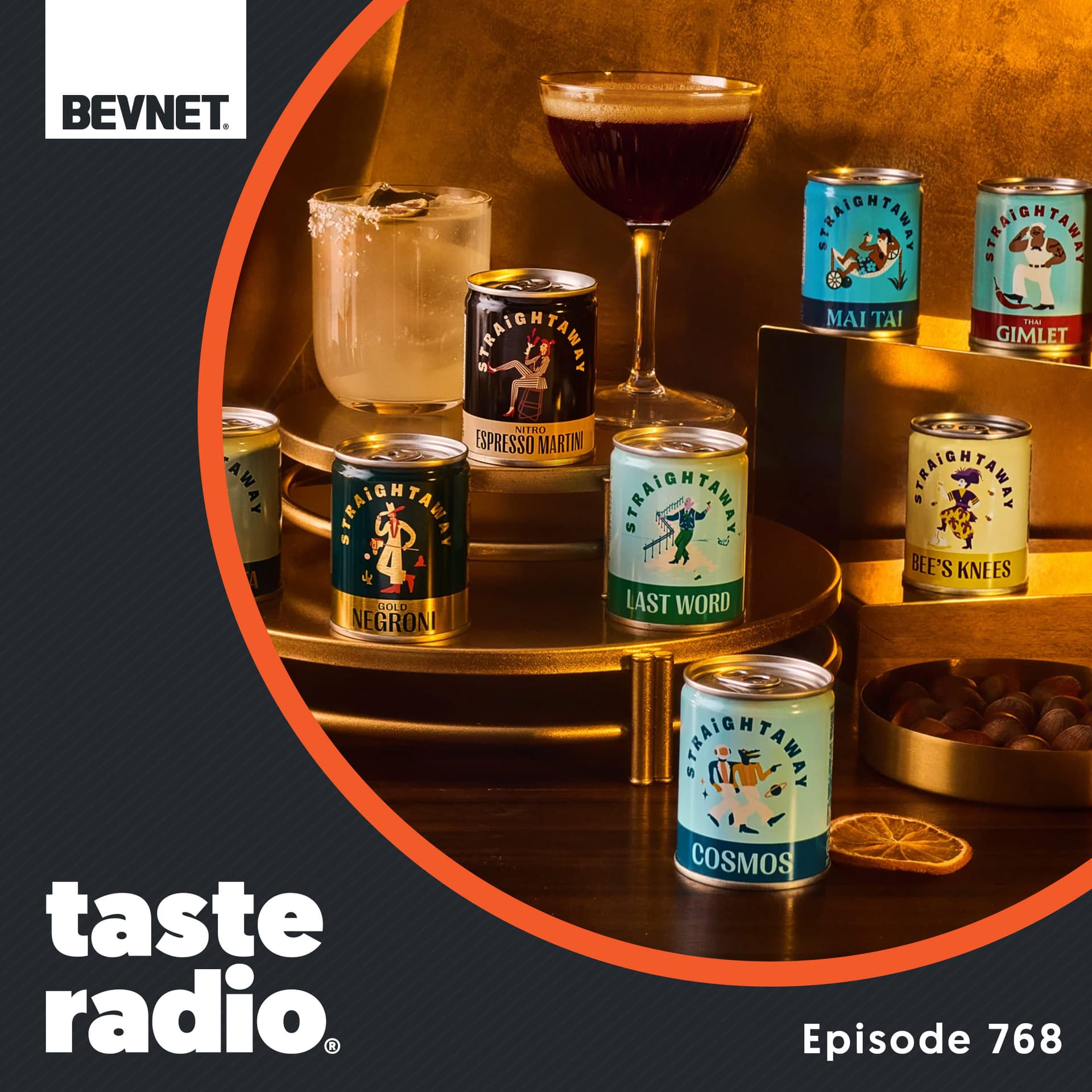
1:43hey folks it's ray with taste radio right now i am supremely honored to be sitting down with cy kane who is the founder and ceo of straightaway cocktails cy it is so great to see you great to see you ray thanks for having me back really appreciate it yeah we're in san francisco and t-minus i want to say three or four hours no less than that oh my gosh like two and a half hours from our Taste Radio meetup out here in the city. And you know what? This is like Christmas for me because not only did you arrive here, you arrived here with a whole bunch of new products. You've got a French 77, you got a Piccletini, you got a Last Word, a Cosmos, a Gold Negroni, and then you got something else.
2:24You got a few other things that I think are still under the wraps as it were. Yeah, yeah. I wanted to let you be the first to see a lot of this innovation that we've been working on. And we're in year two of a really fun program we get to do with Costco now annually. It's our advent calendar. And we introduced some new drinks in that calendar that just hit shelves the last two weeks in Costco's across the country. We had the advent calendar. We talked about it in an episode of the podcast. I think it was around October of last year. And I remember Jackie, my co-host, was like, hey, what am I going to get one of those?
2:58You got to go next door to the Costco next to the San Diego office. And I think you guys were so gracious in sending her one, but I'm just continually amazed by what Straight Away does when it comes out with new products, because they're fun, they're exciting, they're differentiated, and they're so high quality. And before we hopped in the mics, we talked about that emphasis on quality as being the hallmark of the brand. I don't know why it isn't the hallmark of every brand. Why isn't quality first and foremost in your mind if you have a company? Yeah, there are a lot of different ways to go to market.
3:35You see it in every mature CPG category. There's things that are entry-level, price points, mid-tier, and then the premium set kind of fills in the rest. And there's players and reasons for all those things to happen. And from our perspective, we came at this from a standpoint of just being deeply in love with cocktail culture and enchanted by it. We were starting, my co-founder and I were making cocktails 20 plus years ago at home. And my roles would take me all across the country. I'd belly up to bars, ask bartenders a million questions, go back and faithfully try to recreate what they were doing, ask why this gin with this vermouth and all those questions.
4:12And I think from that standpoint, we only thought about this through the lens of liquid first. How do you honor the craft of cocktail culture? How do you, if a great bar is going to, the team's going to show up for hours earlier and fresh pressed lemon juice, well, that's what we were going to do. So they're going to make their own bitters and simple syrups. That's what we were going to do too. And I think from the jumping off point, that was the only way we ever thought about doing this. And if you approach it from a liquid standpoint, first packaging is secondary. I think because this category proliferated so quickly, packaging became the first kind of trigger for a lot of brands where it's like, okay, liquid second, I know how to run 355 mil cans or whatever it is.
4:55and I end up making a 12-ounce margarita at 15%, which isn't, that's fine. Like that should be on shelf for consumers to try, but it isn't coming. If you walked into a great bar, if we walk into Trick Dog or True Laurel down after we're done with our interview here and have a drink, you're gonna get a three-ounce pour, three and a half ounce pour. And so we follow the true format of how cocktails are built. We think about ourselves as a cocktail bar instead of a packaging company. And I think that lens and that North Star has served us well throughout. Last time we spoke, the episode that featured the interview was called Step One to Winning a Gold Rush?
5:36Do this straight away. I don't think it's a gold rush anymore. It's very clear that this category isn't about hype, that this category is real. It's founded in consumers' desire to have a better product, a better cocktail, and have one that's convenient and really high quality. What's changed in these past few years where finally consumers have woken up, retailers have woken up, food service operators are identifying this as a potential category for growth or at least to create incremental value? Yeah. Yeah. Yeah. If you look at the other categories, like the original RTDs were beer and wine and you throw spirits in there too.
6:14Those were all categories that grew incrementally. Our category has erupted overnight in the last seven to eight years, really. And I think because of the eruption, because of the explosion, there was a proliferation and consumers had to sort through who's serving their palate. And that happens organically. I think it happened over a longer period of time with beer and wine where people over decades can figure out what was their favorite beer, what was their favorite wine. Here, consumers are having to figure it out really, really quickly. Big retailers, you know, their category reviews and their sets are maybe annual, sometimes twice a year.
6:50And planograms take a long time to shift. If I'm a beer or wine buyer at one of these big retailers and beer and wine is kind of trending down or softer than it used to be in favor or in lieu of cocktails, it takes a long time for those planograms to get changed or reset. So I think we're seeing that now. I think you see retailers sinking their teeth into it, distributors sinking their teeth into it, and the brands that are here to stay, you know, are sinking their teeth into how to keep growing this category together. Yeah. And the consumers that have been buying straight away are in the know.
7:24Seems like a really important part of this journey, a part of this growth is enhancing awareness, getting the product into more places, into more hands, and sometimes in unexpected places. Alaska Airlines is a really good example. They carry your old-fashioned and your margarita. I was so lucky to fly Alaska from Boston to San Diego earlier this week, and I was just really, really happy that I did. But how are you getting the word out? I mean, what's helping build awareness for straightaway in particular? Because as we've talked about, there is consumer interest for sure in better cocktails. But how do you get the word out about your brand specifically?
8:08How are you getting more retailers to say, I want straightaway in my stores? Yeah, that's been a really interesting thing for us. And I'm not going to say we're the tortoise and others are the hare per se, but we've been really hyper-focused on perfecting our craft and our art. We're a small team. We're a self-funded organization. And so you can't just broadly go flip the switch and you're national the next day. You have to incrementally build your brand and opportunities for people to interact with it. And the Alaska partnership started three years ago and has been amazing for us. And 50 million passengers are on those flights and they're looking for something, you know, really interesting to drink on that flight.
8:49And I think for us, it's been a really great opportunity to introduce ourselves to the market in a grander scale. But we also really focused on our backyard. So in Oregon and in Washington, you know, we've been working with really amazing natural focus, natural leaning grocery stores to really kind of seed the market and get going. And we've had partnerships for six and five and four years with some of these retailers. And so people experience this through that. They ask more questions. Other retailers hear about it. They want to put us on their shelf as well. And so I I think we've been really meticulous about where we've tried to show up and what's going to have the most impact.
9:23And then once people taste it, for us, liquid ellipses everything. If people try it, our conversion rate is very high. And our retention rate, our repeat customer rate is really quite strong. Regionality, certainly a good strategy for emerging brands. I think channel strategy is also really important. Where do I go within the market? Is it natural, as you've had some success with? Is it in mainstream? Is it in club? Is it retailers that sort of straddle that line, like a Wegmans or a Trader Joe's? How have you thought about getting in? Because you are in Trader Joe's. You are in Costco. You are in those natural retailers.
10:01Are you still having that same conversation from buyer to buyer? Yeah. Every one of those conversations is still us handling that directly with the buyers on the other end of the phone and the other end of the email. As in you're not going through a broker? We do use brokers from time to time, for sure. It depends on what it is. airlines, it's very handy to have a broker and we'll use that for a million different reasons. And it can be for other retailers as well. I would, you know, from our perspective, having that for some of our key partnerships and retailers has been very, very beneficial to us.
10:31It really matters that you're selective in who you partner with on that front. And for us, we've avoided any kind of brokerage relationships where we don't get to interact directly with the retailer or the customer. We won't sign deals that we don't get to be a part of the pitch or the conversation. That sounds kind of weird, actually. So the broker has complete communication control with the, that, no, that doesn't sound like a good idea. Yeah. Yeah. You're seeding a lot of your brand to someone else to talk about it for you. And so we don't. And yeah, I think from a channel strategy standpoint, you know, the Alaska Airlines partnership has been incredible.
11:02We're leaning into that in new, really deep, meaningful ways that are going to manifest over the next six months. Some really cool stuff on the way. And you can, if you're playing along at home and reading what Alaska's up to, they're growing quickly and they're adding international flights. And I think this is going to be a fun watch the space moment for us with them. And then, you know, they're West Coast and they're flying to East Coast and the Midwest and not as much maybe to the Southeast. And so we have another partnership with an airline that's based out of the Southeast and that's Breeze Airlines.
11:29We've been flying with them for two years as well. I didn't know that. Yeah. Huh. Yeah. It's been amazing. Yeah. I think there's what, 14 or 15 major airlines in the U.S. and we're flying with two of them, which is amazing. They're great as well. And so it gives us an opportunity to introduce ourselves to a market where maybe we're not on Alaska and can't be on Alaska, but get to introduce ourselves to folks in the South and Southeast as well. Costco customers have been introduced to your brand in a couple different ways. And one of the ways is this advent calendar, this brilliant advent calendar that you have so graciously gifted me.
12:02I think it's just for me, right? It's all yours, buddy. Okay, thank you. Take that home. The 12 Nights of Cocktails advent calendar. I don't know if calendar is the right word for it. But anyway, it's a wonderful gift. But then you also have other products or other formats for your products in Costco. And they're doing really well. When I was in San Diego, it seems like you're selling a product there left and right. And that's a good thing. Yeah. Sometimes that presents some challenges. But why is Costco a good retailer for what you're doing? How do they help enhance awareness and trial for you?
12:36Yeah. Yeah, their customer base is they're there for trial. Treasure hunting is one of the things, surprise and delight that Costco Hanks has had on. And quality is at the basis of everything that they're purchasing. And I think members show up realizing that the buyers have been very meticulous in vetting what's on the shelf. There's very few products. I think there's maybe 50 Alkbev SKUs on pallets in those doors. So it's a very small amount of brands that get to be in a Costco. Can we pause there for a second? It's 50, that's it? Well, for spirits, I think that it's somewhere around 50-ish.
13:10Okay. The low 50s oscillates between 49 to 51 brands at any given time that come from the spirits background. There's wine, there's beer that exists beyond those 51. But in our category, it's very hard to break into that set. And I think from our perspective, it's a validator of, you know, they believe in our transparency of process, how we build product. We made a big bet years back to stay vertical as a producer. We invested very early in ourselves. Some might have said that was crazy what we did to invest that much in our own production facility to scale in and stay vertical. But we get to handle every ingredient ourselves.
13:48We get to build as many of the ingredients ourselves that we can. And I think that resonates for buyers who are looking to meet the consumer that is asking for authenticity in this category. like who's building a product like, you know, a trick dog or a true laurel is going to build or a NOPA here in San Francisco might be building. And they want a range of offerings. They're going to want the stuff that maybe feels like entry level price points. And then they're going to want the things that appeal to a consumer that's going to spend a little bit more for a different level of quality and product.
14:19You're like a kid in the candy store because you can do so much. There's so many different new things you can make. And from a marketing perspective, I imagine it's great to be able to always consistently come out with new products to align with and work with world-renowned bartenders. And it certainly helps on a social media and promotional level. But at the end of the day, you're selling tons of old fashions. You're selling tons of margaritas. You're selling tons of Negronis. What's the benefit from a promotion and marketing standpoint? I assume that's the key benefit, but is the innovation strategy very much about just keeping you excited as much as it is keeping the consumer excited?
14:55That's a really interesting question. I think from our perspective, you know, and backing up to earlier in the conversation, looking at our brand through the lens of us being a cocktail bar, every great cocktail bar is innovating all the time. True. they will always any great cocktail bar you're going to walk in and have a margarita an old fashion negroni on menu and then there's a lot of things kind of orbiting that they're seasonal or renditions or riffs on a margarita or an old-fashioned and that to me is what i love so much about our category is it's just infinite like the innovation that can happen and it can be you can back yourself into a a corner of like okay are we innovating to i think last year we made 16 new products and we're building these things ourselves.
15:39And you have to be mindful about what's the go-to-market strategy for sure. I think for all of us, when we walk into a bar, we've got 105 years of IP in our heads around old-fashioned as a brand and margaritas are 85 years old. And so that's been baked in everybody's heads. And you're going in knowing that that's there. It gives you a frame of reference, but then there's some amazing sour that's on the menu or a clarified punch or whatever it is that takes you into a whole new place. So you might've come for the old passion, but you're having a Bovardier next. And that's what's so fun about this category.
16:12I think that's the experience of it is you start with some well known blockbuster hit cocktails. And then the exploration really starts when you're, you start falling in love with cocktails in the category and we have to stay in front of that. Still, it's a small percentage of what you, I would assume, you know, some of the new stuff, maybe it will become part of your top selling products, but I didn't mention this. We're at the office of a Forager project and there's a wall of products that Forager has made in the past that don't exist anymore. They own their own manufacturing and they've done a lot of stuff because they're excited about it.
16:46They're enticed by the idea that we can do this. We can make this on our own. And then they've realized from a market ability standpoint, it didn't work. And someone might say, well, that's taking your eye off the ball of just focusing on your key products and your core value to consumers, which might be two or three cocktails. Yeah. Which is why I ask, you know, certainly making new, exciting, innovative products gets you out of bed every morning and gets you excited. But when the strategic comes knocking or that big investor that you've been hoping for comes knocking and says, you know, the innovation stuff is all well and good, but you're going to make a lot of money with this stuff.
17:27Right. So it's about focus. Yeah. And the question I have for you is, how do you stay focused on the long-term mission of delivering these great cocktails, especially the ones that people are going to be familiar with, while also having your hand in that cookie jar? Yeah. Yeah. For me, I'm not going to build a very compelling brand for myself or for my team. Collectively, we're not going to if I'm thinking about an exit or an investor on the road. What we're looking to do is really honor the cocktail culture. And that takes us in a lot of different directions. You don't want to spend idle time making products that aren't going to be successful at market.
18:06That's for sure. But there's a lot of tests and learned in this category right now. And innovation is actually kind of an important part of how you find out what comes next in this category and where the consumer is heading. The consumer has been fairly interesting as far as our preferences have changed the last six, seven years and what they're doing. So we have to keep in front of that and keep offering new things to go with what we've had in the past. We have structured our innovation cycle in some pretty helpful ways. I would say in the last three years, we learned like you can't just sit here, like all of us walk into our production facility every morning with eight new drinks we want to make.
18:39And then we have to figure out, okay, let's create the brief for what we need to make and why. What's a white space for us? What's a white space for the market? What really lights our lamp from a story standpoint? But I think we're going to need to have, if you look like, you know, Mercedes-Benz racing in an F1, they're building cars that go 250 miles an hour. And that isn't meant to be a commercialized product. That's a$30 ,000 four-door sedan that you can go buy off the lot, but they're taking those learnings and they're pushing that through the rest of their line. And I think for us having Halo limited drop, limited time products.
19:11You know, I brought here a Kingston Negroni and a Singapore Sling that is from our membership model. And our membership model allows us to ship directly to consumers two new bottles every three months. And from our D to C model, we get to test and learn what's resonating. And that's how something like a Thai Gimlet goes out of our R &D process and our membership model and makes its way into an advent counter at Costco. Yeah. Well, you have some lucky subscribers, I'll say that. We talked about production and innovation. We talked about retail. We talked about the emphasis on quality. I think one thing we haven't necessarily talked about that hasn't necessarily been told as outwardly as maybe you want it to be is the story itself.
19:58Like what is straight away? What do we represent? And making sure that people understand that this isn't just a great cocktail, but that there's a story behind it. There's a real vision and mission to what you're doing. Yeah. You know, we were at this for a really long time. There's quite a bit of bootlegging that happened for five and a half years. We talked about this in the last interview. Yeah. Yeah. And, you know, we've been legal now coming up for our seven year marks coming up in two months. So many things have evolved over those seven years, but the core of it is still the same, which is how do we make the best possible product and honor the category the way that we should.
20:33we're a mission-driven brand on a couple different fronts. Since we last spoke, I think, I don't think we had the certification when we last spoke, but we became one of the 50 B Corp certified distilleries around the world. Oh, wow. That was a big deal. Yeah, congratulations. Thank you. Took us a lot of work to get to that. We give 1 % to the planet, 1 % to human rights on every cocktail and can and gift pack that we sell. And the other part that we're on a mission for is just blurring the lines, like doing our best to honor the craft cocktail at the highest level. So all that stays in place. But through those efforts, you know, we were able to, for our espresso martini, our nitro espresso martini, we partnered with Stumptown.
21:14Bon Appetit picked their cold brew as the best cold brew you can possibly buy. And they're our next door neighbors and they're brewing it right there. We go grab it and we put it to work and they're certified B Corp as well. And I think the more that we can continue to build that network of partner brands that we're pulling in the best of Smith Tea, we're working with Salt and Straw on some innovation, and they featured us as well. We're going to keep our foot on the pedal, on the mission-driven side of it. And I don't know how much of this that we really talked about last time either, but most people wouldn't know this at first, but a lot of what we do is farm to glass.
21:50Like we're, every single time that we can source an ingredient in our backyard, we start there. If it's the best of class ingredient, we can get botanicals from the Pacific Northwest just the same as we can from the Alps. And we will first and foremost pick the best ingredient. We can't grow Seville oranges in Oregon. We're going to get Seville oranges from where they come from for the peel. But that's a huge part of what we do in working with farms up and down the West Coast and the East Coast to support them. But it also enhances our product and it keeps it, I think you taste the freshness of fresh pressed juice.
22:22We partnered with Perricone Farms, a third generation citrus farm in SoCal. A few miles down the road from here, they fresh press the juice. It comes cold chain up I-5 in a cold truck into our tank, cold into our can, cold. So our margarita smells like it's fresh pressed lime because it is. And that's different than constructed lime juice that is getting reconstituted in a lab somewhere and replicating fresh lime juice. So that's part of what our mission is, is to help consumers feel like they've landed with an authentic cocktail maker that really cares deeply about getting this right. Yeah, I ask about it.
22:55There are just so many influencers out there, whether it's an established media company or, you know, someone who just follows cocktail culture and is really interested in the space. And the story for them matters. And I think them sharing that story matters and making people aware of and educated about your brand. And, you know, the average end consumer probably isn't going to really know or want to know too, too much about the behind the scenes process. They just want it to taste great. But when you are trying to get the word out via traditional media, via those influencers, what's really resonating?
23:32What's getting them excited? You know, how are you making sure that your story is told in a way that can be recited, but not word for word? Does that make sense? 100%. Yeah. Yeah. Totally get what you're saying. And we have an open invitation. So we're a small team. We have a great PR firm and they're helping get the word out there. But when you're on the West Coast, it's different than being on the East Coast as far as a media hub. So thank you so much for providing an opportunity today to fly out to the West. We have two offices. We have one in San Diego. I appreciate that. Yeah. And so, yeah, I think from our standpoint, that's just kind of how it goes in life.
Read the full transcript
24:07Like there might be getting back to the torso of the hair. There might be brands that are more prevalent or more seen in other parts of the country or more, you know, other markets. I think once people double click in and start asking some questions around, okay, how's this made? How's this brand doing it? How's this brand doing it? The story becomes more and more compelling and we're really transparent. When we were building this brand, for me, the North Stars weren't necessarily other beverage brands or spirits brands. They were the Patagonias of the world. It was Shinola. It was Classier. It was Taylor Swift.
24:38It was so many different folks who you could see their authenticity and what they're making and how they're going about doing it. Shinola is a huge, Filson, I could go on and on, Smith T. Those for me were the brands that were really meaningful and whiteboarding, how we were going to manifest our brand and tell the story. but there's authenticity in all those brands. They're making the product themselves. They're building it and you can come see. And so we're always up to invite people to come visit us on the farms that we're sourcing these products from. Come out to the Oregon coast. You met Ben Jacobson recently and he's an ace and we are lucky enough to have him in our backyard, but he's harvesting sea salt off the Oregon coast and knee tarts.
25:16And we go grab some salt from Ben and throw it in our margaritas. And that's how we go about it. There's times where we make fun of ourselves. Like we're an episode of Portlandia I was, when you said you'd need to go over to Ben, hey, can we have a barrel of salt here? We're going to put it on my arena. It feels very Portlandia. It really is. Yeah. We go right over to Stumptown. Hey, you got any of that cold brew ready? We're going to take that. My dad, I don't think we got to talk about this. My dad's been a part of the company the entire time and he works on our production space. I grew up in the foothills, way off the grid, intentionally off the grid upbringing.
25:51and we have really tall fir trees up there and he goes and collects the fir needles off the fir trees of the property I grew up on and we make a bidder out of that and that goes in our Oregon old fashioned and that's been on every Alaska flight for the last three years is fir needles coming from the backyard of where I grew up by Mount Hood and we have all these farm to last moments that are happening and if somebody's on the other end doing research on this category they may or may not know that but if they start double clicking in they'll ask more questions about how a product gets made in our category.
26:21How much of that brilliant story, how much of that goes into your social marketing? Is it something that you're leaning on? Or again, is it really about variety and flavor first and foremost? You know, if you're following along with us at home, you probably on our social media feeds, you're going to see those vignettes of, this is the farm of the last moments that we have inside of what we do and what's important to us as a maker. But I think also we have definitely have work to do to communicate that in a broader, bigger way. But yeah, moments like this are super helpful to be able to share that kind of story.
26:52Well, yeah, I would say so. I think people who are listening are going to realize that, you know, hand harvesting pine needles for your cocktails is a little different than what other companies are doing. But how much do you care about what other companies are doing? Do you keep an eye on the competition? Because the competition is becoming more serious. Yeah, we're aware of what's going on out there in the category we're running on race. I kind of think about like as a marathon, like there's a lot of different styles you can run your race on and still cross the tape together. And so somebody over here might be running with, you know, I don't know how to pronounce.
27:29I don't know what a runner would even say about a certain kind of gait. Maybe the arms are up high and maybe our knees are out in front of us or our hips back. I don't know. But we're running our own race. And I think everybody else is in the category too. And so some things you can make inferences from and like, oh, that's interesting. Somebody's doing something like X, Y, or Z, and it seems to be resonating with the consumer. but other times when you're just out there on your own little bender in your own world, there aren't really the comps for it. You're just pioneering. So we'll take cues where we can, but I feel like most of our focus, 99.9 % of our focus is okay.
28:02I've got in front of you a Krabby snacks cocktail right here. How do we go do something fun? Like we have an invasive green crab on the Oregon coast. A bunch of distillers got together. We went out, crushed a bunch of those green crabs, liquefied them, put them through a still, our friends at Freelingen, our friends at Rogue Brewing, and liquefied that poor little invasive green crab and made a Caesar out of that. And so those are the types of things we're thinking about. It's less about me waking up and reading about what's happening exactly with other brands in the marketplace. We're trying to speak to a very specific niche.
28:37Yeah. Quick break. If this episode has you thinking about what's next in food and beverage, explore BevNet and Nosh Insider, our subscription platform with deeper insights from the BevNet team. Visit tasteradio.com slash insider to learn more. Sometimes I think, though, when I go into a liquor store, when I go into a retailer, and I see certain brands buy the cash register, the message is, here's a quick and easy cocktail. Here's something that you can just grab in addition to your 12-pack of beer or your bottle of wine. You can have it whenever. And if it's something they're not familiar with, Maybe it's, you know, an opportunity for trial at a relatively affordable price.
29:16So balancing story with merchandising, balancing the desire to give people something new consistently with just the basics of running a CPG company. Is that difficult for you as a founder to enjoy yourself while also as being like, hey, we're running a business here? I mean, yeah, the commercialization process. Yeah. Well, I mean, like the capitalism aspect of what you're doing. No, I love that part of it, actually. It helps us do good by doing well. The more we can scale this brand, the more we can. We gave$40 ,000 to Friends of Trees last year. We gave$20 ,000 to the Oregon Bee Project, who they're harvesting our meadowfoam honey.
29:57Here I go. Sound like a Portlandia episode again. But they're harvesting our meadowfoam honey that only gets cultivated in the Willamette Valley. It goes into our espresso martini and our coffee liqueur. The more we can scale, the more we can support those farms. and we can support things that our consumers and our customer base believe in as well. So no, I think that's part of the challenge is I didn't have designs and starting something that was super niche. And I'm talking about niche moments of our brand that showcase our innovation, but we believe in people having access to a really amazing cocktail.
30:26And that means we should show up where those people are and you're gonna see us at more cash wraps and more registers. You're gonna find us in Costco. As you push your card through TJ's, you might run into some straightaway there too. So it's incumbent, I think, on us to have accessibility to the product. It's just we're taking our time about making sure we're doing it the right way and partnering with the right retailers. It's the worst for the retailer, for the distributor, for us. It keeps me up at night to put any product into a retailer too soon before the consumer is really ready for it and you're collecting dust.
30:54That's where it gets sideways. But how do you know when it's too soon? How do you know when it's too late? We have an amazing team who are really amazing at reading the tea leaves and data-driven. at Analect. They've been a part of some pretty incredible brands themselves, makers in their own right. And so we're coming at it with our kind of shared sense of experience. This is the fifth startup I've been a part of. I didn't know that. Yeah. Oh, wow. Yeah. And then being with Starbucks through that incredible spurt from 97 to 2008, it was amazing. All that informs our feel. Sometimes it's art and sometimes it's science, but you're like, okay, we're not that retailer.
31:34We're not quite ready for that. They're not quite ready for us, but this retailer would be, we think our consumer is there. We think people are looking for what we want there. So we're, we're pretty careful about that. And I'd much rather maybe be a hair late to the party on that front than go so early that it's before the consumer's ready for it, the retailer's ready for it and it fails. I'd much rather go brick by brick to get it right. You shared with me that Shake Shack is doing a test of straightaway in some of their stores, which is incredible and totally makes sense because they're not, I mean, I think they want something that's going to align with their perception of quality.
32:14Yeah. And also be convenient because that's who they are. Their quality and convenience, that's exactly who you are. Yeah. So I didn't expect to see that, which is awesome. And I really hope that we start to see straightaway in every Shake Shack there is out there. I guess it remains to be seen. Yeah, yeah. Yeah, we have a pilot program with them. They built a flagship store two years ago in Portland, and we got to participate with them on that. And they offer five of our cocktails on menu, and that's been a fun program and process to get started. And so we'll see what can happen from there. But I love everything they do.
32:48Huge fan of their brand and Chef John and the team and how they think about food and sourcing. There's so much overlap between how they go about building what they do and what we do. And I think there's so many other partners. If you think about, you know, that category and that side of the industry, there's some opportunity where I may not, I'm really good at making fried chicken or a sub sandwich or whatever it might be, but I have no way to make a great cocktail in my shop, nor do I have the team that knows how to do it. So, yeah, I think that for a lot of the industry, people have been waiting to see, okay, what's going to happen on the food service side of this?
33:21And we're as intently eager to participate in that as everybody else is. Yeah, well, I know they make lots of burgers and chicken sandwiches at Shake Shack, but I'm just imagining their hot dog with one of your Negronis and my mouth is just watering. You can probably see it dripping right now because I think it'd be a great pairing. Let's go get one right now. I like this. I like where your head's at, my friend. Cy, I'm just, I'm so thrilled at this opportunity to sit down with you. I mean, we've been really amazed and just lucky to be watching the progress that you've made over the years. And, you know, this concept of having small format, high quality cocktails in these 100 milliliter cans is still something that blows people's mind.
34:06And I hope there will be one day where most people, and I think that day will come, just think about it as, yeah, that's an option. Yeah. And we have that option. And that opportunity is important because sometimes you don't want that beer. Sometimes you don't want that glass of wine. Certainly sometimes you don't want that not so great cocktail. Right, right, right, right. So, yeah, I mean, at the end of the day, this is about amplifying or what you're doing is really amplifying what consumer demand has been going toward all this time. Right. And it's I got a big smile on my face. It's just so great.
34:40Thank you. Right. Yeah. I appreciate that. Yeah. Yeah, we're so excited to be a part of the category in this whole, it's not every day you get to be part of something net new as a category to the consumer. And we're really, really excited to be a part of it and just nerd out on it to all the different levels. One thing that I was remiss and mentioned, and I love your help in it, tracking this down. We have resources to look at this stuff as well. But since we last spoke, a development for our brand is, as far as we can tell, and this is where the fact checker can come in and check on this one.
35:08But as far as we can tell, we have become the first distillery to win the triple crown of Best of Show at San Francisco World Spirits Competition with our Marigold. Best of Show New York Spirits Competition with our Oregon Old Fashioned. And then just three or four months ago, the Bartender Spirits Awards just listed our Mai Tai as the RTD of the year and packaging of the year. and I think that's something that's really got the team running through walls right now is just being seen in that way from panelists and bartenders are sitting down drinking 5 ,000 bottles at San Francisco World's Paris competition and our marigold backed up its best of show three years ago with a platinum which means it's won double gold three years in a row which is the second rarest feed I think you can pull off there too so I would love the fact checking health if the WestBet team can say if I'm full of hogwash there or not.
36:08But that's been something that's been really fun for our team to think through. And then how do we keep replicating that? How do we keep building off of those honors and holding ourselves to that standard? And if we sit down in two more years, do I have more of those honors that we can share together? Cy, thank you so much again for taking the time. Excited for the next one of these, probably another couple of years. Yeah. Let's go split a picletini after this. I am so down for that. Thanks, Ray. Really appreciate it. And you and all the BevNet team really appreciate it. Thank you, Si. That brings us to the end of this episode of Taste Radio.
36:47Thank you so much for listening. Taste Radio is a production of BevNet.com Incorporated. Our audio engineer for Taste Radio is Joe Cratchy. Our technical director is Joshua Pratt. And our video editor is Ryan Galang. Our social marketing manager is Amanda Smirlinski, and our designer is Amanda Huang. Just a reminder, if you like what you hear on Taste Radio, please share the podcast with friends and colleagues. And of course, we would love it if you could review us on the Apple Podcasts app or your listening platform of choice. Check us out on Instagram. Our handle is BevNetTasteRadio. As always, for questions, comments, ideas for future podcasts, please send us an email to ask at tasteradio.com.
37:28on behalf of the entire taste radio team thank you for listening and we'll talk to you next time
From the publisher
In a category flooded with fast-followers and flashy branding, Straightaway Cocktails is taking a radically different path: embracing the hard way.
In this episode, founder and CEO Cy Cain reveals how the Portland-based brand is carving out a distinct space in the booming ready-to-drink category by prioritizing bar-quality cocktails crafted from in-house ingredients and held to uncompromising standards.
Cy outlines a strategy rooted in deliberate, thoughtful growth rather than chasing viral trends. He dives into the brand's innovative approach to creative R&D, leveraging limited releases and direct-to-consumer exclusives to experiment boldly and gather insights that shape future core offerings.
He also highlights how investments in in-house production, B Corp certification and sustainability efforts, alongside strategic partnerships with Costco, Alaska Airlines and Shake Shack, demonstrate that a patient, craft-centric mindset and a strong brand identity can make a powerful impact in even the most crowded markets.
Show notes:
0:25: Interview: Cy Cain, Founder & CEO, Straightaway Cocktails – Just hours before Taste Radio's San Francisco meetup, Cy joins Ray Latif to share highlights from Straightaway's latest cocktail lineup, including the French 77, Pickle Tini, and Golden Negroni. He underscores the brand's North Star: unwavering product quality, rooted in a deep love of cocktail culture. Cy reflects on the evolution of the RTD category and credits Straightaway's success to its focus on excellence and deliberate, sustainable growth. Strategic partnerships with Alaska Airlines and Breeze Airways have boosted exposure, while support from regional retailers and Costco has added traction and credibility. Comparing innovation to Formula 1, Cy describes it as a proving ground for bold ideas. Straightaway's mission, he says, isn't shaped by exits or investors, but by craft, storytelling, and elevating cocktail experiences. From farm-to-glass sourcing to using local ingredients – like fir needles from near Cy's childhood home – the brand stays true to its values of authenticity, sustainability, and craftsmanship. Inspired by lifestyle brands like Patagonia and Shinola, Cy emphasizes values-driven partnerships, such as a test collaboration with Shake Shack. He also shares excitement over the brand's growing recognition in top spirits competitions, including a potential Triple Crown win.
Brands in this episode: Straightaway Cocktails, Stumptown Coffee, Smith Tea, Jacobsen Salt Co.