In short
Taste Radio Episode Notes
Episode Title
The 'Hour' Of Change Has Come. And A Marvel Hero Is At The Helm.
Hosts
- Ray Latif
Guests
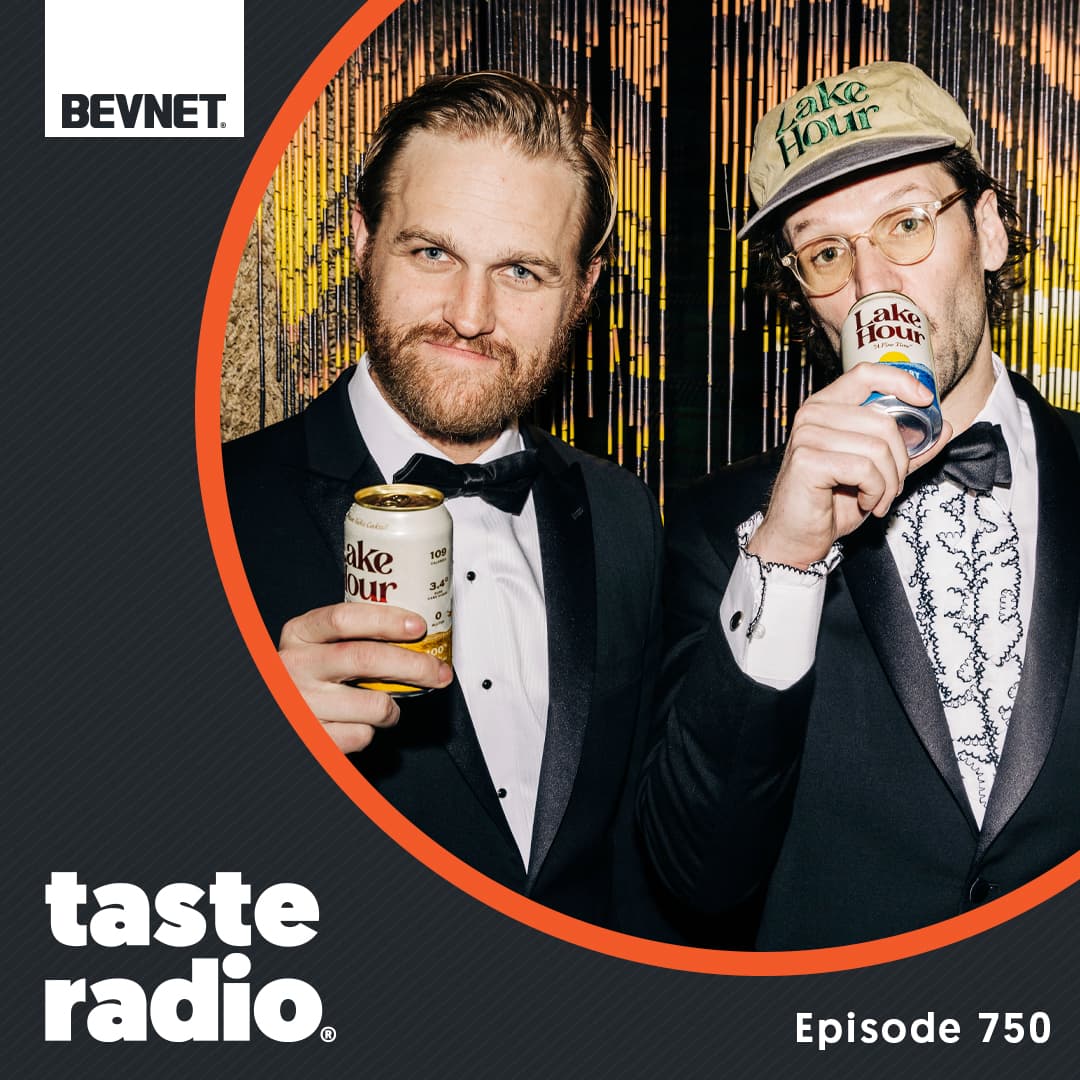
- Wyatt Russell (Co-Founder of Lake Hour, Actor)
- Richard Peete (Co-Founder of Lake Hour, Producer)
---
Episode Overview In this episode of Taste Radio, Wyatt Russell, known for his role as U.S. Agent in the Marvel series, joins producer Richard Peete to discuss their journey in launching Lake Hour, a fast-growing canned cocktail brand. Initially conceived as a casual idea in a hot tub, the venture has transformed into a serious business, navigating the complexities of flavor formulation, production, and distribution in the beverage alcohol industry.
Key Themes
- The transition from Hollywood to entrepreneurship.
- The challenges of building a beverage brand from scratch.
- The importance of authenticity and quality in product development.
---
Key Points
Introduction of Lake Hour
- Origin: Started as a lighthearted idea that evolved into a full-time business.
- Brand Identity: Emphasis on quality and unique flavor profiles (e.g., Rosemary Yuzu, Earl Grey Vodka Iced Tea).
- Growth Strategy: Currently in eight states, focusing on slow, intentional scaling and quality control.
Entrepreneurial Challenges
- Learning Curve: Transitioning from film to beverage has been more complex than anticipated.
- Execution and Marketing: The need for robust marketing strategies and effective distribution partnerships.
- Authenticity: Wyatt and Richard stress that their brand is not celebrity-driven; they actively participate in all aspects of the business.
Unique Selling Proposition
- Flavor Innovation: Commitment to distinctive flavor combinations to attract diverse consumers.
- Consumer Engagement: Engaging in tastings to educate consumers on their products.
- Market Position: Aim to bridge generational gaps in consumer preferences.
Brand Development Insights
- Marketing Approach: Emphasis on a relatable brand experience over celebrity endorsements.
- Social Media Strategy: Wyatt prefers to focus on the brand’s Instagram rather than his personal account to maintain authenticity.
- Collaborative Culture: Open to connecting and learning from other founders in the industry.
Future Plans
- Series A Funding: Plans to raise capital to expand the brand further.
- Hiring: Looking for a Chief Marketing Officer to support growth and marketing efforts.
---
Notable Quotes
- "What began as a lighthearted idea in a hot tub quickly evolved into a deep dive into flavor formulation." - Wyatt Russell
- "The difference with beverages is that it doesn’t really ever end; it’s a continual build." - Wyatt Russell
- "It’s important that the liquid is good; otherwise, no amount of celebrity will save it." - Richard Peete
---
Brands Mentioned
- Lake Hour
- BuzzBallz
- Betty Booze
- Twisted Tea
- High Noon
- White Claw
- BeatBox
- Archer Roose
- Bell's Brewery
- Surfside
---
Conclusion The episode captures the entrepreneurial spirit of Wyatt Russell and Richard Peete as they share their insights on launching Lake Hour. Their journey illustrates the intersection of creativity, hard work, and adaptability in the fast-evolving beverage industry.
Call to Action Listeners are encouraged to share their thoughts on the podcast and consider sponsorship opportunities.
---
Contact Information
- Email: ask@tasteradio.com
- Follow on Instagram: [BevNetTasteRadio](https://www.instagram.com/BevNetTasteRadio)
---
*These notes provide a comprehensive summary and key insights from the podcast episode, designed to encapsulate the main themes and discussions relevant to entrepreneurs and innovators in the food and beverage industry.*
Written by AI. May contain mistakes. Listen to the episode to check what was said.
Transcript
Automatic transcript. May contain errors.0:10Hello friends, I'm Ray Latif and you're tuned in to taste radio the leading podcast for entrepreneurs makers, and innovators in the food and beverage industry. What happens when a Marvel superhero and an indie film producer ditch the script and attempt to build the next great beverage brand? In this episode, actor Wyatt Russell, best known for his role as U.S. agent in the Marvel film Thunderbolts, and producer Richard Peet pull back the curtain on their journey launching Lake Hour, a fast-growing canned cocktail brand that's making waves far beyond the red carpet. What began as a lighthearted idea in a hot tub quickly evolved into a deep dive into flavor formulation, production logistics, and the steep learning curve of the beverage alcohol world.
1:03Wyatt and Richard share the unfiltered realities of entrepreneurship and how they've stayed focused on creating a premium product that resonates with today's drinkers.
1:15Hey, folks, it's Ray with Taste Radio. Right now, I am supremely honored to be sitting down with Wyatt Russell and Richard Peet, the co-founders of Lake Hour. Wyatt, how are you? Doing good. How are you? Doing fantastic. Richard, how are you? Great. Thanks for having us. Yeah. Well, Wyatt, you told me before we hopped in the mics that you are in Europe right now. And I really appreciate you taking the time because I know you're probably just living in chaos right now in one of the most beautiful continents in the world. It is. It's wonderful. I'm working doing a Marvel movie. Oh, OK. Yeah, that's news I can share.
1:52But we're out here. I'm in London filming a movie. So seems to be a lot of movies are filming out here these days. There's a lot of people working in Europe. Oh, interesting. And Rich, how are you? Where are you based now? Good. I'm in New York gearing up for a shoot in Vancouver. I'm moving out there in a couple of weeks to go shoot a film. You're moving to Vancouver? Well, for four months, I'll be out there. Okay. Well, I guess that's, you know, that's a bit of a short-term move, as it were. Yeah. I think for the most part, you know, whenever I talk to folks who are actors and then entrepreneurs or entrepreneurs who become actors, there's always that question of, you know, which is more difficult?
2:31And so right off the bat, I'd love to hear from you. between Hollywood and the beverage alcohol industry? What's been more difficult to navigate, Wyatt? It's always hard to say because I've been in film for almost 16 years. So the comparison is a little different where we've only been doing Lake Hour now for what, two, two and a half years. It's really apples and oranges. The difference is every time you do a film, there's an end. So there's like an end in sight where, okay, you do one movie, takes three or four months five or six months whatever the show however long it takes and then it finishes and it's either good when it comes out or it's not but then you move on and you continue to a new project with this the difference was there's no new pro there's new projects within projects but this thing goes it doesn't like end and so you have to continually add to it and build it but there's no end in sight and that was very different and very hard for me to understand when it got to like i'd say month six and it was like oh wow okay this is this is different you know like this is different this is a different kind of difficult so it's really hard to answer that question you know they're just they're both difficult in different ways and both rewarding in different ways.
3:58It's just so hard. I mean, what would you say? We were sort of naive too. Why? Because when we first started, we thought like we would just have to like make a logo in a box and then we'd be done. We're like, we'll just do like a branding exercise. And then we tried our first round of flavors and we're like, Oh, these aren't good. Now we have to like develop the flavors and make sure this thing tastes good so that we can sell it. And then we're like, once we have the logo and it tasting good, like we'll be done. And then we're like, Oh wait, now we have to find a distributor and all these distributors.
4:26Once we get the distributors, then they'll handle all the selling. And now we're like, oh, shit, like the selling part and continuing up and new flavor innovations. It's more work now than it was, you know, designing a logo. Now that we have like a team of people. Yeah. And then you have all the good stuff people are selling. And you're like, well, we need marketing because people need to hear about it. And everything has to work in conjunction. And sometimes distributors aren't like the world's most driven people. And you need to make sure that they're incentivized. And, you know, it's a constant battle that you just, you know, never seem to feel like you're winning.
5:02But then at the end of the day, you like look down, you're like, okay, you know, you take your, take your wins and then you start to build on them. And it's kind of like when you're making the movie, it feels like you're never winning. And then all of a sudden you're like, when you take a step back and you're like, oh, wow, look at this movie we just made. And they're like, why don't we just step back and be like, wow, look at this. like it's out in the world and we're selling like hundreds of thousands of cans of you know this thing that we just came up with in a hot tub as like a joke so it's very uh yeah just fun to like see this thing out in the world and have something that we made because when we're doing movies you're always kind of reporting back to a studio or a director and like this is ours like we get to we get to decide which flavors and what it looks like and how it's talked about and and uh it's you know, it always comes, we're the directors of this project, which is really fun.
5:51And yeah, so it started out as being like something for us. And we're like, this would be just kind of a boutiques, you know, fun little side project. And then it was actually at BCB where we met you, we found like there were so many other people that wanted something like this. And it was like distributors and bars and restaurants. And so that was right when the writer strike hit. And we decided, right, all right, let's give this a go. And we'll try launching a couple of states. And we've done a good job. We want to do like the, you know, inch wide, mile deep and not grow too fast. So we're only in eight states now.
6:22And we've been fighting off other distributors and states to really focus on the states that we're in right now. Rich, you sound like a grizzled veteran of the beverage industry already. Inch wide, mile deep. Come on. Yeah, yeah, right. Yeah, you referenced BCB, Bar Convent, Brooklyn, which is a big spirits and beverage alcohol event that's held annually in Brooklyn. And I met you guys there in 2023. I got to come clean, though, because when I came to the Lake Hour booth, I was like, wow, this is really cool. Love the branding, love the vibe. Your booth felt like a little bit of a lodge. But to be honest with you, I didn't know about you guys.
6:58I didn't have any context as to your backgrounds and experience in Hollywood. And certainly, Wyatt, I didn't know about your family's lineage. I imagine that can be kind of a relief sometimes. And people just don't know who we are. You want to focus on the brand, the liquid itself. But how much has your experience, how much has your backgrounds, have your backgrounds open doors for you and help build awareness for the brand? To answer your first question, yeah, I think that was definitely intentional, like, especially with Wyatt's fame, wanting it to be something that people can discover and are like, oh, cool, like Wyatt's the co-founder, like, but they like the brand and they like the drink first.
7:37And then they discover that Wyatt is a co-founder and co-CEO of this. there's a lot of celebrity brands. And I think in beverage, maybe a little bit like celebrity exhaustion of just like somebody holding a can and getting their picture taken. And like Wyatt is very much co-CEO with me, like doing all the tax compliance and beverage tasting and research and interviewing all of our employees. And, and, you know, it's like in the weeds and it's been fun. People discover Wyatt is a part of it. But then also when Wyatt messages like a key accounts manager on LinkedIn, they're like, oh shit, this is Wyatt Russell.
8:12They respond immediately so that we get that advantage too. That's where the advantage comes in more handy or had come in more handy, especially when you're starting. When we started, like the first year and a half, it was just literally just Rich and I. We didn't have anybody else that was working for us. So we were doing everything. Like we had a bookkeeper and a social media manager and then that was it. And so it was like, well, I'll call the, you know, buyer at Cub Foods in Minnesota. And when we did do that, like we got responses and it was really exciting to see how that worked and at the end of the day like there is celebrity exhaustion and it does still allow you to like have a foothold if you have a good product and that's where in this category it's been something that separates it from vodka or tequila or something else there's a lot of people who have brands if you're the rock and you have 450 billion followers, like great.
9:11Yeah. But even people that have like 20, 50, 30 million followers, like it doesn't just like snap, turn on and work. Or maybe they just have an Instagram at all. Yeah. Or maybe you just don't have Instagram at all, which I don't. But that was kind of the part of the brand that I enjoyed selling, which is like turn your phone off and go get some drinks and sit around a fire and drink and have a good time and like be with your family, connect with people. Like that's what it's for and party and have fun, you know, drink at all occasions. But like the idea was that this is a world and a brand that actually like helps me do the things that I want to do more of, which is spend time more time with my family, less time like scrolling, doom scrolling on my phone.
10:02So that was a really important part of the process of creating the drink and marketing the drink. The second part of like, how is it open doors? It only opens doors as much as like you want them to open. And it only opens doors as much as good as the liquid is. So the liquid sucks. I've seen it many times with other people, like it just won't work. It doesn't matter, you know, like for the most part, if you have a good idea and a good plan and good packaging, it can work no matter who you are. Like, look at Buzz Balls, just sold for a bajillion dollars to Sazerac. The woman who started, it was a history teacher from Texas.
10:40She had an incredible packaging idea with a liquid that, love it or not, like it works for the demographic that it hits. And they can have those things on every 7-Eleven, like right up at the counter because of the packaging system. And that was very, very smart. So you have to find your foot in the door. Very rarely is it the celebrity. Like it has to be the liquid. It has to be the branding. The celebrity is nice. It's a nice thing, but it doesn't always translate to like us, you know, just making it work. You have to find the ways of making it work that transcend celebrity. I mean, you have to do that.
11:21Otherwise, it won't work. Well, I think regardless, there has to be some alignment between the founders and the brand itself. And in the case of founders who have a background in acting or music or what have you, I use this word too much, and I'm sure you guys hear it all the time, authenticity. There has to be an authentic connection between the founder and the brand. I probably went off the rails a couple episodes back when I was talking about a brand called well, it's called Betty Booze. Well, the product is called Betty Booze. And it's, it was founded by a well-known actress, Blake Lively.
12:01I'll just say it because I've said it on the podcast before. And Blake Lively doesn't drink alcohol, but she sells an alcohol brand. So I feel like there's something wrong there. I feel like there's a bit of an authenticity problem there. With you guys, I feel like... We drink lots of alcohol. You drink lots of alcohol. There you go. We drink all alcohol. And we both live on lakes. There you go. We both can tell time. Right. Well, and the fact that you don't have an Instagram account, Wyatt, I wonder actually, just that's how people I think sometimes can say, oh, you know what? I see Wyatt or I see Rich and they are doing these things.
12:36They are, you know, drinking their own product on the lake. And, you know, they do seem to live a lifestyle and they do dress and have the appearance of people who, you know, would be like our consumers. So is there a way that you guys try to establish a authentic connection in a marketing sense between you and the product itself? I do Instagram on Lake Hour. Okay. I don't believe personally in like just personal Instagram. I've had conversations that are very difficult about your personal Instagram and what you curate people to see. What I don't like about it is that it's a curated experience from myself or from other people.
13:20And all you're seeing for the most part is what people want you to see. If you want to be tricked by that and you want to live inside of that reality, then fine, go ahead. I have a private Instagram. I enjoy, you know, seeing all the stuff on it. As a public figure, I give my art to people. They consume it. They do what they want with it. And then it's yours. I've made the choice in my life. Wyatt Russell, I am not a public figure. You do not have claim to my life. When I put my things out on Instagram, I'm either curating parts of my art, which I'd rather just have that be on TV and television, or I'm curating parts of a business.
14:01I don't want my entire Instagram personally to be Lake Hour because that would be disingenuous because now that would only be used for selling a product. I'd rather do it on the Drink Lake Hour Instagram which I think Instagram is a genius tool for using to sell things. If you have a business or have a lifestyle where that's how you sold things and made your money, I think it's incredible. I think it's amazing. I have nothing against it. It's just that what I've chosen to do with my life artistically, how I've made my money and supported my family is by being characters that disappear into roles.
14:36I don't want to put myself cooking eggs on Instagram. I don't care. I don't care what you think about it. I don't care what I think about it. I don't want to live there. Good luck. But with Lake Hour, I love doing the Drink Lake Hour Instagram because it's like this fun world that I come from that's more me than anything. But that's what I do there. And it's very specific to Lake Hour. But it's me walking around in my backyard, talking about Lake Hour, like walking around New York and, you know, doing Lake Hour things. That's more of my life than anything. But it's just not something that I'll ever, you know.
15:11i've i've had these conversations too it's funny about two months ago before thunderbolts came out i called my agency and i was like you know should i do this that i got on instagram and they were like well here's you know if you're gonna post two times a week and you have to engage your audience and do this and if you're not gonna do that i was like this like we're good you know i i we're good whoever does it like more power to you but it's not for me but i do love it like it's not for me personally it's kind of a it's a i have a bit of a um you know existential feeling about instagram like it's this uploadable version of yourself that you're selling to the world and it's when you're selling your soul in a certain way i'd rather just sell my soul to lake hour it's all i've done and it's all i enjoy to do and it's given me a lot in my life but it's also it's just kind of us like goofing around like it's like we never wanted it to be like a thing where you're specifically like just like holding the can and it feels inauthentic you know it's very much like us just like having fun with it and and which has been great it's like people have been following and engaging with it I think it's funny because we work in film and that's our profession but so people just assume we're good at like marketing but that's like we that make this stuff we don't like put it out there so if there's any CMOs listening we're in the market because we We just like, we've like two months ago, we filmed like 30 commercials and we haven't released any of them.
16:41We're like, what do we do with them now? We have them like kicking around and they're like really funny. And, uh, you know, we've got like, like why it said, we did like a whole tour where it's like, why it's like slalom water skiing and catching a lake hour and chugging it and playing guitar up on stage and like doing all this stuff. And we're like, we have all of these assets. We just have to like figure out how to get them out into the world. So yeah, as we're working, uh, we're, we're going to do a series A this fall and we're who are on the market for a CMO. Okay, well, there you go, folks.
17:08If you're a CMO listening and you're interested in working with two very chill guys, well, and the entire Lake Hour team, send an email to, I don't know, cmo at lakehour.com or is that what you're doing? Yeah, Wyatt at lakehour.com. There you go. Wyatt at lakehour.com or rich at lakehour.com. Yeah. Or howdy at lakehour.com. Quick break. If this episode has you thinking about what's next in food and beverage, explore BevNet and Nosh Insider, our subscription platform with deeper insights from the BevNet team. Visit tasteradio.com slash insider to learn more. Based on all the discussion about Instagram, I won't ask you about TikTok or your TikTok strategy, but I will ask you about picking your spots.
17:53because, you know, I'm looking at your Instagram page right now and I see Lake Hour in a variety of settings, you know, typically similar folks or similar consumers, you know, it's from Ray's Bar in New York City to, you know, folks drinking the product. Seems like on a campground to a couple of bears fighting over a can of Lake Hour, it looks like as well. No bears were harmed in the filming. Good to know, good to know. But who is this product for? I mean, I imagine when you started out, you had a sense of, hey, it's going to be for people like us, for Rich and Wyatt. And then you saw that maybe other people are interested in the brand.
18:30And you innovate to that consumer as well. I mean, you released recently a new line of vodka iced teas. You have a couple of varieties that I saw. You have an Earl Grey tea and a raspberry tea that both look really refreshing. And I imagine those are for your existing consumers, but also for new consumers. So long story short, how have you identified who's drinking this product and who perhaps will drink Lake Hour? Yeah, it's definitely it started for us. And we out of the gate, we're like, all right, we're going to convert people like us and like beer drinkers to come and drink seltzers. And we were like, naively, we're sort of we're going to get like the Bush Light drinkers who are, you know, 40, 50 year old dudes to come and drink this sort of like Lake Hour thing.
19:13and have learned that, you know, the bush light drinkers are kind of, they found their path and have kind of like, you know, that's their lane. But there's like a huge opportunity for people like millennials and people that are in their late thirties, like why not to discover these things? And it's been great to have High Noon and White Claw and some of these other ones paved the way. It's like an educate people on it, but it's also, we call it the, oh, actually effect. Like people have tried them and not liked them. And then when they try ours and it is more subtle and refreshing like oh actually this is really good and you know we we do lots of tastings and people either come in knowing that they like rtds or canned cocktails or thinking that they just they've tried them all and don't like them so yeah the oh actually effect is something that's been like for us and it's also been like it started off for people like us but then young kids like i have a 21 year old nephew he's like oh my friends in new york like fucking love lake hour they're so good because we have the interesting flavors that like a you know young college student might look at and be like hey yeah let me try rosemary yuzu and it's like actually the one that's won all of our awards and the drink is really good most people are like what's yuzu that's a citrus fruit japanese citrus fruit it's not something that people necessarily pick up right away like when you're just walking by the store and you go i want like a margarita line and so that part has been an education process like watermelon cucumber is by far our best seller, mostly because it's the most accessible.
20:40Then you have two choices. You can just go with the most accessible flavors, which some companies have done and had success. Or you can look at a more long-term hopeful success plan where if you like Rosemary Yuzu, you are a Lake Hour customer. And that doesn't necessarily translate to like a 19 to 22-year-old who's going to college in the eastern part of this country. it translates to more of a four quadrant drink which we call it in movies where it's like if you are a 47 year old male who likes boating or if you are a 21 year old you know female who likes going to Ray's bar Lake Hour has something for everybody and it's fun part of what our booth was in BCB was like it's like your first drink in your granddad's basement and so it connects the the branding and the brand hopefully connects the generations instead of it being like you know there isn't a 50 year old probably drinking beatbox anywhere not no offense to beatbox you know we had a great drink but that's a drink for a very specific crowd great but there's a fun element of like you know my 63 year old grandmother can be drinking this and i can be drinking this with my friends and there's a connective tissue to it and it's not just meant for a specific group of people.
22:01It's meant to bring, again, like a multitude of people around a campfire to have fun and drink and, you know, enjoy their time together. And with the teas too, we like, my nieces, Payne and Hannah were visiting three years ago and drinking twisted tea. And if we were a little bit wiser, we would have been like, oh, let's like do the Lake Hour version of a twisted tea back then and we didn't and why and I both really like carbonated drinks and have sense you know there's like a big tea movement and we still couldn't find similar to starting our seltzers we couldn't find a tea that we liked so like okay what's the late hour version of a tea and we went to some R &D and found you know these more like unique flavors like the Earl Grey one is is our number one seller right now and it's whether you're a college kid or you know in your late 30s that's been the one that like people have like, like, I didn't even know what Earl Grey was.
22:55And they like, love, love that one, which is cool. You're like, oh, this is fun. And I've become like a tea drinker. Like I've been reaching for the vodka iced teas more right now. And it's, you know, I could, would have never thought that I'd like a non-carbonated canned cocktail. Like that was, you know, so there's a little bit of like educating and learning, keeping our minds open to what could potentially be out there. I want to bring up the description of your products, or at least the iced tea rich, which is a cocktail. You know, hard seltzers have taken a hit in how they are perceived by a lot of folks.
23:28I think people nowadays look at them as sort of a lesser than product because of the rise of canned cocktails and of more premium ingredients. How do you describe Lake Hour? What has really resonated with folks in terms of your nomenclature? We told you we're looking for a CMO. It's like a billion dollar question because like, you know, hard seltzers out there, but it's been going down. So in our variety pack is a vodka. We have three vodka seltzers and one tequila seltzer. But to say three vodka seltzers and one tequila seltzer is like a mouthful. And then there's canned cocktails, but you also have martinis and margaritas that are all canned.
24:08So that to us kind of feels more like a canned cocktail. So it's interesting. We're still like figuring that out and doing like seeing what sticks the best. We have the vodka iced tea is very clear. But I think, yeah, it's still like an education process and for the consumer and for us. I'm like, what what the heck these things are called? Because it's different. It is more like a seltzer water that is has vodka or tequila and like subtle flavors in it. Yeah, well, I could offer my two cents, but I'm not I don't want to present myself as any kind of consultant. There's a lot of consultants in this industry.
24:42I'm sure you've met a few. Yeah. Yeah. Well, how do you wade through? Because there's a lot of people, I'm sure when you started out, who presented themselves as one thing and they're really not that thing. And there are some folks who offered a lot of really good advice, but at the end of the day, you know, they can't partner with your company because for one reason or another. How do you figure out who to talk to, who to trust, who to align yourselves with in this industry where everyone has their own opinion? You just kind of kind of wade through the bullshit. I mean, that's, that's, there's really no other way.
25:11We talk to everybody to start. We talk to everybody. Yeah, that's how many I kind of went through it. And it's been fun. We get connected to other like CEOs and co-founders that are like doing a nice thing probably because Wyatt's an actor. And I'm pretty sure they're like, oh, well, like, you know, they're like, whatever, we'll hop on a 15 minute call. And then they realize that we're in the weeds and we're doing it and Wyatt's doing it. And then it ends up being like a two hour conversation, you know, like a two hour Zoom where we're just like spitballing and helping each other. And it's fun because there's other like, we talked to the founder of Archer Roos and it was like a two hour conversation.
25:44She rules super smart. And like, we're kind of like the indie brands up against big beverage. And it's fun. Like, let's all work together and brainstorm and talk about what's working and what's not. And how can we how can we help, you know, brands that are starting? We're only a couple of years old, but we've learned a lot in this window and like happy to help educate some other founder or entrepreneur that's trying to get into the space. and try and be this indie brand out in the world. And you still feel like an indie brand, which is awesome. I mean, losing that vibe, I think why when you talked about bridging the gap between generations and the nostalgic aspect of Lake Hour in terms of its branding and also its more modern type flavors, I think is a really great strategy to try to reach a lot of different people.
26:29But I think consumers also just appreciate when they feel like something is small or something is specific to them, that it's not really that broad and well-known out there. It's something that they can own and they can share without everybody else knowing about it. Yeah, exactly. Of course, you want to be at some point, you know, something that everybody knows. It's fun to do indie movies, but personally, I've never made an indie movie that's blown it out of the box office. It's always like a great experience, but at the end of the day, you do have to make money and you do have to grow. You have to grow correctly and you have to grow to a point where people see what your brand is.
27:12Stores carry your brand and your brand is available enough so that you can survive and you're not constantly picking here and picking there and trying to get into this place and get into that place and clawing to survive. But it's keeping the heart of the organization. And there's a couple brands that I think have been able to do that, like Two Hearted Ale is a great one. Bells. I point to beer Fat Tire. Surfside is doing a great job of it. Yeah, they still are independent in doing it. But like Fat Tire was acquired, and they're still they kept their Fat Tire feel. And so you know, you always said we sort of aim to be the Fat Tire of seltzer of hard seltzers and, you know, vodka iced teas, as we are now.
27:56But that core that comes from just time. and like you said earlier authenticity you just can't lose it you just don't want to lose it you know and you have to kind of work hard sometimes not to lose it but it's really important not to yeah we sort of joke that it is it's like we're in the indie film stage right now so it's like you're just everyone's wearing all the hats and you don't have enough money to do the things and your hair's on fire and like what you know what what do we do today like how do we just survive of the day and that's like the indie film version and then eventually start doing like the studio movies where everything's a little bit more corporate and it buttoned up and all that stuff and it's it's still you know it's still a fun job and you're still like get your voice into the film and get to do the things but it's like that exciting chaotic feeling is gone and so hopefully we're in a place where lake hour is to the studio version at some point and and uh you know we've already been hiring a c-suite and we we just raised a million bucks on a safe but and it's you know, we're now like to the next tier of the film experience.
28:57So yeah, we'll eventually get to the studio version. But like right now, like it just every day, I'm totally enjoying the putting out the fires, the chaos. Oh shit, what are we gonna do? We gotta get this billboard, we have to do this thing. And it's like, it's really, it's fun. Like I love that stuff. And I don't really make as many indie films anymore, but like I kind of miss that chaos in the film space. So this is our version of that now. now. Wyatt, Rich, you know, oftentimes when I do interviews with folks that I have only met briefly or I'm only tangentially connected to, I'm never really sure what I'm going to get out of the interview.
Read the full transcript
29:33I always hope it's going to be a good conversation. And most of the time it is a great conversation. In this case, it's an exceptional conversation. I really feel like this has been a lot of fun. You guys have been totally transparent and honest and excited about what you're doing, which is awesome. So thank you so much for taking the time. good luck with everything going forward and i hope to meet again in person real soon thanks so much thank you appreciate it thank you for having us yeah really lovely talking to you thank you that brings us to the end of this episode of taste radio thank you so much for listening taste radio is a production of bevnet.com incorporated our audio engineer for taste radio is joe cratchy our technical director is joshua pratt and our video editor is ryan galang our social marketing manager is Amanda Smirlinski and our designer is Amanda Huang just a reminder if you like what you hear on Taste Radio please share the podcast with friends and colleagues and of course we would love it if you could review us on the Apple Podcast app or your listening platform of choice check us out on Instagram our handle is BevNetTasteRadio as always for questions comments ideas for future podcasts please send us an email to ask at tasteradio.com on behalf of the entire taste radio team thank you for listening and we'll talk to you next time
From the publisher
What happens when a Marvel superhero and an indie filmmaker ditch the script and attempt to build the next great beverage brand?
In this episode, actor Wyatt Russell – best known for his role as U.S. Agent in the Marvel film "Thunderbolts" – and producer Richard Peete pull back the curtain on their journey launching Lake Hour, a fast-growing canned cocktail brand that's making waves far beyond the red carpet.
What began as a lighthearted idea in a hot tub quickly evolved into a deep dive into flavor formulation, production logistics, and the steep learning curve of the beverage alcohol world. Wyatt and Richard share the unfiltered realities of entrepreneurship and how they've stayed focused on creating a premium product that resonates with today's drinkers.
Show notes:
0:25: Interview: Wyatt Russell & Richard Peete, Co-Founders, Lake Hour – Wyatt reveals he's currently in London filming an upcoming Marvel movie, while Richard is preparing for a short-term move to Vancouver. The co-founders reflect on how Lake Hour began as a side project and quickly evolved into a full-time venture, one that proved far more challenging than they initially expected. Despite their Hollywood backgrounds, Wyatt and Richard emphasize that Lake Hour is not a celebrity-driven brand. Instead, they are deeply involved in every aspect of the business, from product development to marketing. Wyatt, notably, chooses not to maintain a personal public Instagram account, but remains active behind the scenes, supporting the brand's social media efforts. They attribute Lake Hour's steady growth to strong execution, a commitment to quality, and a focus on unique flavor profiles like Rosemary Yuzu and Earl Grey Vodka Iced Tea. As the company looks ahead to a Series A raise, it's preparing to scale intentionally and bring on a Chief Marketing Officer to support the next phase of growth.
Brands in this episode: Lake Hour, Lake Hour, BuzzBallz, Betty Booze, Twisted Tea, High Noon, White Claw, BeatBox, Archer Roose, Bell's Brewery, Surfside