In short
The episode is about what early-stage food brands need to do to stand out and win in 2026, with a focus on brand storytelling, clear messaging, and avoiding over-reliance on AI. Yola Blake-Page (founder of Violet Thread Strategy) advises founders to be distinct in crowded categories, tell their story clearly for retail shelf, and use taste/sampling to drive trial for new products.
Guests and backgrounds
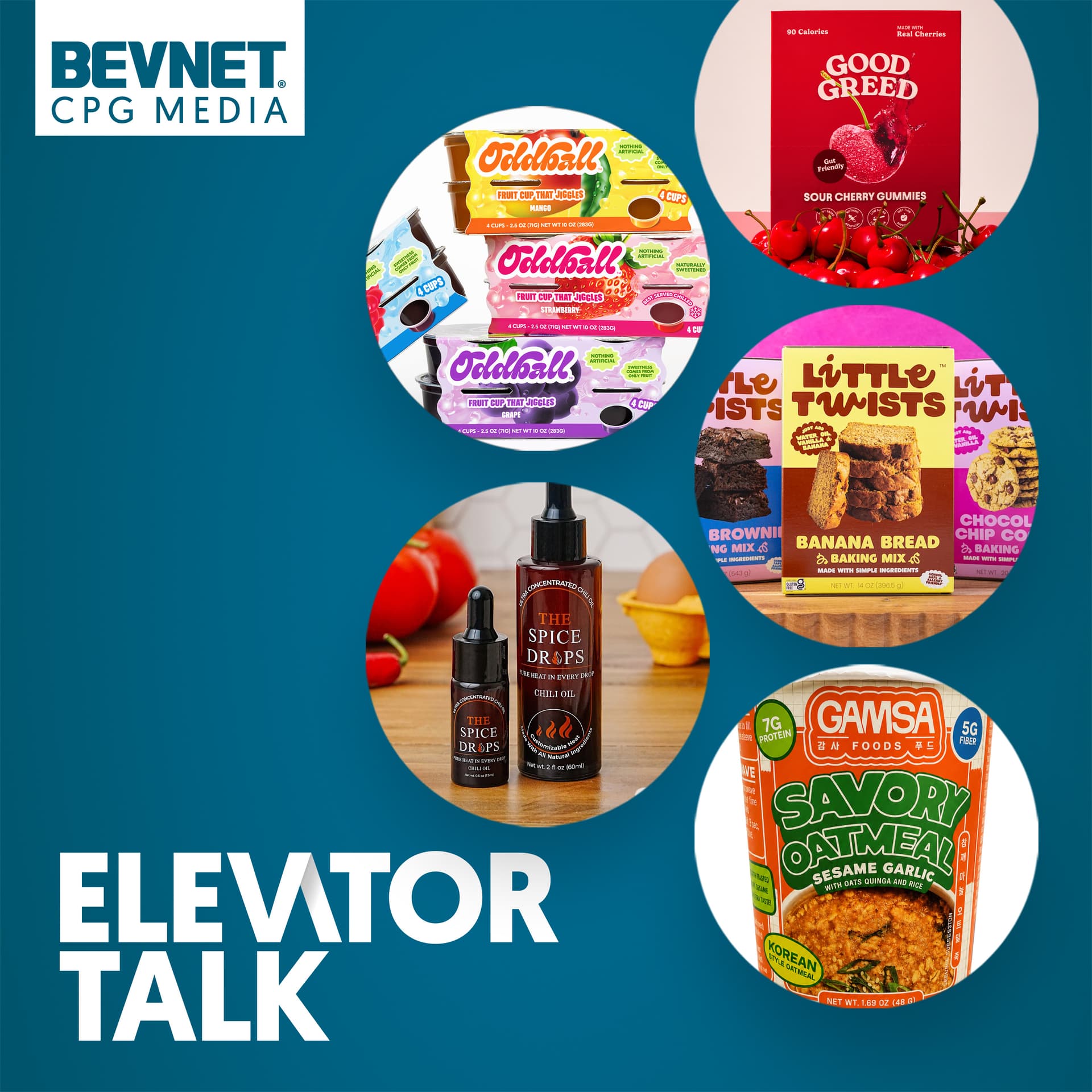
- Sophia Cheng, founder of Oddball. Built from her experience missing minimally processed fruit snacks from Singapore; now makes ambient “jiggly fruit cups” with no dyes or artificial ingredients.
Key claims
positioning evolved from “alternative to Jell-O” to “fruit cup” because it’s gelatin-free and closer to fruit cups; sold ambient in Target (lunchbox set/fruit cup aisle); growth occasions include back-to-school, “new year new me,” after-school sports, and all-day snacking.
Notable examples
jello/jelly category confusion; “taste to lip” sampling; $4.99 for a 4-pack.
- Kajal Pernik and Radha Patel, co-founders of The Spice Drops. Created a clean, shelf-stable concentrated chili oil dropper after frustration with hot sauces that weren’t spicy enough or changed flavors.
Key claims
adds heat without vinegar/garlic/metallic extraction taste; two sizes for table/purse use; messaging needs clearer hierarchy to avoid “chili oil” connotations.
Notable examples
“salt, pepper, and spice drops” at the table; farmers-market traction; “liquid smoke” comparison.
- Alana Picov, co-founder of Good Greed. Gut-friendly gummy candy founder after gut issues with “better-for-you” candy.
Key claims
low sugar, prebiotic fiber, real fruit, no artificial ingredients; formulated with dietitian Abby Sharp; packaging aims to make healthy candy “cool.”
Notable examples
launched in 2026 with sour cherry and peach; ~60+ stores in NY and beyond; $5.99 per bag; 90 calories; “Poppy” as a category example.
- Dahlia Rubin, co-founder and CEO of Little Twists. Allergy-friendly baking mixes from her gluten-free/dairy-free background and years of baking/recipe development.
Key claims
top-9 allergen friendly; naturally school safe; mixes use under 10 ingredients; bold packaging avoids over-communicating allergy benefits.
Notable examples
three SKUs (banana bread, chocolate chip cookies, fudgy brownies); $16.49 per box DTC (often discounted to ~$14.99 on shelf); emphasizes trust vs buying many specialty ingredients.
Written by AI. May contain mistakes. Listen to the episode to check what was said.
Chapters
Tap a time to open that second in VOYola Blake-Page's Background
0:45 to 3:19
Yola shares her extensive experience in brand strategy and grocery retail.
“You've been involved and worked with many, many early stage brands and have a pretty significant background working for Whole Foods as well.”
Challenges for Early Stage Brands
3:19 to 4:24
Discussion on the importance of brand storytelling and the pitfalls of over-reliance on AI.
“You've touched so many different aspects and so many different areas of this industry.”
Innovation in Brand Positioning
4:24 to 5:46
Exploring the importance of clear messaging and positioning in a crowded market.
“Yeah, I would 100 % agree with you about AI.”
Introduction of Sophia Cheng
5:46 to 6:14
Introducing Sophia Cheng, the founder of Oddball, and her innovative brand.
“Hi, as I mentioned, I'm super excited for this episode of Elevator Talk.”
Sophia's Journey and Product
6:14 to 8:15
Sophia shares her background and the story behind Oddball's jiggly fruit cups.
“That person is Sophia Cheng, who's the founder of Oddball.”
Retail Strategies and Product Positioning
8:15 to 11:57
Discussion on the retail strategy for Oddball's products and market positioning.
“And when I saw that gap here, I just couldn't unsee it.”
Consumer Insights and Pricing
11:57 to 14:01
Exploring consumer behavior, pricing strategy, and the importance of product value.
“And with that, like what occasions are being are proven to be the biggest growth drivers for you?”
Understanding Consumer Pricing Sensitivity
14:01 to 16:22
Explore how consumers' price sensitivity affects product acceptance.
“Like that, what is that premium threshold that consumers are willing to pay for?”
Effective Product Sampling Strategies
16:22 to 16:56
Learn about the importance of taste testing and marketing strategies for new products.
“Obviously, you want to know how you're doing in Target, what other retail chains you're getting into, investment, what have you.”
The Origin Story of The Spice Drops
18:04 to 20:04
Discover the motivation behind creating The Spice Drops and its unique formulation.
“founders, we have Kajal Pernik and Radha Patel, the co-founders of The Spice Drops.”
Show all 31 chapters
Benefits of Using Spice Drops
20:04 to 21:44
Understand how Spice Drops enhance flavor without altering the original dish.
“And those generally are going to have, you know, as she mentioned, a lot of the garlicky flavors, there's always something in them.”
Target Audience for Spice Drops
21:44 to 24:40
Identify the ideal consumers for Spice Drops and their usage scenarios.
“And it does exactly what it says it does.”
Brand Identity and Market Positioning
24:40 to 28:00
Explore the visual branding and market positioning strategies for Spice Drops.
“And then as we think about kind of who is this good for in terms of like, who is that perfect customer?”
Feedback on Brand Messaging
28:00 to 29:50
Discussion on branding strategies for a chili oil product.
“Again, we're out of time and this is, I'm going to blame our producers for this because we may never give me enough time or never give us enough time.”
Closing Thoughts with Guests
29:50 to 30:45
Wrap-up of the conversation with Radha and Kajal about their brand.
“On that note, I was just going to say that this conversation doesn't need to end here.”
The Concept Behind Good Greed
31:05 to 32:54
Alana explains the mission and product offerings of Good Greed.
“It kind of reminds me of a Peanuts cartoon, except that's good grief, right?”
Candy Market Trends and Positioning
32:54 to 34:49
Discussion on positioning Good Greed within the evolving candy market.
“Is the positioning something that you think speaks to a lot of people?”
Communicating Product Benefits
34:49 to 36:21
Exploration of how Good Greed communicates its gut-friendly benefits.
“Alana, I'm looking at your packaging and the gut friendly button on the front of pack is relatively small.”
Pricing Strategy and Market Fit
36:21 to 38:49
Discussion on pricing and market fit for Good Greed candy.
“taste and flavor and juiciness all the things that you talked about um yola again this this is a category that's really growing up and emerging before our very eyes and there's a lot of brands in the space.”
Launching Allergy-Friendly Baking Mixes
42:00 to 43:50
Learn about the launch of a new baking mix brand designed for allergy-friendly baking.
“We just launched a month ago, where a new baking mix brand makes it really easy to bake your favorite desserts.”
The Journey to Building a Food Brand
43:50 to 46:09
Discover the experiences and challenges faced while building a food brand from scratch.
“And then also to just appeal to the host or the millennial who wants something with simpler, cleaner ingredients that they could share with their friends or just enjoy at home.”
Lessons Learned from Launching a Brand
46:09 to 48:04
Explore the surprising lessons learned during the launch phase of a food product.
“And I don't didn't know what a margin was or anything like that then.”
Discussing Pricing Strategy for Premium Products
48:04 to 51:25
Understand the pricing challenges and strategies for premium food products.
“Dahlia, since you advocated for people asking questions, I'm going to jump in with a question of my own here, which is about price point, which I've mentioned a number of times in this episode.”
Wrap-Up and Reflections with Dahlia
51:25 to 52:27
A concluding discussion with Dahlia about her brand and future prospects.
“I'm excited to see and follow the future of this brand because I think you're doing some amazing things and I love the name.”
Innovating Savory Breakfast Options
53:25 to 56:00
Explore Gamsa Foods and their unique savory oatmeal products designed for breakfast.
“Thanks so much for sending samples of Gamsa.”
Defining Savory Breakfasts in America
56:00 to 1:05:40
Explore the emerging market for savory breakfast options and consumer perceptions.
“because it's the best way for people to try.”
Connecting with Yola Blake Page
1:05:40 to 1:06:55
Yola discusses her unique brand perspective and how to reach out.
“So if there's anything we can do for you, just let us know and we'll do our best to help.”
Flavor Without Compromise
1:10:02 to 1:11:18
Learn how Bay State Milling's HealthSense flour maintains flavor while adding fiber.
“And fiber has always meant, in the past at least, taking a bit of a taste hit.”
Integrating HealthSense into Brands
1:11:19 to 1:12:49
Discover how BSM collaborates with brands to incorporate HealthSense effectively.
“I think a lot of folks listening right now are wondering, well, would it work for my brand?”
Impact of GLP-1 Drugs on Nutrition
1:12:50 to 1:14:04
Understand the implications of GLP-1 drugs on consumer dietary choices and nutrition.
“That's a very large and significant number.”
Addressing Ultra-Processed Food Concerns
1:14:05 to 1:15:29
Explore how brands can leverage clean labels to meet consumer demand for less processed foods.
“There's one other part of the equation for food and beverage brands these days that they just can't escape, founders that is, and that's concerns about over-processed, ultra-processed foods.”
Transcript
Automatic transcript. May contain errors.0:05Hey folks, I'm Ray Latif, the editor and producer of BevNet's Taste Radio podcast, and you're tuning to the latest episode of Elevator Talk, a series that profiles early stage and disruptive brands from across the food and beverage industry. Today's episode will focus on five food brands whose entrepreneurs will have an opportunity to hear feedback and advice from our co-host today. That's Yola Blake-Page, the founder of Violet Thread Strategy. Yola, it's great to see you. Good to see you, Ray. How are things in Austin, Texas? They're hot, they're beautiful, they're great. That all sounds good.
0:43You visited our Taste Radio meetup in Austin, which was held a couple of months ago. You've been involved and worked with many, many early stage brands and have a pretty significant background working for Whole Foods as well. I'm not going to let the entire cat out of the bag. So for folks who aren't familiar with you or your work at Violet Thread Strategy, please tell us about yourself. Absolutely. So I'm an independent brand strategy consultant, and I primarily work with food, beverage, hospitality, retail, and other consumer brands. And my perspective is a unique one in that half of my career was spent in creative advertising agencies, agencies that had different specialties, creative shops, digital shops, as well as an SEO shop.
1:31And then most recently was a PR firm where I was a brand strategy director. So that's half of my experience there, having that really good lens into omni-channel marketing and advertising and touching pretty much every side. And then I also spent six years at Whole Foods Market, three years pre-acquisition, three years post at the global headquarters. and that was a really, really a master's degree in grocery retail and also being a brand strategist there working on our seasonal campaigns and seasonal briefs and leading that for our marketing team and working cross-functionally with merchants and other food brands and cross-functionally across other parts of the business in Whole Foods and then also at the retail level as well when I I worked also in the Southwest region, which is a part of my chapter there to really taking that like big focus that is also marketing and advertising from an agency perspective and then going through the looking glass and being a client to an agency of record at the Whole Foods market level.
2:36And then the third layer is that I practically grew up in a grocery store. My mom is a retired butcher. She worked for over 30 years and at a grocery store in Houston, Texas. And so my childhood is spent in a grocery store, and I've been very, very, very excited about that since a very young age. And also there was a moment around 2022 when my husband was working at HEB Digital. I was working at Whole Foods. My mom was working at Randall's at that time, and my brother, who works at Costco and still works at Costco. So we're a retail family, and I'm a nerd through and through. You're a nerd who belongs on this program, and we're really lucky to have you as a co-host, Yola.
3:18So thank you so much again for joining us. You've touched so many different aspects and so many different areas of this industry. In 2026, more specifically August of 2026, where do you see brands needing the most help, early stage brands in particular? Where are they tripping up, and how would you advise them to prepare themselves for the remainder of this year and beyond? Brand storytelling, very, very important. Also, something that's unique to August 2026 and earlier this year, although I'm seeing the pendulum swing a little bit, is an over-reliance on AI. and not, I think now we're getting more mature into understanding what it can help with and what it can't really help with on a creative side.
4:05And from a messaging standpoint, really just thinking about what makes you distinct in a very crowded category. And also knowing that we have these tools still remembering the authenticity and that strategic center that you have as a brand before going into the learning models. Yeah, I would 100 % agree with you about AI. It definitely feels like it's pretty obvious when someone is using AI because the content feels pretty bland and hackneyed. But to differentiate, you do need something that is kind of special about your brand. And sometimes AI can highlight what's special about your brand. But in your experience, is it the founder?
4:52Is it the product? Is it the packaging? Is it the origin story? What really stands out to most consumers about that differentiation that's so important in our industry? I think it all comes, all of those things are very, very important. I think being very clear and distinct about what you are, whether you're D to C, which is where many people start now, or at shelf, really, really making it abundantly clear who you are. I spend a lot of time with OnPak messaging hierarchy and thinking about it in context of being in a retail environment and just making sure that your story is super, super clear.
5:33You can't, especially in 2026, rely on shelf talkers, especially if you go into national retailers. And you really need to be able to tell that story and be very clear about who you are and why to buy. And I think sometimes we can get lost in the sauce. Hi, as I mentioned, I'm super excited for this episode of Elevator Talk. We have an all-female brand owner group here, which is, I think, a first for the show, which is pretty awesome. And I'm really excited to meet all these founders because they are bringing just really incredible innovation to this industry. Are you ready to meet our first entrepreneur of the show?
6:16Yay, let's go. Let's go, indeed. That person is Sophia Cheng, who's the founder of Oddball. Sophia, it's great to see you. Great to see you as well. Oddball is a fantastic name for a brand. I always wonder how founders are able to land the trademark for a name that's as great as Oddball. But before we even get into that, tell us all about what you do. So I'm Sophia. I'm the founder of Oddball. and we make snacks made of real fruit for the modern families. Our first product line is a new type of jiggly fruit cup. So think of a kind of a better for you Jell-O that had a baby with, you know, the everyday Dola Del Monte cup fruit cups.
6:59We don't use any dyes, no artificial ingredients. So I started Oddball honestly because I'm just someone that loves to eat junk food. Anything that's like, you know, the lunchables, the gushers, like all that stuff, like just give it to me and I will devour it. I think it's because I grew up in Asia. I grew up in Singapore where like, I just didn't grow up with these snacks. And when I came to the U S I was like a kid in a candy store again, um, growing up in Asia and growing up in Singapore, fruit wasn't like a healthy choice, right? It was cultural as family. It was how you showed love. It was what we ate for our dessert, what are we, what we ate for our snacks.
7:29Um, and eventually I got to a point where I was eating so much junk food that I noticed all the weight gain, the acne, the cavities as an adult, none of that I had as a kid. Right. And so I was like, all right, I guess I need to start eating like an adult. And so when I went out there and I tried to find a replacement for my love for junk food, I kind of felt like I was getting catfished by my food, right? Because it was a lot of like bars that's pretending to be a cookie dough or like milkshake that's like actually like a protein shake. Like, you know, no shades to that. But like, sometimes I just want to eat for the sake of eating and like eat for the sake of joy.
8:02Right. So yeah, I saw a gap between what I grew up eating for snacks in Asia are mostly very minimally processed and made of real fruit. So like, you know, fruits, seaweed, right? Like beans, all those stuff. And it's delicious. And when I saw that gap here, I just couldn't unsee it. Right. So yeah, I decided to really go for it. And here we are today. The first product line is a type of jiggly fruit cup, as I've mentioned. And I really saw the gap there because, you know, in the U.S., when I first came here, I was kind of shocked that the only brand of jelly was Jell-O, right? If you look at any other cultures, there's panna cotta in Italy, right?
8:43Like France, there's flan, right? In Asia, there's Igar and Canton. And in Asia, it's just grown to be this like really massive category because it's a very easy food with mass appeal, right? And so I always say, like, you think about like why, like, you know, in hospitals, they still serve jello and that's because like any age from zero to a hundred years old you can be eating that right any dietary restrictions any allergens anything like that so today we are nationwide in target as of two weeks ago um and yeah sofia that was great i only have about 10 000 questions to ask you but before we even get to my ridiculous questions which are probably not as good as Yola's.
9:24I just want to ask about the refrigeration versus ambient. Where are you sold in stores, particularly in Target? We're sold in a lunchbox set in the fruit cup aisle. Okay. Ambient. Ambient. Okay. Yola Jiggly Fruit Cup. It's the first time I've heard of a product described as a Jiggly Fruit Cup, but I like it. I like it a lot. What are your thoughts? Yeah, I've been following y 'all since you were featured in Snack Shots a couple by Andrea Hernandez for a couple years ago. And I love your brand story and very excited to talk with you all today. Now these days in 2026, I'm hearing you're calling it a fruit cup.
10:02It's not a gelatin dessert. You're not going after Jell-O. I love that positioning that it's a fruit cup. Was that always intentional? What made you decide that this was the category you wanted to find consumers to find you in and really get laser focused in that way? Yeah, no, I think that's a great question, right? I think this is one of our biggest hurdles, honestly, when it comes to brand positioning and messaging to consumers, et cetera, right? Because we are in a unique place where just like Kleenex and Clorox and Xerox, right? Like the brand is the category and most consumers don't understand that.
10:34And it's just not the term that is used to describe the category. It's not something that we can use. And so in the beginning, we're really positioned it as an alternative for Jello. But I think like as we, you know, tested and like move along and started being retailers, we realized that it's both inaccurate from a product standpoint, given like we don't use any gelatin, right? Like we don't have any of the ingredients essentially that a jello has, but it's actually closer to a fruit cup. The other side of this is understanding where we should be placed within a retail store, right? Because we're retail first.
11:10And so for us, it took a lot for us to produce and create and invent a product that is made with real fruit with a shelf life that's ambient. And that's not where we started off in the beginning. We started off in refrigerated and gradually were able to develop that formulation that can withstand the ambient nature that we believe that we should be part of. And so I think that is both from a supply chain perspective, a cost perspective, but also needing to understand how to win on shelf as an ambient product in the fruit cup, because that ultimately is where we believe we have most similarities in.
11:48And we want to exist in the broader lunchbox category that is more available within center store versus refrigeration. Absolutely. And with that, like what occasions are being are proven to be the biggest growth drivers for you? You know, back to school, which is upcoming, seems like or back to routine is what we called it at Whole Foods seems to be like an obvious one. But I was just wondering if there's been any surprises as you've thought about where what occasions you clip into the most for people? Yeah, I think that's, you know, also another great question, right? Like we are very focused on the millennial families and the lunchbox kid.
12:27Right. And we are hitting a point where millennial parents like grew up with the most joyful snacks of all time. Right. Like the stuff that I was obsessed with, you know, the Gushers, the Dunkaroos, the Lunchables and like all of that. And like, you know, we love those like colorful, playful snacks. And I believe the millennial parents just want the same thing, the same joy for their kids, but with ingredients that they actually trust. Right. So to your point, back to school, which is like our season right now, that's our Super bowl i would say like new year new me right that's also another key moment where parents are making deliberate choices into what to add to the lunchbox i would say the lunchbox moment is very key right i think after school sports is also a very very key moment for us um but yeah i would say like we're very much you know an all-day snack like whether it's a breakfast you know snack lunchbox snack or like after school sports snack or a car snack right um yeah what's your price point sophia And what's your pack size?
13:18So right now we sell$4.99 at Target for a four pack. Okay. Do you think that's going to remain consistent at other retailers? I think pricing is a very tricky thing to do, right? And especially like we are at a moment in time where the consumers are really looking for better ingredients, right? Like new type of food, new type of snack. And so like that pricing analysis and pricing exercise, I think is a lot more complex, but But I do think that, you know, premium stores will have a little more premium pricing. But I think, you know, it's a broader exercise of like beyond just like our category or like our fruit snack, but also just like, you know, broader in the lunchbox category or other types of snack, right?
14:01Like that, what is that premium threshold that consumers are willing to pay for? Yeah, especially in 2026 when people are very price sensitive and trading down in some cases because they can't afford the premium products, it's a real concern. Yola, where do you see that$4.99 price point fitting into consumers' lives and who's buying this product in particular? I can see definitely that I feel like is a good price point for a better for you without saying I know that that's not where you're leaning into but it is a better for you snack in that way and to me I feel like it's a it's a good it's a good trade up to something that's even more delicious and nutritious at the same time and can fit along alongside those snacking occasions but yes I know that in August, 2026 in the year of our Lord, 2026, where that is price is a sensitive point, but I do feel like it's, it's one that I feel like people would drive trial.
15:00And that kind of leads me into a question of like, how you get people to try this product when it's maybe different than where, uh, what they're used to with a quote unquote Jell-O, even though that's not what y 'all are. Yeah, no, I think, um, again, another great question, right. It's like, how do get people and especially parents and kids to try something that's so new to the world and kind of foreign right i think texture is a big thing right and i think we're hitting a moment where we're seeing those trends right like in like mochi and bubble tea etc um i would say like for us like you know we have to be very very surgical when how we deploy our resources especially in marketing right given we are like in 2 000 stores and target nationwide and so we've done a lot of like marketing testing right that's ring fenced and for us it's very simple it's taste to lip people need to try it.
15:47Kids need to try it. Parents need to watch their kids try it. When parents watch their kids try it and they watch their kids finish it, that's when they know, right? They know that their kids are going to finish it. They don't have to choose between good and between joy and between fun for their kid. So I would say like, you know, that combined with like very, very targeted and honestly like aggressive POS and in store and secondaries, right? So I think that brand And awareness combined, most importantly, with taste to lip, meaning sampling, is very key to a new to the world new invention product today.
16:22Sophia, this has been so great. Thank you so much for taking the time. I really appreciate it. Please stay in touch. Obviously, you want to know how you're doing in Target, what other retail chains you're getting into, investment, what have you. Let us know. We want to write about it on Nosh. We want to talk about it on Taste Radio. and one of the most important things that founders can do is to let media companies know what you're doing so that we can broadcast it to the rest of the world. So thank you once again for being on Elevator Talk today and let's stay in touch. Absolutely. Would love to stay in touch and a big fan of all of what you guys are doing here.
16:54So thank you again for having me. Bye-bye. Thank you. Hey, listeners. Lots of hot new jobs in the August 7th roundup at cpgjobs.com, including from Berkeley Yeast, Spiked Aid, and Owls Brew. Also Rev Copac, Good to Grow, and Stanford University. Great companies, strong moves, so jump in and apply. And if you're hiring, reach CPG experience candidates already tracking the category, from sales leaders to supply chain pros who've moved real palettes. Because they're self-selected, spend less time screening wrong fit applicants and more time talking to the right ones. Post your job at cpgjobs.com today.
17:35Use code TASTERADIO26 and save on a job listing. Your inbox should reflect the parts of CPG that matter to you. Choose from BevNet's seven free newsletters covering beverage, food, beer, spirits, careers, education, and more. Sign up and select your favorites at cpgmedia.com slash newsletter. All right. Outstanding start to the show. Let's keep things going with our next founders. founders, we have Kajal Pernik and Radha Patel, the co-founders of The Spice Drops. Radha, Kajal, how's it going? Good. How are you guys doing? So thank you so much, first of all, for having us on this show. This is such an honor.
18:22Really glad to meet you guys. Tell us all about The Spice Drops. Hi, Ray. Hi, Yola. Nice to see you, Ray, again. Nice to meet you. So spice drops genuinely started with necessity and out of frustration in my life. I like food, but I like really spicy foods. And most hot sauces or chili oils or chili crunches out in the market, either they were not spicy enough, or if they were, they would introduce a lot of other strong flavors that I didn't like or didn't want in my food, like garlic or vinegar or crunch, other things. When I lived alone, I cooked, I practically, all my life, I've cooked most of my meals.
19:13And when I lived alone and I was cooking for myself, it was fine. I could make the food as spicy as I wanted it. But after having, getting married and having kids, I found that I was eating bland foods just out of convenience and having not enough time. And I realized I'm like, this is not what I enjoy. I don't enjoy this level of spice in my foods. And that's when I started experimenting in my kitchen. It took me a couple of years to figure out a formula that worked, which was all clean ingredients, all real ingredients, no preservatives, and shelf stable. And that's when I brought Radha. We found something that you know as the spice drops now.
19:56It's a way for everyone to enjoy their own heat level at the table. Yeah. And if I might just kind of encapsulate what the spice drops is, it is a concentrated chili oil in the form of a dropper bottle and it lets you add clean heat or just spiciness to your food without changing the flavor of it so to kajal's point you see a lot of things in the market um that are going to enhance the flavor honestly so if you're looking for a hot sauce and you want to make your food spicier you gotta you have to kind of go to the hot sauces of the world. And those generally are going to have, you know, as she mentioned, a lot of the garlicky flavors, there's always something in them.
20:44And then, you know, to Gadjul's point, she didn't want to change the flavor of her food. She's a huge foodie. She's like, I just want to make this spicier without messing it up in any way, because this food is so good, but I just want to make it spicier. So yeah, after, you know, a couple years of just kind of tinkering in the kitchen, she was able to create this all natural, ultra concentrated chili oil. Because again, there are other concentrated chili oils in the market that do do this. But they do it through a chemical process of extracting a capsaicin. And that always just leaves like a bitterly metallic kind of taste.
21:20So we wanted to make sure that we were mindful about the ingredients that we put inside and just how it's formulated. Because again, it's for families. And you know, her kids actually will tell you they like a little bit of spice and they'll say, I'll take one drop in my noodles. Mine don't. But yeah, so it's interesting how, you know, it can really be super versatile. And we love where it's at now. Yeah, I can vouch for the flavor. It's fantastic. And it does exactly what it says it does. It adds heat. It doesn't add anything else. And it adds heat in a really authentic, beautiful way. It doesn't feel like it's overly processed.
21:57It just, It's a really easy way to add your own personal level of spice to any food. So now I haven't had it with all different kinds of foods. I think I had it with a couple of different bites. But Yola, I got to ask, you know, at a time when it feels like U.S. consumers in particular are embracing spice in everything. I mean, you're seeing spice and candy now. You know, what are your thoughts on the spice drops? And how do you authentically tell this story, you know, given the fact that there is so much competition and frankly clutter in the spice aisle? Absolutely. Well, there's two strong differentiators.
22:37One is the form factor of the dropper, which I think is genius. And also the two sizes that you have and particularly the small size I'd like to keep in my purse and bring with me and also not have it. Like that's just completely genius to think about, like having just a little bit that you can put on your eggs. And just that form factor is really very interesting. And that and I always think about longevity of form factor because it's cool to be the graza of of a of spice drops and of spice. But also I always think about, OK, but four years from now, if someone really loved that dropper bottle component, they can replicate.
23:18Right. But what they don't have is the second differentiator of it being just straight heat without vinegar, without without any other things. So that if you do keep it in your purse, you don't and you want to put it on pizza or you want to put it on a toast or something along those lines. You can have this one size fits all. And so I think those two things make it very, very distinct and also set you apart from traditional what you see in a grocery store. And honestly, the one thing that I find it most similar to, which I think is a wild take, but is liquid smoke. It's kind of a similar thing, but you're doing that for heat.
23:59And so I find the whole concept of it really very interesting. Thank you. Yeah, if I were going to an Austin barbecue and I felt like the spice level wasn't just enough, You just drop a couple drops on your brisket or whatever it is that you're eating, and you can enjoy yourself. Wow, that is a great idea. As a Texan, I'm like, yes. We see it as salt, pepper, and then the spice drops on the dining table because everyone's salt preference is different. So we think everyone's spice preference is different, too, and you can customize it the way you want it. But yeah. And then as we think about kind of who is this good for in terms of like, who is that perfect customer?
24:46I think we, we've settled on, you know, and would love your thoughts on this, Yola. We've settled on a few, but one is just going to be that home chef or home cook, or maybe it's a mom. And she's really just looking to make things easier, right? Maybe it's her, maybe it's her husband. It really, one of them likes spicy food, but she's really tired of just having to make different batches of whether it be the chili or whether it be the tacos or the meat, right? So this is kind of her savior. And it's almost like a relief factor for her where she's like, okay, you know what, this is going to make my life easier.
25:18I've got this one thing. I'll just add a few drops to mine and then I won't add any to his or hers, right? And then the other one is just someone, you know, who likes to travel with it too. And it could be that same person. They go to a restaurant and they really like the food as it is, but they just want, wish it was a couple, you know, a little bit spicier so they can take it out of their purse, take it out of their pocket, and then just add a few drops in their tacos or enchiladas or eggs, what have you be. And then, you know, just a gifter. We see a lot of traction from farmers markets. Just, I know the perfect thing.
25:53And now I'm going to give this to them, my one friend or my one family member, and they love it. So, you know, that's, that's the one thing I guess we'd love your thoughts on, you know, do you feel like that that would resonate? Absolutely. I, and I also like the idea of it going into a gift box, or there's a lot of, I think of a few people in my life that love heat. And I'm like, wow, that would be a really good idea. And I also then think about other small gift shops, the unique local shops that have different, have a small CPG set, I could also see it living there. My one question too, though, is about considering you have such differentiation in both the form factor and the product itself.
26:39I'm wondering how you're thinking about like the visual brand identity, where that is on your list of all the bajillion things that CPG founders have to think about. How are you seeing that evolving as the brand grows over time? him. Yeah, I mean, we're, it's funny that you ask, we're actually doing a lot of work, or soul searching, I'll call it internally right now, just around kind of what is the brand? What is the product? What is what are the feelings that we want to evoke in someone? And how do we tie it to the functional benefits of it to each customer? So honestly, that's something that we're currently working through around what is that visual identity?
27:21What is that branding going to look like? How do we make sure? Because it is a new product. And I think we're building a category to some extent. So there's just so much education that we need to do. And how do we do it in a way that's succinct, that's really going to get directly through all the noise, right? Because when you walk into a store shelf and you have no idea what you're looking at, you don't have, you know, a minute or two minutes like you do on a website or on a TikTok video or anything to really explain what it is. You really have to rely on the packaging, doing all the work. So I guess we don't really have a good answer aside from the fact that we're working on it and would love any feedback.
Read the full transcript
28:02Again, we're out of time and this is, I'm going to blame our producers for this because we may never give me enough time or never give us enough time. So, but Yola, if you're looking at front of pack here, I imagine you are looking at the bottle. What's one thing that you think really needs to be amplified? I think maybe some of the messaging could be thought about more strategically in that chili oil already gives a connotation, but you are a spice drop. So it almost feels like the spice drop is the differentiator. And maybe with time, there could be a name that is above that. And then the spice drops being the actual like differentiator because it makes you zig and zag away from being a chili oil, which people think of crunch.
28:50They do think of garlic. They think of, they have a certain thing in their mind. So I wonder if there's ways in which you can think about setting yourself apart and entirely from the set, not to, not so much that a buyer wouldn't be like, where does this go? Cause it's very obvious. It would be near all of the hot sauces in that category. That's where they would put you is really thinking about that messaging hierarchy and those words being very clear to drive connotation with your brand. And also, too, it is a chaotic aisle. It is. It is. There's one. There's classic brands. There's ones that are all have all different kinds of colors.
29:28There's all kinds of fonts there. So just really thinking about probably standing in a store as you're as you're concepting brand identity and thinking about who you're going to be around as you're creating that like more bold packaging that will kind of break through in the set. I know that we're out of time. So I'm like, I have so many thoughts. On that note, I was just going to say that this conversation doesn't need to end here. You guys should continue this conversation for sure offline. And I think that Yola, obviously you're offering some great advice and feedback. We're going to share Yola's information at the end of the show and you guys already have it from our prior email communication.
30:10But Radha and Kajal, thank you so much for being with us on the show today. I really love your brand and your product. And I think you've got a long runway here just in terms of where you go next, retail distribution or otherwise. Please keep us in the loop. Let us know what's going on. And perhaps Yola might be able to get a sample of your product so that when it ends up at that Texas barbecue. It also ends up on Instagram. Yep. I will post that for you and your friends that you thought of when you thought about spicy foods. All right. It's going to Hawaii. We're going to Hawaii. Outstanding.
30:50All right. Once again, thank you guys so much for being on the show. So nice to meet y 'all. Let's keep the show going with our next guest, Alana Picov, who is the co-founder of Good Greed. Alana, it's great to see you. Hello. Nice to meet you, great. Thanks so much for having me on. Good greed. It kind of reminds me of a Peanuts cartoon, except that's good grief, right? That's what Charlie Brown always says, but good greed. I like the name of this. What do you guys do? Yeah. So good greed is a low sugar, gut-friendly gummy candy made with nothing artificial, prebiotic fiber, and real fruit. So we launched in 2026 at the beginning of this year.
31:31It feels like we've already been in the market for a while, but we're a baby brand. And our whole mission really started because we wanted a better option for candy on the market. I started this with two friends from college, actually, and we both have, we all have gut health issues. And a lot of the Better For You candy on the market really upset our stomach. And we're health conscious. We were so excited to try a bunch on the market. But yeah, it really wreaked havoc on our gut. And we love candy. And we wanted to change that. So We spent about two years formulating with one of actually the top dietitians.
32:06We convinced Abby Sharp, who's an amazing dietitian, to work with us to formulate a product that, number one, tastes good. Taste is so important to us. We wanted to make sure it tasted good. Two is gentle on your gut. We wanted to avoid some common gut offenders like allulose and sugar alcohols, artificial colors. We just wanted candy that was actually good for you and tasted good. So after two years, we built GoodCrete. So we launched with two different flavors, sour cherry and peach. And we're now in about 60 plus stores in New York and beyond, which is amazing. And the feedback has been so incredible.
32:45When people come to us and say that the candy tastes amazing and it tastes like candy, that makes us really happy. you are right place right time right because it feels like better for you candy is all the rage there was just a new york times article about all the better for you candy that's coming to market and i feel like uh just good greed is a great name um but also what you do and and how you explain the brand as being uh gut friendly i think really speaks to a lot of people i also saw a twinkle in Yola's eyes when you talked about the brand because it feels like maybe if maybe I'm wrong Yola are you a candy lover do you like a good gummy love love a good gummy and I figured lover yeah so you know again going back to what you originally talked about and having to differentiate yourself and and and focus on something that is going to resonate with a broad set of consumers in a increasingly crowded set.
33:47Good greed. Is the positioning something that you think speaks to a lot of people? I definitely think it does. Actually, I saw you in Pop-Up Grocery when I was in New York earlier this summer, and I went back through my camera roll as I was preparing for this conversation, and there you were. And I realized, oh, I almost brought you guys with me, but I was going to the Whitney. I had, it was raining. It was all the things. So I like to actually get anything there, but I, I, it spoke to me from being so simple, simple in your pack and, and delicious looking. I love the way that it looked. Um, and it, it kind of zags where a lot of candy brands are zigging at the moment where it's like loud, um, packaging and I like how sleek it is.
34:33And so, yeah, I definitely think there's so much room to play here, especially even with the Swedish candy trend, which I'm super into at this moment in time, there's so much room to play. And I think that that consumers have an appetite pun intended for this, this type of brand. Yeah, for sure. Alana, I'm looking at your packaging and the gut friendly button on the front of pack is relatively small. And I think that's great actually, because you don't want to be so focused on, you know, just that one set of consumers who's concerned about gut-friendly, even though it probably affects a lot of people.
35:11But what were you really trying to communicate on front of PAC? What did you really want to shout to that consumer such that they want to try and hopefully buy your product? Yeah, exactly. We wanted to appeal to a couple different target markets. The people who care about gut health, that's important, which is why that's on there. But we also want to just convert people who are traditional candy eaters to candy. Like my job in marketing is to make healthy candy cool. And I don't think it needs to be boring. So I wanted it to be chic. I wanted it to be easy to read. And the main call outs there were really gut friendly, because we think there's going to be a huge rise in gut health.
35:49I mean, we're already seeing it. The articles are coming out. Look at what Poppy has done. Poppy's a great example to learn from. They took prebiotic soda and made it mainstream, which is exactly what we want to do in the candy space. So gut health is really important to us. Having hyper-realistic, really juicy imagery to attract the consumer to our brand was really important. And having simple call-outs. It doesn't need to be complicated. We have simple ingredients, we have simple packaging, and we have a simple product that tastes good and will make you feel good yeah i love the way the fruit pops uh in the packaging and it definitely evokes taste and flavor and juiciness all the things that you talked about um yola again this this is a category that's really growing up and emerging before our very eyes and there's a lot of brands in the space.
36:46I feel like some are trying to go the younger route where it's a little bit of positioning that might appeal to a 20 and under crowd. And then there's the approach where you are speaking to adults. It's very clear. I feel like GoodGreed is kind of speaking to that slightly older consumer. What do you think about the direction that they're going in terms of that positioning and who they're trying to appeal to? I think that is smart at this moment in time. I think there needs to be all shades of different candy. And also the fact that you're leaning into the dietician, working with the dietician, being 90 calories per bag.
37:28I know that you're going after a person that is sensitive to macros and thinking about where this fits into their entire day. and that's smart and there's real sugar, all of those types of things. And so it seems though you're trying to be a smart snacking choice, something that is kind of a pick-me-up in the day versus like, and well, it also is an indulgence, all of those things. But the way I see it, and I think the way that it resonated with me, who might be someone in your target market, is that this is a way to have a pick-me-up in the middle of the day that is a sweet treat that isn't going to, you know, make all of my macros out of balance for the day type of type of thing.
38:11And I think that that's a smart, clean, clean angle. Yeah, exactly. That's exactly what we're doing. And we're all about balance. Like this doesn't need to be a perfect treat. It's not like you're eating an apple, but it is a really good choice. It's made with simple ingredients and it's going to make you feel good after eating it. The biggest thing is that it won't make you feel bloated or uncomfortable because when you're looking for a snack and you're looking for a pick-me-up, like you said, in the middle of the day, you want to feel good after eating it. I think one of the things, too, as I look, I love the visual and how simple or how dialed in each part of your messaging call-outs are on your bag.
38:54I wonder too about, this is my Whole Foods hat coming back on online here, is thinking about words like gut friendly and the meaning behind them. And so there's probably potential to go levels deeper and to probe deeper on what that means and how it can be articulated in that gut friendly is starting to become more of like it's natural, like kind of a sort of a it's has less tangible meaning in the mind of the consumer. And I think probably each of those call outs that you have to knowing that gut friendly can be subjective. Plant base is likely a given when it's a gummy. Those just those thinking about like that real estate is so valuable on the bag and you have such beautiful.
39:48Like I love the graphic of the cherry and the peach, making sure that each of those messaging call outs are just ways you're reinforcing the sale from someone. We talked about price point earlier in this episode and how important that is to everyday consumers. Alana, what are you selling good grade per bag? What's the price point? Absolutely. Each bag is$5.99 and we sell them in cases of six. And is the serving size one bag? The serving size is one bag, correct. Yeah. So again, a slightly elevated price point for candy. you know, better for you, Candy, I feel like there is that tier right now that people are paying for.
40:30Is there a target price point that you're envisioning? I mean, is there a place where you say, okay, at this price, you know, target might start looking at us or, you know, a slightly larger retailer that is a little more price sensitive? Yeah, absolutely. I mean, every day we're looking for ways to lower our price. It's the joy of a startup. But once we get economies of scale, and once we get those supply chain efficiencies, That's the goal. We just launched. This was really just a test to see if we had product market fit. And now that we know that we have that, we're ready to scale quick, which is why we have two new flavors coming out in September or October.
41:08Don't want to put a straight date on it, but coming out in the fall. And once we start getting those economies of scale, we will definitely be lowering our prices. We just need to survive as a startup, as many of the other startups on this call probably understand. But we've just been so grateful for the feedback in the market and prices will hopefully come down soon. Alana, thank you so much for taking the time to be with us on Taste Radio's Elevator Talk. I really appreciate it. And please keep us in the loop about what's going on, what new stores you're getting into. And we'd love an exclusive on the two new flavors that you're launching in October.
41:40So please let us know when you can. Awesome. Thanks, Ray. Thanks, Yola. So great to meet you. All right. Our next guest is Dahlia Rubin. She's the co-founder and CEO of Little Twists. Dahlia, it's great to see you. So good to see you. Thank you so much for having me here. Also, Yola, so nice to see you too. I'm, as you mentioned, I'm the founder of Little Twist. We just launched a month ago, where a new baking mix brand makes it really easy to bake your favorite desserts. And our Little Twist is that it's allergy friendly. So all the products are top nine allergen friendly. The main ones that most people would think of are gluten free.
42:16It's also dairy free. It's not free. So it's naturally school safe. And the whole idea came from that. I've been gluten-free and dairy-free for over 10 years. I have a lot of stomach issues. And then I've always like, I've always been a baker. Like I went to culinary school. I grew up baking, loved baking. What's funny is as I got older, it just became more tedious and annoying. So I only tried to do what was really quick. And then I would find myself hosting. I'd host like, I'm Jewish. So I have a lot of Shabbat meals and I'd host, let's say my husband at the time when we were dating his roommate who was vegan and another person was nut free and I'm gluten free and I just didn't have time to make dessert for everyone as much as I'm a recipe developer like there's just no time so after like a couple of years of thinking what product do I want to start I finally clicked I'm like why don't I just make baking dessert easy for everyone so that everyone can enjoy it it's really simple to make and it uses real ingredients and not a bunch of artificial stuff that I see at the store a lot of the time.
43:16So we launched Little Twist with three SKUs. All baking mixes, we have banana bread baking mix, chocolate chip cookie baking mix, and fudgy brownie baking mix, all made with basically under 10 ingredients. You add water, oil, and vanilla extract. You also add bananas to the banana bread baking mix. But the whole idea is it's super easy. It's straightforward. Our packaging is meant to be bold and exciting and not over-communicate the allergy-friendly family aspect. So the goal is to appeal to that allergy mom who I know is going to turn the package anyways to look for the certifications, but just we pulled a bunch of them and that was what we were told.
43:51And then also to just appeal to the host or the millennial who wants something with simpler, cleaner ingredients that they could share with their friends or just enjoy at home. So that's the gist on little twists. I'm having trouble speaking right now because that fudgy brownie baking mix is making my mouth water so much that it's such a good one i'm just gonna kick it to yola yola little twists um it's so nice to meet you and i really i've been i kind i definitely did my homework and i've followed you online and and started to see how you're building how you've been building this brand because one month in your launch really just feels remarkably well considered for a brand that's only been on the market for a month and And for people at home, the packaging, it looks like it's the third redesign and it's the first iteration of it.
44:43You're really telling your story well along the way. And I know that you also have a background, too, in food photography and recipe testing, that kind of thing. You're bringing a lot of things from your past experience. Like it's been a long journey. It's like we're seeing you today, but you're like the product of like 10 years. And so in thinking about that, what experiences that you have had along this journey, because you launched a month ago, but in your mind, you've definitely, this was years in the making. Like what experience gave you the most head start when you like reflect and look back as it came time to build your own brand?
45:22I know you're in it and it's only been a month and it's hard to reflect, but I definitely think that other founders would definitely love to hear how your unique perspective has brought you to what it looks like it's fully formed in air quotes. I mean I genuinely think it starts from when I was like 13 years old like when I wanted to make money in the summer but I didn't want to be working at a summer camp like all my friends were I'm like I could just do this in a week like and I could do something I'm passionate about it wasn't just about the business but it was like what can I do that I love but also make a thousand dollars in a week as a kid so I would host baking camps and just from there I figured out oh I had very little money I was so young but I'm like I have this little money I'm doing something I love and I could now double it.
46:09And I don't didn't know what a margin was or anything like that then. But that slowly started making it easier for me to like, think about, oh, how can I take my passion and turn this into a business. And then I don't know, I just did little things over the years to get more knowledge and feel more comfortable to start something because I always knew I would start a food brand, I just didn't know what it would be and what I could love. So I dabbled in content creation, went to culinary school, all while also sprinkling in the business aspects throughout. And I don't know, just all those different experiences, I guess, brought me here today and meeting a lot of people and asking questions.
46:45I always say like, everyone should ask so many questions. Like, don't be shy about that. What have you found is the most surprising thing you've learned in getting to this launch last month along the way? Surprising thing, I guess how much time something can take and how much, I mean, I knew I didn't know a lot of things, but how much you don't know and how much you learn along the way. It's just a matter of like talking to a lot of people, doing an insane amount of research. And also, oh, I guess the biggest thing is realizing that like everything is going to go wrong for the most part. And you have to like quickly pivot.
47:22Like every day I'm like, oh, shoot, this thing is not right or whatever, but it's not that it's not right. I just have to change the way I approach it, whether it's, whether it's getting product feedback and realizing, oh, I have to actually bold certain things on the package. Let's say in terms of the directions, because this is a product that people have to try at home. I have to make at home. So certain things I'm learning along the way of like, okay, this is how we're going to do it differently next time. Um, or even financially not even realizing how expensive it is to start a brand early on and just figuring that out along the way.
47:57And like, you feel like you're stuck in a place and then you just like, I just figure out, okay, how do we get around this? So that's that. That's my perspective on it. Dahlia, since you advocated for people asking questions, I'm going to jump in with a question of my own here, which is about price point, which I've mentioned a number of times in this episode. On your website, each box, whether it's the chocolate chip cookie, the baking bread, or the fudgy brownie, it's$16.49 per box, which is a significant premium. To be honest with you, that would probably keep me at bay in terms of buying this product, even as amazing as it looks.
48:41And I do have people that I know who are very sensitive to nuts and other things like that. So how are you going to convince people? How do you plan on talking to people about that price point and why your products are worth it? And I know it's really early on and your prices will come down at some point, but right now just getting to trial is really important and getting people to buy your product for the first time feels like that price is a big barrier. Yeah, I 100 % hear what you're saying. I will add two things. First off, on shelf in a store worth$14.99 always. The idea of the$16.49, which we're still going back and forth with what feels right right now, comes from we want to draw people in early on with a discount.
49:26And in order to get to our$14.99, which is what's giving us a healthy margin as an early startup company, that's the price before any discount is applied. So basically almost everyone gets it for$14.99. We might change that up very soon, actually, because I was just talking to somebody who has been growing their DTC brand, and he gave me a ton of advice on pricing. So that might be changing a little bit soon. In terms of convincing people, though,$14.99 is also still a high price point. So the way that we approach it is that as someone who's been gluten-free and dairy-free for years, I think about how many times I've gone to the store to get like a bunch of different specialty gluten-free flours.
50:03And then if I'm making something for a vegan person, get the flax, which the bag itself could be like$6 to$10. And then like, honestly, like I only use these things like so many times. Like I literally just had my kitchen assistant go through my cabinet and she threw out so much old baking supplies. I felt so bad about it. And that was like hundreds of dollars. So the idea is that so many parents will go to the store, spend$50 to$70 on one really specialty recipe versus, and then it doesn't always come out good. It's like hit or miss versus like a mix that you trust that you just add water, oil and vanilla to, and it is expensive, but it's still not the cost of buying a million specialty ingredients that you might not use again.
50:44So that's one part of it. I guess the other side of it is that though we do plan to get our price point down when I think about the mom of an allergy kid that's one of our target customers I know my mom she was a single mom on a huge huge budget when it came to trying to find things that I can eat like those are the things she splurged on it was like will Dahlia even like this food let me try and half the time I didn't want to buy it again so it's the fact that like early on we do know that those moms will buy it. Not all of them, but a lot of them will. And then obviously our goal is to get that price down a lot.
51:20We do want to be competitive on the shelf once we're in like a mainstream grocery store. I'm excited to see and follow the future of this brand because I think you're doing some amazing things and I love the name. I love your packaging. Just echoing what Yola was saying, it feels like a brand that's already a big brand in a lot of ways. It feels like it's got something about it that is recognizable and relatable. And yeah, you just nailed the packaging from the get go. So well done on that front. Our designer, she's amazing. Okay. Yeah. Dahlia, thanks so much for being on the show today. Please stay in touch.
51:57Let us know if there's anything we can help with as you continue along your journey. Thank you so, so much. It was so great meeting you guys. Vibrant Ingredients is the natural ingredient partner powering food and beverage innovation. delivering flavor, function, and protection through a science-backed portfolio. Vibrant delivers purpose-driven solutions that help brands create extraordinary experiences. Discover what's possible with Vibrant today. Visit VibrantIngredients.com. The Angel Group was among the first believers in brands like Poppy, Bacchans, Goodles, and Siete. The next generation of great consumer brands is being built right now.
52:41Learn about investing alongside other industry professionals at wearetheangelgroup.com.
53:07at nosh.com slash impact50. All right, on to our final guest for this episode of Elevator Talk. We have Ruby Saenz, who's the co-founder of Gamsa Foods. Ruby, it's great to see you. Hi, Ray. How are you doing? Doing very, very well. Thank you so much for being on the show. Thanks so much for sending samples of Gamsa. I feel like this was a brand that I was introduced to at the Summer Fancy Food Show and just made my head explode in terms of what it is and how delicious the products that you sell are. Tell us all about what you do. Yeah, so I am one of the co-founders of Kamsa Foods, and we are a Korean-American food brand.
53:49And right now we make a savory Korean-inspired oatmeal, and we have two versions of it. We have one that comes in a box format and then also one that's in a cup, which is brand new. Our first flavor is sesame garlic. So it's very warm, very comforting. My other co-founder, Sarah, she's Korean-American, and she grew up having Korean rice porridge called juk. And so we were very influenced by that and her mom's recipe. And I'm Mexican-American. I grew up on savory breakfast as well. And we just realized we didn't see representation within breakfast within the U.S. Honestly, global flavors have touched everything from lunch to dinner and snacks, but breakfast was really untouched.
54:29And we also were very frustrated with a lot of the convenient breakfast options. Everything was like a sweet bar and granola. You have juices and yogurts and obviously other sweet oatmeals. And we just weren't satisfied there. And obviously, like, not everyone has time to make eggs or prep breakfast to have more of that savory bite in the morning. So we were like, why don't we do this? And we literally started in a commercial kitchen trying to work on this recipe together. The base is very unique. It has oats, puffed rice and quinoa. So we very much try to differentiate in terms of that texture.
55:04So it's more like a rice porridge versus an actual oatmeal. And a lot of people that are, hey, I actually, you know, dislike oatmeal. I'm not the biggest fan. They end up being converted by that aspect. And then obviously, like the flavors really win them over. We've been in business for about a year now. We launched last fall and we really started on direct to consumer and Amazon. And the goal really was trying to learn as much from our customers as possible. We started with a five pack of our oatmeal, which had like five pouches in a box. And honestly, that was great. And it really replicated the feeling of, let's say, Quaker or other types of instant oatmeal on the market.
55:42But we quickly realized after a few months that starting with like five different servings in one type of product was like not the best way. in order to incentivize trial. And so we just launched with the cups. And that's what I think you saw, Ray, at Fancy Food. That was kind of our debut. And right now we're really pushing into retail because it's the best way for people to try. And then once they do, we really see a high return purchase rate. But that's really where we're at. We're really trying to define what breakfast means in America. Yola, I like a savory breakfast. You know, when I first tried this product at the Summer Fancy Food Show, So I hesitated a little bit because I was thinking, oatmeal, when I try oatmeal, I want brown sugar and berries and things like that.
56:27So what would compel me to eat a product like this? Now, if you're at the Summer Fancy Fooji, you're going to try everything. But the opportunity is really why people get excited, especially investors. So where do you think the opportunity is for a brand like this? What do you think of the size of that opportunity? I definitely think that it's very interesting and differentiated that you're going savory in the breakfast aisle. And I imagine, too, you're wanting to be, when you go into retailers, to be put among the purely Elizabeths and all of, you know, the Bob's Red Mill, all of that, all of those brands there, too.
57:06and in preparation for this which I always do when I work with new food brands is I go straight to the store and I went into that breakfast aisle and there was not a single savory option there's protein there's collagen there is plain flavors like flax but there is not the savory option and I think that it would be very interesting for y 'all to and differentiated and quite yummy to be in that area. On the other side too, I went into the international aisle and I noticed something that y 'all probably already know is that there's no breakfast food there in the ready to eat. Like there's, it's, you know, lots of ramen and lots of different flavors there, but they're not breakfast adjacent.
57:50So I think that it's interesting and also great that y 'all are leaning so much into breakfast and want to get into that set because I do think that you're bringing something truly differentiated. I have not tried your brand. I would love to, because I think that it's such an interesting way of doing breakfast. Yeah. I mean, we've been thinking about it from essentially like doubling the breakfast category, like everything right now leans very sweet. So I think when we have conversations with retailers, they're incredibly excited of the potential where it literally could be, you know, twice that size.
58:25At some point, we love to have like savory pancakes. And so there's that whole realm. And that's how we're positioning the product. We have thought long and hard about do we sit in breakfast or in global flavors? And honestly, within the global flavor aisle, whether it's like at Whole Foods or other more independent grocery stores, there is a little bit less traffic. And also, I think people come with something in mind, like they want ramen or they want some cooking sauces. So it just didn't feel like the authentic place for us. And we keep thinking of, you know, breakfast is something you have every day.
58:56And there's this type of ritual and comfort from having it. And also once you're in someone's routine, you're really something that they buy every single day, every single week. And so we very much feel like that's the best place for us. And on the note of like the lack of breakfast within Global Flavors, I think in some cultures, there's like less differentiation between what you have for breakfast and lunch and dinner. Like I myself, I grew up having pozole, which is like the savory stew. And I'd have that as a breakfast item. And also there's like breakfast tacos those my co-founder Sarah she often would make like spam and eggs for breakfast that's very savory and she would have that you know breakfast lunch or dinner and so there was kind of less of a this is a breakfast food I think that is in some ways a little bit more of a western concept and so that's something we're trying to change but you know we did have conversations with retailers like Target and Whole Foods about where it is we should be and we're obviously very receptive.
59:52A big reason why we held off about like the last eight to 10 months about going into retail, because we wanted to have enough data that showed them like, Hey, at this store, we actually were in both places. And we were also in like specialty off display or off shelf displays. And here's how things worked. And here's also the, um, the customer like repurchase rate. And so here actually you should put us within breakfast. And that's really driving forward. Um, a lot of our conversations. It seems very intuitive to have that savory option. Is that in your conversations with potential consumers, any testing that you've done, any anecdotal research, how have people been receptive or what has been the perception of someone who's thinking about savory breakfast?
1:00:42Just so that I don't lead the witness, because I think it's amazing. And I think that it's, I think it's something that feels very natural, but what, but what have you found in the trenches of asking people if they would be considering a savory oatmeal? We've built this concept of like savory breakfast club. And so we realized there's so many people that love having like eggs or even they make their own version of savory oatmeal. Sometimes it's just oatmeal with like eggs and olive oil and cracked black pepper. And so this actually exists a lot and people have it in different ways, but normally it's very cooking intensive or prep intensive.
1:01:19I think we often saw that consumers were honestly skipping breakfast as a whole because they didn't want to spend the time for that savory option. They didn't want to also buy something like an egg sandwich that was refrigerated or something at the deli because it didn't feel like the most wholesome way to start their day. And so a lot of people have been like skipping breakfast. And so So we really can't see this like incremental way of changing what breakfast means. But honestly, people have not been fully satisfied, especially those on the go or looking for a convenient breakfast. Ruby, I'm curious about your initial consumers and the demographics.
1:01:58Are you finding that people who are familiar with Korean food or maybe familiar with other types of ethnic foods are most interested in a brand like this? or are you seeing something different? Are you seeing what you expected in terms of consumers? It's super interesting because we first had a consumer in mind and we named her Emily Kim. And she was someone like Asian American or like an immigrant American that really wanted this lack of like savory breakfast option, like challenge just solved for her. And we realized after maybe three months that that is a consumer, But honestly, a lot of people from middle of Oklahoma and Arkansas were buying our product because they are an oatmeal consumer.
1:02:46They're someone that wants like the same type of item every day. They're a little bit more health conscious. So having like, honestly, oats for breakfast is something very comforting, something they enjoyed. And also, I think there's the concept of grits and, you know, there's a few other like more savory options. And so I think we've learned that our initial, let's say, inclination of who our consumer was just varies. I think it's great when someone has an understanding of what juke or Chinese congee or even like Filipino arroz caldo, which are all rice porridge. They have that concept. They, you know, say it's very comforting and reminds them of having like their home, their mom's like homemade meal, but just much faster.
1:03:26That's wonderful. But then also people that have never had it. Honestly, those are the ones that have become these like repeat customers for us and like really fans of Kamsa and savory oatmeal. I went to y 'all's website and I loved the persimmon diaries. It looks like y 'all have not written on, on it for a while, but as someone, I love Substack. I write on Substack. It feels very much like a really interesting way of pulling people into your brand story. And it feels very ripe for something like a Substack or something along those lines. And I really, I really enjoy going through those, those past diaries.
1:04:03And maybe it's because it's the food nerd in me, but I love that you're showing how you're growing along the way and sharing that with your audience. Has that been something that you've thought about more as you've been starting to tell that story since you're such a different and unique brand? Yes, 100%. Honestly, the Persimmon Diaries is something that I often wrote with my co-founder, Sarah, and we obviously were very, very personal and honestly, very sincere. I don't want to say the word authentic, but I think we're just very open. These things are hard and it was often very pre-launch. I think we're trying to understand how that story and our founder voices fit within the entire, like the rest of the product and brand messaging.
1:04:43So we will be bringing it, bringing it back very soon, hopefully this September. So appreciate you pointing it out. Yeah. You have a new subscriber. I love that. It's a cool name for a blog. I think Can I call it a blog? Is that appropriate? Yes. At some point, we rebranded. Our logo was a persimmon. And in Korean, it begins like the core root word was like Kamsa. And so we kind of took it. We've changed so much. At some point, we really thought about having like a persimmon type of logo. But that's where it comes from. I think our first entry will be about kind of the evolution of what the Persimmon Diaries.
1:05:22But that's the whole story. Ruby, thank you so much. This has been so great. You know, we really want to have this be in a continuing relationship with brands and founders. This isn't a one-time thing where you're on the show and then you're off the show and then we have no more contact. That's not how this works. You know, we really try to be as much about the community and supporting brands as much as we are reporting on brands. So if there's anything we can do for you, just let us know and we'll do our best to help. Appreciate that so much. Thank you both for having me. Yola, as I advertised, a fantastic group of founders and brands, some really innovative concepts and ideas.
1:06:00We got to have you back on the show, but I'm getting ahead of myself. Be happy to come back. Yes, there are a lot of people who are listening and watching that are like, hey, how do I get in touch with Yola? What's the best way to connect with you? Well, I have a very unique name, Yola Blake Page. There's only one of me. My website is YolaBlakePage.com. I'm on LinkedIn talking about CPG and giving more of my perspective there. So you can find me there. And then Instagram as well. Although I am a musician, I talk more about music on my Instagram and everything too. So both my website and LinkedIn are a great way to connect with me.
1:06:40Yes. As soon as you type in Yola into the search bar on LinkedIn, I think you're pretty much the first name that comes up. Thanks, mom, for giving me this name. Thank you so much once again for being on Elevator Talk today. And thank you to all the founders who joined us. Thanks to everyone watching or listening. And thanks to our amazing team at BevNetNosh and Taste Radio, the best in the business. Signing off for everyone, I'm Ray Lateef, and we'll talk to you next time.
1:07:13Hey, folks, it's Ray with Taste Radio. Right now, I'm honored to be sitting down with Colleen Zammar of Bay State Milling. Colleen, it's great to see you. Thanks, Ray. Great to see you, too. Thanks for having me. Thanks so much for joining me in this incredible time for food and beverage. Things are changing so much. And as we all know, Bay State Milling is one of the leading companies in our space, particularly as it relates to nutritious ingredients. And I'd love to hear from you in terms of nutrition and how that landscape is changing, particularly in the context of consumer brands? Oh, it is exciting times.
1:07:49Nutrition is changing a lot. You wouldn't think that that's possible given that it's been around for a long time, but consumers just really tuned in to what they're putting in their mouths and what they're putting into their bodies. And so they're seeking information, they're reading labels, and they're really looking for the most nutrition for their buck. That's certainly true in the case of a macro that we're all familiar with, which is protein. It seems like everything is protein this, protein that these days. But a lot of people are talking about fiber as well. Why do you think fiber is the next part of that conversation?
1:08:21Yeah, fiber is a macro that hasn't gotten a lot of attention over the years. But as people are starting to learn more about gut health and the impact of their gut on the rest of their body, and then what impacts gut health, which is fiber and how it feeds the microbiome, they're really starting to connect all those dots and say, yes, okay, I need protein for strength and muscle building, but for the rest of my body to function well, I need to feed it well. And that's what fiber does. How much does the fiber part of the equation influence buying decisions today? And how does it change how consumers make buying decisions, say, a year from now?
1:09:00I think it's starting to impact buying decisions today. It's part of the whole picture, whereas in the past it might have been a single nutrient that they were tuned into. They're starting to look at different types of fiber because different types of fiber do different things. And now when you think about nutrient density, that's sort of the term that we're using quite a bit these days. It's been around for a long time, but nutrient density now is not just about one nutrient. So when you think about all of the nutrients that you can get in a food, they start to add up. And so that value that you get from nutrition or as Rabobank likes to call it, nutrition efficiency, it all comes together in a bigger picture.
1:09:39So now we're starting to see this layering or stacking of macronutrients. So the protein plus fiber equation is becoming way more important. And I think that's what we will see as the next year or more play out. So if people are willing to pay more for better food, for food that has more nutritional value, will they be willing to sacrifice on flavor? I think the answer is no. And fiber has always meant, in the past at least, taking a bit of a taste hit. How does BSM help brands avoid the quote-unquote flavor problem? Yes, I agree with you that consumers will not sacrifice on taste. It is the number one thing.
1:10:21That's one of the reasons why we eat food to begin with. So as Bay State Milling, when we focus on fiber, we're really focused on one particular delivery vehicle, and that is HealthSense high fiber wheat flour. And so the fiber is built into the flour. It comes directly from the wheat seed. And any of the food that you make with HealthSense flour tastes exactly like it would if it were made from traditional flour. So if you think about white bread, you think about white pasta, that's the flavor that we all love and that nice, smooth texture. with the fiber built into the flour. There's no taste hit whatsoever.
1:10:57That's great to hear. But people want to know that the proof is in the pudding. Who's actually using HealthSense? Oh, it's using quite a bit of products. You'll find it in pasta, tortillas, other baked goods. We've got some bread customers. So it's being used in a lot of the foods that you may be eating today and wouldn't know it except for looking at that fiber claim on the front or the back of the pack. I think a lot of folks listening right now are wondering, well, would it work for my brand? How does BSM help incorporate HealthSense into new products? How do you help founders figure out a way that it not only makes sense from an ingredient standpoint, but it makes sense from a brand standpoint and a marketability standpoint?
1:11:43And at the end of the day, gives consumers an extra reason or perhaps a primary reason to buy their products. Yeah, that's a great question. We work really closely with our customers to make sure that all of those things fit together, using the right amount of the ingredient to deliver on a claim that's meaningful for consumers, but delivers on a fantastic tasting product. And obviously, different brands have different messaging and different essence. So we want to make sure that the benefits that we're talking about resonate well with that brand and with their consumers. It requires that close relationship where we work together from the very beginning to talk about what it is that they want to deliver to their consumer.
1:12:21And then we can work with them on the formulation. We can work to find them a manufacturer. We can work with that manufacturer to make sure that it's flawlessly produced. And even we can help them with packaging claims if that's what they're looking for. I've seen reports that say American consumers are increasingly looking to GLP-1 drugs for their own health, and that as many as 25 % of American consumers will be using GLP-1 drugs in just a matter of years. That's a very large and significant number. How does GLP-1 drugs and the consumers that are using them fit into the overall strategy for BSM and its clients?
1:13:07We can't deny the size and the impact of the GLP-1 market. I think we all know many, many friends and family who are using them. And it does impact them in different ways. They choose different foods. They really want to make every calorie count because they're really not that hungry. So they're trying to eat well. They're trying to get as much nutrition as they can. Again, this nutrient density concept. And protein is one of the macros that they're trying to get more of because they want to maintain that muscle mass. but in tandem with protein you need fiber you need it for digestive health you need it to help with the satiety that the drug also brings and you need it to help offset some of the sometimes downsides of too much protein or not enough food so as this consumer base grows and foods are catered specifically to them we're going to see a lot more protein a lot more fiber and in general again this nutrient density where they get as much nutrition as they can for that morsel of foods that they're going to eat.
1:14:05There's one other part of the equation for food and beverage brands these days that they just can't escape, founders that is, and that's concerns about over-processed, ultra-processed foods. And consumers just want to seemingly eat better for you, but how do ultra-processed foods and the scrutiny around them impact your work with founders and their brands? Ultra-processed foods are certainly a big trend and also a big opportunity, particularly for founders and new brands that are starting out. Consumers are tuned into this. They may not know the term ultra-processed foods, but they know that they want clean label.
1:14:49They know that they want as few ingredients as possible. And so for us with HealthSense High Fiber Flour, the only thing that it would say on the label is flour or high fiber flour. So our strategy is actually to try to remove some of those additives that are being tagged as highly processed. If you think about consumers are using some of these apps to determine how processed a food is, that really is looking for additives. It's looking for long labels. And here we're delivering the fiber with something as innocuous as just flour or wheat flour or high fiber wheat flour, depending on how they choose to put it on their label.
1:15:25So we see this as actually an opportunity. And for For smaller brands that can move fast and really get to the table fastest with these clean label products, we think it's a huge opportunity for new brands. Well, if I were a founder looking to incorporate more fiber into my products, I think my first call would have to be to BSM. And, you know, the expertise that you've just talked about here, Colleen, is pretty remarkable. And I imagine that it's quite easy to talk to you and your team about how to incorporate health sense into a product or products. I guess the last question, and perhaps the most important one, which is how do you get in touch with you and the team at BSM?
1:16:08What's the best way to do so? Oh, we would love it for people to call us and talk about it. You can go on our website, baystatemilling.com, and submit a form, or you can contact me directly. I am at cxammer at bsm.com, or you can call our main number, which is also on our website. Any way that you call or write to us, you will get to the HealthSense team and we'll be there to help. Outstanding. Well, Colleen, thank you so much for taking the time to speak with me today. I think your audience is going to be really thrilled with our conversation. Let's definitely stay in touch. Absolutely. Thanks for the opportunity.
From the publisher
The latest episode of Taste Radio's Elevator Talk spotlights emerging leaders from Oddball, The Spice Drops, Good Greed, Little Twists, and Gamsa Foods, who introduce their brands, share recent company updates, and highlight key milestones.
This week's special co-host is Yola Blake Page, the founder Violet Thread Strategy, an Austin-based independent brand consultancy. Yola brings insightful questions, thoughtful feedback, and a strategic perspective to the conversation alongside regular host Ray Latif, editor and producer of Taste Radio.
Early-stage food and beverage entrepreneurs are invited to apply for future episodes of Elevator Talk. Participation is free, interviews are conducted remotely, and the series offers a unique opportunity to pitch your product, share company news, and get candid feedback from experienced industry leaders.