In short
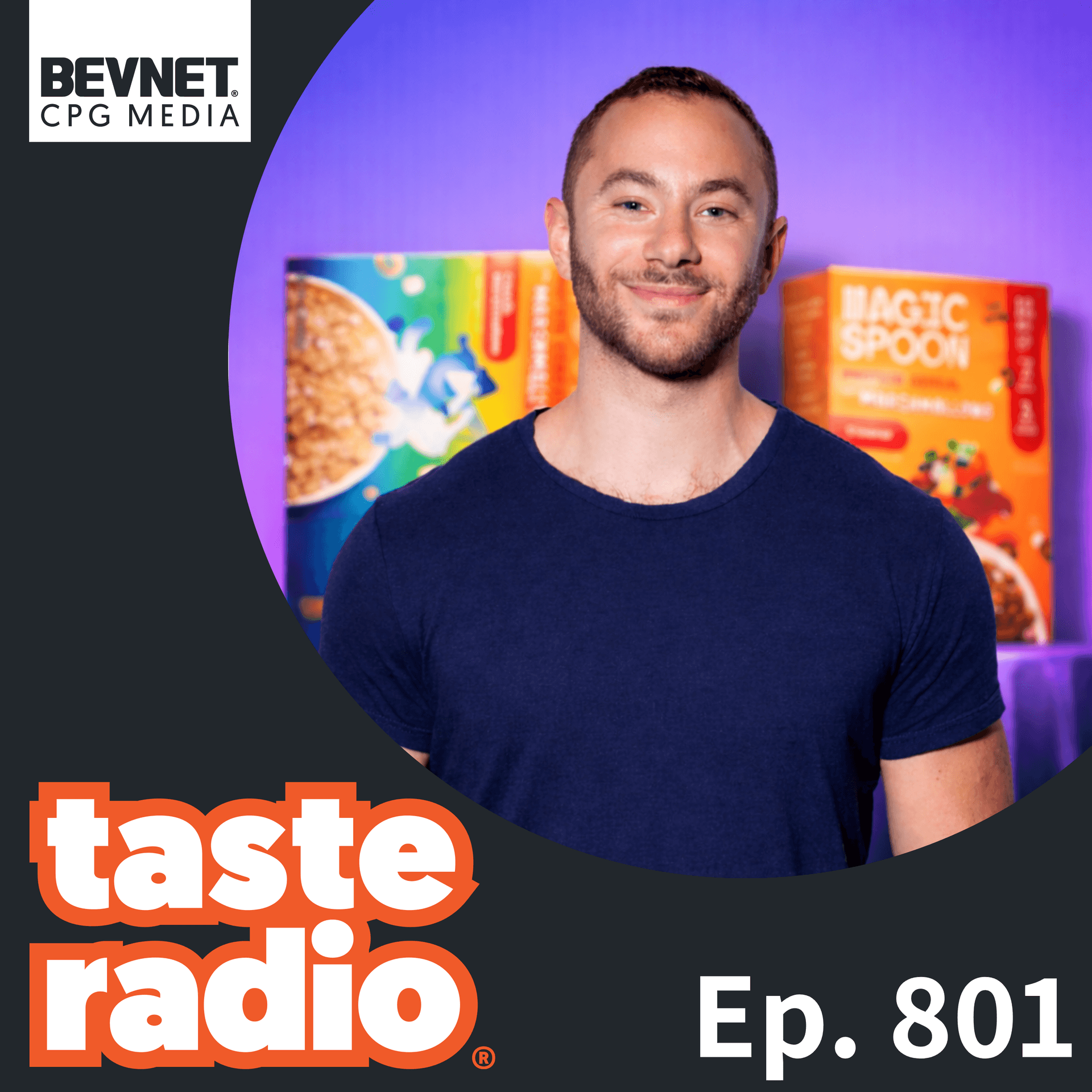
Taste Radio Episode Summary Episode Title: Why Magic Spoon's Product-First Strategy Drove Its Success Host: Ray Lateef Guest: Gabi Lewis, Co-Founder of Magic Spoon
Episode Overview In this episode of Taste Radio, Gabi Lewis, co-founder of Magic Spoon, discusses the innovative strategies that contributed to the success of the premium cereal brand. Magic Spoon emerged in a declining market by focusing on protein and nostalgia, successfully transitioning from a direct-to-consumer (DTC) model to national retail while maintaining profitability. Gabi shares insights on product-market fit, branding, pricing strategy, and the importance of maintaining consumer excitement through innovative offerings.
Key Themes and Discussions
Background of Gabi Lewis
- Early Influences: Born in Glasgow, Gabi’s interest in food stemmed from personal experiences and a passion for cooking and fitness.
- Initial Venture: Before Magic Spoon, Gabi co-founded EXO, a cricket protein bar company, highlighting his early foray into consumer packaged goods (CPG).
Magic Spoon’s Innovative Approach
- Target Market: Identified nostalgia for cereal among adults who had moved away from traditional sugary cereals due to health concerns.
- Product Focus: Emphasized high protein content and low sugar, creating a cereal that closely resembled classic sugary varieties but with better nutritional profiles.
- Hype and Marketing:
- Leveraged health and wellness influencers, focusing on micro-influencers rather than giant endorsements.
- Invested in podcast advertising, yielding profitable returns early in the brand's life.
Transition from DTC to Retail
- Strategic Timing: Initially focused on DTC to refine the product and brand, Magic Spoon launched in retail after three years due to high consumer demand.
- Retail Strategy: Collaborated with major retailers like Target and Walmart, emphasizing retail velocity as a key metric post-launch.
Key Metrics and Success Factors
- Consumer Acquisition: Focused on cost of customer acquisition (CAC) and lifetime value (LTV) during DTC phase.
- Retail Metrics: Transitioned to prioritizing retail velocity to ensure product success on shelves.
- Profitability: Stressed the importance of becoming a profitable business while growing.
Challenges and Lessons Learned
- Investor Skepticism: Faced pushback from investors regarding market viability and pricing strategy, as cereal was seen as a declining category.
- Product Trade-offs: Discussed the complexities of balancing taste, nutrition, and pricing in product development.
Future Vision
- Expansion Plans: Envisions Magic Spoon as a leading breakfast company, exploring new product lines while maintaining core values of health and taste.
- Innovation Strategy: Committed to ongoing product innovation without succumbing to fleeting market trends.
Personal Reflections
- Happiness in Entrepreneurship: Gabi expresses satisfaction with his work and the importance of a supportive team culture in navigating the challenges of running a startup.
Conclusion Gabi Lewis’s insights provide a valuable playbook for founders aiming to innovate within the food and beverage sector. By focusing on product quality, strategic market entry, and maintaining consumer engagement, Magic Spoon has carved a notable niche in the competitive cereal landscape.
Listen to the Episode For a deeper dive into the conversation and the strategies discussed, listen to the full episode of Taste Radio. You can find it on major podcast platforms or visit [Taste Radio](https://www.tasteradio.com).
---
Note
For further questions or feedback, listeners are encouraged to reach out via email at ask@tasteradio.com.
Written by AI. May contain mistakes. Listen to the episode to check what was said.
Chapters
Tap a time to open that second in VOThe Birth of Magic Spoon
0:45 to 3:00
Gabby Lewis discusses how Magic Spoon launched in a declining cereal market.
“how it made the jump from D to C to national retail without losing profitability, and what actually mattered along the way.”
Childhood Influences on Food
3:00 to 6:00
Gabby shares his early food experiences and how they shaped his career.
“So the sort of fusion of being interested in foods, fitness, cooking definitely led me to become a food entrepreneur.”
Cricket Protein Journey
6:00 to 9:00
Gabby talks about his first venture into cricket protein and its challenges.
“When I was fortunate enough to be in a position where I could try something for a period of time and still know that ultimately I would be okay if it didn't work out.”
Evaluating Risks in Entrepreneurship
9:00 to 12:00
Discussion on how Gabby evaluated risk when starting businesses.
“And I think everybody went into knowing that if this works, it's going to be massive and food system changing.”
Identifying Market Opportunities
12:00 to 14:01
Gabby explains how he saw opportunity in the cereal market despite its decline.
“And so it seemed obvious to us that if you could create a breakfast cereal, they looked and tasted close enough to the sugary classics, but was massively upgraded in nutrition.”
Branding and Product Innovation
14:01 to 15:35
Explore how branding and packaging choices impact consumer perception.
“All these other better few brands in cereal, but you see this more broadly at the time as well.”
Leveraging Influencers and Podcasts
15:36 to 17:44
Learn how Magic Spoon utilized influencers and podcasts to drive awareness.
“And the launch was a really, really amazing launch.”
Generating Excitement and Repeat Sales
17:45 to 19:50
Discover strategies for maintaining consumer interest and boosting repeat sales.
“And so that's where it's really important to make sure the product delivers and also find ways to keep people excited.”
The Importance of Brand Name
19:51 to 22:23
Understand the significance of a compelling brand name in marketing.
“If you think about the names of cereal brands, the legacy ones anyway, they're often two words, you know, a cornflakes, a frosted flakes, a honey smacks, corn pops, you know, Lucky Charms, any of those.”
From DTC to Retail: A Strategic Leap
22:24 to 25:28
Examine the transition from DTC to an omnichannel retail strategy.
“Disco actually feels like maybe a dive bar in Brooklyn.”
Show all 21 chapters
Key Metrics for Success
25:29 to 27:49
Learn about the crucial metrics Magic Spoon focuses on as it grows.
“Six months later, we were in Walmart, Sprouts, Kroger, Costco, a lot of retailers.”
Reflections on Mistakes and Lessons Learned
27:50 to 28:00
Hear about the mistakes Magic Spoon made and the lessons learned along the way.
“A lot of founders might ask you, Gabby, what's the biggest mistake you made?”
Mistakes and Lessons in Ingredient Sourcing
28:00 to 29:20
Discover the key lessons learned from ingredient sourcing mistakes and how they shaped the business strategy.
“We've made a lot of mistakes across lots of different things.”
The Importance of Retail Presence
29:20 to 30:50
Learn why establishing a retail presence earlier could have benefited Magic Spoon's growth and consumer accessibility.
“And so there were many, many instances, probably daily emails, social comments of being like, hey, I went to my local grocery store and you weren't there.”
Communication of Value Through Packaging
30:50 to 32:40
Explore how Magic Spoon communicates product value and justifies pricing through effective packaging design.
“Usually people understood it when we get a chance to explain.”
Balancing Taste and Nutritional Value
32:54 to 35:36
Understand the challenge of balancing taste with nutritional value in product innovation.
“I was wondering if the term protein really is the game changer for Magic Spoon.”
Innovation and Consumer Feedback
35:36 to 38:38
Learn how Magic Spoon incorporates consumer feedback into product innovation, especially with new offerings.
“We've actually created this from the ground up, yes, with lots of high quality protein, but also with no sugar and also with nothing artificial.”
Vision and Future Strategy for Magic Spoon
38:38 to 41:39
Examine the flexible vision behind Magic Spoon's growth and their approach to future innovations.
“Are the Marshmallows intended to reward existing consumers or are you trying to bring new consumers to the category, to your brand more specifically?”
Reflections on Happiness and Entrepreneurship
41:39 to 42:03
Explore the complexity of happiness in entrepreneurship and personal fulfillment in business.
“And we want to be the breakfast company of our generation.”
Entrepreneurial Happiness and Challenges
42:03 to 43:34
Explore the complexities of finding happiness as an entrepreneur amid challenges.
“You know, I asked Peter Rahal, who is one of the co-founders of RxBar, now co-founder of a protein bar called Daniel.”
Building an Enjoyable Workplace
43:35 to 44:10
Learn about the importance of culture and teamwork in a startup environment.
“And we hire really slowly, really deliberately.”
Transcript
Automatic transcript. May contain errors.0:10Hello friends, I'm Ray Lateef and you're tuned in to taste radio the leading podcast for entrepreneurs makers and innovators in the food and beverage industry. Magic Spoon is proof that breaking the rules can be the smartest move in CPG. In this episode, co-founder Gabby Lewis breaks down how the premium cereal and snack brand launched and scaled in a category most people had already written off. He shares why Magic Spoon anchored on protein and nostalgia from day one, how it made the jump from D to C to national retail without losing profitability, and what actually mattered along the way. Gabby gets candid about product market fit, pricing, branding, word-of-mouth growth, retail velocity, and the trade-offs that come with innovation, offering a clear, hard-earned playbook for founders building modern food and beverage brands.
1:14Hey folks, it's Ray with Taste Radio. Right now, I am supremely honored to be sitting down with Gabby Lewis, who is one of the co-founders of Magic Spoon. Gabby, it's great to see you. Thank you for having me. Great to see you too. Scott, living in America. What part of Scotland are you from? I grew up in Glasgow. Isn't Glasgow Anthony Bourdain's favorite city or was his favorite city? You know, I haven't heard that. That would be amazing news if that's the case. I'm pretty sure that's what he said. What's so special about Glasgow? I haven't been. I've heard amazing things. But is there something particularly amazing about that city?
1:49I'm not sure what there would be from Anthony Bourdain's perspective. It's definitely not a food capital in any sense. We have great fish and chips. We have great curry. I mean, great people. I mean, there's a lot to love about the people, the culture, but certainly not a foodie destination. Interesting. Okay. So I'll have to investigate more into, or maybe I'm getting the city completely wrong and we have to edit all this out, but I don't, I think I'm right. I think I am right. Where did your food sensibility come from? How did you start to appreciate food as a food entrepreneur yourself? It's a great question.
2:23And my parents always asked me that as well, because they're not huge food lovers themselves and it's not like it was imbued from them. But for as long as I can remember, I've been absolutely obsessed with food. you know as a kid I would remember airports or places we'd visit by the food that we had there like I remember I remember this certain airport in Spain from this amazing sweet shop candy shop I went to as a kid and that was like the only reason I wanted to go back to Spain was to get candy at this shop in the airport when I was a kid but I love food I love restaurants it's kind of I love cooking so I think about so I talk about and also really into fitness as well and so So the sort of fusion of being interested in foods, fitness, cooking definitely led me to become a food entrepreneur.
3:08Did you eat a lot of crickets as a kid? Is that part of your childhood diet as well? It's not a Glasgow specialty, no. The first time I ate crickets was actually, I took a year off after high school and backpacked through South America. And it's obviously a very common staple in many countries there. And so, and I think in Ecuador, we had crickets for the first time. Okay. I didn't know it was a common staple in South American countries. And obviously I'm asking you this question, not completely out of the blue, because before you launched Magic Spoon, you were a cricket protein entrepreneur, which I think that's a first of ever.
3:47I don't think anyone ever thought that someone would say, Hey, you know, I'm, I'm the first cricket protein entrepreneur of all time, but Hey, it's a title. Yeah. And actually, I don't even know if I deserve that title. So we launched that business. It was called EXO in our final year of college. So that was 2013. And briefly, the idea is that insect protein in general, but cricket specifically, are a really high quality source of protein, all the amino acids, but also really sustainable. So it requires less feed, water, space to raise them compared to conventional proteins. And it was an idea that seemed really intellectually engaging, interesting.
4:23How do you convince people to eat something they think is a little bit strange or even gross, if it makes sense logically from a nutritional and environmental perspective? But when we launched that business, there were two or three others that launched at a similar time to us. There was one called Chapul in Utah, a couple of others, one in San Francisco. And so I'm not sure if we were technically the first, but a few of us launched all around the same time in 2013. Sounds like a risky proposition, but it was one that generated a lot of interest and a lot of enthusiasm in the industry at the time.
4:55How do you evaluate risk? How did you evaluate risk as a first-time entrepreneur? And how do you do it today as the angel investor and as the co-founder of Magic Spoon? I would say at the time, how did I evaluate risk? I probably didn't really evaluate it. or it was a very simple rubric where I actually thought I was going to go into finance. And so I had interned at what was the time, the largest hedge fund in the world. I thought I was going to go back there when I graduated. And so I started playing around with this idea for XO in the months before I graduated and then was going to go and work at this hedge fund.
5:33And as I was working on the idea, I just became more and more in love with it and met some angel investors in Rhode Island where I was at college, met some people at a CrossFit gym at a farmer's market, convinced me this was the best idea they'd ever heard of. And so at the time, as 21, 22-year-old, to me, it just seemed like this is the time to do something crazy, like start a cricket protein bar company. If this doesn't work out at that age, I knew I'd be okay. When I was fortunate enough to be in a position where I could try something for a period of time and still know that ultimately I would be okay if it didn't work out.
6:07And it wasn't as if we did deep analysis on the idea. We didn't do a ton of consumer testing. It was simply an idea that we thought was worthy to exist in the world. It was a business that we thought should exist. Somebody should do it. And it was a kind of product that we thought logically made sense if you could figure out the marketing angle. And so we just went all in. We moved to New York. We graduated. I didn't go to the hedge fund. my co-founder who was my roommate at the time was going to go and do a phd he obviously didn't do that and we we moved to a tiny little apartment in brooklyn so tiny and so bad actually the one my mom came to visit from scotland for the first time she cried slightly when she's but that's what you do and we spent five years building that business and it was an absolute monster of an education and cbg and entrepreneurship taught us a huge amount We met retailers, we met investors, we learned how to build something from nothing.
7:05And ultimately, that became the foundation and the education for building Magic Spoon, which has obviously been far more successful in the mainstream than cricket bars. Maybe I should ask you about the risk that your investors saw in the brand. Because again, a cricket protein bar company isn't necessarily the most intuitive investment for, well, anyone. How do you convince them of your vision? You know, I actually think it was probably easier to convince investors for that business than this business. Because for a lot of investors, first, it depends whether you're talking about VCs or angel investors and, you know, the domain they know.
7:41But for a lot of investors, they're looking at something and they're asking, can this become a billion dollar business? And risk or likelihood of success is maybe even slightly secondary. So can this become a billion dollar business? And can this dominate an industry? and at the time so back in 2013 this was going to peak alternative proteins this was you know a lot of talk about the environment and we were basically making the case that insect protein is going to be an entire category of protein similar to the plant-based protein movement right we were saying it is more sustainable better quality protein people essentially want to have the amino acid profile and the protein quality of an egg or a beef protein, which is kind of the highest PDCA score, but they don't want the environmental footprint.
8:32And so insect protein, the way we positioned it was like, it's sort of the best of all worlds. It's the environmental credentials, the plant-based protein, it's the protein quality of animal-based protein all in one. And so for some investors, this was a bet on the future of the food system being both high quality and sustainable. And, you know, they could believe that there's some odds that this thing could actually become as big as the soy or other kind of staple protein sources. Obviously, we all knew it was a long shot. It was a huge swing. And I think everybody went into knowing that if this works, it's going to be massive and food system changing.
9:09And if it doesn't, that's investing. That starts up. So I think that was kind of the lens that everybody took. I'm going to be honest with you, and I'm sorry if I offend you in any way, Gabby, but if I were an investor when you were launching Magic Spoon and you said, hey, we've got this great idea for a very high macro, ultra premium cereal that's probably going to cost about$10 or$11 a box, I would have been like, I'm sorry, hang up the phone or leave the room or whatever it is that an investor might have done. And I'm sorry for saying that because clearly I would have been in the wrong. Again, going back to risk, Magic Spoon as a business proposition wasn't necessarily something that made sense, at least I think for most people.
9:54What did you see as the opportunity? What did you see as that quote unquote white space for a brand like this? I think you're right. And it's not actually just you. Lots of investors we spoke to casually gave us a list of reasons why this business wouldn't work or didn't make sense to them. And some of the reasons were the market was declining, right? So cereal, yes, it's enormous, but it was in decline for several years. And investors would say to us, you should never get into a declining category, which is kind of funny because some of them would say, hey, you should enter this growing category that's very small.
10:28But when I looked at that, I saw$10,$12 billion category, very slightly declining, still going to be big for a very long time. or you look at a$200 million category, which even if it's growing 30, 40%, that's still going to be pretty small for a long time. So I didn't really get that argument, but we heard it. They'd say to us, you'll never get shelf space. They'd name the big three cereal companies. They'd say it's going to be very hard for us to break through. I'd actually seen with Exo though, that if you generate enough hype, enough consumer demand, retailers will take a gamble on you or at least enough retailers, one retailer, that then you get a chance to prove yourself with velocity, take that to the next retailer.
11:05So I didn't really buy that argument. They'd say to us, nobody will ever pay$9,$10 for walks of cereal, which again, nobody had proven that you could do it. But all these other categories, you'd seen something similar happen, right? And that's true in food and beverage, where there's many categories where a brand creates something that's genuinely better and can charge a premium. But you even saw it at the time, native deodorant had just sold to PNG. And they had a natural deodorant, three times the price in conventional deodorant. So you'd seen all these examples in different aisles of the store that prove to us that people will pay for something that's actually differentiated.
11:39And we also just knew that there are very few categories that are as big that people love so much. And you'd speak to anybody and they have all these incredible memories of eating cereal as a kid and they stopped. And that included me, my co-founder, but it's also most people you talk to that care about health and wellness. And so it seemed obvious to us that if you could create a breakfast cereal, they looked and tasted close enough to the sugary classics, but was massively upgraded in nutrition. So not just 20 % less sugar, because that had been done before, not just a few grams of protein that had been done before, not just making the ingredients more natural and organic, but keeping the macros the same that had been done, but actually taking the protein from one gram to 14 or 15, the sugar from 20 grams to zero.
12:29It's a completely different product. we thought that there'd be a lot of people very excited to eat that in place of their Greek yogurt, their stodgy protein bar, their green juice, all these things people eat that they don't really enjoy. So that was what we saw. Love investors didn't see it. Thankfully, a few did. And so we raised some money and we got to work. At launch or actually at pre-launch, can you arrange in order of importance these three aspects of the brand? Hype, product, brand. Products, I think, is going to be number one. I think brands can mean so many different things. And I think when you're launching, when people say brand for an early stage company, they probably just mean packaging and website.
13:16Or for a brand that's not DTC, probably just packaging. Ultimately, brand encompasses every interaction somebody has with your company, including how they perceive the product, including how customer service interacts with them if they write in, social, everything. But when you're just launching, there's not really a brand, there's packaging and a site. I think for us, packaging was really important because we wanted to create that feeling of nostalgia. And we wanted somebody to not see this as just another Better View health product. There had been cereals or Better View cereals, and they all took this approach of basically doing the opposite of what the sugary cereals do.
13:55So you see the sugary there's cereals, characters, bright colors. They're fun. You know, they're not very good for you. All these other better few brands in cereal, but you see this more broadly at the time as well. They're going very minimalist. They're doing muted packaging. There's, you know, maybe on the back, there's a farmer with a stalk of wheat. It's very kind of like wholesome branding. And it's not fun and it's not enjoyable. And you don't think it's going to taste good. And so for us, it was very important from a branding perspective to say to people, we're creating something that doesn't involve compromise.
14:25You can have something that's fun, tasty, makes you feel good, makes you feel like a kid, but it's legitimately good for you. In fact, better for you than all those other brands that try and make it seem like they're healthy with the white, minimalist packaging. So brand and packaging was really important to us, even the format of the product. So we thought for a moment, maybe we should do a stand-up pouch that's resealable. Because cereal boxes are actually not a great experience, right? You kind of rip it open, it tears. You don't reseal it. Like it's not a great way to package and consume something, but what it does have is that amazing feeling of nostalgia.
15:01And it's fun to rip open a cereal box. It's fun to look at the back and play the game. And so we even chose the format of the packaging through that lens of brand, and we wanted someone to feel. So that was very important for us. But ultimately, product is number one. We basically had a list of all the nutritional attributes we were trying to meet and formulating. And so we had to be over 10 grams of protein, as close to zero sugar as possible, gluten-free, grain-free, low-net carb. And then within that, taste as close as possible to the cereals that people grew up with. And yeah, I think we got close enough.
15:36And the launch was a really, really amazing launch. And then I think if you get the product right and you get the brand right, the hype a little bit comes from them. It's not something you build in isolation as distinct from those two aspects. To be fair, though, there was a lot of hype for Magic Spoon. And I feel like that's where I learned about the brand. I wasn't necessarily seeking out a cereal brand for me. I understand that, you know, this is something that, or the brand that is Magic Spoon is something that was sort of right place, right time, particularly in 2020. But for a time, it was known as Instagram's favorite cereal, right?
16:16Yeah. So we generated awareness a few ways early on. So one was we relied heavily on health and wellness influencers, not with massive followings, though. So we actually brought on some small health and wellness influencers as investors in the business. You know, Kaylee Levesque, for example, is one who she's a nutritionist, dietitian to a lot of celebrities. People really trust her for food recommendations, nutrition recommendations. so we actually brought people on like that as kind of part of the business and so that was one piece we did a lot of seeding of small kind of micro influencers on instagram literally just me and the dms finding someone with 30 000 followers that i thought might like the product asking them if they were interested in trying it no pressure to share but if they like it they typically will share so a lot of that with smaller influencers and then as the sales started to come in and we had some money to spend, we also started to invest in podcasts.
17:14And the podcast environment was a little bit different five years ago than today, a little bit more underpriced. You were able to invest in some of these podcasts. And actually, for us, that was a profitable acquisition vehicle kind of on day one, right? So it wasn't a lot of DTC brands back in the day were spending more cash than they can really afford, getting the payback over a longer period. For many of these channels, including podcasts, that wasn't the case for us. And so we're able to generate a lot of early interest through influencers, podcasts, and of course, some ads on Instagram as well.
17:43But as you say, that's incredible, but it only ultimately matters if you can then get the repeat rate. And so that's where it's really important to make sure the product delivers and also find ways to keep people excited. And so in our first few years, we actually launched new flavors online every four to six weeks. Somebody might come in on a sampler pack, four boxes top four flavors but then in four to six weeks they get an email saying hey we have a brand new limited edition flavor we developed a bit of a playbook for that so we wouldn't make very much of these flavors we dropped them to our kind of early access vips first of all through sms through email and that generated a lot of excitement but also a reason to repurchase as well i think there's so many options out there and so for us to be able to say to someone you You can have your classic flavors, but also there's more coming every six or eight weeks.
18:34We're always going to keep it exciting. There's no reason to get bored of this product, this brand. That was really key to generating those repeat sales in the first few years, DTC as well. So it was about maintaining that enthusiasm and excitement for Magic Spoon among your core consumers. Were they, by that point, convincing a lot of other people to try the brand? And was word of mouth a really big part of generating excitement for Magic Spoon? A hundred percent. And I think it's word of mouth at every level, right? So we took the view early on that running ads and our brand saying, trust us, this brand you've never heard of, this product is good for you and delicious.
19:18That's not how you build a brand and no one's really going to believe you. And so we realized early on that word of mouth at every level is how we're going to get this product out there. And so that was some early celebrity investors. That was these kind of mid-tier and smaller-tier influencers. That was the micro-influencers we're just sending product to, hoping they talk about it. And that's also just your customers telling their friends. And if you can facilitate that or encourage that more through a referral program or something like that, it can also be powerful. But so at every level, you're building it through word of mouth, broadly defined, 100%.
19:49ahead of major trade shows food and beverage professionals across the industry are turning to bevnet and nosh to stay informed if you have a brand update share it with us at submit.bevnet.com forward slash news i just want to back up for a second i wanted to ask about the name magic spoon which feels pretty intuitive. It feels fun. It feels like a cereal brand. If you think about the names of cereal brands, the legacy ones anyway, they're often two words, you know, a cornflakes, a frosted flakes, a honey smacks, corn pops, you know, Lucky Charms, any of those. And Magic Spoon, each word is five characters, which again, feels really easy for that consumer.
20:36How much do you think about the brand name as being a really important part of the brand itself? Were there any other names that were on the cutting room floor? Yeah, we thought about it a lot. We probably overthought it, and I think every founder probably overthinks it. There was actually a different name we had for a while, which was Discos. And that was what the name was going to be. We thought, you know, Disco, 70s, vintage nostalgia, they're shaped as O's, Discos. And people told us they liked that name. Looking back on it, I think that's a horrible name. at the time, you know, because these names before you launch, there's no brand or world built around them.
21:14And so it's very hard to wrap your head around what a word or two words really feels like or means until you build everything around it. We eventually thought the discos felt too small, too tight, didn't feel like, you know, a big brand. And we wanted to nod at this idea of magic because where that came from was we want somebody to think when they try our product for the first time. What is going on here? How did this company create cereal that tastes and looks so colorful and sweet, but there's zero sugar in it? It must be magic. So that was the idea we wanted to convey. And we also felt like a two-word name kind of made sense in this category.
21:55See, Spoons, Cereal. One of us just said, what about Magic Spoon? And it kind of felt right, but it didn't feel instantly right. It wasn't like someone said that and we all thought, that's the name we have to have it. And I think until you actually build the branding and the world and the packaging around it, it's very hard for a name to mean very much. And I think it ultimately probably matters less than everything you build around it. So we thought about it a lot, weren't incredibly confident of it, honestly, in the early days, but now we think it's a very strong name and it's served as well.
22:29Well, for sure. Disco actually feels like maybe a dive bar in Brooklyn. So I can understand. Yeah, 100%. Or, or, which we didn't even think of this at the time, getting discord from a retailer, right? Like it's got pretty negative connotations in CPG. Definitely don't want to be discontinued at a retailer. Yeah. Well, let's talk about that for a sec. Because for a long time, you were D to C and patient about going into retail, or at least brick and mortar retail. When did you feel like you had permission to make that leap? And think about Magic Spoon is more of an omni-channel brand. So we actually thought about it as an omni-channel brand pre-launch.
23:06When we launched, it was not my intention to launch a DTC brand. We didn't think that our innovation was in channel. We thought our innovation was in product. And so people would talk about us in the early days of Magic Spoon is the Casper, the Harry's, or whatever DTC brands of cereal. And that actually annoyed me a little bit because those brands, whilst they're incredible brands, their innovation was cutting out a middleman, getting someone essentially the same product, but more directly and more affordably. They didn't really do a whole amount of product innovation. For us, everything we thought we were doing was product innovation.
23:45We were taking sugary cereal and making it vastly healthier with similar taste. And it just so happened that we were selling on the internet. So that wasn't important in our minds to the business model. and pre-launch, if you had asked me when we would go to retail, I would have said six or 12 months into our journey. Our goal was prove the concept online just enough to convince a retailer to take us. That was shattered in our first week. So our first week online, we probably did more in sales than we'd forecast for our entire first year. It's a massive first week. And a lot of that was due to the excitement at launch, some of the press and the creators that got behind it, and just incredible efficiency once we turned on ads a little bit later as well.
24:33And that continued. And so because D2C was growing at such a clip, and it was enough for us to focus on, we didn't need additional things to think about, we kept our heads down. And throughout the entirety of the business, it's been really important for us to do as little as possible. We want to be really good at a small number of things and not get distracted by any of the shiny objects. And so to the extent the DTC was working really well and we were growing as quickly as we could have ever wanted to grow, we just kept our heads down. And retailers would reach out. We'd very politely explain that we're excited about partnering with them at some point when the time is right, but we weren't quite ready yet.
25:13And we ended up building the business DTC only for essentially three years. And then we launched in retail two or three years ago. And we did it in a major way. So we launched Nationwide and Target, firstly. Six months later, we were in Walmart, Sprouts, Kroger, Costco, a lot of retailers. When Magic Spoon was a D2C-only brand, what was the most important metric for you as a founder? and how has that changed, if at all, in becoming an omnichannel brand? In terms of sales metrics, when we're D2C only, we're looking at some measure of what it's costing us to find and acquire a customer. So CAC, cost of acquisition.
26:00And then we're looking at some measure of how long does that customer stick around, how much they're spending with us over time. So lifetime value, lifetime revenue. and we're trying to find the balance there that makes sense to build a sustainable business and of course within those like they capture a lot of different things right so within lifetime value lifetime revenue repeat rate kind of factors in there so it's also a measure of how much someone likes your product you know within the cost of acquisition obviously how efficient can you get the eyeballs in the first place how efficient can you get a click and so your brand matters your packaging matters the creative matters so within those there's a lot of stuff it's kind of bound up.
26:39But those are ultimately the two things that kind of mattered most in the DTC days. Now retail velocity is probably the number one sales metric. We're less concerned about things like door counts. We're really trying to be healthy in terms of velocity and flying off shelves. And that's going to be true since day one in retail. That's been a major focus. And a lot of things go into that as well, right? So repeat rate is really important. front of pack like are you getting someone to pick you up off the shelf so there's a lot that goes into that that we look at kind of one layer down but ultimately retail velocity is probably the single most important sales metric at this point and then higher level as a company you know in the early days we're thinking a little bit more about revenue for startup that's zero to three years in revenue growth probably one of the more important metrics especially because the market was a little bit different six years ago.
Read the full transcript
27:32Now profit's far more important, both because we're a more mature business that needs to generate a profit and should be generating a profit. And we are generating a profit, but also because the market's changed a little bit and the expectations have changed. So revenue growth is still very much top of mind, incredibly important, but profit's up there alongside it. A lot of founders might ask you, Gabby, what's the biggest mistake you made? Let's clarify that for a sec. What's the biggest mistake that you or just Magic Spoon has made when it comes to costs? We've made a lot of mistakes across lots of different things.
28:06I think with costs, there's mistakes we've made that maybe in hindsight were mistakes. We probably made the best decision with the information we had. You know, we've had situations where there were ingredients that we believed there was going to be a shortage of a certain kind of ingredient for a certain period of time. And so we bought a huge amount to make sure that we don't risk running our product. and then we contracted at a higher price than we should have, for example, on the ingredient. And then for a period of time, our cogs were inflated, which potentially a mistake. We're paying more for our ingredients, but we removed the risk of having no product on the shelf.
28:43So there's lots of situations where we may find ourselves a little bit on the wrong side of a bet, but it's probably still worth it in most cases. Broader mistakes. I think in hindsight, we probably should have gone to retail a little bit earlier. Not massively earlier. I think it's really important to wait until you know you're going to really fly off the shelves to go to retail. But I think ultimately, almost all cereal is bought and sold in brick and mortar. I think just from a pure customer experience perspective, we now want to be everywhere that cereal is bought and sold. We want to be where the customer is looking for us.
29:18And for three years, our business wasn't there, right? And so there were many, many instances, probably daily emails, social comments of being like, hey, I went to my local grocery store and you weren't there. And so I think of just from the perspective of trying to build a kind of consumer first business, probably would have been better to be in brick and mortar sooner than we were. Was there some shock value for that target consumer when they walked in and saw this beautiful package of cereal with high macros and just seemingly speaking to them and then saw the price of the product and balked.
29:52How much did you have to overcome as price point for that new consumer? Not as much as I thought we were going to have to pre-launch. Pre-launch, that was my single biggest concern was, can we justify the price? And to be clear, it's not that we want to charge a high price. I want this to be as accessible as it possibly can be. The issue, of course, is we're using whey protein rather than corn flour, and we're using natural sweeteners rather than cane sugar or high fructose corn syrup. And so our ingredient costs are just vastly, vastly more expensive than a classic box of cereal. So there's not really a way around it.
30:34And for us, it just became really important to message that even though this looks and tastes like a box of cereal, from an ingredient perspective, it's actually a protein bar or a protein shake. And so making sure the macros are really clear on front, making sure we have some explanations on the back, making sure most of our ad copy, our web copy is really explaining why the price is more than it is. Usually people understood it when we get a chance to explain. The issue into retail, of course, is it's not like a Facebook ad where someone asks in the comments, you can respond and explain. There's no one there in the aisle to respond and explain.
31:10And so So packaging becomes that much more important because that is your billboard. But retail has been working really nicely. I think because we complement the in-store, offline experience, we sell a lot of online ads, podcasts, Instagram ads, things like that. We're able to kind of educate around it in addition to kind of the work the packaging is doing in-store. There's enough people that have kind of understood the price point within the context of the products actually giving them. What's the most important part of your front of pack? Is it a word? Is it an image? Is it the logo? We think a lot about the kind of hierarchy on the front of pack.
31:50I think logo is number one in terms of just, if you had to set a hierarchy, logo is the most important thing, especially if you're doing a fair amount of advertising in other areas. You need someone to be able to walk down the aisle and go, oh, that's Magic Spoon. It's the brand I heard on the podcast last week or whatever it might be. For us, we are always trying to balance the fun of the packaging, meaning the character, the color, the feeling, with the actual education we want the front of the pack to do, which is the reasons to believe the macronutrient collapse. We've got protein, sugar, net carbs.
32:24And those macros are certainly bigger now than they were when we were just a DTC brand because they now have to do more work on the packaging than when the packaging is just one small part of an ad where we can put other words and things around it. Do you want more repeat buyers on Amazon? Well, this free resource in collaboration with Straight Up Growth will help your brand turn first-time buyers into long-term subscribers. Download Winning the Repeat Purchase Game on Amazon now at tasteradio.com slash sug. That's tasteradio.com slash s-u-g to start building retention-driven growth for your brand on Amazon.
33:03on. I was wondering if the term protein really is the game changer for Magic Spoon. I mean, it is for so many other brands and so many other categories, especially today when protein seems to be the number one macro for, well, everyone. But for me, I mean, everything begins with taste. And on Front of Pack, I just want to make sure or just have the sense that this is going to taste great. How do you communicate tastes on Front of Pack or in an online ad? In an online ad, it's much easier, right? In an online ad, you could have the visual of it pouring out of the package and some milk splashing or a lifestyle imagery of somebody enjoying it.
33:41So ads are relatively easy. On Front of Pack, it's much harder. We do it a little bit through color, a little bit through, we have these floating loops around the package. I think for us, communicating taste is more about saying to someone, this is going to taste like a classic cereal. And so we do that through the colors, through the loops floating around, but even the character I think doesn't work there and letting the purchaser know that it's designed in the vein of a classic cereal. And so we're relying on a few different elements of the packaging. You mentioned protein, which is interesting.
34:13Our cereal actually didn't used to say protein cereal on it. For many years, it said grain-free cereal. we're always trying to find the balance between what does the consumer want today but not falling into any kind of short-term trend or hype cycle and so you're right protein is happening in a crazy moment and it's not like it came out of nowhere protein's been steadily building for a long time there have been hundreds of protein bar brands and grocery stores for a very long time there's retailers that mostly sell types of protein but it's definitely having a moment becoming more and more mainstream for us we're really careful about not leaning too hard into any one direction because we don't want our brands to be susceptible to trends in these you know up and down kind of periods and for us we want to create a product that is resilient over time and is healthy from a variety of perspectives and so yes this is a cereal at time protein but it's also a cereal that's got no sugar.
35:16It's also a cereal that doesn't have artificial colors and artificial flavors. And so we really want to be clear to the consumer that, especially today, when there's a lot of products just dumping in 10 grams of low-quality protein into a random product, we want to be clear that's not us. We are not just taking a sugary, unhealthy product and dumping in some low-quality protein. We've actually created this from the ground up, yes, with lots of high quality protein, but also with no sugar and also with nothing artificial. And so that's really important to communicate to. But you have a new line of products and they're called protein pastries.
35:50So you're clearly leading with protein there. And it seems like the consumer would be thinking about protein first and foremost for a product like this and maybe taste second. We've had your products here at the office and I think they're great. But to be honest with you, I would probably lean more toward your new cereal line, which has marshmallows. Again, because I think for me, taste is first and foremost, the most important thing, especially when I know I'm already getting the protein from your cereal. I don't necessarily need more protein. I would love more flavor. So when you think about innovation, how do you balance, again, this consumer, I guess, balance between those two things, macros and taste?
36:33it's a really good question and i think a lot of it depends on the category you're in so you're right that the pastries you launched we call protein pastries still important for us and we need to keep working on this they've only just launched but they're also high fiber they're also extremely low sugar and so we want protein pastries for a product descriptor because he wants it to convey this looks and tastes and feels like a toaster pastry, but its base is protein rather than carbs and sugar. But we still want these other reasons to enjoy it to come through fiber, no sugar, things like that.
37:10I think with other product categories, you essentially need to think about taste, there's clean ingredients, there's macros, and you're always going to be trading off on those three. From our perspective, we want to be as high as we can on the macros and the taste while still having pretty clean ingredients. So our brand is not being built on, you know, only having four ingredients that you can pronounce and find in your kitchen, right? That's not what our brand is. Our brand is built on high protein, low sugar, in some places, high fiber, really tasty, with still clean ingredients, right? So we're still not using any artificial flavors, artificial sweeteners, artificial colors, nothing like that.
37:51Still a relatively short ingredient list for a packaged food, but we've chosen to lean more into the macronutrients and the taste than the kind of ingredients deck and that's true for most of our product categories we do have these new cereal lines with marshmallows in them they was launched a couple of weeks ago so yeah we have two flavors with a classic and a s'mores and they have many marshmallows that's actually a case where we slightly relax the macro guardrails in favor of taste and indulgence so those flavors have some sugar in them real cane sugar in the marshmallows which is not something we've done with our cereal or granola or pastries.
38:25So we're leaning a little bit more into indulgence with that new cereal subline. And so far, the response has been incredible. So it's been really exciting to see. And that may give us permission in the future to do that more with other lines of innovation as well. Are the Marshmallows intended to reward existing consumers or are you trying to bring new consumers to the category, to your brand more specifically? It's always a balance between the two. I think this product line, probably more than others, is a bit more geared towards generating excitement and attracting new fans of the brand. We thought a lot before being comfortable with having these marshmallows in there that add a little bit of sugar.
39:03And when we're talking to different segments of our current customer base, they gave us very different answers. If you speak to our most early evangelist customers, they would say to us, absolutely do not put any sugar in their product, no marshmallows. We don't want it. which is scary when you hear that first and this is partly why we didn't launch this product until six years into our journey you certainly don't want to alienate anyone and you certainly want to make sure you're doing right by your earliest fans and creating innovation that they can enjoy and can enhance their days but at the same time we want to continue to be bringing new people into the fold and when we asked a more mainstream audience or a customer that may be found us in year or two through a retailer, perhaps versus through D2C, you ask them, is it okay to have a couple of grams of sugar from the marshmallows?
39:54They say, yeah, if it's going to be an enjoyable experience. And so this product line is a little bit more geared towards that new customer, but we're still always careful not to alienate the existing. Gabby, what you've built is pretty extraordinary. Six years, a brand that's generating tens of millions, if not more in terms of revenue. I know there's been a lot of investor interest in the brand. And I know there's been a lot of excitement among strategics about Magic Spoon and sort of the category that you've built here. But I think most entrepreneurs that I've spoken with have always talked about success on their own terms and success as achieving a vision they had set out for themselves and set out for their own brands.
40:37Did you have a specific vision for what you wanted to see and create for Magic Spoon at the outset? Has that changed? Has your perspective on acquisition or strategic investment change at this point? I don't think I had a very set vision for where this goes. We've always been quite open-minded. Even just the idea of we launched thinking we'd be an omni-channel business, then we decided, let's spend three years doing DTC because that's working and we can lean in and that can be the best use of our focus. And now we're, of course, back to omni-channel. I think as it relates to the future, we're still open-minded.
41:14There's no one set view we have of the next few years, but we do want to be able to do it on our own terms and have optionality. And so very important for us to be profitable, which we are, get to choose our own destiny and keep growing fast and keep investing in innovation as well. We're always trying to strike the balance between being focused and not doing too much, but also innovating. And all these areas that we see are ripe for innovation. And we want to be the breakfast company of our generation. And so we see anything within breakfast broadly defined as fair game for us to go into if we think there's a gap where there's maybe a set of products that people love that aren't serving today's consumer from a nutritional perspective as much.
41:57Okay. Most important question, I think, of this entire interview. Are you happy? You know, I asked Peter Rahal, who is one of the co-founders of RxBar, now co-founder of a protein bar called Daniel. this question. And he responded by saying, you know, happiness isn't necessarily something you should think about as an entrepreneur, at least, you know, in your work life, because this is tough. This is hard. You're not going to be happy a lot. I and some other folks maybe took a little bit of issue with that, but it's a fair point. This is a really tough business and you can't necessarily expect happiness.
42:33In fact, what Peter said is that you should expect the opposite, unhappiness. but are you happy? How do you stay happy? I am quite happy. Good. And I enjoy my work and I enjoy the people I'm around. I think at the same time, entrepreneurship is, it's ups and downs. There's no founder that's like only having ops, even if maybe the metrics are only ops. There's still endless moments of quick panic and fire drills. And I think I am able to really enjoy those moments. And I actually find that as a founder, I switch on more in those moments. I love the fire drill. I love a problem to solve. And so you do need a mindset where you're probably more focused on those negatives and the positives.
43:15And day to day, a lot of your job is thinking about all the different ways where the business is not quite satisfactory from your perspective as a founder and all these little things that you think are a little negative that you can improve. But I enjoy that. And to me, that's not unsatisfying. That's actually quite satisfying to spend time focusing on those things, make them better. But, and the most important thing is the people for me as well. And we hire really slowly, really deliberately. And we surrender ourselves with a great group of people that don't take themselves too seriously either.
43:46At the end of the day, it's just a serial company. And so we try to make a really successful business, but have fun doing it as well. I love it. At the end of the day, we're a serial company. A really good one at that. And one that changed the game, I think, for the Isles. So I'm really excited that I had this opportunity to speak with you, Gabby. I think it's been a long time coming and congratulations on everything you've built to this point. I have a feeling we'll be speaking again in the future. And I'm looking forward to that next conversation as well. Amazing. Thank you so much for having me.
44:16Thank you.
44:19That brings us to the end of this episode of Taste Radio. Thank you so much for listening. Taste Radio is a production of BevNet.com Incorporated. Our audio engineer for Taste Radio is Joe Cratchy Our technical director is Joshua Pratt And our video editor is Ryan Galang Our social marketing manager is Amanda Smirlinski And our designer is Amanda Huang Just a reminder, if you like what you hear on Taste Radio Please share the podcast with friends and colleagues And of course, we would love it If you could review us on the Apple Podcasts app Or your listening platform of choice Check us out on Instagram Our handle is BevNetTasteRadio as always for questions comments ideas for future podcasts please send us an email to ask at taste radio.com on behalf of the entire taste radio team thank you for listening and we'll talk to you next time
From the publisher
Magic Spoon is proof that breaking the rules can be the smartest move in CPG.
In this episode, co-founder Gabi Lewis breaks down how the premium cereal and snack brand launched – and scaled – in a category most people had already written off. He shares why Magic Spoon anchored on protein and nostalgia from day one, how it made the jump from DTC to national retail without losing profitability, and what actually mattered along the way.
Gabi gets candid about product-market fit, pricing, branding, word-of-mouth growth, retail velocity, and the tradeoffs that come with innovation – offering a clear, hard-earned playbook for founders building modern food and beverage brands.
Show notes:
0:20: Gabi Lewis, Co-Founder, Magic Spoon – Gabi chats about his Glasgow roots and traces his path into food, and how cooking, fitness, and curiosity ultimately pulled him into entrepreneurship. He discusses his first CPG venture, EXO, a cricket-protein bar brand and reflects on being a young founder who didn't overthink risk. Gabi contrasts early investor reactions to EXO versus Magic Spoon and his belief that consumers still loved cereal emotionally but walked away for health reasons. He breaks down Magic Spoon's core playbook and hype as a downstream effect, the impact of influencer seeding, podcast ads and repeat purchases fueled by limited-edition flavors. Gabi also shares behind-the-scenes lessons on naming the brand, its focus on DTC before retail expansion, pricing strategy, and the constant tradeoffs between taste, nutrition, and ingredient standards. He also shares his long-term vision of building a defining breakfast company and how he finds happiness in high-pressure moments.
Brands in this episode: Magic Spoon, EXO, RXBAR, Daniel, Corn Flakes, Frosted Flakes, Honey Smacks, Corn Pops, Lucky Charms