

 Tech.eu
21 Aug 2026 · 46m · 19 chapters
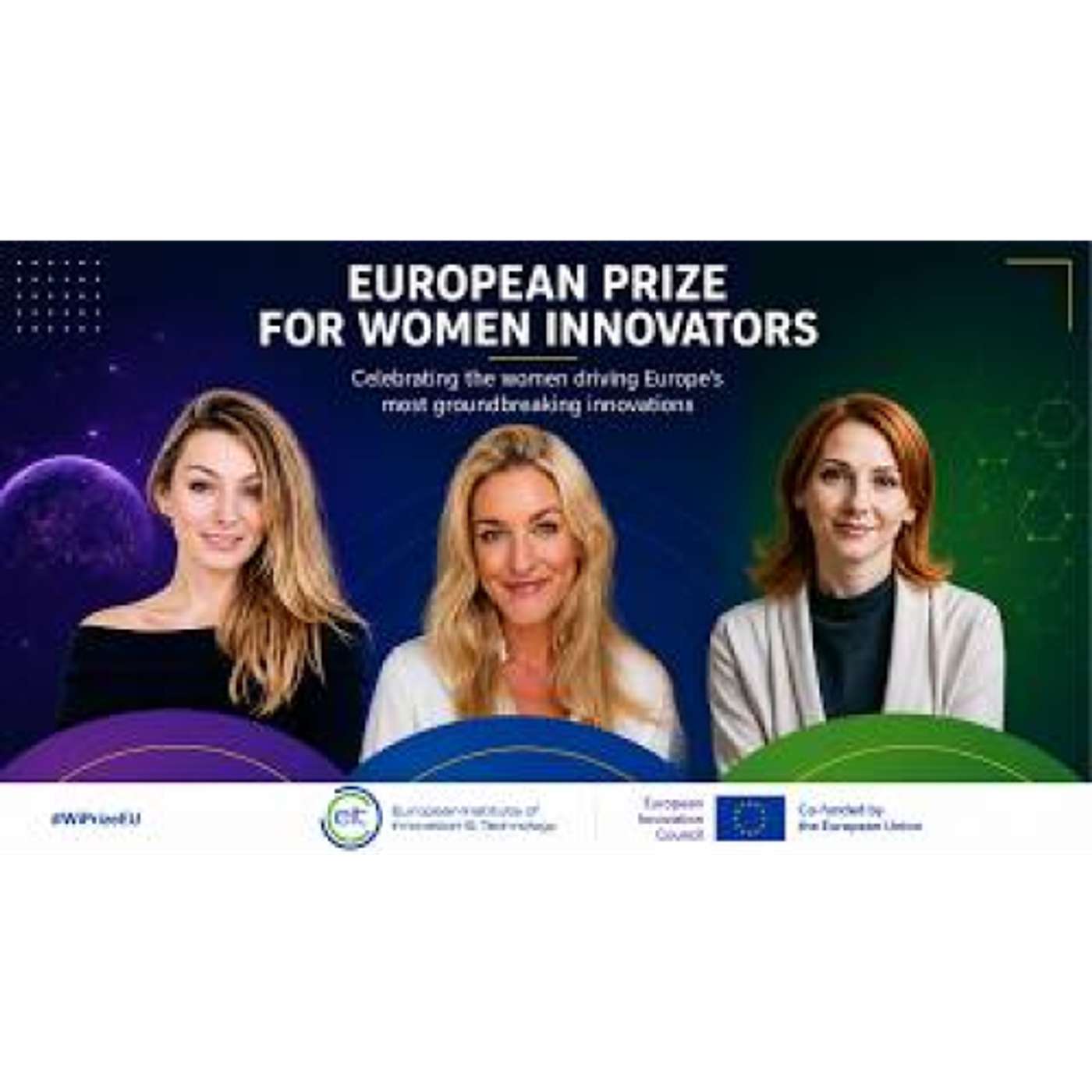
Meet the winners of the The European Prize for Women Innovators
 Ask ChatGPT
In short
The podcast profiles three winners of the European Prize for Women Innovators (EIT/EIC), highlighting women-led innovation in deep tech and medtech.
Guests and backgrounds
- Marta Oliveira (Portugal), co-founder and COO of Atmos Space Cargo. Background in space launch campaigns; led development of reusable space capsules.
- Katerina Springer (Oxford Heartbeat). Biomedical engineering PhD at Oxford; robotics background; shifted to medtech after observing minimally invasive brain aneurysm surgery.
- Ella (MindSpider). CMO; builds digital product and battery “passports” for traceability; focuses on minerals and batteries.
Key claims and notable examples
- Atmos Space Cargo: returning cargo from orbit is hard due to extreme re-entry aerothermodynamics; enables more frequent microgravity research (e.g., protein crystal growth for disease/drug insights). Prototype flown on Falcon 9; client framework for next missions.
- Oxford Heartbeat: AI + digital twins improve aneurysm implant selection by modeling 2D X-ray-derived 3D anatomy and device behavior; cites physician accuracy vs AI (~81% vs ~90%). Clinical trial across 9 hospitals/22 surgeons; UK results; expanding EU then US.
- MindSpider: “trusted product layer” makes sustainability claims verifiable across supply chains using blockchain hashes + AI. Examples: batch-level phosphate traceability for recalls; enabling EU sourcing from Central Asian mines with ESG/due-diligence data.
Written by AI. May contain mistakes.
Chapters
Celebrating Women Innovators
Discussion on the significance of the European Prize for Women Innovators and its impact.
“game-changing innovation and creating new models and new economies for Europe, which is super exciting.”
Interview with Marta Oliveira
Marta Oliveira discusses her work on reusable space capsules and the challenges of returning cargo from orbit.
“If it is like a scientific experiment or hardware, you have to make sure that you return it to the customer safely.”
Interview with Katerina Springer
Katerina Springer shares her journey and the challenges of treating brain aneurysms with AI.
“We have another fine interview from the European Prize for Women Innovators.”
Challenges in Aneurysm Treatment
Exploration of the challenges surgeons face in planning aneurysm treatments.
“That's primitive tools in many respects.”
Introduction to the Technology
Description of a technology that helps surgeons select the best implants.
“And those digital twins behave really like the real devices would do because we studied them in advance.”
AI and Data in Medical Decisions
Discussion on how AI augments decision-making in surgery using historical data.
“So our AI system has learned from thousands of real patient surgeries that have performed already at different hospitals in different situations in the past.”
Commercial Impact and User Adoption
Insights into how the technology gained acceptance among surgeons and its broader implications.
“Like, I'm always interested with the commercial aspect of this, because, you know, we talk to so many med tech startups at TechEU, and that often is a little bit the pain point.”
The Journey and Recognition
Reflections on the company's journey, recognition, and the significance of an award.
“in terms of scope and roadmap, that kind of stuff?”
Advice for Future Entrepreneurs
Advice for women interested in starting deep tech or health tech ventures.
“I mean, it seems fast to me when I go through your journey.”
The Importance of Confidence in Entrepreneurship
Learn about the significance of self-belief and courage for aspiring entrepreneurs.
“But basically believing in yourself and that you can do it came while I was on the journey.”
Show all 19 chapters
Introduction to Ella and Her Award
Meet Ella, a recipient of the EIT Women Leadership award, and hear about her journey.
“And, yeah, we are also very grateful to EIT for the award, the recognition, the support of me of MindSpider over the years.”
MindSpider: Digital Product and Battery Passports
Explore MindSpider's mission to enhance product transparency and traceability.
“which is a growing priority at the moment, particularly in Europe.”
Addressing Greenwashing Challenges
Discover how MindSpider makes sustainability claims verifiable in supply chains.
“That's such a great evolution from, you know, an idea to an actual tangible product for consumers, but also for businesses and enterprises at that level, looking for, you know, that transparency.”
Misconceptions in Supply Chain Traceability
Uncover common misunderstandings businesses have regarding supply chain traceability.
“It's an interesting issue because there's often this notion of the carrot and stick approach.”
Utilizing Blockchain and AI for Traceability
Learn about the integration of blockchain and AI in enhancing supply chain transparency.
“So we use blockchain as a layer of trust, you know, to make our data temper resistant for data security.”
Marketing Technical Concepts to Business Value
Gain insights on how to effectively communicate technical solutions to clients.
“And you're a CMO, which is a fantastic role.”
The Impact of Winning the Entrepreneurial Award
Understand the personal and professional significance of receiving an award for entrepreneurship.
“and also weatherproofing companies against some of that unpredictability that you alluded to that we've seen in the geopolitical space particularly.”
Celebrating Entrepreneurship and Leadership
Explore the significance of female entrepreneurship and leadership styles.
“What does it mean to you and your team in a practical sense?”
Future Directions for Product Data
Learn about the company's plans to expand into new verticals and improve product data.
“And just in conclusion, what's next for the company?”

Ask about this episode
Get the gist, explore an idea or ask about something said.
 Claude
On Tech.eu, what are the key points of this episode?
Searching your listeningTranscript
Automatic transcript. May contain errors.
0:05Hello, this is Kate from TechEU back with the TechEU podcast. We have a very, very special event today. I'm a little bit excited. Recently, the European Prize for Women Innovators has been awarded by the EIT, which is the European Institute of Innovation and Technology, and the EIC, which is the European Innovation Council. It's a collaboration which showcases a large pool of women innovators and it really offers opportunities for these kind of trailblazers and also just role modelling for women and girls everywhere and celebrating that women entrepreneurs are behind front-runner technology, game-changing innovation and creating new models and new economies for Europe, which is super exciting.
0:57And just to give you a little bit of background, the prize awards women from across the EU and countries associated with Horizon Europe, whose disruptive innovations are driving positive change for the people on the planet. And today I'm here with three of the, or I should say the three winners across three categories. I'm going to meet with each of them individually, ask some questions. I really give you an opportunity to kind of deep dive into their tech because I think that they all stand out distinctively for what they're contributing to the deep tech economy, new innovation for Europe, and in general, innovation led by women, which I think is fantastic.
1:42Okay, so to kick things off, I'm going to start with Marta Oliveira from Portugal, who's the co-founder and chief operating officer at Atmos Space Cargo, which enables reusable space capsules to safely return materials from orbit and also support new research opportunities. Welcome, Marta. Thank you so much, Gage. Absolute pleasure to have you here. Look, let's dig into, I guess, the problem you're solving to start with. Why is returning cargo from orbit such a difficult technical problem? So returning cargo from orbit is indeed one of the hardest challenges in spaceflight, because we're talking essentially of bringing spacecraft that is going at 28 ,000 kilometers per hour to a few meters per second at splashdown.
2:34On top of that, you have to go through extremely harsh aerothermodynamic conditions, and you have to bring back that payload safely. If it is like a scientific experiment or hardware, you have to make sure that you return it to the customer safely. So it's an added layer of complexity. So I think it's one of the most important capacities to build for space infrastructure, but also one of the hardest challenges out there. Absolutely. And I know that that research element is super interesting. And I think it is where you lead to future tech and future opportunities. What becomes possible when researchers can reliably bring materials back from space?
3:23so a lot becomes uh possible and right now there are not a lot of opportunities because it's very expensive and very rare to actually get to do that research in orbit but materials and biological samples they behave differently in microgravity so if we take like a concrete example with um protein crystals they grow more uniform in space than when you compare to their growth on earth So that allows researchers to better understand different mechanisms of disease and just also potentially to improve drug development. But to actually make that happen, they can't continue to just have like a one shot at, you know, demonstrations in orbit.
4:10It's important to have that environment in space so that they can make those experiments in a more reliable and frequent way. Yeah, absolutely. I know I've got on my desk a press release from a company I've interviewed a few times that's actually creating skin, like from skin cells for burn victims and reconstructive surgery. And they've actually had their product in space, testing it in that environment, which is super interesting. That's super cool. Yeah, super cool. So, I mean, space tech, there's a lot of hype. There's a lot of money involved. There's a lot of, I guess, there's a huge diversity of products.
4:48Where do you kind of see Europe standing in the race to build a commercial space economy? I think we have a pretty good standing. I mean, we have a history of leadership in space and we don't lack the talent or resources. So I think we have essentially everything it takes to actually create those markets. And I think you see the momentum right now with the investment in launcher companies, but also in the kind of things we're doing, like in-space services. So I think for sure Europe will be actually helping the next global champions for the next generation. Fantastic. And where are you at as a company in terms of commerciality?
5:35So we have flown our first prototype last year with Falcon 9. And, you know, as it usually goes with this kind of, you know, innovative program, we got a lot of data that we're now inputting into our next capsule, a free flyer version that finally can become commercial. Right. That first flight was really purely just a demonstration of capacity. And now we already have a client booked for the next flight for Phoenix 2.1. and we have a framework contract actually with that client. So we have the next seven missions in discussion, not booked, but covered by that framework contract. Exciting stuff.
6:25Really cool. So, I mean, traditionally when you think of space and you think of space tech, you think of these sort of government domination and these big contractors. How do startups kind of fit into the ecosystem system for people that are not deeply involved in the space? I mean, most of the space capacities we actually have today have been developed with these government programs. So it's very much essential. If you look at an example that I think everyone knows right now of SpaceX, it actually had a tremendous amount of institutional support, like NASA as an anchor customer and through programs like COTS and CRS.
7:05And I think to have institutional partners as anchor customers, not just grant giving, that's actually pretty important in scaling up. And I think we've seen that example with SpaceX. It doesn't mean we have to do exactly the same in Europe, but I think it's an important component actually of being successful in this sector. Yeah, fantastic. And the award you've been, I guess you won, to put it simply, is Rising Innovators for Promising Young Women Innovators under the age of 35. Fantastic. What advantages do you think younger founders bring to Deep Tech? Yeah, I'm right at that limit. I'm actually 35.
7:51So I think being young helped with certain decisions, right? So I joined when, well, I started the discussions to join when I was 31. And I think it takes a certain level of courage and boldness to go from a safe job. I was working in launch campaigns in Guyana. And the initial founder had left the military and just put everything into the company. And I had to also decide if I was just going to leave the job and go into a future with no salary. and just no certainty whatsoever. And yeah, that's the kind of leap that is easier to take if you're young. And you're also a bit delusional, right, that you can solve these impossible challenges.
8:40So I think it helps to be a bit delusional to take on something like, you know, space hardware. Absolutely. Yeah, I love that. I think it's so accurate too. And I know we do see founders now and they often and they do say they're looking for people with crazy ideas. So it's kind of translated down to the funding level, which is great. So, I mean, obviously you're in a leadership role in this stage of your career. What's sort of been surprising about that, being a leader? Well, I think the main thing has been about the team, like watching people. Initially, it's really just a handful of people doing everything.
9:18And to see those people like taking leadership of their domains, right? They're the actual leaders of the company also in becoming. And to see how passionate they are about the project and how they are reinventing things in ways we couldn't have imagined, that's quite incredible to see, to go from four people to surpassing, we're reaching almost 100 people now. And it's the most surprising and I think wonderful thing to get to witness. Yeah, it's an amazing scale. and you've grown quite quickly too, I think, which is not easy. A lot of growing things. Yeah, totally. And so what does the, I guess, a general question in conclusion, what does the EIT Rising Innovators Award, I should say?
10:09Sorry, I'll start this question again. And so I guess a final question, what does the EIT Rising Innovators Award mean to you and your team? I think for the team, this is a great opportunity to reach a larger audience. It's a pretty big platform, so it's a great recognition for us to have. I think it's not necessarily very much known that we are building European return capsules. I think this allows that to be a bit more well-known. and I think for the team that is making such tremendous efforts to see this kind of recognition, it makes you believe in the impact it's having. So, yeah, I think it's been quite a happy ride for everyone.
11:02Fantastic. Love that. Thank you so much for joining us today. It's been an absolute pleasure to have you here with me. Thank you so much. Thank you. Okay, let's kick it off. We have another fine interview from the European Prize for Women Innovators. And today I am joined by Katerina Springer from Oxford Heartbeat. Welcome, Katerina. Thank you so much. Thank you so much for having me, Tait. Very welcome. And you've won this award for Women Innovators for your application of AI to support safer and more precise treatment of brain aneurysms, which is an amazing example of high impact, high stakes, solution focused medtech.
11:46What drew you to the challenge of treating brain and enderisms in the first place? Great question, because indeed the problem is not very straightforward. And I didn't even know previously that it existed. But it started very personally. I myself had a surgery. It was not a brain surgery. It was eye surgery. But that experience being on the operating table as a patient really changed something fundamentally in me. And you become acutely aware that those hours on the operating table will define the rest of your life. And then when I was a PhD student at Oxford University in biomedical engineering, we had a chance to go to different procedures and observe them in hospital.
12:36And I remember witnessing for the first time the minimally invasive brain surgery for brain aneurysm and how it's planned today. And I was genuinely shocked. I was coming from a robotics background where precision automation control is absolute must. And here we were in the operating theater. You know, the patient was already on the table and the surgeon was about to perform one of the most complicated procedures in modern medicine. and the way he was choosing the implant was literally by drawing wiggly lines on blurry x-ray 2D fuzzy image and you could feel the tension in the room. You could feel that he knows acutely how important the decision is and how much basically gas work is involved currently and I just could not believe that this is the state of the art in brain surgery today in one of the best hospitals in the world at Oxford.
13:35So basically, that combination of my personal experience, knowing how important precision is, because, you know, in my case, a quarter of a millimeter in my for my eye, it really made me see again. And, you know, how it is currently done for brain surgery. And I just could not as an engineer, I saw a problem and I could not look away. Yeah, it's staggering when you think about the idea of doing something so complex with That's primitive tools in many respects. So, I mean, currently, what are the biggest challenges colonicians face today when planning aneurysm treatment? And where do the errors or I guess the uncertainties most commonly arise?
14:16Like why are they doing it this way would, I guess, be the question. Sure, yeah. So basically the current challenge comes down to two things. The first, that surgeons are still planning on the equipment and using softwares that are very generic. They're built to just visualize the anatomy and provide some crude measurements. So basically, they are now having to assess the anatomy. And we are talking about brain blood vessels that are really, you know, in diameter of two millimeters, for example. And are extremely irregular. They look like branches of the tree, extremely wiggly, irregular complex.
14:53particularly when the disease is present. And to assess the anatomy, surgeons currently really use the 2D x-ray images, and we all know how x-ray images look like, you know, blurry, fuzzy, and they're literally trying to assess the dimensions using that imaging by drawing manually lines on the screen. So that's one. It's like trying to, you know, using a flat photograph, trying to kind of assess how your clothes is going to fit you. It's really difficult to do that. Like paper dolls. Complex 3D anatomy using 2D flat imaging. Absolutely. On the other hand, the second challenge is that those implants, they are very sophisticated from a biomechanical point of view.
15:45They're braided. They're made of self-expanding shape memory materials. and that means that they really behave unpredictably once they're implanted so the same can become twice as long inside the anatomy than you know it was on the outside of the anatomy and each type of implant behaves in a different way in basically in you know in for example in the same anatomy would behave in a different way and a human mind we actually did a study human mind cannot make that prediction and sort of assess in what way the anatomy and the implant is going to, let's say, foreshorten, misalign, or, you know, stretch.
16:27You combine those two things, the very complex 3D anatomies with disease and unpredictability of device implant behavior, and this is where the problem arises, where that a human mind can really not make that, you know that that kind of computation and we measured this we measured this in clinical study where we assess the accuracy of physicians currently physicians that are experts in their field measuring and trying to predict the behavior of implants and their average accuracy of was 81 but with a lot of low accuracies the worst one was seven percent for a human oh my gosh it's terrifying and you compare that to the technology our technology which is 90 a um always 90 why don't you walk us through your tech like what is it and what you know what does it do and you know what what what is it made of yeah of course so fundamentally precise tells the surgeon which implant is going to be best for every individual um even before they enter the operating room and the way it works is very elegant the surgeon uploads patient imaging those 2d x-ray images that we just talked about there is no need for any additional hardware so they upload those imaging and then our AI builds a very accurate human patient anatomy from that imaging that's the first step and then it also has a library of digital twins of all different devices, implants that are on the market.
18:07And those digital twins behave really like the real devices would do because we studied them in advance. We run a lot of experiments with them. So we really are able to computationally model their behavior. And then, and for, you know, for each size of the implant, for each type of the implant. And basically then in the software, physicians can rehearse virtually very quickly like split like a few seconds you know the behavior of different implants and this the software can suggest that for that particular patient situation that particular implant is going to be the best then the surgeons can try out multiple implants and see what they could not see before for example how an implant will foreshort and misalign and then in a really very simple intuitive interface they see a beautiful visualization of all the force are you going to exert in the human anatomy and then they can decide you know what is the best implant to achieve the clinical outcomes that they want to achieve yeah amazing and so you've mentioned digital twin you've mentioned data um how are you using ai and where does it kind of come in as a, you know, a way to kind of augment and really elevate and put all the tech together, I guess.
19:30Yes, of course. So our AI system has learned from thousands of real patient surgeries that have performed already at different hospitals in different situations in the past. So we use all that data, for example, imaging data, different anatomies, devices, the behavior of different devices real world deployment of those devices and what happened after the deployment it has learned to recognize basically the relationship between the patient-specific anatomy and how those different implants are going to behave exactly in that situation and that relationship is so complex it's non-linear and there is no one formula that could describe because it's also complicated sophisticated and it's almost like the ai is then able to generalize that infinite variation in a way that human can simply not do that.
20:26And basically, the surgeon still is making the final decision after assessing and precise provides them all that wealth of information in the beautiful visualization. And then they make the decision really grounded in actual data, as opposed to, you know, deducing it from a very limited information. Yeah. And it's amazing. Like, I'm always interested with the commercial aspect of this, because, you know, we talk to so many med tech startups at TechEU, and that often is a little bit the pain point. I mean, when was the kind of realization you're working on something biomechanical, you're looking at the data, you're looking at digital twin in AI?
21:09When did you kind of realize this is something that we could actually get people to use and, you know, have a commercial impact like as a company, but also obviously the broader medical impact? Like, I guess my question is around, you know, how did you get people to use it? Yes, it's a great question. And actually, we are making, you know, there is a lot of now new tools coming to the market, such a medical field, which is inherently quite traditional, because every, let's say, innovation is also a potential risk. So we are seeing that, and we also are a firm believer that trust in this field needs to be earned.
21:55It's not, it should not be taken for granted. So we are doing a lot of effort and now in our kind of mission driven ethic is that every step of the software is validated and published transparently in clinical studies together with leading physicians. So we did a lot of work even before entering the market to show that our technology is reliable and safe to use. then afterwards we run a clinical trial at nine hospitals with 22 surgeons giving them the tool and then letting them use it use it not use it whatever it was really there to describe anything and what we saw is that the more they use it the more they want to use it the more they use it or they see firsthand how accurate it is how reliable it is that it removes the not only you know the uncertainty but also gives them peace of mind removes that cognitive load and that piece of uncertainty because there's in the rest of the surgery there's so much uncertainty they need to deal with you know if we can do risk and remove that particular piece about the device choice that is already a huge relief for them so we were able to see that some surgeons that were skeptics at the beginning then afterwards after the experience without technology told us we will never do another surgical case without the use of your technology oh my gosh that's amazing and so So, I mean, obviously this has had a huge impact on the sector.
23:20Can you maybe give me a little idea of where you sit as a company in terms of scope and roadmap, that kind of stuff? Yes, of course. So we are now on the European market, which is fantastic, and that's why this award is so timely. We are after finishing a clinical trial in the UK, across the country, and seeing fantastic results, really that bloom our mind beyond our expectations. Of course, going into the clinical trial, we had a hypothesis what we will see, that we will optimize the procedure, that we will see the reduction in waste of those implants that are very expensive, etc. But what we saw was even beyond our expectations.
24:05So now we are entering the European market, really. And of course, Europe is very heterogeneous. Different European countries have different healthcare systems. So we are now learning about that to really implement this technology on the national level and be there for every patient, every procedure, every hospital to support and do risk every surgical case. Because every patient that is undergoing the surgery really deserves to have the best tools available to have the most successful outcome for their procedure. The next big challenge after that would be entering the U.S. market, which is interesting.
24:44enormous, which is very different in terms of the distributive healthcare system, you know, compared to the European market, even though European market is not the homogeneous one. So that is another challenge. And then after that, expanding to other different geographies. Fantastic. And what does winning the, I guess, winning the prize for, to be very clear on the title, the European Prize for Women Innovators, what does it mean to you personally? That was a pinch me moment, frankly. I did not expect that to happen. I remember being on the stage and when they announced that it's me, I actually, I think if you look at the video, I took a step back because I was so shocked in a positive way.
25:32Because also I was in the finals with some absolutely fantastic women working on some of the most crucial problems. you know in in both of them were also in healthcare it was really um it was really such a humbling experience to to have won and for me this is the very first european award and i'm just so grateful for for this opportunity also it's an amazing validation of all the perseverance over the years in you know for the team as well uh being from the uk having a relatively small team working on such a hard problem i mean doing something innovative in healthcare is tough i'm not gonna you know sugarcoat it is very very hard especially building a new market where nothing like this existed before finding this model finding a new way in earning that trust that i talked about by from clinical community it's tough and it's it's a long journey as well in healthcare with all of the regulatory requirements particularly changing for example regulation in europe is changing from medical from medical device direction to medical device regulation a lot it's a very dynamic field also ai now how to all of that implications you know guidelines so it's tough but moments like this really you know it's really so important for everyone involved it really gives that uh boost of energy and makes us pause step back and really celebrate um you know what we have achieved so that was really important and particularly the first one on the European level, we are so proud.
27:10Fantastic. And you've done it so fast. I mean, it seems fast to me when I go through your journey. You know, I looked it up and did a bit of research, and I was just like, wow. This is such a, you know, when I think about deep tech, this kind of med tech stuff, I used to think of long innovation cycles, but you've actually been a lot faster than, you know, I would have maybe expected, which is amazing in itself. for such a, you know, such a pressing issue where time is literally of the essence, you know. So I guess my last question is, you know, one that you can answer however you wish. I'm always open to interpretation with my questions.
27:46What advice would you give to other women looking to build deep tech or health tech startups in Europe? Yeah. I think when I was starting or when I was even thinking about starting it's so important to kind of have the confidence and courage that you can actually do it and um i you know i didn't have always that uh a lot of that was driven by just courage and just being so pulled i at some point i could not not do it it's not like i had any kind of certainty whether it's going to work or not i mean at the beginning we didn't even know whether we could build a tech that would actually solve this in a clinical setting this is what deep tech is right There's so much technological uncertainty.
28:30But basically believing in yourself and that you can do it came while I was on the journey. So I would encourage everyone who has doubts, do it no matter the doubts. Because the doubts sometimes come from just because it's new, because you haven't done this before. But just do it. And what helped me is when I was hesitating whether to start or not, there was another female founder that told me, if you don't do it will you regret it and i said yeah and that was i know it's not like i started because of that but like that those you know those words in that particular moment really played um a role so i would encourage everyone who has an idea or a dream or a really just a some kind of a pool and to do it do it because the worst thing is that you learn will learn so much exactly this is one of the journeys that will stretch you on all possible dimensions also personally internally as well which is a blessing that you can learn that and really um for your personal growth like do it so gender for example should not matter in those decisions it's possible this now we have the fantastic time for women and all the opportunities and i'm so grateful that's why i love these kinds of awards and and networks because it really is about connecting female founders, building communities, building connections and, you know, networks that, you know, we know that men have relied on for generations, but now women are building their own.
30:03I think that's so impactful. Yeah, exactly. So, and you can learn along the way, again, you have to like, you know, do it. And I just encourage everyone to pursue their dreams. Fantastic. Well, thank you so much for your time today. I really appreciate it. Thank you so much. Thank you for having me. Bye-bye. um welcome ella thank you so much for joining me here on the podcast and congratulations for your award for eit women leadership for um it's exceptional members of the eit community and um yeah fantastic to have you here with me today um we've been championing the eit community for a long time particularly women in leadership and and in roles um so it's it's a pleasure to have you It's such a pleasure to be here, Kate.
30:52Thank you for taking the time. And, yeah, we are also very grateful to EIT for the award, the recognition, the support of me of MindSpider over the years. So, you know, I couldn't say thank you enough to the EIT team either. Fantastic. All right. So MindSpider works on digital product and battery passports, which is a growing priority at the moment, particularly in Europe. What does that mean in practical terms? I think it means essentially that we're trying to create a trusted product layer. So we understand, you know, the basics about most of our products. If they're food products, we understand some of the ingredients, but we don't necessarily understand where they come from, how they were manufactured and how they reached us along the entire supply chain.
31:37So we're trying to basically capture data at every stage of the supply chain. We predominantly work in minerals and batteries. So we focus on tracking more industrial use cases. And we started with the vision that no mineral should be sourced anonymously. And this came from a desire to eliminate conflict minerals from the supply chain. But what we see now is globally there is so much more demand for transparency and traceability of all of our products. And we imagine that one day we will have a QR code as we have a barcode on every product, we'll have a QR code that you can scan and understand where your products came from, what materials they include and how they were made.
32:15Amazing. That's such a great evolution from, you know, an idea to an actual tangible product for consumers, but also for businesses and enterprises at that level, looking for, you know, that transparency. So we know that, you know, consumers, whether they're the corporates I mentioned, or the, you know, the home consumers or what individuals want sustainable products, but verifying claims is difficult because there's always you know greenwashing there's spin there's probably um you know these things have been going for a while how does MindSpider address that challenge maybe you can walk with you the tech a little bit sure so no as you said I think we've had decades of greenwashing and and consumers have become very tired and very um you know like they don't trust uh companies necessarily anymore um and what we do is make those uh sustainability claims verifiable so we have the infrastructure to make sustainability claims verifiable.
33:11And what that means in practice is they add information every stage of the supply chain. So if we think about the mineral supply chain, minerals that will go into your laptop, into your phone, into your electric vehicle, you know, we'll start at the mine, at the smelter, we'll track metals from the mine site to the smelter as it goes through trading primary, secondary manufacturing as it ends up in your electronics. And at every stage we're capturing information, things like carbon emissions like the materials included due diligence responsibility data and and iso certificates so we have like different data layers for instance a private layer that's just between me and my my supplier or my immediate customer a transparency layer that goes along the entire supply chain and a public layer because of course we also respect the fact that companies have some data that they want to keep private, right?
34:04So we have to respect that in building a transparency system. But we need to make all this data verifiable. And I think what we're seeing is there are a lot more companies nowadays understanding the value of being transparent, wanting to do business differently and better, and actually being very proud to show that, to showcase the efforts. So many clients of ours work with us because they want to, you know, have a more premium positioning that reflects the effort that they put in to be sustainable. Yeah, absolutely. It's an interesting issue because there's often this notion of the carrot and stick approach.
34:39And, you know, I know there was a lot in the news that we even covered and myself that momentum was being driven by European regulation and people would get fined and it was kind of this very much that stick approach. But I think you've raised an issue there, which is that this creates business value for people having this. But in your experience, what are the biggest misconceptions businesses have about supply chain traceability? I think one of them you just touched on, one of the biggest misconceptions, that is it's just about compliance. Like this is a big driver, especially obviously as we function in the EU and we work with a lot of companies in the EU.
35:16But I think, you know, that's not necessarily a bad thing. That gives companies a space to operate in a way that they know, you know, the rules. essentially if we think about the ai act or some of these you know in the us it's a bit the wild wild west um it puts us ahead in terms of consumer trust uh i just watched the plastic detox you know on uh netflix i don't know if you've seen it but i think there's a lot of interest in um chemical and plastic supply chains right so you know the eu is really phenomenal compliance and i think um that has really been one of the biggest reasons people work with us but as you said this carrot and the stick we see a lot of people coming to us for many other reasons now so the first one is obviously the world is going through tumultuous times so we have geopolitical risks risks of single sourcing of not knowing if you can get your supply on time or who you're actually supplying from beyond your tier one suppliers so having an understanding of who you're sourcing from is already a competitive advantage in this day and age and beyond that we see a lot of different use cases so we work with some of the biggest um the biggest phosphate producer in the world right and for them it was really interesting to be able to track uh to a batch level the phosphate that goes into their fertilizers so if there's a problem they can recall like a smaller batch rather than a far more large and expensive batch we have other partners for instance in turkey who work with a company we work with a company called tethys and they are kind of enabling europe to source from Central Asian mines.
36:45And they work closely with these mines to get them up to a certain level of health and safety, of ESG standards that are acceptable by the EU. And then we add in our traceability layer. So we know that once this mine has reached this high standard, the minerals we're getting are actually from that mine and they're not laundered in from another, you know, negligent mine. Yeah, absolutely. We see a lot of different use cases, as I said before, premium positioning, capital enablement and I'm really excited that it's no longer just about compliance but it's seen as a competitive advantage to have traceability.
37:20Yeah fantastic that's very encouraging and I mean you've got some interesting tech underneath the hood like blockchain which you know this seems to be a use case that it's born for really when you get down to its purest brass tacks. Can you maybe tell us a little bit how you use blockchain and AI and anything else you should you know I should know about yeah i love that you say that i say that you've obviously talked to a lot of tech companies to understand that supply chains are great they are a great use case for ai and uh sorry blockchain and we were um one of the early ones in 2018 uh that really used it um before i would say blockchain moved to more of the crypto decentralized finance defy space and we were in the the the years of the real world use cases and i'm really proud um that we're maybe one of the few that still survived from that 2018 batch.
38:13So we use blockchain as a layer of trust, you know, to make our data temper resistant for data security. We actually only like add hashes to the blockchain pointing to passports these days. So it's just an added layer of trust. I think a lot of people freak out when they hear blockchain because they're like, I understand blockchain. But we try and basically, especially when we're talking to clients these days, we're not diving deep into what is Ethereum. I think inherently people do understand how the blockchain is a great layer for data security and data trust. On top of that, you know, once we have this trusted data, and that's really important, right?
38:50Because in the age of AI, we have so much information out there. We have fakes and don't actually know what to trust anymore, right? So once we have that trusted data, now we can build insights on top of it with AI. So obviously AI is amazing for, you know, channeling all this complex data into patterns and to simple analyses and to better reporting. So we are building a lot of AI tools on top of our data now for those kind of solutions for clients so that they can essentially have not just an understanding of what's going on in their supply chains, but that they can start really forecasting, predicting, understanding in depth any risks or opportunities in their supply chain.
39:30So they're very complementary tools and I think we couldn't have one without the other. Yeah. Sounds like that's a really nice data intelligence layer for people looking for that, you know, that added bonus that's really going to drive your business to the next level. Yeah. Very cool. Let's see. And you're a CMO, which is a fantastic role. I work with lots of CMOs in my job. You're translating these highly technical concepts into business value. How do you approach that challenge? So I always come at it from the business problem not the technology I think there's a common tech tech startup mistake is to say oh look at this amazing blockchain AI stuff we've built instead of coming at it from who are you and what is the problem you deal with on a daily basis and how can I help you with that so I really we do a lot of interviews I sit in on a lot of client calls on a lot of potential client calls I'm really always trying to understand the pain points and make sure we're really addressing those and not making things overly complex with our technology.
40:34There are definitely clients who want to dive super deep in the technology, and we're very happy to do that. But I would say that's the step two. The step one is always coming back to what does my client actually need to do in their day job? So the purpose of marketing jobs to be done, right? And I think that's, like, always been my central thesis. At the same time, we also want to – we really try and push the envelope a bit. We're trying to figure out what's coming in the next decade. You know, I think we see that, as I mentioned before, AI enables us to do things we didn't dream of. And essentially, we are a data layer.
41:09And now with these AI tools on top of it, there are so many use cases I'm sure we haven't even thought of yet. So looking ahead, trying to understand where the company can go, what we can actually do with all this really trusted, verified data that we have on hand. and working with our clients on that and also communicating that. I think, you know, we do want to be seen as at the forefront of the industry and I think that's also something that really excites clients when they also get to imagine how this data can support them and make companies in the next decade. Yeah, absolutely. I guess it gives you so many forecasting opportunities and also weatherproofing companies against some of that unpredictability that you alluded to that we've seen in the geopolitical space particularly.
41:54Yeah, weatherproofing. I love that. It's a great way of putting it. And so, you know, you've won this award. Congratulations again. What does it mean to you and your team in a practical sense? So first off, it's such an honour. And on a personal level, I think it's really a recognition of a path that's less walked, which is one of entrepreneurship. and I know I had no role models growing up on the entrepreneurship path, female role models, right? I never had a female boss in my life. I've always worked for tech startups in Berlin before I found the co-founded MindSpider. So for me, it's that more women see that this is a feasible path and don't just directly think, oh, I have to go into corporate.
42:39I have to work my way up through the hierarchy. I think more and more women are not looking just to earn a seat at the table, but to start their own room, to start their own company, to start their own culture and to lead in the way that I'm really excited about and I'm really passionate about like new leadership styles. So, you know, I think men and women have, you know, very sometimes very different talents and that doesn't make either of them a better or worse leader. But I think it's where we have an amazing moment as women to use some of our real talents in leading companies and designing company cultures.
43:14And for my team, I hope that means a more flexible company culture. We work with a number of mothers back from maternity leave. I really try and I really hire the best people and then give them their goals and leave them to do the work how they see fit, wherever they are in the world, whatever schedules suit them. I think it's a lot about trusting and empowering and supporting your workforce. You know, I'm not there to micromanage. I'm there to create a new company culture where they really look forward to coming to work. And I've seen this with, you know, I have, you know, six women in my team and one man.
43:50It wasn't, it wasn't, that wasn't intentional. It was just the way it ended up. No, and I see these, these women have grown from being an intern to a head of department in five years. And for me, that is, that is my proudest achievement. So, yeah. That's fantastic. I love that. That's such a great story. Yeah, absolutely. And just in conclusion, what's next for the company? I think we are really looking to build out the next generation of trusted product data. As you said, an intelligence layer for data to keep expanding the company to different jurisdictions, to different verticals. So I think that's really what excites me the most, right, that we've always focused on mining and batteries because we really wanted to be masters of those verticals.
44:33They have a huge number of regulations, right, just to those two verticals. But I think in the years to come, we will also start covering things like textiles, coffee, chemicals, electronics. And I really can't wait to, especially textiles, because there's such a huge millions and millions of women work in it. I think that's very much a vertical that's close to my heart, and we have done some work in that. And I worked for a month in Turkey on a project in 2019 on textiles. So I'm very excited to start covering a broader range of verticals. Yeah, that sounds fantastic. And I know it's a sector where there is that greenwashing, you know, particularly when it comes to worker rights and things like that.
45:16So it's amazing that you can really have that, you know, effectively that offensibility for companies by having the clear data on what the actual reality is for workers and for environmental practices, et cetera. Absolutely. And I think also, you know, we are mostly B2B in the mining and battery space, right? And I'm also very excited to start touching the lives of consumers more directly for them to be able to scan, you know, a QR code on their dress on their top and understand the story behind it and how it was made and support responsible and more sustainable business practices. Fantastic. Well, thank you so much for joining me today.
45:54Thank you, Kate. It was my pleasure.
From the publisher
The European Prize for Women Innovators is jointly awarded by the European Institute of Innovation and Technology (EIT) and the European Innovation Council (EIC).
Through this collaboration, the EIT and EIC are showcasing a large pool of women innovators, offering more opportunities for trailblazers, and providing inspiring role models for women and girls everywhere.
The European Prize for Women Innovators celebrates the women entrepreneurs behind Europe's most game-changing innovations.
The prize awards women from across the EU and countries associated to Horizon Europe, whose disruptive innovations are driving positive change for people and planet.
Winners:
EIC Women Innovators: Katerina Spranger, founder and CEO of Oxford Heartbeat.
EIC Rising Innovators: Marta Oliveira (Belgium), co-founder and Chief Operating Officer of ATMOS Space Cargo.
EIT Women Leadership: Ella Frances Cullen, co-founder and Chief Marketing Officer of Minespider.