 Ask ChatGPT

- Podcasts
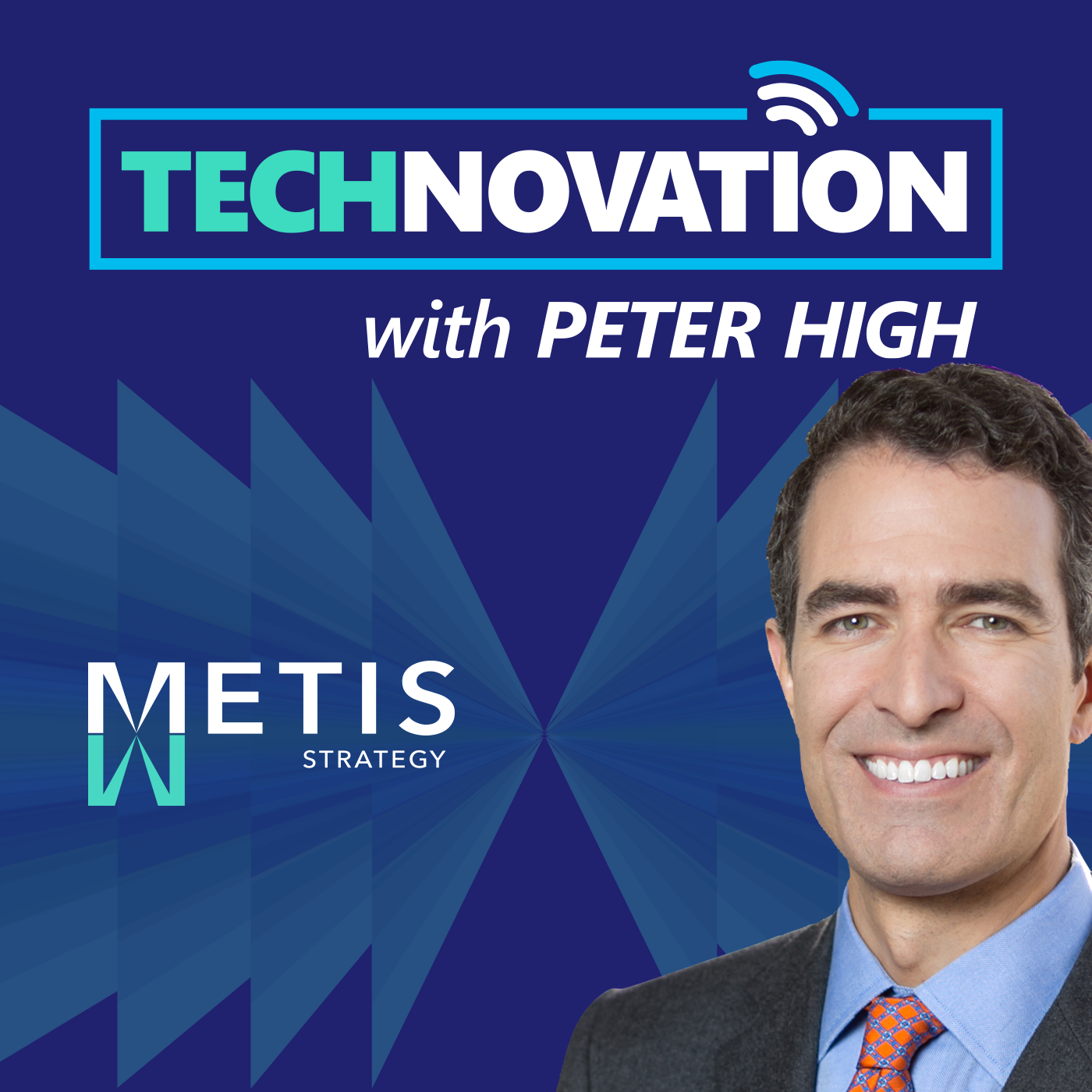
- Technovation with Peter High (CIO, CTO, CDO, CXO Interviews)
- How M&T Bank Built a Technology-First Culture with Michael Wisler
Technovation with Peter High (CIO, CTO, CDO, CXO Interviews)3 Aug 2026 · 48m · 18 chapters
How M&T Bank Built a Technology-First Culture with Michael Wisler
In short
Michael Wisler (M&T Bank) explains how M&T built a technology-first culture and data foundation to enable AI, while expanding his remit to include operations. He describes “hard stuff” transformation: reducing outages/technical debt, hiring technologists, creating tech hubs in Buffalo and Wilmington, and preparing for GenAI risks in a regulated bank.
Guest backgrounds
Michael Wisler is Senior Executive Vice President of Tech and Ops at M&T Bank. He joined M&T about eight years ago (after spending his adult career at Capital One). He helped lead a decade-long technology transformation and added operations to his responsibilities about a year prior.
Key claims
M&T’s competitive advantage comes from beliefs/behaviors (“pride of craft,” continuous renovation), not just techniques. Data quality and controls are the “governor” for AI success. “Go slow to go fast” to avoid building AI-only controls.
Notable examples
90% year-over-year reduction in incidents/outages (from 100+ outages/year); releases grew from 15,000 (2018) to 65,000 (recent year); $1B+ annual tech spend; 1,000 technologists hired; 84% engineers are employees; three tech hubs (Buffalo, Wilmington) with ~1,500 technologists in one Buffalo building; 16,000 employees using GenAI copilots; 1,800+ AI-enabled applications; 43 North startup incubator involvement (5% stake, $1M to five seed startups annually).
Written by AI. May contain mistakes.
Chapters
0:00
Limitless Opportunities in Tech
Discussion on the potential and foundational understanding required in tech.
“I think the opportunity is pretty limitless.”
0:34
M&T Bank's Technology Transformation
Overview of M&T's ambitious tech transformation and its implications.
“The bank earned over$9 billion in revenue in 2025 and has roughly$212 billion in assets.”
2:15
M&T's Competitive Advantage Through Technology
Discussion on M&T's growth and its integration of tech with operations.
“Well, I provided a little bit of context.”
4:31
The Journey of Rebuilding Technology at M&T
Michael discusses the foundational work needed to improve tech reliability.
“Yeah, you're already anticipating a number of topics I'm looking forward to tackling with you, Mike.”
6:41
Cultural Change and Talent Development
Exploration of cultural shifts and the importance of talent in tech evolution.
“things are data, tech-enabled capabilities.”
8:07
Creating a New Talent Pipeline
Insights on M&T's talent development programs and their impact.
“The Hard Stuff That Nobody Cares About is the Most Important Stuff to Take Care of.”
14:00
Building a Technology-First Culture
Learn how M&T Bank is nurturing talent and fostering a technology-first culture.
“And so it is the base and the foundation of the system that we've built.”
18:30
The Buffalo Advantage
Explore how M&T Bank leverages its location in Buffalo to gain a competitive edge.
“I want to talk a little bit about where you operate.”
21:00
Creating a Collaborative Tech Hub
Discover the importance of M&T Bank's tech hubs and their impact on community and collaboration.
“is like, you know, if we believe that we're successful because the communities that we serve are successful, then we need to live and work and support and help to make prosperous the communities that we work in.”
24:10
Foundations for AI-Centric Transformation
Understand the foundational data strategies M&T Bank uses to drive AI initiatives.
“There's some other elements of attributions of teams, but that is certainly one of them.”
Show all 18 chapters
28:00
Building a Data Foundation for AI
Learn about the importance of a well-structured data foundation for AI integration.
“Thank you so much for sharing more about that.”
31:09
Excitement and Challenges of Generative AI
Explore the implications and opportunities presented by generative AI in banking.
“Well, let's talk a little more about, squarely about artificial intelligence, Mike.”
36:10
43 North: Supporting Startups in Buffalo
Discover how M&T Bank is involved in nurturing startups through a unique competition.
“Thank you for sharing more about that philosophy as well as some of the areas of focus.”
40:06
Navigating Risks and Innovations in AI
Understand the balance between the risks and innovative opportunities of AI in banking.
“I wonder are any other trends that excite you as you look to the future?”
42:00
The Balancing Act of Innovation and Risk
Explore the balance between innovation in technology and associated risks.
“We're really lucky to be the size that we are, but we need those small banks to be able to protect themselves.”
42:36
Staying Current: Recommended Podcasts
Learn about valuable podcasts for staying updated on technology and innovation.
“Clearly, you're somebody who's monitoring how the state of the art is advancing.”
44:30
Understanding Quantum Computing and Its Implications
Delve into the advancements in quantum computing and its effects on cryptography.
“that we certainly will leave in Mike any conclusions you're drawing about quantum and how far off some of the advances might be?”
46:48
Final Thoughts and Acknowledgments
Reflect on the conversation's insights and the importance of collaboration.
“Well, a pleasure to speak with you as always.”

Ask about this episode
Get the gist, explore an idea or ask about something said.
 Claude
On Technovation with Peter High (CIO, CTO, CDO, CXO Interviews), what are the key points of this episode?
Searching your listeningTranscript
Automatic transcript. May contain errors.
0:00I think the opportunity is pretty limitless. I think what we're trying to do is go slow to go fast, make sure that we really understand our foundation, whether that's data or even just the controls, constructs, and make sure that we don't create new controls and constructs that are simply AIs.
0:18Peter High: Welcome to Tech Innovation. I'm Peter High, president of Metastrategy. My guest today is Michael Wisler. Mike is the senior executive vice president of Tech and Ops at M &T Bank, one of the largest regional banks in the United States, with a long heritage as a community-focused institution serving the Northeast and Mid-Atlantic. The bank earned over$9 billion in revenue in 2025 and has roughly$212 billion in assets. Mike has led technology at M &T for the better part of a decade, and approximately a year ago, his mandate expanded to include operations as well, a pairing that reflects a deliberate thesis about why the two functions belong together at this moment in the bank's evolution.
0:55Peter High: I look forward to hearing more about that from him directly. During his tenure, M &T has undertaken one of the more ambitious technology transformations in regional banking, rebuilding its foundations, dramatically reducing technical debt, and standing up a network of tech hubs in Buffalo and in Wilmington that have repositioned the bank as a genuinely technology-enabled institution. With a strong data foundation now supporting an active AI agenda and an operations transformation underway, there's much to discuss here, which I look forward to doing with Mike. Welcome back to Technovation, Mike.
1:25Peter High: It's great to speak with you as always. Great to see you again, Peter. Today's episode is brought to you by Eleven Labs. Most enterprises trying to deploy AI agents hit the same wall. The agent itself is fine. The problem is that it sounds wrong. Robotic, flat, off-brand, and the moment a customer notices, the trust is gone. Eleven Labs develops the AI voice and audio models that give agents a human-level voice, the tone, the emotion, the rhythm of real speech and wraps them in the full stack you need to actually deploy. Knowledge integrations, workflow tooling, multilingual support, and enterprise-grade reliability.
2:02Peter High: Build human-level conversational experiences into your products, services, and operations. Head to 11labs.io backslash technovation to get started for free. And now on to the interview. Thank you so much. I appreciate that. Well, I provided a little bit of context. And actually, I think in some ways, even referring to you as a regional bank, which may be accurate, doesn't fully do you justice. As I've learned more, Mike, you have built the technology capabilities akin to the major players as well. And I look forward to kind of delving more fully into that as well through our conversation. Before we get into the specifics of your role and your team and what it's doing, provide a bit more of an overview of M &T if you would.
2:49Yeah, yeah. I'd be happy to. Maybe just a little bit more of a background. You talk about the better part of a decade, for the last eight years. And Renee Jones, our CEO, has been the CEO for a little over eight years. I joined just eight years ago. And that marks a pretty important time where we really shifted some things. And what we shifted was, I think what Renee knew to be true in the classic sense of that which had gotten us here probably won't be the thing that gets us to the next 100 or 150 years. And he knew that it was something about technology, something about data, that the world was changing pretty dramatically.
3:29And the bank up until this point had experienced this wild success. At one point, we were the fourth largest bank in Buffalo, and now we're one of the largest banks in the country. But that journey hadn't put technology anywhere near the central thesis of how one maintains or creates a competitive advantage. The idea of a technologist being a cherished skill and resource to the strategic advantage and the capabilities of the bank probably didn't have the reverence that modern contemporary companies and some of the larger banks. And so that's when we started a journey of really changing the bank.
4:08And it's been a lot about technology, but it's been a lot about beliefs. It's been a lot about mindset. It's certainly been a lot about techniques. And, you know, he talked about, you know, we've invested quite heavily. We can talk about those investments I'm sitting in. One thing that is a source of pride for us is our one of three tech hubs here in Buffalo as well. So we've been on quite the journey and we're happy to take the conversation wherever you want to go.
4:31Peter High: I appreciate that. Yeah, you're already anticipating a number of topics I'm looking forward to tackling with you, Mike. Before we do, though, I want to also talk about the difference in title since the last time we were on the record, at least, together. I mentioned in the introduction you added operations to your technology responsibilities. Talk a bit about the logic of that and what you think you and the organization gain by bringing these capabilities together. Yeah. So if you think about the journey that we've been on through technology, bringing it closer to that central thesis, kind of raising its reverence and just improving our capabilities as it supports the bank.
5:06one of the things that we realized, we realized several things, is the techniques that we applied around talent, capabilities, agility, sometimes they can seem very kind of technically specific, but really they're applicable to any time you put human beings around problems. And as our technology debt went down, as our resiliency went up, as our speed went up, as our quality went up, as our capabilities kind of moved in those directions, it became obvious to us that the opportunity now that we had this technical capability and this better mastery of our data infrastructure is that the next biggest opportunity for what I like to call the continuous renovation of the bank was likely in our operations.
5:55And there's a lot of parallels to the story, but you think about the success that we've had And as a bank, operations kind of shared some of those things. It wasn't necessarily the source of kind of strategic advantage. We had, it was disparate and dedicated to lines of business. And as we've become bigger, as the demands have become higher, as expectations of stakeholders like the Federal Reserve and others have become higher, our appreciation for scaled consistency, resiliency, the need to make our operations a source of efficiency, the merging of tech and operations. They're essentially becoming one thing.
6:37If you think about servicing, whether it's a call center or digital, almost all those things are data, tech-enabled capabilities. It made sense for us to bring those organizations closer together so that they can benefit from each other's points on the journey.
6:52Peter High: fascinating thank you so much for sharing a bit more about that mike i want to go backwards before we pull it to the president go forward and and double click on something you alluded to a moment ago you joined a bit more than eight years ago and when you did you found a tech landscape in need of maturing and you focused on what you've referred to to me in the past as the hard work that no one cares about rebuilding the foundation establishing the pride of craft and i wonder talk a little bit about the work done in resetting and recalibrating the organization to be able to reach some really lofty goals that we will get to in a moment as well.
7:31Yeah. The pride of craft is super important to me. This has been a really natural place for the journey that we're going to talk about from technology. And I think it's important to note that Renee, our CEO, talks about it and he actually talked about it in our annual letter, that banking is a lot about discipline and really kind of sticking to and having a reverence for the fundamentals, right? That hard work that maybe you don't get rewarded for in the moment, but then there are these asymmetric opportunities when you do. I think anything worth doing kind of falls into that same craft. And I happen to grow up in the school of management or the school of technology management that is, in fact, subtitled, The Hard Stuff That Nobody Cares About is the Most Important Stuff to Take Care of.
8:16Uh, and you have to, you have to just have a pride of craft because you don't get acknowledged. You know, nobody, I don't want to say nobody cares, but everybody just expects everything to work. Uh, and you know, as technologists, we know that, that, uh, that rarely happens. Um, and so, yeah, so when, you know, when I arrived, uh, at the bank in 2018, um, first I had a hard time calibrating. I had spent my entire adult life at Capital One, uh, which I had learned after coming here was even less traditional than I had realized. And the things that I had enjoyed in that business model and at that age of a company were just different.
8:54That was a software company, a marketing company, a data company that was trying to innovate in banking, where M &T was much more of a traditional bank. And so I had some calibrating to do of where might the standard be amongst more traditional banks and how might we raise our game to both have an appreciation for the history that we have and the place that we have in banking, but also a real impatience for what's possible. And so just to give you a little bit of a kind of from do or then to now, back then we weren't as reliable as we would like to be. Our technology suffered outages to the tune of well over 100 a year, which is just not sustainable for us.
9:41The talent that we deployed in technology, most of the hands-on keyboards didn't work for the bank. We were over-reliant on third parties to manage, deploy the technology we had. And not that there isn't a place for partners, but if you believe like I do that the skill of technologists, to the ability to master technology is somewhere close to the central thesis of maintaining or creating an advantage, then you have to have a reverence for that. And it needs to be a part of the fabric that is the company. We approached work in some pretty classic ways, you know, kind of annual food fights, seeing who could kind of put the best case together for a really small number of really big projects that took way too long.
10:28And tech debt just continued to accumulate because you couldn't get the people and the capacity to the problems. And so we stripped it all down and just went right back to the fundamentals. We went on a talent, agility, and capabilities journey where we reversed all those trends. So today, we've reduced the incidents and outages across the bank by 90%, year over year over year, times eight, all the way down, and we continue. Productivity is through the roof. If we did 15 ,000 releases in 2018, that may sound like a lot until you realize we did 65 ,000 last year. Same size team, different profile, different talent profile, different constructs, different methods, different environments.
11:15We've invested. We're spending well over a billion dollars on technology a year now. We were in the 300s, high 300 billions. we were probably about 30 percent of the assets that we had eight years ago were non-destination they weren't the assets we wanted we wanted to have so we're devoting too much of our time and our money to maintain things that we didn't want that's down to low single digits percentages we think it's actually one of the best in banking with the lowest kind of lowest percentages in banking so the uh there's a there's a there's a real you have to believe that stripping it down and building it up, taking care of those fundamentals, taking care of the team.
11:57We've hired 1 ,000 technologists since then. That profile of most used to be contractors, now 84 % of the team are engineers that are employees here at the bank. We spent dozens, tens of millions of dollars on facilities to really create the space that we need to meet the demands. And we just moved from liability, some version of a liability to a real asset for the bank. During that time, we survived COVID, where it put a lot of pressure on some of the things that we have a lot of conviction about, particularly gathering people in these places. We grew the bank by 40 % with the acquisition of peoples in the middle of that.
12:43And so we were able to maintain those improvements, all while some pretty dramatic changes. And we're as well positioned as anybody, I think, to handle what now is probably the most volatile environment we've had. We're talking about the introduction of AI on the bank, whether that's from a cyber perspective or competitive perspective.
13:06Peter High: Fascinating. And I want to talk to you a little bit about the cultural change that came alongside that. Obviously, part of it comes with just a lot of new people coming into the organization. You mentioned a thousand folks. So obviously it's a lot of new blood coming to the organization. No doubt there are also some people that remain from the early part of your tenure as well. And even for those who joined in the interim, the necessity during these times to continue to upskill, reflective of where business is going, not where it has been, becomes so important as well. Talk a bit about the way in which you've thought about reframing the culture, given the new opportunities that have presented themselves.
13:42Yeah, talent and culture are nearly everything in my mind. In fact, talent, I think, and teaming, really devoting yourself to the practice of teaming, I think are the only two things that endure all the change that we see around ourselves. whether that's change in technology, change in market conditions, changes in strategy. And so it is the base and the foundation of the system that we've built. And so we've had to bring in those who were lucky enough, like myself, to have been in places to have gained that scaled, highly kind of regulated experience while also trying to create the opportunities for those who also had the benefit of understanding the history of this bank, create the environment in which they can be successful, and really start to grow our own talent.
14:34I think we've talked about before, we have what we call a TDP program, which is a kind of new college graduate computer science program where we have well over 350 new grads that have come through in five classes. We have non-traditional talent pipelines where we reach out into the community and go and find folks who have a real aptitude but haven't had the opportunities that many of us have been lucky enough to have to gain the skills to be more relevant in this kind of modern prosperity model. And we've had dozens of folks who have come through that pipeline that just really reinforces the things that are important to us and takes care of some risks that others are having a hard time closing.
15:18If you think about mainframe technology, you know, lots of college grads in computer science don't want to necessarily work on some of this older technology. It's not going anywhere. It's critical to not just banking, but if you book a hotel or you book a flight, like you're running through a mainframe somewhere. And so we've been able to we've been able to do that from a talent perspective. And we're really proud of that. And we're now able to nationally recruit. The culture side is really important. I spent probably the first year, I think, frustrating to some degree and confusing the rest of the executive committee and probably many members of the board because they were asking pretty reasonable questions of a new CIO.
16:00Do we build or do we buy? Tell us about our tech roadmap. When are we going to do the cloud? How are you going to teach us about agility? All very rational and reasonable questions. And I really resisted answering them because it became obvious to me that really what we needed to do is we need to sit in a beliefs question, right? Like, can we believe that the winners of the future are going to be the ones who have a much higher reverence for these things that maybe historically we didn't? Do we believe that the winners of the future are going to be communities of learners, right? Do we believe that it's the most nimble and the most responsive that are going to be the winners?
16:40because despite our success, what I observed was our success had been the kind of compounded
16:52by this ability to be the most efficient, the most prudent, the most reliable, and the most predictable. I'm not here to say bankers are going to be rewarded for being reckless, but I think it's that new mix. And so we really sat in the beliefs question, So if we can believe those things, then we can move on to the behaviors, right? Like, can we create a behavior system that rewards leadership, that subordinates itself to others, that trusts that those that are closest to the problem are the ones that we should trust to actually solve the problem? And can we create systems? Then we can talk about all these techniques that everybody wanted to talk about.
17:25Because I don't want to discount the fact that, you know, some of this tech stuff is pretty hard and it does take a lot of practice, but it's just a craft, right? If you study it, you devote yourself to it, you will become competent at it and you can apply it. But if you apply it without really testing those beliefs and those behaviors, it's probably not going to work or not work as well. My biggest fear was you're going to think it's the technique that's the problem. And when really it was probably more the beliefs and the behaviors. And so I'm lucky enough to have entered in as a new guy. Renee often calls me alien DNA that really kind of shocked the system a little bit.
18:01And I just feel I feel really blessed that despite all the kind of things that I were talking about that weren't as intuitive to everybody else, that that culture that was M &T has really been able to to to not replace those things, but really become additive with these things, which is which is pretty special. And I think I think unique.
18:22Peter High: Remarkable, the change throughout this conversation so far that you're talking about in an institution that has such a storied, long history to it. It's amazing to think the tide you turned in a place that where at least just based on reading more about its history, one might think would be almost impossible to make the change that you've undertaken. Just fascinating. I want to talk a little bit about where you operate. So you operate in the same state as a lot of major financial institutions, but in the other side of it from most of them. You're in Western New York as opposed to New York City.
18:55Peter High: You've already alluded to Buffalo as the historic and current home of M &T. And folks might think to themselves, oh, they must have tech centers that they have all in a variety of other places that are the bigger tech hubs, perhaps. But that's really not the case. You have great pride of place. You recruit people substantially. You alluded a moment ago to the remarkable outreach you've had to the community that is already there as well. Talk a bit about Buffalo and what might to the outsider seem like a disadvantage in the financial services industry and how you've turned that on its head to make it an advantage.
19:33Yeah, it's a really great question. And it was another hill we had to climb or that I had to climb. You alluded to a reference in the beginning, you know, M &T is a regional bank, but oh, wait, maybe we should even we shouldn't think of M &T as a regional bank. I do think we're growing up into one of the largest, most capable financial services companies in the country. And there's a lot about the kind of Buffalo question in that. And if you think about, we do find ourselves in this kind of in this place of tension that we like, right, is we want to bring to bear any capability that anybody else can.
20:12But we also want to be a bank for communities. and what we believe is that many who have come before us and kind of found this fork in the road have chosen kind of one of two paths, right? They've either chosen to stay small and local because they value the kind of small and local benefits of being close to the community and understanding what that community needs and being able to service that community, but maybe trading off some of the kind of scaled enterprise capabilities of the largest institutions, or they take the other path, which is, you know, become big, get those real scale benefits, but lose that connectivity.
20:44We're trying to chart a third path and really holding ourselves in that. It's like we're probably too big to call ourselves a community bank, but we will always be a bank for communities, regardless of our size. And so, you know, with that as a backdrop, it was really important to me and became obvious very quickly to me that we needed to kind of put our money where our mouth was. is like, you know, if we believe that we're successful because the communities that we serve are successful, then we need to live and work and support and help to make prosperous the communities that we work in. And Buffalo is not one of those six cities.
21:23You know, I had spent all of my time, as we've talked about before, you know, flying back and forth to Chicago and Toronto and New York and Northern Virginia and Dallas throwing all the beer and rock stars I could at engineers just to keep them interested. The further west you went, the more beer and rock stars you had to throw at them. Sometimes less interested they were. I quickly, I believe part of the reason that I followed Rene here was I have a theory that cities like Buffalo are in a race for relevance. And there's probably about a dozen to maybe two dozen cities that are those mid-tier cities.
21:59And this whole thing isn't going to work, not just in banking, but for the country. if those six cities that we all talk about when we talk about tech are the only places where talented people with great experiences and drive and want to be part of something, if those are the only places they can go. And so there's an obligation that I think that we have to make sure that we're relevant. And it's mostly relevant to talent. And it was super important that we build this hub to send the signal not only to our own community, but the whole country, that this is a place where great talent can come together, not just the talent that has the experiences to solve today's problems, but people that are out searching for problems to solve.
22:41And it's a longer, harder road, but the things that we want to do are the things that are definitionally longer and harder. And so it's been a challenge, but I think we've really kind of crossed the chasm of belief. we're certainly when we take recruits from around those flashier kind of tech cities where you're driving by iPhone 16 billboards all the time and they come in and they see us working we've got 1500 technologists in this building alone and they go oh these guys get it and I love our size we're big enough to bring to bear anything that anybody else can from an engineering perspective but we're small enough to actually know each other to count on each other, to be able to move in ways that I think others can.
23:28And lots of the folks that we compete with are spending multiples of what we are on technology, but we're keeping up with them on almost every category because of the way that we work.
23:39Peter High: Well, you've alluded to it a couple of times, including just there. And those who are watching this can certainly see in the background the tech hub that you are in right now, Mike. And I'd love to have you talk a bit about it. You've already mentioned the size of it, the number of people, now actually two of them in Buffalo, in fact. Talk a bit about the genesis of this, the idea behind it, why developing a tech hub in the first place, and then how you thought about assembling what we can see a little bit of behind you and what makes it special, please. Yeah, so we built, well, we believe that the teams that are together will outperform teams that aren't 100 % of the time.
24:20There's some other elements of attributions of teams, but that is certainly one of them. the problems that we have to solve simply don't present themselves in a consistent enough way for us to be able to be away from each other when those problems present themselves or away from each other to be able to figure out what we want to do about those problems and you know i also believe that still 60 i think it's 50 or 60 percent of human communication is not verbal right and so the environment and our ability to pick up cues with each other is super important. I have a lot of conviction about the way that we win, particularly at our size.
24:59It's about being together. It's a bit cultural, but it's also a bit of technique. We've built three tech hubs. We have two in downtown Buffalo, and we have one in Wilmington, Delaware. As you know, Wilmington Trust is a subsidiary of M &G and most of the technology team that supports the Wilmington trust wealth businesses down in Wellington. But these two hubs in downtown Buffalo are the majority of the 2 ,500 technology.
25:32So we have it. There's probably 2 ,000. In particular that we're in is over a million square feet. We have 330 ,000 square feet of it. We have about 1 ,500 technologists across 10 floors, 12 floors. And we've built our own academy here as well, where we learn, but we also open it up to the community, to food camps and K-12 and all of the things that are very natural parts of the kind of role that we try to play in the community. And so this hub in particular, it's important to us for lots of reasons. We need it to be competitive, just simply. We need this kind of environment with these types of facilities to enable those types of technologists and product owners and designers to do work at the speed and the quality that we need to.
26:19This community needs it to create concentration. If you think about those other cities that I think that we're kind of in that race for relevance for, it's the Pittsburghs, the Detroits, the Indianapolis, the Salt Lake cities. They all have some sort of concentration where you can see it and you can feel it. It's some version of a eat, live, work, play, collaborate, educate kind of combination where it's not enough for the concentration of one company, but the benefit of many companies being in one place. And so this building was actually vacant, and it was a bit of an eyesore and a reminder of maybe that which wasn't in Buffalo.
27:01So it was a really great intersection opportunity for the needs that we have to maintain the business that we want, as well as to help the community that we have. And our hope was that others would follow us. We could have put all 2 ,000 technologists down here, but we stopped short of it to leave room for others. And what we found is we have one of the country's largest business competition and incubators for startups here, 60 companies here, another half dozen or dozen companies of like-minded, maybe not technologists exclusively or software companies, but companies that are trying to not just solve today's complicated problems, but are out in search of those problems.
27:42It's been accretive to the community, but it's also been accretive to us. You walk up into the cafeteria every day and you'll see a half dozen of our engineers sitting with a half dozen of engineers from other companies talking about whatever they're trying to solve. And they all come away better having collided with each other.
28:03Peter High: Fascinating story. Really interesting. Thank you so much for sharing more about that. As we spoke a moment ago about foundations laid, especially in the early stages of your tenure eight plus years ago, Mike, another of those foundations was a data foundation. And really, in order to catalyze an AI-centric transformation, the ceiling or governor on that will be how well you've organized your data. And I wonder if you could talk a bit about the methods you have used to do so that you're now parlaying. We'll get to in a moment some of the AI use cases, but talk a bit about the foundation you've laid.
28:40Yeah, for sure. Not dissimilar to kind of our recognition of maybe an absence or less reverence of technology in that needing to change. You know, there's a similar story around data. You know, when you think about the roots and the history of M &T, it was a very relationship-based kind of banking model. Like we won because we knew our communities and our customers better, but we knew because of boots on the ground. Like we were the data platform, the individuals. And that's an incredible benefit that we don't want to lose. But what we know is with the advancements of technology and the advancements of data in particular, it was becoming easier for those who weren't part of our community to know more about our community or enough about our community to be able to become some version of a competitive threat.
29:35and kind of as a reverence for technology and technologists being our reverence for data and our appreciation for how powerful and important an asset it can be and how it is foundational to unlocking many of many of the things that we'll talk about today and so you know not long into the technology journey we went on you know essentially a similar data journey it's like do we believe that this is one of the most important assets that we have and if we do believe can we behave in such a way that is actually commensurate with the asset of data? Can we appreciate the kind of scaled investments that need to be made so that we know where it all is and we know that we can trust it and that we can move it at the pace that it needs to be moved and that we can democratize the access to it so that we can take, not replace that kind of historical kind of knowledge that we have, but amplify that historical knowledge we've had.
30:29So we've spent years and lots of money on just doing that, stripping it away, making sure that we know where it all is, that we've got it stored on modern assets, that it's accessible to all those that should, and so that we're investing in their own skills to be able to mine it and manipulate it. And it has, in fact, created the foundation that we're really proud of as we move into the world that we're all talking about, which is the AI world. Because there's, you know, what continues to be true, which was true years ago, is if you don't care for that asset, you're not going to be able to use that asset in the classic garbage in, garbage out scenario.
31:08Peter High: Fascinating. Well, let's talk a little more about, squarely about artificial intelligence, Mike. Like what excites you most now that you do have that foundation and now you can apply some modern iterations of artificial intelligence on top of that? What has you most excited as you think about the possibilities? Yeah, it's we're living in an exciting time. You know, I often find myself saying to groups of individuals, you know, we're living in probably the fastest time of humanity. And that can be scary until you realize this is probably as slow as it'll ever be. And I think that is as true about data as it is true about AI.
31:48And probably a few times in human history has something been so profound, moved so fast, and hit everybody all at once. And so this is absolutely a real thing. as a technologist who's spent all my adult life trying to get software and machines to do things. We've been working in AI in its traditional sense, whether that's machine learning or other aspects of it, for quite some time. And so those fundamentals are still true, and some of those capabilities apply. But the generative nature of gen AI is new. It's exciting. It's a little bit scary. It's challenging many of the norms and the constructs that we've had, whether that be in talent and software delivery.
32:36It certainly puts a stressor on regulated businesses such as ourselves, where traditionally the practice of modeling had to have much more of a deterministic kind of predictable outcome than much of the generative AI. And so, you know, we're not struggling, but we're trying to be thoughtful in kind of how we approach not just as M &T, but the industry at large. We cannot be left behind. And so we've got to find safe, transparent constructs in which we can satisfy that model certainty with something that essentially is hard to pin down when it's more generative. And so we're doing the things that you would probably expect us to do.
33:21We've got dozens of legit Gen.AI use cases in the bank. We're taking what we call a three-pathway approach. And that first pathway is just trying to make sure that as many colleagues around the bank as possible are getting immersed and comfortable and fluent in generative AI. And so you think about the co-pilots of the world of just making sure that I think we've got about 16 ,000 folks in the bank that are actively using that to, you know, to not only learn and get engaged, but to increase their own personal productivity. And I think that will continue. And it'll be a real great base for us to understand what might be possible.
34:03We employ, you know, well over 1 ,800 applications across the bank. Many of those are third party provided. Many of those third parties are introducing AI modules or capabilities into their assets. And so that second pathway is really making sure we understand and are making the most use of those, whether it's a partner that we use to power our call center technology or infrastructure monitoring technology. And then the third pathway for us is that kind of that green field for us. It's like, where are we building the LLMs? where we're building agentic solutions that are unique to us and can create some sort of unique competitive advantage.
34:48Early on, we're seeing what you would expect to see, you know, lots of productivity opportunities and places where we have repetitive tasks where we can apply agentic constructs to those and keep the human in the right part of the loop, but be able to make life easier and faster and devote our time to our customers. There's a fair amount of risk in defense application. And so as you might imagine, we're seeing a lot of application in the fraud space, a lot in the cyber defense space. We're developing code a lot faster with the help of AI. I think the opportunity is pretty limitless. I think what we're trying to do is go slow to go fast, make sure that we really understand our foundation, whether that's data or even just the controls, constructs, and make sure that we don't create new controls, constructs that are simply AIs.
35:50It's like, how do we think about the fundamentals of banking and the fundamentals of a well-managed business and evolve and adopt them for, you know, what is in some ways just another innovation, you know, not unlike to some degrees other innovations that we've lived to over the last 50 years.
36:09Peter High: Very interesting. Thank you for sharing more about that philosophy as well as some of the areas of focus. You mentioned earlier the accelerator, 64 North, I believe it's called. Talking to 60 companies or so that you mentioned that have joined, how do companies become involved? First of all, what's the process of doing so? And what does M &T get out of its association with those startups? Is there an influence towards those companies that are building things that M &T might leverage? Is it agnostic? Talk a bit about the philosophy behind that as well. Yeah, so 43 North is the latitude. 43 North, I beg your pardon.
36:45That's okay. It's the Latitude Buffalo, and it's a really special thing. I'm lucky to have been part of it. I was a board member and was a chairman last year. It's the world's largest startup competition and incubator for seed-level startups. It started 10 years ago as an economic development opportunity. It's a private-run, state-funded organization where annually we have a call for applications. We get about 1 ,000 of them a year. We load all those 1 ,000 down and down and down, and we invite 20 companies to Buffalo to pitch to the community. And we have one of the country's largest, oldest theaters right here downtown, and they pitch in front of 4 ,000 people on one night.
37:34And at the end of the pitch, Shark Tank style, it's this huge celebration of innovation and entrepreneurship. At the end of the show, we award or make an investment of$1 million into five companies. And the deal is 43 North takes a 5 % stake in the company. And the company has to commit to moving to Buffalo for a year. And so that's how we get these companies here is the economic development side of it. And then companies like M &T, leaders like myself, the community wraps our arms around these companies and tries to get them to fall in love with Buffalo and all that we have to offer so that they stay here after their year's commitment.
38:15And the success has just been amazing. So we talked about 60 companies. 60 companies are still here to a great degree. We've created 3 ,000 net new jobs that would have never existed that came out of the companies that grew themselves here. We have that 5 % has seeded a 43-month foundation that is now devoted to K-12 education, our own startup incubator lab, bringing CEOs and other entrepreneurs together. It has dozens of millions of dollars in it. And we've had one company so far become, went public, and I think it's worth well over$2 billion. It's just been a really great success story. Just from showing that it's possible if a community comes together and develops the resources, that you can build a company where we can be prosperous and you can find the talent.
39:16What we get out of it is, you know, our job is to try to improve the lives of the communities that we live in and do our small part to help create this modern prosperity model. And so we're here to not only support the competition, but really support the founders, help them build their companies. The fact that proximity to 2 ,000 of our technologists makes it really easy for us to pay attention to their needs and help them. we devote 40 hours each of colleagues to volunteerism which includes helping helping these companies solve their problems and you know we also are a source of talent for these companies as they're growing which is which is okay with me as long as they all they all stay in Buffalo.
40:03Peter High: Fascinating stories again Mike thank you so much for sharing that what a remarkable success that has been on a variety of different fronts. I wonder are any other trends that excite you as you look to the future? What else is on your roadmap that maybe we haven't discussed yet? Yeah, AI is certainly on everybody's mind. I think it's a really great opportunity. One of the things, it also creates a fair amount of risk. And so most recently, I'm sure that you've spent time understanding and probably talking to other folks about some of these models, particularly anthropics models and with mythos, as it creates code really well, but it also is capable of finding vulnerabilities that we haven't found in decades.
40:47And so, you know, like almost any innovation, you know, there's a balance that comes with it. You know, I think that we're all going to have to live in a new world. You know, once again, it's like fast, it's exciting, but this is maybe as slow as it's going to be. It's really testing our ability to keep up with the world, not just on the opportunity side, but on the threat side. I think in banking, we're really lucky to, we're one of about a dozen critical infrastructure sectors in the country. You get telecoms and energy and agriculture, banking, there's a few others. We're a really collaborative group.
41:25And in times like these, we really need to be. I think in a time where we're seeing less collaboration around the country. You know, this is going to be a time of stress for us in banking. You know, those trends are going to continue to put stress on the total banking system. You know, we spend a tremendous amount of our investments just protecting the bank, and it's necessary. But, you know, I worry about, you know, the smallest banks in our country, which are really important to be able to support the country and their ability to keep up with some of the challenges that we have. We're really lucky to be the size that we are, but we need those small banks to be able to protect themselves.
42:09That's on my mind, the world that we're living in and the threats that we have. But also, I think like all the innovations that we've lived through, the upside and the ingenuity that we're going to be able to apply with regenerative AI is certainly going to outweigh the risks, but we're going to have to work through those challenges.
42:31Peter High: Yeah, again, thank you so much for those reflections, Mike. Before I let you go, I wondered, what do you read or listen to to stay current? Clearly, you're somebody who's monitoring how the state of the art is advancing. And I wonder if there's anything you'd recommend to others that you found to be useful. uh i um i i'm a believer that uh the more you learn the more you realize you don't know and it can be it can be a bit overwhelming you know we live in a we live in a world that uh is uh it's just inundating us with information um i'm i'm mostly a podcast guy these days and you can edit these out if you don't want to advertise for others in their podcasts.
43:20One of the podcasts that I've found to be really compelling is All In. And if you've heard, I think it's one of the most balanced, a lot of tech, a lot of innovation, a lot of financial acumen in there. Diaries of the CEO is another popular one of mine. I think it's just a fascinating presentation founders is another one that i think is is a great one uh and then uh you know unfortunately or unfortunately i'm spending a lot of time studying physics around quantum computing which is not fun but it's it's uh necessary uh and uh if you if you believe some of the some of the even the classic physicists you know when they say if you think you understand quantum mechanics you don't understand quantum mechanics you know it's another topic that many of us are going to have to face and facing right now and so I wouldn't necessarily suggest the quantum mechanics physics for folks but those podcasts are definitely a favorite of mine.
44:29Peter High: Great suggestions that we certainly will leave in Mike any conclusions you're drawing about quantum and how far off some of the advances might be? Obviously, there's a lot of debate around there. I wonder where you stand, the extent to which you have a stance. Yeah, I think that the last 100 days, well, certainly the last few months, I think, has really straightened everybody up and that the belief that it was further off is shrinking. I might forward to you after we're done. There's been about a half a dozen things that have happened kind of separately but together over the last three or four months that I think has gotten us all a lot more serious about when Q-Day is going to be here or Y2Q or whatever we're going to fall on it.
45:16We've been lucky enough to, we have a board member who is a former deputy director of the NSA who has not allowed us to not pay attention to quantum readiness. And so we've been at it for several years now, and I think we're going to be proud that we were at it. But if you think about the theoretical math and our recognition that if we had the compute, that much of the cryptography that we use today is just not going to stand up, you know, where it would have taken all the machines we have today millions of years to be able to break, you know, classic elliptical curve cryptography or some of the other RSA cryptography.
45:54what we know now is the quantum computers, while not probably commercially viable, are certainly advancing at a pace that it is not going to be 10 years away. I think Google just brought their kind of horizon into 2029. The White House just put out a directive to all the federal agencies of a standard within the next three years. I think it's a lot closer than we think. and there's a lot of cryptography that we're going to need to swap out inside of institutions. And then we're probably going to have to get really good and really fast at kind of what we consider to be crypto agility, this being able to move keys and change our cryptography better.
46:36So the good news is it's an inventory problem. So if you wrap your head around that, you know where all your cryptography is and you know what the quantum resistant version is, you just need to get to the inventory. but if you haven't started, I would suggest getting started soon.
46:52Peter High: Good suggestions all, Mike. Well, a pleasure to speak with you as always. Fascinating to learn more about the continued evolution of the bank, of your role, of the contribution you and your team are making in fundamental ways, not only to the institution you serve, but to the city you live in. Fascinating conversation as always. I appreciate you sharing some of your wisdom with me today. Thank you, Mike. Yeah. Well, thanks for having us and we appreciate all you do as well. You know, it's important for us as all part of the system that we're just aware of where everybody is and trying to find ways to lean in and help everybody.
47:24That's how the whole thing works.
47:25Peter High: Thanks for listening to Technovation. If you enjoyed this conversation, subscribe and leave a rating. It helps more leaders find our podcast. Thank you. And I look forward to seeing you next time.
From the publisher
Technology transformation isn’t about AI, it’s about building the foundations that make AI possible.
In this episode of Technovation, Peter High sits down with Michael Wisler, Senior Executive Vice President of Technology and Operations at M&T Bank, to explore how the bank spent nearly a decade rebuilding its engineering culture, reducing technical debt, modernizing its data foundation, and transforming technology into a strategic business capability.
Wisler explains why changing organizational beliefs came before changing technology, how M&T dramatically improved engineering productivity and resiliency, why technology and operations now belong together, and how those investments positioned the bank to scale generative AI responsibly.
Key discussion topics include:
- Building a technology-first culture
- Reducing technical debt and improving resiliency
- Developing enterprise engineering talent
- Creating technology hubs in Buffalo and Wilmington
- Preparing data foundations for AI
- Scaling generative AI responsibly
- Integrating technology and operations
- Cybersecurity and quantum readiness
Whether you’re leading digital transformation, modernizing enterprise technology, or developing an AI strategy, this conversation offers practical lessons on why long-term competitive advantage begins with strong engineering foundations.
This episode is presented by ElevenLabs — Bringing technology to life. Learn more at elevenlabs.io
More from Technovation with Peter High (CIO, CTO, CDO, CXO Interviews)
All episodesWe use cookies.They keep VO running smoothly and help us improve it. Privacy policy