 Ask ChatGPT

- Podcasts
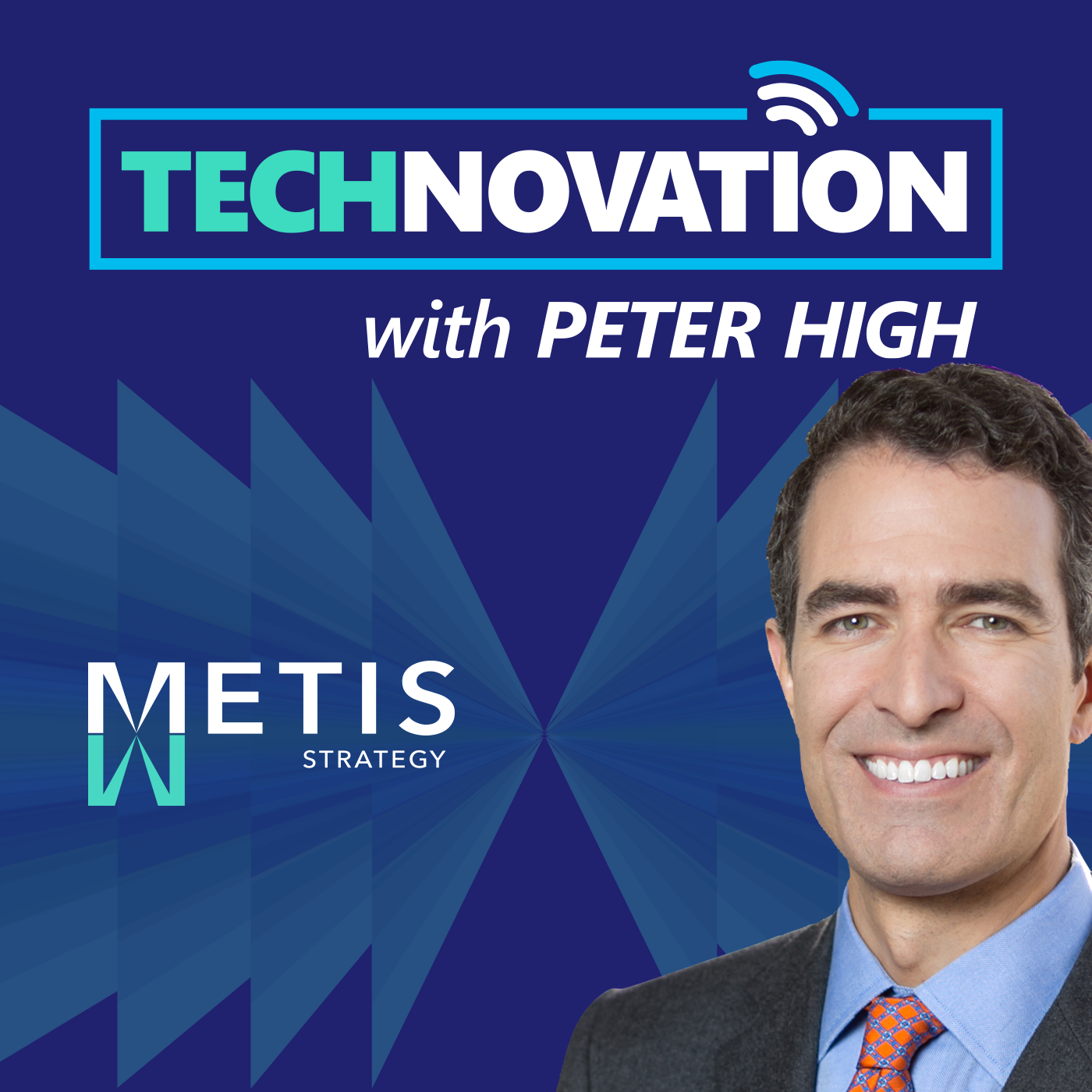
- Technovation with Peter High (CIO, CTO, CDO, CXO Interviews)
- Verizon CTO Yago Tenorio on Building the Autonomous Network
Technovation with Peter High (CIO, CTO, CDO, CXO Interviews)10 Aug 2026 · 48m · 17 chapters
Verizon CTO Yago Tenorio on Building the Autonomous Network
In short
Verizon’s vision for autonomous networking—moving from static, appliance-based networks to software-defined automation and toward “human-supervised” agentic autonomy (targeting level 4). Yago Tenorio explains how AI agents, network-wide telemetry, and a Verizon-owned control-plane platform enable faster incident resolution, detection of “micro friction” customer issues, and safer governance (IDs, scopes, limited capabilities, and observability/traceability/reversibility/accountability). He also discusses democratizing software development via cloud code for 33,000 network/technology employees, with security-first guardrails and unchanged QA pipelines.
Guest backgrounds
Yago Tenorio is Verizon CTO and Senior VP of Strategy and Technology Enablement; previously spent nearly three decades at Vodafone in senior network technology leadership; recognized as a network architect, Fellow of the Royal Academy of Engineering.
Key claims
Level 4 autonomy is a useful target but must be customer-driven; model quality depends more on training/input data than frontier model size; agents must be governed like employees.
Notable examples
prototypes resolving incidents in ~90 seconds vs 5–8 hours; agents trained via Verizon’s university for monitoring, anomaly spotting, and root-cause analysis; device-side telemetry revealing coverage gaps (e.g., basement) the network can’t see; Claude used as a running coach by ingesting 30 years of wearable data to prevent injuries.
Written by AI. May contain mistakes.
Chapters
0:00
Introduction to Agents in Organizations
Explore the characteristics and roles of agents in modern organizations.
“You have to treat agents in a similar way as you recruit people for your team.”
2:14
Verizon's Technology Organization Overview
Yago discusses his role at Verizon and the scope of the technology organization.
“Yes, well, let's begin with your organization, which most people will be very familiar with in Verizon.”
4:56
Evolution of Intelligent Networks
Discussing how network infrastructure is evolving towards intelligence and autonomy.
“I think we are entering a different phase.”
6:20
Understanding Levels of Network Autonomy
Yago explains the differences between levels of network autonomy using car analogies.
“This is, I think, more, it's better defined as human supervised.”
8:58
Customer-Centric Network Improvements
Exploring how network advancements will enhance customer experiences.
“A better experience, a faster resolution of incidents, maybe more granularity that you can take on problems that you couldn't before.”
14:00
Collecting Device-Side Telemetry for Improved Network Insights
Learn how telemetry from devices can enhance network visibility and customer experience.
“And literally, to your point, you can't know, you can't fix what you don't know, and you don't know about what the network doesn't see.”
16:48
Safeguarding Innovations in Autonomous Networks
Discover the safeguards necessary to implement AI-driven agents in network management.
“I wonder, talk a bit about the safeguards you're putting in place to make sure that as these innovations happen, as these advances continue, that they do so cognizant of the potential risks, mitigating what you can.”
19:57
Democratizing Software Development Across the Organization
Understand the impact of giving 33,000 technology employees access to cloud code.
“Iago, you've given 33 ,000 technology employees access to cloud code, effectively democratizing software development across the organization.”
22:45
Quality Assurance in an AI-Enhanced Development Environment
Explore how quality assurance remains critical despite the rise of AI in software development.
“So the security framework and the guard wires are, I think, of particular importance, and that's where we started.”
25:37
The Evolution of Skills in the Workforce
Examine how technological advancements are changing the skills required in the workforce.
“That's a different study, but the quality controls are the same.”
Show all 17 chapters
28:00
The Impact of AI on Jobs and Change Management
Learn about how AI will transform jobs and the importance of change management in large organizations.
“I think it's just one more transformation of the many that we've seen.”
29:10
Empowering Employees through AI
Discover how providing tools and power through AI can enhance productivity and employee satisfaction.
“For instance, it started when we rolled out Cloud Code.”
31:20
Building Autonomous Networks with Data
Understand the role of data in creating autonomous networks and improving operational efficiency.
“Talk a bit about data as the important either accelerator or limiting function for progress in the areas that you've described?”
36:10
The Future of Networking and AI
Explore the evolution of networking in the context of AI and customer interactions.
“Talk a bit about your own thought process about that progression, if you would.”
38:30
Personalizing AI Experiences
Learn how personal data can enhance AI interactions and improve personal outcomes.
“the uplink stream will become mainstream as opposed to what we have today, which is more radio of 8 to 2 or 9 to 1 in favor of the downlink.”
42:03
Personal Insights on Running and AI Coaching
Discover how AI can analyze personal running data to enhance performance and prevent injuries.
“what could happen if I upload all this as input data because I don't doubt like the kind of reasoning capacity and general knowledge of the language model.”
45:30
Staying Current in Technology and Engineering
Learn about valuable resources for keeping up with advancements in technology and engineering.
“In this day and age, there's so much noise.”

Ask about this episode
Get the gist, explore an idea or ask about something said.
 Claude
On Technovation with Peter High (CIO, CTO, CDO, CXO Interviews), what are the key points of this episode?
Searching your listeningTranscript
Automatic transcript. May contain errors.
0:00You have to treat agents in a similar way as you recruit people for your team. They are part of an organization. They have a third-line skill. They have a scope. They have an ID.
0:18Peter High: Welcome to Technovation. I'm Peter High, president of Metastrategy. My guest today is Yago Tenorio. Yago is the chief technology officer and senior vice president of strategy and technology enablement at Verizon, one of the world's leading telecommunication companies generating more than$138 billion in annual revenue and serving millions of consumer, business, and public sector customers through one of the U.S.'s most advanced wireless and broadband networks. As CTO, Iago leads Verizon's technology strategy and the evolution of its network architecture with responsibility for innovations in 5G, AI, cloud networking, network APIs, and the company's vision for autonomous networks.
0:54Peter High: Before joining Verizon in 2024, Iago spent nearly three decades at Vodafone, where he served in several senior technology leadership roles. Widely recognized as one of the industry's foremost network architects, he's a fellow of the Royal Academy of Engineering. In today's conversation, we'll discuss Verizon's vision for autonomous networking, how AI is transforming network operations, and what these advances mean for the future of telecommunications and enterprise technology, more generally speaking, among other topics I'm sure we'll cover together. Iago, welcome to Technovation. It's great to speak with you today.
1:25It's my pleasure to be here.
1:28Peter High: Today's episode is brought to you by Eleven Labs. Most enterprises trying to deploy AI agents hit the same wall. The agent itself is fine. The problem is that it sounds wrong. Robotic, flat, off-brand, and the moment a customer notices, the trust is gone. Eleven Labs develops the AI voice and audio models that give agents a human-level voice, the tone, the emotion, the rhythm of real speech, and wraps them in the full stack you need to actually deploy. Knowledge integrations, workflow tooling, multilingual support, and enterprise-grade reliability. Build human-level conversational experiences into your products, services, and operations.
2:05Peter High: Head to 11labs.io backslash technovation to get started for free. And now on to the interview. Yes, well, let's begin with your organization, which most people will be very familiar with in Verizon. But I want to talk a bit more about the technology organization that you lead and an overview of your responsibilities as chief technology officer. Talk a bit about both your part of the organization and the responsibilities that you have, if you would. Right, absolutely. So network and technology is the bigger team in Verizon that looks after, of course, all things technology, but also planning, building, operating, maintaining, securing the network, whether it's the wireless network, wireline network, broadband, IP, fiber, you name it.
2:55That's like the bigger thing. My role as CTO, of course, I look after all things network strategy, technology development, and whether it's product facing technology or if it's our network partnerships, industry standards, you name it.
3:16Peter High: I want to talk to you a bit about the evolution of networks, Iago, somebody that you are so well suited to talk about. You have written about how you envision them becoming intelligent systems that continually observe and reason and act. This is not just simple infrastructure, if you will, but evolving to something that is much more intelligent. Talk a bit about that evolution and the implications of that, if you would. Right. I think the network infrastructure used to be more static. I remember a long time ago, we would be talking about appliances with a very clear scope, defined function in the network, interfaces, everything was static.
3:59and then you would plan the capacity and the evolution based on how those appliances would evolve over time. You would add multiple instances to cope with traffic load. And I think that came to an end when we started rolling out clouds, private clouds, and things started to be software-defined. And that is probably where automation started. So once things got defined by software, you could also automate kind of routine tasks and then kind of get out of the more mechanical routines and just leave that, you know, to pieces of software. Then capacity was more about, you know, adding servers to a function, scaling, scale out, and all, you know, those good things.
4:56I think we are entering a different phase. What is not about automation is about autonomy. And I think all changes that brought us here are still present and they are a good foundation. So, of course, things are software-defined. Of course, they work on a cloud. And, of course, it's about scaling them in and out. But the operating systems changed from automation to autonomous, I would say, is what defined the era that we are walking into.
5:32Peter High: and talk a bit about if you would about the collaboration between humans and this emerging autonomous digital colleague uh that that you're describing here if i if i may my words rather than yours but i'd love to have you you share more about that that evolution if you would yeah i love it a digital colleague uh that's a very good one peter so yeah yeah i think even when it was about automation, we were talking about things that were human-operated. Of course, you could decide to run some loops and automate part of your operation to make it more efficient, but it was still human-operated. Now we are moving into having digital colleagues.
6:20Let's call them agents. This is, I think, more, it's better defined as human supervised. So you have agents working for you as you would have colleagues or you would have a team, but it's a digital team.
6:39Peter High: Yeah, very interesting. And you are now targeting a level four network autonomy. And talk a bit about what that means, the differences between level three and level four as this continues to advance. I think, okay, so the way to visualize that, I think if you make an analogy with autonomous cars, level four would be, you know, what we know as a Waymo. And level three would probably be more, you know, what a Tesla can do today. Now, this may be a simplification, but I always find it very kind of, I wouldn't say accurate, but inspiring. So the role of a human, I think is well represented by this analogy.
7:30Now, if level five is a car without a wheel, that's taken human completely out of the loop. A Waymo is a car that still has, it has a wheel, but it can drive autonomously and can react to situations that they were not explicitly kind of in the software. That's the difference between automation and autonomy in a way. We can just go deeper into that if you want me to. So level three is, you know, the human is still at the wheel. Now you can rely on the car, you know, but with constant supervision. I think level four is probably the right target to have when you're trying to make a network to run autonomously.
8:18However, I have to say that personally, even if I agree that labels are useful as a framework to baseline what you are and to kind of set some targets, they can be useful as a framework, as just a kind of guiding light or just, you know, to inspire your architecture. They probably mean nothing to the customer. So if we can bring the conversation back to the customer, you're not doing this just for the sake of, you know, attaining level four or five or three. You're doing this because it means something for the customer. A better experience, a faster resolution of incidents, maybe more granularity that you can take on problems that you couldn't before.
9:08Those are things that are going to resonate with our customers. Attaining level four just by the sake of it, I don't think it does. Now, the other thing also that we tend to do as operators is we tend to hurry and claim, you know, a certain level. In reality, we're claiming it against a very narrow use case. But you make it look like it's network wide. That's another maybe misuse of the label. So I think while it's interesting and inspiring and I think it drives the right innovation. I am more about network-wide enhancements, and I am more about doing them for the sake of the customer.
9:52Peter High: And what opportunities excite you most? What customer problems become resolvable once networks can reason rather than simply execute instructions? As you think about this evolution, what are some of the most exciting applications either you're seeing or you believe are in the near-term horizon? I put two examples probably. One is maybe basic or obvious, which is the ability to react faster. so we we are seeing we have prototypes um hopefully soon to be in production with agents digital colleagues agents that graduated from our university of training um like multi-purpose from monitoring uh spotting patterns anomalies to uh specialized in root cause analysis, different domains, et cetera.
10:49When you put them together on a system that's looking at a network, not on a use case, but network-wide, you can see incidents that previously would have taken us five to eight hours to resolve, being resolved within 90 seconds. So obvious as it is, and basic as it is, like going back to basics, the first thing that excites me is the ability to operate at speed that is way out of reach for humans. So this is not about like just, you know, doing what humans do today. It's about, you know, doing things that humans can't possibly attain. That would be thing number one. The thing number two, maybe less obvious is the ability, because of the industrial scale, the speed by the granularity, is the ability to take on small gaps that still represent the friction to the customer.
11:54But they're not like a big incident. There are smaller frictions that happen maybe deep inside the building. And they may pass unnoticed if it wasn't for, like, you know, a team of digital colleagues that you can throw at the problem and they can work at industrial scale. This is the kind of problem that if a customer complained, you would dispatch someone to a building, would request access, would measure, would come back, would analyze, and maybe you implement a solution and you request access to the building just to verify that the problem has gone away. That process, you can think as you hear me talking, it's going to take you weeks.
12:44now imagine that you can give like an army of agents visibility of this granularity in the customer experience and then imagine that you can like you throw these agents with the scope and the ability to fix problems and monitor the solution at industrial scale and you have almost infinite resources to work for the customer in resolving those micro gaps that still represent friction for them. I'm excited at the prospect of being able to take the customer experience to frontiers that are completely new, to places that it's never been before.
13:31Peter High: That's really fascinating. So in some ways, addressing issues the customer is not even seeing yet, But by having that level of granularity and solving an array of these, collectively, this becomes a much better experience for customers. Am I interpreting that correctly, Yago? You're spot on. So like most of like in the history and even today, operators, we look at the network experience from what we can observe from a network side. so most of you know the representation is accurate but is anything and everything that network can see gets locked and reported in the forms of KPIs that tell you about the percentage of these or the percentage of that percentage of drop calls or and you keep you know you know that you can keep that to a minimum but there is this limit that you can only see what the network sees.
14:25And literally, to your point, you can't know, you can't fix what you don't know, and you don't know about what the network doesn't see. Now imagine that you reverse the, you flip the picture completely, and you collect telemetry from the device side itself. Same KPIs, but this time you look at as close to the network experience as you can be, which is into the device. Then you start collecting what happens when the device goes out of coverage or like maybe like the network can reach you, but you can't reach back. Therefore, the network doesn't even know that you're there. Now, this, of course, this doesn't happen often because like that's what makes the network like good and the customer experience good.
15:16But it happens sometimes and you can only fix it if you can see it. Now, if that's an information that you can systematically collect and provide to your digital, you know, colleague of a set of agents, then quite sure they can do something about it. And again, this is, to your point, what it used to be before is a customer would complain. Maybe they got tired that they don't have, I don't know, coverage in the basement of a building in the city. What it's going to be like going forward is even if you don't use your phone, even if you don't know, your phone will be collecting all the instance where maybe the coverage wasn't good enough in that basement.
16:12And as soon as it's got coverage back, he would report it to the network so that the network would see beyond what it can actually sense. And then you can provide that to the agents that would just take it into account in the reasoning so that they will try to balance everything. They will try to, of course, not break anything else in the network. That's reasoning. But they will try to improve the situation. And quite surely there are ways to do it.
16:46Peter High: Very interesting. I wonder, talk a bit about the safeguards you're putting in place to make sure that as these innovations happen, as these advances continue, that they do so cognizant of the potential risks, mitigating what you can. Well, you talked about the digital colleague and that was, I found that a really good analogy is I think it's inspiring. You have to treat agents in a similar way as you recruit people for your team. So they are part of an organization. They have a third-line skill. They have a scope. They have an ID. Like you don't kind of let agents roam onto your network performing actions without a clear scope, with guardrails, without an ID, and without some kind of limited ability to do some things.
17:49For instance, no agent shall have an unlimited ability to spin off tasks to other agents. That can degrade very quickly. So agents will have limited capabilities to do third-time things, including the creation of agents and creation of sub-tasks. There is a control plane. The whole autonomous network concept for us run in a platform that we developed, we created, and we own. it may use components from different vendors, but it's not something that you kind of, you buy. It's something that you build. And part of that platform, a very important part of that platform is a control plane. That control plane is where the governance and the framework kind of gets executed.
18:42So that's where every agent has an ID and no agent will be allowed in the network without an ID and a scope and a set of skills. So, along with that, I think there are some important principles that you need to make sure, if you're going to do that, that you put in place. Those are observability, traceability, reversibility, and accountability. Accountability we talked about, but you may understand how observability related to human supervision, traceability, so you can go back to anything that happened and the actions we're taking. And reversibility, so that you can always go back to the last known good state, they're going to be important.
19:29Without this, of course, autonomous networks or in general, throwing uncontrolled AI onto your network could get kind of risky. With this in place, I think it's like an organization that's well organized with a good organization of work with a clear scope, clear accountabilities in every team and good relation across the teams. That's how it feels when an organization works well. The same is true with the agents.
20:01Peter High: Iago, you've given 33 ,000 technology employees access to cloud code, effectively democratizing software development across the organization. Talk a bit about the benefits of doing that. Well, I think that's an old, well, old, I mean, old in the technology world. I remember like 10 years ago, the ambition was to have an organization where everybody would be a software developer. Now, that was tough at that time because it would have required retraining and skilling the entire workforce organization. And that's always difficult and that's always slow. So this actually gets you to that ambition without the complication.
20:46So the moment that we rolled out cloud code to the entirety of 33 ,000 people in network and technology, as you say, we were democratizing software developing. In effect, we were actually making everyone a software developer. Now, suddenly the question shifts from, do you know how to code? To, do you know what you want? Because if you know what you need, Claude will code it for you. And that's like, I mean, I was super impressed at the speed at which things happened. The rollout took less than six weeks. and for the organization to actually start developing not just code, but just making an impact with the code, it didn't take much longer.
21:41So we are seeing massive amounts of simplification by abstraction of complexity hitting us. And that is driving, I think, a very quick
21:58decrease of external spend to begin with. So we're talking about the rollout that started in January and we are in July. So it's been like six months of experimenting with this. Well, not experimenting really, but seeing it in action. And we are already seeing the results. So it's really, really important.
22:20Peter High: And I assume some of the prior answer in terms of ensuring that you've got the appropriate hygiene in place to make sure that you're maintaining quality, governance, security, as thousands of people are creating software, a much broader swath of people are contributing to that than once did. Any particular additional nuances that you would offer to ensure that that's done responsibly? Yeah, that's absolutely the case. So the security framework and the guard wires are, I think, of particular importance, and that's where we started. it, but I have to say it's gone remarkably well. Now, a couple of nuances maybe, now you ask, so there are, I would say there are two, this may be a simplification, but there are two broad classes of software that we may be talking about.
23:08We may kind of use this cloud code for delivering software that is eventually going to touch the customer, so into the network or into an application that's customer facing. Or we may be creating software to abstract complexity internally from our own OSS. I think the rails and the pipeline for both are not the same. So when you are just trying to abstract complexity from a complex OSS that I'm just imagining that it looks very similar to any operator our age with kind of a track history of acquisitions and layers of technology, the OSS gets fragmented, complicated. It's a complex animal. Being able to abstract complexity from it by throwing a layer of either software or reasoning, it's a very clever idea, is delivering benefit very quickly, and in a way it's not particularly riskier than your business as usual status quo you're having people who knows what to do and they know what they need and it's just you are empowering them with a tool that gets them more productive and they get them to a solution faster but they are control.
24:43Now, all things I said before anyway apply. So if you are creating agents, they have to have a scope, they have to have an ID, etc. Now, if you are creating software that goes onto the network or is customer facing, I think the nuance here is none of this AI enhanced way changes anything on the quality assurance that is implemented in the pipeline. So the testing that would have happened before to that software or functionality that you put in the network is still in place. And it's happening just the same regardless on whether that kind of piece of code or software or agent is being created by a human or is being just created using AI.
25:33The quality assurance is the same. That doesn't change. But you may get kind of fast-tracked or speeded using AI. That's a different study, but the quality controls are the same.
25:45Peter High: I wonder also how are internal roles changing and what skills are becoming more important today than relative to a few years ago? And I wonder also how that impacts how you think about recruiting and training of the team around you. That's an excellent point. And one that I think we are only scratching the surface, probably we are only discovering that. this is the journey that just started and it is one of these technological breakthroughs and advancements that tend to change and shape the workforce now um it may not be like different to you know or at least substantially different to other times that we've we may have lived like personal computer.
26:37I think none of us are that age, I think. Or even like, I remember when email was introduced, I am that age too. Or the internet or, you know, or even Excel. Like that changes the way you work. It changes the skills that are required for you to do the job. It changes, you know, your productivity for the better. And suddenly you need to, you know, you feel the pressing need to be updated and catch up with the times and be proficient on something and a skill that you never needed before. We have seen it time and time again. And I don't think this time is different, but it can feel more intense. So yes, there are new skills.
27:30We are moving from human operated to human supervised. You suddenly become like someone who train agents. You suddenly need to be proficient at writing skills and using different language models. Those are things that, you know, maybe you are unfamiliar with, or maybe they didn't exist a couple of years ago for you. But that's how the workforce is being transformed. I don't think it needs to be traumatic. I don't think it's apocalyptic. I think it's just one more transformation of the many that we've seen. And I have a colleague of mine that created this
28:13mantra, like talking to his team. He was saying, you don't need to be afraid that AI is going to take your job. But your job may be taken by someone who needs, like who knows how to use AI. Those are two different things. I think it's a good one.
28:35Peter High: Important points, certainly. I want to talk about, given the scale of your business, one of the largest businesses on earth, the role that organizational change management plays in all of this as well. It's all well and good to have a great vision, to tell a story of the medium and long term and the pathway to get there. Actually, this is ultimately about changing hearts and minds, though, as well, Iago, certainly. And I wonder what methods do you use in order to ensure that that change is happening at scale to move the needle on an organization that is already north of$100 billion in revenue annually?
29:09I think one thing is to try to talk people into it or like to, you know, to preach or just to just talk about the theory and a completely different thing in my experience. For instance, it started when we rolled out Cloud Code. Then you realize that, like, you can talk about this forever. like you can't probably talk people out of their fears if if they have fears about the change and the transformation and if they are afraid of learning a new skill of course like talking about it is healthy and it's good but there's nothing like giving them the power because suddenly someone then realizes that while you're talking about it like suddenly they have a way to be much more productive.
30:07They have like a solution to many of their problems. Suddenly, as I was saying before, they can abstract complexity and get faster, more efficient at doing their job. And guess what? They love that. Because don't forget that. Like everybody loves to be like doing a better job. Everybody loves to be efficient. Everybody loves to just maybe create time for doing things that are non-mechanical. And then you get time to learn and time to kind of, you know, recycle yourself, time to read stuff, time to get, you know, innovate, experiment. Now, you get, you know, to get all that when you unleash, like, the power and the productivity that you can get by working with AI.
30:55The conversation gets different. You're not just talking about the fears. You're just simply walking the talk. you're showing them the way. And I haven't seen many cases of someone not wanting to take that route. So I think being practical about it is a much better way to win hearts and minds than just talking about it. Yeah.
31:25Peter High: Talk a bit about data as the important either accelerator or limiting function for progress in the areas that you've described? Can you describe building a common real-time data layer and ensuring that you have the foundation laid in order to accomplish the things we've been describing? Yeah, I think for many things, the reasoning capabilities of the language models, particularly the frontier models that we have available today, They have exceeded a threshold of what's required for the job. So it's no longer about the reasoning capacity and the language model size. It is much more about the training and the input data.
32:15And that's an interesting paradigm. because you tend to think that you're going to need the latest and greatest language model. That can get very expensive, by the way. So you think you need Opus 4.8 for everything that the network is going to need. You're wrong. Like not only 4.6 can be perfectly okay at many things, but Sonnet or Haiku can actually get the job done in many, many cases. So first, you're going to need some sort of module to broker the different language models so that you make sure that you are equalizing complexity and sophistication of a language model. You don't use a frontier kind of expensive model for everything if you want to give kind of your call down.
33:09first thing. And second thing that comes with that principle is that, as I was saying, it's no longer about like the brutal force, intelligent and reasoning capacities, about the training that you put into that model of your particular skill and about the input data. So the training, to begin with, we are approaching it as the unique process that mimics and maps our expertise as operator into a language model. So if you're going to run an autonomous network, the first thing that you want to do is to try and map your experience. And I think we operators, we all think that, you know, we are the best at what we do, but because that's the nature of our job is to know and the experience and the years accumulated of experience in running your network.
34:08Okay. So training is about mapping that skill onto a language model first. Second, the output is only going to be as good as input. And we were talking a minute ago about going like super granular and being able to uncover small micro friction points with the customer that we couldn't see before. That's where the value is. Like, well, that would be valuable even now. But guess what? Without an autonomous network with a legion of agents inside, you can unleash that information today. It's very unlikely that you can actually solve those micro problems because there are many of them. Like, you know, when you put them together, they amount to something because, you know, they are the real customer experience.
35:03But how are you going to solve them if you have millions of micro gaps that happen in micro places, whatever, inside buildings, deep inside, you know? You need an autonomous network for that. Now, that is what's going to make the difference. So it's that and the skill that you use to train the model, not the model itself. And by the way, the model like today is some tropical Gemini. Tomorrow, maybe something else. So in your architecture, you also want that to be modular, while the skills and the input data, I think they're going to remain.
35:43Peter High: I talked about, Iago, if you would, the journey from leveraging artificial intelligence innovation towards an end of efficiencies and operational improvements, we've described those, to the broader pathway to customer-facing and revenue-enhancing opportunities leveraging artificial intelligence. There's a natural stair step in a set of learnings, and of course, the governance practices before you expose some of these opportunities to customers. But ultimately, that's where the greatest opportunity, one might argue, can be realized. Talk a bit about your own thought process about that progression, if you would.
36:19That's a really good question. So our mission stays the same. So our mission is to provide the best customer experience that we possibly can with all our networks and technology that touches the customer. For doing that, we are realizing that having an autonomous network, doing everything that I've been describing is going to be absolutely essential. And we're going to be able to just take the customer experience to a different level. But to your point, in doing so, we are also starting to figure out that our customers will also want to use AI for their own purpose. And becoming an AI-first company is a great place to understand what that kind of requires.
37:14So we are at the center of their very need. We are the connectivity that links their needs and their purpose with their agent of choice. We may or may not be the ones providing tokens. That's an ongoing discussion that the telco industry still need to land. But regardless of that, for sure, we're going to be the ones transporting tokens from A to B. Now, if you try to just mimic everything I just said about the input data and the skills and the language models onto a generic customer in their everyday life, I think the first thing that you may conclude is that going forward, this is going to be much more about AppLink than it is today.
38:15So if input data is going to be making the difference on the quality of the responses and the guidance and the outcome that you're getting from AI, then I think it's inevitable that the uplink stream will become mainstream as opposed to what we have today, which is more radio of 8 to 2 or 9 to 1 in favor of the downlink. We are entering into, I think, a world that will be probably dominated by something that you can refer to as context or situational awareness. So in the future, as a consumer, I think myself, you know, what I'm going to need for what I do every day. There are some things that I definitely would like AI to unleash for me.
39:09So some, you know, a certain degree of situational awareness that can save me from having to provide context every time. My relationship today with AI is transactional. I ask a question, I get an answer. The context is all the questions that I asked before. No, I mean not the AI context. I mean my context. I'm here with you recording a podcast it's my pleasure Peter by the way I'm enjoying okay so if I had an agent that is aware of the conversation your questions your answers can I not use it in my own time to reflect to just feed my own thinking can my agent be someone I talk to and I it has this context but also what I did before this morning and what I'm going to do next without me having to inform everything.
40:12That is uplink dominated, that's upstream dominated and that is going to shape, I think, the way networks in general, wireline, wireless, are going to evolve to be able to enable you know something like that now where this is coming from is our experience to adopt ai ourselves and that's the beauty of it that by becoming an ai first company we can anticipate you know what our customers are going to need to become an ai first customer very interesting you began to
40:51Peter High: anticipate another topic i wanted to uh chat with you about which is ways in which you are leveraging these advances personally and ways this helps elevate you or provide you with more time or insight as the case may be? What's changed for you in recent months and years that you would call out as consequential? Peter, let me tell you one thing. And this may not have to do, you know, may not be exactly what you asked for, but my number one thing, my favorite thing is I use Claude as a running coach. So, and again, it kind of builds on all the examples I've been given, because this is one of the first things that I used to learn myself, you know, how to just make the most out of kind of this power.
41:39I upload that I'm a runner, first of all. So I've been a runner for, I don't know, yeah, 25, 30 years. and the first thing I did out of curiosity was to upload all my running history and I have it like fragmented in pieces of Garmin, Polar, Apple, Stride, you know, like I don't even have the files they live somewhere on the web so I had to go just go and download them and out of curiosity I thought what could happen if I upload all this as input data because I don't doubt like the kind of reasoning capacity and general knowledge of the language model. But the model knows nothing about me. So what could make a difference is the model knowing all my context.
42:28And I have all this data that all my kind of running watches have accumulated over 30 years. I don't know what it's for. I don't know how to read it. I'm like, you know, there are KPIs that I don't know what they mean. So how about uploading all that. And I did that. And after a few hours of ingesting data, Claude came back and said, so you're a runner? Yes, I am. And she said, yeah, what are those periods in between like months of running that you stopped and you did nothing? And I said, well, those are periods where I got injured. I can't remember stopping running for any other reason than me getting injured.
43:14And she said, yeah, I guess so. I think I know why you got injured and I think I know how to prevent you from getting injured. I was mind blown, but that was nothing compared to, you know, everything that happened after that. So actually, it was not just like an empty statement. Apparently, it was well thought through and she was right. So she found like some flaws in my mechanical, you know, running data that explained how I would get injured. And she came up with a plan, training plan, to get better at it without risking getting injured. And this was six months ago. I tell you one thing. I've never run so injury-free and improved so much in so little time.
44:15Never. And I have some experience in doing this. I'm not a pro or a boss. I've run it 30 years. So I know some things about this. And this, again, I mean, still my relationship with my running coach is transactional. So every time I come back from a run, I have to say I'm back and then, you know, see downloads, something from the web, look at it, tells me off, you know, whatever. But this could actually be real time. You could take away the friction of me having to, like, interface. There is no reason why with the right kind of user interface, which is TVD, I'm not even going into that conversation, whatever that is, wearable glasses or pendant.
45:03And with the right user interface, there is no reason why my running coach could not be present all the time, watching everything I do, getting the sensory data in real time, and providing coaching in real time proactively without me asking. All you need is the connectivity to do it.
45:28Peter High: Before I let you go, I wanted to ask, is there anything you'd recommend to others that you read or listen to in order to stay current? In this day and age, there's so much noise. And I wonder how you go about finding the signal in it and what you might recommend to others as a result. That's difficult, Peter. Your podcast. I recommend your podcast. There you go.
45:52Well, personally, I use two things. In my personal case, so first, I'm a member of Royal Academy of the UK for engineering. That is an amazing organization that I find extremely useful to stay current at many different levels. This, of course, comes from my previous life when I was based in Europe and I worked in Waterfone. I was based in the UK for many years. So eventually I was recognized with becoming a fellow of Royal Academy of Engineering. And that is a before and after. So it's phenomenal. On a similar fashion, I'm a member of IEEE. And I find it extremely useful to stay current at many different levels.
46:43So of course, you can select your membership and be kind of member of different societies, depending on your interest. so I use that a lot. Now, I usually can't keep up reading everything that's available, but still it's a very good source. Even if you stop at the IEEE Spectrum magazine every month, that's a great kind of overview of everything going on.
47:10Peter High: Great suggestions, Aljago. And thank you so much for a wonderful conversation. Fascinating to hear about the things you and your team are bringing to life at Verizon. Thank you for sharing a bit with us through this conversation. It's been a great pleasure. Thank you for having me, Peter. My pleasure. Thanks for listening to Technovation. If you enjoyed this conversation, subscribe and leave a rating. It helps more leaders find our podcast. Thank you, and I look forward to seeing you next time.
From the publisher
The next evolution of enterprise networks is not more automation, it is autonomy.
In this episode of Technovation, Peter High speaks with Verizon CTO Yago Tenorio about how Verizon is building toward Level 4 network autonomy, where AI agents operate as “digital colleagues” under human supervision. Yago explains how autonomous systems could reduce incident resolution from hours to seconds, identify customer experience gaps traditional network monitoring cannot see, and operate safely through observability, traceability, reversibility, and accountability.
They also discuss Verizon’s rollout of Claude Code to 33,000 technology employees, the changing skills required in an AI-first workforce, why data and domain expertise matter more than simply deploying the largest language model, and how AI could reshape the future of connectivity.
This episode is presented by ElevenLabs — Bringing technology to life. Learn more at elevenlabs.io
More from Technovation with Peter High (CIO, CTO, CDO, CXO Interviews)
All episodesWe use cookies.They keep VO running smoothly and help us improve it. Privacy policy