
 Ask ChatGPT

- Podcasts
- TED Talks Daily
- The unexpected wonders of my son's short life
TED Talks Daily28 Jun 2026 · 50m · 20 chapters
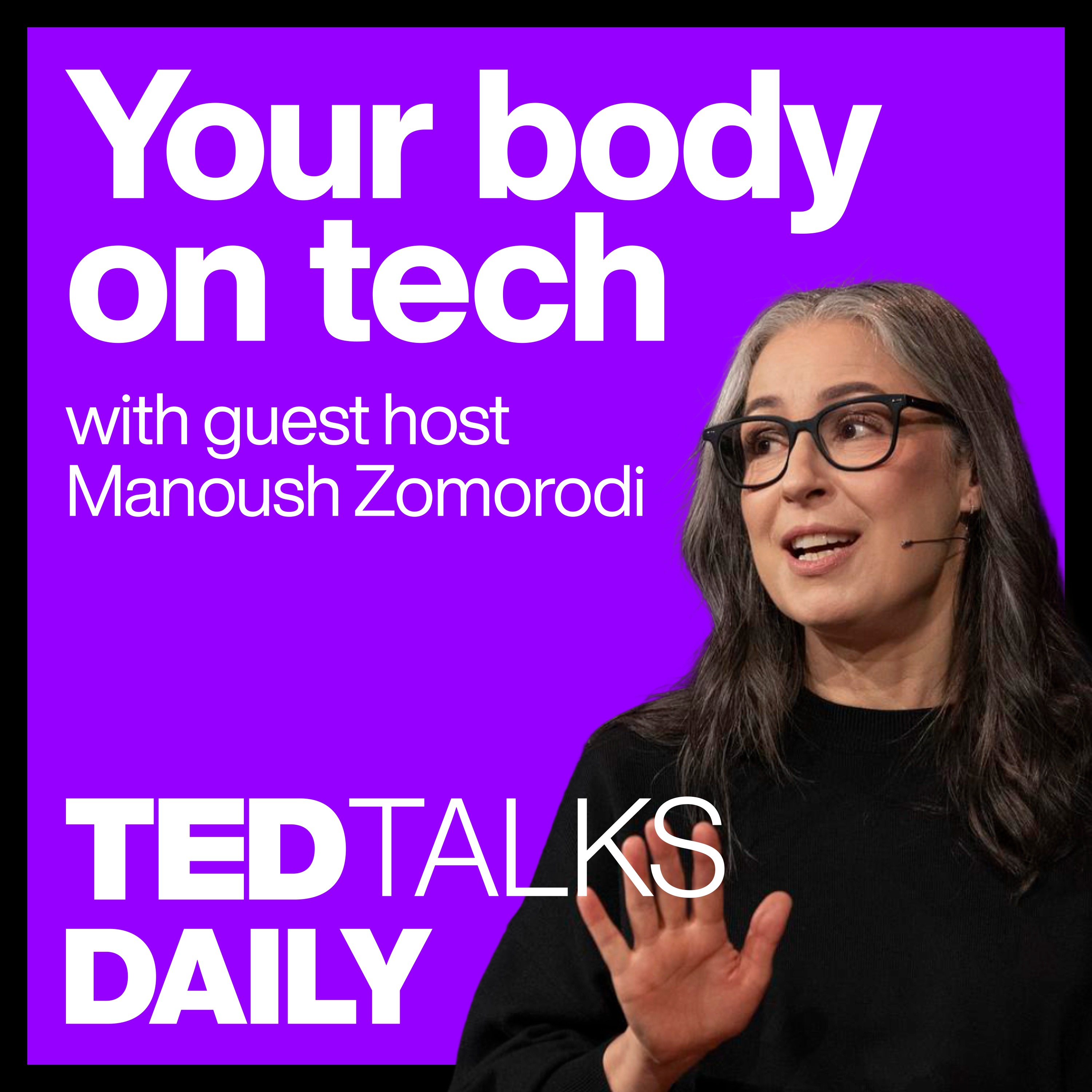
The unexpected wonders of my son's short life | James G. Robinson | Your Body on Tech
In short
James G. Robinson recounts his son Nadav’s short life with a severe congenital heart condition, arguing that medicine’s uncertainty and parenthood’s love can’t be fully quantified, and that wonder and humanity persist even in medical chaos.
Guest backgrounds
James G. Robinson is a Brooklyn father and former Director of Data Products at The New York Times. He and his wife, Tali, had toddler twins; Nadav was born with a single-ventricle heart defect and died at age five.
Key claims
Medicine involves judgment calls and imperfect information; the best doctors are candid about what they don’t know. Parents must collaborate with clinicians as humans, not treat doctors as gods. Trust can coexist with ambiguity, and the body can show resilience even when outcomes remain uncertain.
Notable examples
Nadav’s cilia-related developmental malfunction (heterotaxy) leading to organ malformation; three palliative heart surgeries; an emergency 10-hour surgery while stranded in Australia; a Philadelphia lymphatic procedure that helped clear lung fluid; a genetic H5 mutation shared by both parents; Nadav attending kindergarten with oxygen; and Jewish mourning rituals (minyan/Kaddish) supporting grief.
Written by AI. May contain mistakes.
Chapters
0:45
Introducing James G. Robinson
Manoush Zomorodi introduces James and shares personal connections.
“Today, my final speaker from the session and now in this series, James G.”
2:00
Nadav's Health Journey
James shares the struggles of parenting a child with health issues.
“This episode is brought to you by Walmart Business.”
4:40
Understanding Heart Defects
James describes the medical complexities of Nadav's heart condition.
“And now, our TED Talk and conversation of the day.”
8:00
Traveling with Nadav
The family’s travels and the challenges faced due to Nadav's condition.
“Suddenly, we had to start thinking like doctors.”
10:00
Crisis in Australia
The family's escalating medical crisis while traveling in Australia.
“Nadav is not doing well, he said, and there are three things that could happen tonight.”
12:00
A Journey of Healing
James recounts Nadav’s recovery journey and the challenges faced.
“Not out of pity or palliative care, but because he recognized that to heal is human.”
14:01
The Genetic Journey of Nadav
Discover the unique genetic condition of Nadav and its implications.
“We were under no illusions about his condition.”
15:51
Facing Loss and Embracing Pride
Explore the emotional journey of losing Nadav and the pride felt as a parent.
“Five months after we returned home, Nadav died.”
18:03
Introducing James Robinson's Story
Learn about James Robinson's mission to share his family's story and advocate for others.
“His memoir is called More Than We Expected.”
20:06
The Lightness of Parenthood Amidst Challenges
Delve into James's experiences of parenting with Nadav and maintaining normalcy.
“I don't need you to redo the whole talk, but can you just tell us about this remarkable child and what his life was like?”
Show all 20 chapters
24:45
Trusting the Medical Community
James discusses the challenges and trust in the medical system during Nadav's care.
“So Nadav had three surgeries before the age of four.”
28:00
Navigating Medical Decisions for a Sick Child
Learn about the emotional and challenging decisions parents face when navigating the medical system for their sick child.
“She was clear and candid about what she didn't know.”
38:17
The Journey of Education Amidst Health Challenges
Understand the importance of normalcy and education for children with health challenges.
“He went to school, which you didn't get to talk about in your TED Talk.”
42:03
The Power of Mourning Rituals
Learn about the practical and spiritual aspects of Jewish mourning rituals and their impact on grief.
“And I'm not here evangelizing, But I had always sort of appreciated Judaism's spiritual aspects, that there's a spiritual explanation for everything.”
44:45
Sharing Stories and Kindness
Explore how sharing personal stories can foster kindness and connection during difficult times.
“because you spend a lot of time in hospitals still.”
46:02
Humility in Medicine
Understand the importance of humility and honesty in doctor-patient relationships and medical decision-making.
“I'll tell you the thing that I tell them that I think they need to hear the most.”
48:29
The Privilege of Parenthood
Reflect on the unique privilege of being a parent, even in the face of challenges and loss.
“And this experience taught me that, that there is always a limit to what you can know.”
50:23
The Wonder of Healing
Discover the miraculous nature of healing and the role of medical professionals and families in the process.
“You're talking about the creation of life.”
56:48
The Wonder of Healing
Discover the miraculous nature of healing and the role of medical professionals and families in the process.
“With AI-powered automation, Bill removes the busywork from your accounts payable workflow.”
58:28
The Wonder of Healing
Discover the miraculous nature of healing and the role of medical professionals and families in the process.
“And you just got handed a huge opportunity.”

Ask about this episode
Get the gist, explore an idea or ask about something said.
 Claude
On TED Talks Daily, what are the key points of this episode?
Searching your listeningTranscript
Automatic transcript. May contain errors.
0:03You are listening to TED Talks Daily, where we bring you new ideas and conversations to spark your curiosity every day. Hello, I am Manoush Zomorodi. I'm a journalist, an author, a two-time TED speaker, and you may know my voice because I host the TED Radio Hour podcast over on NPR. This week, I've been taking over for Elise Hu with a special series of talks and conversations all about how we can live a healthier life in our high-tech era. That topic is a personal obsession of mine, and I had the honor of guest curating a session at the recent TED 2026 conference all about tech, the human body, and what is keeping us human in this digital age.
0:46Today, my final speaker from the session and now in this series, James G. Robinson. So I have known James ever since our boys were in kindergarten together. I quickly learned that he and his wife, Tali, also had toddler twins. And that one of those twins, a boy named Nadav, was very sick. But we lived our lives. We took the kids to school. We talked about our jobs. James was until recently the director of data products at the New York Times. Our boys had sleepovers. But then a few years later, James and his family took a trip that went very wrong. And Nadav's health took a turn for the worse. You'll hear the story in a moment, but I just want to take a sec to explain why it was really important to me to include a talk in this series about something that could never be quantified, analyzed, or optimized.
1:45And that's the love a parent has for their child. Humans are imperfect, and James would have it no other way. You'll hear more, and you will hear why, in his talk and our conversation. Coming up right after the break.
2:07This episode is brought to you by Walmart Business. The best leaders might tell you the work that moves an organization forward doesn't happen in spreadsheets or supply chain emails. It happens when you have the space to think big. That's the idea behind Walmart Business. It's built to take the friction out of running an organization so your team isn't losing hours to procurement logistics when they could just be focused on the problems that actually matter. With an ever-expanding business assortment, everyday low prices, and fast, reliable shipping, Walmart Business keeps your operations running smoothly.
2:41Shop online, in-store, or through the Walmart Business app. However works best for you. Simpler operations, smarter spending. It's Walmart built for your business. Sign up for a free Walmart business account at business.walmart.com. This episode is brought to you by LinkedIn. Running a small business means every hire matters. A bad hire can cost you time, money, and momentum. A good hire, they can help grow your business. But finding great talent isn't easy, especially when you don't have the time or resources to sift through piles of resumes to find the right fit. That's why LinkedIn built Hiring Pro, your new hiring partner that screens candidates for you.
3:21So instead of sorting through applications, you spend your time talking to candidates who are actually a good fit. With Hiring Pro, you can hire with confidence, knowing you're getting the best talent for your business. In fact, according to LinkedIn, those hiring with LinkedIn are 24 % less likely to need to reopen a role within 12 months compared to the leading competitor. Join the 2.7 million small businesses using LinkedIn to hire. Get started by posting your job for free at linkedin.com slash TED Talk. Terms and conditions apply. This episode is brought to you by Dell. Back to school starts now.
3:55Get long-lasting battery life on the Dell XPS laptop, powered by Series 3 Intel Core so you can work from anywhere. Now starting at$699 with exclusive student pricing starting at$599. And it's lightweight, portable, and packed with enough processing power to make multitasking a breeze. So say goodbye to distractions and hello to more free time because you finished your work faster. Complete your setup with savings on select monitors and more must-have electronics and accessories. Limited time deals and free shipping on PCs and more await you at Dell.com slash deals. That's Dell.com slash deals.
4:42And now, our TED Talk and conversation of the day. Hi, my name is James. I live in Brooklyn, New York with my wife, Tali, and I'm a dad. And when people hear that, they always ask me the same question, how many kids do you have? Well, the answer is three. Three amazing boys. And then they say, how old are they? And that's where things get a little complicated. Because one of them, Nadav, was born with a heart defect and died nine years ago at the age of five. When I tell people this, they always have the same reaction. That's the worst thing I could ever imagine. In fact, some of you are probably feeling that right now.
5:24But they don't realize what a privilege it was to be his father and how grateful I am for having had that experience. And today, I'm going to explain why. Nadav was born with a single ventricle, the result of the condition called heterotaxy. It required three surgeries before the age of four, the first one at only five days old. But there was no fixing his heart. These operations were merely palliative, a series of sophisticated hacks designed to stabilize his circulation. The hope was to get him to teenage years where he might be eligible for a heart transplant. Let me tell you what it is like to get that news.
6:02It is absolutely terrifying because it makes you realize how little you know. I didn't know whether these operations would be a success. I didn't know whether Nadal would live or die. And worst of all, if he did die, I didn't know how I would tell his brothers. Parenting is all about making choices. We wrestle with the unknown as best we can, hoping that things will work out for the best. We hope that the decisions we make are the right ones, and when things go wrong, we worry that there are no right decisions at all. We simply do not know. But there is also wonder to be found in the unknown. When our first son was born, I left the hospital giddy with awe that we had somehow conjured a new life into the world.
6:50And when his brother was born with a heart defect four years later, it made me realize how truly remarkable this actually is. When we are first conceived, just a bundle of cells, perfectly symmetrical. On the outside of the embryo are tiny hairs called cilia. Their job is to beat the amniotic fluid around the embryo. This lays out the proteins that tell our organs how to form. If the cilia are not working quite right, and this is what happened with Nadav, the flow is erratic. The proteins are in the wrong position, and our organs are malformed. This happens in the span of three hours. In time for dinner and a movie, your fate is sealed.
7:35It absolutely blew my mind to learn this, and had he not been warned of the heart defect, I never would have appreciated it. Forget that anything ever goes wrong. How incredible is it that anything ever goes right?
7:52Of course, as the parent of a medically complicated child, you don't have a lot of time for philosophy. It was hard enough parenting a healthy kid. Suddenly, we had to start thinking like doctors. I realized how ambiguous the practice of medicine is. Everything is open to interpretation. We learned that doctors are not magicians or gods. They have a certain level of expertise, but they too wrestle with the unknown. The best doctors were the ones who were honest and humble about what they didn't know. And one thing doctors knew nothing about was how to parent our children. As one doctor said to us, never forget that he is our patient, but he is your son.
8:32It was our responsibility to show them the world. And for us, that meant traveling. We pushed strollers all around New York. We drove to a favorite beach in North Carolina. We even got on a plane and flew to the West Coast, where we visited Legoland and the San Diego Zoo. In every place, we tried to show them something new. And then we had an opportunity to go even further, to Australia, a country we loved, right after Nadav's fourth birthday. This was a place that was very special to us. My mother is from there. Tali lived there for four years. But it wasn't an easy decision. Nadav had just had his third surgery, and it was a very long way away.
9:11But after long conversations with his doctors, we decided to go. And it was fantastic. For two weeks. And then, two days before we were due to return home, we noticed that Nadav was not looking well. We took him to the hospital, where he was diagnosed with a clot in his circulation that required emergency surgery. The operation lasted 10 hours, seven and a half on bypass. He emerged alive just barely. And we found ourselves stranded on the other side of the world, stuck in an unfamiliar hospital with our son being cared for by people we didn't know. I didn't think things could get any worse. And then they did.
9:53Because we were called in for a family meeting. And family meetings are never good news. The doctor in charge cut to the chase. Nadav is not doing well, he said, and there are three things that could happen tonight. First, he could improve, and I'm telling you now, that's not going to happen. Second, he could hold steady, and that's what we're hoping for. Third, he could deteriorate, and in that case, there's nothing more we can do. I had done a pretty good job to that point of holding things together, but in that moment, I shattered into a million pieces. but Tali remained calm she looked the doctor right in the eye and said so what you're saying is that it's up to him yes he said I suppose that's right well I can live with that she said I trust him what Tali trusted was something inside of Nadav himself she put her faith in the mystery of how we grow and heal the energy that causes the ciliated beat the map that tells our organs how to form She's trusted the resilience of life that somehow Nadal's body would find a way to heal.
11:08He made it through that night and many more. But he remained the sickest kid in the ward. More than once we were told that he was going to die. Every few days in the intensive care unit, a new doctor would come on call and we would bombard them with questions, hungry for information. And they would say, please be patient. We have to get to know him. and I realized they were saying something subtle and profound. They were saying that they did not have the power to heal our son, that only he could heal himself, that their job was to give him the best opportunity to heal and to do that they had to get to know him.
11:45One day the doctor in charge of the unit announced that he was going to take Nadav outside. This sounded absolutely ridiculous. He was intubated, he was in critical condition it took 45 minutes to get him from his room to the elevator down the hall. But it was such a precious gift. Not out of pity or palliative care, but because he recognized that to heal is human. To feel the wind in your hair, touch leaves, smell flowers, to watch your brothers play, to be together as a family, it was an amazingly human thing to do. We were stuck in Australia for three months until we found a procedure that could help him.
12:26The problem was that it was being developed at the Children's Hospital of Philadelphia, on the other side of the world. Which is why an incredible medical team boarded a specially equipped Gulfstream 3 in Philadelphia and flew from Philadelphia to Oakland, Oakland to Hawaii, Hawaii to Fiji, Fiji to Sydney. They landed like astronauts wearing blue jumpsuits with the American flag on their shoulders and chopped transport on the back. They'd never transported anybody this sick this far. They told us that if he died, they would land at the nearest airport. But thanks in part to his resilience, they somehow made it back.
13:01The procedure in Philadelphia was successful. Nadav was no longer in critical condition, but his underlying issues persisted. The biggest problem was that there was still some fluid in his lungs and we couldn't leave until it cleared. We spent six months in Philadelphia, waiting for that lung to clear. In that time, Nadav learned to walk again, to talk again, to eat again, to smile again. We took him outside as much as possible, inspired by our time in Australia. Every morning, we would walk to a herb garden in a distant ward where we'd pick fresh oregano for Nadav to eat for lunch, his favorite.
13:36We wanted him to feel like a kid again because we knew how important it was to help him heal. That lung did not clear. No matter what the doctors tried, they were completely baffled. Eventually, in August, they decided to try a last-ditch procedure to address his lymphatic system, something that nobody quite understood. And thankfully, it worked. His lungs cleared. We were under no illusions about his condition. He still had a single ventricle. His body had actually grown all sorts of new connections, hoping to rebalance his circulation. And while I was amazed that his body was finding ways to heal itself, we knew it was unsustainable.
14:18Still, we were finally going home. Before we left, though, there was one last moment of wonder. We were asked to participate in a research study examining the genetic causes of Nadav's condition. And what we found was amazing. Nadav had a malformation in his H5 gene that had never been reported before. It was completely unique. Finally, we had scientific proof that our son was one of a kind. But here's what's even more astounding. It turns out that Tali and I both have the exact same mutation on each of our H5 genes. Completely, perfectly identical, never before reported, never before seen. The genetic counselor suspected that we had a common ancestor 400 or 500 years ago.
15:08I knew as soon as I met Tali that we were meant to be together. Little did I know that this would reunite a centuries-old mutation that would screw up our beloved son's heart. but I wouldn't change any of it. What choice did I have? Should we not have gotten married? Should we not have had kids? Should we have cherry-picked embryos hoping to find one free of a defect? Well, then we would be missing our son, a son we loved, and that would be the worst thing I could ever imagine. Thank you.
15:50I've already told you how this story ends. Well, here it is. Five months after we returned home, Nadav died. And when I held him in my arms that night, I felt all sorts of emotion, pain, sadness, grief. But the emotion I felt most of all was pride. Parents lived for these moments of pride. Graduation, getting married, having kids. I realized that many of these things we would not experience with Nadav. but in his five years together we experienced as many moments of pride as most parents feel in a lifetime
16:26and then it was time to tell his brothers the one thing I had always feared when I think back to that moment I think back to conversations I would have with my own father when I was young we would go outside at late night and we'd look at the stars he'd explain to me that we were seeing the stars as they were millions of years ago, that even though they appeared in the sky, some of them may no longer exist. I asked him what was between the stars, and he said, nothing. I refused to accept this. We argued about it endlessly. I could not imagine such a thing as nothing. My father's own father had died when he was just 16 years old.
17:08I grew up afraid of death, terrified of the concept of nothingness. And when it came time to tell Nadav's brothers that he had died, I felt the same sort of dread. As a father, I always felt it was my job to teach my children about the world. But until Nadav was born, I didn't realize how much our children teach us. Our five years together taught me what it means to be human. It revealed unexpected wonders. And it made me realize that there are some things we will never understand. end. And so when the time came, I told his brothers the truth as best I could. Your brother has died, I said, confirming against my will the empty darkness that surrounds every shining star.
17:56Thank you.
18:03That was James Robinson. His memoir is called More Than We Expected. When we come back, My conversation with James about how he's taking his talk on the road to hospitals across the United States, why he still has trust in the medical system, and what he wants you to know about how to advocate for yourself or someone you love who is getting medical treatment. The things that no one tells you. It's in just a moment. This message is brought to you by Apple Card. Apple Card members can earn unlimited daily cash back on everyday purchases wherever they shop. This means you could be earning daily cash on just about anything, like a slice of pizza from your local pizza place or a latte from the corner coffee shop.
18:47Apply for Apple Card in the Wallet app to see your credit limit offer in minutes. Subject to credit approval, Apple Card issued by Goldman Sachs Bank USA, Salt Lake City Branch. Terms and more at AppleCard.com. This episode is brought to you by Gusto. Great work rarely happens by accident. It happens when the right systems are in place. And for small business owners, that often starts with the basics, payroll, benefits, onboarding, and HR. Gusto makes all of that simple. Gusto is an online payroll and benefits software built for small businesses. It's all-in-one, remote-friendly, and incredibly easy to use.
19:22So you can pay, hire, onboard, and support your team from anywhere. With built-in tools that automate everything from offer letters to direct deposit, your team spends less time on paperwork and more time focused on growth. There's a reason Gusto is ranked number one on G2's highest satisfaction products list this year and trusted by over 400 ,000 small businesses. Try Gusto today at gusto.com slash TED Talks and get three months free when you run your first payroll. That's three months of free payroll at gusto.com slash TED Talks. One more time, gusto.com slash TED Talks.
20:06Hi, James. Hey, Manoush. Thanks for doing this. My pleasure. I don't need you to redo the whole talk, but can you just tell us about this remarkable child and what his life was like? So our son, Nadav, we always knew his life would be different than other children. But I didn't really expect how incredible it would actually be to have this experience. Obviously, when you hear this news as a father, it's devastating to know that your son will face challenges. But his life, as crazy as it was, really taught me a lot about what it means to live, what it means to grow, what it means to be human. And as difficult as it was, it really revealed a lot of really amazing things about the world.
20:51And how did you and your family cope during those first years? We coped as best we could. What was important to us was to have as much information as possible. The irony of the situation was that we quickly learned that there was a lot of ambiguity in medicine, that even though the doctors were extraordinary, there were still limits to what they could know, and that what we had to do was find a way to collaborate with them on caring for our son, both medically and as his parents. And to do that, especially since he had two healthy brothers, we had to have as normal life as possible, which was not always easy, But we did the best we could.
21:27And the way that we did that was by traveling. We tried to get out of the house as much as possible, show our sons the world, both in our home city of New York, but also elsewhere. What did you love to do with your boys? Well, we loved to play in the house. It was fantastic to just be silly a lot. We were very, very silly. We would wake them up every morning by singing them college football fight songs, for example. We would read books in silly voices, which got on their nerves, which as a father, I think, is always very gratifying. We went for long walks. We went to museums. We went to aquariums.
22:05We went to zoos. We just tried to get out and experience life as best we could. Do you remember the birthday party that you threw for Gilad in Prospect Park where you were Robin Hood and the Merry Men? We threw tons of birthday parties for the boys. That was always a highlight. We went a little overboard with the theme, not by spending lots of money, but by trying to be as creative as possible. Wait, tell me, which is the one you love the most or remember the most? Oh, we did a lot. During the Olympics, we had an Olympics party in the park across the street from our house. We printed up custom t-shirts.
22:41So all the kids had like shirts with their names and their favorite countries. And then we sort of have like this mock Olympics in the park, just doing all sorts of crazy things. You know, the thing that we learned about parenthood was you can't have too much structure on it. You have to give the kids sort of a blank canvas to have chaos. So you can plan a whole bunch of things, but you don't want to dictate too much what actually happens because part of being a kid is just the freedom of being, you know, silly and crazy and whatever. And I think as a parent, you have to realize that ultimately don't have a lot of control over that.
23:11And in fact, if you try to, you're going to be getting in the way. So Gilad's birthday party that you're referring to, this is Nadav's older brother. We made little Robin Hood hats for them. We gave them bows and arrows, which in retrospect was maybe not such a good idea. But again, we had planned all these things off. We took these kids on a march through Prospect Park. And we got to the point where there was this wonderful illusion that we were actually Robin hood and the merry men standing through Sherwood's forest. And in fact, I like had these little packets of fake coins I would throw in places and they would discover these gold coins and they were great.
23:44And all of a sudden we got to the road and there was a charity walk. It was like the most un-Robin hood thing you could possibly imagine. You know, tons of people marching along in these pink shirts. I forget what the cause was. And I was like, oh, there goes the illusion. And one of the kids looked at them and said, the King's men, the King's men. And we all yelled, the king's man and we ran away perfect I'm glad you didn't rob them no no no no so I mean I guess the point is it's not like you as a family were talking about how sick Nadab was all the time there was a lot of normalcy yeah there was normalcy and normalcy is chaos and normalcy is unpredictable and that's true of non-normalcy too right in his medical care there's a lot of unpredictability as well and I think the thing that I learned most about parenthood was that But you could do the best you could to impose some water on the universe.
24:32But part of being human is to sort of embrace the chaos that inevitably ensues and make sure that it's not dangerous, as in shooting arrows into the wall, but fun. Okay. So with the chaos in mind, you and your wife, Tali, decided to take the kids to a place that was really important to you. Can you tell us about that decision? Yes. So Nadav had three surgeries before the age of four. All of which went sort of well. The last one did not. There was a moment of sheer terror where we thought he might not make it because these surgeries are very risky. But after the third surgery, I got an invitation to give a talk at a conference in Australia.
25:11And so I suddenly had the opportunity to take our whole family down to show them a country that we loved. And it was one of those moments, and there are many of them when you have a kid who's medically complicated, where you have to weigh different things. You have to weigh the risk of doing something with the benefits of doing something and the risk was that he was obviously a medically complicated child who had just had a surgery. The benefits were that this was a place that we wanted him and his brothers to experience. And so it was great. It was absolutely great. We love the country for a reason.
25:43There's just something about being there that makes us feel whole. We shared all the things that we loved about it with the boys, which was really nice. So at some point though, Nadab was not looking well and you decided to take him to the hospital. Yep. That was two days before we were supposed to leave. So we found ourselves going to the hospital on a day where we should have been going to the Blue Mountains and exploring the Australian wilderness, Bush. Instead, we found ourselves at Children's Hospital Westmead, which was a place where we knew nobody. And the news we got there was not good.
26:17Up to this point, you had real trust in the medical community, whether it was the doctors you knew oh so well back in New York, and then also this new team in Australia. Like, what was it about, did you think like, oh, there's going to be a technological breakthrough that's going to save my kid, or these are good people who have, you know, know the science, know the limitations, and are just doing the best they can? We didn't know what to think, actually. I think the word trust is not exactly what I would use to describe the doctors in the States. It's like, I think it was more that we knew them and they knew us and we had developed that relationship.
26:54And so I guess in that respect, we did trust them, but we also knew that so much of medicine is judgment calls and making decisions based on imperfect information. And that, you're right, that does require a great deal of trust. I think the bigger shock when we got to Australia and needed to have the surgery was that we didn't know anybody. We didn't know anything about them. We'd never met them before. and meeting people in a crisis is not a great way to start a relationship. And you're handing over the most precious thing in your entire life to them. We are. And we knew that if you know that so much of this is a judgment call based on experience, they didn't know him either, right?
27:32They didn't know how he reacted to things. They didn't know anything about him, really. It turns out that the surgeon who did operate on him was incredible. And we asked her in advance. She was very patient talking through what she intended to do. And we what approach you can take. And she said, I don't really know yet because I have to be inside him to make those decisions. And that was trust. That was handing your son off to a stranger without any agency or knowledge of what would actually happen. But she earned that trust pretty quickly because she took the time to talk to us. She was clear and candid about what she didn't know.
28:04And she warned us of all the possibilities. And that meant a lot to us that she treated us with the respect that we thought we deserved as parents, not just because we were VIPs or anything like that, but because we had a medical knowledge about him and what his care should be, that I think doctors needed to make good decisions. And she respected that. There are a lot of people who maybe at some point would have given up on traditional medicine and looked elsewhere. I have had other friends who've had really sick kids and it's, you know, you're willing to try anything, right? And especially at this point where there's a lot of distrust in medicine.
28:43Did you think about maybe going outside the traditional medical establishment to see what could be done for your kid? No. Well, when we first got to Australia, we weren't really going anywhere. I mean, that was the only option, right? When you have a kid who needs emergency surgery, you're not going to take him out of the hospital. That's a little crazy. We're also not that sort of people. The approach that we took was not live at all costs, right? We wanted him to have the life that he deserved. and there were moments after the surgery when we got stuck in Australia and there was really, there was nothing more they could do for him and there was no reason to bring him home.
29:22He was not a candidate for surgery. The doctor told us straight out, the doctor in charge said, if anybody wanted to operate on your son, I would be very suspicious of his motives because surgery is likely to kill him and the slim chance that he might live through the surgery is not worth it. This was after the surgery. This was after the surgery. But yes, you are always looking for things that can help your child. So one of the things that we learned about kids with these sort of heart conditions is the lymphatic system is really, really important in determining outcomes. And nobody understands the lymphatic system at all.
29:58There are doctors in the States who can do wonderful things with lymphatics, but everybody else is not as experienced. So there was a doctor in Australia who had heard about these procedures and asked if we would consider doing a lymphatic procedure to help him out. And we decided that we would because there was sort of a precedent for that. And we had assurance that this was not quackery. Well, that procedure made the situation worse, right? That was not successful. But we didn't stop looking for things that could help him. Of course not. We didn't give up. But for us, it was important that they were rigorous, that they were tested, and they were from people that we felt had his best interests at heart.
30:32And so the reason that we were able to leave Australia was because there was a doctor in Philadelphia who was pioneering a new procedure that would basically address his acute situation without surgery. What was interesting about that is I don't think anybody else would have found that as an option if my wife did not read medical journals. And the reason she read medical journals was because we were looking for absolutely everything that we needed to know to let this kid survive. I mean, that seems kind of crazy. Your wife, to be clear, is not a physician. Why weren't the top people in the field also scouring the latest developments.
31:06They are, but the dissemination of information in, I can only speak to pediatric cardiology, is not haphazard, but it takes time to disseminate. This was a procedure that had been done on less than a dozen patients. So this was not something that had been accepted. I don't think it was even accepted in the hospital that they were doing it at. It was something that was experimental, right? And I think many medical professionals are obviously cautious about the things that they adopt because the stakes are so high. You know, it's as much art as it is a science, but they're also looking for information they can trust.
31:38In the end, you had sort of an extraordinary departure from Australia. Yeah. So when Tali found this medical paper, she asked if Nadav would be a candidate for this procedure. So we called his cardiologist in New York and asked if she would ask on our behalf if he was a candidate. She said, I will ask. She asked him. And the doctor said, I'll evaluate him. And those three words became magical because it became medical justification to bring him home. Now, having said that, his doctors in Australia and the doctors at Children's Hospital of Philadelphia, which is the place that this procedure was being done, did a lot of amazing work to actually plan out the logistics of getting a kid to sick home.
32:20it was miraculous it was like a magic carpet for us this plane was crazy it had been used for like medical evacuations from doctors treating the ebola virus right this is the same plane they used for that so this was like kind of a famous plane and the people were just as remarkable like they were really amazing you know one of the nurses said don't worry we'll we'll get your boy home if all i had was a flashlight i would do it right they had this confidence but it was like It was confidence you could trust. And then he unzipped his jumpsuit and underneath was, he was from North Carolina and he was wearing a Greg Olson jersey.
32:59Greg Olson used to be a tight end for the Carolina Panthers, whose son also has a heart condition similar to our son's. And he had thought to wear that under his jumpsuit, right? And he unzipped to show us. And we're like, who are these amazing, remarkable people? And it is so humbling, Manoush, to know that there are people who have chosen this as their profession that have dedicated their careers to helping children like our son. Like as parents, we had no choice in it whatsoever. But these are people who have spent their whole lives just training for this one moment, and that is to help your child.
33:28So the logistics in this were insane, but they got him home. And that was as much him as it was them. I remember when the doctor from the U.S. arrived, she said, should we sedate him? And the doctor in Australia said, no, I'd avoid that unless you absolutely need to, because he's likely to surprise you. And that reflected the fact that he had gotten to know our son medically, right? That he knew how he reacted to certain things. He knew how tough he was. He knew what he could tolerate and not tolerate. And he was passing that knowledge on to the doctor, something that was not on his chart, but something that he felt in a very human way.
34:03Nadav was kind of out of it, but he was a fighter. where he learned to talk while intubated, which was insane. Not just that he could do it, but that there was somebody who could teach him how to do it. There was a speech therapist who showed up at her bedside. And we were like, why? Because this is a kid who's intubated and sedated. And we said, why are you here? No offense, because he can't talk. And she said, well, he can still communicate. She taught him how to communicate using his eyes, just pointing to the book he liked just by using his eyes. And then she taught him how to blow bubbles.
34:34And that was because she wanted to teach him how to speak as a kid who's intubated. Wow. And she taught him how to speak like he could croak through his intubation, which was insane. And I think that the things that make us human are so important to healing. Talking is important, right? Like being with your family is important. The child life people there who came to play with him in his bed were not distracting us. They were providing a really important function, which was for us to be together as a family, trying to make an abnormal situation as normal as possible. What did your boys, like, how were the boys through all this?
35:10All three of them. The boys, it was not easy for them to be stuck there where their parents freaked out. And knowing that their brother was close to death, we were honest as much as possible with them about everything that was going on. Nadav has a twin brother who obviously was not in an age where you could have long conversations about this, but his older brother at that point was eight years old. And we tried to be as honest with possible. Which I knew was difficult, you know, to tell your son that his brother was in bad shape and might die. But we thought it was important that he know what was going on so that if he needed to, he could communicate and talk to us about what he was feeling as well.
35:47We're going to have a quick break and then we'll be right back. This episode is brought to you by Walmart Business. The best leaders might tell you the work that moves an organization forward doesn't happen in spreadsheets or supply chain emails. It happens when you have the space to think big. That's the idea behind Walmart Business. It's built to take the friction out of running an organization so your team isn't losing hours to procurement logistics when they could just be focused on the problems that actually matter. With an ever-expanding business assortment, everyday low prices, and fast, reliable shipping, Walmart Business keeps your operations running smoothly.
36:24Shop online, in-store, or through the Walmart Business app, however works best for you. Simpler operations, smarter spending. It's Walmart built for your business. Sign up for a free Walmart business account at business.walmart.com. This episode is brought to you by NPR's Planet Money. You know, one thing I love about TED Talks is how they take something huge, a scientific breakthrough, a global system, and make it feel deeply personally relevant. NPR's Planet Money does that same thing, but for the economy. Every episode starts with a question. Why are Pokemon cards outpacing your retirement account?
37:02How has Russia's economy held on through four years of war and sanctions? What does a 750-pound walk robot mean for the future of restaurants? These aren't abstract economics lectures. They're human stories, funny, surprising, and genuinely illuminating. The Planet Money team has published a book tracing the global supply chain, launched a satellite to explore the private space industry, and walked inside a live book auction, all in the name of helping you understand how money shapes the world. It's econ down to earth. Follow NPR's Planet Money podcast and understand how money shapes the world.
37:42This message is brought to you by Apple Card. Apple Card members can earn unlimited daily cash back on everyday purchases wherever they shop. This means you could be earning daily cash on just about anything, like a slice of pizza from your local pizza place or a latte from the corner coffee shop. Apply for Apple Card in the wallet app to see your credit limit offer in minutes. Subject to credit approval, Apple Card issued by Goldman Sachs Bank USA, Salt Lake City branch. Terms and more at AppleCard.com.
38:16I saw Nadav at home. He went to school, which you didn't get to talk about in your TED Talk. Tell me about making that decision. You know, despite him being essentially terminal, you decided he should go to kindergarten. I wouldn't call him terminal. I mean, we're all terminal. We knew that his circulation was unsustainable, but we were still pursuing medical options even after we left Philadelphia to see if we could get him a transplant. So that wasn't the attitude that we were taking. And I bring that up because it's not like we went to kindergarten out of palliative care or just like a make-a-wish or anything like that, right?
38:53Like we wanted him to live. We wanted him to live as long as possible, and we also wanted his life to be full, right? And four-year-olds, five-year-olds should be in kindergarten, right? Like that's just a normal thing to do. So we decided when we got back from Philly after six months to enroll him in the kindergarten, the public school across the street from our house. And New York City law is that they have to accommodate any kid regardless of what's going on. Nadav was not in great shape, even though he had sort of learned to walk again and ride again. Like he was on oxygen, supplemental oxygen, which meant that he had an oxygen tank that went everywhere and he had a nasal cannula these two things in his nose that they gave him the oxygen he needed to breathe and so our first meeting with the staff at the school was a little fraught you know like i think they wanted to help but this is probably the sickest kid any of them have seen in their in their lives because there's a lot of logistics you have to work out who's going to take him to the bathroom who's going to take him upstairs that sort of thing but the the teacher who would be in charge of him at one point looked over to me when it was especially tense and said, don't worry, we're human.
39:56And at that moment, I knew we were in good hands. Like that's all I needed to know because I knew that she understood what was important. And so he developed incredible friendships there. It was remarkable for him to be around kids his own age going to school, you know, after all he had been through. And we thought that maybe he would go like a day a week or half a day. And he went every single day. And it was really, really incredible. I mean, I feel like the story doesn't end well, James. And I hate that you have to keep telling it over and over again. But I suppose at this point, you are used to it.
40:33But I knew your son. I know your boys now. I know you and your wife well. I mean, as someone who was not with him every moment, it still came as a shock. It's funny. This is an interesting moment, Manoush, because this is not a difficult story for me to tell. It brings me great joy to tell this story, because I'm able to share his life with other people in a way that hopefully makes an impact. Obviously, his death was a very sad thing. I had known this when he was born, that this was a possibility, right? The one thing that I really feared when he was born was not just the fact that he would die, the fact that I would have to tell his brothers that he had died.
41:11And that always terrified me most of all. Like the act of telling always scared me. And yet when the time came, I felt that I had the strength to do it. When he did die, and I did have to tell his brothers that this had happened, I knew how to do it. And I think what had happened was as a father, you feel the obligation to explain the world to your children, to tell them as much as possible. And I realized by this point that this was one thing I could not explain, you know, wrestling with the possibility of his death. And honestly, the possibility of my own death. because it does make you face your immortality.
41:43This is something beyond my understanding. And so when the time came to tell the boys what had happened, I told them the truth, that he had died. And I trusted their strength and resilience to eventually be able to make sense of that. You know, like the aftermath of his death, we kind of knew what to do because we have a tradition that tells us what to do, right? Judaism. Judaism, yeah. And I'm not here evangelizing, But I had always sort of appreciated Judaism's spiritual aspects, that there's a spiritual explanation for everything. And yet when it comes to grief rituals or bereavement rituals in Judaism, they're really practical.
42:17But the most interestingly practical thing that I found about the Jewish traditions is that you have to be surrounded by folks when you are mourning. So you say a prayer called the Kaddish three times a day, and you have to do it with nine other people. That is a necessity. And when I went back to work after he had died, somebody at work said, do you want us to announce to the company that this has happened? And I said, I don't know. Use your best judgment. And so they decided to send out a note to everybody about this. And I was actually very grateful that they had. Because when I came back, it was not awkward at all.
42:50Like, I didn't have to explain to anybody. They all knew. And it was more awkward for them, actually, right? Like, the obligation of awkwardness off of me and put it on to them. But what was really amazing was a bunch of my colleagues, who I did not know, realized that he had a Jewish name. And they knew of this obligation that three times a day you're supposed to say Kaddish with a group of people, right? They wrote to me and said, we just want to let you know that when you come back, we will arrange, it's called a minyan, we'll arrange a minyan for you at work every day. And I thought that was the most incredibly kind thing that anybody could possibly do in that situation.
43:23Of course, we worked in the garment district. There's like a million synagogues around. So I said, I'm already planning on going to the synagogue, but it's very kind of you to offer. And they said, well, in that case, we'll make sure that you don't go alone. And so every day for a month, somebody would meet me in the lobby around lunchtime. And we would introduce ourselves because we didn't know each other. The only thing we had in common was that we worked together when we were Jewish. And we would walk the five blocks to the synagogue so that we could say the prayers. And over that time, I would tell them the story of Nadav's life.
43:55and by the end of the walk, they would be in tears and I would be comforting them.
44:02So that taught me a lot of things. First of all, it taught me the incredible kindness of strangers. It taught me that our story has power to affect other people because I think one of the reasons they were crying is I think everybody holds something deep and difficult within them, even if it's not the death of a child. You know, one of the things about being in the situation is it reveals the goodness in the world, Manoush, in a way that nothing else does. And I think the world is a fundamentally good place. There are wonders all around us. And the mystery of what it means to live and why all this happens is both terrifying and wonderful.
44:31And I think there is wonder and joy to be found even in the most difficult situations. And that's why it's not as hard for me as I think you would think for me to tell this story, because it reminds me of all those wonderful things that we learned along the way. It's interesting to me that you say that because you spend a lot of time in hospitals still. Explain what you've been up to. So I wrote this memoir two and a half years ago. It was published. The main reason I wrote it actually is for Nadav's brothers. So when they're old enough to really understand what it means to be a father, they can understand what I went through and how I interpret it.
45:07But I also realized that our story could help people in similar situations, whether they're clinicians or families taking care of medically complicated kids. You know, there are things that we learned along the way that I think could be helpful with them. And I share our story. And I share it in the medical context because I want doctors to understand what we learned about the practice of medicine and how you care for kids like our son. And I think that relies on an acknowledgement that we are human in so many different ways, that parents have to realize that doctors are not magicians or gods, that they are experts in their field, but there are also a whole bunch of things they don't know, which is often difficult for doctors to admit.
45:45And I want doctors to treat families like humans. I think the ability to talk about medicine as an essentially human endeavor and all the implications therein is something that I think is not often taught in medical schools and does seem to have a big impact on those folks. What do you think the thing is that you say that surprises physicians the most? I'll tell you the thing that I tell them that I think they need to hear the most. Maybe a different way to answer that question, which is doctors have to be open and honest about what they don't know. They have to admit that there are limits to their knowledge.
46:17that a lot of these things are unpredictable and not as well researched or understood as they should be. And I think that's important for them to admit that because it changes the dynamic between family and doctor to a point where both recognize the ambiguity as you make decisions on the same page. I think there's a way of communicating that to families in a way that's reassuring and not devastating, right? Which is to say, here are the things we could try. Honestly, we don't know how they could turn out. In my experience, I tend to see things happening this way, but we don't really know what could happen.
46:51And this is a decision that we have to make together, I think is a very healthy thing to say to a family, rather than pretending you have all the answers. Right. I mean, I talk to a lot of researchers. I also talk to a lot of technologists. Did you find yourself ever caught up in this idea like, well, you know, innovation and progress are so fast right now in medication and medical treatments and technology and gene therapies and all kinds of things. If we can just hang on, maybe there will be a breakthrough for us. There is no doubt that medicine is advancing at a rapid pace. There are things that could have helped our son that exist today that did not exist 10 years ago.
47:32But there's an arc of it, right? Like the first heart surgery was in the 40s. Ever done on kids, blue babies like our son. Are they risky? Yes. Do parents need to understand what it means to take those risks? Yes. But it's not just some sort of magical technical innovation that's going to save this, that's going to help this. The three surgeries that our son had are temporary. Hopefully kids in the future will never have to endure them. They're not fixes. they are elaborate hacks designed to twist the body's circulation into a stable state in the hopes that they can grow old enough to be eligible for a transplant or to be able to have a good chance at a transplant, I would say.
48:12But is there a magic bullet? Sure, maybe 80 years from now, somebody will be diagnosed with a single ventricle in utero and the doctor will say, we'll just take care of it before they're born. I'm sure that's going to happen. But Manoush, I actually believe that as humans, we have to come to terms with the fact that there's things we will never understand. And this experience taught me that, that there is always a limit to what you can know. And I think the humility to accept that helps you cope with that terrifying reality in a way that allows you to live your life and find grace in the things about humanity that do matter and that are really important.
48:46What you said about 80 years from now, it brings up another question that I feel super uncomfortable asking you, but there are also a lot of technologists who say, well, you know, you won't need to have a child with such a devastating malformation because we will be able to genetically optimize embryos so that they are never implanted with something that could take their life at an early age. I'm sure you've heard a lot about this stuff. And I have to ask, how do you respond? What do you think of them? Here's what I will tell you. People think that having a kid in our situation, born with a terrible heart defect, dying at the age of five is the worst thing they can ever imagine.
49:35And one of the things that I want people to understand is what an incredible privilege it was to be his father. And I think most people you talk to, most parents in similar situations will agree with that statement. And how grateful I am to have had the experience of being his parent. And I think that's a hard thing to understand if you've never been through it. But I think if you talk to any parent in a similar situation, they will have that similar sense of privilege that you were there with your child on their journey, as weird and wonderful as it may be. And that even though some journeys may only last five years and some may last 50, there is something beautiful about every life that I think needs to be appreciated.
50:15And parents are uniquely positioned to appreciate their children no matter what happens. And that's the privilege that I feel. As you, I think, know, my favorite line in your whole talk is when you say, forget that anything ever goes wrong. You're talking about the creation of life. You say, how incredible is it that anything ever goes right? And I think that summed up for me the exact feeling I had when I gave birth and looked at these kids and I was like, oh my gosh, they have all their fingers and it didn't matter to me. I didn't care. It was like, it was just amazing that they were alive. Tell me how other people have responded to that line and why you felt it was so important to include.
51:04When you're put in this position and you realize the processes by which the body grows and heals, it's just absolutely astounding. That's magical. I don't think I would ever appreciate that had I not been forced to learn about our son's anatomy in the way that I had. Part of the reason he was able to leave the hospital in Philadelphia is he grew all these new veins to compensate for circulation. He's his own cardiologist. And the best doctors understood that they did not have the power to heal children. Like that's not the power they have. Like only children can heal themselves. Their job is to give them the best opportunity to heal.
51:41You know, the surgeon who operated in Australia got to know him during that 10 hour surgery, right? We asked her afterwards, like, did you feel you got to know him? She said, sure. I know him really well. He's one tough kid. And we're like, well, how do you know that? She said his scarring is incredible. Like she, she could tell by the way his body had scarred over what sort of person he was, Right. But we don't ever see that. And when it does happen, like we cut our finger and it heals, we sort of take it for granted. That's what happens. But I think that's just magical and amazing. And when I talk to doctors or researchers, I say to them very directly, like, I hope you retain that sense of wonder.
52:15Right. In what happens, because you're privileged to actually encounter some of these things up close. And many of the researchers that I met absolutely do. Right. It must be exhilarating and really rewarding, but also really exhausting. It's exhausting. I think a long nap after this conversation, Manoush. It is exhausting. I think what's happened over the past few years is that I've started to think about other ways in which I can make an impact on the lives of kids in these situations and the people who care for them. I've met so many amazing people doing incredible things that I think I've started to understand opportunities for making care better.
52:56And if I could be a part of that, that would be amazing. And if our story or my work can help reveal that to people and make their lives better, like, that's an incredibly gratifying thing to be able to do.
53:17Working with someone to tell the story of their dead child is difficult. Or so you would think. James reminded me again and again, whenever I started to feel uncomfortable, that he wanted to tell Nadav's story. I am so grateful for his enthusiasm, generosity, and vulnerability. And I know that people who've experienced loss like him or who are treating unwell children are really grateful to him, too. They surrounded him after his talk to share their own stories, to ask questions about how they can improve their care and what they can do to keep going in the face of so much grief. He is a fountain of kindness, compassion, and knowledge and inspires me every day.
54:03And maybe he'll inspire you too to embrace the wonderful uncertainty of life.
54:12That was author James G. Robinson at TED 2026 and conversation with me, Manoush Zomorodi. And you can watch James's full talk full of pictures of his kids at TED.com. Thank you so much for being on this ride with me. Seven talks, seven conversations, all looking for answers to this question. How do we build healthier lives and stay connected to our humanity in our high-tech era? Clearly, there is no one answer or no one right way. Medicine and technology are delivering hyper-personalized feedback and treatments. But in our rush to optimize and be the absolute best we can be in body and mind, we have to remember that the only reason we feel so compelled to invent new devices, vaccines, treatments, and protocols is because of what an amazing experience it is to be alive with all our faults and joyful triumphs alive with each other.
55:20And that's it for today. If you're curious about TED's curation, visit ted.com slash curation guidelines. TED Talks Daily is a podcast from TED. This episode was produced by Lucy Little and Katie Monteleone. It was edited by Alejandra Salazar with editing support from Maggie Bishop, Sanaz Meshkenpour, and me. James's talk was fact-checked by the TED research team. Our conversation was fact-checked by Lucy Little, and this episode was mixed by Steve Bohm. The TED Talks Daily team includes Martha Estefanos, Oliver Friedman, Lucy Little, Emma Taubner and Tansika Sungmarni Vong, with support from Daniela Ballarezzo, Valentina Bohanini, Ban Ban Chang, and Lainey Lott.
56:02Special thanks to Sanaz Meshkinfor and my team at NPR's TED Radio Hour for all their help on this special takeover, and to my co-curator at TED 2026, a very special thank you to David Biello. You can hear more from these speakers on the TED Radio Hour with episodes coming out throughout the summer. I'm Manoush Zomorodi. You can catch me on NPR's TED Radio Hour every week. Elise Hu will be back tomorrow with a fresh idea for your feed. Thanks so much for listening.
56:48scale with proven results. With AI-powered automation, Bill removes the busywork from your accounts payable workflow. They handle capturing invoices, routing approvals, and syncing with your accounting software so that your team can focus on growth instead of paperwork. Bill is so reliable, according to Bill, 98 of the top 100 accounting firms in the U.S. trusted to simplify and secure their bill payment processes. Bill's handled over a trillion dollars in secure payments and is ranked number one overall on G2's 2025 list of best accounting and finance products. So stop the guesswork and start scaling with the proven choice.
57:34Go with a company whose financial infrastructure is trusted by nearly half a million customers. Ready to talk with an expert? Visit bill.com slash proven and get a$150 gift card as a thank you. That's bill.com slash proven. Terms and conditions apply. See offer page for details.
57:57With no fees or minimums on checking accounts, it's no wonder the Capital One bank guy is so passionate about banking with Capital One. If he were here, he wouldn't just tell you about no fees or minimums. He'd also talk about how most Capital One cafes are open seven days a week to assist with your banking needs. Yep, even on weekends, it's pretty much all he talks about. In a good way. What's in your wallet? Terms apply. See CapitalOne.com slash bank. Capital One N.A. Member FDIC. You have the vision for your business. You have the plan. And you just got handed a huge opportunity. But is your business connectivity reliable enough to make a move?
58:37Spectrum Business delivers fast, reliable internet, phone, TV, and mobile services, so you're always connected when it matters most. Get connectivity packages built for your business, with savings that keep your budget in check. And with fast, reliable internet, and 100 % U.S.-based customer support, you'll stay connected and ready to bring your vision to life. Learn more at spectrum.com slash business. Restrictions apply. Services not available in all areas.
59:09Thank you.
From the publisher
When James G. Robinson's son Nadav was born with a rare heart defect, he feared the worst. What he didn't anticipate were the moments of unexpected wonder. In this profound talk, Robinson traces five years of impossible medical odds, a genetic discovery so strange it felt like fate ... and how grateful he is to have experienced it all. His story is a vivid reminder of what it means to be human — an inexplicable gift, however fleeting.
And stick around after his talk for a deep dive conversation with our guest host for the week, author and podcaster Manoush Zomorodi, into the ideas he shared on stage and beyond.
This is the last episode in a seven-part series airing this week on TED Talks Daily, where Manoush — and the seven speakers she curated for TED2026 — explore how you can live a healthier life in our high-tech era.
To hear more from Manoush, listen to TED Radio Hour wherever you get your podcasts. Check out her new book, Body Electric, to learn more about the hidden health costs of the digital age.
Hosted on Acast. See acast.com/privacy for more information.
More from TED Talks Daily
All episodesWe use cookies.They keep VO running smoothly and help us improve it. Privacy policy