
 The $100 MBA Show
 Ask ChatGPT

- Podcasts
- The $100 MBA Show
- Why Creators Publicly Sharing Their Income Is BS
In short
The host argues that creators publicly sharing income/revenue is “BS” as marketing because it signals status/ego, attracts the wrong customers, and fails to communicate customer value. He claims effective marketing should start with clearly articulating the customer problem and value, then move people through a “micro-step” in the buying journey, reach new audiences via others’ platforms, and build trust with consistent content.
Guests
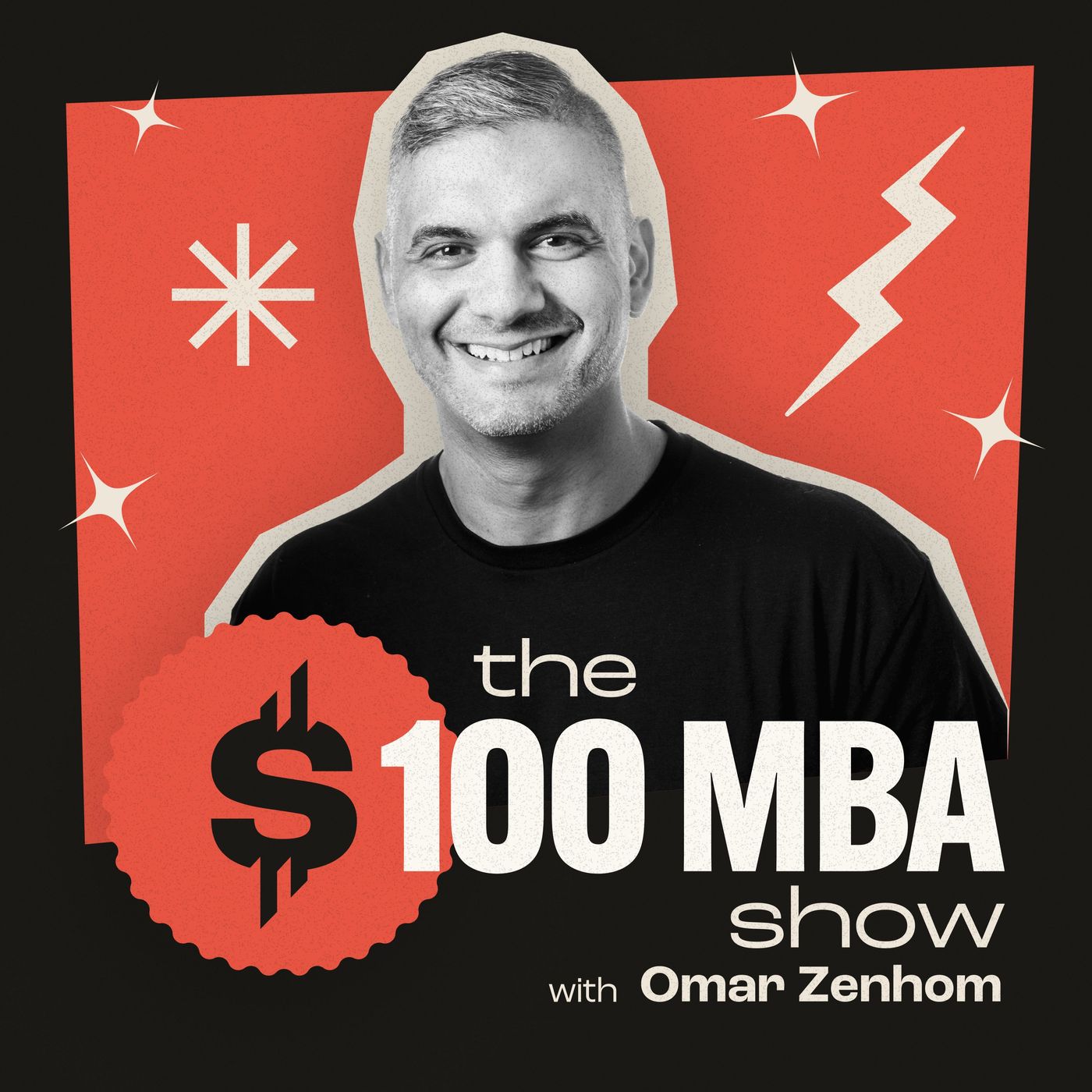
No guests. Only host Omar Zinhome (from the $100 MBA show).
Key claims
Public revenue posts feel like boasting; customers don’t care about your revenue; marketing must be customer-led, problem-first, and action-oriented.
Notable examples
Restaurant reviews vs “$3M revenue”; early 2012 income-sharing by online course businesses; SaaS “BareMetrics” revenue transparency; host’s Webinar Ninja experience; guest-post outreach to Digital Photography School (Darren Row) leading to ~200 signups/month.
Written by AI. May contain mistakes.
Chapters
1:06
Introduction to Income Sharing in Marketing
Understand why public income sharing can be detrimental to creators.
“If you're publicly sharing your revenue and calling it marketing, you can attract the wrong customer, lose leverage with their competitors, and worst of all, make ego-led decisions instead of customer-led decisions.”
1:55
The Drawbacks of Public Income Sharing
Learn how showing revenue can mislead customers and impact business decisions.
“I'm your host, Omar Zinhome, where I deliver practical business lessons three times a week, Monday, Wednesday, and Friday to help you start, grow, and scale your business.”
2:29
Customer-Centric Marketing
Shift your marketing focus from revenue to solving customer problems.
“because it feels like an easy way to market, to share your journey, to show how you're building your business, building in public, they call it.”
3:00
The History of Income Reporting
Explore the evolution of income sharing in the online business space.
“And customers might feel like you're just boasting and you're not about actually helping customers.”
3:58
Lessons from Webinar Ninja's Marketing
Discover the marketing strategies that helped Webinar Ninja succeed.
“The intent of it was to make people feel like building businesses or selling courses is possible and actually can make you money.”
4:49
Marketing Basics for Creators
Learn the importance of understanding customer values in marketing.
“And I got to be honest with you, a lot of those companies that I was looking at and comparing myself to are now out of business.”
6:28
Targeted Messaging in Marketing
Understand the significance of speaking to a specific audience.
“They just assume that if you know this problem so well, and you're able to articulate it so well, then you must understand how to solve this.”
11:27
The Steps to Effective Marketing
Discover actionable steps to improve marketing and customer engagement.
“Well, effective marketing should move people forward in the buying journey.”
14:00
Building an Audience by Providing Value
Learn how to effectively reach new audiences by offering value and insights.
“You now have their email address, and you can send them a time in their calendar where they can go ahead and choose, hey, I'll have a free consultation call with you.”
19:12
The Importance of Consistent Content Creation
Discover why consistent content creation is essential for business growth and credibility.
“I'm going to show you how to do it the right way so you can grow your business.”
Show all 11 chapters
23:01
Choosing the Right Marketing Platforms
Understand how to select marketing platforms that align with your strengths and audience.
“And marketing is just like I mentioned, sharing valuable content.”

Ask about this episode
Get the gist, explore an idea or ask about something said.
 Claude
On The $100 MBA Show, what are the key points of this episode?
Searching your listeningTranscript
Automatic transcript. May contain errors.
0:00Is your business doing everything it can to outsmart evolving cyber threats? Introducing Security Edge Preferred from Comcast Business. It's big business cybersecurity designed for small business. Get started with Comcast Business Internet for just$50 a month for one year on a qualifying internet package with one month of AI-powered threat detection on them. Plus, ask about a$500 prepaid card. Limited time offer restrictions apply requires 300 megabits per second internet. Security Edge, Security Edge preferred and wireless connect. Call today. When you're at work, you never know when you'll be interrupted.
0:36But with the Dell Pro powered by Intel Core Ultra with vPro, no matter what distracts you, your laptop won't. It's battery optimized for the way you work with built-in intelligence that quiets distractions when you need to focus. Your laptop will help keep you locked in, even when it's bringing your dog to work day. Built for those who stay in the flow. The Dell Pro. Built for you. Dell.com slash Dell dash pro.
1:06If you're publicly sharing your revenue and calling it marketing, you can attract the wrong customer, lose leverage with their competitors, and worst of all, make ego-led decisions instead of customer-led decisions. The problem is it feels like marketing, but it usually doesn't clearly show how you help your customers. You see, every public action is a signal. It's something that you're communicating. So instead of broadcasting your metrics online, show the real problem you solve. Give real examples of how your product or service helps your customers. Today, I'm going to show you the difference between marketing that signals income or status and marketing that actually communicates value to move your customers through the buying journey.
1:54Welcome back to the$100 MBA show. I'm your host, Omar Zinhome, where I deliver practical business lessons three times a week, Monday, Wednesday, and Friday to help you start, grow, and scale your business. Hey, if this show has helped you in any way, leave me a quick review wherever you listen to podcasts. This helps us reach even more people who need the same no-fluff practical business advice. It literally takes a few seconds, but it makes a huge difference. Thanks for being a part of our journey to help others on their journey. Listen, I get it. Creators share their income online because it feels like an easy way to market, to share your journey, to show how you're building your business, building in public, they call it.
2:36But today, I wanna show you that this is actually not helping you. It's not actually helping your customers understand the value that you offer. Think about it for a second. By posting how much money your company made this year, who is it attracting? Who are you even talking to? Your competitors? Your colleagues? Your customers don't really care about that. What they really care about is how you can help solve their problems with your product or service. And in fact, by showing off your metrics, it can shoot you in the foot. And customers might feel like you're just boasting and you're not about actually helping customers.
3:08You're not putting them first. Think about the last restaurant that you went to and why you went to it, right? You probably went on Google, read the reviews, and the review said something like the food was great. The service was amazing. I really enjoyed the desserts. Maybe they gave you some recommendations. No one said this restaurant made$3 million in revenue last year, and that's why I came. No, that's not any value to you. What you want to know, is it worth you going to this restaurant for your anniversary, for a party, for a special occasion? You want to make sure that you're choosing the right restaurant for the best experience.
3:40And that's really what matters, the experience that you're offering your customers. So where does sharing your income publicly start? Well, back in 2012, business education businesses, like people selling online courses, started sharing their income. They want to show people that, hey, building a business makes you money online. The intent of it was to make people feel like building businesses or selling courses is possible and actually can make you money. But it started to shift away from a feeling of being inspired to really just showing off. At the start, it is inspiring to see a creator make$5 ,000 a month or$10 ,000 a month or$20 ,000 a month.
4:22But once the creator hits$100 ,000 a month, it starts to feel less relatable. This trend then moved into the SaaS space, the software as a service space, where there was actually a company called BareMetrics, I think they're still around, where companies would show their actual revenue that they made in Stripe and share publicly to see how much money they're making every month, every year, even their churnery. I know this for a second because I was in the height of that moment when I was building my company, Webinar Ninja, my software company. And I got to be honest with you, a lot of those companies that I was looking at and comparing myself to are now out of business.
4:59And the reason why that happened is because they called that marketing. But in reality, it's just low effort marketing. You're not really showing what you can do for the customer. In my software company, Webinar Ninja, we didn't use this type of marketing. We didn't try to show off a revenue to attract customers because I just felt like it didn't make any sense. And we did something instead, which I'll share with you today, to quickly get in front of our audience and start to grow our actual business and sell our actual product to the people that actually need it. So how do we do this? Well, let's start with step one, which we're gonna go back to marketing basics.
5:34You gotta get in front of your audience and understand what values they have, what they actually want. Once you know that, you can then start to create content and information and ads and everything to show that value, to show what they actually care about and how your business, how your product does that for them. You gotta be laser focused about this. You have to clearly articulate, what do you actually do? What problems do you solve? What are you doing to help solve those problems? And who are you solving it for? Effective marketing is talking to the right person and giving them the right message so they feel like they're being seen.
6:15They feel like, yes, this is exactly what I'm going through. This is exactly my problem. Oh, there's a solution for it. one thing that you learn in marketing, if you've been doing it for as long as I have, is that the better you describe a problem, automatically the person that's hearing this feels like you have the solution. They just assume that if you know this problem so well, and you're able to articulate it so well, then you must understand how to solve this. And here's the secret of business, is that you don't really need to solve the problem immediately, You just need to understand the problem first because by knowing the problem, then you can create the solution.
6:53And this is an easy way for you to actually sell something that people want, all right? A lot of people, they actually just create solutions without any problems, right? They create a product that has no real problem. They're like trying to create something great in the world that no one asked for, right? It's not really serving any need. So true marketing really starts with the problem, understanding a problem that you're solving. Now, this is not enough to understand the problem and articulate the problem. You need to speak specifically to an audience, not everyone, to a specific group of people.
7:24Too many people are trying to market to everybody. And when you talk to everybody, you talk to nobody. You have to be super mindful about who you're actually attracting, who you're talking to with your current marketing. Listen, if you are vanilla, if you don't have an actual line in the sand where you have a take, an opinion, and a solution to a problem that is specific, people are just not gonna listen to you. You're gonna just kind of be ignored by the crowd. And the worst thing in business is being ignored. This is super important because as you know, marketing is basically creating content and educating your audience about your business or your solutions, right?
8:04And the content that you share really shapes who you attract. Who are the people that actually start to say, hey, I need to pay attention. I need to follow this person. I need to figure out who they are and what's their website and what products they have. And broadly, it's really how people interpret your brand. Whatever you put out in the world is how people create an image of who you are as a business. So you got to be intentional about what you put out there in the world. So if you're going to put out content, understand that you're going to attract certain people by putting out this content.
8:37So if tomorrow I started to just put out comedy content, I just started to put out jokes or memes or whatever it might be. Now, there's nothing wrong with having fun and showing a little sense of humor. But if that's all I did, I'm just going to attract people that love a good joke or attracted to good humor or are fans of comedy, right? They're not going to be people that are looking to start a business or grow their business. It's not really educational now. I'm just pure entertainment. I found that if you can combine the two, that's where the sweet spot is, where you're actually educating people, but you're mindful of the fact that, hey, I got to keep people's attention.
9:09Let me make this fun for them. Today's episode is supported by Rosetta Stone. I absolutely love Rosetta Stone because it's helping me learn Italian faster than I can ever imagine. Why do I want to learn Italian? Well, who doesn't love Italy? But of course, Nicole's family is Italian, and I love to have some quick Italian conversations with her mom. And Rosetta Stone just came out with Rosetta Stone Sapphire, their biggest launch in over a decade. One of the coolest features is chat missions, which turns conversation practice into a game. With chat missions, you're put in interactive scenarios and given three objectives.
9:44A mission to accomplish, like asking how much something costs, ordering a cold brew coffee, or getting a Wi-Fi password. Along the way, you get real-time corrections and feedback to help you sound more natural and confident. It's a supportive way to build confidence before putting your language skills to use in real life. I've been using Rosetta Stone for over two years, and I actually can have some small Italian conversations with Nicole's mom now. Just the other day, she asked me, when are you traveling? And I said, dopa domani mattina, which means after tomorrow morning. She was incredibly impressed that I was able to answer in Italian.
10:16How could you put a price tag on a happy mother-in-law? If you want to take your language skills to the next level, don't wait to try Rosetta Stone Sapphire. The$100 MBA show listeners can get 20 % off the Rosetta Stone Sapphire subscription when they sign up today. This gets you access to Rosetta Stone Sapphire in 25 languages. Support for today's show comes from Upwork. I've been using Upwork for over a decade to find top talent for my businesses. From software development and AI implementation to marketing, design, and business operations, Upwork is your one-stop shop for talent. You can browse profiles, review past work, and get help scoping the role so you can hire with confidence and get started quickly.
10:55With Business Plus, you can access the top 1 % of talent on Upwork. With over 170 ,000 freelancers holding five-star ratings, you can hire with the confidence that comes from hiring someone with a verified track record. It's free to sign up, and posting a job is easy. Visit Upwork.com right now and post your job for free. That's Upwork.com to connect with top talent ready to help your business grow. That's U-P-W-O-R-K dot com. Upwork dot com. Step two is to implement an action. What do I mean by that? Well, effective marketing should move people forward in the buying journey. They need to take the next step to becoming a customer and getting a result from your product or service.
11:42So say, for example, I'm putting out a meta ad, a Facebook ad, and the ad is marketing my product or service. Let's say my product or service is$5 ,000. That's a big leap from not hearing about you at all, never knowing what you're all about and what value you can add to my life as a customer. to giving you$5 ,000. So my number one piece of advice when it comes to marketing is figure out what is the first micro step you want people to take to get to that result, to paying you the big bucks. What is the least amount of effort, the low hanging fruit step that you can get your customer to take that is not annoying, that's not hard to do?
12:22And you've probably seen it before, which is, it could be like, follow me on Instagram or subscribe to my YouTube channel, or even, you know, give me your name and email address and I'm going to give you some tips. I'll give you a guide. I'll do a free consultation. Entering your name and email address is far less strenuous and less risk than paying$5 ,000, right? It's a step that allows people to move into the next step of the buying journey. Let me give you a practical example. Let's say you're a travel agent that specializes in luxury travel and you created a post on Instagram and this post says, hey, I've done all the research for you.
13:00Here are the top 10 places that no one knows about that's like super luxurious. And you'll be the first to kind of post on Instagram about these places. And in the post, you know, share me the top three. And then if you want the rest of the locations and the rest of the different holidays you can go on, then pop your name and email address and I'll send you the full guide. I'll send you a full list of all 10 places. Why does this work? Because people that are reading this post are most likely interested in going on one of these luxurious holidays. And the first step in actually wanting to go on a holiday is choosing where you're going to go.
13:35So this is why they're reading the post in the first place. And then once they do that, they're going to probably say, oh, I like the first one. I like the second one. I wonder what the rest of them are. Or the third I saw, I'm not too keen about that. But maybe the other seven are some places I never heard of I should know about before I choose my next holiday. So then they go ahead and put their name and email address, and then they download the guide, and now they have all 10. Guess what the next question is? How do I go on one of these holidays? Well, this is where you step in, right? You now have their email address, and you can send them a time in their calendar where they can go ahead and choose, hey, I'll have a free consultation call with you.
14:09And then you can set up their whole trip for them. It's like, hey, you saw the 10 places. Which one do you want to go to? Do you have any questions about what's the difference between this place and that place? You're now in the buying journey. They're asking buying questions. And this is what it's all about, right? You see how you're giving value instead of just like, hey, we're a great travel agent. I've been here for 50 years. We make$5 million a year as a travel agent. That doesn't actually help them. What actually helps them is choosing their next holiday. Step three is barring someone else's audience.
14:38A lot of people are probably thinking to yourself, Omar, I don't have a lot of money for marketing. I don't have a big audience myself, or maybe my email list is quite small. How am I going to do these steps? Well, you can get in front of somebody else's audience and be able to give them value. I'm going to give you a perfect example. When I was getting started with the$100 MBA back in 2013, I wanted to get in front of an audience that would be interested in our program, in taking our online program and course and be part of our webinars and our training. And one of my favorite strategies is serving an underserved audience.
15:11What do I mean by that? Well, let me give you the example that I'm about to share. So the obvious audience for me are people that are maybe in marketing, in sales, consultants, people that maybe want to transfer from a job into starting their own business. And maybe they're already in kind of the business world. Maybe they're in finance. That's kind of the obvious audience. Okay. But the underserved audience are people that don't really get talked to by my contemporaries. So what I did is I wanted to get in front of an audience of photographers and videographers. Right. A lot of these people are hobbyists, but then at some point they want to go pro.
15:44They want to start monetizing their skill. And this audience really gets ignored. They don't really get talked to by people that build businesses or teach business or show people how to package their skills and sell it online. So I reached out to a huge blog called Digital Photography School. Darren Rouse runs this website. It literally has a million email subscribers, probably more by now. and I just emailed him and said, hey, I'd love to write for your audience on your blog because they were getting so much traffic to their blog and I want to show people that, hey, if you want to go pro as a photographer or a videographer, here are the steps.
16:22Here are some tips that you can implement and make sure that you can start charging for your first customer. Now, I didn't just email the editor of Digital Photography School and say, hey, can I write for your blog? No, I did some research. I went through the blog and I looked at all the articles that could be similar. That's about the business of photography or videography. And from there, I realized that there's a lot of holes. And I actually emailed the editor and said, hey, I noticed that you have these three articles on this topic, but it doesn't address these issues, the issues I want to address.
16:51And from there, I then said, hey, I have written, I've already written a 2 ,500-word blog post about how to go pro as a photographer or videographer. And I have it attached in the email. Now, you might be saying, Omar, what if they say no? right? Well, it's actually very hard for them to say yes without ever actually seeing what you can do, right? So I wanted to make it easy for them to say yes by actually reading the article I already written. So if they said no, no big deal. I could actually just publish it on my own blog or put it on social media. But the point is, is that I want to make it super simple and do all the work.
17:26Think about it from their side, right? They're like, hey, Omar, I don't know what you're about or who you are or what you could do for us. So that's the easy no, right? So I made it super simple for them to just read the article. It's already attached with images, with everything, with references. So for them, it's like, this is brilliant. Great. We'll publish it next week. Until this day, I still get email signups because of that blog post. Because at the bottom of the blog post, I said, hey, if you made it to the bottom of this blog post, which is a long blog post, you're probably serious about going pro.
17:54So why don't you sign up and I'll give you my free seven part course on how to start a business. Until this day, we get around 200 signups every single month, and I wrote that blog post over 12 years ago. There are sites, there are creators, there are podcasts that need content, that need experts, and you can get in front of this audience that they have by being that expert, by providing value to them. But please understand, they're not all going to be yeses. You're going to get some no's, actually mostly no's, and that's okay, because it's just a numbers game. The more you reach out, the more you approach people personally.
18:32And I mean, don't automate this. Don't like use AI and try to like automate your outreach. No, everybody knows when it's fake. Okay. So be yourself, email these companies, email these blogs, email these podcasts and ask, Hey, this is the value I want to add to your audience. Do the research like I did, figure out how you can add the unique value that's not already added to that platform or to that audience. And then you can be able to get in front of that audience and show what you got. And if they love what you provide, they're going to want more and they're going to check you out. They're going to check out your website and your podcast and your thing and your products and services.
19:07I hope today's episode is hitting home. If so, I want you to hit subscribe because we have an upcoming episode I don't want you to miss. It's all about vlogging. Have you wondered if vlogging is dead? It's actually making a huge comeback. I'm going to show you how to do it the right way so you can grow your business. Hit subscribe so you don't miss it. Step four is my favorite step because it's a step that no one wants to do. And that is create consistent content that shows up and shows your credibility over time. Listen, if you Google my name right now, you have to go like 18 pages deep to find a different Omar Zen home because I have bombarded the internet with so much content.
19:45YouTube, Instagram, TikTok, blog posts, guest blog posts, me and being on other shows, a ton of content, Me being mentioned in other articles, whether it's Forbes or Entrepreneur or Inc. or Fast Company or whatever it might be. The point is that that didn't happen by accident. It's because I was relentless with making sure that I create content consistently. I said I was. I am still doing this day after day. I'm doing this right now. And the point of this is because when somebody learns about you, they look at an ad on Facebook. They look at a piece of marketing. Maybe they read your guest post on somebody's blog.
20:20They're going to Google you. And if they Google you and see nothing or they don't see enough for them to trust you, then that's a problem. They're not going to continue in the process. A lot of people are very skeptical. They're worried that this is a scam. So if they Google you and they don't see any evidence that you're not a scam, they're not going to sign up and your marketing is going to die. You're not going to actually help those customers because they're not going to continue to learn about you. The other reason why you've got to be consistent with creating content on different platforms, on other people's platforms is because it takes more than one ad, one sighting of you for people to understand what you do, who you serve, and if you're good or if you're just a scammer or whatever it might be, okay?
21:02So they say that you need at least seven touch points for people to remember you. So they might see you on an ad on Facebook, but then they see you as a guest on a podcast, but then they happen to see your reel on Instagram. Then they saw your long form on YouTube, and then they saw a blog post or a post on LinkedIn. The point is that by the seventh time, they're like, oh, I need to pay attention. Maybe this person has something that can help me. Maybe this person is worth my time. So that doesn't happen by accident. In order for you to do that, you have to be consistent. And a lot of people think like, I don't have time to do all this.
21:31Don't worry, as long as you continue to do it over and over and you don't quit, even if it's just posting a couple of posts a week, that over time is gonna compound. A couple of posts a week, then you'll be a little bit more consistent, there'll be a couple of posts a day. And now it will eventually be like, hey, I'm posting like 600, 700, 1 ,000 pieces of content a year. And that compounds over time. Remember that Google example I gave you? That didn't happen overnight. It happened over 14, 15, 16 years of creating content and flooding the internet with my face. So don't get distracted by trends, sharing your income online and feeling like, hey, I'm gonna pound on my chest and show people that I'm a real business.
22:10Ask yourself, does what I actually share with the world, help my business, and help attract the right customers. Go back to basics when it comes to marketing because the fundamentals don't change. At the end of the day, people need to learn who you are, what you can do for them, understand the solution to the problem that you're describing. And then they need to take a next step. What's that next step in the buying journey? Make it simple. Make it easy for your audience. And as much as possible, be as consistent as humanly possible getting in front of that audience, whether that audience is yours on Instagram or Facebook or on your own email list, or you're borrowing somebody else's audience and getting in front of them that way.
22:51I say marketing is like brushing your teeth. You have to do it daily. You have to do it consistently. Otherwise, your teeth are gonna rot, right? Your business is gonna rot. You can't just stop marketing. And marketing is just like I mentioned, sharing valuable content. This is not something you do once and done, or you do a season and then you forget about it. Marketing is about relevancy. It's about you making sure that you're in front of all your customers, top of mind as an option for you to serve them, right? You have to understand that you're there to serve your customer. And if they don't know about you and they don't know that you can serve them, that's a problem.
23:27Why do I mention this? Because you need to choose a platform that you feel comfortable with, that you enjoy. Because if you don't, then you won't do it consistently. It's just as simple, right? For me, I enjoy teaching. It's what I've been doing all my life. I was a teacher for over a decade. So I teach when I do my content, right, as much as possible. I try to show people how to build their business, grow their business, scale it with my stories, with my examples, with what I did today, right? And that's something that I can do over time, over and over, and not get bored of it. It's something I enjoy, something that I feel like is a skill that I can really utilize and help people that I'm trying to serve.
24:02This also applies to the products and services you offer to your customers. So when I ran my company, Webinar Ninja, for 10 years before we sold it to ProProfs, what was that product? Well, it was webinars. I was a software to help people run live workshops, right? I was a teacher for 10 years. I was comfortable with the idea of teaching, and teaching online came natural to me, and I loved webinars. I was doing a ton of them. So I created a software to make it even better, to make it easier, to make it a better experience for our customers and for myself, right? So always think about, hey, what are my experiences?
24:36What are some things I enjoy? Some things that I don't like dread doing. That's how you should market. That's how your business should be run. That's how you should be creating your products and services. And by doing this, you're going to allow yourself to be consistent and allow your business to continue to move forward. Thanks so much for making it all the way to the end of this episode. You're my kind of person. You're a completionist. If you want to continue learning, I highly recommend you check out an episode that we recently published called A Social Media Strategy for People That Hate Social Media, because that was me for a very long time.
25:05So if you just scroll up on whatever app you're using right now to consume this podcast, you will find that episode and you can continue to grow your business. If you found today's episode helpful and you want more practical business lessons to help start, grow and scale your business, subscribe to the podcast. All you got to do is hit subscribe or follow on your favorite podcast app, the one that you're using right now. By hitting subscribe, you get our next episode automatically. It's absolutely free and it's a way for you to commit to growing your business. I'll check you in the next episode.
25:57Before problems ever start. Mazda. More of what matters most to you. Go to mazdausa.com to learn more. Consumer Reports does not endorse or promote any product.
From the publisher
Are you tempted to share your revenue online to prove your business is thriving? It might seem like a smart way to build credibility, but it can quietly attract the wrong kind of attention and shift your focus away from what actually matters. The strongest businesses are often built on signals that have nothing to do with revenue screenshots.
In today’s lesson, Omar challenges the popular idea that publicly sharing your income is great marketing. He explores what your audience is really hearing when you lead with revenue numbers, why certain signals can work against your business, and how the most effective marketing creates trust without relying on status or vanity metrics. You’ll walk away looking at your messaging, positioning, and customer relationships through a completely different lens.
Ready to rethink the value of putting your numbers on display? Click play at the top of the page and discover why showcasing your impact may be far more powerful than broadcasting your bank account.
MBA2842 Why Creators Publicly Sharing Their Income Is BS
Recommended episode to explore:
A Social Media Strategy For People Who Hate Social Media
Watch the episodes on YouTube: https://lm.fm/GgRPPHi
SUBSCRIBE
YouTube | Apple Podcast | Spotify | Podcast Feed
Hosted by Simplecast, an AdsWizz company. See pcm.adswizz.com for information about our collection and use of personal data for advertising.
More from The $100 MBA Show
All episodesWe use cookies.They keep VO running smoothly and help us improve it. Privacy policy