
 Ask ChatGPT
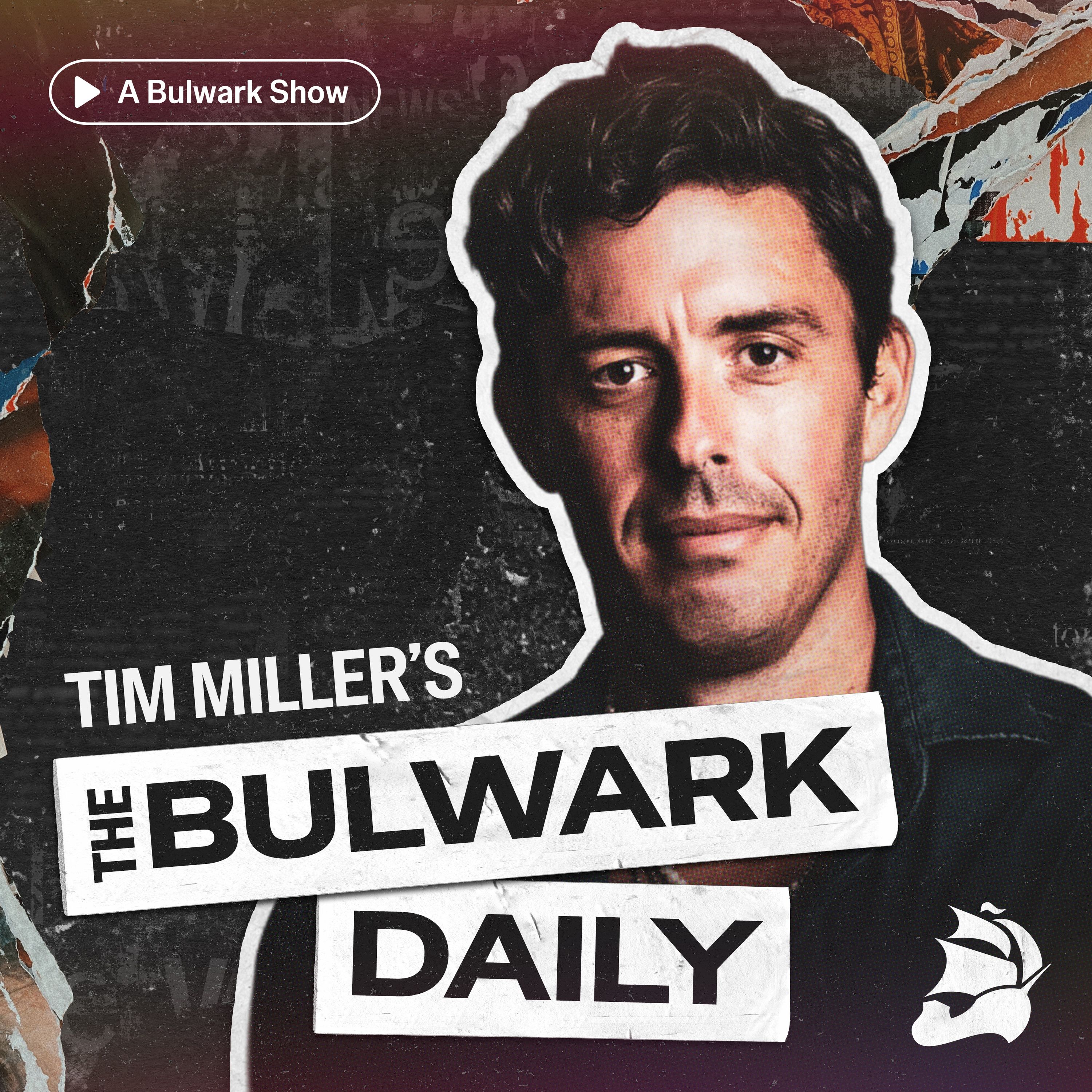

- Podcasts
- The Bulwark Daily
- Patrick Gaspard: We Have to Keep the New Electoral Map
The Bulwark Daily19 Nov 2026 · 57m · 27 chapters
Patrick Gaspard: We Have to Keep the New Electoral Map
In short
Patrick Gaspard discusses post-election strategy for Democrats to “keep the new electoral map,” arguing foreign policy must be tied to economic outcomes, and that winning requires holding a broad coalition against MAGA/autocrats while using attention and culture effectively.
Guest background
Patrick Gaspard was National Political Director for Barack Obama’s 2008 campaign, served as U.S. ambassador to South Africa (second term), advised Zoran Mamdani’s mayoral race, and advised Senator-elect Scott Cologne’s campaign.
Key claims
Elon Musk’s “not MAGA” pivot is hypocritical given his prior MAGA-aligned spending and Trump-era government dismantling; Trump’s foreign policy is driven by attraction to autocrats and self-dealing; Democrats should tell a corruption-and-economy story and ground power in a “theory of the case” tied to pocketbook results; Democrats must keep a “big tent” to prevent Trump’s return; future primaries should prioritize substance via town halls, not performative debates.
Notable examples
Mississippi’s Supreme Court/Calais ruling surge; Cologne confronting Trump supporters in Corinth; Cologne’s viral “pick another senator” ad using Cindy Hyde-Smith’s “pick other proteins” remark; Cologne’s Nike Air Force Ones valedictorian proposal; Trump’s Putin-Xi meeting; Harris’s Mississippi outreach after Calais.
Written by AI. May contain mistakes.
Chapters
0:45
Political Update and MAGA Commentary
Discussion on recent political news and Elon Musk's comments regarding MAGA.
“I want to talk a little bit more about that at the end, but we got to do a little news at the start.”
1:54
Elon Musk's Political Influence
Analysis of Elon Musk's relationship with MAGA and his impact on politics.
“He worked literally in the Trump administration dismantling our government, and he called it an existential threat if you were not for MAGA.”
4:16
Trump's Autocratic Connections
Discussion on Trump's recent meeting with Putin and Xi, and its implications.
“And now he's trying to buy their very own senator and people aren't going to stand for it.”
5:20
Navigating Foreign Policy Challenges
Exploration of the challenges Democrats face regarding foreign policy and Trump's legacy.
“It's going to be a long, long few days on Capitol Hill for you.”
13:33
Involvement in Mississippi Politics
Discussion about Patrick Gaspard's involvement in Mississippi and his belief in Scott's campaign.
“Like, how did you get involved with Scott?”
14:00
Focus on Mississippi Politics
Explore the significance of Mississippi in recent elections and local candidates.
“Met very briefly during some policy discussion then.”
14:40
The Evolution of Local Elections
Discuss the changing landscape of local elections in Mississippi and key candidates.
“And I remember how people like me were ridiculed the very first time we started putting money in states like Georgia and North Carolina because we could see where the trend lines were.”
15:20
Symbolism in Elections
Analyze the symbolic significance of elections in Mississippi versus Texas.
“So I just thought it was like the right candidate, the right moment, and the right environment that we had with the mistakes that Donald Trump was making with the tariffs, with the war, et cetera.”
16:40
Historical Context of Mississippi
Understand the historical struggles and beauty of Mississippi's narrative.
“Tim, this is a state that still had the Confederate symbol in its state flag six years ago.”
17:50
Volunteering and Community Efforts
Explore the role of volunteers and activists in Mississippi's political landscape.
“And we know what the struggles continue to be, not just for African-Americans in Mississippi, but for poor white folk as well.”
Show all 27 chapters
19:10
Moments of Change in Campaigns
Investigate key moments that indicated potential for change in Mississippi campaigns.
“These are the two moments that, for me, told me that it was possible to win, and it speaks to where Mississippians themselves were.”
21:00
Engagement with the Vice President
Discuss Vice President Harris's involvement and insights during the campaign.
“but that actually were in communion with one another on those two kind of temple moments in that campaign.”
22:40
Innovative Campaign Strategies
Learn about unique campaign strategies and ads used in the Mississippi election.
“And she kind of got me to be much more aware of what was happening.”
24:20
Cultural Impact on Politics
Discuss how culture influences modern political campaigns and attention.
“attention is the only currency that matters in our politics, but I've got to do something that's going to be galvanizing.”
26:00
Community Service and Corporate Engagement
Examine the role of community service and corporate engagement in public service.
“Not the old metrics of positive and negative on how we advertise.”
28:00
Public Service and Community Engagement
Learn about the role of public service in encouraging community initiatives.
“and cajoling them and pressuring them to do what?”
29:04
Empathy and Political Connection
Explore the importance of empathy and connection in political campaigning.
“I call them all by their first names still.”
30:26
Navigating Political Differences
Understand how politicians can maintain relationships despite differences.
“And we were talking about it then in the context of Haitians, but obviously you can expand it out to a bunch of stuff.”
33:08
Pragmatism in Politics
Discuss the pragmatic approaches of recent political figures and their implications.
“So I think the Zoran instinct, the Scott instinct is one that we have to carry into the 2028 debate that we're going to have.”
34:29
Governance and Value of Efficiency
Learn about the importance of efficiency in government and its impact on citizens.
“But I'm curious to you answering that question.”
37:09
Analyzing Political Dynamics
Examine the dynamics of political relationships and emerging leaders in New York.
“So I think that Zan Bandhani has the patience of his values, is how I would describe it, more than a kind of pragmatism, which sounds like an expediency.”
39:28
Hakeem Jeffries and Party Politics
Delve into Hakeem Jeffries' rise in politics and the response from the party.
“I was kind of intrigued by the 11 votes against.”
42:00
Politics of Substance vs. Performance
Discussion about the need for clarity and substance in politics, especially after the midterm elections.
“I'm kind of – Getting people's hopes up, I guess, would be my critique.”
44:30
Debate Structures and Candidate Engagement
Exploration of how debate formats may contribute to performative politics and suggestions for improvement.
“And we have to understand that the ability to narrate is hugely important.”
47:18
Vulnerability in Political Leadership
Examining the role of vulnerability in political candidates and its impact on connection with voters.
“Do you think that any of this is happening?”
49:36
Moral Implications of American Foreign Policy
Discussion on the moral responsibilities of American foreign policy and its implications for domestic politics.
“I think 2020 is more of an aberration than you think, Tim, because it was a COVID election and campaign.”
56:00
Moral Questions and Strategic Design
Learn about the importance of moral questions in strategic planning.

Ask about this episode
Get the gist, explore an idea or ask about something said.
 Claude
On The Bulwark Daily, what are the key points of this episode?
Searching your listeningTranscript
Automatic transcript. May contain errors.
0:12Hello and welcome to the Bulwark Daily. I'm your host, Tim Miller. Delighted to welcome you back to the show. He was National Political Director for Barack Obama's 2008 campaign, served as ambassador to South Africa in his second term. He was an informal advisor to Zoran Mamdani's mayor race, and more recently, advised the campaign of Senator-elect Scott Cologne. It's Patrick Espart. How are you feeling, buddy? I feel amazing, Tim. Thanks so much for having me back on in this new America. It is really good. It's good to see you. You were with us in Dayton for the fundraiser we did for the Haitians.
0:45I want to talk a little bit more about that at the end, but we got to do a little news at the start. All right. This one's delicious. Can we just continue to keep treating ourselves at the very beginning? You won't believe how much all of these people will never have been for this when it comes to MAGA. And you can already see it coming. You can already see it happening. And Elon Musk yesterday was zooming in to the Dealbook Summit. And there's one clip from it that's so delicious. We just got to start there. Let's listen. I'm not MAGA. Well, at least I'm not like – I'm not sure what MAGA means.
1:16But I don't think I'm like, if that means sort of blind adherence to a set of policies by the Republican Party, then I certainly don't have that. I think there are positive negatives in both parties. Oh, really? Oh, really? That's a change. That is so rich. This is a man who not that long ago describes himself as dark MAGA. He spent over a billion dollars in a handful of years to try to elect their candidates, including the too much money in a Wisconsin Supreme Court race,$500 million on their midterms. He worked for MAGA. He worked literally in the Trump administration dismantling our government, and he called it an existential threat if you were not for MAGA.
2:04Now, all of a sudden, after an ass whooping, he's not MAGA. It's really quite extraordinary. He had his own merch, the dark MAGA merch. Like, once you've got the merch, you know, you're kind of associated with the brand. Have you ever seen the movie Inglourious Bastards? I have seen Inglourious Bastards. You probably know the scene I'm about to bring up. But look, I want to welcome, you helped with the Mississippi race. It's important to welcome MAGA voters into the fold, people who have come to their senses, people who have changed their point of view. That's great. But for, you know, for some of the generals, I am tempted to not let them get away with this.
2:40the baseball bat's coming isn't it yeah well are you the bear here yeah kind of i just see there's a scene in glorious bastards where they you know the i guess the american government cuts the deal with the nazi general the little fella and and brad pitt's the rogue american and he gets him in the woods the nazi general and he's like you know you cut that deal and that's fine i'm not gonna kill you well you're gonna go back to america but i guess when you go to america you won't be wearing this SS uniform anymore. And the guy kind of just stares at him. And then Brad Pitt goes, I want to make sure people are going to remember that you were in the SS uniform.
3:17Then he carves the swastika into his forehead. I kind of want to carve the dark MAGA hat into Elon's head. Be like, sorry, brother. This isn't working for you. Like, this was you. I think that with the death of the Cybertruck and when you see, you know, where things have been headed for Tesla, It's carved into him. It's permanent. People ain't forgetting this. And I want to remind Elon Musk that in our campaigns across the country, not only did we run against Baga and Donald Trump, we specifically ran against Elon Musk and his money. And a lot of folks, including a lot of men that Elon Musk thinks he identifies with, recoiled from his brand and moved to something else.
4:00So I was in Austin on Monday on election day, and I thought it was maybe the most powerful part of Tallarico and Inajosa's closing message was talking about how Texas wasn't for sale. And now this guy, he's like trying to buy their land. He's trying to put the data centers there. And now he's trying to buy their very own senator and people aren't going to stand for it. And you just could feel a real visceral reaction to that from the crowd. Talarico on the campaign trail, we talked about this a little yesterday, he was like, I don't have anything against Teslarion's businesses. It's just like, but this type of, you know, an attempt to buy our state, our country, our government, people don't want it.
4:42It's like, sorry. Yeah, yeah. Talarico and Hinojosa came off as unbought and unbossed in this cycle, which is very, very different than not only Paxton, but a previously popular governor of Texas, who everyone assumed was sailing towards another coronation, but everyone saw him kind of foreclosing towards Musk and company and the data centers and all those things. Yes, 100%. Well, it's delicious. I'm so glad that you spiked the football on Elon Musk this morning. It's a good thing. He's not MAGA. I'm sorry, you're still testifying. You might not be MAGA anymore, but you're still testifying, and I look forward to it.
5:21Lawyer on. Yeah, JBL said, pack a lunch. We got a lot of questions. It's going to be a long, long few days on Capitol Hill for you. All right, the other news item, and we're going to go deep on this tomorrow with one of our favorite, most optimistic, always positive foreign policy correspondents. But I would be remiss to just at least mention it this morning. So Trump had the trilateral meeting with Putin and Xi last night, as Bill Kristol called it this morning in the newsletter, the world's worst throuple. and there's this video of Trump going and like meeting Putin and he comes in and you just see like beaming on his face and he's like who is he teasing with him that's my friend nice to see you you know just kind of like seeing your college roommates that you haven't had this got to see in a decade he just was so excited and it's just it's pretty I mean it's sad and it's It's embarrassing.
6:17It's sad. It brings up a lot of emotions. But what are your kind of reactions to what we're saying in Shenzhen? Nothing turns on Donald Trump more than an autocrat or a redecoration project. Like these are these these are the things that that that that sail his boat. And it's it's still astonishing to see all these years later. Right. When he came on the scene a decade ago and he was sending bouquets to the North Korean leader, the Russian leader, Chinese, Turkish leader, etc. It seemed like a weird aberration that we just really couldn't make sense of. We understood that Americans, Democrats, Republicans, independents were concerned about the amount of money we were spending overseas, the partnership we had, the endless wars, etc.
6:58But it seemed like such a bizarre anti-democratic stretch to say, hey, we're actually making common cause with these people. And 10 years later, it's no less shocking now than it was then. and it's clear that there is no Trump 2.0. He can't reset even after the butt-kicking that he got in the midterm elections. And even though it's abundantly clear that everybody's rejecting this attraction that he has to these characters. You said something that kind of piqued my interest as I want to do a little more 2028 stuff later, but just narrowly on foreign policy. Some of these Democratic guys are calling you and asking you for thoughts on this.
7:39And at some level, I do feel like Harris got caught in a little bit of a trap on this, you know, where she's just, I think, rightly, like trying to demonstrate that she wants America to be strong and that, you know, the caricature of a California progressive isn't true. And then like simultaneously also kind of trying to talk about how Trump is reckless and you don't know. Right. And it's a little challenging, right? It's challenging for a Democrat to both say, hey, OK, when we take over, we are going to be strong and resolute. And also, we're not going to talk about the dictators. We're not going to get into these stupid wars like Iran.
8:15You know, and it's tough. Like, you know, if you have the event with the generals, all of a sudden people are like, well, wait a minute. You know, I think that it turned off some voters who were attracted to like the 08 Obama message, which was more conciliatory. And so, you know, but there are going to be big challenges. Like receding from the world is one thing that's like easy to say. But it's going to be really hard to do that in the 2029s. There are going to be so many problems. in the world. So I don't know. What's your advice, New York, so I kind of navigate all that? Look, there will always be many, many, many problems in the world.
8:46And when you're running to be the head of the armed forces of the most powerful military that's ever existed on this planet, you have to have a theory of the case for the use of power. You just have to. But we have to also recognize that the economy is the prison through which Americans are judging literally everything that we do now. And foreign policy is subject to that more than it's ever been, particularly after endless wars and tariffs and all the recklessness that we've seen and how we've entered into spaces and pulled out of spaces, right? So foreign policy is now part of domestic politics.
9:24And the economy is how folks are going to judge the success or failure of your foreign policy. And there continues to be something compelling. I hate to say it, there's still something compelling about Trump's America first message. But America first is really just about outcomes that folks are feeling at the pocketbook, at the kitchen table, and in this economy that has veered for them from an industrial economy to a service economy to now an information economy in a dizzying way that they can't understand. And they need somebody to help them to figure it out. And they appreciate that the partnerships that we have around trade should accrue to their benefit, but haven't been.
10:06And they're profoundly concerned about how we have spiraling costs on gasoline and food stuff as a consequence of the decisions that we're making about conflicts that are 10 ,000 miles away. So all of that to say, you have to have a theory of the case in power, but it's got to be grounded in basic economic outcomes for Americans. And they have to feel as if you are somehow making their children safer and that you're not just engaged in one reckless intervention after another. But there's another element here, Tim. Trump's foreign policy has clearly been driven by self-dealing, right? So for a lot of folks, when they think about foreign policy, they see corruption in it.
10:47They see a kind of cabal of elites who are getting something out of all these deals that's not working out for them. So there's a way that the economy and corruption and the use of force all come together in the story that we have to tell going forward. And I think that we kind of scotched all of that in 2024. There's an Atlantic story out today, which we're going to get into more tomorrow too, about Jared Kushner's corruption and involvement in these deals and where he's making money from. So I agree with that from a messaging standpoint. I do wonder, just like kind of looking just really quick on that 2024 side of it.
11:21With the benefit of hindsight, was there a tangible way you think that the vice president could have handled, could have navigated that balance better? She had a very short on-ramp. With every question from that campaign, you have to deal with the reality that Joe Biden shouldn't have been running. He should have bowed out after the successful 2022 midterms and said, I'm not going to run again and we should have had a robust primary, which Kamala Harris might have emerged from, but she would have been a four-stronger candidate with a clear identity distinguished from Joe Biden across the board on issues.
11:56I do think that they misread the room on foreign policy entirely. And because she's a woman, they were trying to like put on the martial guard on her. Yeah, they're way overcompensated. And it's just not where the country was at. And I don't think it's where the country is going to be at two years from now. All right, y 'all, here's the thing. If you have life insurance, you're probably overpaying. If you don't have life insurance, you should. There are only a few certainties in life after all. So one way to resolve this is to check out our friends at SelectQuote. They fix all your problems. They fix it if you're overpaying.
12:34They fix it if you've been letting this one slide by. As life insurance brokers, SelectQuote's licensed agents compare over 100 life insurance products from a bunch of trusted carriers and find you a better rate for free. SelectQuote getting life insurance is fast, free, and easy. The whole process takes about 15 minutes. Answer a few questions. Their agents shop the carriers for you, and you get your quote tailored to your specific situation, even if you've got something like high blood pressure or diabetes. You'll save an average of 30%. So that's a good deal. Like I tell you on a lot of these products, I'm only interested in it if it's quick, if it's easy.
13:08Life's too short for paperwork. select quote they make it nice and easy for you it's not really you know you're not always like boy how excited am I to think about death and so you want to make get it over with you want to be responsible you want to save yourself some cash and have a reliable carrier to help you out get your free quote at selectquote.com slash bulwark that's selectquote.com slash bulwark they shop you save all right let's talk about mississippi mississippi let's talk about mississippi Oh, my God. Let's just go back to the beginning. Like, how did you get involved with Scott? Where did you know him from?
13:45Like, what made you have belief in this campaign? So I first met Scott when I was Senator-elect Cologne, when I was in philanthropy, and he had just become a prosecutor in this new era of prosecutors who are trying to figure out how to have an equitable application of the law to keep all communities safe. Met very briefly during some policy discussion then. Always had an eye on him because his talent was abundantly apparent in the first instance. And I have been personally obsessed with Mississippi my whole life, but really in a hyper-focused way since 2008 when I worked on the Obama campaign.
14:24And I saw that despite the fact that we didn't put a dime in Mississippi and never went to Mississippi, didn't talk about Mississippi, Barack Obama got close to 44 percent of the vote in that election, which kind of astonished me. And I started paying a lot more attention to local and state elections in Mississippi and saw people like Mike Espy and Brandon Presley closing the gap slowly but surely. And I remember how people like me were ridiculed the very first time we started putting money in states like Georgia and North Carolina because we could see where the trend lines were. And I felt as if there were the right trend lines in Mississippi that kind of bend the arc of history ahead of its time.
15:05And I knew Scott to be a really talented candidate with inexhaustible energies. energies. And I've paid attention to Cindy Heitzschmidt, who didn't have a town hall in the last six years that she was a senator, is gaffe prone, and is seen in the state to be part of the double dealing regime that exists. So I just thought it was like the right candidate, the right moment, and the right environment that we had with the mistakes that Donald Trump was making with the tariffs, with the war, et cetera. And I started just popping on down there to try to be as helpful as possible. And no good deed goes unpunished.
15:47So every time I volunteered, Scott would ask me to do more. That's what happened. I love that. I had Wright Thompson on on Friday. And he's just written so deeply and richly about the history of Mississippi and talked about it from his perspective. That was one of the most moving interviews that you've conducted, Tim, and the segment of that interview where he talks about what Medgar Evers means in Mississippi. But throughout the whole Black Belt was powerful. Yeah, man. He knows. I mean, God. I still keep telling strangers on the street, I was like, you have to listen to this interview. Do you realize that his dad had a cross burned on his lawn in 1982?
16:25I was like, 1982? It's like, what? So anyway, it just creates a stark perception of what you're trying to overcome. Like, 82 just, I don't know, maybe this means I'm getting old, but, like, doesn't feel long ago. There's something about, like, 1968 feels long ago. 1982 feels like yesterday, kind of. Tim, this is a state that still had the Confederate symbol in its state flag six years ago. So this is not ancient history. I know, man. There's a reason why Donald Trump won that state by 23 points in the election. So, yeah, I'm just kind of curious your perspective on the symbolic meaning of it, you know, for black folks in particular.
17:04I just I wasn't expecting Mississippi to happen as listeners now. Just unbelievably pleasantly surprised. I felt like Texas was going to be this big symbolic victory for Democrats because they'd been so demoralized. We'd all been demoralized, let's just be honest, by Trump winning again. And it's like the idea that have a good midterm, but to have such a good winter that you could win Texas, this place that feels so Republican. It was a big symbolic win. The Mississippi thing, though, because of the racial component just carries, I think, so much more weight. Tim, Tim, Texas was important, but Texas was about our politics.
17:38Mississippi is about our soul. During the campaign, Scott would constantly say there isn't anything wrong with Mississippi that can't be fixed, but everything that's right in Mississippi. And I would extend that further to say that when Mississippi gets fixed, America gets fixed. We know the history. We know how deeply painful it's been. And we know what the struggles continue to be, not just for African-Americans in Mississippi, but for poor white folk as well. Mississippi will always rank 49th or 50th in metrics across the board in economic outcomes, health care outcomes, all the social indexes.
18:18It is a state of struggle, but it's also a state of real beauty and power and a narrative that courses from the founding of this nation right to this new moment of self-correction that we're going through. and I think that Scott embodies that but more than Scott, the work of black and white volunteers together that said this is a moment where we're going to send a message about who we are today going forward, that's really powerful and that makes us all pause and reflect. What were the volunteers whispering to you? Did people, sometimes you're on a campaign where the volunteers are whispering, we believe we have this and other times it's like I feel like this is the right thing to do.
19:03were showing up? What was the vibes? I would look at two points during the course of that campaign. These are the two moments that, for me, told me that it was possible to win, and it speaks to where Mississippians themselves were. The first moment is immediately after the Calais ruling. I was down in Jackson, Mississippi, the day after the Supreme Court ruling, when thousands of African-Americans poured out into to a civic center in Jackson to say, not on our watch. We're not going backwards. We're putting a flag in the ground right now. I know that national Democrats and national donors were not paying attention to that.
19:43But in that moment, I thought, hmm, I think there's going to be a rights and justice surge that we're going to see from African-Americans across the board here. And Scott's campaign saw an uptick in local contributions and local volunteers immediately, immediately after the Supreme Court ruling. And they were able to sustain that through the fall. The second moment for me was the Corinth moment when Donald Trump comes down to Mississippi and he's campaigning for Cindy Hyde-Smith in a corner of the state that borders Tennessee. And Scott Cologne did the thing that Democrats don't do. He like ran towards the fire and he went and he spent some real time talking to voters who were waiting for hours online to go see Donald Trump.
20:27And he thought, you know what, this is a great opportunity to listen and to demonstrate that I can extend some grace and some humanity there. And he discovered that the folks on that line cared about the same darn things that the folks in Jackson cared about, whether it was the data centers, the flood cameras, the corruption that came up constantly from folks who were waiting online to see Donald Trump. And again, it was a day where we saw an uptick in participation and volunteers and contributions to that campaign from unlikely sources. So you had two Americas, two American stories that we would think would be in contestation with one another, but that actually were in communion with one another on those two kind of temple moments in that campaign.
21:13And between then, the volunteers, the activists in Mississippi were saying to folks like me, we're going to show the world that Mississippi matters. We believe that we can see this thing through. We're not just doing this as a symbolic exercise, but we're actually going to win this thing and shock the world. That was a consistent thing. It was infectious. We tweet to the vice president's campaign a little bit. So I do just, in fairness, should also say I talked to her. It was maybe a couple of days after that in the Kalei ruling. And she'd been hearing from people. And she was telling me, she was like, look, people are pissed.
21:47Like there is going to be major backlash and turnout. And I and I it wasn't that I disbelieved that, but it was kind of like, I want to see it. You know what I mean? Because sometimes it's hard to separate like the is this the activists that are already out there that are just madder? Or is this new people that are mad? Right. And that's like a meaningful difference. And it was the latter. It was Tim. I'm glad you raised Vice President Harris in this context. I'll note that when others were looking away from Mississippi, she came down to Mississippi and did what she could to turn out a vote for for Scott Cologne.
22:20But I had a similar conversation with her after the Calais ruling, and I'll make a confession here. She was asking me for some counsel on how she should talk about this, and I said to her, you know, I'm not entirely sure, Madam Vice President. I think that folks are more focused on gas prices than they are on this ruling. She disagreed with me. She was right. And she kind of got me to be much more aware of what was happening. And I decided I need to spend more time on the ground because she's seeing something here that the rest of us are missing. So, you know, tip of the cap to Vice President Harris on that.
22:57No doubt. You mentioned him going to the MAGA rally, talking to people on the street. To me, that was by far the best and most meaningful ad. Had a little bit of a hint of Zoran, too, was who was doing that. We'll get to that in a second. But the ad that everybody, all the politicos like to talk about because it's so funny was the pick another senator ad. And Scott was tweeting about how like you guys were talking and that was the OG of the origination of that ad. So anyway, I just figured maybe give us a little bit of an insight into where that came from. I'm happy to take the blame. That was a lot of fun.
23:33I knew that it could get attention. I did not know that it would go supernova. And I'll tell you. I mean, the guy, the guy that drops the first sheet, I mean, you couldn't make that happen, Patrick. But I will tell you, Tim, that in the first draft of that script, I wrote about six eyes and shit. So, you know, that was a directional thing that was happening there. But here's the full confession on the ad. I saw polling that showed Cindy Heitz-Smith was underwater in a state where even Donald Trump's approval was collapsing, even in Mississippi. Cindy Heitz-Smith was below his number in the state.
24:14And yet at the same time, about 55 percent of Mississippians did not know that she had an opponent. And I said to Scott at the time, we've got to figure out some ways to shake this up. attention is the only currency that matters in our politics, but I've got to do something that's going to be galvanizing. I had seen a video from Ohio for Sherrod Brown, where the F word was dropped. I thought to great effect. And I thought, let's figure out some way that we use some colorful language by Mississippi standards. And let's use Cindy Heitzschmidt's own words against where she had this kind of let them eat cake attitude when she said that Mississippians could just pick other proteins if they couldn't afford beef.
24:58So I said, let's clip that ad, that video of her saying that, and let's do something colorful. And then he has this great young videographer, Ryan Sales, who directed the ad, found the most authentic volunteers that he could. And the campaign probably spent$1 ,000 on that ad, and it was worth$10 million for the effort. Shout out to Ryan. The behind-the-scenes video of the direction is hilarious. We'll put it up here in post because he posted it and it's like the guy the first time just doesn't have enough eyes and shit. And Ryan's just like, can you just drag it out a little bit? You see the guy gather himself.
25:40He's a theater going out onto stage on Broadway and he's gathering himself, he's locking in, And it just, it's really good. It's really good. So Russ has become a local celebrity now in Mississippi. But the example of that ad, you know, we have to all appreciate that we live in a moment where politics is downstream of culture and attention and bending the algorithms is what really matters. Not the old metrics of positive and negative on how we advertise. And so it was good fun. His other viral moment, now that he's Senator-elect, was recently about a suggestion he made on social media about Nike.
26:22And I like this for a lot of reasons, but just for if anybody's missed this. Scott tweeted, Nike to honor this moment in Mississippi history. How about some custom-made Air Force Ones? My favorite shoe for every valedictorian of Mississippi high schools this year. Would encourage Mississippi students to hit the books the rest of the year. Nike replied and said that they would provide it for valedictorians of every every valedictorian around the country this year and then Scott was talking about that a little bit now that he's up in DC uh the TMZ guys grabbed him let's just play a clip from that quickly man you got valedictorians Nikes yes you're rocking the J's right now so how's that feel you haven't even started in office yet Well, you know, here's the thing is what's great about that is students all across the country get to compete to get some custom-made Air Force Ones.
27:13Every student out there that's watching this, a lot of young people watch TMZ. Hit the books. Hit the books. I like this for a lot of reasons, but why don't you go first? Well, I'll tell you on a personal level, Scott's campaign team was always trying to get him out of his Air Force Ones when he went to church and chambers of commerce that he stuck to them. But I love like, you know, here we're coming out of the dark MAGA period. And Scott is reaching out to corporate partners and saying, you know what, let's reward hard work. Let's make people feel good about their efforts. And let's spread a little bit of goodwill here in this moment.
27:48So it's a good little story in that respect. Here's what I like about it that ties to exactly what you just said. We spent the last two years with Donald Trump bullying big business. and cajoling them and pressuring them to do what? Give him shit. Right? Give him his new ballroom. Give me money to my ballroom. Give money to my library. You know, we're going to go redesign the golf course in D.C. All that. And this shows that you can use, that there's just a flip side to that coin. Like you can use your influence to cajole rich people, corporate america to do good for the community and that's the fucking job of public service it's just sneakers today but it's going to ladder up into partnerships on infrastructure and education and health care and all the things that is literally the job it's not about self-dealing it's about community dealing and it's like what what scott did is brilliant and you can tell that scott did that uh senator mccolombe did that uh without turning to any of his advisors seeking advice from a consultant.
28:55He just has this instinct towards good deeds. And that's what that was. You're still a consultant. I'm a podcaster. I call them all by their first names. I'm not a consultant. I call them all by their first names still. It's fine. It's America. I want to give him a little bit more credit. I talked about the environment. I talked about some of the clever work that some folks did in the campaign. But that guy worked his butt off. There's not a single voter in that state that if you came within his radius at all, he didn't make a beeline for you. And it was kind of inexhaustible. I've spent time with many, many, many politicians.
29:33And the energy that Senator-elect Cologne had on that race is the kind of energy that I saw when I got to travel with Bill Clinton in his first campaign and travel around Bill Clinton in his first campaign. just inexhaustible, wanting to connect with people, wanting to listen for people, and making it clear that he had a kind of empathy that would move towards solidarity of action. It's great. Let's keep glazing, guys, that you've been working with. We're going to get to hard questions after that, all right? But let's talk about Zoran for a second. I think it's interesting in the context of when we were in Dayton together, one thing that we talked about, just kind of really backing up the lens here for a second, is there was this dumb article that was written a couple months ago.
30:19Somebody going after me for like befriending you because in the past we had political disagreements and whatever. It's not even worth getting into. But when I asked you about that, and Dayton, one thing that you were talking about was just how important it is that we kind of model and cultivate across areas of agreement when we're fighting the authoritarians and protecting the rights of people. And we were talking about it then in the context of Haitians, but obviously you can expand it out to a bunch of stuff. I just think that Cologne and Mamdani is such an interesting example of that at a politician level.
30:55right like they're going to have some disagreements i think when it gets down to a bunch of different types of issues that's right and yet like the themes that unite them are like so kind of obvious to me but i want you to talk about a little bit yeah that's a great observation uh tam and i and i am proud of our friendship uh so me too me more more me but you couldn't you couldn't have two different politicians than mayor mamdani and senator elect uh cologne But both of them have the engagement gene. They're going to lean in. They're not going to follow the paint by the numbers polling. And they're going to assume that every person out there in their city, in their state, in the nation, can you can make an appeal to them, that all of us are open to persuasion, that none of us are represented by the worst things that we post on social media.
31:45and that the only way we're going to get out of the spiral that we're in is if we kind of break the circuit by having just regular conversation with folks. Both of them have that. They inhabit that. And even though they both have very, very strong points of view on policy areas, there's a kind of capaciousness that they have in their spirit and their soul for being able to listen and to being able to say, you know what, maybe I don't have that entirely right. And let's keep asking some harder questions of ourselves. And that's like that's an extraordinary thing to see in politicians. I want to back up even a little bit more.
32:26Like, you know, Mayor Mamdani, Senator Cologne are great examples of that. Here's the here's the example of not doing getting that right. When we won in 2020 and kind of stumbled our way back into the White House, we missed the assignment. We thought that the job was to build back better. The job was actually to make sure that we held on to as big a tent as possible so that the would-be autocrat could not come back into power. Now that Americans have granted us a new map of the world, the job still right now is to make sure that that MAGA thing is done and dusted and that figures like Donald Trump can't come back and manipulate the most vulnerable populations that we have.
33:10Keep the map. Hold the territory. Hold the territory and think about what we are now obligated to do and what we have to lean into in order to be able to hold the territory in order to accomplish job one, which is to protect ourselves from the existential threat to democracy, to decency, to humanity that's represented by that movement. So I think the Zoran instinct, the Scott instinct is one that we have to carry into the 2028 debate that we're going to have. Zoran's pragmatism has been pretty interesting. Obviously, he keeps Tisch. When we had breakfast, I don't know, six months ago, I think you were either coming from or going to a meeting between the then-mayor-elect, maybe it was, and some business leaders who are worried about him in the city.
33:58And it does feel like he has navigated that in a way that has been more practical than people expected. Anyway, I'm just curious on your view of it now. What, we're coming up on a year? It's been really interesting for me from my approach. The mayor asked me to serve as the chairman of his commission on government efficiency, which I've been doing for many months now. Code. Code. Intentionally rhyming with Doge. Can we ask you actually just like, I'm sorry, I want to go back to the question. But since you said that, I should have planned this because Josh on yesterday's show kind of thought it was a little strange, given how much Doge failed, that Democrats are still like using the brand for their own things.
34:41And it made sense to me, actually. But I'm curious to you answering that question. Like, why use the brand, given how bad it failed? Well, first, let's all appreciate just how much Zan Mamdani understands how the attention marketplace works. So, you know, wanting to rhyme with those and to invite questions like this about what it is that he was doing was definitely intentional. I also think it's important to be able to say that even progressives believe that there's a need for efficiency to be suffused throughout government. If we believe in governance, if we really want to be able to deliver effectively on housing and health care and all the big things, we have to be able to show that we do all the little things right.
35:26And so leaning into efficiency and using the new tools that we have to innovate around it means that we can do a whole heck of a lot more with the resources, the shrinking resources that we have in our big cities. And we have to hold that up as a value that actually matters to us because it actually matters for average folks who are on the receiving end of these services. So, yeah, that's all intentional. intentional. And, you know, when you said that there's a pragmatism to Zahra Mamdani, you know what, I'm going to respond to that from a personal perspective as a Black man in this country who grew up in very complicated politics in the Reagan 80s, who, you know, then veered into the Clinton 90s and then the hopefulness of this Obama moment.
36:19I know that there's something about the American identity that is ever evolving. It is not fixed, and power within it is unfixed as well. And I know that ultimately we have to impose our will on the arc of the moral universe if we're going to get the kind of outcomes that folks are deserving of for their hard work, and that there is enormous power that we all have to overcome inside of both political parties and our corporations in all of our institutions. And we're not going to make the kinds of changes that we want overnight. But if we find ways to negotiate and navigate and make some accommodations, even like, you know, for opinions that we disagree with, ultimately our values are going to win.
37:11So I think that Zan Bandhani has the patience of his values, is how I would describe it, more than a kind of pragmatism, which sounds like an expediency. Yes, the patient's of his values. Any other observations from the inside? You know, I feel sometimes like I'm commenting on Zoran's mayorship, like based on the view of it from social media, which they are trying to speak through social media. So it's not totally warped. But, you know, you can only see so much through social media. Yeah, so I think that what's most impressive about Mayor Mamdani is his mastery of the minutia, mastery of the details.
37:53Everyone knew that he was going to be, after watching his campaign, they knew that he'd be a kind of maestro of the narrative. But he is digging in. If you look at the announcement that he made a few days ago about how he's reforming the kind of SWAT unit inside of the police department, if you pay attention to announcements that he's going to make in the next few days about reforming the prison system, of Riker's reforms that people have been clamoring for for a long time. If you look at solutions that he's come up with around basic sanitation and infrastructure in the city, you realize that this is somebody who's diving deep, deep, deep into the details and that he has surrounded himself with a hyper-capable team that comes from the very best of prior administrations.
38:42and he has no monopoly on ideas and he's not being an ideologue about this stuff, even though he clearly has a set of values that he's tethered in. So it's like the mastery of the details for me that's most impressive in this young mayor who I learn a thing or two from every single time I engage with him. I love being around people who are much younger than me who are much smarter than me. And Zoramandani is that. I like people that like that, right? I think that it's a mark against character for folks who are threatened by that or feel defensive about that. So anyway, I appreciate it. I want to ask about a couple of other New York politicians and kind of how they interplay.
39:27Yesterday, the Democrats officially voted for Hakeem Jeffries to be the incoming speaker, first black speaker, 11 votes against. I was kind of intrigued by the 11 votes against. There are three we don't know about yet, but the eight that have admitted it are all younger incoming members, mostly kind of the DSA type members. Some of them from New York. Some of them from New York, yeah. Who is not on the list was AOC, who went for Speaker Jeffries. Again, speaking of maybe practicality or pragmatism, I don't know. I can't get inside her head. But I'm just kind of interested in your reaction to that vote, Jeffries' incoming speakership, how AOC is playing it.
40:06So let me back way up and say that soon-to-be Speaker Jeffreys is somebody that I've had a relationship with going back to when I first met him, when he was a law school student. And I was just really impressed with his sophistication around strategy way back then. Did he do the rhyming talk then? Or did he develop that over time? Let's just say that the first time I met him, it was clear that he was steeped in hip-hop culture. So that's always been a vibe. But, you know, look, when I first met him and when he entered into politics in New York and my biological brother, Michael Gaspard, was one of his first campaign directors when he was an insurgent candidate running against the machinery in Brooklyn.
40:56He had a different identity in politics, and there was a sense that this was a young man in a hurry to get somewhere. But his New York identity has always been tied in economic development, housing reform, and a set of outcomes that he wanted for struggling communities like East New York, Brooklyn. So very different, I think, than how he can be viewed nationally. I'll also say that his ascendance is no surprise to me because I saw him year after year, state after state, district after district, doing the hard work to help Democrats move towards their new majority. And from AOC's perspective, Arzhan Mamdani's perspective, it was clear that one, Hakeem Jeffries was not going to have an opponent as a result of all the work that he had done.
41:43So on a very practical level, like, you know, you're – Can I just say – you don't have to respond to this. I didn't really love the way Congresswoman Presley handled that kind of like fake floating that she was going to run and then putting out an agenda and getting attention around it, getting people excited for it and then not doing it. I will respond to this. Okay, sure. That's fine. I'm kind of – Getting people's hopes up, I guess, would be my critique. Across the board, coming out of Trump, I am tired and exhausted with the politics of performance. And I want the politics of substance to trump the politics of performance going forward for us.
42:16So I just thought coming out of the midterm elections that I wasn't entirely sure what some of my friends were doing around some of the head fake signals. And it's time for clarity, clarity of substance, clarity of morality, clarity of strategy. So Hakeem Jeffries had no opponent whatsoever. It's clear that he was going to win that vote and ultimately become Speaker. I respect and appreciate why some members, including of the New York delegation, decided that they still didn't want to give him that vote. but he's clearly going to be speaker and AOC acknowledged that. And to her credit and to his credit, AOC and Hakeem Jeffries have found ways to work with one another around issues that both of them care about and that constituents care about.
43:03Look, you know, there are clearly some divisions that exist in the party and the victory that we have should not paper over those differences. I think that those differences are healthy. we, for better or worse, we live in a two-party system. And so tensions have to be contested inside of that two-party apparatus. And so, you know, these differences are going to continue to play out through 2028. We shouldn't wince when they surface. It's all well and good for, you know, freshman members to say, you know what, DSA or non-DSA to say, that's not the course I want to be on right now. I don't think this is what my voters sent me to Washington to do.
43:43And they are allowed to do that. And it should not lead to face melting on social media. There's just like too much energy around that stuff. And there is another New York politician who may be leader who's in a contest as well. Chuck Schumer versus Chris Van Hollen. And I think that that contest is to the credit of the delegation and deliberation. And the right questions have to be asked about what it means to lead that body. No, it's not. There are senators who get to cast that vote. Here's what my preference is. We need to make sure that we are listening to what the lessons were from that election and that we are going hard not only at the corruption in the Republican Party, but the corruption of big money and big lobbyists in the Democratic Party as well.
44:30And we have to understand that the ability to narrate is hugely important. So whether Chris Van Hollen or Chuck Schumer emerge as the majority leader, there are other senators who have really great skill and talent. Some of them are brand spanking new who need to be put out in front of the American people to be the drum majors for change. Going back to not wincing over differences. You were the ED of DNC in 2012. So I guess you never had to oversee the primary stuff because Obama is then running for reelect that year. yeah so it's different but on the one hand i'm with you in spirit i don't think that the democrats should be wincing over differences on the other hand the last time just can't we just stop there tim you're with me in spirit that works okay i'm with you in spirit okay but then we get to the then we get to the the you know the dirty details right and it's like the last time the democrats had an open primary i thought it was really self-harmful and there were two things i think that were self-harmful of it one was there were just these brutal knife fights over kind of minor differences and like the grand scheme of things i just think about all the blood that was shed over different health care policies and then biden gets in there and does none of them and it's like not even on the agenda it's like why did we do all of that like why were there so per you know okay so that was one and then the other thing is just a format of the debates which the dnc does have some control over, I think led to some silliness, some performative silliness.
46:02People are raising their hands about complicated issues. And so I do think that the structure of the, part of this is just human choice. The candidates will have to, I think everybody, including me and other people, should be incentivizing people that are behaving well. But also, I think that there's a structure of this the DNC is in charge of. If somebody called you at the DNC, if Ken called you, you're thinking about that. How would you think about how to structure something that allows for healthy debate but doesn't? Sure, sure. First of all, mostly because of the way our new communications ecosystem works, I hate to break it to you, Tim.
46:38There's going to be loads of silliness and petty fights over literally nothing in this next contest. Sorry, it's going to happen. Number one, number two, if I were to ask my advice, I would say do away with debates and instead completely and instead convert those into town hall formats. I would not have 12 people on stage at once. I wouldn't have eight people on stage at once. I wouldn't have four people on stage at once. I would take three candidates at a time and put them in town hall settings in contested battleground spaces for two hours at a clip and have them have a conversation that forces them to the substance and forces actual engagement with some set of voters that are representative of the kinds of folks who are going to be casting ballots to make these decisions And that's what I would do with that in the debates as they were constructed in the past or a waste of time when you have that many people who are on stage and everybody gets two minutes to raise their hand and say that they're for driver's license.
47:38That's a nice term. Do you think that any of this is happening? Do you think these discussions are happening? I would imagine. I worry about inertia. You know, I think that there's a lot of momentum in the party right now to do things differently, right? You can't come off of this election. And you can't have the dynamism that we're going to have in this field. There are capable governors and senators and all kinds of other people who are going to be running who don't want to be engaged in business as usual. and I think that there are creatives in the communication space that are putting some real pressure and interrogating how we've done this stuff in the past.
48:18So I know those conversations are taking place. I'm not worried about inertia, but we'll see where it all goes. But the way it unfolded in 2020 clearly did not work. Do you think AOC is going to be in the field? So I'd say this. I think that what's wonderful about AOC is that she is powerfully vulnerable. She's let us all in on her journey. She's been very clear about the tension that she feels in herself to use this next moment to start a family. There are things that she wants to take care of for her spirit, her community, well-being. any of us who have listened to her who have talked with her at all during this journey have been clear that her identity is not wrapped up in politics and she'd be okay not to be in this but I do think that she's got this urge this urge to service she is not unaware of her talents and I personally am encouraging as many people as possible who are thinking about running to get in there and test the waters further.
49:28I think that we are at our best when we have deep, wide fields and our best and most talented storytellers emerge. It happened in 1992. It happened in 2008. I think 2020 is more of an aberration than you think, Tim, because it was a COVID election and campaign. So that was distorting. And we had a kind of, kind of sort of like an incumbent in the vice president. This is going to be different, wide open dynamic. And I think the very best talent that emerges at the end of it. And I know that AOC is giving it serious consideration, and that excites me. Vulnerability is a really good trait in a person.
50:04Is it a good trait in a presidential candidate? It's tough. It's tough to be in a presidential campaign. You know, I had a fight about this with my friends. And, you know, friends like, well, I won't name names, but there were folks. I remember watching Zohan Mamdani in the large stage of his campaign when he was talking about the hate that was being directed at him. And he got very emotional. And I remember a prominent podcaster saying to me then, that seems like weak tea. Nobody wants to see a man come close to tears. And I said, you're totally, you don't get it. You don't know how the new tools work.
50:41And people need to feel a sense of intimacy with you that's very, very different than what we used to experience in the past. And I think that vulnerability is not a kryptonite. It is a superpower. I'd watch figures. Here's somebody I'll pluck out of the presidential field, J.B. Pritzker, the governor of Illinois, who on paper just seems like somebody who kind of inherited a fortune, wealthy family. But if you pay attention to his storytelling and how he enters into problem solving, he does it through vulnerability, a personal journey that comes with a tremendous amount of pain that he does not hesitate to share.
51:22And I think it's catalytic and it helps to build intimacy and ultimately, I think, helps to build coalition. So I do think that in the way we communicate with one another now, the way we live, the way we care about what's happening on Love Island, that vulnerability is actually going to accrue to the benefit of candidates. Boy, sometimes those podcasts are just like that. John Lovett just isn't in touch with the human spirit like some of the rest of us are. You know, I don't know. You have to be like the most macho, two-spirited guy in the world. Be a little bit more vulnerable, Tim. It's okay.
52:01Me? I cry. I have tears. I have salty discharge. So, Tim, can I just talk about your vulnerability and the vulnerability of the whole Bulwark team? Please. You made a slight mention of Ohio. I haven't been on Bulwark since I joined you and saw you and Selma Longwell, who's getting a lot of shit from a lot of morons right now. I saw you make a landing in Ohio and you went to a community that's incredibly vulnerable, that's been under siege. And you put your names, your reputation, your brand out there to extend support to the Haitian community and to show the world how average folk in Ohio are not buying the stereotypes and are not being twisted into this kind of ugly house of mirrors that MAGA tried to present us all as.
52:52And I want to commend your vulnerability, Sarah's vulnerability in that moment. I found it to be incredibly moving and inspiring. Thank you. I mean, I don't know. We just showed up one day. It was just unbelievable the work that people are doing at the Haitian Support Center and appreciate your help in helping us kind of get resources to them. I knew we were going to be successful in the midterms when I saw the kind of community that you were able to pull together that day. Thank you. I want one more thing to end. And it's a little melancholy, but that's okay. We've been positive. But there's this Nick Christoph column today about the third country deportations.
53:27We've been sending people to South Sudan and other places. And I'll put the link in the show notes. People can read it. Hopefully I can have a chance to talk to Nick about it soon. But it's 500 people we sent to these countries. He found five of them. They're held prisoner in this house, basically, in South Sudan. They're nearly starving. They can't see their families. One of the cases, they have American kids. And I connect this to the Haitian thing because I think that a small role that we can play is, you know, when you go back to that original conversation about how people want American first foreign policy, like it is true.
54:01like people want the american people want to prioritize this but like it is going to be so easy for these these people that are that we've condemned to hell to be forgotten about right and to be deprioritized and i just wonder how you think about ways that we can continue to be productive and helpful and and elevating those stories without you know creating negative backlash it's like oh you care more about south sudan than you care about america you know i'd say a couple of things, Tim. I think that voters are more complicated than we think. They contain multitudes. I think that you can lean into the moral aspects of the story while still being inherently political.
54:40I was looking at a graph yesterday that demonstrated that the biggest drop in support for Donald Trump happened after Minnesota, after the ice raids. It wasn't after Iran. It wasn't after the gas prices spike or the tariff stick effect. It was after the ice raids. So I think that we have to remind all of our friends that the moral lane that you've been on on these issues actually is good political strategy as well in a complicated electorate. And every society, I believe in what Thoreau said, that every society should be judged by how it treats even its prisoners. And I think that what we're doing, not just to those prisoners, but in the imposition of all of this on places like Sudan, not just criminal, but sinful.
55:30And I think that we have to stare that down and answer big questions about our identity. You started this conversation by mocking Elon Musk. We have to remember that Elon Musk taking apart USAID is what's leading to horrific outcomes in other places in the world that's going to land on our doorstep here in the USA. So an America first policy does have a moral core that runs through it. And that Nick Kristof story, which I would encourage everybody to read, needs to be shared and amplified, but amplified in a way that leads us to a set of moral questions that can be aligned with strategic design going forward.
56:15Patrick I appreciate you so much thank you again for coming to Ohio and we'll keep talking alright and we'll see you in Mississippi soon I hope so alright that's Patrick Aspart we'll be back tomorrow with another edition of the show we'll see you all then peace good things are going on there in Mississippi
56:44Good things are going on There in Mississippi
56:53The Bullwark Daily is brought to you thanks to the work of lead producer Katie Cooper, associate producer Ansley Skipper, and with video editing by Dante DiCicco and audio engineering and editing by Jason Brown.
From the publisher
To ensure MAGA is done and dusted, the pro-democracy coalition has to hold the electoral territory it gained in the midterms. And that’s going to take candidates who have the engagement gene of people like Mamdani and Scott Colom. The Mississippi senator-elect is already showing how to lean on corporate America to do good things for the community—instead of bullying it into submission for a giant ballroom. Plus: The victory in Mississippi was about America’s soul, Trump’s deference to Putin is still shocking, Elon is still testifying even if he claims he’s changed his stripes, Dems should nix debates in the ’28 primary, and being in the moral lane on immigration is good political strategy.
Obama alum Patrick Gaspard joins Tim Miller.
show notes:
- Thursday’s “Morning Shots”
- Tim’s interview with Wright Thompson and Beto last week
- Scott Colom talking to Trump voters in line for a rally
- Behind the scenes video of Colom’s “Pick Another Senator” ad
- Nick Kristof on the deported immigrants he found in South Sudan
- The Atlantic on Kushner’s war profiteering
- The Bulwark store
More from The Bulwark Daily
All episodesWe use cookies.They keep VO running smoothly and help us improve it. Privacy policy