
 Ask ChatGPT

- Podcasts
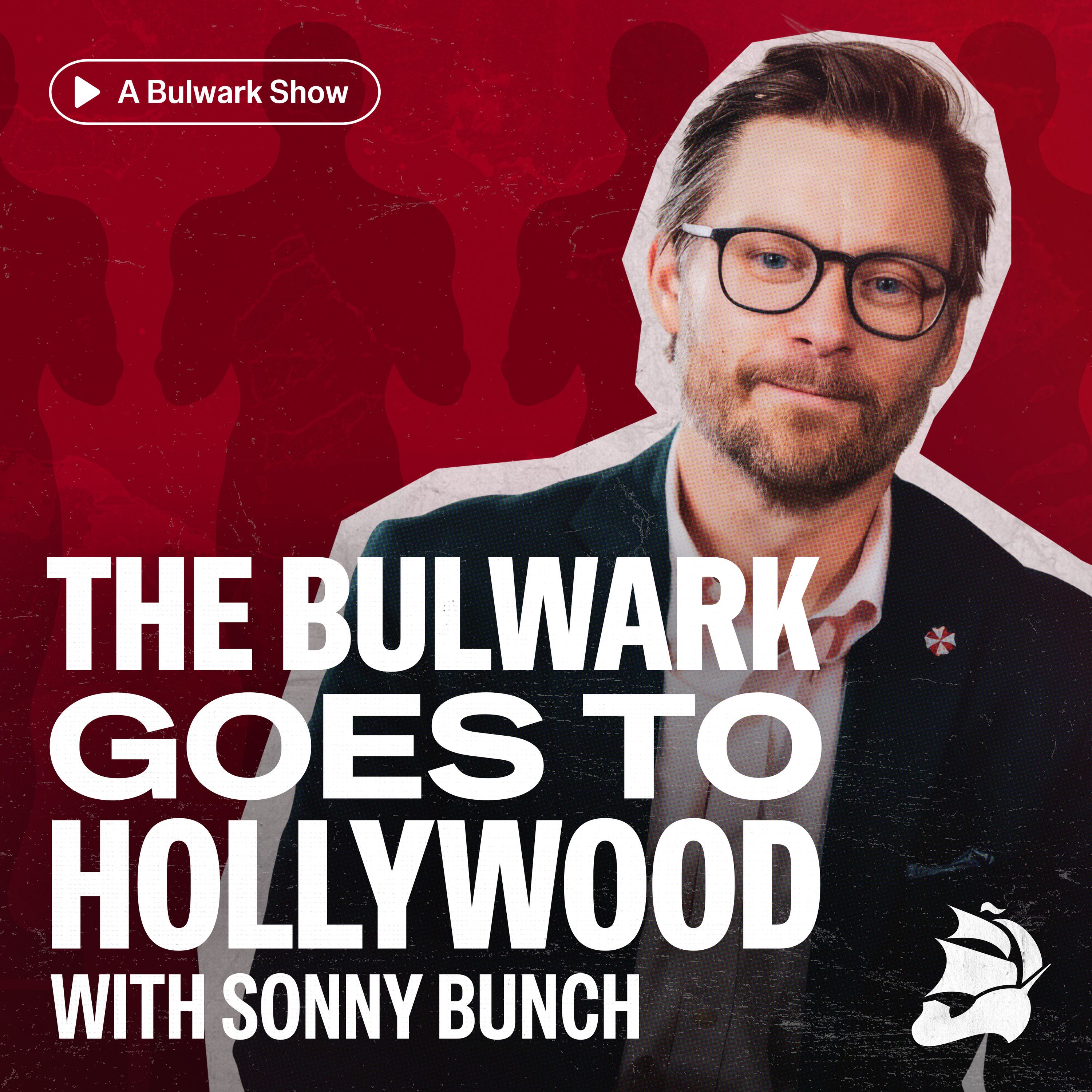
- The Bulwark Goes to Hollywood
- How ‘Tuner’ Found the Perfect Pitch
In short
Daniel Rohr discusses Tuner, a high-concept crime thriller streaming on Paramount Plus. The film follows Nicky, a former piano prodigy turned piano tuner with a debilitating hearing condition that makes him hyper-sensitive to sound. He realizes the same “perfect pitch” skill can be used to crack a safe, triggering a crime plot with romance and comedic “hijinks.”
Guest backgrounds
Daniel Rohr is an Oscar-winning filmmaker for Navalny (documentary on the Russia-Ukraine war) and also directed an AI documentary earlier this year. He’s known for blending nonfiction energy with fiction filmmaking.
Key claims
Rohr aims for nonfiction to feel like fiction and fiction to feel documentary-real. He builds Tuner “from the sound up,” citing films like The Conversation and Sound of Metal, and credits sound mixer/sound designer Johnny Byrne. He designs for a manageable budget (about $7M) by tightening runtime and using kinetic editing.
Notable examples
The movie opens on sound before visuals; Rohr describes mixing on a major Dolby Atmos setup and collecting real-world sounds with a Zoom recorder. He mentions casting “beshert” and highlights Dustin Hoffman, Jean Reno, Havana Rose Liu, and Leo Woodall.
Written by AI. May contain mistakes.
Chapters
0:22
Introducing Tuner
Discussion about the film Tuner and its unique storyline.
“And I'm very pleased to be joined today by Daniel Rohr, the Oscar winning filmmaker behind Tuner is the movie we're going to be discussing today.”
1:20
Documentary vs. Narrative
Exploration of skills that transfer between documentary and narrative filmmaking.
“because I do a bad job of explaining these things when I'm just riffing on them.”
3:30
The Importance of Sound Design
Insight into sound design and its significance in creating immersive experiences.
“And that's kind of what Tuner represents in a lot of ways.”
6:26
Mixing Sound for Film
Discussion on the sound mixing process and its challenges.
“Often when we design movies, you're thinking about the images compulsively, you're thinking less about how it sounds.”
12:20
Making Indie Films
Insights into the challenges of making independent films and financing.
“because I kind of wanted to get a sense of how it moved around.”
14:00
The Creative Process Behind 'Tuner'
Explore the thoughtful approach to filmmaking and the importance of personal voice in cinema.
“that was manageable and I wanted to design something that could get made.”
21:56
The Importance of Runtime in Film
Discuss the significance of film length on audience engagement and experience.
24:56
Character-Driven Storytelling in 'Tuner'
Delve into the character development and genre elements that shape the film's narrative.
“No, I mean, look, I am not immune from this myself.”
28:00
The Story Behind 'Tuner'
Exploration of personal reflections and relationships in the filmmaking of 'Tuner'.
“Who are these, what are these relationships?”
29:24
Casting Legends: Dustin Hoffman and Jean Reno
Discussion on the casting choices and performances of Dustin Hoffman and Jean Reno in 'Tuner'.
“Well, you know, we sent dust in the screenplay.”
Show all 13 chapters
31:32
The Rising Star: Leo Woodall
Insight into Leo Woodall's performance and the director's experience working with him.
“And, you know, her and Leo found a really interesting chemistry and they were very patient with me.”
34:36
Filming Locations and Challenges
Overview of filming locations in Toronto and New York, and the logistical challenges faced.
“Um, um, and so thankfully in this movie, everything worked and everyone was phenomenal.”
36:53
Closing Thoughts on Filmmaking
Final reflections on filmmaking, the release of 'Tuner', and the director's career.
“I always like to close these interviews by asking if there's anything I should have asked.”

Ask about this episode
Get the gist, explore an idea or ask about something said.
 Claude
On The Bulwark Goes to Hollywood, what are the key points of this episode?
Searching your listeningTranscript
Automatic transcript. May contain errors.
0:02In a classroom of sodas, most stay quiet. Then there's Mr. Pibb, sweet cherry, bold outburst. The kind of flavor that gets attention. Bold kick of cherry. Hey, yo, Mr. Pibb.
0:21Welcome back to The Bulwark Goes to Hollywood. My name is Sonny Bunch. I'm culture editor at The Bulwark. And I'm very pleased to be joined today by Daniel Rohr, the Oscar winning filmmaker behind Tuner is the movie we're going to be discussing today. You you won an Oscar for Navalny, the documentary, which is a really important look at the the war in Ukraine and one of the key figures there. And more recently, earlier this year, the A.I. doc was was was very good. I feel like you're in the midst of like the two big issues of our time, AI and the Russia-Ukraine war. But we're here today to talk about Tuner, which is a which is a narrative feature.
1:03It is currently streaming on Paramount Plus. If you have Paramount Plus, it's also available on VOD. I liked it quite a bit. And I was real excited to get you get you on the show today, Daniel. But I always like to offer directors a chance to pitch directly to the audience, because I do a bad job of explaining these things when I'm just riffing on them. I find that you guys do a much better job. Elevator pitch, what is Tuner about for folks who don't know? Tuner is a film about a former piano prodigy turned piano tuner who has a strange hearing condition, which is very, very debilitating in his life, but it means he has very sensitive hearing.
1:42And he learns that the exact same skill set required to get a piano in perfect pitch can equally be applied to cracking a safe. hilarity and crime ensues. And Sonny liked it quite a bit. You put that on the poster, Sonny Bunch, liked it quite a bit. But it's a really fun, kind of high concept crime thriller, rom-com-ish, not rom-com-ish, but there's some romance in there. It just has everything that you're looking for in a movie. and I have recommended it to so many friends. It's great that it's on streaming now. Thank you so much. Let's just to talk about the difference between narrative features and documentaries.
2:29Again, you have a very successful, solid career as a documentarian. Which of those skills transfer over to narrative features and how does that kind of shape your visual look and your audio look for a movie like this? Well, I want my documentaries to feel like fiction films and my fiction films to feel like documentaries. I want the nonfiction work to have a propulsion and an energy. I wanted Navalny to feel like a Bourne or a Bond film. And I wanted Tuner to feel lived in and real and authentic like a documentary often does. And so that's certainly how I am thinking about it in terms of the skill sets that carry over.
3:10storytelling, storytelling, and you're still dealing with, you know, images and editing and music and movie and cinema. Um, except in, in fiction, I am, I am totally unencumbered by actuality. I can just make up whatever the hell I want. I found that after years and years of documentary filmmaking to be incredibly liberating. And what I found in Tuner is, is the sort of, uh, hijinks of borrowing from my life, borrowing from real life and developing the skillset, um, of really just seeing the things around me and plucking from reality and actuality, but then, you know, going improv-ing and making up a bunch of stuff and taking themes or ideas and fears and aspirations and putting it into a made-up context.
3:57And that's kind of what Tuner represents in a lot of ways. And so, yeah, I really, really had a lot of fun making Tuner. And as I'm just finishing my second fiction film now, the sort of symphony of fiction filmmaking is very different from the more solitary experience of making a documentary. Making a documentary is like, you know, a small little acoustic folk rock band. Making a big fiction film is like a symphony or something like this. And I really like the collaboration, the scope and the scale. Can you talk about that a little bit more? Because I do find this really interesting in the sense that there are so many different things to do in a narrative feature.
4:38I mean, one of the things I wanted to talk to you about on this project was the sound mix, obviously, which is a pretty key important part to this film. It's about a guy who has hearing issues and the way he hears kind of changes how the movie plays out. you know I don't know what your experience is like with sound makes it I don't know you know if you if you had to do I assume you probably had to do a lot of that on your own on your on your documentaries particularly early on is that something that you work with in a narrative feature how does that how does that process go yeah so so the sort of sound storytelling of of tuner came from a few different places first and foremost I understood that when I make my transition to fiction filmmaking, you know, maybe I could make a film that has a, what we would consider a lower budget, a couple million bucks, maybe five to$10 million film or something like this.
5:32So how can I design a film that punches above its weight class, that, that is, feels bigger in scope and scale. And I've always felt like sound is the most underutilized of the cinematic devices. In my Batman tool belt of cinematic tools, sound is kind of near your ass and it's tough to reach and you can't really get it so easily. And so I was like, damn, what are my favorite sound movies? And how can I write a sound film that uses the auditory experience to make the film feel bigger and more immersive? And so I watched films like The Conversation or films like Sound of Metal or A Quiet Place, Children of a Lesser God, films that are about the experience of hearing frequently.
6:19And that's sort of what I put into Tuner. And I was really designing a film from a sound focused perspective. Often when we design movies, you're thinking about the images compulsively, you're thinking less about how it sounds. And so that's really why I wanted to build the film from the sound up. And that's what I did at the script phase, imagining a subjective perspective from a character where we can get into his auditory context and make an immersive experience for an audience member. And that was the mission. And yeah, it's really, you know, gratifying to listen to it in a really amazing, epic theater with beautiful speakers, because it sounds great.
7:02And when I was able to, we were able to get Johnny Byrne on the movie, who's the sound mixer, the sound designer, um you know it was amazing he just won an oscar for his film um uh zone of interest um and he is just like you know a sound genius and and he will remind you that you can close your eyes you can't close your ears and we're hearing before we're seeing um and and so you know i think about how sound makes a story how sound makes a movie or an experience and there's so much you can do with sound if you fuck up shooting something. So I always think auditory. And even, you know, on my new film, when I was scouting the movie, I had a zoom recorder with me.
7:43So, you know, we're going, there's like, you know, restaurant locations or prison locations. And I'm looking at going to prisons and to try and find a place to shoot. And I always have my sound recorder and I'm just collecting sounds almost like a scrapbook. And I have all those that my sound mix will use in the end. You know, here's, you know, a bunch of wave sounds, a bunch of seagulls, because I just got really inspired. And so, yeah, sound is cool. And I really, really think about it when I'm making movies. Zone of Interest is a fantastic sounding film as well. That's another one that where the design really jumps out at you.
8:21I mean, it's, you know, kind of harrowing subject matter and made more harrowing in certain regards that way. When you're talking about when you're talking about designing this at the script phase, how do you denote that in the script? Like when you, are you, does it change how you write? Does it change how you describe the scenes? Or is it just like you're just thinking about it while you're writing a script in a more or less standard way? No, you know, you try and do, I'm not, I don't never have considered myself a writer. I'm a filmmaker first and sort of wrote out of necessity. So I had to kind of learn how to write a screenplay when I did this movie.
9:00um and yeah you're just kind of like you know we enter the uh subjective perspective of nicky our protagonist um the world is teeny and small and we're hearing everything through his muffled headphones or something like this and really trying to pick moments in the movie where you can teach your audience how to hear the film um and so you know you have to you have to essentially create a set of rules and have like see there's a scene in the film that's purpose has a couple of purposes, but one of them is like teach the audience how to hear it. And, you know, the film opens on sound. We hear before we see.
9:37And so, you know, it's sort of signaling to the audience, like, Hey, listen up. Sound is important here. And, and then it's just finding the best sound designer in the world, which is very helpful. I can imagine. In terms of, in terms of like actually mapping out the sound way, Can you explain to folks what that process looks like? Because I, you know, I have seen I've seen people do it before. I've seen the systems that are required. And it looks like like a magician's workshop to me. I can't explain any of it. It just looks it looks wonderful and magical. But, you know, you have so many different channels, so many different places the sound can go so many different things that can do move from side to side or whatever.
10:21What is the actual physical process of designing sound look like? well uh for me um you know if you can imagine sort of like a giant console with a hundred thousand little knobs and buttons and do hickeys and and i don't know what they do but they are moving channels moving sounds there's like a little monitor then a big movie theater screen and i'm kind of like um um um you know a caveman sitting at the back being like more loud over here less loud there what about this sound what about that sound while someone more technical actually does it um and that's johnny or one of his assistants um and and i don't i don't know how the machine works that the board itself i should have probably learned but i was too busy doodling in the back um um but i know i know how to make it in my head what i want it to sound like and then the guys kind of rock and roll yeah so you're sitting like in a theater while while this is happening you're like there there there we're sitting on the i'm pointing to yeah the john Ford mixed stage on the universe note is it the Universal lot oh fuck I think it's the Universal lot in Los Angeles California and I was mixing my movie Steven Spielberg was in the the theater adjacent to us which I appreciated and yeah I just you know you sit in the back and sitting in a nice comfy chair and you're listening and you're listening and you're listening and you're listening and you're listening on, you know, a million dollar speaker system.
11:51And, you know, then I'll take it home and I'll listen to it on my laptop and then I'll listen to it on my headphones and I try and experience it. I listen to it on my TV at home, how other people hear it. That's sort of what sound mixing is like. It's super fun. Yeah, I it's so I've I've watched it twice now in two different settings. First in a theater, which was which was great, obviously. The second time was with just my my AirPods. and I was watching it at home with AirPods because I kind of wanted to get a sense of how it moved around. How does mixing for home change how you think about the sound?
12:33It doesn't. It doesn't. I mix for the best speakers in the world and then I hope people, you know, I hope it still plays on people's headphones. but we did like Dolby Atmos you know people don't have Dolby Atmos at home yeah so it's a good question you should ask Johnny we should be talking to Johnny Byrne we should get Johnny Byrne in here he's the guy alright well let's talk about you mentioned making something for a smaller budget doing something a little more reasonable for a first feature when you're run through this process because I always like I like to talk to indie filmmakers about, you know, the the decisions they have to make to make a film makeable.
13:19If that makes if that is not too redundant, you know, that's that's a real question. It's it's hard to get a movie made at any budget, especially, you know, for for an independent filmmaker, especially for something that is not IP, that is not, you know, a sequel or remake or whatever. When you were sitting down to make this movie, what were you thinking? Like, how do I make this makeable? um yeah so you you know it's it's uh what's the what's contained you know what what can you do for seven my pleasure this film is seven million dollars and how can you squeeze that and make it look bigger and more expansive um and what are the the sort of cinematic tools that that you can utilize to make you know your own um and that's how i came to this movie i wanted to make something that was manageable and I wanted to design something that could get made.
14:11I was inspired by what I call the Harvey Keitel role, which is what Quentin Tarantino wrote for Reservoir Dogs, the role for Harvey Keitel. So someone would finance the movie if he was in it. And that then became the Robin Williams role in Good Will Hunting. And I wrote that role for Dustin Hoffman in this movie. And so just really just being very thoughtful and intentional about, like, how does a movie get made? What does it take? What is required? What, what, you know, with a studio executive or financier takes to look at me, what are they looking for? What are they assessing? How are they sizing me up?
14:46And, and what can I show them to be like, yeah, I know I've never done this before, but like, check this out. You know, uh, I'm very prepared. No one, no one's going to storyboard the entire movie. Here's, here's the film is a graphic novel. This is what it's going to look like. Uh, this was going to sound like. Um, and so that's really how I approached it, um, as an exercise and, you know, it sort of felt like impossible. And there were a couple of false starts when a financier would say they would do it. And then, you know, five minutes later, you're like, oh, sorry, we're not going to, you know, that's part of the process.
15:15And at the end of the day, it's just like the desperation is just to get there. The hardest part of making the movie is getting the film greenlit. And then you have the fun parts, the fun part starts, you actually get to make the movie. And yeah, I was very intentional about like, how is this movie me? I've met many of my cinematic heroes at this point and I'm thrilled every time I get to spend time with one of my you know Mount Rushmore filmmakers and I've identified how filmmakers are their films temperamentally interpersonally you probably know this from all the interviews you've done but like you you sit around with one of your favorite filmmakers and I can pinpoint how they are their movies I can see how Martin Scorsese is a Martin Scorsese film how Spielberg's a Spielbergian, this feels like a Spielberg film.
16:01And so the thought exercise then became, how is this a Daniel Rohr film and who am I as a filmmaker? And how do I, what does my voice look like in this movie? And, and, you know, how can someone who knows me really well, watch the film and feel my heart and soul and energy across the film? And, and that was really the exercise of like the first movie. And, and then it's just, how can you do a lot with the little and how can you maximize physical production and be smart about physical production to like get a lot of bang for your buck. And that just takes creativity and doggedness. Well, let me ask then, what is it that makes this a Daniel Rohr movie?
16:42What is in this that you think of as this is me? This is the stamp I want to put on it that people will recognize in my films going forward? I think that people would recognize a kinetic pace, a musicality. Like there's not a lot of fat on the bone. I like to just keep keeping my films moving. I always I I I question every single thing that's in the movie. And I'm like, why is this here? Is this indulgent? Is this too long or is this, you know, a waste of space or taking up air? And I like my films to be airtight. There's sort of like the needle drops. I mentioned the musicality of the film. That's something that's certainly carried forward into my next movie.
17:25A sense of rhythm and montage. You know, to me, editing and montage is the only technical thing that is native to cinema. You know, you think about writing or music or photography or acting and drama. Those all came from other places. But editing is like, that's pure cinematic shit. So I really pay attention to that. um and then you know a tone a humor a levity um um that that i think is probably going to be people will recognize him in my new film um and then you know as you get into the the minutiae of it people who know me really well uh you know the film has a a sort of jewish character to it um um you know the dog in the movie anyone who knows me of course i'm going to put a dog in my movie, the sense of humor and, you know, the warmth, the sort of family component of the movie is very much who I am.
18:23When we shot the movie, we were filming in my parents' house, you know, Herbie Hancock's in the movie, his dressing room was in my parents' kitchen, his green room. And so, you know, just that sense of warmth and family, I think, you know, people who know me would recognize. Yeah. You mentioned before we started taping that you're in the middle of another edit right now. And I will say this, as you mentioned, this is a movie that is edited kinetically, but not frenetically, if that makes sense. This is not Michael Bay, but it keeps you moving. And you worked with, your editor on this is Greg O 'Brien, who is credited and has done a very good job here.
19:06But how closely do you work on the edit with Greg? I mean, what's your process like when you're putting together this cut?
19:16Greg is sitting in a chair, and I'm sitting in another chair, and we are watching everything, and we are making decisions, and I'm describing to him how I want it to feel. It's apparent to Greg or any editor I work with how I want the film to move. I just described sort of this montage kinetic energy. and a good editor I can have a conversation with for 10 minutes and that editor can then run with the ball and show me something that's like in the ballpark. But typically I am thorough to the point of undoubtedly annoying many an editor. And I don't really rough cut, I fine cut. I can't send in rough ideas.
19:53I really have to synthesize an idea. And the film I'm finishing right now, my director's cut that I just sent to the studio was what I would consider quite a muscular, uh, hour 57. Um, um, and when I'm done, it'll be hopefully an hour 45, an hour 50. And that, that's pretty much like we're in the pocket, this thing's in good shape. Uh, but I like it to be, you know, pretty, pretty tight. Um, and, and I really think Sonny about the hypothetical person who, you know, has worked a long day as a, you know, an ER nurse or a welder or, you know, a bus driver and they're tired and exhausted and they go home and either they pop on a movie or God willing hop in the car and drive to the cinema and spend 50 bucks for tickets and 20 bucks on parking and yada yada yada I want them to have a good time and I want it to be a really really fun experience and I think there's something you know it's a it's a valuable public service to make something that's like oh that was fun that was a hoot that was a total blast and I never checked my watch and I just was in and I enjoyed it and I had romance and it had you know the shortened stakes and tension and drama and great songs and those were the films I'm interested in making right now at this point in my career.
21:04I have a feeling that will change. But that's really how I approach the editing process is through an audience first perspective as a, and I have many filmmaking colleagues, you know, who only think about what they're interested in and they make the movie they want to make. And that's totally fine. That's their prerogative. That's just not how I think about it and how I approach the filmmaking. Oh, I'm so tired. I just need a nap. Hey, what was the name of that drink you talked about? You know, the one all about energy, positive vibes, fruity flavors, and no sugar. What was that name again? Never mind.
21:38Got it. It's Flirt, right? Do you think I can find it in Chicago? Girl, I found it. They got Strawberry Fling, Guava Lava, Sunset Squeeze, and Berry Tempting. You were right. It's so good. I'm ready. Let's go. Learn more at drinkflirt.com. I love to hear you talk about run times because I feel like this is the most underappreciated factor in deciding to go see or not go see a movie for many people like for instance just I you know there's the documentary out now you can see everything which I liked a lot I think it's very good and I mentioned it to my wife my lovely wife who is wonderful and she was like it's three hours long and i was like yep that that's gonna be a lot of responses i'm out i'm out i haven't i haven't seen the the film yet but i'm someone who not just for for you know nathan and lance's movie but for like most movies if it's three hours i just struggle with that i think because i i do have adhd and i have a tough time sitting still for too long um and and very rarely do i find a film that's over 230 where I'm not at some point like okay let's like get the show on the road like if a film in my theory my philosophy is the film's over two hours you better fucking great reason for every minute over two hours like what is going on in this movie and evidently most of those films are are you know uh uh I say this term with love and affection but like art house garbage and I love art house cinema um and I love art house garbage and again love and affection it's humorous term no one come after me um but it's it's supposed to be artistic experience and that's wonderful um but first and foremost i personally want to be entertained and i want to be thrilled and on the edge of my seat um um uh so you know there are some films that are over two hours that can certainly do it like when i watch one battle after another whatever it was last year the year before i was fucking dialed in for three hours but that's a very very rare feat and it's one of the greats of all time at the peak of his powers um um so i i think you're right to say that about runtime and you know maybe to a fault i'm like a run time like like i am all over it i'm like right now the film i'm making is for netflix and you know i i see the hypothetical person out there being like it's two hours and 10 minutes and the hypothetical person's husband or wife being like no no it's too too much yeah i you know i think if if you you can tell any story in any length of time of course but you know for the films i'm interested in making and making right now like you know a tight 90 oh there's nothing there's nothing sweeter than a tight 90 like resident evil did you see resident evil oh yeah yeah yeah that's the one film i i saw this year uh uh because i have small children so it's hard for me to go to the movies now but like 95 minutes i was like Like, oh, God, the pacing of this thing is just phenomenal.
24:39So, you know, there's room for the three-hour epics. You know, I just watched Once Upon a Time in America, but it took me like six nights because that movie is like 13 hours. But, you know, I hear you loud and clear, Sonny, with the runtimes. It's challenging for me personally. Yeah. No, I mean, look, I am not immune from this myself. I currently I've had a 4K of Lawrence of Arabia sitting on my shelf for the last two years because I'm like, when am I going to have four hours to carve out to watch this? And that every time I see it, it annoys me because it's still sitting there. The an hour, an hour forty five is is a sweet spot, especially for a movie like this, which is kind of again, like kind of a high concept crime thriller.
25:26or you could describe it that way in the most basic way. What I really loved about Tuner, to bring it back to the specifics of the film, is that it is both a good general kind of crime drama, but it also has that specificity. When you were researching this film and looking for a way into making something that is memorable, because anybody can be a safe cracker. Okay, fine. Why this specific guy? Anybody can do crimes. Why this specific crime? You know, why this sort of theft when you were when you were sitting there doing your research? What jumped out at you as like, hey, this is it. This is the story.
26:05Well, first and foremost, I love you know, I'm just like a sucker for like, you know, a good guy doing bad shit story. Like, like, why do good people do bad things? Like, how does that happen in the world? And it happens all the time every day. And I just think it's that narratively like going back to Robin Hood. That's compelling. And I'm interested in that. and I knew that I wanted whatever story I was going to tell I wanted to wrap up in some kind of fun genre that was like a reflection of a movie I would want to see like what's the film that like 15 year old Daniel would be stoked to go see and and you know there's a version of this movie where it's just kind of like a drama about like a piano virtuoso who's like struggling in his life and having a tough time and you know trying to find a girlfriend and like you know that that's cool that's cool uh wouldn't want to see it as much as like you know gets it gets into crime and bad guys show up and you know things are moving and shaking um so you know that was really the catalyst for the genre-ness of it wrapping this story up in uh uh genre in crime in that world um but you know my new film uh stars matthew mcconaughey and something that Matthew told me that, that like really, really resonated, really crystallized something I've always thought and, and it was like very elegantly put.
27:23Um, he's like any movie you do should be able to work, you know, on stage or should be able to work in like a room. And how'd you get that story and those relationships to work in that situation? And then like all the other stuff, you know, whether it be the genre work, the crime, the, this or the, that the car chases, the, the, helicopters, whatever's in your movie, um, that's just icing on the cake. That's just entertainment, but your fundamentals have to be able to work sort of anywhere and be, be like, you have to have your characters and your, your story down, down, down pat. Um, and I really took that to heart.
27:58And so in the case of tuners, like, who are these people? What is this? What is this story? Who are these, what are these relationships? And very much a reflection of, you know, in many ways what was going on in my head in my life at the time um um and uh yeah so that's sort of like how this movie came together um and how i thought about the filmmaking from the outset i can we can we talk about the cast for a minute because this is uh an amazing uh an amazing cast you mentioned dustin hoffman getting dustin hoffman um uh in your movie and i feel like i have not seen enough Dustin Hoffman in the last five or 10 years.
28:33You know, he was in Megalopolis a year or two back. And then, but like, I feel like he's been, he's been not, not utilized enough. So it was really, really a treat to see him here. Jean Reno of course has, has a small part, almost like, and I feel weird saying this cause I know it's not true. I know he has a wide range of roles beyond, you know, the action stuff I see him in, but it almost felt like playing against type. when I when I see Jean Reno is going to be in a movie I do not expect him to be a relatively quiet composer of of film I expect him to be you know doing something with guns and and whatnot uh yeah and and uh so let's let's just talk about those two first because working with I mean again two two longtime legends of the screen uh had to be how did how did they get on how did they come on board?
29:25Well, you know, we sent dust in the screenplay. And, you know, so often when it comes to like small films like this, where, you know, it's pretty clear that whoever signs up is not going to, you know, buy a new house with what will pay them to do this movie. There has to be some kind of like, you know, I call there's this Yiddish phrase called beshert. And it's often attributed to romantic love, you're meant to be your person. But it can also be like, you know, a coincidence or sort of some faded thing that's happening. There has to be sort of some sort of besherty element to why someone will decide to do a movie.
29:58And in this case, when Dustin was a kid, he wanted to be a piano player. His great passion was jazz piano. And that's the first thing he wanted to do before he became an actor. And so when he read this script, you know, he fell in love with the world and the characters and the musicality of it. And just thought it was a phenomenal character. So he agreed to do it. And once you have him signed up, you know, for a younger actor, it's a really compelling, you know, that's a really compelling person to work with. So that's how we were then able to entice Leo to do the movie. And the cast came to us from there.
30:37Leo Woodall, I'm going to get to him in a second because there has been lots of, there's been a great deal of praise for Leo Woodall in this movie. And it is all incredibly well-deserved. before that though Havana Rose Lou who I quite I really liked in Bottom she was good in and more recently this year Her Private Hell a movie that didn't entirely work for me but she was very good in which one was that? that's the Nicholas Winding Refn film it just came out I'm sure you were deep in filming or edits when it was out but she's wonderful in this as well and it's always a hard part being the kind of love interest in a film like this and she really brings a life and presence to it all her own yeah she's so talented she's so hard working she had to learn how to be a piano virtuoso you know how hard it is to look like you know how to play the piano really really really well she put in the hours and she has the movie star thing You put a camera, you know, eight inches from her nose and the whole thing comes together and it works.
31:47You don't have to do too much else. And, you know, her and Leo found a really interesting chemistry and they were very patient with me. I think Havana, you know, got a kick out of working with someone who comes from documentary who had never done a fiction film before. um you know i didn't i didn't know how to sets worked i didn't have the you know uh i didn't really know how days on a movie functioned um i was kind of thrown into it and figured it out on the fly and they were patient with me um and yeah very super talented and she's gonna have an amazing career i can't wait to see what she does next and leo woodall again who uh has had an amazing year between this film and Tony.
32:32I don't know if you saw Tony, the Anthony Bourdain biopic that A24 put out earlier this year, but he is really good in that as well. And I, there is a,
32:49to, at the risk of sounding vulgar, there's a phrase I like to use, movie star shit. He is doing movie star shit in this movie from start to finish. I just, it is, it is one of the most command it is one of the most surprisingly commanding performances I have seen in a long time because I did not go into this thinking like oh I'm gonna see the guy I'm gonna see like one of the guys for the next 10 or 20 years or whatever and that's what you get in this movie uh how did you how did you find Leo like what what was what was your background with him well my background with him was um my my wife was friends with his girlfriend so we socially kind of like i had never met him but i knew who he was um through meg um uh and then i watched his show which had just come out one day this netflix show that did very well and i was like oh this guy's got juice this guy's really cool and i loved him in white lotus and we sent him the script and uh you know he he really responded to the material and was really excited about it, which is always really nice.
33:54And, you know, he, he really taught me the valuable lesson of filmmaking and certainly casting movies, which is you cast the right people. And then you, you know, you, you call it a day. That's kind of like, if you hire the right actors, that's kind of like all you have to do as a director. And it's sort of true. And Leo was the right guy for the job. And so I didn't have to say too much to him when we were shooting a movie. He was, he knew what he wanted to do. He made his choices and, and all of them were the right ones. Um, and so, you know, for me as a director, it's just an exercise and yeah, just, just trust the people you've brought on and he was the right guy.
34:30And you know, the, the flip side of that lesson is if you hire the wrong person, you're fucked. That's very challenging. Um, um, and so thankfully in this movie, everything worked and everyone was phenomenal. I, uh, it, it, again, I, I cannot, say enough about his performance in this film. It's really something else. To the extent that, again, between this and Tony, I think there was a late Leo Woodall for James Bond charge, which I would frankly be behind, although that sounds like a terrible job for the next 15 years. I can't imagine who would want to do that. He would be great. Anyway, Anyway, if I'm going to give you one extra reason to see this, it's to watch Leo Woodall in this role.
35:22It's really good. Can we talk about filming in – this was mostly shot in Toronto, right? Yeah. And you're from Canada, I know. Are you from Toronto? I'm from Toronto, yeah. I grew up in Toronto. So did you have in your head kind of where you wanted to shoot the scenes here? or what was your? Yeah, I knew what Toronto had to offer in terms of locations. I obviously know the city very well. And the other advantage when you're making a smaller movie is that I am at the peak of my well-knownness in Toronto. We like to celebrate our own in Canada, especially in Toronto, hometown guy. You know, when I won the Oscar, I think people were very excited.
36:11um and so you know when i go scout a location uh people would often know me and it's a small you know it's a big city but you know the world's a small place so i'd walk into a house and and you know we're scouting those big mansions and some um mansion owner would be like oh you played hockey with my son growing up you know and i'd be like oh cool you know um that's great you know and the sort of wheels are sort of greased and people are wanting to help you which is really nice and then toronto is just like a vibrant wonderful uh film uh uh town um where we have phenomenal crews and so getting to shoot there was was terrific the uh uh this is the the film is set in new york city um uh and there are some did you do any exterior shooting in new york did you get down there at all or yeah yeah yeah we did a few days in new york um um driving around in that in the tuner van yeah yeah because it feels it feels like a new york movie uh despite you know being being being shot uh much of it in toronto uh and like again this is one of these things where when when i ask independent filmmakers how do you how do you stretch the money it's usually like we get two days in new york and the rest everywhere else and and you gotta make that two days count yeah but that's fine i mean you know that's that was the case in this film but um you know unless you like write your scene it's like exterior central park you know and you try and shoot that in toronto you know that's gonna be tough um but yeah i i think that if there's a lot of interior locations like for sure you can shoot 90 of it in toronto and then like get your three or four days in new york and and and you feel the textures of the city and if you're smart and clever about where you where you put those textures in the movie you'll probably be okay and and i think that the the film really you know we were we people from toronto like you know if you're not looking if you're not looking for it you you'll probably miss it which is um a testament to how we how we designed it yeah uh it again it feels like a new york movie it feels it feels very um it feels it feels very on location uh let me i what you know that was um that was pretty much everything I wanted to ask.
38:27I always like to close these interviews by asking if there's anything I should have asked. If you think there's anything folks should know about Tuner or the art of filmmaking or AI or Ukraine and Russia. I like I could do a whole nother episode on your documentary career here. But we do not have time for that. And Tuner is at Paramount Plus now. So you should go see it. Go watch Tuner. It's on Paramount Plus. My new film stars Matthew McConaughey and it'll be on Netflix sometime next year. and it will be fun. And yeah, you know, I'm just hanging in there, Sonny. And every day that I can make a living, support my family making movies is amazing and a miracle.
39:07And I don't take it for granted. And, you know, I'm just keeping on just one day at a time. Just keep it, keep it on. All right. Well, Daniel Rohrer, thank you very much for being on the show today. I really appreciate it. Oh, of course, Sonny. Thank you. And again, my name is Sonny Bunch. I'm culture editor at The Bullwork. We'll be back next week with another episode of The Bulwark Goes to Hollywood. See you guys then.
39:54guava lava, sunset squeeze, and berry tempting. You were right. It's so good. I'm ready. Let's go. Learn more at drinkflirt.com.
From the publisher
On this week’s episode, I’m joined by Daniel Roher, the Oscar-winning director of Navalny, to talk about his first narrative feature, Tuner, which is streaming now on Paramount+. It’s one of my favorite movies of the year, so I was pretty thrilled to get him on the show and pick his brain about how the movie came to be, the importance of sound design for creating an unforgettable theatrical experience, and how he nabbed Leo Woodall, who has shot up my list of best young actors on the planet following this and Tony.
And really, seriously: you should watch Tuner. It’s streaming now and available for rental. It’s a propulsive 107 minutes, the perfect length for a high-concept thriller like this. And I guarantee you’ll be blown away by the cast: Dustin Hoffman, Havana Rose Liu, and Woodall are all pretty amazing.
More from The Bulwark Goes to Hollywood
All episodesWe use cookies.They keep VO running smoothly and help us improve it. Privacy policy