
- Podcasts
- The Bulwark Goes to Hollywood
- The Tao of Norm Macdonald
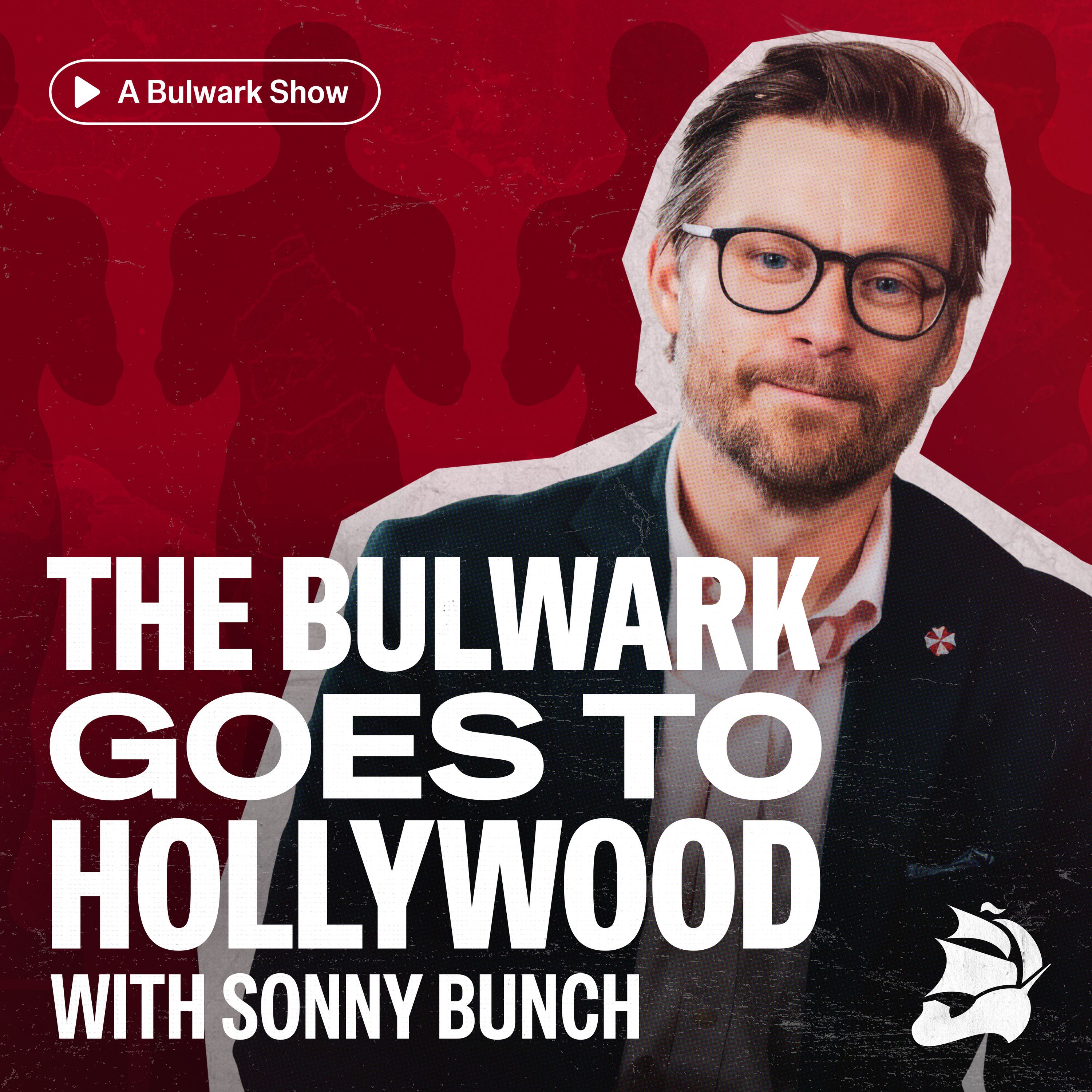
The Bulwark Goes to Hollywood23 Oct 2026 · 40m
The Tao of Norm Macdonald

 Add vo to ChatGPT or Claude to ask about everything you hear
vo listened to this episode to put together the overview and transcript, so there may be the odd mistake.
In short
Sonny Bunch interviews Jeff Edgers about Netflix’s documentary Norm, the tale of Norm MacDonald, and Edgers’ upcoming Norm book (2028). They discuss why Norm Macdonald’s comedy and “rabbit hole” internet afterlife endure, how the documentary is structured, and what Edgers wants to uncover through reporting.
Guests
Jeff Edgers is a culture writer and former Washington Post reporter who profiled Norm Macdonald extensively; he says he visited Norm multiple times and interviewed many people for his book. Sonny Bunch is the host (Bulwark culture editor). Mentioned but not guests: Norm’s brother Neil; Dana Carvey; Judd Apatow; and comedians/figures like Phil Hartman, Daryl Hammond, Burt Reynolds (as an impression target), and others.
Key claims
The documentary has no talking heads and stitches together YouTube/TikTok clips plus unseen footage and narration from Norm’s fake memoir. Norm’s appeal is hard to define because his material and style vary, but he was fearless and deeply cared about comedy language while being resigned to failure. Edgers argues Norm’s timing and career choices made him uniquely viral.
Notable examples
Edgers’ “tomato sandwich” anecdote from Norm’s mother Fern; Norm’s impressions (Burt Reynolds, Bob Dole, Letterman) and a skit Norm helped write featuring Burt Reynolds/Lonnie Anderson/Larry King (Burt played by Phil Hartman); Norm’s tweet storms (e.g., about Eddie Murphy’s refusal to do Celebrity Jeopardy); Norm’s gambling pride; and Norm’s lo-fi video-call show during the pandemic.
Transcript
0:00Picture a holiday morning. The coffee's on, the house is full, and you're toasting a warm breakfast bagel piled high with cream cheese. Now, picture that bagel with 19 grams of protein. And nobody at the table can tell. That's Hero Bread. Hero Bread makes the baked goods you love delicious and satisfying, with 0 to 5 grams net carbs and 11 to 26 grams of fiber per serving. No more stiff, cardboard-baked goods. warm Hawaiian rolls on the holiday table, a warm French toast bake for the whole family, grandma's mac and cheese made with Hero noodles with 12 grams of protein per serving, your family's famous stuffing, and decadent pastries with 5 grams net carbs or fewer.
0:44All your holiday traditions, no compromises, just flavor. Try it for yourself and see what you've been missing. Go to Hero.co right now and get 10 % off your order with code IHEART. That's H-E-R-O dot C-O code IHEART.
1:07Welcome back to The Bulwark Goes to Hollywood. My name is Sonny Bunch. I am culture editor at The Bulwark. And I'm very pleased to be rejoined today by Jeff Edgers, who has been on, you've been on the show a couple times now. We've talked about some stuff over the years. And I'm having you back on today because you're the star, really. the star of the new Netflix documentary, Norm, the tale of Norm MacDonald. You're in it for about 30 seconds. I'm the only I'm the only person that gets a tomato sandwich from Norm's mother, Fern. And but I'm not on I looked I'm not on IMDb under this film. I'm not sure what the story is there.
1:43But these people have obviously missed a huge opportunity. They they really they're really screwing you here. I want to talk about this because you are kind of the Norm whisperer. You had a really good piece on him in the Washington Post, and you have a book coming out in 2028, right? Norm, the way I describe it to people, because I really find it outrageous how sometimes people, when they're writing books, they pretend they know someone better than they know him. So like I say to people to say I knew Norm would be a lie, but I think I knew him as well as any writer, if that makes sense. So and I loved Norm.
2:22I thought he was just every moment dealing with him personally was very funny and befuddling and interesting. And I could tell a thousand stories of those moments that are small and big. but I wanted to write a book on Norm. I waited a long time because I wanted to be respectful, one. Also, I was like everybody else. I didn't know that Norm was going to die until September 14th, 2021. I mean, he texted me something in July, like, see you in Boston. So it was very, I don't know if traumatic is the right word when you don't know someone, but when a life force like Norm leaves the world, it has a severe impact and you spend a lot of time thinking about him.
3:10You know, Norm is one of the most viral people, strangely enough, for a guy who, when I would go over to visit him at his condo, it would take like two minutes for him to do the buzzer and like coordinate it. He was like very, his executive functioning skills weren't fantastic, yet he was like the most viral tweet, whatever person in the world and still is. I spent a long time delaying doing anything on Norm. And then I started noticing that there were a lot of people mulling about to write a book on Norm. And I talked to people about it. I talked to his brother, Neil, who's a former CBC reporter and newsman, kind of like Dan Rather of Canada.
3:57I talked to him a lot about it. He's like a no BS guy. And he's just like, We both agreed. It was like, look, if I don't try to write the Norm book, somebody's going to write the Norm book that's not going to be as good. And I'm going to be, not because I'm a genius, just because I care about it. And I'm going to be upset about it. It's going to feel bad for both me and for Norm and for people. And I just want to try to do my best to do the best book that's possible on Norm. So for me, that means fanning out and speaking to as many people as I can who worked and knew him directly, work with him and knew him directly.
4:35And that's what I've been doing. So like every day it's like just, you know, uh, another couple interviews or reach outs or whatever. And, um, uh, just plugging away, filling up my Dropbox with stuff. It's, uh, I can't wait to read it. The name you mentioned yesterday, uh, when we were on the phone was, I was just like, oh, I can't wait to hear what he has to say about Norm. That was Dana Carvey who I talked to yesterday. And, you know, Dana Carvey is not a great example of someone who knew Norm that well. But I love Dana Carvey because, first of all, he's a genius. Second of all, he has this interesting, to me, like mix of, you know, he's like a very jovial, positive person, but also there's a sort of darkness.
5:19If you've ever listened to his life story, you know, his upbringing, his, you know, even as an adult, this heart mess that he had, you know, there's like a little bit of melancholy behind him. And we were also talking about like he was talking with Norm in like 2010 period about they just talked on the phone for a couple hours and they were both at the same a similar place, which was these genius guys who do something incredibly special, but they can't find the right, you know, like thing to fit into. So like I think, you know, Dana Carvey had left SNL and made like some awful movies and then a television show that was kind of genius but failed miserably with like Stephen Colbert, Louis C .K., all these guys were writing for him, you know.
6:06and then norm had gone through leaving siren live doing two sitcoms that didn't succeed really you know he did pilots he did uh you know a sports show for comedy central and just trying to figure out what's our what's our place here you know so i love talking to dana i did a big profile of chevy chase i talked to dana i talked to him for uh daryl hammond uh when i profiled him because he has just a, you know, he's like kind of a, he's very thoughtful and also, you know, not a self-absorbed person, which is not a common thing in the world of entertainment, right? Yeah. Yeah, that's for sure. The title of this Netflix documentary that we're going to talk about here in a minute is The Tale of Norm MacDonald, which I think is funny kind of in and of itself because it is this, it's both grandiose, but also kind of indeterminate.
7:00It is not not to fit. When I say something is a tale of something that strikes me as non definitive. It's like, here's a version of the story. Here is here is kind of how how maybe it is. And that does feel like so much of his life is told in these kind of half truths or hinted at hinted at stories. And this is, of course, his memoir slash novel is very much the same way, where there's a lot of truth to it. And there's also a lot of nonsense. And trying to figure out what is what is at least part of the game and the fun. But the truth does stick with you. And the truth of norm, I can't wait to see what you come up with, what your truth of norm is from all your chats with folks.
7:54like the thing about norm that's magical in some ways the mystery and you don't want to take away all the mystery and write this dutiful book you know i don't want to read a book that's like in 1704 the mcdonald clan emigrated from scotland and settled in the i just i don't want to read that book but what i would like to do if i do it well and which i don't think that that judd Apatow's thing did, so it leaves a lot of room, is, you know, try to, my specialty, I hope, by reporting is to try to understand what makes artistic people do what they do and motivates them and makes them tick and think.
8:32And so it's like, if there's material in Norm's real life that is directly connected to his comedy sensibility and his life sensibility, like, I want to dig at that, You know, I don't want to like find out that he had like a, you know, a secret love child with Charles Kuralt in Minneapolis. That's an interesting idea. He did a very good Charles Kuralt. Like, who does that? Right. We should talk about Norm as much as we can while answering questions. But, you know, I want to ask Dana Carvey because when I sat with Norm and I would talk to him about acting or impressions, he would say, I'm not I'm not doing his voice.
9:11but he'd go, eh, that, you know, you go, I'm not a terrible actor. I can't do any impressions, you know? And I was like, what? Like Quentin Tarantino, Burt Reynolds, you know, Bob Dole, Letterman, you know, just, I mean, he was so good at those impressions. They were different though. They weren't, you know, you've got the Daryl Hammond impression, which is like, you get every symbol, syllable, every move, everything. It's like a Xerox copy. You have the Dana Carvey, you know, like the exaggeration, the finding the little holes kind of in the impression and building on them. And then you have Norm's, which I don't even know how to describe them, but I mean, like the Burt Reynolds is an amazing example where it's not really Burt Reynolds, but it kind of is.
10:02And also Norm's handsome. And so is Burt Reynolds. I saw this really weird thing when I was doing my research, which is the first skit that Norm wrote for SNL. It was before he was Weekend Update, he wrote a skit that was Burt Reynolds, Lonnie Anderson, and Larry King. And Burt Reynolds was played by Phil Hartman, strangely enough. Norm wasn't in the skit, he just helped write it. And he had that same funny laugh, that chirpy laugh. And I'm just, sadly, Phil Hartman and Norm aren't here to explain this, but who came up with that laugh, right? Like who came up with that? I'd love to know. I think part of trying to get your arms around Norm Macdonald involves grappling with all the different things he did.
10:45So let's talk about this documentary a little bit, because I do find it really interesting. Again, I joked about you being the star of the documentary. The trick with this thing is that it is not a typical talking head documentary. It's not people saying to camera like, oh, this is when I first met Norm, and these are the funny jokes he told. Rather, it is kind of it is framed as somebody going down a Norm McDonald rabbit hole on YouTube. And as somebody who has gone down several Norm McDonald rabbit holes on YouTube, this this documentary felt very familiar to me. But that does create a weirdly impressionistic view of the man and all of the different things he did, which I'm just curious what your take on this is because it does seem like Norm has had an afterlife in the sense of people are still either revisiting or discovering him for the first time due to this exact mechanism.
11:43This exact like, oh, that was funny. What's some other Norm stuff? What else? What other talk shows did he do? What other stand-up bits can I watch? And I assume this is probably true of other famous comedians, but I can't think of any that it happens to on a regular basis. So when you're sitting there watching this documentary and you see yourself, what was your takeaway from it? I've thought about this a lot. And I've actually come to multiple conclusions from multiple audiences. I actually had the same experience the other night when I saw, you know, You Can See Everything. Oh, yeah. I just thought about it a lot.
12:20And I hope that's something that a filmmaker wants. I mean, my first thought was when I watched the doc itself, I was just like moved and blown away by the idea of taking this and turning it into such an adventure, you know? And also when you say, I mean, I think we should just emphasize it, Sonny, which is there are no talking heads, none. So it's not just like he de-emphasizes that. There's not a single Tom Petty sitting in a room with a guitar behind him saying, you know, Brian Wilson was our Beethoven. There's none of that. Not a single one. So it keeps the action moving, one thing. And then two, it allows you to do what we are.
13:06You're right. I mean, except for Larry David, I don't know if there's anyone who even rivals Norm for rabbit hole searches and clips and stuff on TikTok and Instagram rolling by you. So he does a really nice job of stitching all that together, along with some unseen footage and narration from Norm himself, which comes from his fake memoir that did contain some actual truth. So you have Norm's voice sometimes coming over this film. So that's, okay, that's, first, I would say that's just a good achievement. Like it's very entertaining and very well done, and I appreciate that. Then there's a small subset of people, and I've seen some of them coming out on the internet.
13:49I don't know if you know that there are small subsets of people on the internet, but they were there, and they're saying, I don't think this is that good because I can see this anyway. There is an argument to be made like, hey, we do this every day without any kind of streaming service or having to subscribe to Netflix. We spend all our time looking at Norm stuff. We know all this stuff. We want something new. Give us new. So, you know, there's that aspect. It's a very small subset. And, you know, the thing is, like, I appreciate the fact that, you know, when I've seen Judd Apatow do interviews on this thing, he says, look, what did we know was true and not true with Norm?
14:36And, like, it would be impossible to try to determine that. And so we just said, we're not going to. We're going to celebrate the man himself the way he wanted to be celebrated. Well, that's fair, but there is something. I'm a reporter. That's like what I do. So there is something to be said for trying to mine areas and dig and ask questions. I did it myself when I did my first real profile of Norm back in 2015. I sat with him for hours. I have all those tapes and I just asked him question after question after question. And some he answered, some he lied about, some he actually made a, I put it in my story.
15:14It's really funny. It's like he was married before to the mother of his father, the mother of his son, Connie. And when I asked him that question about her, because they were divorced by that point, I remember I was sitting in his living room. I have it on tape and I said, hey, can I ask you about Connie? And he didn't just not answer. He made like a groaning noise, not like negative, but just a noise. It was like a guttural noise. And I just knew like, don't pursue that anymore. So I just stopped. Like, I just love like being able to sit with that. That's what I love to be able to do, to sit with someone and ask them any question with the understanding that they can also refuse to answer any question.
15:55So, you know, so there is a part of me watching the doc where I'm like, you know, I am eager for an exploration. I mean, look, Judd Apatow made a film about Gary Shandling in which he like literally went into his diaries and read them to us. And so he understands that all these creations are very different. yeah uh like judd apatow becoming kind of the um the uh i don't know the the doc documentarian laureate has been kind of fascinating to watch um and all of those have been great uh uh uh it was the um the albert brooks one the albert brooks one right which is just brooks yeah i just just amazing stuff.
16:44And again, filled with new facts, filled with interesting things and lots of talking head stuff. This is very different. This is very different, almost experimental. Again, I like the reference to You Can See Everything. It's one I've been kicking around in my head with regard to this as well because it doesn't take a strong point of view about Norm and his various kind of self mythologizing and all that. And at the same time does give us such a good sense of the man and what his, um, what his own personality was like that it, it's hard to imagine another version of this documentary letting us see more of him weirdly.
17:29Um, time. I mean, I thought this when I saw the, you know, Nathan Fielder movie, like, I just would be curious what Norm thinks, you know, like he had such strong opinions, sometimes things that I liked, he would just like pop the balloon and I'd be like, or maybe I'm dumb, you know, or like, but, um, I, you know, I really like, would be curious to see him watch this thing. It's called, it's called the dark side of comedy. And it's this, um, special they made on vice about norm. Like it was, I guess they must've had a series of people and there are all these people that he wasn't really friends with who are like talking on it.
18:02But the other thing is funny is like they have gambling. It's like the dark side in this thing is gambling. He was a gambler. And they even have recreations with a fake Norm where you see this guy's back and he has like the big, you know, the awesome Norm frizzy hair from the 90s. Or like you see Norm, the fake Norm, is it like a blackjack table and he has like flop sweat on his forehead. Norm, Norm never, seen anybody so willing not only was Norm willing to admit that he gambled, he seemed proud of it it was almost like now I'm like, did he gamble that much? I'm not sure, like he would always say like I won and lost everything three times, it was incredibly freeing, like is that true?
18:50I don't know I don't know how you make that alternative Norm, Doc, unless you have like, you know a family giving you all these materials that you can then stitch together to turn into this. What he made about Gary Shandling, you know, he had an enormous amount of archival footage and materials and just amazing amount of stuff. I'm guessing he didn't have that here. What he had was all these clips that were everywhere because Norm had, you know, hours and hours and hours of amazingly entertaining stuff that you could cut up.
19:28Geoff Edgers: It's happy Honda days. where great deals make the season even sweeter. This winter, bring your wish list to life with the fun-to-drive performance of our innovative hybrid vehicles from the 2026 Kelley Blue Book Most Trusted Brand. Bring home a Honda Accord Hybrid, Civic Hybrid, CR-V Hybrid, or Prelude Hybrid. For more details, visit your Chicagoland Northwest Indiana Honda dealer today. See dealer for financing details. Based on 2026 Consumer Choice Awards from Kelley Blue Book. Visit KBB.com for more information. It's Happy Honda Days, where great deals make the season even sweeter. This winter, bring your wish list to life with amazing capability and rugged performance from the 2026 Kelley Blue Book Most Trusted Brand.
20:10Geoff Edgers: Get the joy of savings before time runs out. Bring home a Honda Pilot, Passport, Ridgeline, or CRV. For more details, visit your Chicagoland Northwest Indiana Honda dealer today. See dealer for financing details. Based on 2026 Consumer Choice Awards from Kelley Blue Book. Visit KBB.com for more information. The one thing that did jump out at me that I had never seen and that I don't know if it was new specifically for this was he seemed to have a lot of footage of Norm kind of walking around with a cell phone taking videos of things. Or, I don't know, maybe a handheld cam. I don't know. But that was like the one thing that did jump out at me as I had not seen that before.
20:53but it's also just like it's it's b-roll basically he would call me every once in a while i could never tell if these are real calls but he would call me or text me he'd go like jeff you do a podcast right and i was like well not really but i i've made a couple podcasts do you use um what do you use i was like oh i use like a zoom recorder he's like is that hard uh well no not really he's like well what kind is it can you send me a link like i couldn't really figure out what he was getting at. I do know like during the pandemic, I remember he had his phone and he would do like a little show where he'd call like Roseanne or call someone else and just chat with them.
21:30It was pretty lo-fi, you know? And, you know, it's almost like he was like trying to explore what to do. I mean, the thing about Norm is timing is everything, right? And there were so many things that Norm did that could have been viral or successful beyond how they are, which is like they're viral unsuccessful for us. They do us well. They don't, didn't do normal well in life. So it's like, you know, I don't know why Norm couldn't have had what Mark Maron had. Cause he would have been amazing at that and had this huge archive of like interview podcasts. Instead he had this oddball, but brilliant video blog show that was intermittent.
22:09And he would just have like an hour of time with Adam Sandler or, you know, uh, uh, an actor. He had like Steven Merchant on, that was an odd one, you know, Bob Einstein, uh, Bob Einstein, um, super Dave, these incredible, incredible, you know, things that weren't really monetized. I don't know how they even, you know, sold them. So, um, just all, I mean, one time he gets an actual sponsor, he destroys it and makes something incredibly viral, which is exactly what Norm was like. You know, it's like destroy the thing that I'm supposed to do in the moment to serve the thing I'm doing right now, because in 15 years, people will be talking about it.
22:49Can we can we talk about him as an Internet personality? Because I do think that Norm MacDonald has this weird exists in this kind of weird in between state where he is not an Internet native. obviously. He's too old for that. That's not, that's not, but he was perfect for so much of what internet comedy would kind of be, particularly in the 2010s, early 2020s, right? So he's amazing on Twitter because he's A, a good writer and B, you know, his conception of jokes is like the joke should just be the same, which is perfect for Twitter, right? Like that is, that makes so much sense. He was great on, as you say, these kind of like lo-fi YouTube video shows.
23:37He has a Netflix show that is like not quite as good as that YouTube show because it's more produced, weirdly, but it still works very nicely. And then, of course, he has this whole afterlife as the YouTube presence that people will just kind of go to and watch for hours on end. And is there anybody else from his cohort who has been better at adapting to the Internet? And maybe not even successfully, as you say, maybe not even financially successfully, but just artistically, creatively doing it in a way that nobody else from his group managed to do. Well, I don't I don't know if there is an example.
24:21I mean, you see many times people end up like moving into the internet or like, and when we talk about the internet, I'm just going to say like podcasts, streaming, tweeting, Instagram, you know, all, all tools that are not sitting and watching like something on a giant, like floor console, RCA color TV, you know? So he, he really was great at it. And the reason he was great at it is the same reason he was great at everything, which is you can't really define what he did. He would sit there like a lunatic tweeting every single shot in a golf match, just one after the other. And it's like almost like this weird Zen torture.
25:05And you'd be like, what is going on here? Or he would make a joke, just a simple joke. Or he might say some sort of murky thing about spirituality that would, you know, or he might say something awful about Margaret Atwood. Is that real? Is that fake? I don't know the answer to this. And he just was so gifted at it. I mean, the way I met Norm, I'll just tell you, is I was doing a profile of Eddie Murphy and I was going to spend time with Eddie Murphy, which is no small thing. yeah and norm had just done this huge tweet storm about how on the saturday night live i don't know if you remember this but the 40th anniversary eddie murphy came back it was the first time he'd come back because like david spade had told told some nasty joke on the hollywood minute in the 90s and he was so angry and he just never came back he's finally coming back and it was a super anticlimactic return because he came back and didn't do any jokes he didn't do any skits he just came back and said, thank you.
26:05Thank you, everyone. I mean, he came back later and hosted like a few years later and did stuff. But so Norm had written an entire, apparently had written an entire thing for him to go on to Celebrity Jeopardy and be Bill Cosby because, you know, Eddie Murphy had done such an amazing Cosby in the pre-drug, you know, world Bill Cosby. But Eddie Murphy decided he didn't want to do it. So he, you know, like refused. And then Norm did a very nice, but explanatory tweet storm about that. So I was going to see Eddie Murphy. So I tried to get in touch with Norm and he finally, you know, direct messaged me back and I told him what I was doing.
26:45And he said, yeah, I'm not really interested in that. I didn't know him at all. I was like, oh, that's probably the end of our conversation. And then when my story came out, which did not include him, obviously he tweeted something like read this story on eddie murphy nobody writes about comedy better than jeff edgers i was like what is that like that almost seemed like a joke so so i wrote him back and he and i said hey i'd love to write about you sometime he's like oh sure come over so you know he lives in california and i live in new england so i flew all the way over there and i just went over and you know there was a table i have a picture of it there was a table a coffee table.
27:24It was covered in yellow sheets of paper with scribblings. And I said, uh, what's that? And he goes, Oh, it's my book. It's shit. And I'm like, Oh, I'm sure it's good. I was trying to read it and figure out what it was. And, um, I just, that, that sparked it. I mean, like I ended up just, there was no reason to spend time with Norm. There was no product coming out. There was no, and I just spent like, I must've gone over there six or eight times over the next year and traveled with them a little bit and Washington view standup. And that's what led to me doing my big profile of him back then. And it just started because of these crazy tweet things that he would delete.
28:00He had a whole long one about Bob Dylan. He went to see Bob Dylan and listened to a Billy Joe Shaver record. It was fascinating, but I'm not sure what to make of it. Well, it is funny because he would always delete them. So you would have to be on when he was doing it to get it. And sometimes people would grab screenshots and pass them around whatever. But it was definitely like an event anytime he would go on one of these. I remember, God, it's the good old days of Twitter. Back when it was not miserable. You know that guy. The guy who took over. The guy we should not name. He ruined Twitter.
28:41I mean, I don't care about politics at all, but nobody's good is on Twitter anymore. It's terrible. It's so depressing. I'm still on there and I like whatever it is, why, or, you know, I'm on there and wait for it to get funny again or something. But it's not funny at all. Everybody hates me. It's no fun. It's no fun. It's too, it's just angry. It's interesting because this is, you know, with the way Norm MacDonald left SNL, with the way, you know, some of his stuff didn't succeed. Frankly, the unfairness of dying young, like he could have been a very angry person. And that never really it's a side it's a side you never see in public.
29:24You never you never really see in his videos or his or his stand up bits or even when he was tweeting like he just seemed he seemed. Happy, he seemed like he was settled, which I don't know, maybe maybe that's wrong. Maybe it's just a good public persona. What's your sense? I think Norm was resigned to failure on a certain level. He accepted that the best things in the world don't always succeed and that's okay. I'm not sure there's anything he liked more than to find something funny for himself. So like whether it was like making fun of you or like coming up with a good joke or doing like standup, he loved laughter.
30:12He loved to be part of that. He loved to crack himself up. You know, that was the thing for him. So while I know that he was, he could get annoyed at people or like find things to be, you know, uh, hypocritical or get bothered by certain show business, you know, developments, he wasn't bitter at all. He wasn't angry at all. It just wasn't, wasn't how he seemed to, to operate. You know, I think that he had discovered at a certain point though, that there was an injustice that he would not be able to make it in a mainstream way. And, you know, I don't know if he cared about it because it was mainstream or catering because, you know, it's, it's financially convenient to have, you know, to be able to do the thing you want to do.
31:01I mean, he really loved talk shows. Like, I think he really wanted to be a talk show host. And, and I think he also really loved, you know, that gig at Saturday live. He loved that job. I mean, he said he wanted to be the Walter Cronkite of Weekend Update. And as he got older, I got the sense that he became a little more melancholic and appreciative of that moment in time because it was an awesome moment in time and you can't get it back. You know, you can't put the band back together again. But he wasn't resentful or bitter or angry. Yeah. You mentioned his love of laughter, and that definitely comes through in this Netflix documentary.
31:38There are just so many shots of him just laughing, either cracking up at something he said or something somebody else said. When you talk to other comedians about him, everybody, this is a kind of standard bit of received wisdom, is that Norm MacDonald is a comedian's comedian, that the comedian, everyone who worked with or around him thought he was the funniest one in the group. And, you know, when you hear things like this as a non-comedian, as a non-teller of funny stories or jokes, it can be a little bit confusing. So when you were talking to a comedian about Norm MacDonald, what do they bring up as the secret sauce that made him him?
32:22I'll just say comedian's comedian. I don't think Norm loved that phrase. The other thing he didn't like was one time he was at Caroline's and he had done the set and it was good. And I came back and I said, oh, that was a great crowd. He's like, oh, so it was a crowd, you know? So I don't think he liked those, you know, sort of cliches. And comedian's comedian is like, almost like, look, you're, we like think Don Rickles is funny, but that's, you know, there's only so much far Don Rickles can go, you know, kind of that sort of thing. I think Judd Apatow uses this, like, Norm was like a comedy unicorn, which is an interesting phrase, but I don't know if you can really say, oh, he's like somebody else.
33:03That's the thing. Like my friend, I have a friend who was like not really that into Norm. And he said, I know he's funny, but like, I don't totally get it. So it's like, oh, let me send you some stuff. And I started trying to compile some clips for him. And the problem with that is that the variety of what Norm did is not really definable. So everybody had that voice that they pretended was the thing, but that's not really the thing. so you can go I'll send the ESPYs because it's hilarious he's in a place that you know the least likely place that people could laugh at themselves and he's making fun of them and you know mocking professional athletes with these like edgy jokes alright oh but wait we've got the Bob Saget roast where people are so offended by nothing and you can say anything you want and here he is going cleaner than you could ever go with these old man jokes you know that are like corny and he just keeps going and going, even though no one understands it.
34:01Or you've got, you know, on Saturday Live, you've got Weekend Update where the joke and the punchline, you know, are so close together. You know, Julia Roberts and Lyle Lovett were divorced, you know, last week. I'm not doing the joke right, but you know what I mean? Julia Roberts and Lyle Lovett were divorced and the divorce occurred after Julia Roberts realized she was married to Lyle Lovett. You know, it's like something like that. Or you've got the moth, you know, six, eight minutes, whatever it is of this like 25 second joke he's told by a friend who he stretches out. So it's undefinable.
34:39And I think that's what makes comedians, you know, feel a sense of awe. And also like Norm did not, it's hard to explain this because he cared incredibly deeply about his comedy. I saw him work on it. I know how much he cared about the language of the comedy, but he did not give a shit. I've never seen anybody who cared less about, you know, like the, you know, sort of like kowtowing to the system. Here's a guy who loves Weekend Update so much and wants to be on there until he's an old man and yet can't resist making decisions that lead to his demise there. You know, so it's all that stuff. But I mean, ultimately, like, it's probably the idea that he's fearless and courageous with his career and his style that must build all that admiration.
35:35One thing you mentioned is the context of the events that these things are happening in. So you have the SBs or you have the Bob Saget roast. And I can imagine sending the Bob Saget roast to somebody being like, This is an example of Norm being funny and them not getting it because they don't understand the context that he is kind of rebelling against. Again, the ESPYs jokes are funny, but at the same time, they're doubly funny because he is doing it in a place where it is not expected. Maybe this is one of the reasons why he does kind of live on in the Internet. I have this whole riff on context collapse, the the the fact that like everything exists all on top of each other and we don't have any idea how to separate it.
36:26And he is almost the comedian of context collapse of like, this is just this is this. It's all here. It's all here now. Tell me how this fits into your theory. It's like it wasn't some people have material and a style and an approach and sometimes it works, sometimes it doesn't. but like norm had, he actually thought through where he was and what he was doing and what he wanted to make happen. And that didn't mean he wanted to make happen like success with people cheering. It meant success with whatever my thought process is and what result I want. right those are very different things it's like right i you know i want to go on a talk show and go totally viral he's not thinking i want to go viral but he's thinking i want to go on a talk show and do a very specific thing it might be out of the ordinary or different but i'm going to do do that thing and then that because it's so fresh and natural and and and honest i think that has something to do with why it appeals so much to people.
37:33Any parting thoughts on either this documentary or Norm or your book or like what else should folks know that we've not discussed here? Well, I hope people, it would be easy to pump out a book on Norm tomorrow, but I hope people will understand and be patient that I'm really trying to work hard on this and make it special. It's not just like a book deal. It's a mission. I feel a great debt to Norm as a subject and a person and as an oddball friend to make this book an honest, truthful book that we can be proud of. And I can't wait to finish that and have it out in the world and have people read it.
38:22I also cannot wait. he is one of our great comedians and great I don't know social figures big fan excited to read your book you have another book coming out before that actually we didn't even mention this you've got the story of the police yeah not the institution but the rock trio I mean there's a lot of stories you could do on the police the institution but I'm not generally qualified for such a thing. Yeah, it's on the rock band The Police. I was 13 years old when my parents wouldn't drive me to Sullivan Stadium in Foxborough to see them play on the Synchronicity Tour. And they were my favorite band as a kid.
39:08There's huge amounts of... So I love Rush and those guys are like the nicest men of all time. They're friends first. They go get lunch. even if they weren't in a band, they would be hanging out. The police are not like that. It's like, it's shocking that they were even, at the time, I couldn't believe that they broke up when they broke up after synchronicity. But now I can't believe they even stayed together. So the thing that's special about this book, I would say is it's called Every Little Thing. What's notable about it is that I have all three of them agreed to talk with me in person. and that's above and beyond 75 people that I interviewed for this book, but all three of them.
39:55And that's not really typical because particularly for Sting, it's not a positive period in his brain and he doesn't like to talk about it much because there was so much conflict. And they've all written their own books. And it's funny, when you read their own books, they all kind of have not that much about the police in it. So mine is all about the police. I have a little bit of like, you know, they're growing up and stuff, but it's really about the police. It takes you into those records, you know, talking to all the people who played them and produced them, watched what was going on and those tours.
40:28And, you know, I hope people will buy it. It's out on March 9th, 2027. I have a preview copy here. I can't wait to read it because I do enjoy the police. I like their music. So I'm excited to check this out. Did I send you a button? You did. You did send me a button. I've got it right. It's too small, but it's a little small. So I've actually had more buttons made that are an inch and a half as opposed to the inch one. So I felt like I can just give you that because it's not really even valuable anymore. It's not. It's not. Well, now it's actually more valuable, though. This is the this is the first the first run, you know, it is the first pressing of the buttons.
41:09Those are very valuable. You're correct. I'm going to I'm going to don't worry. I'm going to hold on to that. I'm going to put it on my little shelf over here. mementos. Jeff, thank you for being on the show today. I really appreciate it. Thanks so much. At any time. And my name is Sonny Bunch. I'm culture editor at The Bulwark. We'll be back next week with another episode of The Bulwark Goes to Hollywood. See you guys then.
41:35Girl, I just woke up. I'm so beat. Hey, what was the name of that drink you talked about? You know, the one all about energy, positive vibes, fruity flavors, and no sugar. What was that name again? Never mind. Got it. It's Flirt, right? Do you think I can find it in Chicago? Girl, I found it. They got Strawberry Fling, Guava Lava, Sunset Squeeze, and Berry Tempting. You were right. It's so good. I'm ready. Let's go. Learn more at DrinkFlirt.com.
From the publisher
On this week’s episode, I’m rejoined by Geoff Edgers of the Washington Post to discuss The Tale of Norm Macdonald and prod Geoff about his forthcoming* book on the great comedian who sadly died in 2021. Geoff wrote one of the defining profiles of Macdonald in 2016 for the Washington Post and appears, briefly, in the new Netflix documentary. (You’ll see him; he’s the one being served a sandwich by Norm’s mom.) But he does not appear as a talking head, as this documentary has no talking heads: It’s a compilation of clips with some voiceover narration provided by Norm himself from the grave! (Or, possibly, the audiobook of his novelistic memoir, Based on a Memoir: Not a True Story.)
*In 2028! Very forth. But Geoff’s book on The Police (the band, not the law enforcement) comes out in March of next year. I bet he’ll come back on the show if you ask real nice! He talked to all three members; it’s a really good book, I’m reading it now.
More from The Bulwark Goes to Hollywood
All episodesWe use cookies.They keep vo running smoothly and help us improve it. Privacy policy
Scan the code with your iPhone camera
Listen in the app.
- Play everything vo finds for you
- vo remembers everything you hear
Go to the App StoreFree on iPhone