Ask ChatGPT

 The Checkup with Doctor Mike
23 Aug 2026 · 1h 36m · 44 chapters
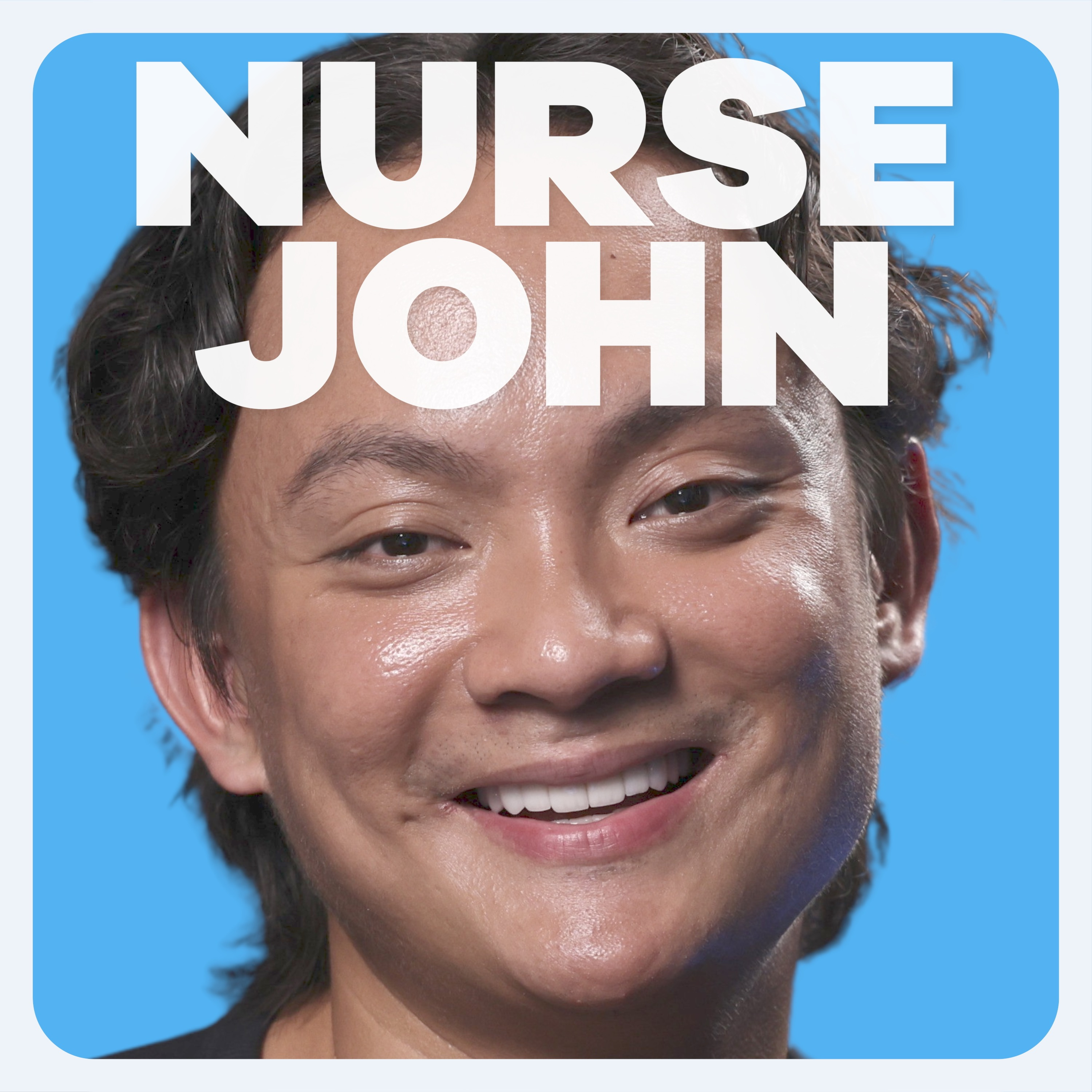
Nurse John (John De La Cruz) discusses the “harsh reality” of nursing in 2026, using humor to describe burnout, compassion fatigue, physical abuse, and what nursing school and healthcare systems get wrong. He also covers Filipino culture, social media community-building, and nurse/doctor workplace dynamics.
Nurse John (John De La Cruz), a Canadian nurse turned viral-content creator and standup comedian. He grew up in the Philippines (full Filipino), immigrated to Canada at 18, and worked as a frontline nurse in Canada. He became famous for viral videos poking fun at the healthcare system, later transitioning into comedy.
Written by AI. May contain mistakes.
Hear Nurse John discuss the dark realities of nursing and coping with humor.
“Please help me in welcoming Nurse John to the Checkup Podcast.”
Explore the cultural significance of nursing in Filipino society and the reasons behind it.
“And that's got to be a point of pride because healthcare workers are very much celebrated in Filipino culture.”
Discover how historical influences shaped language and identity in the Philippines.
“Yes, we're going to save the Philippines from Japanese people.”
Learn about the strong sense of community and support among Filipinos abroad.
“And what was life or how is life different living in the Philippines versus now in the States?”
Understand the pride Filipinos feel when one of their own succeeds on a global stage.
“When back home, we depend on my uncle, my aunt, my grandparents, everyone helps each other almost every single part of our lives.”
Discuss the expectations placed on Filipinos to succeed and the societal pressures involved.
“And that is just something that, you know, seeing someone on screen that looks like me, that has the same skin color like me, that went from the same situation that I was before, makes me feel proud about myself.”
Explore how Nurse John balances his Filipino heritage with American values.
“And you think that goes past pageantry and goes into nursing, social media, musicians as well?”
Delve into the impact of Filipino culture on social media and entertainment.
“And for me, I have learned to really just accept myself, my own will, my own values, and get away from that mindset that I grew up in for almost half of my life.”
Explore the differences in cultural fandom between the Philippines and other cultures, particularly in support for artists.
“and he was saying how they have a very strong monoculture.”
Discussion on audience demographics for a stand-up comedian and the representation of Filipino nurses.
“So there's an interesting demographic there.”
Examine the challenges and perceptions that discourage men from entering the nursing profession.
“What drove you to it, given the fact that all these roles, they're pretty established, I'm assuming, in Filipino culture as well, right?”
Insights into burnout among nurses and how it is symptomatic of systemic healthcare issues.
“What's the most toxic form of that abuse that happens where people feel like that's normal now?”
Highlight the prevalence of physical abuse in nursing and the need for systemic change to protect healthcare workers.
“Do you think some changes need to be made?”
Discussion on the necessary changes in the healthcare system for better worker care.
“it's something that needs to be changed in healthcare.”
Exploration of the similarities and differences between nursing systems in Canada and the US.
“I was going to ask how different do you think the system is in Canada versus here?”
Overview of the reasons behind nurses' strikes and the issues faced in the profession.
“or getting sent a mail, like in a mailbox of like hundreds of thousands of dollars for a four hour visit.”
Discussion on nursing burnout and the trend of nurses leaving the profession for alternative careers.
“I think the bigger issue of that is, first of all, safety.”
Benefits of travel nursing as a solution for staffing shortages and personal well-being.
Exploration of the negative interactions among nurses, especially towards younger nurses.
“we're crying for help somebody please it's like we're drowning why are so many nurses going into travel nursing these days?”
Discussion on the generational divide in nursing approaches and attitudes toward work-life balance.
“And like what happens is because we're all burnt out, we just bark at each other and bite each other when we shouldn't be doing that.”
Insight into the competitive and challenging nature of nursing school and its impact on students.
“that once you finish your job, you are another person.”
Discussion on the practicality and frustrations surrounding care plans in nursing education.
“it is so competitive to get into nursing school.”
Explore the competitive and collaborative aspects of nursing school dynamics.
“But it's almost the same exact way of like the older generation or at least the people who are experienced wants you to fail because they think you should be set up in the same system they were set up in.”
Discuss how nursing is introduced to students and the challenges that come with it.
“How do they introduce the hospital to you?”
Learn strategies to maintain mental health and prevent burnout in nursing.
“And I want you to know that it is tough.”
A discussion on the complexities of dating within the nursing profession.
Examine the common pitfalls of dating within certain professions in healthcare.
“because it's basically the same thing as dating a nurse.”
Insights on the dynamics between nurses and doctors in a professional setting.
“You want to date someone outside of your profession.”
Debate the collaborative nature of healthcare versus traditional hierarchies.
“Have you ever worked on a shift with a really douchebag doctor?”
Discuss difficulties nurses face in communicating with patients and doctors.
“So we already have the gender role situation in here.”
Explore the generational dynamics impacting nurse-doctor interactions.
“And it was a situation where my 95 year old patient cannot advocate for herself and she cannot talk for herself.”
Learn about the challenges faced by new medical residents in nursing care.
“I, and I have to retell them through my videos and make them funny.”
Understand how respect and teamwork between nurses and doctors enhance patient care.
“I think we just want them to experience being in our shoes.”
Explore the complex relationships between nurses and their colleagues.
“And I know, like, some nurses would disagree.”
Discuss the creation of relatable and humorous content for nurses.
“Of like, if a patient tells you, like, go to hell.”
Examine the importance of nurses sharing their experiences online.
“content that are really is telling of our story because it's hard for them to tell it themselves and they don't have the platform or the ability to do that.”
Understand the ethical considerations in sharing healthcare content.
“It's like, dude, why do you have to say that?”
Learn how to handle criticism in the age of social media.
“So when you look at these sponsorship offers, Do you think back to John when he's taking care of or your family while they're taking care of your grandfather?”
Discover how a nurse transitioned into a successful career in comedy.
“And speaking of being successful, your tour, absolute success.”
Learn about the challenges and successes of touring as a comedian.
“And looking at your analytics and your audience, it's the same thing for me.”
Explore the behind-the-scenes challenges of organizing live performances.
Discuss the strong ties between healthcare professionals and their audiences.
“Yeah, we're going to bring some nurses and come support.”
Understand how social media influences healthcare professionals and their work.
“They're gonna triple this number Yeah And I think that's gonna help Maybe this podcast will help I hope so I hope so And again like Come to the show And I'll Yeah When is it?”
Get insights about the upcoming tour and how to buy tickets.
“So thank you, too, for what you do for every single one of us in healthcare.”

Get the gist, explore an idea or ask about something said.
 Claude
On The Checkup with Doctor Mike, what are the key points of this episode?
Searching your listeningAutomatic transcript. May contain errors.
0:00There's probably like the nursing coordinators, social worker, nutritionist, everyone is there. He came in to me standing there right in front of the nursing station. The next time I'm speaking, I need you to silent your mouth.
0:15Doctor Mike: You're painting a very bleak picture of what it's like to be a nurse. Do you want to talk the audience out of becoming nurses? You know, people are like, John, you're making fun of the profession. I'm like, I'm not making fun of the profession. It's just sometimes humor is the only way for us to cope in this very dark workplace that we are. And I'm using my humor and my knowledge and my own experiences from when I was working as a nurse to show the public and the things that we go through that people don't see because the only thing they see is that curtain in that triage area. But anything behind that is much deeper and worse than what they see in the waiting area in the ER.
1:03Doctor Mike: John De La Cruz has become one of the most famous nurses in the world because of his viral videos poking fun at the healthcare system. Some of which I've even reacted to on this channel. But he's no fluke with a single viral hit under his belt. Nurse John has found a way to turn the trauma he experienced as a frontline healthcare worker in Canada into internet super stardom. And now he enjoys an enormously successful career as a standup comedian. It's been a meteoric rise for a kid with humble roots from the Philippines. I had to get to the bottom of this. John has gotten millions of views wearing funny wigs online, but let's take off the wigs and get down to what really gets him passionate.
1:41Doctor Mike: How can nurses avoid burnout? What really needs to change about nursing school? what problems are nurses actually facing when dealing with doctors like me? Please help me in welcoming Nurse John to the Checkup Podcast. I love the fact that we have another healthcare professional who follows the very carefully selected standard, medical position, period, first name. Dr. Mike Nurse John. Exactly. It's just not my name. It's not? It is not my name. I mean, people recognize me as Nurse John, not just John anymore. I thought you were about to say it's not my name, and my name is actually something completely different.
2:20Doctor Mike: No, it's John. It's like your pseudonym, and you function under Nurse John. But was Nurse John your handle, or did people already call you Nurse John in your private life? It is my handle, and I think I have never changed it since I made my social media accounts. And I think from there on, I was just like, you know what? I'm just going to keep it that way because people just recognize me as Nurse John now. It used to be two where my colleagues would just refer to me as Nurse John. And that aches me because I'm like, you guys can call me John. Like a friend, like a colleague, you know what I mean?
2:53But yeah, it's Nurse John now.
2:55Doctor Mike: It's funny because I was playing soccer yesterday and people on the field are calling me Dr. Mike. I'm like, you guys can just call me Mike. This is not a medical encounter. Even my parents now, they refer to me as Nurse John. I'm like, mom, you don't have to. But that's probably a point of pride for them. It is. Right? It is. Because you're part Filipino or full Filipino? I'm full Filipino. Okay. So you're full Filipino. And that's got to be a point of pride because healthcare workers are very much celebrated in Filipino culture. I know. I think we make up a lot of the hospitals. I mean, like everywhere around the world, there's so many Filipinos.
3:29I think nursing. And honestly, fun fact, I did not realize how nursing is one of the most common jobs Filipino go for. Really?
3:40Doctor Mike: no i didn't what drives the filipino culture to nursing i think it's a stability okay and that our parents engraved to us that if you are going to college and you want to be something that's fruitful and something that is going to get you out of the light that you have right now because in the philippines it's a third world country a lot of us are struggling a lot of us are leaving the country and working and that's why a lot of us are moving to different places and countries and they're like, nursing is one of those profession where you can actually change your life. And then you actually go to another country and then it's not.
4:18Doctor Mike: And it's interesting that in the Philippines, a lot of people speak English. We do. Because there's always been this American presence. I don't know if it's like a military thing, that there were stations. It's funny because we were colonized by the Americans. So it's the Spanish first and then Japanese came and then Americans is like, okay, we're going to buy. We're next. Yes, we're going to save the Philippines from Japanese people. But actually they bought us from Japanese and then they took over the Philippines and basically English became our second language. And we just speak it throughout like our Tagalog language.
4:58So it's called Taglish. So it's a mix. Exactly, Tagalog and English. Oh, wait, hold on a second.
5:03Doctor Mike: I have to flex something real quick. Yeah. Mabuhai. Salamat. Look at you. You probably work with Filipinos before. Yes, yes, absolutely. Every time that I would work a night shift and there was a Filipino nurse, the amount of laughter and happiness that happened on that shift, even though you would think medicine is in general sad because people are sick, because we're working a night shift, so we should be grumpy, and yet it was smiles all around. there's this infectious happiness that comes from working with a fellow filipino i mean i think one thing we always say is that filipino people are just happy people i think i don't know if that's good coming from me because i feel like that's bias coming from me because i'm filipino myself no no i said it first yeah but i just feel like we're just happy people yeah like we see the good in everything that we do because if you didn't know i was born in the philippines and i lived there for 18 years of my life i only immigrated in canada i'm actually canadian uh when i was 18 and so i've lived most of my life in the philippines and the struggles that we go through in there the only thing you can be is happy and you have to look for the positive in everything in your life every single day wow and i feel like that's why a lot of filipinos are just happy And also getting a job somewhere that's out of the country just makes us so grateful that we even are able to feed our family back home.
6:35Doctor Mike: Yeah. So. And what was life or how is life different living in the Philippines versus now in the States? Completely, completely different. I think, first of all, the culture shock that I experienced is very different. we're very tight needed family you know everyone lives in the same compound right everyone shares the same food the same clothes like it it's paradise right and then going here in the west everything changes for me because then now i have to learn how to be an individual to be a man in an island alone that's kind of is kind of like the western mindset of like okay you know you grind and you do whatever you can to survive alone without depending on anyone.
7:25When back home, we depend on my uncle, my aunt, my grandparents, everyone helps each other almost every single part of our lives.
7:35Doctor Mike: So has this social media community that you've cultivated become that family so you don't feel alone? Absolutely. I think that's one thing I have been looking for when I moved here in America is the community, the sense of like, I need someone or anyone that can make me feel like I'm not alone in this like journey of like traumatizing, you know, experiences in a profession that I was so excited to go into. And I think social media gave me that ability to really find a family, if you call it. Sure. Why are Filipino people from the Philippines so strong and represent so well on social media? Like, you know what I mean?
8:24Doctor Mike: Like the fandom is real. When there's a Filipino person who succeeds, whether it be on the national stage or international stage, they go all in. Yeah, I think one of the biggest one that we support heavily is Manny Pacquiao. Okay. The boxer. I think we just need to feel like we are represented in places that we occupy, a lot of us occupies. Because I think, at least here in the West, I think there's so many of us in different industry. There's Filipino not just in healthcare, in customer service, in restaurants, in cruise ships, in everywhere you go, there's Filipino. And I think when we find other Filipino who are doing well or getting recognition, we will come out full support for those people.
9:12And that is just something that, you know, seeing someone on screen that looks like me, that has the same skin color like me, that went from the same situation that I was before, makes me feel proud about myself. So I think that's why Filipino are just so like, we will support anyone who's Filipino, even though you're half Filipino, even though you look like your other half. Because even Bruno Mars, they're like, you know, Bruno is only 25 % Filipino, but they're like, you know what? We love Bruno Mars. He's Filipino.
9:44Doctor Mike: It's interesting that unlike what I feel might happen in some cultures, there might be jealousy when someone succeeds or hatred. It's the opposite. It almost feels like everyone is succeeding. Absolutely. When that person is on that stage. Absolutely. But there's also pressure that they put on us with other Filipino, which is the pressure of like, you got to do good. It's almost like that Asian parent mindset of like, don't get up. Yeah. And that pressure is so high that if we do something wrong, they can also scrutinize us. Really? Where do you feel that happening the most? That happens a lot in pageantry.
10:23I don't know if you know what Miss Universe is. unfortunately i'm very well versed are you over i watched that well you probably don't know but i
10:32Doctor Mike: should share some of my history i dated pia wurtzbach for at the peak of her career so hold on pia wurtzbach yeah are you are you kidding me right now no that is so funny yeah okay so i Miss Universe. So, you know. So, I'm very well versed. You are very well. Yeah. You're part Filipino, basically. Basically, yeah. See, if you date a Filipino. You get absorbed into the culture. You become Filipino. Right. In that sense. But in Miss Universe, they would scrutinize every single stage that she's in for that pageantry. Very toxic. Very, very toxic. And it's almost to the fact that like you are almost canceling this person who's trying her best to represent our country because she's not doing what you think or expect her to do in that pageantry, which to me is crazy.
11:35Doctor Mike: And you think that goes past pageantry and goes into nursing, social media, musicians as well? I think so. I think so. I mean, we've gotten so many other people. I think one very prominent one was Vanessa Hudgens when she became the ambassador for the Philippines and the Philippines. But people are like, but you've never lived in the Philippines. How are you representing the Philippines? Right, right. When you've never lived the culture, you barely speak the language and you barely know us. And so really, it's a balance of supporting and also being negative. So it's really hard. Wow. Okay. So it's almost like all in or all out.
12:18Exactly.
12:19Doctor Mike: It's a very extreme. It's either they love you so hard or they will hate you in your gut. So how does that, are you ever worried about that? How does that land in your mind? I am worried about that, but I am on therapy. And so I have learned a lot about myself and getting myself out of the cycle of the Filipino toxicity culture. of like you don't always have to prove yourself to anyone because at the end of the day it will always just be you you know like I grew up in a very Asian culture where like you have to do good you have to get straight A's you have to make sure that every single one in your family are proud of you of what you're doing the things that the way you talk the way you walk the way you do all these things.
13:08And for me, I have learned to really just accept myself, my own will, my own values, and get away from that mindset that I grew up in for almost half of my life.
13:25Doctor Mike: And it's basically you taking the best of both worlds. You're taking the positivity, the happiness that is Filipino culture, and then the individualism of America where you want to represent yourself. Exactly. You try and phase out the negativity. Yeah. I'm just really happy being able to like mix those positives and negatives and create this new version of me, which is Nurse John in social media. I love it. You know, I was talking to one of my residents the other day and he's from South Korea or at the very least, that's where his heritage is from. And I was asking him about South Korean culture because he was telling me to visit.
14:01Doctor Mike: and he was saying how they have a very strong monoculture. When something is very popular, everyone wants it or everyone wants to support it. And that's why all these crowds appear. That's why K-pop is so popular. That's why there's trends for certain collectibles that go crazy in South Korea. And I was curious, does that also happen in the Philippines? And that's what's also driving the social media aspect of it? Or is it two very unique cultures? I think it's two very unique culture, but it has similarities on it. Yes, there is those fandom like mania that happens in the Philippines too. For example, Olivia Rodrigo, she's half Filipina and people just like Filipina people just go off supporting her, even though they've only really found out that she's Filipina when she went back to the Philippines.
14:54Right. But there's also that difference between Filipino and South Korean or any other like Asian culture is that Filipino people are just very different. We support people in a way that we feel like we're included in it. so it's very different and for me what shocks me a lot is because i i'm a stand-up comedian now so i i go on tours is that i expected that half of my audience would be filipino but shockingly there's only 20 30 percent filipino okay and what i realized is that that 20 30 percent filipinos Filipinos were friends with their other white, black, other friends. And they're like, listen, I want to bring you to this guy.
15:52He's Filipino. He's funny. Come. And so it's like in your hospital, if you work with one Filipina and she became your family, she would force you to come to my show. And then you're wondering, why am I in this show again? It's because of her. And then now the 70 % of my audience is just American people. And so that is shocking to me because I would think with the whole fandom of like, you know, the K-pop and the Filipino fandom, I would have more Filipino people come and support me. But honestly, there's 20, 30 % of them.
16:29Doctor Mike: So there's an interesting demographic there. But then what about the demographic of nurses to non-nurses? Right. I'm curious about that. So at the very beginning, at the very beginning, it's primarily healthcare workers because that's who relates to my content the most. And I think as my audience and I guess my niche, I try to delve, like get out from just doing nursing and healthcare content to showing the other parts of my life. Because I can cook, I can do other things. And so right now, I think there's still 60 % of them being healthcare, 20 % Gen Zs and the millennials. And the rest is just a bunch of random people from - Plus ones.
17:15The plus ones. Yeah. And mostly the husbands of the nurses. Okay, fair. Yes, I do have a 10 % male audience. Okay. But 90 % of them are female.
17:25Doctor Mike: Why can't those 10 % be male nurses? I know. Or can they be? I don't know. They could be, but I'm pretty sure there's a very small amount of male nurses in the healthcare system right now. I think we are just getting to the point where there's a lot more male who wants to be nurses, but it's a very small percentage. Yeah, why is that? Why are there not more male nurses? So if I'm basing it to just straight facts, it's because I think nursing is such more of a women job. That's how it started. Women started. It's all about caring. It's all about nurturing. And I think like those things. Things that are not men.
18:09Things are not men. If I'm being honest, because men are provider. Men are hunters. Men are, you know what I mean? And so I think we're just getting to the part now where like men are being more accepting of their different roles, different roles and their femininity that like you don't have to be this toxic masculine man that you can be caring. You can be nurturing to strangers. And I think that's why there's small percentage. But now I'm seeing a lot more male nurses coming into the profession and wanting to do this job. How did you find nursing?
18:48Doctor Mike: What drove you to it, given the fact that all these roles, they're pretty established, I'm assuming, in Filipino culture as well, right? It's a conservative nation. It is. But for me, because I grew up with mostly women in my life, I was raised by a single mother. but my mom had to leave the house so that she can work and become the father and i grew up with my grandmother and my grandfather so i primarily grew up in a very like women household got it my aunties are around they basically raised me and i think i've got that nurturing and that caring part from every single one of them and also because my grandpa had alzheimer's and stage four lung cancer and so during that time it was really tough for me to see him struggle and not be able to do anything and so my family struggled a lot emotionally mentally and as a young kid seeing someone you love the most mostly because my grandfather is my father figure struggle that much i want to change that for other people and other families so i wanted to do something in my life where i someone's family or someone who's suffering with the same situation doesn't have to go through the mental emotional and physical suffering that i went through and my family went through yeah have you ever had patients that reminded you of that situation?
20:23Oh my God, many times, many, many times. And I think that's the hard part is, you know, in healthcare, they always teach us, you got to separate your personal. There's going to be a personal boundaries. Your emotions should be separate from your work. But I actually disagree with that. I do believe that at least for my profession nurses, our personal experiences our emotions is what makes us nurses it's what makes us be able to care for people even in times where we cannot do it anymore and so i've gone through so many patients where i've literally seen my grandpa almost like hallucination of like oh my god this is him right here like a flashback flashback and it just makes me sad but happy that now i'm so knowledgeable a lot about a lot of things and i can help him or her or them as you know as a
21:27Doctor Mike: family and as a unit yeah what was your favorite part uh about actually being there practicing as a nurse i think it's caring for patients i think that's one big you know p one big thing that people misconstrued about nursing i was like oh my god you guys complain so much about nursing why did you guys choose a caring career i love caring for my patients it is one of the most beautiful thing that I love about this profession is that I get to be bedside with someone's ill family member and be their support their healing hand and that person that can bring them back to the community and I can sleep at night knowing that I changed someone's life right by just helping literally doing my job that I'm getting paid for so that's why sometimes and a lot of times nurses you know confuses this having a boundary and caring too much because you're just that kind of person right and then the boundary goes away and now you're working 16 hours because you care so much about every single people in this hospital is that why so many nurses are burning out these days uh i think so any compassion fatigue almost compassion fatigue because i do believe that like burnout it's it's not a disease it's a symptom of the system that we're in it shows you how much crap we have to deal with in health care and that is not being fixed for decades now and still exists to this day and it almost like healthcare has confused compassion resilience to doing it because it is your job to do it right and then you know we celebrate so much of like resilience but we forget that like it's not resilience it's tolerating tolerating the abuse that we experience every single day in healthcare.
23:49Doctor Mike: Yeah. What's the most toxic form of that abuse that happens where people feel like that's normal now? Physical abuse in nursing. I think that happens every single day. And it's in the news that nurses get stabbed, nurses get shot, nurses get physically, literally almost dead while working. it'd be it's funny because you know abuse should be something that we are warned about when we get into health care or at least for my profession but it is something that we are being trained for because we should expect it yeah to happen it's like hey you're a nurse i'm gonna teach you a few things that you can do to protect yourself so that you get you don't die you know what I mean here's a martial arts training yeah and the martial arts training are not even good because they show you the crappiest way to like right you know protect yourself it it almost became like hey we're preparing you for the worst yeah and you should be okay with that because you chose to be one and that's that's a crazy thing for me to for us to accept and just normalize.
25:06Doctor Mike: Do you think some changes need to be made? Like, should it be rule changes? Should it be mandatory punishments for patients? More security? Like, what would you like to see done? I think so. I think so. There should be changes in healthcare and it always starts in, you know, they're always like, well, let's buy this new computer that can help us chart faster. No, we don't need that. we actually need staffing okay safety safety for every single nurses who are caring and protecting all these people in the hospital how about we place safety for nurses so that they don't have to fear going into work and one day get stabbed by a random stranger on a parking lot before she gets to work yeah because we also have families and i one thing i always tell my audience and my community is that at the end of the day you have to realize that the most important patient is yourself because once you are able to recognize that you need to take care of yourself first before you can take care of others it's going to be hard for you to get out of a system that is made for you to feel like suffering is okay.
26:27Doctor Mike: Do you think your humor, the way that you use your comedic abilities can help shine a light on this problem? Yeah, I think so. Because, you know, people are like, John, you're making fun of the profession. I'm like, I'm not making fun of the profession. It's just sometimes humor is the only way for us to cope in this very dark, workplace that we are. And again, humor isn't minimizing trauma. It's surviving it. And I'm using my humor and my knowledge and my own experiences from when I was working as a nurse to show the public and the things that we go through, not just nurses, all of us, that people don't see because the only thing they see is that curtain in that triage area.
27:16But anything behind that is much deeper and worse than what they see in the waiting area in the ER.
27:26Doctor Mike: Yeah, because when people go to the hospital or medical office, they'll see one nurse, one doctor, maybe a few other specialists. But it's single digits. We're seeing dozens of patients over the course. So we get to see it. And they rotate in like 10, 15 seconds, mostly in the ER. you know like sometimes like you i'll be given admissions they're like you're gonna get admission four five six and before i even see them they're already sent to the floor right i'm like and you didn't get a good sign out and all this no sign out no nothing everything is just happening so fast that like you should be okay and you're like oh they're gone all right but you also want me to take care of the established patients that i have still exactly and so all of those are just like it's something that needs to be changed in healthcare.
28:16I think there are things that should be in place for us healthcare worker, for us to feel like we're also being taken care of in the system that we're trying to take care of as healthcare workers.
28:28Doctor Mike: Speaking of systems, did you work in Canada as a nurse or here as a nurse? I work in Canada as a nurse. And here too or just in Canada? No, just in Canada. I was going to ask how different do you think the system is in Canada versus here? Exactly the same. Really? exactly the same thing and the only only difference is that the cost is different the yes our our health care is free and i don't want to say that because free doesn't exist we pay up we pay of it from our taxes right but we don't have to pay hundreds and thousands of dollars for a fever or a UTI in the ER. And where I'm from, Montreal, we get treated without needing to pay or pulling out our credit card or getting sent a mail, like in a mailbox of like hundreds of thousands of dollars for a four hour visit.
29:25And I think what I appreciate though in American nursing system, at least in our healthcare system, is that there's unions, unions that is being built to protect us healthcare workers. At least for my profession, there's a lot of unions right now of nurses being protected from the system. And it's another difference is that our hospitals are not just taking advantage of every single one of us in Canada.
30:02Doctor Mike: In the US, there's been many strikes. Nurses have gone on strikes all across the country. Even here nearby in the city. Yes. Are the strikes mainly about these staffing ratios where nurses have to take care of too many patients on a shift? Or is it a larger issue? It's a larger issue. I think the bigger issue of that is, first of all, safety. Safety, not just for us, but mostly for our patients. again the shortage of nurses right now is insane not because there's not enough nurses but i think there's less of us who wants to suffer in the system there's so many nurses i do believe that there are so many nurses out there if you walk on the street you'll find a nurse and the funny thing is like you know there's a lot of nurses because they're now in love island okay that's good representation once you're on Love Island there was a doctor a radiologist or something on one of these shows and I was like oh my god look at that there's always a healthcare worker a nurse on these TV shows which means that we are everywhere and I think what's happening though is that we're just diverting out of the profession and realizing you know what maybe I can be a flat attendant maybe I can be a florist maybe I can do something else maybe i can be a chef maybe i can go back flipping burgers or anything like that because this job i love it but it's killing me and i think that's the problem so safety is number one two it's the increasing amount of things we have to pay and be able to afford every single day with a state of our economy right now everything even water is five dollars water that should be free for us to drink and nurses are just asking listen if a meat costs 30 now when it used to be like 10 my pay should be increased i don't know two three four dollars or a bit more because i need to be able to feed my family right i can't be just going to work and helping these people get back on their health while i'm killing myself and then go back and still feed my own family with the money that's not enough for me to do that and plus like cities like new york city there's so many nurses in here and this city is so expensive it's out of control that this nurses needs to be able to afford their rent or the house or whatever they need to survive and be able to go to work yeah and lastly but and not the least is i think this strikes are just talking a lot about more of the the things that's happening inside that is unstoppable again the physical abuse the mental the emotional the verbal abuse that we all experience and when we ask for help we get in return well yoga session or here's mindfulness right here's a link for a 15 minute mindfulness in your break time that also do not exist yeah exactly it's like how do you want us to do that without speaking up and standing out there and helping helping other people realize that hey we're crying for help somebody please it's like we're drowning why are so many nurses going into travel nursing these days?
33:42Because I think we're finding ways to make a living without being stuck in a system or a hospital that is dragging us out of this profession. And travel nursing became a thing because now we're actually helping a lot of other places to resolve short staffing and like this racial problem and i think that's why travel nurse became such a thing and i i i actually appreciate it because you can take contracts because i have a lot of travel nurses friend who can take contracts for like five six months get you don't get stuck in that same hospital or unit and then you can take off like two three months leave enjoy your life be with your friends and family and then take another contract in another state or another city.
34:36That's cool. And it makes you feel better about doing a job that is stressful.
34:43Doctor Mike: Well, it's almost like how in the ER physician world, there are oftentimes so much burnout. They do a few days on and then like seven days off. A few days on, seven days off. Exactly. Because that burnout rate is so high otherwise. It is very high. Not just for nurses, but even physicians. And like, I think that's the problem. And like what happens is because we're all burnt out, we just bark at each other and bite each other when we shouldn't be doing that. Yeah. Why are nurses so mean to young nurses? There's a thing called nurses eat their youngs. Yeah. Why is this? Okay. So how do we go through this?
35:25I think it's issues that the older generation of nurses needed to suck up and be okay with that they think because it works for them it should work for the new generation of nurses who can realize that like no I don't have to feel bad calling sick if I'm sick today I'm sick today and it doesn't matter if I just started this job three months ago if I don't feel good I can call sick but then the older generation is like I've been working here for 40 years of my life and the last time I took a day off was four years ago and it's like no Betty like that's the system that you were in before but now we have more confidence as younger nurses emerges and like this whole society is changing that people are realizing that you know what you can have boundaries you can say no to things that doesn't make you feel comfortable like if your manager comes into you and tell you like hey we're short today are you not feeling bad with your co-workers working this late no i don't feel bad i feel bad about myself staying more than i could yeah but before that like two decades ago absolutely i'll stay for another four or five hours and next thing you know you've been working 16 hours and you're like oh part of the job part of the job you know i guess i'll see it in my paycheck when you actually don't so i think that's that's why
37:03Doctor Mike: you're painting a very bleak picture of what it's like to be a nurse do you want to talk the audience out of becoming nurses
37:13no i don't i don't think we actually do need them No, I don't. But I just want them to see it far from just the books, because the books teaches us very, very different things. The book teaches you to be compassionate, to be empathetic, to be all of this. But they don't teach you how to set boundaries, to be strong will, to live your life, that nursing and your profession is not your only personality. that once you finish your job, you are another person. Like you are Mike outside of your job. You know what I mean? And what I just want the younger generation of nurses or even the ones that are working right now is to realize that like, you can feel however you want to feel and you should never ever feel bad about that because nursing is such a people pleasing job that you have to make sure that everybody's happy and comfortable and all of these things but forget about yourself and i just want to remove that from the profession i want them to realize that it's okay to take care it's okay to take it like if you go to vacation and you want to post it in your instagram you don't have to block your co-workers let them see people still do that we still absolutely no that's you're like you know i don't want martha seeing me shaking my ass on mech in mexico why that's but i was like martha should if you're a great nurse and you love shaking it in mexico more power to you exactly show them that you're taking shots because you know you've been giving shots you're on vacation you've been giving shots to patients you should be able to do the same thing for yourself so that's i think what i'm trying to paint the picture for everyone in my community is that you don't have to leave this job and you don't have to be scared going into nursing, but I just want you to prepare yourself for the real parts of it.
39:15Because I do believe that, at least for now, what I realize is that nursing school actually don't want you to be a nurse. They don't? They don't. What do they want you to do? They want you to fail nursing. Why? Is that like a weeding out process, you mean? Oh my God. it is so competitive to get into nursing school. Wow. And plus having professors who would bring you down or colleagues that would almost take you out from the profession.
39:47Doctor Mike: It's insane. What's like the meanest thing a professor or colleague has told you? So when I was in nursing school, we have this thing called a care plan. You probably know a care plan. Of course. I hate care plan. I don't even know who invented that crap. Well, actually tell the audience so they know what a care plan is. A care plan is, it's a paper that is, you're supposed to fill that up and tell us exactly how you're going to take care of this patient, their wounds, and the steps that you're going to do. That has to be research-based, evidence-based, all of this base. But at the end of the day, you actually don't have time to look at that care plan.
40:26Because if somebody - Yeah, on a practical level, it's useless. It is useless.
40:31Doctor Mike: Because just do the thing. Yes. and then documented after exactly like when someone explodes their shit on the bed i don't have time to look at what was number one in my care plan right for c diff my first thing is like call call call housekeeping i need someone with me right now and let's get this shit out of here you know literally and so yeah that's it and so what was the main thing that the the the care plan is something that you have to submit to your professor. I didn't have enough time to submit that because I was in clinicals the night before and I was doing night shift. So I asked her if I can get like an extension.
41:16She's like, so I went to her office the next day, told her, listen, I need just two more hours to sit down in the library and finish this whole care plan. And I promise you, I will finish it and submit it the same exact day. She told me, maybe if you are unable to do something simple like this, maybe you should rethink finding another profession to go to. Off of one situation. Off of one paper that is not going to dictate if I'm going to be a good nurse or a great nurse. Why is that so dramatic? It is very dramatic. and that's why I think like nursing school wants you to fail and that's why there shouldn't be any competition in nursing school it should be like you help me I help you we'll do this together we're our group we're tight let's help each other and become nurses yeah we had gunners in medical
42:17Doctor Mike: school we call them gunners where they try to stand out or make you fail or make you look bad or tell on you. Do you have that in nursing school? Same term or no? Not the same term. What's the term you guys use? I can't really remember it. Sharks. But it's more, it's a few sharks. But it's almost the same exact way of like the older generation or at least the people who are experienced wants you to fail because they think you should be set up in the same system they were set up in. Like they struggled, so you have to struggle. Exactly. Like if I had to stay up this much to study, you should be able to do that because you're younger.
42:56You're 21. I'm 55. It's like, no, you know, I don't have to. So I think, yeah. So I think nursing school is not set up for us to really succeed. If you had to change one thing about nursing school, what would you change? I think it would be how they introduce the hospital to us. How do they introduce the hospital to you? they introduced the hospital to us as this like beautiful parent, this beautiful paradise where love Island, exactly where people are sick, but you are the superhero that will come and save them. And you do all the steps from one to 10. And this is exactly what you should be doing because if you don't, you will fail the exam, the NCLEX and to me that's just crap I think they should introduce nursing to us like I did for my students when I was a nursing clinical instructor I tell them listen if you have a mental illness get therapy right now if you're scared of blood leave leave watch watch watch something that has blood in it if you can take it in come back okay if you are scared of touching shit try to touch shit if you're scared being being like screamed out by a grown-ass adult who googled the symptoms from i don't know where
44:34reflect think about it because these are the things that the book hasn't told you about but i'm telling you because you will experience it no matter where or how far you got into like nursing school because one way or another, you will go through it. And I want you to know that it is tough. It is exhausting. You will burn out if you do not care for yourself.
44:58Doctor Mike: So how does a nurse navigate their career successfully without burning out with navigating all these challenges? Is there a way to be a nurse healthily? healthily yeah i think it's boundaries setting boundaries for yourself and knowing that once you finish the job you shouldn't carry that job back home because you know we see a lot of things in the hospital and sometimes we take it back home with us yeah because we want someone to listen to that story and you're like man i just seen like a seven-year-old brain dead and you want to talk about that so much but i think sometimes you just got to leave that exactly when you clocked out and keep it there don't bring it home do whatever you want go see your friends go party do what do whatever makes you feel happy drink a wine or whatever but don't take it home and also just putting boundaries on the things that you think will make you a good nurse because as all the nurses around you has done it it's like you don't have to accept an overtime shift you don't have to feel like you have to take jennifer's shift because she has two kids at home and you're a single guy and jennifer told you well you're a single guy you could take my ship i have two kids like you don't have you don't have to feel bad about someone instead feel good about yourself and that outside of that job you are another person that deserves that same happiness do you think it's a bad idea for nurses to date other nurses you know i talk about this a lot really okay i think i tell them i was pro or against in between okay i do believe that it's not love it's trauma bonding ah that's it's like stockholm syndrome exactly it's it's like the only reason why you fell in love with this person is because it feels so good that somebody finally understands your struggle and you're like you know what i i love you yeah i love you thank you let's get married it's almost that but we also have this thing where we don't The P's of nurses.
47:23The what? The P's. There's five P's. Oh, there's five P's. Physicians. Okay. Oh, you don't date physicians? Why? Police officer. Whoa. Paramedics. Firefighter. Military. I know it doesn't make sense.
47:39Doctor Mike: Where's the P in the firefighter? Firefighter. We just put the P. Okay. They're P's. This P's are all red flags. because it's basically the same thing as dating a nurse. It's not good. It's not good. Because that's also trauma bonding? That's also trauma bonding. You want to date someone outside of your profession. But the problem is there's so many of us who dates all of this piece. Where'd you guys met? When he pulled up in my ER entrance. Oh. Is that what kids are calling it these days? Yeah. they pull up you gotta learn the language of this they're raising you up in your shift and you gotta be keeping up with that so it's a bad idea I'm trying to think if I know any doctors that are married to nurses so you think doctors and nurses can't coexist I'm kidding it's just a joke but it does happen It doesn't happen a lot.
48:46Doctor Mike: It doesn't happen a lot. I always have been of the mindset as a doctor that I don't want to date another doctor. Why? Maybe I thought the same that you're explaining now. That I feel like all we would do would just be talking about that. Talking about the same exact shit every day. And it would be like I would be at work and then I come home and it's the same conversation. That's it. So you want to date someone who's not in the profession, who actually doesn't care about what the hell you're going to talk about when you get home. And they're like, yeah, sorry about that. Moving on. You know what I mean?
49:21You don't want someone to actually overextend a topic that you want to get out. Oh, my God. What about a nurse dating a therapist? You know, that could be interesting. A nurse and a therapist, I think. That's almost like Obsession, the movie.
49:36Doctor Mike: is that what obsession is about i didn't watch it yes is it good it is good it's like being obsessed with the person that understands you the most or who who you want to understand you the most i i would never be a therapist no i'm actually married to a nurse okay and this is hilarious that you're saying yes uh i am married to a nurse she is a nurse too we actually went to the same nursing school okay we went through nursing so you trauma bonded extra trauma bonded extra okay and i don't suggest it but not because you're like i'm a hypocrite basically if you would like to say it that way but the difference between us being uh both nurses is that she actually hates the hospital she wants to be she she worked at a community clinic okay because she hates interacting with a lot of people she wants to be in her office she want to do it 95 and that's i think the beautiful thing about nursing is that there's so many versions versions that you can be but we don't have the same exact experience because i i work in med surge in the er and she works in community she's like yeah i gave another kid a shot in the ass or like yeah i i did another like condom teaching for teenagers and i don't have to talk about my day to her because it It doesn't, we don't correlate that way.
51:05So it works well. Have you ever worked on a shift with a really douchebag doctor?
51:12Doctor Mike: Or is that all the time? Is douchebag doctor repetitive? Am I saying the same thing? Okay, I just love that you like went through the, okay. Yes, I have. I have. I have. And it's, it's crazy experience. Tell me more. You know what? We are on social media. There's a lot of talks about nurses versus doctors and social media. Oh, yeah. It's been crazy out there. I don't know. Has it been? There's a lot. Tell me what's happening. Maybe I missed it. I think there was this TikTok video that I think she's a resident. And she was saying that I think I don't have the full scenario in my head. Yeah, we'll paraphrase it.
51:56But she was in public and somebody is having a cardiac arrest. And she was there on the scene. And apparently somebody's asking for another healthcare worker. And the nurse came and she's like, hold on, I'm a nurse. I can help. And apparently she felt like she was pushed away as an MD in the situation. and she everything was going well until she said that like nurses do not have the same ability to diagnose like us doctors or the ability to like think logically in this kind of situation and i think that pulled a string to a lot of nurses because they're like yes we do have very different you know things that we studied but that doesn't mean we cannot diagnose and see things the way
52:54Doctor Mike: you guys do i mean if i mean it obviously depends what type of nurse this is but man the nurses that i worked with in the icu or in the ccu i would ask them what to do in a scenario like that because they're they're ones running these things day in and day out they have way more experience And that's it. And again, this is never, I don't ever want to comment across as like nurses versus doctors because I think we're a team. Without each other, we would both drown. When my patients would be like, oh, I don't want the nurse to draw up my blood. I want you to do it. You're the doctor. I'm like, are you kidding me?
53:30Doctor Mike: You don't want me to draw your blood. You want the nurse to draw your blood. They have way more experience than I do. That's it. And I, you know, I do believe that doctor diagnosis disease and nurses diagnosis changes. because we're the one in bedside 24 7 we see the skin changes uh what's happening in their body the symptoms and all that stuff and with all that diagnosis that we have we come to you because you are the next person that we trust with this situation and i i it's a team it is a team like i don't think there should oh there should be this hierarchy or situation of like i'm a doctor you're a nurse or we're in the same level or whatever i think there should be collaboration complete collaboration but again what you asked have i experienced that yes i have and i think it's very prominent in health care where a doctor could be rude or mean or degrading to nurses and I want to start us off with just the basic facts because I do think doctors have always been and it started as males and nurses, females.
54:47So we already have the gender role situation in here. That's one of the factors. Secondly, I think the stress that we are both in puts us in a very high toxic environment where we could just, again, bark and bite each other back. But the third one is the most, and I think the most prominent, at least not to the older generations of doctor. Again, I have never experienced a bad, like I've never had a bad experience with younger doctors because just like nurses, the younger generations of doctors are more open-minded. They're very much more.
55:26Doctor Mike: And I believe there's more women in medical school now than men. There is. And I've never had a bad experience with a female resident or a female doctor. And again, this is based on my personal experience. I mean, I trained in a program much like you were raised. I was raised in the medical education system. My residency program, we had seven residents per year, 21 residents. There was only one man per year. So we're primarily women program. our preceptors are primarily women so it's a very woman heavy program which changes the way your outlook is on health care i think much in the same way that it probably impacted you absolutely and i think again this is this comes back to just it's the generational and what those generation of health care workers have experienced in their lives that they need to get out of and for me that that experience is from like an older physician that is very well known because he's smart.
56:30He's done a lot of things. He's been working there for years. And it was a situation where my 95 year old patient cannot advocate for herself and she cannot talk for herself. And, you know, it was really a hard time for a lot of nurses to be, to even communicate with her because she's anxious. She has dementia. She's bedridden.
56:50Doctor Mike: Yeah. All of that. and I was able to make her talk and speak about like how she's feeling what's going on and all that stuff and she told me like John I need you to help me bring this to the doctor okay on their rounds in the morning and so that morning that doctor that physician came in with his four other residents they came in and see the patient and he's asking question which for me first of all that has been his patient for a very long time so he knows exactly where she stands in this situation right she he's throwing in questions of like how you feeling how's your pain how's all this so i'm answering those questions because i have the information and i remember him stopping me he's he's like i need her to speak to me and so i stopped speaking i told him but she can't speak to you.
57:52She's anxious. She hasn't spoken to any nurses. She only has given me information. So he left the room in our nursing station, which is very open. There's probably like the nursing coordinators, social worker, nutritionist, everyone is there. He came into me standing there right in front of the nursing station. The next time I'm speaking, I need you to silent your mouth
58:25And to me, I'm just shocked in the response that I got from him. He literally embarrassed me in front of these people. And for what? You're trying to advocate on behalf of your patient. Exactly. I told him, I was like, I'm trying to advocate for him and be the voice that she needs in that very moment. He's like, yeah, but I can do my job. And left. and this doctor is known to do that to nurses so it's like an ego thing it is an ego thing and we've had many complaints about that but nothing has changed because i brought that up to my nursing assistant manager and they're like you know you just you just gotta understand that he's doctored this and i'm like no this is insane it keeps going and every single one of us nurses has to experience this it's funny because one of his residents came out to me he's like i'm really really sorry he has anger issues and why do we have to suffer off of his problems and you know that experience really just shows you that there is sometimes ego in this like generational differences between us healthcare professionals but i strongly strongly believe that we should never have that
59:59Doctor Mike: do you think there are differences generally generationally for nurses like millennial nurses gen z nurses and how they handle this type of scenario oh absolutely because he would never talk like that to a senior nurse who's been there for 35 years because they'll tell him in his place oh absolutely but because i was a new nurse i've only been there for a year and a half and he's only probably seen me like i don't know 40 times that's not enough for him to respect me the way he respects a nurse who he has been speaking for decades in that unit but that shouldn't work like that it should be like what respect you give to a senior nurse should be the same respect you give to every single one of us because we all deserve that and again this might sound mean but like you need me more than i need you because i have a lot of other doctors I can talk to and nurses that will help me.
1:01:01Yeah. If you don't want to work with me. That's, that's kind of is.
1:01:07Doctor Mike: That's really crappy that you guys have to deal with that. Do you get a lot of DMS from people sharing their stories like this? A lot. Really? A lot. I, and I have to retell them through my videos and make them funny. So it doesn't seem so. Are they doing that so that you would do that? Cause they want to see it reenacted. They want to see you reenacted and see if other people are going through the same exact thing. And the funny thing is like you'll see the comment section and people are like, oh, my God, this is exactly what I just been through. Oh, my God. Two weeks ago. And you're like, oh, my God.
1:01:39So it's not just us. It's people everywhere who are experiencing this whole thing. And again, this is not every single doctors. Because I do believe there are also mean nurses to doctors. of like you know i've worked here for 40 years so you better respect me but like it's it doesn't work like that should be like hey we all respect each other right you know the july 1st effect right of course it shouldn't be why do we call july 1st effect well i think it started off probably
1:02:16Doctor Mike: as a joke that you're going to get worse care because new residents are coming in they don't know what they're doing and actually i want to be taking care of that newly fresh resident resident who is so kind and excited welcoming it's like oh i'm i'm dr smith yeah i'm gonna be here you know i'm gonna be here with you for the next like four months like yes i want him like him or her yeah like that's amazing i would be so worried when i started july 1st i started off on the surgery floors and our surgery floors are not run by our surgery program. They're run by Columbia's surgery program. Oh, wow.
1:02:55Doctor Mike: So they're obviously very high level, very competitive. And because you're the intern, you get all the pages and you have to start triaging it. And I knew I wanted to be family medicine when I was doing my rotation. So I did a lot of my rotations in outpatient family medicine. That was where my passion was. And when I got onto the surgery floor, I started getting pages for things that I wasn't capable of handling. I didn't have a lot of experience. So they would page and they would say, oh, this patient's hypertensive, has high blood pressure. What do you want us to do? And I'm just like, shit, I'm supposed to solve this?
1:03:29Doctor Mike: Like I have no idea what to do. And you know what nurses really appreciate from those doctors is to tell like, hey, what do you guys usually do in this very situation? And we love that because we feel included in the care. more more less of like hey here's what i want to do exactly it's more of like hey you've worked here for so long i just started here how does this work for you guys because i want to follow how you guys do things in here yeah not to like suck up what the system is happening in that unit but more of like hey i want to collaborate with you who's an expert in a new place i am starting at and I want to be part of this group of people that I'm going to be probably working with for a good you know months of my career and I think that's amazing yeah I remember when I was on night shifts uh you know if you get uh oh actually it was probably a 24-hour call shift and you're in your call room at night and you're sleeping and you're like at least I'll get two hours of sleep and then you get paged and you call back and you'll get someone and they say oh the patient is hypertensive so what would you like us to do and i'm like okay what's the blood pressure uh 142 over 88 and i'm like oh my god don't do anything like they're good yeah follow up with their pcp once you're discharged but at 245 in the morning you're like oh i'm absolutely dead but it takes time to learn that because you don't know it does take so that's like the july first effect i feel like it is it is and it shouldn't be because i feel like those new residents should feel welcome starting in an environment i think that's where it should start for like residents to not feel like they have to suck up to it's the same exact thing with the older nurses is that you don't have to be like dr rude you can be exactly your own personality and be the doctor that you are really because i feel like another thing that nurses always say is that I think medicine or doctors should have a day as part of their clinicals just working as a nurse.
1:05:45Ooh.
1:05:46Doctor Mike: Do you think they'll fail? No. I think - I think they'll fail. I think we just want them to experience being in our shoes. Oh, you want like a shadowing experience? Shadowing experience, but like - Yeah, why don't we do that? Can we make that part of hospital orientation? We should start something about That's not a bad idea If you're starting as a doctor In a hospital You have to shadow a nurse for a week Absolutely And you know what? You might meet a bunch of nurses Who will feed you every single day Who would care for you Who would do all these things for you You'll probably find your loved one Against your wishes and it's just I think that's what that's such an amazing rotation yeah because usually July 1st they just start running around and they have this little booklets that they have and just like what am I supposed to do and what do we do for hyperkalemia oh my god and it's just crazy it should be like an introduction of like here's the people that you're going to be working with and actually for this week you guys are going to be shadowing all this nurses and go through their day together and i think that would be less scary for a lot of residents that shouldn't even just be residents that should be even if you're a new doctor joining a system you should spend a day please that would be good we would be glad and you could help thank you that could ease the shift for nurses that might solve short staffing yeah sometimes and you know what nurses would be really happy if you guys do that i think i think it would create a lot more collaboration because everyone would be able to empathize i do and i have so many doctors that i still keep in touch with because they have treated me with so much love and respect and i have never felt that we have this hierarchy status between us because they've always i've always feel included what do they do differently they ask me questions they do not act like they know more about me and they make sure that we have a personal relationship over just professional relationship it's like do i have to call the nurse john i was like no no call me john like like buddies like you can call me john sure it's like here's my pager you can page me anytime nurses loves to hear that yeah like if you guys have any concern please don't hesitate to reach of us because that's the problem too is like sometimes they're like don't reach me for bullshit yeah it's like how what if it's not bullshit what if the patient's at risk right like i want to be able to feel like I'm not scared coming to you to ask you something that I need help of as your collaborator in this system.
1:08:51So I think that's what this other residents are doing is that it feels more like we're, I don't want to say friends because we're professionals, but it feels like a family. It feels like a family of people who are just doing the best that they could for the chosen population of people that they want to serve.
1:09:15Doctor Mike: It makes me happy to hear that you had, obviously, doctors that treated you well. Oh my God, absolutely. But at the same time, it makes me sad that the bar is so low. You said these doctors are so amazing and I had such a great rapport with them. And all they did was ask you questions, treated you with respect. It's like the bare minimum. It is. I have such fond memories. But I think that's all we want from the people that we work with. Because we get the same treatment from everyone. Social workers, NPs, OT, PT, everyone else. Like, you know, we treat security the same exact thing. Like, we love security.
1:09:52They take our Uber orders downstairs and they bring it up to us. Like, we love that. It just feels like a big family. And I know, like, some nurses would disagree. and they're like, no, this is not a family. If they tell you that this is a family, it's a red flag, quit. People say that? Yeah. Why do they say that? Because they're like, you know, your job is not your family. Oh, okay. I see what they mean. But I think it is.
1:10:18Doctor Mike: You spend so much time with them, maybe even more than with your family. I was like, you know, Betty that I work with, she's 67, but she knows more about me than I know more about myself. Because Betty has seen all my personality from day one and she never judged me it's one of my things that i say on my stand-up comedy is that i love betty it's like exposure therapy because you might hate this person like you could literally hate someone so much at work because you cannot like everybody but if you work with that person every single day of your life you start to like them and now your best friend you're 30 and your best friend is a 75 year old lady with four grandchildren and six kids i love it and you hang out outside you get you guys get mimosa yeah that that's one of my best friends she's 67 wow i was 26 she's like do you want to go to the market today absolutely girl i'll bring you to your x-ray for your back i love it that's that's what we do what uh during this content journey of yours what's been your what's been your most favorite content to make you that you enjoy making and what's the most favorite content that your audience enjoys because i'm assuming they might be different yes and no i think my favorite content that i make for myself is the things that we healthcare worker would love to say as a professional but can't say got it it's like Taboo subject.
1:11:57Taboo subject. But in a funny, comedic way. Sure. Of like, if a patient tells you, like, go to hell. And in my head, I'm like, I'm already in hell. I'm being told go to hell. Or like when a patient tells you, I'm leaving this hospital. Actually, I have your luggage and I have the taxi. You can leave whenever you want. You know what I mean? Those things that I love doing that because it gives nurses this ability. Like, you know what? I can. I'm allowed to laugh at things. I'm allowed to laugh at things, but at the same time, you know what? I never thought about saying this before. Maybe I should try it once or twice and see how it comes back to me.
1:12:39But the other thing that my audience loves seeing for me, I think is just how I bring the profession together. Because I think that is something that we need right now for a lot of us nurses is the sense of community and relatability and being able to feel like we're not alone going through this journey in healthcare that is very toxic right now and very like it's a lot and i think that's what they appreciate when i make those content that are really is telling of our story because it's hard for them to tell it themselves and they don't have the platform or the ability to do that. And so they come to me and ask me, hey, can you please show this to the world?
1:13:29And I'm like, done. Give me five hours.
1:13:33Doctor Mike: Do you think more nurses should be on social media? Yes, I think so. Why was there a pause? Because maybe they should?
1:13:46not everyone in social media are there for good reasons you know what i mean like not there's a lot of us in healthcare who have been canceled since 2020 because they've done some really shitty and stupid crap right and so the pause is like yes because we there's a lot of more There's a lot more of us now that can tell the world all the different parts that I cannot tell. Like I'm not educational, but I'm more comedic and true truth. And someone can be educational. Right. And someone can be dark humor. Like, you know what I mean? Everyone has a different approach. Exactly. And so I think I want everyone to be able to do that.
1:14:33and for all of the nurses and healthcare workers to be able to share their own story so that other people can feel like they can relate to someone. So better representation that way. Exactly. But the other part of me is saying that like, there's a lot of stupid people out there. And I'm sorry, but like, there's a lot of stupid healthcare people that goes on the internet and speak their mouth like HIPAA doesn't exist or professionality wasn't something that we've learned and was drilled on our heads every single day in our school. It's like, dude, why do you have to say that? Like, how did you film this, looked at it, edited it with like captions and all this stuff and decided like, hmm, this is actually good post.
1:15:32you know it's hard yeah it's hard it's it's it's it's a very like thin line of like show it to the world but don't be stupid at the same time yeah it's a very thin line because you've been in social media for a long time and i think if there's one person that people people in social media at least in health care who wants to go in social media needs to look up to it's you Wow You've done it Thank you for saying that I mean you've Done it for a very long time How long have you been In social media? Like 10 years It takes one Single content Sure To bring you down I mean
1:16:14Doctor Mike: Yeah and also You wanna The line between Doing something stupid Is small But also The line of Saying something inaccurate Trying to not fall victim To sensationalism to selling out to pitching supplements and miracle cures. There's a lot of money left on the table with all of these things. You look at the highest paid podcast list just came out. And the reason we're not on it is because we're refusing to accept all of these BS supplements. Literally, if I can tell anything to anyone right now, is that if I have taken every single thing that was offered in my table, because I'm a nurse and a healthcare worker, people will be poisoned.
1:17:03People will be poisoned, but at the same time, I would be retired right now. But I never did that because I have my own values, my own beliefs, and my own professional boundary that I keep very, very sacred to me.
1:17:21Doctor Mike: So when you look at these sponsorship offers, Do you think back to John when he's taking care of or your family while they're taking care of your grandfather? And you're like, I would never want this for him. So I would not do this. Oh, my God. Absolutely. I mean, like there is so many out there that is being advertised. And for me, when I get those brand deals coming out on my table, I read them. I research them. And if it doesn't sit right with me, I would never take them. or if it harms the people that I love because I always put the people that I love. Would I give this to my grandfather? If I don't, I should.
1:18:02Doctor Mike: Why do you think some people give in and start doing it? You think that just the appeal of money is too strong? I think so. I think monetary, but at the same time, I think some people just don't think. I think people just don't take a step back and reevaluate their decisions. And again, it's almost like the same thing as posting something so stupid in the internet of like, you've looked at this maybe like four or five times. How did you still think this was okay? Sure. You know, it gets to that point of like, you know. And to me, I always, I'm lucky enough that I have friends and family that surrounds me who are also in healthcare.
1:18:48I would bring this brand deal to all these people. And I was like, read it and tell me, is this something that you guys would take, would agree on, would do? And if at least one of them says no, absolutely not. It takes a lot for me to even do that. Again, like last thing I ever want is to harm anybody of anything.
1:19:16Doctor Mike: uh what are some of your loudest critics saying about your content is there anyone that's mad about like i've seen during the pandemic people getting very mad at health care workers for filming instead of working do you get any of that kind of stuff the beginning i did got some of those of like people asking me they're like so you're complaining about short staffing and your time burnout so how the hell did you have time to even like take your phone and put in there and click record i tell them i was like because i have a free will and i have a time off exactly within my job like i'm still a human being that i can do all these things but you know i think one big thing that people don't realize is what you see in social media is not even a percent of what i do in my real life right you see nothing about me this is not even a descriptive of who i am as a person so i don't think it is for you to judge me because you've seen a video of me that you don't agree with right like at the end of the day it's more of like just being okay that people not everyone will like you and that there's always going to be someone that will find a way to destroy you because you're successful right and i think like just being okay with that and that no matter what happens, it's always just knowing that as long as you know that the people around you loves you and cares about you and know you're a good human being, that's all that matters at the end of the time.
1:20:51Very true.
1:20:52Doctor Mike: And speaking of being successful, your tour, absolute success. Tell me how you got into touring as a comedian. I feel like being a nurse, you get a very dark, unique sense of humor. Is that what translated well for you? so this is another factor first of all i want to recognize yes i'm doing stand-up comedy now it is crazy but also there's all scrutiny of that too they're like oh my god he's a sellout now he's doing stand-up comedy why is that a sellout because well you're selling out you know arenas and stadiums so it's that that's the good selling sure but they're like you know like he lost he lost the plot i was like i didn't lost the plot actually the plot still is healthcare and it's still telling the truth about healthcare but now i'm on stage and i'm doing it everywhere not just america i've been to europe i've been to asia i've been to australia all these places what i realized in this tour is that every single one of us has the same exact universal experience when it comes to healthcare we don't get treat right and my stand-up comedy was something that was just brought in my table and they're like hey john if you can make comedic skits in your bathroom at home maybe you want to do it on stage and i was like i have never been on stage my entire life like the last time i was on stage was to to get my diploma okay my bachelor's in nursing and this isn't something i've i've dreamed off or seen myself doing and to me i was like if i make my comedy skits i get to have 50 rounds of revision until i feel like it's funny enough yeah on stage it's exactly what i'm doing right now and it has to be funny and people has to laugh for them to want to come back to this and after giving the first try they're like where was your first try in brea california okay it's a comedy club rea improv okay it was 500 seats it wasn't my show it was i was doing five minutes okay on someone else's show and they're like oh my god john like people love you they the stories are actually funny i was like guys that was just the truth i was like i'm not trying to be funny i'm just trying to tell exactly what my life was being a nurse yeah and then after that my agents from ca were like hey do you want to book another show i was like sure but this is it no problem then my manager called me and said like john they book you netflix is a joke i was like what do you mean like netflix is a joke like hearing netflix to me because i didn't know what netflix is a joke for is first and they're like no it's a festival it's a comedy festival that happens in LA like every two years like Kevin Hart is there Fortune Famester is there Ali Wong is there I was like why would they book me that they're like they want you the person who was booking things so much pressure wife was a nurse and she convinced her husband that you're gonna be a good fit and it's always the connection of like healthcare workers from different parts that like yeah john will be great and then we sell that show out in like five minutes it was yeah i was flabbergasted even knowing that like i was being part of that festival for known comedians and it was so successful that they made it into a tour and that tour lasted for two and a half years i just finished it actually about 10 days ago is that hard like you're traveling i i did a small live tour on the east coast like four cities yeah but not obviously at the scale how did you feel about it um the the biggest struggle i had because my show is also improv variety not skit based i love that i do the same thing it's improv oh so it's not skit it's it's not skit babe i tell a story but i also do i interview people i get people on stage okay yeah that's what we did a lot of that we played some improv games we taught chest compressions we did a little competition that's amazing we did like a spin on the price is right but instead made it the price is what highlighting how ridiculous health care prices are oh my god we try to do it real fun but the biggest issue we faced was because my demographic is so broad like I didn't know who the show was for is this for kids so we be a little more silly is this hard hitting medical systemic issues that we need to discuss am I doing a heavy TED talk in the middle of it and because of that it had a little bit of everything which meant it was almost for no one right I think that's the hard part because I think you're just so successful in YouTube hello oh, like 14, 15 million?
1:26:02That is crazy. And looking at your analytics and your audience, it's the same thing for me. For me, it's like, wait, your audience is 40 % United States and then the rest is the whole world. How can we assure that you can sell a thousand seater in Kansas City, Missouri? and I just told them I was like I mean like let's see what's gonna happen and if it doesn't work out let's cancel this thing I'm not gonna do it again and they're like John we trust you you gotta trust yourself and your audience and the people that supports you and that no matter what happens they will show up for you because if they don't you wouldn't be where you are right now and so I said alright let's do this let's do a 15 date city tour and see what happens and we did that and instantaneously again it sold out and they're like you got to keep doing there is a market for you yeah and i'm like okay
1:27:11Doctor Mike: but that's so hard traveling 15 cities a lot i mean now even bigger obviously it has been a crazy ride navigating through it because i've really only had myself and my manager my manager uh Logan Watkins she's here right now actually with us but like not every single manager will support you the way she has been with me on the road every single show and we have built this show from the ground up without any help from anyone because we we were we were so not in this game again I was just wanting to do a podcast sit down on like a 50 people audience where i can just do my podcast in like this group of people but then the bar got raised so quickly that we're like who do we hire in this situation do we need audio photos videos driver everything and we're like you know what it let's get a hertz van and do it we drove that van with my other comedian who helped me nick to to get to stand-up comedy and then a videographer and then we drove everywhere five six seven eight hours stayed in hotels in the most randomest places like we were at savannah georgia at one point and yeah it's it's a lot wait why is savannah georgia the most randomest place like why did that flag in your mind because i really doesn't seem so exotic right it is exotic to me because i've never been on that part of the south okay got it but at the same time we stayed in this hilton hotel that was i felt like i would die if i ever closed my eyes oh and so got it so you know again we were booking these hotels and all these things by ourselves without knowing like hey you actually can stay in the city got it and we're like well this is a 50 12 hour just to sleep in there so we can wake up at 6 a.m hotel so you stay to like a motel quick yeah it's a bro tell at that point you're like holy crap like i'm doing this yeah but it makes me feel really proud that i'm able to do that for my community in our community because there's doctors in that audience sitting with us.
1:29:36That's so cool. And it just, it's good. I want to come to a show. What's your nearest show to New York?
1:29:42Doctor Mike: New Jersey. Oh, perfect. The NJ Pack. Oh, that's like right near my hospital. Are you serious? Yeah, we're going to bring some nurses and come support. No, I think you should come on stage and you'll be surprised that your audience is actually primarily healthcare. You know what's funny? I wonder if that's true. How would you know? These days, how do you know who watches you? Because you look at the YouTube analytics and like, you might tell you again, what country they're from. Yeah. Male, female split. But besides that, it's hard to know. I think we both want to do a lot of things. Yeah. And that's traces away from our real community.
1:30:19Yeah. But our always community is healthcare. Is healthcare. I think you gotta realize that the people in healthcare loves you so much. You are a doctor in social media. Hello. Like everybody, Everybody knows Dr. Mike. Like I've known you before. I was even in social media. And we actually met at the Pitt premiere indirectly. The Pitt, yes. And I was so, actually all my friends went to talk to you, but I was so scared because I was like, wait, I used to watch him on YouTube. And then I remember you also did a commentary in one of my videos. Oh, in a TikTok react video? Yes, react video. And I was like, oh my God, I feel so good.
1:31:01and guess what who told me every single nurses who follows and no way oh that's awesome so so
1:31:08Doctor Mike: it's a smaller world than i probably even imagine it is a small how many nurses are there in the united states you know sam can you chat gpt it i know how many doctors i think there's like how many 1.2 million 1.2 million that's not enough yeah so i imagine how many nurses all right let's Guess before he tells us. What's your price is right rules? Price is right. I would say 4.5. Oh, that's very low. I'll stick with 6.8 million. I'm going. Because nurses are classified differently. Because there are. Like LPNR and all this. Yeah, all this stuff. So I'm going to go. 6.7. God, 6.7. I'm going to go 5.5.
1:31:53Doctor Mike: 5.5. according to the American Association of Colleges of Nursing, there are more than 5 million registered nurses. Of all licensed registered nurses, 88 % are employed. So about 4.4 million active working. Oh, wow. So we're both over. We are both. So we lose. You were closer. No, but we both lose. Price is right rules. If you're over, you lose. Wow. Yeah. And we still have shortage of doctors. Well, that's why we have a shortage. We need more. They're gonna triple this number Yeah And I think that's gonna help Maybe this podcast will help I hope so I hope so And again like Come to the show And I'll Yeah When is it?
1:32:35Month wise September Oh so it's like soon It's very soon I'm starting my new tour Okay When's the first day? Against Medical Advice Starts in Charleston, South Carolina On September 10th And then So very soon like Very soon A month? Yeah Two, three weeks and we still have a lot of preparation to do because I'm actually filming my first ever live taping of my comedy show.
1:32:58Doctor Mike: That's the one that's going to be in South Carolina? No, that's my tour that I'm filming especially. So that's separate? Yes. Okay. That's August 16th, Alex Theater in Los Angeles, California. Ooh, fancy. My first ever live taping. And where will that live? On YouTube? Netflix? We don't know yet. Oh, who will buy it? Who will buy it? Your bidding war. It's a bidding war. It is a bidding war. And I'm just so excited to even do that. Amazing. Yeah. I'm so excited for you. Thank you. This is so fun. Thank you for giving healthcare workers a voice and an outlet and allowing us to have fun against medical advice.
1:33:33I think we both do that. So thank you, too, for what you do for every single one of us in healthcare. And I think, like, you've made so much difference. And honestly, I would say, like, one of the reasons why I went doing the social media is because I've watched you for many. That's high praise. I know. You got to see how much effect you have towards us.
1:33:56Doctor Mike: Well, you probably can relate to this most. When you're filming, you're filming with you, maybe a small team, a little camera. So you forget the impact on social media. Yes. And it becomes like almost like a job for us because we keep wanting to do more and more content. But then you don't realize that if you put that 12 or 14 million you have on YouTube in one area. Oh, yeah. you have more than the Madison square guard. That's probably like 50 times that the Madison square garden is sold out. Like it's just insane how much effect we have with. Do you have an arena? That's your dream arena to play.
1:34:33I did play it. What was it? It was the Wembley arena in London. Wow. Isn't that like a hundred thousand or 90 ,000 or something? Oh no, not that big one. Oh, okay. The Wembley, the Wembley stadium. So it was, that's a stadium. I went to the arena. There's a Wembley arena. Yes, that was 7 ,900. Wow, okay. And it was just, it's mind boggling.
1:34:54Doctor Mike: Why was that one so important to you? It's because I've seen Queen perform in Bohemian Rhapsody in that very stage. And to be able to stand on that stage where he did, I'm like, wow. And it's also London. I love London. Okay. So how do people buy tickets? They can get tickets in my website. It's www.nursejohnnshows with an S at the end.com. Well, thank you. I'm excited to watch. Maybe folks will see us together. Oh, New Jersey, they got to, you got to come out. Come out for a special surprise. Exactly. Thank you. Thank you. Thank you, man. That's awesome. Of course. Oh my God. That was fun. Nurse John isn't the only nurse who's been on the show.
1:35:36Doctor Mike: I also spoke with hospice nurse Julie about what it's like to provide care to patients as they pass away. She has some incredible stories about the last things people say before they die. Scroll on back to find that episode and be sure to give us a five-star rating. Leave a comment, maybe share this episode with a friend or family member. And as always, stay happy and healthy.
I'll teach you how to become the media's go-to expert in your field. Enroll in The Professional's Media Academy now: https://www.professionalsmediaacademy.com/
Huge thanks to @NurseJohnn for coming on the show before setting off on his world tour. Buy tickets here: https://nursejohnnshows.com/
00:00 Intro
01:53 Filipinos
18:45 How He Started Nursing
22:42 Nurse Abuse
33:37 Travel Nursing
37:01 Quitting Nursing
44:48 Healthy Nursing
51:07 Doctors vs. Nurses
1:11:25 His Favorite Videos / Critics
1:20:55 Stand Up Comedian
Help us continue the fight against medical misinformation and change the world through charity by becoming a Doctor Mike Resident on Patreon where every month I donate 100% of the proceeds to the charity, organization, or cause of your choice! Residents get access to bonus content, and many other perks for just $10 a month. Become a Resident today: https://www.patreon.com/doctormike
Let’s connect:
IG: https://go.doctormikemedia.com/instagram/DMinstagram
Twitter: https://go.doctormikemedia.com/twitter/DMTwitter
FB: https://go.doctormikemedia.com/facebook/DMFacebook
TikTok: https://go.doctormikemedia.com/tiktok/DMTikTok
Reddit: https://go.doctormikemedia.com/reddit/DMReddit
Contact Email: [email protected]
Executive Producer: Doctor Mike
Production Director and Editor: Dan Owens
Managing Editor and Producer: Sam Bowers
Editor and Designer: Caroline Weigum
Editor: Juan Carlos Zuniga
* Select photos/videos provided by Getty Images *
** The information in this video is not intended nor implied to be a substitute for professional medical advice, diagnosis or treatment. All content, including text, graphics, images, and information, contained in this video is for general information purposes only and does not replace a consultation with your own doctor/health professional **