
 Ask ChatGPT


- Podcasts
- The Daily Stoic
- How to Feel Everything Without Losing Control
The Daily Stoic18 Jun 2026 · 1h 13m · 29 chapters
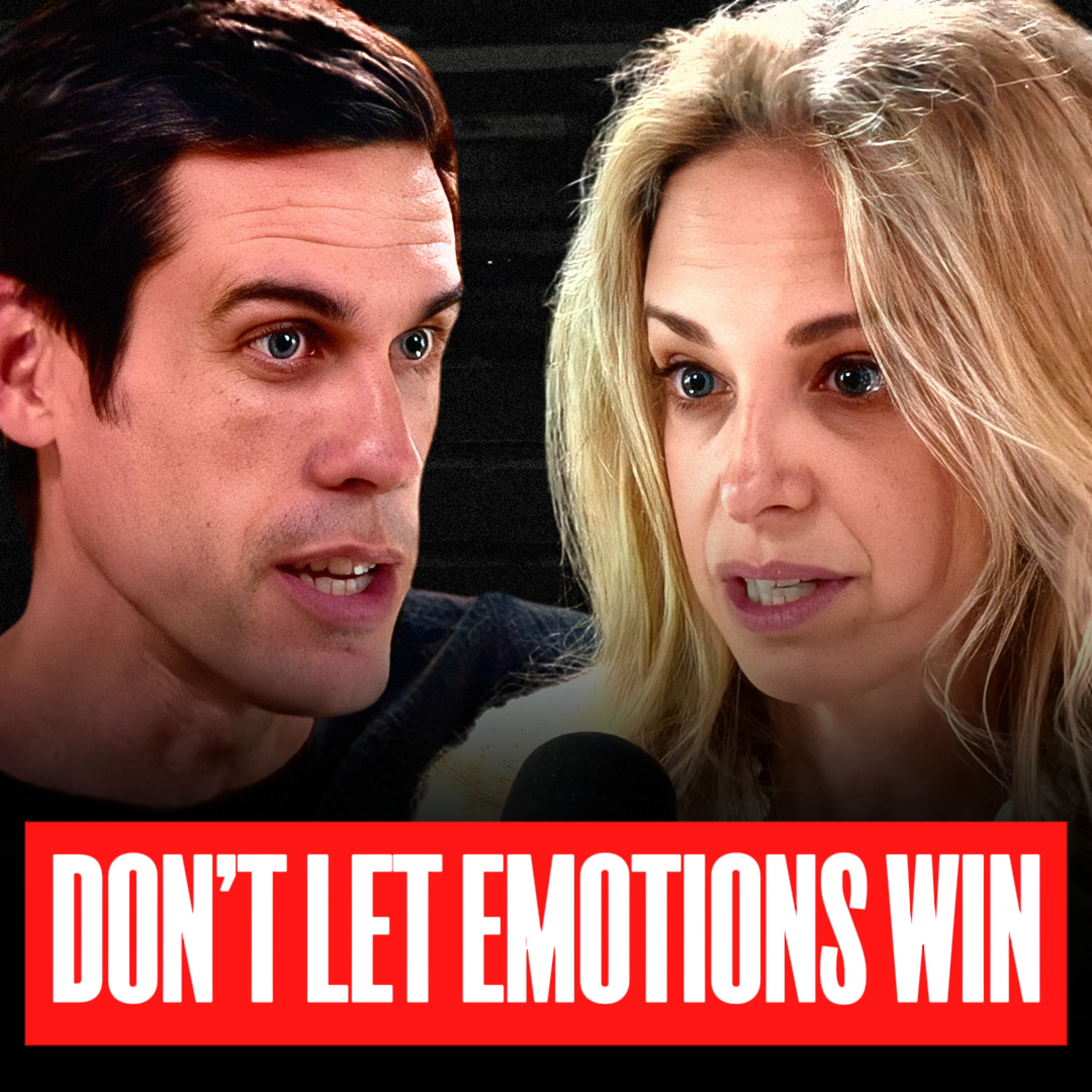
How to Feel Everything Without Losing Control | Dr. Becky Kennedy
In short
Stoic-style emotional regulation for “deeply feeling” kids and adults—how to feel emotions without letting them drive behavior.
Key claims
(1) Stoicism isn’t about having no emotions; it’s about staying the “driver” while feelings are “backseat passengers.” (2) Feelings are information (often “expectations minus reality”), and the goal is to separate feelings from actions. (3) For deeply feeling kids (DFKs), the overwhelm is intensified because they’re more “porous,” notice more, and can’t easily control the surge. (4) Parents should “speak for” feelings (help kids label them) rather than “speak from” anger. (5) Predictable transitions and “emotional vaccination” (premeditating hard moments) reduce surprise and dysregulation.
Notable examples
dinner/bedtime transitions as “hot spots”; car stalling/slow exits; “You weren’t expecting that” to validate without changing plans (e.g., missing an ice cream stop); turbulence/plane communication as a model for how kids experience uncertainty.
Guest
Dr. Becky Kennedy, clinical psychologist, founder of Good Inside, host of the Good Inside podcast; author of Good Inside and children’s books “That’s My Truck!” and “Leave Me Alone!” (plus “Good Inside” community/app).
Written by AI. May contain mistakes.
Chapters
0:00
Personal Reflections on Parenting
Ryan shares personal stories about parenting and his experiences with emotions.
“Basically, since the early days of launching Daily Stoic, which was 10 years ago this year, we have been using today's sponsor, Shopify.”
2:36
Personal Reflections on Parenting
Ryan shares personal stories about parenting and his experiences with emotions.
“But while I was in San Francisco, a friend of mine from high school and middle school, we've known each other forever.”
6:08
Understanding Deeply Feeling Kids
Dr. Becky discusses the concept of deeply feeling kids and their emotional experiences.
“Did you make it up or is it a clinical term?”
7:38
Emotions as Information
Exploration of how feelings can be seen as valuable information rather than obstacles.
“I think this is my, you know, my husband.”
10:40
Navigating Emotions and Accountability
Discussion on how to remain accountable while managing emotions and modeling behavior for children.
“Well, some information can be overwhelming, but there's a lot of really good data that we want to be able to pull from so we can speak for that information.”
14:00
Understanding Emotional Overwhelm
Learn how to recognize and manage moments of emotional overwhelm in kids and adults.
“I didn't pick up the towel from the floor.”
17:44
Anticipating Emotional Responses
Discover techniques to anticipate emotional responses during predictable situations.
“So very simply, even before involving your kid, to be able to finish this sentence is so powerful as a parent.”
22:12
The Power of Expectation
Expecting challenges can empower parents to cope with emotional moments more effectively.
“I remember this is before I really understood my kid was a DFK mystery reader in her like three year old preschool classroom.”
28:22
Understanding Children's Feelings
Exploring the complexity of children's emotions and their perceptions of the world.
“Sometimes you'll you'll told your kid 30 times what you're doing today or where you're going.”
30:40
Communicating with Kids
Discussing strategies for effective communication with children about their emotions and expectations.
“So many times really simple things end up helping them.”
Show all 29 chapters
37:33
Parental Expectations and Reality
Examining the challenges parents face in managing expectations and behaviors in children.
“And it's like, I just said it would be like an hour.”
42:00
Coaching and Parenting: Learning from Sports
Explore the parallels between coaching techniques and effective parenting strategies.
“You're giving that player extra attention.”
44:15
Mirroring Identity in Parenting
Understand how parents reflect their children's identities and the implications for their growth.
“by the way, where where the in coaching, there is no kind of moral obligation.”
46:09
Unlocking Generosity in Children
Learn about fostering generosity in children through positive reinforcement rather than criticism.
“And I remember this moment where my kids are debating about a snack, right?”
48:55
The Impact of Positive Reflection
Discover the transformative power of positive reflection in shaping children’s identities and self-esteem.
“And so, yeah, what you I think about, like, the conversations that I overheard in the car when my parents thought I was sleeping, you know, those like that.”
51:21
Embracing Imperfection in Parenting
Discuss the importance of embracing imperfections and focusing on repair in parenting.
“Rogers documentary and read about him, it was interesting to understand him as a human being, but he's not just like magically this way, right?”
54:08
Adapting Parenting Styles
Learn how parenting strategies evolve based on different children’s needs and characteristics.
“A very, very hard time, especially my own.”
56:01
Parenting Reflections: Learning Through Experience
Explore how parenting evolves with experience and individual differences in children.
“And so I'm definitely not like that myself.”
58:29
Understanding Anxiety in Parenting
Discuss the tendency to fast forward negative scenarios and the resulting anxiety in parenting.
“Well, one of the things the Stoics talk about is just like extrapolation is the enemy.”
1:00:09
The Most Generous Interpretation
Learn about the importance of separating a child's identity from their behavior.
“I think we we think we respond to our kids behavior, but we respond to the story we tell ourselves about their behavior.”
1:02:01
The Most Generous Interpretation
Learn about the importance of separating a child's identity from their behavior.
“And everything at Quince is priced 50 to 80 percent less than similar brands.”
1:03:52
Redefining Parental Interventions
Understand how to approach parenting challenges with curiosity and empathy.
“Yeah, I call it the MGI just because I think this whole idea that kids are good inside.”
1:10:08
The Importance of Compassion in Parenting
Learn how to cultivate compassion for both children and oneself in parenting.
“And we all have an image of our kid that brings us back to that.”
1:11:26
Understanding Empathy and Boundaries
Discover the true nature of empathy and its relationship to personal boundaries.
“Well, Elon Musk said empathy was going to be the death of Western civilization.”
1:12:41
Introspection vs. Action in Personal Growth
Unpack the concepts of introspection and action for better decision-making.
“So we can choose to believe them or relate everything back to our own experience.”
1:14:11
Balancing Emotional Awareness in Parenting
Explore the balance between acknowledging children's feelings and maintaining authority.
“Like everything we do is dependent on other people, right?”
1:15:15
Preparing Children for Real-Life Challenges
Understand the importance of preparing children for uncomfortable situations.
“And how often are the feelings based on an assumption or a misinterpretation or whatever?”
1:16:19
Emotional Power vs. Fragility
Learn how to foster emotional resilience in children and adults alike.
“And I found myself, and it's so 2026, but it feels so good to say, to tell my kids, your weekend is not about optimizing your personal enjoyment in every moment.”
1:18:42
Learning Through Adversity
Discover how overcoming challenges contributes to personal growth and resilience.
“My kid probably when they're in their 20s and 30s, I don't think they're going to be jealous of a water bottle.”

Ask about this episode
Get the gist, explore an idea or ask about something said.
 Claude
On The Daily Stoic, what are the key points of this episode?
Searching your listeningTranscript
Automatic transcript. May contain errors.
0:00Ryan Holiday: Basically, since the early days of launching Daily Stoic, which was 10 years ago this year, we have been using today's sponsor, Shopify. If you've bought anything from the Daily Stoic store, if you've bought anything online or in person at the Painted Porch, then you have also used Shopify. We use it because it's the best. We use it because it helps keep the lights on. And I even had the founder of Shopify, Tobias Lutke, on the podcast a couple of years back because he's also a fan of stoicism. Look, to use Shopify, you don't have to be a technical genius. You don't have to be a big business, although you can be.
0:36Ryan Holiday: They've got plenty of resources to help you make your store work the way you want it to. Shopify also has a bunch of helpful AI tools you can use to write product descriptions, page headlines, even enhance your product photography. Best yet, Shopify is your commerce expert with world-class expertise in everything from managing inventory to international shipping to processing returns and beyond. And if you get stuck, Shopify is always there to help with their award-winning 24-7 customer support. Start your business today with the industry's best business partner, Shopify, and start hearing with Shopify today.
1:16Ryan Holiday: Sign up for your$1 a month trial at shopify.com. Go to shopify.com. As a business owner, I'm super familiar with how important a strong internet connection is to keeping everything running smoothly. A slight delay in the internet connection in the store, it could mean missed sales, a lag in a Zoom call or a podcast recording could mean you lose everything you were doing. When every minute matters, every transaction, every customer, you cannot rely on a subpar internet connection. You need a provider that's reliable. You need Spectrum Business. Spectrum Business keeps businesses of all sizes seamlessly connected with fast, reliable internet, advanced Wi-Fi, phone, TV, and mobile services.
2:00Ryan Holiday: They offer 100 % U.S.-based customer support 24-7 to help you stay up and running and are sure to have the right plan for you with tailored connectivity solutions and packages built for every business budget. Millions of business owners rely on Spectrum Business to keep them connected. Visit spectrum.com slash business to learn more. Restrictions apply. Services not available in all areas. Welcome to the Daily Stoic Podcast, designed to help bring those four key Stoic virtues, courage, discipline, justice, and wisdom into the real world.
2:36Ryan Holiday: hey it's ryan welcome to another episode of the daily stoic podcast i just got back from the west coast did the talk in portland and san francisco did this long road trip as a family i'll probably do a whole episode about some stoic lessons from uh driving uh several hundred miles with a nine-year-old and a seven-year-old and uh my wife who was recovering from some illnesses so that was a lot. But while I was in San Francisco, a friend of mine from high school and middle school, we've known each other forever. He came out and I'd actually bumped into him last summer in Greece. He was there visiting his wife's family and we were hanging out.
3:15Ryan Holiday: He has a daughter and another kid on the way. And I was telling him about Dr. Becky. And I said, you got to read this. I think I sent it to him when we got home or he bought it himself. I don't remember. But seeing him a year later, he was like, hey, I went on this tear of reading parenting books since we saw each other. And he was like, thank you for recommending Dr. Becky. He was raving about Dr. Becky, which is like one of my favorite things to do when a book hits me and then I get to pay it forward by recommending it to other people. I mean, at some level, that's my whole career. I've been paying meditations forward for 20 years.
3:46Ryan Holiday: But Dr. Becky's book, Good Insight, is probably the parenting book I've recommended the most. And I think it actually really aligns with what we talk about here. So whether you have kids or not, I think there's some teachings here because basically like the big misunderstanding about stoicism is about not feeling anything, that we're detached and unmoved, untouched by emotions. But that's not the case. I don't think the stoics are trying to eliminate feelings, trying to understand them, to work with them, to make sure that anger and fear and frustration and sadness, excitement, lust, any of the emotions, the dysregulation, it doesn't grab the steering wheel and take over the car, which is like exactly the metaphor that Dr.
4:23Ryan Holiday: Becky used in today's episode. She's a clinical psychologist. She's the founder of Good Inside. She's the host of the Good Inside podcast. Good Inside is a number one New York Times bestselling book for good reason. They've been calling her the parenting whisperer. The work's been really helpful to me and my kids. She talks about DFKs, deeply feeling kids. I've got two of those. Although when I told my son he was a DFK, he got extremely mad at me. And then now they've been saying that I'm a DFP, a deeply feeling parent, which just means you feel stuff deeply. it can overwhelm you. And again, stoicism is about how we deal with that.
5:01Ryan Holiday: We don't get to choose that's who we are, but we do get to decide how quickly we get back to regulation, right? When Mark Schroes talks about being jarred by circumstances, how fast can we come back to the rhythm? Can we get back to who we are? Can we get back in the driver's seat? Today's episode is with the great Dr. Becky. She has not just good inside, which I've loved, but she has two wonderful little kids books. That's my truck and leave me alone. Two books with exclamation points in the title because that's how kids feel them. They're really good. I've read both of them to my kids and I think your kids will like them as well.
5:37Ryan Holiday: But whoever you are, whatever you're doing, just listen to this episode. Trust me. It's really good. You can follow her on Instagram on TikTok at Dr. Becky at Good Inside on YouTube at Good Inside. And I think we still have some signed copies of Good Inside, which you can grab at the Painted Porch. Check out the Good Inside community, which I've joined too. I've gotten a lot out of that. Just great stuff all around. Let's just get into the episode. Well, I was texting you like the surefire thing to piss off my youngest son is to call him a DFK, which he is the definition of a deeply feeling kid.
6:06Ryan Holiday: And then he proves it when he gets extremely upset by this. I love that term. Did you make it up or is it a clinical term? It's not a clinical term. I just started for my own daughter after thinking about so many kids. And I think there were so many people in my private practice who was like, I swear my kid doesn't react that way. It makes it worse. This, that. And in the back of my head, I always thought they were doing things wrong or something. But and then I had my second. Oh, this is I get what all these parents meant. And the way I'd always just describe her to my friend. I was like, she's just really deeply feeling.
6:40And then it just kind of took off from there.
6:43Ryan Holiday: Obviously, there's that. Oh, he's just sensitive or she's just sensitive. But that seems to that has like this almost like quiet introverted connotation to it. And it's like they are sensitive and there can be a hair trigger. But then it's like it's explosive when it happens. That's exactly right. And I think the whole idea of deeply feeling kids as porous like unlocks a lot for parents. Oh, so they really do get overwhelmed more quickly because more flows in. They really do notice more. They really do smell things. The rest of us don't smell. And then if you're more porous, then when things come out, the flow out is going to be a lot more intense.
7:19And as we both know, it is.
7:20Ryan Holiday: And there's not some line where they magically become regular adults. Right. In the sense that, I mean, there's also deeply feeling people like you drop the K and just make it a P. I mean, we have a whole program in our app now just from popular demand, like deeply feeling adults. Like, I think this is me. I think this is my wife. I think this is my, you know, my husband. And I think what shifts I've seen in my own daughter is, first of all, I think, you know, parents often will say to me, like, are you going to help my kid like grow out of this? And I say, no, I'll help your kid harness it. Like, there's a lot of amazing stuff here that gets blocked early on from the overwhelm.
7:59But I see it in my daughter. I mean, first of all, she is the wittiest, funniest person. I'm now convinced the Seinfelds of the world, the Nate Bargatzis of the world, I think that they must have been deeply feeling because they just notice things. the rest of us don't notice until they say things. And we're like, oh, that's so true. They notice everything. And if you're a kid that way, of course you're overwhelmed by that for a while. So I do think these deeply feeling kids, when they have an environment that supports the harnessing of their traits, they still become deeply feeling, but it's less so obvious in a destructive or dysregulated way.
8:33And it actually can be a source of all their gifts.
8:35Ryan Holiday: Yeah, I just mean like, I think people have this sense that like a stoic person as a person who has no emotions. I would say that actually stoicism is a pretty decent strategy to start thinking about if you are a deeply feeling person, right? Like, so you have the input, you have the stimulus, you have the sort of overwhelm. What you need is strategies to help you deal with that, as we all do. And probably the more emotional and triggered you are or the more highly attuned you are to noticing things, the more you need those strategies because you're operating at a level where all these sensors are firing all the time.
9:14One million percent. Two things come to mind when you say that. One, have you heard of this kind of framework of speaking for a feeling versus from a feeling? No. Like, it's a powerful framework. Like, we see kids in general, definitely deeply feeling kids when they're younger, they speak from their feeling, right? When you speak for a feeling, right, it's kind of me over here and my feelings over here and I know I'm angry. And so I'm able to speak for the anger. When you speak from anger, it's not usually so productive. So I think we talk about kids in general, but definitely for deeply feeling kids, if they have such more intense feelings and more frequent feelings, the need to help them speak for those feelings, not from, is that much more important.
9:53So that's number one. The other thing I've been thinking a lot about is, and I've been saying this to crowds, it's been resonating, just feelings are information. And if you think about, I don't know the best CEOs in the world, even now, the world is very overwhelming. Running a company now, like, how do I run a company when the whole world is changing? All this stuff about AI, there's a lot of information. And good CEOs don't say, hold on, the whole AI revolution is so overwhelming to me, so just I'm going to ignore it. I just can't deal with that.
10:19Ryan Holiday: Yeah. Right? The best CEOs take information that could be overwhelming and learn how to sit with it and think with it and tolerate it enough to then be able to make good decisions from it. And so when we think about feelings that way, and I know you obviously talk a lot about stoicism, but it all comes together. Feelings are information. Well, some information can be overwhelming, but there's a lot of really good data that we want to be able to pull from so we can speak for that information. The from and for distinction is really interesting because that's a problem people have with stoicism, right?
10:54Ryan Holiday: They'll go, well, if I don't get angry about things, how can I change things? Right. It feels like it's somehow both resigned, but then also a bit sort of selfish or privileged to go like, you know, if you're saying don't don't complain or don't get upset or don't get angry, how are we ever going to improve things? How does an activist fight for change? And the reality is like what an activist is trying to do. It's too important to be angry while they are doing it, but they can be motivated from an anger at some kind of injustice or status quo that isn't working. A hundred percent. I'm seeing three images here, right?
11:28And this is somehow also what I often do is therapy with adults, but it's also really helpful to give this framework for kids. So if you think about yourself as a driver of a car, being the driver of a car is very important. It's dangerous. It's high value, right? And I think there's two things we try to do with our feelings. So if you think about your feelings as backseat passengers, they're kind of telling you information, Hey, get off the highway. Right. A lot of us were either raised to try to kick them out of the car. Right. Yeah. Like, you're so annoying. My car would be a lot more peaceful if you were just out.
11:56But you can't kick feelings out of the car. It's just a biological possibility. Or what happens because we either try so hard to do that and we fail is then the feelings in the backseat take over the driver's seat. And actually, the goal is to stay in the driver's seat while knowing the feelings are there as passengers, but just simply not allowing them to be the driver or to think of it as I'm kind of the CEO. My feelings are on the board, but they are not chair of the board. I am. I can't kick them out. They're board members, but they're board members and I'm the board chair. And I think that kind of gets to your sense of stoicism where stoicism isn't not having those passengers in the car, but it is staying the driver.
12:35Yeah.
12:36Ryan Holiday: And the whole skill of life is to be able to have the emotion, understand what's behind the emotion, what's valid about the emotion, what's unjustified or extreme about the emotion and what's productive about the emotion. And then to be able to separate those and then decide what you're going to do as opposed to, well, I did this because I was tired or I did this because I was hungry or I did this because I thought it would feel good in the moment. And so to be able to have the feeling and to separate it from the action that you end up taking. All good things in life come from separating urgent action.
13:11It's just increasingly hard to do, right? Yeah.
13:13Ryan Holiday: And that like, ideally, you learn that when you're a kid, but it's something you never stop learning. And then one of the things I try to be patient with my kids on is I go like, I'm just figuring like I have 30 years more practice than you at this and I screwed up with it this morning. Yeah. So it would make sense that you like I just I try to see my kids as as the same as me and that we have the same DNA. But I just have slightly more reps than them. Yeah. Which is why it's that much more important to go back and repair. Yeah. Right. We all want our kids to be accountable. We all say that. Why aren't kids accountable these days?
13:52Well, they learn that, you know, from our environment.
13:54Ryan Holiday: How accountable are you? Yeah, exactly. Right. Which is hopeful. Oh, if I can repair and be accountable more often, that might be my best strategy to have my kids say, oh, you're right. I didn't pick up the towel from the floor. Like that's powerful to give that power back to yourself. So how do you sort of spot when you're in one of those? Like, again, so I'm saying to my son, you're you're hey, you're a deeply feeling because this has nothing to do with you wanting water right now or whatever. Like and the irony is he just gets more upset. But like, so how do you think about both for kids and adults when you're like, hey, what I'm actually feeling here?
14:27And it is interesting, even this idea of like feeling overwhelmed feels like a relatively new concept.
14:33Ryan Holiday: Like, I don't remember people talking about this when I was a kid that like, oh, no, this is information overload or you're just overwhelmed. But how do we get better at spotting that? How do we get better at spotting the moments when kind of the feeling took over the driver of the car? Yes. Maybe if it's OK, I'd probably shift the question a little bit, because I think one of the hard realities is when the feeling takes over the driver, there's not really in that moment a me to notice the feeling until it's kind of done doing its thing. You know, that's the whole thing. I think when you speak for a feeling, there's me, Becky, and there's the anger.
15:09There's two things. When the anger is so intense or the frustration or my jealousy that it takes over me, there's not a me to recognize the thing. And so it usually has a shelf life. It kind of runs itself out or a half life at least. And we're like, wow, what was that? Right. So I guess a kind of shift is can we become better at predicting the moments when that tends to happen? And I think it's one of the things I love working with parents on the most, especially with kids. They're like, Bobby complained about dinner again. And of course I yelled at him. And what the heck? What a Tuesday night.
15:44And this will be one of my friends. I say, look, like, no offense. Bobby complains about dinner every night. Like, you've told me this. You know, we allow ourselves all the time to be surprised by the completely predictable. And when you're really surprised as a parent, that's one of those moments when our feelings do take us over. Humans don't like to be surprised. They really don't. And so we can't control everything. But step one, I think, is actually just thinking, OK, let me look at my day. Are there hot spots? Can I start to connect the dots? For a lot of families, leaving the house is a hot spot.
16:17For a lot of families, the transition to dinner is a hot spot. For a lot of families, the transition to bed is a hot spot. And just the going to bed is a hot spot.
16:26Ryan Holiday: basically transitions are the problem. Transitions are really hard. They're really hard for kids because they're always engrossed in something where things feel familiar and comfortable. And we're being they're being asked to kind of leave that situation to go to something a little less known or a little more uncomfortable, which, by the way, we have to ask our kids to do those things. But when you think about it that way, yeah, that's hard, you know, especially as a kid. And we tend, me too, I'm not above this, to be in efficiency mode during those moments. And one of things I keep thinking a lot about is just the difference between being efficiency mode and connection mode.
17:01And I think efficiency and connection are inherently in opposition to each other. And even for anyone listening to think like which is more comfortable for me, there's no morality to either. Just knowing which is more comfortable probably gives you insight into which side you need to move into. So it's really, really common to be in efficiency mode for those transitions. So I'm trying to get my kid to dinner and I'm like, come on, like put away those toys, come to dinner. Of course, that's going to lead to my kid's bigger reaction. Then I'm going to get frustrated because I'm just trying to move the night along.
17:30My kid's trying to still play with blocks, right? And so even that framework, okay, so that tends to be a hotspot for us. My anger takes over. My kid's frustration takes over. We're both no longer the driver in our car. What can I do about it? So very simply, even before involving your kid, to be able to finish this sentence is so powerful as a parent. I expect blank to happen and I can cope with that. I expect my kid to give me a hard time coming to dinner.
18:00Ryan Holiday: Yeah. And I can cope with that. I expect my kid to not listen the first time I scream from the other side of my house, put on your shoes, we have to leave right now. And I can cope with that. The expectation plus the reminder that we can cope allows us to have a very different reaction when those moments come. It's almost bizarre. It's like, well, my kid didn't listen. Like you almost feel powerful. Like, oh, I did kind of I kind of predicted that, you know, you know, it's coming, which is one of the things that really allows us to stay as a driver in the car and then be more productive and actually getting our kid out of the house.
18:29Ryan Holiday: Yeah. Why are we surprised? Like my kids are the slowest people to ever exit a vehicle like in the history. Like they're just so slow. And yet it surprises me every time and I get frustrated by it all the time. Right. Like they have shown me definitively that they do not get out of cars quickly. And yet I'm out of the car quickly expecting them to have gotten out and then frustrated that they're still in it. I think this is just, you know, the inherent issue with being human. We all can be fairly egocentric. It sounds like when you get out of the car, by the way, Ryan, like me, I'm like, we are parking the car to go do something.
19:06Let me just be clear. I'm not parking to just chill in the car. So I am so ready.
19:10Ryan Holiday: I don't even want to do this thing. You want to do the thing. That's exactly right. I have no interest in going to your soccer game where you're perfectly average at best. That's not even how I want to spend my Saturday, but that's what we're doing. But either way, I'm locked in. I know what I'm doing. And so we do all and I do, too. We have a hard time separating me versus you. I want to get out of the car right away. And even if my kid likes soccer, they're I don't know, they're in the car. They don't have a sense of time. They're not thinking about being on time for soccer practice, right? It's just not how their minds work.
19:40And I think that mismatch often is why we're kind of surprised by the predictable, which means, though, there's, again, something very hopeful, even just once a day. And if this is your example, you can say, OK, every time I get in the car, I'm going to make sure there's a post-it that's just visible to me. And it's literally just going to say something simple. My kids are going to be in stalling mode. My kids are going to be in comfortable in the car mode when we park. I expect that to happen and I can cope with it. It will actually change what you do. I actually bet you'll get them out of the car faster because you won't spend whatever we all spend, 90 seconds, five minutes yelling at them about how they never listen.
20:18Ryan Holiday: Right. Right. It's funny how stoic that is. I mean, there's a stoic concept of premeditatio malorum. Do you know what this is? No. Educate me. In Latin, that's just a premeditation of evil. So Seneca says you're going to go on a journey by ship. OK. What could happen on a journey by ship? There could be a shipwreck. There could be pirates. There could be storms. Yeah. There could be a quarantine. There's all these things. And you should know this and you should expect those things to happen. And there's another one where Cato is going like, OK, you're going to the baths. What happens in a bathhouse?
20:48Ryan Holiday: there's smells and there's noises and you bump into people. And I think what you're adding to it, which I really like, is this sort of affirmation at the end, which is like, and that's not a big deal. I can handle it. Yeah. It's funny. I have this phrase I think about emotional vaccination. It's kind of similar, right? If I say to myself, this is going to be a hard part of my day. I don't like at dinner when my kids won't come and then they end up complaining. I'm not trying to say that's enjoyable to me at all, but we can't make hard moments enjoyable. But we can make them predictable if they are predictable.
21:21Right. And so to vaccinate yourself, let me imagine that it's going to be a little annoying. You know, nighttime is another example. Usually when you put your kids to bed, especially when they're young, you are so ready to be off dad mode or mom mode. Yeah. And it's the exact same moment your kid wants eight more minutes with you. So nobody's wrong there. It's just a bad kind of match. Yeah. And again, if we say to ourselves, OK, I want to be out of the room at X time, probably not going to happen till X plus eight minutes. Right. Let me just get ready for that. What am I going to do in that time?
21:55I can cope with that. Everybody ends up winning.
21:57Ryan Holiday: When the surprise is what makes it worse, the Stokes would say, like the unexpected hurts more. Yes. And so by expecting it, you're taking away some of the power in advance. A hundred percent. Removing the surprise of a situation always makes it easier. And going back to deeply feeling kids, deeply feeling kids more than any other kids really struggle with surprise because they're so oriented to trying to feel in control of this environment that tends to overwhelm them that they often interpret even the best of surprises in a negative way. I don't know about you. I remember this is before I really understood my kid was a DFK mystery reader in her like three year old preschool classroom.
22:38So they'd always have it in a week. OK, we have someone coming who loves the color blue and they're a mom and they do this. Who is it? And someone would be like, oh, it's my mom today. It's my dad today. Right. And I didn't think at the time I should definitely tell my daughter my day because she's not going to love the surprise of, oh, my goodness, it's my own mom today. I kind of need to get ready for that now. Totally able to deal with that. Anyway, so I went. This is a good surprise. These are the moments as a parent. I took off work. I carved out time. I never read that book, Ryan. Let's just be clear.
23:11That book never happened. I don't think my daughter finished the day of school. It was like such a disaster. She felt so betrayed by a psychologist. We always call this the violation of expectations. I didn't expect that to happen for some kids means this is not how expected the world to work. wait, does the world in general just work in unforeseen ways? Now I feel kind of unsafe and my body's going to express it. And all of that happens in a moment.
23:34Ryan Holiday: Yeah. My youngest, he would do this thing for a while where we're driving somewhere and we're getting out of the car and it wouldn't be how we want it. And he'd be like, I want to start it over. And he'd be like, we drove an hour here, bud. There is no chance that we're starting over. But it's very clear that life is already full of surprises and it's already not meeting expectations. And so there is this desire to want to control it. And so wherever you can eliminate them for them and you, it's probably making life easier. Yeah. And let me double click on that because I think it's such a good example of how I talk about Good Inside, the difference between understanding a kid versus letting their feelings or demands dictate everything we do.
24:12And we've kind of confused the two, I think, in 2026 parenting. So I'm thinking about a time I was driving back on the West Side Highway. and on the West Side Highway in New York City, there's like this bump that kind of happens at around 96th Street. And, you know, our family, whenever we go over it, when our kids are younger, we're like, bump! And we kind of make it like a rollercoaster moment. So same thing. We kind of get past the bump. And my son, I distinctly remember, you have to, oh, we missed it. Like you have to get off, turn around, go north to go south again, right? Yeah. Very similar to probably what you went through with your son.
24:44So first of all, one of my favorite lines to say to kids is just, You weren't expecting that.
24:50Ryan Holiday: Yeah. Or you didn't want that to happen. Hard stop. I'm not fixing it. I'm not actually changing my behavior, but we get into logic mode. I'm not going to turn around. We've been driving for an hour already versus what your son's kind of saying is I wasn't expecting it to look like this. And just actually saying that is simple. You weren't expecting that. I consider that understanding our kid, validating my kid. nine times out of 10, maybe 99 times out of 100 when I say that, you better bet I am not changing anything about my behavior. I'm not turning around and going back 96th Street again. And I think putting that together is something as parents, we almost don't realize that's an option.
25:29Ryan Holiday: Oh, I can deeply understand my kid. Oh, we miss the ice cream parlor. Oh, you weren't expecting it to look like this. And I can also say, I'm not driving back. Like those two things can be in the same moment. It all comes down to hiring. You got to find the right people for your team and you got to bring them on board and you got to onboard them quickly. You know, just throwing up a job posting and hoping you get lucky. I've just found, well, you don't get lucky enough. If you want to find quality hires, well, you should check out Indeed right now. People are finding quality hires on Indeed right now.
26:08Ryan Holiday: In just the 30 or so seconds we've already been talking, People have made dozens of hires on Indeed, according to Indeed data worldwide. Their sponsored jobs posted directly on Indeed are 95 % more likely to report a hire than a non-sponsored job. So join more than 3.3 million employers worldwide that use Indeed to connect with quality talent that fits their needs. Spend less time searching and more time actually interviewing candidates who check all your boxes. Less time, less stress, more results. When you need the right person to cut through the chaos, this is a job for Indeed-sponsored jobs.
26:42Ryan Holiday: And listeners of this show get a$75 sponsored job credit to help get your job the premium status it deserves at Indeed.com slash stoic. That's Indeed.com slash stoic right now. And support the show by saying you heard about it on this podcast. Indeed.com slash stoic. Terms and conditions apply. I don't know if you've ever done any live shopping, but it's blowing up. and some of the kids, I don't know if I call them kids, but some of the Gen Z kids on my staff had to tell me about it. They really love it because you can find vintage stuff and collectible stuff. I was looking at some videos of people selling vintage band tees and records and watches.
27:20Ryan Holiday: And it's real people selling. Like if you're going to an estate sale or a really cool trendy shop, not, you know, overpriced stuff, not produced stuff. There's no ads, no marketing. And people are on there explaining their stuff, why you'd like it, what's cool about it, where they got it. Like I love buying stuff on auctions. So I think I'm going to like Whatnot. And I think you will too. There are people making over a million dollars a year on Whatnot. In fact, that number has doubled in the last year. Whatnot is the largest dedicated live shopping platform, whether it's beauty, collectibles, electronics, luxury fashion, even cookies.
27:57Ryan Holiday: Sellers are building real thriving businesses on Whatnot. Whatnot buyers spend more than an hour a day on the app and they're not just browsing, their bidding and buying and coming back. So you can go live, show off your projects and turn that into real income. People selling on Whatnot sell 10 times more than on other major marketplaces. And that's because you're not just listing products. You're building real connections with buyers. Download the Whatnot app today and get free shipping on your first order. Just search Whatnot, W-H-A-T-N-O-T in the app store to start scoring amazing deals. Sometimes you'll you'll told your kid 30 times what you're doing today or where you're going.
28:34Ryan Holiday: And then you pull up and they're like, whoa, why are we here? Or they'll say, like, you know, what month is it again? And I'll be like, what month do you think it is? And they'll be like January and be like, you're four months off. So so like they're already existing in some other world. So so then when there's these other surprises on top of it, because that's what being a kid is, you've never done this before. You're you just don't understand. So it's already surprising and disorienting. and then we're adding it on top and then not explaining either. I think that's right. I mean, it's just, it's hard to be a kid.
29:05I want to say also, because they don't have to be mutually exclusive. It's hard to be a parent. Like they could both be true. But I remember this moment when I, it was just my son at that time, right? So he was probably two. And I was rushing in my apartment. I was picking him up. I put him in a stroller. I was getting ready to go out. And he just looks at me because he wasn't a kid who was very prone to tantrums. Don't worry. My other two were. got it. He just goes, where, where am I going? That's kind of the core question of kids. What's happening to me? Where are you bringing me? Are you going to come home last night?
29:37Cause you had dinner with a friend. Are you going to come home the other night? It's like, they don't know these things. And so many times when they have these big moments of acting out their bucket of, I'm not sure how the world works and things just don't feel explained or really understandable to me is already full. So then when the ice cream store is closed, they're like, I don't have space for this anymore.
29:57Ryan Holiday: No, the same six year old, he was proudly telling me once this when he was younger than six, but my youngest, he was telling me like, you know, that he teleported. And I was like, what do you mean you can teleport? And he was like, well, you know, sometimes I'm in the car and then I'll wake up in the morning. I'm in my bed. And I was like, oh, yeah, you fell asleep in the car and I carried you to your bed and you woke up there and no one told you that this happened. So teleportation is a reasonable explanation for what happened if you don't know. And you go, OK, so, yeah, you're they're constantly making up explanations for the world on a very small amount of information.
30:32Ryan Holiday: Yes. Of course, they're going to get it wrong or be confused or have, well, why isn't it like this? It's like because that makes sense to them. It just doesn't make sense to you. That's right. There's so many things we take for granted that we've connected the dots in life that kids actually need some things said really simply, Like, especially often when kids start to have sleep issues, they're three, they're four. So many times really simple things end up helping them. Hey, when you go to bed, I just want to show you, come with me. When I close the door, this is where I go. Yeah, I don't disappear.
31:02Ryan Holiday: I sit on the couch. Yeah, why would they know that? Yeah. And so to some degree, mom, dad, dad, they're like, I literally need to know for my safety. Are you still around? Which we understand. And so that can help. Yeah. Right? Or, you know, when you go on a business trip saying, I'm going to put it up for you. There's going to be three little rings and you can rip off one at a time. And then when the last one is ripped off, that's the night I'm coming back. They don't know three days. What does that mean to a four-year-old? Rings, they understand. One more ring till dad's back. That they understand.
31:33And yes, they're going to sleep better at night. By the way, how would you sleep if all of a sudden your wife was gone and they'll be like, I'll be back in an unknown moment? I wouldn't sleep very well.
31:42Ryan Holiday: Right. Right? Yeah, I was on an airplane a couple of months ago and, you know, it was like we got on the plane late and then a crew member was missing. And then it was obvious that we were going to miss this connection. And they weren't giving us that much information. They were and they were obviously lying. Also, you know, where they're like, hey, it's going to be 30 minutes, but there's no way it could possibly be. And as I was just sitting there sort of stewing in my frustration and resentment of the situation, I was like, oh, this is what being a kid is like. You know, like something's happening.
32:15Ryan Holiday: Nobody thinks I should be privy to it. I have no choice in what's happening. I'd rather be doing something else. You know, I'm bored. I'm tired. I'm hungry. And I was like, oh, this is like an insight into this sort of kid experience. Yes. That as an adult, you just take for granted because you get to do what you want to do most of the time. Yes. And when you sort of realize like, oh, what is this existence to this other person? And obviously thinking about it from your kids is great. And then also like your neighbor that drives you insane or the person in front of you in line. Like what is it like to be them?
32:46Ryan Holiday: Yeah. And usually it's not awesome. And then they're doing whatever they're doing specifically to bother you. That's right. And there's a couple main differences with kids that make all their reactions heightened. Number one, they often have no idea what's happening to them in the world. First time. And also, they truly depend on us for their survival. That is very different than adult relationships. Like if you're married as an adult, you might feel, oh, my goodness, I need my partner. But it's you probably would also say I could actually survive without my partner. Our children can't say that.
33:18And so they're locked into us in a very different way. That's truly existential. And you mentioned the plane. You probably know this about me. I have a million plane metaphors because I think the only thing that can make us feel the love of us is. level of dependency around our safety, as children feel all the time, is actually being a passenger on a plane where you actually know my safety is 100 percent in the hands of a pilot. Yeah. Right. And so I was on a turbulent flight recently and we ended up beyond the turbulence not being able to land. I was flying to somewhere in Colorado and there was something this pilot said about not, you know, the de-icing wasn't available.
33:56So we actually have to divert to another airport that has that de-icing. And it was very vague.
34:01Ryan Holiday: Yeah. I was like, all right. And this little kid behind me just said, I think, what a lot of us were fearing. He goes, are we going to die? Are we going to die? And I actually was like, I don't know. Turns out it was 0 % risk. But by the way, the pilot didn't clarify that. What I would have wanted the pilot to say is, hey, let me explain something to you. I'm 0 % worried. We're going to land in a different airport. It's not a safety issue. It's a this issue. It is inconvenient for you all. I apologize for that. I'll see you on the ground. No one would have been worried. Same situation. And so we can really understand kids.
34:34I think, assuming you're not an actual pilot, if you picture yourself as a passenger and you think about turbulence around you and how you'd want to be communicated to, I sometimes think that's the best framework for figuring out how to communicate with our kid.
34:47Ryan Holiday: Yeah, just just not assuming facts, not in evidence. And most of the facts are not in evidence when you're seven or even 16. Like they don't they don't know why this is such a big deal that you like you said, don't do this. And then they did it. And now you're like, holy shit, you could have died. Like they don't if they thought they could die doing it, they wouldn't have done it. They just they literally don't understand. That's exactly right. And I think turbulence is powerful, too, because we have turbulence all the time as parents with our kids. Right. I mean, a tantrum is turbulence. I hate you is turbulence.
35:20Right. I'm not going to soccer today. It's cool today. It's all turbulence. And if you think about when you're in a plane and you're the passenger and there's turbulence, I think the scariest thing is if you hear the pilot is scared of the turbulence. Yeah. All of a sudden, you're not even scared of the turbulence. You're just scared that that person is. Oh, no, it's really bumpy.
35:40Ryan Holiday: I don't know. Someone else want to fly the plane. And I think when you think about the parallel as a parent, when our kid's having a tantrum and we struggle to stay calm, when our kid is really sad and we just have to fix it right away because we don't even want to sit in it. What our kid is actually feeling from us is we are kind of the pilot who's as scared, maybe even more scared of the turbulence as they are versus the pilot who can believe our reaction but can hold something else, which is some version of, yes, this is bumpy and I know how to get us through this. So to go to the idea of sort of surprise, I think the other we're not just surprised by our kids are not just surprised by situations.
36:16Ryan Holiday: But then I think we as parents, I guess you could extend this out as people general. We're surprised by people doing very peoplely things. Right. So so like the things that you're upset about with your kids are actually totally age appropriate, normal things that kids do. And like in retrospect, you're going to go like, oh, yeah, this was this is what four year olds do. in retrospect, this was totally normal. But in the moment, you're expecting something that, like the Stoics, their phrase for this is expecting figs in winter. Like you're expecting something that is fundamentally unnatural and unlikely and unrealistic, as opposed to expecting what is very like, like all the things that people sometimes define as bad behavior and kids are in fact just kid behaviors.
37:02Ryan Holiday: And then we're like surprised when kids do kid things. So many things to double click on there. Sometimes I think feelings are just expectations minus reality. Yeah. That's all they are. Yeah. Right. And this is true in adulthood, too. If you say, hey, I want to go to this restaurant, it's going to be a really long wait. It's a really long wait. Hey, I want to go to this restaurant. You get there and you didn't know they had a wait time. You feel completely different just based on, you know, expectations. Or when they say, hey, it's going to be 45 minutes and then it's an hour and 30 minutes. You're pissed off.
37:30Ryan Holiday: You're pissed off because you are doing exactly what my kids do. And they go, you promised. And it's like, I just said it would be like an hour. Yeah. And it was an hour and a half. That's exactly right. But someone gave you some information and you took that to mean more than it was. That's right. And I think this is part of truly what gets me out of bed every day is parents aren't taught what expectations are reasonable for kids. Yeah. They don't know. So, of course, we all go into the fantasy of like this good behavior and convenience. Having kids is wildly inconvenient. That's the one word I would tell a parent before they at least go to toddlerhood.
38:06Like, it's going to be inconvenient. You're going to go to the grocery store to get a few things. You have to carry your kid out of the grocery store and leave the groceries there. Like, that's just nobody wants to spend their Saturday that way. But if you know that's part of the deal, you don't take it personally and think you're a bad parent and you don't think you have a bad kid. And so I think, you know, this goes back to even why I started Good Inside. I was like, I think all the way we're taught about kids. I don't know. I want to question all of it from a kind of first principles perspective.
38:30And when I did, I think I really was left with two things, which is that kids are born good inside and kids are born with all the feelings and none of the skills to manage feelings. And at any age, feelings that overpower skills come out as bad behavior.
38:42Ryan Holiday: Yeah. Whether you're 2, 12, 82. That's always true. And for generations, we've been either punishing the behavior or we've been shaming the feelings. And I picture in the body feelings saying, it's not our fault. We're just trying to give you information. We just need some skills. Can you just give us skills? No one gets skills from going to their room. And so we don't actually, as parents, come into parenthood having an understanding of that arc, that our job is to build skills. And the thing I compare it to that I think is really interesting, like, did you pay for swimming lessons for your kids?
39:17Yes. Right. Okay, I did too. A lot of us do. Think about how well we understand the swim process. Nobody I know has one or two swim lessons and says, the swimming isn't working.
39:28Ryan Holiday: Yeah. And honestly, the instructor is reinforcing bad behavior by staying with my kid in the pool before they swim. My kid's going to think it's okay to not swim. My kid should just go to their room, come back when they know how to swim. That would be an insane thing. A lot of us pay for lessons for years because we actually understand. First, you have to be in the pool. Then you have to blow bubbles. Blowing bubbles doesn't look anything like swimming, but we actually understand that it's part of the arc. So you know what we can be? Patient. Yeah. We understand how kids learn how to swim way better than we actually understand how kids learn how to regulate their emotions.
40:05And I think that's the thing parents really need to have reasonable expectations.
40:10Ryan Holiday: It's also even if they know it, even if you should be able to expect them to be able to handle it, they still need to hear it 8 ,000 more times. And I'll give you the perfect example of this that everyone accepts is totally normal. Just like if you went into an NFL locker room or a major league baseball team, these are people paid hundreds of millions of dollars. They're the best in the world at what they do. They've been doing it since they were tiny. They have all the drives and motivations and skills to be really good at what this this thing. And what are the coaches doing? Reminding them of the most basic shit you could possibly imagine is over and over and over again.
40:48Ryan Holiday: They have to put it up on posters on the wall. They have to have daily meetings about it. And I'm not even talking about skills here. I'm just talking about like basic even motivation stuff or basic life facts of like some things are in your control and some things are not in your control. Don't get distracted. That's right. Step by step. And so if they need to hear it 1000 times, you could probably use to remind your kid one more time why we don't do X, Y and Z or why we have to do X, Y and Z and not expect and not make them feel like an idiot or some kind of, you know, like failure for needing to hear it.
41:26Ryan Holiday: however many times they need to hear it. I love sports metaphors too, because it makes it so obvious. So I think another element that we understand in sports that we don't kind of have the same generosity with kids is let's say I had a basketball player who was just missing every foul shot, right? Again, we have professional basketball players who hit 60 % of free throws, right? Like this is happening. But let's say I got to work with this player. Now it's really down to a bad percentage. And I say to the player after the game, hey, this week, I want you to come in 20 minutes before every practice.
41:55I'm going to work on it together. Number one, Ryan, nobody says that's a permissive coach. Yeah. You're giving that player extra attention. You're basically saying it's okay to miss free throws. Nobody would interpret it that way. You'd say, how else is the player going to get better if they're not getting that type of attention, right?
42:13Ryan Holiday: Yeah. Number one. Even though they're paying them all the money in the world, they'll be like, hey, you know what? We're actually going to bring in a specialist to help you with this. And a sports psychologist, all the things, right? So that's number one. Number two, if you're working on free throws or layups or a tighter spiral, whatever it is in sports. No coach expects that player with that practice to get it right 100 % of the time in the game. And they wouldn't say, I guess the practice isn't working. I remember talking to Kara Lawson, the Duke women's basketball coach, and she was talking about this, that some players, you need reps, practice, practice.
42:42It's not going to show up in the game yet. Same situation, it just won't. The adrenaline is different. You know what it means? Practice, practice, and you got to have faith. It's going to show up and every timeline's different. And so if you think about, Now, let's say there's a kid who's pushing another kid on playgrounds. It's really interesting. What do most of us do before the playground? Don't push Tommy on the playground. Okay, can you imagine Carol Lawson, John Shire, I'm a big Duke fan, saying, don't miss your free throws. Have a good game. Like, that's your strategy?
43:11Ryan Holiday: Right. Okay, that's not going to help them. Versus if I think about that kid, hey, when you go to the playground later, there's going to be some other kids waiting to climb up. And you're going to have to wait. you might have that urge to push. Let's practice that now. What could you do when you have that urge? It's actually a completely different approach. We talk about this at Good Inside all the time. Instead of telling the kid what not to do, if they're in a pushing phase, guess what? Know your kid. That's going to happen. So instead of saying, don't do the thing that always happens and is predictable, let's get ready for that moment.
43:43And let me help you figure out a different exit ramp. And let me help you practice that. The way a coach would say, hey, when the game's on the line, there's been a lot of turnover. We're going to simulate that game and that moment in practice. And we're going to we're going to really practice passing in a different way. That's a good coach. And we we just haven't really thought about parenting in the same way till now.
44:03Ryan Holiday: Pete Carroll has talked about this, where it's like confidence is so important. We know it is in sports. It's like, why would you ever do anything that undermines an athlete's confidence by telling you suck or how could you do that? Or what were you thinking? Right. And so but then as parenting. by the way, where where the in coaching, there is no kind of moral obligation. Like it is a cutthroat business where you could just be like, hey, I paid you 10 million dollars to make this catch. You didn't make this catch. I'm going to replace you with anyone else who will, you know, if they're saying like, no, no, confidence is important.
44:34Ryan Holiday: We believe in you. We're going to mold you. We're going to get the most out of you. And then then with your kid, you're like, what the fuck? This is a C on a math test. Yes. Are you an idiot? Well, and I think, you know, one of the things I think that's helpful to understand is as a parent, we are our kids' mirrors. I don't know if you and I have talked about this, right? So we reflect to a kid who they are and they take in that image and it forms their identity. And just the math becomes obvious. I can't be reinforcing an identity that I'm trying to help my kid move away from. So I want to give you an example of something that happened in my house when my kids were a lot younger because it was such a different intervention.
45:08So I have three kids, but I think especially in any family with two, it's really easy to have your kids start operating on a binary. It's just like, I have a generous one. I have a selfish one. I have an academic one. I have an athletic one, right? Because kids operate in systems, right? That's why I'm obsessed with systems, right? We take on roles. And so there is a stage when I had two kids where it's true. My daughter would just give my son everything he wanted, right? Everything he wanted, right? And my son would be in the opposite role. No, it's mine. No, it's mine. Right. And so what do we want to say to our kid who won't share?
45:43Why can't you share like your sister? What is wrong with you? You're so selfish. Pause. Out of the role play. Trying to help my kid access. And this is actually really important. I think it comes from our approach. I don't think I have to help my kid develop generosity. I do believe it's in there. It's just got to help unlock it. My best approach to help my kid develop generosity is to tell him he's selfish.
46:04Ryan Holiday: It just doesn't even make sense. Of course, now I'm the selfish one. You know what I'm going to do? Act selfish. And I remember this moment where my kids are debating about a snack, right? And, you know, my daughter was asking my son, hey, can I have some of your snack? And it was kind of Annie's snack mix or all these things. No, mine, mine. Of course, I wanted to say your sister always shares with you. What's wrong with you? And I found myself, I was like, let me just try something. I said, look, here's what I know. You have as much generosity in you as anyone else in this family. Sharing is hard.
46:37I also know you're a really generous kid. Now, I remember to this day she asked for pretzels of the snack mix. He gave her the like cheese crackers. Yeah.
46:47Ryan Holiday: It's a start. I'll take it. Yeah. You know? And we all, when we're struggling, need someone who loves us to kind of see a version of ourselves that we can't access in the moment. Yeah. We actually need that. Kids need us to see the good inside themselves before they can access it. Right? Yeah. You know, I saw this video once and this woman was talking about how when she was a teenager, her mom would talk about her to other parents. Yes. But basically what she had deduced was that her mom was letting her overhear her rave about her, you know, because so often as a teenager, like you're catching these snippets of your parents talking shit about you to other parents.
47:28Ryan Holiday: Totally. And she was just talking about what a life-changing experience it was and how it changed her sense of herself to catch, you know, her mom raving about her and how great she was. And it's so easy to be like, oh, my teenagers are rough or my daughter is like this or my son is like this. And, yeah, you are reinforcing an identity you say you don't want, but you are telling them that's who they are. You're making it more rigid, especially when we do it to the sibling. Why can't you be more this like your sibling? Right? And so, yeah, just as like a takeaway to play around with, look, our kids are all many things.
48:05They're all many things, right? The fact that a kid, quote, is selfish, they have a sense of what they want for themselves. We don't want them to entirely lose that. But all of us probably with our kids, there's a part of their identity. They need a little help growing. Like if I think about my third kid, so strong-willed, always knows what he wants. Being flexible, listening the first time when he doesn't want to do something, he could use a little development in that area. And I did find myself saying the other day to my husband when my son was at the table, I have to tell you about something that happened today.
48:32I just have to tell you, it was amazing. Like, I asked him to set the table. He was playing. Obviously less fun than what he was doing. Right away, he started setting the table. It was amazing. You know, and me and my husband have done this enough that he's like, wow, that's awesome. Right? Yeah. You then, and I think this is important, do not look at your kid after and saying, see, you could do more of that. Do not. It ruins everything. Right, right, right. But you're right. If I heard you say something about me, I had Becky on the podcast. We had this interesting conversation. I feel like I'm an interesting person.
48:59I'm going to take that with me.
49:01Ryan Holiday: Yeah. We all want to know what people really think of us, you know, and I think even as a kid, you pick up on the fact that you're not getting the real story because there's an element of performance and there's an element of not saying the real truth. And so, yeah, what you I think about, like, the conversations that I overheard in the car when my parents thought I was sleeping, you know, those like that. And so sometimes my wife and I will just sort of like we know that's what they're doing. And that's when we'll sort of rave about them. So beautiful, Ryan. Yeah. And you know what it means. Right.
49:34Ryan Holiday: Because you were that person not that long ago. A hundred percent. We always say kids watch what you say around your kids. Right. But there's a part of that that can be you can really use to your benefit. Yeah. Yeah. Catch. Catch something positive. Talk about it in front of them where they just happen to be there. It's actually one of those things that kind of takes 10 seconds as a parent. And you're like, wow, that was like a nice parenting moment. I feel like I won that. And you did. It's great. It's so interesting. Like most of the stuff that you write about is obviously all kid focused. But like it's basic human stuff, too.
50:04Ryan Holiday: Just like thinking about what that other person is going through, assuming, as you say, like that they're good inside. I mean, this goes back to Socrates. Socrates' idea was like, nobody's wrong. on purpose and nobody does evil on purpose. I mean, he didn't understand the idea of a sociopath. Like we have some understanding that there are some exceptions to that rule. But for the most part, like the person who is causing problems for you or obnoxious for you or wrong in your view is exactly what you are when you are that way, which is pretty sure you're doing the right thing. Yeah. And I think, first of all, thank you for, I feel very seen when you say that.
50:40I think I've always just been fascinated by human behavior. And right now I'm in a part of my career where I'm kind of locked into parenting and parenting is such a powerful moment. It's so emotionally evocative. So much comes up for us. There's not many relationships we care about as much as the one with our kid. And so it's just such an amazing time to kind of help our kid grow to, you know, someone actually said this to me. I used to say to help our kid grow, to grow ourselves. But one of our members said, I feel like you helped my kid grow and you helped me return, which I thought was like so beautiful.
51:08The act that that's so much of adulthood is trying to return and reclaim the things that were there, but we've kind of built up stuff around. And yeah, so much of parenting is about our own journey.
51:18Ryan Holiday: What's that journey been like for you? Because I'm curious, like when you watch that Mr. Rogers documentary and read about him, it was interesting to understand him as a human being, but he's not just like magically this way, right? That he's like working on it. And did you feel like if you always kind of had this energy or this understanding or was it, is it, is it work? No, I guess I don't even know exactly what energy our understanding, you know, could be like exactly quantified right now. I just, from a young age, what has been true, I've just always found people and how people operate in systems fascinating.
51:53And some of that was my family of origin. So my mom, my mom is just insanely curious about people and remarkably nonjudgmental. And so my house was a house where, especially even as my friends got older, we just came to my house. We'd sit with my mom. We'd have a snack. She'd ask about our day. And she would often ask things like, oh, what do you think was going on for them at that moment? Or, oh, I never felt like she didn't take my side. But it was just this kind of open space, right? And always looking at what might be going on under someone's behavior. That had a very big influence on me. My dad is very, very different from my mom.
52:29He is very logical, you know, know, very hyper rational, very strong with boundaries. Right. And when I actually think about good inside, I feel like my childhood had parents who are kind of extremes in both really strong on the validation, empathy. And my mom would say herself, like, oh, boundaries and people being mad at me. Like, I do not do well with that. And my dad, much more rational, less emotion focused. And I think with good inside, it's a way where those two things come together,
52:58Ryan Holiday: you know yeah i just it's like if if the person is a saint or if the person is naturally that way yeah it's both on the one hand not as impressive totally and then two not that much good for the rest of us because what am i supposed to do with this information if you're telling me that the the cement's already dry i guess this is just who i am now completely i mean i and i think i talk about this a lot where i live all this in public i mean my kids don't have dr becky as a mom, right? So I'm here with you in Texas. I just came from the speaking event, right? I did the other day. And every time I end a speaking event, I literally, and I always tell the audience this, I think, I'm going to try some of the things that woman was talking about.
53:38I'm going to get this back on track. You know, I really, I really do. And people say, would you be embarrassed if someone saw you yell or your kid having a tantrum or then arguing? I really wouldn't. Like, I don't think that's anti anything I talk about. So I think the thing I love talking about the most is resilience and kind of this idea of sitting on the bench and not fixing feelings. I think most people who have a passion for talking about things and are perceived as experts are actually just people who are working out their own issues in public. Like, I have a very hard time sitting with distress.
54:09A very, very hard time, especially my own. I love to act. I love to fix. I love to move on to the next thing. It makes me look very productive to other people. And who knows me well knows the true story. Like, sitting in something hard and not moving from it is just something that's a major work in progress for me.
54:26Ryan Holiday: Well, usually the best coaches were not the best athletes. You have to be good. You have to understand the game. But if you are like supernaturally gifted, at some level, you don't have to understand it because you can just your body can just do things that most people can't. And they tend to find that the best coaches or managers or scouts, they were really good, but they could see that there was a difference between them and this other tier. And they spent a lot of time either figuring out how to get from here to there, or they spent a lot of time having to break down the realities of why they were not there.
55:01Ryan Holiday: And so they can help someone else get there. You only look inwards and explore if something's not working. I think that's right. You know, like my kids whining triggers the shit out of me. Right. And I think I thought a lot about that. What is it? Yeah. Nobody likes the sound of whining. Don't get me wrong. But not liking the sound of whining is different than like some of the things I can say in response to whining, right? I'm an adult. I know that difference. And so what's going on there, right? And watching my kids go through social challenges, I'm like, what is this bringing up in me? I call my mom.
55:30I was like, does something happen to me in middle school? Because what comes up for me around my kids' social dynamics is so intense. And so, yes, I definitely think the cement is not dry. And I mean it when I tell parents there's nothing more important than repair, right? And I think I love talking about repair because I don't worship the perfect parent. I don't think there is a perfect parent. I don't think that would be good for kids because the nature of a relationship we have with a kid forms their model for what to expect from the world. I don't want my kids going into the world thinking who is going to be my partner who's always attuned to my every need.
56:01And so I'm definitely not like that myself. Yeah.
56:04Ryan Holiday: And you go, well, what are things that you've gotten better at in your life as you've gone? And you're just like, this wasn't magic. Like I learned some information. There was a problem. So I put in the word and I got I'm not transformatively different, but I am a little bit better. And I think the goal is like, how do you just start that process a little bit sooner with your kids? Yeah, it's like the best it gets. You know, I think one of the things I've definitely learned. Right. So my kids are now 8, 11 and 14. We're different parents for our different kids, right? Everyone says, how did these kids in the same family end up so different?
56:36They had different parents. Sometimes I think two first kids from different families could have more similar experiences than the first and the second or the first and the third. And I think one of the things I've really been working on is just doing less. Doing less, saying less, shutting up in a situation. We all, and I'm sure you're like this too, I feel like my first especially when he was growing up, I had so many smart things I wanted to tell him in these hard moments. And now it's so funny, especially with my third in the hard moments. I don't know. I think people would be shocked if they saw me in my house with my younger one, as I've learned, how often my intervention just looks like this.
57:13It's the whole intervention. Like no words, no explanation, you know, just holding a boundary maybe and not feeling like I need to explain myself, just saying less when my kids are upset.
57:23Ryan Holiday: I think that's a common thing in any kind of sports or anything that you master is the economy of energy. Like you just get better at knowing what actually moves the needle. Because in sports, it's like every day you're getting older and slower. And so you're having and you just realize it's all about conservation of energy and resources. So you get really good at separating the extraneous from the essential. And I think as you go on any journey, you just get better at that. You're just like, oh, I was just doing a lot more than I had to do to accomplish whatever meager results I'm getting. How do I match it as close to one-to-one as possible?
58:03I think that's a really powerful framework, the conservation of energy. I also think that probably what I've learned over the years is, number one, I can trust my parenting more than a moment. Like, I don't have to do all my parenting in this moment. Like, okay, everyone's seeing the situation publicly. I don't have to prove that I'm a good parent. I don't have to say everything I want to say in this one moment. I think I really used to feel like that. And it would then definitely just make things explode more, you know?
58:30Ryan Holiday: Well, one of the things the Stoics talk about is just like extrapolation is the enemy. And there's actually a very interesting parenting example in Marx's meditations where he goes like, your child is sick, but not that they'll die of it. And you could think about how what that would have meant also in an age of infant mortality and primitive health care as Rome was. But he's saying like, look, like it's just a sneeze. OK, he's not saying, like, don't care about it at all, but he's saying you can't get in this anxiety spiral. And I think about how many of the things you end up getting in fights or arguments or anxiety spirals with your kids because you're like, if they keep acting this way, they're going to be a monster or they're going to end up living under a bridge somewhere.
59:13Ryan Holiday: Or they're going to be, you know, you're just you're not able to go like they shoved their brother because he was in the way, not because they're a sociopath. Yeah, a budding bully. Like it's a singular instance and you are making it into a pattern of behavior which will lead to a series of consequences which will, at the core of it, it's usually like, and then I'll look bad. Like I'll be the parent of said person. That's right. Well, I think I call that the fast forward error, which I think is kind of the cardinal cognitive error in parenting where you have a moment. And then what happens in that moment is you fast forward.
59:48Often it is like 20, 30 years.
59:50Ryan Holiday: Yeah. And you feel like you know everything about this kid. And then if you think about those 30 years ahead, of course, you'd accumulate a lot of anxiety and fear. But then all of that anxiety of fear of the next 30 years come back to this moment. And all of it I'm using to respond to my my four year old. Right. And so, yes, I think extrapolation is the enemy. Right. I think we we think we respond to our kids behavior, but we respond to the story we tell ourselves about their behavior. And so working on crafting a story that actually makes sense, isn't fear based and is actually attuned to what's happening.
1:00:24Yes, that's, you know, that's what we're all trying to do more often. Me too.
1:00:27Ryan Holiday: And that's why it's so important to know what is age appropriate and what isn't. That's right. Because like, yeah, sure. If you if you cut your 17 year old doing something that your five year old is doing, that matters or means more because it is a problem. Right. And it's like you didn't catch your kid like murdering puppies. OK, like it's not there are very few red flags at that level that you actually have to be worried about. It's really true. And yeah, just that fear mode. Right. Which it forces our brain into kind of the least generous interpretation of our kids behavior rather than the most generous interpretation.
1:01:02Right. And I think sometimes the best we can do, because, look, when are we in fear mode? Maybe we don't have the right expectations. No one taught us. We're exhausted. We're depleted. We're stressed out about the world. Right. We're going to be in fear mode more often and sometimes just catching ourselves that night. Oh, let me remind myself. I have a good kid.
1:01:19Ryan Holiday: Yeah. Like I have a good kid having a hard time, not a bad kid doing bad things. And what's a more generous way to look at that situation? And then the next day, often the best it gets is I repair with my kid and I try again and move forward. All right. So I got these two talks in Portland and San Francisco in early June. And I got to figure out what I'm going to wear. You know, normally I just wear a heavy metal shirt and running shorts or something, but I can't do that on stage. I can't wear the same stuff on stage for all of the events because it would screw up the video. And that's why I'm shopping on Quince right now.
1:01:53Ryan Holiday: I want something that looks good on stage that I'm not going to sweat through. It's not going to get super wrinkled. Quince has got great T-shirts. They've got great light sweaters. And everything at Quince is priced 50 to 80 percent less than similar brands. They work directly with ethical factories and cut out the middlemen, so you're paying for quality, not brand markup. And Quince goes way beyond clothing. They've got sofas and ceramic cookware, premium bedding. It's the kind of brand you can end up recommending to everyone for everything. Elevate your summer wardrobe. Go to quince.com for free shipping on your order and 365-day returns, now available in Canada, too.
1:02:33Ryan Holiday: That's Q-U-I-N-C-E dot com slash stoic for free shipping and 365 day returns. Quince.com slash stoic. You know, most businesses are asking themselves these days, how do we make AI work for us? There's a lot of possibilities. Guessing is risky. There's maybe a steep learning curve. But I think we all understand that sitting on the sidelines is not an option because you know your competitors are using it right now. Well, with NetSuite by Oracle, you can put AI to work today. NetSuite is the number one AI cloud ERP trusted by over 43 ,000 businesses. It's a unified suite that brings your financials, inventory, commerce, HR, and CRM into a single source of truth.
1:03:19Ryan Holiday: From software and IT services to healthcare, equipment manufacturing, financial services, and many other great American industries, NetSuite delivers a customized solution for your businesses, and it's not some bolted-on tool. It's AI built into the system that runs your business, whether you're a big one or a small one. If your revenues are at least in the seven figures, get their free business guide, Demystifying AI, at netsuite.com. That guide is free to you at netsuite.com. The most generous interpretation. Walk me through that. You call it the MGI. Yeah, I call it the MGI just because I think this whole idea that kids are good inside.
1:03:59Like, I love that idea, but I'm someone who needs like very concrete things to bring an idea into life. I just always have. And so I think that idea of MGI, when you say to yourself, what is the most generous interpretation of my kid hitting, my kid lying to my face, my kid not wanting to leave the house in the morning, what it forces you to do is separate identity from behavior. And most of us, our brain, me too, is short circuits. You see bad behavior. You don't even realize you assume bad identity. And then I am responding to my kid like they're a bad kid, which makes the whole thing more incendiary.
1:04:35Ryan Holiday: It's the fundamental attribution error. Exactly. Exactly. And so there's something about the phrase MGI that it just forces you to separate identity. Right. And MGI would say this is a good kid who. I have a good kid who's delaying in the morning. I have a good kid who's in a hitting phase. I have a good kid who's lying to my face. I have a good kid who told me their phone wasn't in their room, but I actually know it was in their room. And that doesn't excuse the behavior at all. It just gives me a foundation to productively intervene. Yes. Yeah. You have a good kid who's being a teenager, doing what teenagers do.
1:05:07Ryan Holiday: And your job is to help them not continue this behavior indefinitely to understand why we age out of said behavior or why society punishes certain behaviors or disincentivizes certain behaviors. Because if everyone acted this way, where would we be? Yeah. And I think you said the word understanding. And I think this is another thing that probably from our own childhoods with our parents who were doing the best they could without a doubt with the resources they had. We've really confused understanding with approval. Yeah. Like if I take the teenage example, it's actually really important. I'm going to understand why my kid would take their phone from my room where it's charging into their room at night.
1:05:48Trying to understand that doesn't mean I approve of it. And I think sports are a good example. Trying to understand why the tennis player I'm coaching hits the ball into the net doesn't mean I approve of hitting the ball into the net. How am I going to help them the ball over the net if I don't understand if it's the grip or if it's their body position? Right. And so with our kids, there's something about understanding that starts to feel soft or permissive. Right. And I just think it's powerful to say, wait, in any other world and even in the sports world, like understanding makes you you need understanding to be a good coach.
1:06:23No, that's what I mean.
1:06:23Ryan Holiday: That's the job. They're not trying to hit it in the net. Right. They think they're doing it right. The job of the coach is to be like, OK, you tell me what you think you're doing. Yes. And I'm going to tell you what you're supposed to be doing. And then let's figure out why these are not lining up. And then that's what success is, not just me shout at you over and over again, don't hit the ball in the net. And I think over and over, you're just reminding me of sometimes I think the interventions I have with parents, they're always the simplest things, right? Because actually what happens is we get in enemy mindset with our kid.
1:06:52As soon as our kid is the enemy, we have no ability to even think of how to understand the situation because it's me against my kid. And so I think more than anything else, people will say to me, I love your scripts or strategies. I actually think I just help people change the mindset bucket. Yeah. Because once you're in a mindset, that's the only kind of types of strategies you can pull. And so I was thinking about the teen example because, OK, my teen is taking their phone at night and going to their room. So it's just interesting. Like so many families, I'll say something like this. Just curious.
1:07:24Why?
1:07:26Ryan Holiday: What are they doing on there? And the parent will always say, I've never asked. Right now, that's not, I didn't need to get my PhD to tell a parent to ask that. And by the way, this is not a bad parent. But when we're so angry, I have a bad kid. Why are they doing that? They're disrespecting me. I am not curious when I'm in a defensive mindset. I'm using all my energy to be conserved to protect my own goodness. And so anyone listening who finds himself in a really hard, sticky stage with their kid, instead of thinking, what do I do? It's actually amazing to think, hold on a second. Can I just think about my kid differently?
1:07:59Because I think the best sign that we're not being productive is that we just stop liking our kid.
1:08:06Ryan Holiday: Yeah. Like you always loved your kid, but you know, you hear yourself say things about them. It's not the language of liking. How can I think about this where I just like my kid again? Oh, why would I have taken my phone when I was a teenager? I bet we all can think of a lot of reasons. It's actually probably not because we don't respect our parents. It has nothing to do with them. And then I like my kid again. And then from there, I'm probably going to think on my own. Yeah, let me just ask my kid. It doesn't mean I'm going to say, cool, go do that. But if I understand it, then I can help. Yeah, then we can at least have a potential solution to this problem.
1:08:39Exactly.
1:08:39Ryan Holiday: And if you're not going to give the most generous interpretation to your kids, who are you going to give it to? Like, I just think about I think about how much restraint it takes to be a person in the world that I don't yell at this person. I don't get upset with this person. I'm patient with this. I put up with this person's boring fucking story. You know, like I think about like all the all the things I do to just be a civilized member of society. And then and then at home, you're just like, well, I used it all up, you know. I know. And that's one of the things that Stokes talk about where it's like, who are we if we rage at the good?
1:09:14Ryan Holiday: He's saying if we get angry at the people we care about the most, what does that say? And obviously the point isn't to flip it and go like, be an asshole to everyone but the people you're related to. I think he's just saying you are clearly capable of being empathetic and calm and restrained. You do it in the world and then you get home and you either haven't saved any of it or you just, you know, they don't have a choice. And so you don't hold yourself to the same standard. Yeah. You know, and there's no magic tricks here, but sometimes we can do little things that help. Right. And so I was working with this family and we were talking kind of about this transition home from a stressful day where the parents did always hold it all together.
1:09:57And, you know, their kids were in the kind of preteen stage. And one of the things they did is they kind of had an email that they'd send to themselves on a timer with just a picture of their kid when they were like two or three. And it was just like a reminder. Like, I have a good kid.
1:10:11Ryan Holiday: Yeah, yeah. And we all have an image of our kid that brings us back to that. Like, oh, I love my kid. We all have it. And even just bringing up that feeling before you walk in the door. Yeah. Again, it's not magic, but it can a simple thing like that can really help. Well, on your phone now, you can have it where it just changes the photos. and, you know, it rotates through. And my wife did it on her phone. And then on my phone after she had this insight, which was like, whenever we look at pictures of our kids from the past, like they were so little and I was so much harder on them than I should have been.
1:10:42Ryan Holiday: Yes. Right? Yes, always. You just remember like, oh, I thought I was dealing with, you were dealing with the most advanced that they'd been. Yes. But they were still a baby. You just lost sight of that. Yes. And it's a good reminder that like, you're not going to look back and be like, I should have been more of a hard ass on this person. Almost certainly not, right? It's really true. You just forgot that they were little. And that can be a good reminder. Yeah, and I think we don't give that to ourselves enough either. Like, I have 14, 11, and 8-year-old, three different kids. I've never been a parent to that 14-year-old.
1:11:13I've never been a parent to that 11-year-old. I've never been a parent to that 8-year-old. It's so much context-fitting.
1:11:18Ryan Holiday: Who are you 14 years ago? You had 14 less years of experience than you do now. So that compassion with our kids and compassion with ourselves, I think so many of us have been raised and unconsciously we think compassion is dangerous. Like, compassion makes me soft. Well, Elon Musk said empathy was going to be the death of Western civilization. Yeah, I'm going to take the other side of that. Yeah, of course. No, if you don't have empathy, you end up doing a lot of stupid shit. But I think empathy is really misunderstood by people. We think empathy is feeling someone's feelings for them. No, empathy and boundaries go hand in hand.
1:11:51I actually think you can't have empathy for someone unless you have a boundary around them. You have to be able to see, wait, that's your feeling, not mine. If I'm feeling your upset feelings that I'm going on a work trip for you, I'm not even going to empathize with you. I'm just going to try to say something to make myself feel better. So we have totally misunderstood empathy. And that version of empathy is actually probably really codependency. That's actually not great for people.
1:12:13Ryan Holiday: Empathy is knowing what the first off, it's the most rudimentary level is just understanding that other people have their own feelings, which I think a lot of people struggle with. But it's also it's it's knowing what it is and knowing where it's coming from and what they need or want. And then you as your own independent person decide what you're going to do with this information. Being curious about it, believing that it's real for them. We have a hard time. I wouldn't have reacted that way. That's true. You are two different people. They are reacting that way. So we can choose to believe them or relate everything back to our own experience.
1:12:45Right.
1:12:45Ryan Holiday: It's funny that people have like strong opinions about those things. It's like just some fundamental level. They don't understand what it is they're talking about. And then, by the way, by realizing that you can be less angry about it like that. I don't know if you saw the clip of Marc Andreessen, the tech billionaire. He was saying, like, I have zero introspection. I never look backwards. It's like, oh, so you don't know what introspection is like because you just defined. You just said the opposite of what introspection is. Introspection is not looking backwards. It's looking inwards in the name.
1:13:15Ryan Holiday: And you just go, OK, so you you have a preconception of what something is or a stereotype of something what something is. And then you have some kind of oppositional hot take about it. But you don't understand what it is. That's where you're coming from. It's just you go, OK, you just don't know what this thing is. That's the that's the fundamental problem. Yeah. And look, I think you and I are similar where there's a level of comfort or at least trying to be comfortable in the nuance. and there's this tendency and definitely in the media where you take a nuance and then you make it an extreme, right?
1:13:49Which is, it's just not like a road I'm interested in walking down.
1:13:52Ryan Holiday: Yeah, it's ridiculous. The idea of not, I mean, yeah, a world without empathy and a world without introspection, you do not want to live in that world. You're just taking action all the time. Action, action, action in a totally disjointed, non-human way. Yeah, empathy is, a lack of empathy ultimately is really bad for you because you're going to be fundamentally misread. Like everything we do is dependent on other people, right? If you're a business person, you're selling things to other people. So if you have no empathy, you don't understand what they want, you don't understand what they like, you don't understand what it does for them.
1:14:23Ryan Holiday: This isn't like this mushy, feely nonsense. Like if you don't have a theory of mind of other people, how can you do anything? That's right. And I think the thing that's, you know, maybe some of this responds to, I don't know about those two individuals, but something I've definitely seen is this kind of overcorrection around how we understand feelings, right? Where a lot of adults think, okay, I grew up in a family. I was like, nobody cared about my feelings. Go to your room. Or I don't want to go to Aunt Sally's birthday lunch. We don't care. Put on your shoes, we're going, right? And I think there has been a little bit of an overcorrection to not only do I care about kids' feelings, now their feelings dictate my parental decisions.
1:15:06Those are two extremes that are probably equally bad for kids. But there's so much that can live in the middle.
1:15:12Ryan Holiday: Yeah. It's like, hey, you're having this feeling. Not all feelings are appropriate. And how often are the feelings based on an assumption or a misinterpretation or whatever? And so, yeah, you have the understanding that you feel this way because of this. And then we can have a discussion about what we're going to do. Your feeling doesn't override and change my reality. That's exactly right. And especially with parenting, and maybe it's a good example, right, where we grew up in a kind of you don't want to go to Aunt Sally's 85th birthday lunch. Nobody cares. We're going. Oh, that coach makes you uncomfortable.
1:15:47Ryan Holiday: Suck it up. And it gets caused all sorts of serious problems. A hundred percent. And then we're living in this world now. If you don't want to go, I'll get you a babysitter. Right. And I think what's in the middle, which, again, we don't even think about as an option, is, oh, I get it. You don't want to go. Not going to be the most fun part of your weekend. And we're going as a family. That decision has already been made. And so get your whining out now. And here's why. Yeah, and here's why. I'm not just doing this. Like, I don't want to go either, by the way. Well, that's right. Nobody wants to go to Aunt Sally's 85th birthday lunch.
1:16:14That's true. But sometimes we all have to do things that aren't our first priority, right? We don't all. And here's why we're doing it. And here's why. And I found myself, and it's so 2026, but it feels so good to say, to tell my kids, your weekend is not about optimizing your personal enjoyment in every moment. I'm just going to, it's not. Because part of my job is to help raise a person who can be a good adult in the world. And so much of adulthood is doing things you don't really want to do. And it is actually my responsibility to make sure you're prepared, not surprised by that. And honestly, some of that is why we're going to go to this.
1:16:49And by the way, I expect you to get your whining out before because I know you can go talk to some of your relatives you haven't seen. Or I know you can at least take some deep breaths and color in the corner. And we're going to do that together as a family. I do think there's a little bit about that that we've lost. And I think with love, we can bring it back.
1:17:09Ryan Holiday: Yeah. And how do you become a person that can sometimes do things that you don't like to do or you're not having fun or you don't? Like, I don't want to write every day. No. You know, but I understand that's my job. And actually, a big part of it is having the feeling and overcoming the feeling. And I think the mindset as a parent, and this is probably something I've been talking about more than anything to parents these days, I think we need to be reminded of this. My job isn't to optimize every moment of my kid's life. My job isn't for my kid to be happy because when my kid's whining or I'm the only one who doesn't have this water bottle in my class, the reason we're so compelled is on some level we think I'm like not a good parent.
1:17:45I'm depriving my kid. And when we remind ourselves, my job isn't to optimize for my kid's short term happiness. My job is actually to make sure they go through the very experiences with my support. That's different than my solutions so that they build the resilience they need to operate in the world. Then I look at the moment where my kids complain about the water bottle, like a little bit of like sick joy of like, OK, you're in the space that you kind of need to be to be the type of adult we all would want you to be.
1:18:12Ryan Holiday: When to go kind of full circle, it's like you can understand why they're having the feeling without feeling that you are like you're not the reason they feel that way. Yes, you could make it go away. But just because you don't make it go away doesn't mean you're responsible for them having the feeling. And then you can kind of you can empathize with it. You can understand it. And you can go like, yeah, like it is annoying when you want something and someone else has it. That is a fact of life. It's not my job to prevent those facts from existing. That's right. Like the feeling's always going to happen.
1:18:42My kid probably when they're in their 20s and 30s, I don't think they're going to be jealous of a water bottle. But they're going to be jealous of a promotion and jealous of a bigger house. They're going to be jealous of that. Right. So the feelings.
1:18:52Ryan Holiday: And they deal with that feeling. That's right. And the circuits are the same. So we think it's so easy. I'll get the water bottle. But you and I don't want our 30-year-old kids to say, Dad, Mom, you know, Bobby has a bigger house than me. Can you go buy me that house? We shouldn't be surprised if every time they feel like that in smaller ways, we just fix it. And so I think a framework, and I know you're a framework person, is the feelings are going to happen, and not in individual moments, but as a pattern. We're either developing emotional fragility or emotional power. We can't decide to kick the emotions out.
1:19:22And emotional power comes from our ability to not be overwhelmed by our feelings. Going back to that first part of our conversation, it comes back to the circuit of I've learned to sit in this feeling, be less overwhelmed because my parent wasn't so overwhelmed. I don't have to make this feeling go away right away. It's just kind of part of life. That's what actually we want. And we can't expect our kids to develop that over the years if we're constantly optimizing their short term happiness, which actually is the thing that leads to that emotional fragility.
1:19:48Ryan Holiday: And it's same with us, right? You can't deal with stuff that you haven't gotten practice dealing with. And I think that goes back to maybe what you're saying about people who've just always been the best at everything. Right. Those people aren't good coaches. Right. Right. They just they didn't go through. They're like, hey, I was caught a million. They never got caught from a team. Right. And so they probably have a they would have a huge reaction to not getting a job where the rest of us say, OK, that stinks. Kind of some version of on to the next. I've had to deal with this my whole life. Right.
1:20:15Ryan Holiday: Totally. You want to check out some books? Yeah.
1:20:22Thank you.
From the publisher
Feeling deeply is not a weakness. The challenge is learning how to experience those emotions without letting them take control. In today’s episode, Ryan talks with clinical psychologist and bestselling author Dr. Becky Kennedy about the tools kids and adults need to stay steady when feelings run high.
They talk about why some people become overwhelmed more easily, how to speak for a feeling instead of from it, the difference between understanding and approval, and why repairing a relationship often matters more than handling every moment perfectly.
Dr. Becky Kennedy is a clinical psychologist, bestselling author, and the founder and CEO of Good Inside, a parenting platform that gives parents practical tools for raising emotionally healthy kids. Named “The Millennial Parenting Whisperer” by TIME, Dr. Becky is the #1 New York Times bestselling author of Good Inside: A Guide to Becoming the Parent You Want to Be and host of the chart-topping podcast Good Inside with Dr. Becky.
👉 Check out Dr. Becky’s community and platform for parents: Good Inside
📱 Follow Dr. Becky | Instagram, TikTok, YouTube, Apple Podcasts, Spotify
📚 Grab signed copies of Dr. Becky’s books Good Inside: A Guide to Becoming the Parent You Want to Be and Leave Me Alone!: A Good Inside Story About Deeply Feeling Kids at The Painted Porch | https://www.thepaintedporch.com/
🎟️ DAILY STOIC LIVE | Ryan Holiday is coming to a city near you! Grab tickets here | https://www.dailystoiclive.com/
🎙️ AD-FREE | Support the podcast and go deeper into Stoicism by subscribing to The Daily Stoic Premium - unlock ad-free listening, early access, and bonus content: https://dailystoic.supercast.com/
🎥 VIDEO EPISODES| Watch the video episodes on The Daily Stoic YouTube channel: https://www.youtube.com/@DailyStoic/videos
✉️ FREE STOIC WISDOM | Want Stoic wisdom delivered to your inbox daily? Sign up for the FREE Daily Stoic email at https://dailystoic.com/dailyemail
See Privacy Policy at https://art19.com/privacy and California Privacy Notice at https://art19.com/privacy#do-not-sell-my-info.
More from The Daily Stoic
All episodes
We use cookies.They keep VO running smoothly and help us improve it. Privacy policy