
 Ask ChatGPT


 The Daily T
23 Feb 2026 · 42m · 25 chapters
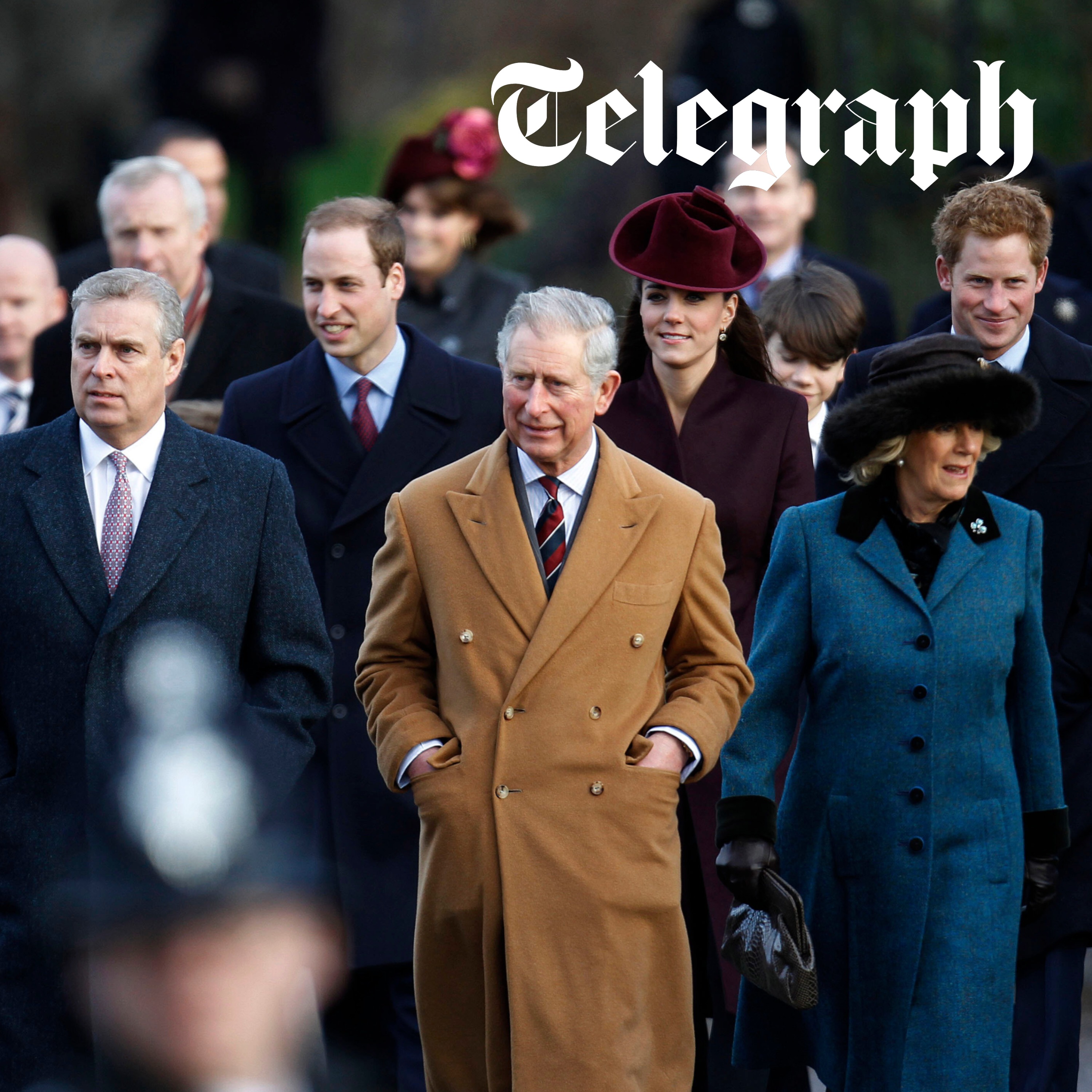
In this episode, Camilla Tominey and Tim Stanley delve into the mounting controversies surrounding Prince Andrew Mountbatten-Windsor and discuss the implications for the British monarchy. They also explore Reform's immigration proposals and the question of whether the monarchy can remain relevant in modern society.
Written by AI. May contain mistakes.
Discussion about the controversial photo of Andrew Mountbatten-Windsor and its implications.
“Yes, he's clearly never done this before.”
Exploring the nuances of privacy expectations for royals in the public eye.
“But can I ask you as a royal reporter, is there some convention that you don't normally take photos like that?”
Investigating the implications of Jeffrey Epstein's storage units and their potential risks.
“So no, but do William and Kate have a reasonable expectation of privacy when they're hanging out in Windsor with their children who are playing around in a paddling pool in the back garden?”
Discussing Gordon Brown's involvement and critiques of taxpayer spending on Andrew.
“There were six storage units that he seems to have invested in, including in Florida and New York.”
Examining Andrew's behavior and public perception regarding his royal status.
“The popular image of Brown has always been that he is a monster and a bully.”
Debating the implications and feasibility of stripping Andrew from the line of succession.
“We do need to remember how both pompous and indeed privileged this man was and how he behaved.”
Discussing Prince Andrew's diplomatic blunders and their implications.
“and he was meant to meet a load of VIPs and he decided he was going to do it his way and instead was chatting to some women at the event and not the key dignitaries he was meant to.”
Exploring the political discussions surrounding Andrew's place in the succession.
“We've got a by-election on Thursday that's probably going to go very badly wrong for Labour.”
Analyzing past royal scandals and their impact on the monarchy today.
“And the public was so sympathetic to her that there was a riot at her funeral.”
Discussing the changing nature of the royal family's relevance and public image.
“Remember that while we are talking about arresting and maybe someday imprisoning the Queen's second son, in America, apart from Gill and Maxwell, no one's been arrested.”
Examining how different generations view the monarchy and its significance.
“I'm sure the king will be the first one to have to show some receipts.”
Contemplating the monarchy's identity in modern times and its challenges.
“Where everyone goes, oh, these people are quite intriguing.”
Discussing the shifting political landscape and its impact on royal criticism.
“But if we do that, and I think the monarchy itself is acutely aware of this, if you do all that and you strip it all back and you basically make them, you know, Kardashians in crowns.”
Discussing the controversial immigration plan proposed by Zia Youssef.
“Shall we speak about how many immigrants Zia Youssef wants to deport next?”
Exploring the justifications given for allowing certain criminals to remain in the UK.
“This is this mystery of politics, isn't it?”
Critiquing the current immigration laws and the moral implications of allowing criminals to stay.
“Here is Mr Youssef justifying that policy.”
Detailing the key points of Zia Youssef's eight-point immigration plan.
“How many more people must die at the hands of those who should never have been in our country in the first place?”
Discussing the implications of potential reforms by comparing them with ICE in the U.S.
“Deploy Stop and Search to get knives off our streets.”
Examining how the British public perceives immigration and potential reforms.
“The paradox with reform is it is very critical of the British state but it also intends to use the British state in new ways to do things that others haven't tried to do before.”
Discussing how faith and Christian values influence immigration policy debates.
“But they may feel that, just sorry on that, okay, fine, deport illegals that are here, that are clogging up towns or, I don't know, leapfrogging people, presumably when it comes to housing and all the rest of it.”
Contemplating the role of churches in the context of immigration and cultural identity.
“And it's striking that it's coming from a potential Home Secretary who is himself a practicing Muslim.”
Analyzing the tension between immigration control and Christian ethics of welcoming.
“I don't know if I'll go to hell for saying this, but there are some Catholic churches that would function better as a branch of Liddles.”
Discussing the significance of maintaining cultural heritage amid immigration reforms.
“I welcome it if we have a more faith-enthused politics.”
Speculating on how cultural identity will play a role in future political discourse.
“So I guess it's partly about that to which some Christians will reply, Christianity is not about bricks and mortar.”
Explore the challenges facing the monarchy and potential solutions.

Get the gist, explore an idea or ask about something said.
 Claude
On The Daily T, what are the key points of this episode?
Searching your listeningAutomatic transcript. May contain errors.
0:03Camilla: The Telegraph.
0:09Camilla: Is the monarchy facing an existential crisis in the aftermath of the arrest of Andrew Mountbatten-Windsor?
0:17Tim: There is a huge burden on the shoulders of William and Kate. Can they sell this medieval institution to a modern society?
0:24Camilla: And we unpack Reform's ICE-style plan to deport 600 ,000 people during its first term in office.
0:32Tim: Welcome to The Daily Tea with me, Tim Stanley.
0:34Camilla: And me, Camilla Tominey.
0:46Camilla: Before we get fully stuck into the latest Andrew Mountbatten-Windsor revelations, Tim, can we just discuss the photo?
0:53Tim: The up-the-nose photo.
0:54Camilla: The photo, one red eye.
0:56Tim: Him in the back of the car.
0:57Camilla: Also, just how hard is this? Lie down in the car.
1:01Tim: Put a coat over your head.
1:03Camilla: Before it leaves the police station.
1:06Tim: Yes, he's clearly never done this before. I was always taught by my mother, just put a coat over your head.
1:10Camilla: Get in the boot.
1:11Tim: There is a genre of press photograph, which is disgraced person in back of car.
1:17Camilla: Yeah, love it.
1:17Tim: And no one looks good because they're through that slightly tinted windscreen, which gives everyone the pallor of grey slate. And as you're getting older, it's especially unflattering. I thought he looked a bit like Prince Philip. You could really see his father in him at that moment. Yes. But also, it's always a damning indictment of poor posture.
1:37Camilla: Yes, it is.
1:38Tim: Because he was very slouched, which is why you get that angle.
1:41Camilla: But also, it signifies so much the fall of the grand old Duke of York in the back of a car, trying to hide from paps. then all of the memes that are followed in this digital age of ours somebody literally within seconds sent me the commemorative plate we've got a mocked up unveiling of a portrait by the king yes only for it to reveal the photo it's in the louvre yeah in the louvre it's like and out it is and you know everyone's laughing yes i think it was taken by phil noble the photographer who's at reuters i heard this morning he's been given a pay rise because clearly there There were quite a few of them positioned and he just managed to get that series of shots before he's laid down.
2:20Tim: But can I ask you as a royal reporter, is there some convention that you don't normally take photos like that? Because if you wanted to, you could capture William or Kate at any point during their day looking like an idiot in the back of a car.
2:32Camilla: Well, it's all about the public interest threshold, right? So when we talk about privacy in this country, does he have a reasonable expectation of privacy leaving a police station having been under arrest and questioned for 12 hours? Right. No, he doesn't because he's a former prince of the realm. He is a brother of a king. And this, as we had discussed last week, was unprecedented. And therefore he has no expectation of privacy leaving a police station which is subsidised by the taxpayer. Right. So no, but do William and Kate have a reasonable expectation of privacy when they're hanging out in Windsor with their children who are playing around in a paddling pool in the back garden?
3:14Tim: Then yes.
3:14Camilla: Yes, of course they do.
3:15Tim: But you take my point that it seems strange to me that up until now we've not seen an image of a royal looking this unguarded and ugly. And suddenly because he's under suspicion, it's OK to take that photo. I'm just, I'm not sure how fair that is.
3:29Camilla: I mean, there's been lots of photography in the past of perhaps putting their cameras, you know, through police van windows and getting notorious criminals. There is a market in that. OK. I think it's all judged on. It's all context. The news moment in time. Yeah. And at the moment, his reputation is so low. Because what's also been interesting, we're going to get on to discuss, have royals historically been treated in a more special way than others? and yet actually, you know, proceedings are active in this case. There are contempt laws to abide by and yet because of the high-profile nature of Andrew Mountbatten-Windsor, you know, we name him, even though he wasn't named in the original police statement, he's just described as a 66-year-old man.
4:15Camilla: Then the king comes forward and gives his statement, not referring to his brother but to Mr Mountbatten-Windsor, which is curious in itself. and the justification for that is exemplified at the weekend with yet more stories so this whole idea about have we even touched the sides of this because as a former royal correspondent what's now coming to light is the stuff that we suspected and talked about and couldn't really report because we didn't have any evidence to back up what we were saying or observing so let's look at this idea so he's being investigated for misconduct in public office i think police are only just today due to leave royal lodge where they've been apparently pulling up the floorboards according to russell myers at the daily mirror who's the royal correspondent there but anyway and then we have so many different strains of this story so hayley dixon our own special correspondent's been out in america discovering that jeffrey epstein had storage units full of paperwork, Tim.
5:20Camilla: He has a 40 ,000 square foot estate and he's going down and using the storage facility down the road, which apparently the police haven't even got to searching through.
5:33Tim: Millions of Epstein files have already been released. The idea that there are more is nerve jangling. There were six storage units that he seems to have invested in, including in Florida and New York. And it's likely this is in relation to his conviction, because it seems he was tipped off before a 2005 raid on his home. This is when he's being investigated for the trafficking of minors. And he paid private detectives tens of thousands of dollars to remove equipment and cloned computer drives before the investigators arrived. And credit card receipts suggest that he was still paying for these units from 2003 until 2019, the year of his death.
6:13Tim: Now the interesting question is why is this stuff, what's on these drives and on these computers that's so important that he had to clear it out before he was raided? And there's always been a theory lingering in the background that Epstein was a blackmailer.
6:29Camilla: Yes, he was storing up compromise on anyone and everyone.
6:32Tim: And if you want to explore that line of inquiry, then what is it that he's got on there that hasn't already been released in the Epstein files? Could it be even worse? And could it be the various smoking guns that he was using to blackmail public figures, which helps explain why he remained so prominent and why he was able to get access so much good information from them?
6:52Camilla: And we cite this because with that in mind, things could get even worse for Andrew Mountbatten-Windsor, who, as The Sun pointed out on its Friday front page, I think you're sweating now. We then have Gordon Brown's role in all this, Tim, is interesting. Gordon Brown is absolutely going for the jugular here. So he was reported in the Sunday Telegraph by our colleague Tony Diver to have written to the government to question why RAF jets may have been used to cart Andrew around from location to location. I mean, is that a viable and justifiable use of taxpayers' cash?
7:34Tim: I don't know, but I do want to say that Gordon Brown is having a moment.
7:37Camilla: Yes, he is. He's having a revival.
7:39Tim: He's having a revival. It happens at the same time as there's a high-profile documentary out about the Blair years, which inevitably looks at things from Tony's point of view. But Brown is back in the news because of the Mandelson revelations, because Mandelson was passing on this information to Epstein about sensitive policies during the credit crunch when he was supposed to be working for Gordon Brown. The popular image of Brown has always been that he is a monster and a bully. But the discovery that Mandelson, who was brought into government to help him during the credit crunch, was bad-mouthing him, sharing private information behind his back, has increased a lot of sympathy for Brown among the journalistic class.
8:19Camilla: Yes.
8:19Tim: One sense in that very Brown way that he is pursuing a vendetta.
8:23Camilla: Yes.
8:23Tim: But it's probably justifiable because in his mind, it confirms that while he was trying to deliver policies to help people in this country, the Blairite middle class elite was conspiring against him. So he's having a moment and I say enjoy it.
8:37Camilla: Also, he probably didn't have much truck with Andrew. You get the impression that Gordon Brown was very much a more kind of Princess Anne is the best queen we've never had type of royalist.
8:46Tim: There is a story put out by the New Statesman recently that during COVID, Brown visited a family in Scotland. And when discovering that two kids were sleeping on the floor, he immediately went back to his own house, dismantled his children's bunk beds and donated them to the family. And that this is not something he put around himself. This is something that a journalist found out and then publicised. So, again, it all speaks to is Gordon Brown a secret white knight that we've not appreciated all these years?
9:14Camilla: That's the subject for another podcast. He is flagging the jets because they were used to transport Andrew Mountbatten-Windsor to various different places, RAF bases, to meet Geoffrey Epstein. It's also been revealed that Andrew charged taxpayers for the cost of massages and excessive travel expenses while he was the UK's trade envoy. Former senior civil servants said they were shocked to see the claims and that there was a culture of deference towards the former prince within Whitehall that allowed them to proceed. I thought it was wrong, said a source. I said we mustn't pay it, but we ended up paying it anyway.
9:52Camilla: Now, this then lends itself to a discussion about who knew what, when, and why didn't anyone do anything about it. And I think it's great saying that with the benefit of hindsight. We do need to remember how both pompous and indeed privileged this man was and how he behaved. that unique combination of ignorance and arrogance. Yes. Which is never the right two kind of categories to have in a personality. No. In anyone. It's really just bad. Be arrogant but informed. I mean, OK. Or be ignorant but sweet with it. Yes. And what we've got here is the worst combination of all. And let me just give you one example of the power that the former Duke wielded back in the day.
10:35Camilla: Because we've got that other extraordinary line which kind of sums up how he behaved. It's a bit kind of, don't you know who I am?
10:41Tim: It is claimed that as he was booted out of Royal Lodge, he said, you can't do this. I'm the Queen's second son.
10:49Camilla: Go on. Middle child syndrome going on there.
10:52Tim: What I love about the vibe of don't you know who I am is always bad. But when it's, I'm the Queen's second son.
10:58Camilla: Second son.
10:59Tim: It's like saying when your bags are being searched at the airport, I'm on Love Island. Yes, exactly. Can you please? I'm a D-list celeb.
11:07Camilla: Honestly.
11:07Tim: I'm someone who they call if Alan Titchmarsh says no.
11:10Camilla: Exactly so. I'm available if Geoff Brazier isn't. So there's this whole thing going on, you know, don't you know who I am? I'm the spare to the air.
11:21Tim: I'm the Queen's second son. Has he ever said that to Edward, by the way? You can imagine a conversation at Christmas, a fight over the turkey. I'm second and you're third. I am the Queen's second son.
11:30Camilla: Well, it's this whole thing about was he her favourite. Park that to one side a minute, but just in terms of wielding power, Something really interesting happened towards the end of the Queen's reign, where her longstanding, loyal and highly respected private secretary, a man called Sir Christopher Guyt, was pushed out of office. and it came after Christopher Guite addressed palace staff to say that at the time the Duke of Edinburgh was stepping back from public life, that he had worked into his early 90s, enough was enough and funny enough he was going to disappear up to Norfolk and spend much more time in the property that Andrew is now occupying called Wood Farm.
12:09Camilla: That was his little bolt hole, Prince Philip. Andrew took great offence at this because Guite hadn't informed Andrew or I believe he claimed the now king that this announcement was being made. Andrew then conspires with a then Prince Charles to say, I don't like this. I don't like the idea of the staff being better informed than we are. We need to get him out. That was the allegation. And lo and behold, the late queen acquiesces, not happy about two of her children being unhappy about all this. but it set in train a difficult period of the last five years of the late Queen's life because Guyte was solid.
12:51Camilla: People say if Guyte had had to deal with Megxit, it would have been more effectively managed. And that's not to criticise his successor, a man called Sir Edward Young, but it was considered that Guyte was a bit more punchy, a bit more dynamic. And so let's not underestimate the power that this guy wielded. I've done stories in the past, you know, the gates didn't open in time. He rammed them. He was once, I did a story famously for the Sunday Express where bodyguards mistook him for an intruder and wrestled him to the ground. Right. And can you imagine how many heads rolled? There's a viral video going around with one bodyguard saying that...
13:29Tim: I was about to mention that, discussing the alternative code name by which Andrew was known, and this being the Telegraph. We can't say what it was, but it relates to seeing someone next Tuesday.
13:39Camilla: Yes, it does. There's been a whistleblower suggesting that back in 2019, people were flagging to Prince Charles, now the king, look, your brother's behaviour is really pretty out of line and we're concerned. In fact, when he first started as trade envoy back in 2001, he completely bungled this visit to Saudi Arabia and he was meant to meet a load of VIPs and he decided he was going to do it his way and instead was chatting to some women at the event and not the key dignitaries he was meant to. Then missives are flying around the Foreign Office going, this guy is actually creating diplomatic incidents.
14:15Camilla: He's not opening any doors at all. Soft power punch, just punch in the face. This guy's a moron. Again, nothing gets done because he's the Queen's second son, don't you know?
14:26Tim: Yeah. In which case, given he's so awful, does it make sense, as some want to do, to strip him from the line of succession?
14:33Camilla: So Labour is agitating for this. Luke Pollard, the minister, is saying, and we must pass an Act of Parliament to make this happen. He's eighth in line. There is no chance at all of him becoming king unless, well, God forbid, there was some...
14:49Tim: Outside of a nuclear war.
14:50Camilla: Nuclear war, horrific air crash. So, look, he's got no chance of being king. Is this really a governmental priority right now? With everything going on with the country, really? And I think it's a dead cat strategy. Labour's absolutely filling its boots. with criticism of Andrew. Starmer's in the soup. We've got a by-election on Thursday that's probably going to go very badly wrong for Labour. Oh, this is great. Let's talk about changing the line of succession.
15:19Tim: Also, we're back to Starmer's Calvinist, puritanical morality, aren't we? Because he just loves to sack people. Yes. Or ban things.
15:28Camilla: Get him out. Yes. In fact, let's just ban the line of succession. I don't think we should have a line of succession. Let's just have the king forever.
15:35Tim: Well, this is the question we need to address. Is a debate about Andrew going to metastasize into a bigger debate about the monarchy in the 21st century?
15:45Camilla: Is the monarchy facing an existential crisis? Yes. Not for the first time, Tim. You know your history better than I do.
15:51Tim: So there are two different takes on this. One is Andrew is a rotten apple and the monarchy has always had rotten apples. Heavens, this is not only not the first scandal, it's by far not the worst. As people pointed out, he was the first monarch to be arrested since 1647. Well, that was Charles I, who was arrested for treason and two years later had his head cut off and then we had a republic. His descendant, James II, was chased off the throne because he was a Catholic. You have scandals like George III and Queen Caroline. Yes. They fell out after their marriage. They were both adulterers. Yes.
16:34Tim: They both put on a lot of weight. But nonetheless, she turned up at his coronation. He barred the doors against her, so she was turned away. She only died three weeks later. And the public was so sympathetic to her that there was a riot at her funeral. Yeah. Soldiers fired into the crowd and two people were killed. My goodness, you want controversial. Or you can go fast forward to 1936 and the abdication crisis, right? Back then, the bar for a monarch behaving unacceptably was far lower. It was having the temerity to marry not just a divorcee, but an American divorcee.
17:06Camilla: Yes, quite.
17:06Tim: And when you consider how much the royal family has changed since then, such that we've had loads of divorces, loads of remarriages, and we've been able to shed difficult members of the family like Harry and Meghan going overseas without the institution collapsing. So some will say, look, there is a distinction that most Brits get between the monarchy and the royals.
17:28Camilla: Yes. I mean, you've mentioned a lot of rotten apples there. You didn't even get on to Hunchback Richard III and the princes in the tower. I know. This is infanticide, Tim. But as far as I can tell, and I think I can include Henry VIII in this correctly, if I'm wrong, none of them fraternise with a pedo.
17:47Tim: Oh, now I'm scanning my memory banks. But I did think when Andrew did the Maitlis interview on Newsnight, this is akin to Richard III appearing with Judge Judy to say I was nowhere near the tower that night when the two boys were in it.
18:02Camilla: Yes, I was at Pizza Express and Woking drinking mead.
18:06Tim: Can I just say, I want to share with you a little joke.
18:10Camilla: After the Maitlis interview, which I had to analyse, I think, for this newspaper, I said that the Duke of York's PR man now has a more difficult job than Richard III's tailor.
18:23Tim: That's very good.
18:24Camilla: It's terrible.
18:25Tim: That's very good. So a lot of people would say royal family flawed, institution strong. And in fact, the fact that the institution has survived all these people is proof that we are invested in it, that it's a critical part of our constitution and it's what makes us better. Remember that while we are talking about arresting and maybe someday imprisoning the Queen's second son, in America, apart from Gill and Maxwell, no one's been arrested. So the great republic, the virtuous democratic republic in the United States, they don't arrest people like that. Whereas here we are doing. So there's a case for saying, don't worry about the monarchy.
19:05Tim: I think the problem with that argument is that the monarchy was safeguarded for a very long time by Elizabeth II being the head of it, who was just beyond criticism until now, funnily enough. Posthumously she is. and the society that we had when she came to the throne is very different to the one today absolutely and we are now in a world and we're in a show me the money world a world of consumers a world where people don't just do things they've always done them they expect things to be of value and to justify themselves the royal family has also shrunk considerably which i think leaves it
19:41Camilla: somewhat vulnerable it does there are too few royals to go around and then you have to ask
19:44Tim: yourself what's the point of these people and you we are on eggshells with william and kate all the time if you're a monarchist because they are one scandal away from the whole pack of cards tumbling down but if if they were tainted in some way what then would happen could we survive because edward the eighth abdicates an excellent brother immediately replaces him although one who's painfully shy and unprepared for the role but goes on to be but goes on to be a very impressive unifying king etc but the family is different the country is different we are changing and i'll throw in one more thing we now have a left which isn't like the old labor left which was patriotic and monarchical think about harold wilson's personal friendship with the queen we could be looking at a left-wing coalition a few years time which includes the green party which is
20:33Camilla: pretty openly republican well yeah dancing around parliament square talking about taxing the wealthy I'm sure the king will be the first one to have to show some receipts. Listen, when you said that people are generally invested, I think that this is a controversy, but I think people are able to distance Andrew from Princess Kate. She turns up at the BAFTAs yesterday looking ethereal and glamorous and has just got over cancer and is widely regarded to have never put a foot wrong. You've got William there being fairly candid, said he wasn't in a calm enough state of mind to watch Hamnet, which won a leading actress for Jessie Buckley, playing the role of Shakespeare's wife.
21:16Camilla: So just have that in mind. I think the problem is that Generation Z and Alpha, so these are my children, aren't invested because they haven't got that historic relationship with royalty that our generation had. So our parents' generation had it because they were the children of people who fought in the Second World War. That's so important. Who saw George VI and the Queen Mother and Churchill on a balcony. Okay, forever you are invested in that family because the royals are widely credited with helping the Allied war effort.
21:51Tim: Yes.
21:51Camilla: Okay, we have the Queen Mother going and, quotes, going to the East End, looking the East End in the face, in the face of the Blitz. That generation then literally growing up with Princess Diana because she comes on the royal scene aged 19. OK, she dies prematurely at 36. It's unbelievable she died at 36 because it feels as if she was around for about 50 years. Yes. OK, so then my generation of exes and yours, we grow up with Diana. We grow up with the sensation around the War of the Waleses. It's compelling. It's Dallas. It's dynasty rolled into one. There's no social media competition for these people who are on a pedestal above average celebrity.
22:33Camilla: These people transcend showbiz. They are above the A-list. But now look at who they're competing with. They're competing with the Kardashians. They're competing with Timothee Chalamet. They're competing with, you know, whoever else might have appeared at the BAFTAs last night. Leonardo DiCaprio, Olivia Dean. All of these names, these people that are frankly, I don't know, Jake Paul and influencers like the sidemen.
22:57Tim: And being upper class no longer has social power in a classless age.
23:01Camilla: Money has social power.
23:02Tim: I mean, I like the style of William and Kate, but I'm not convinced lots of people do.
23:07Camilla: No, and also there's no affinity yet with their children because their children are old enough. I'll tell you what they could do with William and Kate. They could do with one of these three children being a bit of a character, having some kind of like tortured teenage years, a bit like Prince Harry. Like Harry, yes, exactly. Where everyone goes, oh, these people are quite intriguing. Okay, but then that's difficult because, you know, they are a dysfunctional family, but they can't appear to be too dysfunctional because they don't want to repeat the mistakes of the past.
23:34Tim: This is the way I see monarchy. I see it as soap opera, and I'm open about that. It's about having, as the head of your nation, a family rather than an elected individual. You go for an elected individual, they're going to be a politician of the moment, and you'll only know them for a decade at most. You have a family, and you are governed by people who you've seen from when they were a toddler to when they're in their 90s. It is a more human experience, and it's why the English constitution is not like the American written one, which they constantly argue over. It is a living one, which can evolve and change, yet also has that sense of permanence because it is dynastic.
24:14The problem is, I'm open to that,
24:17Tim: but can you sell monarchy in an age in which no one believes in the principle of monarchy, including the royals. I don't believe that any of the royals posted to Elizabeth II believe that they are appointed by God or that during the coronation they are in some way transformed
24:35Camilla: by the ceremony.
24:37Tim: Elizabeth II believed that. Amusingly, perhaps the last royal who seems to believe it is Andrew. Yes, he thinks he is the son of God. He is l 'état c 'est moi. He is a throwback to absolutism. But the rest of the family are trying to sell an institution to us that I'm not convinced they actually believe in.
24:58Camilla: And I'm going to make a supplementary point. Monarchy exists on majesty and mystique. I would say distance. But the whole thing is that whole we are a cut above everybody else is born out of the fact that unless they're Harry and Meghan, obviously on Netflix or Oprah or in spare, you know, you don't do reality. You don't go and promote. You do your charity and your duty and you have journalists following you around, but it's all kept at arm's length. Yes. OK, our relationship with them is pretty voyeuristic. Yes. They're not like the Beckhams. They're not like even, I believe, Gordon Ramsay is now doing some kind of warts at all, this is what my life is like.
25:39Therefore, if you pull back the curtain too much, the Wizard of Oz effect, and you see the Wizard of Oz,
25:46Camilla: and this is why they were so harmed by Harry and Meghan in a way, because you're drawing back the curtain and in one way you're making them relatable because you're saying they're just like the rest of us, you know, not so much nuclear as thermonuclear. But on the other hand, what's left if they're just us ordinary folk? And this is where some of this politicking comes in. The Lib Dems now are suggesting that royals should be criticised in Parliament. Previously, they'd been above criticism. Now, I think from a democratic point of view, you and I can agree, well, yeah, they should be criticised.
26:17Camilla: We should be able to see their tax returns. We should be able to see the accounts of the various duchies. But if we do that, and I think the monarchy itself is acutely aware of this, if you do all that and you strip it all back and you basically make them, you know, Kardashians in crowns.
26:35Tim: I'm happy to maintain archaic royal privilege if the royals believe in their own privilege. If the royals understand why they are privileged and they act accordingly. part of my problem with modern royalty is I don't think they do. So you can have your preservation from criticism. You can have your secret bank accounts. If you don't get divorced, you don't sell your stories, you don't check into a mental asylum slash spa. I won't say who I'm referring to here. You're a phone to Fergie. It's fine. At vast cost. This is a spa which comes with a chauffeur, by the way.
27:15Camilla: Paracelsus recovery, it's called. It's like£13 ,000 a minute or something
27:19Tim: It's a step above where I go for my foot rubs So you can't behave like that And expect the privilege But she's not a royal anymore She's not representative of these people But you see my point If you want to act like Elizabeth II Then we can all invest in this idea of royal privilege And I will sign off on it And if you enter the room I will curtsy and bow, whatever you want But if you're behaving like everyone else and you're speaking to Oprah Winfrey and you're writing your tell-all memoir, then you don't get the privilege anymore, Duffy.
27:51Camilla: Nailed it. Do not... Rule one, do not fraternise with pedos. Rule two, do not speak to Oprah Winfrey.
27:59Tim: Yeah.
27:59Camilla: You've nailed it. Gear change. Shall we speak about how many immigrants Zia Youssef wants to deport next?
28:20Camilla: Tim, so Zia Yusuf, the man who wants to be the next Home Secretary under a potential future Nigel Farage government, has unveiled an eight-point plan. Why are the plans always seven or eight points? This is this mystery of politics, isn't it?
28:37Tim: Five is too few and ten is too many.
28:40Camilla: Yes. How many proposals were on the Edstone? I think somebody, by the way, has found Ed Miliband Stone. We need to interview them at some future point in the Daily Tea. But this is his, we are much tougher than the Conservatives on immigration. Don't question my commitment to this. And I note that probably the most significant change, they had been talking about delivering net zero migration. They're now talking about delivering net negative immigration. They are saying that they will be deporting all illegal migrants from the UK. This is the first point of the eight point plan and that they can expect to deport over 600 ,000 people in their first term.
29:26Camilla: Here is Mr Youssef justifying that policy. Committing brutal crimes can make it easier for illegal migrants to stay in Britain. There are countless examples. a Zimbabwean pedophile, a man jailed for over five years for unspeakable child sex offenses. Was he removed and sent home? No, he was allowed to stay because judges cited Article 3 of the ECHR. They argued he would face hostility in his home country. We saw an Albanian drug lord jailed for running an illicit cannabis factory, avoid deportation after judges ruled under Article 8 that kicking him out would deprive his daughter of a male role model.
30:12Camilla: Think about the moral sickness of that decision. A convicted, organized drug kingpin held up as an essential, protected role model by British judges.
30:24Tim: A Ugandan gang member who clubbed a man to death in the back of an ambulance. A man who received a life sentence for murder
30:33Camilla: successfully won the right to stay in Britain to protect his mental health. His lawyer successfully used Article 3 of the ECHR to argue it would be inhumane to send him back to a country with poorer mental health facilities than our NHS. He barbarically took a life and the British taxpayers now forced to cater for his mental wellness. How can anyone hear all this and argue that Britain is not broken? How many more people must die at the hands of those who should never have been in our country in the first place? How many more victims' families must be devastated in this way when their rights are placed beneath those of criminals?
31:18Camilla: The answer is none. Vote reform. We will leave the ECHR and end this madness.
31:26Tim: In the interest of completeness, the other points are apply visa bans on countries that refuse to take back their illegal migrants. OK. Deliver Operation Restoring Justice by leaving the ECHR. Yeah. Deploy Stop and Search to get knives off our streets. Protect Britain's Christian heritage. This is an interesting one. By preventing churches being turned into places of worship of other faiths by automatically listing historic churches. Interesting.
32:23Tim: and the Muslim Brotherhood. So you can start cracking down on those extremist organisations. On the question of deportations, is reform going to create the British equivalent of the Immigration and Customs Enforcement Group? This is the one which... ICE. ICE, this is the one which has been involved in the deaths of protesters and is very controversial in the United States. I think it's worth pointing out, it depends on how they do it.
32:48Camilla: Yes.
32:49Tim: Because ICE was recruited in a hurry. They lowered their standards. They threw money at people. America is armed in a way that we are not. And I think a lot of the controversy around ICE comes from the way in which it was managed rather than the principle of deporting people who are here illegally.
33:08Camilla: Although I do question, how are they going to find all these people? How are they going to make sure that they haven't got the paperwork? How are they going to fend off the lawfare that will ensue? quoting Polanski laws there don't tell me there aren't going to be huge crowds of Green and other supporters stopping busloads of people being deported to the nearest available airport
33:29Tim: If people are willing to superglue themselves to trains to make a point that we can't quite figure out about net zero then I'm sure they will do it for this too The paradox with reform is it is very critical of the British state but it also intends to use the British state in new ways to do things that others haven't tried to do before.
33:52Camilla: It's going to have to persuade the civil service first, though.
33:54Tim: That's a very good point. Who are the officers going to be that are going to do this? What do you do about, as you say, things like lawfare? This is going to take a lot of time and money. It doesn't mean they shouldn't do it. We don't want to fall back onto negativism because having complained about the level of illegal immigration, I'm not now going to say nothing should be done about it because it will be difficult. Nonetheless, reform is setting itself a sort of Apollo programme-style task here in delivering this.
34:20Camilla: Also, by the way, is this going to still be as relevant in three years' time, 2028-29, notwithstanding that Mr Farage thinks there's going to be an election earlier? I don't necessarily agree with that analysis. By then, immigration will have naturally come down because, hey, where else can it go from that record high of 945 ,000 in 2022?
34:43Tim: Falling down to the level that everyone said was unacceptable about 10 years ago. So it is down, but it's not out yet. We've got Scarlett Maguire, the pollster, on the programme tomorrow. Yes. And she will tell us that one interesting thing is the British public underestimate the scale of immigration. And there's a thinking on the right that actually there's a lot more room for political capital as people become more aware of what's happening or what has happened. Yes. It's not necessarily going to go away.
35:14Camilla: But they may feel that, just sorry on that, okay, fine, deport illegals that are here, that are clogging up towns or, I don't know, leapfrogging people, presumably when it comes to housing and all the rest of it. But when it comes to communities that don't feel that they have assimilated or integrated properly, I think the electorate thinks that that genie is out of the bottle. And I'd be intrigued to find out what's reform saying about that? you know danish style uh interventions breaking up so-called ghettoized communities moving people around the country how's that going to go down in birmingham and leicester these are all massive
35:48Tim: questions to solve yeah yeah i mean so this is one reason why the christian church policy is so
35:53Camilla: interesting what do you think of that i didn't know that christian churches were necessarily
35:57Tim: used by other faiths well they can be turned into anything they can be turned into cafes i've yes I've had plenty of cups of teas and pieces of cake in former churches. But it's a new strand to Reform's thinking that this is not just about halting or reversing cultural change, but actually about promoting British and Christian culture instead. And it's striking that it's coming from a potential Home Secretary who is himself a practicing Muslim.
36:26Camilla: Yes.
36:27Tim: That's really interesting. And it makes you wonder, can Reform do things that other parties wouldn't?
36:32Camilla: But as a religious man, you're more religious than I am, even though we are both Catholics. Does that appeal to you, this prioritisation of the Christian church in politics?
36:43Tim: On the specific policy around churches, I just haven't thought about it hard enough. Joking aside, there are some churches I'd like to knock down.
36:52Camilla: Some of them, by the way, are our churches.
36:54Tim: A lot of Catholic churches.
36:56Camilla: It made me laugh a bit. I saw that policy. In my village, the Catholics used to worship in the Protestant church before some money was gathered together.
37:05Tim: And unfortunately, it was spent to build a modernist church.
37:08Camilla: It built a modernist church where, yes, which I did actually eschew and got married in a more traditional Catholic church, even though I should have got married in the local church.
37:16Tim: I don't know if I'll go to hell for saying this, but there are some Catholic churches that would function better as a branch of Liddles. That's quite right. But on the role of faith in public life, I think it's a reality that Britain is historically and constitutionally a Christian country. So I find it strange that we wouldn't talk about it and promote it. I think a tension arises from it, though, which is this. When I was at mass on Sunday, we had a talk by CAFOD, which is the Catholic charity for people overseas. And their message is about, as a church, we are one body across the world. and when someone is starving in Zimbabwe, it's our responsibility to help them.
37:54Tim: That is a very critical part of the Christian message. Is that not contradicted by things such as getting rid of foreign aid? It's the same with the immigration debate. This is why I'm sensitive on the subject. I'm all for immigration control, but my church is also the church of immigrants. I go to my church and it's full of people from Poland, Ireland, Nigeria, around the world, and we are supposed to be the church of welcoming the stranger. There is the story of Jesus coming to the door and being turned away. And then the host says, where were you? I came, but you turned me away. There's a great deal of emphasis in Christian ethics upon neighborliness and welcoming people.
38:31Tim: So if you're going to play this card, I think it's natural in British life because we are Christian. I welcome it if we have a more faith-enthused politics. In the same way, I welcome faith being more present in the public sphere. But it does raise questions about where the right's going.
38:48Camilla: Also, if you did want to be, I mean, I'm sounding slightly airy-fairy now, and I should start playing Kumbaya on an acoustic guitar in just a moment. Say if you wanted to bridge the gap between Muslims and Jews in this country. And let's be honest, tensions have been high since October the 7th. You could therefore argue we're better to do it than on the neutral territory of a Christian church or a Catholic church. Therefore, are they saying this because they are objecting? they see that if other faith groups use churches that it denigrates Christianity in this country. Because actually churches can be used to bring people together.
39:25Tim: I guess what they're saying is that it is about saying this historical territory will not be lost. It's sacrosanct. If you have a community which within 10 years completely demographically changes, You cannot just take over or claim this sacred spot, but instead it will remain forever as a legacy of the Christian culture that was there before. So I guess it's partly about that to which some Christians will reply, Christianity is not about bricks and mortar. I mean, it is, by the way, buildings are very important to Catholics. The layout of the church is important. It is where the body of Christ is stored.
40:05Tim: It has a sacramental context. but also faith is a living breathing thing it's something which is supposed to happen in everyday life and is very human and tangible and there is always a bit of a risk if it becomes a question of heritage and architecture that you perhaps distract from the spirit of christianity i don't know i i again i i may well start to sound like a big woolly liberal but my point is is that i am politically small c conservative, but there are elements of my faith which contradict that and rub against it. And I have to listen to both. Politicians don't have to do that.
40:41Camilla: Yeah.
40:42Tim: But no, it's just interesting, isn't it,
40:44Camilla: to observe that this whole faith, family, and flag theme appears in a immigration speech outside the White Cliffs of Dover. I just think we should note that and keep an eye on this reform, lean into, I would say, J.D. Vancean politics.
41:04Tim: I'm all for it if it's about saying being British is not just about making money, that we have a history and a culture here that we are proud of and we want to promote. And politics generally attracts people who have scant appreciation of culture. There's a lot of debate at the moment online about whether or not politicians should be compelled to read Anthony Trollope. I'm not sure I would force anyone to do that. I can't stand Trollope. But it does feel a bit like we are governed by people who are dead from the neck up, who have no culture and no hinterland whatsoever. And so I'm all for challenging that.
41:35Tim: I am. I'm just warning reform that if you start to bring Christianity into the conversation, Christians are going to say back to you, OK, so why are you cutting this programme? Yes. Which helps poor women and children overseas.
41:47Camilla: Absolutely. Right. You mentioned Scarlett Maguire, the pollster. She's going to be with us tomorrow, along with Reform's candidate for Gorton and Denton by elections on Thursday, Matt Goodwin. We'll be back then, 5pm.
42:21www. insider -용-produ ambulance agil usu hearing lk20 amya Glanzai
If that deeply unflattering photo of Andrew Mountbatten-Windsor was not bad enough, there are now more revelations about his relationship with Jeffrey Epstein. The former prince is alleged to have spent taxpayer money on massages and faces questions over his use of RAF jets to meet with the sex offender.
The wayward royal could even be removed from the line of succession under potential Government plans.
Camilla and Tim ask if, amidst all the scandal, the Prince and Princess of Wales can keep the monarchy relevant, and if Labour’s latest talking point is simply a dead cat strategy to distract from their own failings.
Plus, Reform’s “shadow” home secretary has pledged that his party will create a British version of ICE and slap visa bans on six countries if they get into government. But while Zia Yusuf also promised to protect churches and Christianity, Tim asks: is his message on immigration un-Christian?
We want to hear from you! Email us at [email protected] or find @dailytpodcast on TikTok, Instagram and X
► Sign up to our most popular newsletter, From the Editor. Look forward to receiving free-thinking comment and the day's biggest stories, every morning. telegraph.co.uk/fromtheeditor
Producers: Georgia Coan and Lilian Fawcett
Senior Producer: John Cadigan
Executive Producer: Charlotte Seligman
Video Producer: Will Walters
Studio Operator: Meghan Searle
Social Producer: Nada Aggour
Editor: Camilla Tominey
Hosted on Acast. See acast.com/privacy for more information.


