
 Ask ChatGPT


 The Daily T
29 Jun 2026 · 34m · 18 chapters
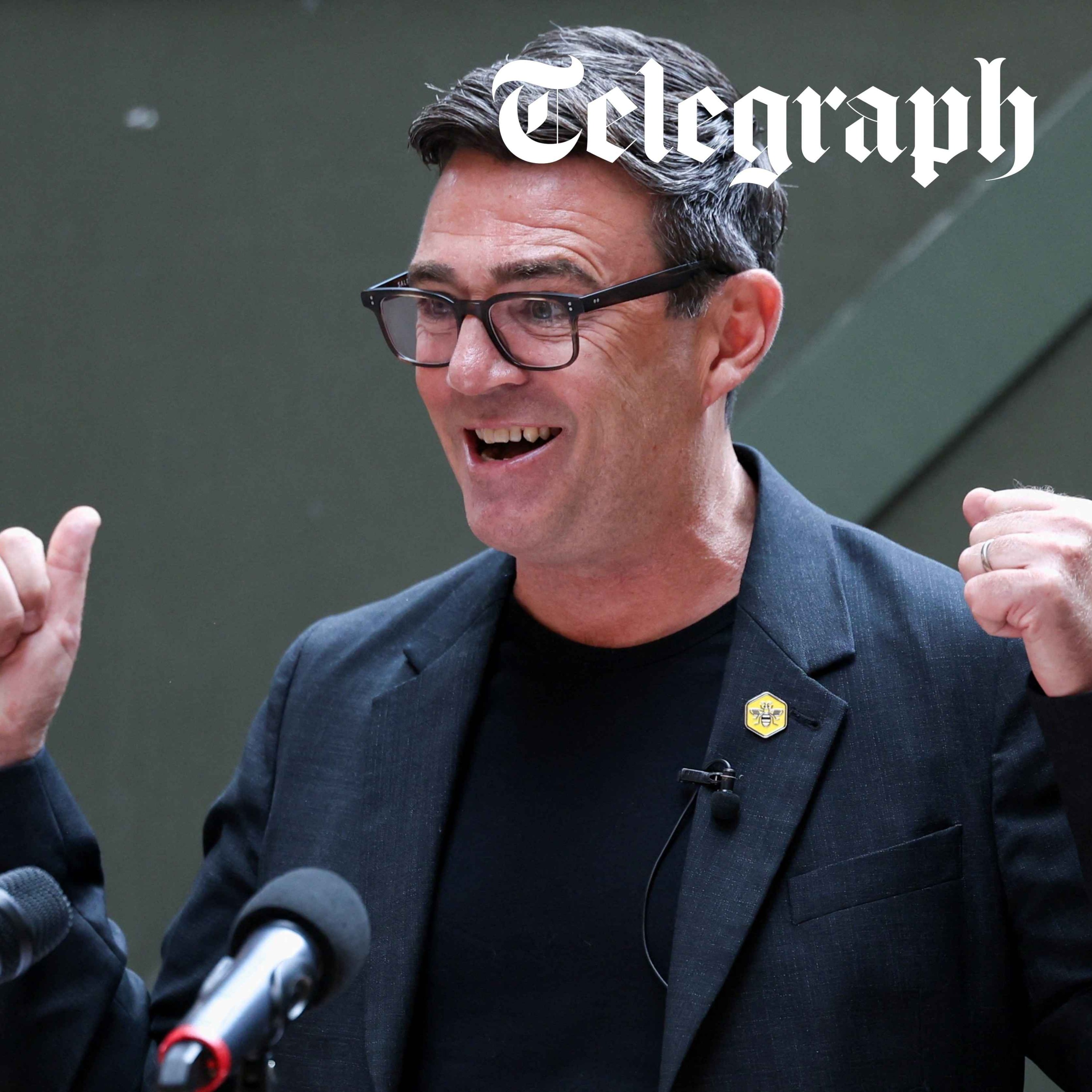
A debate about Andy Burnham’s “Manchesterism” speech, arguing it’s “socialism via the backdoor” by bypassing scrutiny and hardwiring socialist outcomes through devolution.
Tim Stanley and Camilla Tominy (hosts/commentators for The Daily Tea). No other guests are interviewed in the provided transcript.
Burnham’s plan avoids accountability by using a press-style launch without parliamentary questions; it circumvents Parliament and even the need for a general election. The speakers argue his “collaboration/consensus” rhetoric masks a left-wing agenda: more state control (e.g., energy/public ownership), expanded council house building, and education shifts toward technical training. They say similar policies have already been tried (Labour nationalisation, devolution, “levelling up”) and that devolving power to councils risks incompetence and reduced oversight.
Manchester bus “B network” compared to a Soviet-style plan; “number 10 North”; references to Liverpool/Labour councils in the 1980s; COVID as a case for central command; Wales/Scotland devolution failures (NHS/education).
Written by AI. May contain mistakes.
Discussion on the importance of staying in touch with our humanity in a digital world.
“But beneath the sort of lighthearted nature of this meme is something very real and important.”
A heartfelt tribute to the late actress Penelope Keith and her cultural significance.
“For those who are watching, rather than just listening, you're wearing your sunglasses.”
Analysis of Andy Burnham's speech in the context of British politics.
“And I do want to play one clip which beautifully sums up her character, Margot, from The Good Life.”
Discussion on the implications of Burnham's approach to democracy and governance.
“And most of that journey was spent walking through very leafy St James's Park, which was lovely.”
Exploring the potential consequences of Burnham's proposed policies and political style.
“So the Conservatives in opposition have quite rightly said, hang on a minute, let's just have a look at your little timetable to become the next Prime Minister.”
Discussion of the use of humor in Burnham's speech and its effectiveness.
“faces no parliamentary scrutiny whatsoever and just becomes prime minister.”
Comparative analysis of Burnham's vision against past political contexts and figures.
“We must acknowledge what was good about the speech, its humour.”
Learn about Andy Burnham's vision for the B network and its significance.
“Which Andy seems to think is like the Soviet five-year plan, like he electrified Russia by introducing an integrated bus plan into Manchester.”
Discuss the challenges and past failures of housing promises in politics.
“Well, even though many people in your makerfield constituency, as we observed, were able to have a generational inheritance, thanks to Maggie, because they were able to buy their own council homes.”
Explore the successes and failures of devolution in different regions.
“Also, I think Boris Johnson tried to level up, didn't he?”
Examine the competency of local governments and their ability to handle responsibilities.
“Also, it wants to transfer the competencies of central government to local government.”
Analyze the shift towards a post-ideological political landscape and its implications.
“And his counter argument is it's a question of many of those services have been starved of money, which is true.”
Discuss Burnham's approach to politics and the implications of bypassing traditional scrutiny.
“And this was the situation in Liverpool and other Labour-run councils in the 1980s.”
Explore the tension between central government control and local authority empowerment.
“We'll take Britain into Europe with its social chapter, which will impose socialism on us from Brussels.”
Question the clarity of Burnham's policies on defense spending and immigration.
“Also, when you talk about how Parliament works, you physically get the consensus in the amended legislation, don't you?”
Discussion on the implications of local decision-making in Manchester and beyond.
“Have you been in any of the meetings with the top brass about this?”
Analysis of Andy Burnham's political stance and its implications for socialism.
“Take the trans issue, on which, again, we don't know what he thinks.”
Exploration of the ongoing debate between capitalist and socialist models in politics.
“We've not been providing enough people with good quality, cheap rental accommodation.”

Get the gist, explore an idea or ask about something said.
 Claude
On The Daily T, what are the key points of this episode?
Searching your listeningAutomatic transcript. May contain errors.
0:03The Telegraph.
0:11ACAST powers the world's best podcasts. Here's a show that we recommend. Go touch grass. You have probably heard this phrase. Maybe you have even said it. But beneath the sort of lighthearted nature of this meme is something very real and important. A growing sense that staying in touch with our humanity and being present in our bodies matters more than ever in today's digital world. My name is Manoush Zamorodi, and I am taking over as host of TED Talks Daily this week to explore what technology is actually doing to your body and mind. In special interviews with scientists, doctors, parents, artists, and more, we're going to dig into your physical and mental health on tech.
1:02How we think about our bodies differently now. How we relate to new innovations that are amazing but also a little scary. And how we can live a healthier life in this high-tech era. Tune in on TED Talks Daily wherever you listen to podcasts.
1:21Acast helps creators launch, grow and monetize their podcasts everywhere. Acast.com
1:32Our Andy says he wants collaboration and consensus, but really he wants a dictatorship of left-wing ideas. We discuss Burnham's Manchesterism speech and why it represents socialism via the backdoor. Welcome to The Daily Tea with me, Tim Stanley. And me, Camilla Tominy.
1:58Tim, hello. For those who are watching, rather than just listening, you're wearing your sunglasses. Because I've left my regular glasses at home. I've not gone blind, don't worry. No, it's quite Roy Orbison this. It is, isn't it? Could you play a guitar? I think it's rather cool. I sometimes wear my sunglasses when I'm using the computer. It's very good for reducing the glare. Yeah, it's actually very good for that. And the theme of the day is Burnham and how just darn cool he is, but we'll get onto that in just a minute. You're upset. Well, behind these glasses, of course, I'm genuinely very upset because the great Penelope Keith has died at the age of 86.
2:35Someone we can safely describe as a national treasure. When I write for The Telegraph, the person I think of reading it is Penelope Keith, be it in The Good Life or be it in To The Manor Born. She was witty. She was beautiful. She had these incredible eyes that were both sexy and intimidating at the same time. She was the Tory voters' Marilyn Monroe. She was. And I do want to play one clip which beautifully sums up her character, Margot, from The Good Life. This is from 1975, season two, episode one, on the BBC, where she's in a row with a local council worker and he asks who does she think she is.
3:17Now, just who do you think you are, Mrs Ledbetter? I am the silent majority. Aside from being wonderfully delivered, very funny, it's a reminder that Thatcherism didn't come out of nowhere. It wasn't imposed on this country. It was a reaction to bureaucracy and economic decline. And there were Thatchers before Margaret Thatcher. If you were middle class, your Maggie Thatcher was Margot Ledbetter. If you were working class, your Thatcher was Annie Walker, who ran the Rover's Return in Coronation Street. Yeah, that's right. And in the 1970s, Britain faced a choice between democratic capitalism and democratic socialism.
3:58And I'm very happy to say capitalism won. Yes. I think, following Burnham's speech, we may face a very similar choice at the next election. Burnham's speech, which I listened to as I walked all the way from Covent Garden to the office because I didn't want to go underground to miss the speech. And most of that journey was spent walking through very leafy St James's Park, which was lovely. I thought to myself, OK, I do get this. I do get why he is directly taking on Nigel Farage by presenting a vision of hope. Farage could have done a similar speech, talking about smashing up Whitehall and levelling up the country and talking about long-forgotten coastal towns like Clacton-on-Sea, and he would have delivered a message of Britain being broken.
4:42So this is wide-eyed, you know, mascara-wearing Burnham, saying there's reasons to be positive, there's reasons to be cheerful. However, it's way too idealistic, all this. You're going to lead a plain, nice parliament where everyone joins together, gets a piece of policy in the middle of a circle and sits around it from blue to turquoise to yellow to red and sing Kim Bayar as we all unite in this prosperous future Britain, which is all based on his Manchesterism theory. I mean, I know I sound like a horrible old cynic, but that's not the way politics has operated in this country. He is trying...
5:22This manifesto is about killing us with kindness. Yes. It was a statement of renewed democracy at which journalists were not permitted to ask any questions. Yes. I applied to attend and never got a reply. A colleague of mine applied to attend and was turned down. Right. In which he lays out a government platform without presenting it to Parliament, where it should normally be scrutinised by MPs. Yes, that's right. So this is democracy by press conference. Yes. It's not parliamentary. The people's politician, the man who wants to represent not just Westminster but the whole of the UK, gives a speech where he doesn't face any accountability for what he's saying whatsoever.
6:14He's circumvented the press and, more importantly, as you've pointed out, just to double down on that point, he is completely circumventing Parliament. So the Conservatives in opposition have quite rightly said, hang on a minute, let's just have a look at your little timetable to become the next Prime Minister. And by the way, we do need to discuss the sort of hubris on display today because it's basically, I'm a shoo-in, this is my vision, I might not have been voted for, but I'm just going to press ahead with it anyway. There appears to be no contest in his mind. This is him, basically it's like a pre-coronation speech, fine.
6:48He's not just circumventing the press and parliament, he's circumventing a general election. That's right. This was a manifesto launch for a general election that's not taking place. And can we please remember, hashtag general election now, tweeted by none other than Andy Burnham in 2022. Right. He was agitating for a general election during the Tory turmoil years. But apparently you don't need to have a general election if you're on the left, because it's not as chaotic and confusing. Because you're a good person who wants to give power away. You're trying to be nice. We will analyse that. On the Tory point, they're quite right here, Tim, because the way the timetable is working out, Parliament will rise and go off on their summer holidays on July the 16th.
7:27OK, there's going to be three PMQs between now and then, all involving Baden-Ock versus Starmer. He gets his last hurrah and that's done. If Parliament rises, but the new Labour leader and consequently Prime Minister isn't appointed until 17th, it had been suggested. now it's looking like it's Monday the 20th, then that person, Andy Burnham, faces no parliamentary scrutiny whatsoever and just becomes prime minister. So the Tories are saying, I tell you what, if you are going to be this person, why don't you come into the chamber and face questions for at least a day before this coronation takes place?
8:04Maybe you give your maiden speech and then it's adapted by the Speaker, Lindsay Hoyle, so that people can, Bob, intervene and say, can you please give way and then challenge him on some of his policy ideas. But why would they want to do that, given that this speech is about building consensus and collaboration? This is a whole new politics, Camilla. Oh, wow. Are we being horribly cynical, by the way? Can I just put out there that you and I are a couple of battle axes and we're not giving this guy the benefit of the doubt? There are a lot of people out there who will think to themselves, do you know what?
8:35I am sick and tired of these politicians squabbling about everything. There's no long-termism here. Whitehall's always getting in the way but he's trying to propose two different things at once which I think is slightly double headed, it's kind of like going, like a push me pull you, going in two opposite directions on one hand you're saying Whitehall, get out of our way we want to devolve to local areas, they need to make their own decisions, but he's also in a very socialist way, calling for the state to take more control, albeit by a devolution of our lives my reaction, I was listening to him thinking okay you can do all this as long as you leave Leave me the hell alone.
9:10Yes, but it won't. I'm Margot Ledbetter. Don't involve yourself in my life. But it won't. No, he's going to tax us more. No, this is socialism through the back door. We must acknowledge what was good about the speech, its humour. He made reference to Kemi's joke about being a pair of eyelashes and a T-shirt. Let's listen to that. You were just brilliant to me in my nine years as mayor. I could not have asked for better backing. You were there at my back all the way through. And I will never forget what this place did for me. It's been such a wrench to leave that I've had to get special permission from what people in Westminster call my Manchester clothes.
9:57I've had to get special permission to wear them this morning. Sorry, Kemi, about that. However, I have bowed to public pressure on one front. I have bought some new running shorts. It... APPLAUSE
10:23It was either do that or change the decency laws, and I opted for the former. but even in the humour there is a touch of insufferableness yes he held this meeting in a room full of his friends and he acknowledged that at the beginning it's a delight to be back here in manchester i couldn't believe i was away for so long oh it must be terrible going down to london you know this it's dreadful down here isn't it and he thanked them for all the work they had done for him down the years and you know they applauded where they were supposed to and they clearly really like him and that's understandable there was a funny joke maybe about the shorts.
10:58You know, he was spotted running in the two short shorts. Yes. And then he said, oh, I had to get rid of the shorts. Otherwise, I'd have to change the decency laws. But then I thought that's a bit presumptuous as well, isn't it? You're going to be in a position to change decency laws. Well, he thinks this is a fait accompli. Maybe it is. But I just thought, have some shame. But I think he was speaking at the People's History Museum, right? And he noted in passing that in one of the cases, they have one of his jackets. Wow. I mean, that's a bit self-indulgent, isn't it? Now, I can think of a museum in which you'd find one of Maggie's dresses or Winston's cigars.
11:37Yes. But I trust that they would be put there post-mortem. They'd wait for the corpse to be cold before the dress was removed. Andy's already got one of his famous coats in the People's History Museum. Next to Michael's donkey jacket, which deserves to be there. That's of historic significance. In fact, Kinnock's anorak, let's put that in there. Maybe even Corbyn's from the Cenotaph. Yes. But Andy, imagine being a schoolchild, being taken around this museum. Hello, miss, what have we got to see before we can have our packed lunch? Well, upstairs in the gallery, I can show you Andy Burnham's jacket.
12:13Yes. Who? Yes. Presumably this is one of the jackets he's been wearing DJing. Are you seriously saying that you're quite happy with an opening to a speech by a future prime minister of this great nation with, are you ready for this? As if he is Pete Tong addressing the Ibiza crowd circa 1991. I'm not sure it's appropriate. Again, I'm being Margot Ledbetter. We'll come back to the... We're going to address now the mind behind all of this. But that language is both natural to him, but it's also politically very clever because it's hard to argue with. If you come on all nicey-nicey, chummy-chummy, and you're the stick in the mud that says, I'm sorry, but I feel you ought to wear a tie and address this as ladies and gentlemen, you sound like a moron and it's very hard to argue no no no no i'm sorry i'm not very critical you know what i mean if you come on informally and then people try to respond to you with i'm sorry i feel you should be it makes us just sound victorian and out of time i feel there's a there's a shade of dumbing down here i find it quite but it's on purpose because remember andy burnham didn't used to be like this he didn't used to dress like this he used to be a good westminster a boy like the rest of us.
13:25Yes, a little flare writer. Who seemed to love living down in London. Yes. Was very happy to get his English degree from Cambridge. Indeed, he wore a certain time. And then moved straight into politics and did absolutely nothing else. So what we're seeing here is a constructed political personality. Now, the headline things that he wants to do are, key thing, is devolve more power, almost all power, to different parts of the country, give them greater control over budget, give them more money from the centre and empower them to do things like take public control of energy and electricity. All modelled, by the way, I'm going to put my head in my hands at this point, on Manchester's bus programme.
14:04Yes, the B network. Which Andy seems to think is like the Soviet five-year plan, like he electrified Russia by introducing an integrated bus plan into Manchester. You may argue he thinks it's the B's knees. Very good, very clever. He's asking for 10 years in which to do this. 10 years? 10 years. So he wants two parliament. Has it even got into post yet? I presume hold an election at some point during that. Oh, that would be good of him. But he wants the 10 years to do this. He also wants an expanded council house building programme. He wants a shift away from the university-led model for education, so it's more about technical achievement.
14:40And he summed it up as, back in the 1970s, the good old 1970s. We all enjoy them. Weren't they great? When the bins weren't being collected. What the working class has had. And there was a mass exodus of wealth from this country to the point where it was almost economically destroyed, only to be rescued by Margaret Thatcher, who, by the way, he gives no credit to whatsoever. In fact, Thatcher's the enemy. For the rebuilding of Manchester. Well, even though many people in your makerfield constituency, as we observed, were able to have a generational inheritance, thanks to Maggie, because they were able to buy their own council homes.
15:14Yes, we can have a discussion about whether replacement council homes were built, and it's good to see him want to do that. But you know what, Tim? I think I've run out of the number of prime ministers that have pledged to build more housing only to fail to deliver it. Or to level up and trickle down. And this is a key point. He's presenting this programme as revolutionary. Keir Stammer will be watching it and thinking, I've done all of that. Yeah, I said all that. Let's go through the list, because if you go through nationalisation, your Labour government has created great British energy and has nationalised the trains.
15:52Devolution. Angela Rayner was committed to extending further powers and monies to the different regions. Yes. Council house building. They've announced a massive council house building programme. Yes. I mean, even the concept of number 10 north, which, by the way, sounds like a tube station. If it's number 10 in the north, I could tolerate it, but number 10 north sounds like change at number 10 north for the Bakerloo and Victoria line. Yes. But if you think about it, number 10 North, Rishi Sunak moved the Treasury to Darlington. Yes. Right. We've done this. Also, I think Boris Johnson tried to level up, didn't he?
16:24Yeah, you've got levelling up to it. But literally all of this has at some point been attempted. Yes. Now, the Tories in the 2010s fell in love with devolution and tried to encourage and promote it. By the time of 2024, their manifesto had become quite critical. and they increasingly saw Westminster's role to actually push back against or rein in or set curbs upon devolution in Wales and Scotland. There's a reason for that. Devolution sometimes works, sometimes it doesn't work. And if you look at the records of Wales on management of the NHS, it's been a disaster. And the education system and everything else that Welsh Labour touched, really.
17:01If you look, and it ended in Welsh Labour being defeated by played and reform. If you look at Scotland, which ended up becoming just a political tug of war between the SNP and England, there the record on education, again, is very poor. It became very centralising, got rid of lots of different police groups to create one police Scotland, tried and failed even to provide decent ferry services. Yes. We're talking here about he's focused on his bus plan for Manchester, but he's talking about expanding the abilities and the competencies of local government well beyond what they might actually be capable of doing.
17:39I mean, just look at what reform has discovered since it's taken over councils and found them in the verge of or going into bankruptcy. Also, it wants to transfer the competencies of central government to local government. Is local government and our local authorities competent enough? I mean, we've done successive podcasts in this studio where we've spoken to people from sort of Emma Webber to the victims of maternity scandals to sort of other issues where at every level the authorities have let people down. I'm thinking also recently of the case of the terrible death of baby Preston. OK, and basically like a social services department there that was completely found wanting.
18:25And all the time we're almost kind of like blaming the state as a blob and saying it's all the state's fault. Well, in many of these cases, what happens is individuals are running organisations that are completely and utterly incompetent. And the reason that they're in the public sector is because nobody in the private sector would hire them. And all these people go on a little merry-go-round where they get given golden handshakes and promotions for failure and they end up running something else badly. And then they end up running something else badly and all the rest of it. So I'm not saying that is universally the case.
19:01I'm sure there are some very, very good public servants out there that do a good job. But I'm not sure I want to devolve from Whitehall and from central government responsibilities to people that literally aren't fit for purpose. I don't think I want to do that. And his counter argument is it's a question of many of those services have been starved of money, which is true. It's not just money. That is what happened on austerity. There's a total and utter incompetence running arm's length organisations, quangos, councils, social services departments, hospital trusts. They are just not very good and we should be devolving more to them.
19:43Yes, yes. Well, I think when you're trying to introduce a new political system to a country which doesn't have that political culture embedded into it, you're asking for trouble. So, for instance, if you give local councils the ability to nationalise water or local services, right, that might work in a system like, say, Germany, where there is this tradition of government being a patchwork of local authorities that you feel great regional and historical loyalty to, i.e. people care about local democracy. We all know that in this country, local elections are used for one thing only, and that is to vote for or against the Westminster government of the day.
20:24So theoretically, you might hand all these powers to a council and that council or devolved authority or whatever might on a whim be electing the Greens, for instance. Yes. And suddenly you, the consumer, you, the taxpayer, and this is going to bring me on to this ideological point, you, the individual, find yourself suddenly trapped by a local government that has more power than God. Yes, exactly. Over your life. And when you go to Westminster and say, do you know how they're running things? Westminster will say, it's got nothing to do with us. We've devolved. And this was the situation in Liverpool and other Labour-run councils in the 1980s.
21:09Derek Hatter and Co. It's why Maggie Thatcher got rid of those councils who stripped back their powers, because it left individuals, the prisoners of local governments that didn't really have proper oversight. Coming up next, might all this be music to Kemi Badenock's ears?
21:33For me, there was a really interesting bit where Annie Burnham said, there will be no debate within government over the political direction. I'm paraphrasing you. Yes, I thought that was interesting. There'll be no debate within government over the political direction, but I want collaboration and I want people to come to me and be able to speak freely. Now, there's a contradiction there, isn't there? And it explains his whole model of collaborative politics where he says things like, not about ideology, but getting things done. And it's about place over politics. And we're going to end partisanship and all that sort of thing.
22:10Well, the British system, the British parliamentary system, is based around a competition of ideas. That you have a government and you have an opposition. It's Hegelian. The idea that someone comes forward with a new idea and says, let's do this. And the opposition says, no, let's not do that. They fight it out. And the argument results in a new consensus. Yes. Which is what we end up doing. That idea of a battleground or laboratory of ideas is how progress occurs. He doesn't want that. What he wants is for parliament to be, you vote for whatever party you like, but they all do the same thing.
22:43And their powers are passed down to local government, which will be rewired so that it has a bias towards socialism. Because it's been given the powers and the encouragement from number 10 to do socialism. Now, why is he doing this? To me, this is the end of ideology type stuff, because what you're trying to say is there's no real contest between left and right. We all know what we all want. We all want council houses, so we're all going to have it. Now, why is he doing this? To Spencer who needs to pay for them, by the way. It all brings us back to the 1970s. And this is not our obsession. This is his obsession.
23:17He's obsessed with Margaret Thatcher. And the reason is very simple. In the 70s and 80s, the Labour Party lost the battle of ideas. The country voted Conservative. and realizing that this country is inherently, innately, by instinct conservative. The left thought we have to find new ways of making socialist things happen, even when at a Westminster level the public keeps voting against them. One was Europe. We'll take Britain into Europe with its social chapter, which will impose socialism on us from Brussels. The other was the left, which had previously been somewhat skeptical, began to embrace devolution because they thought if we devolve power locally...
23:57Power comes to us. Power will come to us. No one will look over us. And as I say, because you're given the money and because it's embedded that you're supposed to do these many different things, people will end up voting for local governments that will all do the same thing. They'll all do the same thing because they're required by statute to do it. Why is it that one reform council after another, whatever Nigel says, they basically said when we get in, we would like to cut taxes. Yes. None of them are doing it. They didn't put it in the manifesto. No, they've realised they can't because they've got massive social care budgets.
24:25Because they've got statutory responsibilities. So what you do is you hardwire socialism in to the system. So from the outside, it looks like he has democratised and he's reduced everything to a lower level. What he's actually done is hardwired the entire British system to be socialist. And what he's removing is scrutiny at a Westminster level. because rather than there being a competition between left and right, he will stand up in Parliament saying, what is wrong with you? I'm trying to bring this country together. He's going to be saying it's going to be a competition between what I think is right and what you think which is wrong.
25:01That's how it's going to work. So, yeah, in local areas, you're going to have a low-traffic neighbourhood that you didn't ask for. You're going to have your whole high street sort of pedestrianised. You're going to have maybe the Liberal Democrats controlling planning. So, hey, newsflash, you're not going to get anything built for two years. It's going to gum up the whole system, but he's allowed to save lives. By the way, we did witness in COVID, there is something to be said for some elements of a command and control central government because it actually is able to get things done and be accountable.
25:30Remember in COVID, it was like, and we had this in the lockdown files, it was actually sort of detailed to the tiniest minutiae in the WhatsApp groups. What we learned from lockdown is that it was an exercise in central government devolving decision-making to other arms-length bodies, public health England, the Department for Health, individual trust boards. So ultimately, Matt Hancock and others could say, well, it's not our problem because we've devolved to all of these bodies that are completely unaccountable. Also, when you talk about how Parliament works, you physically get the consensus in the amended legislation, don't you?
26:08The government of the day says, this is the law that we want on yellow teapots and here are all the different clauses in that law in order for us to legislate for yellow teapots. And the opposition comes along and says, yeah, but you've said that about the spout. I'm not sure it's going to be long enough. By the way, the handle, you know, it could be a health and safety problem. So we're going to suggest our amendments to the yellow teapot law, and then we're all going to come together and the law will be better because that's how we do it through the Commons and the Lords. And by the way, the Lords will come in, cross-party and scrutinise it even further and say, do you know what?
26:40You know, it's not even going to keep the tea warm. We need to change it again. That's how Parliament happens. He seems to want to circumvent that. He does, yes. How does that help anybody? I just want to remind you as well that during COVID, devolution was really irritating because it meant that Scotland and Wales outbid England for looking like it was tougher on lockdown. So it became a ridiculous political battleground. But it also exposed the inadequacy of some of those devolved leaders. Remember Mark Drakeford? Yes. You know, Mark Drakeford should not have been running a bath and he was woefully inadequate in his role.
27:15Absolutely. And this will be one of Andy Burnham's great local champions. But there are also, what are the questions which you need Westminster to have a real argument over and the state to be strong enough to enforce? They are things like defence of the realm and control of the borders. And Andy Burnham has yet to tell us openly, I mean there are rumours, what he's going to do about defence spending and what his position is on immigration. Well, hang on a minute. We had an indication in the Sunday papers that apparently Andy Burnham, I think Dan Jarvis, the new Defence Secretary, has managed to get that spending up from£13.5 billion to£15 billion.
27:55It's still well short of the recommended£28 billion. But there was suggestions or briefings into the Sunday papers that Burnham has signed off the defence investment plan. Well, hang on a minute. Have you been in any of the meetings with the top brass about this? How can you provisionally sign off a plan that you haven't been involved in at all? Yes, yes. I find that extraordinary. Yes. The other thing I was going to say with regard to number 10 North, he seems to be suggesting that this Manchester hub is going to have a say over the rest of the UK outside Westminster. Well, why on earth would you want decision making in Manchester when it comes to, I don't know, the Cornish coast?
28:37Or other parts of the north which do exist, such as Newcastle or Sheffield or Leeds. I told you about this, somebody from Yorkshire saying we don't like all this talk of a car Well, that's Lancashire versus Yorkshire. Well, I'm quite right. More of the roses. Bitter rivals. It still carries on now. But also, can I say, again, I think I've said this before on the podcast, and I'm quoting John Mann, the former MP for Bassett Law, who made the observation that Keir Starmer didn't go down very well in the working man's club there because he turned up in an open shirt without a tie. Just back to the dress thing.
29:12I'm, again, channeling my inner Margot. I'm not sure the good people of Great Britain, be they blue or white-collar workers, want to see a prime minister looking like this. I'm sorry. I mean, this idea that, oh, like working, he's down with the masses, he's down with the people, you know, mad for it. Let's go out to Canal Street and have some beers. Yes. I mean is he going to do the black t-shirt thing at NATO? Yeah But I think it's to avoid People have said Zelensky Oh well Zelensky wears a sort of uniform His country's at war Yes He's in fatigues Yes Come on I think it's part of the anti-democratic strategy As I've said It's about making it impossible to argue with him Because he's just trying to be a nice guy Doing the obvious thing And who doesn't want things to be decided locally Oh this is good But there are Carry on But I've got some great stats for you here Go on Okay But there are certain questions which we have to discuss nationally, they're not things that are resolved locally.
30:06Take the trans issue, on which, again, we don't know what he thinks. You cannot just... What are we saying about that? In Red Car, you can change your gender. In Scunthorpe, you can't. There are certain things that have to be resolved nationally because that's the way our system is designed to do because we are a nation state. But this is the all-things-to-all-men politics of Andy Burnham. He both believes that trans women are women and he supports the Supreme Court judgment, which rules precisely the opposite. Yeah. And if you debate this with him, what you're going to get back is a wave of kindness.
30:41I'm just trying to be kind. It's a difficult subject. And I'm just trying to be collaborative and consensus forming. Well, no, politics is about opposition versus the government. That's what produces a new consensus. There's a new YouGov poll out which has just been put on our chat group by Emma, the producer. It was conducted on the 24th to 25th of June, so it was following Keir Starmer's resignation, but before this speech. Number of Britons viewing Andy Burnham unfavourably at highest level yet. A third of Britons, 32%, see Burnham favourably, while 43 % see him unfavourably. They think he's 40 % likeable, 23 % dislikeable, 36 % competent versus 20 % incompetent, strong 33 % weak 18, decisive 33 % indecisive 20, trustworthy 22%, untrustworthy 31%.
31:39But there are some politicians who would kill for numbers like that. I know. And I don't think we can get away from his obvious political communication skills. I think rather than there's a risk, and I'm seeing it on a lot of the right, of people just saying, because I hate him, the country will hate him. If you pursue on that basis, it's rather like the attitude that many right wingers have towards Tony Blair. There was a group of people who really never liked him, always saw through him, and good for you. But the problem is the country didn't. You have to acknowledge that he is charismatic and the right has to up its game.
32:09But I think this speech today shows us what the next election will be about. And I think it's going to be a return in some ways to those debates of the 1970s, a debate between a socialist model of development versus a liberty-based capitalist model of development. And what I think conservatives ought to say is, yeah, some local government, absolutely fine. But we believe in the parliamentary system because we're a parliamentary democracy. We believe in a strong state that makes clear decisions, but a smaller one that leaves individuals alone as much as possible, giving them both freedom of speech, of thought, of control of their money, of their business.
32:51And I think if you can, if you're clever about this, explain the contradictions to people of what Burnham is saying and demonstrate to them that what he's really doing, because he did use phrases like redistribution of wealth and power, what he's really doing is an old fashioned means of hardwiring socialism into our system so that there is no choice but localised socialism. Now, weirdly, just to conclude, this may be music to Kemi Badenock's ears, you know, because if it's a straight fight between capitalism and socialism, or indeed, I suppose, low tax versus high tax, the Tories are much better placed to take on that fight right now than reform.
33:32Maybe, maybe not. economically they've been all over the place also this whole consensus i wonder if it actually does include nigel farage in the big circle the big kumbaya circle that andy burnham is going to be at the helm of as we presumably burn some jostics and discuss legislation in an open-minded way are reform going to be included in those discussions tim some people some people will really like what he says including some reform voters and if you think about things like council housing. We've not been building enough houses. We've not been providing enough people with good quality, cheap rental accommodation.
34:07This is all correct. But what people really don't want is to be stuck in council housing, controlled by local government for the rest of their lives. That's what they faced in the 1970s. And he talked about working class aspiration. It was to get out of the council house, to buy it, to own it and to have your own property, a property-owning democracy. Again, that's the Tory model. Also, there was one other word that was conspicuous by its absence from this entire speech, which is one of the most important issues to the British electorate, immigration. Yeah. That is not a nettle he appears willing to grasp.
34:42Because that is a Westminster issue. And it's one of choice. And it's not just a choice, not just a pragmatic choice about economics anymore. It's now a choice about culture and the very nature of the British nation. and Andy does not seem willing or capable to make a choice himself. Fascinating stuff. More to discuss all week. We'll be back tomorrow, 5pm.
35:25you
In today’s episode of The Daily T, Camilla Tominey and Tim Stanley discuss Andy Burnham’s first significant speech since returning to Westminster as an MP. The former mayor of Greater Manchester set out his vision for Britain as part of his campaign to be the next prime minister and Labour leader.
They dissect Burnham’s “Manchesterism” blueprint, and ask whether his call for cross-party collaboration is actually a front for “socialism via the back door”.
We want to hear from you! Email us at [email protected] or find @dailytpodcast on TikTok, Instagram and X
► Sign up to our most popular newsletter, From the Editor. Look forward to receiving free-thinking comment and the day's biggest stories, every morning. telegraph.co.uk/fromtheeditor
Studio Operator: Meghan Searle
Producers: Georgia Coan and Emma Williams
Video Producer: Will Walters
Social Media Producer: Conor Clark
Executive Producer: Charlotte Seligman
Editor: Camilla Tominey
Highlights:
Hosted on Acast. See acast.com/privacy for more information.


