
 Ask ChatGPT



A discussion of whether a Trump–Putin summit in Alaska could lead to Ukraine being forced into territorial concessions (“carving up Europe”), plus a separate segment reviewing Nicola Sturgeon’s memoir.
Dom Nicholls and Francis Dearnley, hosts of the Telegraph sister podcast Ukraine The Latest; Alan Cochran, Telegraph former Scottish editor and columnist, long-time observer of Nicola Sturgeon.
Zelensky may be softening toward de facto recognition of Russia-held parts of four southeastern oblasts (about 19–20% of Ukraine), though not de jure cession. Europe is portrayed as scrambling to support Ukraine politically while failing to deter Russia militarily or be included in talks. Putin is said to seek headlines, sanctions relief, and de facto gains without abandoning maximal goals.
Crimea; Russia-held Zaporizhzhia and Kherson with Sea of Azov/Dnieper access; “porcupine Ukraine” defense concept; kidnapped children from occupied territories; Sturgeon memoir critiques including trans prison policy controversy (Isla Bryson/Adam Graham).
Written by AI. May contain mistakes.
Discussion on the implications of the Trump-Putin meeting for Ukraine.
“Welcome to The Daily Tea with me, Gordon Rayner.”
Exploration of territorial negotiations and Ukraine's expected concessions.
“There'll be some land swapping going on.”
Hosts discuss Ukrainian public opinion on potential territorial concessions.
“What do we know about the possible concessions that Zelensky may be about to agree to that may be discussed between Trump and Putin?”
Discussion of European leaders' efforts to support Ukraine and their positioning in negotiations.
“But it's barely changed in the last 18 months to two years.”
Analysis of Zelensky's potential concessions and desire for NATO membership.
“They have tried to keep out as much as possible.”
Speculation on Ukraine's future and the role of Europe in maintaining security.
“So every day that Ukraine continues to exist and exact its own will over its own people and territory is a defeat for Russia.”
Exploration of Europe's potential to strengthen its defense capabilities against Russia.
“Of course, the US supply the all-important air defence missiles.”
Discussion on the political career and impact of Nicola Sturgeon in Scotland.
“Dom and Francis, thank you for being on The Daily Tea.”
The discussion centers on the complexities of trans identity and its impact on women's rights as highlighted by political figures.
“and what she said was the woman's cause.”
The hosts analyze Nicola Sturgeon's conflicting statements regarding trans identity and its implications on women's safety.
“She says in the book, when confronted with the question, is Isla Bryson a woman, I was like a rabbit caught in the headlights because I failed to answer yes, plain and simple.”
A critique of the SNP governance and its perceived failures in improving the lives of Scots.
“And it's still annoying women everywhere, the whole prospect.”

Get the gist, explore an idea or ask about something said.
 Claude
On The Daily T, what are the key points of this episode?
Searching your listeningAutomatic transcript. May contain errors.
0:03The Telegraph.
0:09Well, there's one story that's likely to dominate the news for the whole of this week, Tim. It's the meeting between Presidents Trump and Putin in Alaska, where Ukraine's fate may or may not be decided. We'll be talking to the hosts of our sister podcast, Ukraine The Latest, Dom Nicholls and Francis Dearnley. Dom is about to head off to Alaska for that summit. From the Sublime to the Ridiculous, we'll be talking also about Nicola Sturgeon's new memoir, Frankly, in which it becomes clear she doesn't give a damn. We'll be speaking to Alan Cochran, one of the greatest Scotsmen in the world today.
0:45Welcome to The Daily Tea with me, Gordon Rayner. And me, Tim Stanley.
0:59It has been three and a half years since Russia invaded Ukraine, triggering the biggest war in Europe since the Second World War. And now the Russian-American presidents are meeting in Alaska to decide the fate of that conflict, very probably over the heads of European leaders. There'll be some land swapping going on. I know that through Russia and through conversations with everybody. to the good, for the good of Ukraine. Good stuff, not bad stuff. Also, some bad stuff for both. So it's good and there's bad. But it's very complex because you have lines that are very uneven. And there'll be some swapping.
1:37There'll be some changes in land. And the word that they will use is, you know, they make changes. We're going to change the lines, the battle lines. Russia's occupied a big portion of Ukraine. They've occupied some very prime territory. We're going to try and get some of that territory back for Ukraine. Yeah, President Zelensky doesn't appear to have been invited to these talks to him, does he? And he's long said that he would not be prepared to cede any territory to Russia, including the Crimean Peninsula, which Putin annexed in 2014. But it does now seem that he could be softening on that position.
2:13To tell us more, we are joined by the hosts of Ukraine the latest, Dom Nichols and Francis Durnley. Dom, you're about to head off to Alaska very shortly for this summit. What do we know about the possible concessions that Zelensky may be about to agree to that may be discussed between Trump and Putin? OK, so the bluff, bottom line up front, not a lot. We are doing a bit of interpretation about some of the softening of his language. He seems to have introduced the idea, which may be a reflection on reality, you might suggest, that if the line were frozen as it is, where the rough contact line is between Ukraine and Russia at the moment, those areas of the four southeastern oblasts, the regions of Ukraine that are held by, or mostly held by, Russia.
3:01President Zelensky seems to have come around to the idea that he may be able to move on with de facto recognition of that. So not de jure, not a change in law, not an acceptance that that is now part of Russia, but just a realisation that this is a fact on the ground for now and if that's a stumbling block, then it needs to be put to one side and move on from there. So it is a bit of interpretation of the language, but then this is a guy who doesn't just pick any old words. He knows what he's saying when he releases these phrases and these public statements. Can you give us a sense of the proportion of Ukrainian land that is?
3:40Russia currently sits on about 19, 20 % of Ukrainian land. So a lot. So, yeah, reasonable. And it's important land. So Crimea, for starters, and then the oblasts in the southeast, Aparigia and Herzon, that have coastline on the Sea of Azov and on the Dnieper River, which is very important for trade and for the agriculture industry. And so, you know, reaching out to the world and engaging economically. So, yes, it is a reasonable amount. But it's barely changed in the last 18 months to two years. When we talk about incremental advances, you shouldn't overlook these. These are villages. These are people who are being shoved away from their homes or killed.
4:20However, Russia has not advanced very far in the last couple of years. But the areas that they do have control of is sizable and is in some very important economic land for Ukraine. Francis, what do the Ukrainian people make of this idea of allowing the Russians to just stay where they are? Well, for a very, very long time, the Ukrainian people have been incredibly robust in their rejection of any deal which would see territory formally ceded to Russia. And I think that that still remains in place, although there have been some interesting polls recently that have suggested a shift, that there are more people in the country who are willing to accept something like this in order to try and end this war.
5:07And we know and have reported obviously many, many times just how extraordinarily high on both sides the casualties are. I think there's another angle to this as well that's important to mention, which is that as we speak, European leaders are frantically trying to support Ukraine before this meeting between Trump and Putin. They are trying to give some political cover and say, look, we agree with the Ukrainians that you cannot have a situation for their security and for our own. where land that is taken by force becomes part of that enemy country. And so I think it is also important to see this as potentially a positioning by Ukraine, by Europe, that means that Trump can't point at Ukraine and blame them for not giving an inch and saying that Putin is willing to do X, Y and Z, which he probably isn't, by the way.
6:00And I think that's an important point here. And there's no evidence that he's abandoned his maximum objectives in Ukraine. but not blaming the Ukrainians, but rather being able to put more pressure on Putin at some point. But of course, what we've really seen now for years is a failure for Europe to put itself into position where it has to be part of any peace talks. You know, we haven't seen European troops on the crowns. We haven't seen them making pledges for Ukraine that would guarantee certain territories for them by force if necessary. We haven't seen them putting in an air defense to stop missiles attacking the cities.
6:40They have tried to keep out as much as possible. And of course, what that means is that you can have a situation where Trump and Putin meet and discuss and try and make deals over the heads of the Europeans. It's a pretty desperate situation for Europe as well as Ukraine. When I saw the headline this morning, my reaction was light at the end of the tunnel because the administration has long argued that it's Zelensky's stubbornness which makes it hard to talk peace because he wouldn't give up any land. If Zelensky is willing to do that, then doesn't this call Putin's bluff because now Putin really has to talk seriously about peace because the Ukrainians are willing to cede something here?
7:19I think the problem with that perspective is that do we really believe what Putin is saying here. And there's been all sorts of miscommunications this past week or so. In fact, actually, there's been an argument that the only reason these talks are taking place was because of a miscommunication, where it was believed that the Russians are willing to agree to something like this. And there's no evidence necessarily that they actually are willing to agree to a ceasefire in order to secure these oblasts, these regions that Don was just talking about. And I think we've seen time and time again, to answer your question directly, evidence that really, for all of the talk about putting pressure on Putin and the ball being in his court, and Trump has talked about that, really, they have not done anything to really try and compel Russia to go to the negotiating table.
8:14There is clearly, and we saw in the remarks that Trump was making in a press conference yesterday, that seemed pretty sympathetic to the Russian position as opposed to the Ukrainian one. There's very little evidence that really this White House doesn't blame Russia, but rather blames the Ukrainians for what has taken place. It's a wing and a prayer. But if this is the offer which leads eventually to peace, and if Putin gained de facto control of that land, would that mean, Dom, a victory for Putin? Could he say domestically, I won this? Well, he can say whatever he likes domestically, and people will go, oh, yes, absolutely, Vladimir, Vladimirovich, we believe you all along.
8:55I mean, the way we receive information in this country and arguably the West is very different to how it happens in Russia. So he can say whatever he likes. It wouldn't be a victory for him. He has not moved back one inch from his maximalist aims of taking over the whole country, limiting the size of Ukraine's armed forces, say it can't be a part of NATO, et cetera, et cetera. So on that front, this would absolutely not be anywhere near that. Conversely, Russia denies the very existence of Ukraine, denies it has any agency as a sovereign state. So every day that Ukraine continues to exist and exact its own will over its own people and territory is a defeat for Russia.
9:35So quite what is a victory and a defeat right now, it's very, very difficult to say. I don't think there's going to be anything hard out of this Alaska summit, apart from my massive expenses bill, quite frankly, because Putin just wants to kick the can down the road. he does not want to stop. He believes the wind is in his sails. He believes he has the momentum on the battlefield. He doesn't want to turn around to his people to say, right, we're all coming home, job done, because he doesn't want 600 ,000 heavily armed, somewhat traumatised and very aggressive men back on the streets of Russia.
10:05He wants to keep going. So what he wants to achieve out of this summit is to say to Donald Trump, you see, I'm totally serious about these negotiations. I turned up. I offered all these concessions. The other side are not. The other side are the obstacles. Zelensky and Europe are the obstacles to peace now. I'm not. I'm here. I've turned up. I'm acting in good faith. If he can get any kind of de facto recognition of the Eastern Oblast and any sanctions relief, he'll be even happier. But what he wants to achieve out of this is to be seen on the world stage shaking hands with Donald Trump and to get away quite happy with a few headlines.
10:40Francis, presumably, if we do end up in a position where President Zelensky makes clear that he is prepared to allow Russia to effectively keep the land it's taken. He's going to need to show his people that he has got something in return. And presumably the thing he wants in return is NATO membership. Yes, I think that there are arguments swirling at the moment about what exactly the Ukrainian position is on those matters, which really are important. NATO membership being one or a pathway. So in essence, keep not agreeing to something that would mean they could never go down that path, which is, of course, something that Putin wants.
11:17The other, I think, key element here is the continuing support in terms of weapons and financial support. That's something, again, that Moscow has been very, very reluctant to agree to. But it will be absolutely essential from the perspective of Ukraine to ensure that whatever is agreed, if, and it is a big if, ensures that they are going to be able to continue to receive arms from the West and from their allies to, in essence, build a, it's sometimes articulated as porcupine Ukraine. You know, you make such a buttress, a bit like a South Korea type situation, that means that any attempt to invade in the future would be a fool's errand.
11:56And the other, I think, element of this as well is making sure that there would be even stronger robustness against attempts of political influence over Kiev and over Ukraine from the Kremlin as well. So there are lots of key principles here that aren't being talked about at all yet in the public sphere. I'm sure they are privately. The other, of course, being as well as nobody is talking about the tens of thousands of kidnapped children by Russia. If it's allowed that these children just are now forced to live in Russia, that were taken away from the occupied territories and not returned to Ukraine, then what kind of precedent does that send to the world?
12:36And indeed, what does that mean for the fate of not just those children, but millions of people in the occupied territories? There were many who argued only a year ago that if we ended up in this position, it was absolutely integral that Ukrainians could choose to leave the occupied territories. but it doesn't look like that's even a subject of discussion at the moment. What do we think is going to happen from here on in if we're going to sort of look at the sort of big picture here? I mean, you guys have been doing this podcast for three and a half years effectively. Presumably you never thought you were still going to be having to do a podcast.
13:10Three and a half years on, it's been incredibly successful and people are fascinated by it. But where do you see the future? Well, Russia cannot defeat Ukraine militarily. Ukraine cannot shove Russia off Ukrainian land militarily. So I think what seems to be reflected in these recent comments by President Zelensky is about where we are. Europe can play a big part here. So at the moment, where does Ukraine get its weapons from? Just over half they produce themselves. About 25 % comes from Europe and 20 %-ish from the United States. The last drawdown from the Biden administration is still being worked through.
13:53The last bits and bobs are still on their way. There's been no new presidential drawdown under Donald Trump. So at the moment, the majority of weapons are from Ukraine. Of course, the US supply the all-important air defence missiles. But if there was some kind of ceasefire along the lines where they are at the moment, then there's nothing to suggest that Ukraine and Europe couldn't arm Ukraine to the extent that it becomes just unworkable for Putin to think that he can do it again, try again in 10 years' time. So there is a very real possibility here that Europe could play a major role If it steps up and if it organises through this new bank, the new Defence and Resilience Bank, about funding for defence and security purposes, this could actually be the new European security architecture, including, obviously, Ukraine, part of Europe.
14:43So that could be the future, even if the United States decided to walk away. Retard General Sir Richard Barron makes the point that the combined total GDP of just the European NATO nations is 17 times that of Russia. He said this is not a question of numbers. It's just political will. So it can be done if Europe works out that they really have to, if only for their own security. If you take it right back to very selfish means just for European security, they've got to do something about this new resurgent Russia with its tail up having had a victory in Ukraine. I mean, Europe can do it, but just not really stepping up at the moment.
15:23I mean, it's the old question about if the US president picks up the phone to Europe, who do they call? Well, I don't know who that would be today. Poland's looking pretty good, Friedrich Mertz. But no one's really gripping this and saying, here's a plan for the future. This is what we'll do. I hear from very senior defence officials that the coalition of the willing, remember that? Coalition of the willing is good to go in some form. What does that mean? It wouldn't be drawn. However, unless and until Europe actually gets involved militarily with people in the country, just having a sky shield, this air policing role won't cut it.
15:58It's too easy to run away. So it neither deters Russia nor reinforces Ukraine. So you've got to put people on the ground. And unless and until Europe do that in a meaningful way, backed up with defence industrial cooperation over the long term, then we're going to be back here for years with the little bits and bobs and the latest crisis seen off at the last moment, hopefully. And we're just going nowhere. Francis, might the outcome look something like Korea, where you have a conflict that's frozen. Neither side recognises the victory or defeat of the other. They tacitly agree not to start the war again, but they quietly arm both sides so that no one could win if anyone tried anything.
16:38It's conceivable, but I think would be a disastrous outcome from what other options were on the table. I think we can pretty safely say now, knowing what we know, that there were opportunities in the first months of the war, particularly for certainly the first year of the war, to defeat the Russians decisively militarily and to push them out of certainly more territory than they occupy today and to put them in a much more vulnerable strategic position. And I think we have to very seriously ask ourselves in Europe, to Dom's point, whether an outcome where you have a sort of return to that Cold War iron curtain border, where you've got countries that are, as you say, in this constant state of almost war, immense tensions, would be a successful outcome for the long term security.
17:28And there are, I think, relevant to the question that you asked, Gordon, about the future is, do we really believe that this Russia is likely to stop? And I think that we have to, if you look at the evidence, say it is statistically less likely that they will. They have built a war economy. They've got an enormous armed forces. History suggests time and time again that when you have countries that evolve into these fascistic states, it's very difficult for them to just wind down overnight. The likelihood is that they will probe elsewhere and continue perhaps even to probe in Ukraine if there were some kind of deal, even if it was a freezing akin to North and South Korea.
18:12So I think that there is going to have to be very serious questions asked about the long term security for Europe, which to Dom's point, Ukraine will be integral to. In the worst case scenarios of imagining, if not now, then in a longer term future where let's say there was a political seizing of power by Moscow in Kyiv, that would now be a drone superpower with the largest armed forces in Europe turned around and facing Western Europe if Ukraine fell. We need to be very, very serious about how serious it would be if Ukraine were not to be part of the Western security apparatus. And I, to that point, would say that a North-South Korea divide where a country is still belligerent and believes that it has achieved something is a hostage to fortune.
19:02Well, Dom, safe travels to Alaska. Dom and Francis, thank you for being on The Daily Tea. Thanks for having us. Pleasure. Coming up, you will all have surely rushed out to buy Nicola Sturgeon's new autobiography, and we're going to be reviewing her political record with The Telegraph's resident Sturgeon watcher, Alan Cochran.
19:33Nicola Sturgeon's memoir is now out, and if you want to know how we, Jimmy Cranky, ruined Scotland, and you can buy it and read it. She's on the PR trail doing lots of interviews to promote her life story, her struggle, and there are extracts of it floating around too. It is proving to be, as we would have expected, a controversial read. Well, joining us now is a man who's known Sturgeon for an incredibly long time, Alan Cochran, the Telegraph's former Scottish editor and now columnist. Alan, you've called Sturgeon an extremely poor politician in today's Telegraph. Why? I've known her for 26 years, possibly maybe even the next year, before the Scottish Parliament was established.
20:17She wasn't a good politician. To be a good politician, you've got to be more than just a good public speaker, as she was, and a good debater, as she also was. You've got to have judgment. And if you look at her record, her judgment is fairly poor. all the way through her leadership and before. OK, she won several elections, specifically the 2015 general election, which won every single Scottish seat for the Nats, bar one. Ian Murray, who's now the Scottish secretary, he stuck around, Ian. He stuck with the Labour Party for all those years and he eventually was rewarded by being a Cabinet Minister.
21:00But I always thought that was more of Alex Salmond's legacy, that election, the 2015 election. if you remember, the referendum was the year before. Yeah. And he had gone by then. Come on, Alan. She won all these elections. She dominated politics for roughly a decade. There's no denying... Well, that's your opinion. I wouldn't say she dominated politics. In Scotland. And there's no denying that she has authority. No, yes, there is. She has a certain presence. I'll give you all sorts of examples of her lack of judgment. In fact, I'm sure you read them this morning in the Daily Telegraph. Every single major policy she came up with ended on the cutting room floor.
21:41If you look at them all, in principle ones, I would say a principle that affected more people. Education, huge gap between rich and poor. National Health Service, huge waiting list, bigger than anywhere else in these islands. The biggest, daftest thing she ever did, which has finally proved to her admirers that she is nuts, was the gender reform, where she basically said, yes, of course it's possible for a woman with a penis to rape another woman and then be admitted to a female prison. There's three or four. There are many others of her lack of judgment, and this is something that's coming out in the extracts I've read, how she was always prepared to listen and to debate issues.
22:26She was never prepared to debate issues with her colleagues, with her party supporters. Look, Adam, we'll probably come back to the trans stuff, but we have this problem, don't we, as unionists, that how do we explain, if the SNP was so rotten in government, why they kept winning? Well, because you've got to ask the people of Scotland that, and I kept asking that for the best part since 1999. I couldn't understand what the hell they were doing. But the thing is, any election in Scotland, in fact, every election in Scotland, face up to this one fact. The nationalists will get a minimum of 30 % of the vote.
23:01They always do. They always have, until recently, the recent Hamilton by-election, they only got 29%. Now, so that means that the unionist parties, Tory, Labour, Lib Dem, who knows what reform are going to do, are always squabbling then for the unionist vote. And what happens is it splits three ways or four ways, and therefore the guy with the biggest percentage, i.e. the SNP, win. Yeah, she added to that vote enough that they could dominate elections, and she did it in part by reaching beyond the nationalists. And her achievement, arguably, if Alex Salmon was all about nearly winning independence or pushing it to 45%, putting independence on the agenda, her achievement was showing that nationalists could run an administration and a popular one.
23:46No, no, they didn't. Alex Salmon's triumph was that he showed in the run up to the 2014 referendum that he could run a sensible government. He could run a government where the budget was balanced, where essentials like education, like the health service, got a priority. That's where Nicola overshot her own ambitions, her own ability. Salmond persuaded, some would say stupidly, David Cameron, that, look, I have proved in the last two years that I have run a proper, sensible government. So I think the Scottish Parliament is on my side saying we should have a referendum. And Cameron shrugged his shoulders and said, OK, but only if we ask a single question.
24:38The other question that Alec wanted to ask was, can we do a halfway house question? More powers and a build-up towards independence. That was refused. But that was the essence of Salmond's government. He messed up totally in the referendum. because of his great belief in his own abilities. My mother would have said he had a good conceit of himself, especially as an economist. But it was the economy that let them down in that referendum. God, it was tight. Obviously, Sturgeon is all about independence and she's been out and about this week still talking up independence, saying it's going to happen inevitably.
25:17Do you think, though, that she might actually have killed off the chances of Scottish independence? Well, if there was any justice, she would have. I mean, she almost killed her own party last year in the general election. She'd gone by then, but all of her policies, which poor old John Swinney is still trying to overcome, it's still the law of the land in Scotland. It should have killed off independence. But as I said earlier, they still get this 30 % vote. Yeah, but the opinion polls suggest that there's just not a high enough percentage of people who are in favour of independence for it to be worth them pursuing it at the moment, and that may not change.
25:55By the way, she said on the record that the 2014 referendum would be a once-in-a-lifetime vote, not in a generation. I've got it on a BBC tape. She said lifetime. Well, lots of people have died since then, Alan. Well, she hasn't. You haven't. I haven't. Was part of the problem that Sturgeon, unlike Salmond, or Swinney, is properly left-wing. I'm not sure any of them are properly left-wing. They're properly whatever you want them to be. Or at least woke. Can we call her woke? There was a deal with the Greens, wasn't there? I've never been very sure what that word means anyway, but I don't think that Nicola is especially left-wing.
26:39She says her biggest reason for being in politics was because she hated Margaret Thatcher. That's an easy one to pull out of the hat. Any of them, the gnats, will blow with the wind, whichever way the wind's blowing. That's where they end up. But they blew in a very controversial and unpopular direction in the case of the trans stuff. To remind people at the heart of this was a case involving a double rapist, Adam Graham, who was initially sent to a female prison after self-identifying as a woman called Isla Bryson. At times, Sturgeon appeared to struggle to explain the policy or her position on that.
27:12She still can't, you're right. Right. Now, to most common-sense people, or most common-sense politicians, that's an easy no. That's an easy no, we're not supporting this. No, we're not for that. If you're just someone who blows with the wind. But Sturgeon, at the time and since then, really has doubled down on this, I believe in transgender rights, I think it's a human right, and I think Scotland should be all about that. What she's set herself is the goal of becoming a worldwide international expert on social change. And that's where she saw, and that's where she decided, if I'm not going to get independence, and that was disappearing over the horizon.
27:49She decided, and she's talked to lots of female women leaders all over Europe, certainly Hillary Clinton was somebody she met regularly at various international gatherings. She was prepared to stand, go out on a limb and what she said was the woman's cause. It turned out to be not the woman's cause. It turned out to be an anti-female cause because of the view she declared that a trans woman was the same as a woman, a biological woman. That's where she made the big mistake. And it won her a lot of support among a huge section of the Scottish community who supported the trans view. The trans view that they should get an even chance with biological women.
28:39It took a lot of people, principally, Scotland and the UK's biggest author, best-selling author, to stop her. And one or two of her own backbenchers. I would put Joanna Cherry on a par with J.K. Rowling. She was the member of the SNP NAC who was a violent opponent of the trans issue as expounded by Sturgeon. And Sturgeon's team absolutely massacred her reputation. She became an outcast in the party. She had to resign from the executive. She's lost her seat. And yet she did as much, if not more, than Rowling in exposing Sturgeon's duplicity. Yeah, but I'm slightly confused by some of the statements that Sturgeon has made on this in the book and then in the interview she's done.
29:35She says in the book, when confronted with the question, is Isla Bryson a woman, I was like a rabbit caught in the headlights because I failed to answer yes, plain and simple. I seemed weak and evasive. Worst of all, I sounded like I didn't have the courage to stand behind the logical conclusion of the self-identification system we had just legislated for. But then she was talking to ITV News on Monday and she said she now believes a rapist probably forfeits the right to identify as a woman. So that's the opposite, isn't it? Well, she's all over the place, Nicola, on this one. I mean, it was a complete screw-up, that whole issue.
30:14And thank God that the then Scottish Secretary and Number 10 took steps to veto it before it became the law of the land because it was an outrage for the safe places for women. I've got two daughters and I've got a wife and all three of them are aghast at the very idea. And it's still annoying women everywhere, the whole prospect. Because it's not going away, I don't think. That'll keep coming back. Were you surprised that she talked about her sexuality in the book? Not really, no, because this is, I think it was a progressive movement in her psyche. As soon as she became the world's greatest expert and the world's greatest libertarian for the trans society, it was inevitable she'd move in that direction.
30:58I have no idea what her sex life was with her husband, nor do I wish to know, but she seemed to want to tell everybody. Strange, strange behaviour, I think. But entirely typical of her. Helped sell the book, I suppose. Alan, can you summarise as pithily as possible what this period of SNP governance has done to the country you love? I don't think the SNP government nor devolution has done anything for Scotland. I think the whole thing is, and I'll be proved correct on this, because of the low-grade politicians it's turned out, it's pretty much a failure, a very expensive failure, devolution. And the SNP government have created, with a lot of encouragement from the Labour, Conservative, Lib Dem parties at Westminster, have created this non-event basically in the shape of devolution.
31:53And the SNP really have not increased the lifestyle of ordinary Scots in the way they should have, given all the years they've been in power. Alan Cochran, the greatest living Scotsman, thank you for coming on the Daily Tea. I'm glad you acknowledged that situation.
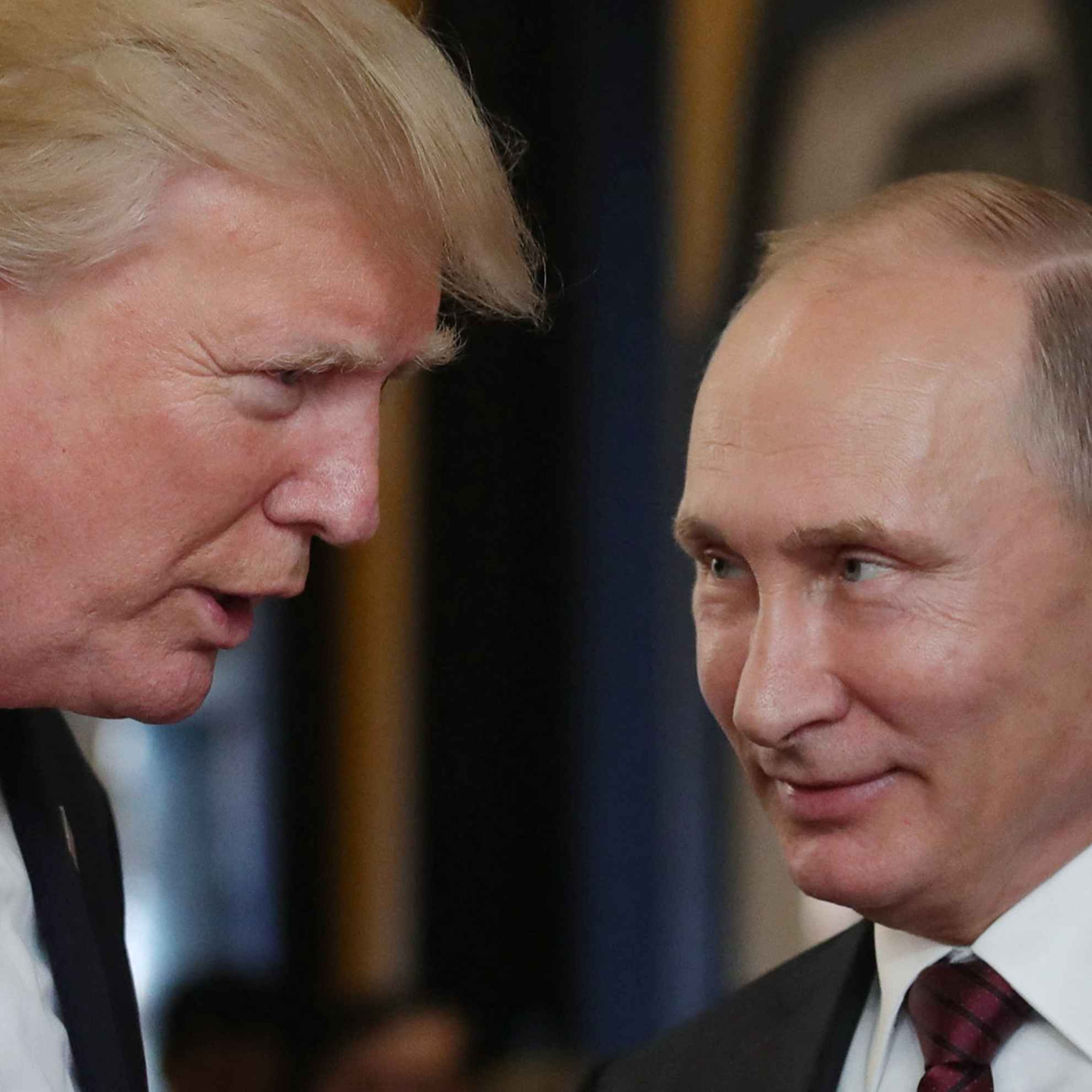
Three and a half years in to Moscow’s war in Ukraine, the Russian and American presidents are set to meet in Alaska - possibly to decide its outcome over the heads of European leaders.
Having long insisted that Kyiv would not cede any territory to Russia, Ukraine’s President Zelensky could now be softening on that position.
Tim and Gordon are joined by Ukraine: The Latest hosts Dom Nicholls and Francis Dearnley to understand how this historic summit could play out.
Plus, we read Nicola Sturgeon’s memoir so you don’t have to. The Telegraph’s best-known Scot Alan Cochrane reviews her political record.
We want to hear from you! Email us at [email protected] or find @dailytpodcast on X, Instagram and TikTok
Read: Ukraine prepared to cede territory held by Russia
Producer: Lilian Fawcett
Senior Producer: John Cadigan
Planning Editor: Venetia Rainey
Video Editor: Will Walters
Social Producer: Ece Celik
Studio Director: Meghan Searle
Executive Producer: Louisa Wells
Hosted on Acast. See acast.com/privacy for more information.


