Ask ChatGPT


 The Daily T
26 Oct 2026 · 30m · 12 chapters
The Telegraph’s “Missing Debbie” episode interview alleges BBC bias and anti-Semitism, centering on documentary producer Lucy Conn’s claim that she was targeted for being Jewish and received a £400,000 payout after grievances about staff behaviour.
Lucy Conn is a former BBC documentary maker/executive producer (Panorama, Dispatches, Today). She says she left after reporting anti-Semitism and describes later redundancy and credit removal on BBC films.
Conn says colleagues equated “evil Hamas” with “evil Zionists,” that she was told to “contextualize” Hamas attacks because she was Jewish, that a grievance process was unfair, and that she was effectively frozen out (projects removed, travel stopped, meetings restricted). She also alleges “groupthink” and that diversity efforts exclude Jewish staff.
a BBC conversation after Oct 7 (“so are the Zionists”); being told she was “biased”; setting up a Jewish staff group; HR checking her sick days during breast cancer treatment; removal of her end-credit commissioning/executive-producer credit on five films; redundancy after returning from medical leave.
Written by AI. May contain mistakes.
Lucy Conn discusses her experiences at the BBC and the challenges she faced as a Jewish producer.
“Is the BBC biased against Jewish people?”
Lucy reflects on her journey as a Jewish person working at the BBC and the complexities of discussing her identity.
“Before we come around to what you experienced, just give us a sense of what was like as a Jewish person working at the BBC before October the 7th.”
Lucy shares her feelings and thoughts following the attacks on October 7th and its impact on her work environment.
“It's kind of like saying what politics do you support?”
Discussion of a colleague's reaction to the events on October 7th and the complexities of discussing violence in the context of identity.
“Yeah And then presumably it was a horrific and traumatic time and presumably suddenly politics was being discussed in the production rooms at the BBC and what sort of things were said?”
Lucy recounts her experience at a memorial for victims of the attacks and reactions to the BBC's coverage.
“It was what was pitched as a memorial service outside Downing Street at the end of the road, opposite Downing Street, for the people who'd been murdered on October the 7th.”
Lucy discusses her efforts to support Jewish staff at the BBC and the challenges of addressing anti-Semitism within the organization.
“but that Jewish staff were struggling, not just at work with the things we were hearing, but also having to listen to our colleagues say things.”
Lucy reflects on accusations of bias related to her Jewish identity and the implications for her work.
“I was told at one point, I commissioned a film which I went on to executive produce, which won an Emmy, which I was very proud of.”
Learn about the challenges faced in producing a documentary focused on Jewish identity and anti-Semitism in the UK.
“And it was to go out on Israel's, for the BBC, it was to go out on Israel's 70th anniversary and it was to look at the relationship between Jewish people in this country and the state of Israel.”
Hear insights into the growing anti-Semitism in society and its impact on personal experiences.
“Everyone just assumes that you are of a certain mind in terms of your politics, just your worldview.”
Discover the complexities of the grievance process within the BBC and its effects on emotional well-being.
Explore the BBC's official stance on anti-Semitism and the broader implications for minority representation.
“Well, to pick up on Jacob's point, a settlement does seem to indicate some responsibility or guilt.”
The speaker shares their personal experiences with anti-Semitism at the BBC and the impact on their career and well-being.
“They didn't say HR that it didn't happen.”

Get the gist, explore an idea or ask about something said.
 Claude
On The Daily T, what are the key points of this episode?
Searching your listeningAutomatic transcript. May contain errors.
0:04The Telegraph.
0:09In 2010, newlyweds Debbie Cooper and Jamie Starbuck set off on a round-the-world honeymoon, but something wasn't right. We kind of started to scrutinise things a lot more. What exactly is going on here? Debbie was missing. We just looked at each other and said, so what's the next step? And it's like, police. He was a lovely little boy, but something happened to him to turn him into a monster. There's nothing off her, he just erased her. Missing Debbie, a new Bed of Lies podcast from The Telegraph. Out now. Is the BBC biased against Jewish people? In an exclusive interview, we speak to the documentary maker who received a£400 ,000 payout from the corporation after she said she had been victimised for her religion.
0:54They need to practice what they preach. There are signs all over the BBC that say, call it out in relation to bad behaviour. I called it out. I lost my sanity in my job. They broke me.
1:12Lucy Conn, you had a glittering career at the BBC as a documentary maker, but you ended up departing from the corporation, saying that you had experienced anti-Semitism from members of the staff and you received a very large payout. Before we come around to what you experienced, just give us a sense of what was like as a Jewish person working at the BBC before October the 7th. When I got my first, as I would call it, proper job at the BBC as a junior producer on the Today programme in my mid-twenties, I remember my mother saying to me, be careful how often you talk about being Jewish and in particular how often you talk about Israel.
1:55And I didn't completely understand why I needed to be careful. I mean, I did understand, but I didn't think that that was okay. And then I was surprised when I got to the Today programme, when I went there, Roger Mosey was the editor and Rod Liddle was the deputy editor, how comfortable I felt talking about Israel and how people would often refer to me because they knew that when I was younger, before I went to university, I'd studied at the Hebrew University in Jerusalem I'd studied Middle East politics and history and with lecturers who were both Israeli and Arab
2:30people would come to me and ask me what I thought there were lots of Israeli elections back then because as you know Israel has a very pure form of proportional representation and they ended up having elections every year or more than every year so I would be the person who knew about stuff and they would get me to write the briefings for presenters and be the specialist, which was great. I was very young.
2:56And so I didn't feel particularly scared, but I did understand that I shouldn't go round raving a flag saying I was a Zionist all the time. Over the years, I was conscious of the fact that I did need to, well, I wanted to make sure that people understood what kind of a Zionist I was, which in hindsight I don't think I should have had to do because that's my business. It's kind of like saying what politics do you support? It's my business. But I did try and justify the kind of Zionist I was because I wanted people to know that I was, as far as I saw it, an acceptable Zionist. I believe that there should be two states.
3:35I mean the way things are at the moment, it's really, really terrifying that there probably won't be peace in my time or my kids' lifetimes. But I don't want anyone to have to die on either side because of the right of the Jewish people to our homeland in their historic homeland. I'm a two-state Zionist. So I would say that to people. I had some colleagues who would say, oh, well, that's okay then. Oh, you're an okay Zionist then. And that did make me feel uncomfortable. And prior to October the 7th, about a year earlier, I was working with somebody who did challenge me about my Zionism who I did explain what kind of a Zionist I was and she said that's okay then and a little bit later I commissioned a film from a Palestinian director and his film was nothing to do with what's going on now it was a year before October 7th it was about a child growing up in Beirut and when I said to my colleague that I really wanted to look after that film the reaction I got was that she wishes that her family had known that she was working with my kind of Jew Right And that surprised me Right And then October the 7th Yeah And then presumably it was a horrific and traumatic time and presumably suddenly politics was being discussed in the production rooms at the BBC and what sort of things were said?
5:11Well, I was never afraid to talk about what I felt and I was used to, you know, I had grown up, so to speak, in news and current affairs. And I had, you know, most recently prior to doing the job that I was doing when I left, I was working as an executive producer on Panorama and before that on dispatches doing quite hardcore investigations. My job was always about exposing the truth and wrongdoing in places and amongst people. And I wasn't afraid to talk about where I thought things were wrong. I didn't think that I was putting myself at risk in any way. But I spoke to a colleague on October the 7th.
5:50As things were unfolding, our conversation was based initially on the fact that we were having a conversation about a film about Ukraine that was covered on the Today programme that I had really wanted us to acquire. because in the job that I was doing, we both acquired and commissioned films. They were having a really good chat about it on the Today programme. I sent this colleague, what's that message, saying, have you heard what's going on today? And then I said something about, I think, have you seen what's going on in Israel? And the phone rang and the colleague called me. And we carried on having the conversation about the Ukraine film.
6:29And then I thought, hang on a minute, I just sent this message about what's going on in Israel. And I think I and most other Jews that I know were really surprised by how we felt, even from that first moment. I never imagined for a moment that anything could be so horrific and I would feel it so much, even though it wasn't happening to me. It was happening to my people. And I don't think I would have ever called them my people before, but it was. They were trying to kill all Jews that day. If you watch any of the footage, it's really clear that that was the aim. Get rid of all the Jews. That's genocide, by the way.
7:05But I interrupted and I said, have you seen what's going on in Israel? Hamas are evil, aren't they? And the response I got was, so are the Zionists. And I was slightly shocked. And I was like, what? And then I got evil Hamas, evil Zionists, as though they're the same thing. And this person knew I was a Zionist. We just moved on. The conversation ended quite quickly. We moved on. I didn't want to talk about it. On the Monday, I was still really shaken up. I went to, there was a, it wasn't a rally. It was what was pitched as a memorial service outside Downing Street at the end of the road, opposite Downing Street, for the people who'd been murdered on October the 7th.
7:53We still didn't really know how many people had been murdered or how many people had taken hostage. I went because I thought it was a memorial. I know the rules of the BBC and I would not have gone if I'd thought it was going to be political in any way. Or there'd be Israeli flags being waved. I mean, maybe I should have thought about it. But anyway, I didn't get into trouble for going. But what happened when I was there was I was so surprised, so shocked and so uncomfortable that every single politician and religious leader from all different sides of the House and from all the religions in this country, every single person, they spoke very briefly about what happened on October 7th.
8:27And then they spoke about the BBC. Right. And they were having a go at the BBC for the language it was using. I mean, anyone who watched the pictures of October the 7th knew that it was a terrorist attack and that people were being terrorised. And that those people weren't soldiers who'd come after them. They were innocent civilians, babies, old people, party goers at a music festival. I don't think we really understood. We didn't really know about Nova at that point. And all they wanted to talk about was the BBC. So I sent a couple of very senior colleagues text messages and emails, not because I wanted to have a go at them or at the organisation that I was still so proud to work for.
9:05But I wanted to warn them that the story was becoming the BBC when in fact this heinous crime had happened. And that's what I thought people should be talking about. And I was also quite scared at the rally. The event wasn't a rally. if anyone found out that I was working for the BBC that I might be in a spot of bother. But I did see friends, but I was really, I could feel myself shaking inside. Anyway, the response that I got from those colleagues wasn't, oh, thanks for letting us know. It was very defensive about the language. Right. And talking about how we didn't call the IRA terrorists and Hitler a terrorist and stuff.
9:40And it was just, I was, again, really surprised. I set up a Jewish group a couple of days later and started firefighting on behalf of other Jews in the BBC. I wrote to Tim Davey, the then director general, told him that I didn't think the BBC was institutionally anti-Semitic, but that Jewish staff were struggling, not just at work with the things we were hearing, but also having to listen to our colleagues say things. And, you know, I was told at one point that I needed to understand why Hamas did what they did. Well, I don't understand why Hamas raped young women. And I saw someone else phone their parents with blood all over their hands to boast.
10:17And I was watching that thinking, oh, my goodness, my son at that point was 22, probably around the same age that he was. And the young man that he just brutally murdered and thinking, well, surely his dad's going to say, you need to go and see someone. You know, you need to stop and go and hand yourself in. But instead, they were like, oh, we're so proud of you. Go and kill some more people. And it's just like none of that. What is there to understand about it? There's no context. There's nothing that makes any sense there at all. Just a step in here, listening to your account of it, what I find so interesting is the BBC might say this is a debate, a reasonable debate about editorial position.
10:56But that first conversation you're describing, what you're saying is that the colleague you spoke to, their instinct was to say, when told Hamas is evil, well, the Zionists are evil too, which suggests it's not just a discussion about editorial standards. The position the BBC has taken editorially is perhaps a reflection of some of the prejudice within the staff. Yeah, it's not across the board with staff. There are some really good people in the BBC. Of course, but you take my point that there's surely a correlation between the two. But there is a, you know, the BBC has a code of conduct and a set of values.
11:29You know, people wear the values on their lanyards, on their passes that they're supposed to wear all the time when they're walking around Broadcasting House or any other BBC building they might work at anywhere else in the country. And we're supposed to respect each other. And we're also supposed to, you know, we were also told we should bring our authentic selves to work. So whether that was your faith, your philosophical beliefs, your sexuality, your gender, the colour of your skin, you're supposed to be able to be honest about who you are that's supposed to help to inform the conversation around the coverage but it's not supposed to be disrespectful and offensive and on the contrary you have said that you felt as though you had the word jew stamped on your forehead by by yeah by i mean around april may of 2024 absolutely i had the word jew stamped on my forehead.
12:28I was told at one point, I commissioned a film which I went on to executive produce, which won an Emmy, which I was very proud of. But I was told initially when I pitched that film to my bosses that we would have to contextualize why Hamas did it and that I wouldn't be able to look after it because I was biased. I was partial was the phrase that was used. And I was like, what do you mean? No one had ever questioned my ability to be impartial. I prided myself. I'd worked for years on the Today programme, on Panorama, on really important agenda setting programmes where understanding due impartiality was really key.
13:10I'd written right to reply letters to some really important people and institutions where understanding the editorial policy, the law, the Ofcom code, all of those things really mattered. I wouldn't have got those jobs or stayed in those jobs if I hadn't understood the rules. but I was told that I was biased and when I questioned why I was told it was because I was Jewish and when I eventually put a grievance in and I only put it in because I was made to I wasn't given a choice You couldn't talk about your own people because you were one of those people If I had been any other from any other group Yes There was a division for gay and lesbian and transgender news which was explicitly presented by gay and lesbian people Yeah, I did in 2014, I think it was.
14:00I was outside the BBC for a few years and I was asked to do, initially I was asked, I had a call saying, well, I look after a program that had the working title Kibbutz. And it was to go out on Israel's, for the BBC, it was to go out on Israel's 70th anniversary and it was to look at the relationship between Jewish people in this country and the state of Israel. it ended up we ended up getting we were making it while the um debate in the labor party under jeremy corbyn was going on about the uh the definition of anti-semitism um and it ended up becoming two parts um and um the first part was with a group of jewish people that we recorded it was kind of called constructed reality a year earlier the bbc had done muslims like us a year later, I think it was, they did black and British.
14:49So we took a group of eight Jewish people. We took them to North Manchester to experience. We took them to Heaton Park, where the stabbing was last year, to experience what it was like to be a British Jew and to look at antisemitism on campus as it was at that stage. And then we took them to Israel. Some of them had never been, some of them had, some of them religious, some of them weren't. And we examined what it was. I wasn't allowed to initially to hire anyone else on the team that was Jewish. I wasn't allowed. Eventually, I was allowed to bring on one other very junior person just to come on the trip to Israel.
15:24Well, just to come on the filming, she came to Manchester as well. I was allowed to have one other Jewish person on the team. I mean, the team were amazing, the guys who we hired, and they were much more respectful than I was of Judaism. and I don't mean I'm disrespectful but they really were amazing they were really brilliant but on those other two programs the production teams had to come from their communities I have a colleague, when we set up the Jewish group in the BBC and I told a couple of other senior colleagues that I was trying to do it one of them told me that she had tried a year earlier to set up a Jewish group at the BBC and was told, you don't need a Jewish group at the BBC, Jews run the media What?
16:02Yeah, that's what she was told Who told her that? somebody in the someone who did diversity and inclusion within the organization yeah yeah right okay that's big yeah so diversity is very important except for jewish people and i was going to ask you is that because of people feeling politically uncomfortable about israel but you saying that suggests it's it's not even just about israel well the thing is it's a perception sorry It's a perception that Jews actually aren't a minority. They're not a minority because we look like everyone else. Now, I have to say, after George Floyd was murdered, it was during COVID, I was being treated for breast cancer at that point as well.
16:46And my bosses were amazing. But I carried on working, which was questioned, actually, I discovered when we did a subject access request and one of the senior people in HR sent an email to whoever keeps my records, whoever keeps staff records, to find out whether I had had any days off in the last seven years. And she was, I just saw her reply when she was told, no, I hadn't had any, that said, oh, that's surprising, that's interesting, which I was like, I didn't make it up about having breast cancer. That would be a bit of a weird thing to do. I carried on working because I felt that, you know, I wasn't dying from COVID when everyone else was, you know, there were lots of people who were dying from COVID and I ended up doing news pieces about cancer, how to do COVID.
17:25But anyway, George Floyd was murdered. We were all called into the office and we sat safely, safe distancing and so on. And we had meetings, and this happened across the BBC, where we all listened to our colleagues of colour about what it was like to be a black member of staff at the BBC. And I had naively always thought up until that point, we'll be the same because I'm from a minority too. and you know I I realized I'm not I'm not the same because I'm not wearing it I'm not I'm not wearing it I am wearing it now I never used to but um I mean it's not the same obviously when I you know when I'm saying I'm wearing it now you know I'm touching my Star of David and I have a high um necklace as well um which is to life uh but I never wore anything that said I was a Jew and I wasn't wearing it on my skin so obviously I was I wasn't the same and I understand that we do look like the majority in this country.
18:25So it's a different set of issues but we are still a minority and the idea that Jews run the media after everything that's happened after the last three years, I mean, it couldn't be more clear. Someone who works in diversity would say that. Yeah, I'm sure that, you know, they would deny it now. Right. And maybe they're not even there anymore. But when I actually asked... So it's the one bit of the corporation where you'd kind of hope there wouldn't be racial prejudice That's right. Is the diversity. When I asked, we had lots of meetings, a few of us with, we have Tim Davey and some of his senior team.
18:54And we had at one point with the woman who at that point was head of D &I at the BBC. She's not there anymore. There have been quite a few people since then. And I said, why aren't we doing those, you know, those kind of round tables where we would sit and listen to our colleagues like we did after George Floyd? and she said in front of a lot of people we were on zoom that um that the black staff base didn't think that they worked they weren't effective enough i was like hang on a minute at least you did something they might not have been as effective as you hoped but it was more effective than what's happening now which is nothing and people are just having to sit and listen to their colleagues talk about zios or the you know the idf being evil people and you know you're not doing anything and you might be having sad faces and holding your heads at an angle going, oh, I'm really sad about this and we're really sorry.
19:47But nothing's happening. When the stabbing happened in Golders Green just down the road from where I lived, I felt, it was just after I'd left the BBC and I didn't want to leave, they made me redundant. And I felt really strongly that if the coverage had been different, maybe that stabbing wouldn't have happened. Why do you think this has changed? Because you're saying when you first joined the BBC that you were warned by your mother about the risk of anti-Semitism, you didn't find it. And it seems not just in the BBC, but in society more broadly, anti-Semitism has grown not just following the 7th of October 2023, which seems the most weird response to a brutal massacre, but it's been growing before that post-Jeremy Corbyn and so on within society at large.
20:31And I wonder whether you think this is the BBC representing its own biases, its other biases that come through in this as well, that it's become the fashionable soft left view is regrettably an anti-Semitic one. I think there's a problem in the BBC with groupthink. And I think groupthink can become very intimidating.
20:58Everyone just assumes that you are of a certain mind in terms of your politics, just your worldview. And antisemitism has become part of that, I think. And this obviously had an effect on your career that you were made redundant in the end.
21:22In 2010, newlyweds Debbie Cooper and Jamie Starbuck set off on a round-the-world honeymoon, but something wasn't right. We kind of started to scrutinise things a lot more. What exactly is going on here? Debbie was missing. We just looked at each other and said, so what's the next step? And it's like, police. He was a lovely little boy, but something happened to him to turn him into a monster. There's nothing off her, he just erased her. Missing Debbie, a new Bed of Lies podcast from The Telegraph. Out now.
22:00How did the grievance process work? Because you went through both the grievance process and then the appeal. Well, initially I just asked for help. Because I was struggling emotionally. and I was told before Christmas 2023 that I could always put a grievance in if I wanted and I was like, I don't want to, thanks. I don't want to. I'd commissioned the Nova film at that point. I had been allowed to commission the Nova film with somebody else overseeing me. That's a complicated story that I won't go into right now. So I was allowed to be the commissioner but someone would have to make sure that I wasn't biased.
22:39So the person who was punished for raising the grievance in the first instance was you. I was punished all the way through. By effectively being suspended from going into work. Over the next few months, I had projects taken away from me. I mean, I was still working on the film that went on to win a BAFTA and an Oscar this year and other films. I was still working on the Nova film, quite a few films. But I was having to do it all from home. Every now and again, I would go into the office because I just wanted to be around other people because I'm a team player and I really like working with other people.
23:14but I would have to go and hide somewhere
23:18and I was having to watch meetings that were recorded I was able to join meetings with a small part of the people that I was working with for the first half of the meeting then they'd video the whole thing and then they'd get me off the meeting and then the person who the grievance was about would join the meeting and sometimes I would have to then I would always watch them back as soon as I saw the meeting was over on Teams and sometimes I'd then have to watch back someone being rude about my projects. And so the grievance goes and is rejected by the BBC and your appeal but then the BBC makes a large settlement with you which would indicate that the BBC feels that its own grievance process didn't work but otherwise they don't give people hundreds and thousands of pounds for fun.
24:03Well I mean the immediate thing that happened was after the appeal which was ended in it took a year um but in december 2024 the appeal criticized the original grievance process a little bit um said that i was a very valued and important member of the team i said can i go back to doing my normal work because at that point i'd been stopped from traveling anywhere stopped from commissioning films i was really struggling as well with my mental health um and i'd been sent for a number of occupational health assessments all of which had said lucy will be okay if you just let her do her job anyway I go back to work in January I say I need to doctors are insisting that I take time off my weight had plummeted very very low I really wasn't in a good place no one no no one said anything I mean I wasn't my weight didn't plummet low I didn't do it on purpose so that people would feel sorry for me or anything it happened that was my response um and um I say to them I'm going to take some leave because I've been told by a doctor I need to take some leave I was asked a few hours later to come into work the next day I was sent a text message please can you come into work the next day I was told that I was going to be given clarity about my job I go in the next day and I'm told my job is being put at risk of redundancy and and then it was a it was in June I was interviewed for my job and didn't get it and then the week of the Emmys and then I went off to the Emmys and was sent an email warning me that I shouldn't say anything on behalf of the BBC when I was at the Emmys I was not there on behalf of the BBC I shouldn't go for any meetings on behalf for the BBC.
25:35So when we won an Emmy and we went on stage, I was actually terrified that I might get into trouble for going on stage. And the director thanked me on stage. I was terrified about that. Your name was actually taken off the credit for a project you'd worked at at the BBC. My name was taken off the credits for five films that I worked on. It wasn't taken off completely. What happens is on the strand that I was working on, the end credit, the final, we call it an end board. It's the final thing that you see on the screen was always the commissioning editor. so Mr Nobody against Putin which is the film that won the Oscar and the BAFTA first went out in October last year and my name's on the end board because I was the commissioner and the executive producer I'd spent a long time working on it and was very proud of it um and it was repeated in February and the week of the BAFTAs this year um and I was still working for the BBC officially at that point although I'd been completely frozen out somebody else had got the job that I hadn't been I'd been told I wasn't good enough to get and their names on the end board they hadn't been working at the BBC at that point when we made the film but hadn't been working on the BBC when the film first went out there was no reason for them to be on the end board my name was hidden in the credits and they did that with with five other films and one film that's yet to go out so I had to make sure that they didn't uh that so they had to they had to replace it and it was replaced the week before last.
26:55It was part of our settlement. It's called non-financial remedies that they would replace it. Well, to pick up on Jacob's point, a settlement does seem to indicate some responsibility or guilt. It's hard not to infer that from it. I must read the BBC's official response, quote, while we do not comment on individual staffing matters, anti-Semitism in any form is not tolerated at the BBC. If allegations or concerns are raised, they are taken seriously and investigated in accordance with our policies. We have robust procedures in place to deal with any behaviour that is contrary to our values. Final question to you.
27:32Responding to that official response, do you think anti-Semitism is tolerated at the BBC? I mean, they say they investigate. They kind of investigated it. The problem is, and it struck me, that this is the case for anybody who puts in a grievance who complains about bullying and harassment or racism in any shape or form is that people who are bullies don't often do it in front of loads of people and if you have one person saying one thing and someone else saying oh no I don't remember that happening or that didn't happen who do you believe um I said earlier I had contemporaneous notes that would have been taken seriously in court but for bbchr they weren't good enough.
28:22They didn't say HR that it didn't happen. They just said that because it was our words against each other, that they couldn't prove anything. So that means that anyone can get away with anything. But the amount of money you have received does feel like an acceptance that something went wrong in your case. And if one steps back, a Jewish person says they have been the victim of anti-Semitic language. And it's the Jewish person who ends up being told they can't come to the office. And the Jewish person who's taken off the credits of productions they've worked on, a Jewish person who's eventually let go.
29:01That to me doesn't seem, that doesn't seem right. Maybe I'm being too forgiving. The larger part of the settlement, it was in two parts. One was for the unfair dismissal claim and the other bit was for the personal injury. I had to have a lot of medical reports for the personal injury and it was very hard for them to say. I mean, there was a direct link made between what was said and done to me and how unwell I ended up being. I was in hospital when we did the mediation. I came out of hospital for the day to... I spent 12 weeks in hospital over the summer, which I'm incredibly embarrassed about.
29:33But it was very hard for them to say that the injury hadn't happened. They'll say what they say I know what happened um I'm a you know I'm a journalist who's always been respected and has never said anything but the truth um and it's it's it's really sad to me that it's like this for the BBC it's it's really sad to me that I mean I know a lot of Jewish people who've left since I left and before and a lot of Jewish people who are still planning to leave and the BBC how can the BBC function without one group in our society not being present but that's what's on the horizon if things carry on the way they are.
30:13And I don't want that to happen. I want the BBC to exist. I want the green paper on the charter renewal talked about including something about how staff are respected and so on. It needs to say that, but it also needs to be, they need to practice what they preach. There are signs all over the BBC that say, call it out in relation to bad behaviour. I called it out. I lost my sanity in my job. They break me. Lucy Conn, thank you very, very much. Thank you.
31:05best podcasts. Here's a show we recommend. There's a reason Greek mythology is still relevant after 3 ,000 years. And it's not just because humans always love a monster story. Whether you've just become hooked on Homer's Odyssey or are a dyed-in-the-wool nerd looking for a deep dive into the depths of myth and history. Let's Talk About Myths Baby is for you. Every week, I, Liv Albert, bring you stories and histories from ancient Greece and the wider Mediterranean. With over 800 episodes and counting, we've done the research so you don't have to. Find Let's Talk About Myths Baby wherever you get your podcasts.
31:57dot com.
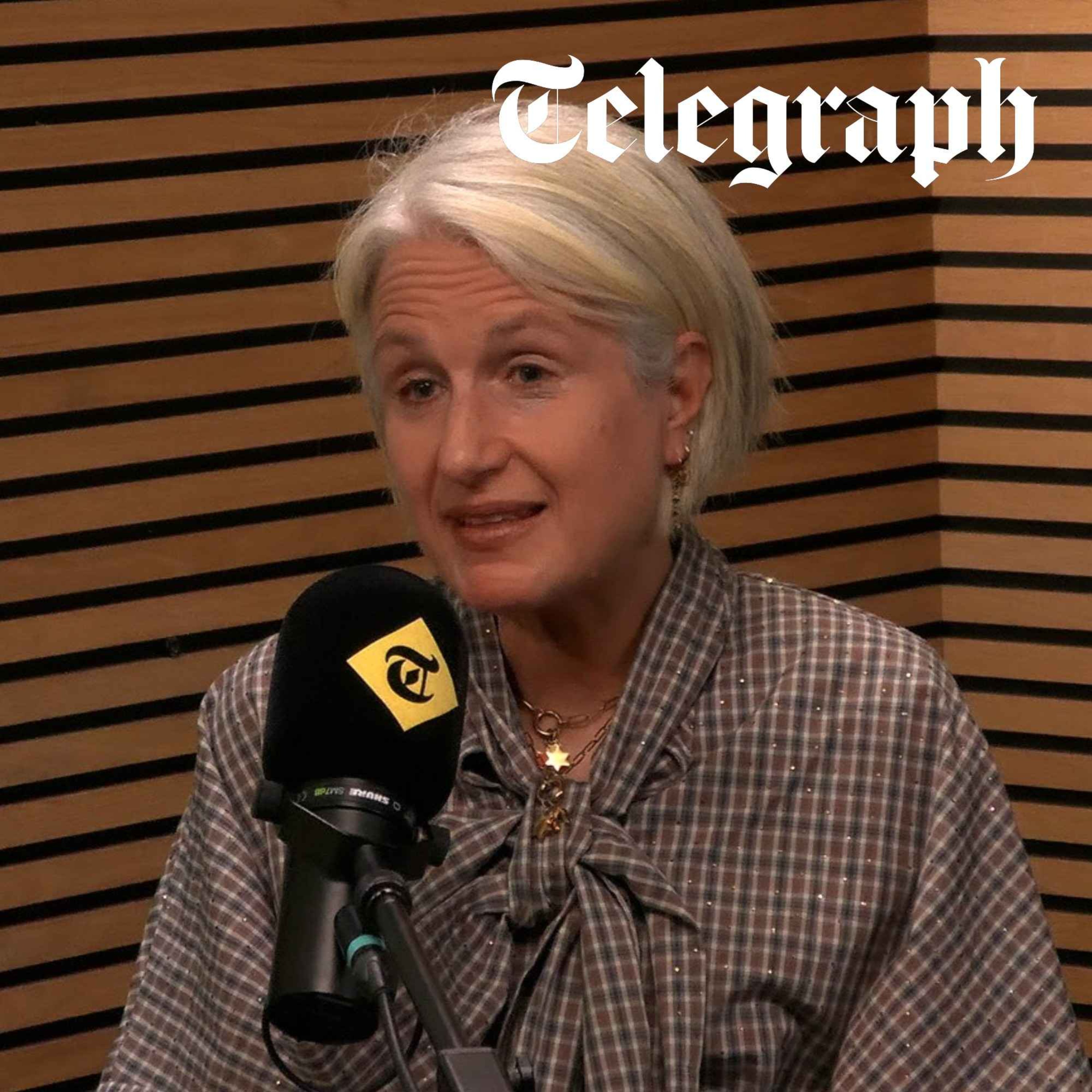
On Monday’s episode of The Daily T, Tim Stanley and Jacob Rees-Mogg are joined by Lucie Kon, an award-winning Jewish documentary-maker who won a £400,000 payout from the BBC over claims she was the victim of anti-Semitism and was bullied out of the broadcaster.
Kon said she had been victimised after the Oct 7 terrorist attacks by colleagues who said Zionists such as her were “evil”.
The BBC was also accused of adjusting her credit on several works, including Mr Nobody against Putin, for which she won an Oscar, with Kon saying: “My name was hidden in the middle of the credits.” As part of the non-financial remedies in the settlement, the BBC will give her name more prominence in the credits.
The Telegraph is the Publisher Podcast Awards' Podcast Publisher of the Year 2026
► The Daily T covers The Budget 2026 Live from 12.30pm on Wednesday 28th October.
Subscribe to our YouTube Channel to follow along as Tim Stanley, Jacob Rees-Mogg and financial journalist Georgie Frost react to Chancellor Healey's speech.
► Get more exclusive Daily T content from The Daily T+ membership! Join here.
► We want to hear from you! Email us at [email protected] or find @dailytpodcast on TikTok, Instagram and X
► Sign up to our most popular newsletter, From the Editor. Look forward to receiving free-thinking comment and the day's biggest stories, every morning. telegraph.co.uk/fromtheeditor
Producer: David Levene
Senior Producer: Emma Williams
Studio Operator: Meghan Searle
Video & Social Producer: Nada Aggour
Executive Producer: Charlotte Seligman
Editor: Camilla Tominey
Highlights:
Hosted on Acast. See acast.com/privacy for more information.