
 Ask ChatGPT



In this episode, Camilla and Tim discuss the recent turmoil at the BBC following the resignations of Director-General Tim Davie and CEO of BBC News Deborah Turness. The discussion centers around the BBC’s handling of a controversial edited clip of Donald Trump's speech related to the January 6 Capitol riots, which has led to accusations of biased reporting and a potential legal threat from Trump. The hosts also delve into claims of a "right-wing coup" against the BBC and the implications this situation has for the broadcaster's future.
Written by AI. May contain mistakes.

Get the gist, explore an idea or ask about something said.
 Claude
On The Daily T, what are the key points of this episode?
Searching your listeningAutomatic transcript. May contain errors.
0:09The BBC is facing extermination. Tim Davy has gone, Deborah Ternis is gone and the BBC is shaken by accusations of fake news. We're going to be speaking to former BBC boss Danny Cohen and addressing those claims that it was the Telegraph what done it, we've staged a coup and the BBC is an unwitting victim. Welcome to The Daily Tea with me, Tim Stanley. And me, Camilla Tomeny.
0:44Tim, if the BBC was writing a headline about this story, would it be BBC in crisis or BBC victim of coup by Telegraph? Because that's the two different strains of this that we need to discuss on today's Daily Tea. We have the resignation of Tim Davey now, the Director-General and Deborah Turnis, CEO of BBC News, so the most senior journalist at the BBC. On the back of Gordon Rayner, our colleague's leaked memo by Michael Prescott. There's been a bit of misreporting about the Michael Prescott role in all this. Michael Prescott is an advisor on whether the BBC is meeting its standards. It wrote the memo on the back of investigations carried out by another BBCer called David Grossman.
1:29Somehow Michael Prescott has been politicised in all this, like, oh, well, he had some skin in the game. He's a righty. As Prescott himself has made clear, I don't really have any strong political opinions when it comes to Trump or some of the issues raised. I'm merely saying that when David Grossman investigated a number of different stories, Trump, how the BBC handles gender ideology, how the BBC handles Gaza, how the BBC handles other matters, it has sometimes been found wanting. I love the idea that we're now being shot as the messenger. You know, we've got journalists now, Nick Robinson, you've been sketching today, the Today programme on Radio 4 this morning.
2:08Let's get into that. We've now got BBC journalists accusing the journalists who have exposed the inaccuracies and the lack of impartiality, blaming them for in some way being politically motivated in their attempts to bring down the BBC. What the BBC would say is, people say there has been a coup. That's the way the BBC always covers itself. Yes. To watch an institution scrutinise itself, which of course famously, monolithic institutions run by best friends, are the best people to scrutinise themselves. Yes, let's all mark our own homework. But to watch the BBC scrutinise itself is to watch it bend over backwards to try to give the impression of impartiality and objectivity, while also pushing a message which defends itself.
2:57Yes. So what they do is they say people say that Tim Davey has been the victim of a coup. People say that this is a right-wing plot. So to take the conspiracy theory, the theory is that you have in the BBC two parallel structures. You have the editors who make all the decisions. And then you have a governing board which contains part-time chairman who are politically appointed by past prime ministers. So what they're saying is the editors, they knew something had gone wrong, but they wanted to put up a defense of Panorama. And they wanted to put up a defense of the BBC's news operation. But the governing board, which contains these nameless right wingers, wanted to do the opposite and wanted to hold someone to account and force someone to go over it, probably the CEO of news.
3:50If this theory is true, there's any element of truth in it. It feels as though people say that Tim Davey is actually an accidental victim of it because Tim Davey did walk rather than was pushed. Yes. So people didn't necessarily want Tim Davy to go. But the point is, is they are saying there is this struggle between the daily organisation, which are the people who really make news, and these strange faceless people who sit on the board who are probably Tory plants. And that those people represent an effort by the right wing media to destroy the BBC's reputation because we regard it as a competitor who we can't beat because of the licence fee.
4:27Yes. I mean, that's rather skewed, isn't it? Shall we hear what Deborah Ternis had to say as she walked into the BBC building at Portland Place, just north of Oxford Circus in London today, presumably for the very last time? I would like to say it has been the privilege of my career to serve as the CEO of BBC News and to work with our brilliant team of journalists. I stepped down over the weekend because the buck stops with me. But I'd like to make one thing very clear. BBC News is not institutionally biased. That's why it's the world's most trusted news provider. Why did you fail to deal with the mistakes that were made?
5:07And see my teams. Thank you so much. Do you think that the journalists are corrupt? Thank you. President Tropperts, do you think the journalists are corrupt? Of course our journalists are corrupt. Our journalists are hard-working people who strive for impartiality, and I will stand by their journalism. Is there institutional bias at the BBC? There is no institutional bias. Mistakes are made, but there's no institutional bias. But why weren't the mistakes dealt with on Trump, on anti-Semitism, on women's rights? I'm sure that story will emerge, but for now I'm going to go in and see our team. Do you think the board acted against you?
5:38Do you think the board acted against you? This way, Deborah. Thank you. So Ternus does not believe that the BBC is guilty of institutionalised bias. Yes. Unfortunately for her, the public do think that, because there was a YouGov survey last year which suggested that half the general public who expected to pay the licence fee don't think that the BBC is impartial. So that's a problem. I had some interaction with Deborah Turnis because she was at the helm of NBC when I did work for that American network on both royal weddings. She had quite a controversial reputation there. She was seen as a sort of maverick and a genius, but it was described to me that she could come up with ten crazy ideas and one of them would fly.
6:18She's that kind of person. I'm not taking that away from her, but she has got a bit of a history of controversy. Yeah. Well, let's quickly shoot down the is the BBC bias or not bias point, which she has made. It has been proven to be biased by the document that fell into our lap, right? That was constructed by somebody working. David Grossman was the person who pointed out the biases and he works for the BBC. Yes. And we will in the second half of this program get more into precisely what those biases were with relation to Israel. But it has been proven to be biased. So, for example, it has been proven that Panorama edited two clips together to make it sound like Donald Trump say something he didn't say as a shorthand for what the BBC producers obviously assumed we all think Donald Trump thinks.
7:06Right. So it's been proven. These were about newsworthy events. These weren't biases in the sense of, I like her dress on Strictly Come Dancing. No. He can't dance. It's not that kind of bias. This is about issues like trans at a point in which trans policy is being rewritten by government. So it's really important that you get that right. And the BBC had a chance when presented with this evidence to respond to it, make corrections, sack someone, issue an apology. Yes, they saw the memo in May. It didn't, right. And it didn't. So it's been proven that it was biased and that it's an act of bias towards your own organisation to refuse to acknowledge that and refuse to act.
7:48Shall we listen to the Today programme? Because on it appeared David Yellen, former editor of The Sun, who has basically become a spokesperson for the BBC, seemingly, on X. Seems to think that this is all the Telegraph's fault, as you said earlier, Tim, that it's all part of a right-wing plot. I mean, I'd merely point this out in response to coup claims. Normally, a coup involves bad actors trying to replace the leadership with themselves. Let's be perfectly honest. Good point. A massive part of this story is the fact that a telegraph journalist would never be director general of the BBC and would never be put in charge of its news operation, precisely because it is institutionally left-leaning.
8:31The idea of you and I taking over any aspect of BBC News editorial control is frankly for the birds. Yeah, I don't think the BBC can show any more reformed press conferences. So let's just listen to David Yellen defending the BBC on today. What has happened here is there was a failure of governance. I don't blame the chairman as an individual, but the job of the chair of any organisation, a company, including the BBC, is to keep their CEO, their top man or woman, in post or fire them. And that has not happened because Tim Davy was not fired. He walked. And so that is the definition of a failure of governance.
9:17I mean, Tim Davy, he will be re-employed quite quickly. And, you know, his future is very bright. It's the BBC that I'm concerned about. Forgive me, David, you're uncharacteristically hinting of something without quite spelling it out. And I do want to challenge your version, but only once I've understood it. When you talk of a coup, an inside job, people think, what's he talking about? Surely it was just a perfectly legitimate row on a board about editorial standards in which one group on the board believed that the management had made some mistakes but were doing their best, and another group on the board said not nearly good enough.
9:53There's been far too many errors, far too many mistakes. We keep telling you about this. You keep failing to sort it out, and therefore we've had enough of you. Now, I understand that, and there is some truth in that. But one of the peculiar natures of my career is that I've, although I'm sat here now in the Today programme studio, I spent two decades in the newspaper business. And as you know, people know, I was editor of the science, very close to Rupert Murdoch. I've often been in rooms with, I know Michael Prescott, I know all these people extremely well, and I know how they think, and I know what they've been trying to do for a long time.
10:27Just to qualify, Yellen does present a podcast which you can hear on BBC Sounds. This is akin to inviting a spokesman for the Green Party on to talk about policy in some way. Well, who else has been vocal on this? Alastair Campbell. Right. OK. Alastair Campbell, who thinks that the BBC is biased, but not in the way that we say. Alastair Campbell thinks that the BBC has at times been too right wing, which is an opinion shared literally only by Alastair Campbell. And I think David Yellen... Well, Jeremy Corbyn, I think, would make that claim too. But yeah, David Yellen is really left wing. He used to edit The Sun.
11:01He's had a conversion. One wonders. Well, he's had a conversion experience, and I respect that, but it is channeled, as often happens with converts, but it's not like a conversion. It's like someone giving up the booze. And you know how tedious people who've given up alcohol can be speaking as two people who've given up alcohol. Yes, they can then have the zealotry of a convert. And likewise, I'm not sure I'd want to be stuck at a party with David Yelland. No. But David Yelland goes down the, it's right-wing populism, it's a coup, it's happened from the inside. Now, as you have said, normally the purpose of a coup is to take something over from the inside.
11:35No one's trying to do that. No. Other people on the Today programme said that, in fact, the goal wasn't even to remove Tim Davy from office. What was it that the board, this shadowy conspiracy of far right-wing loons, what is it they wanted? They wanted the BBC to acknowledge the bias and to apologise for it. Yes, it's not a big ask, actually. They wanted the BBC to do better. Yeah. Now, as Yellen pointed out, and here this was a sensible piece of analysis, it's a sign of institutional failure when someone like Tim Davey walks. The institution is working well if he is sacked or if he stays. So if the BBC either says, you've screwed up, you must go, or it says, we don't believe you have, you must stay and we will defend you.
12:24It's institutional failure when a leading manager walks away. and reports indicate some people suggested that meetings of this board were akin to i quote armed combat such such were the rows between news and editorial and board members yes and it took them days and days and days to come up with a decision as to what to do days and days and days to write a letter to the culture committee setting out what had happened and what the bbc believed should happen next. In other words, if you just look beyond what actually had happened, if you look beyond the row about was this a conspiracy or not, the key thing is the BBC is so labyrinthine in structure, so opaque, so strange, so arcane, as I wrote in my column, sometimes it requires approval from the Archbishop of Canterbury to show the snooker, that no one really knows who's in charge.
13:19No one can explain the structure and it can't get anything done. You think about our organisation, when things have gone awry, when changes have taken place. As you know, I've lived here during a changeover editor in which the sackings happened within a day. Yes. Right? It's just done and you move on because we've got to put a newspaper out. An organisation wasting its time on this. Yes, but it's able to be self-indulgent because... Because it's cocooned by the licence fee. Yeah, the money just keeps on rolling in, whether it's good, bad, indifferent, ugly, whatever. Yeah. Shall we just talk about Robbie Gibb very briefly because Robbie Gibb's name has been brought up as...
13:54He was once described by Emily Maitlis as an active agent of the Conservative Party. He's been on the BBC board since 2021. Now, the lefties can't bear the idea that somebody right of centre could be on the BBC board. Shock horror. Are you telling me there are no active agents of the Labour Party or the left on the board? No, but this is the whole BBC mentality. It is left is good, right is bad. And I've experienced it myself as a contributor. I've been into BBC shows. I've reviewed papers. I've gone into Newsnight, quite a recent experience, gone on Question Time. Some of the producers there seem to express surprise that I am a reasonable and decent person who is polite to staff and doesn't make too much of a fuss.
14:36The assumption is that I should be a Haridan because I work for them. I should be a battle axe automatically, right, because I'm on the right. It's like righty in being quite a nice woman shock. This is what I'm talking about when I talk about institutionalised leftism. It's this idea that anyone coming in from the right should be treated with a huge amount of suspicion, as should concepts like gender-critical views, Brexit, small-end nationalism, God forbid, small-c conservatism. Oh, goodness me, this isn't what we're used to like listening to in the junior common room at university. But actually, it would have helped them out.
15:15I've had personal kind of ruckus with Nick Robinson. I've been critical of the BBC for these very reasons in columns. He's then sent me private messages saying, well, didn't you know that I was once the chairman of the Conservative Association at university and all the rest of it? And I'm saying, but again, don't shoot the messenger. This is the perception of our readers. It's not for me to address. He's like, well, why do you come on BBC shows? To provide some balance that you really sorely need. Also because you have to. Also, you have to because it's a monopoly media provider. And because the BBC is there, there is no one else producing the programs that it produces.
15:53It keeps saying no one else would do it. Well, we don't know. No. Because it sits on the cultural landscape producing all those things. Therefore, if I want to do religion, which I talk about on the BBC a great deal, I've got nowhere else to go. No. I mean, there are Christian radio shows, etc. But because of the market dominance guaranteed by the license fee, this is the one game in town. Now, having said that, I personally like it and I like the people in it. And I feel it has always been fair and balanced towards me. If anything, I'm probably the beneficiary of positive discrimination towards conservatives.
16:30They will have people like us on because there are so few of us within the organization that they need a right wing voice, particularly a conservative Christian voice, to come on and put a point of view. But the BBC and left-wingers in general don't understand what conservatives really think about the BBC. There is a debate among conservatives about should it be subscription-based, and I've come around to that view, not out of dislike of the organisation, but because I genuinely think it needs to move there if it will to survive. But what very few conservatives actually want to do is destroy the BBC.
17:05No, we're conservers. We want to save it. I'm sure that what the people on the board wanted was the BBC to acknowledge its errors and correct them so that people would go on trusting what the BBC says. Also, I don't think there's an understanding that journalists genuinely want journalism to prosper, even if it's journalism they don't agree with. And if it's from partisan publications, I want The Guardian to prosper as much as I want this newspaper to prosper, because I believe in a free press where all views can be represented. You believe that because you're a conservative and a classical liberal.
17:41They don't believe that. Look at the cheering when the news of the world went under. Indeed, and then they absolutely revelled in hacking, in some respects rightly so, because it was a stain on our industry. It was a horrific crime, but a lot of good journalists lost their jobs and a lot of left-wing people were quite happy about it. Well, let's not also forget the nefarious tactics employed by Martin Bashir, and we're going to be speaking to somebody about that later in the week because somebody who was involved in that panorama scandal with Princess Diana's interview has written a book called Dianorama and we're going to speak to them later in the week.
18:13But the point is, you know, we're now seeing, this is classic as well, what names are now being put in the fray to replace Tim Davey? One of them is Jonathan Munro, who is one under Deborah Turnis. Now, I'm sorry, Jonathan Munro didn't think there was anything wrong with the editing of the Trump clip. He was involved in the Cliff Richard helicopter scandal where they showed live police footage of Cliff Richard's house being raided, which he then successfully actioned them for. He was also behind the rehiring of Bashir in 2016 and has been described as a great friend and protector of Hugh Edwards.
18:51Again, surely we cannot see a situation where those who have been linked to previous BBC scandals then end up being rewarded for their failure. Again, I'm scratching my head thinking, how can that be the solution to all of this? These are also people who have signed off on the big project of BBC Verify and making the BBC into this objective organisation that you must go on paying for because it's the only one you can trust. But also that it's better than every other media outlet. We've got BBC Verify. We're better than the rest. Look at the partisan gutter press. Oh, the filthy things. It's like if it wasn't for journalists like Gordon Rayner and others downstairs in this newsroom, we wouldn't even know about this.
19:33Yeah, and they're not comfortable with us reporting facts, right? But what is journalism if it isn't the reporting of facts? That's one more mark against BBC Verify. But one thing that really irritates people, who I must repeat, know this because they watch the BBC because they like it, one thing that really irritates them is the self-promotion of the BBC, that they will, in the midst of programmes, promote other programmes. And one thing they have aggressively promoted is BBC Verify. So you've seen this ad that constantly pops up of Clive Myrie. We're hunting you down. We're going to expose the liars.
20:04And they've done this because whether they remain licensed for your subscription, they want to convince the marketplace that you've got to keep paying for this because we're the only honest people and our independence is guaranteed through the license fee. Well, if you have the guarantee of the license fee and you're still lying, then you completely undercut the case for having a license fee. But also if you then move to a subscription model, if people don't trust you, why would they subscribe to you? No. Also, what a gift this is to Trump. So Trump's gone on Truth Social, praised the Telegraph for its expose of this lies, put Tim Davies' name in capital letters.
20:41And people in the BBC America are reportedly furious about this. It's ridiculous. You've just emboldened the US president. You bang on about trying to call out misinformation when it comes to the MAGA sect. And Donald Trump said the election was stolen. Donald Trump addressed that rally. People in that rally then moved towards Capitol Hill. Capitol Hill was stormed. You can build a very good case for Donald Trump as an enemy of American democracy, but you completely undermine it if you lie in the course of building that case. And then you empower a man who's been saying for four years, the left is lying about me.
21:18It looks as though they are. Also, who else have they... Another enemy they've now empowered, Nigel Farage. Another reform press conference this morning, because it's a Monday, Tim, and this is what he had to say about the future of the licence fee. The BBC has been institutionally biased for decades. APPLAUSE I well remember the Wilson report two decades ago, saying the BBC were not covering areas like Europe and immigration with any sense of impartiality. And you could, you know, add on to that net zero, climate change, all their interpretation of the horrors that have happened in Gaza. And now, of course, the United States president.
22:02We need to very much slim down BBC. When it comes to entertainment, when it comes to sport, and many other areas like that, well, they should compete against everybody else for a subscription model. That's the modern world that we live in.
22:19APPLAUSE
22:23So, the licence fee, as currently is, cannot survive. It is wholly unsustainable. Farage calling for the licence fee to be scrapped is so reformist, isn't it? Because they are in favour of tearing things up and starting again. It's one way of saving money. But I don't think it's the Tory approach, because I think quite a lot of Tories like things like line of duty and feel that the BBC is a British badge of honour. Yeah, I think you're absolutely right there. I'm also surprised that Nigel Farage wanted to defund the BBC because he's always on it. One of the key aspects of the leaked dossier is the BBC's coverage of the Gaza conflict.
23:00Danny Cohen, who used to work for Arne Tea, has accused the corporation of gaslighting British Jews. We're going to be speaking to him next.
23:19Danny Cohen, former controller of BBC One and director of BBC Television. Thank you very much indeed for joining us on The Daily Tea again. You've written a pretty punchy piece because it must be stated that the memo highlighted several areas of concern when it came to BBC impartiality. But one of the most concerning, particularly to the Jewish community of the UK, is its biases seemingly in the Gaza conflict and its coverage of it. You've written a piece for The Telegraph today headlined, this is a crisis point for the BBC, its gaslighting of Jews must end. Yeah, I think it's pretty clear that this is now, we have the evidence for that.
23:57So what we see in the Prescott report that The Telegraph have exposed over the last few days is that BBC executives were in possession of a report from one of their own journalists, Mr David Grossman, which outlined in great detail systemic bias at BBC Arabic. Now, what we also know is that BBC executives in public, in parliament and in private meetings with the Jewish community claimed that there was no systemic bias and it was just an issue of a few bad apples that they were dealing with. So that to me is very clearly gaslighting. You're presenting a reality which you know not to be true. And we know they knew it wasn't true because we now know they had a report detailing systemic bias.
24:45So I think the BBC owes Mr. Shah, the senior executive at the BBC. They owe actually the Jewish community an apology today because just like with that Trump clip, what we know with the mishandling of the Trump clip is that they knew about it and they covered it up for six months and they hoped it would go away and they thought no one would find out. And in a very, very similar way, they had a report about systemic bias at BBC Arabic, and they didn't tell anyone about it. And in fact, the opposite. They told members of the Jewish community that there was no issue of that nature, a systemic issue.
25:18And I think that's really, really serious. Danny, can you give an example of that bias at BBC Arabic? I'm thinking of its reaction to the October 7th attack. Yeah, I mean, what we know is that there are a number of reporters, although BBC will claim they weren't reporters, who celebrated the 7th of October attack. There were some who said things like on social media, that what should happen to the Jews is the same thing as Hitler did. Now, what we know from the report that was revealed recently by The Telegraph, is that two of those people, one of them appeared over 500 times on BBC Arabic. That's the BBC's own data from their report.
25:58Another of them appeared over 200 times. The BBC have claimed they weren't their reporters. If they were eyewitnesses, they seem to have been in the right place incredibly often. And those were people who, frankly, were anti-Semites and celebrated October the 7th in some cases. So we know that those were the people they were using. We now know that the BBC were aware that they'd appeared so often, but they kept denying to the Jewish community that there was a systemic issue. And that's gaslighting. There may be some NTC-mites who have contributed to the BBC, been platformed by the BBC. And as you say, you've just given that example in connection with BBC Arabic.
26:37The other problem, particularly for Deborah Ternus, who has stood down as CEO, is that, for instance, she watched that controversial Gaza documentary that needed to be pulled, didn't think there was anything wrong with it and equally as far as I can understand it Danny was confused as to which aspect of Hamas was prescribed the whole group is prescribed but she seemed to think there was a difference between the military wing and the political wing which does well it's problematic isn't it when you're in charge of the BBC's entire news output it's really problematic you're right in fact they she hadn't just seen that that Gaza doc but I know that a lot of people in the BBC were very proud of that Gaza Dock.
27:18And they were cheerleading for how powerful and strong it was. And they didn't realize, perhaps, that it had been narrated by the son of a Hamas official. In terms of the other thing you referenced, yes, there is a leaked clip of Deborah Turner's addressing an internal BBC meeting where she tries to make a distinction between the political and military wings of Hamas. There is no distinction. It's a terrorist organization. It's a prescribed terrorist organization. And Deborah Turner should have known that. Danny, how would you respond to what I suspect the BBC might say, which is that it's just very difficult to report on a war?
27:51You have to rely on people on the ground. You don't have access to the war zone. And that they are just simply trying to pick their way through a conflict, which is very complicated. I think that's very fair. I think it's extremely challenging. But I don't think that means you rely on Hamas for your casualty figures without clearly offsetting that. I don't think it means that you misreport as people like Jeremy Bowen did and then said he had no regrets about the misreporting. I think they dig themselves these holes and find it very hard to get out of them because of a kind of cultural denial. Perhaps the BBC should use this in a moment rather than claiming there's a right wing coup and circling the wagons and attacking the people who criticise the BBC on the basis of some very solid evidence.
28:37perhaps what they should do is actually see this as an opportunity for the BBC to take a step forward, to actually recognise the criticism and ask themselves, what can we do differently? How can we more fairly reflect the country, reflect the nation, reflect opinions across the nation? How do we escape from this groupthink, which is actually causing us problems? I think if they did that, the BBC has a much more chance of a secure future. Is the other difficulty for any Director General, having to juggle two very competing aims, which is for the BBC to entertain and the BBC to inform. When you were controller of BBC television, Danny, you had to deal with the fallout from Jeremy Clarkson leaving Top Gear.
29:21That's quite difficult. That's then juxtaposed maybe with concerns that might have been raised about the news operation. That direct-to-general job, it's almost asking too much of one person, perhaps. Possibly. Maybe there is a case down for a form of that and it should be broken up. But I also think alongside that, the BBC needs a really independent complaint system, because what we've seen again and again is the BBC marking its own homework and weirdly finding there's not much of a problem. We see that time and time again. And that happens because BBC executives are preparing investigations about the BBC for other BBC executives that they report to.
29:58And it's no surprise then that you don't get real transparency, real clarity and real change. So I think there's an argument for changing the structure of the BBC in such a different age. But there's also an argument for a very, very different approach to how the BBC is interrogated and how it deals with complaints. You have written that collectively the BBC has fallen into a consistent pattern of liberal groupthink. How do you think that happened? Listen, at one point, maybe I was part of it. I went to Oxford. I studied English. I was brought up in London. Maybe it's possible that I fell into that sometimes.
30:32I think the problem the BBC has is too many people in senior positions come from similar backgrounds, and they are so, so defiant that they can't get anything wrong and that they are always right. And if you have that degree of defiance and stubbornness, you can't have your ears open to why you might need to change. There was a very interesting tweet last night from Baroness Stowell. I don't know if you saw it, but she said that the BBC thinks that if it acknowledges it's got a problem, its moral superiority and credibility will be damaged. But in fact, the BBC has a problem because it won't accept it's got a problem.
31:07That's the actual thing that's causing the damage to its credibility. If you can't reform, if you can't recognise the need for change and you remain that defensive, that's going to damage your credibility long term with licensed few payers. Danny, you've been very critical of the organisation you once worked for. Where are you on the whole licence fee? Should it be scrapped? Should it be amended? Should the BBC become some kind of subscription service? Yeah, personally, I'm in favour of the licence fee. I still think it has value in a very polarised world. But they have to earn the licence fee.
31:39And they have to earn the licence fee by convincing the vast swathes of people in this country that they are truly objective. They really maintain impartiality and they don't come from a position which sees people who think differently from them, i.e. non-liberal people, as in some way lesser or the enemy. And do you think the BBC will continue to exist in its current form in, say, 10 years? I think the honest answer to those questions is always 10 years out, you just don't know. We have no idea how AI is going to transform our world, video consumption, journalism. We have no idea about that at this point.
32:18So I think in the next five years, it's good. Ten years out, when you see how much disruption is coming to how we consume media, it's just impossible to know. But if it fails to correct for this, if it fails to satisfy the culture secretary, who has come out, Lisa Nani has come out and defended and defended Tim Davy. But nonetheless, it is known that she was exasperated with him and was exasperated with the BBC up until now. if the BBC cannot correct this impression of bias, then does it weaken it politically and weaken its case for the license fee? I think it does. And that's why actually this is such a critical moment for the BBC and also an opportunity for the BBC.
32:54Because if it can recognise it has this issue with groupthink, institutional groupthink, then actually can take a step forward and be the service that we all want it to be and that we would all prize. But if it doesn't do that, if it keeps its head in the sand, if it remains very, very defensive, if it doesn't acknowledge the changes necessary, it refuses to recognise that there is liberal groupthink within the organisation, then I think its future is actually at much greater risk. Danny Cohen, thank you very much indeed for joining us on The Daily Tea. Thank you. Tim, I'd urge people to read Danny Cohen's piece.
33:28I'd also urge them to read our colleague Anita Singh's piece. She's entertainment editor. She talks about this encounter with Tim Davey at the Clifton Literary Festival. He was very angry with her and angry with the Telegraph. He was angry with the Telegraph and being very defensive. Having said that, just to balance this out, as we've been talking about a lack of balance, I was speaking to somebody earlier who is intimately involved in the BBC but actually quite critical of its lack of impartiality and all the rest of it, basically making the point for Tim Davey, saying that Tim Davy was a breath of fresh air, that he was transparent, that he wanted to take responsibility, he was very articulate, that he listened, that he had proper discussions about the issues that really mattered.
34:08So, you know, there is an argument to say that that is an unfortunate scalp, but vicariously he had to take responsibility. He also ran for office for the Conservative Party. Well, yeah, so he was more right leading the most. Nick Robinson, who presents the Today programme, was, what, president of the Oxford University Conservative Association. And I did find it quite funny to hear him debating with Charles Moore, who unusual actually isn't a Tory. He's a crossbench peer. But it was interesting to hear... Former editor of this paper, just to point out. Yeah, great man. But it was funny to hear, in essence, two Tories debating a Tory coup to remove a Tory from office.
34:43Nick Robinson has never forgiven me for written a piece that was headlined, the BBC's problem is a Nick Robinson. Oh, no. I mean, we've seen each other since and had a little bit of a giggle about it, but there you have it. Over 70 ,000 Telegraph readers voted in a poll that asked one simple question. Should Tim Davy resign? What do you think the result was? Well, unless Tim Davy voted, I should imagine it was 100 % yes. It was 95 % yes and 5 % no. And we've got some reader feedback to this saga. Sorry, saga. As you'd imagine, Tim, the readers are, I think, on the side of telegraph journalism.
35:23But also, to repeat, they're the kind of people who do actually watch the BBC. I mean, this is the paradox, right? Small c conservative people are the people who actually do use things like Radio 3, etc., which is why they care so much about the subject because they're sick of seeing it run so badly. People who read the telegraph and are critical of the BBC do both. They watch the BBC, whereas people who are supportive of the BBC but critical of The Telegraph, don't appear to read The Telegraph. And I bet don't watch very much BBC either. No. And by the way, can I just say with my GB News hat on, let's be perfectly honest, the Robinsons, the Yellens, the Adam Boltons and the whomevers of this world would be the first to be calling for GB News to be shut down if we had edited footage like the BBC Panorama documentary did of Trump.
36:08I'm just putting that out there. GB News has had people on the show who have accused it of bias and inaccuracy. Yes, we constantly have lefties on, like Michael Crick and others, saying, why are you even on the air? And we love all that because we like to have an open debate. Jeremy Newbegin, I kept paying reluctantly the licence fee for fear of having a criminal record. I've now cancelled my direct debit and will never pay it again. I wonder how many on here are of the same opinion. Boris Johnson did say that to The Telegraph, didn't he, at the weekend, that he wasn't going to pay the licence fee until Tim Davey walked.
36:39Dos Rapper writes, what about the people who actually made the documentary? Shouldn't they also be investigated? The BBC needs an overhaul of all news employees and the independent production companies that it uses. JP Jones has made the point about the chairman, Samir Shah. Why is he escaping scrutiny and accountability? If, as this report suggests, he did nothing to address the Trump, Israel and trans stories, he too should go. It should be pointed out that there has been an apology from the chair of the BBC, Samir Shah, who has said the following. Since the publication of Mr Prescott's memo, this issue has led to over 500 complaints.
37:15These are now being dealt with in the normal way. It has also prompted further reflection by the BBC. The conclusion of that deliberation is that we accept that the way the speech was edited did give the impression of a direct call for violent action. The BBC would like to apologise for that error of judgement. But really, there needs to be a whole-scale investigation into all of the claims made in that dossier, which is 8 ,000 words long. It wasn't just about Trump. It was about very many different issues. I'd like to point out there is one silver lining to this, which is the president's response, which not only praised the Telegraph, but had warm words for Great Britain.
37:51Yes. He said, on top of everything else. Hang on a minute. Can you do it in the accent? Thank you. On top of everything else, they are from a foreign country, one that many consider our number one ally. What a terrible thing for democracy. But even that was somewhat calibrated. one that many consider our number one ally. Not him. Many consider it, but nonetheless. I think he does. I think deep down he considers us his number one ally. I think he does. But to conclude, what a spectacular own goal for those who do think that Donald Trump is the enemy because by making an enemy of the BBC, he has strengthened his case for fake news undermining his own democratic mandate.
38:40Would you believe that after Tim and I left the Daily Tea studio, there was a breaking story that Donald Trump has sent a letter to the BBC threatening legal action after it doctored that clip? Of course, the US president has been hugely critical of the corporation because of that selective use of his speech ahead of the January the 6th riots. So again, this is a story that is going to run and run, not least as the BBC has responded to the US president's letter by saying it will consider what he said and respond in due course. We'll be back tomorrow on The Daily Tea at 5pm.
39:37Thank you.
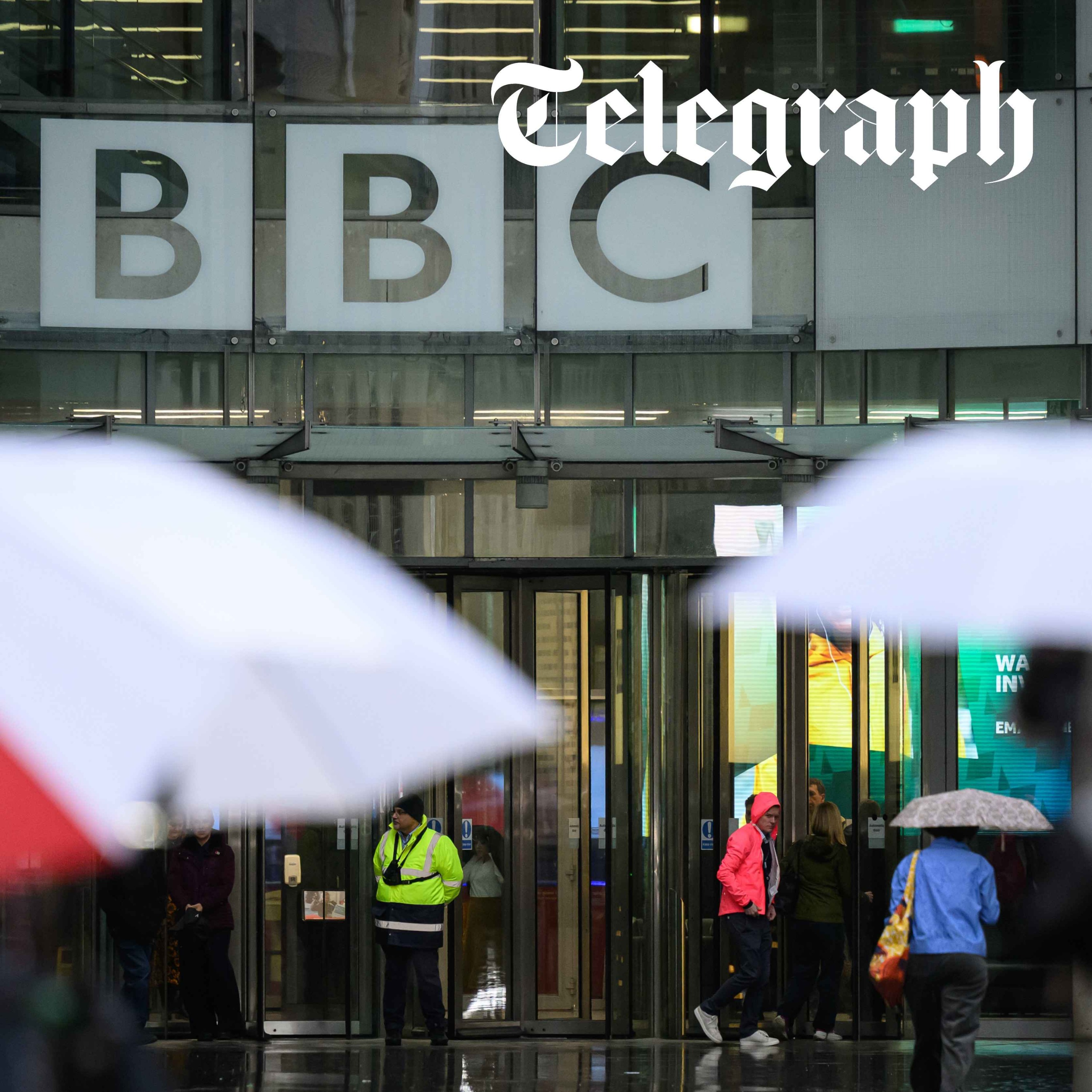
The BBC has been forced to apologise for the “error of judgement” that saw Donald Trump’s speech on Jan 6 2021 edited misleadingly – as revealed by The Telegraph – in an episode of Panorama in October 2024. Trump has also threatened legal action against the broadcaster following Sunday night’s resignations of director-general Tim Davie and chief executive of BBC News Deborah Turness.
Camilla and Tim ask what's next for the BBC, address the claims that Davie and Turness were victims of a “Right-wing coup”, and speak to former BBC director of television Danny Cohen.
We want to hear from you! Email us at [email protected] or find @dailytpodcast on TikTok, Instagram and X
► Sign up to our most popular newsletter, From the Editor. Look forward to receiving free-thinking comment and the day's biggest stories, every morning. telegraph.co.uk/fromtheeditor
Producers: Lilian Fawcett and Georgia Coan
Senior Producer: John Cadigan
Video Producer: Will Walters
Studio Operator: Meghan Searle
Executive Producer: Charlotte Seligman
Social Producer: Nada Aggour
Editor: Camilla Tominey
Hosted on Acast. See acast.com/privacy for more information.


