
 Ask ChatGPT


 The Daily T
6 Oct 2026 · 37m · 14 chapters
The episode argues Britain is in severe fiscal trouble (“third world economy”) and that Labour PM Andy Burnham is pursuing an extreme, unrealistic socialist agenda that will worsen problems. Hosts cite inflation at 3.1%, August borrowing of $18.3bn, public debt near $3tn, and “no fiscal headroom,” claiming Burnham’s plans (wealth taxes, nationalisation, PR, rejoining the EU, “undoing” 1979 reforms) are detached from constraints and will require a general election to implement. They say Burnham is “worse than” Keir Starmer because he’s ideologue/blue-sky rather than technocratic. Notable examples include defence spending targets, “mansion tax,” and past “school fees VAT” as damaging.
Alistair Heath (Telegraph commentator; verdict that Burnham is “mad, nasty and shockingly extreme”) and Annabelle (co-host/commentator; focuses on polling, Greens sagging, and Conservative economic messaging).
Written by AI. May contain mistakes.
Discussion on the dire state of the British economy including inflation and debt.
“With the polls putting them at 20%, can Kemi Badenoch's Tories rescue Britain's third world economy?”
Alistair Heath critiques Andy Burnham's leadership and policies, comparing him to Keir Starmer.
“I think we wrote a story last week saying it's$8 billion higher than had been forecast.”
Discussion on the implications of Burnham's ambitious policies and their feasibility.
“and one which will embolden the left, and to some degree will help unite the left, which was the aim, right, because what does Burnham want to do?”
Examination of the challenges Labour faces in governance and the divided right wing.
“So let's wait until we see the details of that and we might get a clearer sign of when he's going to call a general election.”
Speculation on the future dynamics of British politics and party alignments.
“All of this stuff requires a general election manifesto.”
Explore the current divisions within the right-wing political landscape of the UK.
“and migrated or re-migrated back to the Labour Party.”
Discuss the transformation of the Conservative Party's economic agenda under Kemi Badenoch.
“For the first time since Ian Dunger-Smith was leader or Michael Howard was leader, we are hearing proper free market arguments and Conservative arguments on economics.”
Analyze the challenges and fragmentation within the Conservative Party and its competition.
“There's a good question from the floor on this, from Da Vinci, which is a wonderful name.”
Learn about the challenges facing the Conservative Party in forming alliances amid divisions.
“For example, if the Tories were to help reform in a particular seat, Restore might stand to destroy reform and vice versa.”
Explore the Conservative Party's strategic focus on economic issues over immigration.
“But at the moment, the right is completely and cripplingly divided.”
Examine the significance of immigration as a moral and strategic concern for voters.
“And is this a mistake considering recent events on the South Coast?”
Gain insight into current Conservative immigration policies and their implications.
“she will lead the party into the next general election and potentially beyond, I certainly hope so.”
Understand the differences in tax policies between the Conservative Party and Reform.
“So you need to force all these people to work.”
Discuss the difficulties faced by right-wing parties in unifying voter support.
“which in those times was the Conservative Party, which had more than 40 percent of the vote and they managed to win very large majorities.”

Get the gist, explore an idea or ask about something said.
 Claude
On The Daily T, what are the key points of this episode?
Searching your listeningAutomatic transcript. May contain errors.
0:02The Telegraph.
0:39Allister Heath: Mad, nasty and shockingly extreme. That is Alistair Heath's verdict on this Andy Burnham government. But can the Tories do any better? With the polls putting them at 20%, can Kemi Badenoch's Tories rescue Britain's third world economy? We are a country of Peter Pan's. The Labour government has run out of money. Nigel Farage's party is circling the conference with a van which has the message Same Circus, Same Clowns, highlighting the fact that 92 % of Kemi Bade Nock's shadow cabinet previously served in 14 years of Conservative government. But this is not fair because many of the clans here have run away to join the Reform Party.
1:22You either go to all socialism or you don't. And this government's completely stuck. it's just Kemi. This is a year zero party that's almost starting from scratch.
1:43Allister Heath: Now I'm just going to do a very quick overview of the current state of the British economy just so we've got our facts and figures in check although I did do a panel earlier where I couldn't count up to 11 so do bear with me because as we've previously described Tim and I are quite good at words but functionally innumerate, which is why Alistair and Annabelle are here because they can actually add up. Inflation is at 3.1%. Borrowing in August was$18.3 billion. I think we wrote a story last week saying it's$8 billion higher than had been forecast. Public sector debt, nearly$3 trillion. Fiscal headroom, there isn't any.
2:22Allister Heath: Economic growth, there isn't any. things are looking a little negative, which possibly explains why in his latest blistering column for The Telegraph. Alistair, you issued the stark warning Andy Burnham's agenda is mad, nasty and shockingly extreme. I think you referred to him as a maniac, which leads us on to Tim's first question to you. Alistair, is Andy Burnham worse than Keir Starmer? Yes, but why is he worse than Keir Starmer? That's the key question. So Keir Starmer was very, very left-wing. is very left-wing. He's an ideologue. He wanted to undo Brexit. He loves international law and so on.
3:01But he was also a technocrat, obsessed with detail, with micromanagement. Andy Burnham doesn't bother with detail. He's not interested in the constraints of reality even. He's just a blue skies or rather a red skies thinker. He wants socialism and he wants it as soon as possible and he wants to blow the constitution and he's he's in love with every single one of the left-wing nostrums of the past 40 or 50 years proportional representation rejoining the eu who yes wealth taxes higher you know nationalize everything entirely undo the the fashion right revolution which began in 1979 big government i mean the whole thing right you might as well be it's you know he's a british version of François Mitterrand in the 80s or whatever.
3:47This is proper left-wing stuff. And he's unencumbered by detail, by the need to get from A to B, while Burnham was obsessed with detail getting from A to B and saying stuck somewhere in the middle, which was actually helpful on the margins from my perspective. So in answer to your question, yes, he's worse. I still think it was good to get rid of Keir Starmer because you just have to go through the motions really in these situations. but there you are, we've got Andy Burnham, and Andy Burnham thinks he gave an incredibly clever speech at the Labour Party conference, and it was a very popular speech, and one which will embolden the left, and to some degree will help unite the left, which was the aim, right, because what does Burnham want to do?
4:32He wants to recreate the Corbynite coalition, which got about 40 % of the vote at peak a few years ago, so a very dangerously high percentage of the vote he's aiming for. but the problem is he's also by sort of destroying the Overton window he has opened himself up to all sense of criticism for example if you support PR and you want a left-wing coalition in other words you want to be in coalition not just with the Lib Dems but with the Greens so in other words you're embracing what these people say and did the other day for example which was horrible and extreme and so there's lots of new problems here for Burnham and obviously Nigel Farage has been on the down for a while but suddenly he's facing a Prime Minister who wants to rejoin the European Union that's his favourite subject obviously so he might be emboldened again and for the Conservative Party especially with Kemet Badenoch embracing for the first time in 20 years you've got the Conservative Party actually embracing conservatism when it comes to the economy and so on, you suddenly have clear blue waters and a very distinct set of propositions here.
5:47So it's very exciting, but also very dangerous. Annabelle, I wonder, because he's saying stuff that seems detached from reality and is all about laying out ambitions, I wonder how much of it will actually happen. Because a lot of his proposals are either out to some commission or committee to come up with the detail, like for instance social care reform or he said that it's stuff we will do after the next election in the meantime we've got a budget coming up which will actually have to explain right now what you're going to do and he's supposed to be cooking up a 10-year plan so i wonder if picking up what alistair said there because it's all idealistic ambitious stuff should we actually be can we afford to be complacent and think yeah but it's actually not going to happen.
6:37Well, whilst I don't want to be more negative than Alistair Heath for any time, I'm afraid I don't disagree. I don't agree with your proposition there because, as Alistair says, Andy Burnham is a popular politician and he has seen a bounce in the polls since he became Prime Minister a few months ago. Yes, they're not into the 30s that they might need to win an election outright, but they are in the mid to high 20s. This will not only make him feel emboldened in terms of ramming through a more progressive left-wing agenda, but it will allow him to bring his MPs with him. One of Keir Starmer's major issues was that total breakdown in relations between him and the parliamentary Labour Party.
7:19He wasn't just almost uniquely despised by the British public. He was actually widely loathed by his backbenchers and any time that he tried to do anything, because he was such a poor communicator, he couldn't take his MPs with him. Now, none of this was helped by the fact that he had this massive majority. Actually, had his majority been closer to 326, he may have found it easier to push through a Starmer agenda. So, no, I think we're in an extremely dangerous position. One of the saving graces just for the next few months is that andy burnham is quite clearly not ready to lose some of his popularity yet which is why he kept saying this is going to be a modest minimalist budget he's pushing everything to the spring statement next year that's when the really unpopular decisions may start to come in he's going to be announcing his 10 years 10-year plan at the end of this year some are viewing that as a precursor to a Burnham manifesto.
8:19So let's wait until we see the details of that and we might get a clearer sign of when he's going to call a general election. But my gut feeling is we need to be braced for this to go on for another three years. And it's not just Burnham and the parliamentary Labour Party, many of whom are absolutely thrilled that he is now in power and they can take that leftwards lurch. lurch it's also um the british public who for so long now have been living in neverland we are a country of peter pans and at some point we are going to need to wake up we're going to have to swallow the fact that genuinely difficult decisions lie ahead over how we are going to resolve the
9:04Allister Heath: systemic problems facing this country how do we place john healy in all this because when he was Defence Secretary, he was seen as sort of quite upright, quite decent. I don't think people understood fully that he was a Brownite. We got that from his speech at conference where everything clearly is bathed in the glow of a miner's lamp. Now, he resigns on principle over this failure to get to 3 % of GDP on defence and then becomes a Chancellor who is seemingly perfectly happy with it. If we read the papers this morning, actually that goal is being pushed further and further into the distant future.
9:41Allister Heath: So is he just going to be doing Burnham's bidding, Alistair? How does he fit into all this? Because of course, he did work under Brown at the Treasury at the height of the global financial crash. Yes, but don't forget, what always happens is this, conservatives with a small c always like Labour defence secretaries, because they're the ones, and we always assume that they're more right wing than they are. Because when you're, you know, doing defence, you sound quite right-wing. It's obviously a right-coded job to have. And the problem is these people are not right-wing. They're left-wing. He's a brownite.
10:15That's the first issue. So unsurprisingly, everyone's going to be bitterly disappointed by here's a Labour Chancellor who's going to continue ramming through the mansion tax and all sorts of other taxes that he's going to dream up. That's the first issue. The second issue is we have run out of money. The Labour government has run out of money. All British governments have run out of money. That is the fundamental constraint facing our politics and no one has really awoken to that yet so there's no money and the only way you can raise serious money is doing stuff like putting up v80 by two three percent putting up income tax by two three p maybe two three p on national insurance that sort of stuff um to try and gradually move us uh you know to overtake the german level of tax and move us towards the french level of tax that's what you're gonna have to do you're gonna have to have be 80 to 25 percent in the next decade if you are continuing on the current course right and you're gonna have to have almost everyone paying the 40p tax rate and you know this is where you're going you either go to socialism and or you don't and this government's completely stuck because their manifesto promises mean they can't really do that so they get a scramble around for small very very painful very damaging crippling taxes and maybe another tax on banks, which will lead to more job cuts, more people leaving the UK, that kind of stuff.
11:32Maybe increase capital gains tax a little bit, even less investment, more people leaving the UK and so on. You know, they did the school fees tax, the tax, the VAT on school fees, complete catastrophe, a disaster, you know, school shutting, people leaving. That's all they can do. They can fiddle at the margins, but those margins are incredibly destructive and they're completely is stuck which is why the clock is ticking on a general election because a there's no money so you need massive massive tax increases b this is a Labour government that has convinced itself that Britain has shifted permanently to the left and therefore it thinks it probably can win an election on a massively tax-raising manifesto and finally everything else Burnham wants to do which is rejoin the EU, abolish the voting system, I don't know, all sorts of other things he hasn't come up with yet.
12:25All of this stuff requires a general election manifesto. So I think that's where we're going. I think this budget is just going to be a temporary budget, really. It's not really going to tell you that much about where Burnham wants to go. And yes, I think in answer to your question, Healy is just working for Burnham. Annabelle, although this is all very depressing, There's a part of me that's quite excited because for a long time, the real debate in politics has been missing because of Brexit. It moved us on to debates about identity and sovereignty, which are very, very important. But when it comes to what government does, spending, tax, the economy, those are the essentials of what people vote over.
13:06And to know that Labour has moved back to its safe space means the right will probably go back to its safe space too. But the problem we have is a divided right. And isn't that the big challenge that Labour has gone out of its conference feeling happier about itself, with a plan, doing what it always wants to do, whereas we've got to pick up the pieces of these two different parties still competing with each other and not fighting against the left? Yes. Obviously, if you look at what has happened to the Green Party in recent months, the fact that they were about 20 percent in March, they had very strong showing at the local elections in May.
13:42And since then, there's been a real sagging in their polling performance. Let's see what happens over the next few days. They had that deeply unpopular and controversial motion at their party conference over last weekend. and voters have ultimately left the Greens and migrated or re-migrated back to the Labour Party. So at the moment, Andy Burnham is in a very strong position. You're right, the right is clearly extremely divided. And whilst we talk a lot about there being a battle for dominance on the right of British politics, actually, there isn't as much overlap in this voting bloc as you might expect.
14:22It's not that if reforms start to dip significantly in the polls, those voters are definitely going to flock to Kemi Baden-Ock's embrace. There will be a lot of voters now who consider themselves to be on the right, who say that they would back Nigel Farage, but if reform implode, then they'll stay at home. They're not going to get down to their polling booth in order to vote for the Conservatives. In terms of the economic agendas of both parties on the right, they are still, I think, too interventionist, too eager to spend taxpayers' money, and they need to have a sort of fundamental rethink about what the purpose of the state is, what is an acceptable level of debt, what is an acceptable level of taxation.
15:07Reforms seem to be just shooting policies from the hip, many of which are extremely costly, and then announcing that they'll be able to make cuts of, say,£50 billion to welfare without there really being any specificity over how they would deliver that. The Tories have announced some very encouraging policies this week. Last year, of course, Kemi Badenock had that barnstorm in Conference Beach on the Wednesday where she announced that a future Conservative government would abolish stamp duty. Good. It's a widely loathed and damaging tax. She's under a lot of pressure this week to try and match that.
15:43But if you look at some of the other policies that the Tories have churned out over recent weeks, increased to the amount that we're going to be spending subsidizing childcare, for instance, of£700 million. We're already spending£10 billion on childcare. And this is an issue that until the 1990s was largely in the private sector. There wasn't really any state involvement, yet we just opened up this entirely new branch of the state without really thinking about it. they've also announced tax and spend but a ban on social media again a very popular policy a lot of parents are worried about the impact of spending too much time on social media platforms on their children on their development but you know is that necessarily a conservative policy or ought we to put our bit more faith in good old fashioned parenting things like the jobs allowance for young people yes they'll be taking away universal credit from those who haven't worked for more than or six months or more, but they're also going to be creating this additional layer of bureaucracy, cashless welfare cards.
16:49Again, this is an expansion of the state, not a shrinking of the state. So at the moment, I think from reform, they haven't quite fully decided how interventionists and dirigists they want to be on the economy because they want to try and keep traditional Red Wall voters on side. They will expect a more interventionist approach, whilst Nigel Farage is instinctively a classical liberal who campaigned for Brexit because he wanted to turn us into Singapore on Thames. And the Tories had that document out this week based on Keith Joseph's 1976, The Rights Approach pamphlet. That's all very encouraging.
17:25The underlying philosophy is very encouraging. I'm just not sure that all of the policies that they're announcing are matching it.
17:34Allister Heath: But maybe they're afraid of being too radical because of what happened to Liz Truss. Just on reform, by the way, Nigel Farage's party is circling the conference with a van which has the message same circus same clowns highlighting the fact that 92 percent of Kemi Badenock's shadow cabinet previously served in 14 years of conservative governance. But this is not fair because many of the clowns here have run away to join the reform party. Indeed. I mean yeah normally normally one runs away from home to join the circus but they've actually run away from the circus to join the squares. That's right.
18:12Allister Heath: But Alistair, as somebody who at the time of the mini-budget did like it and lured it, we had Liz Truss in the studio last week and she made very cogent points about the need to unravel the Blair and Brown legacy, the need to take on the blob, the need to take on the Bank of England. But at the same time, the Conservatives won't want to repeat history and be gobbled up and spat out by the markets if they come up with some kind of very transformative Thatcherite 2.0 agenda, perhaps. I mean, the thing to remember is, during the Liz Struss era, the Conservative Party was opposed to spending cuts, right?
18:52You had a third of backbenchers, or a third of MPs even, rebelling on everything. They didn't even want to trim welfare benefits even slightly. It was a disgrace, by the way, what happened. The left-wing takeover of the Conservative Party. And because she could only cut tax for not spending, she was obviously destroyed. You can't do that. You need to do both at the same time. And so we mustn't forget that. And I think the current Conservative Party under Kemi Badenoch is undergoing a transformation. For the first time since Ian Dunger-Smith was leader or Michael Howard was leader, we are hearing proper free market arguments and Conservative arguments on economics.
19:27This is the first time. And for 15, 20 years, we didn't hear that. and you know for for years and years and years the economic agenda in this country was set by a combination of the BBC Today program and the Resolution Foundation maybe the IFS and it went something like that. A Tory would come along and suggest a tax cut and the left would say oh but this tax cut will benefit the rich and if it benefits the rich then inequality will go up and if inequality will go up jealous people will be unhappy and feel miserable and that's really bad and therefore that's wrong. And the Conservatives would surrender and they would say, yes, we're cutting a bit of tax here, but in return we're going to hammer the rich.
20:08We're going to be even more left-wing than the left. We're going to hike the bank tax and we're going to reduce the threshold at which the 45 free tax rate begins. And we're going to whack up stamp duty, which George Osborne did time and time again. And it's all about spreadsheets and it's all about redistribution. It's all about showing that the top decile was paying more and more and more tax that if you wanted to cut tax you could only cut tax on those people in the lower death size but you always had to increase tax on the people with the higher death size and some people me and some others said this is a disaster you're destroying incentives you're undoing the such gains at some point people are going to start leaving people going to be working less and so on and what did the conservatives say no no don't worry about it And so you had massive, massive increases in taxation also on people on earning£50 ,000 or more and£100 ,000 or more.
21:03All these very weird, bizarre structures where you just earn£1 more and suddenly you're£20 ,000 or£30 ,000 worse off. Yes. Which literally paid you not to work and not to improve yourself. And all of that is changing. To Kemi Badenoch, you know, the great thing she's achieved is she's changing that. For the first time, you're seeing conservatives refusing to be cowed by this old ideology, breaking away from this sort of Osborneite, Brownite consensus, and saying incentives matter and it's okay to cut taxes on the better off, because if that unleashes work and investment and growth, you're going to increase taxable income, you're going to make the country better off.
21:45Let's stop obsessing with class warfare and stupid left-wing redistributionist politics, and let's focus on what works. And that is a very good piece of progress, I think. And to me, I'm very encouraged by that. And obviously, as you said earlier, Camilla, it started last year with stamp duty, but people don't really see stamp duty in that same way. Stamp duty is paid largely by people in London and the South East. So not everybody pays stamp duty. It's effectively tax cut on the rich, in inverted commas. But what we're seeing now is a much more explicit ability by the conservatives, an explicit willingness by the conservatives to do the sorts of stuff that transformed this country in the 80s.
22:27So that, at least, is great progress.
22:49proven for a special offer.
22:59Kemi has been working hard behind the scenes for the last year, both to take control of the machinery of the party and to establish the policymaking apparatus, the culmination of which is The Right Way, her booklet. So that's a triumph for her. The only problem, it seems to me, is that she now so dominates and controls the party that you might be forgiven for thinking she's the only MP in it. Now, the party feels a little sparse because they're turning their backs on the past, so that means no Cameroonians, no trust sites are welcome here. And also the reformers have all flounced off. So it's now, it's just Kemi.
23:35This is a year zero party that's almost starting from scratch. And I wonder, do they have a team? Where's the team going to come from? How do they build it? Well, that's why they're putting a lot of emphasis into candidate selection and vetting and trying to ensure that everyone who is selected to stand at the next general election adheres to, subscribes to Kemi's key principles. She's got her five Cs and they will be investing a lot of time and resource into that to ensure that the party isn't populated by so-called weds as it was in particularly the latter half of the 2010s. and ensuring that they have got this steady flow of talent coming into the party.
24:21I think one of the fundamental problems they have at the moment, and they're in opposition, they suffered their worst ever electoral defeat just two years ago, is if they've got a rising star in the Conservative Party, an MP, somebody on their back benches who is beginning to cause a bit of a ripple on social media, let's say they're doing an increasing amount of broadcast and they look like quite an exciting... Let's call them Lamy K. Lamy Cam. K Lamy.
24:53Allister Heath: Well, these are people who are trying to make a generic-esque kind of impact on social media, right? Yes, exactly. You take a leaf out of the Farage and perhaps less of Zia generic playbooks and they might be successful in doing this. What does Kemi Baden-Ock do at a time when people are saying that some of the shadow cabinet members, the ministers are slightly uninspiring. Does she bring these people into her shadow cabinet or does she leave them to have the freedom to speak on a whole range of policy areas? Because the moment you appoint somebody like that to be a justice minister or a health minister, shadow health secretary, then they're constrained.
25:35And everything that they say that goes beyond their specific brief will be taken as party policy in those interviews, and they risk causing problems. So I think that this is partly the dilemma that Kemi Baden-Arch has. It can be Kemi, and it can be perhaps one or two, maybe three others, but any more than that, she's going to really struggle to maintain the control that it has been really hard fought over the last couple of years.
26:01Allister Heath: There's a good question from the floor on this, from Da Vinci, which is a wonderful name. I strongly support Kemi, but do you think she is the one to take the Conservatives back into government, or will it be the next leader? Sometimes the person who fixes the party is not the one who gets the country back to the Conservatives, Alistair. I don't know. I mean, you've got a very simple problem, which is that the right is divided, right? That is the fundamental problem on the right. It's a toxic, debilitating problem, you know. So there's two, you know. Reform has failed to destroy the Conservative Party, and so far the Conservative Party has failed to destroy reform.
26:40And on top of that, you've got a new party called Restore, which has come along. So the right is incredibly divided, much more divided than at any time anyone can remember. So that's a fatal problem, which means that all of the chances are that the left will win the next election and it'll be the end, basically. So this is a very dangerous situation we're in. So we don't really know which of the two parties, reform of the Conservatives at this stage will triumph over the other one. The second related problem is that the right-wing politics in Britain is becoming regional. So in certain parts of the UK, so in other words, the Conservative Party and reform are becoming a little bit like the Liberal Democrats.
27:21They are dominant in certain areas and entirely non-existent in other areas. For example, you've got places in London or the South East or wherever where the Conservatives are doing really well right now. They are doing much better than in the last election. There's a swing in their favour. They're going to win seats. And you've got other parts of the UK where they were at 30 % maybe 10 years ago and they're now at 3%. And reform has got their strongholds and they haven't and so on. So you've got that situation, but then you've got all the seats in the middle where the two parties fighting each other could easily let the left in.
28:00And then you've got this situation where even if one of those two parties were to try and do a deal with the other party, you have Restore that will come along and blow up the apple cart anyway, which means that a deal on the right is incredibly difficult to pull off because there's not just two players now, there's three players. For example, if the Tories were to help reform in a particular seat, Restore might stand to destroy reform and vice versa. so the whole thing is very complicated um the the one ray that there's there's one small ray of hope here by the way which has been underappreciated i think the conservative parties shift to the right on economics on tax is re-embrace of supply side economics it's correct opposition to the tax it's correct view that uh stamp duty needs to be abolished it's correct view that high earners we need more high earners not fewer high earners we need people to we need more rich people not fewer rich people well that's actually a very strong tool against the liberal democrats because everyone thinks the liberal democrats are just a normal left-wing party but a lot of liberal democrat voters in for example places likest albans or actually don't like any of these personal taxes and by shifting to the right you can actually bring uh you know try and defeat the Lib Dems.
29:16So there's all these complications. But at the moment, the right is completely and cripplingly divided. And that's what every single opinion poll suggests.
29:24Allister Heath: Actually, you're echoing something that Isaac Levido said yesterday at the Telegraph Drinks with regard to those MPs. And St. Dorman's a prime example. My father lives there and I went to school there. So I'm familiar with the delights of Daisy Cooper and co. And actually, Levido is saying that when we say we need to lean into trying to win back the Lib Dems. We're not saying that it should be a Lib Dem agenda. We need to appeal to those people for whom Burnham is now far too socialist. The Greens can't even be entertained. Now they've come out with their quite horrifically offensive Zionism is racism proposal.
30:00Allister Heath: And that these are the people who are being clobbered when it comes to their private school fees, who are worried that their houses are going to incur more taxes, who are worried about their children getting on the housing ladder, which I thought was an interesting observation. Although from the floor, James asks, and I think this is quite a key question too, Tory comms strategy and announcements at conference have been largely focused on the economy rather than immigration. Are the Tories conceding this ground to reform stroke restore? And is this a mistake considering recent events on the South Coast?
30:31Allister Heath: Annabelle? I do think that they're conceding this ground to reform and restore. I think their feeling would be that they have clearly set out their position. Kemi has said, she said this time last year, that the Tories would leave the ECHR. They had a very weighty document from David Wilson which set out precisely how they would do it. And my feeling is that they don't have necessarily anything more to say on the matter at this stage. They're aware that they cannot outflank reform or restore when it comes to things like mass deportations. They are not going to try and park their tanks on that sort of territory, nor should they, particularly if they want to keep Lib Dem voters on side or win some of those Lib Dem voters over.
31:20I think it's absolutely the right approach. They focus on the economy. They know from the polling that they are still the most trusted party with the economy. They also know that economic policy is about the ninth or tenth reason why somebody would vote for reform. They're right, again, they've been doing it today to focus on things like defence, they should be talking about our resilience. These are issues that Labour are particularly interested in and that reform are particularly trusted with and so I think that at this stage in the parliamentary cycle, Kimi Baden-Württembert's approach is the right one.
31:54In terms of the previous question whether she will lead the party into the next general election and potentially beyond, I certainly hope so. She strikes me as a very competent politician who is a good communicator and has done a terrific job in getting her very disgruntled disillusioned MPs on side and actually feeling quite optimistic again there is the question of who would possibly replace her but a lot of that is going to depend on the mindset of the parliamentary conservative party and at the moment they just still need to accept the scale of the defeat in 2024 the scale of the sense of betrayal that so many voters feel towards the Conservative Party and to understand that it could be a very long road back to power, especially when it took 13 years after 97 and there wasn't a party on the right fighting them for votes.
32:49But immigration isn't just a strategic matter, is it? It's also for many people a moral and galvanizing question, Alice. I mean, a lot of voters still don't trust the Tories over it, precisely because they might feel they're making that sort of calculation. Whereas reform talks about it all the time. Because a lot of people have joined reform because of that issue, because they regard it as the existential question of our time, whether Britain will continue to be Britain in the future. So the fact that the Tories are going a bit quiet on it, there's a part of me that thinks, is that because you don't really either care about it at all or care about it as much as reform?
33:26I don't actually think they're going quiet on it. Right. So about a week ago, maybe two weeks ago, they came up with a policy which involved stripping UK citizenship from people who had recently arrived in Britain, become British citizens, but then went on to commit a crime whereby they would be condemned to five years in prison or more. That is extremely hardcore stuff. and when I spent this conference talking to members of the Shadow Cabinet and others as far as I can tell the Conservative Party's policy on immigration which is obviously still being refined just like reforms policy on immigration is still being refined where the Conservative Party's policy on immigration is incredibly tough as far as I can understand it the Conservatives now believe in net negative immigration you know, pulling out of every international agreement you know total total revolutionary change right tearing up stuff that's been the consensus for 50 60 70 years um it seems to it strikes me as a very very tough immigration policy uh one that's uh for it to not you know it's going to be quite very very hard to actually pull it off in practice it also requires massive welfare reform simultaneously and tax reform because otherwise as a country will literally ground to haunt because you've got so many people, so many UK citizens who are on welfare and are working, even though they should obviously be working.
34:51So you need to force all these people to work. Anyway, so I don't buy the idea that they are not talking about immigration where I've gone soft on immigration. I've never seen them that hard on immigration.
35:02Allister Heath: Isn't the problem, though, that they can't get the cut through because the other two parties to the right of them are also talking about immigration? So the public looks at the announcements and they're like, they've lost track. Who suggested ice vans? who suggested foreign criminals be deported, who suggested this, who suggested that. But, well, no, I think they've got a USP on economics that they've suddenly jumped into. So their USP right now, this week, maybe next week, whatever, is to be the only party that's a pro-supply side, pro-satriate tax cut party. Now, let me just explain for one second.
35:34I think reform's immigration policy and the Tory's immigration policy, I think the top lines are very, very similar. I mean, the rhetoric is slightly different. And I think the details are maybe different, but roughly similar. On tax, there's a very big difference between reform and the Tories for the first time. So the Tories want to slash tax for high earners. They want to maybe cut inheritance tax. They're against increasing capital gains tax. They want to undo the mansion taxes, all that sort of traditional conservative stuff. Reform want to slash spending and slash tax also. but they want to focus the tax cuts on increasing the personal allowance.
36:16So the people they're really targeting are, you know, middle earners, sort of middle England and so on. Alarm clock Britain. Yes. I mean, you know, personally, I think alarm clock Britain is much broader than that. But it's that sort. There's a very big difference here. And reform do not want to cut tax for high earners.
36:34Allister Heath: Yes. It's a red wall versus blue wall. Yes, but I think that's, so I think reform, I prefer the Conservative Party's tax policies to reform tax policies. I think there's a very big difference between the two. But I think the whole thing is a tragedy because the two times that the right in this country had a party, which in those times was the Conservative Party, which had more than 40 percent of the vote and they managed to win very large majorities. so in the 80s under Thatcher and in 2019 under Boris they were they united both those sides and they got both sides to speak to each other and they said you know no one knew Thatcher didn't say you know oh the working class doesn't want me to cut the top rate of tax because they don't earn it right and and vice versa and and and the Tories didn't say oh you know we're not going to do stuff that we're not going to sell off council houses to to working class people because rich people in in Surrey don't care about that.
37:31No, you had both policies together under one party. And now, unfortunately, what you've got is one party talking about the South London and people with high incomes and bankers and this and that, and the other one talking about the Red Wall. This is a really big problem.
37:45Allister Heath: Well, maybe they should band together. Hey. Uh-oh. Thank you, everyone, very much indeed for joining us for this. Tomorrow, we are going to be giving our reaction to Kemi's big speech. Let's hope it's barnstorming. enjoy the rest of conference and thank you very much for being here today
38:2898 of the top 100 U.S. accounting firms trust Bill to handle BillPay processes. Why? Because our tools are built on over a trillion dollars of secure payments. We're not just moving money. We're powering financial workflows for half a million customers. That's a level of expertise you just can't fake. Ready to talk with an expert? Visit Bill.com slash proven to get started and grab a$150 gift card as a thank you. Terms and conditions apply. See offer page for details. Thank you.
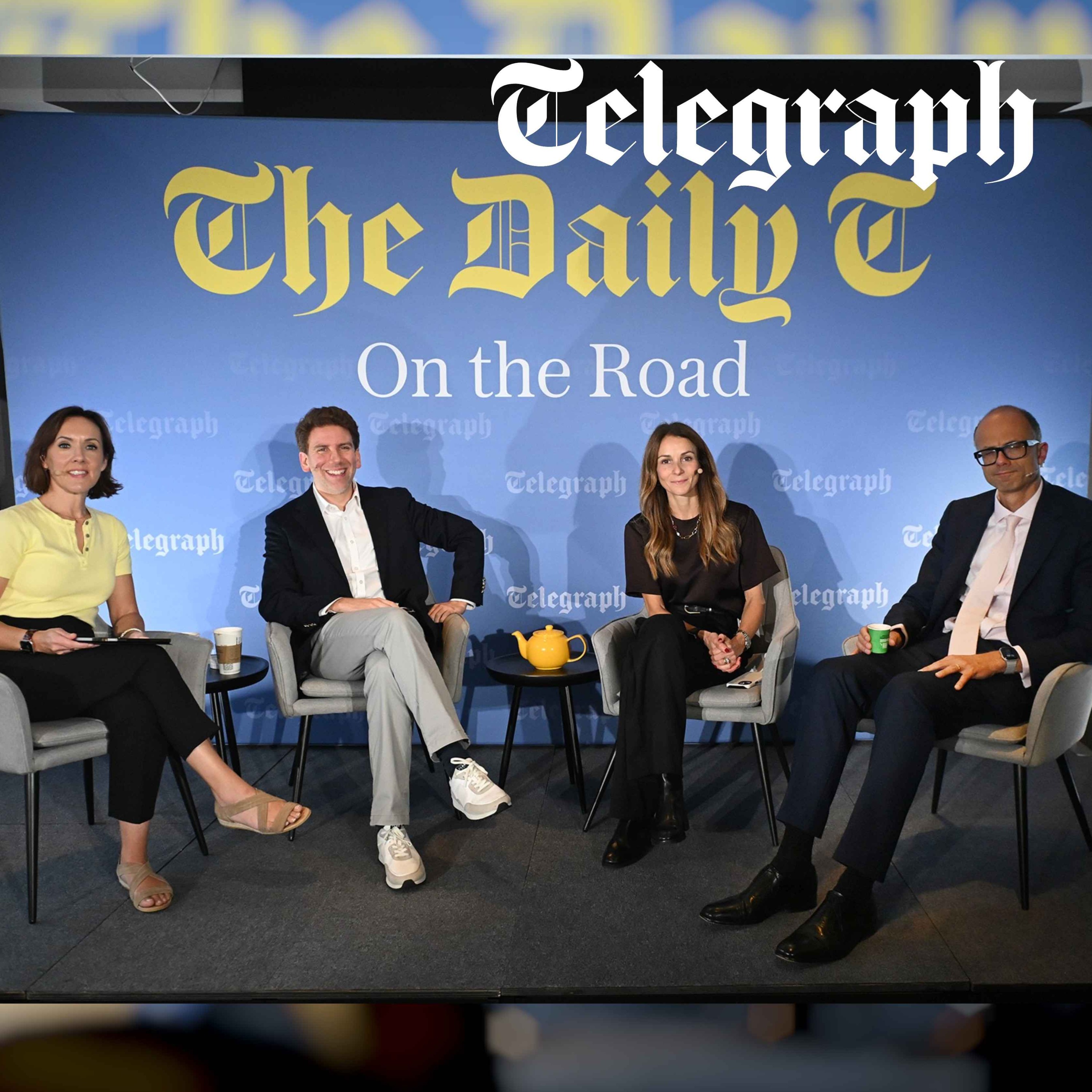
In today’s special Daily T: On The Road, Camilla Tominey and Tim Stanley sit down with The Telegraph’s Allister Heath and Annabel Denham on day three of the Conservative Party conference in Birmingham.
In front of a live audience with Camilla and Tim, Allister and Annabel give their verdict on the speech by shadow chancellor Andrew Griffith on his economic policies. They also explain how the party could unpick the latest Labour government’s socialist agenda, with Allister underlining that the country has “run out of money” under Keir Starmer and now Andy Burnham.
Other topics of discussion include the view that the Conservatives seem to be “starting from scratch” this year, why Kemi Badenoch should stay on as leader – even if the party suffers a loss at the next general election – and what it should do to attract not only Reform voters but Liberal Democrat supporters too.
► Get more exclusive Daily T content from The Daily T+ membership! Join here
► We want to hear from you! Email us at [email protected] or find @dailytpodcast on TikTok, Instagram and X
► Sign up to our most popular newsletter, From the Editor. Look forward to receiving free-thinking comment and the day's biggest stories, every morning. telegraph.co.uk/fromtheeditor
The Telegraph is the Publisher Podcast Awards' Podcast Publisher of the Year 2026
Senior Producer: Emma Williams
Social Producer: Nada Aggour
Video Producer: James England
Executive Producer: Charlotte Seligman
Editor: Camilla Tominey
Highlights:
Hosted on Acast. See acast.com/privacy for more information.


