Ask ChatGPT


 The Daily T
30 Sep 2026 · 34m · 14 chapters
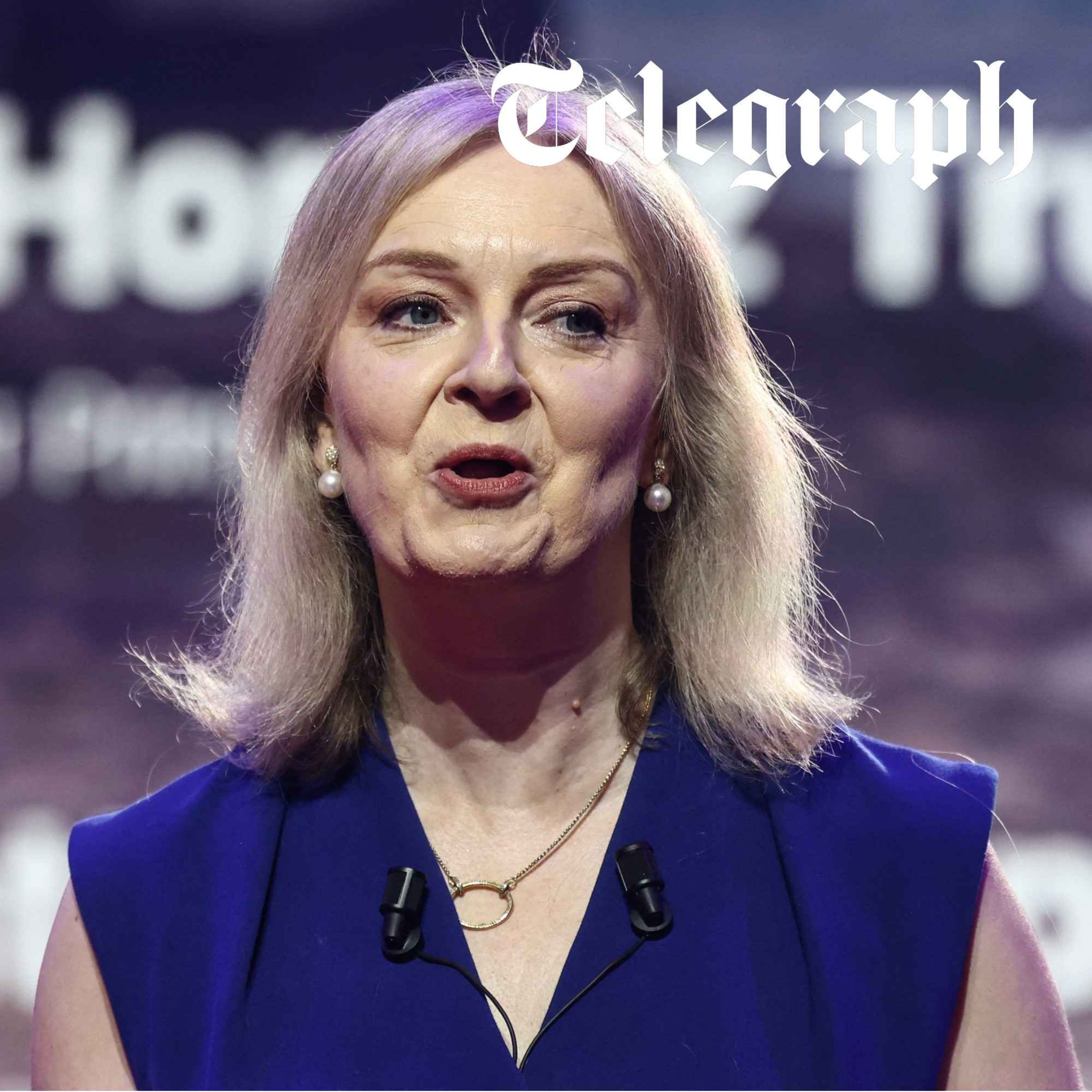
Liz Truss guest-hosts a discussion attacking Labour’s Andy Burnham, arguing Britain faces “serious trouble” (winter blackouts, weak growth, record debt, rising “guilt” yields) and that the real cause is the “Blair and Brown” constitutional and economic settlement. She claims institutions like the Bank of England and OBR are “progressive-minded,” too powerful, and can undermine governments (citing Bank of England actions around the 2022 mini-budget and Labour’s later bond-market relief). She also criticizes PR and argues reversing Blairite reforms is necessary to restore control of the state.
Liz Truss is a former UK Prime Minister. Hosts are Telegraph podcasters Taha, Sabrina, Melissa, and Tim (plus other Telegraph contributors).
Burnham’s EU rejoin and PR; triple-lock reform as “small beer”; Bank of England quantitative tightening/sales of gilts; bond yields falling after Labour’s quantitative tightening pause; OBR headroom cut from low migration; Blair-era acts creating an “unsackable” civil service and unaccountable judiciary.
fuel bailout as Keynesianism; calls to repeal Human Rights Act/ECHR; references to Trump’s day-one executive orders.
Written by AI. May contain mistakes.
Liz Truss critiques Andy Burnham's speech and outlines the UK's serious economic troubles.
“Andy Burnham in his big speech of crashing the economy.”
Discussion on the reform of the triple lock and its implications for the economy.
“We're about to go into a winter with probable blackouts.”
Truss connects current economic issues to past government policies and actions.
“You tried to do something radical and it backfired.”
Truss discusses the influence of the Bank of England on the economic downturn and its policies.
“he gave them to organizations like the Bank of England, he made the judiciary unaccountable, he created a massive quanguocracy, and the state is now on autopilot and failing.”
Debate on the effectiveness of Conservative and Labour policies in handling economic challenges.
“And at worst, they were deliberately doing it.”
Truss explores the challenges posed by powerful institutions and their influence on governance.
“So what was it you were proposing to do that this cabal of progressives were willing to destroy the British economy in order to stop?”
Truss outlines her criticisms of progressive policies and their impact on the UK.
“It's essentially supported the growth of the state.”
Discussion on the necessity of reforming institutions created under Blair and Brown's leadership.
“The problem was that the monetary policy, which does move the guilt markets, we've seen how it moved the guilt markets last week to support the Labour government, was not coordinated with the fiscal policy.”
Discussing the serious issues stemming from Blair's policies and proportional representation.
“of our country, the grooming gangs, the issues that keep being brushed under the carpet.”
Analyzing the effectiveness of political leaders and the challenges ahead for the Conservatives.
“We had Emily Thornberry calling for the confiscation of people's houses earlier this week.”
Exploring the challenges facing Conservatives and the need for a strong mandate for change.
“So what needs to happen on day one is getting rid of that Blairite legislation.”
Emphasizing the need for a unified conservative movement to address systemic issues.
“and are they prepared to admit the mistakes?”
Liz Truss reflects on her political legacy and the perception of her leadership.
“They're deliberately trying to destroy Britain.”
Exploration of Liz Truss's political stance, her impact on British politics, and comparisons with global leaders.
“Watch us on YouTube and on The Telegraph's website.”

Get the gist, explore an idea or ask about something said.
 Claude
On The Daily T, what are the key points of this episode?
Searching your listeningAutomatic transcript. May contain errors.
0:02The Telegraph.
0:30life's biggest questions. I'm Taha and with my friends Sabrina and Melissa, we're going to explore life's ungooglable questions on this new podcast with Ted. Come hang out with us on CornerPiece with new episodes every other Thursday, wherever you get your podcasts.
1:00Andy Burnham in his big speech of crashing the economy. But Liz Truss hits back and says that Britain is doomed if it believes this socialist con man, who she says is only a five out of ten. I want to see this country rescued. I think we're in serious trouble. I want to see the right win at the next election. But the starting point has to be what the right actually do. We are joined by former Prime Minister Liz Truss on the Daily Tea, back on The Daily Tea. Good to see you. Good to be here. Shall we discuss Andy Burnham's barnstorming speech, which I'm sure you enjoyed from start to finish, including the very early on jibe where he said, well, I've been in the role for 10 weeks, which is better than some people.
1:42What can I say about that? I mean, the longer he's in, the worse it's getting. Every single indicator is worse than when I was in office and the speech was a kind of schmaltz fest, as far as I'm concerned, and not dealing with a country's very, very serious problems. We're about to go into a winter with probable blackouts. The power grid's in a terrible state. We've got the worst debt now that we've had ever in our history. The guilt rates are back up again after Healy and Burnham's speech. He's talking about rejoining the EU and introducing PR. I think the country's a very, very, very serious trouble.
2:23What about what he said about reforming the triple lock in order to finance social care? That's one example of reducing spending, right? Yeah. No, I think the triple lock does have to go. I think most people recognise it has to go. Otherwise, it will take up the entire British state in due course. But it's a fairly small measure. He's only talking about 2030. 30, we've got the problem now with the fact that the country hasn't run a surplus for 30 years. So I think it's fairly small beer in comparison to the size of the problem. And everything else he's talking about is going to cost more money, nationalising industries, the state getting more involved in everything.
3:07There's no real solution to Britain's very serious economic problems. You tried to do something radical and it backfired. So when he speaks about successive government failure. To what extent do you accept that argument? I don't think you're going to accept his argument that it's all Thatcher and Brexit's fault. But some of the economic indicators that you've pointed out, low growth, high debt, high spend, high tax, that was a Tory problem and remains a Labour problem, right? What happened back in 2022 is the Bank of England caused the crisis. They announced quantitative tightening, which means the selling of government bonds the day before the mini budget.
3:48What did they do last week when John Healy's guilt rates had got higher than they had in 2022? They announced the stop of quantitative tightening. So the Bank of England effectively bailed the Labour Party out when they had a problem with the guilt market. Whereas in my case, they put fuel on the fire. And this is answering your question, Camilla, because we have a basic problem with the British state. What did Blair do? He took huge powers away from elected politicians, he gave them to organizations like the Bank of England, he made the judiciary unaccountable, he created a massive quanguocracy, and the state is now on autopilot and failing.
4:34Why did conservatives not succeed in dealing with immigration, in dealing with the economy? The answer is conservatives weren't willing to repeal all of those Blairite laws, the Human Rights Act, the Climate Change Act, the Constitutional Reform Act. That was our fundamental failing. But the problems of today were created by Blair and Brown. That's what we're still living with. If you look at what's happened to the British economy since they were in power and created this morass, it's been a disaster. this is why the Brexit thing is such a red herring because the problems did not start in 2020 when we actually left the EU they started really seriously after the financial crisis we don't want to talk too much about the past because we're not Andy Burnham who's obsessed with 1984 I think we do need to talk about the past Tim because the country does not yet agree on where it went wrong and until you agree what the problem is you can't really agree what the solution is are you saying the Bank of England deliberately made borrowing more expensive in order to crash your economic program?
5:41I'm saying at best they were negligent. Right. And at worst, they were deliberately doing it. But they knew we were going to announce our budget on the 23rd of September. Bear in mind, this is the Bank of England that had been printing money for 10 years. They announced the stopping of printing money and the start of quantitative tightening, the selling of government gilts the day before we announced our budget. We didn't know they were going to do that. That had a massive effect on the market. And if you don't think it has an effect on the market, look at the effect it had last week when the Bank of England announced the stop of quantitative tightening.
6:20The bond rates went down and John Healy was left off the hook. So you've got an exact counter example here of a Labour government that are being helped by the Bank of England and a Conservative government that was being hindered. Well, if it wasn't negligence, then it was conspiracy. And if it was conspiracy, why would they do that? Why would they act to undermine the British government? Because we have institutions in Britain who are progressive-minded institutions. You know, the governor of the Bank of England has criticised Brexit. He's advocated for net zero. He's advocated for DEI. The Office of Budget Responsibility last week, or I think it was earlier this week, have apparently said that because migration is too low at the moment, the government headroom is going to be cut by£7 billion.
7:15We have ideologically biased people in our institutions. And it's not just the financial institutions, it's also the police. Look what the former chief constable of the West Midlands did. It's in our judiciary. This is a really serious problem. So what was it you were proposing to do that this cabal of progressives were willing to destroy the British economy in order to stop? Well, what they are believers in is Keynesianism. Right. They believe in government spending generates economic growth. they do not believe the money supply expansion causes inflation. The Bank of England removed money from its equation about inflation in the 1990s.
8:05They have a particular worldview. I challenge that worldview. And what I know - You did that with a massive bailout for fuel. I mean, for things like you helped households with energy. I mean, that's classic Keynesianism, right? You bailed out the domestic fuel user. The fuel policy was a separate policy. And by the way, it wasn't reversed after I was pushed out of office. I just don't understand what you were doing that was so controversial to this group of people. I mean, things like reducing the highest rate of tax. I mean, trying to get a bit of fracking. It doesn't sound like it's worth crashing the British economy in order to stop it.
8:41I'm not sure your budget was that radical. But I was also challenging their authority. Right. So in the run up during the leadership election, I said, we now have these economic institutions, the OBR, the Bank of England, that are too powerful. I want to review their mandate. Maybe it was a mistake to openly challenge their authority, but it's certainly the case that they did not like being challenged. One of the very dysfunctional things about the way the British government works is that the Bank of England didn't tell us what they were doing. Anybody you can speak to about economic policy will tell you that monetary and fiscal policy should be coordinated.
9:18We had no idea that they were going to announce£80 billion of guilt sales the day before we announced our fiscal policy. Otherwise, we would have done it differently. That is a problem in a system. And look what the effect of quantitative easing has been. It's been disastrous. Young people can't get on the housing ladder. Yeah, it's been hugely inflationary. We had a huge asset bubble. It's essentially supported the growth of the state. And Camilla was asking earlier, why is it that the Conservative Party presided over a massive growth in the state, huge hikes in taxes? Well, we had economic institutions who are actively printing money to support that.
10:00Yes. And it's very, very difficult for a government minister to say, I don't want free money. I mean, that is the truth. Ministers are always under political pressure to do more. I think that a couple of things might be true at the same time. I think there are many listening and watching this podcast who agree with this kind of progressive infiltration of all of our Keogh institutions since Blair took power in 1997. but they may also think that you are absolving yourself of personal responsibility, bearing in mind your chancellor, Kwasi Kwarteng, has said, listen, we had the right ideas but the wrong execution, and actually think that in blaming others rather than yourself that you have gone a bit mad.
10:45I mean, that could be a fair assessment. What I would say is that... Not clinical, but... No, no, exactly. No, but what I'd say is there's huge pressure to conform in British society and British politics. I've been under huge pressure to say I was wrong. I still don't believe I was wrong. Not even in the execution. Because it was rushed. It was very, very rushed that period, wasn't it? This is a lesson, by the way, for any future prime minister. If you do not act quickly, the blob will completely swallow you up. Completely swallow you up. But you acted within a month. I mean, it was very fast.
11:23Yes, but that is what you have to do. I mean, this is what Trump did in his administration. The problem was that the monetary policy, which does move the guilt markets, we've seen how it moved the guilt markets last week to support the Labour government, was not coordinated with the fiscal policy. That was the problem. If you look at, even the Bank of England themselves produced a report in 2024 saying that their failure to regulate the pension market had caused two-thirds of the crisis. That's not even including their announcement about quantitative tightening. So, you know, I don't see what...
12:02So do you just feel you're being painted like the bogey woman of this piece? I think it's interesting... But there's a reason that is happening. There is a reason because these institutions are extremely powerful. The government of the Bank of England is more powerful than the Prime Minister. They can't be sacked according to the 1998 Bank of England Act. They are fundamentally more powerful and I tried to take them on. Now, you might say that's a mistake, but my point is we will not have proper governance of our economy in Britain until we deal with this problem because we have these unelected people who are progressives.
12:42You can read Bailey's public statements. You can look at Mark Carney's policies that he's now pursuing in Canada as prime minister. These people are progressives. They have huge power in our system. They're not elected. I think there's a massive problem. And of course, people are going to attack the woman rather than the bull because they don't want to have a serious discussion about why our country has gone so badly wrong. I think just to step in and say, I think it's also, I was really interested and you made that point about Britain in many ways is a very conformist society that expects, for instance, when prime ministers step down to do what Rishi has done and have a nice quiet column where you say interesting but fairly uncontroversial things or Theresa May stick around the commons and all that sort of thing.
13:27Whereas you have chosen to come out and continue making the arguments you were making in office. Is that the root, do you think, of some of the... Is that one reason why you've become a magnet for so much abuse and criticism is because you've just not behaved the way most former prime ministers behave. You've not. I refuse to conform. I absolutely refuse to conform. And I think this country is in very, very serious trouble. We haven't even talked about migration and the huge problems we have with Islamification in some parts of our country, the grooming gangs, the issues that keep being brushed under the carpet.
14:10There's a pretense that everything's fine and we can just talk about whether welfare benefits claimants should be able to spend their money on alcohol or not. But we're not dealing with the very serious consequences of what the Blairite state has created. And we were talking about Burnham's speech. The most worrying thing I thought in it was proportional representation. Why is that so worrying? It is so worrying because I think we only get our country back on track if we reverse Blair and Brown. That's what we have to do. That's what's created the problem. The institutions they've created, the Supreme Court, the unaccountable Bank of England, the unsackable civil service, which they did with the Constitutional Reform and Governance Act 2010.
14:58I think unless we get back control of our institutions from the progressives, this country will carry on heading in the same direction. I think if you have PR, you are not going to get a majority government able to overturn that. So I think you've baked in progressivism forever. Yeah, you've baked in. And we become Argentina. That's how serious. You make the state very large and powerful and you make it impossible to reform because you cut the link between popular protest and governmental power. So no matter how many people work out that it's not working, you can't reform it. And also you almost always guarantee that Labour has some role in some kind of coalition because the numbers will then favour them.
15:42But let's talk about... I mean, look at Germany. Look at Germany. Let's talk about some solutions to all this because Tim and I were discussing this speech yesterday. you must accept you've been up on that stage. You've been on the world stage. You know how speeches can land well and land badly. Regardless of whether you were sold on his socialist snake oil, you must admit that it was presentationally quite effective. It was an improvement on Keir Starmer. I mean, the delegates loved it. Lefties will love it, Liz Truss. That's a problem for the right. Of course, communists love communism. Of course, they're going to love it.
16:17That is what The Labour Party is moving rapidly to the left. We had Emily Thornberry calling for the confiscation of people's houses earlier this week. This is manna from heaven for these people, the type of vision that Andy Burnham has laid out, but it's a disastrous vision for our country. Of course, he's a better speaker than Keir Starmer. Of course, his voice is a lot less irritating than Keir Starmer's voice was. He looks better than Keir Starmer. There's no doubt about that. But it doesn't alter the fact. How would you rate him out of 10 looks-wise? That's a difficult question of him. How would you?
16:57Well, you're a solid nine. So what is faith? I'm pleased by that. So what is the prime minister? There you are. I've opened the bidding. Well, he's definitely over five, isn't he? There we are. What would you put Starmer on? Three. Right. I should have said 10, by the way, shouldn't I? That was really real. An attempt to be nice is going to sound really unchivalrous. I apologise. 11. You're an 11, Liz. It's too late now, Tim. You've nailed your colours to the mark. That ship has sailed. But, Liz Truss, you've just laid out why all of those institutions turned against you as a righty trying to be radical.
17:34That's not going to feel righties with much hope Because what you seem to be saying is anybody that does try to turn back time and reverse all of the Blair and Brownite reforms to our constitution, the laws they brought in, the immigration changes and all the rest of it is going to basically be either compared to a lettuce in your case or literally chewed up and spat out in less than 50 days. So how does Badenock take on board your experience, what she's now confronted with, which is a kind of man with fruttering eyelashes that even you say is higher than a five out of 10? What do the Conservatives now do?
18:15How do they take this on? The lesson, I think, from what happened, and by the way, I was the only Conservative Prime Minister who actually cut taxes. I did get rid of the health and social care levy that Rishi Sunat tried to introduce. And I think it's significant that no other conservative prime minister was even successful in doing that. They were caught in a straitjacket, and a straitjacket from the OBR, from the Bank of England, from the institutions. So what needs to happen on day one is getting rid of that Blairite legislation. But why wouldn't the markets react equally as negatively to somebody else doing that as they did to you doing it?
18:58Well, I think there needs to be a bigger base of support in the country for doing that. So I think the public have to be convinced about what the problem is. So there's a bigger movement behind change. Do you think they weren't when you were in power, basically? Yeah, they weren't. They weren't ready for what you were saying. There certainly was not an understanding, and there still isn't in the country, of why we're in the mess we're in. And there's so much fake news of it's all Brexit's fault that the country's in trouble, or it's all Liz Truss's fault, or it's all the fault of Mrs Thatcher that the country's in trouble.
19:32There's so much fake news generated that I don't think people understand the importance of what Blair did. So yes, I think that's part of the problem. The other part of it is you've got to get that wider support. I think you have to have an electoral mandate to do it, to do that level of change. And I would point to Trump. So Trump in his first term did not understand the way the American state worked. And it sought to undermine him at every opportunity. In Trump too, he came in with a slew of executive orders on day one. He came in with his own people, like Musk with Doge, with Scott Besant. He was ready to go on day one.
20:18And even then, he was put under massive pressure by the markets. If you remember, the tariff announcement got a lot of market turbulence. And he has got a very good Treasury Secretary in Scott Besant, who knows the markets. He was working with George Soros when they shorted the pound in 1992. So you need that kind of person in those key jobs who is connected to the markets, understands the markets, has a way of communicating that. That's a big task. But that's the only way I can see a future prime minister really being able to change this country is you've got to act quickly. You've got to act early.
21:05You've got to have a body of support. you've got to have understanding for the plan in the media, but you also have the people. You have to have the people ready to serve in the Bank of England, in the Treasury, etc. So is that person Kemi Badenock? Is it Nigel Farage? Is it somebody else entirely? Because when Trump ran in 2024, he was basically unopposed. I mean, okay, Nikki Haley and people like that had a go, but they didn't stand a chance. Whereas now in this country, the centre-right is divided between two fairly equally popular choices. I don't know why we call it the center right. It's sort of, we never call them the center left.
21:38We call them the left and the center right. I think we should just be the right. Okay. And be proud to be the right. I think it's part of the kind of slightly shame-faced way that a lot of conservative approach politics. And I don't think we should appease the left by calling ourselves. But who's the man? Cometh the hour, cometh the man or woman on the right? Yes. Who is it? I believe that the important thing is the ideas first. The right has to agree what the fundamental problem is. Doesn't it though? No, I don't think it does. There are people like David Starkey who are talking about a great repeal bill.
22:16There are people out there in the Conservatives and in reform talking about various aspects of it. But I don't think there's enough of a broad understanding on the right that the problem is the Blairite state. And that has to be the central change that any new government's making. And I want to see this country rescued. I think we're in serious trouble. I want to see the right win at the next election. But the starting point has to be what the right actually do. and are they prepared to admit the mistakes? Is Kemi prepared to admit that it was wrong for the Cameroons to be the heirs to Blair? Because that was where the opportunity was missed to repeal the Human Rights Act to get rid of the Supreme Court.
23:09That was a huge opportunity. It was missed partly due to Nick Clegg. We don't really want to talk about him. Who? Exactly. But then if she does that, she risks alienating more moderate Tories who might be flirting with Ed Davey that she needs to win back because she's got reform to the right of her. So it's a difficult and tricky balancing act. But when you refer to the right, are you actually thinking a combination of the radicalism of reform and the traditionalism of the conservatives might actually produce something that could take on the blob? What I'm saying is that there are still people in the Conservative Party who are basically part of the progressive establishment.
23:46They are more interested in kowtowing to the progressive establishment than they are in being conservatives. You know, people who continue to want net zero policies, people who don't really like leaving the ECHR or repealing the Human Rights Act. I've heard nobody, I think this is fair in the Conservative Party, really talk about the Bank of England and what Blair did to that institution. So I think there is still, I mean, I described the results of the 2024 election of survival of the wettest in terms of which Conservative MPs were left. And I think there is still a large element in the Conservative Party who really aren't conservative.
24:29So by that logic, if the wets survived and the dries got beaten. Not all the dries got beaten. No, but that suggests that actually there isn't a basis in the public for support for your kind of politics. People can change their minds. I think the longer things go on, people realise, you know, we're now on the seventh prime minister in 10 years. people are beginning to realise there's a system problem. So I think people can change their mind. But it's a very difficult situation the right now faces. I'm intensely frustrated by it. What I want is a - Reform is less wet though, isn't it? So are you leaning into reform?
25:06I'm focused on convincing the right that this is the change they need in order to get anything done in government. But then that requires a coming together. So you're more of an advocate of a uniting of the right in some form with a clear figurehead that can make these arguments, that can restore good old-fashioned conservative, small C, large C, common sense. That's what you seem to be asking. Well, in America, you had the Tea Party movement before Donald Trump emerged. So the movement that believed in those ideas about challenging the kind of status quo of the country club Republicans, that emerged before Donald Trump.
25:45So it may be something else changes. Who knows? I mean, politics is so volatile. Did we think we'd be where we are now four years ago? But the important thing for me is that people on the right understand that the state has been captured by the progressives. And unless we reverse Blair and Brown, we're going to get nowhere. Just take the OBR example. The OBR is fixated on the idea that the more immigration you have, the more the economy benefits and that delivers fiscal headroom. If you get a right-wing prime minister in who tries to reduce immigration, they're going to be told there's no headroom to do anything.
26:27That is a problem. This is why this institution needs to go. I do want to ask, as we wrap up, when a Labour leader, as they constantly do, says, well, things might not be going well, but the LizTrust budget is to blame, Is there any part of you that winces? Is there any bit of you which is embarrassed at the fact that you have become, for the left, their best argument for why you should never vote right wing again? I don't think it is their best argument I think it shows Well they think it is But they are not on our side, Tim No And they are fundamentally deluded They're either deluded or they're destructionists They're deliberately trying to destroy Britain.
27:12But to have become a synonym for governmental failure, even if I thought that was unfair and wrong, I'd personally still feel a bit embarrassed. Would you? You do not. I don't, because I think I am the person who's pointing out the problems with the system. That is why I come under such huge attack. This isn't just the Labour Party attacking me. The establishment in Britain that is running this country into the ground is also attacking me all the time. They're attacking me because I'm right. They wouldn't bother attacking me if I was irrelevant. Liz Truss, thank you very, very much indeed for joining us on The Daily Tea.
27:54Good to be on. Thank you.
28:00I'm Venetia Rainey. And I'm Roland Olyphant. As hosts of The Telegraph's podcast Iran the Latest, it's our job to keep you up to speed on what's going on in the Middle East. Join us every day as we ask, can the US put an end to Iran's nuclear ambitions once and for all? Who will come out on top in the peace talks? Has this war damaged America's ability to take on China? And what are the long-term implications for the wider world? Search Iran the Latest and listen wherever you get your podcasts. We're also now on video. Watch us on YouTube and on The Telegraph's website.
28:379 out of 10 are you what has happened to you did you think I was wearing my reading glasses by mistake no she's a very attractive lady I know I mean at one point I thought you were going to say would you and we would like to know the answer to that question we all have different methods in chandellism for getting the answer yeah yours is flattery I am shameless I can assure you if I had Ed Davey here I'd be saying come on you're at least a 7 Seven. Len Gibbon turning in his grave. I just never know with Liz Truss. I just, I mean, pardon the expression, but she's a salad, isn't she? She's a mixture of parts.
29:15Part conspiracy theorist. Yes. Part actually quite stateswoman-like. Yes. There are some succulent cherries in that salad, but there's also a couple of nuts. It's a Waldorf salad. It's got nuts in it. But then I don't like this. I completely sympathise with her position that she is being radical and not being appreciated for it by people who just want her to shut up and go away. I admire the persistence of the woman. She was prime minister of this country, albeit very, very briefly. I do agree in part with her diagnosis of the Blair and Brown era. I do think, and Jacob Rees-Mogg would agree with this, that if you really want to take on the blob, you need a huge kind of legislative bonfire.
30:02In order to have such radical change, you would then need a stonking majority. Neither party on the right appear to have the numbers. By the way, Labour, even with Eilash McGraw, doesn't have the numbers. We're now going into this situation where someone's calling for PR, even though we've naturally got it because of this five-stroke, six-party system. I don't feel particularly hopeful for the future. She's walking out of the studio going, maybe we should all leave the country. I mean, so what I'm saying is there are competing, contradictory feelings that I have in my head about Liz Truss. On one hand, it's all your fault.
30:35This is why Burnham's able to sell this socialist clap chap to the public because you cocked everything up. But on the other hand, yes, I do appreciate what you're saying. And I think the banks did behave extremely oddly ahead of that mini budget in a way that they haven't with Labour. And yes, you're right. Guilt yields are higher now than they ever were under you. So, you know, are Labour crashing the economy? If Labour think that guilt yields reaching above 5 % crashes the economy, then they're doing exactly the same. Liz is something very unusual, particularly in Tory politics, which is a true believer.
31:07She has a philosophy. She's motivated by ideas, not personality. And you can say whatever you like about her. She really doesn't care. She cannot be shamed because she's motored less by personal ambition and vanity, although all human beings have a dash of that, but more by the power of the ideas themselves. And that's what makes us so unusual. And it's why she was never going to shut up after she lost. And what did we really expect her to do? In a way, it's an odd convention to say that someone who's run a country, well or disastrously, shouldn't give us the benefit of their experience. And I happen to agree with her analysis.
31:45I think she's correct. Part of the problem is when she's then pushed who else shares your analysis. The only person she named was David Starkey. Now, I love David. He's fantastic. And again, I think he's right, but he's just a historian. He's not the leader of a political party. Tracism doesn't yet have purchase within either the Tories or reform. And they're not really talking about the kind of across the board systematic reform of government that she's talking about. But we can't get away from love her or loathe her. And as much as there is much about her that I find to admire, she has become an easy weapon to deploy against the right or the center right.
32:29And sometimes you do wish that that wasn't there. And that she might go quiet for a little bit because every time she does appear on TV to say something like we should abolish the Bank of England, it just empowers the left to say that's a reminder of when you had this disastrous period in government. I mean, this is really interesting, isn't it? Because yesterday you and I were discussing the lack of a kind of conservative dialogue on economics. You know, there's been a vacuum for the last 15 to 20 years as conservatives have given up making the case for free markets and capitalism, making very clear and cogent thatch-right arguments for why socialism is a terrible idea.
33:11The one person on the right who's making them quite clearly and quite loudly is Liz Truss. Yes. Yet no one's really listening. Yeah. Or if they are listening, they're reacting with, well, you crashed the economy and you're a bit mad. And the other dimension to this is there still isn't really a vibrant ecosystem in this country for that kind of conversation. I know we have think tanks. I know we now have two parties on the centre, right? But where is there an ecosystem for having that conversation? It's America. Yes. So Liz Truss has been drawn into the orbit of Donald Trump. Like with Havia Mela, the biggest experiments in popular capitalism are taking place abroad.
33:50They're not happening here. So we've seen an Americanization of Lizzie, to paraphrase the Americanization of Emily. We've seen Liz Truss be Americanized. And I think that's one more reason why the British audience has turned off. because I do feel some of what she says resonates more strongly in Washington, D.C. than it probably resonates in North Norfolk. Well, she seems very MAGA and some of his stardust is rubbing off at the moment with the midterms looking decidedly dicey. And therefore, also, she's clearly admiring of this presidential system. If you want to take on the blob, then what you really need is to be presidential and issue a load of executive orders.
34:33Yes. And therefore, if she wants to kind of bypass actual lawmaking because things have got that desperate, then that worries people because it doesn't seem particularly British. This is the other thing. She's looking at Trump probably with a degree of envy because he was able to do the radical things she wanted to do without being gobbled up and spat out. But his tariffs plus his war in Iran have probably contributed to inflation, especially at the petrol pump in the United States. Has he brought down the price of eggs? No, I don't think so. He ain't perfect. And who is the other person who the online right point to as an exemplar?
35:10It's Havia Millay. I'm not going to dispute the economic revolution seems, from what I've read, to have worked. But this is the guy who we might end up going to war with over the Falklands. And he's got a chainsaw. And he's got a chainsaw. Don't worry, we've got a destroyer somewhere. With friends like these, this is the problem with the centre-right, Donald Trump, Liz Truss, Havia Millay. With friends like these, who needs Andy Burnham?
35:54Do you keep hearing podcast ads like this one, for example, but always wonder how you actually get involved with them for your own brand or organization? Well, it's easier than you think. We're Acast, and we give you the platform to do it all yourself. Browse thousands of popular podcasts, choose the shows that match your perfect audience, set your budget, and launch. And if you want a hand, our podcast specialists are there to help you launch with confidence. This is podcast advertising without barriers. Get started at acast.com slash advertise.
In Wednesday’s episode of The Daily T, Camilla Tominey and Tim Stanley are joined by Liz Truss, the former prime minister. They discuss Andy Burnham’s plans for a national care service and whether the changes to the triple lock will be able to fully fund them. Ms Truss is highly critical of the Bank of England and the Office for Budget Responsibility, claiming they are not independent, adding that “the state has been captured by the progressives”.
Tim asks Ms Truss whether she is embarrassed to be the example the Left gives for why not to vote for the Right, and whether she still believes she was right about her mini-Budget. Ms Truss responds: “They attack me because I’m right, they wouldn’t if I was irrelevant.”
► Subscribe to our new Daily T YouTube channel: youtube.com/@dailytpodcast
► Get more exclusive Daily T content from The Daily T+ membership! Join here: youtube.com/@dailytpodcast/membership
► We want to hear from you! Email us at [email protected] or find @dailytpodcast on TikTok, Instagram and X
► Sign up to our most popular newsletter, From the Editor. Look forward to receiving free-thinking comment and the day's biggest stories, every morning. telegraph.co.uk/fromtheeditor
The Telegraph is the Publisher Podcast Awards' Podcast Publisher of the Year 2026
Producer: David Levene
Senior Producer: Emma Williams
Social Producer: Nada Aggour
Video Producer: James England
Executive Producer: Charlotte Seligman
Editor: Camilla Tominey
Highlights:
Hosted on Acast. See acast.com/privacy for more information.