
 Ask ChatGPT


 The Daily T
22 Jul 2026 · 44m · 19 chapters
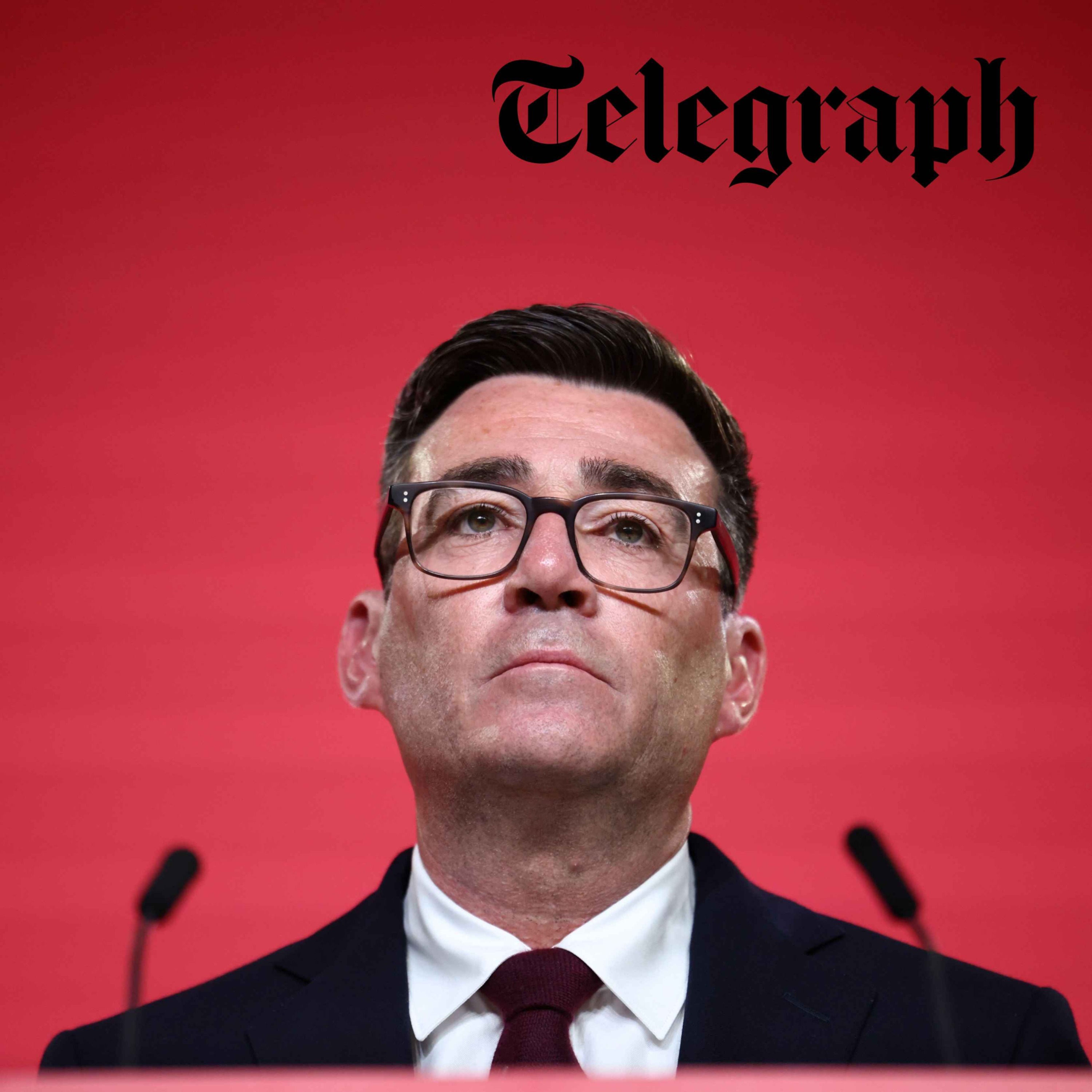
The episode argues that Andy Burnham’s first days as UK Prime Minister are marred by a “hot mic” joke about early release of prisoners, which sparks fury because it implies criminals—including killers—may be freed under Labour’s new Sentencing Act. Hosts say the joke references an old Theresa May/Ken Clarke quip, but claim it was badly timed given the recent killing of PC Andrew Harper. They cite Telegraph reporting that Harper’s killers, Albert Boas and Jesse Cole (jailed for manslaughter in 2020), could be eligible for early release, prompting Harper’s mother Debbie Adlam to call it an “insult.” Burnham and Justice Secretary Alex Norris are said to review the policy; the main driver Henry Long is not eligible.
Guito Harry, former head of communications for Number 10 under Boris Johnson.
Written by AI. May contain mistakes.
Discussion on the hot mic incident involving Labour ministers and its implications.
“Labour ministers caught on camera joking about the early release of thousands of criminals.”
Exploration of public response to the potential early release of criminals.
“They have to say bad taste joke about the evil, horrific record of the last Conservative government.”
Details about the tragic case of P.C. Andrew Harper and implications for justice.
“People will no doubt remember what happened back in August 2019 when P.C.”
Analysis of the new sentencing act and its effects on crime and punishment.
“Also, can I just say, 13 years in prison in 2020, they shouldn't be being considered for release at all for at least a decade, Tim.”
Discussion on the philosophy behind crime deterrence and rehabilitation.
“It does that by taking prison away from whole classes of offenders, particularly those who are in the early stages of a criminal career.”
Discussing the eligibility of certain prisoners for early release and public perceptions.
“I think, to be fair, not quite murder because you're still going to get a very stiff sentence for that.”
Examining the distinctions between types of crimes and their sentencing implications.
“I think some listeners will be of the view that actually someone committed a serious fraud, prison should be an option.”
Exploring how the public's perception of crime and policing has shifted over time.
“So it's also the kind of emotional rhetoric around, again, the other thing that's said about people in prison, you know, a lot of them are illiterate and innumerate.”
Discussing the cultural narratives around crime and their impact on public sentiment.
“It's a whole generation that has no, doesn't consider the police in that vein at all.”
Analyzing the perceived increase in disorder and its implications for society.
“who are just young and know not what they do.”
Critiquing the inappropriateness of joking about serious topics like prison releases.
“And I feel very bad about judging them for that.”
Introducing the next guest who will discuss communication challenges in politics.
“It's a really serious concern for the electorate.”
Learn about the elusive figure of Nirav Modi and the implications of his case.
“He's one of the most sought-after criminals in India.”
Explore the impact of being overheard in political settings and its repercussions.
“former head of communications for Number 10 under Boris Johnson.”
Discuss the challenges and expectations facing new political leaders in the UK.
“We now live in a world in which it's much easier for politicians to be overheard.”
Analyze the balance between media scrutiny and political decision-making.
“Now, I am encouraged by an appointment of someone like John Healy, who I think is a man of great integrity.”
Examine allegations of double standards in political accountability and leadership.
“of him basically only speaking to friendlies so far?”
Consider the importance of evaluating politicians based on their actions over past mistakes.
“Obviously, kind of allegations around Boris Johnson and his behaviour and his misdemeanours characterised his time in office.”
Explore the perceived double standards in political accountability and character judgment.
“of Chancellor of the Duchy of Lancaster, which is effectively Deputy Prime Minister.”

Get the gist, explore an idea or ask about something said.
 Claude
On The Daily T, what are the key points of this episode?
Searching your listeningAutomatic transcript. May contain errors.
0:02The Telegraph.
0:30the world's largest podcast marketplace. We let you browse shows, see who's listening, and book host-read sponsorships or run your own ads all from one platform. Transparent pricing, real-time data, complete control. Start advertising on podcasts by visiting acast.com slash advertise.
0:51They are literally laughing at us. Labour ministers caught on camera joking about the early release of thousands of criminals.
0:59Camilla: Just an isolated hot mic incident or does it say something more troubling about Andy Burnham's fledgling premiership? Welcome to The Daily Tea with me Tim Stanley and me Camilla Tomeny.
1:19Camilla: Tim, timing in politics is everything. the Telegraph breaks the exclusive story that the killers of PC Harper were going to be released under the early release scheme and this happens. You don't need to know he's the enemy now, is it just a chabat? No, he's not. He knows who for. What you heard or saw there is Number 10 Garden. The press was filming a knees up of members of Andy Burnham's new cabinet. including Wes Streeting, the defence secretary, who was chatting with Shabana Mahmood, the home secretary. They were approached by Alex Norris, who is the new justice secretary. And Wes jokes that Norris is the enemy now because he wants to, quote, let them all out, meaning prisoners.
2:12Now, for those not in the know, this is a reference to an old joke about the Tories, that Theresa May joked that when she was Home Secretary and Ken Clarke was Justice Secretary,
2:23Camilla: she would lock him up and then Ken would let him out. Famously because Clarke was a liberal and very into rehabilitation, didn't want to lock him up and throw away the keys. And there is a traditional tension between the Home Office, which is all about maintaining law and order, and the Justice Department, which is a little more about concern with things like overcrowding in prisons and wanting to get the courts moving swiftly and all that sort of thing. So it's just a gag. But as you have said, it's an incredibly badly timed gag. And the ministers involved have been forced to issue apologies.
2:58Shubhana Mahmood has said, I think everyone can see there was no ill intent behind this ribbing of the new Lord Chancellor, a role I once filled and which comes with immense challenges thanks to the vandalism inflicted on our justice system by the last Conservative government. So note that. You can't just say bad taste jokes. Sorry about that. They have to say bad taste joke about the evil, horrific record of the last Conservative government. She added, but I appreciate this is an extremely serious issue and do not want anyone to mistake this moment of levity for a lack of serious intent.
3:29Camilla: Clearly, this was a kind of simultaneous defence because at precisely the same moment... Almost the same words. Yeah. Wes Streeting says, I hope everyone can see there was no ill intent behind this ribbing of the new Justice Secretary. It was a reference to an old May stroke Clark joke. but I appreciate these are very serious issues and I'm sorry for any offence inadvertently caused by this moment of levity. Yeah, as you say, it's precisely the same phraseology that must have been dictated by comms at number 10. And again, framed to cast your mind back to the Tories to give the impression that we are joking about problems we have inherited.
4:04Camilla: Yes. Now, Tory leader, Kemi Badenock, of course, wasn't having that and said, well, Andy Burnham's cabinet are joking about letting criminals out of prison early. Conservatives are listening to victims and will continue to fight this disgusting policy. Now, as a journalist, I don't like policing politicians having a laugh. You have to cut them some slack. Otherwise, politics is just going to be full of very boring people who are always watching their P &Qs. And a hot mic, they didn't mean it for it to be heard. So there's part of me which is thinking, look, just walk away from this one. But they are joking not about the Tory record, but about current government policy.
4:44Camilla: Yes. And the joke lets the cat out of the bag, which is that government policy is to let thousands of people out of prison early. Under the new Sentencing Act, which is set to come into force in September, around 6 ,000 criminals are expected to go free under licence. OK, but crucially, the public was led to expect that these were people who hadn't committed serious offences. And increasingly we're learning that their numbers include killers and rapists. So that moves us on to the tragic case of P.C. Andrew Harper. People will no doubt remember what happened back in August 2019 when P.C. Harper was hit by a car but then dragged him for more than a mile along country roads when his ankles got caught in a tow rope loop.
5:36Camilla: Harper had actually gone to investigate the theft of a quad bike when the two convicted killers, Albert Boas and Jesse Cole, tried to escape in a car driven by a third killer, Henry Long, who is not going to be eligible for early release. But crucially, the Telegraph learned last night that Boas and Cole, who were jailed for 13 years in 2020 for the manslaughter of Harper, who was just 28 and newly married, that they could be eligible for release under the scheme. And unsurprisingly, we got a quote from P.C. Harper's mother, Debbie Adlam, who's told this newspaper, quotes, it's an insult to let his killers out of prison early.
6:14Camilla: She said that the potential early release of them both was an insult beyond anything able to put into words. Now, most people were so incensed by this killing because it was senseless and it was beyond recognition in its cruelty to be dragging a serving officer for more than a mile behind a fast-moving car, We were just absolutely depraved. Rightly, people were outraged. So obviously, they may not be cognizant of the fact that that story was about to be published by this newspaper group. Fair enough. But as you say, the idea of joking about early release when there are already significant public concerns about safety and welfare because of the types of prisoners who are being released.
6:58Camilla: I appreciate things like fraud aren't a victimless crime, but you've got people who are remaining behind bars for kind of financial misdemeanours and actual killers like these two, complete and utter reprobates, potentially being freed early. Also, can I just say, 13 years in prison in 2020, they shouldn't be being considered for release at all for at least a decade, Tim. This is the thing, right? It's the same situation when you look at that Rochdale rape gang leader who was meant to have been given a life term and suddenly is being released 20 years on. And all of the victims are like, hang on a minute, what's going on here?
7:37But this is a feature of our justice system, isn't it? The people do not necessarily serve the length of time that they are given. The public also would expect a really tough response to the death of a policeman because any assault upon a police officer is an assault upon law and order itself. It's something that a society cannot tolerate because if we do, then it means that the people who protect us themselves become targets.
8:06Camilla: And this is the other thing that is cruelly ironic about this particular case. Following P.C. Harper's death, his family and his new wife, Lizzie, campaigned for something called Harper's Law. And the government, the previous government, agrees to put it into legislation. And that would provide for mandatory life sentences for those who kill an emergency worker in the line of duty. In this case, for these two to even be considered for early release, it beggars belief, really. and now lo and behold Andy Burnham has been forced to intervene now on day three of his premiership and we are now reporting that he is to review the potential release of PC Harper's killers.
8:45Camilla: So he's stepped in and says that he wants to have a look at this particular case. He's told reporters in Bath, on the broader issue I feel for the family it's an appalling crime that was committed. The main perpetrator will not be subject to any early release. That's the guy who was driving the car But of course, others involved have potentially been identified. I've spoken to the new Justice Secretary, the aforementioned Alex Norris. He will review the policy and make further statements in due course. Again, in the same way that we must pause and ask, are we being unfair to politicians caught on a hot mic?
9:16We must pause and ask, are we being unfair to a brand new prime minister who, until a few weeks ago, was running Manchester? But I think what this story reinforces is Labour has been in power for about two years. he's inheriting the policies and the legacy of what his party has done in government. Let's not imagine that he is a whole new slate. Most of the same people who have devised these policies are still in government, even in the same roles they had before.
9:46Camilla: There's a changing of the guard, but just into the old guard becoming the new guard. But the guard's still the same people in the same uniform. Now, Labour did inherit a crisis in prison spaces. As of May 2026, there were 82 ,000 prison spaces in this country and over 86 ,000 prisoners. So that means intolerable overcrowding, which is unsafe for the public, but it's also bad for prisoners. And that's reflected in incidents of drug abuse, of self-harm, of suicide. So letting people out early was an obvious lever for Labour to pull. But there are other ones. Expanding the prison estate, doing things like putting prisoners on the Bibby Stockholm was something that was discussed.
10:27Camilla: Well, why not also, as Reform have advocated, tell the 20 % of the prison population that happens to be foreign to go home and turn around to the countries to whom these prisoners belong, so to speak, with whom they have citizenship and say to the likes of Jamaica or Pakistan or wherever else these people have come from, we're not granting any more visas until you take back these inmates well and i think part of the reason why labor didn't do those sorts of things is because there are labor activists who don't like prison that's right they are of the view rightly or wrongly that when someone enters prison they get stuck in the system for life but all prison does is teach you to be a better criminal and when you get out because your reputation is damaged or because you don't have good support networks or because while in prison, you've just been subject to abuse, drugs, poor education, etc.
11:21You're just going to enter a cycle of a life of crime. So better to reserve prison for really, really dangerous people who are in there for a long time. And Labour said that the new Sentencing Act would get rid of the problem of overcrowding forever. Now, how does it do that? It does that by taking prison away from whole classes of offenders, particularly those who are in the early stages of a criminal career. So there are three key changes. One, suspended sentences are now preferred for people who are given a sentence of up to one year. So unless they pose a threat to the public, if you're sentenced to jail for one year, it is very, very likely that you'll spend that at home rather than in a prison.
12:09Meeting certain conditions, of course, don't get me wrong, but it's so trying to stop those people who could enter prison become sucked into it going in in the first place. Second, you can now receive a suspended sentence for up to three years. It's currently two years. Push it up to three years. And then finally, the bit which is most controversial, all offenders will generally spend less time in custody before being released on license. Now, under this scheme, serious criminals, including killers, rapists and child groomers, will be eligible to be freed halfway through their sentences rather than two thirds of the way through, provided they've committed no serious breaches within prison.
12:51Camilla: But the counter narrative to that is as follows. If prison doesn't have a deterrent effect because you know you're not going to be in there long, then surely the crime rate consequently goes up because people think they can get away with things. So the way to surely reduce the prison population at its core is to have fewer people commit crimes and be convicted of them. Yes. OK. But if you're going to have this laissez faire kind of, oh, you can nick up to 250 quid's worth of goods and nobody will stop you. This environment in which security guards end up getting fired by supermarkets for trying to stop petty theft all the way up to very serious crime in situations like, for instance, the Rochdale rape gang leader.
13:36Camilla: being able to be released into, it's not the Rochdale community, but a neighbouring community without victims even being listened to and, by the way, not being deported, then that has surely created an environment where the criminally minded are like, I can actually have quite a lot of leeway here. I can get away with quite a lot. Maybe, Tim, I can, to coin a phrase, get away with murder. Then you're going to get more people committing the crime and consequently you're going to have prisons being much fuller. I think, to be fair, not quite murder because you're still going to get a very stiff sentence for that.
14:07Camilla: But these two guys were complicit in the murder of a police officer and now they're being deemed eligible for early release, which strikes most people as completely wrongheaded. Yeah. Okay. Second of all, and I am an ambassador for a prison rehabilitation organisation called Tempus Novo, which is a little bit like Timpson's in that it gives offenders a chance to go straight and it gets businesses involved to sponsor people who are released from prison to give them initial jobs and get them on the straight and narrow. And one of the most famous prisoners they've helped was Bradford's most prolific car thief, who they managed to rehabilitate and now is hugely successful working in a logistics company up north.
14:51I thought you were going to say he was a second-hand car salesman.
14:53Camilla: No, he's done really, really well. Good for him. We have an award every year. But the crucial thing about this organisation is it only deals with offenders that haven't committed violent or sexual crimes. Right. You have to draw a distinction between the type of criminal you're dealing with and the prospect of early release. And if we are to keep prison for the most serious offenders, then anybody who has committed a serious crime of violence against another person or a sexual crime against another person has a totally false equivalence with somebody who cooked the books at an accountancy firm.
15:31Camilla: I'm sorry, this is preposterous And this is what the public is saying, particularly as a woman. You know, we've had the other thing, by the way, the nettle that Labour refuses to grasp. Why have we got so many foreign criminals in prison? Because of mass migration to this country and a load of people here. Let's be honest. We've spoken to people like Rhiannon White's mother. She lost her daughter because she worked in a migrant hotel and somebody who came here illegally followed her to the station, stabbed her multiple times with a screwdriver. You know, that's the other reason why people are overrepresented in the prison statistics.
16:06Camilla: Should we listen to Robert Jenrick, who was once in the Justice Department for the Conservatives and is now Reform UK's Treasury spokesman, but he had something to say about some of these foreign lags? Well, we should have built enough prisons, but what we've got to be doing first and foremost is getting all the foreign national offenders out of our jail. Labour say they need to find about 8 ,000 extra prison places in the coming years. That's a lot of places. But there's 10 ,800 foreign national offenders in our prisons right now. So why don't we strain every sinew to get those foreign offenders out of our prisons, out of our country?
16:40Coming back to your point about different kinds of crime getting different sorts of sentencing, I think some listeners will be of the view that actually someone committed a serious fraud, prison should be an option. And what these reforms do is they take prison away as an option for many smaller forms of crime. Now, there's a classic conservative versus liberal divide at play here in how people see prison and their role in society. Conservatives tend to see prison as a necessity both for punishment, and the punishment must be severe enough that it serves the second purpose, which is deterrence.
17:22so we kind of don't want to live in a society in which people know that if they do wrong they will be properly punished and to most of us that involves incarceration that's the first thing we think of whereas the liberal approach to prison is no its purpose is to isolate very serious offenders who pose a threat to the community and then to rehabilitate yes i know but to get people out of the prison i appreciate that so this is i'm saying this because I think this is where Labour is coming from when it's framing policy. I think it has a fundamentally different understanding from probably the majority of the public towards what the purpose of prison is.
18:01Camilla: But also, I'm sorry, but at times the left has tended to romanticise criminality. So when we had the whole shoplifting epidemic and baby milk was being stolen, you had Labour MPs hand-wringing and opining and going, it's because mothers are choosing between heating and eating in the cost of living crisis. No, there was a huge amount of evidence that the very people that are running things like smuggling gangs, bringing illegal immigrants across the channel, are also doing this extraordinary black market trade in high value goods like baby milk, which per kilogram is extremely expensive. You know, it's turning a blind eye to criminal networks at play.
18:41Camilla: Look at the homelessness thing and this scrapping of the Vagrancy Act. Well, we found evidence in Park Lane where some of those illegal encampments were set up. The people in those encampments who Labour would sympathise with because they're homeless, a lot of them are illegal immigrants. A lot of them were responsible for crime in the local area. A lot of them were making residents' lives a misery because of their antisocial behaviour. But apparently we should see them as the victims and not the perpetrators of other people's misery who are completely law abiding. So it's also the kind of emotional rhetoric around, again, the other thing that's said about people in prison, you know, a lot of them are illiterate and innumerate.
19:19Camilla: But last time I checked, that might be an explanation for why people choose a life of crime. It's not a justification, is it? No, no, it's plainly not. And I come back to, I think most people instinctively feel that justice involves someone being properly punished and being seen to be punished. and in the popular imagination, prison is part of that armoury. I've never understood why Labour, the People's Party, which represents the authentic working class, why it doesn't share that instinct with most people that however small the crime, there needs to be some element of punishment in the sentence and to a lot of people, a suspended sentence, being at home on license, following rules, having to check in, to a lot of people that is not as much of a punishment as having your liberty taken away, isolating you and putting you in prison.
20:17This is not to say the prison should be cruel. And the thing about overcrowding is it is cruel and it leads to disorder. So no one is in favor of that. A final point which is worth making is when you release, and it's estimated that something like 5 ,000 criminals will come out under this early release system. When you take people out of the prisons, you put them as a burden onto the probation service.
20:38Camilla: Yes, which is already overloaded. And in the same way that we say courts are overloaded and underfunded, prisons are overloaded and underfunded, believe me, the probation service is overloaded and underfunded. And actually observing and keeping taps on someone out on licence is a very tough responsibility. Well, also there's an association with social services as well. Because if somebody's coming out of prison and they don't behave particularly well in the home, then you get social services involved. So there's a ripple effect to all of this. The other observation I'd like to make is P.C. Harper's death struck such a chord and worried the British public because it seemed to be a symbol of something else.
21:17Camilla: It seemed to be representative of, in some sectors of society, not just a complete and utter disregard for law and order, but a contempt, an actual contempt for the police. And you and I have been in the studio discussing a lot, you know, why has the public lost faith in policing and should the police be a service or a force? That's the other thing that's crept into this, which I think has added to an increase in criminality in this country. When I grew up, I don't know what you were like. I mean, and we don't want to necessarily return to the bad times of the 1980s. But I was brought up to be live in fear of the police.
21:56Camilla: I was brought up by my parents to not get involved in the police, never get in trouble. You don't want to black mark by your name. You know, I'd see coppers walking around and think, God, you know, mind your P's and Q's. It's a whole generation that has no, doesn't consider the police in that vein at all. And then you get a situation where a uniformed officer is dragged from by his ankles on a tow rope. Yes. So that's the other, that was why this was such a symbolic death. There is a debate here about the level of crime in our society and whether it's going up or not. And some will say that actually, statistically, crimes like that are going down.
22:32Camilla: Yeah, but then we've heard from former top cops who say the figures are being very, very obviously massaged. Right. OK. But let's assume they are going down. And therefore, the argument is that the reason why there is a perception of rising crime is because of its visibility, because it's able to be filmed and we can see it and things like that. I don't know. I faced this question on Question Time when I got kind of laughed at and booed by the panel and much of the audience. You're on the right. That's the standard response to anyone on the right in the period of Question Time. What I was trying to articulate is don't say to the public don't be worried about something because crime is rightly frightening.
23:06Camilla: Yes. And if there is a perception, politicians and the police have a responsibility to address it. And I do think, because while we're having this conversation, there is one crime which is very much on my mind, which is the murder of Anne Whittacombe. yes i am willing to accept we grew up with the ira we've known politicians being murdered yeah we have to be very careful how we discuss this current case right but when i read the details that have been made public about her murder which i actually don't wish to repeat they were so shocking to me so appalling it really brought home to me what had happened to her and i my instinct was was life like that when we were growing up well no because and it's awful this isn't it but actually the sorts of crimes that happened like that, they sort of end up being made into true crime podcasts.
23:55Camilla: So Dunblane, Hungerford, the Soham murders. And then suddenly we've had a recent spate. When you look at Valdo Calicane and the Nottingham killings, you look at Axel Rudicabana and the Southport killings, you look at David Amess, Joe Cox, and now Anne Whittacombe. slain in the most appalling manner, thinkable, Rhiannon White, as I just cited. I mean, there's been plenty of other examples, and I've forgotten some, that have all happened in a fairly short space of time. Yes. Then, yeah, that perception is understandable, isn't it? Yes. Other cases, for instance, you know, the rapists who laughed and spat in the face of their victim only for a judge to sort of say, let's all sympathise with these two lads who are just young and know not what they do.
24:49Camilla: And people are like, what? So there has been a loss of faith. There's a loss of faith in the police. There's a loss of faith in the justice system. We've had this ongoing narrative about how difficult it is for rape complainants to bring a case to court. Then we've got a loss of faith in the prison system, which, by the way, has also been perpetuated by strange policies brought in by the likes of former Justice Secretary Chris Grayling and others, longstanding and experienced prison officers have retired to be replaced by prison officers with only one year's experience, a degree of a lack of control in prison, growing numbers of prison officers having affairs with inmates, which doesn't exactly inspire confidence in the entire estate.
25:29Camilla: So I think the cumulative effect of all this is that, yeah, I think people think that they're more likely to be a victim of crime now than they might have when you and I were growing up. But then we're talking about our demographic. If you were talking about being a black guy growing up in Brixton in the 1980s, you might have a completely different appraisal. Yes. And when someone was nearly beheaded in Northern Ireland recently, some people used language like savagery and barbarism that doesn't belong in this country. It happened in Northern Ireland, a place where people used to get nailed to the floor and crucified to the floor by...
26:05Camilla: Or like in the East End and people being given Chelsea smiles. Exactly. And all sorts of ears cut off and things. So, yes, it certainly has happened before. But I do feel there is a growing sense of disorder, a loss of control, a fraying of social bonds, a general air within the culture of alienation and rage, which I think was reflected in The Killing of Anne Whittacombe. Yes. Which leaves one feeling as if society is losing control. Yes. And the role of the state seems to be less to enforce the law than to manage our emotions around this situation. And to bring the conversation full circle, it's certainly not a subject for a laugh and a joke at a Downing Street drinks party.
26:56It's not. And I, yeah.
26:58Camilla: I know we like to have a joke. And I feel very bad about judging them for that. I know, but there's a time and a place. Yes. It's not a moment. West Street is talking about joking about the early releases of prisoners as a moment of levity. No, it isn't. It's a really serious concern for the electorate. Now, perhaps we can conclude that Andy Burnham's first few days in office haven't been a comms triumph. Coming up next, we're going to speak to the man who had to do the communications for Boris Johnson, who, let's be honest, had his own moments, hot mic or not. Gito Harry joins us next.
27:34Nirav Modi was a billionaire diamond tycoon whose jewelry was worn by Hollywood stars like Kate Winslet. But in 2018, he was accused of masterminding one of the world's biggest ever bank frauds, and he disappeared. This is the extraordinary story of the rise and fall of Nirav Modi. And of how we caught him.
27:59Camilla: He was in the news all the time. Where is Nirav Modi? Why can we not find it? He's one of the most sought-after criminals in India. You owe a lot of people a lot of money, Mr Modi, who would very much like to know where you are. Sorry, no comment. The Indians will think we're a laughingstock. Here we are seven years later still speaking about this case. They think it's a sham. The Diamond King, a new podcast from The Telegraph. With me, Mick Brown. And me, Robert Mendick. Out now.
28:33Here's a tip for you. There's a podcast out there with fans waiting to be your next customer. They tune in every week. They trust the host. And that host wants to talk about brands like yours in their own words to their audience. The problem is you just haven't been introduced yet. We're Acast, where that introduction happens. As the world's largest podcast marketplace, we let you browse shows, see who's listening, and book host-read sponsorships or run your own ads all from one platform. Transparent pricing, real-time data, complete control. Start advertising on podcasts by visiting acast.com slash advertise.
29:20We're now joined by Guito Harry, former head of communications for Number 10 under Boris Johnson. Guito, you are currently in Sardinia and dressed as Andy Burnham. For those who can't see, I'm saying you're in a black T-shirt. It's dark blue, just as he would say. And obviously this is the vibe that we're all meant to get with now. And if you wear this, funny enough, you feel more optimistic about life, despite evidence to the contrary. So we'll see. It'll be very interesting to see if he pulls it off. Now, ministers caught on a hot mic moment. That to me sounds like a male stripper, but it's actually something which in politics is a persistent, while you're laughing, is politics is a constant concern, isn't it?
30:01Politicians being overheard saying something that they're not meant to. How would you as a former communications director handle a situation like that? I mean, it's one of those, it happens. The most notorious case, I think, is when Gordon Brown was caught on camera, but he was being extremely rude about a Labour supporter and was later seen with his head in his hands. That was really bad. That's why he said that woman was racist, right?
30:26Camilla: Gillian Duffield. He said she was a bigot. A bigoted woman. And I think I was working with Boris Johnson then, and I just, after that, I would, you know, leap at him, almost rugby tackle him after any sort of interview to take the mic off him just in case he shared some reflections that he shouldn't. But, you know, he would often do that on mic anyway. I think, to be fair, we kind of get the context here. It's the juxtaposition that's unfortunate. There is a sort of bit of argy-bargy that a Home Secretary locks people up, Justice Secretary lets them out. And it's very poignant at the moment. And that's the problem for them.
31:01You know, the joke would be fine if it was us having it. But when you are a government and you are letting out thousands and thousands of really quite nasty people from prison prematurely, then again, it's not that funny for the rest of us. And the juxtaposition with a particular case today, a horrific case of a heroic police officer who died the most appalling death, and those people going free, I think, you know, it's a really, really bad day. I want to discuss the policy and the hard detail, of course, but I do also want to pick up on this point about hot mics. We now live in a world in which it's much easier for politicians to be overheard.
31:39And in some cases, we've had politicians also being essentially spied on by members of the public and then their comments shared. What do you think about the ethics of that? Is there a case for the dissent to the media, cut them some slack. Because if politicians are essentially surveyed 24-7, then we're going to get a class of politicians who are boring drones, because either they're too frightened of being overheard saying something, or they're just the right level of thick, that there's no risk that they'll say the wrong thing. I think you said it. I mean, it's not a popular or fashionable view, but I do feel for politicians, And if we want decent people to go into politics, I really want us to shift to judging them on the policy decisions that they take and their record in office.
32:25You know, if you look at some of the best politicians of all time, you know, Churchill over here in the kind of things that we all now know that he said at the time or David Lloyd George. I mean, these people were great wartime leaders. Lloyd George laid the foundations, the welfare state. Absolute hero, total rogue. How long would Lloyd George last in this age now without people demanding his head over something utterly trivial compared to winning the First World War, bringing assorted peace to Ireland, laying the foundations of the welfare state and a lot more. So I do think that, you know, somehow it's in the public's interest, it's in the press's interest to cut a little bit of slack.
33:06And maybe if we have a little fun when we catch people on camera, that's fair enough. But if we get too sanctimonious, again, I don't feel comfortable throwing stones into that glasshouse.
33:16Camilla: By the way, it's not just reserved to political life. I remember having a conversation, sorry to name drop, with David Walliams post his sort of cancellation when he was caught on Hot Mike, making a comment about a contestant on Britain's Got Talent. And he went on to have a legal case against the production company because he claims that they weren't just keeping their mics on for the whole of the time, that they weren't on air, but making transcripts of their private conversations, which is Orwellian. But just in terms of comms, Guito, how do you think this first, how long are we now? So it's Monday, 72 hours has gone.
33:52Camilla: Because there's a bit of a debate rumbling, I think, between left and right. The righties are saying this has all been bungled. It's a coronation nobody asked for. He's come out with a VAT of energy policy that's now completely been kiboshed by the fact that the energy cap is going up in the autumn anyway, and there's not enough money to pay for it, according to Darren Jones. And now this hot mic moment, other criticisms of his tax policy being all over the place. And then the lefties are saying, give him a chance. And then And the righties reply quite often, well, nobody gave Boris Johnson a chance.
34:26Camilla: Even before he stepped into Downing Street, all of the left were calling for him to fail immediately. Where are you on it? Because I think it's quite a fair observation that, let's be honest, there weren't that many people in Labour circles who were willing Boris Johnson on to succeed for the good of the country. No, but, you know, you don't have to. When they go low, we go high, don't we? I really genuinely wish Andy Burnham well. You know, he's going to be in power for two or three years, or somebody for Labour is going to be, and I don't want those two or three precious years to be wasted. So I wanted to work.
34:58I wanted Keir Starmer to work. He clearly didn't. He was a disaster. He was a disaster as a leader. He presided over chaos. And policy-wise, he was a total disaster. Now, I am encouraged by an appointment of someone like John Healy, who I think is a man of great integrity. He proved that recently. I think he's a man of ability. So for all the mood music, for all the tummy tickling of the left of the party, when I see an appointment like that or key position and Shabana Mahmood remaining as Home Secretary, I feel vaguely hopeful about that. So, you know, if it's the job of Andy Burnham to wear T-shirts like this and do a little bit of dad dancing and tickle the tummies of the left, but the grownups are actually going to cut welfare, boost defence spending, get the economy back on track, then I'm with them all the way.
35:45it's at the moment hard to see where the balance goes there. Of course, the first promise was the promise to end internal briefing and factionalism because that is alive and well, but it's largely outside of Andy Burnham's control. That's the key thing, isn't it? These are promises he can't keep. Everyone runs on growth and hope, but you can't guarantee the growth, but you also especially can't dictate that the public feel better about themselves. How do you manage expectations? Because he really seems to be raising them. Whereas I wonder sometimes if a new prime minister should begin by saying, look, I'm going to be terrible at this and you're going to hate me.
36:24But in a few years time, your life might be marginally better. And that's better than a lot of prime ministers have done before. Yeah, and some of the best prime ministers of all time said, I have nothing to offer you but blood, sweat and tears kind of thing. And they get away with it. But there was a Second World War at that point in time. I think what we all need is something different to what Keir Starmer did. He came in and he and Rachel Reeve said, goodness gracious me, there's a great backhole. It's terrible. The inheritance is, we're all doomed. We're all going to. And guess what? That killed business confidence.
36:58You know, fragile that it was coming back from a global pandemic. And that had a real sort of dampening effect. Dampening is a kind word on economic growth. So compared to that, if he does create a mood music that there's a government in charge, that's got a bit more energy, that's got a better vibe that has some grownups in there that will look again at some of the disastrous policies of the last two years. then I think a little bit of hope is actually not a bad place to be. I've always been a glass half full or overflowing kind of guy and maybe it doesn't change the outcome but the journey is more enjoyable when you're heading off in that direction if you're hopeful rather than in despair.
37:34Camilla: But what do you make of the Ming-Va's media strategy of him basically only speaking to friendlies so far? So we have a kind of YouTube Q &A which gets distilled into two and a half punchy minutes for his own social media feed. We get something going on on Reddit, which I think anyone born before 1980 barely understands. Then we have him speaking to that titan of political commentary, Gary Lineker. I think there's a brief brush by with LBC this morning, which I picked up on Nick Ferrari's show. But the criticism has been he hasn't faced parliamentary scrutiny and he certainly hasn't faced press scrutiny.
38:10Camilla: His speech as Labour leader last Friday, journos turned up. None of them were offered a queue. Yeah, well, I've seen this from both sides, but, you know, I'm a journalist first and foremost, I think, in terms of my sympathies. And I think this is really quite straightforward. I've said in the past that a politician who does not subject him or herself to the tougher scrutiny possible at the right time is like a rugby player who doesn't put in the tackles. It's all very well to be the guy out on the wing who might just get the ball from everybody else's hard work and scores a glorious try that appears on the news that night.
38:44But putting in the tackles is what you are there for day in, day out. And scrutiny from the media is part of the job. What I don't blame them for is trying to create a little bit of thinking space, because when the noise is so loud that you cannot actually even see beyond the day or the end of the week without sort of being preoccupied with something that nobody will care about tomorrow. That is not good for decision making. So I don't blame him for creating a little bit of space, but I do expect that to come hand in hand with subjecting himself to the two of you, for instance, and, you know, some other tough cookies regularly enough that when there is a bit of meat on the bone that you can actually have a go at it.
39:26And he's on the back foot and he has to actually prove that he's worthy of the job he's doing, which is the biggest job in the UK. On Tuesday night, Burnham unveiled another round of appointments, 16 new junior ministers and reinstating a further 17. Among those, James Murray, demoted to the Treasury, and Dan Jarvis returns as security minister. But one name that we've yet to see what's going to happen to them is the Scottish Labour leader, Anna Sawa. And it has been mooted that he might go to the Lords in order to emerge as a Westminster business minister. What does this say about devolution?
40:00That the man who wanted to lead Scotland might be plotting to come to Westminster to be a business leader. Bearing in mind Burnham is all about devolving power and about saying let local areas run. That's where you should be. You should stay in your local area. Never leave. What does it say that the Scottish leader is possibly thinking about moving to Westminster? Well, it's good fun for us, isn't it? And I think in Scotland they will probably find something less funny to say about it and probably give him a hard time. But what struck me about that is this idea that Burnham has just glided in there, you know, while humming some sort of Mancunian tune in his head and being nice to everybody.
40:39This has clearly been a coup that has been planned for a long time because we remember the man who's now heading for the Lords and for the business department, swallowing up technology and science and all the rest of it, Wallace Hatted, as clearly, you know, he was a man who sort of first made a move against Keir Starmer. And so you start to think that this Jigsaw, all the pieces were being put in place or the ducks were being lined up, got in a row, a long time ago. And so what it tells me is that this coup has been a long time coming. Now, I don't care. I don't, you know, please see the back of Keir Starmer.
41:13I just hope that the effort that's gone in into toppling Keir Starmer and getting him in has also got into what are they actually going to do for the UK, because that's where the effort needs to go now. They need to sort of deliver economic growth. They need to get a grip on welfare. They need to carry on doing some of the tough things they've started doing on immigration. And then there's hope for the rest of us. But, you know, we'll see whether they have put as much effort into planning to run the country as they have into toppling the last Labour leadership.
41:45Camilla: Final question, Guido. Obviously, kind of allegations around Boris Johnson and his behaviour and his misdemeanours characterised his time in office. The left made a great deal of the party gate fines that he and Rishi Sunak received. We now have Louise Haig elevated to the position of Chancellor of the Duchy of Lancaster, which is effectively Deputy Prime Minister. She's a convicted fraudster. Are we witnessing double standards at play? Oh, I think you've answered your own question, haven't you? I did think, and I'm going to be consistent here, I thought it was unfair when Keir Starmer, shock horror, discovered that Louise Haig, though she had allegedly told him, had a previous conviction and made her leave the cabinet to avoid embarrassment.
42:29I thought that was a pretty, you know, poor decision on his behalf at the time. So I'm going to say that I want to judge her by how she performs in her role, not what she did when she was young and, you know, apparently quite foolish and did that. And it's back to the same thing. If people had judged Boris Johnson on his response to Ukraine on how he managed to help Britain not only get a vaccine but roll it out, judged him on the substance, delivered the big hairy promise he made despite the reasons why others would have buckled perhaps with the global pandemic. The big hairy promise to get Britain out of Europe, he delivered.
43:07None of that mattered. All the noise was about trivia, but I'm going to be consistent here. I think they were wrong there, and I'm not going to focus on economy, spend more on defence and actually get Britain purring again.
43:21Camilla: Interestingly, Tim, she has been stripped of responsibility for overseeing public sector fraud in her role in the Cabinet Office. I just worry that Ito and many Conservatives are just too nice. The Conservative principle of cutting people some slack does not apply to Labour. And I agree with you, Boris Johnson achieved a great deal, but was consistently judged upon these questions of character. many issues of which were completely blown out of all proportion by Keir Starmer. This is what the left does. It's actually incredibly personal, and it always seizes upon trivia. And if conservatives have been caught on hot mic saying something like they said, they wouldn't let it go for weeks.
44:04So it's all very well for conservatives to adopt this high principle and say, cut them some slack. They never do that to conservatives. And is this why conservatives keep losing? because they don't have the sheer nasty ruthlessness of the activists left. Well, the long game, the Conservative Party, I think, remains one of the most successful election-winning forces in any democracy globally. And it does so when it focuses on growing the economy, balancing the books, getting the state out of people's lives other than where it's appropriate for the state to be there. And I think, you know, Kemi Baden-Ock has moved the Conservatives a long way in that direction.
44:42and, you know, the prospects for the party, having been at the brink of extinction, I think, are now looking a lot better. So play the back to another rugby analogy, which I'm sure Daily Telegraph listeners are sort of very happy with that sport. Another rugby analogy, play the ball, not the man or the woman. And in the end, that's how you win the game.
45:05Camilla: Yeah. Also, righties are too busy being nasty to each other, Tim, to turn their eye on the opposition. Gito you have to mention Rugby Twice as a proud Welshman we'll leave you to enjoy Sardinia and your wardrobe of very dark blue t-shirts thank you for joining us on the Daily Tea all the best we'll be back tomorrow 5pm
46:09We'll see you next time. access the world's largest podcast marketplace. Choose the right shows, the right audiences, the right format. Then watch the data tell you it worked. You're not buying impressions, you're buying influence. Learn more by visiting acast.com slash advertise.
On Wednesday’s episode of The Daily T, Camilla and Tim discuss the hot mic blunder that saw Home Secretary Shabana Mahmood and Defence Secretary Wes Streeting apologise after being on camera joking about early prison releases.
The timing of the incident couldn’t be worse for new prime minister Andy Burnham on day three of his premiership. Outrage over the cabinet members’ poorly-placed joke came within hours of The Telegraph’s report hat two of Pc Harper’s killers are amongst the criminals set to be freed under Labour’s plans to tackle prison overcrowding.
As the new PM vows to review the early prisoner release policy, Camilla and Tim examine the fundamental flaws in Labour’s approach to justice.
They also discuss how Burnham’s regime can better handle comms crises with Downing Street’s former Head of Communications under Boris Johnson, Guto Harri.
We want to hear from you! Email us at [email protected] or find @dailytpodcast on TikTok, Instagram and X
► Sign up to our most popular newsletter, From the Editor. Look forward to receiving free-thinking comment and the day's biggest stories, every morning. telegraph.co.uk/fromtheeditor
The Telegraph is the Publisher Podcast Awards' Podcast Publisher of the Year 2026
Studio Operator: Meghan Searle
Producers: Emma Williams and David Levene
Video Producer: Will Walters
Social Producer: Nada Aggour
Executive Producer: Charlotte Seligman
Editor: Camilla Tominey
Highlights
Hosted on Acast. See acast.com/privacy for more information.


