
 Ask ChatGPT


 The Daily T
19 Jun 2025 · 41m · 17 chapters
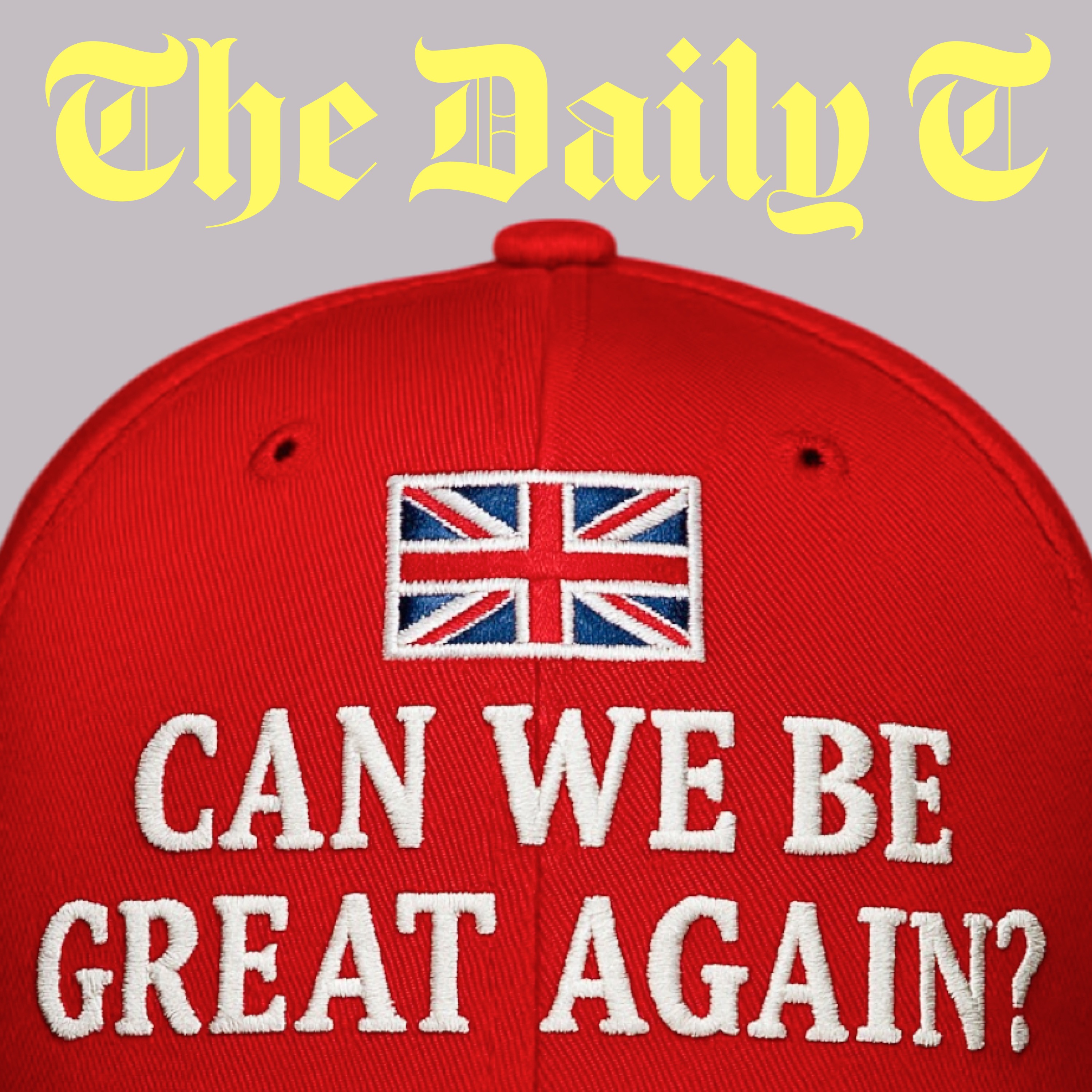
Defence and security debate around Jeremy Hunt’s book “Can We Be Great Again? Why a Dangerous World Needs Britain,” arguing Britain must restore “hard power” and reinvest in conventional forces to deter threats in Europe and the Indo-Pacific.
Jeremy Hunt (former UK Chancellor and Foreign Secretary, author). General Sir Nick Carter (former UK Chief of the Defence Staff; previously Chief of the General Staff). Con Coughlin (The Telegraph’s long-standing Defence and Foreign Affairs Editor).
Britain’s armed forces are “hollow” after decades of underinvestment, especially conventional capability after 2010 decisions that shifted funding (including nuclear deterrent and pensions) and followed the “global war on terror” distraction. Conflict is rising globally (2023 most conflict in 80 years; 2024 since WWII). Britain needs ballistic missile defence, cyber resilience, and higher defence spending—Hunt argues for 3.4% of GDP (at least 3%+), not just 2%/2.5%.
Ukraine war and subversion/sabotage in Europe; Salisbury nerve-agent attack; Iraq/Afghanistan misaligned political-military strategy; Syria 2013 “red line” vote; NATO spending imbalance (33–50% of European defence cost estimated paid by US taxpayers); NATO summit under Trump; lack of fast fighter jets and reduced carrier air wings.
Written by AI. May contain mistakes.
Jeremy Hunt discusses his book, emphasizing Britain's role in a dangerous world.
“That is the new book by Jeremy Hunt, former Chancellor and Foreign Secretary, which we are going to be discussing in a series of very special Daily Tea podcasts.”
Discussion on the UK’s diminished defense capabilities and historical context.
“I think the country's suffered enough, Jeremy.”
Analysis of current global conflicts and historical comparisons.
“And in fact, those figures were updated only last week.”
Debate on Trump's influence on national security and defense spending in Europe.
“and in Asia at the same time, which would previously be defined as a world war.”
Exploration of UK defense spending commitments and the implications of NATO targets.
“On one hand, I would like to be the big man on the world stage.”
Discussion on the need for increased defense spending and commitment.
“We got an extra£25 billion at that point, which was the largest uplift since the Cold War had come to an end.”
Analysis of Donald Trump's influence on NATO and European defense spending.
“I mean, you've referred there to John Healy and Keir Starmer changing what was a commitment into an ambition for 3 % con.”
Exploring the UK's military readiness and international security challenges.
“In fairness, I was just a new boy Foreign Secretary.”
Discussion on historical decisions' impact on current military strategy and readiness.
“Is that right, Nick, or overly pessimistic?”
Exploring the impact of past military interventions in Afghanistan.
“saying we tried regime change, looks what's happened.”
Discussing the importance of aligning military and political strategies in warfare.
“And of course, once you do that, you're bringing on an insurgency.”
Debating the challenges and necessity of increasing defense spending in the UK.
“This is a much bigger issue than just defence spending.”
Analyzing the relationship between welfare spending and defense budgets.
“Well, I read his article in The Economist.”
Discussing the current state and future needs of the British military.
“The RAF has a chronic lack of fast fighter jets, which whatever people are throwing at us, we need to defend our airspace.”
Examining societal attitudes towards military service and veterans.
“and, you know, you're playing games with me.”
Discussing the role of hope and vision in leadership during crises.
“But I do think we should value service in our society more than we do at the moment.”
Highlighting the military's contributions during domestic emergencies and public perception.
“There is this innate sense within the British people that they support the armed forces.”

Get the gist, explore an idea or ask about something said.
 Claude
On The Daily T, what are the key points of this episode?
Searching your listeningAutomatic transcript. May contain errors.
0:02The Telegraph.
0:30Visit telegraph.co.uk slash newsletters today.
0:38Can We Be Great Again? Why a Dangerous World Needs Britain? That is the new book by Jeremy Hunt, former Chancellor and Foreign Secretary, which we are going to be discussing in a series of very special Daily Tea podcasts. Welcome, Jeremy. Hi, Camilla. And the first one is going to be about defence and security. And to discuss your propositions in this great book, we are joined by General Sir Nick Carter, former UK Chief of the Defence Staff, and Con Cochlin, The Telegraph's long-standing Defence and Foreign Affairs Editor.
1:19First of all, Jeremy, why did you write the book? I wrote the book because I'm worried that our sort of national doom and gloom is making us forget that in a really dangerous world, Britain can play a very positive and important role. And I think that we have, for all sorts of reasons, got a chronic lack of self-confidence, which I'm worried could become a self-fulfilling prophecy. And, you know, we're going to discuss it more, but security and defence is a very good example where there are lots of problems with our armed forces. without doubt. They have been under-invested over many years. My government partly responsible for some of those mistakes.
1:56But compared to what else is around, we actually have a very impressive military. And when you look at the dangers we're facing in Europe, this is really a moment when Britain should be taking a lead. And I think if we do, that could unlock a solution to some of the very difficult problems we face in Ukraine and elsewhere. Okay. You're a knight. You're a knight. Can we dispense with the sirs? Of course. I'm welcoming. Are we on first name pairs? Yes, absolutely. If I should be on first name. Dame Camilla. Queen Camilla. I think the country's suffered enough, Jeremy. Nick, do you agree with that proposition that we, as the British Isles, show great military might?
2:38Because a lot has been written in recent years about actually our diminished defence capabilities. And some of that is the fault of the government to which Jeremy Hunt once belonged. Yes, I mean, I think it is. But of course, he made the point as well that it's been over decades. And I think that, of course, we were massively distracted by the poorly named global war against terror. And the upshot of all of that was that we disinvested or didn't invest in a lot of the capital equipment we need to have genuine hard power. And of course, some of the decisions that were taken in 2010, when we were in the age of austerity, which saw the nuclear deterrent being put inside the defence budget meant that over the last 15 years, our conventional defence has become very hollow.
3:18And we need to reinvest in it because I think the world we now find ourselves in, the entry ticket to it is going to be hard power. And we need to be able to demonstrate hard power alongside every other sort of power, but particularly hard power. So I do agree very much that there is a need to get on with this. Con, you've been covering this subject matter for many decades. When Nick talks to the state of things, the state of the world, I think there is a perception among those watching and listening to this podcast that we are in very perilous times, that we feel like we're constantly on the verge of World War III.
3:52We've got the Iran-Israel situation playing out alongside Gaza. We've got the situation in Ukraine. We've got fears over Putin. We've got fears over Chinese expansion, not least near Taiwan, possible fears of an invasion there. How difficult are the times that we are in compared to, I don't know, the Cold War and other eras in recent memory? Well, a fascinating statistic, and Jeremy has it in his book, he quotes that in 2023 there was more conflict in the world than at any time for 80 years. And in fact, those figures were updated only last week. 2024 saw similarly more conflict than at any time since the Second World War.
4:37And I fear that we are not prepared as a nation to tackle this. Nick mentioned the 2010 security review conducted by Cameron and Osborne. And apart from the austerity package, and I'd be interested in what Jeremy thinks about this, It's always been my view that there's a deeper ideological message behind the very severe cuts made to the armed forces. And that was if the armed forces were diminished in strength, we couldn't do any more military interventions, a la Tony Blair, in Iraq and Afghanistan. And since then, and we've seen this with Syria and other conflicts, there has been an aversion to using our military forces when actually there are compelling arguments in favour of using them.
5:25Jeremy? Well, I was someone who supported the Iraq intervention at the time, but I recognised that it was a huge miscalculation with the benefit of hindsight. And I think what happened, really because of poor execution and the fact that there wasn't a political strategy to go alongside the military strategy, something I've discussed with Nick actually before. What happened was that it ended up being a catastrophic disaster, as did Afghanistan. And that is part of the reason why the West collectively, not just the UK, but the US as well, has lost its nerve. And I think right now, and I very much agree with the tone of some of the columns that Con writes, because the risk we have is that we underestimate the danger we have.
6:14And I'm going to say this very starkly, and I'll be very interested whether Nick and Con think I'm exaggerating to say this, but I just want to say this. If Ukraine ends up in something that Putin can call a victory and China decides to make a grab for Taiwan, we are potentially in a situation where we have conflict in Europe and in Asia at the same time, which would previously be defined as a world war. And I think we have an axis now of authoritarian states who really do believe their system is better. And this very much reminds me of the 1970s and 80s I grew up with the Soviet Union when there was this feeling that we couldn't take the future of open societies and democracies for granted.
6:58And I think we are on the cusp of something similar. I'm not saying this is the most likely outcome, but I think we have to have our eyes open. Nick, I'll bring you in on that. But I'm just thinking as you're speaking, yes, but this is the fault of the Western world. You know, David Cameron's taking Putin to the judo at the Olympics. Meanwhile, we're rolling out the red carpet for Xi Jinping. We're now in a situation where everyone's decrying the ludicrous state of us thinking we can negotiate with Iran on nuclear weapons. Nick? I mean, I think it's an interesting point you make. And actually, if you look at the way the war in Ukraine has become globalized, you know, we've seen this extraordinary campaign of subversion and sabotage in Europe with the chief executive Ryan Mattal nearly being assassinated, cables being cut in the Baltic.
7:42And you see it in Africa as well, where you see Wagner Group, now the Africa Corps, being attacked by Tulag rebels being paid for by Ukrainian intelligence services. You know, this world is now becoming much more full of conflict. And I think that, yes, it hasn't risen in some cases to conventional warfare. But the reality is that below that threshold of conventional war, there is a conflict going on. And I think that, you know, some of the posturing that's going on in the Indo-Pacific, what's happening off the coast of the Philippines, the way in which Taiwan is being brought into it by a very assertive Chinese regime.
8:14You know, it is very, very fragile. And the reality is that I don't think we have prepared our nation for that fragility. And we have to bring on a debate about national resilience. And I think the public, we should treat them as grownups. They would understand this. Absolutely. How much do we credit Donald Trump, Con Coughlin, for actually starting a global debate about national resilience? Well, he does deserve some credit, but the American argument, as both Jeremy and Nick will be aware, that we are not doing enough to safeguard our own defence has been going on for 20 or so years. Washington's become increasingly frustrated at our inability to deploy forces at strength, to play our role in key operations.
8:59And you just look at what's going on at the moment. I mean, whatever military contribution we are making to supporting Israel against Iran is minimal compared with what the Americans are doing. The Americans have diverted an aircraft carrier group into the Mediterranean to bolster their forces. Our aircraft carrier group is still proceeding off to the Pacific, i.e. it's going in the wrong direction as far as I'm concerned. So, you know, we need to wake up to what the threats are and B, demonstrate that we are prepared to respond to these threats in a meaningful way that reassures our allies and makes people like Donald Trump realise that we are not there for a free ride.
9:41We are actually making a valuable contribution. He has a point, doesn't he, Donald Trump? I mean, there's a contradiction there, isn't there? On one hand, I would like to be the big man on the world stage. I'm the commander in chief. the US is the most important country in the world and I'm at the helm of it because they have such military might. But on the other hand, we're not going to be holding up the end for the rest of the world. You must all pay your own way. Yes. And I think the paradox about Donald Trump is really hard to sum up in one word, whether he's right or wrong or good or bad, because it's a mixture.
10:15And, you know, on China, he is right. He's the first American president who's really called out what China is up to. And he is not, I don't believe, an isolationist in the traditional sense of the world. He's deeply interested in what's happening in every corner of the world. Where he's wrong, and profoundly wrong, is that he has weakened America's alliances by his criticism of very close allies like Canada, where the Prime Minister of Canada currently can't get a visa for his daughter to study at Harvard University. And that is the wrong way to treat your allies and a great source of American strength is its alliances.
10:52But Camilla, the bottom line is on defense spending in Europe, he has a point. And one of the things that stuck in my mind, which I talk about in the book, really shocked me when I was foreign secretary was I asked officials at the foreign office, what proportion of European defense is paid for by American taxpayers? And they came back and they said, we can't answer that question because we don't know which region of the world defense spending is allocated to. I said, come on, you're the brilliant foreign office officials. You can answer this. They went and they sat down with NICS officials at the Ministry of Defense at the time, and they came back after two months of work.
11:30It took them a long time. And being civil servants, they said, we can't give you an exact answer, but we'll give you a range. Between 33 % and 50 % of the cost of defending Europe is paid for by American taxpayers. Now, if you believe in an alliance that is totally unbalanced and not sustainable and it has to be put right. We'll get onto your quest for 3.4 % of GDP to be spent on defence. But can I ask you a political question? It's embarrassing for the Tories, surely, to have Labour now outgunning the previous government on defence spending. You know, we've got Labour backbenchers who would still be wearing CND badges and they've made a greater commitment than the Tories did for 14 years?
12:13Well, let me give you the case for the defence. David Cameron persuaded NATO to adopt the 2 % target in 2014. We were one of only three countries that did it at the time. It's now 23 countries. When I was Chancellor, I announced we were going to spend 2.5 % of GDP on defence the first time that had been announced. But do we need to go further? Absolutely. Now, I say 3.4 % only because that's what America spends. And I think for the alliance to be balanced, it needs to be at least that. But Nick will have a better judgment as to what we actually need in terms of kit. But that was why I made that number in the book.
12:52I mean, Nick, to put your timeline into context, you were chief of the general staff from 2014 to 18 and then chief of the defence staff from 2018 to 21. So that was a little bit of coalition, but then largely the Tories. Were you pulling your hair out at that point, going, please give us more spending, please give us more troops on the ground? Yes, I mean, I think it's just worse unpicking the 2 % target, because, of course, what happened at the same time that he asked for the 2 % was that the nuclear deterrent went into the defence budget, as did pensions and various other things as well. So the extent to which that 2 % was genuinely paying for conventional deterrence, I think, is an open question, which we don't need to go into now.
13:29But no, I mean, I made a speech in 2018 as I was finishing as head of the army about Russia. And I called out what Putin was doing. And I said, we needed to get real. And of course, a couple of months later, we had the the scripple affair in Salisbury, which in a sense, demonstrated the intent of the Kremlin to undermine our way of life and everything associated with it. And yes, I mean, I think we did work quite hard on trying to get more cash. And we did achieve it when we got to the Integrated Review, which was, of course, published at the end of 2019, when the Conservative government did provide more money at that point, to be fair to them.
14:02We got an extra£25 billion at that point, which was the largest uplift since the Cold War had come to an end. But, of course, like all these things, because we were so hollow by that stage, it was essentially just keeping us afloat. And what's needed now is more investment. And I'm afraid that what has been allocated now, which talks about 2.5 % by 2027, and then maybe after 2030, if money becomes available and the analysis proves it's needed and all those other weasel words, we might get to 3%, will be too little too late. I mean it's interesting that one of the architects of the Defence Review Richard Barron was saying only the Thursday a week ago that you need 2.5 % now and you need 3 % by 2030 and by the way Mr Putin could make mischief at NATO's expense in a year's time and you know what value Article 5 under a Trump administration you know if Russia choose to nibble off a bit of a country that's not spending its way then wither Article 5 in that context So the answer is that we need to get on with it.
15:05Now, it's not easy to spend money quickly. That's always been the case for the defence budget. But we do need some programmed commitment in this parliament to spend more money, would be my judgment. OK. I mean, you've referred there to John Healy and Keir Starmer changing what was a commitment into an ambition for 3 % con. Before we come to you, Nick, what is your analysis of Donald Trump, his protestations on NATO and his general approach to defence and spending and indeed the European approach to defence and spending in his second term in the White House? I think Jeremy's absolutely right. I mean, he is absolutely correct to call for the European and indeed Canadian members of NATO to spend more.
15:44And it's going to be interesting because we have the NATO summit at the end of this month. And I think we're going to discover that there will be a 5 % target laid upon NATO, which 3.5 % will be about conventional defence and 1.5%, I think, will be about security or whatever. And it'll be very interesting to see how the British government responds to that challenge because there will be a lot of countries that do sign up to it. Can I just make a point, Camilla, that when I had been Foreign Secretary for just two days in July of 2018, I went to the infamous NATO summit in Brussels, which Nick will remember extremely well.
16:18Nick Ancon will remember very well when Donald Trump nearly pulled America out of NATO and his advisers rushed over from D.C. to talk him out of it. And John Bolton writes about this in his memoirs. And it was a moment of very, very high peril. and I would be looking at this summit that's coming up in 10 days' time as a moment of maximum peril to be avoided and foresight. And it's easy to be a backseat driver when you're on the backbenches, but, you know, Keir Starmer should be saying, Britain will do the 3.5 % and 1.5%. We're in. Because that's the way, if he does it now, that France and Germany will feel at the summit that they have to do it and Spain, which is dragging its feet at the moment, will feel they have to be on board.
17:05And, you know, Britain has a view that we are at home, that we are a busted flush as a country. But when it comes to defence, we absolutely are not. And we're certainly not viewed that way by the Russians. And, you know, what we do really does count. And we can't do this on our own, but we have tremendous influence across Europe as the major military power alongside the French. So this is a moment when I really hope Keir Starmer and John Healy and indeed Rachel Reeves because obviously for her there are difficult decisions involved in all of this as well. But I hope we get on the front foot. How did you handle Trump and his people?
17:41I mean, what was it like to deal with him? In fairness, I was just a new boy Foreign Secretary. I do remember the very first thing he said to me when Theresa May said, this is my new Foreign Secretary, he said, heard great things about you as he shook my hand. And I thought, does he really follow the NHS, which is where I've been for six years. So he does employ flattery. But I think the thing about Trump is that he questions the Western alliance, he questions Article 5, but deep down he would rather be leader of the Western alliance than just leader of America, because for him that is something that feels good and looks good.
18:20But he needs to know that there isn't this unfairness in the way defence spending is done. And of course, he's worried about China, which is where he's now got to face a real competition, the like of which the US has never seen before. Conn? Well, just picking up on what Jeremy is saying about this upcoming NATO conference, there are already signs that the Trump administration are treating it with almost disdain because originally it's supposed to be a two-day conference. And the Trump crowd are trying to reduce the whole agenda because they don't really see the point of NATO conferences. This is what we're dealing with.
18:58So, you know, the desire within government to take this seriously and not play smoke and mirrors with the defense budget and put proper money there and proper commitments, I think is vital. The other thing I would say about Trump, and I read your analysis of Trump in your book, and I think you make a lot of very sensible points. But the one thing that I would add to that, and we're seeing this now with Israel and Iran, Trump's fundamental goal is to avoid the deployment of American forces if it can be avoided at all costs. So he wants other people to do the fighting. So when Trump said a couple of weeks ago Iran will pay a heavy price if it doesn't start talking seriously about its nuclear deal, he wasn't really going to do anything militarily with US forces, but he's very happy to see the Israelis go in and do his dirty work.
19:53and coming back to NATO and Europe again we've seen this with Ukraine if you want to support Ukraine you support Ukraine you get your act together in Europe you start getting the resilience you need within the European arc of NATO make sure your tanks are interoperable and your aircraft and your intelligence and all the rest of it and don't keep relying on us because I don't want to have American troops in Europe and this is a really important aspect to Trump's psyche that we need to take on board. If there's going to be fighting, it's not going to be the American troops doing it. Well, that's the other contradiction, isn't it?
20:32I mean, he speaks, his rhetoric is gung-ho, but his actions aren't necessarily. And then when you ask people around him to justify some of his interventions on, for instance, Russia and Ukraine, and we've still got the Oval Office meeting with President Zelensky fresh in the memory, the insistence is, because I discussed it with Jason Miller, who handled all of his comms for his three presidential bids. He said, well, he just doesn't want to see any bloodshed. He doesn't like the idea of troops or indeed civilians being needlessly killed. Hence the quest for a Nobel Peace Prize, Nick. You know, he's going to settle, what was it?
21:07He was going to settle the situation in the Middle East overnight. He was going to similarly expedite the process in Ukraine. Yes. I mean, I think reality is bitten, hasn't it? I think that, you know, Mr. Whitcoff has done an extraordinary job traveling the world trying to make things happen. But I think the difficulty, of course, with so much of this is that there is a slight risk you view it all through a real estate deal. Yes. And of course, when you're dealing with Mr. Putin, as I think Jeremy observes in his book, you know, Ukraine is a sovereignty issue. You know, this is not a real estate deal.
21:37And there's a risk, I think, that people talk past each other. And I can't see any reason why Mr. Putin would stop the war at the moment. I think what he's doing is he's speaking out of one side of his mouth to keep Mr. Trump on side, but out of the other, he's going as hard as he can to try and achieve some form of victory in Ukraine. And I think exactly the same thing's going on in the Middle East, the same sort of problems of conversations with Iran or anybody else for that matter. So I think, you know, we are in a worrying state of affairs when it comes to American diplomacy being treated in that fashion.
22:35www.telegraph.co.uk
22:51Before we get on to debating Jeremy's idea that defence spending should or could be 3.4 % of GDP, Fiona Hill, the former defence advisor or still defence advisor, suggested that if Russia attacked tomorrow, we wouldn't be able to defend this great nation. Is that right, Nick, or overly pessimistic? I mean, obviously, it depends what that attack looks like. But I think a critical vulnerability that we've got, for example, is we have no ballistic missile defence. We have no way of protecting this country against the sort of onslaught you're seeing playing out in Tehran or Tel Aviv at the moment, or we've seen throughout the last three years in Kiev.
23:29So I think that is a vulnerability. We've got vulnerabilities, I suspect, in terms of how we protect cyber and some of the below conflict thresholds that we're talking about. So, yes, I mean, I think, to be fair to the Defence Review, they absolutely recognise these weaknesses and are suggesting they need to be fixed. Give your best argument then, Jeremy, for Britain actually being a world leader when it comes to military force and might. Well, Nick and Conn, and indeed Conn has written extensively about the weaknesses in our military offer, and Nick's just talked about our lack of a defence shield.
24:00And all this is absolutely true. But you also have to look at the other things that we have going for us. We have troops and armed forces that are more battle ready than nearly any others in Europe. They have, you know, these conflicts in Afghanistan and Iraq didn't go well, but they gave a lot of experience to our troops. And as a country, despite the hesitance that we've seen post Iraq and Afghanistan, we are somewhere that is willing to project power. And, you know, if you look at Israel now, a much smaller country than ours, they have become the regional superpower in the Middle East because they are willing to project power.
24:44And I think the bigger thing is that it is in the British DNA. We understand that sometimes you have these big global arguments that you have to win. And the best way to make sure you have peace is to be strong. And, you know, I think there's a bigger picture here, which is very, very important, which is that, you know, this century, we're going to have this big battle between democracy and autocracy. And in the last century, by the end of the century, we won that argument, but only after getting through two world wars, a Holocaust and a Cold War. And we need to win that argument this century without that horrific human tragedy.
25:25And the way you get there is by persuading your adversaries that it is not worth them chancing it. Now, I personally think, and there'll be experts who know more, that one of the main reasons that persuaded Putin that he should have a go in Ukraine and might get away with it was the incredible weakness of the retreat from Kabul. I think that just made the West look so weak. He thought these guys are not going to be there. And, you know, I think we've got to learn those lessons. So I think we are having an argument about 2.5 % or 3.5 % of GDP. But in a world where this gets out of control, it'll be an argument about whether it's 6 % or 8 % of GDP.
26:07And so this really is an example of where prevention is better than cure. Con? I would add to what Jeremy said. People forget the Syria vote in 2013, which I think was equally catastrophic as the shambles of the Afghan withdrawal in terms of demonstrating the lack of Western appetite to protect our values. Again, we had the vote in the Commons in late August 2013. That ended up with Obama not taking military action against the Assad regime over the use of chemical weapons, which he previously said was a red line. and within a year, less than a year, you've got Russia invading Ukraine for the first time and capturing Crimea and then you have Russians conducting their biggest ever overseas military operation in support of Assad and when you look at the rot setting in, I would argue 2013 is as important as 2021 and we really need to start getting on the front foot and demonstrating that this is not the West and this is not what we're about and we are prepared to defend our values.
27:21And I would say in that context that a lot of what we've done, you touch on this in your book, that the resilience we've given the Ukrainians and the way that the NATO alliance, despite all the arguments, has shown resolve and unity and commitment and we've also acquired two important new NATO members into the bargain. I mean, these are positive steps. So having painted a bleak picture, I do see a sort of positive way forward if we maintain that kind of direction of travel. Although the fall of Kabul might vindicate those who voted against intervening in Syria, saying we tried regime change, looks what's happened.
28:05You know, I recently interviewed an Afghan ambassador who's in exile in Italy, painting a picture of just how appalling, even more appalling life is for Afghan women, particularly under the new Taliban regime. People will rightly ask themselves, Nick, what did that all achieve? And I mean, no disrespect, by the way, to the armed forces involvement in that and those who were killed. But it does make you think. Certainly. And when people ask me, and I have spent nearly four years of my life in that country, what went wrong in 2021, I would say go back to 2001 and have a look at the Bonn Agreement and have a look at the way in which we managed to create, at the encouragement of Donald Rumsfeld, an exclusive government that excluded all the people who've been insurgents in the past.
28:56And of course, once you do that, you're bringing on an insurgency. And it goes back to a point that Jeremy made earlier, was an utter misalignment of a political strategy with a military strategy. And if you look at the character of Western conflict since 1945, we could probably only argue we've won two wars. One was 1982 in the Falklands, and the other was 1990 with Gulf War I. Every other war we've lost. And the reason we've lost them is because we've not aligned the political strategy with the military strategy. So I think one has to go back and look at those fundamental thoughts if one's going to learn from that next time we, if we do, get involved in an intervention.
29:32And we brought on a tragedy as a consequence of all of that. Do you think that we pack the punch that Jeremy has described? No, I'm afraid I don't. I think we've got extraordinary professional armed forces, but they are woefully badly equipped. And what do we need to do to change that situation? Well, I'm afraid it involves making some difficult choices and spending some more money. And we haven't aired it around this table yet, but we need to bring on a debate about how the nation spends its money. This is a much bigger issue than just defence spending. And again, I think the British public, you know, understand the world they're living in and they understand that they will have to make choices.
30:07We do it in our daily lives, don't we, as individual human beings and families. But we have to have the political courage to bring on a debate about how we spend our money. And, you know, January's book is a great contribution to that, I would suggest. Well, the way that we're currently spending our money on defence is to take it away from foreign aid. You agree with that in one chapter, although to slightly nitpick, when we talk about migration, you talk about the importance of foreign aid. So how do we square that circle? Well, I think we should use the money we spend on foreign aid to help tackle the migration problem, because in the end, we need to stop boats going across the Mediterranean if we're going to stop them going across the channel.
30:48But I don't think it's sustainable in the long run to say that we're going to be able to continue to top up the defence spending by helping ourselves to more of the aid budget. and if you look at the national accounts because one of the difficulties for me in writing this book I wrote half of it when I stepped down as Foreign Secretary and then I became Chancellor unexpectedly and I then You had a reality check Then I wrote the second half of course as a former Chancellor I had to say how are we going to pay for it The truth is that there is only one place to go We are now spending 11 % of our GDP not 2.5 % not 3 % not 3.5 % 11 % of our GDP on welfare Is that what you thought he was going to say, Nick?
31:28You're saying yes? Well, I read his article in The Economist. Yeah, fair on. So yes. Welfare and pensions. And the out-of-work welfare bill, not for pensioners, but for people who are adults of working age, if you just got it down to its levels five years ago, it saves a staggering£49 billion a year. So that would more than cover increasing defence spending to 3.5%. and, you know, money for the NHS and avoiding tax rises and all sorts of things. Now, it's not easy, and I want to pretend for one moment it is easy. But, you know, why on earth are we paying 80 ,000? We are signing off 80 ,000 people every year and saying you don't just have not to work.
32:09You don't even have to look for work. That is absolutely crazy. But on the positive side, you know, I argue in the book we could become the world's next Silicon Valley if we play our cards right. How did the original Silicon Valley start? It started with a big amount of defence funding from the Department of Defence and NASA back in the 1940s and 50s. So this could be a massive fillet for a new British tech revival, which could be brilliant for our tax receipts. Your optimism is infectious, isn't it, Conn? But is Jeremy deluding himself with the political challenges posed by saying to the public, no, you can't have free benefit money, but I tell you what, why don't we spend more on defence to fight wars on foreign soils?
32:53Well, I think trying to tackle the welfare budget, I mean, I agree with everything Jeremy says, but how do you do it? And successive governments have tried and it just balloons out of control. And it's not really my area. But what I do know, and Jeremy again identifies this in his book, the arm is too small at 73 ,000, if it is 73 ,000. The RAF has a chronic lack of fast fighter jets, which whatever people are throwing at us, we need to defend our airspace. And as you say, we've got two carriers that were designed to carry 36 F-35s and now we'll have 12. So the conventional forces have been significantly run down for not very much money in the broader context.
33:44This could be sorted. But everybody thought, those not directly involved in the political arena, that a Labour government had the best chance of coming in and saying, right, you lot, no more benefits. Because if the Toros did it, there'd be riots. Labour can do it. Labour created the welfare state. It's their baby. They should look after it. But it seems to me they're running away from this issue. And again, the defence figures that have been given out by Rachel Reeves and Keir Starmer don't add up. There isn't any extra money. It's smoke and mirrors. And I fear that looking forward to this NATO conference, if Starmer's not careful, he could end up getting a sort of Angela Merkel treatment from Donald Trump, just saying, you know, your figures don't add up.
34:33and, you know, you're playing games with me. I mean, Nick, is 3.4 % even enough? How much would you like to see be the share of the pie that goes to our defences? And the straight answer is I'm not sure I really know and I don't think anybody really knows. But I do think if one looks at the sort of size our armed forces need to be and the equipment they need to be effective, that is where one has to start from and then you have to add the numbers up after that. Rattle off some, if you've got a wish list. If I could ask, with your army background, How big should the army be? Yes, exactly. We're supposed to be able to deploy and sustain a division.
35:08Nobody seriously believes we can do that right now. No, I mean, I think, you know, another way of thinking about the size of our armed forces, and let's use the army as an example, is to think about what they'd look like if they were mobilised for war. And if you go back a century, there was a tremendous director of military operations who subsequently became the head of the army called Henry Wilson, who had a plan on his shelf when World War I started and he pulled it off and they mobilised. And the upshot of that was that a regular cadre formed the basis on which you then rebuilt or mobilised your army up to the strength it needed to be.
35:44And I think the interesting question to ask is how do we get much more out of our reserves? And we have a volunteer reserve and we have what we call the strategic reserve, which are those who have done regular service but have a liability to be recalled if necessary. and to think about what that looks like across all three services. And I think if one worked back from that premise, one would come up with a number in terms of the regular component that would probably be, you know, plus of 80 ,000, 80 to 90 ,000, I would guess, a volunteer reserve of perhaps 30 ,000 to 50 ,000, and then you can avail yourselves of up to 150 ,000 probably from your strategic reserve.
36:19And then you're beginning to talk, you know, real numbers. Now, yes, there will be gaps. Yes, we will not be able to equip all of those people overnight, But at least we'd have an understanding of what we need to do. And that would be a much better debate, I think, to have than to say how bigs our regular army. Because we have to think about it in the context of the NATO alliance. We have to think about what credible role we're going to play within NATO. Now, NATO has an expectation that we will give two army divisions to NATO. We'll have a core headquarters with the bits and pieces that need to come with a core level of operations.
36:50Now, that's a lot of people and it's a lot of equipment. But if we're going to have a credible say in a modernised NATO, then actually we probably need to deliver against NATO's expectations. I'm not going to put a price on that. I mean, 3.4 % is rather better than 2.5%. But you may discover that actually you need a bit more than 3.4 % if you're going to do what I've just described. Yes. But also, is there a cultural problem here? I mean, you're speaking extremely patriotically about serving king and country. That might not be the prevailing attitude, particularly among the Gen Zs. We'll remember acutely how Rishi Sunak's bring back national service idea was received.
37:27There's been numerous polls suggesting that people wouldn't sign up. Having said that, only at the weekend I spoke to a couple of fellow mums who said that both of their sons had expressed an interest in joining the military, which I thought was hugely encouraging. notwithstanding the disastrous nature of Donald Trump's recent military parade which didn't go quite as planned we don't have that American celebration of people in the armed forces we don't put on a pedestal our own soldiers and veterans should we do more on that score Nick? I think we should definitely pay them more I do think that we pay them a pile of summer money at the moment which isn't attractive and we should look after them better I'm not sure whether we would have the American culture where wherever you walk, somebody says, thank you for your service.
38:12But I do think we should value service in our society more than we do at the moment. Is recruitment a problem for the military at the moment? Yeah, it's tough. Yeah, it's been tough for a very long time. Because there's a link up here. We've got record numbers, particularly of young people, out of work, Jeremy. Yes. And I mean, look, this is a political point I'm going to make, but I do think we need cultural change in this country that gets us back to valuing hard work. And that's why I worry about the welfare system exploding out of control. Just on the, you know, on the optimism point, welfare reform is very, very difficult.
38:48But it is actually very popular with the public. I mean, this is one area where actually, if Keir Starmer and Rachel Reeves were to embrace it, Labour MPs would fight it tooth and nail. But the public would be absolutely on their side. and I think just on your point about am I being hopelessly optimistic Not hopelessly, overly optimistic I think it was Admiral Jonathan Ban, former First Sea Lord who said that hope is the first duty of command and I think you do have to present to people what a solution is I think there is a solution here and knowing our history and our people I don't actually have any doubt whatsoever we will do the right thing in the end But will we do it quickly enough to avoid the real agony of coming to these things too late?
39:37That is my worry. And I think there are two really important points you make there. I mean, the British population will get behind a cause that really matters. It always has done. Yes. You know, and if you think about the wars after 9-11, they were never really sold as an existential problem. That's why they weren't necessarily supported by people. And I very much agree with what Jeremy says about hope. You know, I think that we've had a succession of election campaigns where people have not been offered a hopeful view of the future. And actually, one of the things that Donald Trump did rather well was to offer a hopeful view of the future.
40:07And that, to my mind, is the first duty of leadership. There is this innate sense within the British people that they support the armed forces. They respect them. They support them. And I've often said we have we've had periods of peace and they forget about them. But it's a bit like the utilities. If something happens, they expect them to be there and come to our defence and be effective. Also, how many times has the military stepped in in moments of domestic crisis and help? We were speaking earlier, weren't we, Nick, about the Nightingale Hospitals and how much you stepped in during Covid to help and actually were able to, regardless of the pandemic, sort of speak to the NHS about efficiency savings and how to perhaps better administrate things.
40:53And you said you had people, what did you say, quartermasters overseeing the budgets or something? Absolutely. Making sure that things were accounted for. So there was less waste and everything associated with that. Yes. I mean, I think, you know, the armed forces has always been for that form of problem that the nation has, whether it was foot and mouth back in the day. Yes. Flooding, you know, we're always there filling sandbags. The 2012 Olympics. at very full notice. I mean, so, yes, and I think that, you know, the British public is very grateful for all of that and I think it helps us hugely in terms of our image.
41:23But, of course, it mustn't detract from our hard edge, which is about providing deterrence for the enemies. Well, gentlemen, what a great discussion. Can we be great again? What is the conclusion? Definitely from Jeremy, yes. I'm going to say yes, we can. Another slogan. Well, I think we are great. We are great, but we could be greater. Con, the cynical journalist along with me, what do we reckon? I mean, I take great pride in this country and I would just like to see us do better and not be in the shadows as we've been in recent times. Con Coughlin, Nick Carter, Jeremy Hunt. We'll be back together for another one of these episodes soon, but thank you very much for joining us on The Daily Tea today.
42:12Thank you.
In a period of more global conflict than any time in the last 80 years, can the UK regain its ‘military might’ to safeguard democracies and demonstrate power to those who threaten it? Jeremy Hunt joins Camilla Tominey to put his pitch to General Sir Nick Carter, former Chief of the Defence Staff, and Con Coughlin, Defence and Foreign Affairs Editor at The Telegraph.
In this special Daily T series inspired by his new book, Jeremy Hunt pitches his optimism and ideas to leading experts on how the UK can change the world for the better. From mass migration to leading the AI revolution, we ask, can we be great again?
Can We Be Great Again?: Why a Dangerous World Needs Britain, by Jeremy Hunt (Swift Press), is out now: https://books.telegraph.co.uk/Product/Jeremy-Hunt/Can-We-be-Great-Again--Why-a-Dangerous-World-Needs-Britain/31045435
We want to hear from you! Email us at [email protected] or find @dailytpodcast on X, Instagram and TikTok.
Producer: Rosie Stopher
Executive Producer: Louisa Wells
Social Media Producer: Ji-Min Lee
Video Editor: Andy Mackenzie and Will Walters
Studio Operator: Meghan Searle
Original music by Goss Studio
Hosted on Acast. See acast.com/privacy for more information.


