
 Ask ChatGPT


 The Daily T
17 Oct 2025 · 37m
Written by AI. May contain mistakes.

Get the gist, explore an idea or ask about something said.
 Claude
On The Daily T, what are the key points of this episode?
Searching your listeningAutomatic transcript. May contain errors.
0:02The Telegraph
0:10This week marks the 100th anniversary of the birth of Margaret Thatcher. And in an exclusive interview with The Daily Tea, we speak to Margaret Thatcher's daughter, Carol. And I'm going to be sharing some of my fondest memories of my late mum. Welcome to The Daily Tea with me, Tim Stanley. And me, Camilla Tominy.
0:37Carol Thatcher, daughter of Margaret Thatcher, of course. Welcome to The Daily Tea on this momentous week because we are marking the 100th anniversary of your mother's birth. We've got special mugs. We might rename this episode The Lady Tea rather than The Daily Tea because we're going to be discussing all things Thatcher. Now, the first question we ask, Carol, is whether you would like a cup of tea and how you take it. I'd like a cup of tea in this wonderful mug. Isn't it splendid? And the pearls. The pearls make it, as far as I'm concerned. I shall be mother. Tim, you speak amongst yourselves.
1:10Right. I just would like tea with a splash of milk and I don't mind which one you put in first. Quick question. The tea or the milk. How do you prefer your mother to be referred to? Because I think of her as Maggie or Mrs T, but is that slightly, does that show a lack of respect? No, of course not. Let's keep it fairly colloquial. We can't keep on going Lady Thatcher every five minutes. It's an actual fact I went to the Goring Hotel, which is very close by, to have a drink with someone who was with her in Number 10. And in their bar, they've got a cocktail called BLT. Now, this doesn't stand as usual for bacon, lettuce and tomato sandwiches.
1:47But when she used to book in a lunch reservation or something, she was booked in as Baroness Lady Thatcher. Ah. BLT. And I thought that was really cool. Do you know what was in the cocktail, Carol? A list of ingredients and spirits and liqueurs that I thought would probably wipe you out with one of them. Would your mother have drank such a cocktail? No, she wasn't a cocktail person. But she liked whiskey. She liked the odd whiskey. I don't think, when she was in number 10, I mean, I think she drank a sip of wine to toast somebody who was visiting and there was a lunch in their honour. After number 10, yes, she was quite partial to whiskey, whereas my dad was a gin and tonic guy.
2:29We often ask our guests, as they appear for the first time on the podcast, who would they like to have a cup of tea with, alive or dead? But you cannot pick a relative, I'm afraid. Oh, right. OK. Who would you like to? I think I'm intrigued by Elon Musk. Really? Yes. What's intriguing about him? Well, just his capacity for reinventing himself. First of all, it was electric vehicles. Then suddenly President Trump got in. He was practically running the government. What would I ask him? I'd ask him, good Lord, what on earth are you going to do next? Indeed. We want to start this podcast because we asked you for a photograph that you think best encapsulates your late mother.
3:14And you picked something, a photograph I've actually never seen before. Have you seen it, Tim? Two pictures. I have seen it. Two pictures, not before. No. And this is taken after Mrs T left office when you were on holiday in Barcelona. and it's an image of her dancing. Yes, indeed. Where did that come from? How did that happen? It was at a New Year's Eve party in Barcelona, which was great fun because it's an extremely lively town anyway. And what I like about both these photographs is they are not Iron Lady alike. Here is a normal person enjoying, welcoming in a New Year. I think they're quite fun.
3:52I like the one of her covered in streamers. Yes. So there's some confetti in the air and streamers. It's clearly a celebration. There's a lovely just light on her face. But I find it intriguing that you say that. And I often think this of the children of people who are exceptionally famous. Do you just always see them as your own parent in a completely domestic way? Or does the public's perception filter into your own memories of your own parent? because it's hard to separate life behind closed doors with everything that the public associates with your parent. Well, the Iron Lady image was so strong and it did her a lot of good, actually, because people expected her to live up to it.
4:33And I remember leaving Number 10 one day and getting in a black cab and the driver said to me, oh, he said, I picked up someone the other day, been in to see your mummy, had been in to see her, still shaking he was. So there was. When you combine that with handbagging, there was definitely the image. And she lived up to it. But at home or just in her parliamentary life? Oh, I don't think she was... When I was a kid making my breakfast, she wasn't the Iron Lady. She invented multitasking before it became a popular phrase. For instance, I could never say that she didn't come to school events. She did, but she'd sit in her little car with parliamentary papers and the next speech all propped up on the steering wheel and work away until right at the end when she'd duck in, you know, in the back row.
5:27She was always there, but she was so busy and so flat out that her use of time was extraordinary. But she still did it, because some politicians and modern people would just hire someone else to do it. But it mattered to her still to be there with you and to do the housework or to go to school events. Well, this was a very long time ago, to state the obvious. And I think I was probably the only pupil in my class who had a working mother. So it wasn't normal then. Now, I think kids expect their mum to turn up or not turn up or somebody else comes to pick them up. But in those days, it was quite sort of, what can I say, conventional parental responsibilities.
6:11not just to abandon your kids. There's a story that she was revising for the bar exam not long after giving birth, is that correct? Correct. But that's what it takes and that's what it especially took back then. Yes. Because you couldn't just put that side of you aside. You had to do both and you had to do both to a very excellent degree. Well, actually, I think her, because she did chemistry at Oxford and that varnished on a scientific level to her mentality. And then she did law. She was born with an extraordinarily good memory. When she was in Parliament, she could bounce off the front bench and quote the rate of inflation back to Gladstone without looking at a note.
6:53I mean, she had an extraordinarily good memory. She also worked possibly harder than anyone else who has ever lived in Number 10. There was none of this chillaxing sort of stuff. It was flat out all the time. And when it came to her mothering style, what was she like? Was she the good cop and your father Dennis the bad cop or the other way round? Was she strict? Was she laissez-faire? What was her approach with all of the work that she had to do in the background? I think I remember, I actually remember her kindness. I lived in Australia for the last year or two of her being leader of the opposition and then she got into number 10 in 1979 and she used to write to me, which I thought was pretty amazing, bearing in mind she had an awful lot of other things to do.
7:37And one of the letters was, I used to call her Pen Pal Maggie because it was sort of fly on the wall, and she wrote about living over the shop in Number 10. This was before they swapped around with Number 10 and Number 11. And she said, I'm getting really fed up with some of the shabby furniture in the flat in Number 10. And I heard that the government had three other flats that weren't being used, so I set off on a tour of inspection. and I have decided that some of our poor furniture is going to go there to gather dust and some of their nicer stuff can come back here to be used. Then there was a list of things that went swapping around and I thought, why are you telling me this?
8:19Why don't you just send a few photos to beautiful homes and they'll probably put you on the cover for anything. And then at the end she said, so without spending any money, underline twice, we vastly improved the flat. And if you think about it, that's such a contrast in attitude to when was it 2020, wallpaper gate. Do you remember? Yes, golden wallpaper. Gold wallpaper and too much money spent on matching cushions and whatever. But she was very economical. Did you have any comprehension when you were a younger child? Because obviously by the time she became prime minister, you were actually a fully grown woman.
8:58You were working in Australia as a journalist. When you were younger, did you have a comprehension that she had prime ministerial ambitions? Did you look at her and think my mum will be the first female prime minister? No, I didn't because you can't in politics because there's so much luck involved. If your party is out of office in opposition for yonks, you might miss out entirely. Do you see what I mean? You can't really predict it. I think I was about six when she got in the House of Commons and I was very impressed. My mum's an MP. And one of my school outings, as my whole class went, and we went up, you can walk up inside Big Ben and walk around the clock faces, which actually is fascinating.
9:39So I was very chuffed about that. And after that, what you do, you climb the greasy political pole. Then you'll shadow something and then you get in. and even when she came into our Chelsea home, she said to my father, I'm going to stand for leader and my father looked up and he said, I'll support you all the way, love, but you won't win. And I said, why did you say that? And he said, I don't think she'll get enough of the male fellow MPs to support her. Yes. Well, he was wrong there. Yes. Before she ran, she was, of course, Education Secretary under Heath. Yes. And she was Margaret Thatcher Milk Snatcher.
10:23Yes. Did that hurt to hear that? Or was it just part of politics? Look, I think it was part of politics. When I was at university, she was Secretary of State for Education, and that was even trickier because other students would say, I'm off to demonstrate against your mum. We want bigger grants or we want this. Just remind me of her office address. So that was a bit trickier. But otherwise, I used to say, I am a member of her family, not of her government, not of her cabinet. Otherwise, you had people say, tell your mum what to do about economy, foreign policy or whatever. And I remember people used to say, tell her to get rid of blogs, someone in the cabinet.
11:05And she had a real way of reshuffling people. And she used to say, bringing them in is not the difficulty. It's who to put out that causes the problem. Brain power is not enough. You need personality and impact as well. So that's a lesson on how to reshuffle Maggie's style. But when people were critical of her personally, did you take that personally? No, it went with the job. I think if you have, it's different having a parent who's famous in politics as opposed to, say, films or sport or something else. Yes. Because everyone has a view about politics. Yeah. And they'll tell you. And I just thought it went with the territory.
11:53I wasn't famous. She was famous. And I used to call it secondhand fame. And I just got used to it, I think. It came with the territory. It was swings and roundabouts. There were lots of privileges. In number 10, if a guest dropped out of a state banquet at the last minute, Social Secretary, ring me up, Carol, and say, find a dress, find some shoes, don't turn up looking too scruffy. You're replacing whoever it was who was stranded in Scotland or... Who was the most interesting person you ever ended up next to at a dinner party? Oh, quite a lot. But the one I do remember, there was a very smart dinner that the Queen came to and all living Prime Ministers.
12:35And it was to celebrate the 250th anniversary of Number 10 being the official home of the Prime Minister. And that was absolutely fascinating. What's your vivid memory of that? Who did you have a conversation with? I remember talking to Mr and Mrs Harold Wilson. She was called Mary. And she was terribly pleased that she was wearing the same long dress that she had worn to a similar function a long time ago. The implication or the echo being, at least I can still get into it. And was it true that your mum and the Queen, Queen Elizabeth II, didn't get on that well? I don't know, and I never watched What Is It, the Crown or anything like that, because there were only two people in those meetings, the Queen and the Prime Minister.
13:24and unless they go out and say what was said, then we don't actually know. It is all speculation. And I remember in 1979, she hadn't been in very long, and there was a Commonwealth Heads of Government meeting which was in Lusaka in Africa, and it was quite divisive and controversial because the future of Rhodesia was on the list. I don't know how good your modern history is, But when in Sharmil Sheikh we've got this beautifully choreographed, you know, very styled summit of all the leaders of the Middle East, then this one had a comedy bit to it because there was a service in the cathedral and there was a lot of debate going on about what should go in the final communique.
14:11And so a leader got up and read the lesson, sat down again and scribbled a note that went all the way along the pew saying what he was objecting to. And I just think, you know, it's sort of like carry on summer tearing. Is there a difference between some of the negativity that politicians get today and back then? Because although many people disagreed with your mother very strongly, I sense they still respected her. Is that respect something that's gone from politics? I think you've actually nailed it. It is. And plenty of people said to me, even if they didn't agree with her, they respected her for what she was trying to do.
14:53Also, she had a policy and she stuck to it. Right now we see people virtually changing the policy between breakfast and lunch, for heaven's sake. And nobody ever said they didn't believe her. And I think that's something that has rather changed. Actually, before she became unwell at the end of her life, she said the problem with modern democracy is that good people won't run for office. Got a lot of people who are perhaps too young. They're enthralled to their advisers, to the opinion polls and so on. You've got to have... The world would be a much better place if we didn't have this dearth of good quality leadership.
15:35Yes. But talking about, I think she's still a role model for female politicians. But the image we had was of someone who was totally unbending and unyielding. In private, was there greater worry, anxiety that she was doing the right thing? Are you saying was she filled with self-doubt? No. No. She thought through what she was going to do. She had, don't forget, four years in opposition. and that gave her plenty of time to work out a plan. And she did, and I remember her saying, do you remember, you're too young to remember, in 1978 October there was a very famous no-election announcement when the Prime Minister of the day, Callaghan, was widely expected to call an election and then didn't.
16:22He went and made the no-election announcement. And I thought, gosh, that must be so disappointing. But she didn't think of herself. she said, it's going to be quite difficult to keep up the morale, everyone's morale for another year, which, of course, is a problem in opposition, as Kemi Beidnock is discovering at the moment. So I don't think... She didn't often show nerves. I remember the party conference. She said, I'm not on till Friday, so I've got the whole week to wait, exclamation mark. And we go back to birthdays, because her birthday's in the middle of October, but that was often party conference week.
17:01Yes. And she was given, I think year after year, quite a lot of sort of soft toys and teddy bears and birthday cakes. So she told her staff to give them away to the children in the local hospital or whatever. Then a photographer wanted a photograph and they didn't have any left. And then she needed, she had a friend called Hector Lane who was in the biscuit business. I think his grandfather had invented Bitty's Grumbly Biscuit, Digestive, which you can dunk in your tea. And so she rang him up and some poor baker was hauled out of bed at 0400 hours and had to rustle up the emergency Maggie birthday cake, which was then carted round to the hotel by special delivery for the photo opportunity.
17:46We're going to get on to conference in a minute because Tim and I have just returned and there was a great deal of Maggie memorabilia, as you can imagine. But just before that, just to follow up on Tim's point there, what was misunderstood about her most? Because the left-wing narrative about her now is, you know, she was heartless and cold and that simply isn't reflected, for instance, in Charles Moore's biography. No. This is a woman who was extremely emotional, actually, in the run-up to both her becoming prime minister but also all of the letters that she wrote to her sister about who she was dating and meeting Dennis and how she kind of, you know, really felt, I think, that responsibility of being a good mother to you and Mark, but also being a good prime minister and all the rest of it.
18:33You know, clearly that is a woman with deep-seated emotions and we saw that on the day that she left office. Is it wrong to describe her as somebody who didn't have a heart? I feel that that is and I didn't know her personally. No, of course she had a heart. I remember when I was living in Australia, I came back, my parents were already living in number 10, and when I got there, I didn't expect her to be outside the famous front door to greet me because Prime Ministers are fairly busy people. But when I got inside, there was a message from her saying she's sorry that she wasn't there, but, and I love this line, I've got to go and open a nuclear power station.
19:09For the excuse for not being there for the welcome home hug, I mean, that's a classic, isn't it? She had remarkable kindness and after she died, I had a letter and it was from a girl who had lost a leg in one of the train disasters. And mum went to see the victims in hospital. And this girl wrote to me. She came to see me in hospital after she'd lost her leg. She made me feel that everything would be all right. She had absolutely a lot of charisma. And then this girl wrote, I'll never forget her beautiful skin. And she had a really human touch. And in her office, there was someone whose wife had had a baby and wasn't doing very well.
19:57And so my mother went in and said, I understand that your wife and baby are not terrible. And the fellow said, yes. He said, I don't expect to see you at work until they are. Coming up next, the Brighton bomb, how Margaret Thatcher felt after the party dropped her in 1990, and what will the great lady's legacy be?
20:26Was her confidence thrown at all by the Brighton bombing? Confidence, was it, thrown by the Brighton bomb? Some people say that the government and she were sort of taken off guard and although they put a very brave face on it, they were affected very deeply by it. I think actually it affected my father more because he actually was closer to being killed and I remember he said afterwards, every moment is precious because you don't know what's going to happen next. I actually was overseas and I came back to the airport and I didn't go home. I drove straight to Chequers and she had just been to church and I think I was the first person she said the line, this is the day I wasn't meant to see because she was meant to have been blown up.
21:12I think for her, I don't say it was business as normal, When you're Prime Minister, you can't sit and dwell on things because you haven't got time. You've got to get back on the job. And I think, I mean, they tried to get her after the bomb went off to leave the area and go back to number 10. She said, I'm not leaving the area, and was up most of the night and then delivered her speech the next day. She was very, very disciplined. But Dennis was shaken by it. Dennis was genuinely shaken by it, yes. And what's the truth of their relationship? I mean, your mother never wore trousers, but who did wear the trousers in that marriage?
21:52I think it was a very good partnership. And I was his biographer, and I remember talking a lot about it to him. And I think he's a role model for consorts. He had a line, always present, never there.
22:11And don't give interviews, he said, Wales don't get killed until they spout, which was quite... I think he was a shining example of how to do it, to be quite honest. Love and loyalty was what he said were the two key words that he used a lot. He also had some luck because you're too young to remember. There used to be a fictitious letter in private art. Yes. Dear Bill. Yes. Allegedly written to his gulfing pal, Bill Deeds, who was the editor of this newspaper. back in the day. And that gave him an image. Yes. Along with a taste for gin and tonic, so he had his own recipe. No ice dilutes the drink.
22:54Hold the tonic, by which time you're down to practically need gin. Yes. With lemon? Optional. Fair enough. We thought there was quite a lot of memorabilia at the conference, didn't we, Tim? There was. Was it too much? I wonder how you feel. There were three of Margaret Thatcher's dresses hanging in the foyer. There were letters and things like that. There was a cut-out image of her sitting on a tank. Yes, there was a cut-out image of her that the CPS always has outside. Fair enough. There was a letterbox where you could write a question to Margaret Thatcher and post it and she would somehow answer from the afterlife.
23:31What, a la Santa Claus with your Christmas list? Slightly, yes. I didn't know about that. Yeah, she would bring you the poll tax for Christmas if you'd been a very good boy. Yes. Is this overkill? Do you think that your mother's memory has been turned into something of a cult among conservatives? I don't know about a cult, but I think you have to move on with time. And I've written quite a lot. I've read quite a lot about the conference and some people, columnists, saying that they didn't approve it. A, it was overkill, and B, X years on. look, you can't take away the fact that she was Britain's first former prime minister, longest serving prime minister last century and so on and so on.
24:11And she said to me once, my place in history is assured. And it is. But nevertheless, hey, folks, that was in the past. You've got to keep going forwards. Which, if you said actually number 10, prime minister, how was her dinner last night? She would say that was yesterday. Always looking forward. So this is the 100th anniversary. so if she were alive she'd be 100. There are some people, and I might be among them, who would say that she could still do the job. But she is so missed. She was such a titanic force and so definitive not just for the Conservatives but for this country. For many years she is what people thought England was, particularly England.
24:51Did the Conservatives make a mistake by dropping her? Oh, yes, it was an episode of treachery and it took her a long time to get over that. I think, I'm not going to say she never got over it, but it certainly was a long shadow over the rest of her life. Was there a particular individual she blamed? Oh, I think there was a cabal of people who stabbed her in the back. But that's politics for you. I mean, often people say in the House of Commons now, don't worry about the opposition in front of you, it's the people behind you who might cause you the most trouble. Yes, but again, we were talking about how politics had changed, the respect had gone.
25:32That assassination of Margaret Thatcher set a standard, set a template in politics, which has been very damaging, because now the Tories change leaders every couple of weeks. Not as quickly as in France, where the chap just gone after 27 days and I think is back in again. I mean, that really is revolving door, isn't it? But that sense that they got for it, so they panicked and dropped her rather than letting her fight another election, when in fact the Tories had been unpopular between elections throughout much of her premiership. She was many periods in which she was deeply unpopular, but then she would always win the election.
26:04Did it set this unfortunate template for our politics that if you want to just dump the leader? I'm not one to talk about templates in politics. Look, it happened. We can't change that. People do still say to me occasionally, Carol, we could do with someone of the calibre of your mother. Yes. Because it's this policy thing. You know what you're going to do and you stick with it until you've done it. And at the moment, there's too much froth, there's too much uncertainty, people jumping on planes for photo calls and whatever. Look, we've got an awful lot of problems here. I haven't lived here for a long time.
26:44My husband's Swiss and I live in Switzerland. But somebody's got to show some authority and some determination. Stop talking. Deliver. Do you think your mother would have held her nerve in the era that we are now in of 24-hour news, of social media, of a huge amount of online criticism, constant stories changing by the minute? You know, you talked about her in opposition, those four years that she had to breathe and to consult and to read and to decide. People are now hurrying Kemi Badenock along after her own first year in opposition. Come on, get on with it. Let's have a policy platform. There's far less time for politicians to think.
27:28I think she would have done. I recall a discussion when it was announced that the House of Commons was going to be televised, question time and so on. And I think she was nervous about it. She was nervous about it because it was new. But she was so damn good. She used it. And I like to think she would have used all the technology available now. I think she was quite lucky then because there was less surveillance because there wasn't social media and so on, mobile phones and everything. So from that point of view, that was quite fortunate. This is Tim's argument. You think she would have been an online sensation?
28:08Because I believe. Oh, do you? I believe that unlike modern politicians, she'd have done it without compromising her dignity. There's a famous scene which has done the rounds on YouTube of her being interviewed by a Scandinavian journalist and it was, for some bizarre reason, it was the habit of this journalist to ask people to skip at the end of the interview. Yes, do a little jump. Do a little jump. Did you try that out on her? It was a she and she did try it. Brave woman. It's really worth watching. And Marco Thatcher just says, I'm not going to do that. She's like, don't be so ridiculous. Absurd.
28:38absurd no no no exactly she just refuses so I have a feeling that she would be able to do social media without it compromising her dignity there was no grey area for Maggie it was you make you make a decision and it wasn't on the one hand I might on the other hand she knew instinctively whether it was a yes or a no and she also had very high regard for her office. I remember she was organising clothes to go to Washington, D.C. and I said, do you have to do all of this? Everything was hanging on with labels, what it was going to be worn for, White House dinner and so on. And she said, yes, I'm representing my country.
29:26People expect me to look executive. So she was very mindful of that. There was nothing sort of casual about her approach to the job. Even at Chequers, I mean, she didn't own a pair of jeans, you know. And she also took the view, always be well-dressed, because if there's an emergency and you suddenly have to go somewhere, like downstairs to the cabinet room, you haven't got time to change out of your casual tracksuit. I can't even think of Mrs T and leisure wear in the same sentence. It's just, please, let's not go down that road. I did only have one bit of influence. She was going to go and visit a destroyer, as in naval warship.
30:04and we looked at the programme. She had to climb up a ladder up to the next level. So I said, oh. I said, Mum, I'm not sure about that. I said, because a tabloid photographer might see your knickers. Oh, said Mum. And I said, there'll be a little survey in the sun, or another tabloid, saying, are her knickers too frilly, not frilly enough, too high street, not design enough? Well, I can't wear trousers. Anyway, she had made the most perfect set. I think the French call them culottes. Yes. and you wouldn't know, but it actually saved the knickers from appearing in the national newspapers. Tim has spoken about this sense that it's been downhill for the Conservative Party ever since.
30:46Which of your mother's successors on the Conservative side do you think she would have been most disappointed in? I think you'd better put that question in the box at the party conference and see if you get a reply. I don't know. But what do you think she'd make of the state of the Conservatives right now trailing reform in the polls down to 14 % in some question marks as to whether they are facing an existential crisis after the disaster that was the last general election? Well, I can only quote, I went to see her speak in the House of Commons, which sat on the occasion of the invasion of the Falklands.
31:22It sat for the first time on a Saturday since Suez. And I went in and then I went along to number 10. I went up to the sitting room and talked to her and she said, we're down, we're going to fight back. That is probably what she would apply now with the state. I mean, what did you just say, 14 percent? Yes. But would she be tempted by reform? Oh, God, I don't know. I'm not a member. I don't know. But we're in a position now where we have a choice among conservatives. Yes. You could go with Kemi or you could go with Nigel. And Nigel professes to be a Thatcherite, though he's changed his views on some classic Thatcherite policies.
32:00He supports bailing out steel now. Looking at those two parties, I'm sort of torn over where I think Margaret Thatcher, if she were a young woman now, what she would join. Look, I honestly haven't got a clue. I don't speculate on elections. I learned that a long time ago. Voters vote, counters count, and someone announces the result. And if you look around the world, we've got a remarkably fluid situation. In her time, and I do emphasise this, the goalposts were very well planted. The socialists were here, we knew what we were, and the conservatives were there. She had amazing determination. I still do salute her and Ronald Reagan.
32:42They were determined to get the Berlin Wall down and free from communism, and millions of people who'd lived behind the Berlin Wall since the Second World War, and they did it. So I come back to her, she wasn't a talker, she was a doer. One wonders how she would have got on with Donald Trump. Imagine being a fly on the wall in a conversation between Margaret Thatcher and Donald Trump. I think, actually, they would have got on better than you are implying. Yes. No, I think, sorry, just to qualify, I think she would have got on with him very well because I think that she would have admired his decisiveness.
33:19Yes. She would have admired his courage of conviction in the face of a huge amount of criticism. And ultimately, she would have admired him trying to take a leadership role on the world stage. She would expect that of a US president. And perhaps some of his predecessors haven't done that. I think Mr Putin would have quite a lot to fear from the woman that the Russians actually called the Iron Lady. Yes. Yes. Would we have had the situation that we now have in Ukraine if Margaret Thatcher was prime minister? I think probably not. The lovely photos that you showed us from the 90s, and you mentioned that they're before her health declined.
33:59In those last years, when she did suffer from ill health, did she remain Margaret Thatcher? Is she still very much herself and your mother? When her memory was not as good as it was, I remember sitting on a meeting, someone, an economist, had gone and asked to see her. I remember she still said in her Iron Lady tones, it's very unwise to borrow more money than you can afford to pay back. So if you like, the principles were still there, even if she couldn't sort of read UK Inc's balance sheet, you know, quite at how she did. I think on this centenary, I am in awe of what she did. I greatly admired her at the time.
34:42and I went last week to Budapest for the unveiling of a wonderful sculpture of her and it was sort of like a mask. It was her head, of her head. And the artist told me he'd welded together 10 ,000 mosaic-sized pieces of steel to create the Iron Lady and I bet she would have been so chuffed. Controversial here among many people but abroad, a symbol of freedom. That's what she represented. And many people wanted to be Thatcherites in many parts of the world. We miss this because, as I say, it was so controversial. We had the miners' strike and the Baltacs and everything. There are parts of the world that desperately wanted to become like Britain and admired her.
35:22Admired her. She said, I'm going to roll back the frontiers of socialism. And she did it. We were discussing before we went on air that for you, this is quite a personal milestone because it's the anniversary of her birth. It's not a political thing. If we just finish by discussing legacy, you've said she knew her political legacy was assured with being the first female prime minister and the longest serving. But what would you like her personal legacy to be? I think people complain to me that she didn't do enough for women. Now, she wasn't a marching, demonstrating feminist. She did it by example.
36:06look where I got you can do it too while remaining very feminine I mean I joked about the pearls on the mug but she always looked fantastic I think she rose to the occasion whatever it was Carol Thatcher thank you very much indeed for joining us on this historic week thank you
36:36Thank you.
This week marks 100 years since the birth of Margaret Thatcher – one of the most influential figures in modern British politics.
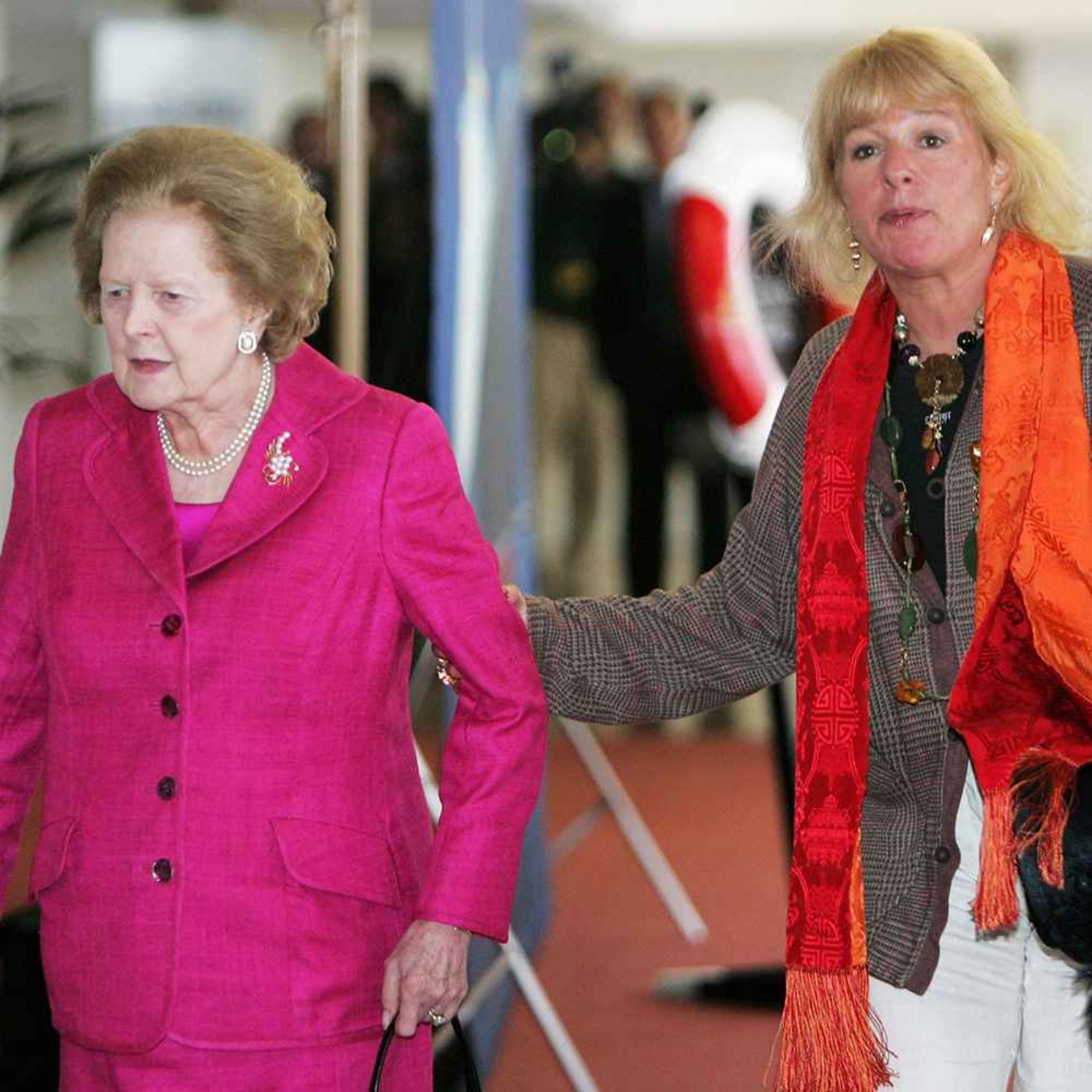
In this exclusive interview for The Daily T podcast, Camilla and Tim sit down with her daughter, Carol Thatcher, to explore what it was like growing up with Britain’s first female prime minister.
Carol offers a rare, personal insight into life inside Number 10 Downing Street, sharing intimate stories of her mother’s work ethic, her approach to power and the personal side of a political icon.
She reflects on how Thatcher’s leadership continues to inspire female politicians, the fallout after the Tories ousted her, and why her mother still holds a near-mythical status within the Conservative Party.
► Sign up to our most popular newsletter, From the Editor. Look forward to receiving free-thinking comment and the day's biggest stories, every morning. telegraph.co.uk/fromtheeditor
Producers: Georgia Coan and Hugo Verelst-Way
Senior Producer: John Cadigan
Video Producer: Will Walters
Studio Operator: Meghan Searle
Executive Producer: Charlotte Seligman
Social Producer: Nada Aggour
Editor: Camilla Tominey
Hosted on Acast. See acast.com/privacy for more information.


