
 Ask ChatGPT


 The Daily T
13 Aug 2025 · 40m · 20 chapters
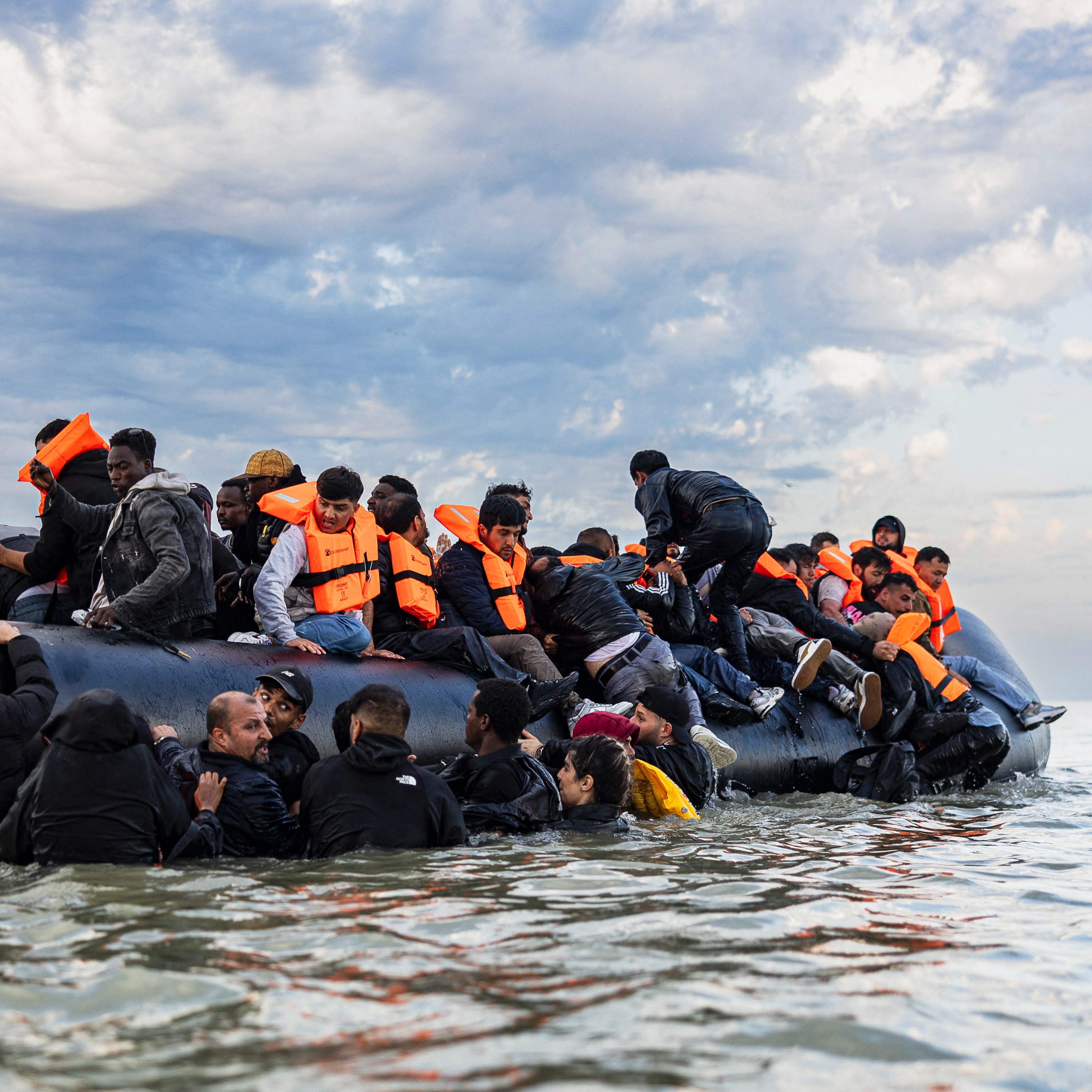
Chris Philp, Shadow Home Secretary, visits a migrant camp near Calais/Grand Sainte outside Dunkirk and says a machete was pulled and waved at him while he spoke to migrants; he also reports being pelted with glass bottles as he left. He claims the violence suggests some Channel-crossers are willing to commit offences in the UK. He says French police presence on nearby beaches was minimal and argues migrants are being pulled by beliefs about UK hotels and illegal work (e.g., Deliveroo), despite France having a functioning asylum system. He says he met J.D. Vance privately; he calls it friendly and says the Tories can learn from Trump-era US border enforcement, including removing illegal arrivals and reviving Rwanda. He supports live facial recognition and ethnicity/nationality data disclosure, plus immigration status. The episode also features Anouk Currie, reporter/producer for the documentary Lucy Letby, Beyond Reasonable Doubt, who argues the Letby trial evidence may be flawed: she cites leaked emails, disputed statistics, and insulin test interpretation issues, and discusses the Criminal Cases Review Commission process.
Written by AI. May contain mistakes.
Chris Philp recounts a harrowing experience with migrants in Calais, including a machete incident.
“Chris Philp, Shadow Home Secretary, thanks for joining us on The Daily Tea.”
Philp discusses the surge in small boat crossings to the UK and the motivations of migrants.
“slightly, slightly hair raising experience.”
Philp talks about his meeting with J.D. Vance and how UK immigration policy may draw inspiration from the US.
“And, you know, I've just witnessed with my own eyes just, you know, 20 minutes, half an hour ago, what that means on the ground in practice.”
Philp shares insights from conversations with migrants regarding their reasons for wanting to cross into the UK.
“And that, I think, is why we've seen numbers surging this year.”
Discussion on the use of facial recognition technology by police and its implications for crime prevention.
“They could quite easily claim asylum right here.”
Philp discusses government changes regarding the collection of ethnicity and nationality data in criminal investigations.
“And just lastly, there's been a change today.”
A discussion on the political implications of Philp's visit to France and how it compares to past political maneuvers.
“Gordon, why do you think Chris Philp is really in France?”
Exploration of J.D. Vance's emerging role in American politics and his relationship with the UK.
“we just don't have the time or resources to make this kind of videos.”
Explore J.D. Vance's significance in conservative politics and his ties to British leaders.
“Vance is arguably going to pick up from where Trump leaves off.”
Learn about the controversial case of Lucy Letby and the ongoing discourse surrounding it.
“It remains one of the most divisive cases in British medical history, and there are now medical experts openly questioning whether any murders occurred at all.”
Hear from Anouk Currie about her motivations and background in covering medical inquiries.
“Can you just tell us what drew you to this case originally?”
Discussion on the implications of NHS failures in relation to the Letby trial.
“conviction would say, is the possibility that the NHS failed, babies died, and everything was then pinned on one individual.”
Investigate the new evidence and narratives emerging from Letby's case that question the original conviction.
“And simultaneously, the police are investigating potential other crimes that could have been committed by Lucy Letby at a second hospital, Liverpool Women's Hospital.”
Examine the controversial decision-making of Letby's defense team during the trial.
“So there's this alternative narrative, I guess, which has emerged of a failing unit and doctors not really understanding why babies were foundering or dying.”
Explore the challenges and controversies surrounding the statistical evidence in Letby's trial.
“We all saw a chart which suggested that Letby had been present at each serious case within the unit.”
Explore the initial findings and controversies surrounding the hospital's case against Lucy Letby.
“And I know from some material I've seen, some leaked documents, that initially there were just a couple of collapses that were put forward as an issue by the hospital.”
Understand the critical insulin tests used in the trial and their implications.
“So feeding tubes, it was claimed in the trial, it was very difficult for feeding tubes to become free.”
Hear insights from Karen Rees and other staff who believe in Lucy Letby's innocence.
“which can bind to insulin, stop the insulin from being a problem for the babies, but lead to a high reading in the tests.”
Discuss the implications of Lucy Letby's failed appeals and potential flaws in the justice system.
“She would have been, I think, a character witness or given information of her experiences of Lucy Letby.”
Analyze how media coverage has influenced public perception of the case.
“Anouk, you're in the media, we're in the media.”

Get the gist, explore an idea or ask about something said.
 Claude
On The Daily T, what are the key points of this episode?
Searching your listeningAutomatic transcript. May contain errors.
0:04The Telegraph.
0:09We speak to Chris Philp, the Shadow Home Secretary, who is visiting a migrant camp in France where, he says, a machete was pulled on him. He also tells us about his meeting with J.D. Vance and what the Tories might be learning from the Republicans on immigration. Plus, two years on from Lucy Letby's conviction for murdering babies at a hospital, we talk to the maker of a new documentary about the latest evidence that her trial was flawed and where she thinks the case goes from here. Welcome to The Daily Tea with me, Tim Stanley. And me, Gordon Rayner.
0:51Chris Philp, Shadow Home Secretary, thanks for joining us on The Daily Tea. You're in Calais at the moment. Something happened to you this morning. Can you tell us what's happened? Yeah, well, we travelled from Calais to just outside Dunkirk to a place called Grand Sainte, where there is a large camp of illegal migrants planning to cross the channel to the UK. It's about 500 metres or so from where I'm sitting now. We were there about 20 minutes, half an hour ago. I was talking to some migrants, explaining to them like entering the UK by small boat is illegal, which they didn't really seem to care about very much.
1:26And as we were talking to the migrants, somebody pulled a machete and started waving it around. So we left the camp pretty quickly. And as we were leaving, we also got pelted by glass bottles, which narrowly missed us. And then as we were driving away, the car we were in got pelted as well. So it was a slightly, slightly, slightly hair raising experience. Gosh, and were you able to tell the police to what had happened? So we've got a French security officer with us. I assume he'll pass on the relevant details to the French police. But the jungle camp, one of the migrants there referred to it as the jungle too.
2:08The police, I'm afraid, are not going to be able to find the person in and amongst that camp. And just tell us why you decided to be there today. Well, obviously, we've seen this enormous surge in small boat crossings. This year so far has been the worst ever, the worst in history. And I wanted to find out, firstly, what the French law enforcement responses. So I was out on the beaches earlier today, including on a beach which saw embarkations just yesterday. And I did not see French police on that beach at all. So the first objective was to just witness for myself the French law enforcement response.
2:41And then secondly, I wanted to actually talk directly to the migrants myself to understand why it is they're planning to illegally enter the UK when they are already in France, which is a safe country. They could claim asylum right here. And what does the violence that you were shown tell you about those people making the crossings? Well, I'm afraid to say it does suggest that at least some of the people making those crossings are willing to use violence and are unfortunately likely to commit offences upon arrival in the UK. I'm not, of course, saying that applies to everybody, but it certainly applies to a fair proportion.
3:20And, you know, I've just witnessed with my own eyes just, you know, 20 minutes, half an hour ago, what that means on the ground in practice. And to be honest, someone who pulls a machete out and waves it around, I don't want that person to be in the UK, to be quite honest. It's reported that you've met with J.D. Vance, who, of course, is number two in an administration which is very tough on immigration. How did your meeting go with him? What did you talk about? Well, it was a private meeting, so I don't really want to get into the details of what was discussed. But it was a very friendly and constructive meeting.
3:55But I don't want to get further into it. That's a very diplomatic answer. But do the Tories take any inspiration from what Mr. Vance's administration is doing? Well, yes, on immigration, because, of course, the American administration since January have succeeded in essentially stopping illegal immigration across the American-Mexican, the US-Mexican border, which had been running at extremely high levels. And that shows that with the right political will, it can be done. Now, it takes tough measures to stop illegal immigration. And I think this is a crisis of sufficient severity that those tough measures should be taking, which ought, in my view, to include removing immediately upon arrival anyone who enters the UK illegally and return them either to their country of origin, or if that's not possible, some third country, for example, Rwanda.
4:41And I think Keir Starmer made an enormous mistake by cancelling that Rwanda scheme last year, just before it was due to start and without a replacement plan. And that, I think, is why we've seen numbers surging this year. Can I just ask, you said that you went to try and speak to migrants about why they're gathering there, why they want to cross. Did you actually manage to speak to any of them before this machete was pulled on you? And if so, what did they say? Yes, well, I was in the middle of a conversation when that happened, but I did manage to speak to a number of migrants, some of which we've got on video, which we can put out later on.
5:15But it was things like they've heard about the hotels. They think you do get hotels in the UK, which I think is inappropriate. Frankly, we should be removing illegal immigrants upon arrival and not accommodating them in hotels. That is certainly a pull factor. And the ability to work illegally for companies like Deliveroo is a pull factor as well. So, I think those are some of the reasons why they're choosing to leave France and illegally enter the UK, even though, of course, France is safe. France has a well-functioning asylum system. They could quite easily claim asylum right here. And many migrants haven't just passed through France.
5:52They've previously been through Italy or Greece as well. Chris, just before you go, can we just ask you, there's a couple of things that are happening on the Home Affairs front back here today. Police using facial recognition cameras has caused a lot of debate. Where do you stand on that issue? Well, I support the use of live facial recognition because it helps catch wanted criminals who would not otherwise be caught. Anyone scanned using the camera who is not wanted for a criminal offence has their image immediately and automatically deleted. So I think that addresses, you know, civil liberties and privacy concerns.
6:27I must say, I do think the Home Secretary has a little bit of a cheek announcing this because the funding for this initiative and the procurement of the 10 vans was actually a project that I initiated when I was police minister a little over a year ago. So I'm pleased the new administration has finally got around to implementing that plan. But it will help catch criminals. It's been tested in Croydon, the borough that I represent in Parliament, and it's caught 200 wanted criminals in the last year in Croydon who would not otherwise have been caught, including two rapists, two men wanted for rape who would not otherwise have been caught.
7:02OK. And just lastly, there's been a change today. The government has announced that they are now going to encourage police forces to identify the ethnicity and nationality of suspects in serious crimes. Obviously, after there was the controversy over what happened in Warwickshire, where there were two Afghan asylum seekers who were not identified. Is that something you support? Yes, they should be disclosing data about ethnicity, country and nationality as well. but they should also be disclosing immigration status so we can better understand the impact of immigration on crime. So that immigration status needs to be disclosed as well.
7:40Chris Philp, thank you for joining us from Calais. Hope you're OK and hope you get home safely. Great. Thank you.
7:51Gordon, why do you think Chris Philp is really in France? well it's interesting isn't it clearly i think timing wise it's because of bad news for labor with 50 000 arrivals since labor came to power but it does feel very much as though he is borrowing from the sort of robert generick playbook by being sort of the man the man on the spot trying to do tiktok videos perhaps doing some sort of almost like reportage generick started this right with videos about yeah dodging exactly so yeah so we saw we saw generick going to tube stations and and confronting people who were jumping over the barriers and saying, why are you doing this?
8:28Do you think that's acceptable? He got a lot of praise for that. And I think that we may well see more front bench Tory politicians doing that because this is obviously what reform are very good at, particularly Nigel Farage. We've spoken on this podcast before about the fact that Kemi Bainock perhaps doesn't do enough of that. You know, you had when Labour announced their new one in, one out policy or 17 in, one out policy, whichever it was. Faraj went on a fishing boat in the channel and he literally reported from the channel on migrants being picked up by Border Force and the French asking if they could have their life jackets back so they could reuse them.
9:08So I think this is what's fueled this ultimately. It's starting to feel also like they're almost searching for danger. So in the case of Rob generic he chased fair dodgers that could end in a in fisticuffs but here philper's actually gone right into the cap yes it's not a massive surprise that it ended in a confrontation no it's not a massive surprise that somebody pulled a weapon no a machete and being pelted could happen if the tories went canvassing in britain too well they are that unpopular yeah one certainly hopes he's all right but you're you're quite right i agree this this is clearly a much more aggressive social media strategy.
9:45And one should also point out that they have the time to do it. Yeah, exactly. Now being in opposition, the poor old government would say, we just don't have the time or resources to make this kind of videos. Interesting also to hear him talking about J.D. Vance slightly reluctantly because... Understandably. It was meant to be private. Yes. But he did sort of give a little bit on migration and how they're getting inspired by Trump on migration. What did you make of that? But it's the natural thing to do. It's possibly the most controversial, one of the most controversial elements of Trump's policy.
10:18I mean, by identifying themselves with that, the Tories are very much tying themselves to a certain stance on immigration. But, hey, that's the way things are moving. And what Trump has done lays out a model for other countries should they wish to follow. Yeah. This is a country where by the end of his first term, he got migration across the Mexican border right down. it then just went crazy under Biden, partly because the Biden administration sent a message. It was more of a rhetorical flaw than just a policy one, that the border was back open. So lots of people then crossed it. And through a mixture of signals and policy, Trump has managed to reduce that right back down again to a tiny trickle.
10:59And he's done that through a number of things. One is the stay in Mexico policy. So you say that rather than crossing the border to make your claim, no, you do that in Mexico and you don't get any further. And you get the Mexicans to do that through bribery. Another policy is saying, we just won't take any refugees. And that's a very cruel and very harsh policy. But my goodness, you compare it to the one in one out policy with France that we have brilliantly negotiated. Trump has worked out this is about numbers. It's not just that people want fewer migrants or legal migrants. They want no migrants.
11:35And then the third thing is mass deportations, which he's doing with this kind of citizens army of ICE agents, which again is controversial because you're taking people who may be here illegally, maybe in America illegally, but they could also be law abiding. And of course also have been in America for a very long time. And they're a big part of the economy. And they're a big part of the economy. But Trump is showing that if you take very tough action, you will get brickbats for it. People will attack you for it. But the long-term win is that migration goes down. And that actually has a humanitarian benefit.
12:09Because in the case of the Channel, that crossing is one which risks the lives of people. It's something no one should be doing. Even if they have a legitimate asylum claim or with the best rid of the world, they want to come to Britain to enjoy freedom and prosperity. No one should be allowed to make that journey. And if you can dissuade them from doing it, you will save lives. So it's more humane to actually stop those crossings. Yeah. But to what extent do you think could any political party here use some of the techniques that Trump has used, either successfully or in a politically acceptable way?
12:42Well, one key difference is the difference in the relationship between America and Mexico and Britain and France. America is clearly the senior partner. It has the money, the economic and diplomatic clout to say what you can and can't do. Whereas we still see ourselves as a partnership of equals, which sometimes it feels the French get more out of than we do. So it's partly things like that, but it's also a different political culture. It's just people are still nervous in this country about being seen to be anti-immigration, whereas Trump is happy just to go for it. What are we to make of this J.D.
13:18Vance visit, Tim? It's very significant because he is the vice president. He might win the next election. Trump presumably will endorse him. The Democrats don't look like they're getting their act together. In which case we could be in for 12 years of Republican governance, eight of which is this man who is quite young. Yeah. So he represents the coming to age of a generation of conservatives who are different from the ones that came before. He's not just a replay of Thatcher and Reagan. He is not just one of the great thinkers in populist conservatism. He embodies it because of his background, because growing up of the issues with addiction in his family.
13:58He's a self-made person. So J.D. Vance is arguably going to pick up from where Trump leaves off. And many people hope will be a little more interested in embedding Trump's ideas into institutions, transforming those institutions and really remaking America in the image of Marga. So Vance is a very significant person. He likes Britain. He's been to it many times before. There are people here who he has close personal ties to, like David Lammy, the foreign secretary. Surprises some people. Yeah, so he's been staying with David Lammy. He is quite friendly with Lammy, isn't he? Despite Lammy having said rude things about the Trump administration in the past.
14:35And one thing they have in common is a profound Christian faith. And this is perhaps not appreciated about David Lammy as well. He is a very religious person. He's also very charming, very intelligent. And the two men just get on very well. David Lammy also knows Barack Obama. He's fantastically well connected in the United States. So he likes this country. He knows this country. But Americans also have always seen Britain as like the front line in the global culture war, whether it be issues like Islamification and mass migration or the question of free speech. There is a sense that Britain is the front line in all those battles.
15:11And so there's a great interest in the Marga crowd about what's going on here. But I think the other thing that's not being discussed so much is Vance arrives in Britain at a point at which the right is divided. And I have thought this week of how much this feels like that scene in The Godfather when the different families come together and they all defer to the senior person in the room. So you think about the people who've been meeting J.D. Vance. It's Nigel Farage, Rob Jenrick, Chris Phil, Kemi Badenock. They couldn't make their diaries match. I don't know what that's all about. But either way, these are the different warring factions within conservatism coming together to meet the senior figure from across the pond.
15:51I think that's kind of significant. I am not privy to those conversations or what's come out of it. But the big problem in Britain is the right is divided. And the Americans were probably thinking, who's going to win? Should we be talking more to the Conservative Party or should we be talking to the Reform Party? And thus far on this trip, Vance has been speaking to both. And I would just love to know which of those two he thinks is the future of conservatism here. And just remind our audience what happens in The Godfather after that meeting between the five men. They all get killed. Okay. That's true.
16:26No one really wins. But I think that's, that's, that, that I think has become the interesting image of the, of the week is all of these people coming to pay their respects. And of course, as much as all of them for different reasons, admire him and are emulating his administration's immigration policies, they all hate each other. Coming up, we speak to a documentary maker who has been looking into the latest on Lucy Letby
17:00In 2023, Lucy Letby, a nurse of the neonatal unit at the Countess of Chester Hospital was found guilty of murdering seven babies and attempting to murder seven others taking place at the hospital between June 2015 and June 2016. It remains one of the most divisive cases in British medical history, and there are now medical experts openly questioning whether any murders occurred at all. Well, a new RTV documentary, Lucy Letby, Beyond Reasonable Doubt, has taken a forensic dive into one of the most unsettling criminal cases of recent times. It's revisited the evidence that led to Letby's conviction, and it's offered compelling alternative explanations for key forensic and statistical findings.
17:45Well, we're joined now by Anouk Currie, a reporter and producer who worked on the documentary. Anouk, welcome to The Daily Tea. Hello. Thanks for having me. Can you just tell us what drew you to this case originally? I think you'd actually worked on a previous medical inquiry, hadn't you? Yeah. As a journalist, many years ago, back in 2007, I made a program for BBC Panorama called Midwives Undercover. And we did an enormous amount of research before we undertook that investigation. And it was across hospitals in the UK, we could see that new moms who were giving birth at these hospitals were having terrible experiences.
18:25And that was clearly a massive problem. And there's a big issue with compensation claims, damage to babies and babies dying. So we made that program. We went undercover in a couple of hospitals and we also interviewed a number of mothers who, women who had given birth and had either lost babies or had terrible experiences. And that really stuck with me, harrowing accounts of tragedies. And so it was with this in mind that I listened to what was coming out of the Lucy Letby trial. Anouk, at the heart of this case, critics of the Letby conviction would say, is the possibility that the NHS failed, babies died, and everything was then pinned on one individual.
19:20Given the other inquiries you've worked in, is that the perspective you came from in creating this documentary? I came from the perspective of, I want to look at what may have happened here. I didn't enter into it with any preconceived view, but I did have a background of knowledge of the problems that there were in maternity services in the NHS, which I found out then when I looked into transcripts of the trial. Lucy Letby's defense did explore this to some extent, but cautiously, I would say, and not in a very clear way. And even in his summing up, Ben Myers KC, her defense lawyer, said something about this isn't an attack on the NHS.
20:12So her defense was, to some extent, rooted in the idea that there was something very wrong with this unit. But what's happened since the trial is a number of documents and emails and information has come out, which builds around this. so I entered into it absolutely with an open mind I still have absolutely got an open mind but what I can see now very clearly which other experts have told me and from leaked documents and information is that there were very serious problems on this unit yeah okay so where we are with the case at the moment for people who may not have followed it closely is that Lucy Letby appealed her conviction twice as the court of appeal they would reject it both times because they said there was no new evidence presented.
21:04She has a new lawyer who has taken the case to the Criminal Cases Review Commission, which is now considering what he's presented to them. And simultaneously, the police are investigating potential other crimes that could have been committed by Lucy Letby at a second hospital, Liverpool Women's Hospital. So we could end up with her being charged with more crimes, or we could end up with her being cleared or having a retrial. What did you find out that's new when you were doing your research? And what will people have seen on TV that's new evidence? In the actual program, it's more a pulling together of everything that's evolved over the last couple of years.
21:48And in actual fact, a number of the revelations, I teamed up with Sarah Napton, your science editor on the Telegraph. And so there've been a number of things that we've uncovered through leaked documents and information that's come to us. Other journalists, the associate producer on our program, Closie the Oliveira, she was the journalist who discovered an email that Dr. Ravi Jayaram, one of the consultants who suspected Lucy let be, An email he'd sent not long after the incident when he claimed that he'd caught Lucy Letby doing nothing to help a baby. The prosecution talked about her being called virtually red-handed.
22:32Yes, the jury was told that he had gone into a room. She was standing over a baby in an incubator. The oxygen levels were dropping dangerously. She was standing doing nothing and she didn't call for help. the email that you're referring to, he said that he went there because she had called him to come and help. Is that right? Exactly. And our assistant producer, she was the one that discovered this email, which was really important. So there've been so many things that have happened. The challenge of the documentary was to pack these all in and explain what is a very complicated case clearly and I think from the reviews that we've had it's really been welcomed that the documentary because I think we achieved that one thing that is new is Professor Nina Modi who is a very eminent neonatologist she was she's a former president of the Royal College of Pediatrics and Child Health she went further than she has before and she said that I paraphrase here that if there'd been better care in some of these cases, clinical care by the doctors and the teams, then some of these babies wouldn't have died.
23:41And I felt that was really striking. And so we build to that in the program. So there's this alternative narrative, I guess, which has emerged of a failing unit and doctors not really understanding why babies were foundering or dying. And what some of these eminent neonatologists are saying is they had pediatricians working on the unit, not neonatologists. They don't have a specialism and they were taking increasingly vulnerable babies. A number of these were twins, triplets, or had conditions. And so that's the other narrative is that these problems weren't being identified by the clinicians.
24:27And that explains the deaths and the collapses. I'd like to go through the areas you explore the documentary one by one. First of all, the surprising failure of the defence team to provide alternative expert testimony. What was that about? Well, due to legal privilege, which means that unless the defense's client agrees to open up all files relating to the case. They can't disclose information about why certain decisions were made. We're not going to know for sure. I have obviously spoken to a number of people about this, legal experts saying, why might it be? And the possibilities are, it can be a legal strategy to not put anybody up and really just say this is so ludicrous in a way that we're not going to contest it.
25:30It seems difficult to think that that would be the case because we know that experts have been engaged in written reports, but they weren't then called to give evidence at trial. I think one thing that's worth thinking about is that the judge made a decision to let all of the prosecution evidence be heard, which was months and months and months, which of course the defence could cross-examine the prosecution witnesses, but not giving its own evidence. And so that might have been in the calculations. The jury's heard all of this. It's very hard then to go back to the detail of every count and refute it.
26:09Okay. The result is that it feels as if now it's the media and the public doing the job that many people think the defence should have done during the trial. I mean, the second thing the documentary raises is the now regarded as, I think by many people, controversial nature of the statistical evidence. We all saw a chart which suggested that Letby had been present at each serious case within the unit. And if you just visually looked at it, it was like OJ's glove, right? It just, although actually that got him off in the end, but it looked as though it was a slam dunk. but the documentary suggests it really isn't at all.
26:51No, and interestingly, the prosecution, the police almost engaged a statistician to look at the information that they had, which experts are saying now that they absolutely should have done this. And this is what the Royal Statistical Society says that should be done in these cases. They went as far as emailing and almost engaging Professor Jane Hotton, but they didn't. And this made it to court. The prosecution claimed they weren't, I think they sort of implied that they weren't dealing in statistics, but the chart in itself is inevitably statistics. And yet there are lots of question marks around how that chart was compiled.
27:32We know that in total during the indictment period, there were 18 deaths and seven of those Lucy Letby was charged with. That's still far more than you would expect babies dying on that unit. So you've got a question mark then, well, why were these other babies dying? And then you've also got the issue around collapses. Now, babies, I'm told in neonatal units, collapse often. And I know from some material I've seen, some leaked documents, that initially there were just a couple of collapses that were put forward as an issue by the hospital. But then these grew and grew. So the question is, was Lucy Letby in mind when they were going back and looking at different ones?
28:21There's so many questions. Statisticians say twins, triplets, all of these things should be taken into account, the conditions of the babies. And none of it was. It was just a start. These are the ones we've selected. And Lucy was always there. So some statisticians are saying, well, it's cherry picked. Right, which then brings me to the third point the documentary raises, which is that the number of individual cases which since the trial have then been questioned in terms of there is an alternative explanation. So feeding tubes, it was claimed in the trial, it was very difficult for feeding tubes to become free.
28:59But actually you demonstrate in the documentary with the use of a little model baby that actually can be done quite easily. And I think a very striking example was the insulin case. Can you just quickly unpack that? I mean, the key point that's been made from very early on is that the tests that were used for detection of insulin, known as immunoassays, are used clinically. But experts are saying they should not be used forensically. They have a significant error rate. So those were the tests used, which demonstrated that two babies, where Lucy was found guilty of attempting to murder, had very high insulin levels and fairly low levels of a hormone called C-peptide.
29:46And generally doctors and scientists believe that when the insulin is high and C-peptide is low, that suggests that insulin has been given externally to a baby. But what I learned for the documentary from Professor Jeff Chase in New Zealand is that there are circumstances specific to neonates where antibodies, they can carry a lot of antibodies which can bind to insulin, stop the insulin from being a problem for the babies, but lead to a high reading in the tests. so there's that but there's also yeah the question mark about around these tests and i think what people are really contesting the experts are really contesting is it was very clearly set out in the trial that this could only be from exogenous insulin from insulin that was given to the baby synthetic insulin and a number of experts i think i've spoken to nine are saying this is absolutely not the case.
30:48There are other explanations. And the insulin, I think, was described either directly or in terms as being the sort of nearest thing to a smoking gun in the trial, wasn't it? So it was absolutely vital. And I think the babies that she was accused of killing with insulin, they were the first verdicts the jury came back with. So they felt they were the sort of most clear cut. That's right. And the judge allowed cross-admissibility of evidence as well. So that meant that once they'd found Lucy Let Me Guilty of attempted murder of those to insulin babies, they could use that to inform the other counts.
31:20So it really is absolutely key to all of this. You're absolutely right, yeah. Yeah, and yet you now have experts who are saying that those tests should never be used evidentially because they're medical tests that are meant for quick turnaround, that they're not even considered strong enough to, for example, ban an athlete from competing if they were to fail a test like that. Yeah, Professor Matt Joel says that in the programme and it's a powerful argument. Yeah. You also spoke to Karen Rees, who was the head of nursing at the Countess of Chester. It's the first time I think she's spoken on camera.
31:51I thought it was very striking. Not only does she believe that Lucy Letby is innocent, but she's never even asked her if she did it because she thought there was no need to ask because it was so clear she was innocent to her. Oh yeah, it was very, it was fascinating meeting and talking to Karen Reese and, um, you know, there's a reluctance to come forward because the case is so contentious and at the heart of it is such tragedy for families who've lost babies or, or, um, whose babies have been harmed in some way. And I met Karen a number of times and had some really interesting conversations with her, but yes, she speaks eloquently in the program and she's really upset.
32:34It's really affected her and other staff that I've spoken to who have worked at the Countess of Chester very deeply. And I mean, one thing I'll mention actually that an article that Sarah Napton and I wrote for The Telegraph, we discovered that at the Thurwell inquiry, which was the inquiry to look into how Lucy Letby had been allowed to continue murdering babies, that the statements from the nurses who worked at the hospital were not being published. And until we pushed for them to be, we didn't really have an idea of what they thought. And a number of them, many of them do not believe that Lucy Letby did anything wrong, very much like Karen Reese.
33:17And they talked to each other, you know, they're in contact, obviously, a number of these staff. But Karen was very brave because she, you know, She could be criticised for speaking out, but I think it's important to get that insight because some of these voices haven't been heard. And Karen Rees actually told me that she offered herself to the defence team during the trial when she heard what was happening and they didn't take her up on giving evidence. She would have been, I think, a character witness or given information of her experiences of Lucy Letby. So which takes us on to the point of these failed appeals and where Lucy Letby goes from here, doesn't it?
33:57Because what people might find slightly perverse is that the Court of Appeal has rejected her attempts to get a retrial on the basis that, in essence, they're saying, well, this is all evidence you could have presented at your original trial but didn't. But that doesn't allow for the possibility that somebody has just been very badly let down by their defence team. So if you go to trial and your defence team is just not very good, frankly, then you're slightly stuffed, aren't you? Absolutely. I mean, it really does demonstrate that facet of our system, I think, in such a way. Just to clarify, Lucy Letby applied for leave to appeal and was refused.
34:43So she hasn't ever had the full appeal process. I know it's a technicality, but that was the case with the two applications for leave to appeal. Yeah, I mean, that is absolutely seems to be the system. But my understanding is that judges do have the scope to see past that rigidity around fresh evidence. But the question is, will they be prepared to? And of course, where the case is now is with the Criminal Cases Review Commission, which is a body that was set up after a number of miscarriages of justice, including the Birmingham Six. Because previously, it was the Home Secretary who would decide if something needed looking into again.
35:31Interestingly, the Criminal Cases Review Commission refers back fewer cases than the old system did. and there have been a number of criticisms of it because in a way it's tied to the court of appeal because it has to anticipate whether it thinks there's a reasonable chance that the court of appeal will decide that the conviction's unsafe and send it to retrial. So it's anticipating what it thinks judges will say and I do think that this whole area of the system potentially does need looking at but it'll be very interesting to see how it all plays out. Anouk, you're in the media, we're in the media.
36:15To what extent is the media responsible for setting the narrative around Lucy Letby? When she was first arrested and put on trial, there was a flavour of Face of Evil, another Myra Hindley about her. Now it feels like it's shifted and the media is now more interested in a narrative of was this woman the victim of an elite conspiracy? or it could be something more subtle to do with human behavior and not understanding why things are going wrong people aren't necessarily saying that staff members conspired against her but yeah I mean the media has a huge role in this what's interesting is this is not the first case where a nurse has been in Europe has gone to prison convicted of harming patients and then later there have been huge question marks around it.
37:04And in the two other cases, the nurses have been exonerated. One was in the Netherlands, one in Italy. And yeah, people have used the term witch hunt in relation to those cases. Interestingly, I was just looking back at some of the documentation I've got from the Thurwell inquiry and what some of the staff were saying at the time when there were suspicions around Lucy Letby. And the deputy manager of the neonatal unit said in the grievance that she felt there was a witch hunt against Lucy Lettby, but that was even in the hospital. I don't know. It's horrifying and it's right that people should know if an express horror, if somebody's killing or harming babies.
37:48As to how it plays out, one thing that occurred to me is that because the defense didn't put forward experts, it meant that there was a lot less reporting of the trial on the defence side because it was therefore shortened. So I remember waiting, thinking, oh, I'd be really interested to see what all the headlines are around the defence case. But that was a knock-on effect, I suppose, that the defence team may not have anticipated. So the media do pick up on sensational aspects. There are, of course, those who will say, perhaps families of the victims, she was found guilty in a court of law. The evidence was strong, the trial was long, the experts were fairly conclusive.
38:32There are always people after a trial who then say it was unjust, there are always people who challenge what was said, but it's actually hurtful to continue to go through this evidence, when as far as many people are concerned, Lucy Letby is a guilty woman and should be left to serve her time. Yeah, I mean, that has been discussed a lot. And I have enormous sympathy for the families involved in the case. And it is true. She has been convicted, absolutely. And at this moment in time, is a convicted serial killer. I suppose it needs to be looked into if there is any possibility that something has gone wrong here.
39:15And the voices, the number of voices is huge. And I think that if there was a bigger problem in this unit related to NHS and the staffing of the unit, the way it was functioning, there's also other families to think about in the future. show. I have no idea what the truth is here. Only Lucy Letby knows that. But if there is a possibility that something else happened, I think that it's in the public interest and it needs to be explored and we do need to know. Anu Kari, thank you very much. Thank you. We'll be back tomorrow, 5pm.
40:20We'll see you next time.
40:33AI-driven insights and automated workflows that simplify the complex and power what's next. Because when everything comes together in one place, growth comes easy. Experience one place for all your HCM needs. Start now at paylocity.com slash one.
The shadow home secretary has said he was confronted by a man with a machete and had glass bottles thrown at him while visiting a migrant camp in Calais.
Chris Philp speaks to Tim and Gordon just after the “hair-raising” incident, and what is could tell us about some of the people crossing the Channel illegally.
Plus, a new documentary featuring leading medical experts has cast fresh doubt on serial child killer Lucy Letby’s conviction. We hear from the journalist behind Lucy Letby: Beyond Reasonable Doubt?
We want to hear from you! Email us at [email protected] or find @dailytpodcast on X, Instagram and TikTok
Producer: Lilian Fawcett
Senior Producer: John Cadigan
Planning Editor: Venetia Rainey
Video Editor: Will Walters
Social Producer: Ji-Min Lee
Studio Director: Meghan Searle
Executive Producer: Louisa Wells
Hosted on Acast. See acast.com/privacy for more information.


