
 Ask ChatGPT



Reform UK’s “Operation Restoring Justice” plan for the small boats/illegal immigration crisis, launched at Oxford Airport, arguing for rapid detention and deportation to stop arrivals.
Nigel Farage (Reform leader); Richard Tice (Reform deputy leader); Zia Yusuf (Reform figure referenced); two Reform supporters, Daryl and Carol (Buckinghamshire; candidates in council elections); Lyndon Camcarran (Kent County Council leader; Dover-area impact).
Leave the ECHR on day one; repeal the Human Rights Act and replace it with a British Bill of Rights; pass an “illegal migration mass deportation” bill creating a legal duty to remove illegal migrants; disapply the 1951 Refugee Convention and UN Torture Convention; end asylum eligibility for those arriving illegally by boat; disapply Harjil Singh bail constraints; lifetime re-entry bans; detention capacity up to 24,000 using secure removal centres (possibly RAF sites); voluntary return window then forced deportations; returns deals including potentially with the Taliban; Rwanda-style third-country processing (e.g., Ascension Island).
Taliban/returns deals; Trump’s Florida detention expansion cited; Germany negotiating with the Taliban; “arrivals/departures” screens and deportation flights/RAF hot spare described.
Written by AI. May contain mistakes.
An in-depth look at the main points of the Reform UK's immigration strategy.
“Well, I have in my hands a four-page document entitled Reform UK, Operation Restoring Justice.”
Discussion on specific proposals like leaving the ECHR and repealing the Human Rights Act.
“A lot of people around the country who say they're going to vote reform believe that we're pretty much the last shot.”
Explains the proposed strategies for detaining and deporting illegal migrants.
“So they want to disapply all of those treaties.”
Details on how the proposed immigration policies would be implemented and their anticipated effects.
“And we genuinely are the only party that can be trusted on this.”
Final thoughts on the implications of the proposed policies and broader immigration issues.
“and this is what I put to the reform leader.”
The discussion centers around the UK government's approach to immigration and housing for citizens versus immigrants.
“And yes, I know the circumstances were different.”
Analyzing Reform UK's positioning on immigration and their strategic messaging amidst political challenges.
“A picture tells a thousand words with, I think, the biggest union flag in this hangar in the country, I've been told.”
The implications and logistics of negotiating with the Taliban concerning deportation and immigration policies.
“people painting St George's crosses on roundabouts.”
Exploring the proposed plans for overseas processing of asylum seekers and the management of existing asylum hotels.
“What would reform do with the Rwanda plan that the Tories didn't implement in the end?”
Reflections on the interview and future plans for reforming immigration policies in the UK.
“Are you saying you're going to move them into these detention centres immediately?”
The hosts reflect on the interview with Richard Tice, discussing his A-level results and teasing upcoming guests.
“Richard Tice, thank you as ever for a very fun and informative interview.”
Daryl and Carol, reform candidates, share their thoughts on current political issues and the migrant crisis.
“Daryl and Carol, how wonderfully poetic.”
Lyndon Camcarran discusses the Reform Party's proposed policies on immigration and housing, and public sentiments in Kent.
“You know, she is one of those people that has had a uni party approach to her own voting.”
The hosts analyze the Reform Party's image and strategy towards women's safety and immigration issues.
“That's the other interesting thing about the changing face of reform, actually.”
Learn how Nigel Farage is framing immigration debates by focusing on women's safety.
“And I did keep on noticing, Nigel Farage keeps on making this point about the safety of women and girls.”

Get the gist, explore an idea or ask about something said.
 Claude
On The Daily T, what are the key points of this episode?
Searching your listeningAutomatic transcript. May contain errors.
0:02The Telegraph.
0:30the world's largest podcast marketplace. We let you browse shows, see who's listening, and book host-read sponsorships or run your own ads all from one platform. Transparent pricing, real-time data, complete control.
0:43Camilla: Start advertising on podcasts by visiting acast.com slash advertise.
0:54Camilla: I'm standing in front of what is rumored to be the biggest union flag in the UK, We're at Oxford Airport where Nigel Farage has just launched Operation Restoring Justice. This is Reform's plan to solve our illegal immigration crisis. We're going to be hearing from the Reform Leader, his deputy Richard Tice, and Reform supporters about what he's announced this morning. Welcome to The Daily Tea with me, Camilla Tominy.
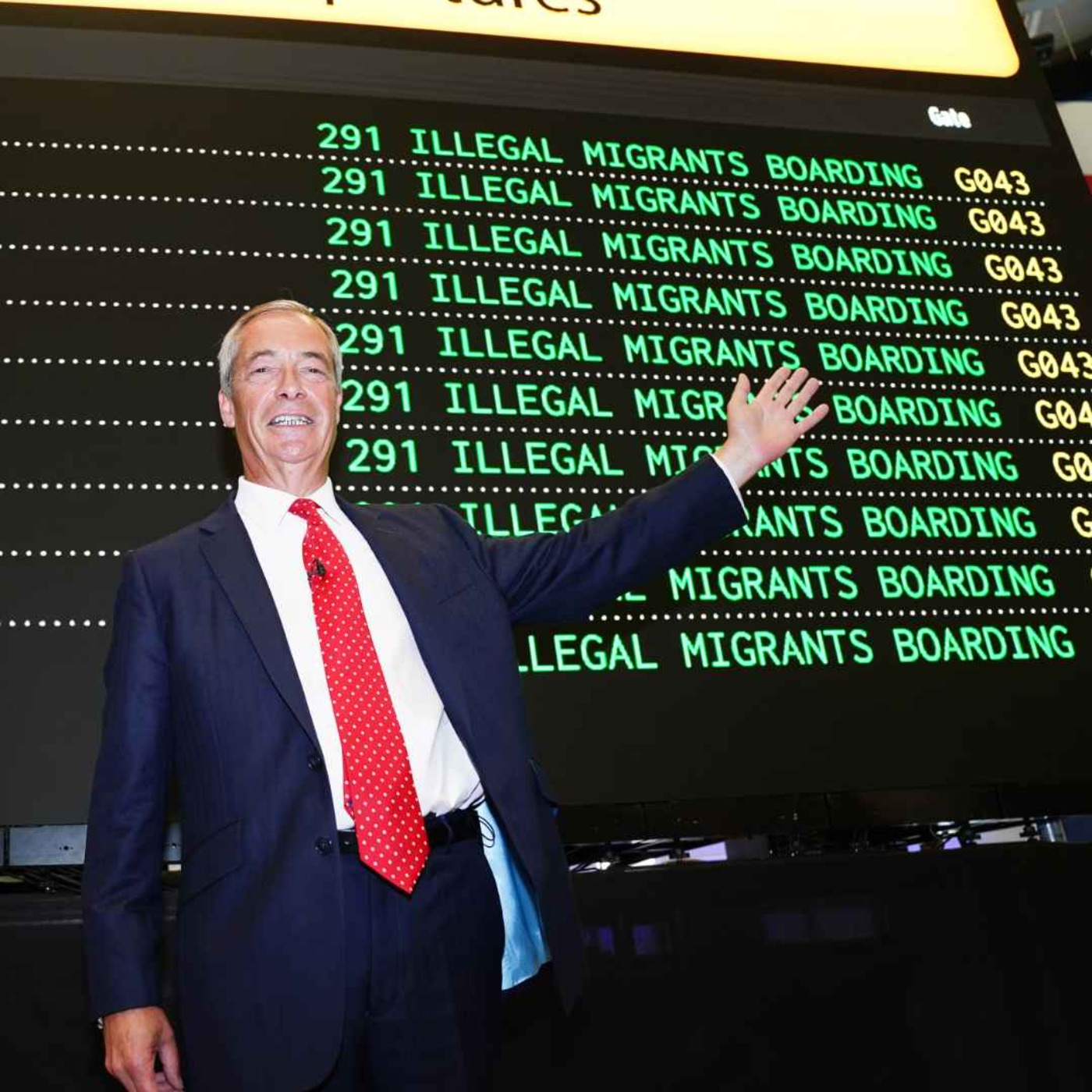
1:32Camilla: Well, I have in my hands a four-page document entitled Reform UK, Operation Restoring Justice. And, of course, there's a flight theme going on because this is about sending people home and stopping them from arriving in the first place. We're at an aircraft hangar at Oxford Airport, which is in Kidlington. And they've been taken down now, but I'm surrounded by two screens. One of them had departures, taking off, and this was sending people back to the countries they came from, Afghanistan, Ethiopia, Iran, Albania, all featuring. And then we had another board which was arrivals and basically saying, no, you can't come here anymore, we're going to deport you back.
2:14Camilla: And so that's the general theme, a flying theme. And let's just talk through the main points of this document. Now, the Tories, Chris Filt, the shadow Home Secretary, says, reform have just ripped this off the Tories because it sounds very similar now to Kemi Badenock's plans as to how to deal with illegal immigration. And the cutting figure here really is quite a stark one. That the number of people with no lawful right to remain in the United Kingdom now currently stands above 1 million. These are the people that reform are saying they want to deal with. They're talking about introducing a five-year emergency programme So as soon as they take power, as soon as Nigel Farage is handing the tease to Downing Street, that this will come into play.
3:00A lot of people around the country who say they're going to vote reform believe that we're pretty much the last shot. Pretty much the last shot. That if we don't win that election and start putting in place some of the very necessary changes that are needed, then goodness only knows what this country will look like in ten years time. Goodness only knows how many more talented people will have left. Not just the ultra-rich but the young ambitious, hard-working. So it is vital that we do this. All I can say to you is there's nobody on these issues of sovereignty, on these issues of national self-interest, on these issues of predicting what would happen in the future and it coming true, there is nobody more determined to do this than me.
3:55Camilla: We'll go into the costs in just a minute, but let's just look at the points, the salient points of this plan. Number one, leave the ECHR. And they're being unequivocal about that because currently the Conservatives are undertaking a review. Lord Wolfson is having a look at it. Should we leave? Should we stay? Should we reform our relationship? They're just saying reform. No, we're out on day one. We have to leave the ECHR. No ifs, no buts. It may have been a good idea 80 years ago. Frankly, it isn't today. Two, repeal the Human Rights Act and replace it with the British Bill of Rights. This is a slight departure from the Tories.
4:36Camilla: The Tories are saying they want to disapply parts of the Human Rights Act that refer to immigration. Reformers saying, no, we're tearing up the Human Rights Act and we're replacing it with the British Bill of Rights. And then three, this is where the Tories and Reform are similar. Reformers saying they want to pass the illegal migration mass deportation bill. The Tories' equivalent is the deportation bill. And in that bill, they will do the following things. They're going to create a legal duty to remove illegal migrants for the Home Secretary. So basically they're saying, if you come here illegally, you cannot stay.
5:11Camilla: you can be instantly deported. How will they do that? Well, they'll disapply the 1951 Refugee Convention. That's the convention that allows people to claim asylum in the UK. They're also going to disapply the UN Convention Against Torture, the Council of Europe Anti-Trafficking Convention. Nothing short of these measures will work. And I think we all genuinely believe that. If we allow any loopholes to remain open with this, it isn't going to happen. So they're saying that all of these conventions are what are relied upon by so-called lefty lawyers, human rights lawyers, to keep people who shouldn't be here in the country.
5:48Camilla: So they want to disapply all of those treaties. They want to create a detention power without Hajiul Singh constraints. Now, Harjil Singh is a method that lawyers can use through legal precedent to allow people who are seeking asylum against deportation bail. And reform want to disapply that because they say what happens is people are granted bail and then they just disappear and no one can find them. And that's why we've got so many undocumented illegal immigrants in the country. They're saying if you came to the UK illegally, you are ineligible for asylum. End of story. So they're saying, if you come here illegally, you can't claim asylum at all.
6:31Camilla: That's it. Because you're an illegal, you've lost your rights. So they're not talking about people coming here under schemes or safe and legal routes, Hong Kongers who came here under a special home office programme, people who we've granted asylum to legitimately from Afghanistan because they're fleeing torture. They're not talking about that. They're saying, if you come here by boat on the back of a lorry, then you cannot claim asylum at all. and then they're saying if you re-enter the country after you've been deported or if you destroy your own identification documents you throw away your passport or any other documentation then that becomes a serious criminal offence and you can be prosecuted for it and they're saying you have a lifetime re-entry ban so if you've been deported you can never come back in.
7:18The only way we will stop the boats is by detaining and deporting absolutely anyone that comes via that route and if we do that the boats will stop coming within days because there would be no incentive to pay a trafficker to get into this country. If you come to the UK illegally, you will be detained and deported and never, ever allowed to stay, period. That is our big message from today, and we're the first party to put out plans that could actually make that work. We will stop the boats from coming. There will be no more incentive to pay traffickers. public trust will be restored. And we genuinely are the only party that can be trusted on this.
8:19Camilla: And then he's talking about how he would put that into practice. And one of the key elements of this policy, well, there are two key elements. One is signing returns agreements with the countries where people are coming. So that includes negotiating potentially with the Taliban in Afghanistan. Zia Youssef did speak about that on the radio this morning. It also means doing deals with Iranians and others in order to have people return to their home country. That also might mean, by the way, paying those home countries millions of pounds to take them back. They're going to build secure immigration removal centres.
8:57Camilla: They will be able to detain up to 24 ,000 people. They're saying that they would take over old RAF bases to build these detention centres. and in fact Zia Youssef was asked about that and he talked about how much geographical space that would actually take up in reality. There's 100 ,000 square miles of land mass in this country. We're going to need about a third of one square mile for the entire detention estate of the incremental 21 ,000 that we're talking about here. And Trump, whatever you think of President Trump, he has cut illegal border crossings by 97%. If you look at the detention capacity he created in Florida, he created 3 ,000 beds in eight days.
9:35If we were to be able to do it at that rate, we'd have the whole 24 ,000 up and running in two months. That's not in our numbers. But there is modern technology. These steel modular structures, these are all things that we can use. This notion that Britain can't do anything, Britain can't build anything, is for the birds. It's just about the political will.
9:51Camilla: They're going to create a voluntary return window. So that's for six months, where people who know they're going to be removed take it upon themselves to remove themselves, and then they won't face any criminal sanctions. So that's an incentive to self-deport because you don't want to be thrown in a detention centre, but also perhaps even a financial incentive to go home. And I might stick in the throat a little bit paying people who are coming illegally, but if you look at the Department of Homeland Security, you've looked a lot at what the Trump administration has done. The DHS have said their voluntary programme is about$1 ,000,$1 ,500, relative to$17 ,000 for an enforced deportation.
10:30And as Nigel said, one of the things that will happen immediately once we pass this legislation is UK Deportation Command will start issuing letters informing them, we know we're on to you. And if you don't take this voluntary programme, you're gone forcibly in six months' time.
10:45Camilla: Deportation flights are going to be launched and going to be carried out in earnest. So the Home Office will scale up charters to five flights per day. And to guard against any last-minute aircraft unserviceability, the RAF is going to keep one Voyager aircraft, those are the aircraft that take the Prime Minister and other VIPs to foreign countries, on six-hour hot spare readiness. So basically, if a commercial charter breaks down, detainees can still be flown out that night, preserving operational integrity. As I said, they're going to have returns agreements and they're also looking again at Rwanda-style plans.
11:21Camilla: So third country partners that the Foreign Office will rapidly negotiate deals with. A budget's been allocated for that. Could be Rwanda, could be other British overseas territories. It says in this document, Ascension Islands isolated airfield can handle A330 aircraft enabling rapid transfer of channel arrivals. This is the concluding paragraph of the document. This is what they're hoping to achieve in total. This will mean new arrivals and boat crossings will stop almost immediately, as would-be illegal migrants will know they simply will be detained on arrival and deported with a lifetime ban on re-entry.
12:01Camilla: It's the ultimate deterrent, says Nigel Farage. Well, at the press conference, of course, we had the chance to ask a question, and this is what I put to the reform leader. You mentioned earlier that there are 3 million people on social housing waiting lists. 1.3. Would it be your policy to have a British first approach to appointing housing when it comes to local areas? Some local areas do look at localism, but others don't. Would that be a blanket policy? And while we're speaking about housing, what's your reaction to the revelation that the Deputy Prime Minister, Angela Rayner, has got an£800 ,000 second home in Hove?
12:40Camilla: Do you think it's hypocritical? Should MPs have second homes? So, I would say this to you. I would say this to you. Isn't it funny that the residence that Angela Rayner is living in in London is now coming under criticism from James Cleverley. He wasn't complaining when Michael Gove lived there. So it's just party politics. And if Angela Rayner has been tremendously successful in business
13:16and managed to acquire a property portfolio and done it properly, well, jolly good luck to her. And this sort of whole... This whole sort of hair-shirt approach... I think probably most of the press want politicians in sackcloth and ashes, would like us all to go vegan and give up drinking. Well, it's not happening here. I can assure you. Do you want to answer the other bit or not? We are opposed to two-tier justice within our country. We are opposed to two-tier policing within our country. We are opposed to two-tier sentencing. We've just seen Lucy Connolly coming out of prison as Ricky Jones walks free.
14:08And yes, I know the circumstances were different. But we are pro a two-tier approach from government when it's deciding who are the priorities for housing, for benefits, for any of these things. Is it British-born people or is it people swanning in from all over the world? And we are pro British in this country having more rights than those that have recently come. Yes, yes, yes. And in time, in time... If you go to Australia, you can't access the health system. It doesn't happen. You've got to pay your insurance for four or five years. You commit a crime, you'll be deported. We've just been so weak on all of this.
14:52We welcome those that will come, will benefit our society, integrate, contribute, and in time, become British citizens and have the full rights of everybody else. But I'm afraid that's just not what is actually going on. It hasn't been, frankly, for many, many years.
15:10Camilla: I thought his answer to that question was interesting, not least because we've had this backdrop over the summer of St George's flag and Union flag waving, this idea that the British have been at the back of the queue for too long. And Farage has got to be quite careful with his rhetoric on this. We've heard him distance himself from Rupert Lowe, his former reform colleague, who has advocated in the past mass deportations. He answered a question about that very clearly. The political impossibility was deporting millions and millions of people, and that's where the argument had gone. We had a situation, a political difficulty within Reform UK.
15:51This does happen to parties. They do have difficulties and problems. We had a problem that one of our MPs, who's no longer an MP, was talking about deporting entire communities, including people who've been born here and frankly we found that unacceptable and so I just did not want I think you can quote me for another interview to get dragged down the route of mass deportations at that stage we have sorted out that political internal difficulty that we had and since that time the work has been done on a credible plan so that we can deport hundreds of thousands of people over the five years of a reformed government.
16:35Camilla: He doesn't want to be put in the Rupert Lowe stroke even Tommy Robinson box on this, but at the same time he needs to look tough when it comes to protecting the British people because reform is positioning itself, and he's very much positioning himself, a little bit like GB News being the People's Channel. He's almost positioning himself as the People's politician, the People's Prime Minister, the only politician that listens to public concerns without pointing at people who are concerned about immigration, both legal and illegal in saying you're a racist and a bigot. So that position is quite important and he's saying, you know, yes, I do think that the British should have priority when it comes to social housing waiting lists.
17:12Camilla: I do think they should have priority when it comes to dental appointments. There is something ludicrous about somebody coming illegally from overseas and getting to see a dentist while ordinary Britons that were born here that pay their taxes can't get an NHS dentist appointment. And I think a lot of people will agree with him on that.
17:35Camilla: deputy leader richard tice great to see you it's very good the optics of all this who came up with this idea it's an arrivals board and it's a departures board i can see what you so the departures board is illegal migrants boarding and then the arrivals board gate closed right from all of the countries which are the main countries where the illegal migrants have been arriving and it sends out a very clear message. A picture tells a thousand words with, I think, the biggest union flag in this hangar in the country, I've been told. So Afghanistan is at the top of that list there and the Telegraph audience have had quite an interesting reaction to Reform's plan to probably do deals with the Taliban to take people back.
18:17Camilla: Zia Yusuf said this on the radio this morning. Mr Farage and Mr Yusuf have sort of confirmed that, that deals may need to be done with the Taliban. Are you happy with that? No one's happy with the situation that we found ourselves in, which is that because of the incompetence of the Tory previous administration and this administration, we are where we are. And sometimes leadership is about doing difficult things, uncomfortable things, in order to protect the British people, British women, British girls in particular. And that's where we are and that's what we're going to do. And the best, fastest way of doing that is encouraging people to take our voluntary offer and to go back to their country of origin in the knowledge that if they fail to do that, they will be deported, either to their country of origin or, in some situations, somewhere else.
19:06And that's the harsh reality of the situation that these two administrations have put us into.
19:12Camilla: All right, we'll get on to overseas processing in just a minute. Just one Telegraph reader reacted just to the Taliban plan. Andrew Turner. It's a bit illogical because that will just encourage them to send more illegal immigrants so the payments become perpetual. This policy lacks common sense. He makes a point, doesn't he? No, he doesn't. He's completely and utterly wrong because everybody will stop coming. As they stop going to Australia, the evidence is there because they know they'll be immediately detained and deported and by which point the voluntary arrangement, which is the initial arrangement, will have ended.
19:47So, no, Andrew's completely misunderstood the point there. This will stop people coming from all over the world and I repeat, the British people want those who've come here illegally, they want them gone. And they want them gone fast. And the fastest, best, cheapest way of doing that is actually to get people to go back voluntarily. If not, they'll go back with obligation. Sorry to bang on about this point,
20:12Camilla: but I'm literally just looking at you thinking about this now. We had a row about this, I remember, during the last general election campaign. You know, Rishi Sunak turned round to Keir Starmer and landed a good blow because he said to him in a debate, you're talking about negotiating with the Taliban. What are you talking about? And I think reform probably supported him in that. How do you actually negotiate with the Taliban? You're not, for instance, suggesting that a reform MP, maybe you, maybe Lee Anderson, flies out to Kabul and starts talking to the Taliban about returns deals, as you might with Albania.
20:44No-one's saying it's a desirable choice.
20:46Camilla: But how do you negotiate with them? That's what leadership is about. Germany have negotiated with them. Germany have done a deal. Germany are deporting people. So we can learn from other nations. The arrogance of this country, the establishment, who refused to listen and learn from how other countries are doing things, is just absurd. What we will do is we take best practice from other people, we will use leverage, and we will get this done one way or the other. And yes, it's difficult. It's uncomfortable. But is it worth trying? Absolutely. The British people want it. And that's why we're leading in the polls.
21:17And guess what's going to happen? We're going to go up in the polls from here.
21:20Camilla: We've seen a lot, haven't we, over the recent course of the summer, people painting St George's crosses on roundabouts. I've seen a lot more St George's flags flying, union flags flying. This is apparently one of the biggest union flags in the country that's flying behind us at this reform press conference. There are some people that think that the genie's out of the bottle, the Rubicon has been crossed. They might be more sympathetic with Rupert Lowe's view, which is actually more hardline, you know, deport, mass deportations from areas, parts of the UK that have become so-called no-go zones that, you know, far too many people have come here, for instance, from Pakistan, a lot of rhetoric around that on social media.
22:04Camilla: Are reform actually going far enough to satisfy the people of the UK who are saying this isn't our country anymore, you know, we've lost control of our borders and it means that some parts of the UK are unrecognisable compared to 30, 40, 50, 60 years ago. Well, we have lost control of our borders because of the incompetence of Labour and Tory administrations who've deliberately lied and misled the British people. And what we're saying to people is we've always welcomed smart immigration, people who come here to contribute, to work. That great word work, which is a fantastic thing, to integrate and to speak the language.
22:42and that's what we should continue to do. So yes, Britain has changed over the last 40 years but the truth is if you look at any nation they will evolve and change over 50 to 100 years. That's the reality of life. People have got to work, they've got to integrate but we have got to a situation now where this is completely out of control but we clearly said at this press conference that actually Rupert Lowe, he's no longer a reform MP he went way beyond our position. Our position is secure borders, welcoming smart, lawful immigration from those who are highly skilled, highly qualified, who will contribute.
23:22That's the difference. And here's another point about welfare. And Nigel touched on it. We actually do want a two-tier welfare system, welfare to look after British citizens. But actually, if you come here to work, the key word is work. So if you're not working in the nicest possible way, you're not going to get welfare. Go somewhere else. if you want welfare and to sit on your backside. You're not going to be welcome in the UK if you think you can sit on your backside and claim benefits. We're going to stop that.
23:49Camilla: When you talk about overseas processing, you're talking about Rwanda. What would reform do with the Rwanda plan that the Tories didn't implement in the end? Well, the Tories weren't allowed to implement it by Parliament. Actually, Rwanda wanted it. There are other places where you can do it. You can do it with Albania. You can do it, for example, with the Ascension Islands. So there's a variety of places, and we will have a variety of options. because actually that's what you do in business. You don't only rely on one option because if you get scuppered on that option, you haven't got a plan B and a plan C.
24:18So you've got to have a variety of different plans. So would you reboot Rwanda? We've got to reboot...
24:23Camilla: In the same form as Rishi Sunak suggested. No, we'll do it in our smart reform form because we know how to get things done. At the Tories show, they were completely incompetent and incapable. All they did with Rwanda was send them loads of money and they didn't send them any illegal migrants. We will do things different on a performance-related basis. maybe that's what we should do with France. Maybe we shouldn't be sending France money until they actually stop the boats. Well, I don't know why we're sending France money. What are we spending this money on? That's the utter stupidity of this Labour government and the previous Tory government.
24:53Camilla: All right, but on the Tories, though, and this is a point that's been made by Chris Philp, the Shadow Home Secretary, this morning. He said, this is all sounding rather familiar, Richard Tice. We suggested that we should disapply the Human Rights Act when it came to immigration. We suggested that there should be a deportation bill. They are currently reviewing their membership of the ECHR, and you're saying, fully throated, we're out. It is a bit Tory-ish, isn't it, this reform plan? It's a little bit blue rather than turquoise. Do you know why the Tories got thrown out? Because the British people were sick of all the waffle and the words and the talk and no action, and the hypocrisy of Mr Phil.
25:32He was part of a government that didn't leave the ECHR, that didn't scrap the Human Rights Act, and that didn't remove derogate from other treaties, such as the UN51 Convention, so that we can get this done. All they did was allow themselves to be hijacked by the lefty human rights lawyers and some of their own parliamentary party. We'll be completely and utterly different. And we have a track record of actually performing and delivering and getting stuff done, because that's the business-like approach that we take things, whether it's Nigel, whether it's myself, whether it's Zia and others.
26:04Camilla: You've got to be careful about unemployment rising if you're going to get rid of all of these human rights lawyers, which are tied to... Oh, diddums. We're really going to feel... I'm so sad about the human rights lawyers. What will they do if they can't defend people fighting asylum plates? I think they're perfectly capable of looking after themselves. They'll also find some other clients to go and look after. And final question. So it's 2028-29. Prime Minister Nigel Farage has just taken the keys to Downing Street. Maybe you're there. Are you his deputy? Maybe you're Chancellor? Who knows? Well, let's win the election.
26:35Right. and we all serve at the boss's pleasure. It's as simple as that. You won't drop me on that one.
26:39Camilla: But, on that, you've still got, say, 30 ,000 people in asylum hotels, in migrant hotels across the country. On day one, genuinely, what happens to those people? Are you saying you're going to move them into these detention centres immediately? Just talk me through the practicalities of day one. The practicalities are we will have the legislation drafted by our own lawyers and barristers. So we'll be ready to go. We'll be ready to go so that we can get those through Parliament. It'll be in our manifesto so the House of Lords cannot stop us and we will work faster and harder than anybody else to get the legislation passed to enact what we need to do.
27:18And yes, day one, we will start giving the instructions to get the temporary accommodation built in locations that we've identified and that work will crack on. And we will be... We're just better at all this stuff. And I think that's why we're leading the polls. People trust us to get it done.
27:33Camilla: You can't buy the government out of a number of contracts with a number of hotel providers, you know, Clear Springs and others. They've signed long deals. There's no one better at negotiating than us. And as Nigel said, maybe Zia's better at maths and some of this stuff than others. Would you say Zia Youssef is better at maths than Rachel Reeves? I don't think that would be difficult. Rachel from Accounts actually turned out to be Rachel from Complaints. And she started talking about a£22 billion black hole. she's dug herself her own 50 billion pound black volcano it seems to me and so yes she's useless we've just gone through the a-level gcse period richard tyson how good are you at maths i got a b in my maths gcse what did you get i got an a camilla did you do a level maths i did not do a level maths did you do a level economics uh yes i did a level economics i got an a camilla did you yes i did maybe you are the right person to go to the treasury i serve at the boss's pleasure.
28:29Camilla: Richard Tice, thank you as ever for a very fun and informative interview. Can I just say that afterwards Richard Tice did confess to me that I should have asked him about his politics A-level, which apparently wasn't quite as good as his economics result. Let's just leave it there. Coming up next, we're going to be speaking to two reform supporters to find out what they think, and we're going to be returning to an old friend of the Daily Tea, Lyndon Camcarran, who is the leader of Kent County Council. Her constituency includes Dover. We want to find out how she's responded to what she's heard this morning.
29:08Quick question. When was the last time a display ad changed your mind? Now think about the last time a friend told you about something they loved. Different feeling, right? That's how podcast advertising works. A host who's built real trust with their audience talks about your brand in their own words, in their own voice. It doesn't interrupt the experience. It's part of it. With Acast, you can access the world's largest podcast marketplace. Choose the right shows, the right audiences, the right format. Then watch the data tell you it worked. You're not buying impressions. You're buying influence.
29:41Learn more by visiting acast.com slash advertise.
29:55Camilla: Well, first of all, what are your names? Daryl. Daryl. Carol. Daryl and Carol, how wonderfully poetic. And you were both reform candidates at the last general election. Is that what you're saying? Council elections. Right, fair enough. And what do you think about what you've heard today in this aircraft hangar? I mean, it's been a good set-up, I think, for the press conference. visually very pleasing looks professional are you liking what you're hearing do you want them to go further where are you in it I think we feel encouraged what's been said today and that's what needs to be said I think I think it goes far enough from my perspective you know before we get into government as soon as possible Carol you're not worried about the idea of Zia Yusuf and Nigel Farage negotiating with the Taliban to do a returns deal.
30:48Camilla: The Telegraph audience is a bit sceptical about that plan. What do you think? I think it's difficult to say at this stage because obviously it needs investigating further. But it can be done. But he was very good about saying the Afghans that worked with our military and with the US military as well, there'd be a policy to include them. It's difficult, isn't it? I mean, he admits that it's not going to be easy. Lots of things have got to be looked into, but the fact is that they want to look into these things to try and put a halt to all these boats perilously coming over the Channel. I mean, it's scary.
31:28Camilla: What geographical part of the world are you from? Where are you based? We're in Buckinghamshire. Oh, OK, not far from me. I'm in Hertfordshire. I mean, are you affected a lot by kind of illegal migration in leafy Buckinghamshire? Have you had hotels? Tell me about that. We're looking into that at the moment. There's not a lot in Buckinghamshire at the moment, but near High Wycombe is, I think, is being affected as far as we used to have a business in High Wycombe, so we can see what's changed over the last couple of years. What has changed? Just the introduction of new people that look like they could be migrants.
32:05Yes. So, I mean...
32:08Camilla: What, are you worried about the kind of complexion of Britain changing? Well, I think the... High Street. The High Street has changed. There's a lot more barbers and vape shops and cafes on there. Yeah, a lot of what appears to be motorcycles driving around with mopeds. Yeah, delivery room and things. Yeah, it has changed over the last couple of years. Yeah. Carol, have you been on a political journey with reform? Did you always support Nigel Farage's parties or were you a supporter of a previous party? Where have you been with him? I'll be honest, I have voted Liberal, Democrat, I have voted Labour, I have voted Conservative.
32:53Camilla: OK. So I've sort of tried to think about the effects generally. And why reform now? Because I just worry we have two sons, that are adult sons, young adult sons, one's at university, one's got special needs, and I just worry about their futures. It's difficult times, I think, and youngsters, it's not easy for them. And what do you like about Farage particularly? I think he says how it is. I think as much as refugees, if you're a genuine refugee, then fine, and if you're willing to integrate and become parts of our communities, then fine, that's, you know, all for that. But if you just want to come here and live your life, maybe not integrating, then I think that's difficult.
33:50And as a woman, especially, and hearing my friends who've got daughters in their early 20s, they are worried about their daughters going out and about, Not just at night, but, you know, during the day, there are tales out there. I don't know if they're true, but, you know, it's...
34:10Camilla: It's very... Yeah. Daryl, do you think Nigel Farage will be the next Prime Minister of the UK? Yes. Why do you think that so strongly? I see and hear the support that he has around the country. Yes, you can look at the polls and they're very strong, but I think as Nigel said today the way the tide is turning this reform support that Nesse was silent a little while ago and now having their voice yeah and their concern as to where this country is going I do think that this is the last chart saloon to save this country so I do think he will be the prime minister next prime minister Daryl and Carol thank you very much indeed for joining me on the daily tea I think what Carol said there was interesting you You know, she is one of those people that has had a uni party approach to her own voting.
35:00Camilla: She's voted for the yellow. She's voted for the red. She's voted for the blues. She's now ticking the turquoise box really out of desperation. And let's not forget that Daryl and Carol come from quite leafy Buckinghamshire. It's landlocked. It's not near a coast. They're not physically seeing migrants crossing dinghies, but they feel that they're seeing the impact of illegal immigration and immigration in general on the high street, in High Wycombe and surrounding areas. and that's really important for Farage because Farage has got to reach the home counties. It's no good him just appealing to seaside towns and the Red Wall.
35:33Camilla: He needs to break through the Blue Wall to get a majority at the next general election and that means hoovering up Tory and Liberal Democrat voters in leafy towns. Let's speak to somebody who knows Nigel Farage very well who will probably be a reform MP actually if they are successful at the next general election and that's the leader of Kent County Council, Lyndon Camcarran. What did you make of what you've just heard from Nigel Farage about deportations, about what legislation reform would introduce on day one to try and stop the migrant crisis? And clearly the backdrop of it is that there is rising dissatisfaction and frustration among the British public about this particular issue.
36:15Camilla: Well, I can tell you something. It was worth the early start and it was worth the journey to come up here. When did you get up to get here? Oh, about 4.30 this morning. I had to stop on the way to do BBC Radio Kent, had to put into a service station and do a quick interview, so I had to leave extra early, but it was worth it, because what Nigel said on that stage is absolutely common sense, and if Labour or the Conservatives had said anything along the same lines, they wouldn't be in the trouble they're in now. You know, Nigel is saying it as it is. All this can be done. You just have to have the will and the way, and we definitely have the will and the way in reform.
36:45Camilla: There's a few concerns bubbling up on the Telegraph readership on the website about this whole idea of negotiating with the Taliban and with Iran. I mean, these are Islamic extremist regimes that don't have much respect for Western democracy and law of order. Do we really want to be doing deals with the Taliban? Is it even practical? I think we have to look at the bigger picture. At the moment, we have citizens from those countries who we know pose a really big security threat to us here in the UK. OK, they're just arriving by boat every day on my shores in Dover. What's the worst-case scenario here?
37:21Camilla: I would much rather we did negotiate with these countries to take back their citizens rather than have them roaming around the streets here. And when you say about your shores, of course, you're quite right. This is your county that's being affected. I asked Nigel Farage a question about social housing, whether British people should be put ahead of foreign-born people when it comes to social housing, whether there should be a kind of Britain first policy actually on a number of different levels. And he said, yeah, you know, we don't advocate two tier anything unless it comes to prioritising the British.
37:52Camilla: Do you agree with that? I mean, what do the good people of Kent think of that kind of approach? I agree with it 100 percent. And I can guarantee you most people in Kent will agree with it, too. We have such a stupid situation in this country. We have a very generous welfare state. We have local association housing available. We have health care. We have dentistry. Most British-born people cannot access these things because we have been flooded. Our population has shot up by so many millions over the last 10 or so years. We cannot cope. We've got a situation, and this is very basic mathematics, we've got a situation where more people are taking out of a system that they've never paid into.
38:29Camilla: That is simply unsustainable. Not only is it unsustainable, it's downright unfair. And when people say, oh, that's quite xenophobic reform of being very anti-immigrant, What's wrong with people coming here into the country and earning a crust and integrating well, etc, etc? Well, I have a very different perspective on this, of course, because my father was a Windrush immigrant. He came from Trinidad in the 1960s. He came, he integrated, he married a British woman and brought up the family here. So I have a very unique outlook on this. I'm the daughter of an immigrant. But that generation was spectacularly good at integrating.
39:06Camilla: They had a common language, a shared language. Most Commonwealth people spoke English. They had a great love for and knowledge of the United Kingdom. And their desperate wish was to integrate, work hard, not take a penny that they weren't entitled to, and make their lives here. So I think you can draw very stark differences between the immigration of my father's generation and the immigration that we're seeing now, which there's been no pressure to really integrate. I think we've been forced as a nation to almost bend over backwards too much, to accommodate everybody. You know, multiculturalism is a nonsense when you think about it.
39:38Camilla: It's not racist to be anti-multiculturalism, because culture is different from race, it's different from nationality, it's different from ethnicity. And I'm afraid the media get all those four things mixed up very regularly, and that leads to claims of xenophobia and racism. It's just nonsense. We are competing now against aircraft noise in the background. We are at Oxford Airport, so it's only natural. Funny enough, we're with your reformed colleague on Thursday, George Finch. Yes, you are. Be gentle with George. We're going up to Warwickshire to see how he's getting on there. Be gentle with George.
40:07Camilla: He's very special to all of us. He is too. Actually, no, the aircraft course has gone. So I'll go, a very quick question. How's it going in Kent? Because the last time we spoke, you're trying to shave billions off the budget. You're in a degree of dire financial straits there. We've heard from reform councillors getting quite a lot of pushback from chief executives. It's almost like a battle between the elected and the unelected. Delegated powers have seemed to have gone slightly out of control in some local authorities. How are you getting on? Not in Kent, Camilla, not in Kent. We are very fortunate in Kent to have very good officers.
40:36Camilla: I've got an excellent chief executive with whom I've got a very, very good working relationship. Yes, we argue sometimes. Yes, we exchange very blunt views with each other, but we work together for the good of the people of Kent. I think that's really important. I am shaving millions off the budget with the help of my excellent team. Tonight I've got a conference on protecting women and girls against violence. That's going to be very exciting because the Lib Dems and the Greens, of course, none of whom can tell you what a woman actually is, that's the irony, they're trying to shut it down because they don't want me drawing parallels between illegal migration and the increased lack of safety to women and girls in the UK.
41:13Camilla: It's not going to work because there is a link between illegal migration and the safety of women and girls, and I am going to highlight it. All right, well, best of luck with that. Thank you. Lovely to speak to you. You too. Thanks so much. That's the other interesting thing about the changing face of reform, actually. I was speaking to David Bull earlier, who Tim Stanley interviewed last week, and I made the point that David Bull kind of adds a wholesome element to the reform operation, which can sometimes seem a bit blokey, slight kind of gangster vibe to it at times. Farage and his heavies behind him.
41:47Camilla: Figures like Lyndon, mixed race, you know, speaks in everyday language, in language that people can relate to. Being a woman helps. I think that's all helping to soften reform's image. And I did keep on noticing, Nigel Farage keeps on making this point about the safety of women and girls. I think he's clocked on to the fact that reform had had a women problem. And that actually some of the best ways to win these arguments, it was the same with the trans debate. You don't actually make it about pronouns and start getting personal about how people are choosing to live their lives. You just make it about women and children's safety.
42:22Camilla: He's doing exactly the same here in illegal immigration terms. because actually it's very easy to point and say you're a xenophobe, you're a racist and all the rest of it. If you make the point, and we heard this from our pink lady last week, if you make the point, actually, no, we're protesting outside migrant hotels because we're worried about our daughters, that makes it much more mainstream and palatable to people that wouldn't previously consider voting reform. So we're going to leave Oxford Airport here. I think it's been another good morning for Nigel Farage. Again, from reform, we're getting a press conference every week.
42:56Camilla: He is outgunning the Tories, I'm sorry, he is at the moment, and indeed Labour, who, apart from saying that all of this was back-of-the-fag-packet stuff, do not seem to have the concrete proposals that reform has when it comes to dealing with one of the biggest crises this country has ever faced, illegal immigration and what to do about it. I'll be back tomorrow, 5pm.
43:54We'll see you next time. They choose to be here. They trust the voice in their ears. And when that voice talks about your brand, it doesn't sound like advertising. It sounds like a recommendation from a friend. Acast gives you that trust at scale. Digital precision, post-read authenticity, and performance data that proves it worked. Don't fight for attention. Buy it with Acast. Learn more by visiting acast.com slash advertise.
Reform UK leader Nigel Farage has unveiled a radical mass deportation plan, pledging to remove up to 600,000 migrants in his first term if he wins the next general election.
Speaking at an Oxfordshire aircraft hangar, Farage called illegal migration a “national emergency” and has promised to take Britain out of the European Convention on Human Rights, repeal the Human Rights Act, and suspend the Refugee Convention for five years as the number of channel crossings rise.
Camilla was at the event to hear the announcement and speaks to Deputy Leader Richard Tice and Kent County Council Leader Linden Kemkaran about the party’s hardline immigration plans and why Farage has warned of a “genuine threat to public order” if politicians fail to act.
Producer: Lilian Fawcett and Georgia Coan
Senior Producer: John Cadigan
Planning Editor: Venetia Rainey
Video Editor: Will Walters
Social Producer: Ji-Min Lee
Studio Director: Meghan Searle
Executive Producer: Charlotte Seligman
Hosted on Acast. See acast.com/privacy for more information.


