
 Ask ChatGPT


 The Daily T
24 Jul 2025 · 49m · 16 chapters
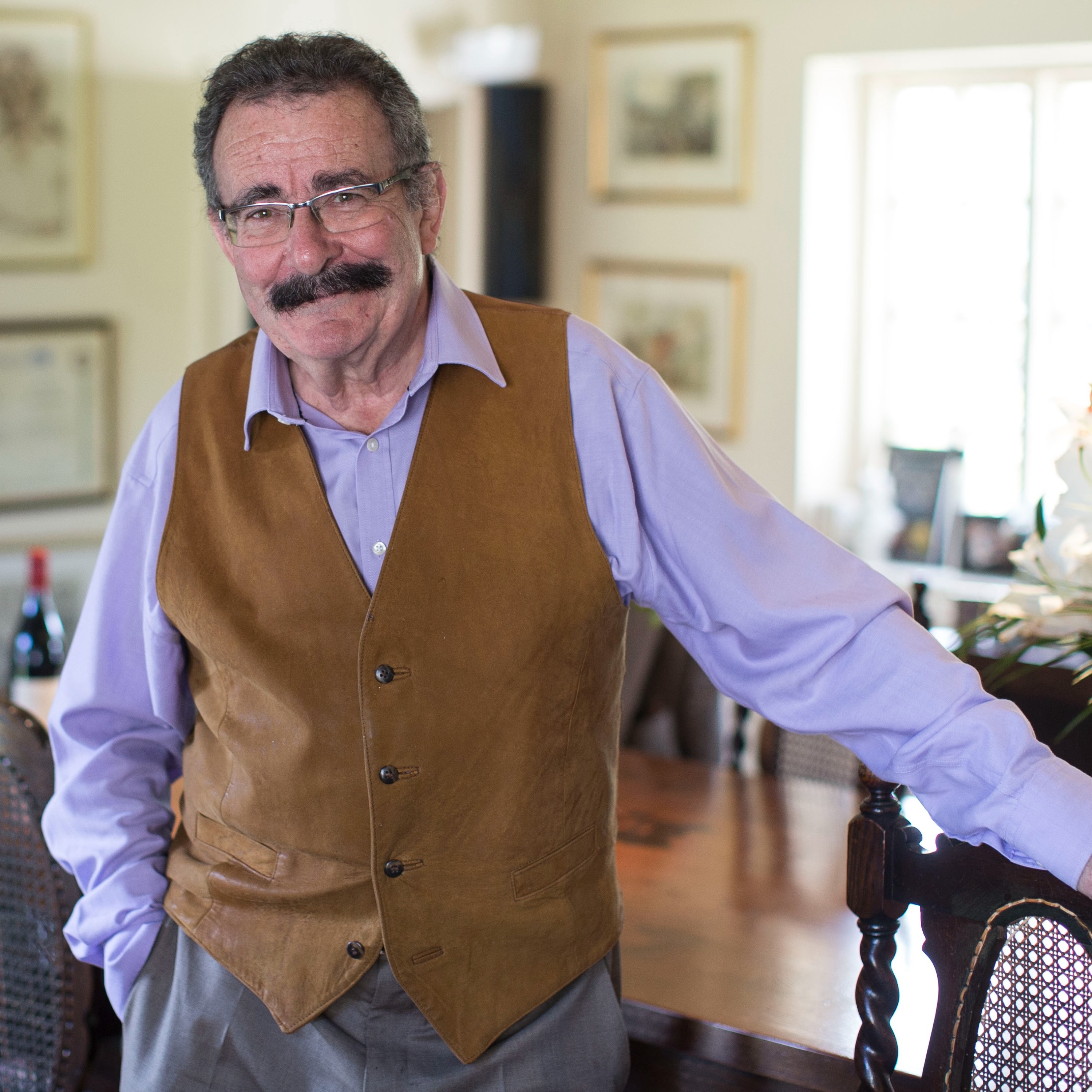
The episode of The Daily Tea focuses on two medical issues in the UK: upcoming junior/resident doctor strikes over pay, and a rise in measles cases tied to low MMR vaccination uptake. It argues doctors have “lost the plot” by resigning from the BMA and by striking despite patient risk. Prof Robert (Lord) Winston, IVF pioneer in the UK, says the BMA is too politically active, doesn’t represent most doctors, and that striking is immoral and unethical because disruption can lead to deaths and worse outcomes (the last strike was linked to five deaths). He claims doctors already received generous settlements, that doctors should not withdraw care, and that public trust will be damaged. He also criticizes BMA silence after his resignation and raises concerns about antisemitism in hospitals.
measles death at Alderhey Children’s Hospital; Liverpool vaccination at 73%.
Prof Robert (Lord) Winston (IVF pioneer; resigned from BMA over strikes). Also interviewed: Chief Nurse Nathan Askew (Alderhey Children’s Hospital) on MMR timing, herd immunity targets, and measles contagiousness.
Written by AI. May contain mistakes.
Discussion on the junior doctors' strike and public opinion.
“Doctors, Tim, they've become 2025's miners.”
Insights from Professor Lord Winston on his resignation and BMA's stance.
“There was a lot of support for the doctors last time around, but this time not so much.”
Winston argues against the morality of doctors striking.
“So you think that the 20-odd percent pay increased their demanding on top of the – they had 22 % last year over two years, then another 5.4%.”
Professor Winston discusses the responsibilities and ethics of doctors.
“But more importantly, I don't think doctors should strike.”
Discussion on the need for a new funding model for the NHS.
“I was going to ask you just how damaging this is for the NHS's relationship with the British public, which has always historically been very good.”
Winston shares his views on the BMA's politics and ethics committee.
“I mean, I remember Bevan brought this in in the 40s.”
Winston warns of potential harm to patients during strikes.
“publicity without understanding why they've done what they've done is difficult.”
Discussion on the impact of medical education and universities on students.
“I mean, you can't simply allow disruption of services to this scale, not to accept the fact that, you know, more accidents will happen.”
Learn about the challenges faced by medical students and the importance of emotional intelligence in medicine.
“When I talk to medical students, which I do very frequently, prospective medical schools, I make it very clear that the NHS is not an easy place to work in.”
Discover the complexities surrounding NHS reforms and the role of the government in doctor strikes.
“But there was one particular area of the college where we thought we might be able to do better if we actually mimicked some of the things they did at Sandhurst, quite irrelevant to the actual course.”
Examine the impact of strikes on public trust in the medical profession and its implications.
“So if you're getting messages from other doctors, are other doctors perhaps too frightened to stand up to either their colleagues or the BMA?”
Explore the allegations of anti-Semitism within the British Medical Association and its implications.
“even though I'm paying it a fee, why should I belong any longer?”
Gain insights into the current state of the NHS from personal experiences and generational perspectives.
“And I had a kind of interesting insight into what you would describe as a sort of boomer doctor thinks of the current state of our profession, medical profession, and also the current state of hospital care.”
Exploration of the evolving perceptions of medical professionals and their motivations.
“It's prioritising doctors' needs ahead of those that they're meant to be looking after.”
Discussion on the decline in vaccination rates and the implications for public health.
“In July, a child died at Liverpool's Alderhey Children's Hospital after contracting the disease.”
Discusses the challenges of vaccine misinformation and the importance of informed conversations between parents and healthcare professionals.
“I mean, I find that quite staggering because, as you say, the Lancet withdrew that study.”

Get the gist, explore an idea or ask about something said.
 Claude
On The Daily T, what are the key points of this episode?
Searching your listeningAutomatic transcript. May contain errors.
0:02The Telegraph.
0:30to you guys. The only bras I have in my dresser right now are Aerie and I'm not kidding. Aerie's on a mission to make you feel good and that starts with your bra. Your bra should hold you in, not back. Visit aerie.com to find the right bra for you.
0:46The junior doctors have replaced their stethoscopes for placards. They're going to go on strike for five days as of Friday over their pay. Are they fighting for their rights or is this morally reprehensible? We're going to be getting the view from a leading doctor, Professor Lord Winston, the so-called father of IVF in the UK, who is quite down on his younger colleagues. We're also going to be keeping up the medical theme by discussing why measles is on the rise. Welcome to The Daily Tea with me, Tim Stanley. And me, Camilla Tominy.
1:27Doctors, Tim, they've become 2025's miners. They're going on strike again for five days tomorrow because they've been given a 22 % pay uplift, but they actually want 29 % on top. And when that 22 % was agreed, the government treated it as an example of the maturity and calm of labour, that if you treat public sector workers like they are servants and people, rational people you can deal with, then all this problem will go away. Well, no, because they've come back on top of that with a demand for 29%. It's proof that you can feed the lions, but you can never satisfy the lions. West Streeting has said he is not going to negotiate on pay, but he's willing to negotiate on conditions.
2:09And we should point out that the British Medical Association says that wages are still around 20 % lower in real terms than they were in 2008. But then the BMA keeps on being repeatedly challenged on its figures because it's come out with this claim that they are 23 % down on pay according to inflation. But then the Institute for Fiscal Studies has said that's not quite right because you're using the wrong kind of index. And also whenever you're discussing your pay, you're never discussing your pension. and your pension is extremely generous, as they always are with doctors, enabling you to retire early because you have put in a shift in your professional life.
2:50I just, this is controversial because I do believe in the right to freedom of expression and protest. I'm wondering whether doctors should actually be exempt from striking because of the potential fatal effect that it can have on patients. Yeah, and there were five deaths that have been linked to the disruption caused by the last junior doctor's strike. So there's an argument for that. There was a lot of support for the doctors last time around, but this time not so much. And only one in four of British adults, when polled by Ipsos in July, support resident doctors going on strike and two in four are opposed.
3:30And that opinion is also shared by some experts in the field. Earlier, our colleague Gordon Rayner spoke to Professor Lord Robert Winston, a leading IVF doctor who in July resigned from the doctors' union, the BMA, over the strikes. So, Professor Lord Winston, thank you for making your debut on The Daily Tea. Could you just explain to our audience why you've decided to resign from the BMA after 60-odd years? Yeah, that's a good question. I feel that the BMA does not represent a very large proportion of the medical profession. I think that that is the key issue. I also think that it is acting highly politically at the moment.
4:15It seems almost deliberately an attempt to challenge a government which is struggling with a very difficult situation for the whole nation, not just the health service, but really trying to do a lot of things at once, some of which are not being done, perhaps as well as it should be. But nonetheless, they're certainly trying to do it honestly and honorably. And I think, above all, the thing that was really critical was that the junior doctors, I might have to call them resident doctors in our now, though I don't quite know what the difference really is, because they're mostly not resident, they're mostly living at home, actually.
4:48But the resident doctors, who have to live in, of course, whilst they're on call, I think they'd already received a settlement just months before, and then having received the settlement under the previous government, having called a strike very close to a general election, then did this. And it seemed to me that many of them are being pressurised. I can't believe they wanted to do this. But anyhow, they have done. And I felt that this was a highly immoral thing to do at the present time, at this time when people are all struggling with all walks of life, in all professions, and particularly with the difficult financial situations we have.
5:26So you think that the 20-odd percent pay increased their demanding on top of the – they had 22 % last year over two years, then another 5.4%. Now they want another 20-odd percent. You just think that's unreasonable in the current circumstances? I think it's unreasonable to try and, if you like, blackmail a government having already received a pretty generous award. Maybe it's not what they actually wanted, but it was – they had agreed to it. And I think that's pretty dishonorable. But more importantly, I don't think doctors should strike. I think there are certain services, there are certain professions where, in fact, you should avoid withdrawing your work at all possible costs.
6:07And obviously, that would apply to the fire services, the police, the armed services, the number of people in the civil service, and so on. And I feel that doctors have a huge moral obligation. and it seems to me that there are a number of things that we would want to discuss about that but you know we've always been under pressure in the health service you know when obviously when I was a junior doctor I got an absolutely trivial pay but you know frankly for the first time I was doing a job I was actually prepared to have done it for nothing because actually it was such an interesting job and was so worthwhile for patients who are quite clearly desperate and I think above all, what has happened here is that the doctors who are striking have forgotten one of the most important things.
6:54They are sitting in front of somebody who they don't know very well, but who is actually opening up themselves in a very private way, in a way that they don't really want to do so. They're often in pain. They're often very worried. They often think they've got something much worse than they really have got. They're about to be subjected to all sorts of humiliating tests and investigations. They're in hospital away from their family. They're worried about money. They're worried about their family. And the doctor has a unique privilege. Nobody else in the world has that privilege that you have as a doctor.
7:27And I want to say that to them, because actually, if you abuse that privilege, you do run great risks, actually, about the relationship you then have with the patient afterwards. And I fear to say that I think it's very, very obvious that my colleagues, the resident doctors, have lost the plot. I think actually they've also, more importantly, probably lost the trust of the nation. And I think it's going to be very difficult to get that back. Yes, that's an important point. I was going to ask you just how damaging this is for the NHS's relationship with the British public, which has always historically been very good.
8:05It seems to have deteriorated quite a lot in recent years. How much more is it going to deteriorate, do you think, as a result of this? Well, of course, they're right to recognise that. And I think they do recognise that. And of course, that is a great problem. And I think, in fact, that what we should really be doing is discussing possibly a new way of funding the NHS. And I think that, in fact, this sort of thing really prevents any chance of having constructive discussion about what we might do to make sure the NHS is really fit for the purpose for which it was built. But we do have to remind ourselves that we're dealing with an operation which is ancient.
8:41I mean, I remember Bevan brought this in in the 40s. And, of course, the capitation fee per patient, the cost per patient in the nation was about ten and sixpence, you know, 55p. It's now roughly£3 ,000 per every patient in the NHS. And it's not free at the point of delivery. Of course, it is part of our taxation. Nonetheless, we do pay for it. and therefore we have a need to find out how that money is being spent. And this, of course, is a colossal wastage of that money. You said that maybe we need a new funding model. What might that look like? Well, I think it's a really difficult question to answer just on the hoof.
9:20But I actually think that we have this mantra about a free NHS, which is just simply not really true, it's not free. The question really is how are we going to pay for it? But it is a big industry. It's a massive industry. And in fact, we don't even know how much the industry actually costs. For example, if you're the managing director of a large factory producing goods, and we're much bigger than that, you would have to know actually how much your goods cost, how much could be spent on them, how you manufacture them, and you'd know every stage of the cost of the procedures. We don't know any of that in the NHS.
9:55So we don't know, for example, how it is that, for example, let's say a telescope inspection of the gut in Worcester would be a different cost from, let's say, in Wales or Scotland or, in fact, South England, because there's a tariff. And it depends, of course, on an internal market, which, of course, is quite flawed. And that was introduced a long time ago. And I think it was always a bad idea. I think both parties, in fact, adopted it. I think both actually in some degrees of reluctance. Just to go back to the matter at hand, these strikes that are coming up, you mentioned the BMA and you mentioned that you thought the BMA had become politicised.
10:36Obviously, the chairman of the BMA is a chap called Thomas Dolphin. We know that he ran as a Labour candidate in the election and that he is a fan of Jeremy Corbyn. Thomas Dolphin says that the BMA is a non-partisan organisation. Is he telling the truth? I have no idea. What I do know is that when I resigned, it got massive coverage and I asked if I could talk to either the president or indeed the chair of the council or one of his representatives. There's been complete silence. So I don't know whether that is a political thing or not, but it seems to me to be rather foolish that we can't even talk about it given that, you know, I am admittedly largely non-political, but I am at least in the House of Lords able to perhaps to help in some ways to weather this storm in any way I can with the kind of appropriate publicity without understanding why they've done what they've done is difficult.
11:35But, you know, one of the issues, for example, that the BMA has to consider, the BMA has, amongst other things, a role as looking at ethics. It has an ethics committee that has some national significance. So it looks at ethical issues which affect medicine. But how can that ethical committee have any respect anymore, any longer, when it's just on something which is clearly unethical? That's a big problem because strikes in this situation are unethical because patients will suffer. It's very likely if this lasts at all long, somebody will die. Several people clearly are going to have much worse chances of getting their cancer treated.
12:12And some people will be less well or in pain or have serious problems with their families. So you're very clear that you think that people will die as a result of these strikes? Well, inevitably they will. You can't avoid it. I mean, you can't simply allow disruption of services to this scale, not to accept the fact that, you know, more accidents will happen. I'm not saying they're going to be deliberately killed. Of course they're not. But there's a real risk to patients in actually withdrawing your labour. That said, should doctors be banned by law from striking? No, I don't think people should be banned ever from striking.
12:51But I think we have to ask ourselves, are we actually appointing the right people as doctors? You know, for every single one of the striking resident doctors today, there will be at least six or seven applicants to each medical school around the country, all wanting to do medicine. All who, when they applied, would have had the same qualifications and the same A-levels and the same skills. But in fact, they've been privileged to be chosen because, in fact, in a long time, they have one of the few professions which really does good to people, which is really thanked by people and which is for life.
13:26And it's a rewarding profession. If I was doing medicine again, I would certainly want to be a doctor. How would you screen out, though, people who were activists or people who might be strikers? How would you do that? I don't know. But I think we need to know whether this is just inherent in medical schools. I don't think it is. But I do think that different medical interviews are different in each school. and perhaps maybe we have to find better ways of understanding what doctors want. But on the other hand, I think when you apply to do medicine, you have to understand what you're applying into.
14:02When I talk to medical students, which I do very frequently, prospective medical schools, I make it very clear that the NHS is not an easy place to work in. I say, look, this is difficult, but in the long term, it's still worth doing. And I think what's happened now is that there is such dissatisfaction. I don't say that governments aren't to blame them indeed as well. Of course they are. I mean, successive governments have not handled the NHS well because we've not been truthful about what we do. Do universities play a role in this then? You're a professor, you lecture, don't you? Is there a role for universities in explaining to medical students the responsibilities they have and perhaps just sort of trying to, I don't know, depoliticise the whole profession from its roots?
14:48I think that's a very interesting question. I think truthfully that, you know, whatever you do at university, school doesn't prepare you for the course you do at university. What you do at university doesn't prepare you for a job either. In fact, when I first got on the wards, I made a terrible mistake on the first day, almost killed a patient with injecting something which would have been, which was in fact quite dangerous. I was very lucky we got away with it. Therefore, I didn't get suspended. In fact, I couldn't find any seniors at the time because they were all doing other things. That's the problem, of course.
15:21And so I gave this drug thinking I was doing the right thing, waiting for them to return a call. But in the course of those days, there were no bleeps, which made it a bit more difficult. So I don't apologize for doing that. It was unfortunate. It turned out well. The patient survived. She left hospital perfectly well. but I think the issue really is that whatever you do particularly in this very complex profession nothing really prepares you for it however you do need to understand I think how you actually relate to other people and maybe that's a real problem here I think you know in many professions particularly medicine emotional intelligence is often much more important than intellectual ability.
16:10It's a form of intellectual ability. Of course it is, but it is different. And I think that maybe that's something we should be thinking about. And, you know, people obviously write in an arc of form, you know, the sort of what they've done, their job experience and all the rest of it. Most of this stuff really is a waste of time. It sounds good, but it's not actually what we really need to know about what people really aspire to and what they really want to do and how they would handle things which are difficult. And I think, for example, if you were a soldier at Sandhurst, you would spend all sorts of times doing very difficult things in horrible conditions before you went into the college.
16:50And you start to understand actually the real aspect, not the glamour, but the other side of what you would be doing in your training. It's a very good, actually, it's a very good training. Even so, that at one point at Imperial College where I worked, We even considered sending students to Sandhurst to see how we could actually improve the training of our students, generally not just medical students. But there was one particular area of the college where we thought we might be able to do better if we actually mimicked some of the things they did at Sandhurst, quite irrelevant to the actual course.
17:22We didn't do it, I don't think. Rather pity, but it was an interesting idea. You're a Labour peer. Presumably, you know where street in. Should he have made reform of the NHS a prerequisite for the pay rises that the government has already agreed to? And what should he be doing now to try and stop these strikes happening? Should he be trying to do something on conditions perhaps? Or I don't know, you tell me. Let me say, I don't really know West Streeting. We were going to meet, but we never did for various reasons. I don't think he needed to apologise for that in any kind of way. So I've not talked with him in detail, but I think that I've no doubt that he's an able, bright individual who I think is quite sensitive.
18:09And I think the sensitivity has been shown, actually, in how he's handled this. I think he's absolutely right to be looking at all sorts of options. And I think there are options could easily be taken which would, in fact, avoid this strike. Why the doctors don't seem to want to consider it, I don't understand. That seems a very political issue. It's almost as if they did want to challenge the government in a way and change it. And I think that's a dangerous thing to be doing, especially where, in fact, you need to have regard. You know, the most respected profession, if you look at all the polls until very recently, was the medical profession.
18:48Being a doctor was regarded as being more respectable than being a teacher or a nurse, you know, or in a bank or whatever it might be. And I fear that that is an important part of treatment because actually if people trust you and they feel they're getting good medicine, they tend to get better because of what we call a placebo effect, which actually is not insignificant. It's been shown again and again that that attitude to your medicine plays a major role in actually how you heal. And if you're reasonably happy and reasonably sure of your treatment, what studies have shown is that actually your symptoms get less and your treatment tends to be quicker.
19:28Interesting, isn't it, how, for example, the nurses have not offered to strike with their pay, which is less than the doctors. And actually, in many ways, they're more useful to actual general health care. And will that trust be damaged by these strikes, do you think? It's a great question. I fear it has been. I fear it has been judging from the number of letters I've had. I've only had one letter, one email from the wife of a resident doctor who said that she couldn't afford a mortgage. And, you know, I understand that. But then, of course, when I was a resident doctor, I couldn't afford a mortgage.
20:02I didn't get my first house until 10 years after I qualified. I mean, it is a problem. But in the long term, it's a pretty secure job. And you can do a lot of things with it. And you can earn in all sorts of ways if you want to. For example, now doctors get overtime and that was something which was introduced a long time after I was trained. And you said you had one email from somebody saying they couldn't afford a mortgage. Does that mean that all of the other emails you've had have been against the strikes? Yeah, I haven't had volumes of emails, but I've had a number of people who've, yes, I've had quite a number of emails that have said, you know, thank you for speaking out.
20:40This is really important. And these are people who are not in the main medic, some are, but some are senior medics of considerable respect. I mean, people who I am a bit frightened of, actually, because I feel they are so respectable. But also ordinary doctors who I don't know. And actually many people, of course, who come from all sorts of walks of life. You know, a few musicians, for example. I mean, it's interesting. It's quite a wide area. So if you're getting messages from other doctors, are other doctors perhaps too frightened to stand up to either their colleagues or the BMA? Well, I think that's an interesting question.
21:15It's an important question to ask because actually if that is true, and I think it could be true, then we need to do something about it. We need to explain that actually a herd mentality isn't a great idea, that one needs to be really thinking individually to some extent and not be frightened of being a black leg or whatever it might be because you don't actually feel that you shouldn't work. I think when it comes to moral responsibilities, responsibilities. We have each of us to decide what is our moral view. And there have been times in my own treatment leading a large team, for example, when my team was really big.
21:49I remember having a colossal argument, my whole team, because there was one patient I wanted to treat, and none of the team thought I should, because they thought it would be, in fact, about treatment. I won't go into details, but it involved HIV at the time. And I thought that this patient deserved the treatment. But it took me six months to persuade my team. But eventually, they saw the moral value of actually offering treatment to somebody who was clearly in need of treatment. And I feel that actually occasionally, each of us, I've seen this with so many colleagues, have stood up with things I hadn't really thought about.
22:26And, you know, I think one has to do that to some extent. You are an individual within that service. They're part of the team. One of the things that you have spoken about recently is the way that the BMA has handled antisemitism within hospitals. Do you think it's allowed some of its members to sort of cross a line from just expressing political opinions into endorsing some form of hatred or singling out their Jewish colleagues? So it seems, and I've had a number of letters from colleagues who have raised that issue with me, I suppose when you're dealing with an issue, in this case, the doctor's strike, you don't want to muddle your other issues in with it.
23:09But I think there are lots of areas where the BMA is failing. One, of course, is clearly ethics, which is quite important. Secondly, I think people like myself as clinical academics who do some clinical work, but also, of course, run their work in parallel with their research, have very, very poor responses from the BMA. We don't feel we're at all well represented. Clinical academics, I exclude myself, but many of them are the leaders in medicine in this country. And if the NHS is going to improve, the clinical academics are going to be the people who are going to do it because they look at the scientific basis for the medicine and how that could be improved.
23:45Anti-Semitism certainly is something that I know that a lot of Jews have been worried about, and certainly sometimes I've seen some what I thought pretty horrific things that are still going on and not properly dealt with. So yeah, I think it's fair to say, although my resignation was absolutely to do with the strike, I think there are a number of issues that made me feel that really, well, actually, it's not really an organisation which is representing me, even though I'm paying it a fee, why should I belong any longer? I never used to feel like that before. The main journal, the British Medical Journal, is a high-impact journal, but, you know, of course, one can get that online for free.
24:21I don't need to get hit for money. And you said that you've seen some things that have worried you in terms of anti-Semitism in the workplace. Can you give us a bit more detail on that? One of the issues undoubtedly which people have repeatedly complained about is the idea that being Jewish means that you're an Israeli, that you're responsible for the Israel government, for example, and the appalling things which are happening in the Middle East. And of course, I'm not going to try to defend what's happening in the Middle East. I mean, I think it's a disaster for everybody. And the sooner that is dealt with by negotiation, as of course all these conflicts need to be, then the better.
25:02But of course, I've seen many people who clearly have felt very, very unpleasantly criticised for actually something which is of no fault of their, simply because they're Jewish. So in summary then, as far as the BMA is concerned, is the BMA still fit for purpose or not? It would be interesting to ask them that. But, you know, if they don't answer letters after I've asked my letter to be forwarded, argues that that's not fit for any purpose. because actually, surely, if somebody who's been in the organisation for a fairly long time, who's reasonably senior, who's got some chance of making something helpful, some comments helpful, actually, in a political arena, then you would have thought that they would take the trouble to jot me a line or send me an email.
25:54It's not as if they couldn't find it. Professor Winston, thank you so much for coming on The Daily Tea.
26:04Lord Winston there massively reminds me of my dad, who is a retired GP, worked for four decades in the NHS and in geriatric care. And I had a kind of interesting insight into what you would describe as a sort of boomer doctor thinks of the current state of our profession, medical profession, and also the current state of hospital care. because we had to be in and out of hospital most of last year, caring for my stepmother, Bernice, my dad's second wife, who is married to for 33 years, who passed away in November. So you're seeing it through your own eyes, but I was also seeing it through my father's eyes.
26:47The sort of standard that my dad expects of the NHS, I think is there in parts, but not comprehensively. He obviously was involved in giving cradle to grave care. he was making quite a lot of demands of the medical staff looking after my stepmother that they weren't really able to meet. A lot of them weren't well trained. A lot of them didn't speak perfect English. And I'm including the doctors as well as the nurses in this. And my dad was sort of tearing his hair out saying, well, this is not how I would have done it. And where's the doctor in the ward round? And there should be a qualified professional here, even though it's midnight.
27:25And when I was trained, I did this and that. Now, I don't know what modern day medics would think of my father's approach, but the bottom line is this. He would concur with Winston in saying that he thinks it's totally opposed to the Hippocratic oath to do patients active harm by not being at work, by being on strike. And that might seem old school and traditional, but he, like the IVF specialist, believes that the BMA has become far too politicised, that it's now become a sort of pseudo socialist left wing organisation that isn't really for patients. It's prioritising doctors' needs ahead of those that they're meant to be looking after.
28:11But would your father have regarded being a doctor as a vocation for a profession? A vocation. because don't forget they were paid peanuts. Exactly. I think my dad's highest wage while he was a doctor was something like 31 grand and he was at the absolute top of his profession when he ran his own surgery in a leafy Hertfordshire town. You see, I think a lot of Conservatives say the BMA, etc., has become politicised and they label it as left-wing. But if you think about what the demand actually is here, it's really materialistic and some might even say selfish. These are people who at this stage in their career might be paid peanuts, I get it, but why can't they get a heads around the fact that their salary then dramatically goes up and that they benefit from salary-linked pensions?
29:03GPs can get as much as a salary over£100 ,000 by the end of their career. The median pension, according to government figures, of a GP in 2023 to 2024 was£53 ,300. So you have doctors saying we're paid poorly right now, ignoring they're going to be paid a lot more in the future and they're going to enjoy a job security and a pension security that you and I couldn't dream of. They then raise threats like if I'm not paid enough, I'll go abroad. Yes, we'll go abroad then. Now that to me is not a socialist ethic. I don't see anything about socialism in that to say I'm not paid enough and also the weather's bad.
29:45So I'm going to take all the education and instruction that I've received in this country and I'm going to go somewhere where it's warmer and fewer hours and better pay. So I love the NHS. And because of how run down the NHS is, I'm going to leave the NHS and go and work for a mixed system elsewhere. So that doesn't make sense either. So I come back to, is this really about being political or is this just a trade union? That's just demanding more money for its people. That's what it is. And we'll go on demanding it. But because it's doctors and it's the NHS and because your father's generation gave to the NHS this impression of it is almost a volunteer service, it's a care service, regardless of what the pay is or the hours are, we would do this anyway.
30:29But don't forget also... I think a younger generation has entered it who do not have that altruistic attitude. Yes. And it's so typical of woke. They give the impression because they say the right things about race or gender that they care. I don't think there's much to do with care in this. I think it's to do with I want more money in my bank account. Look, I would imagine that if you're going to go through five to seven years of medical training, that you are doing it with the best of intentions and you have to have a certain kind of psyche that encourages you to sort of devote your professional life to the care of others.
31:03Yes. The thing is, and let's talk about journalism, it isn't the same as being a doctor. No, we're not saving lives, for goodness sake. However, it is a profession that in most cases requires a degree education, I would say. You start, as I did on the Hemel Hempstead Gazette, Tim, on 10 grand a year. You then work your way up on your hands and knees, scraping around for stories, trying to build contacts, trying to impress people with ad hoc TV appearances until you manage to get up to a slightly higher wage, probably after about 10 years, maybe after about 20, you're earning good dosh. But the point is in none of these professions where actually experience on the job counts for something, you have to learn stuff, know stuff.
31:50You build it like you build any career and then you are in the end rewarded for your experience. I don't understand why that doesn't apply to the medical profession as it should to any profession. But people will say, you haven't saved a baby at one in the morning. No, I know, but there are loads of professions where people have other people's lives in their hands. It isn't just the medical profession. Somebody who drives a bus for a living has the lives of the passengers in their hands. The police, pilots. The army. The army. Who are definitely not well paid. You don't start in the army being a regimental sergeant major or a colonel.
32:25You start at the bottom and you work your way up. And your pay is commensurate with your wisdom and experience in that role. But the point is, you and I could get better teeth and go and work in America, probably for more money, right? We could do that thing. We stay in the UK. In my case, I stay in the UK because I care about British journalism, this newspaper and the issues that we're covering on the ground. Also, the Australia comparison is unfair, isn't it? Because the population is comparatively tiny. Yeah. And it's quasi-privatised. Well, this is the interesting thing. So Lord Winston talks about the need for a new funding model for the NHS.
33:04He's not allowed to say that. Isn't that logical? So the doctors insist NHS is the best funding model, most compassionate, etc., and the one they want to help save. But they're prepared to leave the country to go and work in a mixed system. Does it not occur to them that maybe the mixed system is capable of providing better hours and better pay where it does? Because it's a mixed system. Yes. The other problem for the public, of course, is if you are waiting for months and months and months for a hip replacement, and if you are being told by your GP receptionist that, no, you absolutely cannot come in and have a face-to-face appointment, and you're learning that despite the record amounts of investment in the NHS, it is still nearly 30 % less productive than it was 20 years ago.
33:50and then you're being told, but for less productivity and longer waits, we're going to pay junior doctors more. Most people say, I'm not sure if that makes any sense or if it's even fair. No, and I think politically things are moving on. The NHS is the closest thing the Brits have to a religion. Post-COVID, there was a great deal of sympathy for the NHS because they worked very hard on that and took great personal risk and there was a feeling that more money had to go in and we should pay professionals more cash. But now I feel we're coming to the end of that period. Now that we're entering a period of austerity in government finances in which there are going to be cuts for everyone, the image of public sector workers demanding and getting pay increases in double figures is really going to grate with the public.
34:36And the interesting question is, does that then translate into a wider call for reform? Do the public just turn against unions or do they start saying maybe actually the NHS does need serious reform if it's a question of, as you put it, giving people large pay settlements without a return in productivity? Why would consumers and taxpayers want that? But the only people who seem to balk at the idea of reform or part privatisation of the NHS are these extreme lefties that don't represent the silent majority of this country. if Mrs Miggins was having problems with her kidney stones if you said to Mrs Miggins look we can sort out your kidney stones with an operation and by the way the way we're doing it right now is we've got a whole list here of private providers the NHS will fund your operation and you can have it at the Spire Hospital up the road or you can have it at Watford General Mrs Miggins will probably say oh I quite like the idea of being in a private clinic and we'll go and have it done and be very very happy Yeah, and we may end up doing that anyway, because West Streeting has said he's open to that kind of partnership.
35:42And he is proposing reforms. We should give him credit for that. There are reforms around community delivery of services, so they're closer to you. There are reforms around the use of AI and how the place is structured, its technology. And also they're about prevention, which is possibly where the emphasis should be, although it sometimes translates into nanny statism around things like smoking and health, etc. But what Labour will not do, probably, is tackle this key thing of the funding structure. Coming up, we're going to stick with the medical theme and talk about the recurrence of measles.
36:13Vaccination rates are down to 73 % in Liverpool, even lower in parts of London. And at Alderhey Hospital, one child has died from a disease that we started vaccinating against back in 1968. We're going to be speaking to the chief nurse of that hospital to find out what can be done.
36:38Hi, this is Becca Moore from For The Girls, and this podcast is sponsored by Aerie, where you can find the right bra in 59 sizes, soft fabrics, and good fits. If your bra strap is digging into your shoulder right now, it's the wrong bra. We get so used to being in pain as girls that we forget it doesn't have to be this way. Your clothes should not hurt. I got to the point where I stopped wearing bras altogether, and now my life has changed, you guys. The only bras I have in my dresser right now are Aerie, and I'm not kidding. Aerie's on a mission to make you feel good, and that starts with your bra.
37:06Your bra should hold you in, not back. Visit Aerie.com to find the right bra for you.
37:19The reoccurrence of measles is becoming an increasing concern for the health profession. In July, a child died at Liverpool's Alderhey Children's Hospital after contracting the disease. There have been more than 500 confirmed cases in England in 2025, the majority in young children under 10. Joining me now is Chief Nurse at Alderhey, Nathan Askew. Nathan, lovely to speak to you this morning. This is disturbing. I mean, I'm looking at this story not just as a journalist, but as a mum of three. I got all of my three children there, MMR, as advised by the doctors at the time. what's happened here is this a covid thing why are these vaccination rates for a disease that should not be underestimated and in the case of a of a child in liverpool has cost them their life why aren't people vaccinating their kids yeah thanks very much for having me and i think it's a really interesting question which i think is also really complicated so you know i know that parents want to do the absolute best for for their child and and for for most families that includes keeping them safe and doing everything they can to keep their child safe and well.
38:27I think there's been, we've never really recovered from the article that was released in the late 1990s that drew a link between the MMR vaccine and autism. Despite the fact that 20 years on, there have been many other publications that have shown that that research was invalid and not true. And actually the Lancet removed that article from its archive because it was found to be so flawed. I think we haven't given as much credit to those future research studies. I think also as a parent, it can be really difficult to access really good quality information to make those decisions on. There's a lot of disinformation that is around.
39:02And I think post-COVID, there's also the sort of anti-vax movement, which I think also influences the views of parents. I suppose my message today, though, would be that the MMR vaccine has been in use for over 50 years. It's got an excellent safety record. and actually having the two doses of the MMR vaccine gives you lifelong protection against measles. Just catching the disease itself actually doesn't give you that protection and comes with other risks of potential complications which can happen many years down the line. So it's not just about the effects of the illness at the time. Actually having the MMR prevents any of those future complications as we go forward.
39:40So talk us through how the MMR is given to children. Now I'm thinking back, my eldest is now 16. You have the baby. At the time you're given a red book where you're filling in different vaccinations, it is quite hard to keep track of it. You're postnatal, you're emotional, you're tired. But remind me, when a baby's meant to have both of those jabs? Yeah, so it is really complicated, isn't it? So we make it as simple as possible. So at your first birthday, so around 12 months of age, you should be given the first dose of the MMR. And that gives 90 % of people that immunity straight off. It's not a jab that needs a booster.
40:20We give the additional dose because for about 10 % of people, they won't get that immunity from the first dose. However, 90 % of people that have the second dose get that immunity for life as well. So that's why we get 99 % coverage of the population being immune. The second dose, I always say, is about three years, four months, which is really complicated. So actually it's preschool. Yeah. So present from the NHS for your first birthday, your MMR jab, and then we give you another one just before you go into education. However, it's really important. I do want to stress that actually the MMR is a whole lifetime offer.
40:56So it can be given to anyone of any age that hasn't had both of those doses. And if anyone out there is perhaps in their 20s and isn't sure, the most easiest way to do that is to contact your GP who has access to your vaccination record. and if you've not been vaccinated then you can book in at any age and your GP surgery or practice nurse will be able to do that for you. And if you were having it as an adult would you have to have those two doses as well? Yeah absolutely there is there's some slight difference depending on when you were born so if you were born in the early 70s there's slightly different guidance but pretty much for everybody that's around today that perhaps has missed out on that MMR it's two doses of the vaccine and that can be given through as I say through your GP surgery.
41:38And then thinking back to the disinformation that was spread at the time by Andrew Wakefield who was the doctor who falsely claimed that MMR was linked to autism and there was a kind of political controversy at the time wasn't there because Tony Blair and his wife Cherie wouldn't necessarily disclose whether their children had the MMR. We've got that still lingering in the ether even all these years on. I mean, I find that quite staggering because, as you say, the Lancet withdrew that study. There's no evidence to support it now. Yeah, absolutely no evidence at all. I do think, though, this is one of those occasions where people have a long memory, don't they?
42:16And as I said at the start, I think parents want to make sure they're doing their best for their child. So any element of doubt can be really difficult and challenging for a parent to overcome. I would always advise, and we do with our children and young people here at Alder Hay, that if parents have got concerns, actually the most best thing that they can do is to have a conversation with a healthcare professional. It doesn't mean that you have to leave that consultation having had the vaccine, but I think what is important is to be able to express your concerns, your worries, your fears that you've got for your child and have an informed conversation with someone that has the knowledge and the expertise to be able to talk you through those worries and concerns that you have.
42:55Well, clearly that would be preferable to going on Dr Google or indeed watching videos on social media? Has there been a kind of TikTokisation of conspiracy theories around these vaccines as well? Yeah, I think there's definitely a role of social media. I mean, in some elements of our life, it's brilliant, isn't it? Because we can share things really rapidly across the world. I think the other challenge with it is that it's unfiltered and uncensored. And if people are taking that information at face value, it can be really hard to make the decision. Another thing that families could do if they are worried is through the Alder Hay website.
43:31There is a link to some actually really good information that's published by the UK Health Security Agency. And that's probably a first step that people can look there and see what the facts and figures are and really delve into this in detail. But as I said, I think that conversation with a trusted professional, that may be your local GP, it may be your health visitor, might be your midwife. I think they're the most important things that people can do to really allay those fears. So the WHO target for herd immunity, which is a phrase we're now familiar with, the R rate, right, Nathan, is 95 % overall in terms of the vaccination rate.
44:08So you want 95 % of the population to be vaccinated to ensure basically that measles, mumps and rubella is almost kind of made extinct. linked the vaccine uptake in the UK is down to 84 % across England in Liverpool 73 % what have you found out just with regard to the locally very low levels of uptake what's going on in Liverpool so you're absolutely right we do need to get to that 95 % and actually the UK did achieve that we had many years where measles was basically eradicated from the population and it's directly linked to the low vaccination rates that we are back to where we are with seeing this increase I think the issue that we've got particularly if you look at the Liverpool figures is that 73 % means there is much more measles out in the community and measles is highly infectious I can't stress this enough to people we learn a lot about this as you say the R8 during Covid measles is much more infectious than Covid and it's really particularly challenging because it looks like any other childhood illness so it starts a bit of a runny nose sort of cold and fluy type symptoms and then you develop a rash which usually starts behind the ears and can spread to the face before the rest of the body you're actually contagious and infectious with measles four days before that rash actually appears so not to not to scare people and that's absolutely not my my intent today but I understand why when you've got children going to daycare or school with those sniffles that they could be passing on measles to others so it's really important to get checked out if you think that your child's got measles to help that control that spread while we also want people to get the vaccines which is the only way to prevent measles in the first place.
45:54Just on that actually if people are concerned what we're advising people is please don't attend the children's emergency department or attend your GP surgery but actually if you're concerned your child may have measles, the best thing to do is to ring 111 and they'll be able to guide and advise you as to whether to go to hospital or the GP or not. And again, the reason for that is, you know, I have a hospital full of really vulnerable children, young people, and by coming into the waiting room, if we're not sure that you've got measles, then you could be sitting there and spreading that to others.
46:24Whereas if we know in advance, we can isolate you early, protect everyone else that's here and hopefully stop that transmission. The other sign might be small spots in the mouth of the child. I mean, as you're saying, it's cold like symptoms. It's a rash. People could actually be benefited by Dr. Google when it comes to perhaps looking at photographs of rashes. And then it might be some spots. But as you say, it's difficult to identify. How serious can this become? I mean, again, we don't want to scaremonger, but let's just be honest. We have had the death of a poor child in your hospital, which is just an absolute tragedy in 2025.
47:02When you consider that this vaccination came in in 1968, what can this awful disease, what can it cause in children, Nathan? So I think because we've not had it in this country for quite a long time, I think people have forgotten just how serious measles can be. and for many is viewed as a routine childhood illness. So if I use chickenpox as an example, many people, you know, you're unwell for a short period of time, you get over it and then you're immune for life. I think if we look back to the 1950s, there were thousands of cases of measles in the UK and hundreds of deaths of children a year through measles.
47:41So in rare cases, measles can lead to death. It can lead to other complications as well, which require either admission to hospital and in some cases admission to intensive care, particularly with an illness called measles encephalitis which is swelling on the brain similar to what you would get with meningitis and that comes with a whole range of complications and issues in terms of the treatment that we provide that's sort of at the time of getting measles but you can also go on to get further complications as the disease lies dormant in your body that could appear 10 years in the future and that's why actually measles shouldn't be viewed as just a routine childhood illness.
48:17And it absolutely is preventable with these two doses of the vaccine. And it is the only way to prevent not just measles, but also the additional complications, which may not affect children until they're 10, 12, 14 years old. And so it is serious. And we should be viewing this as something that is entirely preventable with those two doses of the MMR vaccine. Okay, you mentioned that information on your website. So people can search, can they elder hay and measles and get all of that information because we can put that in our show notes. Absolutely. So two great things that people can do. So we've got a direct link out to the UKHSA information on measles.
48:55There's a brilliant leaflet and poster there, which also shows what measles rash could look like in people of different skin tones as well, and different skin colours, which I think is really helpful. And then the second thing is we have a fantastic service at Alderhey, which is called the Alderhey Symptom Checker. And parents can look up, for example, temperature, and there's guidance then on when to be worried, what measures you can do at home and when you should seek medical advice. And there's information included there about measles as well. Really good advice. Thank you, Chief Nurse Nathan Askew.
49:25I need to let you get back to the ward, but thank you very much indeed for your time this morning. Thank you.
49:35Philosophically, Camilla, I don't like telling people what to do and I don't like telling them that they must have vaccinations. And normally a society can endure a small percentage of the population who, for religious, ethical reasons, refuse vaccinations. But obviously when it gets to this scale and when it's driven by such mendacious forces, then something has to be said and done because this is getting out of control. Agreed. And all the details that parents need on measles and vaccinations can be found in our show notes. Slight change of gear for tomorrow. we're going to be doing a special edition on pornography with a star of OnlyFans and somebody who as a teenager was addicted to watching explicit content online.
50:21We'll be back tomorrow, 5pm.
50:50Hi, this is Becca Moore from For the Girls, and this podcast is sponsored by Aerie, where you can find the right bra in 59 sizes, soft fabrics, and good fits. If your bra strap is digging into your shoulder right now, it's the wrong bra. We get so used to being in pain as girls that we forget it doesn't have to be this way. Your clothes should not hurt. I got to the point where I stopped wearing bras altogether. And now my life has changed, you guys. The only bras I have in my dresser right now are Aerie, and I'm not kidding. Aerie's on a mission to make you feel good, and that starts with your bra.
51:17Your bra should hold you in, not back. Visit Aerie.com to find the right bra for you.
The British Medical Association has confirmed that a five-day resident doctors' strike will go ahead.
Medics will be striking due to a pay dispute with the government, with the organisation demanding a 29% pay rise - despite a 22% increase over the previous two years.
We speak to Professor Lord Robert Winston, who resigned from the BMA - an organisation he’s been a member of since 1964 - earlier this month, arguing that the strike action will damage the reputation of his profession.
Keeping up the medical theme, Camilla also speaks to the chief nurse of Alder Hey Children's Hospital in Liverpool, with measles cases on the rise across the country amid an alarming decline in vaccination rates.
Producers: Lilian Fawcett and Georgia Coan
Senior Producer: John Cadigan
Planning Editor: Venetia Rainey
Video Editor: Will Walters
Executive Producer: Charlotte Seligman
Editor: Camilla Tominey
Studio Operator: Meghan Searle
Hosted on Acast. See acast.com/privacy for more information.


