
 Ask ChatGPT


 The Daily T
3 Jun 2026 · 32m · 20 chapters
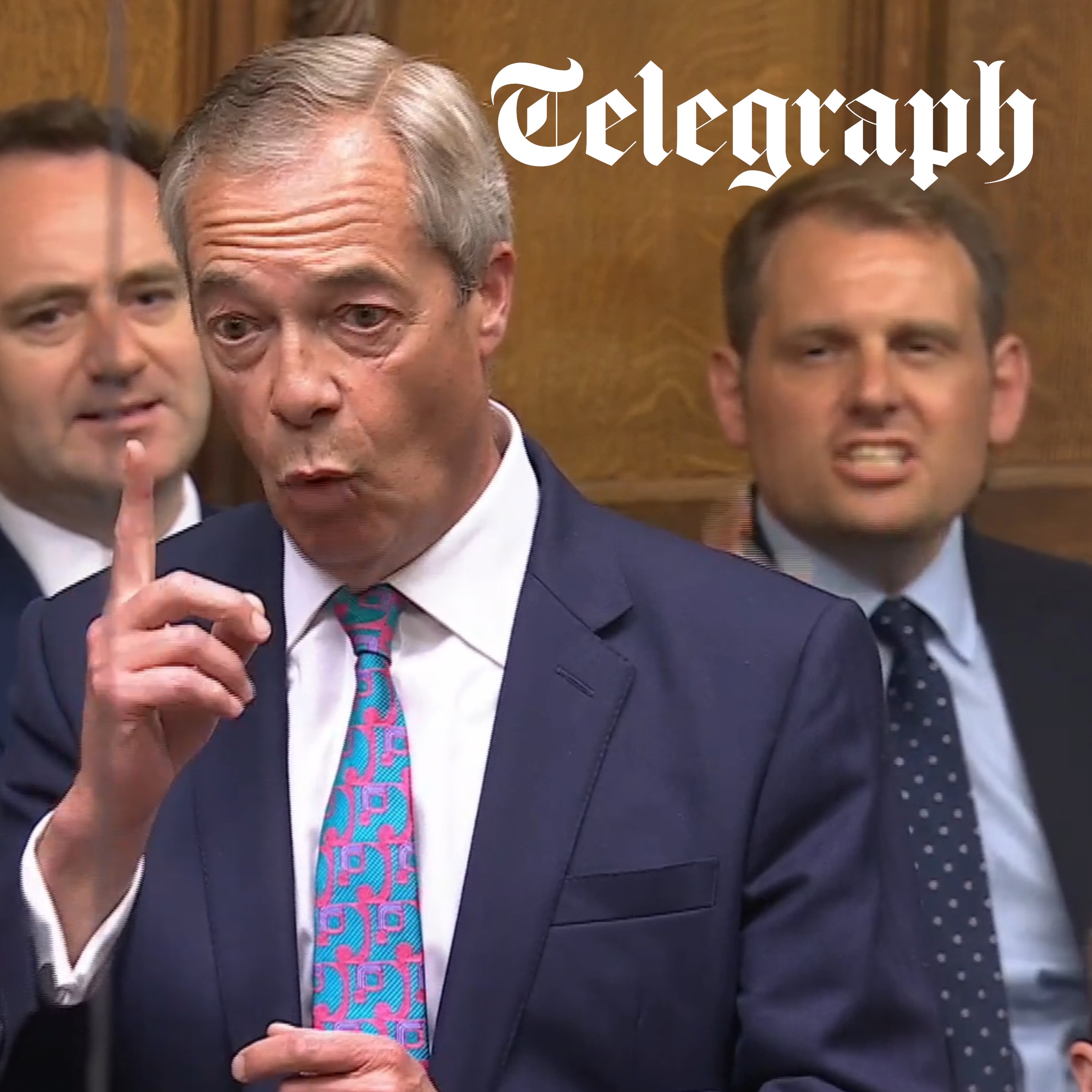
The episode discusses the fallout from Henry Novak’s death in Southampton, including accusations that Nigel Farage incited riots and claims of “two-tier policing.” Hosts argue the violence was driven by a mix of “thugs” and a broader group of ordinary people who feel police are biased, linking this to policing-by-consent and the 1999 Macpherson report. They cite a National Police Chief’s Council anti-racism guideline that says racial equity doesn’t mean treating everyone the same, and note Policing Minister Sarah Jones called it wrong. They also cover Reform’s “white lives matter” attack on Kemi Badenoch and Starmer’s denial of two-tier policing at PMQs. Notable examples include Southampton Police Station attacks, Tommy Robinson’s presence, and a Zia Yusuf vs Cathy Newman exchange.
none mentioned.
Written by AI. May contain mistakes.
Discussion about the Prime Minister's questions and the accusations against Farage.
“Westminster is blaming the riot in Southampton on Nigel Farage.”
Analyzing Farage's statement about 'cold rage' and the subsequent reactions.
“Yes, and it's a particular phrase that he used at his emergency statement yesterday morning, 8am, I'm going to address Henry Novak's murder, when he talked about people demonstrating pure cold rage.”
Exploring public trust in police through a woman's testimony on racial biases.
“turned up outside Southampton Police Station.”
Connecting historical racism in policing to current public sentiments.
“And that's precisely why McPherson happened in 1999.”
Understanding the motivations behind violence in communities feeling marginalized.
“And what are some of those white people resorting to, which is what young black men used to resort to, rioting.”
Discussing the stereotypes faced by different ethnic groups in policing situations.
“And what African Americans learned in the 1960s is that sometimes violence works, a riot gets attention that you otherwise wouldn't get.”
Analyzing who participates in riots and the implications of their presence.
“That kind of culture, that's going to make them angrier.”
How the media portrays events like the Southampton riots and its effects.
“So you can focus on the stage, but actually the more interesting and important phenomenon is not the inner nucleus of racist thugs.”
Debating the effectiveness of current anti-racism policies in policing.
“or the people at home who are watching this, you can read them on Twitter, you can read them in the comments of these videos who are going, yep, I can see what's going on here.”
Discussing Kemi Badenoch's statements on race and the political implications.
“Now, yesterday you and I discussed the leader of the opposition's response to this on Good Morning Britain.”
Examining how political figures utilize racial discourse for capital gains.
“Oh, I never really supported the lockdowns.”
Highlighting the importance of addressing violent crime over political rhetoric.
“Idiots that think that the political language around this is more important than the actual crime.”
Discussion on the relative importance of various social issues, highlighting the significance of Henry Novak's death.
“Everything else is important, but it's in an order of importance.”
Overview of the Prime Minister's emotional response to Henry Novak's death during PMQs and its implications.
“Coming up next, how did it all play out at PMQs?”
Nigel Farage's statements at PMQs about perceived two-tier policing following the incident.
“So he seems more capable of laughing at himself and sober reflection.”
Analyzing Labour MPs' responses to Farage's remarks and the broader implications of the debate.
“Now, my first thought on this was the Prime Minister had stated that we need to look into what went wrong with Henry Novak.”
Discussion on systemic police issues and the implications of policing practices in light of recent events.
“Some people said some dumb things and they should be called out when they do.”
Exploring the public's emotions and responses to incidents like Henry Novak's death and comparing it to other societal issues.
“that the police are spending so much time on this stuff.”
Explore the psychology of rage in politics and the failures of institutions.
“If we want to be enraged, we're allowed to be enraged.”
A light-hearted exchange on political figures and humorous remarks.
“Tim, should we just end on a slightly more cheerful note?”

Get the gist, explore an idea or ask about something said.
 Claude
On The Daily T, what are the key points of this episode?
Searching your listeningAutomatic transcript. May contain errors.
0:04The Telegraph.
0:10Nigel Farage incited the riot in Southampton. That was the verdict at Prime Minister's questions as the Labour Party accused him of politicising Henry Novak's death. But isn't the left just as guilty of politicising his death and why on earth is the Prime Minister denying that there's two-tier policing in the UK? Welcome to The Daily Tea with me, Tim Stanley and me Camilla Tomini
0:41Tim you've hot-footed it from the House of Commons and we are going to get into PMQs because it was pretty fiery it was pretty febrile in the chamber and I'm very interested to hear what the actual atmosphere was like inside the room but we need to give a bit of context to how the row broke out basically between everyone and Nigel Farage earlier. Westminster is blaming the riot in Southampton on Nigel Farage. Yes, and it's a particular phrase that he used at his emergency statement yesterday morning, 8am, I'm going to address Henry Novak's murder, when he talked about people demonstrating pure cold rage.
1:17Not white rage, as was misreported on Newsnight. Matt Chorley had to issue an apology today because he had misspoken in terms of trying to quote Farage. Yes. Pure cold rage. Whether or not that is enough to incite a riot, I think, remains to be seen. But that was certainly the attitude, not just of Labour, but any other rival politician to reform. Well, large numbers of people with flags turned up outside Southampton Police Station. Later on, there were attacks upon the police, things being thrown at the police. Tommy Robinson was present, inevitably. Yes. And there was something which really caught my eye, was GB News spoke to an older white lady who had this to say.
1:59In my opinion, I feel that the police are now so racist towards anyone white or English or anyone who even looks like me, I would never dare speak to them to report crime. I would not email them or phone them. I do not trust them not to be racist towards me. And at a residence meeting on Thursday, I was not able to come here last Thursday because I went to a residence police meeting. I told the police straight. I will never report crime to you. I will never speak to a police person alone. I do not trust you. You are racist towards the English and white people. And we will not stand for it. What I found interesting about that is it's the sort of thing that many black or Asian people might say.
2:45Yes. I don't trust the police. And that's precisely why McPherson happened in 1999. why institutional racism was addressed in the police, because in this country we have policing by consent. And you cannot police an area, and you cannot police people if those people don't trust you. So there's an argument for saying, and I will defend McPherson on this point, there are some people who believe it introduced anti-racism, that it created a two-tier system where the police are always biased against white people, etc. I think it was about actually trying to make policing work in communities that for historic reasons were resistant to it.
3:20But the long tale of McPherson and all the anti-racism stuff that has come since is white people are now thinking the way black people used to, and some still do, think about policing, which is that I don't trust the police because they're biased against me. And what are some of those white people resorting to, which is what young black men used to resort to, rioting. Yes, they're taking to the streets. But there is something hugely ironic, Tim, about anti-racism and DEI policies, diversity, inclusion of ethnicity, making white people feel discriminated against. Yes, and not just white people.
3:59I did notice in some of the live cam footage that there were clearly mixed race people there. Right. Also, it hasn't really been explored enough that this is not a story. The Henry Novak story is also not a story about immigration. Because Digwa's family were migrants, but so were Novaks. Yes. They were Polish. Yes. I think this perception of the police being against people is as much about class, education, and a sense of being locked out of a system. And this is what historically happened to, say, African Americans in the United States. that if you feel the system is rigged against you, whereby you cannot get anywhere, you cannot get the job you want, you cannot lead the life, you cannot go to the places you wish to go to, because the system is so biased against you.
4:45If you feel that voting is pointless, because every time you pull a lever, what you want is ignored, then what are you left with? You might persuade yourself you are left with violence. And what African Americans learned in the 1960s is that sometimes violence works, a riot gets attention that you otherwise wouldn't get. Also, I think this is about stereotyping, isn't it? Just as members of the black community would complain if they're driving a nice car and they're immediately stopped by some police officer suspecting that they might be a drug dealer. Also, in the case of Henry Novak, you've got a young, quite tall and thin, casually dressed white guy being confronted by what appears to be a deeply religious family altogether, that there may just be the assumption that because he's an 18-year-old white guy, I don't know, maybe in a Stone Island polo shirt, that he's automatically a racist.
5:40Well, that's what we all presume the police thought when they entered that scene. But that conflation of white racism, which certainly does exist with everyone else, becomes a self-fulfilling prophecy. Because if you're going to treat the white working-class population of this country as if they could kick off any moment. Yes. Please do not abuse the staff. That kind of culture, that's going to make them angrier. Now, I will accept that, let's say, 60 % of that crowd in Southampton were thugs. The kind of people who you always get. 40 years ago, there'd been football hooligans, then National Front, BNP, EDL, the same thick, nasty types that are probably coked up and are looking for a fight.
6:20Yeah, they love a riot. They'll just join anything. But the thing to pay attention to is not actually them. and it's so easily done, like with the Unite the Kingdom march that you had in London. Okay, you can turn the cameras on the stage where you'll hear stupid people saying awful things. Like there was a moron cellist who draped himself in bacon. Right. Whatever. Yeah. So you can focus on the stage, but actually the more interesting and important phenomenon is not the inner nucleus of racist thugs. It's the growing number of people attending it who aren't racist thugs. No, they're just mums and dads and grannies and grandpas.
6:56That's the dangerous thing that the liberal establishment has to keep an eye on. And you can focus in all your reportage and your political commentary upon something was thrown at a policeman. That's immoral. That's bad. That person should be in jail. And Henry Novak's family said, do not do this. We will not allow our son to be used for division. But I think we need to start talking about the peaceful people in Southampton or the people at home who are watching this, you can read them on Twitter, you can read them in the comments of these videos who are going, yep, I can see what's going on here.
7:32Also, it could just be ordinary people who are quite shocked to learn that the police have been advised to treat black and white suspects differently. So we've now got the National Police Chief's Council reviewing its anti-racism guidelines, which explicitly advise officers to treat black and white suspects differently, stating that racial equity does not mean, quote, treating everyone the same. Policing Minister Sarah Jones has now explicitly called this document wrong. Well, it's taken the death of Henry Novak to point that out. This is a little bit like the inversion of biology with the trans debate.
8:08Now we've got something dramatic that's happened, in this case a murder, in the case of trans, a cast report that closes down a gender identity clinic and a Supreme Court ruling, we can now all suddenly see common sense. The veil has been lifted and maybe it's not a great idea for the police to operate in any way that is not colourblind. And then that brings us on to the attack ad that Reform put out against Kemi Badenog. Now, yesterday you and I discussed the leader of the opposition's response to this on Good Morning Britain. It was her speaking as a mother. It was her speaking as a black person.
8:48It was her trying to call for some good old-fashioned common sense. It was her best moment so far. Indeed. And she basically said, listen, I don't want to hear slogans like Black Lives Matter, White Lives Matter, All Lives Matter. It's a problem in this country if the police have become so brainwashed by anti-racism policies that they're actually not policing in a colourblind way. We just need everyone to be equal before the law. It's an eminently sensible and actually profoundly conservative statement that she's made there. But it was at one point in our mad history controversial. You may recall that 10 years ago, Hillary Clinton tried to come up with the formula, all lives matter, and she was forced to change it because people were saying, no, right now we're discussing black lives, not all lives.
9:36And so there was a policing even of that phrase until quite recently. So I'm delighted and surprised to hear someone saying it and everyone not saying how controversial and offensive it is because that's what we got used to. Ridiculous. Just as it was completely absurd for people to start saying trans women are women and women can have penises and men can grow cervixes, it was equally stupid to turn around to somebody who was saying, surely all lives matter and go, you're a racist and a bigot. How preposterous. Because those people were standing up for the principle of colour blindness, that this is about saying let's treat everyone as individuals, not as part of groups, which has always been Kemi's argument.
10:12But we went through a period, I think it's important to remember, we went through a period where it was really, really important that we treat people as groups. And that's why we are where we are now. And I'm emphasising this because we've got to keep receipts. Don't allow the elite to suddenly pretend, like it's doing with trans, that either it always thought that way or, well, you know, we've just got new evidence in. Yeah, I know. The Supreme Court has spoken. The Cass Report has spoken. No, I know. No, it was always dumb. We've had this with COVID, by the way. Oh, I never really supported the lockdowns.
10:44What are you talking about? You were trying to shut us all up for 24 months, you maniacs. So Kemi's basically saying all lives matter. Yeah. Reform then produces a poster, puts it on social media, and it says this. Kemi Badenock, just like Starmer, doesn't care. Only Reform UK will openly say that white lives matter too. and it puts up a picture of her face, blanks out her eyes, makes the point that in 2020 she said black lives do matter. Well, she would, wouldn't she? She's black. But in 2026 they've taken just one portion of the quote and said that she is saying, I don't want to hear about white lives matter.
11:21That's been doubled down on by her arch nemesis Robert Jenrick, who was like, oh, Kemi, this is disgusting, this is disgraceful. Who's going to stand up for Britain? And it's been community noted quite rightly. So she's not saying, she's not standing there saying, I don't care about white lives. She's not saying that. She said, again, it was really clear to him, all lives matter. And she's been completely taken out of context. First of all, it's almost actionable. Yes. I think they're misrepresenting her so badly. Second, the poster itself is borderline racist. Now, I know the counter argument will be that Zia Yusuf is himself non-white, so you can't play this card.
12:02But pull the other one. It's got bells on. A picture of a black woman with her eyes covered over. It's like the new labor, new danger. I don't want to hear about why white lives matter. I'm sorry. This to me is an image which borders on racist. I mean, I don't think she'll take up that cudgel. Well, she works. It's not in her nature, but I'll do it for her because I'm very uncomfortable about that. But again, I come back to white people are thinking like black people used to think. Right? So as we just explained, when people came along and said black lives matter, and some people then said, no, all lives matter, people said, you can't say that because black lives matter.
12:40Now, 10 years later, what's happening? Reform is saying white lives matter. And Kemi is saying, no, all lives matter. They're saying, you can't say that because this is about white lives. She's getting rid of you. So, no, but you take my point. Reform is adopting the same position intellectually that Black Lives Matter did 10 years ago, but a mirror image of it. Now, having said that, the actual policy difference between reform and the Tories and actually restore is fag paper thin. Well, that's the case for all of their policies, basically, just not the execution or the discussion of it. Exactly.
13:17So this whole debate is completely unnecessary. Yes, circular firing squad shooting themselves in the foot. They are doing it in order to score political points against each other rather than address the issue. And who wins from this nonsense? Idiots. The left. Idiots that think that the political language around this is more important than the actual crime. And by the way, that position is exemplified today by amnesty. Amnesty. Who have released a statement. Oh, the hurty words that are being thrown around. The statement doesn't even address the murder of Henry Novak. No, what chiefly worries me about what it means for Henry Novak and his family.
13:57That's my chief concern. Yes. Everything else is important, but it's in an order of importance. It's like we were saying yesterday, racism bad, not as bad as stabbing someone to death. No. Likewise, hurty words bad, Southampton riot, very, very bad, arrest them all, throw away the key. But what really matters is Henry Novak's death and what happened during that arrest. Coming up next, how did it all play out at PMQs? Tim, you were there.
14:39Just as you could argue that Farage has disrespected Henry Novak's family who have expressly said, do not make political capital out of this. We don't want it to create more division. You could also argue that those hiding behind that statement in order to attack Farage with it are making their own political capital. But to be fair to the Prime Minister, and let's listen to the clip first, and you can tell me how it actually went down in the House of Commons, he did seem visibly moved when he reflected on the killing. My thoughts are with Henry's family. I'm sure the thoughts of the whole house and the whole country.
15:15I have watched the body cam footage, as others will have done. I found it really hard. It was harrowing. And as a dad of a 17-year-old boy, I felt sick. I can only imagine how devastated his family are. It is extremely moving. Henry's life has been stolen. his family have responded with incredible and immense dignity and bravery. Now there clearly are lessons, Mr Speaker, that need to be learnt, serious questions that need to be addressed. Not least this question about accusations of racism informed decision-making in such cases. Henry's father said this, We do not want his death to be used to create further division, hatred or tension.
16:15They're the words of a grieving father who's lost his son. We do not want his death to be used to create further division, hatred or tension. I think those words have resonated with people across the country. We must not allow this tragedy to be hijacked by anyone who seeks to divide us. That was a moving moment. It was. Like the Badenock intervention on Breakfast TV. Yes. There was a motion there. He was speaking as a parent. We could all identify with it. We all feel what he feels. But also since Keir Starmer lost his job a few weeks ago, he's become much better at it. He seems to have relaxed at the dispatch box.
17:01There was a good joke back and forth. He had with Davey. We'll come on to that later. So he seems more capable of laughing at himself and sober reflection. And he's also not forcing the, why are our politic house delivered? He's not forcing that rubbish anymore. He's worked out that it doesn't fly. So he still doesn't answer the question. So when Kami Bednock asked him, by how much has the welfare bill gone up under you? He didn't actually give a figure. He didn't answer it. But I do feel that the answers he's giving do give us a little more of him, if not of the facts. So the theatre and the choreography of all this by Speaker Lindsay Hoyle, I thought was interesting.
17:42Henry Novak's death in Southampton didn't come up as much directly as we expected. And the House was on tenterhooks waiting for it. Would there be a confrontation with Nigel Farage? Because Camille Badenot chose to talk about welfare, not Novak. So then when the Speaker invited Nigel Farage to speak, because Farage had not been bobbing, he had not been indicating up to that point that he wished to intervene. Hoyle was inviting him to respond directly to that criticism. Nigel Farage. Thank you, Mr Speaker. Following the horrendous circumstances of Henry Novak's death, can I urge the Prime Minister to consider this?
18:24It is now clear to growing millions in this country that we're living under two-tier policing. The instructions that are given to police officers from police bosses are clear and written down in ink. It says you must treat different ethnic groups in different ways. That, apart from the upset and the anger at the circumstances of his death, the anger that you saw spilling out in Southampton last night, and which is in danger... Condemn the violence. ..which is in danger of getting considerably worse... Condemn it. ..if the public lose trust... Condemn it. Condemn it. ..if the public lose trust in being treated fairly by the police.
19:22Can he take some action, end this divisive practice of two-tier policing and make sure that all British citizens are treated the same. Now, my first thought on this was the Prime Minister had stated that we need to look into what went wrong with Henry Novak. And all Labour MPs were sitting there and grimly nodding their head. The moment that Nigel Farage stood up and said something went wrong in the case of Henry Novak, they start shouting shame. And Lucy Powell looked like a Victorian maiden aunt who'd just been confronted with a smelly chimney sweep. Labour's deputy leader. A look of genuine disgust on their faces.
20:13And that's, I'm afraid, that's the reality. And this is what people are picking up with with the George Floyd comparison, where people just dropped to their knees after he was killed wrongly by the police. Is this sense of, you can always tell, people's instincts betray themselves. Yes, the Prime Minister gave a very good emotional, personal response to the killing of Henry Novak. But they think the proximate issue is Nigel Farage is a white racist. Indeed. But they are using this murder themselves. They are being grotesquely hypocritical because they're using this and Farage's reaction to it, which does echo swathes of the country as a stick with which to beat him because he's ahead in the polls.
20:57So I'm not going to take any sanctimonious shame, shame from Labour and other MPs on the back benches when they're trying to score political points with this themselves. They had, of course, as is appropriate, two MPs from Southampton, both Labour, and both condemned the rioting. And I felt their contributions were obviously necessary and appropriate. But a really egregious example of what you're talking about is Ed Davey, who in his usual way sucked up to the prime minister, had a poppet reform and castigated Nigel Farage for using Novak's death like a political football. Of course, you were watching a man dribbling the ball between extremes of left and right himself, got to condemn what happened with the police, got to condemn the riots, and then neatly dribbling the ball into the goal of having a pop reform.
21:50Now, I come back to Kemi versus Nigel. Okay, it's interesting. Things were said. Some people said some dumb things and they should be called out when they do. But it's all distraction, Camilla. Yes. It's not the chief issue. And if the prime minister is saying, we must investigate everything, we must interrogate the police and see if they're doing things correctly. Why is it controversial that Nigel Farage says there's two-tier policing? No. Implicitly, you're saying the same thing. I know. Well, let's listen to the Prime Minister's precise response to that. Mr Speaker, I don't believe there's two-tier policing in this country.
22:25I'm really shocked that he pretends to have respect for Henry's family and then acts in this way. They are a grieving family. Mr Blatch, please. It's a very important question. I want to hear the Prime Minister. If you want to carry on, go outside, please, Prime Minister. The briefing family have asked us not to respond in the way that the leader of reform has responded. They've asked us not to. They have lost their son in the most appalling circumstance. They make a simple plea of us as human beings to please not exploit that. That is their plea to us. We all need to reflect on those words of Henry's father.
23:13My response, and the response of others, to be fair, has been focused on the lessons to be learned so we can deliver justice. His response has been to appeal for rage. Rage. That's his response to a father who's lost his son and asked for that not to happen. Exploiting this tragedy to create grievance and division would be wrong in any circumstances, but to do it when the family are expressly saying, please don't, is unforgivable. It shows exactly who he is.
23:55I find Keir Starmer's absolute refusal to accept anything that Farage is saying deeply disturbing because, again, it's a form of gaslighting. we saw it with our own eyes because it's on body cam footage we're not by the way saying that every police stop is dealt with as badly as it was henry novak thank goodness it isn't no but you and i have sat in this podcast and interviewed former cop yeah upon former cop who talk about the deep dysfunction at the heart of the force yeah they talk about a failure of leadership they talk about an obsession with anti-racism and DEI, that the police are spending so much time on this stuff.
24:40They're not actually doing the basic stuff like first aid, like considering not handcuffing somebody who's on the floor saying that they've been stabbed. That's the first problem. Second of all, and after we recorded yesterday, I interviewed Emma Weber and that podcast, that's Barnaby Weber's mother. He's one of the victims of Valdo Calicane in Nottingham. It's going to go out on Friday. You are going to hear on that podcast, institutional failure at every level. It is a horrifying indictment of everything that has gone wrong with the state in this country. So actually, it's about something much, much, much bigger than left versus right.
25:20And the things that newspapers have picked up on, which the snobby liberal elite laughs at and says, why are you getting so upset about that? these were all glimpses, the first cracks that let us see into that dysfunction. Every time a police officer painted their nails the colours of the rainbow, every time they were dancing at a pride rally, the point was that every second spent doing that was a second that wasn't spent training or policing to enforce the law. And the consequences are collapse of law and order. I believe that Nigel Farage loathes the riots in Southampton, has certainly not stoked them, wouldn't want them.
26:04If he was to become prime minister, why would he want them? I mean, logically, but I also think morally he finds that stuff repellent. His point would be if you don't fix the policy, you're going to have more of those riots. It is akin to Keir Starmer accusing him of playing with matches while the house behind him is on fire. Yeah. It's already happening. It's on fire. The riots are happening. We had Southport. It's already begun. Yes. The people are kicking off. Yes. So the Commons feels it has a responsibility to tone things down, to make everyone calm down and reassure people that procedures are being followed and we will look into this.
26:45And I respect that. I think that's a good motivation. The problem is it started. Yes. It's kicking off now. Now, it's too late to try to calm people down because they're angry and they've started. And also, can we not be selective about what rage we find acceptable? Precisely. And this occurred in a row between Zia Yusuf, who appeared to be conducting an interview from the back of his luxury car, and Cathy Newman. I thought for a horrible moment he was driving. I know, what's going on here? So Cathy Newman, who's a great journalist, whether or not you agree with her or not, she's moved from Channel 4 to Sky News and they had a massive ding-dong.
27:21He first of all confronted her with the reality of whether she believed that white lives mattered. She had previously written pieces, he said, in the aftermath of George Floyd, where she said that the rage that was created by the death of that man at the hands of the police in America was to be welcomed and should be channeled in the right direction. And I think it does pose an interesting question. it's perfectly all right to be so enraged by George Floyd, Black Lives Matter, that you go down in Bristol, you toss a statue into the river, you take to the streets and all the rest of it. But it's not somehow OK to be enraged by the death of Henry Novak.
28:01If we want to be enraged, we're allowed to be enraged. I agree we shouldn't have any figures in politics or public life inciting violence. Of course we shouldn't. But when people's rage isn't listened to, I mean, you know, this is basic psychology. This is the other thing. The progressives are all into the, now listen, you must listen to people's emotions. You must acknowledge their pain, their historic pain. Yes, their lived experience. Their lived experience. But oh no, sorry. Not when they don't agree with you. Not when they're on the other side of the ideological divide. Then they can't feel any pain at all.
28:38Yes. It's just absolutely wrong-headed. I think in all of this more distressing than the footage of a couple of Southampton thugs screaming in the face of a policeman. Because the policeman at that moment was entirely emasculated. He had nothing to say except everything has been reported to the police complaints and is being investigated. Like he was manning a call center. He had no authority. He looks small and in danger. That's not his fault. That's the fault of the system. That's the fault of the institution. It's the fault of the anger that's been unfairly directed towards police officers because they've not been allowed to do their job properly.
29:20And we should note as well that one police officer who's been falsely identified as being involved in the Henry Novak handcuffing has nothing to do with it and has now been forced into hiding. Right. Well, there you go. We don't want... No one wants that. No. But that is what will happen because we know what people are like. We know what human beings are like. This is what will happen if you continue to allow these institutions to decline to a state of ridicule. Tim, should we just end on a slightly more cheerful note? Because, as you mentioned earlier, I don't know, he's de-mob happy, but he's somehow got his mojo, Starmer.
29:56And there was this very amusing exchange between the Prime Minister and the leader of the Liberal Democrats. With our armed forces overstretched, Labour now seems to be investing in a new weapon of war, the long-form essay. It gives another meaning to the phrase drone warfare.
30:24Tony Blair says the UK should suck up to Donald Trump, kowtow to US tech barons and go slow on Europe. The Prime Minister must be grateful for this rare endorsement of his agenda. Blair also claims that the sensible people aren't radical and the radical people aren't sensible. Is the Prime Minister concerned that unless he changes course, he will be remembered for being neither radical nor sensible? Well, he'd rather spoil what was quite a good gag.
31:01Mr Speaker, I'm surprised he hasn't done more to welcome the savings we're delivering for Family Fun Days out this summer I really thought that he would have been delighted at the cheaper tickets for soft play I also want to pay a compliment to Sadiq Khan's buzz cut his post-harge cut It's really weird, isn't it? He looks like a bad man I'm used to him being a silver fox he's a sort of small but very neat and precise looking person and then suddenly the hair's gone I know it'd be like you having a buzz cut would you ever consider a buzz cut um no of course I wouldn't no why would you really wouldn't you I'm like Samson if he did that to me I would lose all my power oh I tell you what if you do ever want a buzz cut can I do it kind of like Britney Spears style no I wouldn't do it for charity either no it's why don't you call yourself a Christian One of those things I would just not do.
31:53You're not touching my hair. No, indeed. But on that note, we'll be back tomorrow, 5pm.
Camilla Tominey and Tim Stanley reflect on a Prime Minister’s Questions that saw Sir Keir Starmer deny the existence of “two-tier policing” in Britain and condemn Nigel Farage for his response to the murder of Henry Nowak – accusing the Reform UK leader of “exploiting the tragedy to create grievance and division”.
We want to hear from you! Email us at [email protected] or find @dailytpodcast on TikTok, Instagram and X
► Sign up to our most popular newsletter, From the Editor. Look forward to receiving free-thinking comment and the day's biggest stories, every morning. telegraph.co.uk/fromtheeditor
Senior Producer: John Cadigan
Executive Producer: Charlotte Seligman
Video Producer: Will Walters
Studio Operator: Meghan Searle
Editor: Camilla Tominey
Highlights
Hosted on Acast. See acast.com/privacy for more information.


