
 Ask ChatGPT


 The Daily T
1 Oct 2025 · 41m
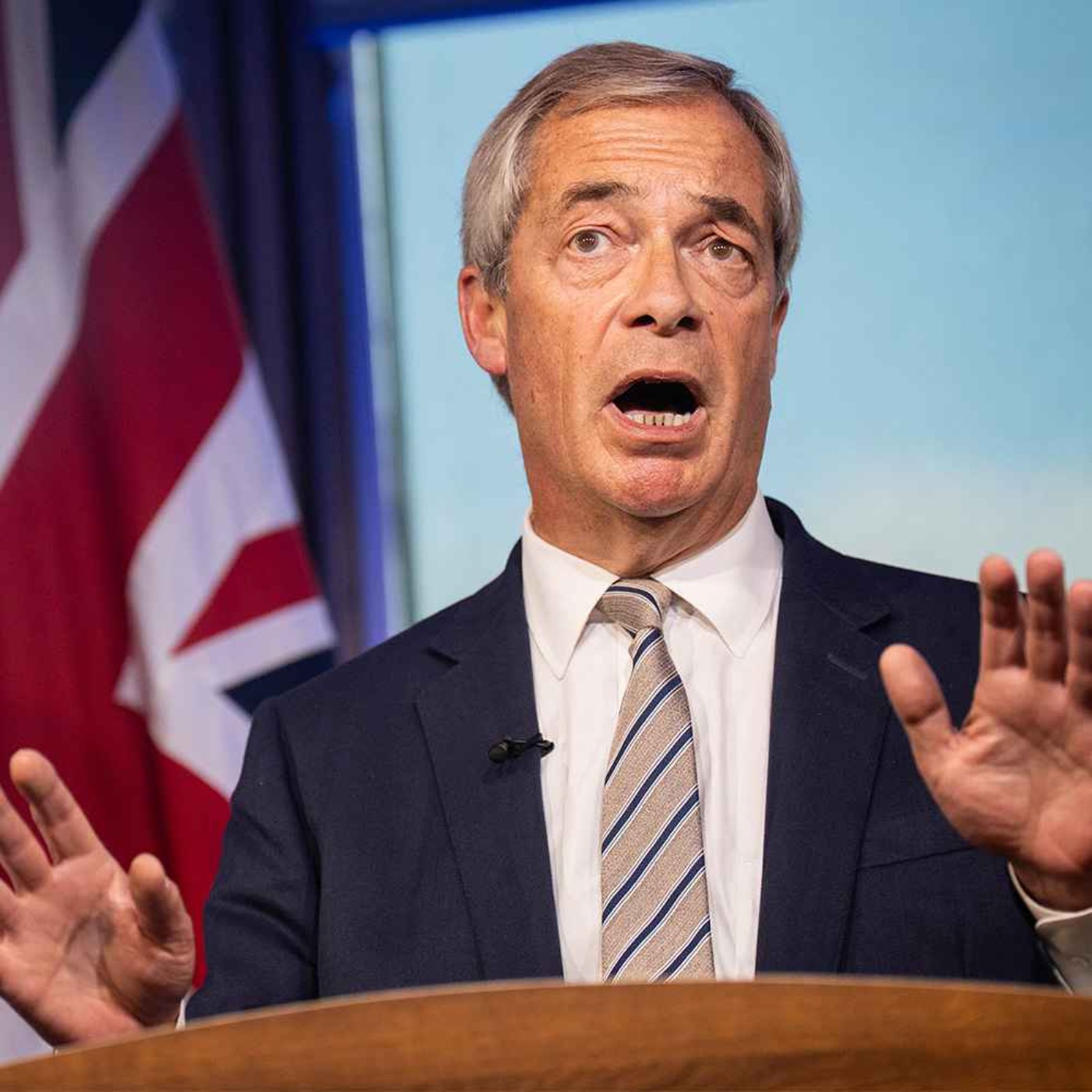
Farage biographer Michael Crick: ‘Nigel is not a racist. Hitler Youth claims are absurd’
In this episode, the hosts discuss the recent controversial comments made by Deputy Prime Minister David Lammy during the Labour Party conference, where he accused Nigel Farage of “once flirting with Hitler Youth.” The episode features insights from Michael Crick, Farage's biographer, who challenges these allegations. Additionally, the hosts engage with two Jewish politicians—Luciana Berger from Labour and Lord Polak from the Conservatives—to discuss Donald Trump’s Gaza peace plan and the implications of recognizing Palestine.
Written by AI. May contain mistakes.

Get the gist, explore an idea or ask about something said.
 Claude
On The Daily T, what are the key points of this episode?
Searching your listeningAutomatic transcript. May contain errors.
0:03Camilla: The Telegraph.
0:10Camilla: Nigel Farage has been variously described by Labour as a racist, worse than a racist and even someone who flirted with the Hitler youth. We speak to his unofficial biographer Michael Crick to debunk some of these myths. and as a Gaza peace plan has been formed by Trump with the help of Tony Blair, we speak to two Jewish parliamentarians on either side of the ideological divide to find out what they think about that and the government's decision to recognise Palestine. Welcome to The Daily Tea with me, Camilla Tomini and me, Tim Stanley.
0:56Luciana Berger: Camilla, you must have seen that famous cartoon of Hitler on a sledge with the words, everyone who disagrees with me is literally Hitler. Yeah. Well, it's become like that. It has. It's an arms race in Hitler accusations.
1:09Camilla: It's ridiculous, isn't it? Because we started out at the beginning of the conference, the Labour Party conference in Liverpool, with an accusation that reform's policy was racist when it came to...
1:21Luciana Berger: Carefully calibrated. They had clearly thought it through, focus grouped. They had a whiteboard with words on it and pictures of Nigel Farage and Hitler.
1:29Camilla: They might have even role played it. I'll be Laura Greensburg, you be the Prime Minister.
1:34Luciana Berger: And they got this formula, policy is racist.
1:37Camilla: And that was a challenging position to take because they were saying that about the indefinite leave to remain plan that Nigel Farage announced the week before last, only for the Home Secretary, Shabana Mahmood, to basically come up with a reform-like very similar plan. But because she says it, it can't be racist because she's on the left and is also a Muslim.
2:00Luciana Berger: And it's a just migration policy. That's the difference. It's a just. It's just the same. It is true to the values of our movement.
2:09Camilla: But now we are entering into a different sort of territory. And once again, it's David Lammy, who does like calling people Nazis. Let's not forget he did describe Donald Trump as a neo-Nazi sympathiser. Yeah. I think he also referred to the US president as being on a par with what Adolf Hitler said in 1940s Germany. So we've heard this before, but let's just listen to what he said to the BBC's Vicky Young when asked directly whether Nigel Farage was a racist.
2:42Tim: I'm not going to play the man. I'm playing the ball as our leader did. I will leave it for the public to come to their own judgments about someone who once flirted with Hitler Youth when he was younger. That is for the public. But we will be absolutely clear about the policy choice before the British people in the years ahead as we head to the general election.
3:03Luciana Berger: He is not playing the man there. He's playing the ball, the ball held by a man who may or may not be a Nazi. We'll get into the specifics of that allegation because he's actually referring to a very particular allegation against Nigel Farage. But having said that, just this morning, David Lammy apparently changed his position when asked about it by the BBC.
3:25Tim: He has denied it, and so I accept that he has denied it, and I would like to clarify that position because in the end the Prime Minister was keen for us to focus on the policies, not the individual.
3:37Camilla: Can I just thank the Deputy Prime Minister for giving us so much unintentional comedy? This was like him... Do you remember that famous recording where he's standing saying, we need to see visible policing on the streets? And in the background was a policeman in fluorescent clothing.
3:54Luciana Berger: A particularly visible policeman. I mean, honestly. It's the ah-ah before he begins the statement.
4:00Camilla: Yes, ah-ah-ah. Now, I need to recalibrate pretty rapidly.
4:02Luciana Berger: And the reference to what the Prime Minister has said. To be fair to David, it has felt as though the Prime Minister having opened that box at the weekend by using the R word, it was sort of inevitable that different Labour politicians in a bid to get headlines would ramp it up and go a bit further, where Streeting went a bit further.
4:21Camilla: Yes. Well, he told me on the Daily Tea he was quite happy to have a scrap with Nigel Farage. Right. You thought he'd win that bout. I'm not so sure because I think Farage is now angry, probably justifiably so. When he did the live response to Starmer's speech yesterday, I mean, he was really kind of fizzing with resentment and ire. And I think that's probably understandable. On one hand, it's a massive political victory for him, all this, because all we're talking about, well, all we were talking about throughout conference, apart from Andy Burnham for a brief moment, was Farage. Yes. Starmer delivers a speech.
4:55Camilla: The content has gone out the window.
4:57Luciana Berger: I cannot remember a word that was in it. We were there. Except the word reform.
5:02Camilla: Just reform and, oh, Nigel Farage doesn't love his country, which everybody knows to be a preposterous statement. I mean, it's just the most ridiculous statement in my own girl I think I've heard in a long, long time. Everyone going, you what? What are you talking about? Five minutes ago, you were apologising for Island of Strangers speeches, suggesting anyone that took part in a protest was inherently far right. The flag waving as well yesterday was ridiculous.
5:31Luciana Berger: Picking up, I know, I know.
5:32Camilla: I was thinking, could you imagine Keir Starmer advocating flag waving three years ago, let alone five or ten?
5:40Luciana Berger: Yes.
5:40Camilla: It just wouldn't have happened.
5:41Luciana Berger: We need Doctor Who to orchestrate a meeting between Keir Starmer of five years ago and Keir Starmer of today. And you just know that if Starmer watched that conference, he'd be saying, I'll just think it's disgraceful. It's absolutely disgraceful. Let me be clear. Let me be absolutely clear. It is appalling what we're seeing today.
5:58Camilla: Also, doesn't Doctor Who know someone in the Cabinet? Because there's a Dalek, isn't there? There is a Dalek, that's right. In the form of the Chancellor, Rachel Reeves.
6:06Luciana Berger: But as we record almost, Ed Miliband has gone one step further and has accused Elon Musk of inciting violence in Britain.
6:16Camilla: That might be a more credible claim.
6:18Luciana Berger: That could well be a more credible claim.
6:19Camilla: He's sort of calling for civil war, wasn't he, in that video address to the march.
6:23Luciana Berger: What it brings us to is reform's response to the conference. Because what both sides now accuse the other of doing is inciting hatred and potentially violence. Reforms Policy Head Zia Yusuf, who let us remember is a Muslim and a man of colour, was very strong when asked to respond to all of these charges on Sky News.
6:46Michael Crick: I think what we have seen though over the last 48 hours is the most extraordinary, vindictive, vicious use of inflammatory language to demonise Nigel Farage, the man who Keir Starmer knows now he cannot beat at the ballot box, so he's embarked on a campaign with his cabinet to incite violence against him. Keir Starmer is circling the drain. He knows that he can't beat Nigel at the ballot box. A salvation poll this week showed the majority of his own members want him replaced. There was another poll that said that he was literally the most unpopular prime minister on record. And how has he responded?
7:19Michael Crick: He's called Nigel racist. He's called our supporters racist. We had 11 cabinet members, 11 cabinet ministers on pretty much the same day, use that exact language. which is the Deputy Prime Minister in an extraordinary intervention. I've not seen anything like this in my lifetime in politics in this country. He said that Nigel flirted with Nazism, flirted with the Hitler Youth. And then you had the Home Secretary on the same day said that Nigel is, quote, worse than a racist. And the Prime Minister also used in his speech, he used language, he said we need to, quote, go into battle. He called on his supporters to go into battle with, quote, the enemy and said that Nigel and reform represent a threat to everyone in this country.
7:56Michael Crick: and using that language, he knows exactly what he's doing. And I want to share one last thing, very important information, which I thought long and hard about sharing, but I do think it's important that people know and the British public know. It was just two weeks ago that the authorities cut the size of Nigel's security by 75%. And it was, of course, two weeks ago, as people know, that we had the tragic assassination of Charlie Kirk, the most high-profile political assassination in recent memory. The Prime Minister knows exactly what he's doing. He knows he cannot beat Nigel at the ballot box.
8:27Michael Crick: We've seen the most extraordinary campaign over 48 hours to demonise Nigel. And he is absolutely inciting violence against him.
8:34Luciana Berger: Why is reform particularly sensitive about this? It's because it's only a few weeks after the death of Charlie Kirk. And the right feels, the Atlantic right feels, that whenever right-wing people incite violence, which my goodness they do, we all condemn it, as we should. But whenever left-wing people incite violence, and it turns out that left-wing people do kill, it feels like that gets ignored or brushed over. That it's okay in politics to call Nigel Farage things that we know there are some crazies out there feel justifies assassination.
9:12Camilla: Yes.
9:13Luciana Berger: That's why they're so sensitive. I don't think this is just the classic back and forth of politics. I think Nigel Farage has a ton of security. He's been attacked in the past. He's been directly threatened in the past. And he feels vulnerable.
9:28Camilla: Understandably so. And the thing is, Tim, all of this language does have an effect. Of course it does. And it can influence people who haven't looked into Nigel Farage's life and times as closely as somebody like Michael Crick. YouGov have just come out with a poll. Do Britons think Reform UK are racist? Over four in ten Britons consider the Reform Party, that's 47%, to be racist, its policies to be racist by 46%, and its voters to be generally racist. Nearly half of Britons do associate reform and by association Farage with racism.
10:05Luciana Berger: But I bet I can guess the kind of voter who gives a positive answer to those. I suspected someone who voted reform, voted Labour or Lib Dem or Green. The country is divided on this and part of the problem with our politics is that we don't just disagree, we have a low opinion of each other's character.
10:23Camilla: Got it. So overall, all Britons, yes, they're generally racist, 46%. No, they're not generally racist, 36%. But the people who think reform are racist are massively overrepresented in the Greens. 82 % think they're racist. Labour, 70 % think they're racist. Lib Dems, 69 % think they're racist. but among the Conservatives, only 23 % think so. And, of course, do Reform UK voters think themselves racist? Weirdly, 4 % do, but 88 % don't.
10:56Luciana Berger: I'd love to have a conversation with that 4%. But, you know, 90 % of Reform voters will also say that the Chancellor was born on the planet Scarrow and has a plunger for an arm. You know, what a surprise.
11:08Camilla: The partisans have bad opinions. Yes, it's almost back to your cartoon. If you don't agree with me, then you're Hitler.
11:14Luciana Berger: You're literally Hitler.
11:16Camilla: Now, as is ever the case with journalism, the best thing to do when faced with Hitler youth accusations is to go back to the source.
11:24Luciana Berger: Yes.
11:25Camilla: You have that in your hands.
11:26Luciana Berger: I'm holding here Michael Crick's excellent biography of Nigel Farage, one party after another, where he addresses this allegation that Nigel Farage once flirted with the Hitler youth.
11:38Camilla: Michael was in Liverpool with us. We saw him at the GB News party. I caught up with him earlier just as he was catching his train home from Liverpool. Michael Crick, first of all, is there any truth in what David Lammy is saying?
11:52Michael Crick: Well, obviously, the Hitler Youth was closed down in 1945 at the end of the war and Farraras wasn't born in 1964. So the specific allegation is absurd. But what I think Lammy was talking about was an allegation I uncovered for Channel 4 News, actually, about 10 years ago. and I made a film about it. And when Farage was at Dulwich College, the school in South London, when he was a teenager, obviously, a teacher wrote to the headmaster complaining that Farage had been made a prefect and that he was utterly unsuitable because in the words of a colleague of the teacher complaining, Farage was a neo-fascist.
12:33Michael Crick: And amongst the evidence that the teacher produced was an allegation that Farage had led boys through the quiet lanes of Sussex, I think the phrase was, late at night, singing Hitler youth songs. Now, Farage at the time denied this, and when I made my film, I put Farage's denial in. And then later I wrote the book about Farage, and in doing that, I approached and spoke to, it must be 60 to 80 people from his Dulwich College days, teachers and other boys. And nobody could corroborate the hit the youth songs allegations. So it's probably, but who knows, not true. But I have to say that in talking to the other boys and the other teachers, there were some pretty awful allegations that Farage had been pretty anti-Semitic when he was at school in a very nasty way.
13:28Michael Crick: And some of that is in the book. Now, you could say, does any of this matter? I mean, he was 13, 14, 15, perhaps at the time. Nobody could pin down the precise age. And, you know, we all do stupid things as teenagers. I don't think we all do things as nasty as what Farage was being accused of. But anyway, that's where it's left. I don't think the Hitler Youth songs, I think on balance of probabilities, that is wrong. And I think that Lammy got it wrong. And I'm surprised, really, that Lammy was so reckless in making the allegation, given that, you know, he is the Justice Secretary.
14:04Camilla: Yes, indeed. Although he's not been shy of accusing people of Nazism before. Look at his comments about Donald Trump likening him to...
14:12Michael Crick: Well, I'd have some sympathy on that one.
14:14Camilla: Well, he made a comment about Trump's address being similar to that of Adolf Hitler's in 1940s Germany, and it was a bit much. This row is now kind of taking on a new impetus, Michael, because we've had Zia Yusuf on Sky News today suggesting that the Prime Minister is actively inciting hatred against Nigel Farage with these claims of racism backed up by Lammy and the Hitler Youth complaints. He's suggested that his government-funded security has been downgraded by 75%. They're now reliant on private donors to fund his bodyguards. I mean, the rhetoric around this hasn't been great. Zia Yusuf is saying 11 cabinet ministers now piling in and calling him a racist.
15:01Camilla: You wrote the book on him. Is he a racist or not?
15:04Michael Crick: Well, when I wrote the book, I came to the conclusion that he isn't a racist. Right. I think that over the years, Farage has, you know, had the support of racists, undoubtedly, and panders at times to the views of racists. But overall, I think it's wrong to call him a racist. And I think that Starmer, in calling reforms policy, new policy on immigration racist, I think is wrong as well. And it opens up, I then think, that Siobhan and Mahmood, well, if reforms policy is racist, well, why isn't Labour's policy then racist? It is. It's just, you know, and obviously, I mean, Azir Youssef saying that the government is trying to stir up hatred against Farage.
15:52Michael Crick: Well, undoubtedly, they're trying to, you know, stir up dislike of Farage. But I don't think they're trying to stir up sort of hatred on the lines of violence or anything like that. It is getting nasty. And they both sides, frankly, need to calm down. Both sides have made some absurd allegations. And I felt yesterday that Starmer saying that Farage doesn't like Britain, doesn't believe in Britain, just wasn't credible. And that won't be credible with the kind of people that he's trying to bring back, Labour people who are now supporting reform or Labour people who are thinking of supporting reform.
16:30Michael Crick: That won't go down well with them. And equally, I don't think it will go down well with those kind of Labour people to say that reform policies are racist. So it's complicated. But I think overall, the thrust of what Paraj was trying to do was actually quite effective. But with these, you know, quite important flaws.
16:50Camilla: I mean, you've been following politics for a long, long time, Michael. You're a veteran of the scene, if you don't mind me calling you that. I do find it astonishing that we've basically spent the whole of the Labour conference discussing Nigel Farage. We have the big speech from Starmer. It's completely wiped out by everyone's interpretation of what he means about reform and indeed the reform leader. When people talk about Farage becoming the next prime minister, again, not only with your kind of long term Westminster knowledge, but also you were his biographer. How credible do you think the prospect of Nigel Farage as PM now is?
17:28Michael Crick: Well, first of all, I ought to stress, I wrote his biography. It was an independent book. It wasn't written with his cooperation or say so. I think, you know, there obviously is a good chance that Farage will become private. I mean, I suppose it's about 35%, if you don't ask to sort of give me those kind of figures. I think there's many problems ahead. I think, you know, they need to get their act together on spending and, you know, the reforms finances don't add up. He lacks a team of people. I mean, who would serve in a Farage cabinet? You know, you can think of three or four names and then you get a bit stuck.
18:04Michael Crick: And I think also there's bound to be a huge amount of tactical voting on a scale we've never seen before against reform seat by seat. And Farage is familiar with that from his experience of losing South Thanet back in 2015 when he was a UKIP candidate. There's a long way to go between now and the next election. And I think the other thing is that people are willing to support reform right now as a party of protest. As in the old days, it was the Liberals and the Lib Dems who were the party of protest. I think when it comes to forming a government, people thinking, gosh, Nigel Farage could be prime minister this time next month or this time next week.
18:42Michael Crick: I think people might draw back from it. And obviously that's what Labour is playing on and, you know, trying to make out that Farage is a nasty chap. And so, you know, we're going to get a lot more of this. But I wish it would calm down a bit personally. I do think that it doesn't do the country any good overall. I agree. For us to be at each other's throats like this.
19:06Camilla: I agree. And it's a marathon, not a sprint. Final question, just to flip that on its head. Will Keir Starmer be leading the Labour Party into the next general election, Michael?
19:16Michael Crick: I think that's 50-50. I wouldn't write Andy Burnham off. Some people are saying, oh, Burnham's blown it now. I'm not sure that's true at all. And, you know, a lot depends on what happens next May. And the other thing I wouldn't write off is that Starmer actually resigning. If he thinks that he has become a huge liability, And obviously he's heading rapidly in that direction if he's not already there. If he feels that way, I mean, after all, he did resign or try to resign rather four years ago when Labour lost the Hartley-Pool by-election and he had to be talked out of it. Prime ministers and opposition leaders and party leaders don't resign.
20:00Michael Crick: It's very rare that they resign because they think they're not doing a good job. But, you know, Starmer is a possibility in that regard. And that would, you know, obviously make things very exciting and give an opportunity for Burnham to come back. But he's got the problem of finding a seat and getting the approval of the NEC. But if Labour was in a huge crisis, those sort of things actually might fall into place quite easily, I think, if the polls showed that Burnham was the only person that was going to make a substantial difference to Labour's lead.
20:35Camilla: Michael Crick we're going to let you catch your train thank you very much indeed for joining us on the Daily Tea thank you okay thanks Michael Crick's overall conclusion there is an important one Tim he's written a pretty substantial biography of the man
20:50Luciana Berger: I'm not going to hold it up again he's had enough advertising today no that's enough publicity
20:54Camilla: it's lengthy we know Crick is a phenomenal journalist and a brilliant investigative reporter yes He went through everything and his conclusion is that Nigel Farage isn't a racist. And can we also point out that Michael Crick isn't necessarily a friend of reform or Farage's. No, by no means. He worked for Channel 4 for a long, long time.
21:14Luciana Berger: I think with Crick, if he judges the evidence... He calls it as he sees it. I think it's a pretty weak accusation. And moreover, it betrays a lack of understanding about the internal politics of reform. Farage has had a big row with the genuine racist far right, in part over his promotion of Zia Yusuf. He's taken risks in that regard. You may say that sometimes he's willing to tolerate extremists within his movement. Yeah, maybe. I think that accusation might stick. I think there have been some people he's been involved with down the years with UKIP and reform who've been pretty shady. But the man himself, I think he considers it a matter of pride that he in the past helped defeat the far right with the BNP, that he's not personally racist, and that he's trying to channel what he would regard as a patriotic rather than nationalist movement towards mainstream politics and away from the Tommy Romansons of the world.
22:08Camilla: Well, coming up next, we're going to sort of try and tie both conversations together because we want to talk about the big story that dominated conference that wasn't Andy Burnham or Nigel Farage, and that was Trump's 20-point plan for Gaza. So we decided to speak to two Jewish parliamentarians on both sides of the ideological divide, Luciana Berger for Labour, Lord Polak for the Conservatives, and that's coming next.
22:42Luciana Berger: Luciana, thank you very much for joining us. Developments in the Middle East are obviously happening very fast, but what is your instinctive response to Donald Trump's 20-point peace plan?
22:52Lord Polak: I think anything that brings us closer and actually delivers a ceasefire is really, really important. I think that's what everyone urgently wants to see. There's obviously an extensive plan. It's been approached, I think, positively and constructively on the Israeli side. And we wait to see what happens with the response. We've had an initial response from Hamas as we meet now. And obviously things will develop after this. But I think it's critical that we see urgently a ceasefire and an end to the actions that we're seeing in Gaza at this time.
23:22Luciana Berger: Are you surprised that the force behind this is Donald Trump?
23:27Lord Polak: I'm not surprised at all, no. And I think largely people have recognised that it was going to rely on Donald Trump to pay an active involvement in addressing this situation and coming to some conclusion. And I sincerely hope he's successful. I mean, everyone, I think, is united at this conference and across the country and across the international community wanting to see an end to what's happening in Gaza. And if Donald Trump can deliver it, then I would welcome that.
23:54Luciana Berger: And what about the purported role of Tony Blair when it comes to managing Gaza? I mean, some people have been quoted as saying he is a war criminal or he has a poor reputation in the Middle East. Does it strike you as at all insensitive to invite Tony Blair to be so intimately involved in this project?
24:10Lord Polak: Well, that's certainly not my reflections on the suggestion of him being involved. And certainly we think that that might happen as part of a number of people that will be involved in taking these things forward, we hope, if they're successful. I reflect on the role that Tony Blair played on behalf of the quartet. And I've spent many an occasion, I've done many visits to the region, both within Israel and in the West Bank. Unfortunately, not in Gaza, because the times I visited, I've not been able to enter Gaza. but certainly having spoken to Palestinians themselves and Israelis, he is trusted by both sides and he did work extraordinarily hard.
24:42Lord Polak: People didn't see it, it was behind the scenes, but he was involved in the region. He, in fact, was resident in the region. It was a long time ago, but he's maintained that connection.
24:51Luciana Berger: What is his reputation there among Middle East leaders?
24:55Lord Polak: Well, certainly people welcomed his involvement and the work that he did when he was involved and was leading the quartet in those efforts. He was committed to that work. He was a resident in the area. I went to visit a number of times. He had a base in East Jerusalem at the time. And speaking to people on both sides, he was trusted. So I think that's really important that we have someone that has some experience in the region, has connections with people, and he draws on that experience.
25:21Luciana Berger: Trump was opposed to recognition of Palestinian statehood. Netanyahu obviously was opposed to it. In fact, Israel's been pretty much united. One thing that does unite it is opposition to recognition of statehood. Does the UK government under Keir Starmer now look precipitous in recognizing, even presumptuous in recognizing Palestinian statehood when this peace plan has come along?
25:44Lord Polak: We have to look at action. Decisions can be made by governments as we've seen here and across Europe and Canada as well. But ultimately what's going to affect change for people in the region, which is what I care about most, is by arriving at it and achieving a peace plan. That's what we hope to see in what looks more fruitful and more positive.
26:07Luciana Berger: But how did you personally feel about Britain recognising Palestinian statehood?
26:11Lord Polak: I drew on what I want to see most happen. I want to see humanitarian aid delivered in the region. I want to see security for both the Israeli and the Palestinian people. I want to ensure that there's security for both sides. I also want to ensure that people are safe in this country as well. And I'm not convinced that declaring statehood delivers that. and also doesn't address, I don't think, the challenges of Hamas and acknowledging Hamas's role and what might happen next.
26:36Luciana Berger: So it was a mistake, you think?
26:38Lord Polak: It's not the action that I would have chosen I would have taken, but seeing where we are now and looking forward, certainly we have before us, I think, a really important plan that I think can provide peace and can see an end to the hostilities, and that's what we all want to see.
26:52Luciana Berger: On Monday, this conference debated a motion, a rebel motion, which called what's going on in Gaza a genocide. and demanded total suspension of arms sales to Israel. That motion was passed quite comfortably, including with support from the unions. But how do you feel about that as a Labour member?
27:11Lord Polak: I looked very closely at that motion, and I think there was some very striking things about it. That motion didn't mention Hamas. I think that's highly problematic. It only had a fleeting reference to the hostages, of which there are 48 hostages that still remain in Gaza. It also didn't mention the events or actions of October 7. So I think it didn't do anything, I don't think, to advance the cause of peace. I don't think it did anything to support this government in its endeavours to achieve a two-state solution for both the Israeli and the Palestinian people. So, you know, it's a non-binding motion.
27:48Lord Polak: And the party leadership opposed it.
27:50Luciana Berger: And yet it's still passed. Does that not suggest there is a gulf between your average Labour activist and the party leadership on Israel?
28:00Lord Polak: We can point to many issues at Labour Party conferences. I've been coming for over 20 years, these conferences, where there's been a disconnect between what the government have said when Labour was in power previously and since it's been in power now and motions that have been passed on a whole range of issues, not just on issues to do with the Middle East. I look to this government in terms of its actions and I want them to be equipped to do everything possible to arrive at and achieve a two-state solution. As I said, I don't think that came anywhere close to doing that. But I think it was right that the government said what it did and we heard the government response.
28:30Lord Polak: And that ultimately is what's most important.
28:32Luciana Berger: Luciana Berger, thank you very much. Thank you.
28:39Camilla: She's in a bit of a difficult situation, Luciana, isn't she, Tim?
28:42Luciana Berger: You can tell.
28:43Camilla: And she was being quite diplomatic.
28:44Luciana Berger: She might also get what she wants, despite the recognition of Palestine, because the peace deal, which has taken everyone by surprise, is moving forward. and doesn't everyone, including supporters of the Palestinian people, want a rebuilt new Gaza?
29:03Camilla: Well, it's funny you should say that because you spoke to a Jewish Labour politician and I spoke to a Jewish Conservative politician earlier. Lord Polak, Stuart, because we know each other, welcome to the Daily Tea. Now, you've led the Conservative Friends of Israel, well, you did for 25 years. You're now honorary president. I know you've got strong views on this Labour government's treatment of the Gaza situation, let's put it that way. Let's talk first of all about the decision to recognise Palestine. What's your view on that?
29:32Tim: Well, I totally think it was a mistake, an error, and I think it's bad politics. But it goes back to how they began. Within the first week of being in government, this Labour Party put in three things immediately that changed from the previous conservative administration. One was on the position on the ICC about arresting Netanyahu and others. Second was about refunding UNRWA. We had stopped it and were investigating and realizing that actually funding UNRWA was actually helping Hamas, but we'd stopped it. They changed that within a couple of, literally a few days. And then the third one is picking on Israel on some arms embargo, which, you know, was unheard of against a democratic friend.
30:23Tim: So the direction of travel was there. And I had said at the time that the Palestinian state thing would happen pretty quick. It took slightly a bit longer. But as President Trump described it last week, it's a foolish thing because all it did was give Hamas sort of a bit of a... Well, what it's done over the years, actually, it's quite interesting. It says to Hamas and people like that, you don't have to negotiate. We'll do that for you. You just carry on doing what you're doing. And that's such an error.
30:55Camilla: What confuses me about the Prime Minister's stance in all this is Keir Starmer should be credited, shouldn't he, with distancing and repairing Labour's reputation from what it was under Jeremy Corbyn, with Labour MPs forced out, Labour members forced out for being Jewish, for feeling intimidated, for a degree of anti-Semitism that was incubated within the party at that time. We also know that Keir Starmer's wife is Jewish. He's positioning himself more on the sort of right of this argument than some figures in his cabinet and indeed in the party. So where do you think this is coming from? Is it to satisfy the left wing of the party that would be more Corbyn leaning?
31:38Camilla: Is it to try and keep Muslim voters who are increasingly flirting with Islamist candidates?
31:46Tim: It's all of that. You know, what happened here is that, and I said this at the time when Jeremy Corbyn was leader, there will be a different leader. I always said that will be a blip because it just wasn't the way we do politics in the UK. and he made the, well, I suggested at the time that he may sound better on anti-Semitism. It wasn't a very high bar to sound better than the previous, but it would be on the altar of Israel. And that's what's done. Now, then look at how unpopular he is in his situation. He is very unpopular. And so they scrabble around and they see, oh, well, you know, all these Muslim seeds, They see how close West Streeting was, for instance, for losing his seat to these.
32:36Tim: What are we going to have to do to ensure that we keep up? So they take this almost extreme Islamist type of position.
32:44Camilla: Well, they'll argue that they think it's going to take them a step closer to a two state solution. You must have sympathy with those who look at what's been going on in Gaza, look at the rising casualty rate, particularly among women and children, and have intense sympathy for the situation. Even if you're not going to be putting Israel in the genocidal camp, there has been an argument about proportionality that's a valid one.
33:10Tim: I have sympathy for anybody who loses anyone within their family, and so whether that's Palestinian or Israeli or whatever. But I was in the House of Lords two weeks ago, And I raised a question and I held up, which you're not supposed to do, but I held up a textbook, brand new textbook for the curriculum for 25, 26 in the Palestinian Authority. This wasn't Hamas, the Palestinian Authority. And I held it up and I referred to page 40. These are for 14-year-old kids. And on page 40, it says that they should remember the burned Israelis from October the 7th. They should talk about slitting Israelis' throats.
33:57Tim: Now, until we get hold of this education and deal with it properly, but here's what the problem was. The minister, the foreign office, say, oh, no, that's rubbish. It doesn't suit their agenda and therefore that's not happening. It is happening. I've seen them, I've got the book, and that's what's being done. So they sort of deny when it doesn't suit.
34:18Camilla: Yeah. I mean, we're in a period now of Hamas considering the 20-point plan that's been put together by Donald Trump. Can I interrupt you?
34:27Tim: Just let's think about those words.
34:28Camilla: I know. Hamas are a terrorist butcher and they are considering.
34:35Tim: I mean, honestly.
34:36Camilla: But how do you not include them in the conversation?
34:39Tim: No, no, no. I understand. But just to think about where we are. Yes. We're thinking about.
34:43Camilla: Well, they're meant to be considering it in good faith. Okay. But what more can you do? This has to be a negotiation. You know, we saw this with the Good Friday Agreement. In order to secure peace, it does unfortunately involve some negotiation with terrorists.
34:56Tim: I would like to see, and the things that we can do here, we're talking here in London, what is it that the British government can add to this? At the moment, the British government are nowhere.
35:06Camilla: Well, they're adding Tony Blair to it.
35:08Tim: Well, that's not even the British government did that. That was Trump who announced Tony Blair. I don't think they probably even knew. the British government aren't at the table.
35:17Camilla: You've been a parliamentarian for years. You know Tony Blair. Sure. Is Tony Blair's addition to all this helpful? Some are saying, oh, this is ridiculous. Why are we rewarding a warmongerer? Those who are anti-the-art war.
35:27Tim: I don't go down that route, but I think Tony Blair, you know, we can disagree on quite a lot of politics, but I think he's tried extremely hard over the years and when he was leading the quartet and trying to bring people together. That's what he tries to do, and I don't disagree with that.
35:46Camilla: Another quick question on that. Would Tony Blair have recognised Palestine while there were still 48 Israelis in captivity in Gaza?
35:53Tim: Well, he didn't recognise Palestine while he was Prime Minister, did he?
35:56Camilla: No.
35:56Tim: So that would be interesting. And you're right, whilst 48, you know, I've been dealing with the parents and families for the last couple of years and it's heartbreaking. And, you know, as we said before, anybody who gets killed in this whole conflict understood. But this could have ended, can be ended, very simply, this part of it, which is the 48 bodies, sadly, most of them, handed back to their poor families.
36:24Camilla: Do you think most of those hostages are dead?
36:25Tim: Oh, yeah.
36:26Camilla: Did the families realise that?
36:28Tim: I think so. They've been told some of them over the last 18 months. I mean, this is just a tragic situation. Now, I understand it from Kamasa's point of view. It's their only card. They have no other cards. And, you know, and you have a situation now, I want to see the British government taking a role here, not sort of going down the, you know, this one deals with Nazis or Nazi youth. Let them be serious for a minute. Let them come in. You've got the Abraham Accords. You've got members of the Abraham Accords and members who could become members of the Abraham Accords and even the Qataris who are supporting this plan.
37:04Tim: Why isn't the British government supporting this plan or working with all our allies in the West to move it forward?
37:11Camilla: Do you support Trump's plan? Do you support the idea of Trump leading this? I support anything that can bring about peace.
37:18Tim: I have, you know, I think of lots of family, but I just think of my one nephew who is a rabbi, a young rabbi looking after students at the Tel Aviv University campus, students from abroad, from America and other ones. And he inspires these. He's a great guy. Well, he spent most of the last year and a half in a tank in Gaza. I don't want my nephew to do it, but anybody to do it. So that's not where the Israelis are. They just want to, and you see the half a million people on the streets. Why won't you see Britain playing a real role? And sadly, they're playing no role. not at the table and I want us to get there.
38:05Camilla: Just to bring this podcast full circle, because earlier Tim and I were discussing David Lammy, suggesting that Nigel Farage flirted with Hitler Youth and we spoke to Michael Cricket about it.
38:15Tim: It's an interesting word, flirted with it.
38:16Camilla: Well, I just wondered, as a Jew, as a prominent Jew in the UK, do you find some of this rhetoric likening the reform leader to, quote, a Nazi, to flirtations with Hitler Youth, offensive?
38:30Tim: Well, the Prime Minister was going round before the election, was saying, you know, I want new politics, I'm not going to get involved in this name-calling and we'll move on and so on. They're the worst. And what's happened in the last two days, the Deputy Prime Minister can say that. So actually, I have this problem a little bit because the left tend to see, can't understand that anybody else has got a point of view which might be legitimate.
38:57Camilla: Although Michael Crick wrote a book about Nigel Farage in 2022 and he did say that he found quite a lot of evidence, not of racism, he doesn't think he was racist, but that he may have been anti-Semitic when he was a teenager.
39:10Tim: Well, I think I didn't know Nigel Farage as a teenager. I know him now and I'll tell you what he has done in terms of the last year, year and a half, has spent time with families of the hostages.
39:23Camilla: Has he?
39:24Tim: Oh, yeah. And he's been very public about that and he has understood. Richard Tice was out in Israel only this week.
39:32Camilla: Right.
39:33Tim: And going and seeing for himself. So I'm, you know, I can only judge of what I know, what he might have done as a teenager. I'm glad people don't know what I did when I was a teenager, but he spent time, not necessarily always in the public domain, with families and has tried to understand and is going down that route. So I can only judge as I get it. And the name calling and so on, It just leaves a bitter taste.
39:58Camilla: Yeah, it's unidifying. Lord Polak, thank you very much indeed for joining us on The Daily Tea today.
40:02Tim: My pleasure.
40:08Luciana Berger: Just before we go, here are the views of some in our audience on the question of Farage and race. Eric Hatton writes, Racism is believing that one race is superior to another. See Nazi Germany and the Aryan race. At no time has Farage or Reform members declared that to be British is superior to being, for example, Albanian. He and they are not racist. And Alex Thompson says, picking up on something we discussed earlier, the rhetoric is quite clear that Labour is accusing Farage of racism and by extension his party and probably his supporters. It's clearly been a pre-agreed communications tactic for this conference.
40:45Luciana Berger: Given the assassination of Charlie Kirk only a couple of weeks ago, it is entirely reckless to invite hatred of Farage and to stoke their supporters to violence. He's already been subject to at least two physical attacks to general guffaws from the left.
41:00Camilla: Whatever happened to gentler, kinder politics, Tim? We'll be back tomorrow, 5pm.
41:22We'll be right back.
The Deputy Prime Minister David Lammy has been forced to backtrack on claims at Labour conference he on Monday, having accused Nigel Farage of “once flirting with Hitler Youth when he was younger”.
Camilla and Tim speak to the Reform leader’s biographer Michael Crick, who tells them he “came to the conclusion that Farage isn’t a racist” and that Lammy was “reckless” in saying so.
Elsewhere, Camilla and Tim are also joined by two Jewish politicians from either side of the political divide - former Labour MP Luciana Berger and Conservative peer Lord Polak - to reflect on Donald Trump’s Gaza peace plan proposals.
► Sign up to our most popular newsletter, From the Editor. Look forward to receiving free-thinking comment and the day's biggest stories, every morning. telegraph.co.uk/fromtheeditor
We want to hear from you! Email us at [email protected] or follow @dailytpodcast on Instagram, TikTok and X
Producer: Lilian Fawcett and Georgia Coan
Senior Producer: John Cadigan
Video Editor: Will Walters
Studio Director: James England
Social Producer: Nada Aggour
Executive Producer: Charlotte Seligman
Production assistance from Hugo Verelst-Way
Hosted on Acast. See acast.com/privacy for more information.


