
 Ask ChatGPT



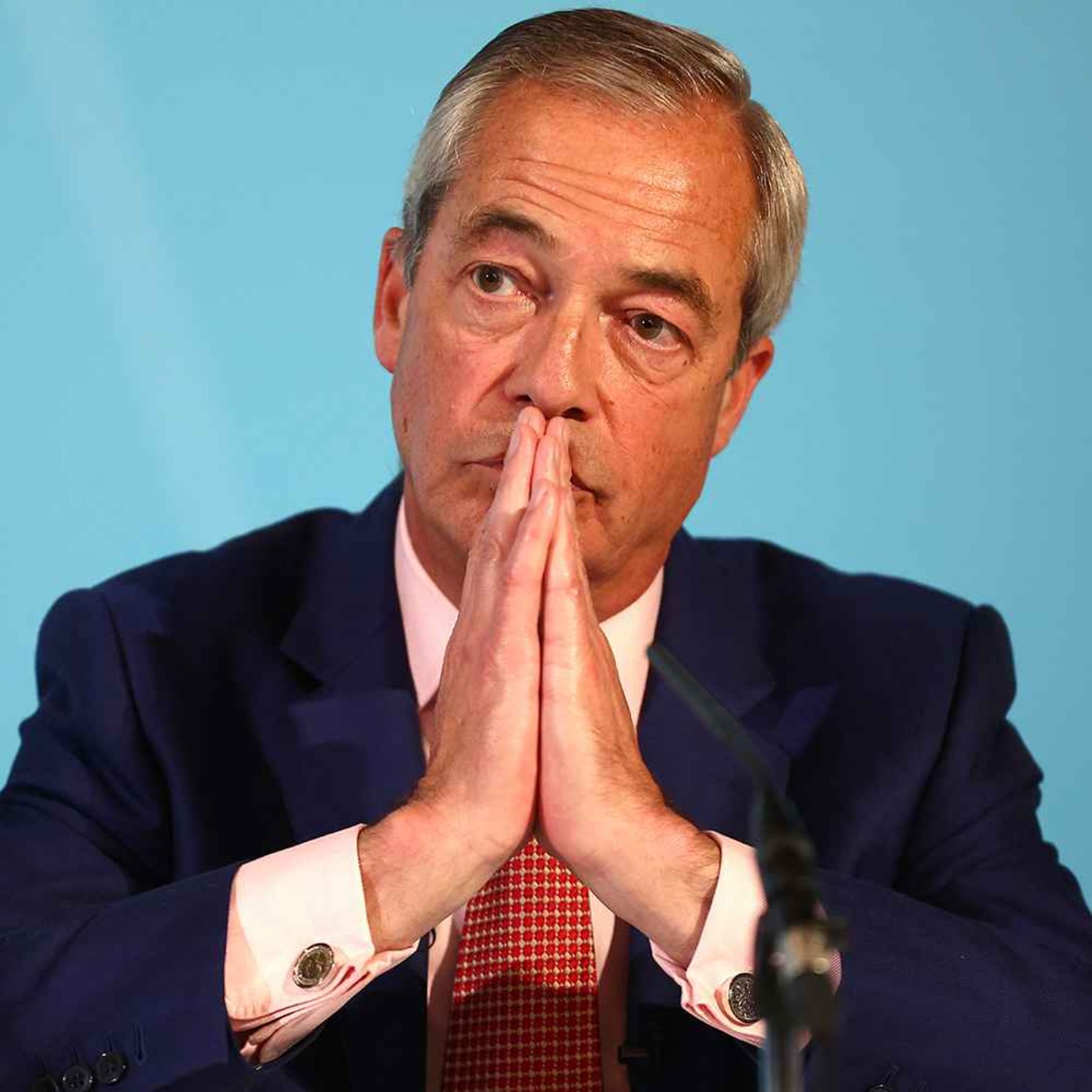
In this episode of The Daily T, hosted by Camilla Tominey and Tim Stanley, the discussion centers around the recent calls from Sir David Davis, a former Brexit secretary, for the UK government to provide better security protections for Nigel Farage after funding for his security detail was cut. The episode explores the implications of political rhetoric in the current climate and prepares for the upcoming Conservative Party conference.
Written by AI. May contain mistakes.

Get the gist, explore an idea or ask about something said.
 Claude
On The Daily T, what are the key points of this episode?
Searching your listeningAutomatic transcript. May contain errors.
0:04Sir David Davis: The Telegraph.
0:09Shabana Mahmood: We live in a dangerous world and yet security funding for Nigel Farage, labelled a racist at the Labour conference, has been cut. We speak to Tory backbencher Sir David Davis, who's very angry about the language used about Nigel Farage and that Labour has left him so dangerously exposed.
0:26Sir David Davis: And with a make-or-break conference coming up in Manchester for Kemi Badenok, we discuss the F word, Farage. Should she mention him or not?
0:35Shabana Mahmood: Welcome to The Daily Tea with me, Tim Stanley.
0:38Sir David Davis: And me, Camilla Tomini.
0:51Sir David Davis: Tim, we discussed yesterday Zia Youssef, the Reform Head of Policy's claim that the Prime Minister was inciting violence against Nigel Farage. and he revealed that the reform leader's security detail, which had been stepped up in the wake of the Southport riots last year, so he does get some government-funded protection. He's also funding his own bodyguards with, I think, donors' money and he needs a lot of protection. We've both seen him. I mean, he does need to be surrounded by people, not just because of extremists that might threaten him, but fixated individuals. People do try and gather around him.
1:28Shabana Mahmood: He needs to be protected both from critics and sometimes his own supporters.
1:31Sir David Davis: Exactly so. And as part of that, Zia Youssef revealed on Sky News that that government-funded part of his security attachment had been reduced by 75%. That does seem to be a curious decision in the aftermath of the assassination of Charlie Kirk, the MAGA right-winger who was killed only very recently. and now Nigel Farage has got an unlikely ally, well maybe not that unlikely because they're both staunch Brexiteers, in Sir David Davis of the Tory party.
2:05Shabana Mahmood: And Nigel Farage's security funding has been cut at the same time as we are more aware of the dangers to MPs and funding generally has increased. The last government in May of last year announced a£31 million package to increase security provision coming off the back of the killings of MPs Joe Cox and David Amos. When the last government was in power, I visited the home of one minister who had the kind of job where you would get targeted by cranks. And he'd been given a button. Ministers are given a special button to press, to call for people if they think they're under threat. And we were standing in his kitchen and I said, where's your button?
2:46Shabana Mahmood: Where do you keep it? And he said, I think it's in one of the drawers. but I'm not 100 % sure. And I said, aren't you supposed to have this button by your side all the time? And he said, Tim, if someone comes for me, they're going to get me.
3:00Sir David Davis: Yes. But let's be honest, MPs are very vulnerable. They are. They are meeting day to day with members of the public. Not all surgeries are guarded by the police. Also former ministers, it should be pointed out, former Home Secretaries like Priti Patel, they leave office, they don't get the protection that's afforded to former prime ministers, for instance. So it is a topic of, I think, anxiety among politicians. Anecdotally, I've spoken to a lot of MPs, and I'm sure you have, particularly female MPs, that do feel more at risk now than they did when they first entered politics. I think that's fair to say.
3:35Shabana Mahmood: Yeah, I was shocked once when I met Suella Braverman for an interview, and we were scooped up by gentlemen who looked like they worked for the US security agency.
3:45Sir David Davis: Were they speaking into their cuffs?
3:47Shabana Mahmood: They were very muscular as well. and had one of those cars with tinted windows. In that spirit, Nigel Farage has received support from a surprising quarter, a very prominent backbench Tory MP. Sir David Davis tweeted in defence of Farage, I am not a reform supporter, but I am frankly disgusted by the attacks on Nigel Farage by the Prime Minister and the Deputy Prime Minister. You may recall that David Lammy suggested that Nigel Farage might have sung Hitler youth songs when he was young. David Davis carries on, The PM claims that he wants to heal a divided country and then accuses one of his principal opponents of being racist.
4:22Shabana Mahmood: In a clearly premeditated campaign that involves half his cabinet, this is a disgrace.
4:27Sir David Davis: And he's followed up on that this morning, as I've reported in The Telegraph, and we can perhaps link that story to the show notes. He has now, David Davis, written to Shabana Mahmood, the new Home Secretary, to say you must review this decision in light of not only Joe Cox and David Amess, but also the assassination of Charlie Kirk, saying let's see the risk assessment upon which the decision to cut Farage's state-funded security was based. The information around it shouldn't be classified. Let's hear how you've come to this decision because it does seem rather counterintuitive. You need to take urgent action now.
5:02Shabana Mahmood: And Sir David Davis joins us now to discuss this subject. So, David, tell us, why are you supporting Nigel Farage on this, even though he is a political rival?
5:11Tim Stanley: Well, because I believe everybody has a right to life and to safety. And this is about his security. I mean, he had his security reduced. And we need to be sure that in the days of Charlie Kirk, in the days after Joe Cox and days after David Amess, that one of our most salient politicians doesn't suddenly suffer from a fatal attack. So that was it in a nutshell. It's as simple as that. I would do the same for absolutely anybody, no matter how I disapprove of it.
5:42Shabana Mahmood: What sort of protection should a politician of Nigel Farage's standing expect ordinarily to receive?
5:48Tim Stanley: Well, it's altered over the years. Look, I was on a death list for eight, nine, ten years. The IRA never told me, but they took me off. And I got no protection. but that was accepted in those days. Now much more protection. We see copycat killings all the time. As I say, Charlie Kirk having been killed, that will put things in people's minds. So enough to make sure that he's not susceptible to somebody coming up to him with a knife or a gun or a bomb and casually killing him. I mean, David Amos was killed by somebody with a knife because there was no security on his surgery. Joe Cox, I think, much the same.
6:31Tim Stanley: So protection whenever he's exposed to the public, I'm afraid.
6:35Sir David Davis: Do you think that Nigel Farage should be a special case because he is so recognisable and in light of the rhetoric that we've heard from Labour lately? And let's get on to that in a minute. But just on that recognisability factor, David.
6:49Tim Stanley: I mean, you can only spend so much money on these things, but you have to measure what you do in terms of protection against the size of the risk. Now, somebody who's completely unknown will be at less risk than somebody who is greatly salient. Somebody who is very controversial will be at more risk than somebody who is comparatively mild-mannered, shall we say. So I would assess, for example, Farage's risk as greater than mine, because he's much more of a controversialist than I am. So that's what you have to judge it on. It's independent of politics. It's independent of their views. It's independent of their rank.
7:32Tim Stanley: In my view, we don't actually behave that way normally because we give the prime minister and the home secretary and the chancellor much higher levels of protection than we give other people. But generally, it should just relate to the risk. If they're seriously at risk of being attacked or murdered, then they should get serious protection.
7:52Shabana Mahmood: And do you think that the level of risk that Nigel Farage faces might have gone up following Labour's conference and some of the language he used about him?
8:01Tim Stanley: Well, it might have done. That wouldn't be my primary driver, frankly, but it might have done somewhat because it heightens the controversy. Calling somebody a racist will make some people think, oh, it's legitimate to attack them. I mean, wrongly, but that's what it might do. So yes, it could have some effect. But that's not the primary driver, mind you. The primary driver is what the general risk is. And in his case, that's a function of the fact he's a very, very high profile politician.
8:30Sir David Davis: We're living in very febrile times as we're recording this. New information is emerging about this horrendous attack on a synagogue in Manchester on Yom Kippur. We don't have all the details to hand yet, but clearly the police are investigating it as a terror attack. We've witnessed different scenes, haven't we, over the course of the summer. People legitimately protesting, people marching because they don't think their voices are being heard in Parliament on various issues, including mass immigration. and then we do have what seems to be particularly vitriolic language being used by parliamentarians on both left and right.
9:08Sir David Davis: I mean, maybe it does hark back to the Brexit days, David, where you were a target for abuse because you were the Brexit secretary trying to secure a deal for our exit from the EU. Do ministers and MPs have to mind their language a bit more? this casualisation of throwing around the words fascist, far-right, racist, even suggesting Hitler sympathising. It's tricky, isn't it?
9:35Tim Stanley: Well, look, I criticised in the last few days on Twitter, I criticised Starmer for doing, for using, and what's more, not just him, but in what was clearly a premeditated plan, getting half the cabinet to call Farage a racist. In my view, that's unnecessary, counterproductive, uncivilized, beyond normal debate. It's wrong. It's simply wrong. And one of the problems we have today, I've watched over the course of my parliamentary career, the ability to debate reduce because people are now separating into echo chambers, if you like. Social media has a part in it. But when you attack people in those virulent terms, you destroy the ability to debate.
10:27Tim Stanley: You destroy the ability to engage. I mean, how on earth are you going to talk to somebody logically about how we actually prevent illegal immigration if you are calling them racist every time they disagree with you? And I'm afraid you're right. It's a bad habit. It's always been, frankly, a worse habit on the left than on the right. some people who are, how can I say, just a touch sanctimonious and self-righteous about these things. But it is dangerous. It's dangerous to debate. It's dangerous to society. Eventually, it becomes dangerous to the individuals.
10:59Shabana Mahmood: The right does do it too, Sir David. And do you feel, as I feel, that we've got to a point in political rhetoric where we are suggesting that if my opponent wins, it's the end of something, the end of democracy, the end of freedom, etc etc and this raises the stakes in politics to a degree that almost almost encourages violence because if you are saying Nigel Farage when Nigel Farage was young he sang Hitler Youth songs Nigel Farage wants to take us down a dark path Nigel Farage may well be a fascist if Nigel Farage wins this country will never be the same again if that is the case isn't it aren't some crazy people going to logically infer that this man must be stopped well apart from the fact I'd remove the
11:44Tim Stanley: word logically from it. Yes.
11:47Shabana Mahmood: I mean, that by their crazy logic, I mean, not by normal logic.
11:50Tim Stanley: It's not logical at all, but people will feel facilitated by ferocity of language can lead to ferocity of behavior. There's no doubt in that. And yes, I agree. People shouldn't. I mean, it's hard to remove hyperbole from debate. I'm talking to two journalists on a very eminent and respectable newspaper, but there are newspapers that like to write headlines that are don't quite necessarily reflect the reality. It's something that's happened in our society more today than ever before. I mean, and as I say, social media makes it worse, and it's generally speaking a bad thing. I make a point, frankly, of trying to bridge the gap with other people in other political parties, whether it's either Alex Salmond or Alistair Campbell or whoever.
12:41Tim Stanley: that's not just because I'm a nice friendly chap it's because I think actually speaking to your opponent and listening to your opponent is an important part of what makes democracy work you know but you know we do learn from each other people do move I mean if you if you looked at let's say uh Tony Blair's era in office it was something that was created by him learning from the Thatcher years. Now, if you can't learn from each other, democracy fails. If you can't engage in constructive debate, democracy fails. And if democracy fails, the country doesn't go forward. People are worse off. So virulent debate in terms of being insulting to people, alleging that they're evil in some way, there is more than counterproductive, it's destructive.
13:32Sir David Davis: I mean, you've reached out to support Nigel Farage, which some might find surprising, because the Conservatives and Reform are fighting over the same voters. Are you quite good friends with him behind the scenes, Sir David?
13:43Tim Stanley: Oh, yeah. I've known Nigel for a very long time. I mean, it's quite interesting in terms of the racist argument. I first really got to know him when I was having a battle with Blair over 90 days and then over 48 days, detention without charge, including my by-election over it, right? And we basically saw them off. Now, the principal people who would be hurt by 90 days detention without charge and 48 days detention without charge would have been people who came to the Muslim community, friends, neighbours, people in the same community as people who were actually terrorists, the ones who weren't.
14:19Tim Stanley: And they would have got swept up. And it was very interesting when I did those campaigns, there were huge meetings with Muslims in West Yorkshire and Lancashire where they were supportive of what I was doing. Now, the person who was most supportive of me in that campaign was one relatively unknown, Nigel Farage at the time. He's a believer in freedom. He's a believer in the rule of law. He's a believer in justice. And that was colorblind, to put it mildly. So, you know, I have my very strong view on accusing him of being racist. He's not. He's very strong on migration, but that doesn't make you racist.
14:57Tim Stanley: So, yes, I've known him a long time. I don't agree with this party. I think quite a lot of what he stands for is completely opposite to what I stand for. But, you know, it doesn't mean I don't talk to him any more than I don't talk to any number of Labour members of Parliament.
15:15Shabana Mahmood: I suspect Nigel would say that detention without trial is un-British, and I think he probably feels the same way about ID cards. And we do want to ask you about that, because that was a big issue under Blair. You opposed them. Now they're coming back for people who wish to apply for a job, although it seems like we'll all have to have them. And they'll be digital rather than physical. Do any of those caveats reassure you? Have you changed your mind? Because the argument for those who are saying we must have them is, look, the world's moved on. We all have to keep showing our ID. What's the big deal?
15:49Tim Stanley: Not remotely. I mean, it's interesting. As we sit here, the parliamentary petition is something like two and three quarter million people signed up already in about five or six days. I mean, it's the most incredible takeoff. The polling, of course, before Starmer raised the idea that it might happen, was in favour of ID cards. Now it's dramatically against. There's been a dramatic change. This is almost the same as what happened under Blair. As you say, I was almost a sole opponent at one point of ID cards under Blair, and he had 80 % in favour. By the time we'd finished the argument, it was 70 % against.
16:30Tim Stanley: People realised what it really meant. And there are so many things wrong with this that it's almost hard to know at the start. He said it's to do with illegal immigration. It's not going to make the slightest difference to illegal immigration. you know i'm astonished he doesn't know that as it stands employers have to tell the authorities who they're employing how on earth do you think your taxes are collected you know you have national insurance cards there's an e-visa for for legal migrants and so on so that already exists and the idea that i don't know uh somebody working in a black economy paying uh his workers uh less than the minimum wage in cash is suddenly going to report himself to the state i don't think so It's not going to work.
17:14Tim Stanley: In fact, it might even increase the size of the black economy. So that's not going to work. It's going to give huge power to the state and inappropriate power. We know the state misuses power. We saw whether it's under Blair when both of you too young to remember, there was a lady called Rose Addis whose medical data was used as part of a spin against her and her family put out by number 10 under Blair. You will remember, you are allowed to remember the COVID, the misuses of power under COVID, whether it's surveilling people while they're walking their dogs or whether it's listing people like me with secret surveillance agencies because I don't agree with the idea of all these lockdowns.
17:58Tim Stanley: I mean, those that the state will use the power it's given way beyond the reason it's given that power. I mean, we see it time and time again. States use power when they're under pressure and they often use it to disadvantage of individuals. And then the last reason is what we're talking about. What he's actually talking about is giving a single password for all of our data, whether it's tax or health or whatever else. Well, you know, he was advised by, I mean, I've got the documentation to show that he was advised by his own experts that this would be, quotes, a honeypot for criminals, foreign states, you name it, people who want to access our data and make use of it for blackmail or whatever.
18:49Tim Stanley: And so he had that advice. He's surrounded by things like the M &S blackmail data heist, the co-op. He's just signed over£1 billion to Jaguar Land Rover because of another data attack. So it's extraordinary that they believe somehow that when every big tech company in California has lost hundreds of millions of pieces of data that would be blackmailers and the like, that somehow Whitehall is going to be able to prevent that happening. And this is a strategic move which will put all of your data, every piece of data the state holds on you, at risk. And it would mean someone like China or Russia or Iran can get it as well as blackmailers.
19:34Tim Stanley: So, you know, really, it's a bonkers idea. And what's interesting, they expected young people to be in favour of this, old people not to be sure, young people in favour, because young people used to be handling the internet and used to sharing their data. Actually, the biggest opposition comes to the young. Why? Because they understand the risk. They understand having half a dozen passwords actually protects the data because the criminal's got to get half a dozen passwords. and they're used to using password managers. Maybe Sakia Starmer needs a little bit of education on how data management actually works, how the internet works, what the risks are of going down this bonkers route.
20:16Sir David Davis: Before you go, Sir David, just a quick one. Tim and I are going to discuss how Kemi should handle the Conservative Party conference in Manchester this weekend. You are a staunch supporter of the leader of the opposition. If you had three pieces of advice, what would they be?
20:34Tim Stanley: Don't make Starmer's mistake and obsess about Farage. We're three years or so away from an election. Secondly, focus on the things where we have some strong credibility, mostly the economy. The country knows that unless you get the economy right, everything else goes to hell in a hand car. we are the ones who can fix the economy nobody else could do that and once you've established that then start talking about real policies for education health care welfare transport technology growth education all those things because that's at the end of the day in four years time we're still talking about immigration everybody's in trouble the entire political center is in trouble in four years' time, we'll be talking about the things that matter to every family, looking after their kids, looking after their parents, having money to take home, enough money to take home and earn their way.
21:34Tim Stanley: So focus on the real things, not on the short term. Focus on what people really want, not about what Mr Farage wants to talk about.
21:42Shabana Mahmood: Sir David Davis, thank you for calling the Telegraph eminent and respectable, which is not hyperbole. Thank you very much. My pleasure.
21:50Sir David Davis: Coming up next, we're going to be discussing Kemi's make-or-break crunch conference and whether she should avoid using the F word.
22:13Sir David Davis: Tim, another joyous journey beckons up the Avanti West Coast mainline for us this weekend.
22:19Shabana Mahmood: Hey, hey, if the trains are running on time.
22:22Sir David Davis: I know, there's some problem at Stockport and you may need to walk from there to Manchester City Centre.
22:27Shabana Mahmood: This is the paradox at the heart of the Labour project. They want to make us love a country that every day gets a little less lovely.
22:36Sir David Davis: Yes, that's right. Although I'm hoping my train journey will be better than the last one when I embarked at Watford Junction and a teenage girl vomited right in front of me. Oh, no! But Kemi Badenokhan conference is quite the conundrum, isn't it?
22:50Shabana Mahmood: Yes.
22:51Sir David Davis: Does she...
22:52Shabana Mahmood: I thought the conundrum was going to be to go or not. To go or not to go?
22:55Sir David Davis: To bother or not? That is the question. That is the question. Clearly, please God, she has learnt the lesson from Liverpool and she isn't going to make this conference all about Nigel Farage, is she? I mean, just leaning into what Sir David just said. Don't mention the bloke.
23:11Shabana Mahmood: It's very difficult, isn't it? Because the Tories are competing, not right now, to be the next government. They're competing to be the next opposition.
23:19Sir David Davis: Yes.
23:20Shabana Mahmood: That's such a good way of putting it. They have to make an argument that distinguishes them from reform. And to a lesser extent, the Lib Dems, who are snapping at their heels as well and are going for the blue wall. That was the message of the Lib Dem conference. So how do they say to the public, you need to vote for us because we're the only credible party of opposition without mentioning the current party of opposition that everyone's flirting with?
23:45Sir David Davis: Yes, even though they're not really, there are only five MPs or four or five. How many are there now? I can't remember.
23:51Shabana Mahmood: And that's what irritates the Tories, of course. And OK, so there is a big debate within media and Westminster circles of are we all talking about reform too much? I went to a BBC dinner last week and it was the subject.
24:05Sir David Davis: Your moral, you can take the man out of the moral maze.
24:08Shabana Mahmood: Yeah, well, you know, the subject of conversation was are we mentioning reform too much? is something which really concerns. And the BBC is always being accused by the Lib Dems and Labour of talking up reform. On the other hand, reform is at 30 % of the polls. It's a chicken and egg situation. Are they there? Because we keep talking about them.
24:25Sir David Davis: Well, the Labour government keeps on talking about reform.
24:28Shabana Mahmood: But this is the thing. This is my comeback to those people. It's not the media creating a phenomenon. It's politicians who keep talking about them. And so the Tories are gathering. I think they do have to address this. But they have to do it in a subtle way that doesn't make Labour's mistake of actually just talking only about reform. So the one thing I can remember about the Labour conference is that they think Nigel Farage was married to Himmler or something.
24:54Sir David Davis: Something like that, yes. Flirted with Eva Braun.
24:56Shabana Mahmood: They've got to leave us going away thinking, well, I can see the distinct message of the Tories and I think it's better than reforms, so I'll go with them. Without talking too much about reform.
25:08Sir David Davis: But I think that Sir David was right there to basically concede that they've lost the argument on immigration and they're never going to be able to win it back.
25:15Shabana Mahmood: That's interesting, isn't it?
25:16Sir David Davis: I mean, they're going to be banging on... Because Sir David's a proper Tory. He's a proper Tory.
25:19Shabana Mahmood: He's not saying it from a wet point of view. No. I don't think we should talk about it because I like courts.
25:25Sir David Davis: Because we must obey international law. Yes. I think it's because there's no way of winning the argument against Nigel Farage in reform and therefore maybe just give up on that one. Anything you say, even if you're Robert Jenrick and you're literally, you know, strapping on Nigel's flat cap and downing pints in the middle of the countryside.
25:45Shabana Mahmood: It's like debating sugar puffs with the Honey Monster. Exactly so. You're not going to win.
25:49Sir David Davis: You're never going to win it.
25:50Shabana Mahmood: No.
25:51Sir David Davis: And talking of the Honey Monster, Boris Johnson always used to remind me of a political equivalent of the Honey Monster. If the Honey Monster was a person and a politician, it would have been Boris sort of rampaging across the red wall with his unique brand of sort of sugary politics. And so they can't win that argument. I mean, Boris is banging on about how proud he is as the Boris wave. Robert Jenrick's there pretending that he wasn't immigration minister when all of this was going on. Yes, Kemi personally is distanced from this, but not enough. So they can't win any arguments credibly on that ground.
26:22Sir David Davis: They're going to be wanging on again about Lord Wolfson's study into the ECHR and we must make considered decisions. That is why, by the way, the front of the Telegraph story today about her just ripping up the Climate Change Act is interesting because at least it's decisive.
26:37Camilla Tominey: Yes.
26:37Sir David Davis: We're not having any of this. We need to have a forum to discuss this for the next year because the election is three years out and therefore we can do some really big thinking on green issues. She's just gone, no, I've already said we're abandoning the Xero because it was, again, a nutty Boris idea.
26:53Camilla Tominey: Yes.
26:53Sir David Davis: And now I'm going to go one step further and be quite reformy and in my desire to just tear up legislation.
26:59Shabana Mahmood: Yes.
26:59Sir David Davis: It's quite good politics, isn't it?
27:01Shabana Mahmood: It is. It is. They're also going to have to, by the way, maneuver their way around holding a conference in a city that's just been attacked. So I think security issues are going to come up. Israel and Gaza are going to be debated, I suspect.
27:15Sir David Davis: Yeah, but at least that's one thing you can't accuse the conservatives of, abandoning the Jewish community in this country. No. I mean, they've got to be very, very, very careful here not to seem too politically opportunist. That is true. In linking this in any way to recognising Palestine, even though many people commenting on this evolving news story are attributing blame to the Labour government. The Conservatives don't want to look like they're cashing in for political capital on a tragedy.
27:44Shabana Mahmood: They don't, but they also... The Conservatives are in a difficult place right now where they're trying to remember what they're for and I think showing solidarity with the Jewish community of Manchester is one means of doing that. Yes. That the Tories do believe in freedom rooted in order They do want a colourblind country. They don't like the politics of identity and of setting communities against each other. And they are naturally sympathetic to Israel's right to defend its citizens and define its borders. So there's something all of that kind of I can see Manchester being mentioned quite a bit.
28:20Sir David Davis: Fair enough. To be fair, you know, when we talk about who would now vote for the Conservatives, it's a very small pocket and Manchester is home to the largest population of Jews outside of London.
28:31Shabana Mahmood: Yes.
28:31Sir David Davis: If you were a Jewish righty, you'd be more inclined to stick with the Conservatives, arguably, perhaps, than vote for reform. The other maybe slight glimmer of hope they have, and we've discussed this before, is I think polling, at least internally from what I've heard, is showing Badenock that despite the Liz Trust mini budget, they are trusted on the economy still. And it's quite good that Liz Truss has soaked up. She's been a sponge for all the allegations of economic incompetence. It's overshadowed, by the way, quite legitimate and serious concerns about how badly Rishi Sunak mismanaged COVID in terms of causing a huge debt mountain to form.
29:20Sir David Davis: Yes. And giving COVID loans to, you know, fantasists, frankly, and let's not even get into Michelle Moan and her former husband.
29:28Shabana Mahmood: In the same way that we're in the mess we are in with migration because of Tory governments, we're in the mess we are in with debt because of Tory governments.
29:36Sir David Davis: But somehow they're pinning it all on Liz Truss. And so actually, comparatively, Kemi Badenock seems quite a clean skin. It helps. She might wanted to have referred back to Labour conferences and said, did anyone hear anything on the economy from Keir Starmer?
29:54Shabana Mahmood: No, no. Nothing.
29:55Sir David Davis: We barely heard anything from Rachel Reeves, who kept on banging on about steelworkers.
29:59Shabana Mahmood: Yeah, yeah. Well, in the same way that his message at one point, he talked about this as a country where the government leaves you alone and wants to introduce the ID card. In the same way, he stressed that it's in Labour's DNA to be fiscally disciplined. But the few things he said about the economy were giveaways, like the breakfast clubs and the libraries and primary schools. It's difficult to oppose those things, but there's a contradiction there. Can I just say something?
30:24Sir David Davis: This is a government that wants to leave you alone and brush your children's teeth.
30:28Shabana Mahmood: And probably, in a weird way, kind of watch it on a CCTV camera to make sure it's being done correctly.
30:34Sir David Davis: Exactly.
30:34Shabana Mahmood: But you're right. There is this tiny crack in the fence through which a little bit of sunlight is coming through, which is the issue of the economy. And Sir David Davis mentioned it when we interviewed him. And the thinking is, we're three years away. People actually vote on the economy. The economy is only going to get worse. One doesn't want that to be the case, but it probably is because of Labour's policies, because it's already weed in the soup when it comes to the economy. So people will be thinking about who is best placed to manage it. And part of reform's problem is, as it gains definition, it looks on economics less and less like a Conservative Party.
31:14Sir David Davis: Yes.
31:14Shabana Mahmood: It looks more and more, I mean, we're both thinking of Matthew Saeed's excellent article in The Times. I know it's a different newspaper, but I think we should mention it. It was very good. This is a renowned liberal columnist who has joined the Conservative Party against the tide, because, as he said, the real issue is debt. The real issue is spending. and that successive governments have governed people's democracies in East Europe for the last 20 years and have left us with this debt mountain that defines everything. It is the terror of default that now drives all government policy. And reform, as Matthew argues, is actually socialism on steroids.
31:47Sir David Davis: Yes. Having said that, they do want to spend like drunken sailors and they don't have many cogent figures right now to back up how they're going to afford it beyond sort of slightly nebulous promises about how much cutting immigration is going to increase growth in this country. The premise is correct, but there aren't any cogent figures. The Centre for Policy Studies then has to debunk the 234 billion figure they put on the indefinite leave to remain.
32:13Shabana Mahmood: Because reform savings come from abolishing DEI and diversity programmes and kicking foreigners out.
32:21Sir David Davis: Yeah.
32:21Shabana Mahmood: That's its version.
32:23Sir David Davis: But it's so far unquantifiable.
32:24Shabana Mahmood: Right.
32:25Sir David Davis: And the other thing is...
32:26Shabana Mahmood: And also, by the way, the kicking foreigners out will have an economic impact. I'm sympathetic towards it, but let's not fool ourselves here.
32:32Sir David Davis: I just don't know whether the criticism that they are socialists washes. It's almost as lacking...
32:37Shabana Mahmood: They want to nationalise steel.
32:39Sir David Davis: I know they do, but everyone thinks they're righties. It's lacking credibility, as Starmer suggesting that Farage doesn't love Britain. I think they should say that they're profligate. I think they say that they want to spend too much. And then they should also point to Farage, despite coming up with the idea, however many years ago, now wanting to scrap the two-child benefit cap, they just need to say, at the end of the day, reform want to spend like drunken sailors and they have got no solutions to the welfare bill problem. In fact, they want benefits to go up for people who have multiple children.
33:12Shabana Mahmood: Yes. But as things generally get worse, both the economy and also society, because there's so many tensions, riots, stabbings, etc., there is a hope among conservatives that that's actually the moment at which conservatism has this historical role to play of the sensible people who come in and clear everything up. And will people want more chaos and celebrity in three years' time or will they want a careful pair of hands? The problem is, this is what Kemi's team argues, you have to ride out the next one to two years of the Tories being at 2 % in the polls, give or take 3%, right? You just have to accept...
33:49Sir David Davis: They're actually at about 14 at the lowest. Right, but they have to. Yeah, I know, but I'm making a defence of them here.
33:54Shabana Mahmood: It is that, yeah, everyone hates us. We know they hate us. We just need to hold our nerve, not go barmy, stick to our principles. And not replace the bloody leader. Not replace the leader. And then in two or three years' time, the public might, as they have historically done, gone, oh, I hate the Tories, but I'll give them a second chance. It worked for David Cameron. No one liked the Tories in 2010. They couldn't even win a majority. But he still slipped back into government because, oh, I'll give them a second chance.
34:21Sir David Davis: And Michael Crick made this argument yesterday. Will the reality of reform once we're into an election campaign really sort of come home and people go, look, it's all very well when it comes to voting for him and I'm a celebrity, but do I really want Nigel Farage to be PM? Many, many people will just go... But it didn't come home. F it. I'm going to do it. But there'll be many moderate righties who go, hang on a minute. And actually, Kemi Badenock, she's quite a tough bird. She's quite thick-skinned in a way. Too thick-skinned, people say. People say she's actually quite charmless. And actually, it's that kind of person that does just dig in.
34:58Sir David Davis: Yeah, I'm going to dig in and get a load of abuse and our poll rating's going to tank. But I'm just going to go. It's a marathon, not a sprint. And I think she's got the energy for that.
35:08Shabana Mahmood: Yes. The only thing I'd say against that is people thought, oh, people will eventually give up on Trump. And they elected him twice. Yes. They thought everyone can see Brexit's going to impoverish us.
35:18Sir David Davis: Yes.
35:18Shabana Mahmood: And they voted for it. So it might just be that we're at a civilisational stage in the West where people vote for things that in the past hundred years we told ourselves they'll never vote for.
35:29Sir David Davis: Should she mention Farage?
35:33Shabana Mahmood: No. I don't think she should do what Labour did, which is mention him by name and attack him personally. However, I think she should calibrate what she puts across to provide a clear contrast to reform.
35:43Sir David Davis: Yes. If she attacks anyone, it should B. Starmer. She doesn't need to waste much time on Nigel Farage, with whom many of her own voters agree. There's enough material, 40 towers, there's enough material there for a whole conference. And I mean the Prime Minister's various failings. She could absolutely go for him.
36:08Shabana Mahmood: Yes. Well, we all know that if it wasn't for reform, the Tories would be doing quite well. This is, it's so tedious I mean, sometimes one has to say it in every discussion But this is the abiding quality of politics In 2025, the centre-right is split The country has become more right-wing Under Tory governments in part Because Tory governments govern in a left-wing way Just different people to the right But people have become more right-wing Especially on immigration I suspect increasingly on things like welfare At the same time as the right is split So it is the left that slips into government But actually, really, she is where most of the voters are.
36:43Sir David Davis: So we're going to Manchester. We've got a whole festival of Tory-ness to come because we're going to be interviewing Robert Jenrick, which I'm not sure Kemi Maynock will be particularly happy about, but we're going to do that on the Monday. We're going to be talking to all sorts of different MPs. You and I are going to be opining the state of things in the land of Oasis. But before all that, something completely different because we have interviewed... Paul Burrell. Yes. The Royal Butler. It was fun, wasn't it? You've got to be honest.
37:12Shabana Mahmood: It was a lot of fun, yes. I could feel the spirit of Diana behind me laughing away.
37:17Sir David Davis: Indeed so. And you're going to be able to hear that tomorrow, 5pm.
37:39You
Sir David Davis, the former Brexit secretary, has called on Shabana Mahmood, the Home Secretary, to provide the full reasoning behind the decision to cut funding for Nigel Farage’s security detail.
Despite being a political rival of Mr Farage, the veteran Tory MP tells Camilla Tominey and Tim Stanley on today’s Daily T that the Government’s “premeditated” labelling of the Reform leader as racist at Labour’s party conference may “heighten the risk” he faces and that his role as a high-profile politician means he deserves “serious protection”.
Elsewhere, Camilla and Tim also look ahead to the Conservative Party conference, which gets under way this weekend, and ask the question – should Kemi Badenoch mention Nigel Farage or not?
► Sign up to our most popular newsletter, From the Editor. Look forward to receiving free-thinking comment and the day's biggest stories, every morning. telegraph.co.uk/fromtheeditor
We want to hear from you! Email us at [email protected] or follow @dailytpodcast on Instagram, TikTok and X
Producer: Georgia Coan and Lilian Fawcett
Senior Producer: John Cadigan
Video Producer: Will Walters
Studio Director: James England
Social Producer: Nada Aggour
Production assistance from Hugo Verelst-Way
Editor: Camilla Tominey
Read:
Farage security cuts ‘must be reviewed’ after Charlie Kirk murder - Camilla Tominey
Hosted on Acast. See acast.com/privacy for more information.


