
 Ask ChatGPT


 The Daily T
26 Jul 2026 · 34m · 20 chapters
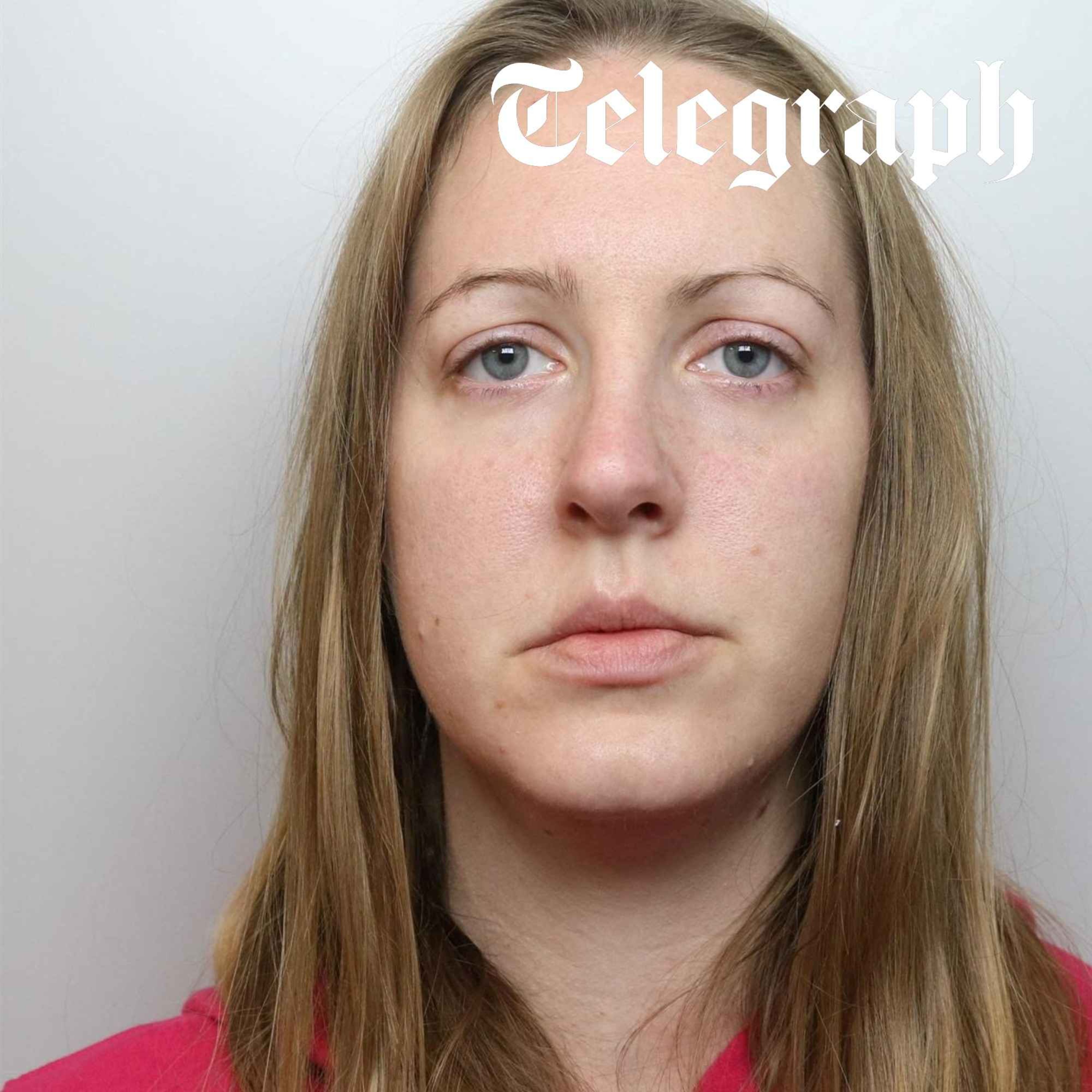
Author Christopher Morris argues Lucy Letby’s 2023 conviction for 14 murders and attempted murder is “unsafe,” citing unreliable medical/statistical evidence, alleged misinterpretation of neonatal records, and broader hospital failures at Countess of Chester Hospital.
Christopher Morris, author of Reasonable Doubt; previously a writer for ~15 years. He says he interviewed 60+ credentialed experts (neonatology, paediatrics, neonatal nursing, statistics, obstetrics). Hosts: Kavilla-Tomeni and Tim Stanley (The Daily Tea).
Letby doesn’t fit a serial-killer profile; a “confession note” is actually trauma language; arrest footage shows distress rather than guilt; the “Lee sign”/air-embolism diagnosis was misused; infants were allegedly presented as healthier than in notes; a nurse-death duty chart was mathematically flawed; defence allegedly failed to challenge evidence effectively; groupthink and understaffing/sepsis/ward-round failures may have driven scapegoating.
“Lee sign” not present in cases; ward rounds allegedly done twice weekly not twice daily; sewage/pseudomonas, endemic sepsis; chart placing dots next to Letby’s name; experts like Dr. Shulie/Dr. Lee and statistician Prof. Jane Hutton criticized the prosecution’s evidence.
Written by AI. May contain mistakes.
Overview of the case against Lucy Letby and emerging doubts.
“The Cologuard test is non-invasive, requires no special prep or time off, and you start screening right from your home.”
Overview of the case against Lucy Letby and emerging doubts.
“It's one of the most covered true crime cases in UK history and now a growing number of experts are speaking out against Lucy Letby's conviction of seven counts of murder and eight of attempted murder in 2023.”
Christopher Morris discusses his background and interests in the case.
“Tim, on August 18, 2023, Lucy Letby was convicted of 14 counts of murder and attempted murder.”
Morris shares his doubts about Letby's actions and conviction.
“And this is a book examining the case of Lucy Letby, which is out right now.”
Morris discusses insights from experts he consulted during his research.
Morris explains why Letby does not fit the profile of a serial killer.
“And that was kind of one of the reasons for writing the book is that someone might see a newspaper article in the Daily Telegraph and get a bit of a handle on some of the case.”
Discussion about alleged confession notes and Letby's reaction to arrest.
Exploration of the parents' perspectives on the case and closure.
“So let's run through the different ways in which you approach and deconstruct the evidence against Lucy Letby.”
Morris discusses the state of neonatal care at the hospital.
“so that's so that's the first thing let me just pick up on that because there are a couple of things which stood out for me from the trial, which are used as examples of her possible guilt.”
Morris connects Letby's case to larger hospital systemic issues.
“this is exactly as I've described it and I was pleased to see that even though I already knew what that note was.”
Discussion on the hospital's serious issues and the scapegoating of Lucy Letby.
“Yeah, I think that would be an understatement based on what we know about the hospital.”
Exploration of how groupthink may have led to blaming Lucy Letby for hospital failures.
“who has been, I think, inadvertently scapegoated.”
Insights from Dr. Shulie on misinterpretations and medical errors in the trial against Lucy Letby.
“Shulie for this book, who, if people don't know, heads this panel that we've mentioned earlier.”
Discussion on the misdiagnosis and the misrepresentation of infant health in court.
“And he just simply said, well, none of these cases are the Lee sign.”
Exploring the emotional weight of the Lucy Letby case and its implications.
“i think this case touches upon complex human emotions it's mattered to people because it involves babies.”
Discussion on how critical evidence was missed and the failures of the legal process.
“and information regarding medical matters that's coming from these experts that are over the highest quality.”
Discussing fundamental errors in hospital practices and their impact on Lucy Letby's case.
“We know why now because we've seen all the documents from the hospital.”
Exploring the timeline of the investigation and the focus on Lucy Letby as a suspect.
“But the trouble Christopher was that it seemed as if suddenly they all zoned in on Lucy Letby and it became for the police and David Davis has been very critical of Tresher police in the House of Commons.”
Analyzing the statistical evidence used against Lucy Letby and its validity.
“So from six days, they went from no basis to investigate, no evidence, to it's in the Guardian and other newspapers on the 18th of May.”
Discussing the implications of Lucy Letby's case on the criminal justice system and NHS.

Get the gist, explore an idea or ask about something said.
 Claude
On The Daily T, what are the key points of this episode?
Searching your listeningAutomatic transcript. May contain errors.
0:04The Telegraph.
0:09This message is brought to you by Cologuard. If you recorded songs off the radio for a mixtape, it might be time to screen for colon cancer. The Cologuard test is non-invasive, requires no special prep or time off, and you start screening right from your home. It's just three simple steps. Set up, sample, and ship. If you're 45 or older and at average risk, ask your doctor about the Cologuard test. Available by prescription only. Learn more or request a prescription at Cologuard.com slash podcast. When everything is moving all at once, your workforce, your tech stack, your business, you don't need more tools.
0:45You need one solution. That's why Paylocity built a single platform to connect HR, finance, and IT with AI-driven insights and automated workflows that simplify the complex and power what's next. Because when everything comes together in one place, growth comes easy. Experience one place for all your HCM needs. Start now at paylocity.com slash one. It's one of the most covered true crime cases in UK history and now a growing number of experts are speaking out against Lucy Letby's conviction of seven counts of murder and eight of attempted murder in 2023. Author Christopher Morris has written a new book examining Letby's case and joins us now to reveal the red flag and the legal evidence that led him to write about what others are calling an extraordinary miscarriage of justice.
1:37Welcome to The Daily Tea with me, Kavilla-Tomeni. And me, Tim Stanley.
1:51Tim, on August 18, 2023, Lucy Letby was convicted of 14 counts of murder and attempted murder. The presiding jury at Manchester Crown Court decided that the neonatal nurse was guilty of using an array of murder methods, including air, milk and insulin in order to fatally harm babies at the Countess of Chester Hospital. Now, as we've covered on the Daily Tea, there are now some doubts creeping in about her guilt. We've spoken to David Davis, the Tory MP, about it. We've spoken to Sarah Napton, our own science editor. And there is now a debate over whether that evidence that was relied upon at trial to convict her was actually reliable.
2:32Christopher Morris joins us in the studio. Christopher, welcome. Thank you. You're the author of Reasonable Doubt. And this is a book examining the case of Lucy Letby, which is out right now. First of all, just who are you? Where do you come from? What are your credentials when it comes to assessing this case? Well, thank you for having me, firstly. I'm an author. I've been a writer for about 15 years. I guess the part you want me to addresses my credentials for writing about this case. I had an interest in it from the day of the conviction because I felt there were serious red flags. I think that those would include the fact that no one saw Lucy doing anything wrong.
3:11I think it's quite obvious at this stage that she doesn't fit the profile of a serial killer. I remember listening to it on the radio on the day and the methods of murder were quite arcane, I think it's fair to describe them as. and then of course there's a hospital, it's small children, then it's premature children. So I put all these things together and I had my doubts immediately. So I realised that what I needed to do was speak to as many credentialed people as I could. So that's what I've done over the two years of writing and researching this book. I've interviewed over 60 credentialed people, many experts from multiple specialisms, particularly relevant ones including neonatology, paediatrics neonatal nursing statistics and many others obstetrics would be an important one I'm not going to try and list them all because there are many and all I heard from these experts were similes you mentioned you had Sir David Davis on I know what he said initially was experts contacted him and said I can't comment about the rest of the case but my bit is wrong yes and that's what I heard repeatedly and the more that I came to understand it the more I could see that a massive injustice had occurred here in my estimation and then there was the New Yorker article that came out and then the Daily Telegraph came out quite strongly with Sarah's work that's been brilliant and the Guardian came out a very similar time so when the Daily Telegraph and the Guardian had come out I could see a kind of climate emerging where a publishable book would be possible so what I did over the last two years since that happened was as I say speak to as many credentialed people as I could.
4:45And their words and expertise are kind of assembled in this book, which tries to walk people through the whole case, which is a complicated case and does take a bit of time to do. And that was kind of one of the reasons for writing the book is that someone might see a newspaper article in the Daily Telegraph and get a bit of a handle on some of the case. But, you know, people have busy lives. They can't sit there researching the Lucy Letby cases I have so it really is an attempt to put everything in one source that people can read through. But isn't there a distinction between you and David Davis?
5:19David Davis isn't saying he's convinced that she's innocent he's merely convinced that she didn't get a fair trial so he's calling for her to have another trial a retrial so that all the evidence can be properly tested. You seem to be going one step further and saying now that you think she's innocent. well firstly i can't obviously speak for david davis he's not here he has very kindly endorsed this book for which i'm very grateful i think that it's really not my place to say i think lucy's innocent or i think lucy's not innocent i mean i think absolutely clear that this is an unsafe conviction right and that this wasn't a fair trial what i would say with regarding to innocence is that there are now 33 experts that are acting effectively acting in Lucy's defense they're not actually acting in Lucy's defense they're just giving their honest opinion on the information and evidence that they've seen through neonatal notes and various other aspects of the case so they are people of absolute highest caliber it's almost insane how yes that the quality of those people and I dare say this is the most concentrated collection of expertise that has ever occurred in any appeal anywhere on the planet it's certainly the case in Britain I mean I think that is undeniable so when you have that level of expertise and then there are many people I've interviewed in my book on top of that and then there are many people I'm in contact with that I didn't include in the book because you have to draw the line somewhere there are hundreds of experts now and i've not managed to encounter one i've offered the opportunity for anyone to come forward who has expertise has qualifications credentials anything like that and say to me right i think the evidence that was used in court is sound i believe that lucy let me is provably guilty i haven't had a single email from anyone i haven't encountered anyone right so when it comes to the question of innocence i think anyone can infer from that that there is okay yes okay well So let's run through the different ways in which you approach and deconstruct the evidence against Lucy Letby.
7:26And let's start with, because you raised it, the psychology of Letby. Does she fit the normal profile of someone who carries out multiple murders? Absolutely not. I mean, it's not just that she doesn't fit the profile. She couldn't be more detached from it. I mean, the police have excavated her life. They've looked at everything they possibly could. you know their job is to dig up dirt on the on the person that they suspect have committed a crime and i'm absolutely certain they were sincere in that in that belief and they found nothing i mean she's almost i've described in the book as almost implausibly squeaky clean it is actually incredible because you know if you dig into anyone's life you usually find a few little skeletons they may not be really serious but there's usually something that can be used and with lucy there was nothing so that's so that's the first thing let me just pick up on that because there are a couple of things which stood out for me from the trial, which are used as examples of her possible guilt.
8:20One was she's supposed to have written down on a piece of paper somewhere, I did this, I deserve what's happening to me. Yeah. Can I say with regard to that, firstly, that that was the ultimate red flag that made me write this book. Right. Was that I encountered the so-called confession note where she's supposed to have confessed. And, you know, it's my job to understand language, it's my job to analyse language. and I could see within seconds, I mean, there's no way this is a confession note. This is the anguished outpourings of someone who is traumatised. And I knew that from day one. I knew that within seconds of seeing that note.
8:54And now there's this professor, I think his name is pronounced Jisli. His surname is Gudjonsson, who he's been involved, previously involved in the exoneration of Birmingham Six, previously involved in the exoneration of the Guildford Four. He says, this is not a confession note. This is not a confession. this is exactly as I've described it and I was pleased to see that even though I already knew what that note was. Okay okay the other thing that a lot of people will remember is the police turning up at her door and the way she reacted to them was not what you would expect of someone being arrested she almost seemed resigned as if she expected this to happen.
9:34Okay well I wouldn't interpret it in those terms I wouldn't interpret it as being resignation I think she was scared and I think had she come out kicking and screaming and so forth, I think that would have looked very bad. Or it would have looked like the thrashings of an innocent woman. Possibly, yes, possibly. But I think if you look at the other Netflix arrests that have now come out, they've shown all the... Sure, just explain, Christopher. We didn't have some of this footage until Netflix did a docu-series about Lucy Letby. Then it emerged and her own parents said, hang on a minute, why are you releasing this footage?
10:07you're releasing it almost for entertainment purposes when it hadn't been made public previously. Is that correct? Yes, that's correct. And I mean, I've already kind of commented on the entertainment aspect. I think many people think that was quite grisly. But a second arrest that we see in the Netflix film, she just breaks down in tears. She's an absolute, because she thinks, I've gone to the first interview. We've seen that interview now. I know exactly what was said in that interview. I've covered it in depth on my YouTube channel and it's mentioned in the book, certainly. She just gives very fluent, honest answers to the questions.
10:40She doesn't say, you know, she doesn't say no comment at any stage. And we've seen six, seven hours of interviews and she's just trying to cooperate. But at that second arrest, she just breaks down. Her mother makes this horrible, guttural noise that's horrifying. I mean, it was awful for me to watch. And I think anyone that has any, I mean, there must be people watching this that have children who are around the same age as Lucy who are trying to make their way in the world. And just imagine the horror of hearing your son or daughter say, well, I've been arrested, it's for murder and attempted murder.
11:18And then Lucy was, this isn't commonly known, but she was banned from living in Cheshire. That's why she's at her parents' house for the second arrest. Although I'm just going to interject there just for balance. You could also be the parents of one of these murdered babies and be looking at you with your book and Netflix with an entertainment docuseries and everybody else that may have effectively been, in inverted commas, cashing in on this abject tragedy and wanting people like Christopher Morris and others to just shut up. This woman was convicted. She was tried before a jury of men and women, good and true.
11:51Why are you dredging all this up? They just want closure. Their little babies died. And you can have, you know, arguably actually more sympathy with them at this stage. their babies died than Lucy Letby's parents. I absolutely understand that. And, you know, it's a very fair comment. And, of course, I think everyone feels terrible for the parents of the infants. I certainly do. And, you know, they've effectively been traumatised by this horrible process. Unfortunately, we now know that there's information which indicates that what they heard in the court case and what they were effectively told by the police was incorrect.
12:28So I think under those circumstances, I wish there was a way that this could be brought to the fore without them being upset by it. No, but none of them appear yet to have questioned this trial or her guilt, have they? Which I think is significant. Lots of outsiders have. I think the pendulum starts to swing if a couple of the parents come forward and say, right, we now have doubts, right? As far as I can tell, Christopher, nobody has yet. Yeah, well, I mean, I should say I obviously haven't had contact with them and it's not really my place to direct comments towards them. What I would say is that in the last couple of days, there's been a parent whose infant was treated by Lucy at the counter chaster, who's appeared in the media, and Lucy saved their daughter's life twice.
13:21Right. And they say Lucy was the most attentive person on the unit and Lucy was keen to keep them informed and so forth. So I fully accept that's not proof of anything, but it is indicative of the fact that that's not behaviour that's consistent with someone that would harm babies. I think anyone would reasonably agree with that. Let's talk about something which I think has come to light as a result of the case, which I'm sure some would dispute it, but it seems to me something that we can more concretely prove, which is actually the state of neonatal care in the places where Lucy Letby was working.
13:57It wasn't good, right, with or without Lucy Letby's presence. Yeah, I think that would be an understatement based on what we know about the hospital. Probably one of the most eye-catching headlines has been the sewage that's been on the unit and the pseudomonas infection. There's a very serious bacterium and there was endemic sepsis among the infants. And then there's very clear evidence of understaffing. it's impossible for me to go over all the problems with the hospital in this kind of format. Obviously, that's why I've written a book and it's extensively covered. We've seen recently, very recent days, the Nottingham maternity scandal.
14:34There have been many other maternity scandals. I think many people that are concerned about this issue believe that this is just another example of a, to be generous, suboptimally performing hospital where things have gone very wrong. and ultimately that has ended up being blamed on Lucy Letby, who has been, I think, inadvertently scapegoated. I don't think there was a deliberate thought to blame her for it, but I think... Well, you suggest groupthink may have crept in, that consultants looking for an explanation for deaths might have together, through taking different paths, have arrived at the similar conclusion that there must be one human being responsible.
15:13Yes, I've quoted someone who's been at a very much higher level society than me, and they speak about how this group thing that you describe can take root. I think they use the phrase when there's people who have a similar interest or people who have similar motivations, it can vary. One, I think he used the term gravitational force can happen. One explanation takes on a kind of gravitational force and other explanations get pushed to the side. so now because of the thermal inquiry which is supposed to be the inquiry into the counter chester hospital which in its terms of reference has to assume that lucy let me is guilty all manner of information has come out that that to you or i looks very bad for the hospital let alone to people who have medical qualifications who i've interviewed for the book who will say well they were doing this wrong they're doing that wrong look at this this shouldn't be like that The conditions are awful in the hospital.
16:07They're making basic medical errors. And then, of course, I've spoken to Dr. Shulie for this book, who, if people don't know, heads this panel that we've mentioned earlier. This is the neonatologist who I believe is from Canada, is that right? That's correct. He arguably is the most important neonatologist in the history of Canada, founder of neonatal networks in Canada and so forth. Just to explain, The Daily Tea did attend that press conference where he, along with other leading neonatologists, basically drove a coach and horses through the evidence against Lucy Letby and went through each baby's death in order and said that there could be other explanations and that some of the medical interventions that were used by the hospital at the time were wrong.
16:49Some of the interpretations of, particularly Shu Lee, as Christopher will explain, he wrote a book about, in fact, you explain it. Tell us, because Shu Lee has particular expertise, he wrote a book about something which the prosecution relied on in court which he later said had been completely misinterpreted just explain that yeah so i'll explain that's no problem so it was an academic paper actually not a book um and this has it's really important because one of the central components of the trial was the idea that Lucy Letby had injected air into infants and this paper was used centrally diagnostically in the trial but it was misused um dr lee says i mean he explained it's explained in some depth in my book but essentially the signs uh often rashes or discoloration or what's called mottling which is just a type of discoloration were cited as being diagnostic of this air embolism as it's described and dr lee the lee sign is used as a diagnostic sign of her embolism.
17:56That's named after Dr. Lee because he discovered it. And he just simply said, well, none of these cases are the Lee sign. And that is the only diagnostic sign of her embolism in terms of discoloration. So anyway, to return to what I was going to say about Dr. Lee, you talked about him driving a horse and cart through the evidence or through the cases. He said to me, he's seen the medical notes. He said to me, there are multiple errors for every case it's there's basic there's misdiagnosis firstly that's very serious it's the most fundamental mistake you can make because if you don't diagnose something correctly what are your chances of treating it very slim and then he said there's um errors of treatment and then there's medical errors of procedures for example intubation which is putting in a breathing tube for example and all those things it's not just one thing it's like these things together collectively compounded the problems and then of course another thing i really think i need to make clear is that these infants were presented in court as being much more well than they actually were and i think perhaps that's the most egregious aspect of the court case is that the the jury was given the impression that these infants were basically okay they were basically fine and then they just collapsed for no reason and no one had any idea why whereas when you give these notes to really, really high-caliber experts, they say, well, that's just not the case at all.
19:25Nirav Modi was a billionaire diamond tycoon whose jewellery was worn by Hollywood stars like Kate Winslet. But in 2018, he was accused of masterminding one of the world's biggest ever bank frauds, and he disappeared. This is the extraordinary story of the rise and fall of Nirav Modi. and of how we caught him. He was in the news all the time. Where is Nirv Modi? Why can we not find it? He's one of the most sought after criminal in India. You owe a lot of people a lot of money, Mr Modi, who would very much like to know where you are. Sorry, no comment. The Indians will think we're a laughing stock.
20:05Here we are seven years later, still speaking about this case. They think it's a sham. The Diamond King, a new podcast from The Telegraph, with me, Nick Brown. And me, Robert Mendick. Out now. This message is brought to you by Cologuard. If you recorded songs off the radio for a mixtape, it might be time to scream for colon cancer. The Cologuard test is non-invasive, requires no special prep or time off, and you start screening right from your home. It's just three simple steps. Set up, sample, and ship. If you're 45 or older and at average risk, Ask your doctor about the Cologuard test. Available by prescription only.
20:47Learn more or request a prescription at Cologuard.com slash podcast. Your line just went down. The scramble starts. Clipboards, binders, phone calls. Every minute down costs money. And most unplanned breakdowns are preventable. Maintain X helps you catch the failure before it happens. With easy to manage preventative maintenance. And work orders that can be created and assigned in seconds. No binders, no Excel, no scramble. Companies on MaintainX have cut unplanned downtime by over 30%. Try it free at maintainx.com. That refresh you've been putting off until the right deal came along? It's here!
21:27Wayfair's Black Friday in July sale is happening now, so you can finally get the style you've been waiting for for less. Get up to 80 % off area rugs and up to 60 % off outdoor and bedroom furniture. shop wayfair's huge selection of styles and find the piece to fit your style budget and space plus free shipping black friday in july ends july 27th shop today at wayfair.com
21:59i think this case touches upon complex human emotions it's mattered to people because it involves babies. If Lucy Letby did it, which we were told by a court of law that she did, then many of us were just furious, I mean, just disgusted, horrified at that. If, however, she didn't do it, then the truth is almost, well, is as bad, if not worse, which is that an innocent person's been put away for it. But also, there are these enormous institutional failings, which are leading to perhaps unnecessary deaths of babies. Yes. But I keep coming back to, I, as a citizen, kind of have to trust courts. Now, courts can get things wrong.
22:41People can appeal. Things can be overturned. But because the whole system would just collapse if individuals went around saying, I just don't accept that verdict, we kind of have to begin from the point of view of assuming that a verdict is correct. That's how a system works. explain to me why it is that she was found guilty by a court what was it that they didn't see that you now know that they should have seen and why didn't they see it yeah i'll definitely address that i just want to mention something about the emotion of babies being involved and so forth please do um i think that's a very salient point it makes it so difficult to address this all i would really like to say with regard to that is that you mentioned that i can be criticized for writing this book and and that's absolutely fine people are perfectly entitled to say whatever they they want about me um all i would ask is that people come to this subject and but with an open mind because well you know it's hard to i i understand because it involves babies that absolutely my point yeah in terms of the court case um i think the first thing is that the court heard a lot of information that we now know to be incorrect obviously that's a major problem because in a court case of this nature, I mean, I've learned an enormous amount over the last two years.
23:56I'm not going to sit here and say I'm medically qualified. I'm not. I can still easily be confused by medical evidence because it's complex. So imagine what it's like for the jury. The jury is sitting there hearing these things for the first time. I'm sure you'd never heard the term embolism before. I certainly hadn't. So they're very reliant on the caliber of expert evidence in particular for this case because it's medical evidence, and they're not medically qualified or trained in any way. They have no medical experience. Many, many qualified people and many experts have told me that the standard of medical evidence in this case was very poor and I agree with that.
24:33So that would be the first thing. And then the second thing is an enormous amount of information has come out since the court case, including what we just discussed about the hospital, but also more nuanced and thorough and information regarding medical matters that's coming from these experts that are over the highest quality. In terms of answering the more holistic question about the system, I sense that might be a little bit above my pay grade. But I think, I mean, I'm more than happy in the future. It's quite likely I would write about this again in the future to suggest some things that could be done.
25:07But I think absolutely critical, two things, is firstly, the quality of expert evidence in a court case of this nature must be of the highest possible. And that means getting the best people into court and they must act in a neutral fashion. There was certainly criticism in this court case of one person being involved with the police investigation and then appearing in court as an expert witness. Now, that's Dowie Evans, right? Yes, that's correct. I mean, he was the prosecution expert. A lot has been said and written about him. He isn't here to defend himself. So we need to be careful, I think, what we are accusing him of.
25:45I suppose to Tim's point, OK, that's all well and good. And maybe the prosecution's medical evidence was flawed. Why didn't the defence challenge it more effectively? Why didn't the defence, I've reflected on this case thinking, with the greatest respect to her lawyers, they simply didn't do a very good job in that trial? A lot of people believe that and I think there were mistakes made. I wouldn't like to see her and criticise her barrister because it's a very difficult job, it's a very difficult case to fight. But they needed Shu Li back then. They needed the statistician saying that now infamous chart, putting a dot next to Lucy Letby's name whenever a baby died, was completely and utterly mathematically flawed.
26:33But that only came out after she was convicted. Why didn't the defence call a statistician to completely debunk that chart, which, by the way, was extremely persuasive, not just to the jury, but to the country? I think if I was an ordinary juror, I'd be feeling, because you assume, and again, we come back to trust. You trust that nurses, you can leave your child with a nurse and your child will live. And I'm not justifying the verdict or whatever. I'm just saying I can understand if I was sitting on that jury that I'd be thinking, you mean she was looking after these children and they died? My emotions would be instinctively biased against anyone who failed to provide proper care.
27:14Even if it wasn't her fault, it was even if it was the hospitals, I can understand why someone is psychologically primed to be suspicious of someone who has children die under their care. OK, because it's happened before. Harold Shipman, Beverly Allett. OK, people are more likely to suspect an individual of being a serial killer than the actual NHS. So I think with regard to that, that's where critical context was missed, where the judge ruled out the Royal College of Paediatrics and Child Health Report. for example, that was very critical of the hospital. Now, I can't see any good reason why that would happen.
27:50I mean, he would need to explain why he did that. When was that report? So that was authored in 2016. Right. And it was pretty, pretty strongly critical of the hospital. We know why now because we've seen all the documents from the hospital. So we know why there was that criticism. As an example, just to give you one often quoted example, there's this thing called ward rounds where you're supposed to go around the ward and just see all the infants and make sure they're okay and be updated on their clinical status and so forth. That's supposed to happen twice a day, every day. And they were doing them twice a week.
28:28Now, if you tell anyone. What? Yes. What? And that was the reaction when I told a neonatal nurse. That was literally exactly a reaction. But that's self-evident. Okay, sorry. I'm not darting you. I'm just saying I'm genuinely astonished. When I told her, she wanted to make sure I was correct about that. And I am. I mean, it's a well-known fact, and they were criticized for that in the RC-PCH report. So there were fundamental errors. But I think just to return to the court case, all I would say is that the onus is on the system to facilitate hearing the type of evidence you mentioned. So you said, what about all these experts now?
29:11Today, or whenever a retrial happens, if a retrial happens, it'll be completely different. Sure. But will it? I mean, I know it's being assessed now by the Criminal Cases Review Commission. That process usually takes years. In the meantime, you've got a relatively young woman in prison. How many years now? Her life ebbing away. I mean, she was convicted in 2023. I mean this has overshadowed her life for what a decade Christopher? It's almost exactly a decade since she was thrown off the neonatal unit under suspicion that was in July 2016 so. But the trouble Christopher was that it seemed as if suddenly they all zoned in on Lucy Letby and it became for the police and David Davis has been very critical of Tresher police in the House of Commons.
29:58suddenly targeted her and decided that she must have done it and didn't actually look for any other suspects. That was also what is slightly intriguing and disturbing about this case. Yeah. So I don't make any kind of assertions about them. And I absolutely believe that, I should explain the Gang of Forest consultants that were at the Cancer Charter Hospital. I should explain firstly that I fully believe that they were concerned. And they had three neonatal deaths in a very short period of time. And I'm sure that they were concerned about that. I'm absolutely certain that concern was legitimate.
30:35And we discussed the gravitational attraction of this theory that occurred. And over a period of time, they seemed to become more and more convinced that somehow there was someone engaging in malfeasance on the unit. But really, they never had any evidence for it. And when the case is passed to Cheshire Police, this is in May 2017, this is nearly a year. after Lucy's been taken off the unit, this is two years after they began to suspect things, we've got the police documents where it says there's no evidence other than coincidence. No evidence was produced at that stage. They had nothing. And there wasn't going to be a police investigation.
31:11They're sitting there in their office on the 12th of May, meeting with executives from the hospital saying, there's no evidence for any malfeasance. There's no evidence for criminal act. There's no basis for investigation. and then they have a meeting with dr stephen breary who's one of the consultants and dr ravi jerryam who's another one the consultants and a lady called dr susie holt who's less centrally involved but was at the meeting and they meet with people from cheshire police that's on the 15th of may three days three days after they said there's no basis for an investigation and on the basis of what they're told in that discussion we only this is in black and white we have this in black and why it's in the third inquiry it's not open to debate i wouldn't be saying this speculatively we have this on the basis of that discussion they decide to investigate and in at the third inquiry we were told by nigel wenham i believe it is i think i'm correct in saying that um who is who works for cheshire police um he didn't appear too much in the investigation but i think he would have been involved in decision making he said we made a decision to have a full investigation that day and it's in the newspaper on the 18th.
32:19So from six days, they went from no basis to investigate, no evidence, to it's in the Guardian and other newspapers on the 18th of May. And just picking up on the statistical evidence, Camilla, you described that chart as infamous. Yes. Can you explain to us why some people now dispute the chart that was produced? Well, I think I should explain firstly that they held a chart up in court. It had all the nurses in a grid pattern and they said look Lucy's on duty for every incident now that must have been extremely convincing as you said yourself because it's saying look it couldn't possibly have been anyone else yeah um now I don't think I can fully answer why the problems with this chart in a few minutes um there is an entire chapter devoted to it that there are multiple professors of statistics who come forward and said I mean that chart has no merit it's Professor Jane Hutton is in the book um for example she that one of the many egregious problems is that she was hired or was contacted i should say wasn't ultimately hired by cheshire police to look at the statistical aspects of the case and then for some reason this bit that you've reported on this very recently sarah napton's report on this days ago that there's some jane was told well we don't need your services anymore and then they went forward this chart and then jane is one of the many critics of this chart so there's criticism of lucy not actually being there there's criticism about how they defined an incident there's criticism about the timing of the incidents there's other issues such as just because someone's there it doesn't mean that they've engaged in malfeasance you know it also didn't include other babies that had fallen very seriously ill or died when she wasn't there absolutely didn't include other collapses of infants on the unit there are multiple problems i don't think i can even remember all the problems with the the chart it should never have been used as an item of evidence in a court case it has no statistical or mathematical or scientific merit at all and yet it's been used centrally in this court case to convict lucy letby and that is an example of what i mentioned earlier which is the caliber of evidence particularly scientific and medical evidence for a case of this nature it must be of the highest quality you can't have this is put together by we don't even know how it's put together exactly but by a combination of the police and people at the hospital just it's just not good enough have you had any personal contact with lucy let be while she's been in prison no i haven't do you plan to i was thinking about sending her a copy of the book i felt that would be courteous but i i feel that it's not really my place to to speak to lucy i mean she doesn't know me i don't know her i don't profess to know her and i'm not writing this book because of lucy let me ultimately it would be the same if it was any anyone in the same situation and i felt i could make a difference ultimately i just hate to see injustice and there are so many injustices in the world we can't do anything about and i just felt this may be in being a bit of conceit or a bit of a delusion but i felt i could do something here so that's why i wrote the book and i think i must emphasize as well although the situation at least you let me i believe to be awful there are also big questions here about the ability of police to investigate this type of case, the ability of the criminal justice system to deal with a case like this, and serious questions about the NHS.
35:39And they are of equal importance to me as the plight of Lucy Letby, which is nevertheless an egregious situation in my opinion. Christopher Morris, author of Reasonable Doubt, examining the case of Lucy Letby. Thank you very much for coming on The Daily Tea. Thank you so much for having me.
36:21This message is brought to you by Coligard. If you recorded songs off the radio for a mixtape, it might be time to screen for colon cancer. The Cologuard test is non-invasive, requires no special prep or time off, and you start screening right from your home. It's just three simple steps. Set up, sample, and ship. If you're 45 or older and at average risk, ask your doctor about the Cologuard test. Available by prescription only. Learn more or request a prescription at Cologuard.com slash podcast. Your line just went down. The scramble starts. clipboards, binders, phone calls. Every minute down costs money.
37:00And most unplanned breakdowns are preventable. Maintain X helps you catch the failure before it happens with easy-to-manage preventative maintenance and work orders that can be created and assigned in seconds. No binders, no Excel, no scramble. Companies on Maintain X have cut unplanned downtime by over 30%. Try it free at maintainx.com.
On today’s episode of The Daily T, Camilla Tominey and Tim Stanley sit down with investigative author Christopher Morris to discuss his new book, Reasonable Doubt: Examining the Case of Lucy Letby.
With questions continuing to mount regarding the integrity of the neonatal nurse’s 2023 conviction, Morris presents a forensic re-examination of one of the most controversial cases in modern Britain. Challenging the medical and statistical evidence presented at trial, he details the systemic failures at the Countess of Chester Hospital. These include chronic understaffing and poor clinical oversight that he argues were overlooked in favour of a “killer nurse” narrative.
The episode explores why independent experts are now calling for a dispassionate review, the risks of institutional “group think” and what this case reveals about the British legal system’s ability to handle complex, expert-driven medical testimony.
We want to hear from you! Email us at [email protected] or find @dailytpodcast on TikTok, Instagram and X
► Sign up to our most popular newsletter, From the Editor. Look forward to receiving free-thinking comment and the day's biggest stories, every morning. telegraph.co.uk/fromtheeditor
The Telegraph is the Publisher Podcast Awards' Podcast Publisher of the Year 2026
Studio Operator: Meghan Searle
Producers: Emma Williams and David Levene
Video Producer: Will Walters
Social Producer: Nada Aggour
Executive Producer: Charlotte Seligman
Editor: Camilla Tominey
Highlights:
Hosted on Acast. See acast.com/privacy for more information.


